Search Results: "spa"

1 September 2024

Russ Allbery: Review: Reasons Not to Worry

Review: Reasons Not to Worry, by Brigid Delaney
Publisher: Harper
Copyright: 2022
Printing: October 2023
ISBN: 0-06-331484-3
Format: Kindle
Pages: 295
Reasons Not to Worry is a self-help non-fiction book about stoicism, focusing specifically on quotes from Seneca, Epictetus, and Marcus Aurelius. Brigid Delaney is a long-time Guardian columnist who has written on a huge variety of topics, including (somewhat relevantly to this book) her personal experiences trying weird fads. Stoicism is having a moment among the sort of men who give people life advice in podcast form. Ryan Holiday, a former marketing executive, has made a career out of being the face of stoicism in everyone's podcast feed (and, of course, hosting his own). He is far from alone. If you pay attention to anyone in the male self-help space right now (Cal Newport, in my case), you have probably heard something vague about the "wisdom of the stoics." Given that the core of stoicism is easily interpreted as a strategy for overcoming your emotions with logic, this isn't surprising. Philosophies that lean heavily on college dorm room logic, discount emotion, and argue that society is full of obvious flaws that can be analyzed and debunked by one dude with some blog software and a free afternoon have been very popular in tech circles for the past ten to fifteen years, and have spread to some extent into popular culture. Intriguingly, though, stoicism is a system of virtue ethics, which means it is historically in opposition to consequentialist philosophies like utilitarianism, the ethical philosophy behind effective altruism and other related Silicon Valley fads. I am pretty exhausted with the whole genre of men talking to each other about how to live a better life Cal Newport by himself more than satisfies the amount of that I want to absorb but I was still mildly curious about stoicism. My education didn't provide me with a satisfying grounding in major historical philosophical movements, so I occasionally look around for good introductions. Stoicism also has some reputation as an anxiety-reduction technique, and I could use more of those. When I saw a Discord recommendation for Reasons Not to Worry that specifically mentioned its lack of bro perspective, I figured I'd give it a shot. Reasons Not to Worry is indeed not a bro book, although I would have preferred fewer appearances of the author's friend Andrew, whose opinions on stoicism I could not possibly care less about. What it is, though, is a shallow and credulous book that falls squarely in the middle of the lightweight self-help genre. Delaney is here to explain why stoicism is awesome and to convince you that a school of Greek and Roman philosophers knew exactly how you should think about your life today. If this sounds quasi-religious, well, I'll get to that. Delaney does provide a solid introduction to stoicism that I think is a bit more approachable than reading the relevant Wikipedia article. In her presentation, the core of stoicism is the practice of four virtues: wisdom, courage, moderation, and justice. The modern definition of "stoic" as someone who is impassive in the presence of pleasure or pain is somewhat misleading, but Delaney does emphasize a goal of ataraxia, or tranquility of mind. By making that the goal rather than joy or pleasure, stoicism tries to avoid the trap of the hedonic treadmill in favor of a more achievable persistent contentment. As an aside, some quick Internet research makes me doubt Delaney's summary here. Other material about stoicism I found focuses on apatheia and associates ataraxia with Epicureanism instead. But I won't start quibbling with Delaney's definitions; I'm not qualified and this review is already too long. The key to ataraxia, in Delaney's summary of stoicism, is to focus only on those parts of life we can control. She summarizes those as our character, how we treat others, and our actions and reactions. Everything else wealth, the esteem of our colleagues, good health, good fortune is at least partly outside of our control, and therefore we should enjoy it when we have it but try to be indifferent to whether it will last. Attempting to control things that are outside of our control is doomed to failure and will disturb our tranquility. Essentially all of this book is elaborations and variations on this theme, specialized to some specific area of life like social media, anxiety, or grief and written in the style of a breezy memoir. If you're familiar with modern psychological treatment frameworks like cognitive behavioral therapy or acceptance and commitment therapy, this summary of stoicism may sound familiar. (Apparently this is not an accident; the predecessor to CBT used stoicism as a philosophical basis.) Stoicism, like those treatment approaches, tries to refocus your attention on the things that you can improve and de-emphasizes the things outside of your control. This is a lot of the appeal, at least to me (and I think to Delaney as well). Hearing that definition, you may have some questions. Why those virtues specifically? They sound good, but all virtues sound good almost by definition. Is there any measure of your success in following those virtues outside your subjective feeling of ataraxia? Does the focus on only things you can control lead to ignoring problems only mostly outside of your control, where your actions would matter but only to a small degree? Doesn't this whole philosophy sound a little self-centered? What do non-stoic virtue ethics look like, and why do they differ from stoicism? What is the consequentialist critique of stoicism? This is where the shortcomings of this book become clear: Delaney is not very interested in questions like this. There are sections on some of those topics, particularly the relationship between stoicism and social justice, but her treatment is highly unsatisfying. She raises the question, talks about her doubts about stoicism's applicability, and then says that, after further thought, she decided stoicism is entirely consistent with social justice and the stoics were right after all. There is a little bit more explanation than that, but not much. Stoicism can apparently never be wrong; it can only be incompletely understood. Self-help books often fall short here, and I suspect this may be what the audience wants. Part of the appeal of the self-help genre is artificial certainty. Becoming a better manager, starting a business, becoming more productive, or working out an entire life philosophy are not problems amenable to a highly approachable and undemanding book. We all know that at some level, but the seductive allure of the self-help genre is the promise of simplifying complex problems down to a few approachable bullet points. Here is a life philosophy in a neatly packaged form, and if you just think deeply about its core principles, you will find they can be applied to any situation and any doubts you were harboring will turn out to be incorrect. I am all too familiar with this pattern because it's also how fundamentalist Christianity works. The second time Delaney talked about her doubts about the applicability of stoicism and then claimed a few pages later that those doubts disappeared with additional thought and discussion, my radar went off. This book was sounding less like a thoughtful examination of one specific philosophy out of many and more like the soothing adoption of religious certainty by a convert. I was therefore entirely unsurprised when Delaney all but says outright in the epilogue that she's adopted stoicism as her religion and approaches it with the same dedicated practice that she used to bring to Catholicism. I think this is where a lot of self-help books end up, although most of them don't admit it. There's nothing wrong with this, to be clear. It sounds like she was looking for a non-theistic religion, found one that she liked, and is excited to tell other people about it. But it's a profound mismatch with what I was looking for in an introduction to stoicism. I wanted context, history, and a frank discussion of the problems with adopting philosophy to everyday issues. I also wanted some acknowledgment that it is highly unlikely that a few men who lived 2000 years ago in a wildly different social context, and with drastically limited information about cultures other than their own, figured out a foolproof recipe for how to approach life. The subsequent two millennia of philosophical debates prove that stoicism didn't end the argument, and that a lot of other philosophers thought that stoicism got a few things wrong. You would never know that from this book. What I wanted is outside the scope of this sort of undemanding self-help book, though, and this is the problem that I keep having with philosophy. The books I happen across are either nigh-incomprehensibly dense and academic, or they're simplified into catechism. This was the latter. That's probably more the fault of my reading selection than it is the fault of the book, but it was still annoying. What I will say for this book, and what I suspect may be the most useful property of self-help books in general, is that it prompts you to think about basic stoic principles without getting in the way of your thoughts. It's like background music for the brain: nothing Delaney wrote was very thorny or engaging, but she kept quietly and persistently repeating the basic stoic formula and turning my thoughts back to it. Some of those thoughts may have been useful? As a source of prompts for me to ponder, Reasons Not to Worry was therefore somewhat successful. The concept of not trying to control things outside of my control is simple but valid, and it probably didn't hurt me to spend a week thinking about it. "It kind of works as an undemanding meditation aid" is not a good enough reason for me to recommend this book, but maybe that's what someone else is looking for. Rating: 5 out of 10

31 August 2024

Vincent Bernat: Fixing layout shifts caused by web fonts

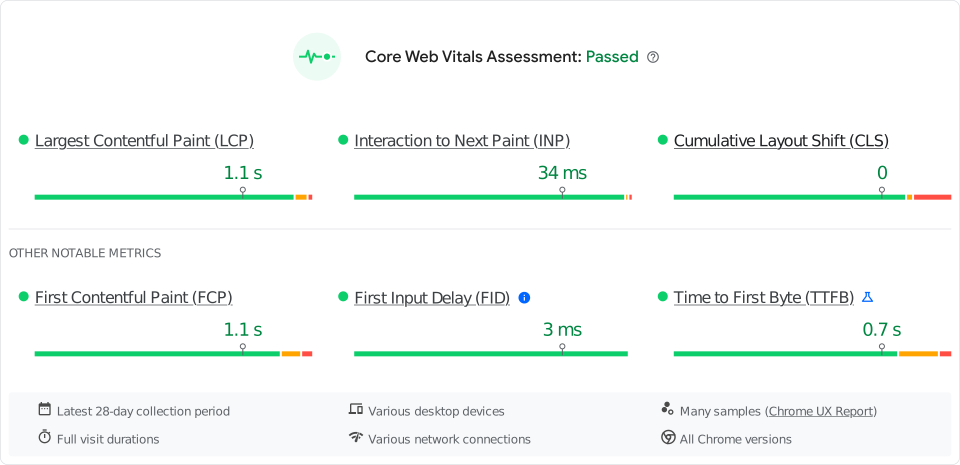
In 2020, Google introduced Core Web Vitals metrics to measure some aspects of real-world user experience on the web. This blog has consistently achieved good scores for two of these metrics: Largest Contentful Paint and Interaction to Next Paint. However, optimizing the third metric, Cumulative Layout Shift, which measures unexpected layout changes, has been more challenging. Let s face it: optimizing for this metric is not really useful for a site like this one. But getting a better score is always a good distraction. To prevent the flash of invisible text when using web fonts, developers should set the font-display property to swap in @font-face rules. This method allows browsers to initially render text using a fallback font, then replace it with the web font after loading. While this improves the LCP score, it causes content reflow and layout shifts if the fallback and web fonts are not metrically compatible. These shifts negatively affect the CLS score. CSS provides properties to address this issue by overriding font metrics when using fallback fonts: size-adjust, ascent-override, descent-override, and line-gap-override. Two comprehensive articles explain each property and their computation methods in detail: Creating Perfect Font Fallbacks in CSS and Improved font fallbacks.

Interactive tuning tool Instead of computing each property from font average metrics, I put together a tool for interactively tuning fallback fonts.1

Instructions
  1. Load your custom font.
  2. Select a fallback font to tune.
  3. Adjust the size-adjust property to match the width of your custom font with the fallback font. With a proportional font, it is not possible to achieve a perfect match.
  4. Fine-tune the ascent-override property. Aim to align the final dot of the last paragraph while monitoring the font s baseline. For more precise adjustment, disable the option.
  5. Modify the descent-override property. The goal is to make the two boxes match. You may need to alternate between this and the previous property for optimal results.
  6. If necessary, adjust the line-gap-override property. This step is typically not required.
The process needs to be repeated for each fallback font. Some platforms may not include certain fonts. Notably, Android lacks most fonts found in other operating systems. It replaces Georgia with Noto Serif, which is not metrically-compatible.

Tool

This tool is not available from the Atom feed.

Results For the body text of this blog, I get the following CSS definition:
@font-face  
  font-family: Merriweather;
  font-style: normal;
  font-weight: 400;
  src: url("../fonts/merriweather.woff2") format("woff2");
  font-display: swap;
 
@font-face  
  font-family: "Fallback for Merriweather";
  src: local("Noto Serif"), local("Droid Serif");
  size-adjust: 98.3%;
  ascent-override: 99%;
  descent-override: 27%;
 
@font-face  
  font-family: "Fallback for Merriweather";
  src: local("Georgia");
  size-adjust: 106%;
  ascent-override: 90.4%;
  descent-override: 27.3%;
 
font-family: Merriweather, "Fallback for Merriweather", serif;
After a month, the CLS metric improved to 0:
Core Web Vitals scores for vincent.bernat.ch showing all 6 metrics as green. Notably the Cumulative Layout Shift is 0.
Recent Core Web Vitals scores for vincent.bernat.ch

About custom fonts Using safe web fonts or a modern font stack is often simpler. However, I prefer custom web fonts. Merriweather and Iosevka, which are used in this blog, enhance the reading experience. An alternative approach could be to use Georgia as a serif option. Unfortunately, most default monospace fonts are ugly. Furthermore, paragraphs that combine proportional and monospace fonts can create visual disruption. This occurs due to mismatched vertical metrics or weights. To address this issue, I adjust Iosevka s metrics and weight to align with Merriweather s characteristics.

  1. Similar tools already exist, like the Fallback Font Generator, but they were missing a few features, such as the ability to load the fallback font or to have decimals for the CSS properties. And no source code.

30 August 2024

Dirk Eddelbuettel: pkgKitten 0.2.4 on CRAN: Updates

kitten A shiny new release 0.2.4 of pkgKitten arrived on CRAN earlier, and has also been been uploaded to Debian. pkgKitten makes it simple to create new R packages via a simple function invocation. A wrapper kitten.r exists in the littler package to make it even easier. This release contains several improvements to the (optional) setup of the (wonderful) tinytest package, now supports the (now mandatory) Authors@R and polished a few aspect around the package repository and continuous integrations. The set of changes follows.

Changes in version 0.2.4 (2024-08-30)
  • The .Rbuildignore stanza now includes .github
  • The support of and usage illustrations of tinytest are much enhanced (Paul Hudor in #18 adressing #19 and #20)
  • The .gitignore file now includes C++ related files
  • Improvements and polish to badges and continuous integration
  • The DESCRIPTION file now contains an Authors@R entry

More details about the package are at the pkgKitten webpage, the pkgKitten docs site, and the pkgKitten GitHub repo. Courtesy of CRANberries, there is also a diffstat report for the most recent release. If you like this or other open-source work I do, you can sponsor me at GitHub.

This post by Dirk Eddelbuettel originated on his Thinking inside the box blog. Please report excessive re-aggregation in third-party for-profit settings.

29 August 2024

Jonathan Carter: Orphaning bcachefs-tools in Debian

Around a decade ago, I was happy to learn about bcache a Linux block cache system that implements tiered storage (like a pool of hard disks with SSDs for cache) on Linux. At that stage, ZFS on Linux was nowhere close to where it is today, so any progress on gaining more ZFS features in general Linux systems was very welcome. These days we care a bit less about tiered storage, since any cost benefit in using anything else than nvme tends to quickly evaporate compared to time you eventually lose on it. In 2015, it was announced that bcache would grow into its own filesystem. This was particularly exciting and it caused quite a buzz in the Linux community, because it brought along with it more features that compare with ZFS (and also btrfs), including built-in compression, built-in encryption, check-summing and RAID implementations. Unlike ZFS, it didn t have a dkms module, so if you wanted to test bcachefs back then, you d have to pull the entire upstream bcachefs kernel source tree and compile it. Not ideal, but for a promise of a new, shiny, full-featured filesystem, it was worth it. In 2019, it seemed that the time has come for bcachefs to be merged into Linux, so I thought that it s about time we have the userspace tools (bcachefs-tools) packaged in Debian. Even if the Debian kernel wouldn t have it yet by the time the bullseye (Debian 11) release happened, it might still have been useful for a future backported kernel or users who roll their own. By total coincidence, the first git snapshot that I got into Debian (version 0.1+git20190829.aa2a42b) was committed exactly 5 years ago today. It was quite easy to package it, since it was written in C and shipped with a makefile that just worked, and it made it past NEW into unstable in 19 January 2020, just as I was about to head off to FOSDEM as the pandemic started, but that s of course a whole other story. Fast-forwarding towards the end of 2023, version 1.2 shipped with some utilities written in Rust, this caused a little delay, since I wasn t at all familiar with Rust packaging yet, so I shipped an update that didn t yet include those utilities, and saw this as an opportunity to learn more about how the Rust eco-system worked and Rust in Debian. So, back in April the Rust dependencies for bcachefs-tools in Debian didn t at all match the build requirements. I got some help from the Rust team who says that the common practice is to relax the dependencies of Rust software so that it builds in Debian. So errno, which needed the exact version 0.2, was relaxed so that it could build with version 0.4 in Debian, udev 0.7 was relaxed for 0.8 in Debian, memoffset from 0.8.5 to 0.6.5, paste from 1.0.11 to 1.08 and bindgen from 0.69.9 to 0.66. I found this a bit disturbing, but it seems that some Rust people have lots of confidence that if something builds, it will run fine. And at least it did build, and the resulting binaries did work, although I m personally still not very comfortable or confident about this approach (perhaps that might change as I learn more about Rust). With that in mind, at this point you may wonder how any distribution could sanely package this. The problem is that they can t. Fedora and other distributions with stable releases take a similar approach to what we ve done in Debian, while distributions with much more relaxed policies (like Arch) include all the dependencies as they are vendored upstream. As it stands now, bcachefs-tools is impossible to maintain in Debian stable. While my primary concerns when packaging, are for Debian unstable and the next stable release, I also keep in mind people who have to support these packages long after I stopped caring about them (like Freexian who does LTS support for Debian or Canonical who has long-term Ubuntu support, and probably other organisations that I ve never even heard of yet). And of course, if bcachfs-tools don t have any usable stable releases, it doesn t have any LTS releases either, so anyone who needs to support bcachefs-tools long-term has to carry the support burden on their own, and if they bundle it s dependencies, then those as well. I ll admit that I don t have any solution for fixing this. I suppose if I were upstream I might look into the possibility of at least supporting a larger range of recent dependencies (usually easy enough if you don t hop onto the newest features right away) so that distributions with stable releases only need to concern themselves with providing some minimum recent versions, but even if that could work, the upstream author is 100% against any solution other than vendoring all its dependencies with the utility and insisting that it must only be built using these bundled dependencies. I ve made 6 uploads for this package so far this year, but still I constantly get complaints that it s out of date and that it s ancient. If a piece of software is considered so old that it s useless by the time it s been published for two or three months, then there s no way it can survive even a usual stable release cycle, nevermind any kind of long-term support. With this in mind (not even considering some hostile emails that I recently received from the upstream developer or his public rants on lkml and reddit), I decided to remove bcachefs-tools from Debian completely. Although after discussing this with another DD, I was convinced to orphan it instead, which I have now done. I made an upload to experimental so that it s still available if someone wants to work on it (without having to go through NEW again), it s been removed from unstable so that it doesn t migrate to testing, and the ancient (especially by bcachefs-tools standards) versions that are in stable and oldstable will be removed too, since they are very likely to cause damage with any recent kernel versions that support bcachefs. And so, my adventure with bcachefs-tools comes to an end. I d advise that if you consider using bcachefs for any kind of production use in the near future, you first consider how supportable it is long-term, and whether there s really anyone at all that is succeeding in providing stable support for it.

22 August 2024

Matthew Garrett: What the fuck is an SBAT and why does everyone suddenly care

Short version: Secure Boot Advanced Targeting and if that's enough for you you can skip the rest you're welcome.

Long version: When UEFI Secure Boot was specified, everyone involved was, well, a touch naive. The basic security model of Secure Boot is that all the code that ends up running in a kernel-level privileged environment should be validated before execution - the firmware verifies the bootloader, the bootloader verifies the kernel, the kernel verifies any additional runtime loaded kernel code, and now we have a trusted environment to impose any other security policy we want. Obviously people might screw up, but the spec included a way to revoke any signed components that turned out not to be trustworthy: simply add the hash of the untrustworthy code to a variable, and then refuse to load anything with that hash even if it's signed with a trusted key.

Unfortunately, as it turns out, scale. Every Linux distribution that works in the Secure Boot ecosystem generates their own bootloader binaries, and each of them has a different hash. If there's a vulnerability identified in the source code for said bootloader, there's a large number of different binaries that need to be revoked. And, well, the storage available to store the variable containing all these hashes is limited. There's simply not enough space to add a new set of hashes every time it turns out that grub (a bootloader initially written for a simpler time when there was no boot security and which has several separate image parsers and also a font parser and look you know where this is going) has another mechanism for a hostile actor to cause it to execute arbitrary code, so another solution was needed.

And that solution is SBAT. The general concept behind SBAT is pretty straightforward. Every important component in the boot chain declares a security generation that's incorporated into the signed binary. When a vulnerability is identified and fixed, that generation is incremented. An update can then be pushed that defines a minimum generation - boot components will look at the next item in the chain, compare its name and generation number to the ones stored in a firmware variable, and decide whether or not to execute it based on that. Instead of having to revoke a large number of individual hashes, it becomes possible to push one update that simply says "Any version of grub with a security generation below this number is considered untrustworthy".

So why is this suddenly relevant? SBAT was developed collaboratively between the Linux community and Microsoft, and Microsoft chose to push a Windows update that told systems not to trust versions of grub with a security generation below a certain level. This was because those versions of grub had genuine security vulnerabilities that would allow an attacker to compromise the Windows secure boot chain, and we've seen real world examples of malware wanting to do that (Black Lotus did so using a vulnerability in the Windows bootloader, but a vulnerability in grub would be just as viable for this). Viewed purely from a security perspective, this was a legitimate thing to want to do.

(An aside: the "Something has gone seriously wrong" message that's associated with people having a bad time as a result of this update? That's a message from shim, not any Microsoft code. Shim pays attention to SBAT updates in order to avoid violating the security assumptions made by other bootloaders on the system, so even though it was Microsoft that pushed the SBAT update, it's the Linux bootloader that refuses to run old versions of grub as a result. This is absolutely working as intended)

The problem we've ended up in is that several Linux distributions had not shipped versions of grub with a newer security generation, and so those versions of grub are assumed to be insecure (it's worth noting that grub is signed by individual distributions, not Microsoft, so there's no externally introduced lag here). Microsoft's stated intention was that Windows Update would only apply the SBAT update to systems that were Windows-only, and any dual-boot setups would instead be left vulnerable to attack until the installed distro updated its grub and shipped an SBAT update itself. Unfortunately, as is now obvious, that didn't work as intended and at least some dual-boot setups applied the update and that distribution's Shim refused to boot that distribution's grub.

What's the summary? Microsoft (understandably) didn't want it to be possible to attack Windows by using a vulnerable version of grub that could be tricked into executing arbitrary code and then introduce a bootkit into the Windows kernel during boot. Microsoft did this by pushing a Windows Update that updated the SBAT variable to indicate that known-vulnerable versions of grub shouldn't be allowed to boot on those systems. The distribution-provided Shim first-stage bootloader read this variable, read the SBAT section from the installed copy of grub, realised these conflicted, and refused to boot grub with the "Something has gone seriously wrong" message. This update was not supposed to apply to dual-boot systems, but did anyway. Basically:

1) Microsoft applied an update to systems where that update shouldn't have been applied
2) Some Linux distros failed to update their grub code and SBAT security generation when exploitable security vulnerabilities were identified in grub

The outcome is that some people can't boot their systems. I think there's plenty of blame here. Microsoft should have done more testing to ensure that dual-boot setups could be identified accurately. But also distributions shipping signed bootloaders should make sure that they're updating those and updating the security generation to match, because otherwise they're shipping a vector that can be used to attack other operating systems and that's kind of a violation of the social contract around all of this.

It's unfortunate that the victims here are largely end users faced with a system that suddenly refuses to boot the OS they want to boot. That should never happen. I don't think asking arbitrary end users whether they want secure boot updates is likely to result in good outcomes, and while I vaguely tend towards UEFI Secure Boot not being something that benefits most end users it's also a thing you really don't want to discover you want after the fact so I have sympathy for it being default on, so I do sympathise with Microsoft's choices here, other than the failed attempt to avoid the update on dual boot systems.

Anyway. I was extremely involved in the implementation of this for Linux back in 2012 and wrote the first prototype of Shim (which is now a massively better bootloader maintained by a wider set of people and that I haven't touched in years), so if you want to blame an individual please do feel free to blame me. This is something that shouldn't have happened, and unless you're either Microsoft or a Linux distribution it's not your fault. I'm sorry.

comment count unavailable comments

21 August 2024

Dirk Eddelbuettel: RcppMagicEnum 0.0.1 on CRAN: New Package!

Happy to announce a new package: RcppMagicEnum. It arrived on CRAN yesterday following the resumption of normal service following the CRAN summer break. RcppMagicEnum brings the magicenum library by Daniil Goncharov to R. Modern C++ is powerful, but still lacks reflection. This may change with C++26 but until then this library can help. A simple example, also shown on the README is as follows (and can be called from R via Rcpp::sourceCpp() if the RcppMagicEnum package is installed):
// [[Rcpp::depends(RcppMagicEnum)]]

#include <RcppMagicEnum>

// define a simple enum class, it uses optional typing as well as optional assigned values
enum class Color : int   RED = -10, BLUE = 0, GREEN = 10  ;

// [[Rcpp::export]]
void example()  
    // instantiate an enum value in variable 'val'
    auto val = Color::RED;

    // show the current value on stdout
    Rcpp::Rcout << "Name of enum: " << magic_enum::enum_name(val) << std::endl;
    Rcpp::Rcout << "Integer value of enum: " << magic_enum::enum_integer(val) << std::endl;
 

/*** R
example()
*/
It produces the following output (where the meta-comment at the end ensure the included and created-by-sourcing function example() is also called):
> Rcpp::sourceCpp("miniex.cpp")

> example()
Name of enum: RED
Integer value of enum: -10
>
The plan to experiment some more with this and then see if we could possible make factor variables map to such enums and vice versa. Help and discussion input is always welcome, and could be submitted either on the rcpp-devel list or as an issue at the repo. The short NEWS entry follows.

Changes in version 0.0.1 (2024-07-31)
  • Initial version and CRAN upload

If you like this or other open-source work I do, you can sponsor me at GitHub.

This post by Dirk Eddelbuettel originated on his Thinking inside the box blog. Please report excessive re-aggregation in third-party for-profit settings.

18 August 2024

Gunnar Wolf: The social media my blog as well as some other sites I publish in is pushed to will soon stop receiving updates

For many years, I have been using the dlvr.it service to echo my online activity to where more people can follow it. Namely, I write in the following sources: Via dlvr.it s services, all those posts are echoed to Gwolfwolf in X (Twitter) and to the Gunnarwolfi page in Facebook. I use neither platform as a human (that is, I never log in there). Anyway, dlvr.it sent me a mail stating they would be soon (as in, the next few weeks) cutting their free tier. And, although I value their services and am thankfulfor their value so far, I am not going to pay for my personal stuff to be reposted to social media. So, this post s mission is twofold:
  1. If you follow me via any of those media, you will soon not be following me anymore
  2. If you know of any service that would fill the space left by dlvr.it, I will be very grateful. Extra gratefulness points if the option you suggest is able to post to accounts in less-propietary media (i.e. the Fediverse). Please tell me by mail (gwolf@gwolf.org).
Oh! Forgot to mention: Of course, my blog will continue to be appear in Planet Debian, Blograf a, and any decent aggregator that consumes my RSS.

16 August 2024

Bits from Debian: Debian Celebrates 31 years!

Debian 31 years by Daniel Lenharo As the expression goes, "Time flies when you are having fun", meaning you do not normally account for the passage of time when you are distracted and enjoying yourself. The expression is a well established English idiom, though today for a moment the Debian Project pauses to reflect on that expression. It has been 31 years now that we have been around. It has been 31 amazing years of fun and amazement in watching the world around us grow and ourselves grow into the world. Let us tell you, we have had a great time in doing so. We have been invited to nearly every continent and country for over 25 Debian Developer Conferences, we have contributed to the sciences with our Debian Pure Blends; we have not given up on or discounted aged hardware with Long Term Support (LTS); we have encouraged and sponsored diversity with our Outreach Programs. We have contributed to exploration of this lovely planet and the vast vacuum of space (where no one hears Developers scream). There is more to what we have done but from a cursory glance, we seem to have done it all. But we never noticed it. Time does fly or "escape irretrievably" when having a good time and making progress, though our pause at this moment is that we have also had a few moments of honest self-evaluation and reflection. Over the years the project has lost some significant loved ones who were dear to us - you may have called them Developers while we called them Friends, we called them Mentors, we hurt, we grieved, and in their memories we keep moving forward. The course of the project has seen a few tragedies, has seen heated discourse in the public domain, has addressed and weathered concerns, and has still continually grown. And we did that in the public sphere, because at the core this is an open project. Our code is public, our bugs and failings are public, our communications are public, our meetings are public, and our love of FLOSS is most definitely public. And now more than ever the Debian Project realizes that the "we" that is sprinkled throughout this letter is just another way of saying: "you". You, the user, contributor, sponsor, developer, maintainer, bug squasher; all of you make the WE that is Debian. So what are WE waiting for? Lets celebrate! Join the worldwide celebration or find an event local to you by visiting our DebianDay events page - see you there!

Antoine Beaupr : Why I should be running Debian unstable right now

So a common theme on the Internet about Debian is so old. And right, I am getting close to the stage that I feel a little laggy: I am using a bunch of backports for packages I need, and I'm missing a bunch of other packages that just landed in unstable and didn't make it to backports for various reasons. I disagree that "old" is a bad thing: we definitely run Debian stable on a fleet of about 100 servers and can barely keep up, I would make it older. And "old" is a good thing: (port) wine and (any) beer needs time to age properly, and so do humans, although some humans never seem to grow old enough to find wisdom. But at this point, on my laptop, I am feeling like I'm missing out. This page, therefore, is an evolving document that is a twist on the classic NewIn game. Last time I played seems to be #newinwheezy (2013!), so really, I'm due for an update. (To be fair to myself, I do keep tabs on upgrades quite well at home and work, which do have their share of "new in", just after the fact.)

New packages to explore Those tools are shiny new things available in unstable or perhaps Trixie (testing) already that I am not using yet, but I find interesting enough to list here.
  • backdown: clever file deduplicator
  • codesearch: search all of Debian's source code (tens of thousands of packages) from the commandline! (see also dcs-cli, not in Debian)
  • dasel: JSON/YML/XML/CSV parser, similar to jq, but different syntax, not sure I'd grow into it, but often need to parse YML like JSON and failing
  • fyi: notify-send replacement
  • git-subrepo: git-submodule replacement I am considering
  • gtklock: swaylock replacement with bells and whistles, particularly interested in showing time, battery and so on
  • hyprland: possible Sway replacement, but there are rumors of a toxic community (rebuttal, I haven't reviewed either in detail), so approach carefully)
  • kooha: simple screen recorder with audio support, currently using wf-recorder which is a more.. minimalist option
  • linescroll: rate graphs on live logs, mostly useful on servers though
  • ruff: faster Python formatter and linter, flake8/black/isort replacement, alas not mypy/LSP unfortunately, designed to be ran alongside such a tool, which is not possible in Emacs eglot right now, but is possible in lsp-mode
  • sfwbar: pretty status bar, may replace waybar, which i am somewhat unhappy with (my UTC clock disappears randomly)
  • spytrap-adb: cool spy gear

New packages I won't use Those are packages that I have tested because I found them interesting, but ended up not using, but I think people could find interesting anyways.
  • kew: surprisingly fast music player, parsed my entire library (which is huge) instantaneously and just started playing (I still use Supersonic, for which I maintain a flatpak on my Navidrome server)
  • mdformat: good markdown formatter, think black or gofmt but for markdown), but it didn't actually do what I needed, and it's not quite as opinionated as it should (or could) be)

Backports already in use Those are packages I already use regularly, which have backports or that can just be installed from unstable:
  • asn: IP address forensics
  • markdownlint: markdown linter, I use that a lot
  • poweralertd: pops up "your battery is almost empty" messages
  • sway-notification-center: used as part of my status bar, yet another status bar basically, a little noisy, stuck in a libc dep update
  • tailspin: used to color logs

Out of date packages Those are packages that are in Debian stable (Bookworm) already, but that are somewhat lacking and could benefit from an upgrade.

Last words If you know of cool things I'm missing out of, then by all means let me know! That said, overall, this is a pretty short list! I have most of what I need in stable right now, and if I wasn't a Debian developer, I don't think I'd be doing the jump now. But considering how easier it is to develop Debian (and how important it is to test the next release!), I'll probably upgrade soon. Previously, I was running Debian testing (which why the slug on that article is why-trixie), but now I'm actually considering just running unstable on my laptop directly anyways. It's been a long time since we had any significant instability there, and I can typically deal with whatever happens, except maybe when I'm traveling, and then it's easy to prepare for that (just pin testing).

15 August 2024

Joerg Jaspert: Electric Car, Vacation trip

Electric Car A while ago I got my hands on an electric car - after not having owned a car for most of my life (there really is not much need here). It wasn t planned nor a goal of mine, but it kind of came out of talks with my boss , so now it s there. Due to some special rules in the german tax system it turns out really cheap for me - it comes from the company, which allows personal use. So I have to pay taxes on the value of it plus whichever amount of kilometers I have to drive to work. And the latter is what is good for me - I have homeoffice in my contract, so no drive to work, except maybe once a year for something. So no regular trip to calculate, only if I ever really have to do a trip to the office. And it being an electric car, running costs are also cheap. Way below the outdated tech that needs gas to run, is annoyingly loud and stinks.

The car In the past I used either car sharing or renting a car when I needed one, depending on what I actually needed. Last times renting I already tried electric variants, so I could compare this with. What I have now is a Citroen e-Berlingo XL from 2023 (so not the latest change from 2024), which is on the huge size for space, but small for battery. It has 7 seats (though I have the last 2 currently taken out, no daily need) and more storage space than I need even on a vacation trip. The engine (or well, it s battery) is on the small side - a capacity of 50 kWh means it only has 278km reach according to WLTP. That actually is a good bit less - as usual, those numbers are lying for the producer. Turns out that on highways in a more realistic mode than WLTP (read: real driving) it s somewhat around 120km before one wants a charger again. But, looking around, at least in Germany that is not a big problem, there are more than enough chargers available.

Driving Actually driving experience is good. It sure is a huge car (4.7m long, 1.85m high/wide) and feels more like driving a (small) bus, but it is easy to handle. Maximum speed is limited (or the small battery would suck even more) to 135km/h, but that is more than enough. Even on german highways. Did my vacation trip with cruise control set to 115km/h and very few times only went above that manually. Real relaxed driving that was.

Vacation trip So we had a vacation just recently, and instead of renting a car for the trip we, of course, wanted to take the e-Berlingo. Distance was about double what the car can (realistically!) do, so one charging stop in the middle somewhere was a must. Not having had to charge on highways yet - and entirely new with this car - that made for a bit of nervousness, but it all turned out really good. There are really nice tools like ABRP to plan your trip including charging, which can take live data of availability of charging points into the planning. And it turned out nice - we reached our planned charging point and found a long queue of cars waiting. But turns out it was all those poor folks that need actual gasoline for their outdated combustion engines. The charging points for EV cars still had enough free space, so we could bypass the queue and directly start charging. We also did not need to repark the car after just a few minutes, we could directly start our break. With a charging time of approx. 30 minutes using the fast charger, such a break is long enough to get enough energy for the next part of the trip and short enough to not be annoying.

Charging prices At home it depends. If one has some photovoltaic system to get power, charging is basically free. If not it depends on whichever contract one has, costs will be somewhat between 0 and ~30cent per kWh. Not much, and way below gasoline costs. Outside, using a fast charger, prices vary depending on where you charge - and with what charging card. Prices between 40 and 70cent / kWh, and the same charging point can vary, just from the card one uses. That is a thing that the EU could actually go and better regulate, similar to the phone regulations it took. Still, the costs are still way below gasoline.

Charging cards There is a huge amount of different providers available, and all do their own things in pricing and how one can use them. They do have standards (say, the plugs are standardized, by now the way to start charging also), and that enables roaming (use a charging card of one provider at a charging point of another), but other than that, it seems to be random. That is - if you use card A on a charging point of Provider B you may pay 0.49cents, if you use card C on the same point, it may charge you 0.79cents. And card D isn t taken at all. Some (the newer ones) you can pay directly by credit card, many you can t. Some may allow paypal or Google/Apple Pay. So in the end you need more than just one charging card - I collected 8 free ones by now - just to be sure you can find a combination that isn t hugely overpriced.

12 August 2024

Scarlett Gately Moore: KDE, Kubuntu, Debian Qt6 updates plus Kubuntu Noble .1 updates.

Another loss last week of a friend. I am staying strong and working through it. A big thank you to all of you that have donated to my car fund, I still have a long way to go. I am not above getting a cheap old car, but we live in sand dunes so it must be a cheap old car with 4 4 to get to my property. A vehicle is necessary as we are 50 miles away from staples such as food and water. We also have 2 funerals to attend. Please consider a donation if my work is useful to you. https://gofund.me/1e784e74 All of my work is currently unpaid work, as I am between contracts. Thank you for your consideration. Now onto the good stuff, last weeks work. It was another very busy week with Qt6 packaging in Debian/Kubuntu and KDE snaps. I also have many SRUs for Kubuntu Noble .1 release that needs their verification done. Kubuntu: Debian: Starting the salvage process for kdsoap which is blocking a long line of packages, notably kio-extras. KDE Snaps: Please note: Please help test the edge snaps so I can promote them to stable. WIP Snaps or MR s made Thanks for stopping by.

Freexian Collaborators: Monthly report about Debian Long Term Support, July 2024 (by Roberto C. S nchez)

Like each month, have a look at the work funded by Freexian s Debian LTS offering.

Debian LTS contributors In July, 13 contributors have been paid to work on Debian LTS, their reports are available:
  • Bastien Roucari s did 20.0h (out of 20.0h assigned).
  • Chris Lamb did 18.0h (out of 18.0h assigned).
  • Daniel Leidert did 5.0h (out of 4.0h assigned and 6.0h from previous period), thus carrying over 5.0h to the next month.
  • Guilhem Moulin did 8.75h (out of 4.5h assigned and 15.5h from previous period), thus carrying over 11.25h to the next month.
  • Lee Garrett did 51.5h (out of 10.5h assigned and 43.0h from previous period), thus carrying over 2.0h to the next month.
  • Lucas Kanashiro did 5.0h (out of 5.0h assigned and 15.0h from previous period), thus carrying over 15.0h to the next month.
  • Markus Koschany did 40.0h (out of 40.0h assigned).
  • Ola Lundqvist did 4.0h (out of 10.0h assigned and 14.0h from previous period), thus carrying over 20.0h to the next month.
  • Roberto C. S nchez did 5.0h (out of 5.25h assigned and 6.75h from previous period), thus carrying over 7.0h to the next month.
  • Santiago Ruano Rinc n did 6.0h (out of 16.0h assigned), thus carrying over 10.0h to the next month.
  • Sean Whitton did 2.25h (out of 6.0h assigned), thus carrying over 3.75h to the next month.
  • Sylvain Beucler did 39.5h (out of 2.5h assigned and 51.0h from previous period), thus carrying over 14.0h to the next month.
  • Thorsten Alteholz did 11.0h (out of 11.0h assigned).

Evolution of the situation In July, we have released 1 DLA. August will be the month that Debian 11 makes the transition to LTS. Our contributors have already been hard at work with preparatorty tasks and also with making contributions to packages in Debian 11 in close collaboration with the Debian security team and package maintainers. As a result, users and sponsors should not observe any especially notable differences as the transition occurs. While only one DLA was released in July (as a result of the transitional state of Debian 11 bullseye ), there were some notable highlights. LTS contributor Guilhem Moulin prepared an update of libvirt for Debian 11 (in collaboration with the Old-Stable Release Managers and the Debian Security Team) to fix a number of outstanding CVEs which did not rise to the level of a DSA by the Debian Security Team. The update prepared by Guilhem will be included in Debian 11 as part of the final point release at the end of August, one of the final transition steps by the Release Managers as Debian 11 moves entirely to the LTS Team s responsibility. Notable work was also undertaken by contributors Lee Garrett (fixes on the ansible test suite and a bullseye update), Lucas Kanashiro (Rust toolchain, utilized by the clamav, firefox-esr, and thunderbird packages), and Sylvain Beucler (fixes on the ruby2.5/2.7 test suites and CI infrastructure), which will help improve the quality of updates produced during the next LTS cycle. June was the final month of LTS for Debian 10 (as announced on the debian-lts-announce mailing list). No additional Debian 10 security updates will be made available on security.debian.org. However, Freexian and its team of paid Debian contributors will continue to maintain Debian 10 going forward for customers of the Extended LTS offer. Subscribe right away if you still have Debian 10 systems which must be kept secure (and which cannot yet be upgraded).

Thanks to our sponsors Sponsors that joined recently are in bold.

Freexian Collaborators: Debian Contributions: autopkgtest/incus builds, live-patching, Salsa CI, Python 3.13 (by Stefano Rivera)

Debian Contributions: 2024-07 Contributing to Debian is part of Freexian s mission. This article covers the latest achievements of Freexian and their collaborators. All of this is made possible by organizations subscribing to our Long Term Support contracts and consulting services.

autopkgtest/Incus build streamlining, by Colin Watson Colin contributed a change to allow maintaining Incus container and VM images in parallel. Both of these are useful (containers are faster, but some tests need full machine isolation), and the build tools previously didn t handle that very well. This isn t yet in unstable, but once it is, keeping both flavours of unstable images up to date will be a simple matter of running this regularly:
RELEASE=sid autopkgtest-build-incus images:debian/trixie
RELEASE=sid autopkgtest-build-incus --vm images:debian/trixie

Linux live-patching, by Santiago Ruano Rinc n In collaboration with Emmanuel Arias, Santiago continued the work on the support for applying security fixes to the Linux kernel in Debian, without the need to reboot the machine. As mentioned in the previous month report, kpatch 0.9.9-1 (and 0.9.9-2 afterwards) was uploaded to unstable in July, closing the Intent to Salvage (ITS) bug. With this upload, the remaining RC bugs were solved, and kpatch was able to transition to Debian testing recently. Kpatch is expected to be an important component in the live-patching support, since it makes it easy to build a patch as a kernel module. Emmanuel and Santiago continued to work on the design for Linux live-patching and presented the current status in the DebConf24 presentation.

Salsa CI, by Santiago Ruano Rinc n To be able to add RISC-V support and to avoid using tools not packaged in Debian (See #331), the Salsa CI pipeline first needed to move away from kaniko to build the images used by the pipeline. Santiago created a merge request to use buildah instead, and it was merged last month. Santiago also prepared a couple of more MRs related to how the images are built: initial RISC-V support, that should be merged after improving how built images are tested. The switch to buildah introduced a regression in the work-in-progress MR that adds new build image so the build job can run sbuild. Santiago hopes to address this regression and continue with the sbuild-related MRs in August. Additionally, Santiago also contributed to the install docker-cli instead of docker.io in the piuparts image MR, and reviewed others such as reprotest: Add append-build-command option, fix failure at manual pipeline run when leaving RELEASE variable empty and Fix image not found error on image building stage.

Python 3.13 Betas, by Stefano Rivera As Python 3.13 is approaching the first release, Stefano has been uploading the beta releases to Debian unstable. Most of these have uncovered small bugs that needed to be investigated and fixed. Stefano also took the time to review the current patch set against cPython in Debian. Python 3.13 isn t marked as a supported Python release in Debian s Python tooling, yet, so nothing has been built against it, yet. Now that the Python 3.12 transition has completed, the next task will be to start trying to build Debian s Python module packages against Python 3.13, to estimate the work required to transition to 3.13 in unstable.

Miscellaneous contributions
  • Carles Pina updated the packages python-asyncclick, python-pyaarlo and prepared updates for python-ring-doorbell and simplemonitor.
  • Carles Pina updated (reviewing or translating) Catalan translations for adduser, apt-listchanges, debconf and shadow.
  • Colin merged OpenSSH 9.8, and prepared a corresponding release note for DSA support now being disabled. This version included some substantial changes to split the server into a listener binary and a per-session binary, and those required some corresponding changes in the GSS-API key exchange patch. Sorting out the details of this and getting it to work again took some time.
  • Colin upgraded 11 Python packages to new upstream versions, and modernized the build process and/or added non-superficial autopkgtests to several more.
  • Rapha l Hertzog tweaked tracker.debian.org s debci task to work around changes in the JSON output. He also improved tracker.debian.org s ability to detect bounces due to spam to avoid unsubscribing emails that are not broken, but that are better than Debian at rejecting spam.
  • Helmut Grohne monitored the /usr-move transition with few incidents. A notable one is that some systems have ended up with aliasing links that don t match the ones installed by base-files which could lead to an unpack error from dpkg. This is now prevented by having base-files.preinst error out.
  • Helmut investigated toolchain bootstrap failures with gcc-14 in rebootstrap but would only discover the cause in August.
  • Helmut sent a MR for the cross-exe-wrapper requested by Simon McVittie for gobject-introspection. It is a way of conditionally requesting qemu-user when emulation is required for execution during cross compilation.
  • Helmut sent three patches for cross build failures.
  • Thorsten Alteholz uploaded packages lprint and magicfilter to fix RC-bugs that appeared due to the introduction of gcc-14.
  • Santiago continued to work on activities related to the DebConf24 Content Team, including reviewing the schedule and handling updates on it.
  • Santiago worked on preparations for the DebConf25, to be held in Brest, France, next year. A video of the BoF presented during DebConf24 can be found here.
  • Stefano worked on preparations for DebConf24, and helped to run the event.

10 August 2024

Bits from Debian: DebConf24 closes in Busan and DebConf25 dates announced

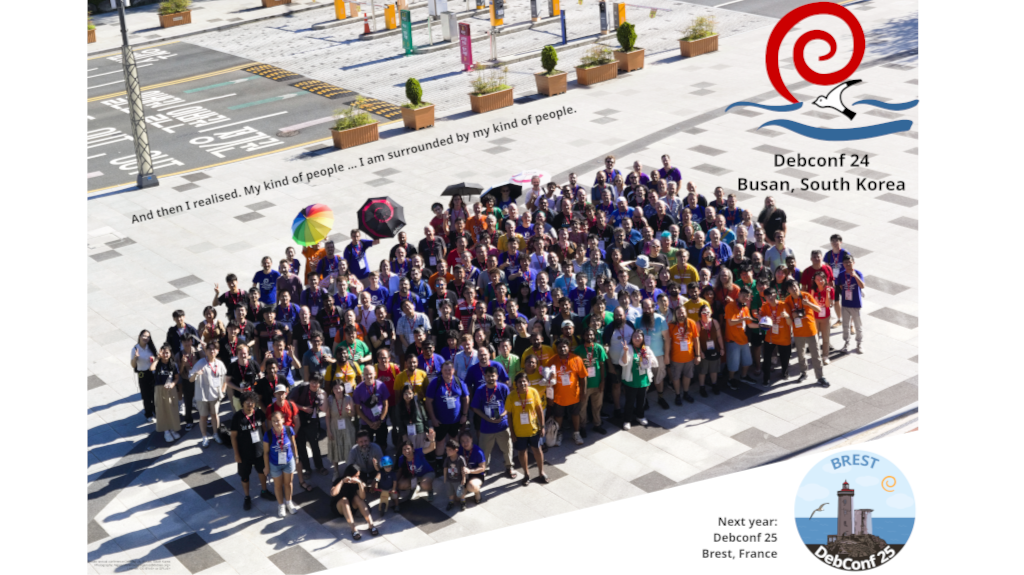
DebConf24 group photo - click to enlarge On Saturday 3 August 2024, the annual Debian Developers and Contributors Conference came to a close. Over 339 attendees representing 48 countries from around the world came together for a combined 108 events made up of more than 50 Talks and Discussions, 37 Birds of a Feather (BoF informal meeting between developers and users) sessions, 12 workshops, and activities in support of furthering our distribution and free software (25 patches submitted to the Linux kernel), learning from our mentors and peers, building our community, and having a bit of fun. The conference was preceded by the annual DebCamp hacking session held July 21st through July 27th where Debian Developers and Contributors convened to focus on their Individual Debian-related projects or work in team sprints geared toward in-person collaboration in developing Debian. This year featured a BootCamp that was held for newcomers with a GPG Workshop and a focus on Introduction to creating .deb files (Debian packaging) staged by a team of dedicated mentors who shared hands-on experience in Debian and offered a deeper understanding of how to work in and contribute to the community. The actual Debian Developers Conference started on Sunday July 28 2024. In addition to the traditional 'Bits from the DPL' talk, the continuous key-signing party, lightning talks and the announcement of next year's DebConf25, there were several update sessions shared by internal projects and teams. Many of the hosted discussion sessions were presented by our technical core teams with the usual and useful meet the Technical Committee and the ftpteam and a set of BoFs about packaging policy and Debian infrastructure, including talk about APT and Debian Installer and an overview about the first eleven years of Reproducible Builds. Internationalization and localization have been subject of several talks. The Python, Perl, Ruby, and Go programming language teams, as well as Med team, also shared updates on their work and efforts. More than fifteen BoFs and talks about community, diversity and local outreach highlighted the work of various team involved in the social aspect of our community. This year again, Debian Brazil shared strategy and action to attract and retain new contributors and members and opportunities both in Debian and F/OSS. The schedule was updated each day with planned and ad-hoc activities introduced by attendees over the course of the conference. Several traditional activities took place: a job fair, a poetry performance, the traditional Cheese and Wine party, the group photos and the Day Trips. For those who were not able to attend, most of the talks and sessions were broadcast live and recorded and the videos made available through a link in their summary in the schedule. Almost all of the sessions facilitated remote participation via IRC messaging apps or online collaborative text documents which allowed remote attendees to 'be in the room' to ask questions or share comments with the speaker or assembled audience. DebConf24 saw over 6.8 TiB (4.3 TiB in 2023) of data streamed, 91.25 hours (55 in 2023) of scheduled talks, 20 network access points, 1.6 km fibers (1 broken fiber...) and 2.2 km UTP cable deployed, more than 20 country Geoip viewers, 354 T-shirts, 3 day trips, and up to 200 meals planned per day. All of these events, activities, conversations, and streams coupled with our love, interest, and participation in Debian and F/OSS certainly made this conference an overall success both here in Busan, South Korea and online around the world. The DebConf24 website will remain active for archival purposes and will continue to offer links to the presentations and videos of talks and events. Next year, DebConf25 will be held in Brest, France, from Monday, July 7 to Monday, July 21, 2025. As tradition follows before the next DebConf the local organizers in France will start the conference activities with DebCamp with particular focus on individual and team work towards improving the distribution. DebConf is committed to a safe and welcome environment for all participants. See the web page about the Code of Conduct in DebConf24 website for more details on this. Debian thanks the commitment of numerous sponsors to support DebConf24, particularly our Platinum Sponsors: Infomaniak, Proxmox, and Wind River. We also wish to thank our Video and Infrastructure teams, the DebConf24 and DebConf committees, our host nation of South Korea, and each and every person who helped contribute to this event and to Debian overall. Thank you all for your work in helping Debian continue to be "The Universal Operating System". See you next year! About Debian The Debian Project was founded in 1993 by Ian Murdock to be a truly free community project. Since then the project has grown to be one of the largest and most influential open source projects. Thousands of volunteers from all over the world work together to create and maintain Debian software. Available in 70 languages, and supporting a huge range of computer types, Debian calls itself the universal operating system. About DebConf DebConf is the Debian Project's developer conference. In addition to a full schedule of technical, social and policy talks, DebConf provides an opportunity for developers, contributors and other interested people to meet in person and work together more closely. It has taken place annually since 2000 in locations as varied as Scotland, Argentina, Bosnia and Herzegovina, and India. More information about DebConf is available from https://debconf.org/. About Infomaniak Infomaniak is an independent cloud service provider recognized throughout Europe for its commitment to privacy, the local economy and the environment. Recording growth of 18% in 2023, the company is developing a suite of online collaborative tools and cloud hosting, streaming, marketing and events solutions. Infomaniak uses exclusively renewable energy, builds its own data centers and develops its solutions in Switzerland, without relocating. The company powers the website of the Belgian radio and TV service (RTBF) and provides streaming for more than 3,000 TV and radio stations in Europe. About Proxmox Proxmox provides powerful and user-friendly Open Source server software. Enterprises of all sizes and industries use Proxmox solutions to deploy efficient and simplified IT infrastructures, minimize total cost of ownership, and avoid vendor lock-in. Proxmox also offers commercial support, training services, and an extensive partner ecosystem to ensure business continuity for its customers. Proxmox Server Solutions GmbH was established in 2005 and is headquartered in Vienna, Austria. Proxmox builds its product offerings on top of the Debian operating system. About Wind River Wind River For nearly 20 years, Wind River has led in commercial Open Source Linux solutions for mission-critical enterprise edge computing. With expertise across aerospace, automotive, industrial, telecom, and more, the company is committed to Open Source through initiatives like eLxr, Yocto, Zephyr, and StarlingX. Contact Information For further information, please visit the DebConf24 web page at https://debconf24.debconf.org/ or send mail to press@debian.org.
Russell Coker: PineTime Status

Since my last blog post about the PineTime [1] I haven t done anything exciting with it. I ve been wearing it every day and it s working reasonably well for me. It s been working better since I changed to a Samsung Galaxy Note 9 as my main phone [2], so it seems that the Huawei Mate 10 Pro has some issues with Bluetooth that were making it unreliable. A relative also has one which is working well for them but which had some problems, I only discovered that holding the button down for a long time (longer than usual for device reset) makes a PineTime reboot because of their issues. I also once had their device get into a bad state where the only thing I could do was flash a newer firmware which fortunately fixed the problem. My latest issue is the battery life. Recently it has been taking ages to get above about 90% charge when charging and the time taken to go down to ~70% when I charge it seems to be decreasing. Yesterday it suddenly went to 13% after being 73% the previous night. Then it stayed at 13% all day. It seems quite inaccurate. But also it doesn t seem to be lasting as long as before. Generally it seems to me that Pine64 products are almost great. I won t rule out the possibility of a newer firmware for the PineTime alleviating the battery issues (or at least reporting the status accurately) and making Bluetooth connectivity more reliable (even on older phones). For the PinePhonePro an update to Mobian could reduce power wasting from user space (there s an issue that I have reported in Plasma Mobile but no-one is interested on working on this before KDE 6), and a kernel update could improve things. But I don t think there s a possibility of it ever having the battery last a day while polling Matrix and Jabber servers which is something that every Android phone can do without problems.

9 August 2024

Kalyani Kenekar: One Backpack, One Passport: My First Solo Trip

Planing A Self Organized Solo Trip You know the movie Queen? The actor Kangana Ranaut plays in that movie the role of Rani Mehra, a 24-year-old Punjabi woman, who was a simple, homely girl that was always reliant on her family. Similar to Rani I too rarely ventured out without my parents and often needed my younger sibling by my side. Inspired by her transformation, I decided it was time to take control of my own story and discover who I truly am. Queen movie picture Of Kangana

Trip Requirements

My First Passport The journey began with a significant first step: Obtaining my first passport Never having had one before, I scheduled the nearest available interview date on June 29 2022. This meant traveling to Solapur, a city 309 km from my hometown, accompanied by my father. After successfully completing the interview, I received my passport on July 14 2022.

Select A Country, Booking Flights And Accommodation Excited and ready to embark on my adventure, I planed trip to Albania and booked the flight tickets. Why? I had heard from friends that it was a beautiful European country with beaches and other attractions, and importantly, it didn t require a visa for Indian citizens and was more affordable than other European destinations. Before heading to Albania, I planned a overnight stop in Abu Dhabi with a transit visa, thanks to friend who knew the process for obtaining it. Some of my friends did travel also to Europe at the same time and quite close to my plannings, but that I realized just later the trip.

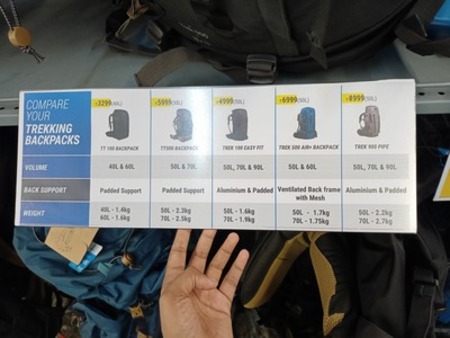
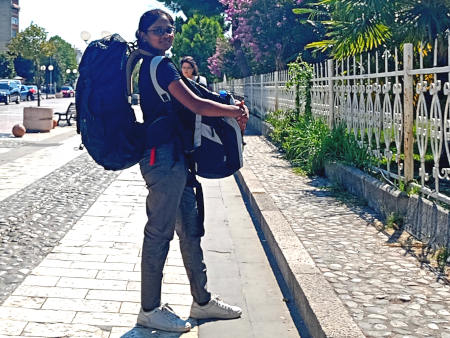
Day 1, Starting The Experience On July 20, 2022, I started my journey by traveling from Pune, Maharashtra, to Delhi, where my brother lives. He came to see me off at the airport, adding a touch of warmth and support to the beginning of my solo adventure. Upon arriving in Delhi, with my next flight scheduled for July 21, I stayed at a backpacker hostel named Zostel, Paharganj, Delhi to rest. During my stay, I noticed that many travelers at the hostel carried rucksacks, which sparked a desire in me to get one for my own trip to Europe. Up until then, I had always shopped with my mom and had never bought anything on my own. Inspired by the travelers, I set out to find a suitable rucksack. I traveled alone by metro from Paharganj to Rohini to visit a Decathlon store, where I purchased a 50-liter rucksack. This was a significant step in preparing for my European adventure and marked a milestone in my journey of self reliance. Rucksack description tag Kalyani s packpacker

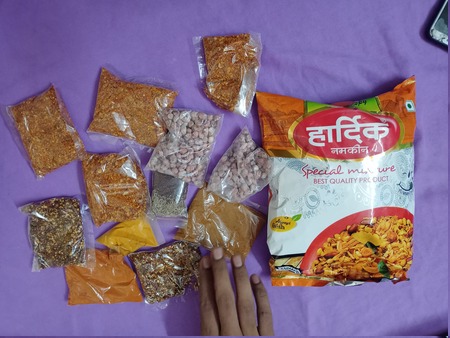
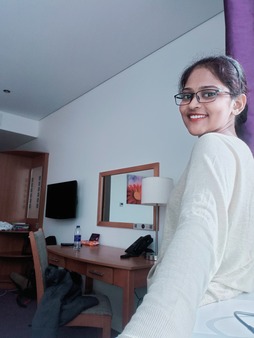
Day 2, Flying To Abu Dhabi The following day, July 21 2024, I had a flight to Abu Dhabi. I spent the night at the hostel to rest before my journey. On the day of the flight, I needed to reach the airport by 3 PM, and a friend kindly came to drop me off. With my rucksack packed and excitement building, I was ready for the next leg of my adventure. When we arrived at the airport, my friend saw me off, marking the start of my international journey. With mom made spices, chutneys, and chilly flakes packed for comfort, I completed my immigration process in about two and a half hours. I then settled at the gate for my flight, feeling a mix of excitement and anxiety as thoughts raced through my mind. mom-made spices Passport and boarding pass To ease my nerves, I struck up a conversation with a man seated nearby who was also traveling to Abu Dhabi for work. He provided helpful information about safety and transportation in Abu Dhabi, which reassured me. With the boarding process complete and my anxiety somewhat eased. I found my window seat on the flight and settled in, excited for the journey ahead. Next to me was a young man from Ranchi(Zarkhand, India), heading to Abu Dhabi for work at a mining factory. We had an engaging conversation about work culture in Abu Dhabi and recruitment from India. Upon arriving in Abu Dhabi, I completed my transit, collected my luggage, and began finding my way to the hotel Premier Inn AbuDhabi, which was in the airport area. To my surprise, I ran into the same man from the flight, now in a cab. He kindly offered to drop me at my hotel, which I gladly accepted since navigating an unfamiliar city with a short acquaintance felt safer. At the hotel gate, he asked if I had local currency (Dirhams) for payment, as sometimes online transactions can fail. That hadn t crossed my mind, and I realized I might be left stranded if a transaction failed. Recognizing his help as a godsend, I asked if he could lend me some Dirhams, promising to transfer the amount later. He kindly assured me to pay him back once I reached the hotel room. With that relief, I checked into the hotel, feeling deeply grateful for the unexpected assistance and transferred the money to him after getting to my room. dhiramm money hotel room Kalyani in hotel room

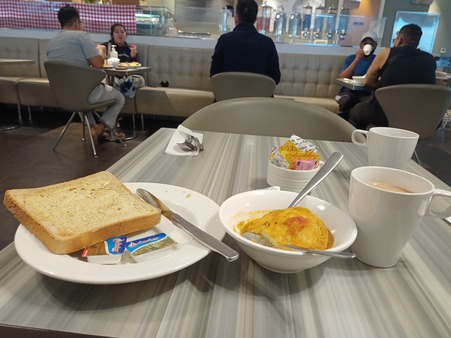
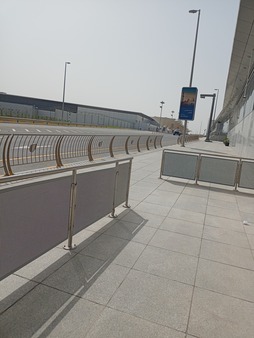
Day 3, Flying And Arrive In Tirana Once in the hotel room, I found it hard to sleep, anxious about waking up on time for my flight. I set an alarm to wake up early, but my subconscious mind kept me alert, and I woke up before the alarm went off. I got freshened up and went down for breakfast, where I found some vegetarian options like Idli-Sambar and bread with butter, along with some morning tea. After breakfast, I headed back to the airport, ready to catch my flight to my final destination: Tirana, Albania. Breakfast at hotel Airport area I reached Tirana, Albania after a six hours flight, feeling exhausted and I was suffering from a headache. The air pressure had blocked my ears, and jet lag added to my fatigue. After collecting my checked luggage, I headed to the first ATM machine at the airport. Struggling to insert my card, I asked a nearby gentleman for help. He tried his best, but my card got stuck inside the machine. Panic set in as I worried about how I would survive without money. Taking a deep breath, I found an airport employee and explained the situation. The gentleman stayed with me, offering support and repeatedly apologizing for his mistake. However, it wasn t his fault, the ATM was out of order, which I hadn t noticed. My focus was solely on retrieving my ATM card. The airport employee worked diligently, using a hairpin to carefully extract my card. Finally, the card was freed, and I felt an immense sense of relief, grateful for the help of these kind strangers. I used another ATM, successfully withdrew money, and then went to an airport mobile SIM shop to buy a new SIM card for local internet and connectivity. sim plans

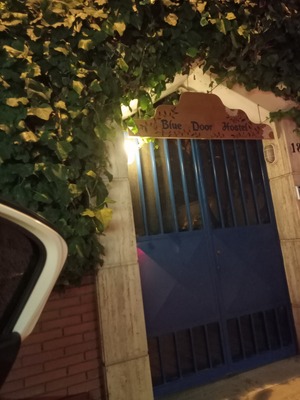
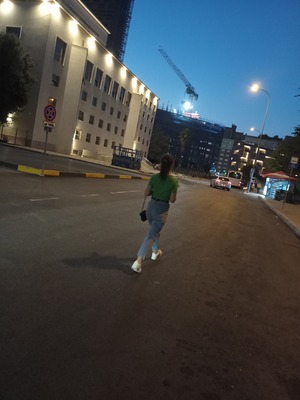
Day 4, Arriving In Tirana, Facing Challenges In A Foreign Country I had booked a stay at a backpacker hostel near the city center of Tirana. After sorting out the ATM and SIM card issues, I searched for a bus or any transport to get there. It was quite late, around 8:30 PM, and being in a new city, I was in a hurry. I saw a bus nearly leaving the airport, stopped it, and asked if it went to the city center. They gave me the green flag, so I boarded the airport service bus and reached the city center. Feeling very tired, I discovered that the hostel was about an hour and a half away by walking. Deciding to take a cab, I faced a challenge as the driver couldn t understand my English or accent. Using a mobile translator to convert my address from English to Albanian, I finally communicated my destination to him. With that sorted out, I headed to the Blue Door Backpacker Hostel and arrived around 9 PM, relieved to have finally reached my destination and I checked in. Hostel gate Street in Tirana I found my top bunk bed, only to realize I had booked a mixed-gender dormitory. This detail had completely escaped my notice during the booking process. I felt unsure about how to handle the situation. Coincidentally, my experience mirrored what Kangana faced in the movie Queen . Feeling acidic due to an empty stomach and the exhaustion of heavy traveling, I wasn t up to cooking in the hostel s kitchen. I asked the front desk about the nearest restaurant. It was nearly 9:30 PM, and the streets were deserted. To avoid any mishaps like in the movie Queen, I kept my passport securely locked in my bag, ensuring it wouldn t be a victim of theft. Venturing out for dinner, I felt uneasy on the quiet streets. I eventually found a restaurant recommended by the hostel, but the menu was almost entirely non-vegetarian. I struggled to ask about vegetarian options and was uncertain if any dishes contained eggs, as some people consider eggs to be vegetarian. Feeling frustrated and unsure, I left the restaurant without eating. I noticed a nearby grocery store that was about to close and managed to get a few extra minutes to shop. I bought some snacks, wafers, milk, and tea bags (though I couldn t find tea powder to make Indian-style tea). Returning to the hostel, I made do with wafers, cookies, and milk for dinner. That day was incredibly tough for me, I filled with exhaustion and struggle in a new country, I was on the verge of tears . I made a video call home before sleeping on the top bunk bed. It was a new experience for me, sharing a room with both unknown men and women. I kept my passport safe inside my purse and under my pillow while sleeping, staying very conscious about its security.
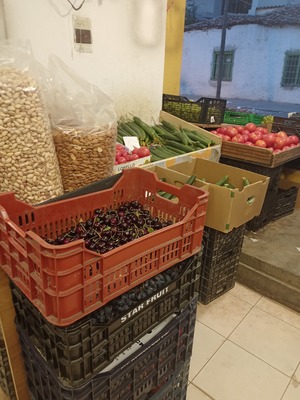
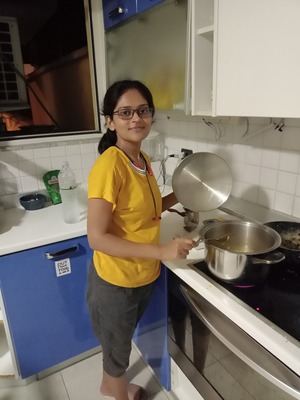
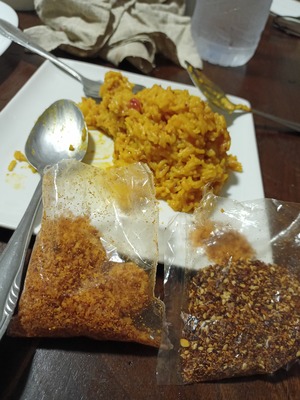
Day 5, Exploring Nearby Places I woke up the next day at noon. After having some coffee, the hostel management girl asked if I wanted breakfast. She offered curd with cornflakes, which I refused because I don t like curd. Instead, I ordered a pizza from a vegetarian pizza place with her help, and I started feeling better. I met some people in the hostel, some from Syria and others from Italy. I struggled to understand their accents but kept pushing myself to get involved in their discussions. Despite the challenges, I felt more at ease and was slowly adapting to my new environment. I went out from the hostel in the evening to buy some vegetables to cook something. I searched for shops and found some potatoes, tomatoes, and rice. I decided to cook Khichdi, an Indian dish made with rice, and added some chili flakes I brought from home. After preparing my dinner, I ate and then went to sleep again. vegetable shop cooking in kitchen Food

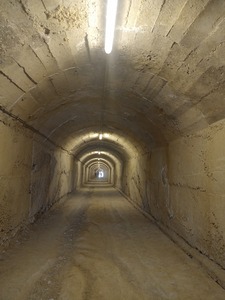
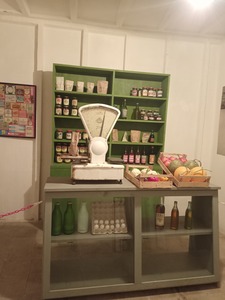
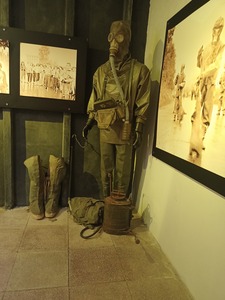
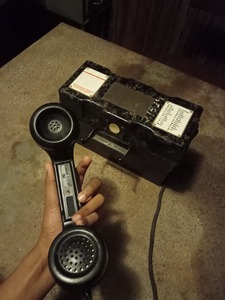
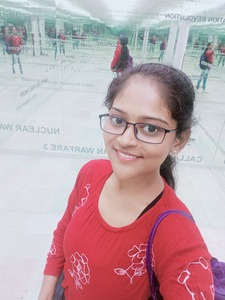
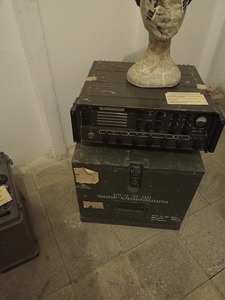
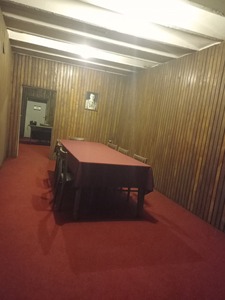
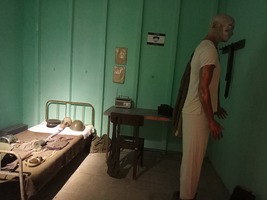
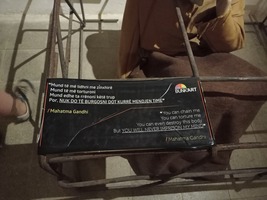
Day 6, Tiranas Recent History The next day, I planned to explore the city and visited Bunkart-1, a fascinating museum in a massive underground bunker from the communist era. Originally built as a shelter for Albania s political and military elite, it now offers a unique glimpse into the country s history under Enver Hoxha s oppressive regime. The museum s exhibits include historical artifacts, photographs, and multimedia displays that detail the lives of Albanians during that time. Walking through the dimly lit corridors, I felt the weight of history and gained a deeper understanding of Albania s past. Bunkart Bunkart Bunkart Bunkart Bunkart Bunkart Bunkar Bunkart Bunkart Bunkart Bunkart

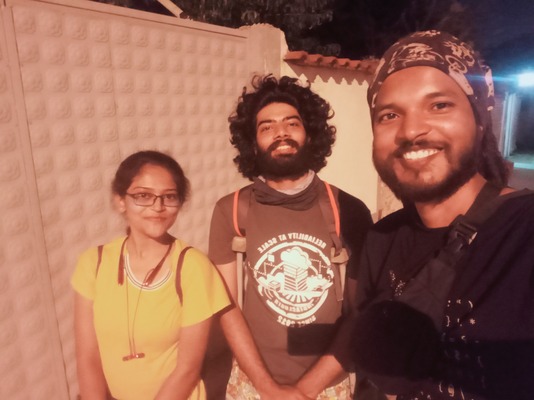
Day 7-8, Meeting Friends From India The next day, I accidentally met with Chirag, who was returning from the Debian Conference 2022 held in Prizren, Kosovo, and staying at the same hostel. When I encountered him, he was talking on the phone, and I recognized he was Indian by his accent. I introduced myself, and we discovered we had some mutual friends. Chirag told me that our common friend, Raju, was also coming to stay at the hostel the next day. This news made me feel relaxed and happy to have known people around. When Raju arrived, the three of us, Chirag, Raju, and I planned to have dinner at an Indian restaurant and explore Tirana city. I had a great time talking and enjoying their company. Friends on street

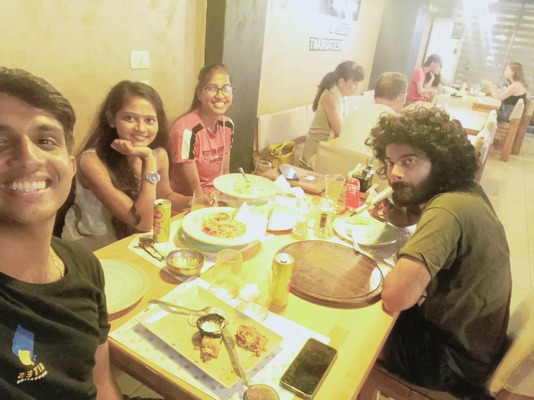
Day 9-10, Meeting More Friends Raju had a ticket to leave soon, so Chirag and I made a plan to visit Shkod r and the nearby Komani Lake for kayaking. We started our journey early in the morning by bus and reached Shkod r. There, we met new friends from the conference, Pavit and Abraham, who were already there. We had dinner together and enjoyed an ice cream treat from Chirag. Friends on dinner

Day 12, Kayaking And Say Good Bye To Friends The next day, Pavit and Abraham had a flight back to India, so Chirag and I went to Komani Lake. We had an adventurous time kayaking, even though neither of us knew how to swim. We took a ferry through the backwaters to the island on Komani Lake and enjoyed a fantastic adventure together. After our trip, Chirag returned to Tirana for his flight back to India, leaving me to continue my journey alone. Lake with mountain Kayak

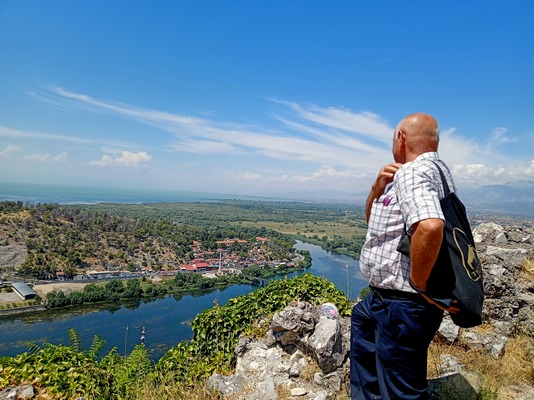
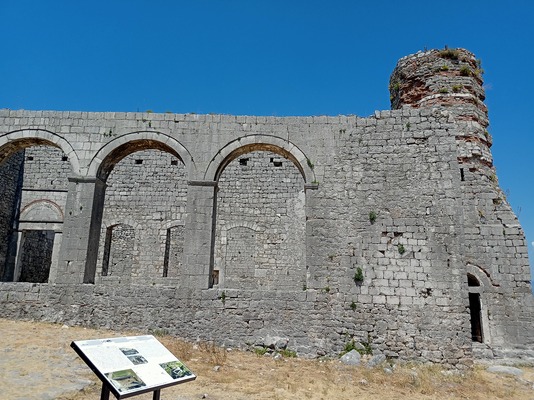
Day 13, Climbing Rozafa Castel By stopping at Shkod r, I visited Rozafa Castle. Despite the language barrier, as most locals only spoke Albanian, people around me guided me correctly on how to get there. At times, I used applications like Google Translate to communicate. To read signs or hotel menus, I used Google Photos' language converter. I even used the audio converter to understand and speak some basic Albanian phrases. View from top of Castel Rozafa castel I took a bus from Shkod r to the southern part of Albania, heading to Sarand . The journey lasted about five to six hours, and I had booked a stay at Mona s Hostel. Upon arrival, I met Eliza from America, and we went together to Ksamil Beach, spending a wonderful day there.

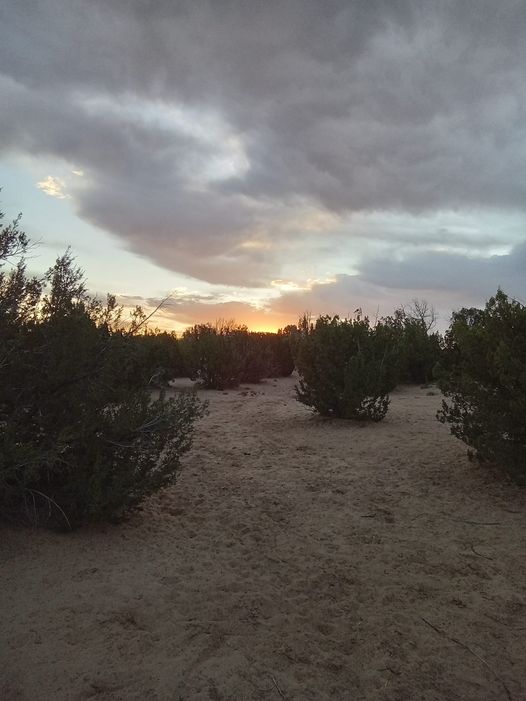
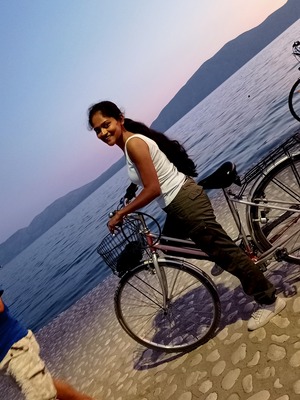
Day 14, Vlora Beach: Beach Side Cycling Next, I traveled to Vlor , where I stayed for one day. During my time there, I enjoyed beach side cycling with a cycle provided by the hostel owner and spent some time feeding fish. I also met a fellow traveler from Delhi who had brought along some preserved Indian curry. He kindly shared it with me, which was a welcome change after nearly 15 days without authentic Indian cuisine, except for what I had cooked myself in various hostels. Sunset on BeachKalyani on Beach Beach with streetBeach side cycling

Day 15-16 Visiting Durress, Travelling Back To Tirana I then visited Durr s, exploring its beautiful beaches, before heading back to Tirana one day before my flight home. On the day of my flight, my alarm didn t go off, and I woke up late at the hostel. In a frantic rush, I packed everything in just five minutes and dashed toward the city center to catch the bus to the airport. If I had been just five minutes later, I would have missed the bus. Thankfully, I managed to stop it just in time and began my journey back home, reflecting on the incredible adventure I had experienced. Fortunately, I wasn t late; I arrived at the airport just in time. After clearing immigration, I boarded my flight, which had a layover in Warsaw, Poland. The journey from Tirana to Warsaw took about two and a half hours, followed by a seven to eight-hour flight from Poland back to India. Once I arrived in Delhi, I returned to Zostel and booked a train ticket to Aurangabad for the next three days.

Backview This trip was an incredible adventure for me. I never imagined I could accomplish something like this, but I did. Meeting diverse people, experiencing different cultures, and learning so much made this journey truly unforgettable. Looking back, I realize how much I ve grown from this experience. Although I may have more opportunities to travel abroad in the future, this trip will always hold a special place in my heart. The memories I made and the incredible people I met along the way are irreplaceable. This experience goes beyond what I can express through this blog or words; it was incredibly precious to me. Every moment of this journey is etched in my memory, and I am grateful for every part of it.

8 August 2024

Reproducible Builds: Reproducible Builds in July 2024

Welcome to the July 2024 report from the Reproducible Builds project! In our reports, we outline what we ve been up to over the past month and highlight news items in software supply-chain security more broadly. As always, if you are interested in contributing to the project, please visit our Contribute page on our website. Table of contents:
  1. Reproducible Builds Summit 2024
  2. Pulling Linux up by its bootstraps
  3. Towards Idempotent Rebuilds?
  4. AROMA: Automatic Reproduction of Maven Artifacts
  5. Community updates
  6. Android Reproducible Builds at IzzyOnDroid with rbtlog
  7. Extending the Scalability, Flexibility and Responsiveness of Secure Software Update Systems
  8. Development news
  9. Website updates
  10. Upstream patches
  11. Reproducibility testing framework


Reproducible Builds Summit 2024 Last month, we were very pleased to announce the upcoming Reproducible Builds Summit, set to take place from September 17th 19th 2024 in Hamburg, Germany. We are thrilled to host the seventh edition of this exciting event, following the success of previous summits in various iconic locations around the world, including Venice, Marrakesh, Paris, Berlin and Athens. Our summits are a unique gathering that brings together attendees from diverse projects, united by a shared vision of advancing the Reproducible Builds effort. During this enriching event, participants will have the opportunity to engage in discussions, establish connections and exchange ideas to drive progress in this vital field. Our aim is to create an inclusive space that fosters collaboration, innovation and problem-solving. If you re interesting in joining us this year, please make sure to read the event page, which has more details about the event and location. We are very much looking forward to seeing many readers of these reports there.

Pulling Linux up by its bootstraps (LWN) In a recent edition of Linux Weekly News, Daroc Alden has written an article on bootstrappable builds. Starting with a brief introduction that
a bootstrappable build is one that builds existing software from scratch for example, building GCC without relying on an existing copy of GCC. In 2023, the Guix project announced that the project had reduced the size of the binary bootstrap seed needed to build its operating system to just 357-bytes not counting the Linux kernel required to run the build process.
The article goes onto to describe that now, the live-bootstrap project has gone a step further and removed the need for an existing kernel at all. and concludes:
The real benefit of bootstrappable builds comes from a few things. Like reproducible builds, they can make users more confident that the binary packages downloaded from a package mirror really do correspond to the open-source project whose source code they can inspect. Bootstrappable builds have also had positive effects on the complexity of building a Linux distribution from scratch [ ]. But most of all, bootstrappable builds are a boon to the longevity of our software ecosystem. It s easy for old software to become unbuildable. By having a well-known, self-contained chain of software that can build itself from a small seed, in a variety of environments, bootstrappable builds can help ensure that today s software is not lost, no matter where the open-source community goes from here

Towards Idempotent Rebuilds? Trisquel developer Simon Josefsson wrote an interesting blog post comparing the output of the .deb files from our tests.reproducible-builds.org testing framework and the ones in the official Debian archive. Following up from a previous post on the reproducibility of Trisquel, Simon notes that typically [the] rebuilds do not match the official packages, even when they say the package is reproducible , Simon correctly identifies that the purpose of [these] rebuilds are not to say anything about the official binary build, instead the purpose is to offer a QA service to maintainers by performing two builds of a package and declaring success if both builds match. However, Simon s post swiftly moves on to announce a new tool called debdistrebuild that performs rebuilds of the difference between two distributions in a GitLab pipeline and displays diffoscope output for further analysis.

AROMA: Automatic Reproduction of Maven Artifacts Mehdi Keshani, Tudor-Gabriel Velican, Gideon Bot and Sebastian Proksch of the Delft University of Technology, Netherlands, have published a new paper in the ACM Software Engineering on a new tool to automatically reproduce Apache Maven artifacts:
Reproducible Central is an initiative that curates a list of reproducible Maven libraries, but the list is limited and challenging to maintain due to manual efforts. [We] investigate the feasibility of automatically finding the source code of a library from its Maven release and recovering information about the original release environment. Our tool, AROMA, can obtain this critical information from the artifact and the source repository through several heuristics and we use the results for reproduction attempts of Maven packages. Overall, our approach achieves an accuracy of up to 99.5% when compared field-by-field to the existing manual approach [and] we reveal that automatic reproducibility is feasible for 23.4% of the Maven packages using AROMA, and 8% of these packages are fully reproducible.

Community updates On our mailing list this month:
  • Nichita Morcotilo reached out to the community, first to share their efforts to build reproducible packages cross-platform with a new build tool called rattler-build, noting that as you can imagine, building packages reproducibly on Windows is the hardest challenge (so far!) . Nichita goes onto mention that the Apple ecosystem appears to be using ZERO_AR_DATE over SOURCE_DATE_EPOCH. [ ]
  • Roland Clobus announced that the Debian bookworm 12.6 live images are nearly reproducible , with more detail in the post itself and input in the thread from other contributors.
  • As reported in last month s report, Pol Dellaiera completed his master thesis on Reproducibility in Software Engineering at the University of Mons, Belgium. This month, Pol announced this on the list with more background info. Since the master thesis sources have been available, it has received some feedback and contributions. As a result, an updated version of the thesis has been published containing those community fixes.
  • Daniel Gr ber asked for help in getting the Yosys documentation to build reproducibly, citing issues in inter alia the PDF generation causing differing CreationDate metadata values.
  • James Addison continued his long journey towards getting the Sphinx documentation generator to build reproducible documentation. In this thread, James concerns himself with the problem that even when SOURCE_DATE_EPOCH is configured, Sphinx projects that have configured their copyright notices using dynamic elements can produce nonsensical output under some circumstances. James query ended up generating a number of replies.
  • Allen gunner Gunner posted a brief update on the progress the core team is making towards introducing a Code of Conduct (CoC) such that it is in place in time for the RB Summit in Hamburg in September . In particular, gunner asks if you are interested in helping with CoC design and development in the weeks ahead, simply email rb-core@lists.reproducible-builds.org and let us know . [ ]

Android Reproducible Builds at IzzyOnDroid with rbtlog On our mailing list, Fay Stegerman announced a new Reproducible Builds collaboration in the Android ecosystem:
We are pleased to announce Reproducible Builds, special client support and more in our repo : a collaboration between various independent interoperable projects: the IzzyOnDroid team, 3rd-party clients Droid-ify & Neo Store, and rbtlog (part of my collection of tools for Android Reproducible Builds) to bring Reproducible Builds to IzzyOnDroid and the wider Android ecosystem.

Extending the Scalability, Flexibility and Responsiveness of Secure Software Update Systems Congratulations to Marina Moore of the New York Tandon School of Engineering who has submitted her PhD thesis on Extending the Scalability, Flexibility and Responsiveness of Secure Software Update Systems. The introduction outlines its contributions to the field:
[S]oftware repositories are a vital component of software development and release, with packages downloaded both for direct use and to use as dependencies for other software. Further, when software is updated due to patched vulnerabilities or new features, it is vital that users are able to see and install this patched version of the software. However, this process of updating software can also be the source of attack. To address these attacks, secure software update systems have been proposed. However, these secure software update systems have seen barriers to widespread adoption. The Update Framework (TUF) was introduced in 2010 to address several attacks on software update systems including repository compromise, rollback attacks, and arbitrary software installation. Despite this, compromises continue to occur, with millions of users impacted by such compromises. My work has addressed substantial challenges to adoption of secure software update systems grounded in an understanding of practical concerns. Work with industry and academic communities provided opportunities to discover challenges, expand adoption, and raise awareness about secure software updates. [ ]

Development news In Debian this month, 12 reviews of Debian packages were added, 13 were updated and 6 were removed this month adding to our knowledge about identified issues. A new toolchain issue type was identified as well, specifically ordering_differences_in_pkg_info.
Colin Percival filed a bug against the LLVM compiler noting that building i386 binaries on the i386 architecture is different when building i386 binaries under amd64. The fix was narrowed down to x87 excess precision, which can result in slightly different register choices when the compiler is hosted on x86_64 or i386 and a fix committed. [ ]
Fay Stegerman performed some in-depth research surrounding her apksigcopier tool, after some Android .apk files signed with the latest apksigner could no longer be verified as reproducible. Fay identified the issue as follows:
Since build-tools >= 35.0.0-rc1, backwards-incompatible changes to apksigner break apksigcopier as it now by default forcibly replaces existing alignment padding and changed the default page alignment from 4k to 16k (same as Android Gradle Plugin >= 8.3, so the latter is only an issue when using older AGP). [ ]
She documented multiple available workarounds and filed a bug in Google s issue tracker.
Lastly, diffoscope is our in-depth and content-aware diff utility that can locate and diagnose reproducibility issues. This month, Chris Lamb uploaded version 272 and Mattia Rizzolo uploaded version 273 to Debian, and the following changes were made as well:
  • Chris Lamb:
    • Ensure that the convert utility is from ImageMagick version 6.x. The command-line interface has seemingly changed with the 7.x series of ImageMagick. [ ]
    • Factor out version detection in test_jpeg_image. [ ]
    • Correct the import of the identify_version method after a refactoring change in a previous commit. [ ]
    • Move away from using DSA OpenSSH keys in tests as support has been deprecated and removed in OpenSSH version 9.8p1. [ ]
    • Move to assert_diff in the test_openssh_pub_key package. [ ]
    • Update copyright years. [ ]
  • Mattia Rizzolo:
    • Add support for ffmpeg version 7.x which adds some extra context to the diff. [ ]
    • Rework the handling of OpenSSH testing of DSA keys if OpenSSH is strictly 9.7, and add an OpenSSH key test with a ed25519-format key [ ][ ][ ]
    • Temporarily disable a few packages that are not available in Debian testing. [ ][ ]
    • Stop ignoring the results of Debian testing in the continuous integration system. [ ]
    • Adjust options in debian/source to make sure not to pack the Python sdist directory into the binary Debian package. [ ]
    • Adjust Lintian overrides. [ ]

Website updates There were a number of improvements made to our website this month, including:

Upstream patches The Reproducible Builds project detects, dissects and attempts to fix as many currently-unreproducible packages as possible. We endeavour to send all of our patches upstream where appropriate. This month, we wrote a large number of such patches, including:

Reproducibility testing framework The Reproducible Builds project operates a comprehensive testing framework running primarily at tests.reproducible-builds.org in order to check packages and other artifacts for reproducibility. In July, a number of changes were made by Holger Levsen, including:
  • Grant bremner access to the ionos7 node. [ ][ ]
  • Perform a dummy change to force update of all jobs. [ ][ ]
In addition, Vagrant Cascadian performed some necessary node maintenance of the underlying build hosts. [ ]

If you are interested in contributing to the Reproducible Builds project, please visit our Contribute page on our website. However, you can get in touch with us via:

Louis-Philippe V ronneau: A Selection of DebConf24 Talks

DebConf24 is now over! I'm very happy I was able to attend this year. If you haven't had time to look at the schedule yet, here is a selection of talks I liked.
What happens if I delete setup.py?: a live demo of upgrading to PEP-518 Python packaging A great talk by Weezel showcasing how easy it is to migrate to PEP-518 for existing Python projects. This is the kind of thing I've been doing a lot when packaging upstream projects that still use setup.py. I encourage you to send this kind of patch upstream, as it makes everyone's life much easier.
Debian on Chromebooks: What's New and What's Next? A talk by Alper Nebi Yasak, who has done great work on running Debian and the Debian Installer on Chromebooks. With Chromebooks being very popular machines in schools, it's nice to see people working on a path to liberate them.
Sequoia PGP, sq, gpg-from-sq, v6 OpenPGP, and Debian I had the chance to see Justus' talk on Sequoia an OpenPGP implementation in Rust at DebConf22 in Kosovo. Back then, the conclusion was that sq wasn't ready for production yet. Well it seems it now is! This in-depth talk goes through the history of the project and its goals. There is also a very good section on the current OpenPGP/LibrePGP schism.
Chameleon - the easy way to try out Sequoia - OpenPGP written in Rust A very short talk by Holger on Chameleon, a tool to make migration to Sequoia easier. TL;DW: apt install gpg-from-sq
Protecting OpenPGP keyservers from certificate flooding Although I used to enjoy signing people's OpenPGP keys, I completely gave up on this practice around 2019 when dkg's key was flooded with bogus certifications and have been refusing to do so since. In this talk, Gunnar talks about his PhD work on fixing this issue and making sure we can eventually restore this important function on keyservers.
Bits from the DPL Bits from the DPL! A DebConf classic.
Linux live patching in Debian Having to reboot servers after kernel upgrades is a hassle, especially with machines that have encrypted disk drives. Although kernel live patching in Debian is still a work in progress, it is encouraging to see people trying to fix this issue.
"I use Debian BTW": fzf, tmux, zoxide and friends A fun talk by Samuel Henrique on little changes and tricks one can make to their setup to make life easier.
Ideas to Move Debian Installer Forward Another in-depth talk by Alper, this time on the Debian Installer and his ideas to try to make it better. I learned a lot about the d-i internals!
Lightning Talks Lighting talks are always fun to watch! This year, the following talks happened:
  1. Customizing your Linux icons
  2. A Free Speech tracker by SFLC.IN
  3. Desktop computing is irrelevant
  4. An introduction to wcurl
  5. Aliasing in dpkg
  6. A DebConf art space
  7. Tiny Tapeout, Fomu, PiCI
  8. Data processing and visualisation in the shell

Is there a role for Debian in the post-open source era? As an economist, I've been interested in Copyright and business models in the Free Software ecosystem for a while. In this talk, Hatta-san and Bruce Perens discuss the idea of alternative licences that are not DFSG-free, like Post-Open.

7 August 2024

Sahil Dhiman: Banks With Own ASN in India

Most banks are behind CDNs and DDoS mitigation providers nowadays, though they still hold their own IP space. Was interested in this, so compiled a list from BGP.Tools and Hurricane Electric BGP Toolkit. Other noteable mentions: Let me know if I m missing someone. Many thanks to Saswata Sarkar for helping with the list.

4 August 2024

Scarlett Gately Moore: KDE, Kubuntu, Debian: Weekly progress report Qt6 updates.

Thankfully no tragedies to report this week! I thank each and everyone of you that has donated to my car fund. I still have a ways to go and could use some more help so that we can go to the funeral. https://gofund.me/033eb25d I am between contracts and work packages, so all of my work is currently for free. Thanks for your consideration. Another very busy week getting qt6 updates in Debian, Kubuntu, and KDE snaps. Kubuntu: Debian: KDE Snaps: Updated QT to 6.7.2 which required a rebuild of all our snaps. Also found an issue with mismatched ffmpeg libraries, we have to bundle them for now until versioning issues are resolved. Made new theme snaps for KDE breeze: gtk-theme-breeze, icon-theme-breeze so if you use the plasma theme breeze please install these and run
for PLUG in $(snap connections   grep gtk-common-themes:icon-themes   awk ' print $2 '); do sudo snap connect $ PLUG  icon-theme-breeze:icon-themes; done
for PLUG in $(snap connections   grep gtk-common-themes:gtk-3-themes   awk ' print $2 '); do sudo snap connect $ PLUG  gtk-theme-breeze:gtk-3-themes; done
for PLUG in $(snap connections   grep gtk-common-themes:gtk-2-themes   awk ' print $2 '); do sudo snap connect $ PLUG  gtk-theme-breeze:gtk-2-themes; done
This should resolve most theming issues. We are still waiting for kdeglobals to be merged in snapd to fix colorscheme issues, it is set for next release. I am still working on qt6 themes and working out how to implement them in snaps as they are more complex than gtk themes with shared libraries and file structures. Please note: Please help test the edge snaps so I can promote them to stable. WIP Snaps or MR s made

Next.

Previous.