Gunnar Wolf: Happy Public Domain day, even for the inhabitants of the longest-copyright-term country

 Last year, my new year's resolution was to write in my journal every day.
That actually stuck, I wrote 262 journal entries in 2011. While I've been
keeping a journal intermittently since 1998, last year I doubled the number
of entries in it. And wrote a novel's worth of entries -- 53 thousand words!
Most of it is of course banal and mundane stuff. Not good compared with
Lars, who does something with his journal where he goes into some detail
about code he's working on, and other work. The excerpts I've seen are
quite nice. But after I've written code, written a commit message,
documentation, perhaps bug reports etc, I often can't find much to say
about it in my journal, beyond the bare bones that I worked on $foo today or
faced a particularly hard bug. I also worry that the journal, and my
reluctance to repeat myself, often tips the balance away from me blogging,
if I write down something in the journal first.
Compare what jokes are funny now with those in 1982. The 1982 ones from net.jokes on olduse.net seem juvenile. Now compare what Unix joke man pages are funny now with those I'm reading from 1982. They seem basically the same. What would Biella make of this? Liw noticed ikiwiki OOM on pell. Tracked down to a perl markdown bug with long lines. Had quite enough of perl markdown; ikiwiki will be moving to a different engine. Added discount support to it today, still needs Debian package tho. [censored] Really gorgeous sunset, with a high wind, moon, puffy low, fast moving clouds. Enjoyed it ecstaticly. It's going to get cold soon. Very rainy early, but then got intermittently sunny; power is holding out ok. Was going to roast a chicken today, but got distracted and had a large lunch besides. Need to find some quick food for supper. I need to start a new book, should it be the River Cottage book about meat that I stole from Anna, or some SF? Blogged about journaling, and put this journal entry in it, so also journaled about blogging. Wrote it somewhat self-conciously.
I came to Argentina with my girlfriend to visit her family and friends, and to spend here some disconnected days during my winter^Wsummer vacations. And so it was, we had some very nice, relaxing days, with everything running smooth and with infrequent but enough sessions of mail access to withstand the disconnection without pain.
Of course, I didn't anticipate that the Network Operations Center of my university would break my institute's connectivity while performing their planned maintenance on December 23. After some days, I was able to talk with one person in the university, but connectivity was not restored. Nobody with knowledge to look at the firewall's screen is available.
So, as of today (happy new year 2012!), I have been mail-less for over a week. I will be back in my office soon now, so I'll get mail connectivity within the upcoming week.
Meanwhile, everybody who mailed me for any reason (job, Debian, holiday greetings, whatever)... Well, I'm sad to tell you that the mails were lost. But worry not, I will act as if nothing like that happened and I received all of your best wishes.
 I can t work out the logic behind the above advert for Energy Watch which was on a billboard near Ringwood Station in Melbourne, Australia. The only thing that it clear is that it spreads bad ideas about mental illness and psychiatric treatment. It doesn t make me want to do business with them.
 The above picture is a shop-front for the Antons clothing store (I m not sure if they are a tailor or if they sell ready to wear). It was taken on Lonsdale St, Melbourne where the store apparently used to be, now they are in Melbourne Central.

 The above pictures show more detail. Unfortunately the combination of lighting and my camera (Xperia X10 phone camera) wasn t adequate to show the apparent ethnic differences between the two men. It seems that the most likely Australian interpretation of the ethnic groups that are represented are African (maybe Afro-American), Southern-European or maybe American Hispanic, North-Western European, and Japanese. It s good to have mannequins representing the fact that not everyone in Australia is white, but different facial expressions for different races seems a strange choice (admittedly it might be a choice made by mannequin manufacturers). Also the Japanese woman with fan idea is rather outdated.
I ve just started reading You May Ask Yourself: An Introduction to Thinking Like a Sociologist (Second Edition)
 by Dalton Conley. I ve only read the first chapter, but that was good enough that the entire book has to be good enough to recommend.
 Backups are something I don't do well. I hope to write a more thorough
article about them at some point. For now, here are some tips.
Like most home users, I don't have access to a tape drive or jukebox for
backups. I'm therefore looking for a solution that backs up to a local
block device. I haven't ruled out a solution that backs up to DVD-Rs,
but I haven't found a suitable one.
I first tried rsnapshot, which uses hard link trees to
represent increments. I found that this resulted in enormous filesystem
metadata, sufficient to cause the machine I was running it on (an embedded ARM
system) to slow to a crawl. I'd recommend to avoid anything using this
technique.
I more recently have been using
rdiff-backup. This has appeared to work
quite well for a number of years. However, it does not gracefully handle the
backup volume being full, spewing python backtraces. This is compounded with
some confusing use of temporary directies and not honouring
$TMPDIR. This
has been known about for years
(1,
2). I've just
independently discovered these problems for the second
time. Aside from
that, because it does not de-duplicate files, it is sensitive to large files
being moved around in the source being backed up. It also cannot do a dry-run
estimate of the disk space required for the next increment. So: time to move
on.
Back in 2010 I discovered bup, an intriguing
backup tool that used a git-style backing store. It's interesting enough
that I packaged it and use it
in a few situations, but I wouldn't rely on it for my main backups, for two
reasons: one, it's not tried-and-tested enough yet (but that is rapidly being
resolved), two: you can't get rid of old increments, so your backup volume will
always increase in size over time, and never throw away old data. So, for now:
move on.
Next on my list to try is Lars Wirzenius' obnam.
 So there are two servers; let's call them srv1 and srv2. Srv1
contains a bunch of subversion repositories, but these are to be
migrated to srv2. Since the repositories are not (just) used for
ascii-only files, they're fairly big (several tens of gigabytes,
altogether), so copying them from one server to the other would take a
while. In order to make sure this would happen quickly, we had already
copied them over to the new server, so that on the final switch would be
quick (an rsync that would copy over just the new done
transactions).
That final switch was today. Only I didn't know that instead of just
testing, the customer had already started using one of the repositories
(and they'd forgotten to remind me), so the subversion repository
suddenly jumped backwards in time. In addition, the new server wasn't
being backed up yet (at least not for the subversion bits), so restoring
from backups wasn't an option. Oops.
Luckily the solution is fairly simple. You see, fsfs stores each
revision in a unique file; that means that as long as nobody has
committed to the repository yet (which they couldn't, since system users
aren't the same on both servers, so the webserver didn't have write
permissions on the repository after the rsync), nothing is lost. One
only needs to manually change the repository so that whatever subversion
thinks is the latest commit, actually is the latest commit.
That information is stored in a file called db/current
inside the repository. What's in that file depends on the repository
version, which is stored in a file called db/format in the
repository. For versions 1 and 2, the format is a single line with three
space-separated values, of which the first is the last revision number
used in the repository. The other two are counters that are used to give
transactions unique names; and they, too, need to be up-to-date. For
version 3 and above, the file contains only the revision number; there,
the other two are derived from that instead of having their own unique
number.
Figuring out the last used revision number in an fsfs repository is
ridiculously easy:
ls -v db/revs tail -n1So if you've got a repository of fsfs version 3 or above, just change the revision number in the db/current file (after taking backups and making sure nobody can access the repository while you're doing this, of course), and you're all set. Unfortunately, in my case, the repository was still in fsfs version 2, which meant I could not change just the revision number and not expect trouble. I suppose it should've been possible to figure out what the last transaction numbers are, somehow, so that I could fix the current file completely, but I reasoned that upgrading to a newer repository format might have other advantages too, so I just dumped the repository and reloaded it, and everything worked at that point.
enum foo_action   foo_START, foo_STOP ;
void do_foo_action(enum foo_action);
Which in the next version looks like that:
enum foo_action   foo_START, foo_STOP, foo_RESTART ;
void do_foo_action(enum foo_action);
As the new enum value was added at the end, the numbers of the old constants did not change, so the API and ABI did not change incompatibly, so a program compiled against the old version still works with the new one. (that means: upstream did their job properly). But the maintainer of the Debian package faces a challenge: There was no new symbol added, dpkg-gensymbols will not see that anything changed (as the symbols are the same). So if the maintainer forgets to manually increase the version required by the do_foo_action symbol, it will still be recorded in the symbols file as needing the old version. Thus dpkg will not complain if one tries to install the package containing the program together with the old version of the library. But if that program is called and calls do_foo_action with argument 2 (foo_RESTART), it will not behave properly. To recap:
 PostgreSQL's libpq5 package got its symbols file somewhere around version 8.4,
so the symbols in there were all marked with version "8.4~" or greater. As I'm
working on pgapt.debian.net aiming at
providing packages for all upstream-supported PG versions (currently 8.3 and
up), this made packages incompatible with 8.3's libpq5.
There didn't seem to be a ready program to feed a series of .deb files which
would then run dpkg-gensymbols and build a symbols file, so I wrote this shell
script:
#!/bin/sh
set -eu
[ -d tmp ]   mkdir tmp
i=1
for pkg in "$@" ; do
    echo "$pkg"
    test -e "$pkg"
    name=$(dpkg-deb -I "$pkg"   perl -lne 'print $1 if /^ Package: (.+)/')
    version=$(dpkg-deb -I "$pkg"   perl -lne 'print $1 if /^ Version: (.+)/')
    out=$(printf "tmp/%03d_%s" $i "$version")
    dpkg-deb -x "$pkg" "$out"
    dpkg-gensymbols -P"$out" -p"$name" -v"$version" \
        $ oldsymbols:+-I"$oldsymbols"  -O"$out.symbols"   \
        tee "$out.symbols.diff"
    test -s "$out.symbols.diff"   rm "$out.symbols.diff"
    oldsymbols="$out.symbols"
    rm -rf "$out"
    i=$(expr $i + 1)
done
To use it, do the following:
The great thing about git and other distributed version control systems is
that once you clone (or fork) a repository, you have all the data. You
don't have to trust that Github will preserve it; everyone who develops
the project is a backup.
Github carries this principle quite far amoung the features they provide.
But not all the way. Today I have surveyed their features, and where the
data for each is stored.
git notes is the obviously right storage location.)
Along with ensuring every developer checkout is a backup, this would
allow accessing that data while offline, which is one of the reasons
we use distributed version control.
The lack of a global list of projects is problimatic in a more global sense.
It means that we can't make a backup of all the (public) repositories in
Github (assuming that we had the bandwidth and storage to do it). I
recently backed up all the repositories on Berlios.de, when it looked to be
shutting down; this was only possible because they allowed enumerating them
all.
People at The Internet Archive say that their archival coverage of free
software is actually quite bad. We trust our version control systems
to save our free software data, but while this works individually, it
will result in data loss globally over time. I'd encourage Github to help
the Internet Archive improve their collections by donating periodic snapshots
of their public git repositories to the Archive. You're located in the same
city, 5 miles apart; they have lots of hard drives (though less right
now during the shortage than usual); this should be pretty easy to do.
 It took me a while to find this, so I'm just blogging it so other people
will be able to find it.
I wanted to send a desktop
notification using
pynotify, but using a GTK+ stock
icons.
With the following snippet, I managed to do it.
import pynotify
pynotify.init("myapp")
import gtk
n = pynotify.Notification(summary="Summary", message="Message!")
n.set_icon_from_pixbuf(gtk.Label().render_icon(gtk.STOCK_HARDDISK, gtk.ICON_SIZE_LARGE_TOOLBAR))
n.show()
Note that the use of a Label is just to have a widget instanciated to use
the render_icon() method. It could be any widget type as far as I
understand.
 Summary: It is important that we (the Debian community that relies on OpenPGP through
GNU Privacy Guard) stop using short key IDs. There is no vulnerability in OpenPGP and GPG.
However, using short key IDs (like 0x70096AD1) is
fundementally insecure; it is easy to generate collisions for short key IDs.
We should always use 64-bit (or longer) key IDs, like: 0x37E1C17570096AD1
or 0xEC4B033C70096AD1.
TL;DR: This now gives two results: gpg --recv-key 70096AD1
$ gpg --keyserver pgp.mit.edu --recv-key 0x70096AD1
gpg: requesting key 70096AD1 from hkp server pgp.mit.edu
gpg: key 70096AD1: public key "Asheesh Laroia <asheesh@asheesh.org>" imported
gpg: key 70096AD1: public key "Asheesh Laroia <asheesh@asheesh.org>" imported
gpg: no ultimately trusted keys found
gpg: Total number processed: 2
gpg:               imported: 2  (RSA: 1)
I also saw it as an opportunity: I know that cryptography tools are tragically easy to mis-use. The use of 32-bit key IDs is fundamentally incorrect -- too little entropy. Maybe shocking people by creating two "identical" keys will help speed the transition away from this mis-use.
$ gpg --list-keys   grep 70096AD1
pub   1024D/70096AD1 2005-12-28
Just ask GPG to refresh:
$ gpg --keyserver pgp.mit.edu --refresh-keys
gpg: refreshing 1 key from hkp://pgp.mit.edu
gpg: requesting key 70096AD1 from hkp server pgp.mit.edu
gpg: key 70096AD1: public key "Asheesh Laroia <asheesh@asheesh.org>" imported
gpg: key 70096AD1: "Asheesh Laroia <asheesh@asheesh.org>" not changed
gpg: Total number processed: 2
gpg:               imported: 1  (RSA: 1)
gpg:              unchanged: 1
gpg: no ultimately trusted keys found
You can see that it set out to refresh just 1 key. It did that by querying the keyserver for the short ID. The keyserver provided two hits for that query. In the end, GPG refreshes one key and actually imports a new key into the keyring! Now you have two:
$ gpg --list-keys   grep 70096AD1
pub   1024D/70096AD1 2005-12-28
pub   4096R/70096AD1 2011-03-11
There is a bug filed in GNU Privacy Guard about this. It has a patch attached. There is, at the moment, no plan for a new release.
 2012 will be the year where we release wheezy. So, it's time to start
fighting for one of my pet projects: bringing as many languages to 100%
completeness for debconf templates translation.
The reference for this is the
ranking page.
I think we can have up to seven languages fully complete and maybe
even some above 90% (Danish, Dutch, Italian with currently very active
translators, are the best candidates).
For this, as usual, I'll have to shake down many maintainers and handle
my big NMU stick, with NMU proposals for packages that are too high in
this
page (which I'll start cleaning out from its many artefacts).
So, if you're a translator, it's time to hang on in the debian-i18n
mailing list and follow calls for translation updates there. It's also
time to remind me which packages you would like to see uploaded so
that your translation work is really used. Please focus on the oldest
pending translations.
If you're a package maintainer, please look at the following pages:
(my NMU stick is bigger and harder for the latter of course...:-))
And, if you're a maintainer, it's now time to please stop changing the
bloody debconf templates for no reason....or, if you have to do that
for a good reason,
send a call for translations first, or at least ask about how
to do this. I can help you doing that, of course.
Thanks in advance for your cooperation.
 Do you believe that there will come a major inflation in the next months or years? If not, you can stop reading this article. Otherwise lets think what would be the right thing to do now.
 I used to recommend the GNOME desktop for simple users for two main
advantages over Windows:
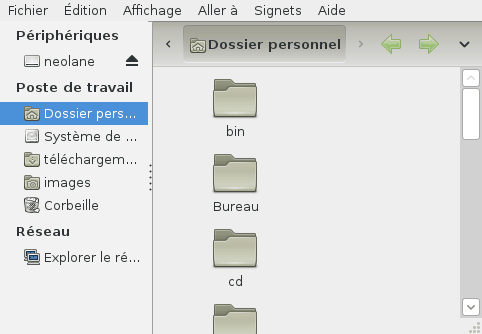 Nautilus |
 Eye of GNOME |
  $ cp -r /usr/share/doc/openvpn/examples/easy-rsa/2.0 /etc/openvpn/easy-rsa
  $ cd /etc/openvpn/easy-rsa
In the vars file change the KEY_SIZE variable from 1024 to 4096 for good measure:
export KEY_SIZE=4096Then, read in the vars file, clean old keys and certificates (if any) and create new ones:
  $ . ./vars
  $ ./clean-all
  $ ./build-ca
You'll now have the chance to enter some data such as country code (e.g. "DE"), state/province, locality, organization name, organizational unit name, common name, name, and email address. The values you choose don't really matter much (except for commonName, maybe, which could be your hostname or domain or such). Finally, the ca.key (root CA key) and ca.crt (root CA certificate) files will be created. Next, we'll create the server key:
$ ./build-key-server serverYou'll have to enter lots of info again (see above), commonName could be "server" or such this time. Upon "Sign the certificate? [y/n]" say y, as well as upon "1 out of 1 certificate requests certified, commit? [y/n]". Finally, the server.key and server.crt files will be created. Same procedure for creating a client key (I used "client1" as filename and commonName here):
$ ./build-key client1Next up we'll generate Diffie Hellman parameters (this will take a shitload of time due to keysize=4096, go drink some coffee):
$ ./build-dhWhen this step is done, you'll have a dh4096.pem file. As we want to use OpenVPN's "tls-auth" feature for perfect forward secrecy (it "adds an additional HMAC signature to all SSL/TLS handshake packets for integrity verification"), we'll have to generate a shared secret:
  $ openvpn --genkey --secret ta.key
  $ mv ta.key keys
So much for creating keys. Now, we'll have to configure OpenVPN. Copy the default server config file and edit it:
  $ cd /etc/openvpn
  $ cp /usr/share/doc/openvpn/examples/sample-config-files/server.conf.gz .
  $ gunzip server.conf.gz
The most important change in my setup is that I use port 443/TCP instead of the usual OpenVPN default of 1194/UDP. This increases the chances that you'll be able to use OpenVPN in almost all places, even in environments which firewall/block lots of stuff. Port 443/TCP (for https) will almost always be usable. I also uncommented the following line, which tells the client to use the VPN interface (usually tun0) per default, so that all the client's traffic (web browsing, DNS, and so on) goes over the VPN:
push "redirect-gateway def1 bypass-dhcp"Here's my server config file (comments and commented out lines stripped):
  port 443
  proto tcp
  dev tun
  ca /etc/openvpn/easy-rsa/keys/ca.crt
  cert /etc/openvpn/easy-rsa/keys/server.crt
  key /etc/openvpn/easy-rsa/keys/server.key  # This file should be kept secret
  dh /etc/openvpn/easy-rsa/keys/dh4096.pem
  server 10.8.0.0 255.255.255.0
  ifconfig-pool-persist ipp.txt
  push "redirect-gateway def1 bypass-dhcp"
  keepalive 10 120
  tls-auth /etc/openvpn/easy-rsa/keys/ta.key 0 # This file is secret
  comp-lzo
  user nobody
  group nogroup
  persist-key
  persist-tun
  status openvpn-status.log
  log-append openvpn.log
  verb 3
You can now start the OpenVPN server, e.g. via
$ /etc/init.d/openvpn restartServer firewall setup/changes: I'm running a custom iptables script on pretty much all of my boxes. Here's the relevant changes needed to allow the OpenVPN server to work properly. Basically, you need to enable IP forwarding, accept/forward tun0 traffic and setup masquerading (change "eth0" below, if needed):
  echo 1 > /proc/sys/net/ipv4/ip_forward
  iptables -A INPUT -i tun+ -j ACCEPT
  iptables -A FORWARD -i tun+ -j ACCEPT
  iptables -A FORWARD -m state --state ESTABLISHED,RELATED -j ACCEPT
  iptables -t nat -F POSTROUTING
  iptables -t nat -A POSTROUTING -s 10.8.0.0/24 -o eth0 -j MASQUERADE
My firewall script gets run upon every reboot. If you don't use such a script, you could add the above stuff to your /etc/rc.local file. On the client: Install OpenVPN (apt-get install openvpn), then copy the default client config file and edit it:
  $ cd /etc/openvpn
  $ cp /usr/share/doc/openvpn/examples/sample-config-files/client.conf .
Change the parameters to match the server config (port 443/TCP, and so on) and use "tls-auth /etc/openvpn/ta.key 1" (note the "1" on the client, and the "0" on the server!). Replace xxx.xxx.xxx.xxx with the public IP address of your OpenVPN server. If it doesn't have a public, static IP address already, you can use services such as DynDNS, or (my preferred method), my ssh-based DIY poor man's dynamic DNS setup. Here's my full client config:
  client
  dev tun
  proto tcp
  remote xxx.xxx.xxx.xxx 443
  resolv-retry infinite
  nobind
  user nobody
  group nogroup
  persist-key
  ca /etc/openvpn/ca.crt
  cert /etc/openvpn/client1.crt
  key /etc/openvpn/client1.key
  ns-cert-type server
  tls-auth /etc/openvpn/ta.key 1
  comp-lzo
  verb 3
Now you only need to copy the required certificates and keys to the client (into /etc/openvpn): ca.crt, and ta.key. Do not copy the other, server-specific private keys and such to the client(s)! Also, the root CA key (ca.key) should not even be left on the server, but rather moved to some offline storage/box, so that it cannot fall into the wrong hands, e.g. in the case of a server compromise. I prefer to manually start the client on my laptop when needed, so I use AUTOSTART="none" in /etc/default/openvpn and then start the client via:
$ openvpn /etc/openvpn/client.confThat's it. Comments and suggestions for improving the setup and/or the security aspects of it are highly welcome!
 Calypso CalDAV/CardDAV/WebDAV for Android and Evolution
Ever since I bought my first Palm Pilot in 1997, I ve relied upon a
pocket-able device to carry a copy of my calendar and contacts, and for
that same database to be present on my laptop. I went through a long
list of Palm-compatible devices, including both the Palm Treo and Palm
Centro telephones. I even wrote a number of my own Palm
applications. Years ago, it was pretty obvious that I d have
to find a new phone, but I was stuck looking for something that could
provide the same hot-sync functionality.
SyncML on the Series 40
I bought a Series 40 Nokia phone in Shanghai that promised SyncML
support. Given that I had seen numerous SyncML implementations for
Linux, it seemed like I should be able to get something to work.
SyncML on the Series 40 is a disaster the phone couldn t actually
store all of my contacts, and it couldn t hold half of the data
fields I used. So, that phone landed in the box and back to the Centro
I went.
SyncML on the N900
Nokia kindly sent me an N900 at some point, so I gave SyncML another
try. Given that the N900 runs evolution-data-server, and that I ve had
evolution-data-server running on my laptop, it seemed like I should be
in business. Well, almost. It took several days of hacking to fix bugs
in the evolution SyncML back end, then another several days fussing
with opensync.
I ended up abandoning direct synchronization as unworkable opensync
would sit in an infinite loop, or worse, trash my database
completely. I finally found syncml-ds-tool , which is a debugging
tool that comes with opensync. This tool simply synchronizes a set of
disk files, one per contact or calendar entry, with the phone. That
worked for well over a year. And then, a few months ago, Bluetooth on
the laptop stopped connecting with the phone s SyncML server. I d get
ECONNREFUSED every time I tried to use it. So much for the N900. DUN
still worked, mostly, although it too would get ECONNREFUSED at times,
but retrying seemed to make it work.
However, While the N900 SyncML solution worked, I discovered another
thing I wanted contacts and calendar entries stored in individual
files and revision controlled with git. This makes it reasonable to
delete stale calendar entries and know that they re never really gone,
just left behind in an older version of the calendar. And, if you mess
up, you can recover by poking at the database with git directly.
I switched back to the venerable Palm Centro; it turns out that
calendar and contacts are more important to me than being able to surf
the web on my phone. Alas, my Centro went swimming in August and has
passed on to the great electronics recycling house in the sky. I pulled
the SIM out and switched back to the N900.
I got my contacts imported on the N900 by copying files over the net
work; not a long-term strategy, but at least I had phone numbers
again. There was no hope for my calendar. I started looking for a
solution in earnest.
How about Android?
At this point in my story, I m sure you re asking why I didn t just
use one of the numerous Android phones that came through my hands. The
answer is simple my calendar and contacts are probably some of my
most personal data, and I m not willing to store them outside of my
direct control, for reasons similar to those which are driving the
development of the FreedomBox.
When Android first came out, it could only talk to Google
services, which didn t meet my hard requirement for personal data
storage.
One of my co-workers had his Google account suspended for violating
the terms-of-service; he asked what he had done, but they wouldn t
say. He asked if he could get his data back, and they said no . They
invited him to create a new account, but it would not ever get any of
the old data. A few days later, he got a nice apologetic email letting
him know that they d made a mistake and that he hadn t, in fact,
violated any of the terms-of-service, and that his old account was
restored with all of his data intact. Wasn t that nice of Google?
WebOS?
I got a WebOS phone over the summer and discovered that while it had
multiple contact/calendar back ends, none of them used standard
protocols and so you only had the choice between multiple corporate
data centers, which isn t actually a choice at all.
Furthermore, the WebOS phone refused route PAN packets over the phone
network, even though I have a data plan which allows this. It s not
that it couldn t support it, it s that it refused.
A couple of weeks after the WebOS phone arrived, HP canceled all of
their WebOS hardware products, which made me less interested in trying
to solve this problem.
Android recovers
About the same time the WebOS phone arrived, I discovered that Google
had published enough information about the calendar/contacts internals
for Marten Gajda to write CalDAV-Sync and
CardDAV-Sync. And then, Andrew McMillan
wrote aCal, which is a
complete replacement for the built-in calendar and contacts
applications and supports CalDAV and CardDAV.
With two different standards-compliant solutions available, it seemed
like it might be time to try Android again.
I d love for CardDAV-Sync and CalDAV-Sync to become free software like
aCal is. Andrew makes money from aCal by offering it for sale via the
Android Market, while still publishing the sources for those who want
to build their own copy.
CalDAV/CardDAV on Linux
I think the most widely known CalDAV server for Linux is probably
DAViCal, a huge pile of PHP and SQL sitting
on top of Apache. I m sure it s suitable for running on a server
and being accessed over the internet, but I m not interested in that,
nor am I interested in having my laptop run Apache and PostgreSQL.
I found a tiny little CalDAV server, Radicale,
which seemed like a lot better fit. It s written in Python and uses
the usual Python HTTP server infrastructure, which provides SSL and
authentication support along with some fairly convenient APIs for
parsing and generating HTML.
Before long, I discovered that Radicale was actually too simple for
my needs. It stores the whole calendar in a single file, re-parsing it
whenever a request is made, so a calendar with just hundreds of
entries caused the server to slow down enough that evolution would
time-out when talking to it.
Also, Radicale doesn t actually parse the calendar entries completely,
it has some ad-hoc code that finds various pieces of data, but without
dealing with the whole syntax.
I started hacking at Radicale to see how far I could get. I changed
the storage code to store one event per file, then added hooks to use
git for change management. Then, I found a full vcalendar/vcard
parsing library in python,
vobject, which I used to
replace the ad-hoc parsing code. Finally, I added support for VCARD
entries as well, allowing the system to store both calendar and
contact information.
Introducing Calypso, a CardDAV/CalDAV server
With this much divergence from the original project, I ve figured I d
best rename things to avoid confusion, so I decided to call it
calypso , after a brief trip through the dictionary looking for names
starting with ca .
Calypso works with evolution, iceowl and the Android CalDAV/CardDAV
plugins. It does not yet work with aCal; for some reason aCal cannot
find any calendars on the server.
Calypso also supports importing calendar changes from the command
line, allowing you to integrate support into a text-based email
application like notmuch or
mutt.
Calypso is available via git from git://keithp.com/git/calypso and is
distributed under the GPL (v3 or later). I still consider it a work
derived from Radicale, and so the code retains all of the Radicale
copyrights along with my own.
Using Calypso
Initial setup
Calypso runs as a regular user, all data are stored in
~/.config/calypso. To initialize calypso:
$ mkdir ~/.config/calypso ~/.config/calypso/calendars
$ cat > ~/.config/calypso/config << EOF
[server]
ssl=true
certificate=/home/keithp/.config/calypso/ssl/server.crt
key=/home/keithp/.config/calypso/ssl/server.key
[acl]
;type=htpasswd
type=fake
filename=/home/keithp/.config/calypso/passwd
$ python ./calypso.py
$ mkdir -p ~/.config/calypso/calendars/private/my_calendar
$ cd ~/.config/calypso/calendars/private/my_calendar
$ git init
$ git commit --allow-empty -m'initialize new calendar'
https://localhost:5233/private/my_calendar
You can add files to the directory at any time; calypso will check the
directory mtime at each operation and update its internal state from
that on disk automatically when the directory changes.
Importing files
Given a set of files with VCALENDAR or VCARD entries, you can import
them with:
$ calypso --import private/my_calendar <filenames...>
 Now that the semester is done and now that I have compiled my crazy paperwork for Canada (wow, it is a lot), I will be heading in six days to the wonderful city of Montreal to settle down, at least for a few years.
I am ready to leave but it is not an easy move, as I like NYC and my job. I came to New York City for the first time at the age of 19 after spending a year on a ship and I rather did not like the city for those 5 years, although loved my college years and all the time I spent chasing a Frisbee while running on grassy fields all over the east coast. When I left in 1998, I said, never again. But the future is impossible to predict so of course I came back when I got a job, my only job, at NYU MCC and headed quite happily here (incidentally from Canada).
And NYC was much much much better the second time around, most likely as I had a salary, and here is what I <3 and loved about the city.
1. Not having a car (which will still be the case in Montreal)
 which is only a recent pleasure
Next.
