Search Results: "nic"

21 June 2010

Scott Kitterman: Hello Planet Debian

This is the obligatory Hello world post. I m a developer both in Ubuntu and Debian. In Debian most of my work has been in the Python world where I co-maintain python-defaults and python3 defaults as well as several modules, extensions, and applications. I ve been contributing to Debian development for about 3 years now and recently became a DD.
Just so this post won t be completely free of technical content
Most of you will have heard that Python 2.6 is now the default in Sid. Once this transition is complete and migrated, the Python system that s planned for Squeeze will be in place (I know this is a topic that is very dear to some people, but I don t care to discuss the history of it in my blog and won t approve comments in that direction).
Of more technical interest, I think, is that the core system around Python 3 is starting to appear. The current version of Debian Python Policy begins to address Python 3 issues for the first time and we now have a supported and default Python 3. There is more work coming between now and freeze time to more completely define how the Debian Python 3 system should work. While many upstreams don t support Python 3 yet, we want to provide a solution that makes it easy for maintainers to provide Python 3 packages where they do.

Dominique Dumont: Why I ve been mostly silent lately

Hello You may have noticed a drop in my activity lately. This is not due to reduced interest in contributing to Debian and Perl. This comes from personal changes: we ve bought a house recently and I m spending most of my free time renovating the house (revamping electric circuits, installing new ones, preparing for internet cables, wall paper, paints, etc etc ) and preparing to move at the end of the week. Starting from next month, I expect to be able to slowly resume a normal schedule. The top priority will be GSoC mentoring (hi random_nick :-) ) Now, it s time to go back packing stuff All the best

20 June 2010

Stefano Zacchiroli: debian meeting guidelines RFC

How to have a (Debian) summit without turning into a secret cabal It seems rather uncontroversial that sponsoring various kinds of Debian meetings (conferences, sprints, BSPs, etc.) is a good way to spend, actually invest, Debian money. Historically, that has not always saved the Debian community from muttering about "cabal-ish" meetings in very few specific occasions. (No, there is no cabal, in case you wonder.) I've always believed in the good faith of people and I don't think that we have ever had "secret meetings" on purpose. Nevertheless the question of how to have meetings in a community-compatible way is a sound one. Answering properly to such a question is something that it's harder than what it might seem at first sight (at least for me). In particular, organizers have to carefully balance the high efficiency that meetings offer (e.g.: communication bandwidth is higher than when working remotely, people have less distractions, more enthusiasm, more fun!, etc.) with the risk of cutting out the rest of the community which cannot attend the meeting, for whatever reason. Note also that since Debian is not a company, we cannot just require that everybody who is interested attend the meeting. As DPL, I'm starting to get quite some requests for meeting sponsorship, and that's just wonderful: it means that we have thrilling groups of people that are eager to get together and hack to improve Debian! Still, in doing so, we should all try to minimize the above risk; that's why I've started to apply the following Debian meeting guidelines, as a kind of prerequisite for sponsoring.
  1. Before the meeting: the meeting should be announced to the most relevant public mailing list(s); ideally, the tentative agenda of the meeting should be included in the announcement.
    That will enable people interested in the meeting topics to provide their inputs and more generally to know what is going on.
  2. During the meeting (preparation): expenses should be minimized, as a form of respect for all people that donate to Debian. Since we value their contributions, we do our best not to waste them. (TTBOMK, we've always done that, but making it explicit won't hurt.)
  3. After the meeting: meeting minutes should be sent to the most relevant public mailing list(s), usually to d-d-a for meetings that cover topics of general development interest.
    As an obvious consequence, minutes should be taken during the meeting; it is a bit of extra burden, but the risk of leaving the rest of the community in the dark is just not acceptable a community as wide and diverse as ours.
  4. In general, think about communication, e.g.: (micro)blog about the meeting, contact press/-publicity to prepare a news item about it, enable others to attend virtually on IRC or other media, etc.
For now, the above is just a brain dump.
Now, what do you think? Are the above reasonable demands? What else should we ask for?
Feel free to leave a comment or mail me about that.

Andrew Pollock: [life] First Father's Day

Father's Day in the US has always been a weird one for me. I've been pottering through the day oblivious, when a friend who is a father will tell me that they've been thinking of me especially today because of our loss. Then I'm reminded that Father's Day is in June and not September. I wonder what the deal is with that? It seems very few countries observe it on the first Sunday in September. Weird. Zoe hits the 7 week mark tomorrow, and I return to work. Boy is that going to be a shock to the system for all of us. The 7 weeks of paternity leave has been absolutely wonderful. Google's Paternity Leave benefit is now firmly my number one favourite employee benefit. Co-workers had complained that taking it all at birth was a bit of a waste, because all the baby does is sleep, but it's definitely been worthwhile taking it all now. Because we've been predominantly bottle feeding with pumped breast milk, I've been able to be very involved with the feeding, and I've been able to do a lot of the running around helping Sarah, so I wouldn't have done it any other way. It's also been great to watch Zoe grow and develop. She's interactive enough at this age, and it's just great to cuddle with her, or share a nap with her. On the sleeping front, things are a bit all over the place. She definitely gets fussy in the evenings, at around 5pm to 7pm. Often we have trouble getting her to go back to sleep after a feeding around this time. Sometimes the trouble can extend past the 10pm to midnight feeding. She sleeps magnificently during the day, and travels fairly well. She sleeps quite well in her car seat, and stays asleep in it when we're at a cafe or restaurant. We had our first overnight trip while Sarah's Mum was visiting. We went down to San Simeon to take her to Hearst Castle. It was fun having Zoe in a hotel room with us. Whenever she fussed during the night, we'd just grab her and bring her into bed with us. She spent quite a lot of time in our bed asleep on our chests. It was very sweet. It was like a little baby vacation. Zoe also had her first outing to the California Academy of Sciences, and we managed to spend about 5 hours there without any major meltdowns from anybody. It was absolutely fantastic having Sarah's Mum here for 4 weeks too. She's great to have around. She was a big help in cleaning up the back yard significantly, and generally helping out around the house. It was great having her take care of the 7am feeding when Sarah and I were both zonked out from overnight interruptions. It was also nice not to have to think so much about how dinner was going to materialise. My parents have decided they will come and visit in September, which is excellent, as they won't have to wait until February to meet Zoe. One of the other nice things about the Google Paternity Leave is that you keep accruing vacation time while you're on it, so I should have enough vacation time to take a couple of weeks off while they're here, as well as in February when we go back to Australia for Sarah's residential school at the University. The next big event will be Zoe's vaccinations at 8 weeks. Hopefully that will be as uneventful as possible.

Craig Small: Helping Free Software: Translations

Well the latest version of PSmisc is almost finished, so I pushed the tar archive up to the spot for the translators, waiting for the updates before it gets released.

It reminded me that perhaps a lot of people don't know how their programs get translated. Perhaps there are some that could even contribute. The nice thing about the translation systems is that you don't need to know programming to help.

PSmisc uses the translation project as its method. The program itself uses gettext for the translation part which makes a single text file called a POT file. A translator takes this text file and makes a po file, such as it.po for the Italian translation and then translates, which basically means editing the file, reading each first line of a set and writing the translation on the second line.

For the programmer, once it is setup it is pretty simple to use, just mark your translatable lines and follow some simple rules, mainly about not embedding too much in a string. I've used this system for years for quite a few of my programs and there is little added work for me.

Unfortunately, translating is hard work and should be a long-term commitment. Having a look at the translation project's Translation Matrix and you can see that some languages do suffer, though there are some very good results there too. Particular kudos goes to the Vietnamese group which I think is just Clytie who does a marvellous job and is often the first translation file I get.

For the Debian project, there are many places where translations can occur. There doesn't seem to be a centralised place for this, but some of the places they use translation work are:

<script defer="defer" src="http://static.zemanta.com/readside/loader.js" type="text/javascript"></script>

19 June 2010

Gunnar Wolf: Once upon a time

With due apologies and thanks to my dear and crazy friend UCH:
Once upon a time
Once, because twice would be a repetitive story
A king
One, because two would mean war
Who was married to a queen
One, because two would be drama
They had a princess daughter
One, because two would be a mess
Who was in love with a knight
One, because two would be a soap opera
He was given the task of killing a dragon
One, because two would be a titanic feat
The hero had an idea
One, because two would be asking too much
Using a unique magic sword
One, because were they two, it would no longer be unique
With which, he took the dragon's life
One, because it was a dragon, not a cat
Then they proceeded with the wedding
One, because two would mean bigamy
And they lived happily forever
One, because two forevers would be like two infinites
The end
One, because two ends would be complicated
The bad translation is completely my fault.

17 June 2010

Steve Kemp: That friend promises his undying friendship if you would do him a small favour.

Perl & Apache?
Once upon a time, within the past year, I saw mention of a simpler version of mod_perl - an apache module which let you write code to run within the context of a persistent perl process. However my DuckDuckGofu is weak, and I'm struggling to find this project. Did I dream it, or could somebody tell me where it lives?
Dynamic Picture Frames
So I've been taking pictures recently. Lots of pictures. Many times many images have been printed and hung upon my walls, and the price of frames is starting to become onerous. I'd love to see some kind of "dynamic" picture wall - but the two alternatives I considered fail:
Metal & Magnets
Place a huge sheet of metal upon your wall. Then put wee magnets inside your frames.
Corkboard
Imagine a full wall that was paneled with what is essentially a large notice-board..
Both of these would look ugly; the metal one perhaps less so. But the idea of having a wall which could have pictures mounted upon it, without having big nail holes if you rearranged and which could cope with dynamic repositioning and sizes is nice .. Invent it for me? I'll buy one. Probably even two...
ObFilm: The Godfather

14 June 2010

Russell Coker: Should Passwords Expire?

It s widely regarded that passwords should be changed regularly. The Australian government declared last week the National Cyber Security Awareness Week [1] and has published a list of tips for online security which includes Get a stronger password and change it at least twice a year . Can a Password be Semi-Public? Generally I think of a password as being either secret or broken. If a password is known to someone other than the sysadmin and the user who is authorised to use the account in question then you have potentially already lost all your secret data. If a password is disclosed to an unauthorised person on one occasion then merely changing the password is not going to do any good unless the root cause is addressed, otherwise another anothorised person will probably get the password at some future time. Hitachi has published a good document covering many issues related to password management [2]. I think it does a reasonable job of making sysadmins aware of some of the issues but there are some things I disagree with. I think it should be used as a list of issues to consider rather than a list of answers. The Hitachi document lists a number of ways that passwords may be compromised and suggests changing them every 60 to 90 days to limit the use of stolen passwords. This seems to imply that a password is something that s value slowly degrades over time as it s increasingly exposed. I think that the right thing to do is to change a password if you suspect that it has been compromised. There s not much benefit in having a password if it s going to be known by unauthorised people for 89 days before being changed! Fundamentally a password is something that can have it s value rapidly drop to zero without warning. It doesn t wear out. Why are terms such as Three Months used for Maximum Password Ages? The Hitachi document gives some calculations on the probability of a brute-force attack succeeding against a random password with 90 days of attacking at a rate of 100 attempts per second [2]. I think that if a service is run by someone who wouldn t notice the load of 100 attempts per second then you have bigger security problems than the possibility of passwords being subject to brute-force attacks. Also it s not uncommon to have policies to lock accounts after as few as three failed login attempts. Rumor has it that in the early days of computing when the hashed password data was world readable someone calculated that more than 3 months of CPU time on a big computer would be needed to obtain a password by brute-force. But since then the power of individual CPUs has increased dramatically, computers have become cheap enough that anyone can easily gain legal access to dozens of systems and illegal access to a million systems, and it has become a design feature in every OS that hashed passwords are not readable by general users. So the limiting factor is to what degree the server restricts the frequency of password guesses. I don t think that specifying the minimum password length and maximum password age based on the fraction of the key space that could be subject to a brute-force attack makes sense. I don t think that any attempt to make an industry-wide standard for the frequency of password changes (as the government is trying to do) makes sense. Can there be a Delay between a Password being Compromised and being Used by an Attacker? Hypothetically speaking, if a password was likely to be compromised (EG by having the paper it was written on lost or stored insecurely) for some time before an attacker exploited it, then if the password was changed during that time period it could solve the problem. For example when a company moves office there is the possibility of notepaper with passwords to be lost. So if the sysadmin caused every user password to expire at the time of the move then a hostile party would be unable to gain access. Another possibility is the theft of backup tapes that contain the list of unencrypted passwords. If users change their passwords every three months then the theft of some four month old backup tapes will be less of a problem. Another possibility concerns the resale of old computers, phones, and other devices that may contain passwords. A reasonably intelligent user won t sell their old hardware as soon as the replacement device arrives, they will want to use the new device for some time to ensure that it works correctly. If passwords expire during this trial period with the new device then passwords stored in the old device won t have any value. The down-side to this idea is that people probably sell their old gear fairly quickly and making passwords expire every two weeks would not be accepted well by the users. It seems to me that having bulk password changes (all passwords for one user or for one company) based on circumstances that lead to potential insecurity would do more good than changing passwords at a fixed schedule. How are Passwords typically Compromised? Dinei Flor ncio and Cormac Herley of Microsoft Research and Baris Coskun of Brooklyn Polytechnic University wrote a paper titled Do Strong Web Passwords Accomplish Anything? [3] which discusses this issue. The first thing that they note is that nowadays passwords are most commonly compromised by phishing and keylogging. In those cases passwords are typically used shortly after they are stolen and the strength of a password never does any good. That paper suggests that banks should use stronger user-names rather than stronger passwords to combat the threat of bulk brute-force attacks. Can a Password Last Forever? If a password is entered in a secure manner, authenticated by a secure server, and all network links are encrypted or physically protected then there should never be a need to change it. Of course nothing is perfectly secure, so for some things with minimal short-term value or which can be used without anyone noticing there is a benefit in changing the password. But in the case of Internet banking if a hostile party gets your login details then you will probably know about it in a few days when the bank calls you about the unusual transactions from foreign countries long before a 90 day password change schedule would have done any good. Maybe one of the issues determining whether a password should be changed regularly is whether an attacker could use long-term read-only access to gain some benefit. Being able to read all the email someone received for a year could be a significant benefit if that person was a public figure, and there s usually no way for an ISP customer to know that someone else is downloading all their mail via POP or IMAP. Should a Password be the only Authentication Method? It is generally agreed that an authenitcation method should ideally involve something you have plus something you know. That means a password and a physical device such as a smart card, token with a changing sequential password, or a key such as a Yubikey [4]. If the physical device can t be cloned (through some combination of technical difficulty and physical access control) then it significantly improves security. When a physical device is used the purpose of the password is merely to stop someone who steals the physical device from being immediately exploit everything the password only has to be strong enough to keep the accounts secure until a new token can be issued. The combination of something you have and something you know is very strong. Having a physical token stored on the desk next to the PC that is used for logging in provides a significant benefit, then an attacker needs to break in to the house and can t sniff the password by compromising the PC remotely. Conclusion In all aspects of security you need to consider what threats you face. If an attacker is likely to launch an immediate noisy attack (such as transferring the maximum funds out of an Internet banking account) then changing the password regularly won t do any good. If a subtle long-term attack is expected then changing the password can do a lot of good but a physical token is the ideal if the account is valuable enough. But to put things in to perspective, it s technically possible to use a mobile phone camera at close range (or a SLR with a big lens at long range) to take a photo of keys that allow reproducing them. But this hasn t stopped people from carrying their house keys in an obvious manner that permits photography or leaving them on their desk at work. Also I ve never heard of anyone routinely changing the door locks in case a hostile party might have got a key although I m sure that such practices are common in highly secure locations. Few people even take their house keys off the key-ring when they have their car serviced! Related Posts Defense in Depth and Sudo when using sudo can increase security and when it can t.
Logging Shell Commands how to log what the sysadmin does and what benefits that provides you, it doesn t help if the sysadmin is hostile.
Logging in as Root should you login directly as root?

Biella Coleman: Baby Panda wants YOU to submit to DEBCONF


bad mood destroyer, originally uploaded by the biella.
People s the deadline is fast approaching. Don t worry though, the best ideas come under deadlines and your proposal need not be lengthy. So get those typing hands out and submit a proposal (a few sentences suffices) for a presentation!
The annual Debian conference is being held in NYC this year. First time
setting foot in the imperial empire. Are you doing something related to
free software that might be interesting to share, show off or talk about
at Debconf? I bet you are! We are looking for art installations,
performances, movie screenings, maybe you are wanting to host a
roundtable/panel discussion, coordinate a workshop (you dont have to
know the subject deeply to do this!). I know the deadline is soon, but don t let that scare you. The
submission requirement bar is very low, and we are flexible! here is the submission information: [1] ********************* Calling all potential contributors to DebConf10! One more week until
the final submission deadline! The DebConf team is excited to announce that we are now accepting
proposals for contributions to this year s Debian conference! We
invite you to submit proposals for how you would contribute until the
deadline: soon There are many ways you can contribute, you could present a technical
paper, host a panel discussion, put on a tutorial, do a performance,
an art installation, a debate, host a meeting (BoFS, or Birds of a
Feather Session), or other possibilities that you devise. This year we
are also accepting proposals for tracks=E2=80=94a thematic grouping around a
particular subject, and people to coordinate those tracks. If you are
looking for ideas of things that you could contribute, or have ideas
for things that you would like to see happen at DebConf, have a look
at the Contribution Brainstorm[0] page. DebConf talks will be broadcast live on the Internet where possible,
unless otherwise requested. Videos of the talks will be published on
the web along with the presentation slides and papers. =3D=3D Step 1. Submit Proposal =3D=3D Proposals should provide an overview of your proposed contribution,
similar to an abstract, and be no more than 600 words. Since
contributions can cover a range of issues, please describe what your
proposal covers, be it political (Free Software, law, advocacy,
access, etc.), technical (d-i, OpenPGP, etc.), social (Debian
structures and groups). It s okay to hit all three of these. Your
proposal should also include some information on why you re qualified
to present, or coordinate this topic. For example, you can include
links to posts you have made to Debian mailing lists or other material
that indicates your qualifications. Proposals and their abstracts will
be accepted until May 1st, 2010, 23h59 UTC. To submit your proposal, go to Penta[1] and register as an
attendee. Once you are registered, there is a Submit a proposal
link. You will see your proposal on the site. You can choose between
different presentation types. If you are unsure what type you should
use, please read our glossary of definitions[2]. If it s not there for
some reason, or you have questions, please contact us immediately at
mailto:talks@debconf.org. =3D=3D Step 2. Committee Review =3D=3D The review committee for this year will make its decision by May 1st,
2010. All correspondence will be done by email. =3D=3D Step 3. Paper Submission =3D=3D Like last year, we are asking for papers to be submitted along with
the presentations. A full paper is optional, however we strongly
encourage you to submit one if possible as we intend to provide
written information along with transcripts of the sessions for later
viewing. Having written papers in advance will allow us to get
translations done to help non-native-English speakers feel more
comfortable with the topics presented. Papers are due by July 1st,
2010, and should cover the topic in reasonable depth (3 pages A4 text,
plus pictures and diagrams). We will use LaTeX to typeset the
proceedings. Please submit your paper formatted in LaTeX. Should you
be unfamiliar with LaTeX earlier submission in plain text is also
fine. =3D=3D Step 4. Live Presentation =3D=3D Longer presentations may have a break in the middle and should include
workshop items that directly involve the participants. If using slides
or any other presentation, please consider that your audience will
consist of people who use free software, and your choice of
application to prepare and display the slides should reflect this if
at all possible. =3D=3D Fine Print Publication Rights =3D=3D DebConf requires non-exclusive publication rights to papers,
presentations, and any additional handouts or audio/visual materials
used in conjunction with the presentation. The authors have the
freedom to pick a DFSG-free license for the papers themselves and
retain all copyrights. The presentations will be recorded, and may be
broadcast over the Internet. Any copies of the presentation will be
made available =3D=3D Failure to Submit =3D=3D In the event that a deadline is missed we reserve the right to revoke
any offer to present. =3D=3D About DebConf =3D=3D The annual DebConf conference is a technical and social forum for
Debian developers, sponsors, affiliates, and friends. It allows
various groups within Debian a chance to come together, network, and
share their work. Until we see you in the big city,
DebConf Talks Team [1] introduction written by Micah Anderson

John Goerzen: Camping with 2 Boys

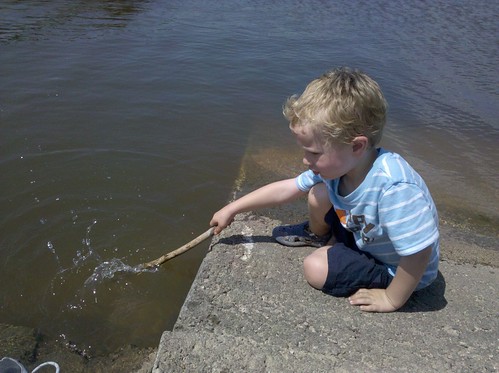
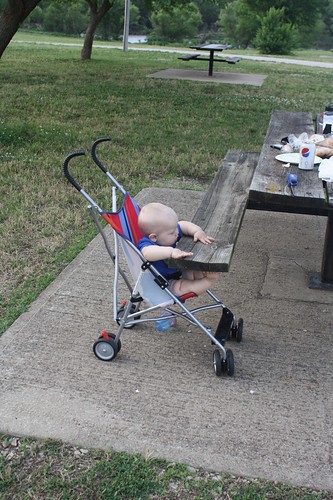
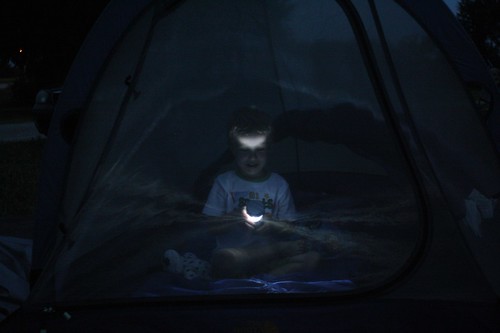
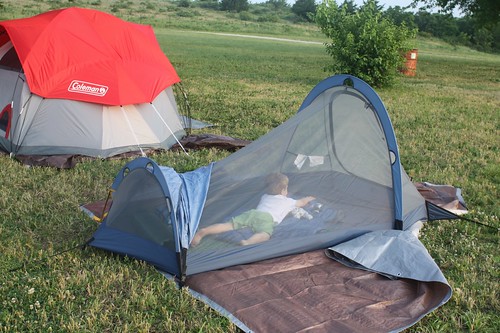
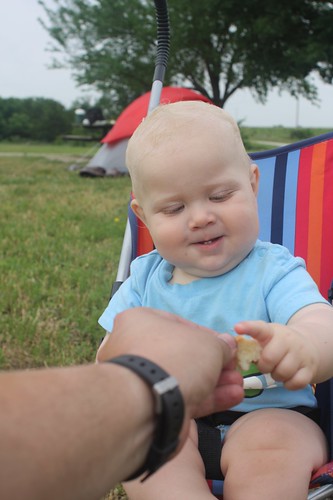
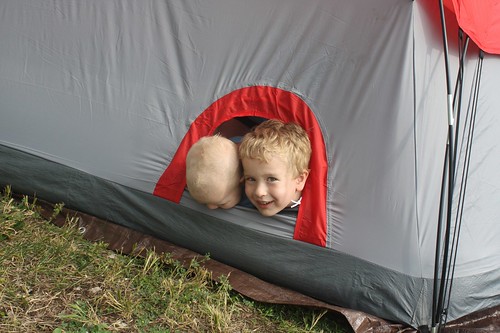
Friday I took the day off for us to go camping. Due to the birth of Oliver, our last time camping was in 2008. Back then, Terah had asked me what I wanted for father s day, and I suggested camping. Except when she was pregnant last year (and then Oliver was little), we have sort of had a standing plan to go camping twice a year: around father s day and my birthday. She says that s way more camping in a year than anyone needs. Anyhow, Jacob doesn t remember the last time we went camping; he was not quite 2 at the time. I explained that we would sleep in tents, and he d get one just his size. He laughed at that. Then I explained that he would get a bag to sleep in, and he thought that was hilarious. He kept talking about tents and even more so about sleeping bags until he actually got to be in one. It seems like each time we go camping, we wind up somewhere else. We ve camped at Kanoplis Lake and Marion Park and Lake in the past few years. But this time we went to Cedar Valley Reservoir near Garnett, KS. It was a nice place to be, with some wilderness camping areas far from any RV hookups (though right next to a gravel driveway where we could park). Almost as soon as we got out of the car, Jacob found a partially-burned stick left in a fire ring. So of course his hands were black pretty quick. He kept track of that stick the whole time we were there, and used it for everything he could think of. His favorite use, though, was at the lake to splash water: 2010-06-11 15.20.21.jpg The lake really was his favorite feature. He loved to throw rocks and sticks in it with me, to splash himself, and to stick his feet in. Oh, and to splash me. IMG_4057.JPG The pier was also a great thing for him he at first thought it was a boat, then really wanted to go. I made him hold my hand the whole time, and he liked walking on it. But he was frustrated that he couldn t reach the water. Somehow, Jacob acted as if he could sit in the hot sun for hours, just making small splashes with a stick. I, on the other hand, felt the 90-degree heat strongly, and eventually we found a shady spot to play in the lake. Oliver enjoyed crawling around on a blanket or on the grass. Though Terah put a stop to that after she noticed that he came across a pile of fish heads and was about to reach for one and put it in his mouth. We cooked over a campfire Friday night and Saturday morning. It took me a lot longer to start a fire than normal. Part of the problem was that there had been a lot of rain in the area, and it was humid, so there was little kindling to be found. Plenty of larger pieces of wood, so once the fire got going, it burned nicely. We cooked brats, brought along some homemade bread, had grilled foil-wrapped potatoes, and had stir-fry vegetables. Oliver got to eat with us too, of course: IMG_4022.JPG Terah is a big believer in smores, so after supper we made some smores Jacob predictably got sticky from the marshmallows and chocolate. Jacob started asking when I d set up the tent almost as soon as he found his stick. All afternoon he kept asking. Finally we got it set up, and of course he was so excited that he played inside it for an hour before he fell asleep. Terah had bought a $4 lantern at Walmart to give to him to use in his tent. I told him that there would be a surprise lantern in his tent for him to use. And he loved his lantern. It could turn on, off, and flash red. At one point he asked me, Dad, do you have a surprise lantern too? No, I will just use my flashlight. He looked a bit sad about that. For about 5 seconds. Then he turned on his lantern again. Here he is with it, still playing happily about 2 hours after his bedtime: IMG_4100.JPG And in the morning, of course he was still wanting that, but also wanted to play with his digital camera (a kid s version that also has a simple game or two on it). Without leaving the tent, of course. IMG_4105.JPG Oliver was getting hungry while we worked on breakfast, so I gave him some bread to munch on. IMG_4119.JPG We used our cast iron skillet to fry some bacon for breakfast. Then Terah made some pancakes in the skillet (with the bacon grease). Greasiest and best pancakes ever. After that, we had some fried and scrambled eggs. After that, we had more smores (I wasn t kidding about Terah being a big believer in them.) Jacob decided that he wanted to play in the other tent. He enjoyed playing with Terah, Oliver, and the air mattress (that Terah appreciated as much as I thought it took up too much space in the car). There s a little window on the back that can open to a screen or open completely. Jacob and Oliver enjoyed looking out of it while open. Or rather, Jacob enjoyed that, while Oliver enjoyed licking it. IMG_4161.JPG I had my Droid with me to keep an eye on the weather. The forecast for several days had called for a 20% chance of storms on Saturday. I checked Saturday morning at 7, and it still called for 20% chance of storms after 1PM. We decided we d pack up our tents after breakfast so we could stay as long as we liked or leave on short notice if we preferred. Clouds seemed to be building, though, so I checked the forecast again at maybe 9. Now it called for 60% chance of thunderstorms and heavy rain before 1PM. Guess I shouldn t have been surprised; it is Kansas after all. As I had the first tent about 90% put away, it started to rain. We rushed to get the rest of the stuff in the car, and by the time we did, it was raining heavily. We had planned to spend at least part of the afternoon there, but decided we d look for another place to stop on the way home. We stopped first at Garnett s North Lake, as the rain had let up for awhile. We spotted a fishing pier that Jacob wanted to walk on, but the bridge out to it was underwater, so we passed on that. While Terah fed Oliver in a shelter, Jacob and I played on some swings. Then we walked down to that lake. Jacob carefully came to an abrupt stop and looked both ways at each disused road between us and the lake, saying OK when it was clear to go. The rain picked up again, so we started heading towards home. It got quite heavy, with thunder and everything, which Jacob didn t care for at all. Both boys went to sleep, though. We stopped at Marion Reservoir on the way home. Jacob hadn t been able to play in the lake at Garnett (the place we stopped had a bank that was too steep) and so we played there. He waded into the water at the swimming area, and predictably enjoyed yes throwing rocks into the lake. When we got home, I set out the wet tent and tarps (it s not good to store that stuff wet) to dry there hadn t been rain at home yet. Camping s a lot of work, but it was a good family activity. I m looking forward to our next time, and hope we can choose a weekend a little less hot and damp.

13 June 2010

Gunnar Wolf: World Naked Bike Ride 2010 Mexico

For the second time (First time was in 2008; I didn't join in 2009 as I travelled to Nicaragua on that date), I took part of the World Naked Bike Ride. The WNBR is a global effort, where people in ~150 cities all over the world go cycling nude on the streets of our towns, with varied demands, including: I love my bike! One of the things I most like about WNBR is its diversity. Not everybody goes for the same reasons. As people who read me often will know, I took part because I believe (and act accordingly!) that the bicycle is the best, most efficient vehicle in by far most of the situations we face day to day, but we need to raise awareness in everybody that the bicycle is just one more vehicle: On one side, we have the right to safely ride on the streets, like any other vehicle. On the other side, we must be responsible, safe drivers, just as we want car drivers to be. Ok, and I will recognize it before anybody complains that I sound too idealistic: I took part of the WNBR because it is _tons_ of fun. This year, we were between 300 and 500 people (depending on whom you ask). Compared to 2008, I felt less tension, more integration, more respect within the group. Of course, it is only natural in the society I live in that most of the participants were men, but the proportion of women really tends to even out. Also, many more people joined fully or partially in the nude (as nudity is not required, it is just an invitation). There was a great display of creativity, people painted with all kinds of interesting phrases and designs, some really beautiful. Oh, one more point, important to me: This is one of the best ways to show that we bikers are not athletes or anything like that. We were people ranging from very thin to quite fat, from very young to quite old. And that is even more striking when we show our whole equipment. If we can all bike around... So can you! Some links, with obvious nudity warnings in case you are offended by looking at innocent butts and similar stuff: As for the sad, stupid note: 19 cyclists were placed under arrest in Morelia, Michoac n because of faltas a la moral (trasgressions against morality), an ill-defined and often abused concept. Also, by far, most of the comments I have read from people on the media, as well a most questions we had by reporters before or after the ride were either why are you going nude (because that's the only way I'll get your attention!) or But many people were not nude! (nudity is not a requirement but only an option.

Guido G?nther: Slides of git-buildpackage talk at Mini Debconf 2010 in Berlin

The slides of my talk about git-buildpackage at the Mini Debconf 2010 in Berlin are now available. It was a great conference that I really enjoyed being at. Thanks a lot to all who made that event possible and happen!

12 June 2010

Joachim Breitner: bluetile in Debian

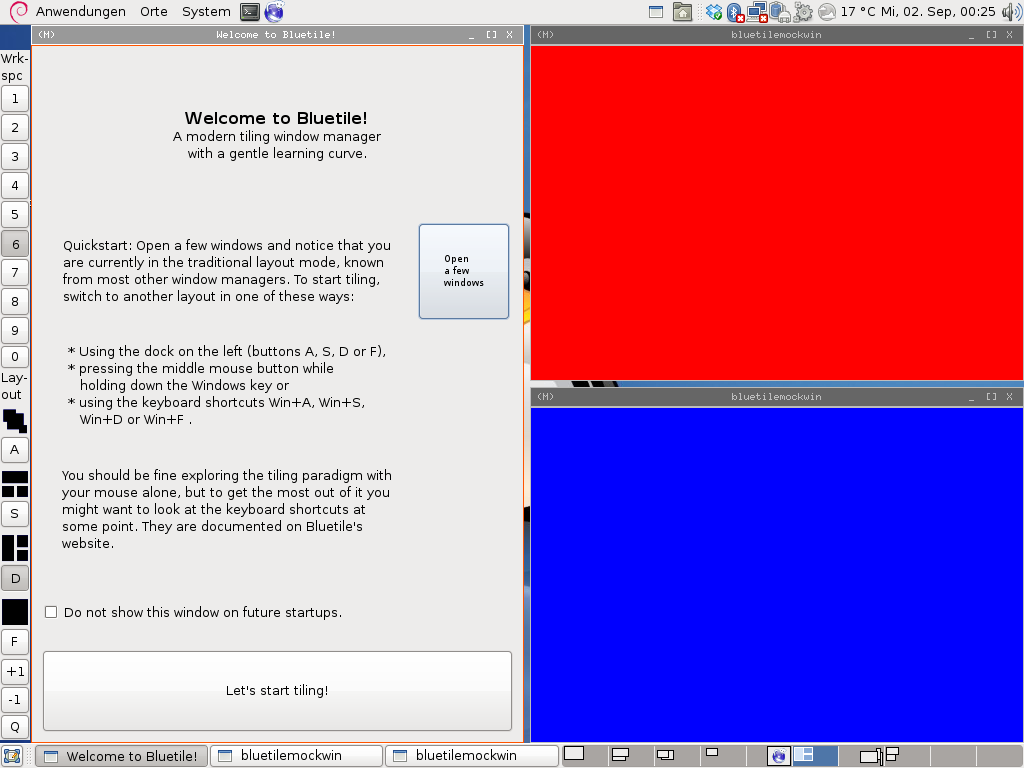
I just packaged and uploaded Jan Vornberger s window manager bluetile to Debian. This very nice piece of software brings the benefits of a tiling window manager to users who prefer to use the mouse and who don t want to learn a new programing language to configure their window manager. Bluetile uses the xmonad libraries and extends them with an easy to use and discoverable user interface.

Bradley Smith: Gitorious + Blog = Fun (+ Ruby)

Something I've wanted to do for a while now, is somehow combine my blog with all of my projects/git repositories, and now I've done it! Welcome to my new site :) So, I got bored a few nights ago, and started trying to find some kind of project management type system to host my git repositories in. After searching for a while I stumbled across Gitorious. I'd heard of Gitorious before, but I'd never really looked at it, nor did I know that it's codebase was infact completely open. So I thought I'd give it a try to see what it was like Now I have to admit, my first impressions of it weren't exactly great. Firstly, it uses Ruby, which I can't say I'm much of a fan of (but that's a different discussion :p), nor am I a fan of installing all of the 'packages' it needed, via gem. Deploying it is an absolute nightmare, it has 4 different daemons, all of which have hideous init scripts that don't really work properly, and low and behold you try and put the git repositories and the site itself under different users, figuring out what needs to run as what and what needs what permissions is very much a game of trial and error. In Gitorious' defence, there /are/ numerous guide lurking around on the internet explaining how to do these things. But once I'd got over these niggles, and had actually deployed it, it worked quite nicely, and really did exactly what I wanted, so I decided to stick with it. It then occurred to me that it probably wouldn't be too hard to stick a blog onto it, after all, it's written using Rails, which is supposed to be easy, right? So with no knowledge of Ruby, let alone Rails, I got stuck in. Fortunately, it turns out Rails is in fact pretty easy to use, (at least once you've got used to it implicitly doing everything behind the scenes..), I'm even starting to think I prefer it to Django... So there we have it, a brand new site, and one that looks considerably better than my old one.. even if it is just Gitorious in disguise _ The only thing I'm disappointed Gitorious doesn't have, is some kind of bug tracker, but then, I'm not sure I'd use one given most of my projects just go through Debian.

11 June 2010

MJ Ray: Koha in Book Industry Communication

Our co-op has joined Book Industry Communication as an associate member, mainly in order to voice experiences of the Koha community and ourselves about RFID tag standardisation and related sustainable development. I want us to give the Free and Open Source Software library world and our charity and academic clients more input in developing this big change to libraries. Even so, it wasn t an easy decision to join. I still believe that RFID standards development would be better done in an open forum, but there doesn t seem to be a perfect choice and I don t think we can create one. BIC already has cross-sector support and seems much more open than the so-called RFID Alliance . Pragmatism was enough, this time, and so far BIC seems friendly and welcoming. I see that a larger service provider co-operative, OCLC (UK), is also a member, so hopefully that means it s safe for co-ops. I think most of the readers of this will be free software developers, koha users and/or members of other co-ops. So, I ask you, what do you think of this move? Leave me a comment on our blog or email me if you prefer to keep it private.

Jan Hauke Rahm: MiniDebConf in Berlin, now

Good morning everyone, after quite some time of organization, we got the MiniDebConf running in Berlin. Yesterday at 9.30, Zack had the pleasure of opening the event which seems to be reflected in the press already. After that, we had nice talks, one every hour from 10 to 6 with mine being the last one of the day at 5 p.m. Yes, I did it :) Slides, links, and all that stuff will follow in a later post, or more official announcements. Right now I m preparing myself to get back to the fairground. The second day starts with another bunch of talks at 10 and I m excited to meet different people again and hear more interesting talks. The BSP went well. :) Actually, we didn t really fix many bugs, I guess. A few maintainers stayed after the event as well as a couple of users completely new to packaging. Thus, it was more like a small social event bit it was really fun. And of course the HackLab is still open today, so we have every chance to fix more bugs This just as a small input from where we stand. More is to come some time later, probably after the weekend, we ll see

10 June 2010

Alexander Reichle-Schmehl: Nice quote from a user

asked during the opening keynote of the Debian MiniDebconf in Berlin: Hi, I'm a long Debian user and Developer and would like to help. But I have a Problem: Everything works!

9 June 2010

Russell Coker: Mailing List Meta-Discussions

It seems that most mailing lists occasionally have meta-discussions about what is on-topic, the few that don t are the ones that have very strong moderation authoritarian moderators who jump on the first infraction and clearly specify the rules. I don t recall the list of acceptable topics for any mailing list including also discussions about what is on-topic . As this is the Internet I m sure that someone will immediately point out an example of such a list, but apart from the counter-example that someone will provide it seems obvious that for the majority of mailing lists a meta-discussion is not strictly on topic. Regardless of a meta-discussion not being on-topic I don t think there s anything wrong with such a discussion on occasion. But if a meta-discussion is to be based on the volume of off-topic messages it would be nice if the people who advocate such a position could try and encourage the discussion in a way that reduced the number of messages. Replying to lots of messages is not a good strategy if your position is that there are too many messages. If a meta-discussion is going to be about moving off-topic discussions to other forums that are more appropriate then it would be nice to have the meta-discussion move to another forum if possible. My previous post which advocates creating a separate mailing list for chatty messages was an attempt to move a discussion to a different forum [1]. Anyone who believes that such discussions don t belong on a list such as debian-private is free to commit their thoughts to some place that they consider more appropriate and provide the URL to any interested parties. I think that it s worth noting that the only comment on my previous post is one that describes how to filter mail to split the traffic from the debian-private list into different mailboxes. I had hoped that other people would write blog posts advocating their positions which would allow us to consider the merits of various ideas without the he-said-she-said element of mailing list discussions. Most mailing lists have a policy against profanity and some go further and ban personal abuse. Therefore it seems hypocritical to advocate a strict interpretation of the rules in regard to what is on-topic while also breaking the rules regarding profanity or personal abuse. I don t think it s asking a lot to suggest that the small minority of messages that someone writes on the topic of a list meta-discussion should obey the set of rules that they advocate I m not suggesting that someone should obey all the rules all the time, just when they are trying to enforce them. Also you can argue that a list policy against profanity doesn t preclude sending profane messages off-list, but if the off-list messages are for the purpose of promoting the list rules it still seems hypocritical to use profanity. It is a fair point that off-topic discussions and jokes can distract people from important issues and derail important discussions. It would be good if people who take such positions would implement them in terms of meta-discussions. If the purpose of a meta-discussion is to avoid distraction from important issues then it seems like a really good idea to try and avoid distraction in the meta-discussion thread. I wonder whether a meta-discussion can provide anything other than a source of lulz for all the people who don t care about the issue in question. The meta-discussions in the Debian project seem to always result in nothing changing, not even when the majority of people who comment agree that the current situation is not ideal. When an almost identical meta-discussion happens regularly it seems particularly pointless to start such a discussion for the purpose of reducing off-topic content. Revisiting an old discussion can do some good when circumstances change or when someone has some new insight. I know that it s difficult to avoid being sucked into such discussions, when I was diagnosed with AS [2] I decided to try and minimise my involvement in such discussions but I haven t been as successful at doing so as I had hoped.

David Welton: Some difficult decisions?

I am, by nature, a tinkerer. I love to build things to see how they will work or because I have an idea that I think is fun. I am not so much of a natural business guy. I go build something "because it's there". Or rather, it's there in my mind, and I want to make it. I earn money, however, via consulting work. There are problems with this line of business though, namely that it doesn't scale very well unless, besides being good at a skill, you've also got the skills to build up a consulting business, which is very much about adding and managing people, something I'm not all that passionate about and would rather avoid. So what happens is that you go through slumps with less than full capacity, and then things pick up again, and before you know it, you hit your upper limit and can't take on any new work, putting a ceiling over your potential earnings. Sure, you can raise prices a bit, but that'll only get you so far. For a while now, I've been considering this problem, and I think some sort of product would be an ideal way out. Stories like Balsamiq's are inspirational, and along the lines of what I think might be nice. Don't get me wrong, I like my clients and like to help people solve problems a lot, but it's a stressful job in that you're never very far from having no income. I'm not much of an entrepreneur, though, in the sense of someone with a nose for making money. I tend to think about building something cool first, and not really worrying about making money with it. Predictably, some of the sites I have created are popular, but don't make any money. Sure, they have some ads, but that doesn't really make much unless you get really huge page views or have some sort of content that attracts users who will click on very lucrative advertisements. I've started to think that perhaps I should constrain myself in new initiatives to creating things that have a direct source of revenue: you want to use it, you pay. In my daydream world, I'd probably just hack on open source all day long, but there's no money in that for someone like me who is not the author of some huge, famous piece of software, nor a particularly great hacker in any case (I've met some, like Andrew Tridgell, and it's a really humbling experience). So that brings up the question of what to do with the aforementioned sites. One option would be to sell them off via a site like flippa.com, another would be simply to just let them sit there and stew, but they do take up some resources on my server, and require some maintainance now and then, and they're a bit of a distraction too (I start wondering about things to add or how to fiddle with them). Maybe there's a way to make money from some of them, but I'm too blind to see it. The ones I'm thinking about, are, in no particular order:

8 June 2010

Junichi Uekawa: gcc supports plugins since April.

gcc supports plugins since April. tutorial seems to be there. Not quite sure if I can think of useful things to do with it.

Next.

Previous.