Search Results: "ms"

25 February 2014

Christoph Berg: Trusty and Saucy on apt.postgresql.org

Over the past few weeks, new distributions have been added on apt.postgresql.org: Ubuntu 13.10 codenamed "saucy" and the upcoming Ubuntu LTS release 14.04 codenamed "trusty". Adding non-LTS releases for the benefit of developers using PostgreSQL on their notebooks and desktop machines has been a frequently requested item since we created the repository. I had some qualms about targeting a new Ubuntu release every 6 months, but with having automated more and more parts of the repository infrastructure, and the bootstrapping process now being painless, the distributions are now available for use. Technically, trusty started as empty, so it hasn't all packages yet, but of course all the PostgreSQL server packages are there, along with pgAdmin. Saucy started as a copy of precise (12.04) so it has all packages. Not all packages have been rebuilt for saucy, but the precise packages included (you can tell by the version number ending in .pgdg12.4+12 or .pgdg13.10+1) will work, unless apt complains about dependency problems. I have rebuilt the packages needing it I was aware about (most notably the postgresql-plperl packages) - if you spot problems, please let us know on the mailing list. Needless to say, last week's PostgreSQL server updates are already included in the repository.

Don Armstrong: Debian Booth at Scale 12x

I spent the weekend at SCALE 12x running the Debian booth. SCALE is one of the best conferences that I get to attend every year; it has a great mix of commercial exhibitors and community groups, and routinely gets great speakers. As I've done for quite some time, I organized a Debian booth there, and talked to lots of people about Debian. If you're in the Southern California area, or have a chance to give a talk for SCALE 13x, you should do so! Thanks again to Matt Kraai and Paul Hardy for helping out in the Debian booth all weekend!

Andrew Pollock: [life] Day 28, Kindergarten, Taxes and a smattering of appointments

Today was yet another busy day. Zoe seems to have taken to waking up at around 5:30am instead of her normal 6:00am (or a bit later when I'm really lucky). Not sure what that's all about. I did get her to go back to bed until about 6:55am, and then she was happy to just come and snuggle in bed with me for a bit instead of play games on her Nexus 7. After that we had a leisurely start to day, making porridge with strawberries in the Thermomix, and then biked to Kindergarten. Somehow it still managed to be 8:45am by the time we got there. I was expecting it would be closer to 8:30am. Drop off looked like it was going to be clingy, but then she just waved me off, so that was nice. I had an appointment at the podiatrist at 11:40am, and that was back near Kindergarten, but further away from home, so I had this grand plan of cycling over there, and then twiddling my thumbs for a bit before Kindergarten pickup. That left me with only a couple of hours at home to work on my taxes before I had to leave again. I managed to make those couple of hours productive though, so that was good. I biked to the podiatrist, had my appointment, and then it was 1pm and I still needed lunch, so I decided to grab some at a cafe near the Kindergarten. I chilled out there for a while catching up on social media on my phone, and then headed over to the Kindergarten, but was still quite early, so I just hung out on one of the couches they have out by the front door, out of sight of the kids. The Kindergarten has an A-frame whiteboard out the front that they use to broadcast messages to parents at drop off and pick up time. One of the teachers came out to write something on it while I was sitting out there, and another parent reacted rather negatively to it as it was being written, so I had to go see it for myself. Apparently a child had a suspected gastro bug (he'd thrown up a couple of times). It was interesting observing the reactions of a few mothers as they trickled in for pick up. It's been a while since a gastro bug has gone through the household, so I guess the news didn't evoke a particularly powerful reaction in me. I'm going with the "suspected" and that hopefully Zoe didn't come into contact with patient zero. I guess time will tell. I certainly hope she doesn't come down with anything between now and Sunday, with all the travel we're doing. I had an accident report to sign today. Apparently a large wooden block hit Zoe in the head while they were packing up a tower they'd made. She had a bit of a lump on her head, but otherwise seemed fine. Zoe had a nap today, of unknown length, but woke up naturally as I entered the room. She took a fair while to get going though, and was grumpy and uncooperative getting on the bike. I ended up having to do it the "hard way" and we had a fabulous ride back with her doing a tired cry all the way. All the way until we passed a playground, when she snapped out of it and declared she wanted to have a play. I'd booked myself in for a haircut at 3pm, and a make up swim class at 4:45pm (to cover our absence this Saturday due to our Melbourne trip) so playing in the playground seemed like the perfect way to fill the gap. It was even on the way to swim class. So after I had my haircut, we popped home, grabbed her swim gear, and biked back to the playground for a bit. Then we went to swim class. This was her third one at her new level, and her progress continues to go very well. It's really exciting watching her. Zoe took her time leaving the pool, so we didn't get home until after 5:30pm and I hadn't started dinner yet. I whipped it up while Zoe watched some TV, and I managed to recoup all of the lost time after dinner and still get Zoe to bed at a reasonable hour. Bedtime itself went nice and smoothly. I used the canned goodnight video I asked Sarah to make for the first time tonight, and it was well received and I think defused any potential issues. I'm hoping she'll sleep well tonight, as her mosquito bites don't seem to be actively giving her trouble any more.

24 February 2014

Daniel Pocock: GSoC Organisations announced, Ganglia selected for 2014

Google has just published the list of organisations for Google Summer of Code 2014 It is no surprise that big projects like Debian and Fedora are all back again. On the other hand, I am delighted to announce that the Ganglia project is participating this year. We have started publishing a list of project ideas and we are keen to start having discussion with potential students and anybody who would like to participate in our mentoring team. We have also invited the RRDtool community to be part of this big adventure because RRDtool is such a critical element of Ganglia's success. My Debian project ideas I've also published a couple of project ideas on the Debian wiki before the organisations were confirmed: As I am part of the admin team for Ganglia, these Debian projects can only go ahead if there are some additional mentors willing to participate in them. Please contact me if either of these projects is interesting for you. You don't have to be a Debian Developer to be a mentor for Debian. Given the highly generic nature of these projects, particularly the Java one, they could also be mentored under the umbrella of another organisation. The Java project is particularly suitable for any Linux distribution or project relying on many JARs and all distributions and Java users are likely to extract some benefit from it. Deadlines approaching GSoC works on a strict calendar, please see the dates here if you would like to participate as a mentor, co-mentor or student.

Vincent Bernat: Coping with the TCP TIME-WAIT state on busy Linux servers

TL;DR: Do not enable net.ipv4.tcp_tw_recycle. The Linux kernel documentation is not very helpful about what net.ipv4.tcp_tw_recycle does:
Enable fast recycling TIME-WAIT sockets. Default value is 0. It should not be changed without advice/request of technical experts.
Its sibling, net.ipv4.tcp_tw_reuse is a little bit more documented but the language is about the same:
Allow to reuse TIME-WAIT sockets for new connections when it is safe from protocol viewpoint. Default value is 0. It should not be changed without advice/request of technical experts.
The mere result of this lack of documentation is that we find numerous tuning guides advising to set both these settings to 1 to reduce the number of entries in the TIME-WAIT state. However, as stated by tcp(7) manual page, the net.ipv4.tcp_tw_recycle option is quite problematic for public-facing servers as it won t handle connections from two different computers behind the same NAT device, which is a problem hard to detect and waiting to bite you:
Enable fast recycling of TIME-WAIT sockets. Enabling this option is not recommended since this causes problems when working with NAT (Network Address Translation).
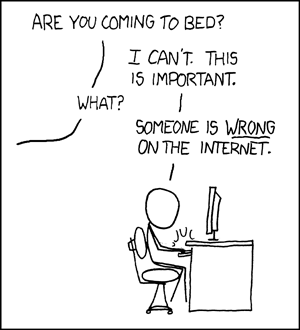
I will provide here a more detailed explanation in the hope to teach people who are wrong on the Internet. xkcd illustration As a sidenote, despite the use of ipv4 in its name, the net.ipv4.tcp_tw_recycle control also applies to IPv6. Also, keep in mind we are looking at the TCP stack of Linux. This is completely unrelated to Netfilter connection tracking which may be tweaked in other ways1.

About TIME-WAIT state Let s rewind a bit and have a close look at this TIME-WAIT state. What is it? See the TCP state diagram below2: TCP state diagram Only the end closing the connection first will reach the TIME-WAIT state. The other end will follow a path which usually permits to quickly get rid of the connection. You can have a look at the current state of connections with ss -tan:
$ ss -tan   head -5
LISTEN     0  511             *:80              *:*     
SYN-RECV   0  0     192.0.2.145:80    203.0.113.5:35449
SYN-RECV   0  0     192.0.2.145:80   203.0.113.27:53599
ESTAB      0  0     192.0.2.145:80   203.0.113.27:33605
TIME-WAIT  0  0     192.0.2.145:80   203.0.113.47:50685

Purpose There are two purposes for the TIME-WAIT state:
  • The most known one is to prevent delayed segments from one connection being accepted by a later connection relying on the same quadruplet (source address, source port, destination address, destination port). The sequence number also needs to be in a certain range to be accepted. This narrows a bit the problem but it still exists, especially on fast connections with large receive windows. RFC 1337 explains in details what happens when the TIME-WAIT state is deficient3. Here is an example of what could be avoided if the TIME-WAIT state wasn t shortened:
Duplicate segments accepted in another connection
  • The other purpose is to ensure the remote end has closed the connection. When the last ACK is lost, the remote end stays in the LAST-ACK state4. Without the TIME-WAIT state, a connection could be reopened while the remote end still thinks the previous connection is valid. When it receives a SYN segment (and the sequence number matches), it will answer with a RST as it is not expecting such a segment. The new connection will be aborted with an error:
Last ACK lost RFC 793 requires the TIME-WAIT state to last twice the time of the MSL. On Linux, this duration is not tunable and is defined in include/net/tcp.h as one minute:
#define TCP_TIMEWAIT_LEN (60*HZ) /* how long to wait to destroy TIME-WAIT
                                  * state, about 60 seconds     */
There have been propositions to turn this into a tunable value but it has been refused on the ground the TIME-WAIT state is a good thing.

Problems Now, let s see why this state can be annoying on a server handling a lot of connections. There are three aspects of the problem:
  • the slot taken in the connection table preventing new connections of the same kind,
  • the memory occupied by the socket structure in the kernel, and
  • the additional CPU usage.
The result of ss -tan state time-wait wc -l is not a problem per se!

Connection table slot A connection in the TIME-WAIT state is kept for one minute in the connection table. This means, another connection with the same quadruplet (source address, source port, destination address, destination port) cannot exist. For a web server, the destination address and the destination port are likely to be constant. If your web server is behind a L7 load-balancer, the source address will also be constant. On Linux, the client port is by default allocated in a port range of about 30,000 ports (this can be changed by tuning net.ipv4.ip_local_port_range). This means that only 30,000 connections can be established between the web server and the load-balancer every minute, so about 500 connections per second. If the TIME-WAIT sockets are on the client side, such a situation is easy to detect. The call to connect() will return EADDRNOTAVAIL and the application will log some error message about that. On the server side, this is more complex as there is no log and no counter to rely on. In doubt, you should just try to come with something sensible to list the number of used quadruplets:
$ ss -tan 'sport = :80'   awk ' print $(NF)" "$(NF-1) '   \
>     sed 's/:[^ ]*//g'   sort   uniq -c
    696 10.24.2.30 10.33.1.64
   1881 10.24.2.30 10.33.1.65
   5314 10.24.2.30 10.33.1.66
   5293 10.24.2.30 10.33.1.67
   3387 10.24.2.30 10.33.1.68
   2663 10.24.2.30 10.33.1.69
   1129 10.24.2.30 10.33.1.70
  10536 10.24.2.30 10.33.1.73
The solution is more quadruplets5. This can be done in several ways (in the order of difficulty to setup):
  • use more client ports by setting net.ipv4.ip_local_port_range to a wider range,
  • use more server ports by asking the web server to listen to several additional ports (81, 82, 83, ),
  • use more client IP by configuring additional IP on the load balancer and use them in a round-robin fashion,
  • use more server IP by configuring additional IP on the web server6.
Of course, a last solution is to tweak net.ipv4.tcp_tw_reuse and net.ipv4.tcp_tw_recycle. Don t do that yet, we will cover those settings later.

Memory With many connections to handle, leaving a socket open for one additional minute may cost your server some memory. For example, if you want to handle about 10,000 new connections per second, you will have about 600,000 sockets in the TIME-WAIT state. How much memory does it represent? Not that much! First, from the application point of view, a TIME-WAIT socket does not consume any memory: the socket has been closed. In the kernel, a TIME-WAIT socket is present in three structures (for three different purposes):
  1. A hash table of connections, named the TCP established hash table (despite containing connections in other states) is used to locate an existing connection, for example when receiving a new segment. Each bucket of this hash table contains both a list of connections in the TIME-WAIT state and a list of regular active connections. The size of the hash table depends on the system memory and is printed at boot:
    $ dmesg   grep "TCP established hash table"
    [    0.169348] TCP established hash table entries: 65536 (order: 8, 1048576 bytes)
    
    It is possible to override it by specifying the number of entries on the kernel command line with the thash_entries parameter. Each element of the list of connections in the TIME-WAIT state is a struct tcp_timewait_sock, while the type for other states is struct tcp_sock7:
    struct tcp_timewait_sock  
        struct inet_timewait_sock tw_sk;
        u32    tw_rcv_nxt;
        u32    tw_snd_nxt;
        u32    tw_rcv_wnd;
        u32    tw_ts_offset;
        u32    tw_ts_recent;
        long   tw_ts_recent_stamp;
     ;
    struct inet_timewait_sock  
        struct sock_common  __tw_common;
        int                     tw_timeout;
        volatile unsigned char  tw_substate;
        unsigned char           tw_rcv_wscale;
        __be16 tw_sport;
        unsigned int tw_ipv6only     : 1,
                     tw_transparent  : 1,
                     tw_pad          : 6,
                     tw_tos          : 8,
                     tw_ipv6_offset  : 16;
        unsigned long            tw_ttd;
        struct inet_bind_bucket *tw_tb;
        struct hlist_node        tw_death_node;
     ;
    
  2. A set of lists of connections, called the death row , is used to expire the connections in the TIME-WAIT state. They are ordered by how much time left before expiration. It uses the same memory space as for the entries in the hash table of connections. This is the struct hlist_node tw_death_node member of struct inet_timewait_sock.
  3. A hash table of bound ports, holding the locally bound ports and the associated parameters, is used to determine if it is safe to listen to a given port or to find a free port in the case of dynamic bind. The size of this hash table is the same as the size of the hash table of connections:
    $ dmesg   grep "TCP bind hash table"
    [    0.169962] TCP bind hash table entries: 65536 (order: 8, 1048576 bytes)
    
    Each element is a struct inet_bind_socket. There is one element for each locally bound port. A TIME-WAIT connection to a web server is locally bound to the port 80 and shares the same entry as its sibling TIME-WAIT connections. On the other hand, a connection to a remote service is locally bound to some random port and does not share its entry.
So, we are only concerned by the space occupied by struct tcp_timewait_sock and struct inet_bind_socket. There is one struct tcp_timewait_sock for each connection in the TIME-WAIT state, inbound or outbound. There is one dedicated struct inet_bind_socket for each outbound connection and none for an inbound connection. A struct tcp_timewait_sock is only 168 bytes while a struct inet_bind_socket is 48 bytes:
$ sudo apt-get install linux-image-$(uname -r)-dbg
[...]
$ gdb /usr/lib/debug/boot/vmlinux-$(uname -r)
(gdb) print sizeof(struct tcp_timewait_sock)
 $1 = 168
(gdb) print sizeof(struct tcp_sock)
 $2 = 1776
(gdb) print sizeof(struct inet_bind_bucket)
 $3 = 48
So, if you have about 40,000 inbound connections in the TIME-WAIT state, it should eat less than 10MB of memory. If you have about 40,000 outbound connections in the TIME-WAIT state, you need to account for 2.5MB of additional memory. Let s check that by looking at the output of slabtop. Here is the result on a server with about 50,000 connections in the TIME-WAIT state, 45,000 of which are outbound connections:
$ sudo slabtop -o   grep -E '(^  OBJS tw_sock_TCP tcp_bind_bucket)'
  OBJS ACTIVE  USE OBJ SIZE  SLABS OBJ/SLAB CACHE SIZE NAME                   
 50955  49725  97%    0.25K   3397       15     13588K tw_sock_TCP            
 44840  36556  81%    0.06K    760       59      3040K tcp_bind_bucket
There is nothing to change here: the memory used by TIME-WAIT connections is really small. If your server need to handle thousands of new connections per second, you need far more memory to be able to efficiently push data to clients. The overhead of TIME-WAIT connections is negligible.

CPU On the CPU side, searching for a free local port can be a bit expensive. The work is done by the inet_csk_get_port() function which uses a lock and iterate on locally bound ports until a free port is found. A large number of entries in this hash table is usually not a problem if you have a lot of outbound connections in the TIME-WAIT state (like ephemeral connections to a memcached server): the connections usually share the same profile, the function will quickly find a free port as it iterates on them sequentially.

Other solutions If you still think you have a problem with TIME-WAIT connections after reading the previous section, there are three additional solutions to solve them:
  • disable socket lingering,
  • net.ipv4.tcp_tw_reuse, and
  • net.ipv4.tcp_tw_recycle.

Socket lingering When close() is called, any remaining data in the kernel buffers will be sent in the background and the socket will eventually transition to the TIME-WAIT state. The application can continue to work immediatly and assume that all data will eventually be safely delivered. However, an application can choose to disable this behaviour, known as socket lingering. There are two flavors:
  1. In the first one, any remaining data will be discarded and instead of closing the connection with the normal four-packet connection termination sequence, the connection will be closed with a RST (and therefore, the peer will detect an error) and will be immediatly destroyed. No TIME-WAIT state in this case.
  2. With the second flavor, if there is any data still remaining in the socket send buffer, the process will sleep when calling close() until either all the data is sent and acknowledged by the peer or the configured linger timer expires. It is possible for a process to not sleep by setting the socket as non-blocking. In this case, the same process happens in the background. It permits the remaining data to be sent during a configured timeout but if the data is succesfully sent, the normal close sequence is run and you get a TIME-WAIT state. And on the other case, you ll get the connection close with a RST and the remaining data is discarded.
In both cases, disabling socket lingering is not a one-size-fits-all solution. It may be used by some applications like HAProxy or Nginx when it is safe to use from the upper protocol point of view. There are good reasons to not disable it unconditionnaly.

net.ipv4.tcp_tw_reuse The TIME-WAIT state prevents delayed segments to be accepted in an unrelated connection. However, on certain conditions, it is possible to assume a new connection s segment cannot be misinterpreted with an old connection s segment. RFC 1323 presents a set of TCP extensions to improve performance over high-bandwidth paths. Among other things, it defines a new TCP option carrying two four-byte timestamp fields. The first one is the current value of the timestamp clock of the TCP sending the option while the second one is the most recent timestamp received from the remote host. By enabling net.ipv4.tcp_tw_reuse, Linux will reuse an existing connection in the TIME-WAIT state for a new outgoing connection if the new timestamp is strictly bigger than the most recent timestamp recorded for the previous connection: an outgoing connection in the TIME-WAIT state can be reused after just one second. How is it safe? The first purpose of the TIME-WAIT state was to avoid duplicate segments to be accepted in an unrelated connection. Thanks to the use of timestamps, such a duplicate segments will come with an outdated timestamp and therefore be discarded. The second purpose was to ensure the remote end is not in the LAST-ACK state because of the lost of the last ACK. The remote end will retransmit the FIN segment until:
  1. it gives up (and tear down the connection), or
  2. it receives the ACK it is waiting (and tear down the connection), or
  3. it receives a RST (and tear down the connection).
If the FIN segments are received in a timely manner, the local end socket will still be in the TIME-WAIT state and the expected ACK segments will be sent. Once a new connection replaces the TIME-WAIT entry, the SYN segment of the new connection is ignored (thanks to the timestamps) and won t be answered by a RST but only by a retransmission of the FIN segment. The FIN segment will then be answered with a RST (because the local connection is in the SYN-SENT state) which will allow the transition out of the LAST-ACK state. The initial SYN segment will eventually be resent (after one second) because there was no answer and the connection will be established without apparent error, except a slight delay: Last ACK lost and timewait reuse It should be noted that when a connection is reused, the TWRecycled counter is increased (despite its name).

net.ipv4.tcp_tw_recycle This mechanism also relies on the timestamp option but affects both incoming and outgoing connections which is handy when the server usually closes the connection first8. The TIME-WAIT state is scheduled to expire sooner: it will be removed after the retransmission timeout (RTO) interval which is computed from the RTT and its variance. You can spot the appropriate values for a living connection with the ss command:
$ ss --info  sport = :2112 dport = :4057
State      Recv-Q Send-Q    Local Address:Port        Peer Address:Port   
ESTAB      0      1831936   10.47.0.113:2112          10.65.1.42:4057    
         cubic wscale:7,7 rto:564 rtt:352.5/4 ato:40 cwnd:386 ssthresh:200 send 4.5Mbps rcv_space:5792
To keep the same guarantees the TIME-WAIT state was providing, while reducing the expiration timer, when a connection enters the TIME-WAIT state, the latest timestamp is remembered in a dedicated structure containing various metrics for previous known destinations. Then, Linux will drop any segment from the remote host whose timestamp is not strictly bigger than the latest recorded timestamp, unless the TIME-WAIT state would have expired:
if (tmp_opt.saw_tstamp &&
    tcp_death_row.sysctl_tw_recycle &&
    (dst = inet_csk_route_req(sk, &fl4, req, want_cookie)) != NULL &&
    fl4.daddr == saddr &&
    (peer = rt_get_peer((struct rtable *)dst, fl4.daddr)) != NULL)  
        inet_peer_refcheck(peer);
        if ((u32)get_seconds() - peer->tcp_ts_stamp < TCP_PAWS_MSL &&
            (s32)(peer->tcp_ts - req->ts_recent) >
                                        TCP_PAWS_WINDOW)  
                NET_INC_STATS_BH(sock_net(sk), LINUX_MIB_PAWSPASSIVEREJECTED);
                goto drop_and_release;
         
 
When the remote host is in fact a NAT device, the condition on timestamps will forbid allof the hosts except one behind the NAT device to connect during one minute because they do not share the same timestamp clock. In doubt, this is far better to disable this option since it leads to difficult to detect and difficult to diagnose problems. The LAST-ACK state is handled in the exact same way as for net.ipv4.tcp_tw_recycle.

Summary The universal solution is to increase the number of possible quadruplets by using, for example, more server ports. This will allow you to not exhaust the possible connections with TIME-WAIT entries. On the server side, do not enable net.ipv4.tcp_tw_recycle unless you are pretty sure you will never have NAT devices in the mix. Enabling net.ipv4.tcp_tw_reuse is useless for incoming connections. On the client side, enabling net.ipv4.tcp_tw_reuse is another almost-safe solution. Enabling net.ipv4.tcp_tw_recycle in addition to net.ipv4.tcp_tw_reuse is mostly useless. And a final quote by W. Richard Stevens, in Unix Network Programming:
The TIME_WAIT state is our friend and is there to help us (i.e., to let old duplicate segments expire in the network). Instead of trying to avoid the state, we should understand it.

  1. Notably, fiddling with net.netfilter.nf_conntrack_tcp_timeout_time_wait won t change anything on how the TCP stack will handle the TIME-WAIT state.
  2. This diagram is licensed under the LaTeX Project Public License 1.3. The original file is available on this page.
  3. The first work-around proposed in RFC 1337 is to ignore RST segments in the TIME-WAIT state. This behaviour is controlled by net.ipv4.rfc1337 which is not enabled by default on Linux because this is not a complete solution to the problem described in the RFC.
  4. While in the LAST-ACK state, a connection will retransmit the last FIN segment until it gets the expected ACK segment. Therfore, it is unlikely we stay long in this state.
  5. On the client side, older kernels also have to find a free local tuple (source address and source port) for each outgoing connection. Increasing the number of server ports or IP won t help in this case. Linux 3.2 is recent enough to be able to share the same local tuple for different destinations. Thanks to Willy Tarreau for his insight on this aspect.
  6. This last solution may seem a bit dumb since you could just use more ports but some servers are not able to be configured this way. The before last solution can also be quite cumbersome to setup, depending on the load-balancing software, but uses less IP than the last solution.
  7. The use of a dedicated memory structure for sockets in the TIME-WAIT is here since Linux 2.6.14. The struct sock_common structure is a bit more verbose and I won t copy it here.
  8. When the server closes the connection first, it gets the TIME-WAIT state while the client will consider the corresponding quadruplet free and hence may reuse it for a new connection.

Bits from Debian: Invitation to the MiniDebConf 2014 Barcelona: 15-16 March 2014

Debian Women will hold a MiniDebConf in Barcelona on Saturday 15th and Sunday 16th of March, 2014. Everyone is invited to both talks and social events, but the speakers will all be people who identify themselves as female. This is not a conference about women in Free Software, or women in Debian, rather a usual Debian Mini-DebConf where all the speakers are women. The talks schedule has already been published. It is going to be an exciting event, packed with interesting talks for all audiences, in a beautiful venue, in one of the most famous European cities. Registration is not mandatory, but strongly encouraged, as it helps the event's organisation and logistics. Please, register in the wiki. We are still raising funds to cover the costs of running the conference and to offer travel sponsorship to people who can't pay for it. Please, consider donating any amount you can in our crowd-funding campaign, or contact us if you would like to become a sponsor. The conference organisers want to thank the organisations that have already became sponsors, making this event possible, and specially our Platinum sponsor, Google; our Gold sponsors, C tedra de Programari Lliure - Universitat Polit cnica de Catalunya, Blue Systems and our Silver sponsors, CAtalan LInux Users, CAPSiDE and Fluendo. For more information, visit the website of the event: http://bcn2014.mini.debconf.org

Matthew Garrett: The importance of a community-focused mindset

Piston, an Openstack-in-a-box vendor[1] are a sponsor of the Red Hat[2] Summit this year. Last week they briefly ceased to be for no publicly stated reason, although it's been sugggested that this was in response to Piston winning a contract that Red Hat was also bidding on. This situation didn't last for long - Red Hat's CTO tweeted that this was an error and that Red Hat would pay Piston's sponsorship fee for them.

To Red Hat's credit, having the CTO immediately and publicly accept responsibility and offer reparations seems like the best thing they could possibly do in the situation and demonstrates that there are members of senior management who clearly understand the importance of community collaboration to Red Hat's success. But that leaves open the question of how this happened in the first place.

Red Hat is big on collaboration. Workers get copies of the Red Hat Brand Book, an amazingly well-written description of how Red Hat depends on the wider community. New hire induction sessions stress the importance of open source and collaboration. Red Hat staff are at the heart of many vital free software projects. As far as fundamentally Getting It is concerned, Red Hat are a standard to aspire to.

Which is why something like this is somewhat unexpected. Someone in Red Hat made a deliberate choice to exclude Piston from the Summit. If the suggestion that this was because of commercial concerns is true, it's antithetical to the Red Hat Way. Piston are a contributor to upstream Openstack, just as Red Hat are. If Piston can do a better job of selling that code than Red Hat can, the lesson that Red Hat should take away is that they need to do a better job - not punish someone else for doing so.

However, it's not entirely without precedent. The most obvious example is the change to kernel packaging that happened during the RHEL 6 development cycle. Previous releases had included each individual modification that Red Hat made to the kernel as a separate patch. From RHEL 6 onward, all these patches are merged into one giant patch. This was intended to make it harder for vendors like Oracle to compete with RHEL by taking patches from upcoming RHEL point releases, backporting them to older ones and then selling that to Red Hat customers. It obviously also had the effect of hurting other distributions such as Debian who were shipping 2.6.32-based kernels - bugs that were fixed in RHEL had to be separately fixed in Debian, despite Red Hat continuing to benefit from the work Debian put into the stable 2.6.32 point releases.

It's almost three years since that argument erupted, and by and large the community seems to have accepted that the harm Oracle were doing to Red Hat (while giving almost nothing back in return) justified the change. The parallel argument in the Piston case might be that there's no reason for Red Hat to give advertising space to a company that's doing a better job of selling Red Hat's code than Red Hat are. But the two cases aren't really equal - Oracle are a massively larger vendor who take significantly more from the Linux community than they contribute back. Piston aren't.

Which brings us back to how this could have happened in the first place. The Red Hat company culture is supposed to prevent people from thinking that this kind of thing is acceptable, but in this case someone obviously did. Years of Red Hat already having strong standing in a range of open source communities may have engendered some degree of complacency and allowed some within the company to lose track of how important Red Hat's community interactions are in perpetuating that standing. This specific case may have been resolved without any further fallout, but it should really trigger an examination of whether the reality of the company culture still matches the theory. The alternative is that this kind of event becomes the norm rather than the exception, and it takes far less time to lose community goodwill than it takes to build it in the first place.

[1] And, in the spirit of full disclosure, a competitor to my current employer
[2] Furthering the spirit of full disclosure, a former employer

comment count unavailable comments

Rog rio Brito: Trivial fact #3: Continued fractions via matrices

Note Apparently, it's not Debian planet that has problems to deal with MathJax (which makes posts usingn it appear illegible on Debian planet), but the ikiwiki plugin that I am using which generates garbage in the feeds that get consumed by planet.debian.org. If you it know of a better plugin (which doesn't generate such output) please let me know, especially if it is not super computationally expensive for a Core 2 Duo T7250 (which is my notebook).

The real thing As William Stein is now offering a course on Number Theory and he has been posting recorded videos of his lectures, I started watching some of them (mainly, the ones regarding continued factions). In particular, he shows the usual recursive formula for convergents of a continued fraction and that's super nice. For the curious reader, the recurrence relations for the convergents of !!mathjaxbegin-i!! W2FfMCwgYV8xLCBcbGRvdHMsIGFfbiwgXGxkb3RzXQ== !!mathjaxend-i!! are: !!mathjaxbegin-d!! CnBfbiA9IGFfbiBwX3tuLTF9ICsgcF97bi0yfVxcCnFfbiA9IGFfbiBxX3tuLTF9ICsgcV97bi0y fSwK !!mathjaxend-d!! with initial conditions (!!mathjaxbegin-i!! cF97LTJ9ID0gMA== !!mathjaxend-i!!, !!mathjaxbegin-i!! cF97LTF9ID0gMQ== !!mathjaxend-i!!, !!mathjaxbegin-i!! cF8wID0gYV8w !!mathjaxend-i!!, !!mathjaxbegin-i!! cV97LTJ9ID0gMQ== !!mathjaxend-i!!, !!mathjaxbegin-i!! cV97LTF9ID0gMA== !!mathjaxend-i!!, !!mathjaxbegin-i!! cV8wID0gMQ== !!mathjaxend-i!!). He even motivated the use of continued fractions with the golden ratio, which is super nice, given that I like the subject and have been writing a document collecting facts that I know about the Fibonacci numbers (well, this document is horribly incomplete and not even close to something that I would consider proper for public consumption I plan on publishing them soon). OK, after he discussed the basics of it convergents, he noted that the recurrence relations are like those defining the Fibonacci numbers, just that one of the terms is "weighted" by the coefficients of the continued fraction. I missed one thing, though: neither his book nor wikipedia's article on continued fractions mentions a very neat, alternative way to express the convergents of continued fractions (truth be said, I took a quick peek at wikipedia's article and I found that it doesn't mentionat least explicitly, in a 1 min skim it may well be buried somewhere else). I, then, proposed the following exercise for his students (which he apparently liked, as he +1's the suggestion): Prove that the recurrence relation of the !!mathjaxbegin-i!! cF9p !!mathjaxend-i!!'s and !!mathjaxbegin-i!! cV9p !!mathjaxend-i!!'s that we mentioned before can be obtained via matrix multiplication. More precisely, prove that: !!mathjaxbegin-d!! ClxiZWdpbntibWF0cml4fQphXzAgJmFtcDsgMVxcCjEgJmFtcDsgMApcZW5ke2JtYXRyaXh9Clxi ZWdpbntibWF0cml4fQphXzEgJmFtcDsgMVxcCjEgJmFtcDsgMApcZW5ke2JtYXRyaXh9ClxjZG90 cwpcYmVnaW57Ym1hdHJpeH0KYV9uICZhbXA7IDFcXAoxICZhbXA7IDAKXGVuZHtibWF0cml4fQog PQpcYmVnaW57Ym1hdHJpeH0KcF9uICZhbXA7IHBfe24tMX1cXApxX24gJmFtcDsgcV97bi0xfQpc ZW5ke2JtYXRyaXh9Lgo= !!mathjaxend-d!! As a corollary, derive Cassini's identity for the Fibonacci Numbers.
Please, if you any errors on this, please let me know so that I can fix it. Edit: Thanks "noone" for spotting a typographical error.

Daniel Kahn Gillmor: Inline-PGP considered harmful

We changed the default PGP signatures generated by enigmail in debian from Inline PGP to PGP/MIME last year, and the experiment has gone well enough that we're now using it in jessie and wheezy (where it arrived as part of a security update to make the extension work with the security-updated icedove package). After having several people poke me in different contexts about why inline cleartext PGP signatures are a bad idea, i got sufficiently tired of repeating myself, and finally documented some of the problems explicitly. The report includes a demonstration of a content-tampering attack that changes the meaning of a signed inline-PGP message without breaking the signature, which i first worked out on the notmuch mailing list, but hadn't gotten around to demonstrating until recently. The attack is demonstrated against clearsigned messages, but also works against inline encrypted messages (but is harder to demonstrate since a demonstration would require sharing secret key material for the decryption step). Please don't generate Inline-PGP messages. And if you must parse and accept them, please consider carefully the risks you expose your users to and think about ways to mitigate the problems.Tags: charset, inline-pgp, openpgp, security

23 February 2014

Russell Coker: Electric Car Charging in Melbourne

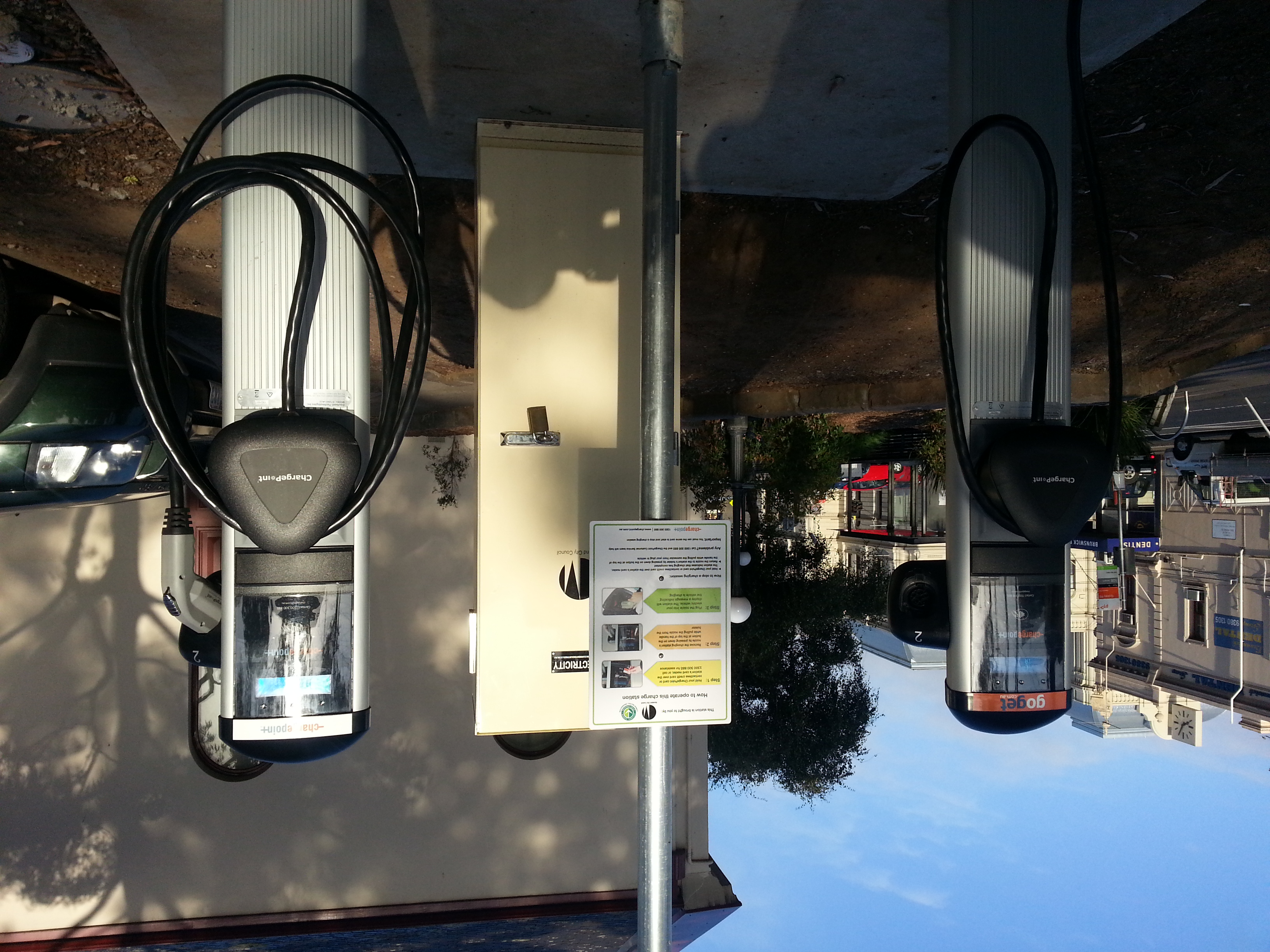
GoGet plug-in Prius chargingChargePoint Chargers This morning I noticed some parking bays reserved for car charging in a car park at the corner of Sydney Rd and Glenlyon St in Brunswick (near Aldi). One of the parking spots was occupied by a Plug-in Prius from GoGet [1]. I didn t even realise that you could get a plug-in Prius in Australia. The charging station is run by Charge Point [2]. The charging points are about 1.5m high and the cable is about 3cm thick (about as thick as the pipe used for filling a car with petrol), so it would charge a car much faster than could be done with a regular power point. One big problem with the Charge Point web site is that they don t give any information on pricing. They sell home charge points (which I guess means just an all-weather two-phase power point) but don t give a price for that. They sell charge points that can be used by commercially but don t give a price for them either. Also their infrastructure for billing is apparently based on companies installing charge points and setting a price for the service. Some charge points may offer free service (I guess staff car parks and some government agencies) and others will charge varying rates none of which is available on the web site. Apparently they have an online portal which gives information on such things to registered users so you have to register to discover what it costs. Of course hardly anyone is going to register before discovering the price, not even when registration is free. But while registration is free the web site demands the make and model of the electric car, so presumably one has to spend $40,000 or more on a vehicle before discovering the price and availability of charging it. Charge Point can be used as an example of how not to design a web site that promotes a service, or at least how not to promote a service that is aimed at saving money (electricity is significantly cheaper than petrol so it s of interest to people and organisations that want to save money). The Charge Point site seems to be better suited to showing that the concept can work than convincing people that they should sign up for it. It seems to me that the best thing that they could do would be to prominently display the average cost of all non-free charge points that are open to the public along with an explanation of the price of driving a desirable car (such as a plug-in Prius or a Nissan Leaf) with such an electricity cost. The contact section on the web site only has a link for careers . I don t think it s possible to get widespread use of electric vehicles without getting better information out there. It appears that Charge Point is relying on councils to do the work of promoting their business by installing their stations and reserving car parking as Moreland council has done in this case.

Sylvain Le Gall: Release of OASIS 0.4.2

I am happy to announce the release of OASIS v0.4.2. Logo OASIS small OASIS is a tool to help OCaml developers to integrate configure, build and install systems in their projects. It should help to create standard entry points in the source code build system, allowing external tools to analyse projects easily. This tool is freely inspired by Cabal which is the same kind of tool for Haskell. You can find the new release here and the changelog here. More information about OASIS in general on the OASIS website. Here is a quick summary of the important changes: BSD3 and BSD4 are still valid but marked as deprecated. When one of the modules of a library has the name of the library, ocamlbuild tends to just transform this module into a .cmxs. Now, the use of a .mldylib fix that problem and the .cmxs really contains all modules of the library. I have published a quick intermediate version 0.4.1, a few days after the previous release. This was a bug fix related to threads. I also decided to skip the release of last month. I was in the US at this time and didn't have time to work enough on OASIS (christmas vacation and a travel to the US). This month I am back on track. This new version doesn't feature a lot of visible changes. I mostly work on the command line interface code, in order to be able to create external plugins. A first external plugin is almost ready, but need some more polishing before release. This first plugin project is a port of the script that I have used for a long time and that was present in the source code of oasis (oasis-dist.ml). It will be a project on its own and have a different release cycle. The point of this plugin is to create .tar.gz out of an OASIS enabled project. I also must admit that I am very happy to see contributors sending me pull-request through GitHub. It helps me a lot and I also realize that the learning curve to enter OASIS code is steep. This last point is something I will try to improve.

Vincent Cheng: Hello, Planet Debian! (also, RFH: sponsorship-requests)

Hi Debian! Just to briefly introduce myself, I'm Vincent (vcheng@d.o, vincent_c on OFTC/Freenode) and I'm a recent graduate of the NM process, having attained DD-ship (is that even a word?) about a month ago in January. Before that, I was a DM since mid-2012, and just another contributor for a few years prior to that. Most of my contributions to the Project are related to packaging, especially packages maintained within the Debian Games Team. Outside of Debian, well, I'm just another 20-year-old, 3rd-year undergrad student studying at the University of British Columbia, working towards a major in computer science. I anticipate that I'll be able to ditch academia for good in 2016; just 2 more years to go... More about my life story in my AM's report. It's fairly boring, if I say so myself. This blog post isn't just about me; I'd like to touch upon another topic that I consider important, i.e. attracting new contributors, and in many cases that involves package sponsorship. That's one of the many things I'd like to work on as a DD, and to that effect I've dedicated a large chunk of the time I currently spend on Debian sponsoring various packages, including packages that I'm not familiar with. I would love to see the sponsorship-requests queue empty one day, but I admit that I find that increasingly unlikely to happen, now that I've gotten a taste of the time commitment involved with sponsoring. Team maintenance and sponsorship seems to work relatively well in Debian; why does that success not translate over to sponsorship-requests / debian-mentors@l.d.o, where a considerable amount of RFS requests don't see any response at all, and merely get closed once those packages get removed from mentors.debian.net (AFAIK they automatically get removed after 20 weeks)? Well, I'm not here to offer an answer for that, but I will point out that there was a relevant thread that originated on debian-devel a month ago: <87ha8lzl7n.fsf@inf-8660.int-evry.fr> (and no, I'm not talking about the giant init-related threads that pop up on debian-devel every other week or so and drown out everything else on the list...). Are DDs in general reluctant to engage in "fly-by sponsoring"? Most packages coming through the sponsorship-requests queue are not team-maintained, and are sent from sponsorees who are not already in contact with a sponsor, and who have no other way of getting in touch with a potential sponsor (assuming that there isn't an existing team or a DD who happens to be interested in that package). Regardless of the merits of fly-by sponsoring (many arguments in favour of, and against, this type of sponsorship have already been discussed in that thread; no need to re-iterate them here), it's discouraging for potential contributors new to Debian, who may just give up and move on to something else. I've now had the opportunity to be a sponsor (rather than just a sponsoree), and I acknowledge that being a sponsor is more work than I imagined it to be a month ago, and it can be quite tedious and not-fun at times. I suppose I can draw a parallel between sponsoring packages and RC bug fixing; neither is what I'd consider to be a highly enjoyable way of spending my leisure time, and both can eat up a large chunk of time and effort; both often involve working on something that you aren't familiar with. But both are beneficial to Debian. No, beneficial isn't a strong enough word; how about "essential" instead? Yeah, that makes more sense. Without dedicated RC bug squashers, Debian would never be able to make a release; without dedicated sponsors, the size of Debian's archive would be smaller and of lesser quality, and its community also a lot smaller. With all that said...I hope this blog post inspires at least a few DDs, possibly more, to dedicate a little bit more of their time towards sponsoring packages. :)

Francesca Ciceri: Community tip #236

community tip I'm sorry, I couldn't resist: words so good need a pretty (fsvo pretty) framing. source

22 February 2014

Robert Millan: Newcons coming to Debian GNU/kFreeBSD (testers wanted!)

FreeBSD vt(4) -commonly known as Newcons -, which is planned to replace Syscons as the default FreeBSD console, is now available on Debian GNU/kFreeBSD. It is enabled by default, but only in kfreebsd-11 packages from experimental. Newcons provides many interesting new features, such as KMS support, Unicode, double-width CJK characters, etc. More details are available in FreeBSD wiki. Ironically, Debian GNU/kFreeBSD is in a bit more of a hurry to deploy Newcons than FreeBSD is. The reason for this is that Newcons is practically a requirement for using the new KMS drivers. While FreeBSD Ports, in order to ensure a smooth transition, preserve support for UMS (User Mode Setting) in their X11/DRI userland, Debian supports many kernels and (contrary to some ill claims I heard) gives priority to new features on Debian GNU/Linux port, which is the one with most users and developers. In this case, it means KMS is the only option when it comes to X11/DRI userland in Debian. Anyway, we ve been making some nice progress. Here s a screenshot of Newcons in action in a Debian system (running on VirtualBox, thus with VGA backend): newcons The idea is to backport this to kfreebsd 10.0, as FreeBSD plans to merge it into stable/10 anyway. However, it is still in the process of being tested (and being polished on FreeBSD, I hear they plan to merge it on March).

21 February 2014

Joey Hess: subverting hierarchy with git

Did you ever want to be able to tag your files, and use the tags to query and select the files you want? For many sorts of files we use, this is clearly better than being locked into a single hierarchial view of nested directories. Semantic file systems are a way to do things like this. But that's an entire separate filesystem, often implemented as a FUSE layer. I have never wanted tagging enough to take on that layer of complications. A week ago I realized that there was a way to do this without using an entirely separate filesystem. When we use git, we're used to having different views of our files, called branches, that we switch between. What then, if a git branch were generated from tags and other metadata that meet a query, providing a custom view that meet the user's current needs and could be incrementally refined. Here's a short screencast demoing these views.

And here's a walkthrough for setting it up. To build this, I needed a nice way to store metadata in git, and since git-annex happens to have a very nice way of using git as a database, I naturally built it on top of git-annex. This means that the tags and other metadata are automatically synchronized between different clones of the repository. Multiple users can be tagging and setting other metadata at the same time, and their changes will merge in a consistent way. I have a long list of things to do to fully integrate views into git-annex. However, they're already basically usable, and I'm very pleased with how these dymanic views of the contents of a repository are working out. Today's release of git-annex includes views support, so give them a try!

Vasudev Kamath: Kontalk FLOSS alternative for Whatsapp and Co.

So Whatsapp has been acquired by Facebook and this news is still hot and people are discussing it all over the twitterverse. So I took this opportunity to stop using Whatsapp and removed it from my phone. Possibly I could have deleted my account but who cares. Anyway I've been searching for a secure and FLOSS alternative for Whatsapp for quite some time now, few days ago I found about Telegram but after reading post by Tincho on planet Debian, I decided not to use it. Recently while going through the talk list for fossmeet.in I found link for Kontalk in a privacy awareness talk proposal by Praveen and thought I should give it a try. So below is my first feelings about Kontalk.
Installation and Activation Kontalk can be installed from playstore for verification purpose it requests your phone number and country code and request for verification. This should send a SMS with a code which should be entered in the text box given and app is ready to use. There is also a possibility to use pre-existing verification code (if you got one from developer directly, read below for details). I did see some glitches like I never got the SMS delivered to my phone after 2 attempts and a days wait. Then I went ahead and reported a bug and the main developer was quick to respond. After a discussion it was noticed that SMS was blocked by spam filters. He also mentioned its tough to get SMS delivered to India. He was kind enough to provide me with a verification code and I used the Use existing code option to enter it and get Kontalk activated. The SMS delivery inconsistency is still present for India (and may be other nations too) some people get code immidiately others may be after couple of days and some might not. Upstream is already working on a possible workaround.
User Experience Now coming to usage part, the UI is neat and clean, I won't say super polished as Whatsapp or other popular apps but its really neat and easy to use. Some points which I like are
  • Ability to hide presence, so others won't know you are online or offline. (unlike Whatsapp which advertises last seen)
  • Encrypted messages and ability to optin or optout.
  • Encrypted status messages! Only user with your phone number can see your status. (Cool isn't it).
  • Manually requesting to find contacts who already uses kontalk!. Right it doesn't read your contact list without your permission you need to refresh to check who in your contacts is using Kontalk.
  • Attach and smiley options in the top right corner of Chat window which allows easy accessing unlike keyboard - smiley switching of Whatsapp.
  • No automatic download of media contents which is shared. Yes by default it doesn't download any picture or video automatically if you want to see something click on it and select download.
  • Running your own server for Kontalk! Now thats something which is interesting for people who doesn't want to host their data on some other peoples infrastructure. Code for server is available at xmppserver repo.
But there are some rough edges also but I'm sure this can be improved. But some points which I noticed are
  • Contact name disappears and only number is displayed. This is something which happened with one of my contact so I'm not really sure its a bug.
  • My friend noticed all his existing contacts suddenly vanished when he refreshed contacts list. Again this is possible bugs and we are considering reporting it upstream.
  • No group chats yet. I don't see a option to do that yet.
  • Attachment at the moment is restricted only to pictures (and video? never tried) and uploading takes quite sometime and sometime hangs forever.
So I'm considering forwarding these to upstream and help them by providing enough data so these can be fixed.
Technical Side All code for client server and protocol specs are available under GPL-v3 at the Kontalk project site. Server software is written in Python and I guess uses XMPP (but I've not cross verified). Server also uses MySQL as database. These can be hosted on our own servers but possibly needs more than that like SMS sending options etc.
Conclusion In my views Kontalk can become a great alternative for Whatsapp and co from Free Software world and I encourage every one to give it a try which will be the first step to help improving it.
Disclaimer: I'm not a privacy or security expert so whatever I shared above are what I noticed and experts may see something different than this. In any case I welcome comments and suggestions.

Riku Voipio: Where the armel buildd time went

Wanna-build, wanna-build, which packages spent most time on armel buildd's since beginning of 2013?

package sum(build_time)
-------------------------+--------------
libreoffice 114 09:16:34
linux 113 02:58:50
gcc-4.8 064 01:21:09
webkitgtk 059 19:09:27
acl2 043 16:40:50
gcc-4.7 028 14:03:53
iceweasel 026 19:02:13
gcc-snapshot 026 01:31:21
openjdk-7 020 02:41:53
php5 019 16:13:22
llvm-toolchain-3.3 017 19:05:38
qt4-x11 017 02:57:09
espresso 016 03:50:37
pypy 015 07:07:25
icedove 014 18:57:08
insighttoolkit4 014 17:16:43
qtbase-opensource-src 014 12:39:09
llvm-toolchain-3.4 012 03:06:15
mono 011 22:30:13
atlas 011 20:40:54
qemu 011 17:11:09
calligra 011 16:05:55
gnuradio 011 15:19:35
resiprocate 011 10:14:56
llvm-toolchain-snapshot 011 02:04:44
libav 010 13:52:03
python2.7 009 18:58:33
ghc 009 18:28:48
gnat-4.8 009 13:59:57
axiom 009 12:40:24
cython 009 00:47:04
openjdk-6 008 16:38:14
oce 008 10:29:20
eglibc 008 06:04:26
ppl 007 20:48:45
root-system 007 17:32:16
openturns 007 10:12:53
gcl 007 08:02:42
gcc-4.6 007 02:50:48
k3d 007 00:36:11
python3.3 007 00:25:42
llvm-toolchain-3.2 007 00:17:59
vtk 006 17:53:28
samba 006 17:17:27
mysql-workbench 006 14:36:46
kde-workspace 006 07:31:12
gmsh 006 04:32:42
psi-plus 006 04:30:08
octave 006 04:17:22
paraview 006 04:13:25
Timeformat is "days HH:MM:SS". Our ridiculously stable mv78x00 buildd's have served well, but has come to become let them rest. Now, to find out how many of these top time consuming packages can build with parallel make and are not doing so already.

Jakub Wilk: For those who care about snowclones

Instances of the for those who care about X snowclone on Debian mailing lists:

Guido G nther: Truncating git history

When starting to work on a new project I start from an empty git repository right away so I can try out different ideas, revert easily, can diff against old versions (to check if I missed something) and have a commit history to record fixmes and todos. However when making the repo public these things are not of much interest anymore so I truncate the history. To be on the save side I want to keep that history locally though. Assuming the repo is on master, I do:

# 1.) Move the old master out of the way
git branch -m branch master oldmaster
# 2.) Get the current tree at HEAD
tree=$(git rev-parse HEAD^ tree )
# 3.) Create a new commit without ancestry
commit=$(git commit-tree -m "Initial commit" $tree)
# 4.) Make this the new master
git branch master $commit
# 5.) Switch to the new branch
git checkout master
Done. One can now add a remote and push the master branch. The old history is still there locally on the completely detached commit history ending at oldmaster:
$ git log --pretty=short --graph --decorate master oldmster
* commit d5cf3371eaefbaa8efac10c0fb9e7597da17b423 (HEAD, master)
  Author: Guido G nther <agx@sigxcpu.org>
      Initial commit
* commit 64103ff72bde13d7ec4cf0489ad2a80f3ac249d3 (oldmster)
  Author: Guido G nther <agx@sigxcpu.org>
 
      Another uninteresting commit message
 
* commit bd7332a79380bb217eca09cbd7f6ff0e5174deb8
  Author: Guido G nther <agx@sigxcpu.org>
 
      Uninteresting commit message
 
... <more old history>
Update: Uli Heller pointed out that this is the same as using git checkout's --orphan option.

20 February 2014

Clint Adams: For Richi

I vote for Martinique.

Next.

Previous.