Search Results: "nate"

20 January 2006

Amaya Rodrigo: ZzZzZzZzZz

For the first time in more that 10 days, I slept like a baby last night. It might hurt the xlibs-dev transition, but I hope it actually helps in the long run, I will make less mistakes, bug vorlon and dato a bit less, be more aware and awake. Now I just need to keep a balanced sleeping schedule again. I think have good allies.

I have started a small experiment that is against all rules but might spread some package love. So far, I have been successfully working with Victor Seva, Justin Pryzby, Thomas Viehmann and Nico Golde. Join us if you care about this transition!

On the other hand, I find recent threads in debian-devel, debian-private and several posts in debian-devel-announce very distracting. Although I am strongly opinionated on the subjects being discussed, I'd rather remain semi-silent and work in my "NMU love".

Amaya Rodrigo: They are doing fine!


Rejoice: Just talked to the vet on the phone. Vi and Emacs are doing fine.


My vet has written two books on cats, is nominated for Intervet's Vet of the year and is also a very interesting person to talk with: Santiago G. Caraballo.

Ugly pics of scars and post-surgery cats to be uploaded later.

Amaya Rodrigo: Castration

I just came back from the vet. I left Vi and Emacs there and will pick them up after work, as today they will be spayed and neutered (450 EUR total). I am all shaky inside.
My little cats! (Well, not so little, as Emacs started acting like if she was in heat only a few hours before I had to take a plane for my Holidays, so I guess she is not so little anymore, nor is Vi, who seemed completely fascinated by her new behavior. Anyway, my vet knew this would happen one month in advance, when we were arranging an appointment for the surgery that will be performed today).


Good luck, my babies!

Axel Beckert: For those who care about memes, interior design or optical illusions

Sorry, but I just couldn’t resist to at least once use FTWCA. (I guess it will become some kind of meme on Planet Debian and the Debian lists the one or the other way round… (And isn’t “meme” just another name for running gag? ;-) Via dyfa I found a page with very impressive optical illusions in interior design just resulting from the right perspective. Unfortunately my flat is way to small for such a cool decoration. (These orange holes would fit perfectly regarding the colour. :-)

Brett Parker: Why oh why...

Why does Oracle complete an import with... "Import terminated successfully with warnings." when what it actually means is... "I ran out of table space mid import, but I'm only going to tell you that in an obscure way in the log, and otherwise make you think that it was alllll OK"? Surely in this day and age it could just say "Import terminated unsuccessfully: ran the hell out of table space", wouldn't that be nice?

19 January 2006

Riku Voipio: Debian developers on a google maps widget

And in less serious news, a small google maps hack (Requires fast CPU or LOTS of patience):

Debian developers around the world

This is from the data at http://www.debian.org/devel/developers.loc, which has the same thing rendered with xplanet. I have to wonder, if LDAP has more accurate cordinates, those seem a bit rounded.

Riku Voipio: Automatic Language Identification

Automatic language identification: http://grid.let.rug.nl/~vannoord/TextCat/Demo/textcat.html -Insanely cool.

I remember I saw that site a long time ago last time. Finding it again turned out to be very hard. Googling for "automatic language identification demo" and variants turned out all kinds of interesting papers, but not this site. If I would have tried with "language guesser", I would have found it without needing to resort to search for the papers cited on the page... Google is still not magic.

About the mandatory comment issue, I agree VERY much with Joey. I think the SCC name is unfortunate, probably something like "ports" would better. I'd also like believe that many of the ports will become more lively when they get administrated on scc site by the actual porters instead of the overworked d-i and debian infrastructure team. This of course up to how many people (and vendors!) care about their specific arch, to actually work for it.

And about all the "universal OS" and "what about users" screams... I'm almost speechless. What about the _current_ X86 and powerpc users with their recent hardware that isn't supported by woody? We have a lot more X86 users currently without stable security support than there are woody users of the archs proposed to be moved to SCC.

Riku Voipio: Stupid April 1st.

For some odd reason, nobody seems to believe me, when I tell them that I signed today papers for a job that would be basicly developing Debian. Grah. Anyways I am more than happy to leave coding propierty code based on Oracle databases.

So far, I know Scratchbox is the central point (This Article for a short introduction). I'm thinking of wetting my feet by experimenting an scratchbox based crosscompiling buildd. Now I need to find something really close to doorstep to get impressive speed increase numbers ;)

On the other hand, I'ts kinda scary that A hobby will become a job. Does this mean I need to invent a new hobby? I guess sports wouldn't be bad.

I noticed that I have become quite passionate in autoconfiguring vs force everyone to configure by hand discussions. It makes my heart bleed when I see someone suggesting that populating /etc/modules shouldn't be a problem for a newbie. Writing mails under strong emotions leads to harsher than necessary words, so I guess need to chill down. It's just software, like Liws Advocating Linux essay reminds.

Axel Beckert: New talk proposal, new Linux distribution found

After talking with some LinuxTag guys about which kind of talks are still missing for the upcoming LinuxTag, I submitted another proposal for a still only roughly sketched talk: KISS – Keep it simple and stupid, also on the web.
KISS – “Keep it simple and stupid” is an old and successful principle in the Unix world: Small and simple programs, doing only one thing, but they’re doing perfect, fast and reliable. This principle can also work on the web and make webservers or surf terminals out of already discharged computers.
I planned to show “simple” (or at least “simple to use”) tools like Blosxom or the Website Meta Language, a more slim webserver than Apache (e.g. fefe’s fnord or one of the ACME webservers thttpd, mini_httpd or micro_httpd), slim web-browsers (e.g. like Dillo, Opera, glinks, ViewML or Minimo) and one or more Linux distributions optimized for low end PCs. While thinking about low end PCs, usually the following distributions come to my mind: DeLi Linux, fli4l and Debian Woody. But none of them seems to fit for my talk as perfectly as I would like: Since I first read about viewml on the DeLi Linux page, I looked for Debian packages of viewml today. apt-cache search hasn’t found anything on Woody or Sarge and packages.debian.org is still down, so I used Google. I found out, that there at least was a viewml package in Debian since at least 2001, so I expect, it just didn’t make it to stable. But I also found this interesting page on a webserver called www.ubuntulite.org. Ubuntu Lite? That sounds very interesting, since I see Ubuntu not as the baddest idea (expect for it’s horribly resource hunger and only offering one package per application by default ;-), but having an Ubuntu derivative prepackaged for low end PCs and with several webbrowsers instead of only Epiphany (and probably Firefox, don’t they?) would be perfect for my purpose. So I’m currently downloading an Ubuntu Lite ISO and will give it a try on one of my Pentium MMX boxes. Unfortunately it doesn’t seem to support Pentium I or AMD K5 since Ubuntu itself only supports i686 and upwards. :-/ But this also means, that it’s no occasion for my Pentium I Compaq LTE 5100 (which I probably will name pony), but currently, after Bartosz’ recent post on Planet Debian, it looks like Debian GNU/kFreeBSD could also be an interesting OS, since it fits all requirements perfectly: Free, Modern, Exotic and all conveniences of Debian. ;-)

Now Playing: Jefferson Starship — We Built This City

Michael Janssen: Warning: Habit-forming.

Recently I have started a new diet: the No S Diet. The concept is very simple: no sweets, snacks, or seconds (except on days which start with S). I started around the holidays, which actually wasn't hard at all because holidays count as S days (they're "Special"). However, I didn't really get into it that much until recently. I can't really tell if it is working yet, because it doesn't have strict weighing guidelines like the previous diet, but I feel like something has changed in my life. There is a bunch of text on the page about why it works, but the basic concept is that you should be forming habits which are healthy. It is much easier to get into a healthy habit if it's not hard to remember what the habit you're trying to reinforce actually is. It makes it much easier to feel guilty when you fail in enforcing the habit as well, because you can't make complicated excuses ("this is okay because I excercised off those calories"). The No S Diet also has the bonus of being easily combinable with basically any other diet you can think of, unless that diet specifically requires you to eat sweets. I'm thinking of combining it with the hacker's diet, which definitely appeals to my accountant side. The problem I had with the previous attempt at the hacker's diet still exists, unfortunately - I still don't have an easy way to keep track of my calories. I am considering dropping a few bucks on a calorie counter database for my new Palm, which may help in that regard. I have noticed that most of the things which are now being termed as "lifehacks" are actually just habit-forming. The No S diet is a habit for eating, Getting Things Done is a collection of habits for todo lists and projects, and Early Rising is a habit for sleeping and waking up. These are not new ideas, they are just smashed into the new fad: improving your life through good habits. The accountant in me wants to do more than just that, so I am thinking of making a drupal module or two to keep track of my progress (and subsequently broadcast it to the world).

Erich Schubert: We need debian-announce-announce and debian-devel-announce-announce lists

To handle the current influx of (annoying) announces, we need to create new mailing lists, named debian-announce-announce and debian-devel-announce-announce, as well as accompanying lists named debian-announce-announce-flames and debian-devel-announce-announce-flames with the Reply-To set to these lists. Would you please just shut up? Thank you. The original Ubuntu announcement was probably not appropriate for the list. I just ignored it when I read Ubuntu. The clownish public flame "announcement" afterwards was a nuiscance, and a certain evidence of incapacity. But the amount of pointless discussion that has sprung from it reminds me of why I don't read debian-devel any more... Please direct further comments to /dev/null. In fact, such pointless threads explain why we're using Planet.Debian so much: because our mailinglists are so bad. Fortunately, there have been rather few posts on that issue on planet yet... because I don't have a "delete thread" option there.

Clint Adams: Not adjusted for inflation

Twice upon a time, there was a corporation called Company B. Ironically, their bugle player quit two days before the beginning of this story. Two days after the bugle player quit, something sinister was happening at Company B. To better understand it, we need to go back in time a bit. So this next part happens well before the beginning of the story. Once upon a time, Company B was run by a middle-management team known as Team Alfalfa. These guys were young and na ve and inexperienced, but idealistic and somewhat morally pure. They certainly didn't expect the bugle player to quit. They were surprised by almost every one of the things to come. When they hired a Belarussian, they were surprised when he quit shortly thereafter and moved to Hampshire County in Massachusetts. They were surprised when the owners of Company B hired Team Buckwheat. Team Buckwheat was a group of power-hungry jerks, who were hired because they had Experience and Vision. Company B needed to grow, because Progress is important, and anyway, how else would the owners be able to bilk the company of millions of dollars through fraud and mismanagement if the company didn't grow big enough to amass millions of dollars in the first place? The thirst for power was great within each member of Team Buckwheat, and they collectively vowed to take over the company. Through trickery and deceit, they sabotaged Team Alfalfa. Team Alfalfa mistakenly believed that its power hold was strong and that it could threaten to hold the company's business hostage, but it was very much mistaken. Slowly but surely, Team Buckwheat started to drive Team Alfalfa out of the company until only two members remained. In fact, their lust was so great that they began vying for power amongst themselves before they had succeeded completely in their purge of the ranks of Team Alfalfa. They employed evil and complicated manipulations and machinations, until only two of them remained as well. As only two, they were much less powerful, and as they saw the danger and became afraid, they clung to one another and allied. Losing faith in Team Buckwheat, the owners of Company B hired the Grey Knight to continue the work of rapidly growing the company in order to make enormous profits. The Grey Knight came in and exuded Calmness and Rationalness, and provided a stark contrast to the meanness and cruelty that Team Buckwheat inflicted upon its subordinates. So some unlikely bedfellows among the grunts and peons formed an alliance, and with the reluctant aid of the Grey Knight, they had the remnants of Team Buckwheat fired based on flimsy pretexts, while the remnants of Team Alfalfa watched from the sidelines. The peons and grunts were na ve and overly hopeful in the Grey Knight, who was not as noble as he seemed. After a few months of everything functioning better than it had ever done before, he brought in his friends, Team Corn. Team Corn was power-hungry as well, but more patient. Unlike Team Buckwheat, which had been cobbled together from strangers, Team Corn stuck together and moved from company to company, leaving waves of disgust and resentment in its wake. These people immediately took steps to secure their power base. Where things had been transparent and group-oriented before, they were made obscure and individualized. Each project was assigned to a single person. All communication regarding each project was required to go directly and privately to the responsible person. Discussing a project with anyone else was a breach of protocol. If the responsible person fell sick or left the country for mysterious reasons, all activity on that project would cease. Accomplishments were discouraged, and simulating the appearance of much effort and progress was encouraged. The members of Team Corn were stunted in their moral development. They believed that one was either with them or against them. Those who chose to be sycophants were given rewards and promotions, no matter how incompetent and unqualified they were. Those who did not were oppressed and punished. Objections and questions to ill-advised policies were met with hostility, and if anyone ever took a principled stand, Team Corn became fraught with confusion; they could not conceive of a reason one might act for the greater good or based on conscience rather than to do what would advance one's own interests. After a very long time, this fundamental lack of comprehension of their own evil led to their downfall, but that small bit of justice was tempered when Team Durum came in to replace them. Team Durum wasn't as bad as Team Corn, but boy did it suck.

18 January 2006

Eric Warmenhoven: You can use a coupon!

For a while now I’ve been thinking that I’d like to get my private pilot’s license, so I’ve decided that once daylight saving time begins, I’ll start taking lessons. Does anyone have a recommendation for a good instructor? I’d prefer one based out of Reid-Hillview, since I live just off Capitol. Also, how long should it take, and how much should it cost? (I know those answers are dependent on how much flight time I need before I feel comfortable taking the exams, but I’m just looking for an average.) Lisa’s dad has his license so he was able to give me a bit of an idea, but he got his out of Hollister so I’m not sure if there’s a difference. Also, I’d like to get my IFR and probably also multi-engine; but I’ve heard some people say that it’s a good idea to wait a while after getting VFR before getting IFR. Is there any merit to that? Lisa and I are also getting serious about buying a new home, and this time we’ve even got a realtor helping us find houses that we might be interested in. It’s sort of off to a slow start, since the market is kind of slow right now anyway, but I’m hoping it will pick up soon. Also I don’t think we’ve adequately explained to the realtor quite what we’re looking for, and how little work we’re actually willing to do to the house. We’re hoping to move sometime this year, but I’m not sure whether that’s realistic. Fortunately we don’t have any urgent need, so we don’t have to settle for something; but I’d still like to get it over with as quickly as possible.

Adam Rosi-Kessel: Flym Testifies Against Alito

I learned just last week that my law school professor John Flym was counsel in the Vanguard Case. He testified before the Senate Judiciary Committee on Friday. It appears that John is also retiring. This will be a great loss for Northeastern Law School. He was one of my favorite professors at Northeastern. Some students didn’t understand his clinical approach, which among other things demanded that we take nothing for granted and rejected easy or prefabicated answers to questions, but I found his teaching to be some of the best preparation for practicing law in the real world. Right wing critics have predictably attempted to dig up “dirt” to discredit John—e.g., Baseball Crank: LAW: Who Is John Flym?. I don’t mind linking to that entry and increasing its PageRank, however, since I don’t find anything objectionable in the “dirt” the writer has dug up. In fact, it only increases my respect for the man. (He opposes nuclear weapons and torture? How shocking!)

17 January 2006

Jonathan McDowell: Sold the Zaurus

Today I finally posted off my Zaurus SL-C3000, having sold it on eBay. I still think it's a lovely little device, but after taking it with me when I went back to my parents and not ending up using it at all (I had my laptop with me too) I decided I couldn't justify keeping it. Here's hoping the new owner gets more use out of it than I did. However I seem to be compensating by adding to my pile of consumer level routers. This week I got a Netgear WGT634U, with the intent of using it to replace my Asus WL-500g, which will end up providing my parents with wireless. I've put OpenWGT on it for the moment, because it doesn't require me to hook up the serial console, but the longer term plan is OpenWRT. I've still been fiddling with my Netgear DG834G but unfortunately latest OpenWRT AR7 builds have been less than reliable at booting for me. I've dropped back to an older build based on the 2.4.30 kernel, which seems to be fairly stable, so might end up trying it in production at some point. Wireless still isn't supported, which is a bit of a disadvantage. I understand 2.6 is being worked on for it, so maybe that'll lead to some wireless joy. In addition to the above I also have a Linksys WAG54Gv1 and a Linksys WRT54Gv1 sitting around. Neither are mine and I should really give them back as I'm not using them. I have to keep stopping myself from trying to find more cheap toys on eBay.

Daniel Stone: [tech] zomg vorbis

Thomas, I'm a skanky leftie, though as time goes on and all the iPod rivals slowly eliminate themselves due to disintegrating or being crap (if you like it, that's great, I can see that it has nice points, but they're just not for me), it starts to look like a less good choice. Although the iPod does have that god-awful clickwheel these days. Ugh.

And Ross, I'm also a food leftie. It's the only way to fly. Supermarket tomatoes are just crap when you've had proper huge, deep red, hydroponically grown organic tomatoes from the market, sold to you by the people that helped grow them.

16 January 2006

Edd Dumbill: Trends in core XML and RDF technologies

As I sort through the proposals submitted for XTech, it's interesting to note which technologies and ideas dominate. I'll share some observations here as I work through them.I've just completed a first review of the core technologies track, which focuses on the nitty-gritty of XML and its related standards. These themes stood out:Of course, just because these are the major themes, it doesn't mean they'll squeeze out equally great presentations on other topics.I'll post more observations as I continue to review the proposals. 

Amaya Rodrigo: ZzZzZzZzZz

For the first time in more that 10 days, I slept like a baby last night. It might hurt the xlibs-dev transition, but I hope it actually helps in the long run, I will make less mistakes, bug vorlon and dato a bit less, be more aware and awake. Now I just need to keep a balanced sleeping schedule again. I think have good allies.

I have started a small experiment that is against all rules but might spread some package love. So far, I have been successfully working with Victor Seva, Justin Pryzby, Thomas Viehmann and Nico Golde. Join us if you care about this transition!

On the other hand, I find recent threads in debian-devel, debian-private and several posts in debian-devel-announce very distracting. Although I am strongly opinionated on the subjects being discussed, I'd rather remain semi-silent and work in my "NMU love".

Edd Dumbill: Linux fonts: still wanting

Fonts on Linux have had a chequered history. Mostly, they've been bad. Once, there was an excuse for this: GNOME and KDE were unable to render anti-aliased text, and there was a paucity of decent free TrueType fonts. Now, with Xft, Freetype and Bitstream Vera fonts things are different. Unfortunately, it's hard to find Linux distributions that have gone the extra mile to make the fonts look good by default. Let's take a brief look through default fonts in various operating systems. OS X Tiger default fonts Mac OS X offers a great default, which looks good on all modern machines. No user configuration required. Windows default fonts Windows default is blocky, as there's no anti-aliasing to speak of, but the hinting on the fonts is excellent and they're crisp. If you dig a bit and find the crazily hidden Display properties - Appearance - Effects dialog, you can turn on ClearType. Windows ClearType fonts  Windows ClearType offers a pleasing level of font smoothing. Now, let's look at the GNOME default, taken from a screenshot on the GNOME 2.12 start page. GNOME default fonts This is pretty much how default GNOME looks on any machine. In particular, it's the default look you get when you install Ubuntu. This corresponds to a setting of full hinting in the font preferences, with the font Bitstream Vera Sans. The quality of the type, however, is poor.  It has a spidery and ungainly quality to it.

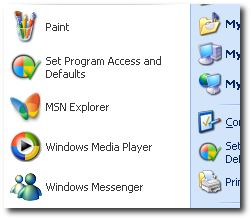
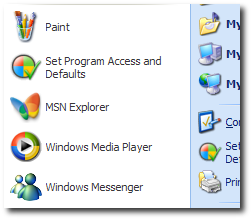
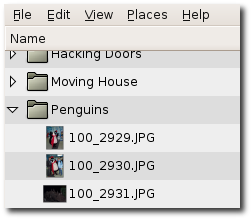
In and of itself, Vera is not an ugly font. There's some combination of the font's hinting and the Freetype hinting engine that conspires to make things ugly. On my desktop I've tried to work around this by altering the font settings somewhat. GNOME: Edd's fonts The effect isn't perfect, but a lot better to look at. The font is Bitstream Vera Sans as before. To get this, I had to switch off any hinting then slowly play with the DPI setting until I get letterforms that rendered neatly. Alas, this brings problems of its own. For a start, not all popular GNOME applications respect this setting. Firefox often gets its own idea about such matters as screen DPI, and OpenOffice.org2 completely ignores my hinting preferences and gives me nasty looking menu bars. Murray Cumming's recent GNOME for bad eyesight blog post also gets into many of these issues. For most users without time or inclination to hunt this down the choice is either to live with the ugliness, or opt for an operating system that gets it right.(Lest I seem churlish here, I should celebrate the amazing work done with internationalization on the Linux desktop, which continues to bring computing access to many in the world for whom choice is a luxury.)  There is one Linux distribution that makes a reasonable job of good-looking fonts. The Fedora Core 4 distribution ships with a different default font and out of the box settings giving reasonably attractive letterforms. Courtesy of OSDIR, here are GNOME and KDE screenshots. However, I'm pretty sure it doesn't solve the rest of the font integration issues.
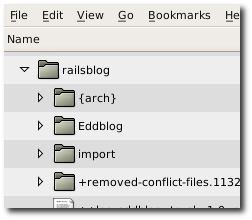
I'm no typography expert, but I find that good-looking fonts enable me to work more effectively. And on the advocacy side, I want my Linux desktop to look as good or better than the OS X and Windows alternatives. Lots of great effort was made getting us to the point of anti-aliased rendering and the licensing of the Bitstream Vera Fonts. Having got this far, it seems a shame not to hunt down the remaining irritations in font handling.Further reading: 

Wouter Verhelst: Wanted: the m68k ABI spec

I've been looking for this everywhere. Unfortunately, it does not appear as this is available in any other form than a book from Prentice-Hall. To make matters worse, the book is no longer in print. Its ISBN number was/is 0-13-877663-6. If anyone has a copy that they can miss, I'd appreciate it.

Next.

Previous.