Antonio Terceiro: Thesis submitted
Last Friday, after 5 long years, I have finally submitted my PhD thesis. It was
quite a relief, more or less as if an elephant was taken off my back.
An English title for my thesis would be Structural Complexity Characterization in Software Systems. Here is an abstract:
This thesis proposes a theory to characterize structural complexity in software systems. This theory aims to identify (i) the contribution of several factors to the structural complexity variation and (ii) the effects of structural complexity in software projects. Possible factors in the structural complexity variation include: human factors, such as general experience of the developers and their familiarity with the different parts of the system; factors related to the changes performed on the system, such as size variation and change diffusion; and organizational factors, such as the maturity of the software development process and the communication structure of the project. Effects of structural complexity include higher effort, and consequently higher cost, in software comprehension and maintenance activities. To test the validity of the proposed theory, four empirical studies were performed, mining data from free software project repositories. We analyzed historical data from changes performed in 13 systems from different application domains and written in different programming languages. The results of these studies indicated that all the factors studied influenced the structural complexity variation significantly in at least one of the projects, but different projects were influenced by different sets of factors. The models obtained were capable of describing up to 93% of the structural complexity variation in the projects analyzed. Keywords: Structural Complexity, Software Maintainance, Human factors in Software Engineering, Mining Software Repositories, Theories in Software Engineering, Empirical Software Engineering, Free/Open Source Software Projects.Those who read Portuguese can check out the actual thesis text as a PDF file. Most of the studies discussed in the thesis are presented in English in papers I have published during the last years. My defense is going to be on March 23rd. If you happen to be at Salvador at that day, please feel cordially invited.
 In the last few days, people on the debian-devel mailing list have been debating again (and again, and again...) how much the ports and architectures used only by an handful of people should influence the direction of the project. With this post I want to briefly summarize my position.
The reason we support niche architectures and toy ports is that that some people are interested in doing the work, and that these do not hinder development of the architectures that people actually use.
When m68k started inconveniencing too much the real world development, the port was killed and the sky did not fall, notwithstanding the complaints of the few retrocomputing enthusiasts who still used and developed it.
I do not mind if some people like to play with kFreeBSD and Hurd as long as they do not inconvenience me too much, both as a user and as a developer.
While it is true that targeting multiple architectures helps finding bugs, after we have covered all the useful combinations of endianity, size of variables and char signedness the incremental benefits of adopting a new architecture just for its sake are minimal.
I am a Red Hat customer (also because of Debian shortcomings), I do not like it much and I do not want to be one forever: please do not kill my hopes.
 I'm seeking advice on budgeting.
Historically, I've been crap at managing money. Things have improved in recent
years. My main tool is


 With first RC for
 Back in 2005 I saw that a new open standard was being developed for calendaring, and I thought it would be a great idea to implement it. Nothing too complicated - just a really simple implementation...
And thus was born the "Really Simple CalDAV Store".
A few years later, when I got about 90% of the way through implementing the base CalDAV specification, I realised that "Really Simple" and "Calendar" don't actually happen in the universe we inhabit, so after much deliberation the project got renamed to "DAViCal".
Now, in 2012, DAViCal is one of the leading CalDAV servers available, and I spend quite a lot of my time helping people who want to use it. Earlier in the year I was looking at the web server logs and noticed that in a four week period (i.e. as far as my logs go back) there had been several thousand unique sources of hits on the URL that DAViCal uses internally to find out what the latest version is when you browse to the '/setup.php' page.
This got me wondering how many DAViCal installations there are out there, and how big they might be, and so forth but since DAViCal is free open source software, there isn't a simple way to answer those questions.
I thought that it must be time to run a survey of DAViCal users everywhere to try and find out what the scale of the penetration is. How big (and how small) are the installations running DAViCal? What... Well: lets save the questions for the actual place where you can put answers :-)
 Soile, my fiancee, has had a successful
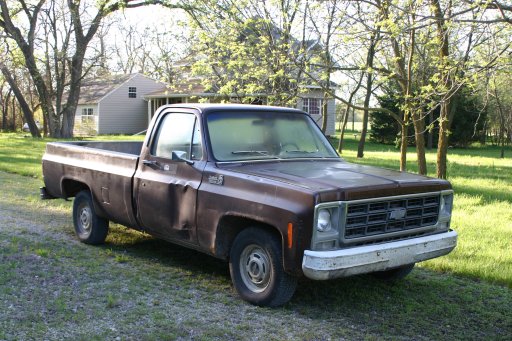 This pickup, in case you re wondering, is a thing of stories, shall we say. After a particularly frustrating experience with it one week (oh yes, the battle extended several days), I
 I have been in the habit of using

 One of the most popular backup solution under Linux is Bacula, but it s quite complicated to setup. The same for Amanda.
 Since we ve got this software in Debian installing it on unstable is as simple as apt-get install burp .