Search Results: "nic"

25 August 2010

Eddy Petrișor: [content:lang:ro] I wrote to my representative

This post concerns Romanian politics, internal affairs and improper direction of public funding for new hideous churches in spite of education, culture, health, technic development and old monuments. Thus I will write this in Romanian. Curious foreigners can try to read the text via Google's translation.


Din cauz c suntem n secolul XXI i consider c e o prostie imens s b g m bani n biserici n detrimentul educa iei, culturii, s n t ii, dezvolt rii tehnice i a vechilor monumente, iar politicul din Rom nia pare dornic s dea bani cultelor, am ajuns la concluzia c este cazul s -i scriu reprezntantului meu (teoretic) n Parlament, Deputatul Florin Iordache. Am aflat de ce colegiu apar in uit ndu-m aici i apoi n lista oficial cu deputa ii.


I-am trimis textul de mai jos:

M numesc Petri or Eddy i sunt unul dintre cei pe care i reprezenta i n Parlamentul Rom niei. Este pentru prima dat c nd scriu unui parlamentar care m reprezint n conducerea statului rom n i o fac pentru a-mi exprima n mod clar i r spicat ideile i opinia n ceea ce prive te subiectul pe care l voi discuta mai jos. Am 30 de ani, sunt programator, am muncit i mi-am pl tit taxele de c nd am fost angajat, din anul 4 de facultate p n n prezent, adic de vreo 6-7 ani. Nu, acest mesaj nu este un strig t de ajutor, nu a tept pomeni, nu am milogit niciodat , mereu am muncit de i v d c pentru unii parazitismul fiscal a devenit un mod de via . Din acest motiv sunt revoltat.

Sunt revoltat pentru c :
- de i pl tesc taxe i impozite care ajung la peste 60% din venitul brut, nu primesc n schimb nici un fel de servicii, nici un fel de infrastructur , nici un fel de respect, nici un fel de eficien
- de i lucrez de ceva timp, am observat c pe unde am lucrat competen a i performa a erau o necesitate; n aparatul de stat nu este cazul
- de i sunt destui ca mine care pl tesc taxe i impozite, vocile noastre sunt ignorate i banii no tri sunt arunca i pe fereastr de cei ce administreaz fondurile colectate.

Domnule deputat sunt revoltat c de 15 ani de zile dispar n medie aproximativ 4 coli zilnic i apare, tot n medie, o biseric la fiecare 2 zile, iar asta se nt mpl cu accep iunea aparatului politic. Spitalul din Caracal, ca orice alt spital din Rom nia, e prost dotat, nu exist personal suficient, nu are fonduri pentru medica ie pentru pacien i, pe scurt, este un dezastru care e pe cale s se nt mple. i cu toate astea, banii se duc spre biserici. Se fac dona ii de coli i terenuri c tre biseric , n mod ilegal i abuziv chiar n jude ul Olt.

Ultima perioad n care religia a condus lumea s-a numit Evul Mediu i cred c orice om care a tr it m car 5 ani n secolul XXI poate s observe c nu religia ne-a adus mari beneficii, ci tiin a i tehnologia. n Evul Mediu tratamentul se f cea prin s nger ri , t ieri sub limb , scoaterea argintului viu i tot felul de alte supersti ii f r nici un efect pozitiv sau chair cu efecte negative.

ntre timp umanitatea a progresat i am descoperit medicina, curentul electric, am explorat universul, am aterizat pe Lun , am pus zeci de sateli i artificiali pe orbit , am aflat foarte multe despre univers i lumea care ne nconjoar , am inventat noi materiale (plasticul, p nzele impermeabile, kevlarul), am investigat lumea f r idei preconcepute dup metoda tiin ific , iar lucrul acesta ne-a mbun t it via a n toate aspectele ei. Sperant de via a crescut de la aproximativ 30-40 de ani n Evul Mediu, la 70-80 de ani n prezent, totul datorit tiin ei aplicate. Datorit tehnologiei i tiin ei pot s v scriu aceste cuvinte i tiu c vor ajunge la dumneavoastr , nu datorit unor incanta ii sau ritualuri, nu datorit telepatiei, de i mediul sta de transmisie se apropie foarte mult de ceea ce define te ca fiind telepatie :-) . Cu toate astea, unii consider c religia trebuie finan at pentru c e religie, nici m car pentru c ar avea programe sociale, contribu ii cuantificabile reale, nu, doar pentru c este religie.


Am citit foarte multe articole din pres , articole bine documentate, i am senza ia c tr iesc ntr-o lume incon tient c nd v d cum banii care ar trebui s ajung n drumuri, coli, spitale, cercetare, medicamente, programe sociale cu real impact, ajung n noi i noi biserici de beton n timp ce monumentele istorice, bisericile din lemn, m n stirile cu adev rat valoroase sunt l sate n paragin . Asist cu o senza ie de dezgust continuu la felul n care ne batem joc de cei ce ne salveaz vie ile, medicii, de cei ce ar trebui s ne fac educa ia, profesorii, de cei ce ne sting casele dac iau foc, pompierii, i, de felul n care ridic m misticismul religios la rang de virtute. Este de-a dreptul jignitor i aberant ca alfabetizarea tiin ific n secolul XXI s fie at t de joas nc t s avem 42% din popula ie care cred c Terra este centrul universului, s avem oameni care cred c astrologia este tiin ific , s NU avem nici m car o universitate n top 500 n lume, este jignitor s fim n permanen n coada tuturor clasamentelor pozitive i n fruntea tuturor celor negative.

Recent money.ro a publicat un articol n care esitma foarte conservator c averea Bisericii Ortodoxe Rom ne se nv rte la peste 3 miliarde de euro, are scutiri de impozite, are zeci de afaceri i cu toate acestea, statul continu s scuteasc cultele de impozite, ba chiar le ofer bani ntr-una. La o asemenea avere nu cred c mai poate fi vorba de necesitatea finan rii de c tre stat. Oamenii pot decide s doneze direct c tre bisericile lor bani i nici nu mai implic pierderile inerente ce apar datorit administr rii fondurilor de c tre stat.


Statul nu este un organ aparte, statul trebuie s munceasc pentru mine, cet eanul, iar eu sunt mpotriva acestui tip de batjocorire i napoiere voluntar a noastr ndreptat mpotriva noastr . Alexandru Ioan Cuza a secularizat averile m n stirilor nchinate celor de la muntele Athos, deci unor ter i extreni rii, a a cum afl m din scrierile istoricului A.D. Xenopol, deci nu exist nici o obliga ie a statului s finan eze o institu ie anacronistic :

A.D. Xenopol Domnia lui Cuza Vod Vol.I , CAP. VIII. AI doile minister Cogalniceanu Secularizarea , pagina 291:
Nu vom atinge de c t mprejur rile care au condus la redob ndirea averilor, ajunse n st p nirea c lug rilor str ini, ating nd chestiunea nchin rei m n stirilor p n ntene c tre acele din R s rit, numai ntru c t va fi de nevoie, spre a n alege m sura seculariz rei nsu i.


Din aceste motive i multe altele, deoarece sunte i i reprezentantul meu n Parlamentul Rom niei, v cer ca s vota i pentru proiectul de lege ini iat de domnul Prigoan n ceea ce prive te t ierea finan rii personalui clerical de c tre stat i c t i a altor legi care ar putea duce la eliminarea privilegiilor pe care le au cultele, n condi iile n care singurul motiv real i corect pentru care o entitate ar putea beneficia de scutiri de taxe sau privilegii fiscale sunt doar cele ce nu urm resc interesul financiar i, totodat , au un impact social cuantificabil n mod clar.


Dac dori i, a fi bucuros s v r spund la eventualele ntreb ri sau neclarit i n ceea ce am scris, dac este nevoie.

V mul umesc anticipat!


L-am trimis joi, nc n-am primit r spuns de nici un fel. Pasul doi e s sun. M car s nnebuneasc dac tot sunt nesim i i. A a c , pute i afla de ce colegiu apar ine i i apoi pute i identifica pe cel/cea ce v reprezint n Parlament. Scrie i-le, suna i-i, a venit momentul m car s se enerveze, dac nu s - i fac m car o poleial de datorie.


Christian Perrier: [life nolife] Debconf 10 was...

...awesome. OK, I'm writing this while I'm still in USA, but there are so many things to say about these weeks that I can't write them in only one blog post. And, still, this one will be quite long as it will talk about hacking, running and sightseeing...:) Let's start about hacking: after all, this is the first reason for being there in US, isn't it? I cam to DebConf with a very long TODO list and, for the first time in seven DebConfs, I'm pretty happy with what I achieved from it: As one can see, a lot of planned work happened while I still could maintain the usual flow of recurrent work with localization (Smith reviews, l10n NMUs). Some asked me why I didn't propose l10n sessions this year. Indeed, I wasn't feeling I could sustain animating them and I had no clear idea about which topic I could bring to be discussed. Last year, these sessions slightly killed my free time and I wanted to keep some this year for "impromptu" things. I didn't attend many talks, sorry for the speakers. The most I attended were during Debian Day, which I found highlyinteresting and motivating, just like Eben Moglen's talk. Marga's talk was also one I wanted to attend, though I regreted that things went mostly out of control during the talk (too many comments from the audience to allow Marga pushing her important points). As usual, I invested a big part of my time in "social" activities, the most proeminent being of course the Cheese and Wine party, which turned ut to be a great success. The help of my son Jean-Baptiste and the tremendous support of Michelle Lynn Hall helped a lot, though I still regret that we screwed about accessibility. I also ran a lot..:-)..that may be counted as social activities as I organized several group runs. The one I'm proud of has been participating to a local race, namely the Van Cortland Track Club Summer Series of cross-country running, in Bronx. We went there with no less than 10 DebConf participants and 1 kilt (hey, Luca!). All of us completed the race (that had 170 runners for 5 kilometers) and No l K the even finished 17th scratch and 2nd in his age/gender category. Besides that, we had a great run/sightseeing to Georges Washington Bridge (that links New Jersey and Harlem and offers an unusual view of Manhattan "from behind"). All this with a 17km run. We also ran several times in Central Park, and No l and me happened to go to Coney Island for the Day Trip by doing half of the trip by running (all around Manhattan and over the Broolyn Bridge), for about 20km. Then we "showered" in the Atlantic Ocean....:). At the end of DebConf, I think that I had my record broken with 112km run in 10 days and only one day *without* running. What about sightseeing? Well, this blog post is too long and we reach the end of Interstate-90, close to Albany, so that will be for an upcoming blog post. Aug 25th update: back home, so now I can publish this blog post...

24 August 2010

Debian News: Bits from the Debian Women project

The Debian Women project aims to get more women to participate in Debian, as packagers, bug reporters, technical documentation writers, bug fixers, translators, artists and in any other area that helps the development of Debian. These goals are achieved through IRC tutorials, a mentoring program, a mailing list and an IRC channel.

The Mentoring Program, allows men and women that want to contribute to Debian but aren t sure where or how to start, to get some help with their first steps.

There have been at least 38 women that have contributed in packaging software for Debian, and there are currently 11 female Debian Developers and 1 Debian Maintainer. We d like to raise those numbers to 50 packagers by the end of 2011, and 20 Debian Developers by the end of 2012.

There are some other interesting statistics about the current female participation in Debian.

We are also interested in getting more women to file and fix bugs, translate debconf templates or package descriptions, contribute to the release notes, as well as participate in any other areas of the Debian project. In order to do this, we will be holding some IRC training sessions in the near future, to help people get started. We are currently making the list of subjects and trainers, we ll publish more news about this once the first sessions are scheduled.

For more information you can join the IRC channel #debian-women on irc.oftc.net, or subscribe to the debian-women mailing list. If you are a Spanish speaker, you can also join the IRC channel #debian-mujeres on irc.oftc.net.

Margarita Manterola

Thorsten Glaser: FrOSCon 2010 and today s resum e

FrOSCon was a blast. I had two booths of my own MirBSD and FreeWRT as well as shares of Debian and Grml. Well, MirBSD was run by Benny and gecko2 because I just didn t have any time for it, despite XTaran s help with the FreeWRT booth. All I did was the initial setup of both booths, while at the same time answering about three questions regarding FreeWRT in parallel. Wow. What a little small, open hardware can do to you. XTaran and I had fun and we ll do FreeWRT booths again; I managed to flash my two FON2100 devices ( La Fonera the FON2200 can use the same image, says nbd of OpenWrt) and will fix the port s remaining few bugs I found; XTaran will try to push the WL-500gPv2 development. The social part was nice as well, although I think the greek restaurant in the city will not be visited by me again. Anyway, if you didn t attend FrOSCon, your own fault Since the BitTorrent tracker used by MirOS is down, here s the link to the [updated 2010-08-28] current (FrOSCon 2010 Edition) snapshot s torrent, Triforce as usual. We ll probably rewrite torrent files for all our ISOs and publish them on the MirBSD website. I m currently considering OpenBitTorrent plus one or two DHT seed nodes with no statistics. Maybe with webseed. (Need to update the libtorrent/rtorrent MirPorts first, though ) Other options would be different trackers or running one of our own. I will announce the outcome as news entry, once done. On the plus side, the review process of mksh(1) in Android continues, and I fixed the realpath builtin to behave even more POSIX-ish.

Evgeni Golov: That was FrOSCon 2010

Well, FrOSCon is over and it s time to sum up the event a bit. First of all: it was great! But it was also hot (I heard the air-condition is off during week-ends ) and busy. And still, it was great! :) Why? Mostly because of the people of course! It was esp nice to meet Rhonda in person (almost all other people [except the grml ones] in the Debian-and-Friends corner were the usual suspects who you see at every (big) FOSS/Linux event). I had some nice chats with Enrico (about Geany and Xfce) and Leo (about bley), besides of the usual when will Squeeze be released? and how does X work in Debian? with random people. When there are a lot of people, a key signing party isn t too far away. Thanks formorer for the orga! You still owe me a sig from FrOSCon 2008 ;) And if someone wonders why he/she got a sign-mail from me even when he/she wasn t at the FrOSCon KSP: I used the fact that I have to sign a lot of keys to sign even more (from the OpenRheinRuhr 2009 KSP and the BSP in M nchengladbach at the beginning of this year [yes tg, I even signed yours, hope you liked the MIME]). As usual I missed almost every talk I wanted to hear and end up with just one (the one about RegEx), which sadly wasn t good at all. I guess that s all I have to say about FrOSCon. Oh wait, no, there was a questionnaire which included the question whether I ll visit future FrOSCons. Of course! Hope to see ya all at MRMCD, OpenRheinRuhr, 27C3 etc So Long, and Thanks for All the Frogs!

Gunnar Wolf: Thinking about how human-machine interaction is categorized

During DebConf, I managed to squeeze out of the middle of everything for long enough to write a column, a short article for a participation I have every three months, for Mexican Software Gur magazine. All in all, I liked the resulting text The current number's main topic is alternative user interfaces. I find it sometimes hard to define what Software Gur 's audience is Probably, project leaders in software development; not the actual developers, but people who actually understand about coding... but care more about The Big Picture, Processes, Architecture Engineering and Buzzword Compliance. It is an interesting magazine, all in all, but with a focus and viewpoint I often feel myself not precisely comfortable with. So, if this trimester's topic was alternative user interfaces, I decided to write on the history and future of the man-machine interface (Spanish only) (version in the magazine's site). My viewpoint comes from the fact that I do not believe we are in a state of so great, innovative changes that everybody is trumpeting, and I'd rather get others to really think on whether user interfaces have gone different in the last decades. Yes, there are many changes, but in form rather than essence. Anyway, I shared this text with some friends. Some days later, when I was back in Mexico, Pooka/Alejandro Miranda lent me a very interesting book: Hacer clic: Hacia Una Sociosemiotica De Las Interacciones Digitales (Do click: Towards a Socio-semiotics of Digital Interaction (Cibercultura)), by Carlos Scolari. I am not yet even halfway through it, but I am enjoying it This book speaks, so far, about the meanings of interfaces, and of the history of interfaces themselves, even forgetting that nowadays we (mostly) refer to interfaces as what we have between the man and the machine. Hacer click (book cover) Sadly, I cannot find this book in English, as it is very well worth a read. But if the topic sounds interesting and you can understand the language, don't hesitate and pick up the book. It gives an interesting insight on the topic, for a group of people (us techies) used to looking at things in a much more human-cognitive-process-oriented way. [update] I found this nice overview of the "Hacer clic" book, written as a presentation for the book. It explains precisely the part I am currently reading - The four metafora for interaction: Conversational, instrumental, superficial and spatial.

Ian Wienand: Split debugging info -- symbols

In a previous post I mentioned split debugging info. One addendum to this is how symbols are handled. Symbols are separate to debugging info (i.e. the stuff about variable names, types, etc you get when -g is turned on), but necessary for a good debugging experience. You have a choice, however, of where you leave the symbol files. You can leave them in your shipping binary/library so that users who don't have the full debugging info available will still get a back-trace that at least has function names. The cost is slightly larger files for everyone, even if the symbols are never used. This appears to be what Redhat does with it's system libraries, for example. The other option is to keep the symbols in the .debug files along-side the debug info. This results in smaller libraries, but really requires you to have the debug info files available to have workable debugging. This appears to be what Debian does. So, how do you go about this? Well, it depends on what tools you're using. For binutils strip, there is some asynchronicity between the --strip-debug and --only-keep-debug options. --strip-debug will keep the symbol table in the binary, and --only-keep-debug will also keep the symbol table.
$ gcc -g -o main main.c
$ readelf --sections ./main   grep symtab
  [36] .symtab           SYMTAB          00000000 000f48 000490 10     37  53  4
$ cp main main.debug
$ strip --only-keep-debug main.debug 
$ readelf --sections ./main.debug   grep symtab
  [36] .symtab           SYMTAB          00000000 000b1c 000490 10     37  53  4
$ strip --strip-debug ./main
$ readelf --sections ./main.debug   grep symtab
  [36] .symtab           SYMTAB          00000000 000b1c 000490 10     37  53  4
Of course, you can then strip (with no arguments) the final binary to get rid of the symbol table; but other than manually pulling out the .symtab section with objcopy I'm not aware of any way to remove it from the debug info file. Constrast with elfutils; more commonly used on Redhat based system I think. eu-strip's --strip-debug does the same thing; leaves the symtab section in the binary. However, it also has a -f option, which puts any removed sections during the strip into a separate file. Therefore, you can create any combination you wish; eu-strip -f results in an empty binary with symbols and debug data in the .debug file, while eu-strip -g -f results in debug data only in the .debug file, and symbol data retained in the binary. The only thing to be careful about is using eu-strip -g -f and then further stripping the binary, and consequently destroying the symbol table, but retaining debug info. This can lead to some strange things in backtraces:
$ gcc -g -o main main.c
$ eu-strip -g -f main.debug main
$ strip ./main
$ gdb ./main
GNU gdb (GDB) 7.1-debian
...
(gdb) break foo
Breakpoint 1 at 0x8048397: file main.c, line 2.
(gdb) r
Starting program: /home/ianw/tmp/symtab/main
Breakpoint 1, foo (i=100) at main.c:2
      2return i + 100;
(gdb) back
#0  foo (i=100) at main.c:2
#1  0x080483b1 in main () at main.c:6
#2  0x423f1c76 in __libc_start_main (main=Could not find the frame base for "__libc_start_main".
) at libc-start.c:228
#3  0x08048301 in ?? () 
Note one difference between strip and eu-strip is that binutils strip will leave the .gnu_debuglink section in, while eu-strip will not:
$ gcc -g -o main main.c
$ eu-strip -g -f main.debug main
$ readelf --sections ./main  grep debuglink
  [29] .gnu_debuglink    PROGBITS        00000000 000bd8 000010 00      0   0  4
$ eu-strip main
$ readelf --sections ./main  grep debuglink
$ gcc -g -o main main.c
$ eu-strip -g -f main.debug main
$ strip main
$ readelf --sections ./main  grep debuglink
  [27] .gnu_debuglink    PROGBITS        00000000 0005d8 000010 00      0   0  4

23 August 2010

Alastair McKinstry: Did the global climate change in the 1970's?

Wetter winters since 1978 in Ireland An EOF analysis of annual Irish rainfall (first principal component). We see increased rainfall, with a shift point around 1978.
Did the global climate change in 1975? Tamino has a nice blog entry on statistical analysis of temperature changes, showing a kink in the upward curve at 1975. This has been seen in a number of places, but no clear atttribution to a climate-state-change has been physically identified: perhaps its due to cleaner air, with aerosols removed in the 1970's. Recently, a colleague Dr. Shiyu Wang at ICHEC did some work on a more local problem: has the climate changed recently in Ireland ? Over the last three years we've seen record-breaking rainfall during the winter: in November 2009, many parts of Ireland saw twice the usual rainfall, in some places threefold increases. After three miserable winters, people were asking: is this the new norm? So Shiyu did some analysis for the Environmental Protection Agency, and the short answer is: it appears to be just a statistical fluctuation, for the moment. More would be needed to confirm a trend (you can see a poster presented on this here). But as part of this, he demonstrated that we did shift to wetter weather from about 1978 onwards. How can clearer skies over Europe cause this? another piece of the global warming attribution puzzle? Tags , , ,

Patrick Schoenfeld: Why do I use facebook and co?

Recently I blogged a serious complain about Facebook marketing practices.
I must note, that, while writing this, this is still a standing fact.
And it somehow leads me to the question why I use facebook (and similar portals like Xing or Meinvz at all) at all.

I would say that I'm a person, who values security. Probably I need to, because my job involves security aspects, even if its only to protect data.
Additionally I value privacy. I would never go onto a toilet in a glass case, where everybody could watch me doing my business.
The idea to keep the door to my flat open all the time would trigger all alarm bells inside of me.
But on the other hand I have a blog on which I write about technical topics, and personal topics. Like the death of my grandma or how my neighbours disturb me. And I use Facebook. And MeinVZ.

I'm well aware of how this makes it easier to trace me. How this could be used against me, if I happen to search for a job. Aware of the everlasting memorization of the internet who will keep this.. eventually forever.
And I have friends who have a serious antipathy against this and probably would never use such a portal at all.
So why do I use it?

That I started using that portals were some kind of peer pressure. I'm a person who likes beeing "thereby" and I like beeing present. Many of my friends were already using those portals and so I followed an invitation to use it, too. But I did think about several points:

I came to the conclusion that there are pros and cons for and against using these services. And I found that I can live with the cons due to the convenience they bring to me. And that I could always stop using them.

However: That does not mean that I have to "Eat or die" what they serve.

Oh and on a side note: I found "Facebook, Br ste und die Currywurst" to be an interesting article about the topic. Its a recommended reading, although only for the people who understand German.

Ingo Juergensmann: Converting AVCHD Videos

When we were going on holiday lately we took some 2-3 hours of videos. It's a Panasonic HDC-SD600 camcorder we bought for that matter. Usually I'm connecting the camera to my Mac and import the videos into iMovie or such. During the holiday I copied the clips to an external USB drive to save the space on the 16 GB SD card. The plan was to copy it back to the card and import it later. This usually works, but somehow it did not for one backup. Sadly iMovie is so dumb that it can't import directly from those file. So I needed another way to import the movies. Kdenlive is able to import the movies as well as Handbrake on OSX is able to convert them. In the end I used ffmpeg on Debian to convert the clips:
for i in *.MTS ; do echo $i ; ffmpeg -i $i -deinterlace -threads 4 -sameq /srv/video/iMovie/ffmpeg/$ i .mp4 ; done
This converts the MTS files from the camera into some MPEG4 format that iMovie is able to import by itself. The quality seems to be ok on a first quick view. Or do I miss something and there's a command switch that will result in better quality? Basically I want the same video and audio quality as the source files have.

22 August 2010

Gregor Herrmann: RC bugs 2010/27 - 2010/33

long time no RC bug posting. in july I was at the Munich BSP, & during DebCamp/DebConf I had the excuse of being one of the judges of the RCBC (which was the only reason for the freeze, I'm sure :)).

to keep up with the tradition of posting about my other RC bug activities, here comes a short list. as you can see most of the work was done in or around the pkg-perl group; luckily I often only have to upload packages prepared by ansgar, carnil, & others. I hope we as a project can keep up the momentum to fix the remaining RC bugs, & see a release in a not so far future.

21 August 2010

Adnan Hodzic: DebConf10 Summary & DebConf11 invitation

DebConf10 ended 2 weeks ago, I m back in Bosnia and I needed some time to recalculate everything that happened to me in last month Smile This was my third time in NYC, and NYC as a city never left me empty handed, in every possible sense! And am seriously considering option of moving back one day, whether to get my Masters/phD or just do work we ll see what future holds for me Cute DebConf10 I was in organization team for DebConf10, but if you put me aside, what s particularly interesting is that there was a total number of 7 Bosnians on DebConf10, two of which were government officials. I must note this wasn t our complete team, and what s most important of all is that they all pretty much volunteered as much as they could, of course, besides good will to help Debian, but also to at least somehow prepare themselves for organization of DebConf11. It s also worth noting that this was their first DebConf, and I as a leader of the team must say I m proud on how well they performed. I m sure by being highly active in volunteering they have learned as much as they could when it comes to how it s done and were able to see good and bad sides of DebConf10 organization team. Of course, I d also like to thank DebConf10 team for their superb work, perfect Venue selection, their hospitality and being incredibly friendly and helpful to all of us. As I said in one of my lectures, it s kinda unwritten rule that every next DebConf has to top the previous one, and that being said it s going to be almost impossible to compete with this year bid, but being Bosnians we re up for the challenge Wink My DebConf10 Pictures: Semi-private album FaceBook public link (no registration required) DebConf11 DebConf10 was busy period for all of us, but I don t want to start complaining since even though we ve done enormous amounts of work so far, the real challenge lays ahead of us. With DebConf10 behind us, the thing we should process now is it s our turn now, we re next Grin Before anything, I d like to thank Government of Republika Srpska for their full financial support, which was one of the preconditions to even get this bid. With their full support + sponsors, we ll be able to get great amount for sponsorships, for you to come to Banja Luka from the most remote places, and also in case you need visa for them to help you in getting one. Government support is just too precious in any way you want to take it. We would also like to invite you to DebConf11 in Bosnia (Banja Luka) next summer, we also invite all of you to our communication channels (mailing list, irc) since we would really like to get involved as many people as we can. Besides all of you enjoying DebConf11 next year, we would like you to help us in giving directions since we re a young team Nerd Besides Debian people, I d like to invite anyone who think he/she could help, or want to get involved, especially individuals/organizations/LUG from whole region! It s also important to stress that in all of our communication means, we do speak English, so please do not hesitate if you have any sort of question/suggestion/whatever. For those interested in next DebConf11, most important page you should follow is our wiki page, where you can find all information and which we keep updated in timely manner: http://wiki.debconf.org/wiki/DebConf11/BanjaLuka Communication/Links Languages we officially support are: English, Bosnian, Serbian and Croatian Mailing list:
http://lists.debconf.net/mailman/listinfo/debconf11-bosnia IRC:
#debconf11-bosnia on irc.debian.org / irc.oftc.net Twitter:
#debconf11 tag
http://twitter.com/absinthesyringe (shameless self promotion Cool ) Facebook:
Official DebConf11 FaceBook group DebConf10 Adnan Hodzic DebConf11 in Bosnia (Introduction and Invitation):
Lecture video high quality (205mb)

See you next year! Party

Guido G nther: Back from Debconf 10

Chris reports back to Debian duty:
Since one week I'm back from NYC where I enjoyed a very nice Debconf. It was my second one after last year in C ceres. When I unpacked all my luggage - three weeks in the US need some stuff - I found these cute green guys between my clothes. Did they break their UFO and use my airplane to travel with me? Anyway. Thanks to all who made Debconf10 in New York possible. It was a great conference! And last but not least: "Happy Squeeze Freeze"'
I too enjoyed DC10 a lot.
cute green guys

20 August 2010

David Welton: Moving data around your code - different approaches

I was thinking about this the other day, and I realized I can't particularly think of a label to attach to this concept. Anyone out there got a name for this? This could be due to my lack of formal computer science training, so I thought I'd ask, at the risk of looking stupid (I'm having an off day, so that's a very real possibility). If you have a series of functions, say: a(x), which in turn calls b(x), which calls c(x), and so on, and you end up with a faily long call chain, out to say m(x), and you subsequently decide that m(x) needs an additional piece of information that is contained in a local variable in the body of the a(x) function - how do you get it to m(x) ? It seems the answers are basically either 1) add the parameter to all the functions and everything that calls them, or 2) use some kind of composite type to stash the one or more values in.
It seems that this is a reasonable common thing to have to do, so it must have a name. How well does your language handle that kind of refactoring?

Riku Voipio: (unnofficial) Bits from ARM porters

Quite a few things have happened recently in the Debian/ARM land

ARM and Canonical have generously provided us with bunch of fast armel machines. Four of these are now as buildd's, bringing the total of armel buildd's to 7. In other words, armel should no longer lag behind other architectures when building unstable packages.

One of machines, abel.debian.org has been setup as a porter box. It is faster (around 3x) than the older porterbox (agricola). All Debian Developers have access to the porterboxes.

The new buildds have allowed us to enable more suites. Thanks to Philipp Kerns work, armel builds now experimental, lenny-volatile, lenny-backports as well as unstable/non-free. Especially if you are using stable Debian, access to backports and volatile should make life happier :)

Finally, the next big thing is Hardfloat ARM port, effort being lead by Konstantinos Margaritis. This doesn't mean that the armel port is going away. Majority of ARM cpus sold are still without FPU, so the softloaf port (armel) will still have a long life ahead. Meanwhile, the armhf port will provide a more optimal platform for people with bleeding edge ARM cores (ARMv7 + vfp). Some people have been unhappy with the new proposed new port, and various alternatives have been proposed. However, armhf is currently the only solution being actively worked on.

Update: thank canonical too

19 August 2010

Joey Hess: local rsync accelerator

This LWN article is perhaps a bit confused, but it does point out a truth: On modern hardware, with fast, local storage, and large, often static files, rsync is often unncessarily slow. That's probably true to some extent when using rsync across a LAN, but it's especially true when using it to copy files locally. rsync runs as a client/server pair, and both processes MD5 checksum the files as they are being transferred. That's nice, but it's slow too. Funny thing about rsync is that probably 50% of uses of it don't involve the core feature that it was written to provide: Updating files by transferring differences. Which, other than ensuring data validity, is the only reason it needs slow checksums. Instead, rsync is often chosen because of all the other awesome features that were glommed onto it over the past several decades. Compared with rsync, cp is pretty laughable -- it can't even exclude files from being copied by patterns. And unlike rsync, cp command lines are not often developed by repeated trial and error -- cp does not recover well from being ctrl-c'd in the middle, while rsync does. These kinds of things make a lot of us reach for rsync first, even if the situation does not involve incremental file changes. In most any situation, one of rsync's 120-some options is sure to be just what you need... So lots of scripts use rsync to synchronise directories, but the amount of speedup obtained by using the rsync algorithm is often low. (Correction: rsync turns off the delta-transfer algorythm by default for local to local transfers. It still does md5 checksums however.) Since rsync is reasonably fast, we generally don't care that it does these checksums that probably on average slow it down. But if larger files, like videos, are involved, this starts to change.. When rsync is run on a typical home NAS, with a slow (arm) CPU, the picture changes entirely -- now the checksum overhead is unbearable, while the IO overhead is minimal. So, here's local-rsync. It takes all the same options as rsync, with the caveat that SOURCE and DEST must be the first two options, and must be local directories.
% local-rsync huge/ /media/usb/huge/ -a -v --exclude '*~' --delete --max-delete=100
It speeds up rsync in these types of situations, by querying it to find what files need to be updated, and updating them the brute force way, with cp. At the end, rsync is run, to take care of the non-brute force stuff (like deletions and file permissions). On a fast CPU, local-rsync will probably speed up rsync of large, static files by a factor of 2. On a slow CPU, local-rsync is so fast, and rsync so slow, that I have not bothered to benchmark. :) This is just a hack (easily replaced by a --no-checksum option in rsync, of course). But I think it illustrates some interesting things about how a program's underlying assumptions about its environment can change over time, and how free software programs can accrete value until the original differentiating reason for their existence is not the most important thing about them anymore.

18 August 2010

Jonathan Wiltshire: Home, James

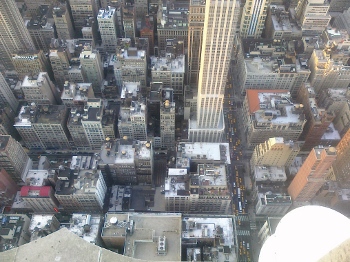
Since I didn t actually come home from Debconf, but instead took a further week s holiday and lazed around by the beach, I haven t sat down to write anything about it yet. Most importantly, I should say thank you to Joey Hess, Steve McIntyre and Stefano Zacchiroli for arranging the Debconf Newbies programme, without which I would have been stuck at work watching the videos again (though this does have the advantage of seeing three talks at once). Every year I am astounded at the generosity of certain companies who sponsor the conference, since I ve experienced for myself the difficulty of trying to put a corporate price on free software even more so to specifically sponsor newbies, who by definition probably aren t as active in ways that interest sponsors than more established developers. Right up to the day I flew I was nervous (as in any social situation) at meeting so many new people in one go, on my own, and long way from home after all, it s not really easy to back out and go home after that But in fact, everybody I met was warm and friendly, and very supportive in all sorts of ways. I got to see and hear many talks; in the first two days alone: And of course social events, like Cheese and Wine, Keysigning (handy for putting faces to names), many nights in the third hacklab, a day trip to Coney Island, a privileged viewing of the most nerdy organ in the world, and a trip up the Empire State building: The campus was ideally suited to such a conference, and apart from the mugginess we had excellent weather. I discovered that I rather enjoy watching baseball and that one should repeat the application of sunblock after paddling. But what I enjoyed most of all was being in the same area as so many eminent Debian people, and being so inspired by them to be even more involved technically and socially. I hope to see you all again soon!
Comments<script type="text/javascript"> var flattr_wp_ver = '0.9.11'; var flattr_uid = '32970'; var flattr_url = 'http://www.jwiltshire.org.uk/content'; var flattr_lng = 'en_GB'; var flattr_cat = 'text'; var flattr_tag = 'blog,wordpress,rss,feed'; var flattr_btn = 'large'; var flattr_tle = 'jwiltshire.org.uk'; var flattr_dsc = 'The public face of jwiltshire'; </script> <script src="http://api.flattr.com/button/load.js?v=0.2" type="text/javascript"></script> flattr this!

Gunnar Wolf: Thanks, Debian!

This Monday, Debian celebrated its 17th birthday. Yay! I was invited to celebrate the birthday at HacklabZAM, but could not make it due to the time (17:00-19:00, and I was just leaving work by 19:00), but still, had some beers with long-time geekish friends Iv n Chavero, Rolando Cedillo, Manuel Rabade and Od n Mojica. Nice hanging around, good beer+pizza time, and explicit congratulations to Debian. On the Debian front, Margarita Manterola, Maximiliano Curia, Valessio Brito and Raphael Geissert came up with a very fun Debian appreciation day page. It even included a (slight) hijacking of the bug tracking system's Web interface, showing happy fun balloons! Guys, thanks for a good laugh, and thanks for providing a vehicle for getting the users' thanks to the project! All in all, that was a great reminder to what we have been repeating as a mantram throughout the last years: Lets keep Debian fun!

Gerfried Fuchs: Jerboa

A while ago I was with my SO at a concert of a band I might cover at a later point. This time I want to cover the support act of that concert: Jerboa. It was a bit weird to see a single person on stage turning some knobs, but he quickly caught both our attention and heart. And he was a charm to talk with afterwards when we bought his CD. He's definitely worth your attention, and if you are able to see him live take the chance for it. Actually I would have loved to include What if in the songs but unfortunately that one wasn't available so I had to look for a replacement for it. Enjoy!

/music permanent link Comments: 2 Flattr this

Margarita Manterola: Debian Appreciation Day Recap

It's been a couple of very interesting days. The thank.debian.net site was quite a success, and a lot of credit is due to Valessio's awesome balloons. Even though I didn't do much marketing about it, the site was linked on Slashdot, LWN, Ubuntu's and Debian's website, Planet, the BTS, and quite a number of blogs. We received almost 3000 thank you messages, from all over the world. Even though the site was in English, many people felt inspired to leave their thank you messages in their languages, if you browse over the site, you'll find messages in Turkish, Chinese, Russian and many other languages. On that matter, I was particularly amazed at this message in persian, which displays properly even inside mutt. Not too surprising, one of the things that people most value of Debian is the package management. The apt team got a lot of thank you messages, and many of the ones directed to the whole community also mention apt and upgrades as something very valuable I find it very interesting that many of the messages, came from Ubuntu users, stating that even though they use Ubuntu, they really value the work done by Debian. A number of posts also mention sidux, knoppix and mint among the many derivatives. Many people stated the many years that they use Debian, some of them have just started, some have been using Debian for quite a while.
I was happily surprised by a number of posts that included a thank you message to "guys/gals" or "guys and girls". And the image used in the "hackergotchi" of this message really brightened my day. Finally, I'm sorry that some people were annoyed by the thank you messages. For next year, we can try to do something a bit different and hopefully not annoy those who were annoyed this time. I do think that once in a while it's nice to be able to receive some of that much love that the users have for Debian and we rarely get to know about.

Next.

Previous.