Raphaël Hertzog: People behind Debian: Martin Michlmayr, former Debian Project Leader

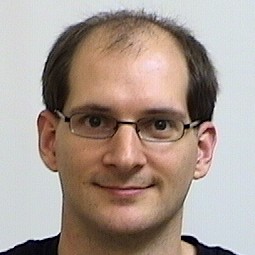 Martin Michlmayr is a Debian developer since 2000 and I share quite a few things with him, starting with his age and involvement in the quality assurance team. He managed to be elected Debian Project Leader in 2003 and 2004.
He s no longer as active as he used to be but his input is always very valuable and he continues to do very interesting things in particular concerning the support of NAS devices. Read on for the details.
Raphael: Who are you?
Martin: I m Martin Michlmayr. I m 32, originally from Austria, and currently living in the UK.
I ve contributed to various free software projects over the years but
Debian is without doubt the one I m most passionate about. I joined Debian
in 2000 when I was a student. I worked on Debian more or less full time
for a few years while I was pretending to study. Later I started a PhD to
do research about quality and management aspects of volunteer free software
projects. I investigated the release process in several free software
projects, in particular looking at time-based releases. After finishing my
PhD in 2007, I joined Hewlett-Packard. I m part of HP s Open Source
Program Office and work on various free software and open source
activities, both internally and within the community.
Raphael: How did you start contributing to Debian?
Martin: I first used Debian in the days of 0.93R6, some time around the end of
1995. The 0.93R6 release was still based on a.out but I needed an
ELF-based system for some application, so I moved to Slackware. I then
quickly moved to Red Hat Linux where I stayed for several years. I
rediscovered Debian in 2000 and quickly decided to join the project. I
cannot recall how I rediscovered Debian but when I did, it was clear to me
that Debian was the ideal project for me: I could identify with its
philosophy, I liked the volunteer nature of the project, and I found the
size and diversity of Debian interesting since a large project offers a lot
of different challenges and opportunities.
I remember how many new things there were to learn and back then the
documentation and other resources for new contributors were nowhere as good
as they are today. My application manager, Julian Gilbey, was a great
help he was incredibly friendly and passionate about Debian. I also
remember meeting up with Peter Palfrader (weasel) for key signing when we
were both in the New Maintainer queue. I was incredibly lucky with my New
Maintainer process and soon became an official Debian Developer. Because
there was a shortage of application managers, my first major contribution
in Debian was to become an application manager myself and help other people
join the project.
Debian is a large project with a long history and a rich culture, so new
contributors should expect that it will take some time to become familiar
with everything. Fortunately, there are many resources, such as
documentation and the debian-mentors list, for new contributors. Another
great way to become familiar with the way things are done in Debian is to
subscribe to various Debian mailing lists and ideally to read some mailing
list archives. It s also a great idea to attend the Debian Conference or
other conferences since meeting people in real life is a great way to
integrate. I remember attending Debian Conference 1 in Bordeaux where I
gave my first public talk.
Finally, new contributors should find an area where they can make a unique
contribution. Most people in Debian maintain packages but there are so
many other ways to contribute. For example, most of my contributions were
not technical but were about coordination and other organizational
activities.
Raphael: What s your biggest achievement within Debian?
Martin: I m particularly proud of a number of achievements:
- New Maintainer: I helped a lot of people join Debian. It s great to help someone join the project and then see how they contribute. Of course, some people join Debian and then quickly become inactive or retire you never know in advance how it will work out. But I had the pleasure to help some truly outstanding contributors to join Debian.
- Quality Assurance: I helped improve QA processes within Debian. In particular, I realized a few years ago that a lot of packages had maintainers who were inactive and that nobody did anything about it. I started to write to those maintainers to see what could be done. It s hard because you don t know the circumstance of someone they may be inactive because of an illness or for other good reasons so you have to be friendly, but yet persistent. Fortunately, most maintainers I contacted were truly inactive and so they couldn t complain when I took their packages away.
- DPL: I acted as the Debian Project Leader for two years. I m particularly proud of this because Debian is a great project and it was an honour to represent it. I performed important organizational and coordination tasks. I also traveled to a lot of conferences and had the pleasure to meet many Debian Developers as well as users of Debian. It s very motivating to meet users and to hear how they use Debian and how we can further improve it.
- Debian on NAS: Debian is without the doubt the Linux distro with the best support for NAS (Network Attached Storage) devices. I was always impressed by what the OpenWRT folks have done to support wireless routers and wanted to do something similar for Debian. Unfortunately, wireless routers just don t have enough storage for a full distro. But then NAS devices came along and they obviously have enough space since they are meant for storage.
Thank you to Martin for the time spent answering my questions. I hope you enjoyed reading his answers as I did. He raised some interesting questions. Subscribe to my newsletter to get my monthly summary of the Debian/Ubuntu news and to not miss further interviews. You can also follow along on Identi.ca, Twitter and Facebook.
No comment Liked this article? Click here. My blog is Flattr-enabled.
 Before arriving to DebConf11, I arranged my flights so that I had a day and a night in Paris as I have not been there before. So after checking out of my work apartment in Tampere, going to work there with all the things from that apartment, then flying back to Riga, going to a midnight screening of the last Potter movie and finally getting back home around 2am, I quickly checked that I have everything needed for the conference and went off to sleep only to wake up at 8am again, pack everything (into a single carry-on bag, after a year of experience travelling by air weekly and watching Up in the Air twice) and be off to the plain to Paris.
The CDG airport is quite huge, even compared to something like JFK it feels bigger and more concrete. And yet so dark and lacking interesting features that the only photo I got from it was this







 On the bus heading to the airport to go to
 When I

 On
 So, the "Harmony Project" launched their set of contributor
agreements and tools last week. Colour me unimpressed...
There's a claim on
their


 When soliciting for opinions, recently, I discovered that the python-based

 (IP addressing, interconnection of ISPs, mail gateways, main registrar of .tn domain extension, ). During Ben Ali s era, they were known for Internet censorship. But,

 From the java point of view
Recently I had to get some Scala Tool working correctly. Unfortunately
there are basically no packages in the
 At some stage the seminal KDE vs Gnome paper vanished from its


 Since Debian is in