Search Results: "ghe"

20 July 2013

Francesca Ciceri: #debcraft n.3: Debian swirl reverse appliqu on t-shirt

please, do try this at home the finished result This week's project is a quick t-shirt reconstruction with the reverse appliqu technique which basically means layering two different fabrics, sew them togheter, and then cut away part of the top one to reveal the one underneath.
Ready to start? What you will need the t-shirt before the reconstruction A guitar, Infinite Jest, The Illuminatus Trilogy and The Year of the Flood, while suggested for your personal enjoyment, are not strictly necessary for this project. Step 1 cutting the red fabric Cut a square of red fabric of the desired dimensions, I've used the short sleeve of a ruined red t-shirt.
On the wrong side of your patch, apply the fusible interfacing. Step 2 drawing the swirl on the interfacing Draw a swirl on the interfacing.
IMPORTANT: remember to draw the swirl as mirrored, because the interfacing is the wrong side of our patch.
So, if usually the Debian swirl has the back to the left and the front to the right - like a "(" - when you draw it on the interfacing it will need to have the back to the right and front to the side - like a ")".
I do realize that this explanation isn't really clear: just look at the picture above. Step 3 pin the patch to the t-shirt Turn your t-shirt inside out and pin the patch (with the interfacing up) in the place you want to put it: I decided to put mine on the lower left corner, approximately 10 cm above the bottom hem.
(In the picture is lower, I changed idea on the position just before sewing it)
Now you can sew it, following closely the drawn line.
Because I'm lazy, I decided to do it by hand, but if you're not afraid of sewing curved shapes, doing it with the sewing machine is definitely the right (and quick) way to do it. Step 4 cut the extra fabric Now, you can cut the extra fabric around your swirl. Step 5 revealing the swirl Turn your shirt right side out.
Make a snip through the knit in the fabric on the inside part of your stitches and cut off the extra fabric, to reveal the red swirl underneath.
Be careful to not cut the red fabric! Step 6 ending with a embroidered dashed line If you like it, you can end embroidering a dashed line (with running stitches) in a contrasting thread all around the swirl. And you're finished: now you can enjoy your new Debian t-shirt! :) For any questions feel free to contact me.

14 July 2013

Matt Zimmerman: Liberty and justice for all, but not in equal measure

200302020-001 As Americans we might like to believe that the US legal system is intended to protect all of our citizens. Unfortunately, it doesn t protect us all equally, and in fact disproportionately fails to protect the most vulnerable. We re surrounded by instances of injustice related to gender, race and other axes of social privilege, and the machinations of law are not exempt. The state of Florida has recently provided an especially stark example in the application of its self-defense laws in two cases: Marissa Alexander and George Zimmerman. This example is notable because although there were many similarities between the cases, the outcomes were very different. Alexander s case was tried in May 2012 , Zimmerman s in July 2013, both prosecuted by Florida state s attorney Angela Corey. Both cases involved the use of firearms which were legally purchased and carried, and their owners were trained in their use. Both prosecutions cast the defendant as the aggressor, who could have avoided the confrontation. Both of the encounters were with unarmed persons. Both defenses were based on Florida self-defense laws, which include stand your ground laws justifying the use of deadly force without the obligation to retreat. Both shooters admitted to firing a single shot with the intent of defending themselves. Beyond those similarities, each case had its own unique circumstances. The events of Alexander s case took place in her home. Her altercation was with her husband, Rico Gray Sr., who was under a restraining order following a conviction for domestic battery which put Alexander in the hospital. After Gray threatened to kill her, Alexander retrieved a handgun from her car, returned to confront him, firing once. She was arrested and charged the same day. She had had no prior criminal record. A jury deliberated for just 12 minutes before convicting her. A judge sentenced her to 20 years in prison, in accord with mandatory minimums specified by law. Gray, previously sentenced to probation for his earlier conviction, remains free. Zimmerman,_George_-_Seminole_County_MugZimmerman s shot was fired in his neighborhood, in an altercation with a teenager, Trayvon Martin, who was a guest in the community and walking by himself. The two were not acquainted. Zimmerman called police from his car, claiming that Martin appeared suspicious, and began to follow him. Some of the facts of their encounter remain in dispute, but that Zimmerman fired his gun is not in question. Afterward, Zimmerman was detained by police, questioned and released the same night without being arrested or charged. Following a public outcry, a new investigation was launched and two months later he was arrested and charged. He had been previously arrested and charged with assaulting a police officer, but the charges were later dropped. After 16 hours of deliberation, the jury found Zimmerman not guilty, and he is free today. The most striking difference between the two cases is where each defendant aimed their gun: George Zimmerman shot Trayvon Martin in the chest and killed him, while Marissa Alexander fired at a wall and injured no one. Alexander, a black woman, is in prison for scaring her abusive husband away, while Zimmerman, who killed a young black man, walks free. Alexander and Martin s families have lost a mother and a son. The outcomes for the people involved in these cases could not be more different. Regardless of the merits of the relevant laws themselves, their radically unequal application is deeply troubling. What does this tell us about the relative value of these human lives, as weighed by the judicial system?
The Florida criminal justice system has sent two clear messages today. One is that if women who are victims of domestic violence try to protect themselves, the Stand Your Ground Law will not apply to them. [...] The second message is that if you are black, the system will treat you differently. - U.S. Rep. Corrine Brown
References

Michael Stapelberg: How many packages does Debian Code Search contain?

The German computer magazine c't has covered Debsources in its most recent edition (c't 16/2013). In that article, they also state:
Debsources integriert auch eine Code-Suche, allerdings werden lediglich die
Quellen des Unstable-Zweigs durchsucht, der zirka ein Drittel des Quellcodes
von Debsources ausmacht.
This loosely translates to:
Debsources also integrates a code search engine, but it only searches the
sources of the unstable tree, which makes up for roughly one third of the
sources that Debsources covers.
I suspect the author of the article arrived at this conclusion because Debsources talks about 400 GiB of source code, whereas Debian Code Search talks about 130 GiB of source code. However, it still struck me as odd and giving the wrong impression. I thought that packages don t differ that much between stable, testing and unstable. So I fired up psql and pounded UDD until it revealed how many packages are different between stable, testing and unstable: Conclusion So, in conclusion, Debian Code Search covers 74% of wheezy, testing and unstable. Debsources also covers contrib and non-free, which explains the higher disk usage. In particular, there might be big blobs in non-free that account for a lot of disk space. Also, Debsources keeps sources around for a few weeks whereas Debian Code Search only keeps the most recent snapshot. Query
SELECT
  COUNT(*)
FROM
  (SELECT
     migrations.source,
     sources.version AS stable_version,
     testing_version,
     unstable_version
   FROM sources
   LEFT JOIN migrations
   USING (source)
   WHERE sources.release = 'wheezy') AS x
WHERE
  regexp_replace(stable_version::text, E'-([0-9.]+)$', '') = regexp_replace(testing_version::text, E'-([0-9.]+)$', '');

1 July 2013

Russ Allbery: Pod::Thread 1.01 and faq2html 1.32

Julien LIE pointed out a rendering problem with one of my pages, and some further investigation revealed that the changes that I made to faq2html when moving away from Subversion caused all sorts of problems. I started testing a new version of it, and then found a bunch of other problems with pod2thread. One I already knew about, but others I'd not seen before. Since I was working on this anyway, I decided to fix all the problems I knew about. Pod::Thread 1.01 now correctly encodes its output for UTF-8, which will fix some long-standing problems with ISO 8859-1 characters used to render non-breaking spaces. It also fixes some minor formatting issues and adds a workaround for the inability to format formatting codes in headings when generating an artificial table of contents. faq2html 1.32 now supports multiple subheadings at the top of a page provided that the start of the second subheading is still a centered line. I use this format in a bunch of my package README files, all of which had been misformatted due to not having this support. I did a large test generation of my web pages, and I don't think I added any new problems. (faq2html is inherently tricky, since it's converting plain text to HTML and has to do a bunch of markup guessing. I suppose one of these days I should just give up and switch over to writing README files in Markdown or something.) While I was at it, I also modernized Pod::Thread's module packaging and switched it to Module::Build, which is the direction I'm (slowly) going for all of my Perl module work. The generic parts of the test suite also got a refresh to the latest versions of my generic test suite code (which I'm currently maintaining in rra-c-util for lack of a better location). That had one interesting wrinkle. Pod::Thread was the one Perl distribution where I'd played with using a module filter program (something ExtUtils::MakeMaker supports) to set the module $VERSION automatically during the build. This had the advantage of letting me maintain the distribution version in one place (Makefile.PL) no matter how many Perl modules there are. However, Module::Build doesn't support that. So, this afternoon I wrote Module::Build::SetVersion, which overrides the processing of *.pm files to set the $VERSION string to whatever one sets dist_version to in Build.PL. This lets you just put placeholder strings in all of the modules, and the process of building them into blib will substitute in the current distribution version. Currently, this module is only in this package and subclasses Module::Build (it really should be a mixin of some kind, but I didn't work out a good way of doing that). I'm going to experiment with copying it into my various module packages, but I suppose at some point I should wrap it up in its own distribution, add a test suite, and release it properly. (If you would find this useful, drop me email and I'll prioritize releasing it properly on CPAN somewhat higher.) Note that you can do the same thing with the existing Module::Build::PM_Filter module, as well as a bunch of other things, but that requires you write and maintain a Perl script at the top level of the distribution that does the desired transformations and seemed unnecessarily complex for what I was trying to do. I really wanted something I could just drop in and forget about. You can get the latest releases of Pod::Thread and faq2html from my web tools distribution page.

26 June 2013

Russ Allbery: Review: River of Stars

Review: River of Stars, by Guy Gavriel Kay
Publisher: Roc
Copyright: April 2013
ISBN: 0-451-46497-4
Format: Hardcover
Pages: 639
In Under Heaven, Guy Gavriel Kay applied his style of slightly fantastic alternate history to Tang Dynasty China and wrote possibly the best book of his career. In River of Stars, he takes the unusual step of revisiting one of his historical worlds, something I don't think he's done explicitly apart from the Sarantime Mosaic duology. River of Stars is set in the same land of Kitai, Kay's alternate China, four centuries later. It's a stand-alone novel, not a sequel, but the effects of the events of the earlier book are deeply felt on the structure of society. Under Heaven was one of my favorite books of all time, so you can imagine how eagerly I've been awaiting this book ever since it was announced. It starts, once again, in the distant regions of Kitai, this time with a boy. Ren Daiyan is the second son of a minor clerk in a backwater town with a very atypical dream for someone of his social rank: to win back the lost provinces of Kitai from the Xiaolu and restore the glory of the empire as the center of the world. One sees little hope for this dream in a world where no one with any choice in the matter would let their sons join the discredited and suspected army. And, as River of Stars opens, it's become much less likely since the town's only teacher has closed his school and left. As with Under Heaven, the unfolding of Daiyan's life is full of surprises, all of which should be enjoyed in the flow of the story. Here, I think the cover flap even gives away too much information, despite only mentioning events at the start of the book, since the incident that it recounts has much more impact without being spoiled. I recommend avoiding any plot summary and just reading, and therefore will avoid giving any more details. River of Stars, in another echo of its predecessor novel, has a second, female protagonist. Lin Shan is the daughter of a scholar on the edges of imperial court life, a man who has quietly but persistently refused to educate her differently than he would have educated a son. This matters in the time of this novel. Kitai has turned more conservative, turned away from the roles of women in public life seen (in their limited ways) in Under Heaven, and has pressed women into new roles of formal modesty. Shan has been set up for a difficult life. But she's also brilliant, careful, and canny, making use of opportunties, and manages to make several extraordinary friends within the power structures of the court. It's impossible not to compare this novel to Under Heaven, but that's an unfair standard to which to hold any novel. So I will say up front that, at least for me, River of Stars does not capture quite the same magic. Shen Tai was a brilliant protagonist, and his unwanted journey into the circles of power was the perfect palette on which to mix personal integrity with sweeping politics. It used history as a backdrop for a novel that was always grounded in Shen Tai's modest ambitions and quiet integrity. Neither Daiyan nor Shen are that character, nor is River of Stars that book. This novel is far more political from the start, concerned directly with issues of governance, court intrigue, and military maneuvers. Even with Shen to ground the story, the personal is the political and the events of history have been moved to center stage. I've seen Kay approach a history both ways, and I prefer when he uses history as backdrop rather than focus. I find it easier to identify and celebrate with the protagonists when their journies are less caught up in grand events. When, as here, the personal becomes the political, it creates a darker tone. The stakes are higher, and there is little separable individual triumph to blunt the tragic moments. That said, Kay remains at the height of his form. Once again, this novel contains some of the best conversations I have ever read. I'm not sure what Kay is doing that other novelists aren't. It may be that he is discarding some realism in favor of presenting the purified essence of sharp and dangerous exchanges (more on that in a bit). But there are several conversations here that read like the distilled essence of a high-stakes, insightful exchange between fearsomely intelligent adversaries: steeped in strategy, carefully managed for effect, and full of thrilling rhetorical tightropes. There are also moments that literally sent shivers up my spine: moments when the story changes, and lives change, in ways that I was not expecting at all. The story is beautifully stage-managed, imbuing every moment with a feeling of a broader resonance. I do have to warn, as with all Kay but particularly recent writing, that this is done openly and explicitly via an omniscient and very obvious narrative voice. Kay writes in the style of high fantasy in which the narrator is nearly a character in the story, one who foreshadows events and shares observations directly with the reader. Some people dislike that style inherently, and if so, Kay may not be for you. I love it when it's done well, and I don't think anyone does it better than Kay. I feel like I'm in the hands of a master storyteller who is carefully crafting the story to preserve surprise and suspense and who knows exactly where he wants the story to go. That's fitting, since one of the major themes of this book is stories and legends, and how they are shaped by events but then come to shape events in turn. River of Stars is partly about the construction of stories in the way that Under Heaven was partly about poetry. Some of the characters try to control the setting and subject matter, some use stories as a way to focus their personal motivation, and some use them to define their lives. But stories also shape politics because they can define popular reaction and the limits of the possible. This theme is subtle through much of the book, but the more I thought about it the more I noticed it woven through the story. Unfortunately, and very unusually for one of Kay's novels, the journey was intense but the destination was mildly unsatisfying. I don't want to give away any detail of the plot, so this is necessarily vague, but while I intellectually appreciate the themes that I think Kay was exploring, I think River of Stars lacks the powerful catharsis that I normally get from his novels. This for me returns to the focus on the politics over the personal (which is in some ways another of the themes of the novel). The catharsis in a novel for me begins and ends with the characters, and these characters didn't have quite enough independence from the broader sweep of events. Another theme of the novel is the degree to which every character is operating within tight constraints. This also showed up in Under Heaven, but Under Heaven was full of characters who subverted and manipulated those constraints. In River of Stars, they are more often suffocating. Shen is my favorite character, and I think the strongest character in the novel, because she manages to work around the most constraints and has the most personal story. But the roles into which she's forced remain smothering and push her out of the center of the action. Her life is full of lovely details (I particularly liked her domestic situation, which shows a family model that I think was far more common in reality than it has been in fiction and one that I would like to see portrayed far more often), but she simply doesn't have realistic room, within the society portrayed here, to maneuver to the catharsis I was looking for. One other, minor note: as in Tigana, but more blatantly, unusual sexual desires make an appearance linked with the closest thing this story has to a villain. (In this case, femdom BDSM, although shown so glancingly that I suspect some readers will not pick up on what's being described.) It was neither unrealistic nor out of character, but there is a moment of nastiness that caught me by surprise and bothered me. I hope eventually to see alternative sexuality show up in a Kay novel without the negative linkages. It's not quite characterization by stereotype (I think Kay was going for a deeper point about the constrained roles available to women), but it's close enough to not work for me. I'm spending a lot of words on what didn't quite work for me, but that's because it's complex to explain, not because this is a bad story. Rather the opposite: it's an excellent novel that I didn't enjoy quite as much as its predecessor for reasons that are very individual to me. It's quite likely that those with different narrative preferences or different tolerances for certain emotional tones in novels will have a far different reaction. The quality of the writing is quite high, provided that you don't mind Kay's intrusive narrator, and several moments in this novel made me catch my breath in wonder. If you like Kay, read this; it's very much worth your time. If you're new to Kay, I would start with Under Heaven, which is near the top of my list of novels to recommend to anyone. Then read this, since seeing how the world develops and how the events of the previous novel change and shape subsequent politics is fascinating. It's not quite at the same level, but it's very much worth reading on its own terms. Rating: 9 out of 10

19 June 2013

Benjamin Mako Hill: Job Market Materials

Last year, I applied for academic, tenure track, jobs at several communication departments, information schools, and in HCI-focused computer science programs with a tradition of hiring social scientists. Being on the market as it is called is both scary and time consuming. Like me, many candidates have never been on the market before. Candidates are asked to produce documents in genres e.g., cover letters, research statements, teaching statements, diversity statements that most candidates have never written, read, or even heard of. Candidates often rely on their supervisors for advice. I did so and my advisors were extremely helpful. The reality, however, is that although candidates advisors may sit on hiring committees, most have not been on candidates side of job market themselves for years or even decades. The Internet is full of websites, like the academic jobs wiki, Academia StackExchange, and the Chronicle of Higher Education forums for people on the market. Confused and insecure candidates ask questions of the form, Does blank matter? and the answer is usually, Doing/having blank may help/hurt, but it is only one factor of many. The result is that candidates worry about everything. Then they worry about what they should be worrying about, but are not. The most helpful thing, for me, was to read and synthesize the material submitted by recent successful job market candidates. For example, Michael Bernstein a friend from MIT, now at Stanford published his research and teaching statements on his website and I found both useful as I prepared mine. That said, I was surprised by how little material like this I could find on the web. For example, I could not find any examples of recent job market cover letters from successful candidates in fields close to mine. So to help fill this gap, I am publishing all of my job market material. I ve posted both the PDFs of the material I submitted as well as the LaTeX templates I used to generate the documents in my packet. My packet included: I hope people going on the market will find these materials useful. Obviously, you should not copy or reuse the text of any of my material. It is your application, after all. That said, please do help yourself to the formatting and structure. Finally, I would encourage anyone who builds on my material to republish their own material to help other candidates. If you do, I d appreciate a link back or comment on this blog post so that my readers can find your improvements.

Daniel Pocock: Australia's war on brains (and immigration)

Some weeks ago, our Prime Minister was slashdotted when she suspended her usual racist attacks on refugees to attack foreign IT workers and the companies that employ them with absurd accusations of "rorts" and "stealing" jobs. Today, she's introduced new laws in the parliament aiming to further bastardization of intelligent, skilled and educated workers and anybody who associates with them, including Australian employers. Unwarranted attention on a minority of IT workers This is not just some random bill before the parliament. There are just two weeks left before the parliament concludes and an election campaign begins. It is clear that what we are seeing now is the Real Julia coming though, choosing to make the small minority of foreign workers in our country at the center of people's thoughts as they go to vote in September. A debt of gratitude to foreign workers These verses from our national anthem, Advance Australia Fair say a lot about how Australia became what it is today:
For those who've come across the seas

We've boundless plains to share;

With courage let us all combine

To Advance Australia Fair.
The last 200 years of Australia's history has been a story of immigration. It is not something to be afraid of: our forefathers celebrated it. Foreign workers: why Australia needs you Australia has had some appalling flops in IT and engineering: There is no doubt in my mind that additional foreign workers would have made a positive contribution to all of these problems or can do so in the future. The sun never sets on IT Every day, I collaborate with dozens of IT specialists all over the world through the virtual workplace that is the Internet, particularly in the free and open source software community. Many of these people, I've never even met and in most cases I don't even know where they are, where they were born or what is the colour of their skin. Those details wouldn't make any difference to the way that we work in IT today. How many IT managers have time to waste dealing with more real world bureaucracy when they've experienced online, global productivity? How many IT workers feel demotivated by having to explain trivial details about their personal life to a Government bureaucrat who doesn't understand their skills and just looks at their colour? If you think about it, any immigration officer who really understands IT wouldn't be an immigration officer. They would be working in IT themselves. Immigration officers, who don't understand IT, are now going to be further empowered to bully companies away from employing some talented workers on the basis of race or nationality. Hiring managers will be intimidated into these prejudiced and biased decisions by delays, processing fees and invasive demands for sensitive documents about business planning and recruitment strategies. Australia's immigration system already has a horrendous reputation. Any visa application seems to take more than a year: no small company can keep a job position vacant that long. Families can't plan their children's schooling. Other life events come and go. There are exhorbitant fees, 1000% higher than in other western countries. Fewer and fewer self-respecting skilled workers are willing to put their spouses and children through the degrading medical examinations. Judging the impact of poor immigration policy While the economic impact of this immigration mess on industry is hard to quantify with an exact figure, we can take some insight from the education system. As the visa system has been hijacked by racists over the last 10 years, there has been a dramatic fall in participation (and revenues) from foreign students. In one year, enrolments (and revenue) fell 30%. This is not just bad for the balance sheets of the universities, it also means that in a future where commerce is global, Australians are more and more isolated and inexperienced culturally. IT workers and their employers have plenty of choices: Australia's close neighbor, Singapore, is one of them. Visas are granted in 2 weeks, no degrading medical exam required, low taxes and tropical sunshine all year round. Many companies that find it impractical to deal with Australia's bureaucracy end up moving their best Australian workers to places like Singapore to be part of a global team. This can't be good for the workforce that is left behind without jobs. The training delusion Government officials continue to rant and rave about companies failing to train Australian workers. The new laws supposedly force companies to "fix" this problem and train Australian workers. This, too, is a delusion: employers are not to blame. Some of the best Australian workers are already long gone to places like Singapore, London and the US. With talented foreign workers denied the opportunity to come and fill the void, there is less opportunity for skills to be acquired by more junior workers in Australian workplaces. It is also extremely difficult for more junior workers to get a foot in the door in the international job market and the primary reason for this is the Australian Government's failure to fund university programs beyond a bachelor's degree. Compare this to Europe and the US where all competent graduates are funded through to a Masters or PhD program. The bottom line is that more junior workers are denied the opportunity to get the best training either at home or abroad and in both cases it's not the foreign workers that can be blamed: it's the Government's own fault. Why do we need skilled foreign workers when Australians can win Nobel Prizes? The Australian press recently went into a frenzy when an Australian won the Nobel Prize for physics. There was a catch though: he's a migrant from the United States (just don't tell the Prime Minister). Dr. Schmidt migrated to Australia 20 years ago when the immigration system was not the same as today. Today, future Nobel Prize winners are being shown a brick wall - maybe we even have one of them rotting away in our death camps or left in the sea for sharks to eat. The BBC recently revealed that Britain's successor to Stephen Hawking may be a young girl who migrated from India - it is chilling to imagine where a child like this may be hidden away under Australia's immigration system. Bureaucracy leads to fraud and exploitation It's been clearly demonstrated that wherever you have elaborate, artificial systems of bureaucracy it leads to inefficiency, it suppresses innovation and in the worst cases it enables fraud and exploitation. The typical examples usually involve police in some third-world African nation setting up road blocks and collecting fees from travellers who want to pass the queues. This type of opportunism has also been found in Australia's immigration system, with one Federal politician already directly implicated and jailed for his role in a visa racket. Gillard's own bullet man A Queensland pensioner made international headlines recently when he was caught sending bullets in the mail to the Prime Minister. His demands were clear: stop immigration. While most world leaders refuse to let nutcases like this dictate their actions, Gillard appears to have been transcribing his racist letters directly into these newest immigration laws. It is a sad reality that Australian politics regularly seeks to appeal to the worst instincts in people like bullet man. The ultimate political failure When politicians stoop to the level of demonizing immigrants it is usually a clue that the politicians themselves are past their use-by dates and out of fresh policy ideas. When former French president Sarkozy tried to play the racist card in his campaign for re-election, it bit him in the bum and he was swept from power by the socialists. As always in politics, there is an element of hypocrisy at work: neither our Head of Government (the Prime Minister) nor our Head of State (the Queen) was born in Australia. Gillard was born in Wales and migrated to Australia as a child. If Australians don't vote for her in September, will she be given 28 days notice to pack her bags and go back home'? From the frying pan and into the fire Tony Abbott, Australia's would-be Prime Minister contemplating his colleague's statements on bestiality The scariest thing is that if Australians see through this racist charade and refuse to vote for it, we could end up with something equally obnoxious: the other major political party is now gaining worldwide attention for their campaign linking gay marriage and homosexuals to bestiality. Which prejudice is the lesser evil: racism or homophobia?

18 June 2013

Daniel Pocock: RSA Key Sizes: 2048 or 4096 bits?

Many people are taking a fresh look at IT security strategies in the wake of the NSA revelations. One of the issues that comes up is the need for stronger encryption, using public key cryptography instead of just passwords. This is sometimes referred to as certificate authentication, but certificates are just one of many ways to use public key technology. One of the core decisions in this field is the key size. Most people have heard that 1024 bit RSA keys have been cracked and are not used any more for web sites or PGP. The next most fashionable number after 1024 appears to be 2048, but a lot of people have also been skipping that and moving to 4096 bit keys. This has lead to some confusion as people try to make decisions about which smartcards to use, which type of CA certificate to use, etc. The discussion here is exclusively about RSA key pairs, although the concepts are similar for other algorithms (although key lengths are not equivalent) The case for using 2048 bits instead of 4096 bits
  • Some hardware (many smart cards, some card readers, and some other devices such as Polycom phones) don't support anything bigger than 2048 bits.
  • Uses less CPU than a longer key during encryption and authentication
  • Using less CPU means using less battery power (important for mobile devices)
  • Uses less storage space: while not an issue on disk, this can be an issue in small devices like smart cards that measure their RAM in kilobytes rather than gigabytes
So there are some clear benefits of using 2048 bit keys and not just jumping on the 4096 bit key bandwagon The case for using 4096 bits
  • For some types of attack, security is not just double, it is exponential. 4096 is significantly more secure in this scenario. If an attack is found that allows a 2048 bit key to be hacked in 100 hours, that does not imply that a 4096 bit key can be hacked in 200 hours. The hack that breaks a 2048 bit key in 100 hours may still need many years to crack a single 4096 bit key
  • Some types of key (e.g. an OpenPGP primary key which is signed by many other people) are desirable to keep for an extended period of time, perhaps 10 years or more. In this context, the hassle of replacing all those signatures may be quite high and it is more desirable to have a long-term future-proof key length.
The myth of certificate expiration Many types of public key cryptography, such as X.509, offer an expiry feature. This is not just a scheme to force you to go back to the certificate authority and pay more money every 12 months. It provides a kind of weak safety net in the case where somebody is secretly using an unauthorised copy of the key or a certificate that the CA issued to an imposter. However, the expiry doesn't eliminate future algorithmic compromises. If, in the future, an attacker succeeds in finding a shortcut to break 2048 bit keys, then they would presumably crack the root certificate as easily as they crack the server certificates and then, using their shiny new root key, they would be in a position to issue new server certificates with extended expiry dates. Therefore, the expiry feature alone doesn't protect against abuse of the key in the distant future. It does provide some value though: forcing people to renew certificates periodically allows the industry to bring in new minimum key length standards from time to time. In practical terms, content signed with a 2048 bit key today will not be valid indefinitely. Imagine in the year 2040 you want to try out a copy of some code you released with a digital signature in 2013. In 2040, that signature may not be trustworthy: most software in that era would probably see the key and tell you there is no way you can trust it. The NIST speculates that 2048 bit keys will be valid up to about the year 2030, so that implies that any code you sign with a 2048 bit key today will have to be resigned with a longer key in the year 2029. You would do that re-signing in the 2048 bit twilight period while you still trust the old signature. Fortunately, there are likely to be few projects where such old code will be in demand. 4096 in practice One of the reasons I decided to write this blog is the fact that some organisations have made the 4096 bit keys very prominent (although nobody has made them mandatory as far as I am aware). Debian's guide to key creation currently recommends 4096 bit keys (although it doesn't explicitly mandate their use) Fedora's archive keys are all 4096 bit keys. The CACert.org project has developed a 4096 bit root These developments may leave people feeling a little bit naked if they have to use a shorter 2048 bit key for any of the reasons suggested above (e.g. for wider choice of smart cards and compatibility with readers). It has also resulted in some people spending time looking for 4096 bit smart cards and compatible readers when they may be better off just using 2048 bits and investing their time in other security improvements. In fact, the "risk" of using only 2048 rather than 4096 bits in the smartcard may well be far outweighed by the benefits of hardware security (especially if a smartcard reader with pin-pad is used) My own conclusion is that 2048 is not a dead duck and using this key length remains a valid decision and is very likely to remain so for the next 5 years at least. The US NIST makes a similar recommendation and suggests it will be safe until 2030, although it is the minimum key length they have recommended. My feeling is that the Debian preference for 4096 bit PGP keys is not based solely on security, rather, it is also influenced by the fact that Debian is a project run by volunteers. Given this background, there is a perception that if everybody migrates from 1024 to 2048, then there would be another big migration effort to move all users from 2048 to 4096 and that those two migrations could be combined into a single effort going directly from 1024 to 4096, reducing the future workload of the volunteers who maintain the keyrings. This is a completely rational decision for administrative reasons, but it is not a decision that questions the security of using 2048 bit keys today. Therefore, people should not see Debian's preference to use 4096 bit keys as a hint that 2048 bit keys are fundamentally flawed. Unlike the Debian keys (which are user keys), the CACert.org roots and Fedora archive signing keys are centrally managed keys with a long lifetime and none of the benefits of using 2048 bit keys is a compelling factor in those use cases. Practical issues to consider when choosing key-length Therefore, the choice of using 2048 or 4096 is not pre-determined, and it can be balanced with a range of other decisions:

  • Key lifetime: is it a long life key, such as an X.509 root for an in-house CA or an OpenPGP primary key? Or is it just for a HTTPS web server or some other TLS server that can be replaced every two years?
  • Is it for a dedicated application (e.g. a closed user group all using the same software supporting 4096 bit) or is it for a widespread user base where some users need to use 2048 bit due to old software/hardware?
  • Is it necessary to use the key(s) in a wide variety of smartcard readers?
  • Is it a mobile application (where battery must be conserved) or a server that is likely to experience heavy load?

13 June 2013

Daniel Pocock: Skype Scandal and the Jedi Council

Normally Skype isn't mentioned by name on this blog, but today I'm making an exception. When a new scandal broke out in the Australian Army today, one of the first questions asked was how does it compare to the Skype Scandal which had everybody talking (and blushing) in 2011. A concise military reply direct from the General: "I'd say it's worse than the Skype matter" (the original Skype Scandal cadets are going on trial in six weeks) Jedi Council brings cultural change in the Army: from Skype to email Since the original scandal, there have been plenty of PR-orchestrated headlines about cultural change in the Army. Sadly, it seems that several ranking officers believed that was a cue to simply start using email instead of live feeds Operating under the operational code name Jedi Council, they've apparently been swapping annotated images of female colleagues and members of the public service. A more detailed account summarises it: "They were calling themselves the Jedi Council but they were doing the exact opposite of what Jedis are supposed to do" While the Skype scandal involved cadets behaving much like college kids elsewhere, this latest scandal involves the officer corp, the most senior officer implicated is allegedly a Lieutenant Colonel. Senior ranking officers like this have given many years of dedicated service to the country. They are widely respected and the vast majority of officers in these positions are unlikely to ever be implicated in such a scandal. Officers are in leadership roles, it should be no surprise if they have top secret security clearances. After the revelation that Australia has a direct and high-volume data sharing arrangement with the US Government (and in turn Facebook, Google, etc), there are all kinds of questions about whether a couple of rogue officers have access to pursue their private Jedi Council project using tools like PRISM and Boundless Informant. It's already been confirmed that they were keeping their own Jedi database of their victim's names, phone numbers, home addresses and various clothing measurements and if they are already emailing these photos about on Defence computers, does it seem improbable that they would be using PRISM or other sources to cross-reference their data? Behavior described as systematic and predatory It can't be ruled out that some defence computer systems may have direct access to NSA copies of images from those invasive airport body scanners - like these pictures that were not supposed to exist. Just like the British undercover cops stealing the identities of dead children and fully engaging with impressionable young women from environment campaign groups, there are a long list of possible abuses when the security state is over-empowered. While this latest Army example involves private pursuits, it is not hard to imagine many other permutations: perhaps a couple of rogue Government employees making unauthorised use of PRISM data for a commercial objective and gaining the upper hand on private sector competitors who have no such data feed. 100% trust? In every organisation there will always be a few people bending the rules. It's human nature, if it wasn't that way, we'd all be robots (or drones). The Army and the Catholic Church tend to be hammered a lot more in the public eye when these transgressions are discovered although statistically their crime rates are no higher than average. The bottom line is that no organisation is perfect and people have to take some responisbility to object to the excessive growth of the security state and keep our data to ourselves as you just never know who you can trust.

8 June 2013

Michael Stapelberg: Survey answers part 1: systemd has too many dependencies, or it is bloated, or it does too many things, or is too complex

This blog post is the first of a series of posts dealing with the results of the Debian systemd survey. I intend to give a presentation at DebConf 2013, too, so you could either read my posts, or watch the talk, or both :-). The top concern shared by most people is:
systemd has too many dependencies, or it is bloated, or it does too many things, or is too complex
Now this concern actually has a lot of different facets, and I am trying to share my opinion on each of them. systemd has too many dependencies First, let s start with too many dependencies , because that is easy to check and reason about. I have created a document which lists all dependencies of the systemd binary itself (pid 1) and all the binaries which are currently shipped by the systemd Debian package. If you don t want to take my word for granted, please read that document. Have you read the document? Very nice! As you can see, the systemd binary itself has 10 dependencies (excluding libc). Now, the question is, what is bad about dependencies? Why do people list dependencies as a top concern?
  1. Cyclic dependencies. When you hear that your init system depends on DBus, you might argue that there is a cyclic dependency here, because DBus needs to be started by the init system. However, systemd does NOT depend on dbus-daemon (!) to boot your machine. Instead of using the system bus, it uses a private UNIX socket. Therefore, systemd uses DBus merely as a serialization format for IPC between its different processes. Only when you want to access systemd via its API as a user (non-root), you actually use the system bus. Since we are talking about DBus: DBus provides a well-tested serialization format and IPC mechanism so that systemd doesn t have to reinvent the wheel and instead benefits from wide support within languages.
  2. Complicated code. I feel like there is the implicit assumption that lots of dependencies correlate with complicated code that is easy to break. I encourage you to have a look at systemd s source code: look for the places where specific libraries are used, e.g. enforce_user which uses libcap. You ll notice that the code is not complex and usage of the libraries is clear.
  3. Software dragging in lots of library packages. The libraries which systemd uses are already in widespread use (e.g. DBus, udev, selinux, libcap, pcre, ). On a typical Debian installation, only very few of them will be dragged in by systemd, if at all. As an example, on a fresh Debian Wheezy installation, less than 10 packages will end up on your machine when running apt-get install systemd .
  4. More memory use. The Linux kernel maps libraries into memory only once, no matter how many processes use them. As stated in the dependency list, on machines where the libraries are not already loaded, systemd brings in about 500 KiB of additional memory-mapped libraries in the worst case. On the machines we have these days, this is a reasonable cost to pay for all the benefits systemd gets us. This holds true on embedded systems with only a few MiB of RAM and especially on typical workstations with 8+ GiB of RAM.
systemd is bloated Now, let s talk about bloat. Again, this is a point which has many facets. I d like to quote the Wikipedia definition of software bloat:
Software bloat is a process whereby successive versions of a computer program become perceptibly slower, use more memory or processing power, or have higher hardware requirements than the previous version whilst making only dubious user-perceptible improvements.
The first part of the definition certainly does not match systemd it is measurably faster than sysvinit. As for memory usage: systemd s RSS is 1.8 MiB, whereas sysvinit uses 0.8 MiB. As I argued on the More memory use point in the dependencies section, I think the additional resource cost is well worth the benefits. Also note that systemd s features are NOT all implemented in the binary which is PID 1. As explained in the dependency list, systemd consists of many cleanly separated binaries. So if a new version of systemd gathers an additional feature, this does not mean that your PID 1 will be bigger. While systemd runs on any hardware, it has an indirect hardware requirement: it requires some Linux kernel features (which are all enabled in Debian kernels). That might rule out usage of systemd on really old embedded hardware where you don t have a chance to update the kernel. While it is sad that those machines cannot profit from systemd, switching to systemd as a default has no downside either: Debian continues to support sysvinit for quite some time, so these machines will continue to work even with upcoming Debian versions. systemd does too many things The Wikipedia definition continues:
[ ] perceived bloat can occur from the software servicing a large, diverse marketplace with many differing requirements. Most end users will feel they only need some limited subset of the available functions and will regard the others as unnecessary bloat, even if people with different requirements do use them.
I think the last part of the Wikipedia definition applies to systemd: it does service a large and diverse marketplace . That marketplace is the entirety of existing software which is started by an init system. Also, systemd can be used on a wide range of hardware (embedded devices, tablets, phones, notebooks, desktops, servers) which requires different features. As an example: on a desktop system you typically don t care strongly about a watchdog feature, but on embedded or servers that feature is very handy. Similarly, on a tablet, forward secure sealing of logfiles is not as important as on a server. Therefore, I can understand if you feel that you don t need many of the features systemd provides. But please think of other users and maintainers who are very happy with systemd s benefits. Also note that while systemd supports many things (in separate binaries!), you don t have to use them all. It still makes sense to ship them all in the same package. Take coreutils as another example in that area. The binaries belong together, even though you most likely haven t used all of them (e.g. od, pr, ptx, :-)). systemd is too complex The remaining concern is that systemd is too complex. In my experience, complexity is often inherent to a specific area and one cannot simply make it go away. Instead, there are different models of how that complexity is represented. Think of the monolithic Linux kernel versus the MINIX microkernel. The latter has a very small amount of lines of source in the kernel, but puts the complexity into userspace. The former uses a different approach with more source in the kernel. The arguments between both camps show that neither is clearly right or clearly wrong. In a way, sysvinit represents the MINIX model: it has a small core (the init binary itself), but a lot of complexity in shell scripts and external programs. The fact that solutions are copied from one init script to another leads to lots of subtle errors and makes code reuse really hard. systemd however has more source code in the binaries, but requires only very simple, descriptive, textual configuration instead of complex init scripts. To me, it seems preferable to have the complexity in a single place instead of distributed across lots of people and projects. Conclusion In a way, you are right. systemd centralizes complexity from tons of init scripts into a single place. However, it therefore makes it very easy for maintainers to write service files (equivalent of an init script) and provides a consistent and reliable interface for service management. Furthermore, it is different than sysvinit, and different solutions often seem complex at first. While systemd consumes more resources than sysvinit, it uses them to make more information available about services; its finer-grained service management requires more state-keeping, but in turn offers you more control over your services.

4 June 2013

Daniel Pocock: Using reSIProcate to connect Asterisk with WebRTC

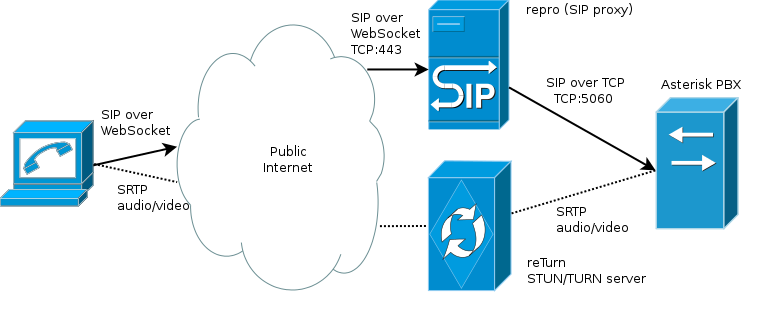
In my previous blog entry about how to get WebRTC going fast I looked at the basics of setting up a SIP proxy (also known as a SIP router) to accept connections from WebRTC clients. As in a traditional, non-WebRTC world, the SIP proxy simply facilitates calling between all the clients it knows. In practice, deployments usually want to add additional functionality in the form of a PBX with queues, voicemail, menus and conferencing. The recent Asterisk 11 release includes support for WebRTC although it is still evolving and I don't currently recomend connecting Asterisk directly to the public Internet. In particular, Asterisk doesn't support features like mutual TLS authentication with the WSS (secure WebSocket) transport. Here, we look at how repro can accept connections from Internet/web users and relay them to an internal Asterisk server. Here is an architecture diagram: Notice that the SIP messages are accepted over repro's WebSocket transport and relayed to Asterisk over a regular SIP TCP transport. This means that we benefit from repro's TLS support too, so the WebSocket client has a much higher chance of escaping their client-side firewall if port 443 is used (repro pretending to be a HTTPS server) and clients can be authenticated with certificates in their browser. Here are the steps to get it running: repro and reTurn setup Set up repro and reTurn server on a Debian server as per my previous blog post. Verify that the clients can talk to repro. Asterisk source build Digium, the creators of Asterisk, are not currently supporting Debian packages, but they do provide RPM packages in their Asterisk package repository However, the pre-built binary packages for Asterisk 11.4 don't include SRTP support. SRTP is a mandatory part of WebRTC. Therefore, we take the Source RPM (SRPM) and build it manually. First, it is recommended that you start with a completely fresh CentOS 6 or RHEL6 server. I built a fresh virtual machine in my XCP environment using a procedure similar to that documented by Grant. After installing and setting a root password, configure yum to access EPEL6 Make sure SELinux and firewall are disabled on the box (they are often enabled by default). A quick way to do this:

# sed -i s/SELINUX=enforcing/SELINUX=disabled/g /etc/selinux/config
# reboot
...
# iptables -I INPUT -j ACCEPT
Next you can tell yum about the Digium repository and install all the necessary dependencies for building Asterisk:
# rpm -Uvh http://packages.asterisk.org/centos/6/current/x86_64/RPMS/asterisknow-version-3.0.0-1_centos6.noarch.rpm
# yum update
# yum install rpm-build libsrtp-devel
In your home directory, set up a work tree for rpmbuild:
$ mkdir ~/rpmbuild
$ cd ~/rpmbuild
$ mkdir BUILD BUILDROOT RPMS SOURCES SPECS SRPMS
$ cd SPECS
$ wget http://danielpocock.com/sites/danielpocock.com/files/asterisk.spec
$ cd ../SRPMS
$ wget http://packages.asterisk.org/centos/6/asterisk-11/SRPMS/asterisk-11.4.0-1_centos6.src.rpm
$ rpmbuild --rebuild asterisk-11.4.0-1_centos6.src.rpm
At this stage, you will have some errors, but it has successfully extracted the tarball into the SOURCES directory:
$ ls -l ../SOURCES
-rw-r--r--   1 daniel daniel 11573400 May 20 23:07 asterisk-sources-11.4.0.tar.gz
$
It will also complain about missing dependencies, you install them using yum:
# yum install make gcc gcc-c++ ....
Notice that you have downloaded a slightly modified version of the asterisk.spec file, the reasons for this are explained in this mailing list discussion. The following should now trigger a successful build:
$ rpmbuild -bb \
  --without tds \
    --without misdn \
    --without odbc \
   ~/rpmbuild/SOURCES/asterisk.spec
Hopefully, Digium will add the SRTP support in the 11.4.1 packages so that source build won't be necessary for every future release. Asterisk configuration: demo application Here we just have to install the RPMs and make a quick configuration change:
$ cd ~/rpmbuild/RPMS/x86_64
$ su -
# rpm -i asterisk*rpm
# yum install asterisk-sounds-core-en-ulaw asterisk-sounds-extra-en-ulaw --enablerepo=asterisk-11
# ln -s /usr/share/asterisk/sounds/demo-* /var/lib/asterisk/sounds/en/
To enable connections from the proxy, we must set a few non-default settings. It is essential to use the TCP transport as the SIP messages from WebSocket clients are usually too big for UDP packets. It is also necessary to enable SRTP and AVPF, as these are mandatory in WebRTC. Here is a diff against the default /etc/asterisk/sip.conf:
--- /etc/asterisk.orig/sip.conf	2013-06-04 10:57:49.428617785 +0200
+++ /etc/asterisk/sip.conf	2013-06-04 11:18:17.825604261 +0200
@@ -207,7 +207,7 @@
 ; subject to change in any release.  If they are changed, the changes will
 ; be reflected in this sample configuration file, as well as in the UPGRADE.txt file.
 ;
-tcpenable=no                    ; Enable server for incoming TCP connections (default is no)
+tcpenable=yes                    ; Enable server for incoming TCP connections (default is no)
 tcpbindaddr=0.0.0.0             ; IP address for TCP server to bind to (0.0.0.0 binds to all interfaces)
                                 ; Optionally add a port number, 192.168.1.1:5062 (default is port 5060)
 
@@ -1371,6 +1371,13 @@
 ; ...
 ;
 
+[1001](public-phone,ulaw-phone)
+avpf = yes
+encryption = yes
+context = public
+icesupport = yes
+
+
 ; Standard configurations not using templates look like this:
 ;
 ;[grandstream1]
This assumes that the SIP user ID of your WebSocket user is 1001 Now you can start Asterisk:
# service asterisk start
Configuring the repro SIP proxy to send calls to Asterisk This is a relatively simple demonstration. The goal is to send calls for the number 1000 to the demo application in Asterisk In repro's web interface, click ADD ROUTE in the menu. Use the following parameters and leave all other options blank:
  • URI: ^sip:1000@
  • Destination: sip:$1@pbx.example.org?transport=tcp
Note: replace pbx.example.org with the hostname or IP address of the box running Asterisk Go to the ADD USER menu link and add a user called 1001. The user ID and password have to be placed in the custom.js file for JsSIP Testing from JsSIP I assume JsSIP was set up following the instructions from my previous blog post Asterisk doesn't support the video codec from a WebRTC client. To work around this, in the custom.js file for JsSIP, make sure video is disabled by default. In the WebRTC client, dial 1000. You should hear the demo greeting from Asterisk. Troubleshooting
  • Check the JavaScript log in the browser
  • Check the logs on the repro proxy and increase the verbosity of the logs if necessary. If the level is set to STACK, you will see full copies of each SIP message sent and received.
  • Connect to the Asterisk console (UNIX command: asterisk -r -vvv) and enable SIP message display: sip set debug on.

3 June 2013

NeuroDebian: Running 64bit Matlab on 32bit host OS

Running 64bit Matlab on 32bit host OS Some of you have experienced problems due the recent move of Mathworks to drop 32-bit Linux builds of their products (i.e. Matlab R2013a and co.). Please note that this is not the first time Mathworks values its own costs higher than the benefits of a few scientists. In 1998 PowerPC builds for Macs were abandoned, causing a furious reaction of the community. Luckily, users of the fresh Debian stable release wheezy (or more recent variants of Debian and its derivatives) who still need a 32bit OS on 64bit-capable hardware can take advantage of the new multiarch support. Multiarch allows for multiple architecturesi to co-exist on a hardware/kernel that is capable of supporting both (e.g. i386 and amd64). Below we describe how you can use multiarch support and in few simple steps that prepare your existing 32bit user-land for running 64bit Matlab.
Procedure
  • [2-10 min] Install 64-bit kernel and reboot:

    sudo apt-get install linux-image-amd64
  • [1-3 min] Enable multi-arch support for amd64 architecture:

    sudo dpkg --add-architecture amd64
    sudo apt-get update
  • [1-5 min] Install 64bit libraries (and compilers) needed for matlab:

    sudo apt-get install libstdc++6:amd64 zlib1g:amd64 libncurses5:amd64 \
      libxp6:amd64 libstdc++6-4.4-dev:amd64 libxt6:amd64 libxmu6:amd64 libxtst6:amd64 \
      g++:amd64 gcc:amd64 binutils:amd64
Now your 64bit matlab (which you hopefully registered with matlab-support) is ready to run. If you have any comments (typos, improvements, etc) feel welcome to leave a comment below, or contact us .

1 June 2013

Petter Reinholdtsen: Educational applications included in Debian Edu / Skolelinux (the screenshot collection :-)

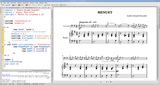
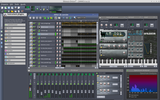
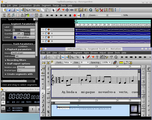
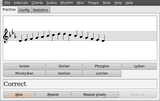
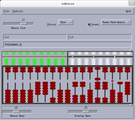
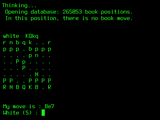
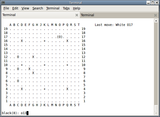
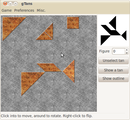
Included in Debian Edu / Skolelinux, there are quite a lot of educational software. Created to help teachers teach, and pupils learn. We have tried to tag them all using debtags use::learning and role::program, and using the debtags I was happy to be able to create a collage of the educational software packages installed by default, sorted by the debtag field. Here it is. Click on a image to learn more about the program. field::arts audacity childsplay denemo freebirth gcompris gimp hydrogen lilypond lmms rosegarden scribus solfege stopmotion tuxpaint field::astronomy celestia-gnome gpredict kstars planets stellarium xplanet field::biology:structural pymol field::chemistry atomix chemtool easychem gchempaint gdis ghemical gperiodic kalzium pymol [viewmol] xdrawchem field::electronics gcompris [gpsim] field::geography kgeography marble xplanet field::linguistics gcompris kanagram khangman klettres parley field::mathematics childsplay drgeo gcompris geogebra [geomview] grace graphmonkey graphthing kalgebra kbruch kig kmplot mathwar rocs scratch tuxmath xabacus field::physics gcompris step field::TODO blinken cgoban childsplay gcompris gnuchess gnugo gtans ktouch librecad scratch In total, 61 applications. 3 of them lacked screen shots on screenshot.debian.net. If you know of some packages we should install by default, please let us know on IRC, #debian-edu on irc.debian.org, or our mailing list debian-edu@.

29 May 2013

Russell Coker: Nexus 4

My wife has had a LG Nexus 4 for about 4 months now so it s time for me to review it and compare it to my Samsung Galaxy S3. A Sealed Case The first thing to note about the Nexus 4 is that it doesn t support changing a battery or using micro-SD storage. The advantage of these design choices is that it allows reduced weight and greater strength compared to what the phone might otherwise be. Such choices would also allow the phone to be slightly cheaper which is a massive advantage, it s worth noting that the Nexus 4 is significantly cheaper than any other device I can buy with comparable specs. My wife s phone has 8G of storage (not RAM thanks Robin) and cost $369 at the start of the year while the current price is $349 for the 8G version and $399 for the 16G version. Of course one down-side of this is that if you need 16G of storage then you need to spend an extra $50 on the 16G phone instead of buying a phone with 8G of storage and inserting a 16GB micro-SD card which costs $19 from OfficeWorks. Also there s no option of using a 32G SD card (which costs less than $50) or a 64G SD card. Battery etc The battery on the Nexus 4 isn t nearly big enough, when playing Ingress it lasts about half as long as my Galaxy S3, about 90 minutes to fully discharge. If it was possible to buy a bigger battery from a company like Mugan Power then the lack of battery capacity wouldn t be such a problem. But as it s impossible to buy a bigger battery (unless you are willing to do some soldering) the only option is an external battery. I was unable to find a Nexus 4 case which includes a battery (which is probably because the Nexus 4 is a lot less common than the Galaxy S3) so my wife had to buy an external battery. If you are serious about playing Ingress with a Nexus 4 then you will end up with a battery in your pocket and cable going to your phone from the battery, this is a real annoyance. While being a cheap fast phone with a clear screen makes it well suited to Ingress the issue of having a cable permanently attached is a real down-side. One significant feature of the Nexus 4 is that it supports wireless charging. I have no immediate plans to use that feature and the wireless charger isn t even on sale in Australia. But if the USB connector was to break then I could buy a wireless charger from the US and keep using the phone, while for every other phone I own a broken connector would render the phone entirely useless. Screen Brightness I have problems with my Galaxy S3 not being bright enough at midday when on auto brightness. I have problems with my wife s Nexus 4 being too bright in most situations other than use at midday. Sometimes at night it s painfully bright. The brightness of the display probably contributes to the excessive battery use. I don t know whether all Nexus 4 devices are like this or whether there is some variance. In any case it would be nice if the automatic screen brightness could be tuned so I could make it brighter on my phone and less bright on my wife s. According to AndroSensor my Galaxy S3 thinks that the ambient light in my computer room is 28 lux while my wife s Nexus 4 claims it s 4 lux. So I guess that part of the problem is the accuracy of the light sensors in the phones. On-Screen Buttons I am a big fan of hardware buttons. Hardware buttons work reliably when your fingers are damp and can be used by feel at night. My first Android phone the Sony-Ericsson Xperia X10 had three hardware buttons for settings, home, and back as well as buttons for power, changing volume, and taking a photo which I found very convenient. My Galaxy S3 has hardware buttons for power, home, and volume control. I think that Android phones should have more hardware buttons not less. Unfortunately it seems that Google and the phone manufacturers disagree with me and the trend is towards less buttons. Now the Nexus 4 only has hardware buttons for power, and volume control. One significant advantage of the Galaxy S3 over the Nexus 4 is that the S3 s settings and back buttons while not implemented in hardware are outside the usable screen area. So the 4.8 1280*720 display is all for application data while the buttons for home, settings, and back on the Nexus 4 take up space on the screen so only a subset of the 4.7 1280*768 is usable by applications. While according to specs the Nexus 4 has a screen almost as big as the Galaxy S3 and a slightly higher resolution in practice it has an obviously smaller screen with fewer usable pixels. Also one of the changes related to having the buttons on-screen means that the settings button is often in the top right corner which I find annoying. I didn t like that aspect of the GUI the first time I used a tablet running Android 3.0 and I still don t like it now. GPS My wife s Nexus 4 seems to be much less accurate than my Galaxy S3 for GPS. I don t know how much of this is due to phone design and how much is due to random factors in manufacturing. I presume that a large portion of it is due to random manufacturing issues because other people aren t complaining about it. Maybe she just got unlucky with an inaccurate phone. Shape and Appearance One feature that I really like in the Samsung Galaxy S is that it has a significant ridge surrounding the screen. If you place a Galaxy S face-down on a desk that makes it a lot less likely to get a scratch on the screen. The LG U990 Viewty also had a similar ridge. Of course the gel case I have bought for every Android phone has solved this problem, but it would really be nice to have a phone that I consider usable without needing to buy such a case. The Nexus 4 has a screen that curves at the edges which if anything makes the problem worse than merely lacking a ridge around the edge. On the up-side the Nexus 4 looks and feels nice before you use it. The back of the Nexus 4 sparkles, that s nice but when you buy a gel case (which doesn t seem to be optional with modern design trends) you don t get to see it. The Nexus 4 is a very attractive package, it s really a pity that they didn t design it to be usable without a gel case. Conclusion Kogan is currently selling the Galaxy S3 with 16G of storage for $429. When comparing that to the 16G version of the Nexus 4 at $399 that means there s a price of $30 to get a SD socket, the option of replacing a battery, one more hardware button, and more screen space. So when comparing the Google offers for the Nexus 4 with the Kogan offer on the Galaxy S3 or the Galaxy Note which also has 16G of storage and sells for $429 the Google offer doesn t seem appealing to me. The Nexus 4 is still a good phone and is working well for my wife, but she doesn t need as much storage as I do. Also when she got her phone the Galaxy S3 was much more expensive than it is now. Also Kogan offer the 16G version of the Nexus 4 for $389 which makes it more appealing when compared to the Galaxy S3. It s surprising that they can beat Google on price. Generally I recommend the Nexus 4 without hesitation to anyone who wants a very capable phone for less than $400 and doesn t need a lot of storage. If you need more storage then the Galaxy S3 is more appealing. Also if you need to use a phone a lot then a Galaxy S3 with a power case works well in situations where the Nexus 4 performs poorly.

28 May 2013

Russell Coker: SCSI Failures

For a long time it was widely regarded that SCSI was the interface for all serious drives that were suitable for Enterprise Use or for anything else which requires reliable operation. On the other hand IDE was for cheap disks that were only suitable for home use. The SCSI vs IDE issue continues to this day but now we have SAS and SATA filling the same market niches with the main difference between the current debate and the debate a decade ago being that a SATA disk can be connected on a SAS bus. Both SAS and SATA have a single data cable for each disk which avoids the master/slave configuration on IDE and the issue of bus device ID number (from 0-7 or 0-15) and termination on SCSI. Termination When a high speed electrical signal travels through a cable some portion of the signal will be reflected from any cable end point or any point of damage. To prevent the signal reflection from the end of a cable you can have a set of resistors (or some other terminating device) at the end of the cable, see the Terminator(electrical) Wikipedia page [1] for a brief overview. As an aside I think that page could do with some work, if you are an EE with a bit of spare time then improving that page would be a good thing. SCSI was always designed to have termination while IDE never was. I presume that this was largely due to the cable length (18 for IDE vs 1.5m to 25m for SCSI) and the number of devices (2 for IDE vs 7 or 15 for SCSI). I also presume that some of the problems that I ve had with IDE systems have been related to signal problems that could have been avoided with a terminated bus. My first encounter with SCSI was when working for a small business that focused on WindowsNT software development. Everyone in the office knew a reasonable amount about computers and was happy to adjust the hardware of their own workstation. A room full of people who didn t understand termination who fiddled with SCSI buses tended to give a bad result. On the up-side I learned that a SCSI bus can work most of the time if you have a terminator in the middle of the cable and a hard drive at the end. There have been two occasions when I ve been at ground zero for a large deployment of servers from a company I ll call Moon Computers. In both cases there were two particularly large and expensive servers in a cluster and one of the cluster servers had data loss from bad SCSI termination. This is particularly annoying as the terminators have different colours, all that was needed to get the servers working was to change the hardware to make them look the same. As an aside the company with no backups [2] had one of the servers with bad SCSI termination. Heat SCSI disks and now SAS disks tend to be designed for higher performance, this usually means greater heat dissipation. A disk that dissipates a lot of heat won t necessarily work well in a desktop case with small and quiet fans. This can become a big problem if you have workstations running 24*7 in a hot place (such as any Australian city that s not in Tasmania) and turn the air-conditioner off on the weekends. One of my clients lost a few disks before they determined that IDE disks are the only option for systems that are to survive Australian heat without any proper cooling. Differences between IDE/SATA and SCSI/SAS In 2009 I wrote about vibration and SATA performance [3]. Rumor has it that SCSI/SAS disks are designed to operate in environments where there is a lot of vibration (servers with lots of big fans and fast disks) while IDE/SATA disks are designed for desktop and laptop systems in quiet environments. One thing I d like to do is to test performance of SATA vs SAS disks in a server that vibrates. SCSI/SAS disks have apparently been designed for operation in a RAID array and therefore will give a faster timeout on a read error (so another disk can return the data). While IDE/SATA disks are designed for a non-RAID situation and will spend longer trying to read the data. There are also various claims about the error rates from SCSI/SAS disks being better than those of IDE/SATA disks. But I think that in all cases the error rates are small enough not to be a problem if you use a filesystem like ZFS or BTRFS but they are also large enough to be a significant risk with modern data volumes if you have a lesser filesystem. Data Loss from Storage Failure In the data loss that I ve personally observed from storage failures the loss from SCSI problems (termination and heat) is about equal to all the hardware related data loss I ve seen on IDE disks. Given that the majority of disks I ve been responsible for have been IDE and SATA that s a bad sign for SCSI use in practice. But all serious data loss that I ve seen has involved the use of a single disk (no RAID) and inadequate backups. So a basic RAID-1 or RAID-5 installation will solve most hardware related data loss problems. There was one occasion when heat caused two disks in a RAID-1 to give errors at the same time, but by reading from both disks I managed to get almost all the data back, RAID can save you from some extreme error conditions. That situation would have been ideal for BTRFS or ZFS to recover data. Conclusion SCSI and SAS are designed for servers, using them in non-server systems seems to be a bad idea. Using SATA disks in servers can have problems too, but not typically problems that involve massive data loss. Using technology that is too complex for the people who install it seems risky. That includes allowing programmers to plug SCSI disks into their workstations and whoever it was from Moon computers or their resellers who apparently couldn t properly terminate a SCSI bus. It seems that the biggest advantage of SAS over SCSI is that SAS is simple enough for most people to be able to correctly install it. Making servers similar to the systems that the system administrators use at home seems like a really good idea. I think that one of the biggest benefits of using x86 systems as servers is that skills learned on home PCs can be transferred to administration of servers. Of course it would also be a good idea to have test servers that are identical to servers in production so that the sysadmin team can practice and make mistakes on systems that aren t mission critical, but companies seem to regard that as a waste of money apparently the risk of down-time is cheaper.

Russ Allbery: Review: Advanced Perl Programming

Review: Advanced Perl Programming, by Sriram Srinivasan
Publisher: O'Reilly
Copyright: August 1997
ISBN: 1-56592-220-4
Format: Trade paperback
Pages: 392
The problem with buying lots of books is that one frequently doesn't read them soon after purchase. And while nearly all fiction and most non-fiction doesn't have a time limit, technical books are more of a problem. As you might have guessed from the publication date and subject matter of this book, it's one I waited too long to read. I picked up Advanced Perl Programming not too long after it was first published in 1997. I bought it primarily for the chapters on XS programming, since I was just starting to develop and help maintain code that built Perl interfaces for C libraries. And then it sat on my bookshelf in the office, and then at home, until it was 16 years old. That's problematic for a general Perl programming guide; it's particularly troublesome for a book that dives deep into internals. That said, I still got some interesting information from it. Advanced Perl Programming is something of a grab bag of different and largely unrelated topics. It starts with a data structures overview (which is mostly about references), covers typeglobs and the Perl symbol table, briefly discusses closures, and then dives deeper into eval. That's followed by an overview of modules and object-oriented programming in Perl. The general Perl topics close with a solid (if outdated) discussion of tied objects and a somewhat rambling and remarkably general discussion of persistance. Srinivasan then covers some recommended module APIs for networking and graphics (Tk, specifically) while working through some complex examples, takes a deeper dive into eval and code generation, and concludes with three chapters on XS and embedded Perl interpreters. This is all solid material, but a lot of it is at least partly obsolete. The chapters on modules and object-oriented programming fare the worst; you'll find much better guides to those topics elsewhere. Data structures also fare poorly, partly because Srinivasan is still happy to use symbolic references, now considered bad style due to lack of compile-time checking. (That does mean, though, that this is one of the best introductions to symbolic references that you'll find, since few other Perl programmers discuss them.) But the rest of the book is fairly solid, if limited by age. If I'd read it when I first started with XS, it would have indeed helped. Advanced Perl Programming contains a succinct and clear overview of Perl internals and data representation (assuming, of course, it's not changed drastically, but I didn't notice any significant issues from what I know of internals from quite a lot of XS programming), particularly when combined with the earlier chapter on typeglobs and the symbol table. It is interesting, though, to see how much accepted Perl style has changed. Srinivasan is quite fond of eval with a scalar argument to construct code at runtime, something that most current authors recommend against when it can be avoided. The loss of static syntax checking means the technique is often hard to debug and can cause surprising runtime errors. Several of the more advanced tricks in this book are built on that framework, including a moderately interesting templating system that he constructs from scratch in this book. The examples here are also missing the focus on use strict, warnings, and avoiding special variables and unusual constructs that you see in more recent Perl books. This is a very thoughtful book, with several structural techniques that I appreciated and would like to see more technical writers use. One is the comparisons to the approaches of other languages at the end of most chapters. It puts Perl's approach in a broader context and encourages thought about alternative ways to view a particular feature and implementation tradeoffs in Perl's choices. Another is the careful discussion of design approaches and possibilities during the construction of larger examples. I think there's a tendency in technical books to spend a lot of time developing the best possible implementation of something and then show that completed example. Even with a detailed analysis of its construction, this can be less useful than a broader discussion of possible approaches, including dead ends. The problem, of course, is that 16 years is a long time, even for a relatively mature programming language, and Perl has changed. There are significant improvements not only to the standard library but to Perl core functionality that have happened since this book was written. The chapter on tying, which is otherwise excellent, is badly out of date on what functionality and methods are available and is no longer a reliable guide to using that feature except for simple cases. Similar problems plague the chapter on persistence, which develops the concept from basics that most programmers reading an advanced book no longer need, and which has been rendered mostly obsolete by further developments in the Perl module ecosystem. I think the best parts of this book, the ones that cover material that I think is still relatively accurate and that are not well-covered by other resources, are the chapters on typeglobs and on XS. The typeglob discussion is both clear and informative, covering material and techniques that are used in a few core Perl modules and that I've never seen adequately addressed elsewhere. I'd subsequently picked up XS and Perl embedding the hard way: lots of trial and error and reading difficult POD documentation. I wish I'd read this book earlier, since Srinivasan does a great job of basic orientation. He doesn't go far enough for me (the book I probably wanted was Extending and Embedding Perl by Jenness and Cozens, published five years later), but I would have been up and running with basic XS much faster by starting here. If this were 1997, or even 2000, I would probably recommend this book, albeit with a few caveats. Higher Order Perl is the place you should go for discussion of closures, rather than here (although of course it didn't exist then). I wasn't fond of string eval even in 1997, and I still think it produces code that, while efficient and quite powerful, is horribly difficult to understand. And the introduction to modules is adequate but not compelling; most other introductions to object-oriented programming and module construction in Perl are better. But even discarding those chapters (and the mostly unnecessary Tk reference), there's a lot of great material here that would have been quite helpful in 2000. Unfortunately, this is not the sort of technical book that ages well, and while I did pick up some useful background knowledge and a much better understanding of typeglobs, I mostly read this book because I wanted to salvage some knowledge from a book that sat for far too long on my shelves. There's really no reason to buy it today. If you run across it in a library, there are a few chapters that are still worth reading, but by and large if you know enough Perl to know where to be careful of landmines due to changes in Perl since the book was written, you also know enough Perl to not really need this book. Rating: 5 out of 10

26 May 2013

Richard Hartmann: Full House

Even though I only flew to and from Berlin for a single day due to time constraints at work, my first attendance at LinuxTag was a nice experience. Everything was organized rather well and people seemed to be having fun. The event itself has a decidedly commercial tone to it with lots of actual companies present both at booths and during talks. Also, there was a distinct lack of anything resembling a hackerspace, i.e. chairs, tables and power outlets. My talk has been received rather well, having both the highest attendance of all talks I went to during LinuxTag and the highest attendance of all of my own talks to date. When I began there were 105 people in the room excluding myself. During the talk there was a constant trickle of people entering which led to several people standing at the back and others sitting on the ground. With a grand total of two people leaving early, I guesstimate 130+ people have attended. As you can see on the photo below the percentage of attendees who are looking into their laptops/cell phones and not really paying attention was, once again, very low: Audience during my 'Gitify your life' talk at LinuxTag 2013 Now if only I could find a way to track how many of them did actually sat down afterwards and looked at the tools presented... Sadly, there was no video recording of the talk, but I may be able to get my hands at the video material recorded during OSD2013.

21 May 2013

Erich Schubert: Google Hangouts drops XMPP support

Update: today I've been receiving XMPP messages in the Google+ variant of Hangouts. Looks as if it currently is back (at least while you are logged in via XMPP - havn't tried without pidgin at the same time yet). Let's just hope that XMPP federation will continue to be supported on the long run.
It's been all over the internet, so you probably heard it already: Google Hangouts no longer receives messages from XMPP users. Before, you could easily chat with "federated" users from other Jabber servers.
While of course the various open-source people are not amused -- for me, most of my contacts disappeared, so I then uninstalled Hangouts to get back Google Talk (apparently this works if Talk was preinstalled in your phones firmware) -- this bears some larger risks for Google:
  • Reputation: Google used to have the reputation of being open. XMPP support was open, the current "Hangups" protocol is not. This continuing trend of abandoning open standards and moving to "walled garden" solutions will likely harm the companies reputation in the open source community
  • Legal risk of an antitrust action: Before, other competitors could interface with Google using an indepentend and widely accepted standard. An example is United Internet in Germany, which operates for example the Web.de and GMX platforms, mail.com, the 1&1 internet provider. By effectively locking out its competitors - without an obvious technical reason, as XMPP was working fine just before, and apparently continues to be used at Google for example in AppEngine - bears a high risk of running into an antitrust action in Europe. If I were 1&1, I would try to get my lawyers started... or if I were Microsoft, who apparently just wanted to add XMPP messaging to Hotmail?
  • Users: Google+ is not that big yet. Especially in Germany. Since 90% of my contacts were XMPP contacts, where am I likely going to move to: Hangouts or another XMPP server? Or back to Skype? I still use Skype for more Voice calls than Google (which I used like twice), because there are some people that prefer Skype. One of these calls probably was not using the Google plugin, but an open source phone. Because with XMPP and Jingle, my regular chat client would interoperate. An in fact, the reason I started using Google Talk the first place was because it would interoperate with other networks, too, and I assumed they would be good at operating a Jabber server.
In my opinion, Google needs to quickly restore a functioning XMPP bridge. It is okay if they offer add-on functionality only for Hangout users (XMPP was always designed to allow for add-on functionality); it is also okay if they propose an entirely new open protocol to migrate to on the long run, if they can show good reasons such as scalability issues. But the way they approached the Hangup rollout looks like a big #fail to me.
Oh, and there are other issues, too. For example Linus Torvalds complains about the fonts being screwed up (not hinted properly) in the new Google+, others complain about broken presence indicators (but then you might as well just send an email, if you can't tell whether the recepient will be able to receive and answer right away), but using Hangouts will apparently also (for now -- rumor has it that Voice will also be replaced by Hangups entirely) lose you Google Voice support. The only thing that seems to give positive press are the easter eggs...
All in all, I'm not surprised to see over 20% of users giving the lowest rating in the Google Play Store, and less than 45% giving the highest rating - for a Google product, this must be really low.

17 May 2013

Russell Coker: Voltage Inside a Car

I previously wrote a post with some calculations about the power supplied to laptops from a car battery [1]. A comment on the post suggested that I might have made a mistake in testing the Voltage because leaving the door open (and thus the internal lights on) will cause a Voltage drop. So I ve done some more tests:
Test Voltage
battery terminals 12.69
front power socket with doors closed 12.64
front power socket with doors open OR ignition switch on 12.37
cigarette lighter socket with ignition switch on 12.32
front power socket with doors closed and headlights on 11.96
front power socket with engine running 14.38
front power socket with engine running and headlights on 14.29
In my previous tests I recorded 12.85V inside my car (from the front power socket which although having the same connector as a cigarette lighter isn t designed for lighting cigarettes) and 13.02V from the battery terminals a 0.17V difference. In my tests today I was unable to reproduce that but I think that my biggest mistake was to take the reading too quickly. Today I noticed that it took up to a minute for the Voltage to stabilise after opening a door (the Voltage dips after any current draw and takes time to recover) so a quick reading isn t going to be accurate. My car is a Kia Carnival which has two sockets in the front for power and for actually lighting cigarettes. The one for lighting cigarettes has a slightly lower Voltage and only works when the ignition is turned on. The car also has a power socket in the boot (the trunk for US readers) which delivers the same Voltage as the power socket in the front. Also one thing to note is that today is a reasonably cold day (16.5C outside right now) and my car hasn t been driven since last night so the battery would be quite cold (maybe 12C or less). My previous measurements were taken in summer so the battery would have been a lot warmer and therefore working more effectively. Conclusion The Voltage drop from turning on the internal lights surprised me, I had expected that a car battery which is designed to supply high current wouldn t be affected by such things. Certainly not to give a 2% Voltage drop! The Voltage difference from reading inside the car and at the battery terminals might be partly due to the apparent lead coating on the terminals, I pushed the probes of my multimeter beneath the surface of the metal and got a really good connection. The 14% Voltage increase when the engine was running was also a surprise. It seems to me that if you are running a power hungry device (such as a laptop) it would be a good idea to disconnect it when the engine is turned off. A 14% higher voltage will give a 14% lower current if the PSU is efficient and therefore less problems with heat in the wiring and less risk of blowing a fuse. Also it s a good idea to be more methodical about performing tests than I was before my last post. There are lots of other tests I could run (such as testing after the engine has been running for a while) but at the moment I don t have enough interest in this topic to do more tests. Please leave a comment if there s something interesting that you think I missed.

Russell Coker: Effective Conference Calls

I ve been part of many conference calls for work and found them seriously lacking. Firstly there s a lack of control over the call, so when someone does something stupid like putting an unmuted phone handset near a noise source there s no way to discover who did it and disconnect them. Another problem is that of noise on the line when some people don t mute their phones, which is related to the lack of control as it s impossible to determine who isn t muting their phone. Possibly the biggest problem is how to determine who gets to speak next. When group discussions take place in person non-verbal methods are used to determine who gets to speak next. With a regular phone call (two people) something like the CSMACD algorithm for network packets works well. But when there are 8+ people involved it becomes time consuming to resolve issues of who speaks next even when there are no debates. This is more difficult for multinational calls which can have a signal round trip time of 700ms or more. I think that we need a VOIP based conference call system for smart phones to manage this. I think that an ideal system would be based on the push to talk concept with software control that only allows one phone to transmit at a time. If someone else is speaking and you want to say something then you would push a button to indicate your desire but your microphone wouldn t go live while the other person was speaking. The person speaking would be notified of your request and one of the following things would happen: Did I miss any obvious ways for the system to react to a talk request? Is there any free software to do something like this? A quick search of the Google Play store didn t find anything that seems to match.

Next.

Previous.