Search Results: "ean"

2 August 2024

Colin Watson: Free software activity in July 2024

My Debian contributions this month were all sponsored by Freexian. You can also support my work directly via Liberapay. OpenSSH At the start of the month, I uploaded a quick fix (via Salvatore Bonaccorso) for a regression from CVE-2006-5051, found by Qualys; this was because I expected it to take me a bit longer to merge OpenSSH 9.8, which had the full fix. This turned out to be a good guess: it took me until the last day of the month to get the merge done. OpenSSH 9.8 included some substantial changes to split the server into a listener binary and a per-session binary, which required some corresponding changes in the GSS-API key exchange patch. At this point I was very grateful for the GSS-API integration test contributed by Andreas Hasenack a little while ago, because otherwise I might very easily not have noticed my mistake: this patch adds some entries to the key exchange algorithm proposal, and on the server side I d accidentally moved that to after the point where the proposal is sent to the client, which of course meant it didn t work at all. Even with a failing test, it took me quite a while to spot the problem, involving a lot of staring at strace output and comparing debug logs between versions. There are still some regressions to sort out, including a problem with socket activation, and problems in libssh2 and Twisted due to DSA now being disabled at compile-time. Speaking of DSA, I wrote a release note for this change, which is now merged. GCC 14 regressions I fixed a number of build failures with GCC 14, mostly in my older packages: grub (legacy), imaptool, kali, knews, and vigor. autopkgtest I contributed a change to allow maintaining Incus container and VM images in parallel. I use both of these regularly (containers are faster, but some tests need full machine isolation), and the build tools previously didn t handle that very well. I now have a script that just does this regularly to keep my images up to date (although for now I m running this with PATH pointing to autopkgtest from git, since my change hasn t been released yet):
RELEASE=sid autopkgtest-build-incus images:debian/trixie
RELEASE=sid autopkgtest-build-incus --vm images:debian/trixie
Python team I fixed dnsdiag s uninstallability in unstable, and contributed the fix upstream. I reverted python-tenacity to an earlier version due to regressions in a number of OpenStack packages, including octavia and ironic. (This seems to be due to #486 upstream.) I fixed a build failure in python3-simpletal due to Python 3.12 removing the old imp module. I added non-superficial autopkgtests to a number of packages, including httmock, py-macaroon-bakery, python-libnacl, six, and storm. I switched a number of packages to build using PEP 517 rather than calling setup.py directly, including alembic, constantly, hyperlink, isort, khard, python-cpuinfo, and python3-onelogin-saml2. (Much of this was by working through the missing-prerequisite-for-pyproject-backend Lintian tag, but there s still lots to do.) I upgraded frozenlist, ipykernel, isort, langtable, python-exceptiongroup, python-launchpadlib, python-typeguard, pyupgrade, sqlparse, storm, and uncertainties to new upstream versions. In the process, I added myself to Uploaders for isort, since the previous primary uploader has retired. Other odds and ends I applied a suggestion by Chris Hofstaedtler to create /etc/subuid and /etc/subgid in base-passwd, since the login package is no longer essential. I fixed a wireless-tools regression due to iproute2 dropping its (/usr)/sbin/ip compatibility symlink. I applied a suggestion by Petter Reinholdtsen to add AppStream metainfo to pcmciautils.

Aigars Mahinovs: Debconf 24 photos

Debconf 24 is coming to a close in Busan, South Korea this year. I thought that last year in India was hot. This year somehow managed to beat that. With 35C and high humidity the 55 km that I managed to walk between the two conference buildings have really put the pressure on. Thankfully the air conditioning in the talk rooms has been great and fresh water has been plentiful. And the korean food has been excellent and very energetic. Today I will share with you the main group photo: DebConf 24 Group photo You can also see it in: The rest of my photos from the event will be published next week. That will give me a bit more time to process them correctly and also give all of you a chance to see these pictures with fresh eyes and stir up new memories from the event.

1 August 2024

Guido G nther: Free Software Activities July 2024

A short status update on what happened on my side last month. Looking at unified push support for Chatty prompted some libcmatrix fixes and Chatty improvements (benefiting other protocols like SMS/MMS as well). The Bluetooth status page in Phosh was a slightly larger change code wise as we also enhanced our common widgets for building status pages, simplifying the Wi-Fi status page and making future status pages simpler. But as usual investigating bugs, reviewing patches (thanks!) and keeping up with the changing world around us is what ate most of the time. Phosh A Wayland Shell for mobile devices Phoc A Wayland compositor for mobile devices libphosh-rs Phosh Rust bindings phosh-osk-stub A on screen keyboard for Phosh phosh-mobile-settings phosh-wallpapers Wallpapers, Sounds and other artwork git-buildpackage Suite to help with Debian packages in Git repositories Whatmaps Tool to find processes mapping shared objects Debian The universal operating system Mobian A Debian derivative for mobile devices Calls PSTN and SIP calls for GNOME Livi Minimalistic video player targeting mobile devices libcall-ui Common user interface parts for call handling in GNOME and Phosh. feedbackd DBus service for haptic/visual/audio feedback Chatty Messaging application for mobile and desktop libcmatrix A matrix client client library Eigenvalue A libcmatrix test client Help Development If you want to support my work see donations. This includes list of hardware we want to improve support for.

31 July 2024

Matthew Palmer: Health Industry Company Sues to Prevent Certificate Revocation

It s not often that a company is willing to make a sworn statement to a court about how its IT practices are incompatible with the needs of the Internet, but when they do it s popcorn time.
The Combatants In the red corner, weighing in at nah, I m not going to do that schtick. The plaintiff in the case is Alegeus Technologies, LLC, a Delaware Corporation that, according to their filings, is a leading provider of a business-tobusiness, white-label funding and payment platform for healthcare carriers and third-party administrators to administer consumer-directed employee benefit programs . Not being subject to the US bonkers health care system, I have only a passing familiarity with the sorts of things they do, but presumably it involves moving a lot of money around, which is sometimes important. The defendant is DigiCert, a CA which, based on analysis I ve done previously, is the second-largest issuer of WebPKI certificates by volume.

The History According to a recently opened Mozilla CA bug, DigiCert found an issue in their domain control validation workflow, that meant it may have been possible for a miscreant to have certificates issued to them that they weren t legitimately entitled to. Given that validating domain names is basically the YOU HAD ONE JOB! of a CA, this is a big deal. The CA/Browser Forum Baseline Requirements (BRs) (which all CAs are required to adhere to, by virtue of their being included in various browser and OS trust stores), say that revocation is required within 24 hours when [t]he CA obtains evidence that the validation of domain authorization or control for any Fully Qualified Domain Name or IP address in the Certificate should not be relied upon (section 4.9.1.1, point 5). DigiCert appears to have at least tried to do the right thing, by opening the above Mozilla bug giving some details of the problem, and notifying their customers that their certificates were going to be revoked. One may quibble about how fast they re doing it, but they re giving it a decent shot, at least. A complicating factor in all this is that, only a touch over a month ago, Google Chrome announced the removal of another CA, Entrust, from its own trust store program, citing a pattern of compliance failures, unmet improvement commitments, and the absence of tangible, measurable progress in response to publicly disclosed incident reports . Many of these compliance failures were failures to revoke certificates in a timely manner. One imagines that DigiCert would not like to gain a reputation for tardy revocation, particularly at the moment.

The Legal Action Now we come to Alegeus Technologies. They ve opened a civil case whose first action is to request the issuance of a Temporary Restraining Order (TRO) that prevents DigiCert from revoking certificates issued to Alegeus (which the court has issued). This is a big deal, because TROs are legal instruments that, if not obeyed, constitute contempt of court (or something similar) and courts do not like people who disregard their instructions. That means that, in the short term, those certificates aren t getting revoked, despite the requirement imposed by root stores on DigiCert that the certificates must be revoked. DigiCert is in a real rock / hard place situation here: revoke and get punished by the courts, or don t revoke and potentially (though almost certainly not, in the circumstances) face removal from trust stores (which would kill, or at least massively hurt, their business). The reasons that Alegeus gives for requesting the restraining order is that [t]o Reissue and Reinstall the Security Certificates, Alegeus must work with and coordinate with its Clients, who are required to take steps to rectify the certificates. Alegeus has hundreds of such Clients. Alegeus is generally required by contract to give its clients much longer than 24 hours notice before executing such a change regarding certification. In the filing, Alegeus does acknowledge that DigiCert is a voluntary member of the Certification Authority Browser Forum (CABF), which has bylaws stating that certificates with an issue in their domain validation must be revoked within 24 hours. This is a misstatement of the facts, though. It is the BRs, not the CABF bylaws, that require revocation, and the BRs apply to all CAs that wish to be included in browser and OS trust stores, not just those that are members of the CABF. In any event, given that Alegeus was aware that DigiCert is required to revoke certificates within 24 hours, one wonders why Alegeus went ahead and signed agreements with their customers that required a lengthy notice period before changing certificates. What complicates the situation is that there is apparently a Master Services Agreement (MSA) that states that it constitutes the entire agreement between the parties and that MSA doesn t mention certificate revocation anywhere relevant. That means that it s not quite so cut-and-dried that DigiCert does, in fact, have the right to revoke those certificates. I d expect a lot of update to your Master Services Agreement emails to be going out from DigiCert (and other CAs) in the near future to clarify this point. Not being a lawyer, I can t imagine which way this case might go, but there s one thing we can be sure of: some lawyers are going to able to afford that trip to a tropical paradise this year.

The Security Issues The requirement for revocation within 24 hours is an important security control in the WebPKI ecosystem. If a certificate is misissued to a malicious party, or is otherwise compromised, it needs to be marked as untrustworthy as soon as possible. While revocation is far from perfect, it is the best tool we have. In this court filing, Alegeus has claimed that they are unable to switch certificates with less than 24 hours notice (due to contractual SLAs ). This is a pretty big problem, because there are lots of reasons why a certificate might need to be switched out Very Quickly. As a practical example, someone with access to the private key for your SSL certificate might decide to use it in a blog post. Letting that sort of problem linger for an extended period of time might end up being a Pretty Big Problem of its own. An organisation that cannot respond within hours to a compromised certificate is playing chicken with their security.

The Takeaways Contractual obligations that require you to notify anyone else of a certificate (or private key) changing are bonkers, and completely antithetical to the needs of the WebPKI. If you have to have them, you re going to want to start transitioning to a private PKI, wherein you can do whatever you darn well please with revocation (or not). As these sorts of problems keep happening, trust stores (and hence CAs) are going to crack down on this sort of thing, so you may as well move sooner rather than later. If you are an organisation that uses WebPKI certificates, you ve got to be able to deal with any kind of certificate revocation event within hours, not days. This basically boils down to automated issuance and lifecycle management, because having someone manually request and install certificates is terrible on many levels. There isn t currently a completed standard for notifying subscribers if their certificates need premature renewal (say, due to needing to be revoked), but the ACME Renewal Information Extension is currently being developed to fill that need. Ask your CA if they re tracking this standards development, and when they intend to have the extension available for use. (Pro-tip: if they say we ll start doing development when the RFC is published , run for the hills; that s not how responsible organisations work on the Internet).

The Givings If you ve found this helpful, consider shouting me a refreshing beverage. Reading through legal filings is thirsty work!

29 July 2024

Sahil Dhiman: Ola Maps and OpenStreetMap Data

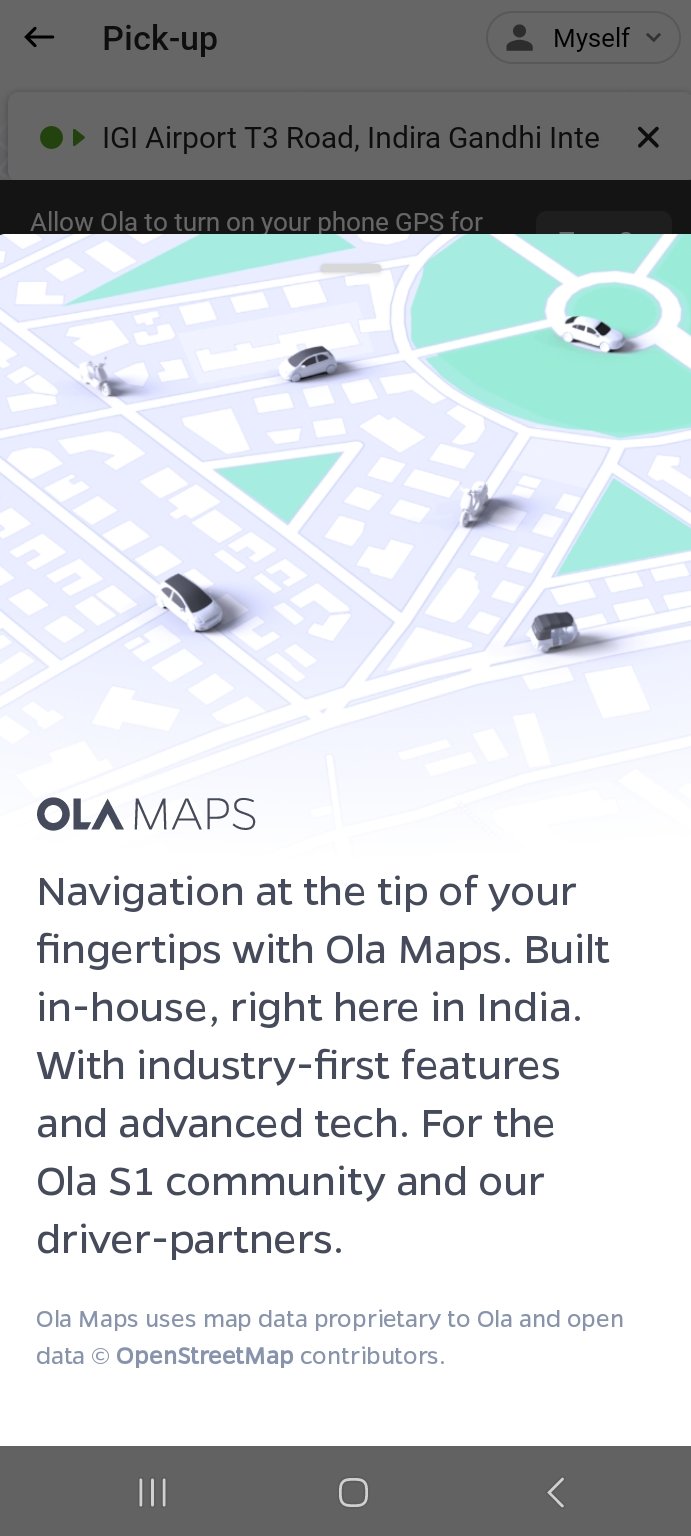
Recently, Ola started rolling out Ola Maps in their main mobile app, replacing Google Maps, while also offering maps as a service to other organizations. The interesting part for me was the usage of OpenStreetMap data as base map with Ola s proprietary data sources. I ll mostly about talk about map data part here. RTI 1
Screenshot of Ola App.
OpenStreetMap attribution is shown after clicking the Ola Map icon.
OpenStreetMap (OSM) for starters, is a community owned and edited map data resource which gives freedom to use map data for any purpose. This includes the condition that attribution is given back to OSM which in turn ideally would encourage other users to contribute, correct and edit, helping everyone in turn. Due to this, OSM is also regarded as Wikipedia of maps. OSM data is not just used by Ola. Many others use it for various purposes like Wikipedia Maps, Strava Maps, Snapchat Map, bus tracking in GoIbibo/Redbus. OSM India community has been following Ola map endeavor to use and contribute to OSM since they went public. As required by OSM for organized mapping efforts, Ola created wiki entry with information regarding their editors, usage, policy and mentions following as their data usage case:
OSM data is used for the road network, traffic signs and signals, buildings, natural features, landuse polygons and some POIs.
Creating a map product is a task in itself, an engineering hurdle creating the tech stack for collection, validation, import and serving the map and the map data part. Ola has done a good job describing the development of tech stack in their blog post. Ola holds an enormous corpus of live and constantly updated GPS trace data. Their drivers, users, and delivery partners generate those, which they harness to validate, correct and add missing map data. Ola employees now regularly contribute new or missing roads (including adding dual carriageway to existing ones), fix road geometry, classification, road access type and restrictions pan India. They have been active and engaging in OSM India community channels, though community members have raised some concerns on their OSM edit practices. Ola s venture into the map industry isn t something out of the ordinary. Grab, a South East Asian company which has business interests in food deliveries, ride hailing and a bunch of other services too switched to their in-house map based on OpenStreetMap, followed by launching of their map product. Grab too contributed back data like Ola. Both Ola and Grab heavily rely on map for their business operations and seem to chose to go independent for it, bootstrapping the products on OSM. In India too, a bunch of organizations contribute to OSM like Swiggy, Stackbox, Amazon, Apple. Microsoft, Meta/Facebook and many others. Everyone wants a better map (data), so everyone works together. Ola could have gone their own route, bootstrapping map data from scratch, which would have been a gargantuan task when you re competing against the likes of Google Maps and Bing Maps, which have been into this since many years. Deciding to use OSM and actively giving back to make data better for everyone deserves accolades. Now I m waiting to for their second blog post, which they mention would be on map data. If you re an Ola map user through Ola Electric or Ola app, and find some road unmapped, you can always edit them in OSM. What I have heard from their employee, they import new OSM data weekly, which means your changes should start reflecting for you (and everyone else) by next week. If you re new, follow Beginners guide and join OSM India community community.osm.be/resources/asia/india/ for any doubts and participating in various mapping events. PS You can see live OSM edits in India subcontinent here.

28 July 2024

Junichi Uekawa: updating old chroot in sbuild that predates usrmerge.

updating old chroot in sbuild that predates usrmerge. I have been lazy and haven't been updating the chroot; but I no longer could, so had to resolve this issue about usrmerge. There was a file /etc/unsupported-skip-usrmerge-conversion that usrmerge package errored out on; it seemed like it means a mark of not doing usrmerge conversion, because sbuild is a system for autobuilding and staying in split /usr for the duration of the release might be better. I don't fully understand the rationale of the file and effects, but I just deleted it and jumped into merged usr.


27 July 2024

Bits from Debian: DebConf24 welcomes its sponsors!

DebConf24 logo DebConf24, the 25th edition of the Debian conference is taking place in Pukyong National University at Busan, Republic of Korea. Thanks to the hard work of its organizers, it again will be an interesting and fruitful event for attendees. We would like to warmly welcome the sponsors of DebConf24, and introduce them to you. We have three Platinum sponsors. Our Gold sponsors are: Our Silver sponsors are: Bronze sponsors: And finally, our Supporter level sponsors: A special thanks to the Pukyong National University, our Venue Partner and our Network Partners KOREN and KREONET! Thanks to all our sponsors for their support! Their contributions make it possible for a large number of Debian contributors from all over the globe to work together, help and learn from each other in DebConf24.

24 July 2024

Gunnar Wolf: DebConf24 Continuous Key-Signing Party

Yay, party!

Yay, crypto! DebCamp has started, and in a couple of days, we will fully be in DebConf24 mode! As most of you know, an important part that binds Debian together is our cryptographic identity assurance, and that is in good measure tightened by the Continuous Key-Signing Parties we hold at DebConfs and other Debian and Free Software gatherings. As I have done during (most of) the past DebConfs, I have prepared a set of pseudo-social maps to help you find where you are in the OpenPGP mesh of our conference. Naturally, Web-of-Trust maps should be user-centered, so find your own at: https://people.debian.org/~gwolf/dc24_ksp/ The list is now final and it will not receive any modifications (I asked for them some days ago); if your name still appears on the list and you don t want to be linked to the DC24 KSP in the future, tell me and I ll remove it from future versions of the list (but it is part of the final DC24 file, as its checksum is already final) Speaking of which! If you are to be a part of the keysigning, get the final DC24 file and, on a device you trust, check its SHA256 by running:
$ sha256sum dc24_fprs.txt
11daadc0e435cb32f734307b091905d4236cdf82e3b84f43cde80ef1816370a5  dc24_fprs.txt
Make sure the resulting number matches the one I m presenting. If it doesn t, ensure your copy of the file is not corrupted (i.e. download again). If it still doess not match, notify me immediately. Does any of the above confuse you? Please come to (or at least, follow the stream for) my session on DebConf opening day, Continuous Key-Signing Party introduction, 10:30 Korean time; I will do my best to explain the details to you. PS- I will soon provide a simple, short PDF that will probably be mass-printed at FrontDesk so that you can easily track your KSP progress.

23 July 2024

Russell Coker: More About Kogan 5120*2160 Monitor

On the 18th of May I blogged about my new 5120*2160 monitor [1]. One thing I noted was that one Netflix movie had run in an aspect ratio that used all space on the monitor. I still don t know if the movie in question was cropped in a letterbox manner but other Netflix shows in full screen mode don t extend to both edges. Also one movie I downloaded as in 3840*1608 resolution which is almost exactly the same aspect ratio as my monitor. I wonder if some company is using 5120*2160 screens for TVs, 4K and FullHD are rumoured to be cheaper than most other resolutions partly due to TV technology being used for monitors. There is the Anamorphic Format of between 2.35:1 and 2.40:1 [2] which is a close match for the 2.37:1 of my new monitor. I tried out the HDMI audio on a Dell laptop and my Thinkpad Yoga Gen3 and found it to be of poor quality, it seemed limited to 2560*1440, at this time I m not sure how much of the fault is due to the laptops and how much is due to the monitor. The monitor docs state that it needs HDMI version 2.1 which was released in 2017 and my Thinkpad Yoga Gen3 was released in 2018 so probably doesn t have that. The HDMI cable in question did 4K resolution on my previous monitor so it should all work at a minimum of 4K resolution. The switching between inputs is a problem. If I switch between DisplayPort for my PC and HDMI for a laptop the monitor will usually timeout before the laptop establishes a connection and then switch back to the DisplayPort input. So far I have had to physically disconnect the input source I don t want to use. The DisplayPort switch that I ve used doesn t seem designed to work with resolutions higher than 4K. I ve bought a new USB-C dock which is described as doing 8K which means that as my Thinkpad is described as supporting 5120 2880@60Hz over USB-C I should be able to get 5120*2160 without any problems, however for unknown reasons I only get 4K. For work I m using a Dell Latitude 7400 2in1 that s apparently only capable of 4096*2304 @24 Hz which is less pixels than 5120*2160 and it will also only do 4K resolution. But for both those cases it s still a significant improvement over 2560*1440. I tested with a Dell Latitude 7440 which gave the full 5120*2160 resolution, I was unable to find specs on what the maximum resolution of the 7440 is. I also have bought DisplayPort switch rated at 8K resolution. I got a switch that doesn t also do USB because the ones that do 8K resolution and USB are about $70. The only KVM switch I saw for 8K resolution at a reasonable price was one designed for switching between two laptops and there doesn t seem to be any adaptors to convert from regular DisplayPort to USB-C alternative mode so that wasn t viable. Currently I have the old KVM switch used for USB only (for keyboard and mouse) and the new switch which only does DisplayPort. So I have two buttons to push when switching between input sources which isn t too bad. It seems that for PCs resolutions with more pixels than 4K are as difficult and inconvenient now as 4K was 6 years ago when I started doing it. If you want higher than 4K resolution to just work at this time then you need Apple hardware. The monitor has a series of modes for different types of output, I ve found standard to be good for text and movie to be good for watching movies/TV and for playing RTS games. I previously wrote about how to use ddcutil to use a monitor as a KVM switch [3], unfortunately I can t do this with the new monitor as the time that the monitor waits for a good signal on a new input after changing is shorter than the time taken for Linux on the laptops I m using to enable HDMI output. I ve found the following commands to do the basics.
# get display mode
ddcutil getvcp DC
# set standard mode
ddcutil setvcp DC 0
# set movie mode
ddcutil setvcp DC 03
Now that I have that going the next thing I want to do is to have it switch between standard and movie modes when I switch keyboard focus.

22 July 2024

Martin-Éric Racine: dhcpcd replacing dhclient for Trixie... or perhaps networkd?

My work on overhauling dhcpcd as the prime replacement for ISC's discontinued DHCP client is done. The package has achieved stability, both upstream and at Debian. The only remaining points are bug #1038882 to swap the Priorities of isc-dhcp-client and dhcpcd-base in the repository's override, and swaping ifupdown's search order to put dhcpcd first. Meanwhile, ifupdown's de-facto maintainer prompted me to sollicit opinions on which of the 4 ifupdown implementations should ship with a minimal installation for Trixie. This, in turn, re-opened the debate of what should be Debian's default network configuation framework (see the thread starting with this post). networkd Given how most Debian ports (except for Hurd) ship with systemd, which includes a disabled networkd by standard, many people in the thread feel that this should become the default network configuration tool for minimal installations. As it happens, most of my hosts fit that scenario, so I figured that I would give another go at testing networkd on one host. I used the following minimalistic /etc/systemd/network/dhcp.network:

[Match]
Name=en* wl*
[Network]
DHCP=yes
This correctly configured IPv4 via DHCP, with the small caveat that it doesn't update /etc/resolv.conf without installing resolvconf or systemd-resolved. However, networkd's default IPv6 settings really are not suitable for public consumption. The key issues (see Bug #1076432):
  1. Temporary addresses are not enabled by default. Worse, the setting is ignored if it was enabled by sysctl during bootup. This is a major privacy issue. Adding IPv6PrivacyExtensions=yes to the above exposed another issue: instead of using the fe80 address generated by the kernel, networkd adds a new one.
  2. Networkd uses EUI64 addresses by default. This is another major privacy issue, since EUI64 addresses are forensically traceable to the interface's MAC address. Worse, the setting is ignored if stable-privacy was enabled by sysctl during bootup. To top it all, networkd does stable-privacy using systemd's time-proven brain-dead approach of reinventing the wheel: instead of merely setting the kernel's address generation mode to 3 and letting it configure the secret address, it expects the secret address to be spelled out in the systemd unit.
Conclusion: networkd works well enough for someone configuring an IPv4-only network from 20 years ago, but is utterly inadequate for IPv6 or dual-stack installations, doubly so on a software distribution that claims to care about privacy and network security.

21 July 2024

Russell Coker: SE Linux Policy for Dell Management

The recent issue of Windows security software killing computers has reminded me about the issue of management software for Dell systems. I wrote policy for the Dell management programs that extract information from iDRAC and store it in Linux. After the break I ve pasted in the policy. It probably needs some changes for recent software, it was last tested on a PowerEdge T320 and prior to that was used on a PowerEdge R710 both of which are old hardware and use different management software to the recent hardware. One would hope that the recent software would be much better but usually such hope is in vain. I deliberately haven t submitted this for inclusion in the reference policy because it s for proprietary software and also it permits many operations that we would prefer not to permit. The policy is after the break because it s larger than you want on a Planet feed. But first I ll give a few selected lines that are bad in a noteworthy way:
  1. sys_admin means the ability to break everything
  2. dac_override means break Unix permissions
  3. mknod means a daemon creates devices due to a lack of udev configuration
  4. sys_rawio means someone didn t feel like writing a device driver, maintaining a device driver for DKMS is hard and getting a driver accepted upstream requires writing quality code, in any case this is a bad sign.
  5. self:lockdown is being phased out, but used to mean bypassing some integrity protections, that would usually be related to sys_rawio or similar.
  6. dev_rx_raw_memory is bad, reading raw memory allows access to pretty much everything and execute of raw memory is something I can t imagine a good use for, the Reference Policy doesn t use this anywhere!
  7. dev_rw_generic_chr_files usually means a lack of udev configuration as udev should do that.
  8. storage_raw_write_fixed_disk shouldn t be needed for this sort of thing, it doesn t do anything that involves managing partitions.
Now without network access or other obvious ways of remote control this level of access while excessive isn t necessarily going to allow bad things to happen due to outside attack. But if there are bugs in the software there s nothing to stop it from giving the worst results.
allow dell_datamgrd_t self:capability   dac_override dac_read_search mknod sys_rawio sys_admin  ;
allow dell_datamgrd_t self:lockdown integrity;
dev_rx_raw_memory(dell_datamgrd_t)
dev_rw_generic_chr_files(dell_datamgrd_t)
dev_rw_ipmi_dev(dell_datamgrd_t)
dev_rw_sysfs(dell_datamgrd_t)
storage_raw_read_fixed_disk(dell_datamgrd_t)
storage_raw_write_fixed_disk(dell_datamgrd_t)
allow dellsrvadmin_t self:lockdown integrity;
allow dellsrvadmin_t self:capability   sys_admin sys_rawio  ;
dev_read_raw_memory(dellsrvadmin_t)
dev_rw_sysfs(dellsrvadmin_t)
dev_rx_raw_memory(dellsrvadmin_t)
The best thing that Dell could do for their customers is to make this free software and allow the community to fix some of these issues.
Here is dellsrvadmin.te:
policy_module(dellsrvadmin,1.0.0)
require  
  type dmidecode_exec_t;
  type udev_t;
  type device_t;
  type event_device_t;
  type mon_local_test_t;
 
type dellsrvadmin_t;
type dellsrvadmin_exec_t;
init_daemon_domain(dellsrvadmin_t, dellsrvadmin_exec_t)
type dell_datamgrd_t;
type dell_datamgrd_exec_t;
init_daemon_domain(dell_datamgrd_t, dell_datamgrd_t)
type dellsrvadmin_var_t;
files_type(dellsrvadmin_var_t)
domain_transition_pattern(udev_t, dellsrvadmin_exec_t, dellsrvadmin_t)
modutils_domtrans(dellsrvadmin_t)
allow dell_datamgrd_t device_t:dir rw_dir_perms;
allow dell_datamgrd_t device_t:chr_file create;
allow dell_datamgrd_t event_device_t:chr_file   read write  ;
allow dell_datamgrd_t self:process signal;
allow dell_datamgrd_t self:fifo_file rw_file_perms;
allow dell_datamgrd_t self:sem create_sem_perms;
allow dell_datamgrd_t self:capability   dac_override dac_read_search mknod sys_rawio sys_admin  ;
allow dell_datamgrd_t self:lockdown integrity;
allow dell_datamgrd_t self:unix_dgram_socket create_socket_perms;
allow dell_datamgrd_t self:netlink_route_socket r_netlink_socket_perms;
modutils_domtrans(dell_datamgrd_t)
can_exec(dell_datamgrd_t, dmidecode_exec_t)
allow dell_datamgrd_t dellsrvadmin_var_t:dir rw_dir_perms;
allow dell_datamgrd_t dellsrvadmin_var_t:file manage_file_perms;
allow dell_datamgrd_t dellsrvadmin_var_t:lnk_file read;
allow dell_datamgrd_t dellsrvadmin_var_t:sock_file manage_file_perms;
kernel_read_network_state(dell_datamgrd_t)
kernel_read_system_state(dell_datamgrd_t)
kernel_search_fs_sysctls(dell_datamgrd_t)
kernel_read_vm_overcommit_sysctl(dell_datamgrd_t)
# for /proc/bus/pci/*
kernel_write_proc_files(dell_datamgrd_t)
corecmd_exec_bin(dell_datamgrd_t)
corecmd_exec_shell(dell_datamgrd_t)
corecmd_shell_entry_type(dell_datamgrd_t)
dev_rx_raw_memory(dell_datamgrd_t)
dev_rw_generic_chr_files(dell_datamgrd_t)
dev_rw_ipmi_dev(dell_datamgrd_t)
dev_rw_sysfs(dell_datamgrd_t)
files_search_tmp(dell_datamgrd_t)
files_read_etc_files(dell_datamgrd_t)
files_read_etc_symlinks(dell_datamgrd_t)
files_read_usr_files(dell_datamgrd_t)
logging_search_logs(dell_datamgrd_t)
miscfiles_read_localization(dell_datamgrd_t)
storage_raw_read_fixed_disk(dell_datamgrd_t)
storage_raw_write_fixed_disk(dell_datamgrd_t)
can_exec(mon_local_test_t, dellsrvadmin_exec_t)
allow mon_local_test_t dellsrvadmin_var_t:dir search;
allow mon_local_test_t dellsrvadmin_var_t:file read_file_perms;
allow mon_local_test_t dellsrvadmin_var_t:file setattr;
allow mon_local_test_t dellsrvadmin_var_t:sock_file write;
allow mon_local_test_t dell_datamgrd_t:unix_stream_socket connectto;
allow mon_local_test_t self:sem   create read write destroy unix_write  ;
allow dellsrvadmin_t self:process signal;
allow dellsrvadmin_t self:lockdown integrity;
allow dellsrvadmin_t self:sem create_sem_perms;
allow dellsrvadmin_t self:fifo_file rw_file_perms;
allow dellsrvadmin_t self:packet_socket create;
allow dellsrvadmin_t self:unix_stream_socket   connectto create_stream_socket_perms  ;
allow dellsrvadmin_t self:capability   sys_admin sys_rawio  ;
dev_read_raw_memory(dellsrvadmin_t)
dev_rw_sysfs(dellsrvadmin_t)
dev_rx_raw_memory(dellsrvadmin_t)
allow dellsrvadmin_t dellsrvadmin_var_t:dir rw_dir_perms;
allow dellsrvadmin_t dellsrvadmin_var_t:file manage_file_perms;
allow dellsrvadmin_t dellsrvadmin_var_t:lnk_file read;
allow dellsrvadmin_t dellsrvadmin_var_t:sock_file write;
allow dellsrvadmin_t dell_datamgrd_t:unix_stream_socket connectto;
kernel_read_network_state(dellsrvadmin_t)
kernel_read_system_state(dellsrvadmin_t)
kernel_search_fs_sysctls(dellsrvadmin_t)
kernel_read_vm_overcommit_sysctl(dellsrvadmin_t)
corecmd_exec_bin(dellsrvadmin_t)
corecmd_exec_shell(dellsrvadmin_t)
corecmd_shell_entry_type(dellsrvadmin_t)
files_read_etc_files(dellsrvadmin_t)
files_read_etc_symlinks(dellsrvadmin_t)
files_read_usr_files(dellsrvadmin_t)
logging_search_logs(dellsrvadmin_t)
miscfiles_read_localization(dellsrvadmin_t)
Here is dellsrvadmin.fc:
/opt/dell/srvadmin/sbin/.*        --        gen_context(system_u:object_r:dellsrvadmin_exec_t,s0)
/opt/dell/srvadmin/sbin/dsm_sa_datamgrd        --        gen_context(system_u:object_r:dell_datamgrd_t,s0)
/opt/dell/srvadmin/bin/.*        --        gen_context(system_u:object_r:dellsrvadmin_exec_t,s0)
/opt/dell/srvadmin/var(/.*)?                        gen_context(system_u:object_r:dellsrvadmin_var_t,s0)
/opt/dell/srvadmin/etc/srvadmin-isvc/ini(/.*)?        gen_context(system_u:object_r:dellsrvadmin_var_t,s0)

17 July 2024

Russell Coker: Samsung Galaxy Note 9 Review

After the VoLTE saga [1] and the problems with battery life on the PinePhonePro [2] (which lasted 4 hours while idle with the screen off in my last test a few weeks ago) I m running a Galaxy Note 9 [3] with the default Samsung OS as my daily driver. I don t think that many people will be rushing out to buy a 2018 phone regardless of my review. For someone who wants a phone of such age (which has decent hardware and a low price) then good options are the Pixel phones which are all supported by LineageOS. I recommend not buying this phone due to the fact that it doesn t have support for VoLTE with LineageOS (and presumably any other non-Samsung Android build) and doesn t have support from any other OS. The One Plus 6/6T has Mobian support [4] as well as LineageOS support and is worth considering. The Note 9 still has capable hardware by today s standards. A 6.4 display is about as big as most people want in their pocket and 2960 1440 resolution in that size (516dpi) is probably as high as most people can see without a magnifying glass. The model I m using has 8G of RAM which is as much as the laptop I was using at the start of this year. I don t think that many people will have things that they actually want to do on a phone which needs more hardware than this. The only hardware feature in new phones which beats this is the large folding screen in some recent phones, but $2500+ (the price of such phones in Australia) is too much IMHO and the second hand market for folding phones is poor due to the apparently high incidence of screens breaking. The Note 9 has the Dex environment for running as a laptop if you connect it to a USB-C dock. It can run nicely with a 4K monitor with USB keyboard and mouse. The UI is very similar to that of older versions of Windows. The Samsung version of Android seems mostly less useful than the stock Google version or the LineageOS version. The Samsung keyboard flags words such as gay as spelling errors and it can t be uninstalled even when you install a better keyboard app. There is a Bixby button on the side of the phone to launch the Bixby voice recognition app which can t be mapped to any useful purpose, The Google keyboard has a voice dictation option which I will try out some time but that s all I desire in terms of voice recognition. There are alerts about Samsung special deals and configuration options including something about signing in to some service and having it donate money to charity, I doubt that any users want such features. Apart from Dex the Samsung Android build is a good advert for LineageOS. The screen has curved sides for no good reason. This makes it more difficult to make a protective phone case as a case can t extend beyond the screen at the sides and therefore if it s dropped and hits an edge (step, table, etc) then the glass can make direct contact with something. Also the curved sides reflect sunlight in all directions, this means that the user has to go to more effort to avoid reflecting the sun into their eyes and that a passenger can more easily reflect sunlight into the eyes of a car driver. It s an impressive engineering feat to make a curved touch-screen but it doesn t do any good for users. The stylus is good as always and the screen is AMOLED so it doesn t waste much power when in dark mode. There is a configuration option to display a clock all the time when the screen is locked because that apparently doesn t use much power. I haven t felt inclined to enable the always on screen but it s a nice feature for those who like such things. The VoLTE implementation is apparently a bit unusual so it s not supported by LineageOS and didn t work on Droidian for the small amount of time that Droidian supported it. Generally this phone is quite nice hardware it s just a pity that it demonstrates all of the downsides to buying a non-Pixel phone.

15 July 2024

Thomas Lange: FAIme adds Korean language support

In two weeks DebConf24, the Debian conference starts in Busan, South Korea. Therefore I've added support for the Korean language into the web service of FAI: https://fai-project.org/FAIme/ Another new feature of the FAIme service will be announced at DebConf24 in August.

14 July 2024

Russ Allbery: podlators v6.0.2

podlators contains the Perl modules and scripts used to convert Perl's documentation language, POD, to text and manual pages. This is another small bug fix release that is part of iterating on getting the new podlators incorproated into Perl core. The bug fixed in this release was another build system bug I introduced in recent refactorings, this time breaking the realclean target so that some generated scripts were not removed. Thanks to James E Keenan for the report. You can get the latest version from CPAN or from the podlators distribution page.

Ravi Dwivedi: Kenya Visa Process

Prior to arrival in Kenya, you need to apply for an Electronic Travel Authorization (eTA) on their website by uploading all the required documents. This system is in place since Jan 2024 after the country abolished the visa system, implementing the eTA portal. The required documents will depend on the purpose of your visit, which in my case, was to attend a conference. Here is the list of documents I submitted for my eTA: Reservation means I didn t book the flights and hotels, but rather reserved them. Additionally, optional means that those documents were not mandatory to submit, but I submitted them in the Other Documents section in order to support my application. After submitting the eTA, I had to make a payment of around 35 US Dollars (approximately 3000 Indian Rupees). It took 40 hours for me to receive an email from Kenya stating that my eTA has been approved, along with an attached PDF, making this one of my smoothest experiences of obtaining travel documents to travel to a country :). An eTA is technically not a visa, but I put the word visa in the title due to familiarity with the term.

12 July 2024

Freexian Collaborators: Monthly report about Debian Long Term Support, June 2024 (by Roberto C. S nchez)

Like each month, have a look at the work funded by Freexian s Debian LTS offering.

Debian LTS contributors In June, 18 contributors have been paid to work on Debian LTS, their reports are available:
  • Adrian Bunk did 47.0h (out of 74.25h assigned and 11.75h from previous period), thus carrying over 39.0h to the next month.
  • Arturo Borrero Gonzalez did 6.0h (out of 6.0h assigned).
  • Bastien Roucari s did 20.0h (out of 20.0h assigned).
  • Ben Hutchings did 15.5h (out of 16.0h assigned and 8.0h from previous period), thus carrying over 8.5h to the next month.
  • Chris Lamb did 18.0h (out of 18.0h assigned).
  • Daniel Leidert did 4.0h (out of 8.0h assigned and 2.0h from previous period), thus carrying over 6.0h to the next month.
  • Emilio Pozuelo Monfort did 23.25h (out of 49.5h assigned and 10.5h from previous period), thus carrying over 36.75h to the next month.
  • Guilhem Moulin did 4.5h (out of 13.0h assigned and 7.0h from previous period), thus carrying over 15.5h to the next month.
  • Lee Garrett did 17.0h (out of 25.0h assigned and 35.0h from previous period), thus carrying over 43.0h to the next month.
  • Lucas Kanashiro did 5.0h (out of 10.0h assigned and 10.0h from previous period), thus carrying over 15.0h to the next month.
  • Markus Koschany did 40.0h (out of 40.0h assigned).
  • Ola Lundqvist did 10.0h (out of 6.5h assigned and 17.5h from previous period), thus carrying over 14.0h to the next month.
  • Roberto C. S nchez did 5.25h (out of 7.75h assigned and 4.25h from previous period), thus carrying over 6.75h to the next month.
  • Santiago Ruano Rinc n did 22.5h (out of 14.5h assigned and 8.0h from previous period).
  • Sean Whitton did 6.5h (out of 6.0h assigned and 0.5h from previous period).
  • Stefano Rivera did 0.5h (out of 0.0h assigned and 10.0h from previous period), thus carrying over 9.5h to the next month.
  • Sylvain Beucler did 9.0h (out of 24.5h assigned and 35.5h from previous period), thus carrying over 51.0h to the next month.
  • Thorsten Alteholz did 14.0h (out of 14.0h assigned).

Evolution of the situation In June, we have released 31 DLAs. Notable security updates in June included:
  • git: multiple vulnerabilities, which may result in privilege escalation, denial of service, and arbitrary code execution
  • sendmail: SMTP smuggling allowed remote attackers bypass SPF protection checks
  • cups: arbitrary remote code execution
Looking further afield to the broader Debian ecosystem, LTS contributor Bastien Roucari s also patched sendmail in Debian 12 (bookworm) and 11 (bullseye) in order to fix the previously mentioned SMTP smuggling vulnerability. Furthermore, LTS contributor Thorsten Alteholz provided fixes for the cups packages in Debian 12 (bookworm) and 11 (bullseye) in order to fix the aforementioned arbitrary remote code execution vulnerability. Additionally, LTS contributor Ben Hutchings has commenced work on an updated backport of Linux kernel 6.1 to Debian 11 (bullseye), in preparation for bullseye transitioning to the responsibility of the LTS (and the associated closure of the bullseye-backports repository). LTS Lucas Kanashiro also began the preparatory work of backporting parts of the rust/cargo toolchain to Debian 11 (bullseye) in order to make future updates of the clamav virus scanner possible. June was the final month of LTS for Debian 10 (as announced on the debian-lts-announce mailing list). No additional Debian 10 security updates will be made available on security.debian.org. However, Freexian and its team of paid Debian contributors will continue to maintain Debian 10 going forward for the customers of the Extended LTS offer. Subscribe right away if you sill have Debian 10 which must be kept secure (and which cannot yet be upgraded).

Thanks to our sponsors Sponsors that joined recently are in bold.

10 July 2024

Russell Coker: Computer Adavances in the Last Decade

I wrote a comment on a social media post where someone claimed that there s no computer advances in the last 12 years which got long so it s worth a blog post. In the last decade or so new laptops have become cheaper than new desktop PCs. USB-C has taken over for phones and for laptop charging so all recent laptops support USB-C docks and monitors with USB-C docks built in have become common. 4K monitors have become cheap and common and higher than 4K is cheap for some use cases such as ultra wide. 4K TVs are cheap and TVs with built-in Android computers for playing internet content are now standard. For most use cases spinning media hard drives are obsolete, SSDs large enough for all the content most people need to store are cheap. We have gone from gigabit Ethernet being expensive to 2.5 gigabit being cheap. 12 years ago smart phones were very limited and every couple of years there would be significant improvements. Since about 2018 phones have been capable of doing most things most people want. 5yo Android phones can run the latest apps and take high quality pics. Any phone that supports VoLTE will be good for another 5+ years if it has security support. Phones without security support still work and are quite usable apart from being insecure. Google and Samsung have significantly increased their minimum security support for their phones and the GKI project from Google makes it easier for smaller vendors to give longer security support. There are a variety of open Android projects like LineageOS which give longer security support on a variety of phones. If you deliberately choose a phone that is likely to be well supported by projects like LineageOS (which pretty much means just Pixel phones) then you can expect to be able to actually use it when it is 10 years old. Compare this to the Samsung Galaxy S3 released in 2012 which was a massive improvement over the original Galaxy S (the S2 felt closer to the S than the S3). The Samsung Galaxy S4 released in 2013 was one of the first phones to have FullHD resolution which is high enough that most people can t easily recognise the benefits of higher resolution. It wasn t until 2015 that phones with 4G of RAM became common which is enough that for most phone use it s adequate today. Now that 16G of RAM is affordable in laptops running more secure OSs like Qubes is viable for more people. Even without Qubes, OS security has been improving a lot with better compiler features, new languages like Rust, and changes to software design and testing. Containers are being used more but we still aren t getting all the benefits of that. TPM has become usable in the last few years and we are only starting to take advantage of what it can offer. In 2012 BTRFS was still at an early stage of development and not many people wanted to use it in production, I was using it in production then and while I didn t lose any data from bugs I did have some downtime because of BTRFS issues. Now BTRFS is quite solid for server use. DDR4 was released in 2014 and gave significant improvements over DDR3 for performance and capacity. My home workstation now has 256G of DDR4 which wasn t particularly expensive while the previous biggest system I owned had 96G of DDR3 RAM. Now DDR5 is available to again increase performance and size while also making DDR4 cheap on the second hand market. This isn t a comprehensive list of all advances in the computer industry over the last 12 years or so, it s just some things that seem particularly noteworthy to me. Please comment about what you think are the most noteworthy advances I didn t mention.

9 July 2024

Russ Allbery: Review: Raising Steam

Review: Raising Steam, by Terry Pratchett
Series: Discworld #40
Publisher: Anchor Books
Copyright: 2013
Printing: October 2014
ISBN: 0-8041-6920-9
Format: Trade paperback
Pages: 365
Raising Steam is the 40th Discworld novel and the third Moist von Lipwig novel, following Making Money. This is not a good place to start reading the series. Dick Simnel is a tinkerer from a line of tinkerers. He has been obsessed with mastering the power of steam since the age of ten, when his father died in a steam accident. That pursuit took him deeper into mathematics and precision, calculations and experiments, until he built Iron Girder: Discworld's first steam-powered locomotive. His early funding came from some convenient family pirate treasure, but turning his prototype into something more will require significantly more resources. That is how he ends up in the office of Harry King, Ankh-Morpork's sanitation magnate. Simnel's steam locomotive has the potential to solve some obvious logistical problems, such as getting fish from the docks of Quirm to the streets of Ankh-Morpork before it stops being vaguely edible. That's not what makes railways catch fire, however. As soon as Iron Girder is huffing and puffing its way around King's compound, it becomes the most popular attraction in the city. People stand in line for hours to ride it over and over again for reasons that they cannot entirely explain. There is something wild and uncontrollable going on. Vetinari is not sure he likes wild and uncontrollable, but he knows the lap into which such problems can be dumped: Moist von Lipwig, who is already getting bored with being a figurehead for the city's banking system. The setup for Raising Steam reminds me more of Moving Pictures than the other Moist von Lipwig novels. Simnel himself is a relentlessly practical engineer, but the trains themselves have tapped some sort of primal magic. Unlike Moving Pictures, Pratchett doesn't provide an explicit fantasy explanation involving intruding powers from another world. It might have been a more interesting book if he had. Instead, this book expects the reader to believe there is something inherently appealing and fascinating about trains, without providing much logic or underlying justification. I think some readers will be willing to go along with this, and others (myself included) will be left wishing the story had more world-building and fewer exclamation points. That's not the real problem with this book, though. Sadly, its true downfall is that Pratchett's writing ability had almost completely collapsed by the time he wrote it. As mentioned in my review of Snuff, we're now well into the period where Pratchett was suffering the effects of early-onset Alzheimer's. In that book, his health issues mostly affected the dialogue near the end of the novel. In this book, published two years later, it's pervasive and much worse. Here's a typical passage from early in the book:
It is said that a soft answer turneth away wrath, but this assertion has a lot to do with hope and was now turning out to be patently inaccurate, since even a well-spoken and thoughtful soft answer could actually drive the wrong kind of person into a state of fury if wrath was what they had in mind, and that was the state the elderly dwarf was now enjoying.
One of the best things about Discworld is Pratchett's ability to drop unexpected bits of wisdom in a sentence or two, or twist a verbal knife in an unexpected and surprising direction. Raising Steam still shows flashes of that ability, but it's buried in run-on sentences, drowned in cliches and repetition, and often left behind as the containing sentence meanders off into the weeds and sputters to a confused halt. The idea is still there; the delivery, sadly, is not. This is the first Discworld novel that I found mentally taxing to read. Sentences are often so overpacked that they require real effort to untangle, and the untangled meaning rarely feels worth the effort. The individual voice of the characters is almost gone. Vetinari's monologues, rather than being a rare event with dangerous layers, are frequent, rambling, and indecisive, often sounding like an entirely different character than the Vetinari we know. The constant repetition of the name any given character is speaking to was impossible for me to ignore. And the momentum of the story feels wrong; rather than constructing the events of the story in a way that sweeps the reader along, it felt like Pratchett was constantly pushing, trying to convince the reader that trains were the most exciting thing to ever happen to Discworld. The bones of a good story are here, including further development of dwarf politics from The Fifth Elephant and Thud! and the further fallout of the events of Snuff. There are also glimmers of Pratchett's typically sharp observations and turns of phrase that could have been unearthed and polished. But at the very least this book needed way more editing and a lot of rewriting. I suspect it could have dropped thirty pages just by tightening the dialogue and removing some of the repetition. I'm afraid I did not enjoy this. I am a bit of a hard sell for the magic fascination of trains I love trains, but my model railroad days are behind me and I'm now more interested in them as part of urban transportation policy. Previous Discworld books on technology and social systems did more of the work of drawing the reader in, providing character hooks and additional complexity, and building a firmer foundation than "trains are awesome." The main problem, though, was the quality of the writing, particularly when compared to the previous novels with the same characters. I dragged myself through this book out of a sense of completionism and obligation, and was relieved when I finished it. This is the first Discworld novel that I don't recommend. I think the only reason to read it is if you want to have read all of Discworld. Otherwise, consider stopping with Snuff and letting it be the send-off for the Ankh-Morpork characters. Followed by The Shepherd's Crown, a Tiffany Aching story and the last Discworld novel. Rating: 3 out of 10

8 July 2024

Russ Allbery: Review: Beyond Control

Review: Beyond Control, by Kit Rocha
Series: Beyond #2
Publisher: Kit Rocha
Copyright: December 2013
ASIN: B00GIA4GN8
Format: Kindle
Pages: 364
Beyond Control is science fiction erotica (dystopian erotic romance, per the marketing) and a direct sequel to Beyond Shame. These books shift protagonists with each volume and enough of the world background is explained that you could start here, but there are significant spoilers for the previous book. I read this book as part of the Beyond Series Bundle (Books 1-3), which is what the sidebar information is for. This is one of those reviews that I write because I'm stubborn about reviewing all the books I read, not because it's likely to be useful to anyone. There are also considerably more spoilers for the shape of the story than I normally include, so be warned. The Beyond series is erotica. Specifically, so far, consensual BDSM erotica with bisexuality but otherwise typical gender stereotypes. The authors (Kit Rocha is a pen name for Donna Herren and Bree Bridges) are women, so it's more female gaze than male gaze, but by erotica I don't mean romance with an above-average number of steamy scenes. I mean it felt like half the book by page count was descriptions of sex. This review is rather pointless because, one, I'm not going to review the sex that's the main point of the book, and two, I skimmed all the sex and read it for the story because I'm weird. Beyond Shame got me interested in these absurdly horny people and their post-apocalyptic survival struggles in the outskirts of a city run by a religious surveillance state, and I wanted to find out what happened next. Besides, this book promised to focus on my favorite character from the first novel, Lex, and I wanted to read more about her. Beyond Control uses a series pattern that I understand is common in romance but which is not often seen in SFF (my usual genre): each book focuses on a new couple adjacent to the previous couple, while the happily ever after of the previous couple plays out in the background. In this case, it also teases the protagonists of the next book. I can see why romance uses this structure: it's an excuse to provide satisfying interludes for the reader. In between Lex and Dallas's current relationship problems, one gets to enjoy how well everything worked out for Noelle and how much she's grown. In Beyond Shame, Lex was the sort-of partner of Dallas O'Kane, the leader of the street gang that is running Sector Four. (Picture a circle surrounding the rich-people-only city of Eden. That circle is divided into eight wedge-shaped sectors, which provide heavy industries, black-market pleasures, and slums for agricultural workers.) Dallas is an intensely possessive, personally charismatic semi-dictator who cultivates the image of a dangerous barbarian to everyone outside and most of the people inside Sector Four. Since he's supposed to be one of the good guys, this is more image than reality, but it's not entirely disconnected from reality. This book is about Lex and Dallas forming an actual relationship, instead of the fraught and complicated thing they had in the first book. I was hoping that this would involve Dallas becoming less of an asshole. It unfortunately does not, although some of what I attributed to malice may be adequately explained by stupidity. I'm not sure that's an improvement. Lex is great, just like she was in the first book. It's obvious by this point in the series that she does most of the emotional labor of keeping the gang running, and her support is central to Dallas's success. Like most of the people in this story, she has a nasty and abusive background that she's still dealing with in various ways. Dallas's possessiveness is intensely appealing to her, but she wants that possessiveness on different terms than Dallas may be willing to offer, or is even aware of. Lex was, I thought, exceptionally clear about what she wanted out of this relationship. Dallas thinks this is entirely about sex, and is, in general, dumber than a sack of hammers. That means fights. Also orgies, but, well, hopefully you knew what you were getting into if you picked up this book. I know, I know, it's erotica, that's the whole point, but these people have a truly absurd amount of sex. Eden puts birth control in the water supply, which is a neat way to simplify some of the in-story consequences of erotica. They must be putting aphrodisiacs in the water supply as well. There was a lot of sector politics in this book that I found way more interesting than it had any right to be. I really like most of these people, even Dallas when he manages to get his three brain cells connected for more than a few minutes. The events of the first book have a lot of significant fallout, Lex continues being a badass, the social dynamics between the women are very well-done (and pass the Bechdel test yet again even though this is mostly traditional-gender-role erotica), and if Dallas had managed to understand what he did wrong at a deeper-than-emotional level, I would have rather enjoyed the non-erotica story parts. Alas. I therefore wouldn't recommend this book even if I were willing to offer any recommendations about erotica (which I'm not). I was hoping it was going somewhere more rewarding than it did. But I still kind of want to read another one? I am weirdly fascinated with the lives of these people. The next book is about Six, who has the potential to turn into the sort of snarky, cynical character I love reading about. And it's not that hard to skim over the orgies. Maybe Dallas will get one additional brain cell per book? Followed by Beyond Pain. Rating: 5 out of 10

7 July 2024

Niels Thykier: Improving packaging file detection in Debian

Debian packaging consists of a directory (debian/) containing a number of "hard-coded" filenames such as debian/control, debian/changelog, debian/copyright. In addition to these, many packages will also use a number of optional files that are named via a pattern such as debian/ PACKAGE .install. At a high level the patterns looks deceptively simple. However, if you start working on trying to automatically classify files in debian/ (which could be helpful to tell the user they have a typo in the filename), you will quickly realize these patterns are not machine friendly at all for this purpose.
The patterns deconstructed To appreciate the problem fully, here is a primer on the pattern and all its issues. If you are already well-versed in these, you might want to skip the section. The most common patterns are debian/package.stem or debian/stem and usually the go to example is the install stem ( a concrete example being debian/debhelper.install). However, the full pattern consists of 4 parts where 3 of them are optional.
  • The package name followed by a period. Optional, but must be the first if present.
  • The name segment followed by a period. Optional, but must appear between the package name (if present) and the stem. If the package name is not present, then the name segment must be first.
  • The stem. Mandatory.
  • An architecture restriction prefixed by a period. Optional, must appear after the stem if present.
To visualize it with [foo] to mark optional parts, it looks like debian/[PACKAGE.][NAME.]STEM[.ARCH] Detecting whether a given file is in fact a packaging file now boils down to reverse engineering its name against this pattern. Again, so far, it might still look manageable. One major complication is that every part (except ARCH) can contain periods. So a trivial "split by period" is not going to cut it. As an example:
debian/g++-3.0.user.service
This example is deliberately crafted to be ambiguous and show this problem in its full glory. This file name can be in multiple ways:
  • Is the stem service or user.service? (both are known stems from dh_installsystemd and dh_installsystemduser respectively). In fact, it can be both at the same time with "clever" usage of --name=user passed to dh_installsystemd.
  • The g++-3.0 can be a package prefix or part of the name segment. Even if there is a g++-3.0 package in debian/control, then debhelper (until compat 15) will still happily match this file for the main package if you pass --name=g++-3.0 to the helper. Side bar: Woe is you if there is a g++-3 and a g++-3.0 package in debian/control, then we have multiple options for the package prefix! Though, I do not think that happens in practice.
Therefore, there are a lot of possible ways to split this filename that all matches the pattern but with vastly different meaning and consequences.
Making detection practical To make this detection practical, lets look at the first problems that we need to solve.
  1. We need the possible stems up front to have a chance at all. When multiple stems are an option, go for the longest match (that is, the one with most periods) since --name is rare and "code golfing" is even rarer.
  2. We can make the package prefix mandatory for files with the name segment. This way, the moment there is something before the stem, we know the package prefix will be part of it and can cut it. It does not solve the ambiguity if one package name is a prefix of another package name (from the same source), but it still a lot better. This made its way into debhelper compat 15 and now it is "just" a slow long way to a better future.
A simple solution to the first problem could be to have a static list of known stems. That will get you started but the debhelper eco-system strive on decentralization, so this feels like a mismatch. There is also a second problem with the static list. Namely, a given stem is only "valid" if the command in question is actually in use. Which means you now need to dumpster dive into the mess that is Turning-complete debhelper configuration file known as debian/rules to fully solve that. Thanks to the Turning-completeness, we will never get a perfect solution for a static analysis. Instead, it is time to back out and instead apply some simplifications. Here is a sample flow:
  1. Check whether the dh sequencer is used. If so, use some heuristics to figure out which addons are used.
  2. Delegate to dh_assistant to figure out which commands will be used and which debhelper config file stems it knows about. Here we need to know which sequences are in use from step one (if relevant). Combine this with any other sources for stems you have.
  3. Deconstruct all files in debian/ against the stems and known package names from debian/control. In theory, dumpster diving after --name options would be helpful here, but personally I skipped that part as I want to keep my debian/rules parsing to an absolute minimum.
With this logic, you can now:
  • Provide typo detection of the stem (debian/foo.intsall -> debian/foo.install) provided to have adequate handling of the corner cases (such as debian/*.conf not needing correction into debian/*.config)
  • Detect possible invalid package prefix (debian/foo.install without foo being a package). Note this has to be a weak warning unless the package is using debhelper compat 15 or you dumpster dived to validate that dh_install was not passed dh_install --name foo. Agreed, no one should do that, but they can and false positives are the worst kind of positives for a linting tool.
  • With some limitations, detect files used without the relevant command being active. As an example, the some integration modes of debputy removes dh_install, so a debian/foo.install would not be used.
  • Associate a given file with a given command to assist users with the documentation look up. Like debian/foo.user.service is related to dh_installsystemduser, so man dh_installsystemduser is a natural start for documentation.
I have added the logic for all these features in debputy though the documentation association is currently not in a user facing command. All the others are now diagnostics emitted by debputy in its editor support mode (debputy lsp server) or via debputy lint. In the editor mode, the diagnostics are currently associated with the package name in debian/control due to technical limitations of how the editor integration works. Some of these features will the latest version of debhelper (moving target at times). Check with debputy lsp features for the Extra dh support feature, which will be enabled if you got all you need. Note: The detection is currently (mostly) ignoring files with architecture restrictions. That might be lifted in the future. However, architecture restricted config files tend to be rare, so they were not a priority at this point. Additionally, debputy for technical reasons ignores stem typos with multiple matches. That sadly means that typos of debian/docs will often be unreported due to its proximity to debian/dirs and vice versa.
Diving a bit deeper on getting the stems To get the stems, debputy has 3 primary sources:
  1. Its own plugins can provide packager provided files. These are only relevant if the package is using debputy.
  2. It is als possible to provide a debputy plugin that identifies packaging files (either static or named ones). Though in practice, we probably do not want people to roll their own debputy plugin for this purpose, since the detection only works if the plugin is installed. I have used this mechanism to have debhelper provide a debhelper-documentation plugin to enrich the auto-detected data and we can assume most people interested in this feature would have debhelper installed.
  3. It asks dh_assistant list-guessed-dh-config-files for config files, which is covered below.
The dh_assistant command uses the same logic as dh to identify the active add-ons and loads them. From there, it scans all commands mentioned in the sequence for the PROMISE: DH NOOP WITHOUT ...-hint and a new INTROSPECTABLE: CONFIG-FILES ...-hint. When these hints reference a packaging file (as an example, via pkgfile(foo)) then dh_assistant records that as a known packaging file for that helper. Additionally, debhelper now also tracks commands that were removed from the sequence. Several of the dh_assistant subcommand now use this to enrich their (JSON) output with notes about these commands being known but not active.
The end result With all of this work, you now get:
$ apt satisfy 'dh-debputy (>= 0.1.43~), debhelper (>= 13.16~), python3-lsprotocol, python3-levenshtein'
# For demo purposes, pull two known repos (feel free to use your own packages here)
$ git clone https://salsa.debian.org/debian/debhelper.git -b debian/13.16
$ git clone https://salsa.debian.org/debian/debputy.git -b debian/0.1.43
$ cd debhelper
$ mv debian/debhelper.install debian/debhelper.intsall
$ debputy lint
warning: File: debian/debhelper.intsall:1:0:1:0: The file "debian/debhelper.intsall" is likely a typo of "debian/debhelper.install"
    File-level diagnostic
$ mv debian/debhelper.intsall debian/debhleper.install
$ debputy lint
warning: File: debian/debhleper.install:1:0:1:0: Possible typo in "debian/debhleper.install". Consider renaming the file to "debian/debhelper.debhleper.install" or "debian/debhelper.install" if it is intended for debhelper
    File-level diagnostic
$ cd ../debputy
$ touch debian/install
$ debputy lint --no-warn-about-check-manifest
warning: File: debian/install:1:0:1:0: The file debian/install is related to a command that is not active in the dh sequence with the current addons
    File-level diagnostic
As mentioned, you also get these diagnostics in the editor via the debputy lsp server feature. Here the diagnostics appear in debian/control over the package name for technical reasons. The editor side still needs a bit more work. Notably, changes to the filename is not triggered automatically and will first be caught on the next change to debian/control. Likewise, changes to debian/rules to add --with to dh might also have some limitations depending on the editor. Saving both files and then triggering an edit of debian/control seems to work reliable but ideally it should not be that involved. The debhelper side could also do with some work to remove the unnecessary support for the name segment with many file stems that do not need them and announce that to debputy. Anyhow, it is still a vast improvement over the status quo that was "Why is my file silently ignored!?".

Next.

Previous.

