Search Results: "dpk"

3 May 2011

Raphaël Hertzog: My Debian activities in April 2011

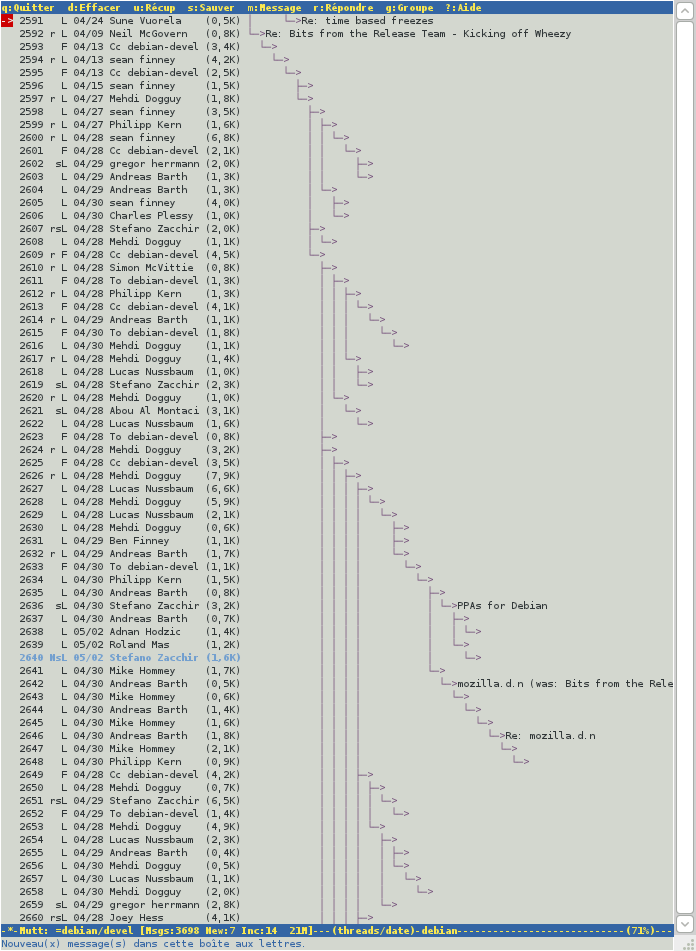
This is my monthly summary of my Debian related activities. If you re among the people who support my work, then you can learn how I spent your money. Otherwise it s just an interesting status update on my various projects. GNOME 3 packaging Right after the GNOME 3 release, I was eager to try it out so I helped the pkg-gnome team to update some of the packages. I did some uploads of totem, totem-pl-parser, gvfs, mutter, gnome-shell, gnome-screensaver. I also kept people informed via my blog and prepared a pinning file for adventurous users who wanted to try it out from experimental (like me). One month later, I m still using GNOME 3. There are rough edges still, but not so many. And I m starting to get used to it. Debian Rolling planning Debian Rolling is a project on my TODO list for quite some time. I decided it was time to do something about it and started a series of articles to help clarify my ideas while getting some early feedback. My goal was to prepare a somewhat polished proposal before posting it to a Debian mailing list. But as usual with Murphy s law, my plan did not work out as expected. Almost immediately after my first post the discussion started on debian-devel:
At this point it s a discussion thread of several hundreds of messages (there are several screens of messages like the one above). Many of the sub-threads have been interesting, but the general discussions mixed too many different things so that there s no clear outcome yet. Lucas Nussbaum tried to make a summary. Obviously I must adjust my plan, there s lots of feedback to process. I accepted to drive a DEP together with Sean Finney to help structure the part of the discussion that focuses on allowing development to continue during freezes. But I m also eager to fix the marketing problem of testing and have the project recognize that testing is a product in itself and that end-users should be encouraged to use it. Package Tracking System maintenance The Package Tracking System is an important tool for Debian developers, and it has been broken by some change on the Bug Tracking System. I worked around it quite quickly so that few people noticed the problem but Cron kept reminding me that I had to properly fix it. I ended up doing it last week-end. While working on the PTS, I took the opportunity to merge a patch from Jan Dittberner to enhance the news RSS feed that the PTS provides. And I also integrated information from backports.debian.org (thanks to Mehdi Dogguy for reminding me #549115). Multiarch update Not much new this month. I fixed two bugs in the multiarch dpkg branch thanks to bug reports from Ubuntu users (LP 767634, LP 756381). I m still waiting on Guillem Jover finishing his review of the multiarch branch. I m pinging him from time to time but it looks like multi-arch is no longer in his short term priority list. :-( I ve been running this code for more than 2 months and it works fine. I want to see it merged. I m ready to update my code should anything need to be changed to please Guillem. But without any feedback we re in a deadlock. Misc dpkg work While fixing a bug in update-alternatives (found in one of the valid reports on launchpad), I noticed that there was room for improvements in the error messages output by update-alternatives. I changed them to reuse the same strings that were already used in other parts of dpkg. The result is that there are a few strings less to translate (always a nice thing for the poor translators who have to deal with the thousands of strings that dpkg contains). I also tried to fix some of the most cryptic error messages in dpkg (see #621763) but that work is stalled at the request of Guillem. Book update We (me and Roland Mas) are almost done with the update of our French book for Debian Squeeze. It will hit the shelves in July or September. I m starting to prepare the fundraising campaign to make an English translation of it. We ll use ulule.com for this. On my blog I have been pleased to interview Meike Reichle, it s the first women that I have interviewed in the series but it s certainly not the last one. I also interviewed Adam D. Barratt, one of our tireless release managers. Thanks Many thanks to the people who gave me 180.35 in March and 235.37 in April. That represents 1.5 and 2 days of work for those months. See you next month for a new summary of my activities.

8 comments Liked this article? Click here. My blog is Flattr-enabled.

25 April 2011

Obey Arthur Liu: Welcome to our 2011 Debian Google Summer of Code students!

I d like to extend a warm welcome to our new batch of students selected for the 2011 Debian Google Summer of Code! They should soon be posting on Debian Planet and you re welcome to come talk to them on #debian-soc on irc.debian.org Further details will be posted in the coming days to our wiki: http://wiki.debian.org/gsoc Automated Multi-Arch Cross-Building and Bootstrapping aka autocrossbuild , by Gustavo Prado Alkmim, mentored by Wookey
Enable easy and automated setup of cross-platform automated build systems and bootstrapping for QA in the Multi-Arch era. This involves the creation of multi-stage bootstrap build sequencing tools and a reliable automated multi-arch cross-builder. APT/Dpkg Transaction Ordering for Safety and Performance aka aptordering , by Chris Baines, mentored by Michael Vogt
The ordering code in libapt is responsible for ordering the unpacking/configuration of debs so as to ensure dependencies are satisfied etc. Currently it organizes the ordering into big batches. This project further implements an ordering satisfying more constrains such as minimal amounts of dpkg invocations , minimal amount of broken packages at any point . DebDelta APT Native Integration aka debdelta , by Ishan Jayawardena, mentored by Michael Vogt
Improve user experience of APT and its front-ends by speeding up the upgrade process. This provides a better framework for unified handling of debdelta and future APT improvements such as parallelism. Support for stable and security ugprades as well as multiple APT related libraries is expected. Dpkg Declarative Diversions aka declarativediversions , by Sam Dunne, mentored by Steve Langasek
The dpkg-divert command should be replaced with a new control file with a declarative syntax which Dpkg will parse and process directly as part of the package unpack and removal phases, eliminating the problems resulting from non-atomic handling of diversions. Backend Tools and Infrastructure for DEX aka dextools , by Nathan Handler, mentored by Matt Zimmerman
EX is a new program designed to help improve Debian and its derivatives by merging in changes made downstream and encouraging discussions between the various projects. As this is a new project, most of the infrastructure does not exist (or is rather hackish and incomplete). This project will create the necessary backend tools and infrastructure so that all Debian derivatives can easily make use of the DEX project. Jigsaw Modularized Java in Debian aka jigsaw , by Guillaume Mazoyer, mentored by Tom Marble
The Java Development Kit (JDK) is a big monolithic software tool: many of its features are only useful in limited areas (GUI toolkits are useless for a web server). This project will bring the Jigsaw modular JDK to Debian, helping performance (start-up, size, etc) but also the dependency resolution (to match Debian packaging). Some work exists upstream does not fit with Debian. This project will package the current development version of Jigsaw, update Debian Java Policy, and create the necessary packaging tools for software depending on it. Python Multi-Build for Python Extensions Packaging aka pythonmultibuild , by Mesutcan Kurt, mentored by Piotr O arowski
This project creates a tool to build Python extensions for all Python versions supported by Debian at the time. The project should detect the upstream build system and testing frameworks and use them. It will be interfaced with CDBS and the dh sequencer, replacing their Python snippets. Debian Teams Activity Metrics aka teammetrics , by Sukhbir Singh, mentored by Andreas Tille
This project will gauge the performance of teams in Debian by measuring metrics such as: postings on relevant mailing lists, package upload records from the Ultimate Debian Database and commit statistics from project repositories The information gathered will help in evaluating team performance by measuring how people in a team are working together. An interface to access this information easily will also be developed. Compute Clusters Integration for Debian Development and Building aka computeclusters , by Rudy Godoy, mentored by Steffen M ller
The project s main goal is to enable developers to easily use compute clusters (Eucalyptus, OpenStack ) as environments for arch-specific development by providing a set of tools they can use to setup and run an extended platform for their development, testing and building tasks. Good luck to everyone!

16 April 2011

Iustin Pop: Sysadmins and auto-configuration

I've read bits and pieces of the recent "Network Manager as default" thread on debian-devel. I have a strong personal preference towards one side, but that's not the point of this post (and I hope I can keep the tone neutral, hence why I didn't get into the mailing list discussion). I think this discussion is just a proxy flame-war to a bigger issue that lurks behind the scenes. That is, what is the most efficient way to configure systems. On one side, we have the sysadmins, with their toolbox, and who desire the most reliable way to configure systems. In the other corner, we have people whose problem is how to configure systems with the least amount of human involvement. Whether it's ifupdown versus NetworkManger, or explicit groups versus things like PolicyKit, it's basically the same thing: do we want to have an OS that is slimmer, more customisable and more stable, but needs hand-holding, or do we accept some degradation in flexibility/customisation in exchange for decreasing the cost of administration? I have personal preferences to one side, and practical preferences to another side. I'm not sure which is best in 2011, and it depends on many factors, but looking forward in 20 years: I don't think we will afford to hand-hold a Linux machine as mach as we were doing it 10 years or even 5 years ago. Presuming that software capabilities advance, it should be possible to hand-over responsibility of autoconfiguration to software, rather than hand-configuring config files (doing it via configuration management systems is beside the point, as it is a mixed setting; I'm discussing only the extremes). So in any case, we'll have to accept that at one point we will have to rely on automated stuff for some parts of the system. The question is when we as sysadmins will be ready to do that, and when the software will be mature enough to bear that kind of responsibility. And then there's my next gripe: what is good for a few systems (dpkg/apt-get) might not be good for many. I find lately that relying on dpkg plus a configuration management tool to keep many machines in sync is not the best way. Keeping with the time means changes, whether we want it or not. PS: for the record, not even my laptop(s) run NetworkManager :)

12 April 2011

David Paleino: Bash-Completion 1.3-2: now with triggers!

Today I uploaded bash-completion 1:1.3-2 to the experimental branch of Debian. This package uses dpkg triggers to achieve an overdue goal: speedup shell loading by not even looking into completions for unavailable commands. The mechanism is simple: a trigger is activated when a package installs something in one of the usual $PATH directories, and it creates symlinks for the appropriate completions. This upload also features a change in the layout: completions were moved out of /etc/, so you won't be annoyed anymore during upgrades (and, let's say it, they shouldn't have been there since the beginning). However /etc/bash_completion.d/ is still around for compatibility reasons. If you want to enable a completion, just symlink it there from /usr/share/bash-completion/completions/. If there are enough requests, I might do a simple compenable/compdisable script to create them. I'd appreciate if adventurous people could test it, and report bugs (if any, hopefully). And don't be scared by the tons of messages about removed conffiles :) Please beware that the "detection mechanism" of appropriate completions is not entirely foolproof: it might need some hacking upstream (adding meta-headers to completion files?), so I'll try to improve it in future.

11 April 2011

Dominique Dumont: Changing e-mail in package control file is now easy

I often see on debian-perl IRC changelog related to e-mail changes. For instance, when a Debian contributor becomes a Debian developer, he often wants to change his old e-mail address in his brand new debian e-mail address. This change is mostly done while updating packages to fix bugs or ship a new upstream releases. Since this change is trivial and mostly boring, forgetting about it is likely. Well, at least, that s true for the author of this blog who did have to change he e-mail address recently. The last version Config::Model Perl module (and its Dpkg model) offers a way to automatically perform this boring update task for you while you work on more interesting problems. Dpkg model now provides a bunch of meta Dpkg parameters. These Meta parameters are used to customize the behavior of the Dpkg editor tool to suit your needs. Among these parameters, the email-updates meta parameters enable you to specify which email address to update and how. Here s a screenshot of config-edit GUI invoked on a package (with config-edit -application dpkg): GUI to set up e-mail replacement In this case, all occurrences of the dominique.dumont email will be replaced with the new domi.dumont email in the control and in the copyright file. You can change or add new addresses using the GUI. When the package data (i.e. control, copyright and source) is saved, all meta information is also saved. Meta dpkg data is saved in its own file, so the email change will be applied to all packages you will be working on: E-mail address changes can also be specified in a command line:
$ config-edit -application dpkg \
  'meta email-updates:"domi@old.fr"="dod@new.fr"' \
 -ui none -save
Note: this command must be run in a source package directory. This new address change is stored in ~/.local/share/.dpkg-meta.yml or ~/.local/share/.dpkg-meta.yml:
---
email-updates:
  domi@old.fr: dod@new.fr
From now on, anytime you run config-edit -application dpkg (and save the data) while you work on a package, all occurrences of your old e-mail adress in debian.control will be changed with the new email address. All the best

8 April 2011

Dominique Dumont: Configuration doc generation with Config::Model

Hello When a project comes with configuration files, project developers have to write configuration doc. Be it as man pages or as comments in configuration files. This is a boring, but necessary task to provide documentation to users. There s a way to get more with a similar effort. By writing this doc as models (i.e. in a format usable by Config::Model), you will get:
- generated man pages
- configuration GUIs
- configuration command line And with a little extra effort, you will also get:
- immediate validation data entered by user
- configuration upgrade tools But let s focus on generating documentation. A configuration model is more or less a list of configuration parameters with their constraints and description. In previous versions of Config::Model, the parameter description was used to generate online help in the GUI. Parameter description is now also used to generate configuration documentation. The constraints which are used to validate user input, are also used to provide more details to the documentation of the parameters. The help text in the model that will be used to generate doc can be plain text or contain pod markups to enhance the look of the doc (be it generated or displayed in the GUI). Here are some links to some example of models and the corresponding generated documents:
Debian::Dpkg::Source model generated doc
Debian::Dpkg::Copyright model generated doc
Sshd model generated doc
To generate these doc, a command like this one was added to the build process: config-edit -model Sshd -model_dir lib/Config/Model/models -gen_pod lib The generated pod files can then be converted to man pages, plain text, html depending on your needs. Feel free to send a mail on config-model users list (config-model-users at lists.sourceforge.net) if you need help. All the best

5 April 2011

Cyril Brulebois: Running X from LXC

Mandatory warning: What follows is for testing only, and insecure (root all over the place, giving access to host devices from the container, etc.). Problem of the day Giving Linux containers a try Getting devices Example, with a Radeon card, KMS enabled, let s assume those devices are wanted:
crw-rw---- 1 root video 226, 0 Apr  5 02:34 /dev/dri/card0
crw-rw---- 1 root video  29, 0 Apr  5 02:34 /dev/fb0
crw------- 1 root root    4, 7 Apr  5 02:34 /dev/tty7
crw------- 1 root root    4, 8 Apr  5 02:34 /dev/tty8
Note the major, minor right between owner groups and dates, and edit the config file accordingly, adding those lines (watch the syntax, it doesn t like extra whitespaces):
lxc.cgroup.devices.allow = c 226:0 rwm
lxc.cgroup.devices.allow = c 29:0 rwm
lxc.cgroup.devices.allow = c 4:7 rwm
lxc.cgroup.devices.allow = c 4:8 rwm
Once the container restarted, create the devices:
cd /dev
mkdir -p dri
mknod -m 666 dri/card0 c 226 0
mknod -m 666 fb0       c 29 0
mknod -m 666 tty7      c 4 7
mknod -m 666 tty8      c 4 8
Getting serious Enjoy:
export DISPLAY=:0
awesome &
# this is not a benchmark:
glxgears &
# direct rendering:
glxinfo egrep '(direct renderer)'
which printed here:
direct rendering: Yes
OpenGL renderer string: Gallium 0.4 on ATI RS690

3 April 2011

Raphaël Hertzog: March 2011 wrap up

Since I m soliciting donations to support my Debian work, the least I can do is explain what I do. You can thus expect to see an article like this one every month. Multi-Arch work I updated the code to use another layout for the control files stored in /var/lib/dpkg/info/. Instead of using a sub-directory per architecture (arch/package.type), we decided to use package:arch.type but only for packages which are Multi-Arch: same. dpkg is taking care to rename the files the first time it is executed with write rights and then updates /var/lib/dpkg/info/format to remember that the upgrade has been done and that we can rely on the new structure. I filed a few bugs on packages that are improperly accessing those internal files instead of using the appropriate dpkg-query interface. I sent a heads-up mail on -devel to make other people aware of those problems in the hope to discover most of them as early as possible. After that, the work stalled because Guillem went away for 2 weeks and thus stopped his review of my work. I hope he will quickly resume the review and that we will get something final this month. With the arrival of dpkg 1.16.0, it s now possible to start converting libraries to multi-arch even if full multi-arch support has not yet landed in dpkg proper. See http://wiki.debian.org/Multiarch/Bootstrapping for the detailed plan. If you re curious about Multi-Arch, you might want to read this article of Steve Langasek as well. Bug triage for dpkg in launchpad At the start of the month, there was close to 500 bugs reported against the dpkg package in Launchpad. Unfortunately most of it is noise many of the reported bugs are misfiled, they show an upgrade problem of a random package and that upgrade problem confuses update-manager which tries to configure an already configured package. This generates a second error that apport attributes to dpkg and the resulting bug report is thus filed on dpkg. There are literally hundreds of those that have to be reclassified. Michael Vogt and Brian Murray did some triaging, and I also spend quite some hours on this task. It s a bit frustrating as I tend to mark many reports Incomplete because there s no way they can be acted upon and many of them are so old that the reporter is unlikely to be able to provide supplementary information. But in the middle of this noise, there are some useful bug reports, like LP#739179 which enabled me to fix a regression even before it reached Debian Unstable (because Ubuntu runs a snapshot of dpkg with multiarch support). I subscribed to the Launchpad bugs for dpkg via the Debian Package Tracking System (thanks to the derivatives-bugs keyword) and will try to keep up with the incoming reports. Misc dpkg work The ftpmasters came up with a request for a new field (see 619131) in source packages. After a quick discussion and a round of review on debian-policy@l.d.o, I implemented the new Package-List field. This should allow the ftpmasters to save some time in NEW processing, but we deferred the change for the next dpkg version (1.16.1) to ponder a bit more on the design of the field. I also fixed a bunch of bugs (#619541, #605719, #598922, #616096) and merged a patch of Mark Hymers to recognize the new Built-Using field. Developers-reference work The review process for changes to the developers-reference is not working as it should. And I suffered from it while trying to integrate the patch I wrote for the Developer duties chapter (see #548867). We purposely changed the maintainer field from debian-doc to debian-policy in the hope to have more reviews of suggested changes and to seek some sort of consensus before committing anything. But we don t get more reviews and deciding to commit a patch is now even harder than it was (except for trivial stuff where personal opinions can t interfere). In my case, I only got the feedback of Charles Plessy which was very mixed to say the least. I tried to improve my patch based on what he expressed but I also clearly disagreed with some of his assertions and was convinced that my wording was in line with the dominant point of view within Debian. We tried to involve the release team in the discussion because most of what I documented was about helping making stable release happen, but nobody of the team answered. Instead of letting the situation (and my patch) rot, I solicited feedback from the DPL and from another developers-reference editor to see whether my patch was an improvement or not. After some more time, I went ahead and committed it. It was not pleasant for anyone. I don t know how we can improve this. Contrary to the policy, the developers-reference is a document that is not normative, I believe the result is better when we put some soul into it. But it s a real challenge when you seek a consensus and that the interest in reviewing changes is so low. DVD shop listed on debian.org In February, I launched a DVD shop whose benefits are used to fund my Debian work. Shortly after the launch I used the official form to be added to the official listing of Debian CD vendors and offered a few suggestions to deal with vendors who are selling unofficial images (with firmware in my case). A few weeks later, I got no answers: neither for my request nor for my suggestions, I mailed the cdvendors@debian.org team directly asking for a status update and quickly got an answer suggesting that Simon Paillard usually does the work and can t process the backlog due to some injury. At this point no concerns had been raised about adding me to the list. To save some time and some work for the team, I added myself to the list since I had commit rights and I informed them that I did it, so that they can review it. Shortly after I did that, Martin Zobel Helas objected to my addition. I cleared some misunderstandings but the discussion also lead to some changes to please everybody: the listing now indicates that some images are unofficial and I have prepared a special landing page for people coming from the Debian website through this listing. Debian column on OMG! Ubuntu I have always been a firm believer that it s important for Debian to reach out to the widest public with its message of freedom. Thus when Benjamin Humphrey contacted the debian-publicity team to find volunteers to write a Debian column on OMG! Ubuntu, I immediately jumped in. I wrote 4 articles over there. The tone is very different from my articles on my blog and I like that duality. Check out Debian is dying! Oh my word!, Debian or Ubuntu, which is the best place to contribute?, Are you contributing your share? and Ubuntu s CTO reveals DEX: an effort to close the gap with Debian. It s a great win-win situation, OMG! Ubuntu benefits from my articles, Debian s values are relayed further, and OMG! Ubuntu s large audience also helps me develop my own blog. Work on my book I had lots of paperwork to do this month (annual accounting stuff for my company) and I did not have as much time as I hoped for my book. Still I have a updated a few more chapters of my French book and I certainly hope to complete the update during April. This means that the work on the English translation could start in may. Work on my blog Just like for my book, it has been relatively difficult for me to cope with my policy of two articles every week. But I still managed to get quite some good stuff out. I interviewed Christian Perrier (Debian s translation coordinator) and also Bdale Garbee (chair of Debian s technical committee). I finished my series of Debian Cleanup Tips with 2 supplementary articles: The removal of firmware is causing troubles to quite some users so I wrote an article explaining how to deal with the problem. A regular reader also asked me to write an article about Jigdo, I executed myself because it was a good idea and that he has been very nice with me: Download ISO images of Debian CD/DVD at light speed with Jigdo. Last but not least, I shared my package maintainer pledge which inspired my developers-reference patch (see discussion above). Thanks Many thanks to all the people who showed their appreciation of my work. The 324.37 EUR that you gave me in February represented 2 days and a half of my time that I have spent working on the above projects. See you next month for a new summary of my activities.

2 comments Liked this article? Click here. My blog is Flattr-enabled.

31 March 2011

Benjamin Drung: System cleanup

Tonight was system cleanup day. Baobob showed me where are the gigabytes hide. The home directory got rid of huge, old VCS checkouts of various projects. Then it was time to look at the system directories. I cleaned my apt cache sudo apt-get clean and the cache from pbuilder. Then I found something that lead to this blog post: /var/log consumed 3.8 GB. The biggest files were 1.8 GB /var/log/kern.log
1.8 GB /var/log/syslog
4.3 MB /var/log/dpkg.log
1.4 MB /var/log/kern.log.1
Flattr this

Pau Garcia i Quiles: A wish a day 7: make emerge a generic package manager for Windows

A while ago I said Koen from Emweb made an interesting proposal at FOSDEM about emerge, the KDE Windows build tool. Yesterday, Jaros aw Staniek and I reaffirmed our commitment to emerge . Today, I d like to go a bit further: let s bring more developers to emerge by opening it up to other projects. Keep reading! What is emerge, why is it important and what was Koen s proposal? Fact: Microsoft Windows is very different to Unix in regards to development. On Unix platforms -that includes Linux and Mac OS X-, software is usually installed to /usr: applications in /usr/bin and /usr/sbin, libraries in /usr/lib, headers in /usr/include, common resources in /usr/share, etc. Also, dependency management is usually something you can count on: when you install kdelibs5-dev in Ubuntu, it will automatically install libqt4-dev, kdelibs5-data, libfreetype (runtime), etc That makes setting up a development environment a very easy task: look for shared libraries, header files, etc in the common places and you will probably find them. On Windows there is nothing like that. When you want to compile an application, you need to provide (build and install) all its dependencies, and you need to tell Visual Studio where to find everything. Even CMake usually needs some help in the form of a hint for CMAKE_PREFIX_PATH. As you may imagine, building KDE, which has more than 200 third party dependencies and tens of modules (and with the move + split to git, many more) becomes an almost insurmountable task. Emerge to the rescue: inspired by Gentoo s emerge, Ralf Habacker, Christian Ehrlicher, Patrick Spendrin and others (yours faithfully included) developed a tool which downloads the source, configures, builds, installs and packages KDE and its dependencies. It makes a world of difference when building KDE. Actually, it makes building KDE on Windows possible. Once more: thank you very much guys, impressive tool. There are two well-differentiated parts in emerge, the engine and the recipes . The engine takes care of downloading the sources (tarballs, checkouts from Subversion and git clones, etc) , configuring and building for the usual build systems (QMake, CMake, NMake makefiles, etc), installing, bundling packages together and much more. All that for four compilers (MSVC2008, MSVC2010, MinGW32 and MinGW-W64). It s the equivalent to Gentoo s emerge, Debian s dpkg + debhelper/cdbs or Homebrew and MacPorts for Macintosh. The recipes are the package-specific instructions a particular piece of software needs to build: what s the name of the tarball? URL to download from? What versions are available? What build system to use to configure and build? Does it need any Windows-specific patch? They are written in Python using some helper modules emerge provides (the debhelper-like part I mentioned above). Currently, there are about 70 recipes in emerge, organized in our portage tree (bear in mind the names are taken from Gentoo but the internals of the tool are completely different). With those 70 recipes, we are able to build most KDE modules. Problem is to provide all the optional features, we are missing probably 200 to 250 more recipes. Given that KDE on Windows is quite short on developers, we have to decide: either we fix bugs and improve the integration of KDE on Windows, or we keep track of the dependencies. I won t lie: for KDE on Windows, I d rather focus on development than on packaging. Given that writing and maintaining recipes does not strictly require programming skills (although they help :-) ), during my talk at FOSDEM I kept asking people to join the KDE on Windows team as packagers, even if you know little to nothing about software development. If you think about it, that s what we have in Linux distributions: there are hundreds (thousands?) of packagers in Debian, Fedora, openSuse, etc which take care of the recipes to build software developed by someone else ( upstream , in the parlance). What we have in KDE on Windows, where we are the KDE packagers, the KDE developers (upstream) and the emerge developers, is actually an anomaly. Then Koen took the microphone and said: why don t you open emerge to other projects? And I there I realized he was damn right We have developed an awesome tool to download, configure, build, package and install third party software on Windows, to manage dependencies, to update, etc. For four compilers, no less. The engine of emerge is not really tied to KDE. We already have a lot of recipes for software which is not KDE specific: openssl, Qt, bzip2, libpng, mysql, etc. I see no actual reason to disallow Gnome, GStreamer, OpenSceneGraph, LibreOffice and many others in (assuming someone wants to take care of them, of course no, do not look at me! I don t have time!). Currently, the only barrier preventing those recipes in is emerge is developed in the KDE repository and you need a KDE developer account to commit your recipes. That s about it. There is also a perception problem: if emerge is developed in KDE, it s because it s a KDE-thingy, right? . Well, no. One way to avoid that would be to graduate emerge from KDE and make it an independent project, one in which the current developers have accounts, and new developers get an emerge project account instead of a KDE account to commit recipes. Please note graduating does not mean expelling , firing or anything peyorative. It does not mean that emerge developers (engine and recipes) are worse than KDE developers, or less KDE developers than our god David Faure: in KDE, we consider Debian, Fedora, openSuse, etc KDE packagers as equals, they are also KDE developers and many of them are in the KDE eV (funny thing is I am not). My wish for today: think of one application or library you d like to see in Windows and become its maintainer in emerge for Windows. For now, let s do this in the kde-windows mailing list and if this idea succeeds, then we ll talk about graduating. You could also try to add support for a new compiler (OpenWatcom, Intel C++, etc) but that s a lot more more and it s not a priority now. PS: Yes, I know about CoApp, Microsoft s similar effort, with some magic involved. I ve been watching and trying it since day 1. I m really interested. It s just not there yet and I do not have spare time to help Garrett (hey Microsoft, hire me and I ll have all the time in the world! :-) )

29 March 2011

Steve Langasek: Multiarch Monomania

So the other day, I was able to do this in an Ubuntu natty amd64 chroot for the first time.
# cat > /etc/apt/apt.conf.d/multiarch-me
APT::Architectures   "amd64"; "i386";  ;
^D
# cat >> /etc/dpkg/dpkg.cfg
foreign-architecture i386
^D
# apt-get update
# apt-get install flashplugin-installer:i386
Reading package lists... Done
Building dependency tree       
Reading state information... Done
[...]
The following NEW packages will be installed:
  flashplugin-installer:i386 flashplugin-nonfree:i386 gcc-4.5-base:i386
  libatk1.0-0:i386 libavahi-client3:i386 libavahi-common-data:i386
  libavahi-common3:i386 libc6:i386 libcairo2:i386 libcomerr2:i386
  libcups2:i386 libdatrie1:i386 libdbus-1-3:i386 libdrm2:i386
  libegl1-mesa:i386 libexpat1:i386 libfontconfig1:i386 libfreetype6:i386
  libgcc1:i386 libgcrypt11:i386 libgdk-pixbuf2.0-0:i386 libgl1-mesa-glx:i386
  libglib2.0-0:i386 libgnutls26:i386 libgpg-error0:i386 libgssapi-krb5-2:i386
  libgtk2.0-0:i386 libgtk2.0-common libice6:i386 libjasper1:i386
  libjpeg62:i386 libk5crypto3:i386 libkeyutils1:i386 libkrb5-3:i386
  libkrb5support0:i386 libnspr4:i386 libnspr4-0d:i386 libnss3:i386
  libnss3-1d:i386 libpango1.0-0:i386 libpcre3:i386 libpixman-1-0:i386
  libpng12-0:i386 libselinux1:i386 libsm6:i386 libsqlite3-0:i386
  libstdc++6:i386 libtasn1-3:i386 libthai-data libthai0:i386 libtiff4:i386
  libudev0:i386 libuuid1:i386 libx11-6:i386 libx11-data libx11-xcb1:i386
  libxau6:i386 libxcb-dri2-0:i386 libxcb-render0:i386 libxcb-shape0:i386
  libxcb-shm0:i386 libxcb-xfixes0:i386 libxcb1:i386 libxcomposite1:i386
  libxcursor1:i386 libxdamage1:i386 libxdmcp6:i386 libxext6:i386
  libxfixes3:i386 libxft2:i386 libxi6:i386 libxinerama1:i386 libxrandr2:i386
  libxrender1:i386 libxt6:i386 libxxf86vm1:i386 x11-common zlib1g:i386
0 upgraded, 78 newly installed, 0 to remove and 3 not upgraded.
Need to get 15.1 MB/15.6 MB of archives.
After this operation, 48.9 MB of additional disk space will be used.
Do you want to continue [Y/n]?
It is a truly heady experience, after so many years of talking about the need to properly support multiarch in Debian and Ubuntu, to see support for cross-installation of packages come to fruition. If you've talked to me any time in the past couple of weeks and noticed it's a little hard to get me to change the subject, well, that's why. Many who have grown accustomed to Debian and Ubuntu's lack of support for installing i386 packages on amd64 (or vice versa) may wonder what the fuss is about. (Whereas others who are well versed in distributions such as Red Hat and SuSE may laugh and wonder what took us so long...) So maybe a few words of explanation are in order. If you've ever installed ia32-libs on an amd64 machine anywhere; if you've ever noticed a bug where ia32-libs didn't work right because of wrong system paths, or had to file a request for another library to be added to ia32-libs because it wasn't included in the set of libraries Debian decided to package up in this grotesque, all-in-one 32-bit compatibility bundle; if you've ever decided not to install a 64-bit OS on your perfectly 64-bit-capable hardware because of concern that you wouldn't be able to run $random32-bitonly_application; multiarch is for you. If you've gotten stuck maintaining a lib32foo "biarch" package in Debian due to popular demand, multiarch is definitely for you. :) If you've ever cross-compiled software for a different Debian architecture than the one you were running, multiarch is for you. If you've ever wanted to run binaries for a different architecture under emulation, and found it awkward to set up the library dependencies, multiarch is for you, too. Because although the .deb world may be a little late to the party, we're also naturally taking things much further than anyone's done with rpm. Multiarch won't just give you the ability to install 32-bit libs on 64-bit systems; it'll give you the ability to install libs for any known architecture on any system. And a whole lot of pain just falls out of the equation in the process. A cross-compiling environment looks the same as a native-compiling environment. An emulated system looks the same as a native system. We can start to seriously consider cross-grading systems from one architecture to another. And all this is happening now. The groundwork is there in Ubuntu natty. Wheezy will be the release that brings multiarch to Debian. When dpkg 1.16.0 is uploaded to unstable real soon now, the bootstrapping will begin. I am immensely grateful to everyone who's helped make multiarch a reality - to Tollef, Matt and others for seeding the vision; Aurelien, Matthias and Arthur for their work to ready the toolchain; David and Michael for the apt implementation; Guillem and Raphael for the dpkg implementation, and Linaro's support to help make this possible; and the many other developers who've helped to refine this design over the years in numerous other BoFs, sessions and mailing list threads. I'm excited to find out what the Debian community will do with multiarch now that it's upon us. Christian, maybe you should start a pool for how long it will take before all the libraries shipped in ia32-libs have been converted to multiarch and we can drop ia32-libs from the archive?

24 March 2011

Neil Williams: Qt-embedded [armel] for Emdebian

I'm experimenting with building Qt Embedded for armel using Emdebian toolchains and Debian packaging/patches. Initially, I've just "got it to build" with a few too many things nobbled and disabled - the results (using the package from Squeeze) are in Emdebian SVN - and the next task is to enable the missing bits and get closer to the standard Qt4-X11 binaries. Certain packages will simply not exist, even when finished, but it's been fun working out how to create a qmake.conf to map the Emdebian toolchain to what Qt expects from toolchains like CodeSourcery.

If it continues to work, it may be worth pushing upstream - but it may be better to wait until Multi-Arch supports cross-building, I'd only have to submit a different qmake.conf with updated paths otherwise.

I've also got a basic qmake.conf to help Qt applications cross-build using the Emdebian toolchains. This also needs updating once we finally get Multi-Arch-Cross.

The way I see this working is that the Qt Embedded packages would have to kept entirely separate from the Debian Qt4-X11 binaries from the KDE/Qt team because they use the same package names. That's relatively simple if the embedded packages are kept for cross-building only, either as -armel-cross packages generated by dpkg-cross or (eventually) as Multi-Arch packages. What won't work is having Qt-X11 and Qt-Embedded installed on the same architecture, without using a chroot or similar.

Initially, I hoped to keep the changes small enough that the Debian package could include the tweaks in a conditional part of debian/rules via a DEB_BUILD_OPTION. The current diff is a little too awkward (mainly in the .install files) but that's still worth keeping as a goal.

No warranty, created in the hope it's useful etc. etc., nothing to say it'll build on your system, no support for anything except the Debian armel port and only tested with the Emdebian toolchains from Lenny, not coming to a distribution near you anytime soon, don't blame me if it messes up your entire Qt-X11 installation on your desktop.... yada, yada.

It's just a bit of tinkering really, although it would be more fun if Qt didn't take quite so many hours to build each time I want to test a change....

Joerg Jaspert: Debian FTPMaster meeting 2011 - I didn't do it, nobody saw me do it, there's no way you can prove anything!

And here we are, with another day of work ahead. And another huge unchecked/dinstall run about to finish. Yesterday evening Ansgar and later on Phil turned up, so we are now 5 persons sitting here and mostly coding happily away. Mark continued trying to wrap his brain around the changes we need to properly support multiple archives, with different sets of rights attached to them. It is a complex topic giving lots of headache. Besides that he is on a very good way of letting us completly remove apt-ftparchive by importing all the data we need to write Packages/Sources files on our own. And even better, the same work we can use to rewrite our rm and cruft-report commands in a sane way, not parsing Packages files anymore. Torsten did help with various database issues around the Packages/Sources issue and continued working on importing all the source filenames into the database, so we can soon provide a Contents file for sources. My own work, besides writing blog entries and preparing meeting minutes, consists of a rewrite of the script generating our Release files, the old one just wasn t up to it anymore. Especially not as we are on our way of having more and more of our tools use parallel processing, to fully use the power our ftp-master host has. And when I am done with this I will be off to tackle the keyring maintenance part we will need to enable autosigning by buildds to work. Should get interesting, with the shit of an interface one usually finds to gpg Ansgar started out by working on changes to our NEW handling, something I started with the dpkg bug #619131 and he just finished our site of the NEW handling scripts. Which means that, as soon as the dpkg maintainers added the code on their side and support this field in the .dsc files, NEW handling for packages like linux-2.6 will be much smoother. He is now implementing version control constraints into our control-suite tool. Phil is working on wanna-build stuff. And while this is just a short overview of what we did, there is always lots of discussion and bugfixing going on. It is incredibly useful to have a team sitting in one room for some days.

21 March 2011

Steve Kemp: New software always causes surprises

I recently deployed my node.js proxy server, removing all traces of Apache2 from my main server. During the course of this transition I discovered:
Bugs in my code
Not unexpected, in all honesty. There were two main issues; the first was relating to how I handled the 304 response, the second was relating to how I performed rewrites for my mercurial repository vhost.
Bugs in node.js
Given how new node.js is there wasn't a huge surprise here either, although I thought I'd been good testing against 0.2.x. As it turned out I needed to run the more recent 0.4.x to avoid a couple of issues: In short I have a backported node.js package for Squeeze which is almost worthless. I'll update it in the near future. For the moment:
cd node-v0.4.3/
./configure --without-ssl --prefix=/opt/node-0.4.3 && make && make install
ln -fs /opt/node-0.4.3  /opt/node
Oddities in thttpd
thttpd is what actually runs my websites and I discovered during some extended debugging sessions that it just does not like HTTP requests starting with a doubled "/" character. For example this works fine:
wget http://www.acme.com/software/thttpd/
But this fails:
wget http://www.acme.com//software/thttpd/
Previously it seems that Apache was (silently) fixing this up before it proxied requests. Now I have to do it myself, no big thing, but still a surprise.
All in all it was worth it to be able to run:
dpkg --purge libapache2-mod-rpaf \
             apache2.2-common \
             apache2.2-bin \
             apache2-utils \
             apache2-mpm-prefork \
             apache2 \
             libaprutil1-dbd-sqlite3 \
             libaprutil1-ldap \
             libaprutil1 \
             libapr1
ObQuote: "Bad news. The fog's getting thicker." - Airplane!

13 March 2011

Gregor Herrmann: RC bugs 2011/08 - 2011/10

again, nothing exciting to report. as you can see below, I've only worked on pkg-perl packages. we get a surprising amount of FTBFS bugs at the moment; many of them caused by changes in depended-upon packages, some also by human errors (like not building in a chroot and missing build dependencies upfront). at least the latter could be avoided quite easily ...

Francois Marier: Setting up RAID on an existing Debian/Ubuntu installation

I run RAID1 on all of the machines I support. While such hard disk mirroring is not a replacement for having good working backups, it means that a single drive failure is not going to force me to have to spend lots of time rebuilding a machine.

The best possible time to set this up is of course when you first install the operating system. The Debian installer will set everything up for you if you choose that option and Ubuntu has alternate installation CDs which allow you to do the same.

This post documents the steps I followed to retrofit RAID1 into an existing Debian squeeze installation. Getting a mirrored setup after the fact.

OverviewBefore you start, make sure the following packages are installed:
apt-get install mdadm rsync initramfs-tools
Then go through these steps:
  1. Partition the new drive.
  2. Create new degraded RAID arrays.
  3. Install GRUB2 on both drives.
  4. Copy existing data onto the new drive.
  5. Reboot using the RAIDed drive and test system.
  6. Wipe the original drive by adding it to the RAID array.
  7. Test booting off of the original drive.
  8. Resync drives.
  9. Test booting off of the new drive.
  10. Reboot with the two drives and resync the array.
(My instructions are mostly based on this old tutorial but also on this more recent one.)

1- Partition the new driveOnce you have connected the new drive (/dev/sdb), boot into your system and use one of cfdisk or fdisk to display the partition information for the existing drive (/dev/sda on my system).

The idea is to create partitions of the same size on the new drive. (If the new drive is bigger, leave the rest of the drive unpartitioned.)

Partition types should all be: fd (or "linux raid autodetect").

2- Create new degraded RAID arraysThe newly partioned drive, consisting of a root and a swap partition, can be added to new RAID1 arrays using mdadm:
mdadm --create /dev/md0 --level=1 --raid-devices=2 missing /dev/sdb1
mdadm --create /dev/md1 --level=1 --raid-devices=2 missing /dev/sdb2
and formatted like this:
mkswap /dev/md1
mkfs.ext4 /dev/md0
Specify these devices explicitly in /etc/mdadm/mdadm.conf:
DEVICE /dev/sda* /dev/sdb*
and append the RAID arrays to the end of that file:
mdadm --detail --scan >> /etc/mdadm/mdadm.conf
dpkg-reconfigure mdadm
You can check the status of your RAID arrays at any time by running this command:
cat /proc/mdstat

3- Install GRUB2 on both drivesThe best way to ensure that GRUB2, the default bootloader in Debian and Ubuntu, is installed on both drives is to reconfigure its package:
dpkg-reconfigure grub-pc
and select both /dev/sda and /dev/sdb (but not /dev/md0) as installation targets.

This should cause the init ramdisk (/boot/initrd.img-2.6.32-5-amd64) and the grub menu (/boot/grub/grub.cfg) to be rebuilt with RAID support.

4- Copy existing data onto the new driveCopy everything that's on the existing drive onto the new one using rsync:
mkdir /tmp/mntroot
mount /dev/md0 /tmp/mntroot
rsync -auHxv --exclude=/proc/* --exclude=/sys/* --exclude=/tmp/* /* /tmp/mntroot/

5- Reboot using the RAIDed drive and test systemBefore rebooting, open /tmp/mntroot/etc/fstab, and change /dev/sda1 and /dev/sda2 to /dev/md0 and /dev/md1 respectively.

Then reboot and from within the GRUB menu, hit "e" to enter edit mode and make sure that you will be booting off of the new disk:
set root='(md/0)'
linux /boot/vmlinuz-2.6.32-5-amd64 root=/dev/md0 ro quiet
Once the system is up, you can check that the root partition is indeed using the RAID array by running mount and looking for something like:
/dev/md0 on / type ext4 (rw,noatime,errors=remount-ro)

6- Wipe the original drive by adding it to the RAID arrayOnce you have verified that everything is working on /dev/sdb, it's time to change the partition types on /dev/sda to fd and to add the original drive to the degraded RAID array:
mdadm /dev/md0 -a /dev/sda1
mdadm /dev/md1 -a /dev/sda2
You'll have to wait until the two partitions are fully synchronized but you can check the sync status using:
watch -n1 cat /proc/mdstat

7- Test booting off of the original driveOnce the sync is finished, update the boot loader menu:
update-grub
and shut the system down:
shutdown -h now
before physically disconnecting /dev/sdb and turning the machine back on to test booting with only /dev/sda present.

After a successful boot, shut the machine down and plug the second drive back in before powering it up again.

8- Resync drivesIf everything works, you should see the following after running cat /proc/mdstat:
md0 : active raid1 sda1[1]
280567040 blocks [2/1] [_U]
indicating that the RAID array is incomplete and that the second drive is not part of it.

To add the second drive back in and start the sync again:
mdadm /dev/md0 -a /dev/sdb1

9- Test booting off of the new driveTo complete the testing, shut the machine down, pull /dev/sda out and try booting with /dev/sdb only.

10- Reboot with the two drives and resync the arrayOnce you are satisfied that it works, reboot with both drives plugged in and re-add the first drive to the array:
mdadm /dev/md0 -a /dev/sda1
Your setup is now complete and fully tested.

Ongoing maintenanceI recommend making sure the two RAIDed drives stay in sync by enabling periodic RAID checks. The easiest way is to enable the checks that are built into the Debian package:
dpkg-reconfigure mdadm
but you can also create a weekly or monthly cronjob which does the following:
echo "check" > /sys/block/md0/md/sync_action
Something else you should seriously consider is to install the smartmontools package and run weekly SMART checks by putting something like this in your /etc/smartd.conf:
/dev/sda -a -d ata -o on -S on -s (S/../.././02 L/../../6/03)
/dev/sdb -a -d ata -o on -S on -s (S/../.././02 L/../../6/03)
These checks, performed by the hard disk controllers directly, could warn you of imminent failures ahead of time. Personally, when I start seeing errors in the SMART log (smartctl -a /dev/sda), I order a new drive straight away.

9 March 2011

Rog rio Brito: (Some) Solutions with Chromium

In my previous post, I was pointing out some of my frustrations with Chromium/Chrome. A very kind reader, Timo Juhani Lindfors, gave me answers to many of the problems that I pointed out and got me straight on some issues:
  • I can disable full zoom in Iceweasel (i.e., I only want to zoom the text, not the images). According to Chromium's project BTS, it seems that this will be a WONTFIX bug, despite many people asking for it (and it having a lot of duplicates).
Timo told me that there is an extension called "Font Size Increase" (ID: ombpcpigmndepfckcifdblemkabaoihk) that adds a button on the side of the URL bar that you can click to increase the size of the text, without affecting the size of the images. Highly recommended. Not that I need this one as much as "Font Size Increase", but there is also a "Font Size Decrease" (ID: mpajngnpcmjjeoflljdjpnehcfaldcia) that, as the name implies, decreases the size of the text. It is nice to have this one when you clicked on the button to increase the size of the font one or two times too many.
  • In Iceweasel, I have a way (without resorting to many extensions or hackish solutions) to use the equivalent of Firefox's "View > Page Style > No Style" (i.e., to ignore any CSS sheet that the document author may have specified on the page).
Timo also told me that there is a very cool extension called "Chrome Page Style" (ID: ddpkgkegfklikkmfmneldonhldahhacb) that allows you to alternate between stylesheets provided by the page (see Joey Hess's ikiwiki's CSS Market for an example of that). It also has the possibility of disabling all the CSS'es that a page may have, which, in many cases around the web actually improves the readability of the pages, for many "fancy" things detract from readability, especially if you have poor eyesight. Although I had said that I didn't want to resort to extensions, this was a simple solution enough that made me consider revisit my requirements. I do, though, wonder why some frequently used extensions are not built into the programs from stock.
  • In Iceweasel, I can press Ctrl+Q and make the damn browser quit, instead of me having to use the mouse/trackpad/pointing device. This is probably a lack of my understanding on how to associate key bindings to Chromium, but the problem still stands.
Of course, Timo also set me straight and told me about Ctrl+Shift+Q for that purpose, which I had missed completely.
  • Similarly, when there is only one tab open, pressing Ctrl+W in Chromium does not close the tab (say, presenting me a blank tab or the list of most visited sites), nor it closes the application.
As a poor writing of my part, Ctrl+W does close the tabs. But when there is only one tab present, it doesn't close the window. I'm OK with that, since I now know the way to close the window. Thanks again Timo. Oh, and one point that may not be known by many is that using about:flags in Chrome does something analogue to Firefox's about:config (even with the warning). And tweaking with it you can try to see if you can enable hardware acceleration of some parts of your pages, as present in newer releases of Chromium. So, there I am: way more satisfied than with earlier with Chromium, but still having Firefox/Iceweasel as my primary browser. Good to have two usable browsers now.

6 March 2011

Neil Williams: Checking build-dependencies

I've been nagged for a while (by Wookey mainly) about the unhelpfulness of dpkg-checkbuilddeps when it outputs the versions and alternatives alongside the package names which are missing, making it harder to pass the list to the package manager. apt-get build-dep isn't particular helpful either - it doesn't look at the modified package at all.

Of course, once the output is in a suitable format, a new script might as well make it possible to simply pass that output to said package manager. Once it can do that, it can then pass the output to the cross-dependency tools, like xapt.

So, I've refactored the embuilddeps script in the xapt package to do just this.

It's gained a few features in the process:

  1. Support for Build-Conflicts resolution

  2. Support for virtual packages, swapping the virtual for the first package to provide it (borrowed some code from Dpkg::Deps for that one).

  3. Support for Build-Depends alternatives (currently using the buildd default of "first alternative gets first chance")

  4. Reads data from debian/control, not the apt cache - to help with the package you're building instead of the one you've already uploaded.

  5. Handles cross dependencies (which are always assumed to not currently be installed) and native dependencies. This support is transitory until such time as enough packages are Multi-Arch compatible that Cross-Multi-Arch becomes trivial.

  6. Support for being used as a build-dependency resolver in pbuilder, including cross-architecture dependencies with pdebuild-cross.

  7. Can locate a debian/control file in a specified directory without needing to be called from that directory

  8. Checks your apt-cache policy to see if the required version of a package is available from your current apt sources. Fails completely if not. (The pdebuild-cross usage will need that to be extended a touch to look at the apt-cache policy from within the chroot.)

  9. Hector Oron has also been asking me to get embuilddeps working with sbuild, so I'm working on that feature too.

  10. verbose and quiet support (so use -q inside other scripts)

  11. most output is already translated - more translations are welcome, especially for the documentation, but hold on until this version has actually been uploaded.


More testing is needed, particularly that the extensive refactoring hasn't broken the pbuilder resolution support and then looking at what still needs to be done for sbuild support. The new script is in Emdebian SVN.

The first-choice method for virtuals and alternatives may well bear extension to explicit management via command-line options. I'm unsure yet whether it needs to be a configuration file setting. It could simply be a recursive - try one, move on - model.

3 March 2011

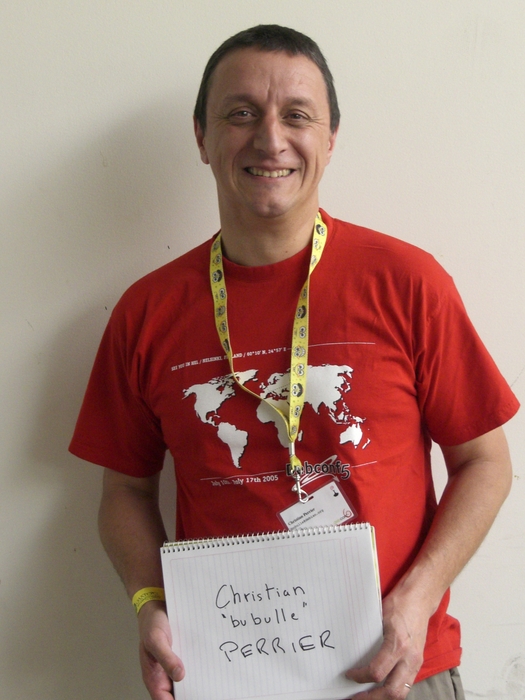
Raphaël Hertzog: People behind Debian: Christian Perrier, translation coordinator

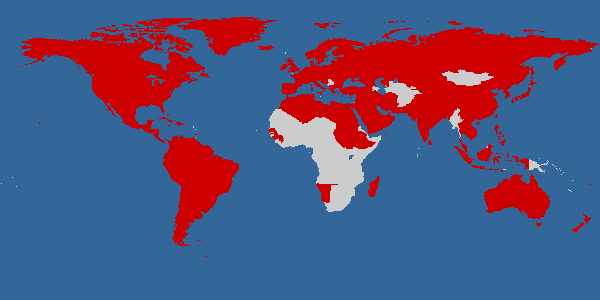
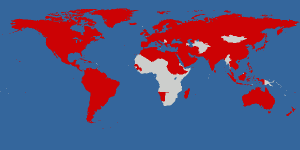
Christian is a figure of Debian, not only because of the tremendous coordination work that he does within the translation project, but also because he s very involved at the social level. He s probably in the top 5 of the persons who attended most often the Debian conference. Christian is a friend (thanks for hosting me so many times when I come to Paris for Debian related events) and I m glad that he accepted to be interviewed. He likes to speak and that shows in the length of his answers :-) but you ll be traveling the world while reading him. My questions are in bold, the rest is by Christian. Who are you? I am a French citizen (which is easy to guess unless you correct my usual mistakes in what follows). I m immensely proud of being married for nearly 26 years with Elizabeth (who deserves a statue from Debian for being so patient with my passion and my dedication to the project). I m also the proud father of 3 wonderful kids , aged 19 to 23. I work as team manager in the Networks and Computers Division of Onera the French Aerospace lab , a public research institute about Aeronautics, Space and Defense. My team provides computer management services for research divisions of Onera, with a specific focus put on individual computing. I entered the world of free software as one of the very first users of Linux in France. Back in the early 1990 s, I happened (though the BBS users communities) to be a friend of several early adopters of Linux and/or BSD386/FreeBSD/NetBSD in France. More specifically, I discovered Linux thanks with my friend Ren Cougnenc (all my free software talks are dedicated to Ren , who passed away in 1996). You re not a programmer, not even a packager. How did you come to Debian? I m definitely not a programmer and I never studied computing (I graduated in Materials Science and worked in that area for a few years after my PhD). However, my daily work always involved computing (I redesigned the creep testing laboratory and its acquisition system all by myself during my thesis research work). An my hobbies often involved playing with home computers, always trying to learn about something new. So, first learning about a new operating system then trying to figure out how to become involved in its development was quite a logical choice. Debian is my distro of choice since it exists. I used Slackware on work machines for a while, but my home server, kheops, first ran Debian 1.1 when I stopped running a BBS on an MS-DOS machine to host a news server. That was back in October 1996. I then happened to be a user, and more specifically a user of genealogy software, also participating very actively in Usenet from this home computer and server, that was running this Debian thing. So, progressively, I joined mailing lists and, being a passionate person, I tried to figure out how I could bring my own little contribution to all this. This is why I became a packager (yes, I am one!) by taking over the geneweb package, which I was using to publish my genealogy research. I applied as DD in January 2001, then got my account in July 2001. My first upload to the Debian archive occurred on August 22nd 2001: that was of course geneweb, which I still maintain. Quite quickly, I became involved in the work on French localization. I have always been a strong supporter of localized software (I even translated a few BBS software back in the early 90 s) as one of the way to bring the power and richness of free software to more users. Localization work lead me to work on the early version of Debian Installer, during those 2003-2005 years where the development of D-I was an incredibly motivating and challenging task, lead by Joey Hess and his inspiring ideas. From user to contributor to leader, I suddenly discovered, around 2004, that I became the coordinator of D-I i18n (internationalization) without even noticing :-) You re the main translation coordinator in Debian. What plans and goals have you set for Debian Wheezy? As always: paint the world in red. Indeed, this is my goal for years. I would like our favorite distro to be able to be used by anyone in the world, whether she speaks English, Northern Sami, Wolof, Uyghur or Secwepemcts n. As a matter of symbol, I use the installer for this. My stance is that one should be able to even install Debian in one s own language. So, for about 7 years, I use D-I as a way to attract new localization contributors. This progress is represented on this page where the world is gradually painted in red as long as the installer supports more languages release after release. The map above tries to illustrate this by painting in red countries when the most spoken language in the country is supported in Debian Installer. However, that map does not give enough reward to many great efforts made to support very different kind of languages. Not only various national languages, but also very different ones: all regional languages of Spain, many of the most spoken languages in India, minority languages such as Uyghur for which an effort is starting, Northern Sami because it is taught in a few schools in Norway, etc., etc. Still, the map gives a good idea of what I would like to see better supported: languages from Africa, several languages in Central Asia. And, as a very very personal goal, I m eagerly waiting for support of Tibetan in Debian Installer, the same way we support its sister language, Dzongkha from Bhutan. For this to happen, we have to make contribution to localization as easy as possible. The very distributed nature of Debian development makes this a challenge, as material to translate (D-I components, debconf screens, native packages, packages descriptions, website, documentation) is very widely spread. A goal, for years, is to set a centralized place where translators could work easily without even knowing about SVN/GIT/BZR or having to report bugs to send their work. The point, however, would be to have this without making compromises on translation quality. So, with peer review, use of thesaurus and translation memory and all such techniques. Tools for this exist: we, for instance, worked with the developers of Pootle to help making it able to cope with the huge amount of material in Debian (think about packages descriptions translations). However, as of now, the glue between such tools and the raw material (that often lies in packages) didn t come. So, currently, translation work in Debian requires a great knowledge of how things are organized, where is the material, how it can be possible to make contribution reach packages, etc. And, as I m technically unable to fulfill the goal of building the infrastructure, I m fulfilling that role of spreading out the knowledge. This is how I can define my coordinator role. Ubuntu uses a web-based tool to make it easy to contribute translations directly in Launchpad. At some point you asked Canonical to make it free software. Launchpad has been freed in the mean time. Have you (re)considered using it? Why not? After all, it more or less fills in the needs I just described. I still don t really figure out how we could have all Debian material gathered in Rosetta/Launchpad .and also how Debian packagers could easily get localized material back from the framework without changing their development processes. I have always tried to stay neutral wrt Ubuntu. As many people now in Debian, I feel like we have reached a good way to achieve our mutual development. When it comes at localization work, the early days where the everything in Rosetta and translates who wants stanza did a lot of harm to several upstream localization projects is, I think, way over. Many people who currently contribute to D-I localization were indeed sent to me by Ubuntu contributors .and by localizing D-I, apt, debconf, package descriptions, etc., they re doing translation work for Ubuntu as well as for Debian. Let s say I m a Debian user and I want to help translate Debian in my language. I can spend 1 hour per week on this activity. What should I do to start? Several language teams use Debian mailing lists to coordinate their work. If you re lucky enough to be a speaker of one of these languages, try joining debian-l10n-<yourlanguage> and follow what s happening there. Don t try to immediately jump in some translation work. First, participate to peer reviews: comment on others translations. Learn about the team s processes, jargon and habits. Then, progressively, start working on a few translations: you may want to start with translations of debconf templates: they are short, often easy to do. That s perfect if you have few time. If no language team exists for your language, try joining debian-i18n and ask about existing effort for your language. I may be able to point you to individuals working on Debian translations (very often along with other free software translation efforts). If I am not, then you have just been named coordinator for your language :-) I may even ask you if you want to work on translating the Debian Installer. What s the biggest problem of Debian? We have no problems, we only have solutions :-) We are maybe facing a growth problem for a few years. Despite the increased welcoming aspects of our processes (Debian Maintainers), Debian is having hard times in growing. The overall number of active contributors is probably stagnating for quite a while. I m still amazed, however, to see how we can cope with that and still be able to release over the years. So, after all, this is maybe not a problem :-) Many people would point communication problems here. I don t. I think that communication inside the Debian project is working fairly well now. Our famous flame wars do of course still happen from time to time, but what large free software project doesn t have flame wars? In many areas, we indeed improved communication very significantly. I want to take as an example the way the release of squeeze has been managed. I think that the release team did, even more this time, a very significant and visible effort to communicate with the entire project. And the release of squeeze has been a great success in that matter. So, there s nearly nothing that frustrates me in Debian. Even when a random developer breaks my beloved 100% completeness of French translations, I m not frustrated for more than 2 minutes. You re known in the Debian community as the organizer of the Cheese & Wine Party during DebConf. Can you tell us what this is about? This is an interesting story about how things build themselves in Debian. It all started in July 2005, before DebConf 5 in Helsinki. Denis Barbier, Nicolas Fran ois and myself agreed to bring at Debconf a few pieces of French cheese as well as 1 or 2 bottles of French wine and share them with some friends. Thus, we settled an informal meeting in the French room where we invited some fellows: from memory, Benjamin Mako Hill, Hannah Wallach, Matt Zimmermann and Moray Allan. All of us fond of smelly cheese, great wine plus some extra p t home-made by Denis in Toulouse. It finally happened that, by word of mouth, a few dozens of other people slowly joined in that French room and turned the whole thing into an improvized party that more or less lasted for the entire night. The tradition was later firmly settled in 2006, first in Debconf 6 in Mexico where I challenged the French DDs to bring as many great cheese as possible, then during the Debian i18n meeting in Extremadura (Sept 2006) where we reached the highest amount of cheese per participant ever. I think that the Creofonte building in Casar de C ceres hasn t fully recovered from it and is still smelling cheese 5 years after. This party later became a real tradition for DebConf, growing over and over each year. I see it as a wonderful way to illustrate the diversity we have in Debian, as well as the mutual enrichment we always felt during DebConfs. My only regret about it is that it became so big over the years that organizing it is always a challenge and I more and more feel pressure to make it successful. However, over the years, I always found incredible help by DebConf participants (including my own son, last year a moment of sharing which we will both remember for years, i think). And, really, in 2010, standing up on a chair, shouting (because the microphone wasn t working) to thank everybody, was the most emotional moment I had at Debconf 10. Is there someone in Debian that you admire for their contributions? So many people. So, just like it happens in many awards ceremonies, I will be very verbose to thank people, sorry in advance for this. The name that comes first is Joey Hess. Joey is someone who has a unique way to perceive what improvements are good for Debian and a very precise and meticulous way to design these improvements. Think about debconf. It is designed for so long now and still reaching its very specific goal. So well designed that it is the entire basis for Joey s other achievement: designing D-I. Moreover, I not only admire Joey for his technical work, but also for his interaction with others. He is not he loudest person around, he doesn t have to .just giving his point in discussion and, guess what? Most of the time, he s right. Someone I would like to name here, also, is Colin Watson. Colin is also someone I worked with for years (the D-I effect, again ) and, here again, the very clever way he works on technical improvements as well as his very friendly way to interact with others just make it. And, how about you, Rapha l? :-) I m really admirative of the way you work on promoting technical work on Debian. Your natural ability to explain things (as good in English as it is in French) and your motivation to share your knowledge are a great benefit for the project. Not to mention the technical achievements you made with Guillem on dpkg of course! Another person I d like to name here is Steve Langasek. We both maintain samba packages for years and collaboration with him has always been a pleasure. Just like Colin, Steve is IMHO a model to follow when it comes at people who work for Canonical while continuing their involvment in Debian. And, indeed, Steve is so patient with my mistakes and stupid questions in samba packaging that he deserves a statue. We re now reaching the end of the year where Stefano Zacchiroli was the Debian Project Leader. And, no offense intended to people who were DPL before him (all of them being people I consider to be friends of mine), I think he did the best term ever. Zack is wonderful in sharing his enthusiasm about Debian and has a unique way to do it. Up to the very end of his term, he has always been working on various aspects of the project and my only hope is that he ll run again (however, I would very well understand that he wants to go back to his hacking activities!). Hat off, Zack!I again have several other people to name in this Bubulle hall of Fame : Don Armstrong, for his constant work on improving Debian BTS, Margarita Manterola as one of the best successes of Debian Women (and the most geeky honeymoon ever), Denis Barbier and Nicolas Fran ois because i18n need really skilled people, Cyril Brulebois and Julien Cristau who kept X.org packaging alive in lenny and squeeze, Otavio Salvador who never gave up on D-I even when we were so few to care about it. I would like to make a special mention for Frans Pop. His loss in 2010 has been a shock for many of us, and particularly me. Frans and I had a similar history in Debian, both mostly working on so-called non technical duties. Frans has been the best release manager for D-I (no offense intended, at all, to Joey or Otavio .I know that both of them share this feeling with me). His very high involvment in his work and the very meticulous way he was doing it lead to great achievements in the installer. The Installation Guide work was also a model and indeed a great example of non technical work that requires as many skills as more classical technical work. So, and even though he was sometimes so picky and, I have to admit, annoying, that explains why I m still feeling sad and, in some way, guilty about Frans loss. One of my goals for wheezy is indeed to complete some things Frans left unachieved. I just found one in bug #564441: I will make this work reach the archive, benefit our users and I know that Frans would have liked that.

Thank you to Christian for the time spent answering my questions. I hope you enjoyed reading his answers as I did. Subscribe to my newsletter to get my monthly summary of the Debian/Ubuntu news and to not miss further interviews. You can also follow along on Identi.ca, Twitter and Facebook.

7 comments Liked this article? Click here. My blog is Flattr-enabled.

1 March 2011

Rapha&#235;l Hertzog: 5 Free Software To Support With Flattr

Flattr FOSS LogoAnother month and thus another issue of Flattr FOSS. Time flies but Flattr s usage seems to remain relatively strong. I was fearing that people get bored after some time but that does not seem be to the case, my Flattr income does not really drop (it doesn t take off either ;-) ). I get a bit less for dpkg than at the start but a bit more for my blog. Enough babbling, let s go straight to the 5 projects to flattr this month:
  1. Linux Mint (Flattr link) is a Linux distribution based on Debian and Ubuntu that targets home desktop users. I have never tried it (I m too much of an hardcore Debianer) but I ve read several good reviews saying that it works well out of the box with good multimedia support. If you try it out, be sure to pick Linux Mint Debian Edition (LMDE). :-)
  2. Network Block Device (NBD) user-space support tools (Flattr link) is the set of tools to setup a block device whose content is really on a remote server. It requires support of NBD in the kernel of course. The user space tools are maintained by Debian developer Wouter Verhelst.
  3. Tahoe LAFS (Flattr link) is a filesystem that implements a cloud storage. The data are distributed across multiple servers in such a way that it can continue to work even if one of the servers fails.
  4. Gajim (Flattr link) is a full featured and easy to use Jabber client. If you don t need support of multiple instant messaging protocols, this Jabber client might be a good fit for you.
  5. Aur lien Gateau (Flattr link) is a KDE developer who takes one day per week off his work to work on KDE. He seeks support from the community to compensate for the loss of revenue. Much like me, he has a support page with a complete history of the amount of donations received. I can only sympathize with people who try to live true to their passion good luck Aur lien!
This article is part of the Flattr FOSS project.

5 comments Liked this article? Click here. My blog is Flattr-enabled.

Next.

Previous.