Utkarsh Gupta
did 35.0h (out of 38.0h assigned and 22.0h from previous period), thus carrying over 25.0h to the next month.
Evolution of the situation
In October, we have released 42 DLAs, closing 106 CVEs.
At the moment we have 82 packages in dla-needed.txt, waiting for update.
We are continuously working on updating our infrastructure, trying to document all of our changes in the git-repo. Most of packages there are having continuous integration (CI) pipelines.
Thanks to our sponsors
Sponsors that joined recently are in bold.
tl;dr:
Don t write a Rust linked list library: they are hard to do well, and usually useless.
Use VecDeque, which is great. If you actually need more than VecDeque can do, use one of the handful of libraries that actually offer a significantly more useful API.
If you are writing your own data structure, check if someone has done it already, and consider slotmap or generation_arena, (or maybe Rc/Arc).
Contents
Survey of Rust linked list libraries
I have updated my Survey of Rust linked list libraries.
Background
In 2019 I was writing plag-mangler, a tool for planar graph layout.
I needed a data structure. Naturally I looked for a library to help. I didn t find what I needed, so I wrote rc-dlist-deque. However, on the way I noticed an inordinate number of linked list libraries written in Rust. Most all of these had no real reason for existing. Even the one in the Rust standard library is useless.
Results
Now I have redone the survey. The results are depressing. In 2019 there were 5 libraries which, in my opinion, were largely useless. In late 2022 there are now thirteen linked list libraries that ought probably not ever to be used. And, a further eight libraries for which there are strictly superior alternatives. Many of these have the signs of projects whose authors are otherwise competent: proper documentation, extensive APIs, and so on.
There is one new library which is better for some applications than those available in 2019. (I m referring to generational_token_list, which makes a plausible alternative to dlv-list which I already recommended in 2019.)
Why are there so many poor Rust linked list libraries ?
Linked lists and Rust do not go well together. But (and I m guessing here) I presume many people are taught in programming school that a linked list is a fundamental data structure; people are often even asked to write one as a teaching exercise. This is a bad idea in Rust. Or maybe they ve heard that writing linked lists in Rust is hard and want to prove they can do it.
Double-ended queues
One of the main applications for a linked list in a language like C, is a queue, where you put items in at one end, and take them out at the other. The Rust standard library has a data structure for that, VecDeque.
Five of the available libraries:
Have an API which is a subset of that of VecDeque: basically, pushing and popping elements at the front and back.
Have worse performance for most applications than VecDeque,
Are less mature, less available, less well tested, etc., than VecDeque, simply because VecDeque is in the Rust Standard Library.
For these you could, and should, just use VecDeque instead.
The Cursor concept
A proper linked list lets you identify and hold onto an element in the middle of the list, and cheaply insert and remove elements there.
Rust s ownership and borrowing rules make this awkward. One idea that people have many times reinvented and reimplemented, is to have a Cursor type, derived from the list, which is a reference to an element, and permits insertion and removal there.
Eight libraries have implemented this in the obvious way. However, there is a serious API limitation:
To prevent a cursor being invalidated (e.g. by deletion of the entry it points to) you can t modify the list while the cursor exists. You can only have one cursor (that can be used for modification) at a time.
The practical effect of this is that you cannot retain cursors. You can make and use such a cursor for a particular operation, but you must dispose of it soon. Attempts to do otherwise will see you losing a battle with the borrow checker.
If that s good enough, then you could just use a VecDeque and use array indices instead of the cursors. It s true that deleting or adding elements in the middle involves a lot of copying, but your algorithm is O(n) even with the single-cursor list libraries, because it must first walk the cursor to the desired element.
Formally, I believe any algorithm using these exclusive cursors can be rewritten, in an obvious way, to simply iterate and/or copy from the start or end (as one can do with VecDeque) without changing the headline O() performance characteristics.
IMO the savings available from avoiding extra copies etc. are not worth the additional dependency, unsafe code, and so on, especially as there are other ways of helping with that (e.g. boxing the individual elements).
Even if you don t find that convincing, generational_token_list and dlv_list are strictly superior since they offer a more flexible and convenient API and better performance, and rely on much less unsafe code.
Rustic approaches to pointers-to-and-between-nodes data structures
Most of the time a VecDeque is great. But if you actually want to hold onto (perhaps many) references to the middle of the list, and later modify it through those references, you do need something more. This is a specific case of a general class of problems where the naive approach (use Rust references to the data structure nodes) doesn t work well.
But there is a good solution:
Keep all the nodes in an array (a Vec<Option<T>> or similar) and use the index in the array as your node reference. This is fast, and quite ergonomic, and neatly solves most of the problems. If you are concerned that bare indices might cause confusion, as newly inserted elements would reuse indices, add a per-index generation count.
These approaches have been neatly packaged up in libraries like slab, slotmap, generational-arena and thunderdome. And they have been nicely applied to linked lists by the authors of generational_token_list. and dlv-list.
The alternative for nodey data structures in safe Rust: Rc/Arc
Of course, you can just use Rust s interior mutability and reference counting smart pointers, to directly implement the data structure of your choice.
In many applications, a single-threaded data structure is fine, in which case Rc and Cell/RefCell will let you write safe code, with cheap refcount updates and runtime checks inserted to defend against unexpected aliasing, use-after-free, etc.
I took this approach in rc-dlist-deque, because I wanted each node to be able to be on multiple lists.
Rust s package ecosystem demonstrating software s NIH problem
The Rust ecosystem is full of NIH libraries of all kinds. In my survey, there are: five good options; seven libraries which are plausible, but just not as good as the alternatives; and fourteen others.
There is a whole rant I could have about how the whole software and computing community is pathologically neophilic. Often we seem to actively resist reusing ideas, let alone code; and are ignorant and dismissive of what has gone before. As a result, we keep solving the same problems, badly - making the same mistakes over and over again. In some subfields, working software, or nearly working software, is frequently replaced with something worse, maybe more than once.
One aspect of this is a massive cultural bias towards rewriting rather than reusing, let alone fixing and using.
Many people can come out of a degree, trained to be a programmer, and have no formal training in selecting and evaluating software; this is even though working effectively with computers requires making good use of everyone else s work.
If one isn t taught these skills (when and how to search for prior art, how to choose between dependencies, and so on) one must learn it on the job. The result is usually an ad-hoc and unsystematic approach, often dominated by fashion rather than engineering.
The package naming paradox
The more experienced and competent programmer is aware of all the other options that exist - after all they have evaluated other choices before writing their own library.
So they will call their library something like generational_token_list or vecdeque-stableix.
Whereas the novice straight out of a pre-Rust programming course just thinks what they are doing is the one and only obvious thing (even though it s a poor idea) and hasn t even searched for a previous implementation. So they call their package something obvious like linked list .
As a result, the most obvious names seem to refer to the least useful libraries.
Edited 2022-11-16 23:55 UTC to update numbers of libraries in various categories following updates to the survey (including updates prompted by feedback received after this post first published).
I started migrating my graphical workstations to Wayland, specifically
migrating from i3 to Sway. This is mostly to address serious graphics
bugs in the latest Framwork
laptop, but also something I
felt was inevitable.
The current status is that I've been able to convert my i3
configuration to Sway, and adapt my systemd startup sequence to the
new environment. Screen sharing only works with Pipewire, so I also
did that migration, which basically requires an upgrade to Debian
bookworm to get a nice enough Pipewire release.
I'm testing Wayland on my laptop, but I'm not using it as a daily
driver because I first need to upgrade to Debian bookworm on my main
workstation.
Most irritants have been solved one way or the other. My main problem
with Wayland right now is that I spent a frigging week doing the
conversion: it's exciting and new, but it basically sucked the life
out of all my other projects and it's distracting, and I want it to
stop.
The rest of this page documents why I made the switch, how it
happened, and what's left to do. Hopefully it will keep you from
spending as much time as I did in fixing this.
TL;DR: Wayland is mostly ready. Main blockers you might find are
that you need to do manual configurations, DisplayLink (multiple
monitors on a single cable) doesn't work in Sway, HDR and color
management are still in development.
I had to install the following packages:
And did some of tweaks in my $HOME, mostly dealing with my esoteric
systemd startup sequence, which you won't have to deal with if you are
not a fan.
Why switch?
I originally held back from migrating to Wayland: it seemed like a
complicated endeavor hardly worth the cost. It also didn't seem
actually ready.
But after reading this blurb on LWN, I decided to at least
document the situation here. The actual quote that convinced me it
might be worth it was:
It s amazing. I have never experienced gaming on Linux that looked
this smooth in my life.
... I'm not a gamer, but I docare about
latency. The longer version is
worth a read as well.
The point here is not to bash one side or the other, or even do a
thorough comparison. I start with the premise that Xorg is likely
going away in the future and that I will need to adapt some day. In
fact, the last major Xorg release (21.1, October 2021) is rumored
to be the last ("just like the previous release...", that said,
minor releases are still coming out, e.g. 21.1.4). Indeed, it
seems even core Xorg people have moved on to developing Wayland, or at
least Xwayland, which was spun off it its own source tree.
X, or at least Xorg, in in maintenance mode and has been for
years. Granted, the X Window System is getting close to forty
years old at this point: it got us amazingly far for something that
was designed around the time the firstgraphical
interface. Since Mac and (especially?) Windows released theirs,
they have rebuilt their graphical backends numerous times, but UNIX
derivatives have stuck on Xorg this entire time, which is a testament
to the design and reliability of X. (Or our incapacity at developing
meaningful architectural change across the entire ecosystem, take your
pick I guess.)
What pushed me over the edge is that I had some pretty bad driver
crashes with Xorg while screen sharing under Firefox, in Debian
bookworm (around November 2022). The symptom would be that the UI
would completely crash, reverting to a text-only console, while
Firefox would keep running, audio and everything still
working. People could still see my screen, but I couldn't, of course,
let alone interact with it. All processes still running, including
Xorg.
(And no, sorry, I haven't reported that bug, maybe I should have, and
it's actually possible it comes up again in Wayland, of course. But at
first, screen sharing didn't work of course, so it's coming a much
further way. After making screen sharing work, though, the bug didn't
occur again, so I consider this a Xorg-specific problem until further
notice.)
There were also frustrating glitches in the UI, in general. I actually
had to setup a compositor alongside i3 to make things bearable at
all. Video playback in a window was laggy, sluggish, and out of sync.
Wayland fixed all of this.
Wayland equivalents
This section documents each tool I have picked as an alternative to
the current Xorg tool I am using for the task at hand. It also touches
on other alternatives and how the tool was configured.
Note that this list is based on the series of tools I use in
desktop.
TODO: update desktop with the following when done,
possibly moving old configs to a ?xorg archive.
Window manager: i3 sway
This seems like kind of a no-brainer. Sway is around, it's
feature-complete, and it's in Debian.
I'm a bit worried about the "Drew DeVault community", to be
honest. There's a certain aggressiveness in the community I don't like
so much; at least an open hostility towards more modern UNIX tools
like containers and systemd that make it hard to do my work while
interacting with that community.
I'm also concern about the lack of unit tests and user manual for
Sway. The i3 window manager has been designed by a fellow
(ex-)Debian developer I have a lot of respect for (Michael
Stapelberg), partly because of i3 itself, but also working with
him on other projects. Beyond the characters, i3 has a user
guide, a code of conduct, and lots more
documentation. It has a test suite.
Sway has... manual pages, with the homepage just telling users to use
man -k sway to find what they need. I don't think we need that kind
of elitism in our communities, to put this bluntly.
But let's put that aside: Sway is still a no-brainer. It's the easiest
thing to migrate to, because it's mostly compatible with i3. I had
to immediately fix those resources to get a minimal session going:
i3
Sway
note
set_from_resources
set
no support for X resources, naturally
new_window pixel 1
default_border pixel 1
actually supported in i3 as well
That's it. All of the other changes I had to do (and there were
actually a lot) were all Wayland-specific changes, not
Sway-specific changes. For example, use brightnessctl instead of
xbacklight to change the backlight levels.
See a copy of my full sway/config for details.
Other options include:
dwl: tiling, minimalist, dwm for Wayland, not in Debian
Status bar: py3status waybar
I have invested quite a bit of effort in setting up my status bar with
py3status. It supports Sway directly, and did not actually require
any change when migrating to Wayland.
Unfortunately, I had trouble making nm-applet work. Based on this
nm-applet.service, I found that you need to pass --indicator for
it to show up at all.
In theory, tray icon support was merged in 1.5, but in practice
there are still several limitations, like icons not
clickable. Also, on startup, nm-applet --indicator triggers this
error in the Sway logs:
nov 11 22:34:12 angela sway[298938]: 00:49:42.325 [INFO] [swaybar/tray/host.c:24] Registering Status Notifier Item ':1.47/org/ayatana/NotificationItem/nm_applet'
nov 11 22:34:12 angela sway[298938]: 00:49:42.327 [ERROR] [swaybar/tray/item.c:127] :1.47/org/ayatana/NotificationItem/nm_applet IconPixmap: No such property  IconPixmap
nov 11 22:34:12 angela sway[298938]: 00:49:42.327 [ERROR] [swaybar/tray/item.c:127] :1.47/org/ayatana/NotificationItem/nm_applet AttentionIconPixmap: No such property  AttentionIconPixmap
nov 11 22:34:12 angela sway[298938]: 00:49:42.327 [ERROR] [swaybar/tray/item.c:127] :1.47/org/ayatana/NotificationItem/nm_applet ItemIsMenu: No such property  ItemIsMenu
nov 11 22:36:10 angela sway[313419]: info: fcft.c:838: /usr/share/fonts/truetype/dejavu/DejaVuSans.ttf: size=24.00pt/32px, dpi=96.00
... but that seems innocuous. The tray icon displays but is not
clickable.
Note that there is currently (November 2022) a pull request to
hook up a "Tray D-Bus Menu" which, according to Reddit might fix
this, or at least be somewhat relevant.
If you don't see the icon, check the bar.tray_output property in the
Sway config, try: tray_output *.
The non-working tray was the biggest irritant in my migration. I have
used nmtui to connect to new Wifi hotspots or change connection
settings, but that doesn't support actions like "turn off WiFi".
I eventually fixed this by switching from py3status to
waybar, which was another yak horde shaving session, but
ultimately, it worked.
Web browser: Firefox
Firefox has had support for Wayland for a while now, with the team
enabling it by default in nightlies around January 2022. It's
actually not easy to figure out the state of the port, the meta bug
report is still open and it's huge: it currently (Sept 2022)
depends on 76 open bugs, it was opened twelve (2010) years ago, and
it's still getting daily updates (mostly linking to other tickets).
Firefox 106 presumably shipped with "Better screen sharing for
Windows and Linux Wayland users", but I couldn't quite figure out what
those were.
TL;DR: echo MOZ_ENABLE_WAYLAND=1 >> ~/.config/environment.d/firefox.conf && apt install xdg-desktop-portal-wlr
How to enable it
Firefox depends on this silly variable to start correctly under
Wayland (otherwise it starts inside Xwayland and looks fuzzy and fails
to screen share):
MOZ_ENABLE_WAYLAND=1 firefox
To make the change permanent, many recipes recommend adding this to an
environment startup script:
if [ "$XDG_SESSION_TYPE" == "wayland" ]; then
    export MOZ_ENABLE_WAYLAND=1
fi
At least that's the theory. In practice, Sway doesn't actually run any
startup shell script, so that can't possibly work. Furthermore,
XDG_SESSION_TYPE is not actually set when starting Sway from gdm3
which I find really confusing, and I'm not the onlyone. So
the above trick doesn't actually work, even if the environment
(XDG_SESSION_TYPE) is set correctly, because we don't have
conditionals in environment.d(5).
(Note that systemd.environment-generator(7)do support running
arbitrary commands to generate environment, but for some some do not
support user-specific configuration files... Even then it may be a
solution to have a conditional MOZ_ENABLE_WAYLAND environment, but
I'm not sure it would work because ordering between those two isn't
clear: maybe the XDG_SESSION_TYPE wouldn't be set just yet...)
At first, I made this ridiculous script to workaround those
issues. Really, it seems to me Firefox should just parse the
XDG_SESSION_TYPE variable here... but then I realized that Firefox
works fine in Xorg when the MOZ_ENABLE_WAYLAND is set.
So now I just set that variable in environment.d and It Just Works :
MOZ_ENABLE_WAYLAND=1
Screen sharing
Out of the box, screen sharing doesn't work until you install
xdg-desktop-portal-wlr or similar
(e.g. xdg-desktop-portal-gnome on GNOME). I had to reboot for the
change to take effect.
Without those tools, it shows the usual permission prompt with "Use
operating system settings" as the only choice, but when we accept...
nothing happens. After installing the portals, it actualyl works, and
works well!
This was tested in Debian bookworm/testing with Firefox ESR 102 and
Firefox 106.
Major caveat: we can only share a full screen, we can't currently
share just a window. The major upside to that is that, by default,
it streams onlyone output which is actually what I want most
of the time! See the screencast compatibility for more
information on what is supposed to work.
This is actually a huge improvement over the situation in Xorg,
where Firefox can only share a window or all monitors, which led
me to use Chromium a lot for video-conferencing. With this change, in
other words, I will not need Chromium for anything anymore, whoohoo!
If slurp, wofi, or bemenu are
installed, one of them will be used to pick the monitor to share,
which effectively acts as some minimal security measure. See
xdg-desktop-portal-wlr(1) for how to configure that.
Side note: Chrome fails to share a full screen
I was still using Google Chrome (or, more accurately, Debian's
Chromium package) for some videoconferencing. It's mainly because
Chromium was the only browser which will allow me to share only one of
my two monitors, which is extremely useful.
To start chrome with the Wayland backend, you need to use:
If it shows an ugly gray border, check the Use system title bar and
borders setting.
It can do some screensharing. Sharing a window and a tab seems to
work, but sharing a full screen doesn't: it's all black. Maybe not
ready for prime time.
And since Firefox can do what I need under Wayland now, I will not
need to fight with Chromium to work under Wayland:
apt purge chromium
Note that a similar fix was necessary for Signal Desktop, see this
commit. Basically you need to figure out a way to pass those same
flags to signal:
News: feed2exec, gnus
See Email, above, or Emacs in Editor, below.
Editor: Emacs okay-ish
Emacs is being actively ported to Wayland. According to this LWN
article, the first (partial, to Cairo) port was done in 2014 and a
working port (to GTK3) was completed in 2021, but wasn't merged until
late 2021. That is: after Emacs 28 was released (April
2022).
So we'll probably need to wait for Emacs 29 to have native Wayland
support in Emacs, which, in turn, is unlikely to arrive in time for
the Debian bookworm freeze. There are, however, unofficial
builds for both Emacs 28 and 29 provided by spwhitton which
may provide native Wayland support.
I tested the snapshot packages and they do not quite work well
enough. First off, they completely take over the builtin Emacs they
hijack the $PATH in /etc! and certain things are simply not
working in my setup. For example, this hook never gets ran on startup:
(add-hook 'after-init-hook 'server-start t)
Still, like many X11 applications, Emacs mostly works fine under
Xwayland. The clipboard works as expected, for example.
Scaling is a bit of an issue: fonts look fuzzy.
I have heard anecdotal evidence of hard lockups with Emacs running
under Xwayland as well, but haven't experienced any problem so far. I
did experience a Wayland crash with the snapshot version however.
TODO: look again at Wayland in Emacs 29.
Backups: borg
Mostly irrelevant, as I do not use a GUI.
Color theme: srcery, redshift gammastep
I am keeping Srcery as a color theme, in general.
Redshift is another story: it has no support for Wayland out of
the box, but it's apparently possible to apply a hack on the TTY
before starting Wayland, with:
redshift -m drm -PO 3000
This tip is from the arch wiki which also has other suggestions
for Wayland-based alternatives. Both KDE and GNOME have their own "red
shifters", and for wlroots-based compositors, they (currently,
Sept. 2022) list the following alternatives:
greetd and QtGreet (former in Debian, not latter, which
means we're stuck with the weird agreety which doesn't work at
all)
sddm: KDE's default, in Debian, probably heavier or as heavy as
gdm3
Terminal: xterm foot
One of the biggest question mark in this transition was what to do
about Xterm. After writing twoarticles about terminal
emulators as a professional journalist, decades of working on the
terminal, and probably using dozens of different terminal emulators,
I'm still not happy with any of them.
This is such a big topic that I actually have an entire blog post
specifically about this.
For starters, using xterm under Xwayland works well enough, although
the font scaling makes things look a bit too fuzzy.
I have also tried foot: it ... just works!
Fonts are much crisper than Xterm and Emacs. URLs are not clickable
but the URL selector (control-shift-u) is just plain
awesome (think "vimperator" for the terminal).
There's cool hack to jump between prompts.
Copy-paste works. True colors work. The word-wrapping is excellent: it
doesn't lose one byte. Emojis are nicely sized and colored. Font
resize works. There's even scroll back search
(control-shift-r).
Foot went from a question mark to being a reason to switch to Wayland,
just for this little goodie, which says a lot about the quality of
that software.
The selection clicks are a not quite what I would expect though. In
rxvt and others, you have the following patterns:
single click: reset selection, or drag to select
double: select word
triple: select quotes or line
quadruple: select line
I particularly find the "select quotes" bit useful. It seems like foot
just supports double and triple clicks, with word and line
selected. You can select a rectangle with control,. It
correctly extends the selection word-wise with right click if
double-click was first used.
One major problem with Foot is that it's a new terminal, with its own
termcap entry. Support for foot was added to ncurses in the
20210731 release, which was shipped after the current Debian
stable release (Debian bullseye, which ships 6.2+20201114-2). A
workaround for this problem is to install the foot-terminfo package
on the remote host, which is available in Debian stable.
This should eventually resolve itself, as Debian bookworm has a newer
version. Note that some corrections were also shipped in the
20211113 release, but that is also shipped in Debian bookworm.
That said, I am almost certain I will have to revert back to xterm
under Xwayland at some point in the future. Back when I was using
GNOME Terminal, it would mostly work for everything until I had to use
the serial console on a (HP ProCurve) network switch, which have a
fancy TUI that was basically unusable there. I fully expect such
problems with foot, or any other terminal than xterm, for that matter.
The foot wiki has good troubleshooting instructions as well.
Update: I did find one tiny thing to improve with foot, and it's the
default logging level which I found pretty verbose. After discussing
it with the maintainer on IRC, I submitted this patch to tweak
it, which I described like this on Mastodon:
today's reason why i will go to hell when i die (TRWIWGTHWID?): a
600-word, 63 lines commit log for a one line change:
https://codeberg.org/dnkl/foot/pulls/1215
The above list comes partly from https://arewewaylandyet.com/ and
awesome-wayland. It is likely incomplete.
I have read some good things about bemenu, fuzzel, and wofi.
A particularly tricky option is that my rofi password management
depends on xdotool for some operations. At first, I thought this was
just going to be (thankfully?) impossible, because we actually like
the idea that one app cannot send keystrokes to another. But it seems
there are actually alternatives to this, like wtype or
ydotool, the latter which requires root access. wl-ime-type
does that through the input-method-unstable-v2 protocol (sample
emoji picker, but is not packaged in Debian.
As it turns out, wtype just works as expected, and fixing this was
basically a two-line patch. Another alternative, not in Debian, is
wofi-pass.
The other problem is that I actually heavily modified rofi. I use
"modis" which are not actually implemented in wofi or tofi, so I'm
left with reinventing those wheels from scratch or using the rofi +
wayland fork... It's really too bad that fork isn't being
reintegrated...
For now, I'm actually still using rofi under Xwayland. The main
downside is that fonts are fuzzy, but it otherwise just works.
Note that wlogout could be a partial replacement (just for the
"power menu").
Image viewers: geeqie ?
I'm not very happy with geeqie in the first place, and I suspect the
Wayland switch will just make add impossible things on top of the
things I already find irritating (Geeqie doesn't support copy-pasting
images).
In practice, Geeqie doesn't seem to work so well under Wayland. The
fonts are fuzzy and the thumbnail preview just doesn't work anymore
(filed as Debian bug 1024092). It seems it also has problems
with scaling.
Alternatives:
See also this list and that list for other list of image
viewers, not necessarily ported to Wayland.
TODO: pick an alternative to geeqie, nomacs would be gorgeous if it
wouldn't be basically abandoned upstream (no release since 2020), has
an unpatchedCVE-2020-23884 since July 2020, does bad
vendoring, and is in bad shape in Debian (4 minor releases
behind).
So for now I'm still grumpily using Geeqie.
Media player: mpv, gmpc / sublime
This is basically unchanged. mpv seems to work fine under Wayland,
better than Xorg on my new laptop (as mentioned in the introduction),
and that before the version which improves Wayland support
significantly, by bringing native Pipewire support and DMA-BUF
support.
gmpc is more of a problem, mainly because it is abandoned. See
2022-08-22-gmpc-alternatives for the full discussion, one of
the alternatives there will likely support Wayland.
Finally, I might just switch to sublime-music instead... In any
case, not many changes here, thankfully.
Screensaver: xsecurelock swaylock
I was previously using xss-lock and xsecurelock as a screensaver, with
xscreensaver "hacks" as a backend for xsecurelock.
The basic screensaver in Sway seems to be built with swayidle and
swaylock. It's interesting because it's the same "split" design
as xss-lock and xsecurelock.
That, unfortunately, does not include the fancy "hacks" provided by
xscreensaver, and that is unlikely to be implemented upstream.
Other alternatives include gtklock and waylock (zig), which
do not solve that problem either.
It looks like swaylock-plugin, a swaylock fork, which at least
attempts to solve this problem, although not directly using the real
xscreensaver hacks. swaylock-effects is another attempt at this,
but it only adds more effects, it doesn't delegate the image display.
Other than that, maybe it's time to just let go of those funky
animations and just let swaylock do it's thing, which is display a
static image or just a black screen, which is fine by me.
In the end, I am just using swayidle with a configuration based on
the systemd integration wiki page but with additional tweaks from
this service, see the resulting swayidle.service file.
Interestingly, damjan also has a service for swaylock itself,
although it's not clear to me what its purpose is...
Screenshot: maim grim, pubpaste
I'm a heavy user of maim (and a package uploader in Debian). It
looks like the direct replacement to maim (and slop) is grim
(and slurp). There's also swappy which goes on top of grim
and allows preview/edit of the resulting image, nice touch (not in
Debian though).
See also awesome-wayland screenshots for other alternatives:
there are many, including X11 tools like Flameshot that also
support Wayland.
One key problem here was that I have my own screenshot / pastebin
software which will needed an update for Wayland as well. That,
thankfully, meant actually cleaning up a lot of horrible code that
involved calling xterm and xmessage for user interaction. Now,
pubpaste uses GTK for prompts and looks much better. (And before
anyone freaks out, I already had to use GTK for proper clipboard
support, so this isn't much of a stretch...)
Screen recorder: simplescreenrecorder wf-recorder
In Xorg, I have used both peek or simplescreenrecorder for
screen recordings. The former will work in Wayland, but has no
sound support. The latter has a fork with Wayland support but
it is limited and buggy ("doesn't support recording area selection and
has issues with multiple screens").
It looks like wf-recorder will just do everything correctly out
of the box, including audio support (with --audio, duh). It's also
packaged in Debian.
One has to wonder how this works while keeping the "between app
security" that Wayland promises, however... Would installing such a
program make my system less secure?
Many other options are available, see the awesome Wayland
screencasting list.
RSI: workrave nothing?
Workrave has no support for Wayland. activity watch is a
time tracker alternative, but is not a RSI watcher. KDE has
rsiwatcher, but that's a bit too much on the heavy side for my
taste.
SafeEyes looks like an alternative at first, but it has many
issues under Wayland (escape doesn't work, idle doesn't
work, it just doesn't work really). timekpr-nextcould be
an alternative as well, and has support for Wayland.
I am also considering just abandoning workrave, even if I stick with
Xorg, because it apparently introduces significant latency in the
input pipeline.
And besides, I've developed a pretty unhealthy alert fatigue with
Workrave. I have used the program for so long that my fingers know
exactly where to click to dismiss those warnings very effectively. It
makes my work just more irritating, and doesn't fix the fundamental
problem I have with computers.
Other apps
This is a constantly changing list, of course. There's a bit of a
"death by a thousand cuts" in migrating to Wayland because you realize
how many things you were using are tightly bound to X.
.Xresources - just say goodbye to that old resource system, it
was used, in my case, only for rofi, xterm, and ... Xboard!?
keyboard layout switcher: built-in to Sway since 2017 (PR
1505, 1.5rc2+), requires a small configuration change, see
this answer as well, looks something like this command:
That works refreshingly well, even better than in Xorg, I must say.
swaykbdd is an alternative that supports per-window layouts
(in Debian).
wallpaper: currently using feh, will need a replacement, TODO:
figure out something that does, like feh, a random shuffle.
swaybg just loads a single image, duh. oguri might be a
solution, but unmaintained, used here, not in
Debian. wallutils is another option, also not in
Debian. For now I just don't have a wallpaper, the background is a
solid gray, which is better than Xorg's default (which is whatever
crap was left around a buffer by the previous collection of
programs, basically)
notifications: currently using dunst in some places, which
works well in both Xorg and Wayland, not a blocker, salut a
possible alternative (not in Debian), damjan uses mako. TODO:
install dunst everywhere
 nov 11 22:34:12 angela sway[298938]: 00:49:42.325 [INFO] [swaybar/tray/host.c:24] Registering Status Notifier Item ':1.47/org/ayatana/NotificationItem/nm_applet'
 nov 11 22:34:12 angela sway[298938]: 00:49:42.327 [ERROR] [swaybar/tray/item.c:127] :1.47/org/ayatana/NotificationItem/nm_applet IconPixmap: No such property  IconPixmap
 nov 11 22:34:12 angela sway[298938]: 00:49:42.327 [ERROR] [swaybar/tray/item.c:127] :1.47/org/ayatana/NotificationItem/nm_applet AttentionIconPixmap: No such property  AttentionIconPixmap
 nov 11 22:34:12 angela sway[298938]: 00:49:42.327 [ERROR] [swaybar/tray/item.c:127] :1.47/org/ayatana/NotificationItem/nm_applet ItemIsMenu: No such property  ItemIsMenu
 nov 11 22:36:10 angela sway[313419]: info: fcft.c:838: /usr/share/fonts/truetype/dejavu/DejaVuSans.ttf: size=24.00pt/32px, dpi=96.00
... but it seems innocuous. The tray icon displays but, as stated
above, is not clickable. If you don't see the icon, check the
bar.tray_output property in the Sway config, try: tray_output *.
Note that there is currently (November 2022) a pull request to
hook up a "Tray D-Bus Menu" which, according to Reddit might
fix this, or at least be somewhat relevant.
This was the biggest irritant in my migration. I have used nmtui
to connect to new Wifi hotspots or change connection settings, but
that doesn't support actions like "turn off WiFi".
I eventually fixed this by switching from py3status to
waybar.
window switcher: in i3 I was using this bespoke i3-focus
script, which doesn't work under Sway, swayr an option, not in
Debian. So I put together this other bespoke hack from
multiple sources, which works.
PDF viewer: currently using atril (which supports Wayland), could
also just switch to zatura/mupdf permanently, see also calibre
for a discussion on document viewers
More X11 / Wayland equivalents
For all the tools above, it's not exactly clear what options exist in
Wayland, or when they do, which one should be used. But for some basic
tools, it seems the options are actually quite clear. If that's the
case, they should be listed here:
Note that arandr and autorandr are not directly part of
X. arewewaylandyet.com refers to a few alternatives. We suggest
wdisplays and kanshi above (see also this service
file) but wallutils can also do the autorandr stuff, apparently,
and nwg-displays can do the arandr part. Neither are packaged in
Debian yet.
So I have tried wdisplays and it Just Works, and well. The UI even
looks better and more usable than arandr, so another clean win from
Wayland here.
TODO: test kanshi as a autorandr replacement
Other issues
systemd integration
I've had trouble getting session startup to work. This is partly
because I had a kind of funky system to start my session in the first
place. I used to have my whole session started from .xsession like
this:
But obviously, the xsession.target is not started by the Sway
session. It seems to just start a default.target, which is really
not what we want because we want to associate the services directly
with the graphical-session.target, so that they don't start when
logging in over (say) SSH.
damjan on #debian-systemd showed me his sway-setup which
features systemd integration. It involves starting a different session
in a completely new .desktop file. That work was submitted
upstream but refused on the grounds that "I'd rather not give a
preference to any particular init system." Another PR was
abandoned because "restarting sway does not makes sense: that
kills everything".
The work was therefore moved to the wiki.
So. Not a great situation. The upstream wikisystemd
integration suggests starting the systemd target from within
Sway, which has all sorts of problems:
you don't get Sway logs anywhere
control groups are all messed up
I have done a lot of work trying to figure this out, but I remember
that starting systemd from Sway didn't actually work for me: my
previously configured systemd units didn't correctly start, and
especially not with the right $PATH and environment.
So I went down that rabbit hole and managed to correctly configure
Sway to be started from the systemd --user session.
I have partly followed the wiki but also picked ideas from damjan's
sway-setup and xdbob's sway-services. Another option is
uwsm (not in Debian).
This is the config I have in .config/systemd/user/:
You will also need at least part of my sway/config, which
sends the systemd notification (because, no, Sway doesn't support any
sort of readiness notification, that would be too easy). And you might
like to see my swayidle-config while you're there.
Finally, you need to hook this up somehow to the login manager. This
is typically done with a desktop file, so drop
sway-session.desktop in /usr/share/wayland-sessions and
sway-user-service somewhere in your $PATH (typically
/usr/bin/sway-user-service).
The session then looks something like this:
Environment propagation
At first, my terminals and rofi didn't have the right $PATH, which
broke a lot of my workflow. It's hard to tell exactly how Wayland
gets started or where to inject environment. This discussion
suggests a few alternatives and this Debian bug report discusses
this issue as well.
I eventually picked environment.d(5) since I already manage my user
session with systemd, and it fixes a bunch of other problems. I used
to have a .shenv that I had to manually source everywhere. The only
problem with that approach is that it doesn't support conditionals,
but that's something that's rarely needed.
Pipewire
This is a whole topic onto itself, but migrating to Wayland also
involves using Pipewire if you want screen sharing to work. You
can actually keep using Pulseaudio for audio, that said, but that
migration is actually something I've wanted to do anyways: Pipewire's
design seems much better than Pulseaudio, as it folds in JACK
features which allows for pretty neat tricks. (Which I should probably
show in a separate post, because this one is getting rather long.)
I first tried this migration in Debian bullseye, and it didn't work
very well. Ardour would fail to export tracks and I would get
into weird situations where streams would just drop mid-way.
A particularly funny incident is when I was in a meeting and I
couldn't hear my colleagues speak anymore (but they could) and I went
on blabbering on my own for a solid 5 minutes until I realized what
was going on. By then, people had tried numerous ways of letting me
know that something was off, including (apparently) coughing, saying
"hello?", chat messages, IRC, and so on, until they just gave up and
left.
I suspect that was also a Pipewire bug, but it could also have been
that I muted the tab by error, as I recently learned that clicking on
the little tiny speaker icon on a tab mutes that tab. Since the tab
itself can get pretty small when you have lots of them, it's actually
quite frequently that I mistakenly mute tabs.
Anyways. Point is: I already knew how to make the migration, and I had
already documented how to make the change in Puppet. It's
basically:
An optional (but key, IMHO) configuration you should also make is to
"switch on connect", which will make your Bluetooth or USB headset
automatically be the default route for audio, when connected. In
~/.config/pipewire/pipewire-pulse.conf.d/autoconnect.conf:
See the excellent as usual Arch wiki page about Pipewire for
that trick and more information about Pipewire. Note that you must
not put the file in ~/.config/pipewire/pipewire.conf (or
pipewire-pulse.conf, maybe) directly, as that will break your
setup. If you want to add to that file, first copy the template from
/usr/share/pipewire/pipewire-pulse.conf first.
So far I'm happy with Pipewire in bookworm, but I've heard mixed
reports from it. I have high hopes it will become the standard media
server for Linux in the coming months or years, which is great because
I've been (rather boldly, I admit) on the record saying I don't like
PulseAudio.
Rereading this now, I feel it might have been a little unfair, as
"over-engineered and tries to do too many things at once" applies
probably even more to Pipewire than PulseAudio (since it also handles
video dispatching).
That said, I think Pipewire took the right approach by implementing
existing interfaces like Pulseaudio and JACK. That way we're not
adding a third (or fourth?) way of doing audio in Linux; we're just
making the server better.
Keypress drops
Sometimes I lose keyboard presses. This correlates with the following
warning from Sway:
d c 06 10:36:31 curie sway[343384]: 23:32:14.034 [ERROR] [wlr] [libinput] event5 - SONiX USB Keyboard: client bug: event processing lagging behind by 37ms, your system is too slow
... and corresponds to an open bug report in Sway. It seems the
"system is too slow" should really be "your compositor is too slow"
which seems to be the case here on this older system
(curie). It doesn't happen often, but it does happen,
particularly when a bunch of busy processes start in parallel (in my
case: a linter running inside a container and notmuch new).
The proposed fix for this in Sway is to gain real time privileges
and add the CAP_SYS_NICE capability to the binary. We'll see how
that goes in Debian once 1.8 gets released and shipped.
Improvements over i3
Tiling improvements
There's a lot of improvements Sway could bring over using plain
i3. There are pretty neat auto-tilers that could replicate the
configurations I used to have in Xmonad or Awesome, see:
Display latency tweaks
TODO: You can tweak the display latency in wlroots compositors with the
max_render_time parameter, possibly getting lower latency than
X11 in the end.
Sound/brightness changes notifications
TODO: Avizo can display a pop-up to give feedback on volume and
brightness changes. Not in Debian. Other alternatives include
SwayOSD and sway-nc, also not in Debian.
Debugging tricks
The xeyes (in the x11-apps package) will run in Wayland, and can
actually be used to easily see if a given window is also in
Wayland. If the "eyes" follow the cursor, the app is actually running
in xwayland, so not natively in Wayland.
Another way to see what is using Wayland in Sway is with the command:
Conclusion
In general, this took me a long time, but it mostly works. The tray
icon situation is pretty frustrating, but there's a workaround and I
have high hopes it will eventually fix itself. I'm also actually
worried about the DisplayLink support because I eventually want to
be using this, but hopefully that's another thing that will hopefully
fix itself before I need it.
A word on the security model
I'm kind of worried about all the hacks that have been added to
Wayland just to make things work. Pretty much everywhere we need to,
we punched a hole in the security model:
windows can overlay on top of each other (so one app could, for
example, spoof a password dialog, through the layer-shell
protocol)
Wikipedia describes the security properties of Wayland as it
"isolates the input and output of every window, achieving
confidentiality, integrity and availability for both." I'm not sure
those are actually realized in the actual implementation, because of
all those holes punched in the design, at least in Sway. For example,
apparently the GNOME compositor doesn't have the virtual-keyboard
protocol, but they do have (another?!) text input protocol.
Wayland does offer a better basis to implement such a system,
however. It feels like the Linux applications security model lacks
critical decision points in the UI, like the user approving "yes, this
application can share my screen now". Applications themselves might
have some of those prompts, but it's not mandatory, and that is
worrisome.
In my tubman setup, I started using ZFS on an old server
I had lying around. The machine is really old though (2011!) and it
"feels" pretty slow. I want to see how much of that is ZFS and how
much is the machine. Synthetic benchmarks show that ZFS may be slower
than mdadm in RAID-10 or RAID-6 configuration, so I want to confirm
that on a live workload: my workstation. Plus, I want easy, regular,
high performance backups (with send/receive snapshots) and there's no
way I'm going to use BTRFS because I find
it too confusing and unreliable.
So off we go.
Installation
Since this is a conversion (and not a new install), our procedure is
slightly different than the official documentation but otherwise
it's pretty much in the same spirit: we're going to use ZFS for
everything, including the root filesystem.
So, install the required packages, on the current system:
    root@curie:/home/anarcat# sgdisk -p /dev/sdc
    Disk /dev/sdc: 1953525168 sectors, 931.5 GiB
    Model: ESD-S1C
    Sector size (logical/physical): 512/512 bytes
    Disk identifier (GUID): [REDACTED]
    Partition table holds up to 128 entries
    Main partition table begins at sector 2 and ends at sector 33
    First usable sector is 34, last usable sector is 1953525134
    Partitions will be aligned on 16-sector boundaries
    Total free space is 14 sectors (7.0 KiB)
    Number  Start (sector)    End (sector)  Size       Code  Name
       1              48            2047   1000.0 KiB  EF02
       2            2048         1050623   512.0 MiB   EF00
       3         1050624         3147775   1024.0 MiB  BF01
       4         3147776      1953525134   930.0 GiB   BF00
Unfortunately, we can't be sure of the sector size here, because the
USB controller is probably lying to us about it. Normally, this
smartctl command should tell us the sector size as well:
root@curie:~# smartctl -i /dev/sdb -qnoserial
smartctl 7.2 2020-12-30 r5155 [x86_64-linux-5.10.0-14-amd64] (local build)
Copyright (C) 2002-20, Bruce Allen, Christian Franke, www.smartmontools.org
=== START OF INFORMATION SECTION ===
Model Family:     Western Digital Black Mobile
Device Model:     WDC WD10JPLX-00MBPT0
Firmware Version: 01.01H01
User Capacity:    1 000 204 886 016 bytes [1,00 TB]
Sector Sizes:     512 bytes logical, 4096 bytes physical
Rotation Rate:    7200 rpm
Form Factor:      2.5 inches
Device is:        In smartctl database [for details use: -P show]
ATA Version is:   ATA8-ACS T13/1699-D revision 6
SATA Version is:  SATA 3.0, 6.0 Gb/s (current: 6.0 Gb/s)
Local Time is:    Tue May 17 13:33:04 2022 EDT
SMART support is: Available - device has SMART capability.
SMART support is: Enabled
Above is the example of the builtin HDD drive. But the SSD device
enclosed in that USB controller doesn't support SMART commands,
so we can't trust that it really has 512 bytes sectors.
This matters because we need to tweak the ashift value
correctly. We're going to go ahead the SSD drive has the common 4KB
settings, which means ashift=12.
Note here that we are not creating a separate partition for
swap. Swap on ZFS volumes (AKA "swap on ZVOL") can trigger lockups and
that issue is still not fixed upstream. Ubuntu recommends using a
separate partition for swap instead. But since this is "just" a
workstation, we're betting that we will not suffer from this problem,
after hearing a report from another Debian developer running this
setup on their workstation successfully.
We do not recommend this setup though. In fact, if I were to redo this
partition scheme, I would probably use LUKS encryption and setup a
dedicated swap partition, as I had problems with ZFS encryption as
well.
Creating pools
ZFS pools are somewhat like "volume groups" if you are familiar with
LVM, except they obviously also do things like RAID-10. (Even though
LVM can technically also do RAID, people typically use mdadm
instead.)
In any case, the guide suggests creating two different pools here:
one, in cleartext, for boot, and a separate, encrypted one, for the
rest. Technically, the boot partition is required because the Grub
bootloader only supports readonly ZFS pools, from what I
understand. But I'm a little out of my depth here and just following
the guide.
Boot pool creation
This creates the boot pool in readonly mode with features that grub
supports:
-O encryption=on -O keylocation=prompt -O keyformat=passphrase:
encryption, prompt for a password, default algorithm is
aes-256-gcm, explicit in the guide, made implicit here
-O acltype=posixacl -O xattr=sa: enable ACLs, with better
performance (not enabled by default)
-O dnodesize=auto: related to extended attributes, less
compatibility with other implementations
-O compression=zstd: enable zstd compression, can be
disabled/enabled by dataset to with zfs set compression=off
rpool/example
-O relatime=on: classic atime optimisation, another that could
be used on a busy server is atime=off
-O canmount=off: do not make the pool mount automatically with
mount -a?
-O mountpoint=/ -R /mnt: mount pool on / in the future, but
/mnt for now
Those settings are all available in zfsprops(8). Other flags are
defined in zpool-create(8). The reasoning behind them is also
explained in the upstream guide and some also in [the Debian
wiki][]. Those flags were actually not used:
-O normalization=formD: normalize file names on comparisons (not
storage), implies utf8only=on, which is a bad idea (and
effectively meant my first sync failed to copy some files,
including this folder from a supysonic checkout). and this
cannot be changed after the filesystem is created. bad, bad, bad.
Side note about single-disk pools
Also note that we're living dangerously here: single-disk ZFS pools
are rumoured to be more dangerous than not running ZFS at all. The
choice quote from this article is:
[...] any error can be detected, but cannot be corrected. This
sounds like an acceptable compromise, but its actually not. The
reason its not is that ZFS' metadata cannot be allowed to be
corrupted. If it is it is likely the zpool will be impossible to
mount (and will probably crash the system once the corruption is
found). So a couple of bad sectors in the right place will mean that
all data on the zpool will be lost. Not some, all. Also there's no
ZFS recovery tools, so you cannot recover any data on the drives.
Compared with (say) ext4, where a single disk error can recovered,
this is pretty bad. But we are ready to live with this with the idea
that we'll have hourly offline snapshots that we can easily recover
from. It's trade-off. Also, we're running this on a NVMe/M.2 drive
which typically just blinks out of existence completely, and doesn't
"bit rot" the way a HDD would.
Also, the FreeBSD handbook quick start doesn't have any warnings
about their first example, which is with a single disk. So I am
reassured at least.
Creating mount points
Next we create the actual filesystems, known as "datasets" which are
the things that get mounted on mountpoint and hold the actual files.
Note that it's unclear to me why those datasets are necessary, but
they seem common practice, also used in this FreeBSD
example. The OpenZFS guide mentions the Solaris upgrades and
Ubuntu's zsys that use that container for upgrades and rollbacks.
This blog post seems to explain a bit the layout behind the
installer.
this creates the actual boot and root filesystems:
Notice here a peculiarity: we must create rpool/var/lib to
create rpool/var/lib/docker otherwise we get this error:
cannot create 'rpool/var/lib/docker': parent does not exist
... and no, just creating /mnt/var/lib doesn't fix that
problem. In fact, it makes things even more confusing because an
existing directory shadows a mountpoint, which is the opposite of
how things normally work.
Also note that you will probably need to change storage driver in
Docker, see the zfs-driver documentation for details but,
basically, I did:
Now that we have everything setup and mounted, let's copy all files
over.
Copying files
This is a list of all the mounted filesystems
for fs in /boot/ /boot/efi/ / /home/; do
    echo "syncing $fs to /mnt$fs..." &&
    rsync -aSHAXx --info=progress2 --delete $fs /mnt$fs
done
You can check that the list is correct with:
mount -l -t ext4,btrfs,vfat awk ' print $3 '
Note that we skip /srv as it's on a different disk.
On the first run, we had:
root@curie:~# for fs in /boot/ /boot/efi/ / /home/; do
        echo "syncing $fs to /mnt$fs..." &&
        rsync -aSHAXx --info=progress2 $fs /mnt$fs
    done
syncing /boot/ to /mnt/boot/...
              0   0%    0.00kB/s    0:00:00 (xfr#0, to-chk=0/299)
syncing /boot/efi/ to /mnt/boot/efi/...
     16,831,437 100%  184.14MB/s    0:00:00 (xfr#101, to-chk=0/110)
syncing / to /mnt/...
 28,019,293,280  94%   47.63MB/s    0:09:21 (xfr#703710, ir-chk=6748/839220)rsync: [generator] delete_file: rmdir(var/lib/docker) failed: Device or resource busy (16)
could not make way for new symlink: var/lib/docker
 34,081,267,990  98%   50.71MB/s    0:10:40 (xfr#736577, to-chk=0/867732)
rsync error: some files/attrs were not transferred (see previous errors) (code 23) at main.c(1333) [sender=3.2.3]
syncing /home/ to /mnt/home/...
rsync: [sender] readlink_stat("/home/anarcat/.fuse") failed: Permission denied (13)
 24,456,268,098  98%   68.03MB/s    0:05:42 (xfr#159867, ir-chk=6875/172377)
file has vanished: "/home/anarcat/.cache/mozilla/firefox/s2hwvqbu.quantum/cache2/entries/B3AB0CDA9C4454B3C1197E5A22669DF8EE849D90"
199,762,528,125  93%   74.82MB/s    0:42:26 (xfr#1437846, ir-chk=1018/1983979)rsync: [generator] recv_generator: mkdir "/mnt/home/anarcat/dist/supysonic/tests/assets/\#346" failed: Invalid or incomplete multibyte or wide character (84)
*** Skipping any contents from this failed directory ***
315,384,723,978  96%   76.82MB/s    1:05:15 (xfr#2256473, to-chk=0/2993950)
rsync error: some files/attrs were not transferred (see previous errors) (code 23) at main.c(1333) [sender=3.2.3]
Note the failure to transfer that supysonic file? It turns out they
had a weird filename in their source tree, since then removed,
but still it showed how the utf8only feature might not be such a bad
idea. At this point, the procedure was restarted all the way back to
"Creating pools", after unmounting all ZFS filesystems (umount
/mnt/run /mnt/boot/efi && umount -t zfs -a) and destroying the pool,
which, surprisingly, doesn't require any confirmation (zpool destroy
rpool).
The second run was cleaner:
root@curie:~# for fs in /boot/ /boot/efi/ / /home/; do
        echo "syncing $fs to /mnt$fs..." &&
        rsync -aSHAXx --info=progress2 --delete $fs /mnt$fs
    done
syncing /boot/ to /mnt/boot/...
              0   0%    0.00kB/s    0:00:00 (xfr#0, to-chk=0/299)
syncing /boot/efi/ to /mnt/boot/efi/...
              0   0%    0.00kB/s    0:00:00 (xfr#0, to-chk=0/110)
syncing / to /mnt/...
 28,019,033,070  97%   42.03MB/s    0:10:35 (xfr#703671, ir-chk=1093/833515)rsync: [generator] delete_file: rmdir(var/lib/docker) failed: Device or resource busy (16)
could not make way for new symlink: var/lib/docker
 34,081,807,102  98%   44.84MB/s    0:12:04 (xfr#736580, to-chk=0/867723)
rsync error: some files/attrs were not transferred (see previous errors) (code 23) at main.c(1333) [sender=3.2.3]
syncing /home/ to /mnt/home/...
rsync: [sender] readlink_stat("/home/anarcat/.fuse") failed: Permission denied (13)
IO error encountered -- skipping file deletion
 24,043,086,450  96%   62.03MB/s    0:06:09 (xfr#151819, ir-chk=15117/172571)
file has vanished: "/home/anarcat/.cache/mozilla/firefox/s2hwvqbu.quantum/cache2/entries/4C1FDBFEA976FF924D062FB990B24B897A77B84B"
315,423,626,507  96%   67.09MB/s    1:14:43 (xfr#2256845, to-chk=0/2994364)
rsync error: some files/attrs were not transferred (see previous errors) (code 23) at main.c(1333) [sender=3.2.3]
Also note the transfer speed: we seem capped at 76MB/s, or
608Mbit/s. This is not as fast as I was expecting: the USB connection
seems to be at around 5Gbps:
anarcat@curie:~$ lsusb -tv   head -4
/:  Bus 02.Port 1: Dev 1, Class=root_hub, Driver=xhci_hcd/6p, 5000M
    ID 1d6b:0003 Linux Foundation 3.0 root hub
     __ Port 1: Dev 4, If 0, Class=Mass Storage, Driver=uas, 5000M
        ID 0b05:1932 ASUSTek Computer, Inc.
So it shouldn't cap at that speed. It's possible the USB adapter is
failing to give me the full speed though. It's not the M.2 SSD drive
either, as that has a ~500MB/s bandwidth, acccording to its spec.
At this point, we're about ready to do the final configuration. We
drop to single user mode and do the rest of the procedure. That used
to be shutdown now, but it seems like the systemd switch broke that,
so now you can reboot into grub and pick the "recovery"
option. Alternatively, you might try systemctl rescue, as I found
out.
I also wanted to copy the drive over to another new NVMe drive, but
that failed: it looks like the USB controller I have doesn't work with
older, non-NVME drives.
Boot configuration
Now we need to enter the new system to rebuild the boot loader and
initrd and so on.
First, we bind mounts and chroot into the ZFS disk:
mount --rbind /dev  /mnt/dev &&
mount --rbind /proc /mnt/proc &&
mount --rbind /sys  /mnt/sys &&
chroot /mnt /bin/bash
Next we add an extra service that imports the bpool on boot, to make
sure it survives a zpool.cache destruction:
I had to trim down /etc/fstab and /etc/crypttab to only contain
references to the legacy filesystems (/srv is still BTRFS!).
If we don't already have a tmpfs defined in /etc/fstab:
Strangely, that's not exactly what the author, Jim Salter, did in
his actual test bench used in the ZFS benchmarking
article. The first thing is there's no read test at all, which is
already pretty strange. But also it doesn't include stuff like
dropping caches or repeating results.
So here's my variation, which i called fio-ars-bench.sh for
now. It just batches a bunch of fio tests, one by one, 60 seconds
each. It should take about 12 minutes to run, as there are 3 pair of
tests, read/write, with and without async.
My bias, before building, running and analysing those results is that
ZFS should outperform the traditional stack on writes, but possibly
not on reads. It's also possible it outperforms it on both, because
it's a newer drive. A new test might be possible with a new external
USB drive as well, although I doubt I will find the time to do this.
Results
All tests were done on WD blue SN550 drives, which claims to be
able to push 2400MB/s read and 1750MB/s write. An extra drive was
bought to move the LVM setup from a WDC WDS500G1B0B-00AS40 SSD, a WD
blue M.2 2280 SSD that was at least 5 years old, spec'd at 560MB/s
read, 530MB/s write. Benchmarks were done on the M.2 SSD drive but
discarded so that the drive difference is not a factor in the test.
In practice, I'm going to assume we'll never reach those numbers
because we're not actually NVMe (this is an old workstation!) so the
bottleneck isn't the disk itself. For our purposes, it might still
give us useful results.
Rescue test, LUKS/LVM/ext4
Those tests were performed with everything shutdown, after either
entering the system in rescue mode, or by reaching that target with:
systemctl rescue
The network might have been started before or after the test as well:
systemctl start systemd-networkd
So it should be fairly reliable as basically nothing else is running.
Raw numbers, from the ?job-curie-lvm.log, converted to MiB/s and
manually merged:
test
read I/O
read IOPS
write I/O
write IOPS
rand4k4g1x
39.27
10052
212.15
54310
rand4k4g1x--fsync=1
39.29
10057
2.73
699
rand64k256m16x
1297.00
20751
1068.57
17097
rand64k256m16x--fsync=1
1290.90
20654
353.82
5661
rand1m16g1x
315.15
315
563.77
563
rand1m16g1x--fsync=1
345.88
345
157.01
157
Peaks are at about 20k IOPS and ~1.3GiB/s read, 1GiB/s write in the
64KB blocks with 16 jobs.
Slowest is the random 4k block sync write at an abysmal 3MB/s and 700
IOPS The 1MB read/write tests have lower IOPS, but that is expected.
Rescue test, ZFS
This test was also performed in rescue mode.
Raw numbers, from the ?job-curie-zfs.log, converted to MiB/s and
manually merged:
test
read I/O
read IOPS
write I/O
write IOPS
rand4k4g1x
77.20
19763
27.13
6944
rand4k4g1x--fsync=1
76.16
19495
6.53
1673
rand64k256m16x
1882.40
30118
70.58
1129
rand64k256m16x--fsync=1
1865.13
29842
71.98
1151
rand1m16g1x
921.62
921
102.21
102
rand1m16g1x--fsync=1
908.37
908
64.30
64
Peaks are at 1.8GiB/s read, also in the 64k job like above, but much
faster. The write is, as expected, much slower at 70MiB/s (compared
to 1GiB/s!), but it should be noted the sync write doesn't degrade
performance compared to async writes (although it's still below the
LVM 300MB/s).
Conclusions
Really, ZFS has trouble performing in all write conditions. The
random 4k sync write test is the only place where ZFS outperforms
LVM in writes, and barely (7MiB/s vs 3MiB/s). Everywhere else, writes
are much slower, sometimes by an order of magnitude.
And before some ZFS zealot jumps in talking about the SLOG or some
other cache that could be added to improved performance, I'll remind
you that those numbers are on a bare bones NVMe drive, pretty much as
fast storage as you can find on this machine. Adding another NVMe
drive as a cache probably will not improve write performance here.
Still, those are very different results than the tests performed by
Salter which shows ZFS beating traditional configurations in all
categories but uncached 4k reads (not writes!). That said, those tests
are very different from the tests I performed here, where I test
writes on a single disk, not a RAID array, which might explain the
discrepancy.
Also, note that neither LVM or ZFS manage to reach the 2400MB/s read
and 1750MB/s write performance specification. ZFS does manage to reach
82% of the read performance (1973MB/s) and LVM 64% of the write
performance (1120MB/s). LVM hits 57% of the read performance and ZFS
hits barely 6% of the write performance.
Overall, I'm a bit disappointed in the ZFS write performance here, I
must say. Maybe I need to tweak the record size or some other ZFS
voodoo, but I'll note that I didn't have to do any such configuration
on the other side to kick ZFS in the pants...
Real world experience
This section document not synthetic backups, but actual real world
workloads, comparing before and after I switched my workstation to
ZFS.
Docker performance
I had the feeling that running some git hook (which was firing a
Docker container) was "slower" somehow. It seems that, at runtime, ZFS
backends are significant slower than their overlayfs/ext4 equivalent:
May 16 14:42:52 curie systemd[1]: home-docker-overlay2-17e4d24228decc2d2d493efc401dbfb7ac29739da0e46775e122078d9daf3e87\x2dinit-merged.mount: Succeeded.
May 16 14:42:52 curie systemd[5161]: home-docker-overlay2-17e4d24228decc2d2d493efc401dbfb7ac29739da0e46775e122078d9daf3e87\x2dinit-merged.mount: Succeeded.
May 16 14:42:52 curie systemd[1]: home-docker-overlay2-17e4d24228decc2d2d493efc401dbfb7ac29739da0e46775e122078d9daf3e87-merged.mount: Succeeded.
May 16 14:42:53 curie dockerd[1723]: time="2022-05-16T14:42:53.087219426-04:00" level=info msg="starting signal loop" namespace=moby path=/run/docker/containerd/daemon/io.containerd.runtime.v2.task/moby/af22586fba07014a4d10ab19da10cf280db7a43cad804d6c1e9f2682f12b5f10 pid=151170
May 16 14:42:53 curie systemd[1]: Started libcontainer container af22586fba07014a4d10ab19da10cf280db7a43cad804d6c1e9f2682f12b5f10.
May 16 14:42:54 curie systemd[1]: docker-af22586fba07014a4d10ab19da10cf280db7a43cad804d6c1e9f2682f12b5f10.scope: Succeeded.
May 16 14:42:54 curie dockerd[1723]: time="2022-05-16T14:42:54.047297800-04:00" level=info msg="shim disconnected" id=af22586fba07014a4d10ab19da10cf280db7a43cad804d6c1e9f2682f12b5f10
May 16 14:42:54 curie dockerd[998]: time="2022-05-16T14:42:54.051365015-04:00" level=info msg="ignoring event" container=af22586fba07014a4d10ab19da10cf280db7a43cad804d6c1e9f2682f12b5f10 module=libcontainerd namespace=moby topic=/tasks/delete type="*events.TaskDelete"
May 16 14:42:54 curie systemd[2444]: run-docker-netns-f5453c87c879.mount: Succeeded.
May 16 14:42:54 curie systemd[5161]: run-docker-netns-f5453c87c879.mount: Succeeded.
May 16 14:42:54 curie systemd[2444]: home-docker-overlay2-17e4d24228decc2d2d493efc401dbfb7ac29739da0e46775e122078d9daf3e87-merged.mount: Succeeded.
May 16 14:42:54 curie systemd[5161]: home-docker-overlay2-17e4d24228decc2d2d493efc401dbfb7ac29739da0e46775e122078d9daf3e87-merged.mount: Succeeded.
May 16 14:42:54 curie systemd[1]: run-docker-netns-f5453c87c879.mount: Succeeded.
May 16 14:42:54 curie systemd[1]: home-docker-overlay2-17e4d24228decc2d2d493efc401dbfb7ac29739da0e46775e122078d9daf3e87-merged.mount: Succeeded.
Translating this:
container setup: ~1 second
container runtime: ~1 second
container teardown: ~1 second
total runtime: 2-3 seconds
Obviously, those timestamps are not quite accurate enough to make
precise measurements...
After I switched to ZFS:
mai 30 15:31:39 curie systemd[1]: var-lib-docker-zfs-graph-41ce08fb7a1d3a9c101694b82722f5621c0b4819bd1d9f070933fd1e00543cdf\x2dinit.mount: Succeeded.
mai 30 15:31:39 curie systemd[5287]: var-lib-docker-zfs-graph-41ce08fb7a1d3a9c101694b82722f5621c0b4819bd1d9f070933fd1e00543cdf\x2dinit.mount: Succeeded.
mai 30 15:31:40 curie systemd[1]: var-lib-docker-zfs-graph-41ce08fb7a1d3a9c101694b82722f5621c0b4819bd1d9f070933fd1e00543cdf.mount: Succeeded.
mai 30 15:31:40 curie systemd[5287]: var-lib-docker-zfs-graph-41ce08fb7a1d3a9c101694b82722f5621c0b4819bd1d9f070933fd1e00543cdf.mount: Succeeded.
mai 30 15:31:41 curie dockerd[3199]: time="2022-05-30T15:31:41.551403693-04:00" level=info msg="starting signal loop" namespace=moby path=/run/docker/containerd/daemon/io.containerd.runtime.v2.task/moby/42a1a1ed5912a7227148e997f442e7ab2e5cc3558aa3471548223c5888c9b142 pid=141080
mai 30 15:31:41 curie systemd[1]: run-docker-runtime\x2drunc-moby-42a1a1ed5912a7227148e997f442e7ab2e5cc3558aa3471548223c5888c9b142-runc.ZVcjvl.mount: Succeeded.
mai 30 15:31:41 curie systemd[5287]: run-docker-runtime\x2drunc-moby-42a1a1ed5912a7227148e997f442e7ab2e5cc3558aa3471548223c5888c9b142-runc.ZVcjvl.mount: Succeeded.
mai 30 15:31:41 curie systemd[1]: Started libcontainer container 42a1a1ed5912a7227148e997f442e7ab2e5cc3558aa3471548223c5888c9b142.
mai 30 15:31:45 curie systemd[1]: docker-42a1a1ed5912a7227148e997f442e7ab2e5cc3558aa3471548223c5888c9b142.scope: Succeeded.
mai 30 15:31:45 curie dockerd[3199]: time="2022-05-30T15:31:45.883019128-04:00" level=info msg="shim disconnected" id=42a1a1ed5912a7227148e997f442e7ab2e5cc3558aa3471548223c5888c9b142
mai 30 15:31:45 curie dockerd[1726]: time="2022-05-30T15:31:45.883064491-04:00" level=info msg="ignoring event" container=42a1a1ed5912a7227148e997f442e7ab2e5cc3558aa3471548223c5888c9b142 module=libcontainerd namespace=moby topic=/tasks/delete type="*events.TaskDelete"
mai 30 15:31:45 curie systemd[1]: run-docker-netns-e45f5cf5f465.mount: Succeeded.
mai 30 15:31:45 curie systemd[5287]: run-docker-netns-e45f5cf5f465.mount: Succeeded.
mai 30 15:31:45 curie systemd[1]: var-lib-docker-zfs-graph-41ce08fb7a1d3a9c101694b82722f5621c0b4819bd1d9f070933fd1e00543cdf.mount: Succeeded.
mai 30 15:31:45 curie systemd[5287]: var-lib-docker-zfs-graph-41ce08fb7a1d3a9c101694b82722f5621c0b4819bd1d9f070933fd1e00543cdf.mount: Succeeded.
That's double or triple the run time, from 2 seconds to 6
seconds. Most of the time is spent in run time, inside the
container. Here's the breakdown:
container setup: ~2 seconds
container run: ~4 seconds
container teardown: ~1 second
total run time: about ~6-7 seconds
That's a two- to three-fold increase! Clearly something is going on
here that I should tweak. It's possible that code path is less
optimized in Docker. I also worry about podman, but apparently it
also supports ZFS backends. Possibly it would perform better, but
at this stage I wouldn't have a good comparison: maybe it would have
performed better on non-ZFS as well...
Interactivity
While doing the offsite backups (below), the system became somewhat
"sluggish". I felt everything was slow, and I estimate it introduced
~50ms latency in any input device.
Arguably, those are all USB and the external drive was connected
through USB, but I suspect the ZFS drivers are not as well tuned with
the scheduler as the regular filesystem drivers...
Recovery procedures
For test purposes, I unmounted all systems during the procedure:
umount /mnt/boot/efi /mnt/boot/run
umount -a -t zfs
zpool export -a
And disconnected the drive, to see how I would recover this system
from another Linux system in case of a total motherboard failure.
To import an existing pool, plug the device, then import the pool with
an alternate root, so it doesn't mount over your existing filesystems,
then you mount the root filesystem and all the others:
zpool import -l -a -R /mnt &&
zfs mount rpool/ROOT/debian &&
zfs mount -a &&
mount /dev/sdc2 /mnt/boot/efi &&
mount -t tmpfs tmpfs /mnt/run &&
mkdir /mnt/run/lock
Offsite backup
Part of the goal of using ZFS is to simplify and harden backups. I
wanted to experiment with shorter recovery times specifically both
point in time recovery objective and recovery time objective
and faster incremental backups.
This is, therefore, part of my backup services.
This section documents how an external NVMe enclosure was setup in a
pool to mirror the datasets from my workstation.
The final setup should include syncoid copying datasets to the backup
server regularly, but I haven't finished that configuration yet.
Partitioning
The above partitioning procedure used sgdisk, but I couldn't figure
out how to do this with sgdisk, so this uses sfdisk to dump the
partition from the first disk to an external, identical drive:
First sync
I used syncoid to copy all pools over to the external device. syncoid
is a thing that's part of the sanoid project which is
specifically designed to sync snapshots between pool, typically over
SSH links but it can also operate locally.
The sanoid command had a --readonly argument to simulate changes,
but syncoid didn't so I tried to fix that with an upstream PR.
It seems it would be better to do this by hand, but this was much
easier. The full first sync was:
root@curie:/home/anarcat# ./bin/syncoid -r  bpool bpool-tubman
CRITICAL ERROR: Target bpool-tubman exists but has no snapshots matching with bpool!
                Replication to target would require destroying existing
                target. Cowardly refusing to destroy your existing target.
          NOTE: Target bpool-tubman dataset is < 64MB used - did you mistakenly run
                 zfs create bpool-tubman  on the target? ZFS initial
                replication must be to a NON EXISTENT DATASET, which will
                then be CREATED BY the initial replication process.
INFO: Sending oldest full snapshot bpool/BOOT@test (~ 42 KB) to new target filesystem:
44.2KiB 0:00:00 [4.19MiB/s] [========================================================================================================================] 103%
INFO: Updating new target filesystem with incremental bpool/BOOT@test ... syncoid_curie_2022-05-30:12:50:39 (~ 4 KB):
2.13KiB 0:00:00 [ 114KiB/s] [===============================================================>                                                         ] 53%
INFO: Sending oldest full snapshot bpool/BOOT/debian@install (~ 126.0 MB) to new target filesystem:
 126MiB 0:00:00 [ 308MiB/s] [=======================================================================================================================>] 100%
INFO: Updating new target filesystem with incremental bpool/BOOT/debian@install ... syncoid_curie_2022-05-30:12:50:39 (~ 113.4 MB):
 113MiB 0:00:00 [ 315MiB/s] [=======================================================================================================================>] 100%
root@curie:/home/anarcat# ./bin/syncoid -r  rpool rpool-tubman
CRITICAL ERROR: Target rpool-tubman exists but has no snapshots matching with rpool!
                Replication to target would require destroying existing
                target. Cowardly refusing to destroy your existing target.
          NOTE: Target rpool-tubman dataset is < 64MB used - did you mistakenly run
                 zfs create rpool-tubman  on the target? ZFS initial
                replication must be to a NON EXISTENT DATASET, which will
                then be CREATED BY the initial replication process.
INFO: Sending oldest full snapshot rpool/ROOT@syncoid_curie_2022-05-30:12:50:51 (~ 69 KB) to new target filesystem:
44.2KiB 0:00:00 [2.44MiB/s] [===========================================================================>                                             ] 63%
INFO: Sending oldest full snapshot rpool/ROOT/debian@install (~ 25.9 GB) to new target filesystem:
25.9GiB 0:03:33 [ 124MiB/s] [=======================================================================================================================>] 100%
INFO: Updating new target filesystem with incremental rpool/ROOT/debian@install ... syncoid_curie_2022-05-30:12:50:52 (~ 3.9 GB):
3.92GiB 0:00:33 [ 119MiB/s] [======================================================================================================================>  ] 99%
INFO: Sending oldest full snapshot rpool/home@syncoid_curie_2022-05-30:12:55:04 (~ 276.8 GB) to new target filesystem:
 277GiB 0:27:13 [ 174MiB/s] [=======================================================================================================================>] 100%
INFO: Sending oldest full snapshot rpool/home/root@syncoid_curie_2022-05-30:13:22:19 (~ 2.2 GB) to new target filesystem:
2.22GiB 0:00:25 [90.2MiB/s] [=======================================================================================================================>] 100%
INFO: Sending oldest full snapshot rpool/var@syncoid_curie_2022-05-30:13:22:47 (~ 5.6 GB) to new target filesystem:
5.56GiB 0:00:32 [ 176MiB/s] [=======================================================================================================================>] 100%
INFO: Sending oldest full snapshot rpool/var/cache@syncoid_curie_2022-05-30:13:23:22 (~ 627.3 MB) to new target filesystem:
 627MiB 0:00:03 [ 169MiB/s] [=======================================================================================================================>] 100%
INFO: Sending oldest full snapshot rpool/var/lib@syncoid_curie_2022-05-30:13:23:28 (~ 69 KB) to new target filesystem:
44.2KiB 0:00:00 [1.40MiB/s] [===========================================================================>                                             ] 63%
INFO: Sending oldest full snapshot rpool/var/lib/docker@syncoid_curie_2022-05-30:13:23:28 (~ 442.6 MB) to new target filesystem:
 443MiB 0:00:04 [ 103MiB/s] [=======================================================================================================================>] 100%
INFO: Sending oldest full snapshot rpool/var/lib/docker/05c0de7fabbea60500eaa495d0d82038249f6faa63b12914737c4d71520e62c5@266253254 (~ 6.3 MB) to new target filesystem:
6.49MiB 0:00:00 [12.9MiB/s] [========================================================================================================================] 102%
INFO: Updating new target filesystem with incremental rpool/var/lib/docker/05c0de7fabbea60500eaa495d0d82038249f6faa63b12914737c4d71520e62c5@266253254 ... syncoid_curie_2022-05-30:13:23:34 (~ 4 KB):
1.52KiB 0:00:00 [27.6KiB/s] [============================================>                                                                            ] 38%
INFO: Sending oldest full snapshot rpool/var/lib/flatpak@syncoid_curie_2022-05-30:13:23:36 (~ 2.0 GB) to new target filesystem:
2.00GiB 0:00:17 [ 115MiB/s] [=======================================================================================================================>] 100%
INFO: Sending oldest full snapshot rpool/var/tmp@syncoid_curie_2022-05-30:13:23:55 (~ 57.0 MB) to new target filesystem:
61.8MiB 0:00:01 [45.0MiB/s] [========================================================================================================================] 108%
INFO: Clone is recreated on target rpool-tubman/var/lib/docker/ed71ddd563a779ba6fb37b3b1d0cc2c11eca9b594e77b4b234867ebcb162b205 based on rpool/var/lib/docker/05c0de7fabbea60500eaa495d0d82038249f6faa63b12914737c4d71520e62c5@266253254
INFO: Sending oldest full snapshot rpool/var/lib/docker/ed71ddd563a779ba6fb37b3b1d0cc2c11eca9b594e77b4b234867ebcb162b205@syncoid_curie_2022-05-30:13:23:58 (~ 218.6 MB) to new target filesystem:
 219MiB 0:00:01 [ 151MiB/s] [=======================================================================================================================>] 100%
Funny how the CRITICAL ERROR doesn't actually stop syncoid and it
just carries on merrily doing when it's telling you it's "cowardly
refusing to destroy your existing target"... Maybe that's because my pull
request broke something though...
During the transfer, the computer was very sluggish: everything feels
like it has ~30-50ms latency extra:
anarcat@curie:sanoid$ LANG=C top -b  -n 1   head -20
top - 13:07:05 up 6 days,  4:01,  1 user,  load average: 16.13, 16.55, 11.83
Tasks: 606 total,   6 running, 598 sleeping,   0 stopped,   2 zombie
%Cpu(s): 18.8 us, 72.5 sy,  1.2 ni,  5.0 id,  1.2 wa,  0.0 hi,  1.2 si,  0.0 st
MiB Mem :  15898.4 total,   1387.6 free,  13170.0 used,   1340.8 buff/cache
MiB Swap:      0.0 total,      0.0 free,      0.0 used.   1319.8 avail Mem
    PID USER      PR  NI    VIRT    RES    SHR S  %CPU  %MEM     TIME+ COMMAND
     70 root      20   0       0      0      0 S  83.3   0.0   6:12.67 kswapd0
4024878 root      20   0  282644  96432  10288 S  44.4   0.6   0:11.43 puppet
3896136 root      20   0   35328  16528     48 S  22.2   0.1   2:08.04 mbuffer
3896135 root      20   0   10328    776    168 R  16.7   0.0   1:22.93 zfs
3896138 root      20   0   10588    788    156 R  16.7   0.0   1:49.30 zfs
    350 root       0 -20       0      0      0 R  11.1   0.0   1:03.53 z_rd_int
    351 root       0 -20       0      0      0 S  11.1   0.0   1:04.15 z_rd_int
3896137 root      20   0    4384    352    244 R  11.1   0.0   0:44.73 pv
4034094 anarcat   30  10   20028  13960   2428 S  11.1   0.1   0:00.70 mbsync
4036539 anarcat   20   0    9604   3464   2408 R  11.1   0.0   0:00.04 top
    352 root       0 -20       0      0      0 S   5.6   0.0   1:03.64 z_rd_int
    353 root       0 -20       0      0      0 S   5.6   0.0   1:03.64 z_rd_int
    354 root       0 -20       0      0      0 S   5.6   0.0   1:04.01 z_rd_int
I wonder how much of that is due to syncoid, particularly because I
often saw mbuffer and pv in there which are not strictly necessary
to do those kind of operations, as far as I understand.
Once that's done, export the pools to disconnect the drive:
Monitoring
ZFS should be monitoring your pools regularly. Normally, the [[!debman
zed]] daemon monitors all ZFS events. It is the thing that will report
when a scrub failed, for example. See this configuration guide.
Scrubs should be regularly scheduled to ensure consistency of the
pool. This can be done in newer zfsutils-linux versions
(bullseye-backports or bookworm) with one of those, depending on the
desired frequency:
When the scrub runs, if it finds anything it will send an event which
will get picked up by the zed daemon which will then send a
notification, see below for an example.
TODO: deploy on curie, if possible (probably not because no RAID)
TODO: this should be in Puppet
Scrub warning example
So what happens when problems are found? Here's an example of how I
dealt with an error I received.
After setting up another server (tubman) with ZFS, I
eventually ended up getting a warning from the ZFS toolchain.
Date: Sun, 09 Oct 2022 00:58:08 -0400
From: root <root@anarc.at>
To: root@anarc.at
Subject: ZFS scrub_finish event for rpool on tubman
ZFS has finished a scrub:
   eid: 39536
 class: scrub_finish
  host: tubman
  time: 2022-10-09 00:58:07-0400
  pool: rpool
 state: ONLINE
status: One or more devices has experienced an unrecoverable error.  An
        attempt was made to correct the error.  Applications are unaffected.
action: Determine if the device needs to be replaced, and clear the errors
        using 'zpool clear' or replace the device with 'zpool replace'.
   see: https://openzfs.github.io/openzfs-docs/msg/ZFS-8000-9P
  scan: scrub repaired 0B in 00:33:57 with 0 errors on Sun Oct  9 00:58:07 2022
config:
        NAME        STATE     READ WRITE CKSUM
        rpool       ONLINE       0     0     0
          mirror-0  ONLINE       0     0     0
            sdb4    ONLINE       0     1     0
            sdc4    ONLINE       0     0     0
        cache
          sda3      ONLINE       0     0     0
errors: No known data errors
This, in itself, is a little worrisome. But it helpfully links to this
more detailed documentation (and props up there: the link still
works) which explains this is a "minor" problem (something that could
be included in the report).
In this case, this happened on a server setup on 2021-04-28, but the
disks and server hardware are much older. The server itself
(marcosv1) was built
around 2011, over 10 years ago now. The hard drive in question is:
root@tubman:~# smartctl -i -qnoserial /dev/sdb
smartctl 7.2 2020-12-30 r5155 [x86_64-linux-5.10.0-15-amd64] (local build)
Copyright (C) 2002-20, Bruce Allen, Christian Franke, www.smartmontools.org
=== START OF INFORMATION SECTION ===
Model Family:     Seagate BarraCuda 3.5
Device Model:     ST4000DM004-2CV104
Firmware Version: 0001
User Capacity:    4,000,787,030,016 bytes [4.00 TB]
Sector Sizes:     512 bytes logical, 4096 bytes physical
Rotation Rate:    5425 rpm
Form Factor:      3.5 inches
Device is:        In smartctl database [for details use: -P show]
ATA Version is:   ACS-3 T13/2161-D revision 5
SATA Version is:  SATA 3.1, 6.0 Gb/s (current: 3.0 Gb/s)
Local Time is:    Tue Oct 11 11:02:32 2022 EDT
SMART support is: Available - device has SMART capability.
SMART support is: Enabled
That's over a year of power on, which shouldn't be so bad. It has
written about 10TB of data (21107792664 LBAs * 512 byte/LBA), which
is about two full writes. According to its specification, this
device is supposed to support 55 TB/year of writes, so we're far below
spec. Note that are still far from the "non-recoverable read error per
bits" spec (1 per 10E15), as we've basically read 13E12 bits
(3201579750 LBAs * 512 byte/LBA = 13E12 bits).
It's likely this disk was made in 2018, so it is in its fourth
year.
Interestingly, /dev/sdc is also a Seagate drive, but of a different
series:
root@tubman:~# smartctl -qnoserial  -i /dev/sdb
smartctl 7.2 2020-12-30 r5155 [x86_64-linux-5.10.0-15-amd64] (local build)
Copyright (C) 2002-20, Bruce Allen, Christian Franke, www.smartmontools.org
=== START OF INFORMATION SECTION ===
Model Family:     Seagate BarraCuda 3.5
Device Model:     ST4000DM004-2CV104
Firmware Version: 0001
User Capacity:    4,000,787,030,016 bytes [4.00 TB]
Sector Sizes:     512 bytes logical, 4096 bytes physical
Rotation Rate:    5425 rpm
Form Factor:      3.5 inches
Device is:        In smartctl database [for details use: -P show]
ATA Version is:   ACS-3 T13/2161-D revision 5
SATA Version is:  SATA 3.1, 6.0 Gb/s (current: 3.0 Gb/s)
Local Time is:    Tue Oct 11 11:21:35 2022 EDT
SMART support is: Available - device has SMART capability.
SMART support is: Enabled
It has seen much more reads than the other disk which is also interesting:
That's 4 years of Head_Flying_Hours, and over 4 years (4 years and
48 days) of Power_On_Hours. The copyright date on that drive's
specs goes back to 2016, so it's a much older drive.
SMART self-test succeeded.
Remaining issues
TODO: move send/receive backups to offsite host, see also
zfs for alternatives to syncoid/sanoid there
TODO: document this somewhere: bpool and rpool are both pools and
datasets. that's pretty confusing, but also very useful because it
allows for pool-wide recursive snapshots, which are used for the
backup system
fio improvements
I really want to improve my experience with fio. Right now, I'm just
cargo-culting stuff from other folks and I don't really like
it. stressant is a good example of my struggles, in the sense
that it doesn't really work that well for disk tests.
I would love to have just a single .fio job file that lists multiple
jobs to run serially. For example, this file describes the above
workload pretty well:
[global]
# cargo-culting Salter
fallocate=none
ioengine=posixaio
runtime=60
time_based=1
end_fsync=1
stonewall=1
group_reporting=1
# no need to drop caches, done by default
# invalidate=1
# Single 4KiB random read/write process
[randread-4k-4g-1x]
rw=randread
bs=4k
size=4g
numjobs=1
iodepth=1
[randwrite-4k-4g-1x]
rw=randwrite
bs=4k
size=4g
numjobs=1
iodepth=1
# 16 parallel 64KiB random read/write processes:
[randread-64k-256m-16x]
rw=randread
bs=64k
size=256m
numjobs=16
iodepth=16
[randwrite-64k-256m-16x]
rw=randwrite
bs=64k
size=256m
numjobs=16
iodepth=16
# Single 1MiB random read/write process
[randread-1m-16g-1x]
rw=randread
bs=1m
size=16g
numjobs=1
iodepth=1
[randwrite-1m-16g-1x]
rw=randwrite
bs=1m
size=16g
numjobs=1
iodepth=1
... except the jobs are actually started in parallel, even though they
are stonewall'd, as far as I can tell by the reports. I sent a
mail to the fio mailing list for clarification.
It looks like the jobs are started in parallel, but actual
(correctly) run serially. It seems like this might just be a matter of
reporting the right timestamps in the end, although it does feel like
starting all the processes (even if not doing any work yet) could
skew the results.
Hangs during procedure
During the procedure, it happened a few times where any ZFS command
would completely hang. It seems that using an external USB drive to
sync stuff didn't work so well: sometimes it would reconnect under a
different device (from sdc to sdd, for example), and this would
greatly confuse ZFS.
Here, for example, is sdd reappearing out of the blue:
May 19 11:22:53 curie kernel: [  699.820301] scsi host4: uas
May 19 11:22:53 curie kernel: [  699.820544] usb 2-1: authorized to connect
May 19 11:22:53 curie kernel: [  699.922433] scsi 4:0:0:0: Direct-Access     ROG      ESD-S1C          0    PQ: 0 ANSI: 6
May 19 11:22:53 curie kernel: [  699.923235] sd 4:0:0:0: Attached scsi generic sg2 type 0
May 19 11:22:53 curie kernel: [  699.923676] sd 4:0:0:0: [sdd] 1953525168 512-byte logical blocks: (1.00 TB/932 GiB)
May 19 11:22:53 curie kernel: [  699.923788] sd 4:0:0:0: [sdd] Write Protect is off
May 19 11:22:53 curie kernel: [  699.923949] sd 4:0:0:0: [sdd] Write cache: enabled, read cache: enabled, doesn't support DPO or FUA
May 19 11:22:53 curie kernel: [  699.924149] sd 4:0:0:0: [sdd] Optimal transfer size 33553920 bytes
May 19 11:22:53 curie kernel: [  699.961602]  sdd: sdd1 sdd2 sdd3 sdd4
May 19 11:22:53 curie kernel: [  699.996083] sd 4:0:0:0: [sdd] Attached SCSI disk
Next time I run a ZFS command (say zpool list), the command
completely hangs (D state) and this comes up in the logs:
May 19 11:34:21 curie kernel: [ 1387.914843] zio pool=bpool vdev=/dev/sdc3 error=5 type=2 offset=71344128 size=4096 flags=184880
May 19 11:34:21 curie kernel: [ 1387.914859] zio pool=bpool vdev=/dev/sdc3 error=5 type=2 offset=205565952 size=4096 flags=184880
May 19 11:34:21 curie kernel: [ 1387.914874] zio pool=bpool vdev=/dev/sdc3 error=5 type=2 offset=272789504 size=4096 flags=184880
May 19 11:34:21 curie kernel: [ 1387.914906] zio pool=bpool vdev=/dev/sdc3 error=5 type=1 offset=270336 size=8192 flags=b08c1
May 19 11:34:21 curie kernel: [ 1387.914932] zio pool=bpool vdev=/dev/sdc3 error=5 type=1 offset=1073225728 size=8192 flags=b08c1
May 19 11:34:21 curie kernel: [ 1387.914948] zio pool=bpool vdev=/dev/sdc3 error=5 type=1 offset=1073487872 size=8192 flags=b08c1
May 19 11:34:21 curie kernel: [ 1387.915165] zio pool=bpool vdev=/dev/sdc3 error=5 type=2 offset=272793600 size=4096 flags=184880
May 19 11:34:21 curie kernel: [ 1387.915183] zio pool=bpool vdev=/dev/sdc3 error=5 type=2 offset=339853312 size=4096 flags=184880
May 19 11:34:21 curie kernel: [ 1387.915648] WARNING: Pool 'bpool' has encountered an uncorrectable I/O failure and has been suspended.
May 19 11:34:21 curie kernel: [ 1387.915648]
May 19 11:37:25 curie kernel: [ 1571.558614] task:txg_sync        state:D stack:    0 pid:  997 ppid:     2 flags:0x00004000
May 19 11:37:25 curie kernel: [ 1571.558623] Call Trace:
May 19 11:37:25 curie kernel: [ 1571.558640]  __schedule+0x282/0x870
May 19 11:37:25 curie kernel: [ 1571.558650]  schedule+0x46/0xb0
May 19 11:37:25 curie kernel: [ 1571.558670]  schedule_timeout+0x8b/0x140
May 19 11:37:25 curie kernel: [ 1571.558675]  ? __next_timer_interrupt+0x110/0x110
May 19 11:37:25 curie kernel: [ 1571.558678]  io_schedule_timeout+0x4c/0x80
May 19 11:37:25 curie kernel: [ 1571.558689]  __cv_timedwait_common+0x12b/0x160 [spl]
May 19 11:37:25 curie kernel: [ 1571.558694]  ? add_wait_queue_exclusive+0x70/0x70
May 19 11:37:25 curie kernel: [ 1571.558702]  __cv_timedwait_io+0x15/0x20 [spl]
May 19 11:37:25 curie kernel: [ 1571.558816]  zio_wait+0x129/0x2b0 [zfs]
May 19 11:37:25 curie kernel: [ 1571.558929]  dsl_pool_sync+0x461/0x4f0 [zfs]
May 19 11:37:25 curie kernel: [ 1571.559032]  spa_sync+0x575/0xfa0 [zfs]
May 19 11:37:25 curie kernel: [ 1571.559138]  ? spa_txg_history_init_io+0x101/0x110 [zfs]
May 19 11:37:25 curie kernel: [ 1571.559245]  txg_sync_thread+0x2e0/0x4a0 [zfs]
May 19 11:37:25 curie kernel: [ 1571.559354]  ? txg_fini+0x240/0x240 [zfs]
May 19 11:37:25 curie kernel: [ 1571.559366]  thread_generic_wrapper+0x6f/0x80 [spl]
May 19 11:37:25 curie kernel: [ 1571.559376]  ? __thread_exit+0x20/0x20 [spl]
May 19 11:37:25 curie kernel: [ 1571.559379]  kthread+0x11b/0x140
May 19 11:37:25 curie kernel: [ 1571.559382]  ? __kthread_bind_mask+0x60/0x60
May 19 11:37:25 curie kernel: [ 1571.559386]  ret_from_fork+0x22/0x30
May 19 11:37:25 curie kernel: [ 1571.559401] task:zed             state:D stack:    0 pid: 1564 ppid:     1 flags:0x00000000
May 19 11:37:25 curie kernel: [ 1571.559404] Call Trace:
May 19 11:37:25 curie kernel: [ 1571.559409]  __schedule+0x282/0x870
May 19 11:37:25 curie kernel: [ 1571.559412]  ? __kmalloc_node+0x141/0x2b0
May 19 11:37:25 curie kernel: [ 1571.559417]  schedule+0x46/0xb0
May 19 11:37:25 curie kernel: [ 1571.559420]  schedule_preempt_disabled+0xa/0x10
May 19 11:37:25 curie kernel: [ 1571.559424]  __mutex_lock.constprop.0+0x133/0x460
May 19 11:37:25 curie kernel: [ 1571.559435]  ? nvlist_xalloc.part.0+0x68/0xc0 [znvpair]
May 19 11:37:25 curie kernel: [ 1571.559537]  spa_all_configs+0x41/0x120 [zfs]
May 19 11:37:25 curie kernel: [ 1571.559644]  zfs_ioc_pool_configs+0x17/0x70 [zfs]
May 19 11:37:25 curie kernel: [ 1571.559752]  zfsdev_ioctl_common+0x697/0x870 [zfs]
May 19 11:37:25 curie kernel: [ 1571.559758]  ? _copy_from_user+0x28/0x60
May 19 11:37:25 curie kernel: [ 1571.559860]  zfsdev_ioctl+0x53/0xe0 [zfs]
May 19 11:37:25 curie kernel: [ 1571.559866]  __x64_sys_ioctl+0x83/0xb0
May 19 11:37:25 curie kernel: [ 1571.559869]  do_syscall_64+0x33/0x80
May 19 11:37:25 curie kernel: [ 1571.559873]  entry_SYSCALL_64_after_hwframe+0x44/0xa9
May 19 11:37:25 curie kernel: [ 1571.559876] RIP: 0033:0x7fcf0ef32cc7
May 19 11:37:25 curie kernel: [ 1571.559878] RSP: 002b:00007fcf0e181618 EFLAGS: 00000246 ORIG_RAX: 0000000000000010
May 19 11:37:25 curie kernel: [ 1571.559881] RAX: ffffffffffffffda RBX: 000055b212f972a0 RCX: 00007fcf0ef32cc7
May 19 11:37:25 curie kernel: [ 1571.559883] RDX: 00007fcf0e181640 RSI: 0000000000005a04 RDI: 000000000000000b
May 19 11:37:25 curie kernel: [ 1571.559885] RBP: 00007fcf0e184c30 R08: 00007fcf08016810 R09: 00007fcf08000080
May 19 11:37:25 curie kernel: [ 1571.559886] R10: 0000000000080000 R11: 0000000000000246 R12: 000055b212f972a0
May 19 11:37:25 curie kernel: [ 1571.559888] R13: 0000000000000000 R14: 00007fcf0e181640 R15: 0000000000000000
May 19 11:37:25 curie kernel: [ 1571.559980] task:zpool           state:D stack:    0 pid:11815 ppid:  3816 flags:0x00004000
May 19 11:37:25 curie kernel: [ 1571.559983] Call Trace:
May 19 11:37:25 curie kernel: [ 1571.559988]  __schedule+0x282/0x870
May 19 11:37:25 curie kernel: [ 1571.559992]  schedule+0x46/0xb0
May 19 11:37:25 curie kernel: [ 1571.559995]  io_schedule+0x42/0x70
May 19 11:37:25 curie kernel: [ 1571.560004]  cv_wait_common+0xac/0x130 [spl]
May 19 11:37:25 curie kernel: [ 1571.560008]  ? add_wait_queue_exclusive+0x70/0x70
May 19 11:37:25 curie kernel: [ 1571.560118]  txg_wait_synced_impl+0xc9/0x110 [zfs]
May 19 11:37:25 curie kernel: [ 1571.560223]  txg_wait_synced+0xc/0x40 [zfs]
May 19 11:37:25 curie kernel: [ 1571.560325]  spa_export_common+0x4cd/0x590 [zfs]
May 19 11:37:25 curie kernel: [ 1571.560430]  ? zfs_log_history+0x9c/0xf0 [zfs]
May 19 11:37:25 curie kernel: [ 1571.560537]  zfsdev_ioctl_common+0x697/0x870 [zfs]
May 19 11:37:25 curie kernel: [ 1571.560543]  ? _copy_from_user+0x28/0x60
May 19 11:37:25 curie kernel: [ 1571.560644]  zfsdev_ioctl+0x53/0xe0 [zfs]
May 19 11:37:25 curie kernel: [ 1571.560649]  __x64_sys_ioctl+0x83/0xb0
May 19 11:37:25 curie kernel: [ 1571.560653]  do_syscall_64+0x33/0x80
May 19 11:37:25 curie kernel: [ 1571.560656]  entry_SYSCALL_64_after_hwframe+0x44/0xa9
May 19 11:37:25 curie kernel: [ 1571.560659] RIP: 0033:0x7fdc23be2cc7
May 19 11:37:25 curie kernel: [ 1571.560661] RSP: 002b:00007ffc8c792478 EFLAGS: 00000246 ORIG_RAX: 0000000000000010
May 19 11:37:25 curie kernel: [ 1571.560664] RAX: ffffffffffffffda RBX: 000055942ca49e20 RCX: 00007fdc23be2cc7
May 19 11:37:25 curie kernel: [ 1571.560666] RDX: 00007ffc8c792490 RSI: 0000000000005a03 RDI: 0000000000000003
May 19 11:37:25 curie kernel: [ 1571.560667] RBP: 00007ffc8c795e80 R08: 00000000ffffffff R09: 00007ffc8c792310
May 19 11:37:25 curie kernel: [ 1571.560669] R10: 000055942ca49e30 R11: 0000000000000246 R12: 00007ffc8c792490
May 19 11:37:25 curie kernel: [ 1571.560671] R13: 000055942ca49e30 R14: 000055942aed2c20 R15: 00007ffc8c795a40
Here's another example, where you see the USB controller bleeping out
and back into existence:
mai 19 11:38:39 curie kernel: usb 2-1: USB disconnect, device number 2
mai 19 11:38:39 curie kernel: sd 4:0:0:0: [sdd] Synchronizing SCSI cache
mai 19 11:38:39 curie kernel: sd 4:0:0:0: [sdd] Synchronize Cache(10) failed: Result: hostbyte=DID_ERROR driverbyte=DRIVER_OK
mai 19 11:39:25 curie kernel: INFO: task zed:1564 blocked for more than 241 seconds.
mai 19 11:39:25 curie kernel:       Tainted: P          IOE     5.10.0-14-amd64 #1 Debian 5.10.113-1
mai 19 11:39:25 curie kernel: "echo 0 > /proc/sys/kernel/hung_task_timeout_secs" disables this message.
mai 19 11:39:25 curie kernel: task:zed             state:D stack:    0 pid: 1564 ppid:     1 flags:0x00000000
mai 19 11:39:25 curie kernel: Call Trace:
mai 19 11:39:25 curie kernel:  __schedule+0x282/0x870
mai 19 11:39:25 curie kernel:  ? __kmalloc_node+0x141/0x2b0
mai 19 11:39:25 curie kernel:  schedule+0x46/0xb0
mai 19 11:39:25 curie kernel:  schedule_preempt_disabled+0xa/0x10
mai 19 11:39:25 curie kernel:  __mutex_lock.constprop.0+0x133/0x460
mai 19 11:39:25 curie kernel:  ? nvlist_xalloc.part.0+0x68/0xc0 [znvpair]
mai 19 11:39:25 curie kernel:  spa_all_configs+0x41/0x120 [zfs]
mai 19 11:39:25 curie kernel:  zfs_ioc_pool_configs+0x17/0x70 [zfs]
mai 19 11:39:25 curie kernel:  zfsdev_ioctl_common+0x697/0x870 [zfs]
mai 19 11:39:25 curie kernel:  ? _copy_from_user+0x28/0x60
mai 19 11:39:25 curie kernel:  zfsdev_ioctl+0x53/0xe0 [zfs]
mai 19 11:39:25 curie kernel:  __x64_sys_ioctl+0x83/0xb0
mai 19 11:39:25 curie kernel:  do_syscall_64+0x33/0x80
mai 19 11:39:25 curie kernel:  entry_SYSCALL_64_after_hwframe+0x44/0xa9
mai 19 11:39:25 curie kernel: RIP: 0033:0x7fcf0ef32cc7
mai 19 11:39:25 curie kernel: RSP: 002b:00007fcf0e181618 EFLAGS: 00000246 ORIG_RAX: 0000000000000010
mai 19 11:39:25 curie kernel: RAX: ffffffffffffffda RBX: 000055b212f972a0 RCX: 00007fcf0ef32cc7
mai 19 11:39:25 curie kernel: RDX: 00007fcf0e181640 RSI: 0000000000005a04 RDI: 000000000000000b
mai 19 11:39:25 curie kernel: RBP: 00007fcf0e184c30 R08: 00007fcf08016810 R09: 00007fcf08000080
mai 19 11:39:25 curie kernel: R10: 0000000000080000 R11: 0000000000000246 R12: 000055b212f972a0
mai 19 11:39:25 curie kernel: R13: 0000000000000000 R14: 00007fcf0e181640 R15: 0000000000000000
mai 19 11:39:25 curie kernel: INFO: task zpool:11815 blocked for more than 241 seconds.
mai 19 11:39:25 curie kernel:       Tainted: P          IOE     5.10.0-14-amd64 #1 Debian 5.10.113-1
mai 19 11:39:25 curie kernel: "echo 0 > /proc/sys/kernel/hung_task_timeout_secs" disables this message.
mai 19 11:39:25 curie kernel: task:zpool           state:D stack:    0 pid:11815 ppid:  2621 flags:0x00004004
mai 19 11:39:25 curie kernel: Call Trace:
mai 19 11:39:25 curie kernel:  __schedule+0x282/0x870
mai 19 11:39:25 curie kernel:  schedule+0x46/0xb0
mai 19 11:39:25 curie kernel:  io_schedule+0x42/0x70
mai 19 11:39:25 curie kernel:  cv_wait_common+0xac/0x130 [spl]
mai 19 11:39:25 curie kernel:  ? add_wait_queue_exclusive+0x70/0x70
mai 19 11:39:25 curie kernel:  txg_wait_synced_impl+0xc9/0x110 [zfs]
mai 19 11:39:25 curie kernel:  txg_wait_synced+0xc/0x40 [zfs]
mai 19 11:39:25 curie kernel:  spa_export_common+0x4cd/0x590 [zfs]
mai 19 11:39:25 curie kernel:  ? zfs_log_history+0x9c/0xf0 [zfs]
mai 19 11:39:25 curie kernel:  zfsdev_ioctl_common+0x697/0x870 [zfs]
mai 19 11:39:25 curie kernel:  ? _copy_from_user+0x28/0x60
mai 19 11:39:25 curie kernel:  zfsdev_ioctl+0x53/0xe0 [zfs]
mai 19 11:39:25 curie kernel:  __x64_sys_ioctl+0x83/0xb0
mai 19 11:39:25 curie kernel:  do_syscall_64+0x33/0x80
mai 19 11:39:25 curie kernel:  entry_SYSCALL_64_after_hwframe+0x44/0xa9
mai 19 11:39:25 curie kernel: RIP: 0033:0x7fdc23be2cc7
mai 19 11:39:25 curie kernel: RSP: 002b:00007ffc8c792478 EFLAGS: 00000246 ORIG_RAX: 0000000000000010
mai 19 11:39:25 curie kernel: RAX: ffffffffffffffda RBX: 000055942ca49e20 RCX: 00007fdc23be2cc7
mai 19 11:39:25 curie kernel: RDX: 00007ffc8c792490 RSI: 0000000000005a03 RDI: 0000000000000003
mai 19 11:39:25 curie kernel: RBP: 00007ffc8c795e80 R08: 00000000ffffffff R09: 00007ffc8c792310
mai 19 11:39:25 curie kernel: R10: 000055942ca49e30 R11: 0000000000000246 R12: 00007ffc8c792490
mai 19 11:39:25 curie kernel: R13: 000055942ca49e30 R14: 000055942aed2c20 R15: 00007ffc8c795a40
I understand those are rather extreme conditions: I would fully expect
the pool to stop working if the underlying drives disappear. What
doesn't seem acceptable is that a command would completely hang like
this.
References
See the zfs documentation for more information about ZFS,
and tubman for another installation and migration procedure.
Computer terminals have traditionally had an actual bell
that would ring when a certain control character (the bell
character, typically control-g or \a in an C escape
sequence) would come in the input stream.
That feature actually predates computers altogether, and was present
in Baudot code, "an early character encoding for telegraphy
invented by mile Baudot in the 1870s", itself superseding Morse
code.
Modern terminal emulators have, of course, kept that feature: if
you run this command in a terminal right now:
printf '\a'
... you may hear some annoying beep. Or not. It actually depends on
a lot of factors, including which terminal emulator you're using, how
it's configured, whether you have headphones on, or speakers
connected, or, if you're really old school, a PC speaker, even.
Typically, I have this theory that it does the exact opposite of what
you want, regardless of whether you have configured it or not. That
is, if you want it to make noises, it won't, and if you want it to
stay silent, it will make brutal, annoying noises in moments you would
the least expect. I suspect this is a law in computer science, but I'm
too lazy to come up with a formal definition.
Yet something can be done with this.
Making the bell useful and silent
Many terminal emulators have this feature where they can silence the
bell somehow. It can be turned into a "visual bell" which basically
flashes the screen when a bell arrives. Or that can also be disabled
and the bell is just completely ignored.
What I did instead is turn the bell into a "urgency hint" (part
of the ICCCM standard. In xterm, this is done with this X
resource entry (typically in ~/.Xresources):
XTerm*bellIsUrgent:  true
XTerm*visualBell: false
Interestingly, this doesn't clearly say "bell is muted", but it's
effectively what it does. Or maybe it works because I have muted
"System Sounds" in Pulseaudio. Who knows. I do have this in my startup
scripts though:
If the dash or 'off' are given, the bell will be turned off.
Interestingly, you have the option of setting the bell "volume",
"pitch, in hertz, and [...] duration in milliseconds. Note that not
all hardware can vary the bell characteristics." In any case, I think
that's the magic trick to turn the darn thing off.
Now this should send urgency hints to your window manager:
sleep 3 ; printf '\a'
Try it: run the command, switch to another desktop, then wait 3
seconds. You should see the previous desktop show up in red or
something.
In the i3 window manager I am currently using, this is
the default, although I did set the colors (client.urgent and
urgent_workspace in bar.colors).
Other window managers or desktop environments may require different
configurations.
Sending a bell...
Now that, on itself, will only be useful when something sets a
bell. One place I had found a trick like this, long ago, is this
post (dead link, archived) which has various instructions for
different tools. I'll recopy some of them here since the original site
is dead, but credit goes to the Netbuz blog.
(Note that the blog post also features an Awesome WM configuration for
urgency hints.)
Mutt
set beep=yes
set beep_new=yes
Irssi
/set beep_when_window_active ON
/set beep_when_away ON
/set beep_msg_level MSGS DCC DCCMSGS HILIGHT
It was also recommending this setting, but it appears to be deprecated
and gives a warning in modern irssi versions:
/set bell_beeps ON
GNU Screen
This is an important piece of the puzzle, because by default, terminal
multiplexers have their own opinion of what to do with the bell as
well:
# disabled: we want to propagate bell to clients, which should handle
# it in their own terminal settings. this  vbell off  is also the
# upstream and tmux's default
#
# see also: http://netbuz.org/blog/2011/11/x-bells-and-urgency-hints/
vbell off
# propagate bell from other windows up to the terminal emulator as well
bell_msg 'Bell in window %n^G'
The bell_msg bit is an extra from me: it uses the bell message that
pops up when screen detects a bell in another window to resend the
bell control character up to the running terminal.
This makes it so a bell in any multiplexed window will also
propagate to the parent terminal, which is not the default.
Tmux
Untested, but that is apparently how you do it:
# listen to alerts from all windows
set -g bell-action any
# notice bell in windows
set -g monitor-bell on
# only propagate bell, don't warn user, as it hangs tmux for a second
set -g visual-bell off
# send bell *and* notify when activity (if monitor-activity)
set -g visual-activity both
Note that this config goes beyond what we have in GNU screen in that
inactivity or activity will trigger a bell as well. This might be
useful for cases where you don't have the prompt hack (below) but it
could also very well be very noisy. It will only generate noise when
monitor-activity is enabled though.
bash and shell prompts
Now the icing on cake is to actually send the bell when a command
completes. This is what I use this for the most, actually.
I was previously using undistract-me for this, actually. That was
nice: it would send me a nice desktop notification when a command was
running more than a certain amount of time, and if the window was
unfocused. But configuring this was a nightmare: because it uses a
complex PROMPT_COMMAND in bash, it would conflict with my (already
existing and way too) complex bash prompt, and lead to odd
behaviors. It would also not work for remote commands, of course, as
it wouldn't have access to my local D-BUS to send notifications
(thankfully!).
So instead, what I do now is systematically print a bell whenever a
command terminates, in all my shells. I have this in my
/root/.bashrc on all my servers, deployed in Puppet:
PROMPT_COMMAND='printf "\a"'
Or you can just put it directly in the shell prompt, with something
like:
PS1='\[\a\]'"$PS1"
(I have the equivalent in my own .bashrc, although that thing is
much more complex, featuring multi-command pipeline exit status,
colors, terminal title setting, and more, which should probably
warrant its own blog post.)
This sounds a little bonkers and really noisy, but remember that I
turned off the audible bell. And urgency hints are going to show up
only if the window is unfocused. So it's actually really nice and not
really distracting.
Or, to reuse the undistract-me concept: it allows me to not lose focus
too much when I'm waiting for a long process to complete.
That idea actually came from ahf, so kudos to him on that nice
hack.
Caveats
That is not setup on all the machines I administer for work, that
said. I'm afraid that would be too disruptive for people who do not
have that configuration. This implies that I don't get notifications
for commands that run for a long time on remote servers, most of the
time. That said, I could simply run a command with a trailing printf
'\a' to get a notification.
This might not work in Wayland, your window manager, your desktop
environment, your Linux console, or your telegraphy session.
A few days ago, my home network got a refresh that resulted in the enablement of some next-generation
technologies for me and my family. Well, next-generation or current-generation, depending on your point of view.
Per the ISP standards in Spain (my country), what I ll describe next is literally the most and latest you can get.
The post title spoiled it already. I have now 10G internet uplink and native IPv6 since I changed my ISP to https://digimobil.es.
My story began a few months ago when a series of fiber deployments started in my neighborhood by a back-then mostly unknown ISP (digimobil).
The workers were deploying the fiber inside the street sewers, and I noticed that they were surrounded by advertisements promoting the fastest
FTTH deployment in Spain. Indeed, their website was promoting 1G and 10G fiber, so a few days later I asked the workers when would that be
available for subscription. They told me to wait just a couple of months, and the wait ended this week.
I called the ISP, and a marketing person told me a lot of unnecessary information about how good service I was purchasing. I asked about IPv6
availability, but that person had no idea. They called me the next day to confirm that the home router they were installing would support both IPv6
and Wi-Fi 6. I was suspicious about nobody in the marketing department knowing anything about any of the two technologies, but I decided to proceed
anyway. Just 24 hours after calling them, a technician came to my house and 45 minutes later the setup was ready.
The new home router was a ZTE ZXHN F8648P unit. By the way, it had Linux inside, but I got no GPL copyright notice or anything. It had 1x10G and 4x1G
ethernet LAN ports. The optical speed tests that the technician did were giving between 8 Gbps to 9 Gbps in uplink speed, which seemed fair enough.
Upon quick search, there is apparently a community of folks online which already know how to get the most out of this router by unbloking the root
account (sorry, in spanish only) and using other tools.
When I plugged the RJ45 in my laptop, the magic happened: the interface got a native, public IPv6 from the router.
I ran to run the now-classic IPv6 browser test at https://test-ipv6.com/. And here is the result:
If you are curious, this was the IPv6 prefix whois information:
They were handing my router a prefix like 2a0c:5a80:2218:4a00::/56. I ignored if the prefix was somehow static, dynamic, just for me, or
anything else. I ve been waiting for native IPv6 at home for years. In the past, I ve had many ideas and projects to host
network services at home leveraging IPv6. But when I finally got it, I didn t know what to do next. I had a 7 months old
baby, and honestly I didn t have the spare time to play a lot with the setup.
Actually, I had no need or use for such fast network either. But my coworker Andrew convinced me: given the price 30 EUR / month, I didn t have
any reason not to buy it.
In fact, I didn t have any 10G-enabled NIC at home. I had a few laptops with 2.5G ports, though, and that was enough to experience the new network
speeds. Since this write-up was inspired by the now almost-legenday post by Michael Stapelberg My upgrade to 25 Gbit/s Fiber To The Home, I
contacted him, and he suggested running a few speed tests using the Ookla suite against his own server. Here are the results:
$ docker run --net host --rm -it docker.io/stapelberg/speedtest:latest -s 50092
[..]
     Server: Michael Stapelberg - Zurich (id = 50092)
        ISP: Digi Spain
    Latency:    34.29 ms   (0.20 ms jitter)
   Download:  2252.42 Mbps (data used: 3.4 GB )
     Upload:  2239.27 Mbps (data used: 2.8 GB )
Packet Loss:     0.0%
 Result URL: https://www.speedtest.net/result/c/cc8d6a78-c6f8-4f71-b554-a79812e10106
$ docker run --net host --rm -it docker.io/stapelberg/speedtest:latest -s 50092
[..]
     Server: Michael Stapelberg - Zurich (id = 50092)
        ISP: Digi Spain
    Latency:    34.05 ms   (0.21 ms jitter)
   Download:  2209.85 Mbps (data used: 3.2 GB )
     Upload:  2223.45 Mbps (data used: 2.9 GB )
Packet Loss:     0.0%
 Result URL: https://www.speedtest.net/result/c/32f9158e-fc1a-47e9-bd33-130e66c25417
This is over IPv6. Very satisfying.
Bonus point: when I called my former ISP to cancel the old subscription the conversation was like:
If you ve done anything in the Kubernetes space in recent years, you ve most likely come across the words Service Mesh . It s backed by a set of mature technologies that provides cross-cutting networking, security, infrastructure capabilities to be used by workloads running in Kubernetes in a manner that is transparent to the actual workload. This abstraction enables application developers to not worry about building in otherwise sophisticated capabilities for networking, routing, circuit-breaking and security, and simply rely on the services offered by the service mesh.In this post, I ll be covering Linkerd, which is an alternative to Istio. It has gone through a significant re-write when it transitioned from the JVM to a Go-based Control Plane and a Rust-based Data Plane a few years back and is now a part of the CNCF and is backed by Buoyant. It has proven itself widely for use in production workloads and has a healthy community and release cadence.It achieves this with a side-car container that communicates with a Linkerd control plane that allows central management of policy, telemetry, mutual TLS, traffic routing, shaping, retries, load balancing, circuit-breaking and other cross-cutting concerns before the traffic hits the container. This has made the task of implementing the application services much simpler as it is managed by container orchestrator and service mesh. I covered Istio in a prior post a few years back, and much of the content is still applicable for this post, if you d like to have a look.Here are the broad architectural components of Linkerd:The components are separated into the control plane and the data plane.The control plane components live in its own namespace and consists of a controller that the Linkerd CLI interacts with via the Kubernetes API. The destination service is used for service discovery, TLS identity, policy on access control for inter-service communication and service profile information on routing, retries, timeouts. The identity service acts as the Certificate Authority which responds to Certificate Signing Requests (CSRs) from proxies for initialization and for service-to-service encrypted traffic. The proxy injector is an admission webhook that injects the Linkerd proxy side car and the init container automatically into a pod when the linkerd.io/inject: enabled is available on the namespace or workload.On the data plane side are two components. First, the init container, which is responsible for automatically forwarding incoming and outgoing traffic through the Linkerd proxy via iptables rules. Second, the Linkerd proxy, which is a lightweight micro-proxy written in Rust, is the data plane itself.I will be walking you through the setup of Linkerd (2.12.2 at the time of writing) on a Kubernetes cluster.Let s see what s running on the cluster currently. This assumes you have a cluster running and kubectl is installed and available on the PATH.
On most systems, this should be sufficient to setup the CLI. You may need to restart your terminal to load the updated paths. If you have a non-standard configuration and linkerd is not found after the installation, add the following to your PATH to be able to find the cli:
export PATH=$PATH:~/.linkerd2/bin/
At this point, checking the version would give you the following:
$ linkerd version
Client version: stable-2.12.2
Server version: unavailable
Setting up Linkerd Control PlaneBefore installing Linkerd on the cluster, run the following step to check the cluster for pre-requisites:
kubernetes-api
--------------
  can initialize the client
  can query the Kubernetes API
kubernetes-version
------------------
  is running the minimum Kubernetes API version
  is running the minimum kubectl version
pre-kubernetes-setup
--------------------
  control plane namespace does not already exist
  can create non-namespaced resources
  can create ServiceAccounts
  can create Services
  can create Deployments
  can create CronJobs
  can create ConfigMaps
  can create Secrets
  can read Secrets
  can read extension-apiserver-authentication configmap
  no clock skew detected
linkerd-version
---------------
  can determine the latest version
  cli is up-to-date
Status check results are
All the pre-requisites appear to be good right now, and so installation can proceed.The first step of the installation is to setup the Custom Resource Definitions (CRDs) that Linkerd requires. The linkerd cli only prints the resource YAMLs to standard output and does not create them directly in Kubernetes, so you would need to pipe the output to kubectl apply to create the resources in the cluster that you re working with.
$ linkerd install --crds   kubectl apply -f -
Rendering Linkerd CRDs...
Next, run  linkerd install   kubectl apply -f -  to install the control plane.
customresourcedefinition.apiextensions.k8s.io/authorizationpolicies.policy.linkerd.io created
customresourcedefinition.apiextensions.k8s.io/httproutes.policy.linkerd.io created
customresourcedefinition.apiextensions.k8s.io/meshtlsauthentications.policy.linkerd.io created
customresourcedefinition.apiextensions.k8s.io/networkauthentications.policy.linkerd.io created
customresourcedefinition.apiextensions.k8s.io/serverauthorizations.policy.linkerd.io created
customresourcedefinition.apiextensions.k8s.io/servers.policy.linkerd.io created
customresourcedefinition.apiextensions.k8s.io/serviceprofiles.linkerd.io created
Next, install the Linkerd control plane components in the same manner, this time without the crds switch:
$ linkerd install   kubectl apply -f -
namespace/linkerd created
clusterrole.rbac.authorization.k8s.io/linkerd-linkerd-identity created
clusterrolebinding.rbac.authorization.k8s.io/linkerd-linkerd-identity created
serviceaccount/linkerd-identity created
clusterrole.rbac.authorization.k8s.io/linkerd-linkerd-destination created
clusterrolebinding.rbac.authorization.k8s.io/linkerd-linkerd-destination created
serviceaccount/linkerd-destination created
secret/linkerd-sp-validator-k8s-tls created
validatingwebhookconfiguration.admissionregistration.k8s.io/linkerd-sp-validator-webhook-config created
secret/linkerd-policy-validator-k8s-tls created
validatingwebhookconfiguration.admissionregistration.k8s.io/linkerd-policy-validator-webhook-config created
clusterrole.rbac.authorization.k8s.io/linkerd-policy created
clusterrolebinding.rbac.authorization.k8s.io/linkerd-destination-policy created
role.rbac.authorization.k8s.io/linkerd-heartbeat created
rolebinding.rbac.authorization.k8s.io/linkerd-heartbeat created
clusterrole.rbac.authorization.k8s.io/linkerd-heartbeat created
clusterrolebinding.rbac.authorization.k8s.io/linkerd-heartbeat created
serviceaccount/linkerd-heartbeat created
clusterrole.rbac.authorization.k8s.io/linkerd-linkerd-proxy-injector created
clusterrolebinding.rbac.authorization.k8s.io/linkerd-linkerd-proxy-injector created
serviceaccount/linkerd-proxy-injector created
secret/linkerd-proxy-injector-k8s-tls created
mutatingwebhookconfiguration.admissionregistration.k8s.io/linkerd-proxy-injector-webhook-config created
configmap/linkerd-config created
secret/linkerd-identity-issuer created
configmap/linkerd-identity-trust-roots created
service/linkerd-identity created
service/linkerd-identity-headless created
deployment.apps/linkerd-identity created
service/linkerd-dst created
service/linkerd-dst-headless created
service/linkerd-sp-validator created
service/linkerd-policy created
service/linkerd-policy-validator created
deployment.apps/linkerd-destination created
cronjob.batch/linkerd-heartbeat created
deployment.apps/linkerd-proxy-injector created
service/linkerd-proxy-injector created
secret/linkerd-config-overrides created
Kubernetes will start spinning up the data plane components and you should see the following when you list the pods:
kubernetes-api
--------------
  can initialize the client
  can query the Kubernetes API
kubernetes-version
------------------
  is running the minimum Kubernetes API version
  is running the minimum kubectl version
linkerd-existence
-----------------
  'linkerd-config' config map exists
  heartbeat ServiceAccount exist
  control plane replica sets are ready
  no unschedulable pods
  control plane pods are ready
  cluster networks contains all pods
  cluster networks contains all services
linkerd-config
--------------
  control plane Namespace exists
  control plane ClusterRoles exist
  control plane ClusterRoleBindings exist
  control plane ServiceAccounts exist
  control plane CustomResourceDefinitions exist
  control plane MutatingWebhookConfigurations exist
  control plane ValidatingWebhookConfigurations exist
  proxy-init container runs as root user if docker container runtime is used
linkerd-identity
----------------
  certificate config is valid
  trust anchors are using supported crypto algorithm
  trust anchors are within their validity period
  trust anchors are valid for at least 60 days
  issuer cert is using supported crypto algorithm
  issuer cert is within its validity period
  issuer cert is valid for at least 60 days
  issuer cert is issued by the trust anchor
linkerd-webhooks-and-apisvc-tls
-------------------------------
  proxy-injector webhook has valid cert
  proxy-injector cert is valid for at least 60 days
  sp-validator webhook has valid cert
  sp-validator cert is valid for at least 60 days
  policy-validator webhook has valid cert
  policy-validator cert is valid for at least 60 days
linkerd-version
---------------
  can determine the latest version
  cli is up-to-date
control-plane-version
---------------------
  can retrieve the control plane version
  control plane is up-to-date
  control plane and cli versions match
linkerd-control-plane-proxy
---------------------------
  control plane proxies are healthy
  control plane proxies are up-to-date
  control plane proxies and cli versions match
Status check results are
Everything looks good.Setting up the Viz ExtensionAt this point, the required components for the service mesh are setup, but let s also install the viz extension, which provides a good visualization capabilities that will come in handy subsequently. Once again, linkerd uses the same pattern for installing the extension.
$ linkerd viz install   kubectl apply -f -
namespace/linkerd-viz created
clusterrole.rbac.authorization.k8s.io/linkerd-linkerd-viz-metrics-api created
clusterrolebinding.rbac.authorization.k8s.io/linkerd-linkerd-viz-metrics-api created
serviceaccount/metrics-api created
clusterrole.rbac.authorization.k8s.io/linkerd-linkerd-viz-prometheus created
clusterrolebinding.rbac.authorization.k8s.io/linkerd-linkerd-viz-prometheus created
serviceaccount/prometheus created
clusterrole.rbac.authorization.k8s.io/linkerd-linkerd-viz-tap created
clusterrole.rbac.authorization.k8s.io/linkerd-linkerd-viz-tap-admin created
clusterrolebinding.rbac.authorization.k8s.io/linkerd-linkerd-viz-tap created
clusterrolebinding.rbac.authorization.k8s.io/linkerd-linkerd-viz-tap-auth-delegator created
serviceaccount/tap created
rolebinding.rbac.authorization.k8s.io/linkerd-linkerd-viz-tap-auth-reader created
secret/tap-k8s-tls created
apiservice.apiregistration.k8s.io/v1alpha1.tap.linkerd.io created
role.rbac.authorization.k8s.io/web created
rolebinding.rbac.authorization.k8s.io/web created
clusterrole.rbac.authorization.k8s.io/linkerd-linkerd-viz-web-check created
clusterrolebinding.rbac.authorization.k8s.io/linkerd-linkerd-viz-web-check created
clusterrolebinding.rbac.authorization.k8s.io/linkerd-linkerd-viz-web-admin created
clusterrole.rbac.authorization.k8s.io/linkerd-linkerd-viz-web-api created
clusterrolebinding.rbac.authorization.k8s.io/linkerd-linkerd-viz-web-api created
serviceaccount/web created
server.policy.linkerd.io/admin created
authorizationpolicy.policy.linkerd.io/admin created
networkauthentication.policy.linkerd.io/kubelet created
server.policy.linkerd.io/proxy-admin created
authorizationpolicy.policy.linkerd.io/proxy-admin created
service/metrics-api created
deployment.apps/metrics-api created
server.policy.linkerd.io/metrics-api created
authorizationpolicy.policy.linkerd.io/metrics-api created
meshtlsauthentication.policy.linkerd.io/metrics-api-web created
configmap/prometheus-config created
service/prometheus created
deployment.apps/prometheus created
service/tap created
deployment.apps/tap created
server.policy.linkerd.io/tap-api created
authorizationpolicy.policy.linkerd.io/tap created
clusterrole.rbac.authorization.k8s.io/linkerd-tap-injector created
clusterrolebinding.rbac.authorization.k8s.io/linkerd-tap-injector created
serviceaccount/tap-injector created
secret/tap-injector-k8s-tls created
mutatingwebhookconfiguration.admissionregistration.k8s.io/linkerd-tap-injector-webhook-config created
service/tap-injector created
deployment.apps/tap-injector created
server.policy.linkerd.io/tap-injector-webhook created
authorizationpolicy.policy.linkerd.io/tap-injector created
networkauthentication.policy.linkerd.io/kube-api-server created
service/web created
deployment.apps/web created
serviceprofile.linkerd.io/metrics-api.linkerd-viz.svc.cluster.local created
serviceprofile.linkerd.io/prometheus.linkerd-viz.svc.cluster.local created
A few seconds later, you should see the following in your pod list:
The viz components live in the linkerd-viz namespace.You can now checkout the viz dashboard:
$ linkerd viz dashboard
Linkerd dashboard available at:
http://localhost:50750
Grafana dashboard available at:
http://localhost:50750/grafana
Opening Linkerd dashboard in the default browser
Opening in existing browser session.
The Meshed column indicates the workload that is currently integrated with the Linkerd control plane. As you can see, there are no application deployments right now that are running.Injecting the Linkerd Data Plane componentsThere are two ways to integrate Linkerd to the application containers:1 by manually injecting the Linkerd data plane components 2 by instructing Kubernetes to automatically inject the data plane componentsInject Linkerd data plane manuallyLet s try the first option. Below is a simple nginx-app that I will deploy into the cluster:
Back in the viz dashboard, I do see the workload deployed, but it isn t currently communicating with the Linkerd control plane, and so doesn t show any metrics, and the Meshed count is 0:Looking at the Pod s deployment YAML, I can see that it only includes the nginx container:
Let s directly inject the linkerd data plane into this running container. We do this by retrieving the YAML of the deployment, piping it to linkerd cli to inject the necessary components and then piping to kubectl apply the changed resources.
Back in the viz dashboard, the workload now is integrated into Linkerd control plane.Looking at the updated Pod definition, we see a number of changes that the linkerd has injected that allows it to integrate with the control plane. Let s have a look:
At this point, the necessary components are setup for you to explore Linkerd further. You can also try out the jaeger and multicluster extensions, similar to the process of installing and using the viz extension and try out their capabilities.Inject Linkerd data plane automaticallyIn this approach, we shall we how to instruct Kubernetes to automatically inject the Linkerd data plane to workloads at deployment time.We can achieve this by adding the linkerd.io/inject annotation to the deployment descriptor which causes the proxy injector admission hook to execute and inject linkerd data plane components automatically at the time of deployment.
This annotation can also be specified at the namespace level to affect all the workloads within the namespace. Note that any resources created before the annotation was added to the namespace will require a rollout restart to trigger the injection of the Linkerd components.Uninstalling LinkerdNow that we have walked through the installation and setup process of Linkerd, let s also cover how to remove it from the infrastructure and go back to the state prior to its installation.The first step would be to remove extensions, such as viz.
So this week I recycled a talk I'd given in the past, about how even using
extremely simple parsers allows a lot of useful static-analysis to be done,
for specific niche use-cases.
This included examples of scanning comments above classes to ensure they
referred to the appropriate object, ensuring that specific function
calls always included a specific (optional) parameter, etc.
Nothing too complex, but I figured I'd give a new example this time, and
I remembered I'd recently written a bunch of functions for an interpreter
which I'd ordered quite deliberately.
Assume you're writing a BASIC interpreter, you need to implement a bunch of
built-in maths functions such as SIN, COS, TAN, then some string-related
functions LEFT$, RIGHT$, MID$, etc.
When it comes to ordering there are a couple of approaches:
Stick them all in one package:
builtins/builtins.go
Create a package and group them:
builtins/maths.go
builtins/string.go
.. etc
Personal preference probably dictates the choice you make, but either way I think it would be rational and obvious that you'd put the functions in alphabetical order:
I did that myself, and I wrote a perl-script to just parse the file using a simple regexp "^func\s+([^(]+)\(" but then I figured this was a good time to write a real static-analysis tool.
The golang environment is full of trivial little linters for various purposes, and the standard "go vet .." driver makes it easy to invoke them. Realizing that I was going to get driven in the same way it was obvious I'd write something called "alphaVet".
So anyway, half written for a talk, half-written because of the name:
Golang linter that reports failures if functions aren't in alphabetical order
I m trying to replace my old OpenPGP key with a new one. The old key wasn t compromised or lost or anything
bad. Is still valid, but I plan to get rid of it soon. It was created in 2013.
The new key id fingerprint is: AA66280D4EF0BFCC6BFC2104DA5ECB231C8F04C4
I plan to use the new key for things like encrypted emails, uploads to the Debian archive, and more. Also,
the new key includes an identity with a newer personal email address I plan to use soon: arturo.bg@arturo.bg
The new key has been uploaded to some public keyservers.
If you would like to sign the new key, please follow the steps in the Debian wiki.
If you are curious about what that long code block contains, check this https://cirw.in/gpg-decoder/
For the record, the old key fingerprint is: DD9861AB23DC3333892E07A968E713981D1515F8
Cheers!
Carpe Jugulum is the 23rd Discworld novel and the 6th witches
novel. I would not recommend reading it before Maskerade, which introduces Agnes.
There are some spoilers for Wyrd
Sisters, Lords and Ladies, and
Maskerade in the setup here and hence in the plot description
below. I don't think they matter that much, but if you're avoiding all
spoilers for earlier books, you may want to skip over this one. (You're
unlikely to want to read it before those books anyway.)
It is time to name the child of the king of Lancre, and in a gesture of
good will and modernization, he has invited his neighbors in Uberwald to
attend. Given that those neighbors are vampires, an open invitation was
perhaps not the wisest choice.
Meanwhile, Granny Weatherwax's invitation has gone missing. On the plus
side, that meant she was home to be summoned to the bedside of a pregnant
woman who was kicked by a cow, where she makes the type of hard decision
that Granny has been making throughout the series. On the minus side, the
apparent snub seems to send her into a spiral of anger at the lack of
appreciation.
Points off right from the start for a plot based on a misunderstanding and
a subsequent refusal of people to simply talk to each other. It is partly
engineered, but still, it's a cheap and irritating plot.
This is an odd book.
The vampires (or vampyres, as the Count wants to use) think of themselves
as modern and sophisticated, making a break from the past by attempting to
overcome such traditional problems as burning up in the sunlight and fear
of religious symbols and garlic. The Count has put his family through
rigorous training and desensitization, deciding such traditional
vulnerabilities are outdated things of the past. He has, however, kept
the belief that vampires are at the top of a natural chain of being,
humans are essentially cattle, and vampires naturally should rule and feed
on the population. Lancre is an attractive new food source. Vampires
also have mind control powers, control the weather, and can put their
minds into magpies.
They are, in short, enemies designed for Granny Weatherwax, the witch
expert in headology. A shame that Granny is apparently off sulking.
Nanny and Agnes may have to handle the vampires on their own, with the
help of Magrat.
One of the things that makes this book odd is that it seemed like
Pratchett was setting up some character growth, giving Agnes a chance to
shine, and giving Nanny Ogg a challenge that she didn't want. This sort
of happens, but then nothing much comes of it. Most of the book is the
vampires preening about how powerful they are and easily conquering
Lancre, while everyone else flails ineffectively. Pratchett does pull
together an ending with some nice set pieces, but that ending doesn't
deliver on any of the changes or developments it felt like the story was
setting up.
We do get a lot of Granny, along with an amusingly earnest priest of Om
(lots of references to Small Gods here,
while firmly establishing it as long-ago history). Granny is one of my
favorite Discworld characters, so I don't mind that, but we've seen Granny
solve a lot of problems before. I wanted to see more of Agnes, who is the
interesting new character and whose dynamic with her inner voice feels
like it has a great deal of unrealized potential.
There is a sharp and condensed version of comparative religion from
Granny, which is probably the strongest part of the book and includes one
of those Discworld quotes that has been widely repeated out of context:
"And sin, young man, is when you treat people as things. Including
yourself. That's what sin is."
"It's a lot more complicated than that "
"No. It ain't. When people say things are a lot more complicated
than that, they means they're getting worried that they won t like the
truth. People as things, that's where it starts."
This loses a bit in context because this book is literally about treating
people as things, and thus the observation feels more obvious when it
arrives in this book than when you encounter it on its own, but it's still
a great quote.
Sadly, I found a lot of this book annoying. One of those annoyances is a
pet peeve that others may or may not share: I have very little patience
for dialogue in phonetically-spelled dialect, and there are two
substantial cases of that here. One is a servant named Igor who speaks
with an affected lisp represented by replacing every ess sound with th,
resulting in lots of this:
"No, my Uncle Igor thtill workth for him. Been thtruck by lightning
three hundred timeth and thtill putth in a full night'th work."
I like Igor as a character (he's essentially a refugee from The
Addams Family, which adds a good counterpoint to the malicious and
arrogant evil of the vampires), but my brain stumbles over words like
"thtill" every time. It's not that I can't decipher it; it's that the
deciphering breaks the flow of reading in a way that I found not at all
fun. It bugged me enough that I started skipping his lines if I couldn't
work them out right away.
The other example is the Nac Mac Feegles, who are... well, in the book,
they're Pictsies and a type of fairy, but they're Scottish Smurfs, right
down to only having one female (at least in this book). They're
entertainingly homicidal, but they all talk like this:
"Ach, hins tak yar scaggie, yer dank yowl callyake!"
I'm from the US and bad with accents and even worse with accents
reproduced in weird spellings, and I'm afraid that I found 95% of
everything said by Nac Mac Feegles completely incomprehensible to the
point where I gave up even trying to read it. (I'm now rather worried
about the Tiffany Aching books and am hoping Pratchett toned the dialect
down a lot, because I'm not sure I can deal with more of this.)
But even apart from the dialect, I thought something was off about the
plot structure of this book. There's a lot of focus on characters who
don't seem to contribute much to the plot resolution. I wanted more of
the varied strengths of Lancre coming together, rather than the focus on
Granny. And the vampires are absurdly powerful, unflappable, smarmy, and
contemptuous of everyone, which makes for threatening villains but also
means spending a lot of narrative time with a Discworld version of
Jacob Rees-Mogg. I
feel like there's enough of that in the news already.
Also, while I will avoid saying too much about the plot, I get very
suspicious when older forms of oppression are presented as good
alternatives to modernizing, rationalist spins on exploitation. I see
what Pratchett was trying to do, and there is an interesting point here
about everyone having personal relationships and knowing their roles (a
long-standing theme of the Lancre Discworld stories). But I think the
reason why there is some nostalgia for older autocracy is that we only
hear about it from stories, and the process of storytelling often creates
emotional distance and a patina of adventure and happy outcomes. Maybe
you can make an argument that classic British imperialism is superior to
smug neoliberalism, but both of them are quite bad and I don't want either
of them.
On a similar note, Nanny Ogg's tyranny over her entire extended clan
continues to be played for laughs, but it's rather unappealing and seems
more abusive the more one thinks about it. I realize the witches are not
intended to be wholly good or uncomplicated moral figures, but I want to
like Nanny, and Pratchett seems to be writing her as likable, even though
she has an astonishing lack of respect for all the people she's related
to. One might even say that she treats them like things.
There are some great bits in this book, and I suspect there are many
people who liked it more than I did. I wouldn't be surprised if it was
someone's favorite Discworld novel. But there were enough bits that
didn't work for me that I thought it averaged out to a middle-of-the-road
entry.
Followed by The Fifth Elephant in publication order. This is the
last regular witches novel, but some of the thematic thread is picked up
by The Wee Free Men, the first Tiffany Aching novel.
Rating: 7 out of 10
Someone recently asked what yak shaving means and, because I am a
professional at this pastime, I figured I would share my most recent
excursion in the field.
As a reminder, "yak shaving" describes a (anti?) pattern by which you
engage in more and more (possibly useless) tasks that lead you further
and further away from your original objective.
The path I took through the yak heard is this:
i wondered if i can use my home network to experiment with another
VPN software (e.g. Wireguard instead of IPsec)
I wasn't happy with that, so i tried an IPv6 tunnel
that broke after a few minutes, so i went on to try deploying
Wireguard with Puppet), which involved reviewing about 4
different Puppet modules
while I was there, I might as well share those findings with the
community, so I publish that as a blog post
someone else mentions that Nebula (from Slack) is a thing,
but after investigation, it's not well packaged in Debian, so
didn't test it, but add it to the blog post
now that I found the right Puppet module, I tried to deploy
it with Puppet's g10k, which requires me to input a checksum
I got lazy and figured if i would put the checksum wrong, it would
tell me what the right checksum was, but it didn't: instead it
silently succeeded instead of failing, which seemed really bad
then I looked upstream for such a bug report and saw that the
Debian package was many versions behind and, because I'm on
the Golang packaging team, I figured I would just do the
upgrade myself
... but then tried to readd it to Debian CI instead,
which didn't work
At that point, I had given up, after shaving a 12th yak. Thankfully, a
kind soul provided a working test suite and I was able to roll
back all those parenthesis and:
test the g10k package and confirm it works (and checks the
checksums)
Also notice the 8th yak, above, which might be a security issue. I
wasn't able to confirm it, because g10k does some pretty aggressive
caching, and I could "reproduce" it in the sense that the checksum
wasn't checked if it exists in the cache. So it might have just been
that I had actually already deployed the module before adding the
checksum... but I still had that distressing sentiment:
<anarcat> there's a huge yak breathing down my neck with "CVE" written in large red letters on the side
<anarcat> i'm trying to ignore it, it stinks like hell
Hopefully it's nothing to worry about. Right? Riiight.
Oh. And obviously, writing this blog post is the sugar on top, the one
last yak that is self-documented here.
Our local Debian user group gathered on Sunday October 30th to chat, work on
Debian and do other, non-Debian related hacking :) This time around, we met at
EfficiOS's1 offices. As you can see from the following
picture, it's a great place and the view they have is pretty awesome. Many
thanks for hosting us!
This was our 4th meeting this year and once again, attendance was great: 10
people showed up to work on various things.
Following our bi-monthly schedule, our next meeting should be in December, but
I'm not sure it'll happen. December can be a busy month here and I will have to
poke our mailing list to see if people have the spoons for an event.
This time around, I was able to get a rough log of the Debian work people did:
pollo:
As usual with these every-two-year posts, probably of direct interest only
to California residents. Maybe the more obscure things we're voting on
will be a minor curiosity to people elsewhere.
Apologies to Planet Debian readers for the explicitly political post
because I'm too lazy to change my blog software to do more fine-grained
post classification. For what it's worth, most of the discussion here
will be about the more fiddly and nuanced things we vote on, not on the
major hot-button proposition.
As in 2020, I'm only going to cover the ballot propositions, as all of the
state-wide and most of the district races are both obvious to me and
boring to talk about. The hyperlocal races are more interesting this
year, but the number of people who would care and who are also reading
this blog is essentially nonexistent, so I won't bother writing them up.
This year, everything except Proposition 1 is an initiative (not put on
the ballot by the legislature), which means I default to voting against
them because they're usually poorly-written.
Proposition 1: YES. Adds reproductive rights to the California
state constitution. I'm fairly sure everyone reading this has already
made up their mind on this topic and certainly nothing will ever change my
mind, so I'll leave it at that.
Proposition 26: YES. This mushes two different things together
in an unhelpful way: allowing sports betting at some racetracks, and
allowing a wider variety of gambling on tribal lands.
I have no strong opinion about the former (I'll get into that more with
the next proposition). For the latter, my starting point is that Native
American tribes are and should be treated like independent governments
with their own laws (which is what we promised them by treaty and then
have systematically and maliciously betrayed ever since). I am not a
citizen of any of the tribes and therefore fundamentally I should not get
a say on this. I'm not a big fan of gambling or of the companies they're
likely to hire to run casinos, but it should be their land and their
decision.
Proposition 27: NO. This, on the other hand, is about on-line
sports betting outside of tribal lands, and looks to be a lot more about
corruption and corporate greed.
I am fairly dubious that outlawing gambling in general is that good of an
idea. I think the harms are overstated given the existence of even wilder
forms of gambling (crypto and financial derivatives) that are perfectly
legal, and I'm always suspicious of attempting to solve social problems
with police and prohibition systems. If there were a ballot proposition
to simply legalize gambling in California, I'd have to think hard about
that.
But this is not that. This requires companies that want to offer on-line
gambling to pay substantial up-front costs (which will restrict this to
only huge gambling companies). In return, they are allowed entry into
what is essentially a state-constructed partial monopoly. As usual,
there's a typical vice tax deal attached where those companies are taxed
to fund some program (in this case, homeless services and mental health
treatment), but these sorts of taxes tend to be regressive in effect. We
could just tax richer people like me to pay for those services instead.
I'm also dubious that the money for homelessness will be used to build
housing, which is what we need to do to address the problem.
Proposition 28: YES. Sets aside money for art and music funding
in public and charter schools. This is a reluctant yes because this sort
of law should not be done via proposition; it should be done through a
normal legislative process that balances all of the priorities for school
funding. But despite the broken process by which this was put forward, it
seems like a reasonable law and no one is opposing it, so okay, fine.
Proposition 29: NO. The attempt to force all dialysis clinics to
have licensed doctors on site is back again.
Everything about the way dialysis health care is provided in California
makes me angry. We should have a state health care system similar to the
NHS. We should open dialysis clinics based on the number of people
requiring dialysis in that area. Every one of them should be unionized.
We absolutely should not allow for-profit companies to have primary
responsibility for basic life-saving medical care like dialysis.
But this proposition does not solve any of those problems, and what it
claims to do is false. It claims that by setting credential requirements
on who has to be on-site at a dialysis clinic, the clinics will become
safer. This is simply not true, for all of the reasons discussed in
Still Not Safe.
This is not how safety works.
The safest person to do dialysis is someone with extensive experience in
performing dialysis, who has seen all the problems and has an intuition
for what to watch out for. That has less to do with credentials than with
good training specifically in dialysis, apprenticeship, and
practice, not to mention reasonable hours and good pay so that the workers
are not stressed. Do I think the private dialysis clinics are likely
doing a good job with this? Hah. (Do I think dialysis clinics run by
large medical non-profits would do a good job with this? Also hah.) But
this would enshrine into law a fundamentally incorrect solution to the
problem that makes dialysis more expensive without addressing any of the
other problems with the system.
It's the same tactic that was used on abortion clinics, with the same
bogus argument that having people with specific credentials on-site would
make them safer. It was false then and it's still false now. I would
agree with better regulation of dialysis clinics, but this specific
regulation is entirely wrong-headed.
Also, while this isn't an overriding factor, I get annoyed when the same
proposition shows up again without substantial changes. For matters of
fundamental rights, okay, sure. But for technical regulation fixes like
this one, the proponents should consider taking no for an answer and
trying a different approach. Like going to the legislature, which is
where this kind of regulation should be designed anyway.
Proposition 30: YES. Raises taxes on the personal income of
extremely rich Californians (over $2 million in income in one year) to
fund various climate change mitigation programs. This is another
reluctant yes vote, because once again this shouldn't be done by
initiative and should be written properly by the legislature. I also
don't like restricting tax revenue to particular programs, which reduce
budget flexibilty to no real purpose. It's not important to me that these
revenues go to these specific programs, although the programs seem like
good ones to fund.
But the reality remains that wealthy Silicon Valley executives are
undertaxed and the only way we can ever manage to raise taxes is through
voting for things like this, so fine.
Proposition 31: NO. The Calfornia legislature banned the sale of
flavored vape products. If NO beats YES on this proposition, that ban
will be overturned.
Drug prohibition has never, ever worked, and yet we keep trying it over
and over again in the hope that this time we'll get a different outcome.
As usual, the pitch in favor of this is all about the children,
specifically the claim that flavored tobacco products are only about
increasing their appeal to kids because... kids like candy? Or something?
I am extremely dubious of this argument; it's obvious to me from walking
around city streets that adults prefer the flavored products as well and
sale to kids is already prohibited and unchanged by this proposition.
I don't like vaping. I wish people would stop, at least around me,
because the scent is obnoxious and the flavored stuff is even more
obnoxious, even apart from whatever health problems it causes. But I'm
never going to vote for drug prohibition because drug prohibition doesn't
work. It just creates a black market and organized crime and makes
society overall worse. Yes, the tobacco companies are some of the worst
corporations on the planet, and I hope they get sued into oblivion (and
ideally prosecuted) for all the lying they do, but I'm still not going to
vote for prohibition. Even the best kind of prohibition that only outlaws
sale and not possession.
Also, secondarily but still significant, bans like this just frustrate a
bunch of people and burn good will and political capital, which we should
be trying to preserve to tackle far more important problems. The politics
of outlawing people's pleasures for their own good are not great. We have
a lot of serious problems to deal with; maybe let's not pick fights we
don't have to.
In my home lab(s), I have a handful of machines spread around a few
points of presence, with mostly residential/commercial cable/DSL
uplinks, which means, generally, NAT. This makes monitoring those
devices kind of impossible. While I do punch holes for SSH, using jump
hosts gets old quick, so I'm considering adding a virtual private
network (a "VPN", not a VPN service) so that all machines can
be reachable from everywhere.
I see three ways this can work:
a home-made Wireguard VPN, deployed with Puppet
a Wireguard VPN overlay, with Tailscale or equivalent
IPv6, native or with tunnels
So which one will it be?
Wireguard Puppet modules
As is (unfortunately) typical with Puppet, I found multiple different
modules to talk with Wireguard.
The voxpupuli module seems to be the most promising. The
abaranov module is more popular and has more contributors, but
it has more open issues and PRs.
More critically, the voxpupuli module was written after the abaranov
author didn't respond to a PR from the voxpupuli author trying to
add more automation (namely private key management).
It looks like setting up a wireguard network would be as simple as
this on node A:
This configuration come from this pull request I sent to the
module to document how to use that fact.
Note that the addresses used here are examples that shouldn't be
reused and do not confirm to RFC5737 ("IPv4 Address Blocks
Reserved for Documentation", 192.0.2.0/24 (TEST-NET-1),
198.51.100.0/24 (TEST-NET-2), and 203.0.113.0/24 (TEST-NET-3)) or
RFC3849 ("IPv6 Address Prefix Reserved for Documentation",
2001:DB8::/32), but that's another story.
(To avoid boostrapping problems, the resubmit-facts configuration
could be used so that other nodes facts are more immediately
available.)
One problem with the above approach is that you explicitly need to
take care of routing, network topology, and addressing. This can get
complicated quickly, especially if you have lots of devices, behind
NAT, in multiple locations (which is basically my life at home,
unfortunately).
Concretely, basic Wireguard only support one peer behind
NAT. There are some workarounds for this, but they generally imply
a relay server of some sort, or some custom registry, it's
kind of a mess. And this is where overlay networks like Tailscale come
in.
Tailscale
Tailscale is basically designed to deal with this problem. It's
not fully opensource, but pretty close, and they have an interesting
philosophy behind that. The client is opensource, and there
is an opensource version of the server side, called
headscale. They have recently (late 2022) hired the main headscale
developer while promising to keep supporting it, which is pretty
amazing.
Tailscale provides an overlay network based on Wireguard, where each
peer basically has a peer-to-peer encrypted connexion, with automatic
key rotation. They also ship a multitude of applications and features
on top of that like file sharing, keyless SSH access, and so on. The
authentication layer is based on an existing SSO provider, you
don't just register with Tailscale with new account, you login with
Google, Microsoft, or GitHub (which, really, is still Microsoft).
The Headscale server ships with many features out of that:
Neither project (client or server) is in Debian (RFP 972439 for
the client, none filed yet for the server), which makes deploying this
for my use case rather problematic. Their install instructions
are basically a curl bash but they also provide packages for
various platforms. Their Debian install instructions are
surprisingly good, and check most of the third party checklist
we're trying to establish. (It's missing a pin.)
There's also a Puppet module for tailscale, naturally.
What I find a little disturbing with Tailscale is that you not only
need to trust Tailscale with authorizing your devices, you also
basically delegate that trust also to the SSO provider. So, in my
case, GitHub (or anyone who compromises my account there) can
penetrate the VPN. A little scary.
Tailscale is also kind of an "all or nothing" thing. They have
MagicDNS, file transfers, all sorts of things, but those things
require you to hook up your resolver with Tailscale. In fact,
Tailscale kind of assumes you will use their nameservers, and have
suffered great lengths to figure out how to do that. And
naturally, here, it doesn't seem to work reliably; my resolv.conf
somehow gets replaced and the magic resolution of the ts.net domain
fails.
(I wonder why we can't opt in to just publicly resolve the ts.net
domain. I don't care if someone can enumerate the private IP addreses
or machines in use in my VPN, at least I don't care as much as
fighting with resolv.conf everywhere.)
Because I mostly have access to the routers on the networks I'm on, I
don't think I'll be using tailscale in the long term. But it's pretty
impressive stuff: in the time it took me to even review the Puppet
modules to configure Wireguard (which is what I'll probably end up
doing), I was up and running with Tailscale (but with a broken DNS,
naturally).
(And yes, basic Wireguard won't bring me DNS either, but at least I
won't have to trust Tailscale's Debian packages, and Tailscale, and
Microsoft, and GitHub with this thing.)
IPv6
IPv6 is actually what is supposed to solve this. Not NAT port
forwarding crap, just real IPs everywhere.
The problem is: even though IPv6 adoption is still growing, it's
kind of reaching a plateau at around 40% world-wide, with Canada
lagging behind at 34%. It doesn't help that major ISPs in Canada
(e.g. Bell Canada, Videotron) don't care at all about IPv6
(e.g. Videotron in betasince 2011). So we can't rely on
those companies to do the right thing here.
The typical solution here is often to use a tunnel like HE's
tunnelbroker.net. It's kind of tricky to configure, but once
it's done, it works. You get end-to-end connectivity as long as
everyone on the network is on IPv6.
And that's really where the problem lies here; the second one of
your nodes can't setup such a tunnel, you're kind of stuck and that
tool completely breaks down. IPv6 tunnels also don't give you the kind
of security a VPN provides as well, naturally.
The other downside of a tunnel is you don't really get peer-to-peer
connectivity: you go through the tunnel. So you can expect higher
latencies and possibly lower bandwidth as well. Also, HE.net doesn't
currently charge for this service (and they've been doing this for a
long time), but this could change in the future (just like
Tailscale, that said).
Concretely, the latency difference is rather minimal, Google:
--- ipv6.l.google.com ping statistics ---
10 packets transmitted, 10 received, 0,00% packet loss, time 136,8ms
RTT[ms]: min = 13, median = 14, p(90) = 14, max = 15
--- google.com ping statistics ---
10 packets transmitted, 10 received, 0,00% packet loss, time 136,0ms
RTT[ms]: min = 13, median = 13, p(90) = 14, max = 14
In the case of GitHub, latency is actually lower, interestingly:
--- ipv6.github.com ping statistics ---
10 packets transmitted, 10 received, 0,00% packet loss, time 134,6ms
RTT[ms]: min = 13, median = 13, p(90) = 14, max = 14
--- github.com ping statistics ---
10 packets transmitted, 10 received, 0,00% packet loss, time 293,1ms
RTT[ms]: min = 29, median = 29, p(90) = 29, max = 30
That is because HE.net peers directly with my ISP and Fastly (which
is behind GitHub.com's IPv6, apparently?), so it's only 6 hops
away. While over IPv4, the ping goes over New York, before landing
AWS's Ashburn, Virginia datacenters, for a whopping 13 hops...
I managed setup a HE.net tunnel at home, because I also need IPv6
for other reasons (namely debugging at work). My first attempt at
setting this up in the office failed, but now that I found the
openwrt.org guide, it worked... for a while, and I was able to
produce the above, encouraging, mini benchmarks.
Unfortunately, a few minutes later, IPv6 just went down again. And the
problem with that is that many programs (and especially
OpenSSH) do not respect the Happy Eyeballs protocol (RFC
8305), which means various mysterious "hangs" at random times on
random applications. It's kind of a terrible user experience, on top
of breaking the one thing it's supposed to do, of course, which is to
give me transparent access to all the nodes I maintain.
Even worse, it would still be a problem for other remote nodes I might
setup where I might not have acess to the router to setup the
tunnel. It's also not absolutely clear what happens if you setup the
same tunnel in two places... Presumably, something is smart enough to
distribute only a part of the /48 block selectively, but I don't
really feel like going that far, considering how flaky the setup is
already.
Other options
If this post sounds a little biased towards IPv6 and Wireguard, it's
because it is. I would like everyone to migrate to IPv6 already, and
Wireguard seems like a simple and sound system.
I'm aware of many other options to make VPNs. So before anyone jumps
in and says "but what about...", do know that I have personnally
experimented with:
ipsec, specifically strongswan: hard to configure
(especially configure correctly!), harder even to debug, otherwise
really nice because transparent (e.g. no need for special subnets),
used at work, but also considering a replacement there because it's
a major barrier to entry to train new staff
OpenVPN: mostly used as a client for [VPN service][]s like
Riseup VPN or Mullvad, mostly relevant for client-server
configurations, not really peer-to-peer, shared secrets or TLS,
kind of an hassle to maintain, see also SoftEther for an
alternative implementation
All of those solutions have significant problems and I do not wish to
use any of those for this project.
Also note that Tailscale is only one of many projects laid over
Wireguard to do that kind of thing, see this LWN review for
others (basically NetbBird, Firezone, and Netmaker).
Future work
Those are options that came up after writing this post, and might
warrant further examination in the future.
Meshbird, a "distributed private networking" with little
information about how it actually works other than "encrypted with
strong AES-256"
Nebula, "A scalable overlay networking tool with a focus on
performance, simplicity and security", written by Slack people to
replace IPsec, docs, runs as an overlay for Slack's 50k
node network, only packaged in Debian experimental, lagging behind
upstream (1.4.0, from May 2021 vs upstream's 1.6.1 from September
2022), requires a central CA, Golang, I'm in "wait and see" mode
for now
ouroboros: "peer-to-peer packet network prototype", sounds and
seems complicated
QuickTUN is interesting because it's just a small wrapper
around NaCL, and it's in Debian... but maybe too obscure for my own
good
unetd: Wireguard-based full mesh networking from OpenWRT, not
in Debian
vpncloud: "high performance peer-to-peer mesh VPN over UDP
supporting strong encryption, NAT traversal and a simple
configuration", sounds interesting, not in Debian
Conclusion
Right now, I'm going to deploy Wireguard tunnels with Puppet. It seems
like kind of a pain in the back, but it's something I will be able to
reuse for work, possibly completely replacing strongswan.
I have another Puppet module for IPsec which I was planning to
publish, but now I'm thinking I should just abort that and replace
everything with Wireguard, assuming we still need VPNs at work in the
future. (I have a number of reasons to believe we might not need any
in the near future anyways...)
Shantaram
I know I have been quite behind in review of books but then that s life. First up is actually not as much as a shocker but somewhat of a pleasant surprise. So, a bit of background before I share the news. If you have been living under a rock, then about 10-12 years ago a book called Shantaram was released. While the book is said to have been released in 2003/4 I got it in my hand around 2008/09 or somewhere around that. The book is like a good meal, a buffet. To share the synopsis, Lin a 20 something Australian guy gets involved with a girl, she encourages him to get into heroin, he becomes a heroin user. And drugs, especially hard drugs need constant replenishment, it is a chemical thing. So, to fund those cravings, he starts to steal, rising to rob a bank and while getting away shoots a cop who becomes dead. Now either he surrenders or is caught is unclear, but he is tortured in the jail. So one day, he escapes from prison, lands up at home of somebody who owes him a favor, gets some money, gets a fake passport and lands up in Mumbai/Bombay as it was then known. This is from where the actual story starts. And how a 6 foot something Australian guy relying on his street smartness and know how the transformation happens from Lin to Shantaram. Now what I have shared is perhaps just 5% of the synopsis, as shared the real story starts here.
Now the good news, last week 4 episodes of Shantaram were screened by Apple TV. Interestingly, I have seen quite a number people turning up to buy or get this book and also sharing it on Goodreads. Now there seems to have been some differences from the book to TV. Now I m relying on 10-12 year back memory but IIRC Khaderbhai, one of the main characters who sort of takes Lin/Shantaram under his wing is an Indian. In the series, he is a western or at least looks western/Middle Eastern to me. Also, they have tried to reproduce 1980s in Mumbai/Bombay but dunno how accurate they were My impression of that city from couple of visits at that point in time where they were still more tongas (horse-ridden carriages), an occasional two wheelers and not many three wheelers. Although, it was one of the more turbulent times as lot of agitation for worker rights were happening around that time and a lot of industrial action. Later that led to lot of closure of manufacturing in Bombay and it became more commercial. It would be interesting to know whether they shot it in actual India or just made a set somewhere in Australia, where it possibly might have been shot. The chawl of the book needs a bit of arid land and Australia has lots of it.
It is also interesting as this was a project that had who s who interested in it for a long time but somehow none of them was able to bring the project to fruition, the project seems to largely have an Australian cast as well as second generations of Indians growing in Australia. To take names, Amitabh Bacchan, Johnny Depp, Russel Crowe each of them wanted to make it into a feature film. In retrospect, it is good it was not into a movie, otherwise they would have to cut a lot of material and that perhaps wouldn t have been sufficient. Making it into a web series made sure they could have it in multiple seasons if people like it. There is a lot between now and 12 episodes to even guess till where it would leave you then. So, if you have not read the book and have some holidays coming up, can recommend it. The writing IIRC is easy and just flows. There is a bit of action but much more nuance in the book while in the web series they are naturally more about action. There is also quite a bit of philosophy between him and Kaderbhai and while the series touches upon it, it doesn t do justice but then again it is being commercially made.
Read the book, see the series and share your thoughts on what you think. It is possible that the series might go up or down but am sharing from where I see it, may do another at the end of the season, depending on where they leave it and my impressions.
Update A slight update from the last blog post. Seems Rishi Sunak seems would be made PM of UK. With Hunt as chancellor and Rishi Sunak, Austerity 2.0 seems complete. There have been numerous articles which share how austerity gives rises to fascism and vice-versa. History gives lot of lessons about the same. In Germany, when the economy was not good, it was all blamed on the Jews for number of years. This was the reason for rise of Hitler, and while it did go up by a bit, propaganda by him and his loyalists did the rest. And we know and have read about the Holocaust. Today quite a few Germans deny it or deny parts of it but that s how misinformation spreads. Also Hitler is looked now more as an aberration rather than something to do with the German soul. I am not gonna talk more as there is still lots to share and that actually perhaps requires its own blog post to do justice for the same.
The Pyramid by Henning Mankell
I had actually wanted to review this book but then the bomb called Shantaram appeared and I had to post it above. I had read two-three books before it, but most of them were about multiple beheadings and serial killers. Enough to put anybody into depression. I do not know if modern crime needs to show crime and desperation of and to such a level. Why I and most loved and continue to love Sherlock Holmes as most stories were not about gross violence but rather a homage to the art of deduction, which pretty much seems to be missing in modern crime thrillers rather than grotesque stuff.
In that, like a sort of fresh air I read/am reading the Pyramid by Henning Mankell. The book is about a character made by Monsieur Henning Mankell named Kurt Wallender. I am aware of the series called Wallender but haven t yet seen it. The book starts with Wallender as a beat cop around age 20 and on his first case. He is ambitious, wants to become a detective and has a narrow escape with death. I wouldn t go much into it as it basically gives you an idea of the character and how he thinks and what he does. He is more intuitive by nature and somewhat of a loner. Probably most detectives IRL are, dunno, have no clue. At least in the literary world it makes sense, in real world think there would be much irony for sure. This is speculation on my part, who knows.
Back to the book though. The book has 5 stories a sort of prequel one could say but also not entirely true. The first case starts when he is a beat cop in 1969 and he is just a beat cop. It is a kind of a prequel and a kind of an anthology as he covers from the first case to the 1990s where he is ending his career sort of.
Before I start sharing about the stories in the book, I found the foreword also quite interesting. It asks questions about the interplay of the role of welfare state and the Swedish democracy. Incidentally did watch couple of videos about a sort of mixed sort of political representation that happens in Sweden. It uses what is known as proportional representation. Ironically, Sweden made a turn to the far right this election season. The book was originally in Swedish and were translated to English by Ebba Segerberg and Laurie Thompson.
While all the stories are interesting, would share the last three or at least ask the questions of intrigue. Of course, to answer them you would need to read the book
So the last three stories I found the most intriguing.
The first one is titled Man on the Beach. Apparently, a gentleman goes to one of the beaches, a sort of lonely beach, hails a taxi and while returning suddenly dies. The Taxi driver showing good presence of mind takes it to hospital where the gentleman is declared dead on arrival. Unlike in India, he doesn t run away but goes to the cafeteria and waits there for the cops to arrive and take his statement. Now the man is in his early 40s and looks to be fit. Upon searching his pockets he is found to relatively well-off and later it turns out he owns a couple of shops. So then here are the questions ?
What was the man doing on a beach, in summer that beach is somewhat popular but other times not so much, so what was he doing there?
How did he die, was it a simple heart attack or something more? If he had been drugged or something then when and how?
These and more questions can be answered by reading the story Man on the Beach .
2. The death of a photographer Apparently, Kurt lives in a small town where almost all the residents have been served one way or the other by the town photographer. The man was polite and had worked for something like 40 odd years before he is killed/murdered. Apparently, he is murdered late at night. So here come the questions
a. The shop doesn t even stock any cameras and his cash box has cash. Further investigation reveals it is approximate to his average takeout for the day. So if it s not for cash, then what is the motive ?
b. The body was discovered by his cleaning staff who has worked for almost 20 years, 3 days a week. She has her own set of keys to come and clean the office? Did she give the keys to someone, if yes why?
c. Even after investigation, there is no scandal about the man, no other woman or any vices like gambling etc. that could rack up loans. Also, nobody seems to know him and yet take him for granted till he dies. The whole thing appears to be quite strange. Again, the answers lie in the book.
3. The Pyramid Kurt is sleeping one night when the telephone rings. The scene starts with a Piper Cherokee, a single piston aircraft flying low and dropping something somewhere or getting somebody from/on the coast of Sweden. It turns and after a while crashes. Kurt is called to investigate it. Turns out, the plane was supposed to be destroyed. On crash, both the pilot and the passenger are into pieces so only dental records can prove who they are. Same day or a day or two later, two seemingly ordinary somewhat elderly women, spinsters, by all accounts, live above the shop where they sell buttons and all kinds of sewing needs of the town. They seem middle-class. Later the charred bodies of the two sisters are found :(. So here come the questions
a.Did the plane drop something or pick something somebody up ? The Cherokee is a small plane so any plane field or something it could have landed up or if a place was somehow marked then could be dropped or picked up without actually landing.
b. The firefighter suspects arson started at multiple places with the use of petrol? The question is why would somebody wanna do that? The sisters don t seem to be wealthy and practically everybody has bought stuff from them. They weren t popular but weren t also unpopular.
c. Are the two crimes connected or unconnected? If connected, then how?
d. Most important question, why the title Pyramid is given to the story. Why does the author share the name Pyramid. Does he mean the same or the original thing? He could have named it triangle. Again, answers to all the above can be found in the book.
One thing I also became very aware of during reading the book that it is difficult to understand people s behavior and what they do. And this is without even any criminality involved in. Let s say for e.g. I die in some mysterious circumstances, the possibility of the police finding my actions in last days would be limited and this is when I have hearing loss. And this probably is more to do with how our minds are wired. And most people I know are much more privacy conscious/aware than I am.
Japan s Hikikomori
Japan has been a curious country. It was more or less a colonizer and somewhat of a feared power till it dragged the U.S. unnecessarily in World War 2. The result of the two atom bombs and the restitution meant that Japan had to build again from the ground up. It is also in a seismically unstable place as they have frequent earthquakes although the buildings are hardened/balanced to make sure that vibrations don t tear buildings apart. Had seen years ago on Natgeo a documentary that explains all that. Apart from that, Japan was helped by the Americans and there was good kinship between them till the 1980s till it signed the Plaza Accord which enhanced asset price bubbles that eventually burst. Something from which they are smarting even today. Japan has a constitutional monarchy. A somewhat history lesson or why it exists even today can be found here. Asset price bubbles of the 1980s, more than 50 percent of the population on zero hour contracts and the rest tend to suffer from overwork. There is a term called Karoshi that explains all. An Indian pig-pen would be two, two and a half times larger than a typical Japanese home. Most Japanese live in micro-apartments called konbachiku . All of the above stresses meant that lately many young Japanese people have become Hikikomori. Bloomberg featured about the same a couple of years back. I came to know about it as many Indians are given the idea of Japan being a successful country without knowing the ills and issues it faces. Even in that most women get the wrong end of the short stick i.e. even it they manage to find jobs, it would be most back-breaking menial work. The employment statistics of Japan s internal ministry tells its own story.
If you look at the data above, it seems that the between 2002 and 2019, the share of zero hour contracts has increased while regular work has decreased. This also means that those on the bottom of the ladder can no longer afford a home. There is and was a viral video called Lost in Manboo that went viral few years ago. It is a perfect set of storms. Add to that the Fukushima nuclear incident about which I had shared a few years ago. While the workers are blamed but all design decisions are taken by the management. And as was shown in numerous movies, documentaries etc. Interestingly, and somewhat ironically, the line workers knew the correct things to do and correct decisions to take unlike the management. The shut-ins story is almost a decade or two decades old. It is similar story in South Korea but not as depressive as the in Japan. It is somewhat depressive story but needed to be shared. The stories shared in the bloomberg article makes your heart ache
Backpacks
In and around 2015, I had bought a Targus backpack, very much similar to the Targus TSB194US-70 Motor 16-inch Backpack. That bag has given me a lot of comfort over the years but now has become frayed the zip sometimes work and sometimes doesn t. Unlike those days there are a bunch of companies now operating in India. There are eight different companies that I came to know about, Aircase, Harrisons Sirius, HP Oddyssey, Mokobara, Artic Hunter, Dell Pro Hybrid, Dell Roller Backpack and lastly the Decathlon Quechua Hiking backpack 32L NH Escape 500 . Now of all the above, two backpacks seem the best, the first one is Harrisons Sirius, with 45L capacity, I don t think I would need another bag at all. The runner-up is the Decathlon Quecha Hiking Backpack 32L. One of the better things in all the bags is that all have hidden pockets for easy taking in and out of passport while having being ant-theft. I do not have to stress how stressful it is to take out the passport and put it back in. Almost all the vendors have made sure that it is not a stress point anymore. The good thing about the Quecha is that they are giving 10 years warranty, the point to be asked is if that is does the warranty cover the zip. Zips are the first thing that goes out in bags.That actually has what happened to my current bag. Decathlon has a store in Wakad, Pune while I have reached out to the gentleman in charge of Harrisons India to see if they have a reseller in Pune. So hopefully, in next one week I should have a backpack that isn t spilling with things all over the place, whichever I m able to figure out.
The Golden Enclaves is the third and concluding book of the
Scholomance trilogy and picks up literally the instant after the end of
The Last Graduate. The three books form
a coherent and complete story that under absolutely no circumstances
should be read out of order.
This is an impossible review to write because everything is a spoiler.
You're only going to read this book if you've read and liked the first
two, and in that case you do not want to know a single detail about this
book before you read it. The timing of revelations was absolutely
perfect; I repeatedly figured out what was going on at exactly the same
time that El did, which rarely happens in a book. (And from talking to
friends I am not the only one.)
If you're still deciding whether to read the series, or are deciding how
to prioritize the third book, here are the things you need to know:
Novik nails the ending. Absolutely knocks it out of the park.
Everything is explained, and the explanation was wholly satisfying.
There is more Liesel, and she's even better in the third book.
El's relationship with her mother still works perfectly.
Holy shit.
You can now stop reading this review here and go read, assured that this
is the best work of Novik's career to date and has become my favorite
fantasy series of all time, something I do not say lightly.
For those who want some elaboration, I'll gush some more about this book,
but the above is all you need to know.
There are so many things that I loved about this series, but the most
impressive to me is how each book broadens the scope of the story while
maintaining full continuity with the characters and plot. Novik moves
from individuals to small groups to, in this book, systems and social
forces without dropping a beat and without ever losing the characters.
She could have written a series only about El and her friends and it still
would have been amazing, but each book takes a risky leap into a broader
perspective and she pulls it off every time.
This is also one of the most enjoyable first-person perspectives that I
have ever read. (I think only Code Name
Verity competes, and that's my favorite novel of all time.) Whether you
like this series at all will depend on whether you like El, because you
spend the entire series inside her head. I loved every moment of it.
Novik not infrequently pauses the action to give the reader a page or four
of El's internal monologue, and I not only didn't mind, I thought those
were the best parts of the book. El is such a deep character: stubborn,
thoughtful, sarcastic, impulsive, but also ethical and self-aware in a
grudging sort of way that I found utterly compelling to read.
And her friends! The friendship dynamics are so great. We sadly don't
see as much of Liu in this book (for very good reasons, but I would gladly
read an unnecessary sequel novella that existed just to give Liu more time
with her friends), but everyone else is here, and in exchange we get much
more of Liesel. There should be an Oscar for best supporting character in
a novel just so that Liesel can win it. Why are there not more impatient,
no-nonsense project managers in fiction?
There are a couple of moments between El and Liesel that are among my
favorite character interactions in fiction.
This is also a series in which the author understands what the characters
did in the previous books and the bonds that experience would form, and
lets that influence how they interact with the rest of the world. I won't
be more specific to avoid spoilers, but the characters worked so hard and
were on edge for so long, and I felt like Novik understood the types of
relationships that would create in a far deeper and more complex way than
most novels. There are several moments in The Golden Enclaves
where I paused in reading to admire how perfect the character reactions
were, and how striking the contrast was with people who hadn't been
through what they went through.
The series as a whole is chosen-one fantasy, and if you'd told me that
before I read it, I would have grimaced. But this is more evidence (which
I should have learned from the romance genre) that tropes, even ones that
have been written many times, do not wear out, no matter what critics will
try to tell you. There's always room for a great author to pick up the
whole idea, turn it sideways, and say "try looking at it from this angle."
This is boarding schools, chosen one, and coming of age, with the snarky
first-person voice of urban fantasy, and it respects all of those story
shapes, is aware of earlier work, and turns them all into something
original, often funny, startlingly insightful, and thoroughly engrossing.
I am aware that anything I like this much is probably accidentally
aimed at my favorite ideas as a reader and my reaction may be partly
idiosyncratic. I am not at all objective, and I'm sure not everyone will
like it as much as I did. But wow did I ever like this book and this
series. Just the best thing I've read in a very, very long time.
Highly, highly recommended. (Start at the
beginning!)
Rating: 10 out of 10
This is my report from the Netfilter Workshop 2022. The event was held on 2022-10-20/2022-10-21 in Seville, and the venue
was the offices of Zevenet. We started on Thursday with Pablo Neira (head of the project) giving a short
welcome / opening speech. The previous iteration of this event was in virtual fashion in 2020, two years ago.
In the year 2021 we were unable to meet either in person or online.
This year, the number of participants was just eight people, and this allowed the setup to be a bit more informal.
We had kind of an un-conference style meeting, in which whoever had something prepared just went ahead and opened
a topic for debate.
In the opening speech, Pablo did a quick recap on the legal problems the Netfilter project had a few years ago, a
topic that was settled for good some months ago, in January 2022. There were no news in this front,
which was definitely a good thing.
Moving into the technical topics, the workshop proper, Pablo started to comment on the recent developments to
instrument a way to perform inner matching for tunnel protocols. The current implementation supports VXLAN, IPIP,
GRE and GENEVE. Using nftables you can match packet headers that are encapsulated inside these protocols.
He mentioned the design and the goals, that was to have a kernel space setup that allows adding more protocols by just
patching userspace. In that sense, more tunnel protocols will be supported soon, such as IP6IP, UDP, and ESP.
Pablo requested our opinion on whether if nftables should generate the matching dependencies. For example,
if a given tunnel is UDP-based, a dependency match should be there otherwise the rule won t work as expected. The
agreement was to assist the user in the setup when possible and if not, print clear error messages.
By the way, this inner thing is pure stateless packet filtering. Doing inner-conntracking is an open topic
that will be worked on in the future.
Pablo continued with the next topic: nftables automatic ruleset optimizations. The times of linear ruleset evaluation
are over, but some people have a hard time understanding / creating rulesets that leverage maps, sets, and
concatenations. This is where the ruleset optimizations kick in: it can transform a given ruleset to be more optimal
by using such advanced data structures. This is purely about optimizing the ruleset, not about validating
the usefulness of it, which could be another interesting project.
There were a couple of problems mentioned, however. The ruleset optimizer can be slow, O(n!) in worst case. And the
user needs to use nested syntax. More improvements to come in the future.
Next was Stefano Brivio s turn (Red Hat engineer). He had been involved lately in a couple of migrations to
nftables, in particular libvirt and KubeVirt. We were pointed to https://libvirt.org/firewall.html, and Stefano walked us
through the 3 or 4 different virtual networks that libvirt can create. He evaluated some options to generate efficient
rulesets in nftables to instrument such networks, and commented on a couple of ideas: having a null
matcher in nftables set expression. Or perhaps having kind of subsets, something similar to a view in a SQL
database. The room spent quite a bit of time debating how the nft_lookup API could be extended to support such new
search operations.
We also discussed if having intermediate facilities such as firewalld could provide the abstraction levels that
could make developers more comfortable. Using firewalld also may have the advantage that coordination between different
system components writing ruleset to nftables is handled by firewalld itself and developers are freed of the
responsibility of doing it right.
Next was Fernando F. Mancera (Red Hat engineer). He wanted to improve error reporting when deleting table/chain/rules
with nftables. In general, there are some inconsistencies on how tables can be deleted (or flushed). And there seems
to be no correct way to make a single table go away with all its content in a single command.
The room agreed in that the commands destroy table and delete table should be defined consistently, with
the following meanings:
destroy: nuke the table, don t fail if it doesn t exist
delete: delete the table, but the command will fail if it doesn t exist
This topic diverted into another: how to reload/replace a ruleset but keep stateful information (such as counters).
Next was Phil Sutter (Netfilter coreteam member and Red Hat engineer). He was interested in discussing options to
make iptables-nft backward compatible. The use case he brought was simple: What happens if a container running
iptables 1.8.7 creates a ruleset with features not supported by 1.8.6. A later container running 1.8.6 may fail to
operate.
Phil s first approach was to attach additional metadata into rules to assist older iptables-nft in decoding and
printing the ruleset. But in general, there are no obvious or easy solutions to this problem. Some people are
mixing different tooling version, and there is no way all cases can be predicted/covered. iptables-nft already
refuses to work in some of the most basic failure scenarios.
An other way to approach the issue could be to introduce some kind of support to print raw expressions in
iptables-nft, like -m nft xyz. Which feels ugly, but may work. We also explored playing with the semantics of
release version numbers. And another idea: store strings in the nft rule userdata area with the equivalent
matching information for older iptables-nft.
In fact, what Phil may have been looking for is not backwards but forward compatibility. Phil was undecided which path
to follow, but perhaps the most common-sense approach is to fall back to a major release version bump (2.x.y)
and declaring compatibility breakage with older iptables 1.x.y.
That was pretty much it for the first day. We had dinner together and went to sleep for the next day.
The second day was opened by Florian Westphal (Netfilter coreteam member and Red Hat engineer). Florian has been
trying to improve nftables performance in kernels with RETPOLINE mitigations enabled. He commented that several
workarounds have been collected over the years to avoid the performance penalty of such mitigations.
The basic strategy is to avoid function indirect calls in the kernel.
Florian also described how BPF programs work around this more effectively. And actually, Florian tried translating
nf_hook_slow() to BPF. Some preliminary benchmarks results were showed, with about 2% performance improvement in
MB/s and PPS. The flowtable infrastructure is specially benefited from this approach. The software
flowtable infrastructure already offers a 5x performance improvement with regards the classic forwarding path, and the
change being researched by Florian would be an addition on top of that.
We then moved into discussing the meeting Florian had with Alexei in Zurich. My personal opinion was that
Netfilter offers interesting user-facing interfaces and semantics that BPF does not. Whereas BPF may be more performant
in certain scenarios. The idea of both things going hand in hand may feel natural for some people. Others also
shared my view, but no particular agreement was reached in this topic. Florian will probably continue exploring options
on that front.
The next topic was opened by Fernando. He wanted to discuss Netfilter involvement in Google Summer of Code and Outreachy.
Pablo had some personal stuff going on last year that prevented him from engaging in such projects. After all, GSoC is
not fundamental or a priority for Netfilter. Also, Pablo mentioned the lack of support from others in the project for
mentoring activities. There was no particular decision made here. Netfilter may be present again in such initiatives
in the future, perhaps under the umbrella of other organizations.
Again, Fernando proposed the next topic: nftables JSON support. Fernando shared his plan of going over all features
and introduce programmatic tests from them. He also mentioned that the nftables wiki was incomplete and couldn t be
used as a reference for missing tests. Phil suggested running the nftables python test-suite in JSON mode, which
should complain about missing features. The py test suite should cover pretty much all statements and variations on
how the nftables expression are invoked.
Next, Phil commented on nftables xtables support. This is, supporting legacy xtables extensions in nftables.
The most prominent problem was that some translations had some corner cases that resulted in a listed ruleset that
couldn t be fed back into the kernel. Also, iptables-to-nftables translations can be sloppy, and the resulting
rule won t work in some cases. In general, nft list ruleset nft -f may fail in rulesets created by iptables-nft
and there is no trivial way to solve it.
Phil also commented on potential iptables-tests.py speed-ups. Running the test suite may take very long time
depending on the hardware. Phil will try to re-architect it, so it runs faster. Some alternatives had been
explored, including collecting all rules into a single iptables-restore run, instead of hundreds of individual
iptables calls.
Next topic was about documentation on the nftables wiki. Phil is interested in having all nftables
code-flows documented, and presented some improvements in that front. We are trying to organize all
developer-oriented docs on a mediawiki portal, but the extension was not active yet. Since I worked at the
Wikimedia Foundation, all the room stared at me, so at the end I kind of committed to exploring and enabling the
mediawiki portal extension. Note to self: is this perhaps https://www.mediawiki.org/wiki/Portals ?
Next presentation was by Pablo. He had a list of assorted topics for quick review and comment.
We discussed nftables accept/drop semantics. People that gets two or more rulesets from different software are
requesting additional semantics here. A typical case is fail2ban integration. One option is quick accept (no further
evaluation if accepted) and the other is lazy drop (don t actually drop the packet, but delay decision until the
whole ruleset has been evaluated). There was no clear way to move forward with this.
A debate on nft userspace memory usage followed. Some people are running nftables on low end devices with very
little memory (such as 128 MB). Pablo was exploring a potential solution: introducing struct constant_expr, which
can reduce 12.5% mem usage.
Next we talked about repository licensing (or better, relicensing to GPLv2+). Pablo went over a list of files in the
nftables tree which had diverging licenses. All people in the room agreed on this relicensing effort. A mention to
the libreadline situation was made.
Another quick topic: a bogus EEXIST in nft_rbtree. Pablo & Stefano to work in a patch.
Next one was conntrack early drop in flowtable. Pablo is studying use cases for some legitimate UDP unidirectional
flows (like RTP traffic).
Pablo and Stefano discussed pipapo not being atomic on updates. Stefano already looked into it, and one of the ideas
was to introduce a new commit API for sets.
The last of the quick topics was an idea to have a global table in nftables. Or some global items, like sets. Folk
in the community keep asking for this. Some ideas were discussed, like perhaps adding a family agnostic family. But
then there would be a challenge: nftables would need to generate byte code that works in any of the hooks.
There was no immediate way of addressing this. The idea of having templated tables/sets circulated again as a way
of reusing data across namespaces/families.
Following this, a new topic was introduced by Stefano. He wanted to talk about nft_set_pipapo, documentation, what
to do next, etc. He did a nice explanation of how the pipapo algorithm works for element inserts, lookups, and
deletion. The source code is pretty well documented, by the way. He showed performance measurements of
different data types being stored in the structure. After some lengthly debate on how to introduce changes without
breaking usage for users, he declared some action items: writing more docs, addressing problems with non-atomic
set reloads and a potential rework of nft_rbtree.
After that, the next topic was kubernetes & netfilter , also by Stefano. Actually, this topic was very similar
to what we already discussed regarding libvirt. Developers want to reduce packet matching effort, but also often
don t leverage nftables most performant features, like sets, maps or concatenations.
Some Red Hat developers are already working on replacing everything with native nftables & firewalld integrations.
But some rules generators are very bad. Kubernetes (kube-proxy) is a known case. Developers simply won t learn how
to code better ruleset generators. There was a good question floating around: What are people missing on first
encounter with nftables?
The Netfilter project doesn t have a training or marketing department or something like that. We cannot
force-educate developers on how to use nftables in the right way. Perhaps we need to create a set of dedicated
guidelines, or best practices, in the wiki for app developers that rely on nftables. Jozsef Kadlecsik
(Netfilter coreteam) supported this idea, and suggested going beyond: such documents should be written exclusively
from the nftables point of view: stop approaching the docs as a comparison to the old iptables semantics.
Related to that last topic, next was Laura Garc a (Zevenet engineer, and venue host). She shared the same information
as she presented in the Kubernetes network SIG in August 2020. She walked us through nftlb and
kube-nftlb, a proof-of-concept replacement for kube-proxy based on nftlb that can outperform it.
For whatever reason, kube-nftlb wasn t adopted by the upstream kubernetes community.
She also covered latest changes to nftlb and some missing features, such as integration with nftables egress.
nftlb is being extended to be a full proxy service and a more robust overall solution for service abstractions.
In a nutshell, nftlb uses a templated ruleset and only adds elements to sets, which is exactly the right usage
of the nftables framework. Some other projects should follow its example. The performance numbers are impressive,
and from the early days it was clear that it was outperforming classical LVS-DSR by 10x.
I used this opportunity to bring a topic that I wanted to discuss. I ve seen some SRE coworkers talking about
katran as a replacement for traditional LVS setups. This software is a XDP/BPF based solution for load
balancing. I was puzzled about what this software had to offer versus, for example, nftlb or any other
nftables-based solutions. I commented on the highlighs of katran, and we discussed the nftables equivalents.
nftlb is a simple daemon which does everything using a JSON-enabled REST API. It is already
packaged into Debian, ready to use, whereas katran feels more like a collection of steps that you
need to run in a certain order to get it working. All the hashing, caching, HA without state sharing, and backend
weight selection features of katran are already present in nftlb.
To work on a pure L3/ToR datacenter network setting, katran uses IPIP encapsulation. They can t just mangle the
MAC address as in traditional DSR because the backend server is on a different L3 domain. It turns out nftables
has a nft_tunnel expression that can do this encapsulation for complete feature parity. It is only available in
the kernel, but it can be made available easily on the userspace utility too.
Also, we discussed some limitations of katran, for example, inability to handle IP fragmentation, IP options, and
potentially others not documented anywhere. This seems to be common with XDP/BPF programs, because handling all
possible network scenarios would over-complicate the BPF programs, and at that point you are probably better off by
using the normal Linux network stack and nftables.
In summary, we agreed that nftlb can pretty much offer the same as katran, in a more flexible way.
Finally, after many interesting debates over two days, the workshop ended. We all agreed on the need for extending
it to 3 days next time, since 2 days feel too intense and too short for all the topics worth discussing.
That s all on my side! I really enjoyed this Netfilter workshop round.
Pune Rains
Lemme start with a slightly funny picture that tells as much about Pune, my city as anything else does.
Pune- Leave your attitude behind, we have our own
This and similar tags, puns and whatnot you will find if you are entering Pune from the road highway. You can also find similar similar symbols and Puns all over the city and they are partly sarcasm and ironic and partly the truth. Puneities work from the attitude that they know everything rather than nothing, including yours truly . What is the basis of that or why is there such kind of confidence I have no clue or idea, it is what it is. Approximately 24 hrs. ago, apparently we had a cloudburst. What I came to know later is that we got 100 mm of rain. Sharing from local news site. Much more interesting was a thread made on Reddit where many people half-seriously asked where they can buy a boat. One of the reasons being even if it s October, in fact, we passed middle of October and it s still raining. Even today in the evening, it rained for quite a while. As I had shared in a few blog posts before, June where rains should have started, it didn t, it actually started late July or even August, so something has shifted. The current leadership does not believe in Anthropogenic Climate Change or human activity induced climate change even though that is a reality. I could share many links and even using the term above should give links to various studies. Most of the people who are opposed to it are either misinformed or influenced from the fossil fuel industry. Again, could share many links, but will share just one atm. I have talked to quite a few people about it but nobody has ever been able to give a convincing answer as to why GM had to crush the cars. Let s even take the argument that it was the worst manufactured car in history and there have been quite a few, have the others been crushed? If not, then the reason shared or given by most people sounds hollow. And if you look into it, they had an opportunity that they let go, and now most of them are scrambling and yet most of the legacy auto manufacturers will be out of existence if they don t get back into the game in the next 2-3 years. There have been a bunch of announcements but we are yet to see. The Chinese though have moved far ahead, although one has to remark that they have been doing that for the last decade, so they have a 10-year head start, hardly surprising then.
But I need to get back to the subject, another gentleman on Reddit remarked that if you start to use boat, and others start to use boat, then the Govt. will tax it. In fact, somebody had shared the below the other day
Different types of taxes collected by GOI
Many of the taxes that I have shared above are by the Modi Govt. who came on the platform, manifesto that once they come to power they will reduce taxes for the common man, they have reduced taxes but only for the Corporates. For the common man, the taxes have only gone up, both direct tax and indirect tax. Any reference to the Tory party who have also done similar things and have also shared that it is labor who had done large expenditures even though they have been 8 years in power, I am sure for most is purely coincidental. Incidentally, that is the same tack that was taken even by the Republican party. They all like to give tax benefits to the 1% while for the rest is austerity claiming some reason, even if it has been proven to be false.
Corporate Tax Rate, Revenue Loss to Govt.
The figures mentioned above are findings of parliamentary panel so nobody can accuse of anybody having a bias. Also, I probably had shared this but still feel the need to re-share it as people still believe that 2G scam happened even though there are plenty of arguments I can share to prove how it was all a fabricated lie.
Vinod Rai Mafinama in Uttarakhand High Court.Part 2 of the same Mafinama.
How pathetic Mr. Rai s understanding of economics is can be gauged from the fact that he was made Chairman of IDFC and subsequently had to be thrown out. That whole lie was engineered to throw UPA out and it worked. There are and have been many such coincidences happening over the last 8 years, parallel stories happening in India and UK.
This was just yesterday, about a year back Air India was given back to the Tatas, There was controversy about the supposed auctions as only Indigo was the only other party allowed to be at auction but not allowed to buy but more as a spectator as they already have 60% of the Indian civil aviation market. And there was lot of cheering from the Govt. side that finally Air India has been bought home to its true owners, the Tatas. The Tatas too started cheering and sharing how they will take down all the workers, worker unions and everything will be happy glory within a year. In fact, just couple of days back they shared new plans. Btw for the takeover of Air India, they had bought loans from the Banks and they are in the category of too big to fail. As I have shared couple of times before, RBI has not shared any inspection reports of nationalized or private banks after 2013/14. While by law, RBI is supposed to do inspection reports every 3 months and share them in the Public domain. And if you ask any of their supporter, for everything they will say UPA did x or y, which only goes to show morally bankrupt the present Govt. is. Coming back to the topic, before I forget, the idea of sharing their plans is so that they can again borrow money from the banks.
But that is not the only story. Just one day back, Smita Prakash, one of the biggest cheerleaders of the present Govt. (she is the boss at Asia News International (ANI)) posted how Air India had treated her sister and other 21 passengers. Basically, they had bought business tickets but the whole cabin was dirty, they complained and they were forced to sit in economy class, not just her cousin sister but the other 21 odd passengers too. Of course Ms Smita became calm as her sister was given free air tickets on Vistara and other goodies. Of course, after that she didn t post anything about the other 21 odd passengers after that. And yes, I understand she is supposed to be a reporter but as can be seen from the twitter thread, there is or was no follow up. Incidentally, she is one of many who has calling others about Revdi culture (freebies to the masses.) but guess that only applies to other people not her or her sister. Again, if there are any coincidences of similar nature in the UK or when Trump was P.M. of the U.S. they are just coincidental .
The Uncosted budget
India and the UK have many parallels, it s mind boggling. Before we get into the nitty-gritties, saw something that would be of some interest to the people here.
For those who might not be able to see above, apparently there is place in UK called Tufton Street where there are quite a few organizations that are shadowy and whose finances are not known as to how they are financed. Ms. Truss and quite a few of the people in the cabinet are from the same shadowy organizations. Mr. Kwasi Kwarteng, the just-departed chancellor is and was part of the same group.
Now even for me it was a new term to learn and understand what is an uncosted budget is. To make it much more easier I share the example using a common person who goes to the bank for a loan
Now M/S X wants a loan of say Rs. 1000/- for whatever reason. He/she/they go to the bank and asks give me a loan of say INR 1000/- The banks asks them to produce a statement of accounts to show what their financial position is. They produce a somewhat half-filled statement of accounts In which all liabilities are shown, but incomes are not. The bank says you already have so much liabilities, how are you gonna pay those, accounts have to be matched otherwise you are not solvent. M/s X adamantly refuses to do any changes citing that they don t need to.
At this point, M/s X credit rating goes down and nobody in the market will give them a loan. At the same time, the assets they had held, their value also depreciates because it became known that they can t act responsibly. So whose to say whether or not M/s X has those number of assets and priced them accurately. But the drama doesn t end there, M/s X says this is the responsibility of actually Mr. Z ( cue The Bank of England) as they are my accountant/lawyer etc. M/s Z says as any lawyer/accountant should. This is not under my remit. If the clients either gives incomplete information or false information or whatever then it is their responsibility not mine. And in fact, the Chancellor is supposed to be the one who is given the responsibility of making the budget.
The Chancellor is very similar to our Finance Minister. Because the UK has constitutional monarchy, I am guessing the terms are slightly different, otherwise the functionality seems to be the same. For two weeks, there was lot of chaos, lot of pension funds lost quite a bit in the market and in the end Mr. Kwasi Kwarteng was ousted out of the job. Incredibly, the same media and newspapers who had praised Mr. Kwarteng just few weeks back as the best Tory budget, they couldn t wait to bury him. And while I have attempted to simplify what happened, the best explanation of what has happened can be found in an article from the guardian. Speculation is rife in the UK as to who s ruling atm as the new Chancellor has reversed almost all the policies that Ms. Truss had bought and she is now more or less a figurehead. Mr. Hunt, the new chancellor doesn t have anybody behind him. Apparently, the gentleman wanted to throw his hat the ring in the Tory leadership contest that was held about a month back and he couldn t get 20 MP s to support him. Another thing that is different between UK and India is that in UK by law the PM has to answer questions put up to him or her by the opposition leaders. That is the way accountability is measured there. This is known as PMQ s or Prime Minister Questions and Answers. One can just go to YouTube or any streaming service and give Liz Truss and PMQ s and if they are interested of a certain date, give a date and they can see how she answered the questions thrown at her. Unfortunately, all she could do in both times were non-answers. In fact, the Tories seem to be using some of Labor s policies after they had bad-mouthed the same policies. Politics of right-wing both in the UK and the US seems so out of touch with the people whom they are supposed to protect and administer. An article about cyclists which is sort of half-truth, half irony shows how screwed up the policies are of the RW (right-wing). Now they are questions about the pensions triple-lock. Sadly, it is the working class who would suffer the most, most of the rich have already moved their money abroad several years ago. The Financial Times, did share a video about how things have been unfolding
Seems Ms. Truss forgot to add Financial Times in the list of anti-growth coalition she is so fond of. Also, the Tory party seems to want to create more tax havens in the UK and calling them investment zones. Of course, most of the top tax havens are situated around the UK itself. I wouldn t go more into as that would probably require its own article, although most of that information is all in public domain.
Fracking
I don t really want to take much time as the blog post has become long. There have been many articles written why Fracking is bad and that is why even the Tories had put in their Manifesto that they won t allow Fracking but apparently, today they are trying to reopen Fracking. And again how bad it is and can be found out by the article in Guardian.
tl;dr; OpenSSL 3.0.1 leaks memory in ssl3_setup_write_buffer(), seems to be
fixed in 3.0.5 3.0.2. The issue manifests at least in stunnel
and keepalived on CentOS 9. In addition I learned the hard way that running a
not so recent VirtualBox version on Debian bullseye let to dh parameter generation
crashing in libcrypto in bn_sqr8x_internal().
A recent rabbit hole I went down. The actual bug in openssl was nailed down and
documented by
Quentin Armitage on GitHub in keepalived
My bugreport with all back and forth in the RedHat Bugzilla is
#2128412.
Act I - Hello stunnel, this is the OOMkiller Calling
We started to use stunnel on Google Cloud compute engine instances running CentOS 9.
The loadbalancer in front of those instances used a TCP health check to validate the
backend availability. A day or so later the stunnel instances got killed by the OOMkiller. Restarting stunnel and looking into /proc/<pid>/smaps showed a heap
segment growing quite quickly.
Act II - Reproducing the Issue
While I'm not the biggest fan of VirtualBox and Vagrant I've to admit it's quite
nice to just fire up a VM image, and give other people a chance to recreate that
setup as well. Since VirtualBox is no longer released with Debian/stable I just
recompiled what was available in unstable at the time of the bullseye release, and
used that. That enabled me now to just start a CentOS 9 VM, setup stunnel with a
minimal config, grab netcat and a for loop and watch the memory grow.
E.g. while true; do nc -z localhost 2600; sleep 1; done
To my surprise, in addition to the memory leak, I also observed some crashes but
did not yet care too much about those.
Act III - Wrong Suspect, a Workaround and Bugreporting
Of course the first idea was that something must be wrong in stunnel itself. But
I could not find any recent bugreports. My assumption is that there are
still a few people around using CentOS and stunnel, so someone else should probably
have seen it before. Just to be sure I recompiled the latest stunnel package from
Fedora. Didn't change anything. Next I recompiled it without almost all the patches
Fedora/RedHat carries. Nope, no progress.
Next idea: Maybe this is related to the fact that we do not initiate a TLS context
after connecting? So we changed the test case from nc to openssl s_client, and
the loadbalancer healthcheck from TCP to a TLS based one. Tada, a workaround, no
more memory leaking.
In addition I gave Fedora a try (they have Vagrant Virtualbox images in the "Cloud"
Spin, e.g.
here for Fedora 36)
and my local Debian installation a try. No leaks experienced on both.
Next I reported
#2128412.
Act IV - Crash in libcrypto and a VirtualBox Bug
When I moved with the test case from the Google Cloud compute instance to my
local VM I encountered some crashes. That morphed into a real problem when I
started to run stunnel with gdb and valgrind. All crashes happened in libcrypto
bn_sqr8x_internal() when generating new dh parameter (stunnel does that for
you if you do not use static dh parameter). I quickly worked around that by
generating static dh parameter for stunnel.
After some back and forth I suspected VirtualBox as the culprit. Recompiling
the current VirtualBox version (6.1.38-dfsg-3) from unstable on bullseye works
without any changes. Upgrading actually fixed that issue.
Epilog
I highly appreciate that RedHat, with all the bashing around the future of
CentOS, still works on community contributed bugreports. My kudos go to
Clemens Lang.
Now that the root cause is clear, I guess RedHat will push out a fix for the
openssl 3.0.1 based release they have in RHEL/CentOS 9. Until that is available
at least stunnel and keepalived are known to be affected. If you run stunnel
on something public it's not that pretty, because already a low rate of TCP
connections will result in a DoS condition.
Dowry
Few days back, had posted about the movie Raksha Bandhan and whatever I felt about it. Sadly, just couple of days back, somebody shared this link. Part of me was shocked and part of me was not. Couple of acquaintances of mine in the past had said the same thing for their daughters. And in such situations you are generally left speechless because you don t know what the right thing to do is. If he has shared it with you being an outsider, how many times he must have told the same to their wife and daughters? And from what little I have gathered in life, many people have justified it on similar lines. And while the protests were there, sadly the book was not removed. Now if nurses are reading such literature, how their thought process might be forming, you can tell :(. And these are the ones whom we call for when we are sick and tired :(. And I have not taken into account how the girls/women themselves might be feeling. There are similar things in another country but probably not the same, nor the same motivations though although feeling helplessness in both would be a common thing.
But such statements are not alone. Another gentleman in slightly different context shared this as well
The above is a statement shared in a book recommended for CTET (Central Teacher s Eligibility Test that became mandatory to be taken as the RTE (Right To Education) Act came in.). The statement says People from cold places are white, beautiful, well-built, healthy and wise. And people from hot places are black, irritable and of violent nature.
Now while I can agree with one part of the statement that people residing in colder regions are more fair than others but there are loads of other factors that determine fairness or skin color/skin pigmentation. After a bit of search came to know that this and similar articulation have been made in an idea/work called Environmental Determinism . Now if you look at that page, you would realize this was what colonialism is and was all about. The idea that the white man had god-given right to rule over others. Similarly, if you are fair, you can lord over others. Seems simplistic, but yet it has a powerful hold on many people in India. Forget the common man, this thinking is and was applicable to some of our better-known Freedom fighters. Pune s own Bal Gangadhar Tilak The Artic Home to the Vedas. It sort of talks about Aryans and how they invaded India and became settled here. I haven t read or have access to the book so have to rely on third-party sources. The reason I m sharing all this is that the right-wing has been doing this myth-making for sometime now and unless and until you put a light on it, it will continue to perpetuate . For those who have read this blog, do know that India is and has been in casteism from ever. They even took the fair comment and applied it to all Brahmins. According to them, all Brahmins are fair and hence have god-given right to lord over others. What is called the Eton boy s network serves the same in this casteism. The only solution is those idea under limelight and investigate. To take the above, how does one prove that all fair people are wise and peaceful while all people black and brown are violent. If that is so, how does one count for Mahatma Gandhi, Martin Luther King Junior, Nelson Mandela, Michael Jackson the list is probably endless. And not to forget that when Mahatma Gandhiji did his nonviolent movements either in India or in South Africa, both black and brown people in millions took part. Similar examples of Martin Luther King Jr. I know and read of so many non-violent civl movements that took place in the U.S. For e.g. Rosa Parks and the Montgomery Bus Boycott. So just based on these examples, one can conclude that at least the part about the fair having exclusive rights to being fair and noble is not correct.
Now as far as violence goes, while every race, every community has had done violence in the past or been a victim of the same. So no one is and can be blameless, although in light of the above statement, the question can argumentated as to who were the Vikings? Both popular imagination and serious history shares stories about Vikings. The Vikings were somewhat nomadic in nature even though they had permanent settlements but even then they went on raids, raped women, captured both men and women and sold them at slaves. So they are what pirates came to be, but not the kind Hollywood romanticizes about. Europe in itself has been a tale in conflict since time immemorial. It is only after the formation of EU that most of these countries stopped fighting each other From a historical point perspective, it is too new. So even the part of fair being non-violent dies in face of this evidence. I could go on but this is enough on that topic.
Railways and Industrial Action around the World.
While I have shared about Railways so many times on this blog, it continues to fascinate me that how people don t understand the first things about Railways. For e.g. Railways is a natural monopoly. What that means is and you can look at all and any type of privatization around the world, you will see it is a monopoly. Unlike the road or Skies, Railways is and would always be limited by infrastructure and the ability to have new infrastructure. Unlike in road or Skies (even they have their limits) you cannot run train services on a whim. At any particular point in time, only a single train could and should occupy a stretch of Railway network. You could have more trains on one line, but then the likelihood of front or rear-end collisions becomes a real possibility. You also need all sorts of good and reliable communications, redundant infrastructure so if one thing fails then you have something in place. The reason being a single train can carry anywhere from 2000 to 5000 passengers or more. While this is true of Indian Railways, Railways around the world would probably have some sort of similar numbers.It is in this light that I share the below videos.
To be more precise, see the fuller video
Now to give context to the recording above, Mike Lynch is the general secretary at RMT. For those who came in late, both UK and the U.S. have been threatened by railway strikes. And the reason for the strikes or threat of strikes is similar. Now from the company perspective, all they care is to invest less and make the most profits that can be given to equity shareholders. At the same time, they have freezed the salaries of railway workers for the last 3 years. While the politicians who were asking the questions, apparently gave themselves raise twice this year. They are asking them to negotiate at 8% while inflation in the UK has been 12.3% and projected to go higher. And it is not only the money. Since the 1980s when UK privatized the Railways, they stopped investing in the infrastructure. And that meant that the UK Railway infrastructure over period of time started getting behind and is even behind say Indian Railways which used to provide most bang for the buck. And Indian Railways is far from ideal. Ironically, most of the operators on UK are nationalized Railways of France, Germany etc. but after the hard Brexit, they too are mulling to cut their operations short, they have too There is also the EU Entry/Exit system that would come next year.
Why am I sharing about what is happening in UK Rail, because the Indian Government wants to follow the same thing, and fooling the public into saying we would do it better. What inevitably will happen is that ticket prices go up, people no longer use the service, the number of services go down and eventually they are cancelled. This has happened both in Indian Railways as well as Airlines. In fact, GOI just recently announced a credit scheme just a few days back to help Airlines stay afloat. I was chatting with a friend who had come down to Pune from Chennai and the round-trip cost him INR 15k/- on that single trip alone. We reminisced how a few years ago, 8 years to be precise, we could buy an Air ticket for 2.5k/- just a few days before the trip and did it. I remember doing/experiencing at least a dozen odd trips via air in the years before 2014. My friend used to come to Pune, almost every weekend because he could afford it, now he can t do that. And these are people who are in the above 5-10% of the population. And this is not just in UK, but also in the United States. There is one big difference though, the U.S. is mainly a freight carrier while the UK Railway Operations are mostly passenger based. What was and is interesting that Scotland had to nationalize their services as they realized the Operators cannot or will not function when they were most needed. Most of the public even in the UK seem to want a nationalized rail service, at least their polls say so. So, it would definitely be interesting to see what happens in the UK next year.
In the end, I know I promised to share about books, but the above incidents have just been too fascinating to not just share the news but also share what I think about them. Free markets function good where there is competition, for example what is and has been happening in China for EV s but not where you have natural monopolies. In all Railway privatization, you have to handover the area to one person, then they have no motivation. If you have multiple operators, then there would always be haggling as to who will run the train and at what time. In either scenario, it doesn t work and raises prices while not delivering anything better
I do take examples from UK because lot of things are India are still the legacy of the British. The whole civil department that was created in 1953 is/was a copy of the British civil department at that time and it is to this day.
P.S. Just came to know that the UK Chancellor Kwasi Kwarteng was just sacked as UK Chancellor. I do commend Truss for facing the press even though she might be dumped a week later unlike our PM who hasn t faced a single press conference in the last 8 odd years.
https://www.youtube.com/watch?v=oTP6ogBqU7of
The difference in Indian and UK politics seems to be that the English are now asking questions while here in India, most people are still sleeping without a care in the world.
Another thing to note Minidebconf Palakkad is gonna happen 12-13th November 2022. I am probably not gonna go but would request everyone who wants to do something in free software to attend it. I am not sure whether I would be of any use like this and also when I get back, it would be an empty house. But for people young and old, who want to do anything with free/open source software it is a chance not to be missed. Registration of the same closes on 1st of November 2022. All the best, break a leg
Just read this, beautifully done.

 Like each month, have a look at the work funded by Freexian s Debian LTS offering.
 A few days ago, my home network got a refresh that resulted in the enablement of some next-generation
technologies for me and my family. Well, next-generation or current-generation, depending on your point of view.
Per the ISP standards in Spain (my country), what I ll describe next is literally the most and latest you can get.
The post title spoiled it already. I have now 10G internet uplink and native IPv6 since I changed my ISP to
 If you are curious, this was the IPv6 prefix whois information:
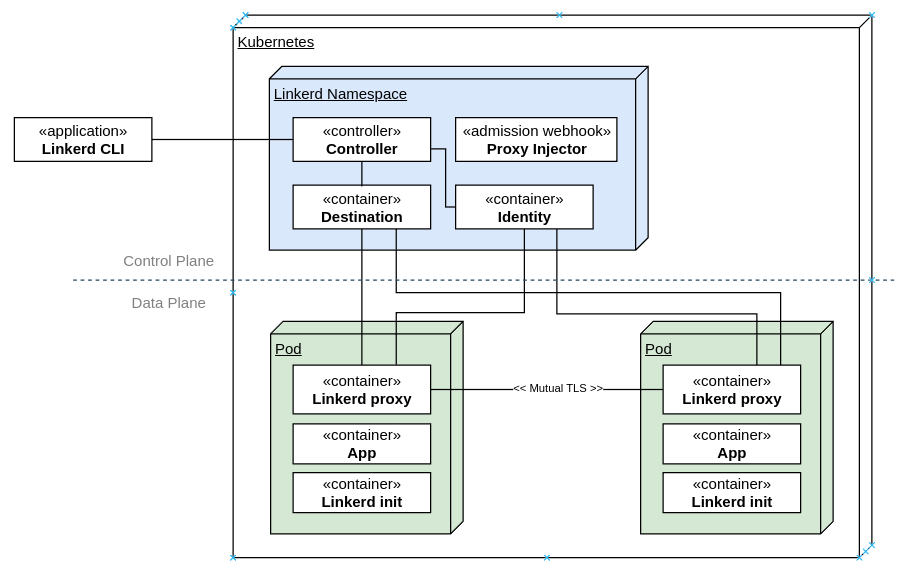
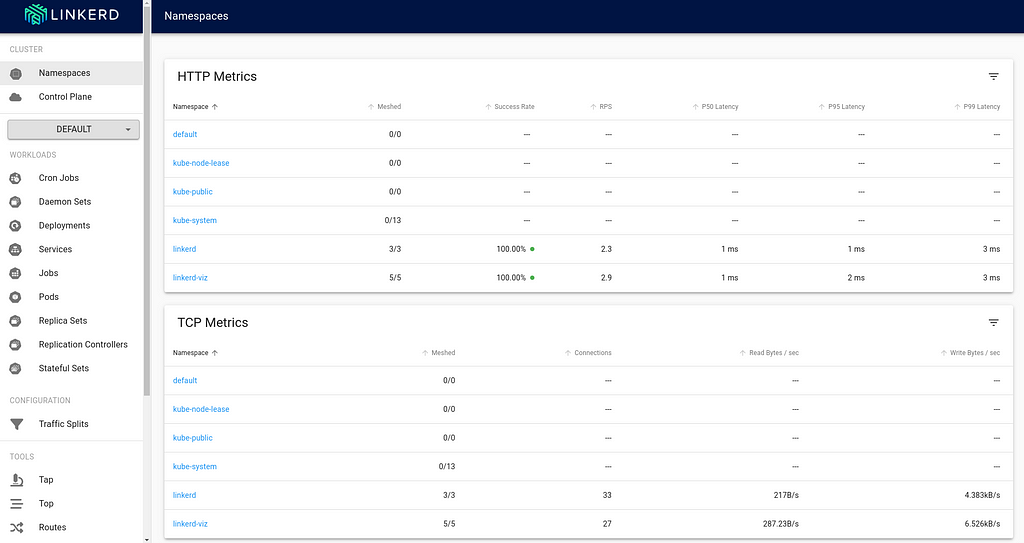
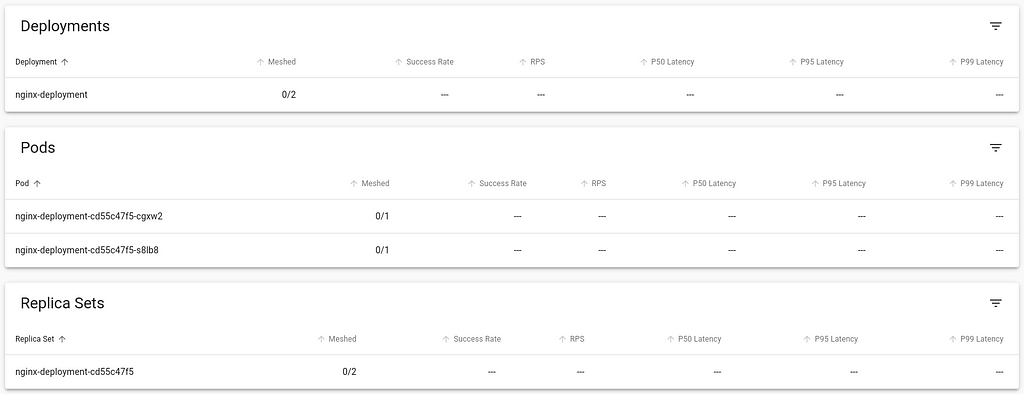
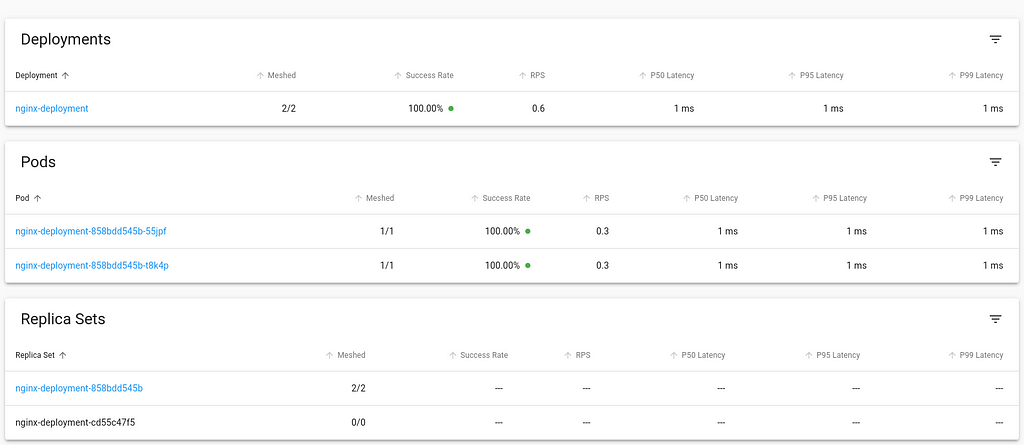
 So this week I recycled a talk I'd given in the past, about how even using
extremely simple parsers allows a lot of useful static-analysis to be done,
for specific niche use-cases.
This included examples of scanning comments above classes to ensure they
referred to the appropriate object, ensuring that specific function
calls always included a specific (optional) parameter, etc.
Nothing too complex, but I figured I'd give a new example this time, and
I remembered I'd recently written a bunch of functions for an interpreter
which I'd ordered quite deliberately.
Assume you're writing a BASIC interpreter, you need to implement a bunch of
built-in maths functions such as
 I m trying to replace my old OpenPGP key with a new one. The old key wasn t compromised or lost or anything
bad. Is still valid, but I plan to get rid of it soon. It was created in 2013.
The new key id fingerprint is:
 Our local Debian user group gathered on Sunday October 30th to chat, work on
Debian and do other, non-Debian related hacking :) This time around, we met at
 This was our 4th meeting this year and once again, attendance was great: 10
people showed up to work on various things.
Following our bi-monthly schedule, our next meeting should be in December, but
I'm not sure it'll happen. December can be a busy month here and I will have to
poke our mailing list to see if people have the spoons for an event.
This time around, I was able to get a rough log of the Debian work people did:
pollo:

 My impression of that city from couple of visits at that point in time where they were still more tongas (horse-ridden carriages), an occasional two wheelers and not many three wheelers. Although, it was one of the more turbulent times as lot of agitation for worker rights were happening around that time and a lot of
 So the last three stories I found the most intriguing.
The first one is titled Man on the Beach. Apparently, a gentleman goes to one of the beaches, a sort of lonely beach, hails a taxi and while returning suddenly dies. The Taxi driver showing good presence of mind takes it to hospital where the gentleman is declared dead on arrival. Unlike in India, he doesn t run away but goes to the cafeteria and waits there for the cops to arrive and take his statement. Now the man is in his early 40s and looks to be fit. Upon searching his pockets he is found to relatively well-off and later it turns out he owns a couple of shops. So then here are the questions ?
What was the man doing on a beach, in summer that beach is somewhat popular but other times not so much, so what was he doing there?
How did he die, was it a simple heart attack or something more? If he had been drugged or something then when and how?
These and more questions can be answered by reading the story Man on the Beach .
2. The death of a photographer Apparently, Kurt lives in a small town where almost all the residents have been served one way or the other by the town photographer. The man was polite and had worked for something like 40 odd years before he is killed/murdered. Apparently, he is murdered late at night. So here come the questions
a. The shop doesn t even stock any cameras and his cash box has cash. Further investigation reveals it is approximate to his average takeout for the day. So if it s not for cash, then what is the motive ?
b. The body was discovered by his cleaning staff who has worked for almost 20 years, 3 days a week. She has her own set of keys to come and clean the office? Did she give the keys to someone, if yes why?
c. Even after investigation, there is no scandal about the man, no other woman or any vices like gambling etc. that could rack up loans. Also, nobody seems to know him and yet take him for granted till he dies. The whole thing appears to be quite strange. Again, the answers lie in the book.
3. The Pyramid Kurt is sleeping one night when the telephone rings. The scene starts with a Piper Cherokee, a single piston aircraft flying low and dropping something somewhere or getting somebody from/on the coast of Sweden. It turns and after a while crashes. Kurt is called to investigate it. Turns out, the plane was supposed to be destroyed. On crash, both the pilot and the passenger are into pieces so only dental records can prove who they are. Same day or a day or two later, two seemingly ordinary somewhat elderly women, spinsters, by all accounts, live above the shop where they sell buttons and all kinds of sewing needs of the town. They seem middle-class. Later the charred bodies of the two sisters are found :(. So here come the questions
a.Did the plane drop something or pick something somebody up ? The Cherokee is a small plane so any plane field or something it could have landed up or if a place was somehow marked then could be dropped or picked up without actually landing.
b. The firefighter suspects arson started at multiple places with the use of petrol? The question is why would somebody wanna do that? The sisters don t seem to be wealthy and practically everybody has bought stuff from them. They weren t popular but weren t also unpopular.
c. Are the two crimes connected or unconnected? If connected, then how?
d. Most important question, why the title Pyramid is given to the story. Why does the author share the name Pyramid. Does he mean the same or the original thing? He could have named it triangle. Again, answers to all the above can be found in the book.
One thing I also became very aware of during reading the book that it is difficult to understand people s behavior and what they do. And this is without even any criminality involved in. Let s say for e.g. I die in some mysterious circumstances, the possibility of the police finding my actions in last days would be limited and this is when I have hearing loss. And this probably is more to do with how our minds are wired. And most people I know are much more privacy conscious/aware than I am.

 This is my report from the Netfilter Workshop 2022. The event was held on 2022-10-20/2022-10-21 in Seville, and the venue
was the offices of
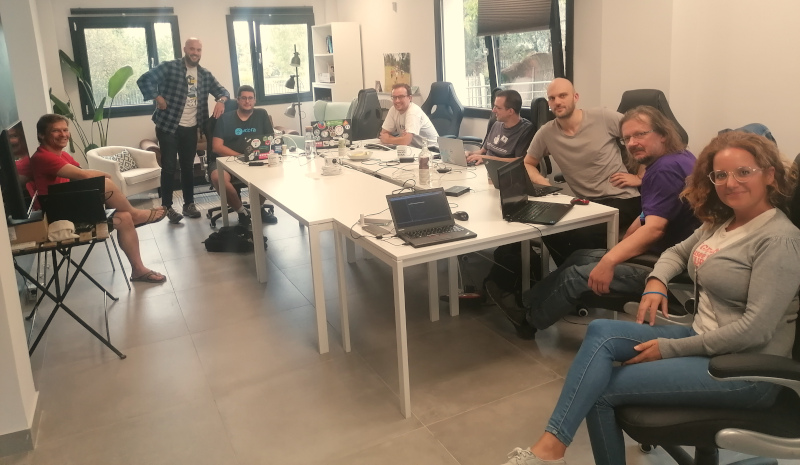 The second day was opened by Florian Westphal (Netfilter coreteam member and Red Hat engineer). Florian has been
trying to improve nftables performance in kernels with RETPOLINE mitigations enabled. He commented that several
workarounds have been collected over the years to avoid the performance penalty of such mitigations.
The basic strategy is to avoid function indirect calls in the kernel.
Florian also described how BPF programs work around this more effectively. And actually, Florian tried translating
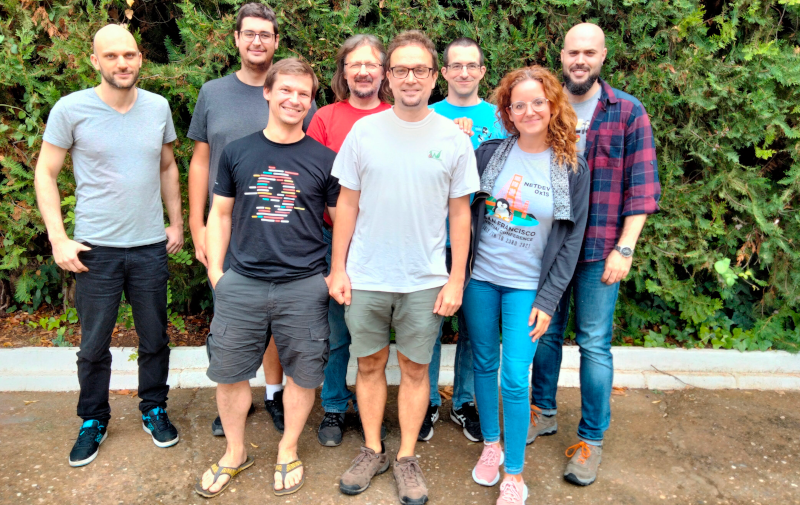 Finally, after many interesting debates over two days, the workshop ended. We all agreed on the need for extending
it to 3 days next time, since 2 days feel too intense and too short for all the topics worth discussing.
That s all on my side! I really enjoyed this Netfilter workshop round.




 Now that the root cause is clear, I guess RedHat will push out a fix for the
openssl 3.0.1 based release they have in RHEL/CentOS 9. Until that is available
at least stunnel and keepalived are known to be affected. If you run stunnel
on something public it's not that pretty, because already a low rate of TCP
connections will result in a DoS condition.
