Scarlett Gately Moore: KDE Applications snaps 25.04.3 released, plus new snaps and fixes!



ID 067b:23a3 Prolific Technology, Inc. ATEN Serial Bridgetiodialoutnewgrp dialoutUART1_RX, 6= UART1_TX. With that change I have U-boot output on boot.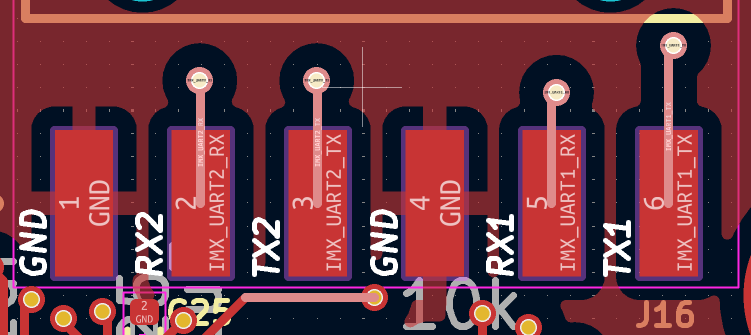
minute on ircs://irc.libera.chat:6697/#mnt-reform, I got
the kernel boot arguments right to have not just u-boot output but linux kernel output on the serial console. In consfigurator notation
(on-change
      (file:has-content "/etc/flash-kernel/ubootenv.d/00reform2_serial_console"
        "setenv bootargs \"$ bootargs  console=ttyS2,1500000 keep_bootcon\"")
    (cmd:single "flash-kernel"))
 Updated my timezone tool. hover of mouse will change color. Trying to make it more visible to me.
 Dear Debian community,
This is bits from the DPL for June.
The Challenge of Mentoring Newcomers
In June there was an extended discussion about the ongoing challenges
around mentoring newcomers in Debian. As many of you know, this is a
topic I ve cared about deeply--long before becoming DPL. In my view, the
issue isn t just a matter of lacking tools or needing to try harder to
attract contributors. Anyone who followed the discussion will likely
agree that it s more complex than that.
I sometimes wonder whether Debian s success contributes to the problem.
From the outside, things may appear to just work , which can lead to
the impression: Debian is doing fine without me--they clearly have
everything under control. But that overlooks how much volunteer effort
it takes to keep the project running smoothly.
We should make it clearer that help is always needed--not only in
packaging, but also in writing technical documentation, designing web
pages, reaching out to upstreams about license issues, finding sponsors,
or organising events. (Speaking from experience, I would have
appreciated help in patiently explaining Free Software benefits to
upstream authors.) Sometimes we think too narrowly about what newcomers
can do, and also about which tasks could be offloaded from overcommitted
contributors.
In fact, one of the most valuable things a newcomer can contribute is
better documentation. Those of us who ve been around for years may be
too used to how things work--or make assumptions about what others
already know. A person who just joined the project is often in the best
position to document what s confusing, what s missing, and what they
wish they had known sooner.
In that sense, the recent
"random new contributor s experience"
posts might be a useful starting point for further reflection. I think
we can learn a lot from positive user stories, like this recent
experience of a newcomer
adopting the courier package. I'm absolutely convinced that those who just
found their way into Debian have valuable perspectives--and that we stand to
learn the most from listening to them.
We should also take seriously what Russ Allbery noted in the discussion:
"This says bad things about the project's sustainability and I think
everyone knows that."
Volunteers move on--that s normal and expected. But it makes it all the
more important that we put effort into keeping Debian's contributor base at
least stable, if not growing.
Project-wide LLM budget for helping people
Lucas Nussbaum has volunteered to handle the paperwork and submit a
request on Debian s behalf to LLM providers,
aiming to secure project-wide access for Debian Developers. If successful,
every DD will be free to use this access--or not--according to their own
preferences.
Kind regards
Andreas.

 Armadillo is a powerful
and expressive C++ template library for linear algebra and scientific
computing. It aims towards a good balance between speed and ease of use,
has a syntax deliberately close to Matlab, and is useful for algorithm
development directly in C++, or quick conversion of research code into
production environments. RcppArmadillo
integrates this library with the R environment and language and is
widely used by (currently) 1241 other packages on CRAN, downloaded 40.4 million
times (per the partial logs from the cloud mirrors of CRAN), and the CSDA paper (preprint
/ vignette) by Conrad and myself has been cited 634 times according
to Google Scholar.
Conrad released a minor
version 4.6.0 yesterday which offers new accessors for non-finite
values. And despite being in Beautiful British Columbia on vacation, I
had wrapped up two rounds of reverse dependency checks preparing his
4.6.0 release, and shipped this to CRAN this morning where it passed
with flying colours and no human intervention even with over 1200
reverse dependencies. The changes since the last CRAN release are summarised
below.
Courtesy of my CRANberries, there is a diffstat report relative to previous release. More detailed information is on the RcppArmadillo page. Questions, comments etc should go to the rcpp-devel mailing list off the Rcpp R-Forge page.Changes in RcppArmadillo version 14.6.0-1 (2025-07-02)
- Upgraded to Armadillo release 14.6.0 (Caffe Mocha)
- Added
balance()to transform matrices so that column and row norms are roughly the same- Added
omit_nan()andomit_nonfinite()to extract elements while omitting NaN and non-finite values- Added
find_nonnan()for finding indices of non-NaN elements- Added standalone
replace()function- The
fastLm()help page now mentions that options tosolve()can control its behavior.
This post by Dirk Eddelbuettel originated on his Thinking inside the box blog. If you like this or other open-source work I do, you can sponsor me at GitHub.
 With a friendly Canadian hand wave from vacation in Beautiful British
Columbia, and speaking on behalf of the Rcpp Core Team, I am excited to
shared that the (regularly scheduled bi-annual) update to Rcpp just brought version 1.1.0 to CRAN. Debian builds haven been prepared and
uploaded, Windows and macOS builds should appear at CRAN in the next few
days, as will builds in different Linux distribution and of course r2u should catch up
tomorrow as well.
The key highlight of this release is the switch to C++11 as minimum
standard. R itself did so in
release 4.0.0 more than half a decade ago; if someone is really tied to
an older version of R and an equally old compiler then using an
older Rcpp with it has to be
acceptable. Our own tests (using continuous integration at GitHub) still go back all the way to R
3.5.* and work fine (with a new-enough compiler). In the
previous release post, we commented that we had only reverse
dependency (falsely) come up in the tests by CRAN, this time there was none
among the well over 3000 packages using Rcpp at CRAN. Which really is quite
amazing, and possibly also a testament to our rigorous continued testing
of our development and snapshot releases on the key branch.
This release continues with the six-months January-July cycle started
with release
1.0.5 in July 2020. As just mentioned, we do of course make interim
snapshot dev or rc releases available. While we not longer regularly
update the Rcpp drat
repo, the r-universe
page and repo now really fill this role admirably (and with many
more builds besides just source). We continue to strongly encourage
their use and testing I run my systems with these versions which tend to
work just as well, and are of course also fully tested against all
reverse-dependencies.
Rcpp has long established itself
as the most popular way of enhancing R with C or C++ code. Right now,
3038 packages on CRAN depend on
Rcpp for making analytical code go
faster and further. On CRAN, 13.6% of all packages depend (directly) on
Rcpp, and 61.3% of all compiled
packages do. From the cloud mirror of CRAN (which is but a subset of all
CRAN downloads), Rcpp has been
downloaded 100.8 million times. The two published papers (also included
in the package as preprint vignettes) have, respectively, 2023 (JSS, 2011) and 380 (TAS, 2018)
citations, while the the book (Springer useR!,
2013) has another 695.
As mentioned, this release switches to C++11 as the minimum standard.
The
diffstat display in the CRANberries
comparison to the previous release shows how several (generated)
sources files with C++98 boilerplate have now been removed; we also
flattened a number of if/else sections we no
longer need to cater to older compilers (see below for details). We also
managed more accommodation for the demands of tighter use of the C API
of R by removing DATAPTR and CLOENV use. A
number of other changes are detailed below.
The full list below details all changes, their respective PRs and, if
applicable, issue tickets. Big thanks from all of us to all
contributors!
Thanks to my CRANberries, you can also look at a diff to the previous release Questions, comments etc should go to the rcpp-devel mailing list off the R-Forge page. Bugs reports are welcome at the GitHub issue tracker as well (where one can also search among open or closed issues).Changes in Rcpp release version 1.1.0 (2025-07-01)
- Changes in Rcpp API:
- C++11 is now the required minimal C++ standard
- The
std::string_viewtype is now covered bywrap()(Lev Kandel in #1356 as discussed in #1357)- A last remaining
DATAPTRuse has been converted toDATAPTR_RO(Dirk in #1359)- Under R 4.5.0 or later,
R_ClosureEnvis used instead ofCLOENV(Dirk in #1361 fixing #1360)- Use of
lsInternalswitched tolsInternal3(Dirk in #1362)- Removed compiler detection macro in a header cleanup setting C++11 as the minunum (Dirk in #1364 closing #1363)
- Variadic templates are now used onconditionally given C++11 (Dirk in #1367 closing #1366)
- Remove
RCPP_USING_CXX11as a#defineas C++11 is now a given (Dirk in #1369)- Additional cleanup for
__cpluspluschecks (I aki in #1371 fixing #1370)- Unordered set construction no longer needs a macro for the pre-C++11 case (I aki in #1372)
- Lambdas are supported in a Rcpp Sugar functions (I aki in #1373)
- The Date(time)Vector classes now have default ctor (Dirk in #1385 closing #1384)
- Fixed an issue where Rcpp::Language would duplicate its arguments (Kevin in #1388, fixing #1386)
- Changes in Rcpp Attributes:
- Changes in Rcpp Documentation:
- Changes in Rcpp Deployment:
This post by Dirk Eddelbuettel originated on his Thinking inside the box blog. If you like this or other open-source work I do, you can sponsor me at GitHub.
Japan is now very hot. If you are coming to Banpaku, be prepared.

gordon1, unload the mediatek module first.
The following seems to work, either from the console or under swayecho devices > /sys/power/pm_test
echo reboot > /sys/power/disk
rmmod mt76x2u
echo disk > /sys/power/state
modprobe mt76x2u
 Another short status update of what happened on my side last
month. Phosh 0.48.0 is out with nice improvements, phosh.mobi e.V. is
alive, helped a bit to get cellbroadcastd
out, osk bugfixes and some more:
See below for details on the above and more:
phosh
GApplicaation (MR)STARTTLS behavior in docs (MR) My Debian contributions this month were all
sponsored by
Freexian. This was a very light month; I did a few things that were easy or
that seemed urgent for the upcoming trixie release, but otherwise most of my
energy went into
Debusine. I ll be giving
a talk about that at DebConf in a couple of weeks; this is the first DebConf
I ll have managed to make it to in over a decade, so I m pretty excited.
You can also support my work directly via
Liberapay or GitHub
Sponsors.
PuTTY
After reading a bunch of recent discourse about X11 and Wayland, I decided
to try switching my laptop (a Framework 13 AMD running Debian trixie with
GNOME) over to Wayland. I don t remember why it was running X; I think I
must have either inherited some configuration from my previous laptop (in
which case it could have been due to anything up to ten years ago or so), or
else I had some initial problem while setting up my new laptop and failed to
make a note of it. Anyway, the switch was hardly noticeable, which was great.
One problem I did notice is that my preferred terminal emulator,
pterm,
crashed after the upgrade. I run a slightly-modified version from git to
make some small terminal emulation changes that I really must either get
upstream or work out how to live without one of these days, so it took me a
while to notice that it only crashed when running from the packaged version,
because the crash was in code that only runs when pterm has a set-id bit.
I reported this upstream, they quickly fixed
it,
and I
backported
it to the Debian package.
groff
Upstream bug #67169
reported URLs being dropped from PDF output in some cases. I investigated
the history both upstream and in Debian,
identified the correct upstream patch to
backport,
and uploaded a fix.
libfido2
I upgraded libfido2 to 1.16.0 in experimental.
Python team
I upgraded pydantic-extra-types to a new upstream version, and fixed some
resulting fallout in
pendulum.
I updated python-typing-extensions in bookworm-backports, to help fix
python3-tango: python3-pytango from bookworm-backports does not work
(10.0.2-1~bpo12+1).
I upgraded twisted to a new upstream version in experimental.
I fixed or helped to fix a few release-critical bugs:
 As I often do, this year I have also prepared a set of personalized maps
for your OpenPGP keysigning in DebConf25, in Brest!
What is that, dare you ask?
 One of the not-to-be-missed traditions of DebConf is a Key-Signing Party
(KSP) that spans the whole conference! Travelling from all the corners of
the world to a single, large group gathering, we have the ideal opportunity
to spread some
0x2404C9546E145360), anybody can
download your certificate (public key + signatures). The
SVG and
PNG
links will yield a graphic version of your position within the DC25
keyring, and the
TXT
link will give you a textual explanation of it. (of course, your links will
differ, yada yada )
Please note this is still a preview of our KSP information: You will
notice there are outstanding several things for me to fix before marking
the file as final. First, some names have encoding issues I will
fix. Second, some keys might be missing if you submitted your key as part
of the conference registration form but it is not showing, it must be
because my scripts didn t find it in any of the queried keyservers. My
scripts are querying the following servers:
hkps://keyring.debian.org/
hkps://keys.openpgp.org/
hkps://keyserver.computer42.org/
hkps://keyserver.ubuntu.com/
hkps://pgp.mit.edu/
hkps://pgp.pm/
hkps://pgp.surf.nl/
hkps://pgpkeys.eu/
hkps://the.earth.li/
[DC25 KSP] in your mail title, and I will manually add it
to the list.
On (hopefully!) Friday, I ll post the final, canonical KSP coordination
page which you should download and calculate its SHA256-sum. We will have
printed out convenience sheets to help you do your keysigning at the front
desk.


This post is based on presentation given at the Validos annual members meeting on June 25th, 2025.When I started getting into Linux and open source over 25 years ago, the majority of the software development in this area was done by academics and hobbyists. The number of companies participating in open source has since exploded in parallel with the growth of mobile and cloud software, the majority of which is built on top of open source. For example, Android powers most mobile phones today and is based on Linux. Almost all software used to operate large cloud provider data centers, such as AWS or Google, is either open source or made in-house by the cloud provider. Pretty much all companies, regardless of the industry, have been using open source software at least to some extent for years. However, the degree to which they collaborate with the upstream origins of the software varies. I encourage all companies in a technical industry to start contributing upstream. There are many benefits to having a good relationship with your upstream open source software vendors, both for the short term and especially for the long term. Moreover, with the rollout of CRA in EU in 2025-2027, the law will require software companies to contribute security fixes upstream to the open source projects their products use. To ensure the process is well managed, business-aligned and legally compliant, there are a few do s and don t do s that are important to be aware of.
 On Monday I had my Viva Voce (PhD defence), and passed (with minor
corrections).
 Post-viva refreshment
 We are pleased to announce that AMD
has committed to sponsor DebConf25 as a
Platinum Sponsor.
The AMD ROCm platform includes programming models, tools, compilers,
libraries, and runtimes for AI and HPC solution development on AMD GPUs.
Debian is an officially supported platform for AMD ROCm and a growing
number of components are now included directly in the Debian distribution.
For more than 55 years AMD has driven innovation in high-performance
computing, graphics and visualization technologies.
AMD is deeply committed to supporting and contributing to open-source
projects, foundations, and open-standards organizations, taking pride in
fostering innovation and collaboration within the open-source community.
With this commitment as Platinum Sponsor, AMD is contributing to the
annual Debian Developers Conference, directly supporting the progress
of Debian and Free Software.
AMD contributes to strengthening the worldwide community that
collaborates on Debian projects year-round.
Thank you very much, AMD, for your support of DebConf25!
Become a sponsor too!
DebConf25 will take place from 14 to 20
July 2025 in Brest, France, and will be preceded by DebCamp, from 7 to 13
July 2025.
DebConf25 is accepting sponsors! Interested companies and organizations may
contact the DebConf team through
sponsors@debconf.org, and visit the DebConf25
website at
https://debconf25.debconf.org/sponsors /become-a-sponsor/.
Next.

