Search Results: "he"

21 April 2017

Joachim Breitner: veggies: Haskell code generation from scratch

How hard it is to write a compiler for Haskell Core? Not too hard, actually! I wish we had a formally verified compiler for Haskell, or at least for GHC s intermediate language Core. Now formalizing that part of GHC itself seems to be far out of reach, with the many phases the code goes through (Core to STG to CMM to Assembly or LLVM) and optimizations happening at all of these phases and the many complicated details to the highly tuned GHC runtime (pointer tagging, support for concurrency and garbage collection).

Introducing Veggies So to make that goal of a formally verified compiler more feasible, I set out and implemented code generation from GHC s intermediate language Core to LLVM IR, with simplicity as the main design driving factor. You can find the result in the GitHub repository of veggies (the name derives from verifiable GHC ). If you clone that and run ./boot.sh some-directory, you will find that you can use the program some-directory/bin/veggies just like like you would use ghc. It comes with the full base library, so your favorite variant of HelloWorld might just compile and run. As of now, the code generation handles all the Core constructs (which is easy when you simply ignore all the types). It supports a good number of primitive operations, including pointers and arrays I implement these as need and has support for FFI calls into C.

Why you don't want to use Veggies Since the code generator was written with simplicity in mind, performance of the resulting code is abysmal: Everything is boxed, i.e. represented as pointer to some heap-allocated data, including unboxed integer values and unboxed tuples. This is very uniform and simplifies the code, but it is also slow, and because there is no garbage collection (and probably never will be for this project), will fill up your memory quickly. Also, the code is currently only supports 64bit architectures, and this is hard-coded in many places. There is no support for concurrency.

Why it might be interesting to you nevertheless So if it is not really usable to run programs with, should you care about it? Probably not, but maybe you do for one of these reasons:
  • You always wondered how a compiler for Haskell actually works, and reading through a little over a thousands lines of code is less daunting than reading through the 34k lines of code that is GHC s backend.
  • You have wacky ideas about Code generation for Haskell that you want to experiment with.
  • You have wacky ideas about Haskell that require special support in the backend, and want to prototype that.
  • You want to see how I use the GHC API to provide a ghc-like experience. (I copied GHC s Main.hs and inserted a few hooks, an approach I copied from GHCJS).
  • You want to learn about running Haskell programs efficiently, and starting from veggies, you can implement all the trick of the trade yourself and enjoy observing the speed-ups you get.
  • You want to compile Haskell code to some weird platform that is supported by LLVM, but where you for some reason cannot run GHC s runtime. (Because there are no threads and no garbage collection, the code generated by veggies does not require a runtime system.)
  • You want to formally verify Haskell code generation. Note that the code generator targets the same AST for LLVM IR that the vellvm2 project uses, so eventually, veggies can become a verified arrow in the top right corner map of the DeepSpec project.
So feel free to play around with veggies, and report any issues you have on the GitHub repository.

Rhonda D'Vine: Home

A fair amount of things happened since I last blogged something else than music. First of all we did actually hold a Debian Diversity meeting. It was quite nice, less people around than hoped for, and I account that to some extend to the trolls and haters that defaced the titanpad page for the agenda and destroyed the doodle entry for settling on a date for the meeting. They even tried to troll my blog with comments, and while I did approve controversial responses in the past, those went over the line of being acceptable and didn't carry any relevant content. One response that I didn't approve but kept in my mailbox is even giving me strength to carry on. There is one sentence in it that speaks to me: Think you can stop us? You can't you stupid b*tch. You have ruined the Debian community for us. The rest of the message is of no further relevance, but even though I can't take credit for being responsible for that, I'm glad to be a perceived part of ruining the Debian community for intolerant and hateful people. A lot of other things happened since too. Mostly locally here in Vienna, several queer empowering groups were founding around me, some of them existed already, some formed with the help of myself. We now have several great regular meetings for non-binary people, for queer polyamory people about which we gave an interview, a queer playfight (I might explain that concept another time), a polyamory discussion group, two bi-/pansexual groups, a queer-feminist choir, and there will be an European Lesbian* Conference in October where I help with the organization and on June 21st I'll finally receive the keys to my flat in Que[e]rbau Seestadt. I'm sooo looking forward to it. It will be part of the Let me come Home experience that I'm currently in. Another part of that experience is that I started changing my name (and gender marker) officially. I had my first appointment in the corresponding bureau, and I hope that it won't last too long because I have to get my papers in time for booking my flight to Montreal, and somewhen along the process my current passport won't contain correct data anymore. So for the people who have it in their signing policy to see government IDs this might be your chance to finally sign my key then. I plan to do a diversity BoF at debconf where we can speak more directly on where we want to head with the project. I hope I'll find the time to do an IRC meeting beforehand. I'm just uncertain how to coordinate that one to make it accessible for interested parties while keeping the destructive trolls out. I'm open for ideas here.

/personal permanent link Comments: 3 Flattr this

Noah Meyerhans: Stretch images for Amazon EC2, round 2

Following up on a previous post announcing the availability of a first round of AWS AMIs for stretch, I'm happy to announce the availability of a second round of images. These images address all the feedback we've received about the first round. The notable changes include: AMI details are listed on the wiki. As usual, you're encouraged to submit feedback to the cloud team via the cloud.debian.org BTS pseudopackage, the debian-cloud mailing list, or #debian-cloud on irc.

Dirk Eddelbuettel: Rblpapi 0.3.6

Time for a new release of Rblpapi -- version 0.3.6 is now on CRAN. Rblpapi provides a direct interface between R and the Bloomberg Terminal via the C++ API provided by Bloomberg Labs (but note that a valid Bloomberg license and installation is required). This is the seventh release since the package first appeared on CRAN last year. This release brings a very nice new function lookupSecurity() contributed by Kevin Jin as well as a number of small fixes and enhancements. Details below:

Changes in Rblpapi version 0.3.6 (2017-04-20)
  • bdh can now store in double preventing overflow (Whit and John in #205 closing #163)
  • bdp documentation has another ovveride example
  • A new function lookupSecurity can search for securities, optionally filtered by yellow key (Kevin Jin and Dirk in #216 and #217 closing #215)
  • Added file init.c with calls to R_registerRoutines() and R_useDynamicSymbols(); also use .registration=TRUE in useDynLib in NAMESPACE (Dirk in #220)
  • getBars and getTicks can now return data.table objects (Dirk in #221)
  • bds has improved internal protect logic via Rcpp::Shield (Dirk in #222)

Courtesy of CRANberries, there is also a diffstat report for the this release. As always, more detailed information is on the Rblpapi page. Questions, comments etc should go to the issue tickets system at the GitHub repo.

This post by Dirk Eddelbuettel originated on his Thinking inside the box blog. Please report excessive re-aggregation in third-party for-profit settings.

20 April 2017

Dirk Eddelbuettel: RcppQuantuccia 0.0.1

New package! And, as it happens, a effectively a subset or variant of one my oldest packages, RQuantLib. Fairly recently, Peter Caspers started to put together a header-only subset of QuantLib. He called this Quantuccia, and, upon me asking, said that it stands for "little sister" of QuantLib. Very nice. One design goal is to keep Quantuccia header-only. This makes distribution and deployment much easier. In the fifteen years that we have worked with QuantLib by providing the R bindings via RQuantLib, it has always been a concern to provide current QuantLib libraries on all required operating systems. Many people helped over the years but it is still an issue, and e.g. right now we have no Windows package as there is no library build it against. Enter RcppQuantuccia. It only depends on R, Rcpp (for seamless R and C++ integrations) and BH bringing Boost headers. This will make it much easier to have Windows and macOS binaries. So what can it do right now? We started with calendaring, and you can compute date pertaining to different (ISDA and other) business day conventions, and compute holiday schedules. Here is one example computing inter alia under the NYSE holiday schedule common for US equity and futures markets:
R> library(RcppQuantuccia)
R> fromD <- as.Date("2017-01-01")
R> toD <- as.Date("2017-12-31")
R> getHolidays(fromD, toD)        # default calender ie TARGET
[1] "2017-04-14" "2017-04-17" "2017-05-01" "2017-12-25" "2017-12-26"
R> setCalendar("UnitedStates")
R> getHolidays(fromD, toD)        # US aka US::Settlement
[1] "2017-01-02" "2017-01-16" "2017-02-20" "2017-05-29" "2017-07-04" "2017-09-04"
[7] "2017-10-09" "2017-11-10" "2017-11-23" "2017-12-25"
R> setCalendar("UnitedStates::NYSE")
R> getHolidays(fromD, toD)        # US New York Stock Exchange
[1] "2017-01-02" "2017-01-16" "2017-02-20" "2017-04-14" "2017-05-29" "2017-07-04"
[7] "2017-09-04" "2017-11-23" "2017-12-25"
R>
The GitHub repo already has a few more calendars, and more are expected. Help is of course welcome for both this, and for porting over actual quantitative finance calculations. More information is on the RcppQuantuccia page. Issues and bugreports should go to the GitHub issue tracker.

This post by Dirk Eddelbuettel originated on his Thinking inside the box blog. Please report excessive re-aggregation in third-party for-profit settings.

Norbert Preining: TeX Live 2017 pretest started

Preparations for the release of TeX Live 2017 have started a few days ago with the freeze of updates in TeX Live 2016 and the announcement of the official start of the pretest period. That means that we invite people to test the new release and help fixing bugs. Notable changes are listed on the pretest page, I only want to report about the changes in the core infrastructure: changes in the user/sys mode of fmtutil and updmap, and introduction of the tlmgr shell. User/sys mode of fmtutil and updmap We (both at TeX Live and Debian) regularly got error reports about fonts not being found or formats not updated etc. The reason for all this was unmistakably the same: The user has called updmap or fmtutil without the -sys option, thus creating a copy of set of configuration files under his home directory, shadowing all later updates on the system side. Reason for this behavior is the wide-spread misinformation (outdated information) on the internet suggesting to call updmap. To counteract this, we have changed the behavior so that both updmap and fmtutil now accept a new argument -user (in addition to the already present -sys), and rejects to run when called without either of it given, giving a warning and linking to an explanation page. This page provides more detailed documentation, and best practice examples. tlmgr shell The TeX Live Manager got a new shell mode, invoked by tlmgr shell. Details need to be flashed out, but in principle it is possible to use get and set to query and set some of the options normally passed via command lines, and use all the actions as defined in the documentation. The advantage of this is that it is not necessary to load the tlpdb for each invocation. Here a short example:
[~] tlmgr shell
protocol 1
tlmgr> load local
OK
tlmgr> load remote
tlmgr: package repository /home/norbert/public_html/tlpretest (verified)
OK
tlmgr> update --list
tlmgr: saving backups to /home/norbert/tl/2017/tlpkg/backups
update:   bchart             [147k]: local:    27496, source:    43928
...
update:   xindy              [535k]: local:    43873, source:    43934
OK
tlmgr> update --all
tlmgr: saving backups to /home/norbert/tl/2017/tlpkg/backups
[ 1/22, ??:??/??:??] update: bchart [147k] (27496 -> 43928) ... done
[ 2/22, 00:00/00:00] update: biber [1041k] (43873 -> 43910) ... done
...
[22/22, 00:50/00:50] update: xindy [535k] (43873 -> 43934) ... done
running mktexlsr ...
done running mktexlsr.
...
OK
tlmgr> quit
tlmgr: package log updated: /home/norbert/tl/2017/texmf-var/web2c/tlmgr.log 
[~] 
Please test and report bugs to our mailing list. Thanks

19 April 2017

Reproducible builds folks: Reproducible Builds: week 103 in Stretch cycle

Here's what happened in the Reproducible Builds effort between Sunday April 9 and Saturday April 15 2017: Upcoming events On April 26th Chris Lamb will give a talk at foss-north 2017 in Gothenburg, Sweden on Reproducible Builds. Media coverage Jake Edge wrote a summary of Vagrant Cascadian's talk on Reproducible Builds at LibrePlanet. Toolchain development and fixes Ximin Luo forwarded patches to GCC for BUILD_PATH_PREFIX_MAP support. With this patch to backported to GCC-6, as well as a patched dpkg to set the environment variable, he scheduled ~3,300 packages that are unreproducible in unstable-amd64 but reproducible in testing-amd64 - because we vary the build path in the former but not latter case. Our infrastructure ran these in just under 3 days, and we reproduced ~1,700 extra packages. This is about 6.5% of ~26,100 Debian source packages, and about 1/2 of the ones whose irreproducibility is due to build-path issues. Most of the rest are not related to GCC, such as things built by R, OCaml, Erlang, LLVM, PDF IDs, etc. (The dip afterwards, in the graph linked above, is due to reverting back to an unpatched GCC-6, but we'll be rebasing the patch continually over the next few weeks so the graph should stay up.) Packages reviewed and fixed, and bugs filed Chris Lamb: Chris West: Reviews of unreproducible packages 38 package reviews have been added, 111 have been updated and 85 have been removed in this week, adding to our knowledge about identified issues. 6 issue types have been updated: Added: Updated: Removed: diffoscope development Development continued in git on the experimental branch: Chris Lamb: Weekly QA work During our reproducibility testing, FTBFS bugs have been detected and reported by: Misc. This week's edition was written by Ximin Luo, Chris Lamb & reviewed by a bunch of Reproducible Builds folks on IRC & the mailing lists.

Steve Kemp: 3d-Printing is cool

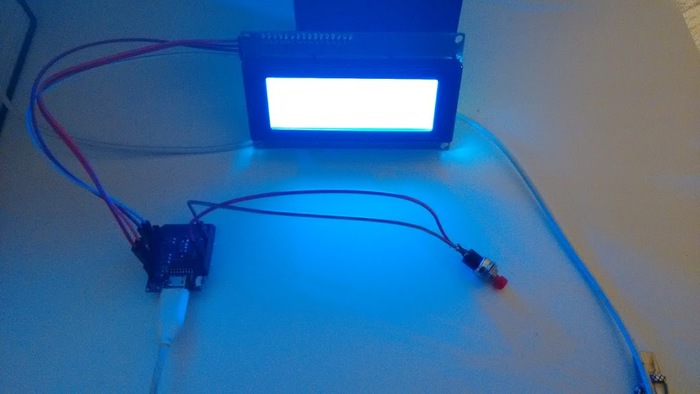
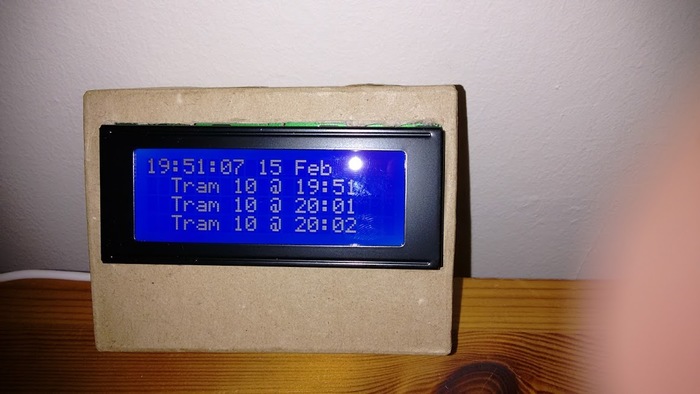
I've heard about 3d-printing a lot in the past, although the hype seems to have mostly died down. My view has always been "That seems cool", coupled with "Everybody says making the models is very hard", and "the process itself is fiddly & time-consuming". I've been sporadically working on a project for a few months now which displays tram-departure times, this is part of my drive to "hardware" things with Arduino/ESP8266 devices . Most visitors to our flat have commented on it, at least once, and over time it has become gradually more and more user-friendly. Initially it was just a toy-project for myself, so everything was hard-coded in the source but over time that changed - which I mentioned here, (specifically the Access-point setup): I've now wired up an input-button to the device too, experimenting with the different ways that a single button can carry out multiple actions: Anyway the software is neat, and I can't think of anything obvious to change. So lets move onto the real topic of this post: 3D Printing. I randomly remembered that I'd heard about an online site holding 3D-models, and on a whim I searched for "4x20 LCD". That lead me to this design, which is exactly what I was looking for. Just like open-source software we're now living in a world where you can get open-source hardware! How cool is that? I had to trust the dimensions of the model, and obviously I was going to mount my new button into the box, rather than the knob shown. But having a model was great. I could download it, for free, and I could view it online at viewstl.com. But with a model obtained the next step was getting it printed. I found a bunch of commercial companies, here in Europe, who would print a model, and ship it to me, but when I uploaded the model they priced it at 90+. Too much. I'd almost lost interest when I stumbled across a site which provides a gateway into a series of individual/companies who will print things for you, on-demand: 3dhubs. Once again I uploaded my model, and this time I was able to select a guy in the same city as me. He printed my model for 1/3-1/4 of the price of the companies I'd found, and sent me fun pictures of the object while it was in the process of being printed. To recap I started like this:
Then I boxed it in cardboard which looked better than nothing, but still not terribly great:
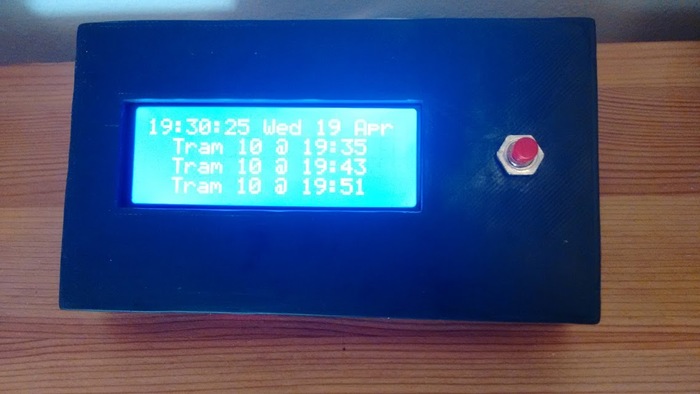
Now I've found an online case-design for free, got it printed cheaply by a volunteer (feels like the wrong word, after-all I did pay him), and I have something which look significantly more professional:
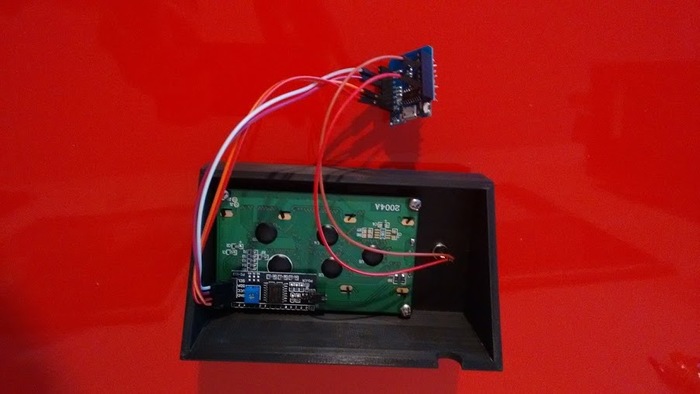
Inside it looks as neat as you would expect:
Of course the case still cost 5 times as much as the actual hardware involved (button: 0.05, processor-board 2.00 and LCD I2C display 3.00). But I've gone from being somebody who had zero experience with hardware-based projects 4 months ago, to somebody who has built a project which is functional and "pretty". The internet really is a glorious thing. Using it for learning, and coding is good, using it for building actual physical parts too? That's something I never could have predicted a few years ago and I can see myself doing it more in the future. Sure the case is a little rough around the edges, but I suspect it is now only a matter of time until I learn how to design my own models. An obvious extension is to add a status-LED above the switch, for example. How hard can it be to add a new hole to a model? (Hell I could just drill it!)

Antoine Beaupr : The rise of Linux-based networking hardware

Linux usage in networking hardware has been on the rise for some time. During the latest Netdev conference held in Montreal this April, people talked seriously about Linux running on high end, "top of rack" (TOR) networking equipment. Those devices have long been the realm of proprietary hardware and software companies like Cisco or Juniper, but Linux seems to be making some significant headway into the domain. According to Shrijeet Mukherjee, VP of Engineering at Cumulus Networks: "we are seeing a 28% adoption rate in the Fortune 50" companies. As someone who has worked in system administration and networking for over a decade, I was surprised by this: switches have always been black boxes of proprietary hardware that we barely get a shell into. But as more and more TOR hardware gets Linux support, some of that work trickles down outside of that niche. Are we really seeing the rise of Linux in high-end networking hardware?

Linux as the standard interface During his keynote at Netdev, Jesse Brandeburg explained that traffic is exploding on the Internet: "From 2006 to 2016 the compound annual growth rate was 78% of network traffic. So the network traffic is growing like crazy. In 2010 to 2023, it's going to grow by a thousand times." He also mentioned Intel was working on devices that could do up to 400 Gbps. In his talk, he argued that Linux has a critical place in the modern world by repeating the mantra that "everything is on the network, and the network runs Linux", but does it really? Through Android, Linux has become the most popular end-user device operating system and is also dominant on the server but what about the actual fabric of the network: the routers and switches that interconnect all those machines? Mukherjee, in his own keynote, argued that even though Linux has achieved dominance in the server and virtualization markets, there is a "discontinuity [...] at the boundary where the host and the network meet" and argued "that the host without the network will not survive". In other words, proprietary hardware and software in the network threaten free software in the server. Even though some manufacturers are already providing a "Linux interface" in their hardware, it is often only some sort of compatibility shell which might be compared with the Ubuntu compatibility layer in Windows: it's not a real Linux. Mukherjee pushed this idea further by saying that those companies are limiting themselves by not using the full Linux stack. He presented Linux as the "top vehicle for innovation" that provides a featureful network stack, citing VXLAN, eBPF, and Quagga as prime features used on switches. Mukherjee also praised the diversity of the user-space Linux ecosystem as something that commercial alternatives can't rival; he compared the faster Linux development to the commercial sector where similar top features stay in the beta stage for up to 3 years. Because of its dominance in the server market, consumers are expecting a Linux-like interface on their networking gear now, which means Linux could be the standard interface all providers strive toward. As a Debian developer, I can't help but smile at the thought; if there's one thing we have not been able to do among Linux distributions, it's pretty much standardize user space in a consistent interface. POSIX is old and incomplete, the FHS is showing its age, and most distributions have abandoned LSB. Yet, the idea is certainly enticing: there is a base set of tools and applications, especially for the Linux kernel, that are standardized: iproute2, ethtool, and iptables are generally consistent across distributions, even though each distribution has its own way of using them. Yet Linux is not dominant, why? Mukherjee identified the problem as "packaging issues" and listed a set of features he would like Linux to improve:
  • Standardization of the ethtool interface. The idea is to make ethtool a de-facto standard to manage switches and ports. Mukherjee gave the example that data centers spend more money on cables than any other hardware and explained that making it easier to identify cables is therefore a key functionality. Getting consistent interface naming was also a key problem identified by numerous participants at the conference. While systemd tried to fix this with the predictable network interface names specification, the interface names are not necessarily predictable across virtual machines or on special hardware; in fact, this was the topic of the first talk of the conference. ethtool also needs to support interfaces that run faster than 1 Gbps, something that still has limited support in Linux at the moment.
  • Scaling of the Linux bridge. Through the rise of "software defined networking", we are likely to see multi-switch virtual environments that need to scale to hundreds of interfaces and devices easily. This is something the Linux bridge was never designed to do and it's showing scalability issues. During the conference, there was hope that the new XDP and eBPF developments could help, but also concerns this would create yet another bridge layer inside the kernel.
Cumulus's goal seems to be to establish Linux as the industry standard for this new era of networking and it is not alone. Through its Open Compute project, Facebook is sharing open designs of data center products and, while we have yet to see commercial off-the-shelf (COTS) 24 and 48-port gigabit switches trickle down to the consumer market, the company is definitely deploying new hardware based on those specifications in its own data centers, and those devices are often based on Linux.

The Linux switch implementation So how exactly do switches work in Linux? The Linux kernel manipulates switches with three different operation structures: switchdev_ops, which we previously covered, ethtool_ops, and netdev_ops. Certain switches, however, also need distributed switch architecture (DSA) features to be properly handled. DSA is a more obscure part of the network stack that allows Linux to represent hardware switches or chains of switches using regular Linux tools like bridge, ifconfig, and so on. While switchdev is a new layer, DSA has been in the kernel since 2.6.28 in 2008. Originally developed to support Marvell switches, DSA is now a generic layer deployed in WiFi access points, set-top boxes, on-board flight entertainment systems, trains, and other industrial equipment. Switches that have an Ethernet controller need DSA, whereas the kernel can support switches without Ethernet controllers directly with switchdev drivers. The first years of DSA's development consisted only of basic maintenance but, in the last three years, DSA has seen a resurgence of contributions, as part of Linux networking push to support hardware offloading and network switches. Between 2014 and 2015, DSA added support for Broadcom hardware, wake on LAN, and hardware port bridging, among other features. DSA's development was parallel to swconfig, written by the OpenWrt project to support the small office and home office (SOHO) routers that the project is targeting. The main difference between swconfig and DSA is that DSA-supported switches show one network interface per port, whereas swconfig-configured switches show up as a single port, which limits the amount of information that can be extracted from the switch. For example, you cannot have per-port traffic statistics with swconfig. That limitation is what led to the creation of the switchdev framework, when swconfig was proposed (then refused) for inclusion in mainline. Another goal of switchdev was to support bridge hardware offloading and network interface card (NIC) virtualization. Also, whereas swconfig uses virtual LAN (VLAN) tagging to address ports, DSA enables the use of device-specific tagging headers to address different ports, which enables DSA to have better control over the switches. This allows, for example, DSA to do internet group management protocol (IGMP) snooping or implement the spanning tree protocol, whereas swconfig doesn't have those features. Some switches are actually connected to the host CPU through an Ethernet interface instead of regular PCI-Express interface, and DSA supports this as well. One advantage that remains in the swconfig approach is that it treats the internal switch as a simple external switch, and addresses ports with standard VLAN tags. This is something DSA could do, as well, but no one has bothered implementing this just yet. For now, DSA drivers use device-specific tagging mechanisms that limit the number of supported devices. Other areas of future improvement for DSA are better multi-chip support, IGMP snooping, and bonding, as well as firewall, NAT, and TC offloading.

Where is the freedom? Given all those technical improvements, you might rightfully wonder if your own wireless router or data center switch runs Linux. In recent years, we have seen more and more networking devices shipped with Linux and sometimes even OpenWrt (e.g. in the case of the Turris Omnia, which we previously covered), and especially on SOHO routers, but it sometimes means a crippled operating system that only offers you a proprietary web interface. But at least those efforts make it easier to deploy free operating systems on those devices. Based on my experience running OpenWrt on wireless routers to build the Montreal mesh network, deploying Linux on routers and switches has always been a manual process. The Ubiquiti hardware being used in the mesh network comes with an OpenWrt derivative, but it includes proprietary drivers and a proprietary web interface. To use the mesh networking protocol that was chosen, it was necessary to deploy custom OpenWrt images by hand. For years, it was a continuous struggle for OpenWrt developers to liberate generation after generation of proprietary hardware with companies like Cisco locking down the venerable WRT platform in 2006 and the US Federal Communications Commission (FCC) rules that forced TP-Link to block free software on its routers, a change that was later reverted. Most hardware providers are obviously not dedicated to software freedom: deploying Linux on their hardware is for them an economic, not political choice. As you might expect, a "Linux router" these days often means a closed device and operating system, using Linux as the only free component. I had the privilege of doing some reverse engineering on the SmartRG SR603n VDSL modem, which also doubles as a WiFi router and VoIP phone adapter. I was able to get a shell on that machine, and what I found was a custom operating system built on top of the Linux kernel. I wrote a detailed report about this two years ago and the situation then was pretty grim. Another experience I had was working over a decade in data centers, which tells an even worse story: most switches and routers there are not running free software at all. We have deployed HP ProCurve switches that provide free (as in beer) software updates and have struggled for years to find free (as in speech) software alternatives for those. We built our own routers using COTS server hardware, at a significant performance cost over the dedicated application-specific integrated circuits (ASICs) built into commercial routers, which do not offer us the trust and flexibility we were looking for. But Linux is definitely making some headway, and has been for a while. When we covered switchdev in February 2016, it was just getting started, but now vendors like Mellanox, Broadcom, Cumulus, and Intel are writing and shipping code using the framework. Cumulus, in particular, is developing a Debian-based distribution (Cumulus Linux) that it deploys for clients on targeted hardware. Most of the hardware in that list, however, is not actually open in the more radical sense: they are devices that can run free software but are not generally open-source hardware. There are some exceptions, but they sit at the higher end of the spectrum: most organizations probably don't need a 100 Gbps ports, let alone the 128 ports in the Backpack switch that Cumulus is shipping. How much this translates to actual freedom for the end-user is therefore questionable. While I have seen encouraging progress on the high end of the hardware spectrum at Netdev, I'm not sure this will translate into immediate wins in the data center or even for home users in the short term. In the long term, however, we will hopefully see some progress in Linux's rise in general-purpose networking hardware following its dominance in general-purpose computing.
The author would like to thank the Netdev organizers for travel assistance. Also, thanks to Andrew Lunn for a technical review of this article. Note: this article first appeared in the Linux Weekly News.

Lior Kaplan: Open source @ Midburn, the Israeli burning man

This year I decided to participate in Midburn, the Israeli version of burning man. Whiling thinking of doing something different from my usual habit, I found myself with volunteering in the midburn IT department and getting a task to make it an open source project. Back into my comfort zone, while trying to escape it. I found a community of volunteers from the Israeli high tech scene who work together for building the infrastructure for Midburn. In many ways, it s already an open source community by the way it works. One critical and formal fact was lacking, and that s the license for the code. After some discussion we decided on using Apache License 2.0 and I started the process of changing the license, taking it seriously, making sure it goes by the rules . Our code is available on GitHub at https://github.com/Midburn/. And while it still need to be more tidy, I prefer the release early and often approach. The main idea we want to bring to the Burn infrastructure is using Spark as a database and have already began talking with parallel teams of other burn events. I ll follow up on our technological agenda / vision. In the mean while, you are more than welcome to comment on the code or join one of the teams (e.g. volunteers module to organize who does which shift during the event).
Filed under: Israeli Community

18 April 2017

Steinar H. Gunderson: Chinese HDMI-to-SDI converters

I often need to convert signals from HDMI to SDI (and occasionally back). This requires a box of some sort, and eBay obliges; there's a bunch of different sellers of the same devices, selling them around $20 25. They don't seem to have a brand name, but they are invariably sold as 3G-SDI converters (meaning they should go up to 1080p60) and look like this: There are also corresponding SDI-to-HDMI converters that look pretty much the same except they convert the other way. (They're easy to confuse, but that's not a problem unique tothem.) I've used them for a while now, and there are pros and cons. They seem reliable enough, and they're 1/4th the price of e.g. Blackmagic's Micro converters, which is a real bargain. However, there are also some issues: The last issue is by far the worst, but it only affects 3G-SDI resolutions. 720p60, 1080p30 and 1080i60 all work fine. And to be fair, not even Blackmagic's own converters actually send 352M correctly most of the time I wish there were a way I could publish this somewhere people would actually read it before buying these things, but without a name, it's hard for people to find it. They're great value for money, and I wouldn't hesitate to recommend them for almost all use but then, there's that almost. :-)

Vincent Fourmond: make-theme-image: a script to make yourself an idea of a icon theme

I created some time ago a utils repository on github to publish miscellaneous scripts, but it's only recently that I have started to really populate it. One of my recent work is make-theme-image script, that downloads an icon them package, grabs relevant, user-specifiable, icons, and arrange them in a neat montage. The images displayed are the results of running

~ make-theme-image gnome-icon-theme moblin-icon-theme

This is quite useful to get a good idea of the icons available in a package. You can select the icons you want to display using the -w option. The following command should provide you with a decent overview of the icon themes present in Debian:

apt search -- -icon-theme   grep /   cut -d/ -f1   xargs make-theme-image

I hope you find it useful ! In any case, it's on github, so feel free to patch and share.

Norbert Preining: Gaming: Firewatch

A nice little game, Firewatch, puts you into a fire watch tower in Wyoming, with only a walkie-talkie connecting him to his supervisor Delilah. A so called first person mystery adventure with very nice graphics and great atmosphere.
Starting with your trip to the watch tower, the game sends the player into a series of missions , during which more and more clues about a mystery disappearance are revealed. The game development is rather straight forward, one has hardly any choices, and it is practically impossible to miss something or fail in some way.
The big plus of the game is the great atmosphere, the funny dialogues with Delilah, the story that pulls you into the game, and the development of the character(s). The tower, the cave, all the places one visits are delicately designed with lots of personality, making this a very human like game.
What is weak is the finish. During the game I was always thinking about whether I should tell Delilah everything, or keep some things secret. But in the end nothing matters, all ends with a simple escape in the helicopter and without any tying up the loose ends. Somehow a pity for such a beautiful game to leave the player somehow unsatisfied at the end.
But although the finish wasn t that good, I still enjoyed it more than I expected. Due to the simple flow it wont keep you busy for many hours, but as a short break a few evenings (for me), it was a nice break from all the riddle games I love so much.

Bits from Debian: Call for Proposals for DebConf17 Open Day

The DebConf team would like to call for proposals for the DebConf17 Open Day, a whole day dedicated to sessions about Debian and Free Software, and aimed at the general public. Open Day will preceed DebConf17 and will be held in Montreal, Canada, on August 5th 2017. DebConf Open Day will be a great opportunity for users, developers and people simply curious about our work to meet and learn about the Debian Project, Free Software in general and related topics. Submit your proposal We welcome submissions of workshops, presentations or any other activity which involves Debian and Free Software. Activities in both English and French are accepted. Here are some ideas about content we'd love to offer during Open Day. This list is not exhaustive, feel free to propose other ideas! To submit your proposal, please fill the form at https://debconf17.debconf.org/talks/new/ Volunteer We need volunteers to help ensure Open Day is a success! We are specifically looking for people familiar with the Debian installer to attend the Debian installfest, as resources for people seeking help to install Debian on their devices. If you're interested, please add your name to our wiki: https://wiki.debconf.org/wiki/DebConf17/OpenDay#Installfest Attend Participation to Open Day is free and no registration is required. The schedule for Open Day will be announced in June 2017. DebConf17 logo

17 April 2017

Sylvain Beucler: Practical basics of reproducible builds 3

On my quest to generate reproducible standalone binaries for GNU FreeDink, I met new friends but currently lie defeated by an unexpected enemy... Episode 1: Episode 2:
First, the random build differences when using -Wl,--no-insert-timestamp were explained.
peanalysis shows random build dates:
$ reprotest 'i686-w64-mingw32.static-gcc hello.c -I /opt/mxe/usr/i686-w64-mingw32.static/include -I/opt/mxe/usr/i686-w64-mingw32.static/include/SDL2 -L/opt/mxe/usr/i686-w64-mingw32.static/lib -lmingw32 -Dmain=SDL_main -lSDL2main -lSDL2 -lSDL2main -Wl,--no-insert-timestamp -luser32 -lgdi32 -lwinmm -limm32 -lole32 -loleaut32 -lshell32 -lversion -o hello && chmod 700 hello && analysePE.py hello   tee /tmp/hello.log-$(date +%s); sleep 1' 'hello'
$ diff -au /tmp/hello.log-1*
--- /tmp/hello.log-1490950327   2017-03-31 10:52:07.788616930 +0200
+++ /tmp/hello.log-1523203509   2017-03-31 10:52:09.064633539 +0200
@@ -18,7 +18,7 @@
 found PE header (size: 20)
     machine: i386
     number of sections: 17
-    timedatestamp: -1198218512 (Tue Jan 12 05:31:28 1932)
+    timedatestamp: 632430928 (Tue Jan 16 09:15:28 1990)
     pointer to symbol table: 4593152 (0x461600)
     number of symbols: 11581 (0x2d3d)
     size of optional header: 224
@@ -47,7 +47,7 @@
     Win32VersionValue: 0
     size of image (memory): 4640768
     size of headers (offset to first section raw data): 1536
-    checksum (for drivers): 4927867
+    checksum (for drivers): 4922616
     subsystem: 3
         win32 console binary
     DllCharacteristics: 0
Stephen Kitt mentioned 2 simple patches (1 2) fixing uninitialized memory in binutils. These patches fix the variation and were submitted to MXE (pull request).
Next was playing with compiler support for SOURCE_DATE_EPOCH (which e.g. sets __DATE__ macros).
The FreeDink DFArc frontend historically displays a build date in the About box:
    "Build Date: %s\n", ..., __TDATE__
sadly support is only landing upstream in GCC 7 :/
I had to remove that date.
Now comes the challenging parts. All my tests with reprotest checked. I started writing a reproducible build environment based on Docker (git browse).
At first I could not run reprotest in the container, so I reworked it with SSH support, and reprotest validated determinism.
(I also generate a reproducible .zip archive, more on that later.) So far so good, but were the release identical when running reprotest successively on the different environments?
(reminder: this is a .exe build that is insensitive to varying path, hence consistent in a full reprotest)
$ sha256sum *.zip
189d0ca5240374896c6ecc6dfcca00905ae60797ab48abce2162fa36568e7cf1  freedink-109.0-bin-buildsh.zip
e182406b4f4d7c3a4d239eee126134ba5c0304bbaa4af3de15fd4f8bda5634a9  freedink-109.0-bin-docker.zip
e182406b4f4d7c3a4d239eee126134ba5c0304bbaa4af3de15fd4f8bda5634a9  freedink-109.0-bin-reprotest-docker.zip
37007f6ee043d9479d8c48ea0a861ae1d79fb234cd05920a25bb3db704828ece  freedink-109.0-bin-reprotest-null.zip
Ouch! Even though both the Docker and my host are running Stretch, there are differences.
For the two host builds (direct and reprotest), there is a subtle but simple difference: HOME.
HOME is invariably non-existant in reprotest, while my normal compilation environment has an existing home (duh!). This caused a subtle bug when cross-compiling with mingw and wine-binfmt:
  checking whether we are cross compiling... no
  checking whether we are cross compiling... yes
The respective binaries were very different notably due to a different config.h.
This can be fixed by specifying --build in addition to --host when calling ./configure. I suggested reprotest have one of the tests with a valid HOME (#860428).
Now comes the big one, after the fix I still got:
$ sha256sum *.zip
3545270ef6eaa997640cb62d66dc610a328ce0e7d412f24c8f18fdc7445907fd  freedink-109.0-bin-buildsh.zip
cc50ec1a38598d143650bdff66904438f0f5c1d3e2bea0219b749be2dcd2c3eb  freedink-109.0-bin-docker.zip
3545270ef6eaa997640cb62d66dc610a328ce0e7d412f24c8f18fdc7445907fd  freedink-109.0-bin-reprotest-chroot.zip
cc50ec1a38598d143650bdff66904438f0f5c1d3e2bea0219b749be2dcd2c3eb  freedink-109.0-bin-reprotest-docker.zip
3545270ef6eaa997640cb62d66dc610a328ce0e7d412f24c8f18fdc7445907fd  freedink-109.0-bin-reprotest-null.zip
There is consistency on my host, and consistency within docker, but both are different.
Moreover, all the .o files were identical, so something must have gone wrong when compiling the libs, that is MXE. After many checks it appears that libstdc++.a is different.
Just overwriting it gets me a consistent FreeDink release on all environments.
Still, when rebuilding it (make gcc), libstdc++.a always has the same environment-dependent checksum.
45f8c5d50a68aa9919ee3602a4e3f5b2bd0333bc8d781d7852b2b6121c8ba27b  /opt/mxe/usr/lib/gcc/i686-w64-mingw32.static/5.4.0/libstdc++.a  # host
6870b84f8e17aec4b5cf23cfe9c2e87e40d9cf59772a92707152361b6ebc1eb4  /opt/mxe/usr/lib/gcc/i686-w64-mingw32.static/5.4.0/libstdc++.a  # docker
The 2 libraries are much different, there's barely any blue in hexcompare. At that time, I realized that the Docker "official" Debian are not really official, as Joey explains.
Could it be that Docker maliciously tampered with the compiler as Ken Thompson warned in 1984?? Well before jumping to conclusion let's mix & match.
$ sudo env -i /usr/sbin/chroot chroot-docker/
$ exec bash -l
$ cd /opt/mxe
$ touch src/gcc.mk
$ sha256sum /opt/mxe/usr/lib/gcc/i686-w64-mingw32.static/5.4.0/libstdc++.a 
6870b84f8e17aec4b5cf23cfe9c2e87e40d9cf59772a92707152361b6ebc1eb4  /opt/mxe/usr/lib/gcc/i686-w64-mingw32.static/5.4.0/libstdc++.a
$ make gcc
[build]     gcc                    i686-w64-mingw32.static
[done]      gcc                    i686-w64-mingw32.static                                 2709464 KiB    7m2.039s
$ sha256sum /opt/mxe/usr/lib/gcc/i686-w64-mingw32.static/5.4.0/libstdc++.a 
45f8c5d50a68aa9919ee3602a4e3f5b2bd0333bc8d781d7852b2b6121c8ba27b  /opt/mxe/usr/lib/gcc/i686-w64-mingw32.static/5.4.0/libstdc++.a
# consistent with host builds
$ sudo tar -C chroot -c .   docker import - chroot-debootstrap
$ docker run -ti chroot-debootstrap /bin/bash
$ sha256sum /opt/mxe/usr/lib/gcc/i686-w64-mingw32.static/5.4.0/libstdc++.a
45f8c5d50a68aa9919ee3602a4e3f5b2bd0333bc8d781d7852b2b6121c8ba27b  /opt/mxe/usr/lib/gcc/i686-w64-mingw32.static/5.4.0/libstdc++.a
$ touch src/gcc.mk
$ make gcc
[build]     gcc                    i686-w64-mingw32.static
[done]      gcc                    i686-w64-mingw32.static                                 2709412 KiB    7m6.608s
$ sha256sum /opt/mxe/usr/lib/gcc/i686-w64-mingw32.static/5.4.0/libstdc++.a
6870b84f8e17aec4b5cf23cfe9c2e87e40d9cf59772a92707152361b6ebc1eb4  /opt/mxe/usr/lib/gcc/i686-w64-mingw32.static/5.4.0/libstdc++.a
# consistent with docker builds
So, AFAICS when building with: then depending on whether running in a container or not we get a consistent but different libstdc++.a. This kind of issue is not detected with a simple reprotest build, as it only tests variations within a fixed build environment.
This is quite worrisome, I intend to use a container to control my build environment, but I can't guarantee that the container technology will be exactly the same 5 years from now. All my setup is simple and available for inspection at https://git.savannah.gnu.org/cgit/freedink.git/tree/autobuild/freedink-w32-snapshot/. I'd very much welcome enlightenment :)

Norbert Preining: Systemd again (or how to obliterate your system)

Ok, I have been silent about systemd and its being forced onto us in Debian like force-feeding Foie gras gooses. I have complained about systemd a few times (here and here), but what I read today really made me loose my last drips of trust I had in this monster-piece of software. If you are up for some really surprising read about the main figure behind systemd, enjoy this github issue. It s about a bug that simply does the equivalent of rm -rf / in some cases. The OP gave clear indications, the bug was fixes immediately, but then a comment from the God Poettering himself appeared that made the case drip over:

I am not sure I d consider this much of a problem. Yeah, it s a UNIX pitfall, but rm -rf /foo/.* will work the exact same way, no?Lennart Poettering, systemd issue 5644
Well, no, a total of 1min would have shown him that this is not the case. But we trust this guy the whole management of the init process, servers, logs (and soon our toilet and fridge management, X, DNS, whatever you ask for). There are two issues here: One is that such a bug is lurking in systemd since probably years. The reason is simple we pay with these kinds of bugs for the incredible complexity increase of the init process which takes over too much services. Referring back to the Turing Award lecture given by Hoare, we see that systemd took the later path:
I conclude that there are two ways of constructing a software design: One way is to make it so simple that there are obviously no deficiencies and the other way is to make it so complicated that there are no obvious deficiencies. Antony Hoare, Turing Award Lecture 1980
The other issue is how systemd developers deal with bug reports. I have reported several cases here, this is just another one: Close the issue for comments, shut up, put it under the carpet. (Image credit: The musings of an Indian Faust)

Ross Gammon: My March 2017 Activities

March was a busy month, so this monthly report is a little late. I worked two weekends, and I was planning my Easter holiday, so there wasn t a lot of spare time. Debian
  • Updated Dominate to the latest version and uploaded to experimental (due to the Debian Stretch release freeze).
  • Uploaded the latest version of abcmidi (also to experimental).
  • Pinged the bugs for reverse dependencies of pygoocanvas and goocanvas with a view to getting them removed from the archive during the Buster cycle.
  • Asked for help on the Ubuntu Studio developers and users mailing lists to test the coming Ubuntu Studio 17.04 release ISO, because I would be away on holiday for most of it.
Ubuntu
  • Worked on ubuntustudio-controls, reverting it back to an earlier revision that Len said was working fine. Unfortunately, when I built and installed it from my ppa, it crashed. Eventually found my mistake with the bzr reversion, fixed it and prepared an upload ready for sponsorship. Submitted a Freeze Exception bug in the hope that the Release Team would accept it even though we had missed the Final Beta.
  • Put a new power supply in an old computer that was kaput, and got it working again. Set up Ubuntu Server 16.04 on it so that I could get a bit more experience with running a server. It won t last very long, because it is a 32 bit machine, and Ubuntu will probably drop support for that architecture eventually. I used two small spare drives to set up RAID 1 & LVM (so that I can add more space to it later). I set up some Samba shares, so that my wife will be able to get at them from her Windows machine. For music streaming, I set up Emby Server. I wold be great to see this packaged for Debian. I uploaded all of my photos and music for Emby to serve around the home (and remotely as well). Set up Obnam to back up the server to an external USB stick (temporarily until I set up something remote). Set LetsEncrypt with the wonderful Certbot program.
  • Did the Release Notes for Ubuntu Studio 17.04 Final Beta. As I was in Brussels for two days, I was not able to do any ISO testing myself.
Other
  • Measured up the new model railway layout and documented it in xtrkcad.
  • Started learning Ansible some more by setting up ssh on all my machines so that I could access them with Ansible and manipulate them using a playbook.
  • Went to the Open Source Days conference just down the road in Copenhagen. Saw some good presentations. Of interest for my previous work in the Debian GIS Team, was a presentation from the Danish Municipalities on how they run projects using Open Source. I noted how their use of Proj 4 and OSGeo. I was also pleased to see a presentation from Ximin Luo on Reproducible Builds, and introduced myself briefly after his talk (during the break).
  • Started looking at creating a Django website to store and publish my One Name Study sources (indexes). Started by creating a library to list some of my recently read Journals. I will eventually need to import all the others I have listed in a cvs spreadsheet that was originally exported from the commercial (Windows only) Custodian software.
Plan status from last month & update for next month Debian For the Debian Stretch release:
  • Keep an eye on the Release Critical bugs list, and see if I can help fix any. In Progress
Generally:
  • Package all the latest upstream versions of my Debian packages, and upload them to Experimental to keep them out of the way of the Stretch release. In Progress
  • Begin working again on all the new stuff I want packaged in Debian.
Ubuntu
  • Start working on an Ubuntu Studio package tracker website so that we can keep an eye on the status of the packages we are interested in. Started
  • Start testing & bug triaging Ubuntu Studio packages. In progress
  • Test Len s work on ubuntustudio-controls Done
  • Do the Ubuntu Studio Zesty 17.04 Final Beta release. Done
  • Sort out the Blueprints for the coming Ubuntu Studio 17.10 release cycle.
Other
  • Give JMRI a good try out and look at what it would take to package it. In progress
  • Also look at OpenPLC for simulating the relay logic of real railway interlockings (i.e. a little bit of the day job at home involving free software fun!). In progress

Russell Coker: More KVM Modules Configuration

Last year I blogged about blacklisting a video driver so that KVM virtual machines didn t go into graphics mode [1]. Now I ve been working on some other things to make virtual machines run better. I use the same initramfs for the physical hardware as for the virtual machines. So I need to remove modules that are needed for booting the physical hardware from the VMs as well as other modules that get dragged in by systemd and other things. One significant saving from this is that I use BTRFS for the physical machine and the BTRFS driver takes 1M of RAM! The first thing I did to reduce the number of modules was to edit /etc/initramfs-tools/initramfs.conf and change MODULES=most to MODULES=dep . This significantly reduced the number of modules loaded and also stopped the initramfs from probing for a non-existant floppy drive which added about 20 seconds to the boot. Note that this will result in your initramfs not supporting different hardware. So if you plan to take a hard drive out of your desktop PC and install it in another PC this could be bad for you, but for servers it s OK as that sort of upgrade is uncommon for servers and only done with some planning (such as creating an initramfs just for the migration). I put the following rmmod commands in /etc/rc.local to remove modules that are automatically loaded:
rmmod btrfs
rmmod evdev
rmmod lrw
rmmod glue_helper
rmmod ablk_helper
rmmod aes_x86_64
rmmod ecb
rmmod xor
rmmod raid6_pq
rmmod cryptd
rmmod gf128mul
rmmod ata_generic
rmmod ata_piix
rmmod i2c_piix4
rmmod libata
rmmod scsi_mod In /etc/modprobe.d/blacklist.conf I have the following lines to stop drivers being loaded. The first line is to stop the video mode being set and the rest are just to save space. One thing that inspired me to do this is that the parallel port driver gave a kernel error when it loaded and tried to access non-existant hardware.
blacklist bochs_drm
blacklist joydev
blacklist ppdev
blacklist sg
blacklist psmouse
blacklist pcspkr
blacklist sr_mod
blacklist acpi_cpufreq
blacklist cdrom
blacklist tpm
blacklist tpm_tis
blacklist floppy
blacklist parport_pc
blacklist serio_raw
blacklist button On the physical machine I have the following in /etc/modprobe.d/blacklist.conf. Most of this is to prevent loading of filesystem drivers when making an initramfs. I do this because I know there s never going to be any need for CDs, parallel devices, graphics, or strange block devices in a server room. I wouldn t do any of this for a desktop workstation or laptop.
blacklist ppdev
blacklist parport_pc
blacklist cdrom
blacklist sr_mod
blacklist nouveau blacklist ufs
blacklist qnx4
blacklist hfsplus
blacklist hfs
blacklist minix
blacklist ntfs
blacklist jfs
blacklist xfs

Norbert Preining: Calibre on Debian

Calibre is the prime open source e-book management program, but the Debian releases often lag behind the official releases. Furthermore, the Debian packages remove support for rar packed e-books, which means that several comic book formats cannot be handled.
Thus, I have published a local repository targeting Debian/sid of calibre with binaries for amd64 where rar is enabled and as far as possible the latest version is included.
deb http://www.preining.info/debian/ calibre main
deb-src http://www.preining.info/debian/ calibre main
The releases are signed with my Debian key 0x6CACA448860CDC13 Enjoy

16 April 2017

Antoine Beaupr : Montreal Bug Squashing Party report

Un sommaire de cet article est galement traduit vers le fran ais, merci!
Last friday, a group of Debian users, developers and enthusiasts met at Koumbit.org offices for a bug squashing party. We were about a dozen people of various levels: developers, hackers and users. I gave a quick overview of Debian packaging using my quick development guide, which proved to be pretty useful. I made a deb.li link (https://deb.li/quickdev) for people to be able to easily find the guide on their computers. Then I started going through a list of different programs used to do Debian packaging, to try and see the level of the people attending: So mostly skilled Debian users (they know apt-get source) but not used to packaging (they don't know about dpkg-buildpackage). So I went through the list again and explained how they all fit together and could be used to work on Debian packages in the context of a Debian release bug squashing party. This was the fastest crash course in Debian packaging I have ever given (and probably the first too) - going through those tools in about 30 minutes. I was happy to have the guide that people could refer to later in the back. The first question after the presentation was "how do we find bugs"? which led me to add links to the UDD bugs page and release-critical bugs page. I also explained the key links on top of the UDD page to find specific sets of bugs, and explained the useful "patch" filter that allows to select bugs with our without patch. I guess that maybe half of the people were able to learn new, or improve their skills to make significant contributions or test actual patches. Other learned how to hunt and triage bugs in the BTS. Update: sorry for the wording: all contributions were really useful, thanks and apologies to bug hunters!! I myself learned how to use sbuild thanks to the excellent sbuild wiki page which I improved upon. A friend was able to pick up sbuild very quickly and use it to build a package for stretch, which I find encouraging: my first experience with pbuilder was definitely not as good. I have therefore starting the process of switching my build chroots to sbuild, which didn't go so well on Jessie because I use a backported kernel, and had to use the backported sbuild as well. That required a lot of poking around, so I ended up just using pbuilder for now, but I will definitely switch on my home machine, and I updated the sbuild wiki page to give out more explanations on how to setup pbuilder. We worked on a bunch of bugs, and learned how to tag them as part of the BSP, which was documented in the BSP wiki page. It seems we have worked on about 11 different bugs which is a better average than the last BSP that I organized, so I'm pretty happy with that. More importantly, we got Debian people together to meet and talk, over delicious pizza, thanks to a sponsorship granted by the DPL. Some people got involved in the next DebConf which is also great. On top of fixing bugs and getting people involved in Debian, my third goal was to have fun, and fun we certainly had. I didn't work on as many bugs as I expected myself, achieving only one upload in the end, but since I was answering so many questions left and right, I felt useful and that is certainly gratifying. Organization was simple enough: just get a place, send invites and get food, and the rest is just sharing knowledge and answering questions. Thanks everyone for coming, and let's do this again soon!

Next.

Previous.