Search Results: "sto"

10 April 2012

Dirk Eddelbuettel: RcppDE 0.1.1

The RcppDE package required a bug-fix release. One of the tests compared results to those from the DEoptim package this is based upon, and these are no longer equal, leading the tests to fail. While I was at it, I finally committed a few more things that had piled up. Below are the corresponding ChangeLog entries
2012-04-08  Dirk Eddelbuettel  <edd>
        * DESCRIPTION: Release 0.1.1
        * tests/compTest.R: With the just-release DEoptim 2.2.0, results are
        no longer identical so we commented-out the stopifnot() comparison to
        not break any automated tests (as requested by the CRAN maintainers)
        * .Rbuildignore: Added a few more files which R CMD check does not
        want to see in the tarball
2011-03-07  Dirk Eddelbuettel  <edd>
        * src/evaluate.h: Also reflect '...' argument from R function we pass
        in, with thanks to Josh Ulrich for the one-line patch
        * R/DEoptim.R: No longer pass environment 'env' down
        * man/DEoptim.Rd: No longer document now unused 'env'
        * src/deoptim.cpp: Minor tweak to RcppArmadillo object creation

9 April 2012

Joey Hess: Stand by the grey stone when the thrush knocks

Today, map in hand, I explored the "long valley, narrower than the great dale in the South where the Gates of the river stood, and walled with lower spurs of the Mountain".
"The dangerous search on the western slopes for the secret door"
"It seemed as if darkness flowed out like a vapour from the hole in the mountain-side" "They spoke low and never called or sang, for danger brooded in every rock."
"It is almost dark so that its vastness can only be dimly guessed, but rising from the near side of the rocky floor there is a great glow. The glow of Smaug!"

Russell Coker: Guest/Link Post Spam

I ve been getting a lot of spam recently from people wanting to write guest posts or have their site included in a future links post. Guest Posts For guest posts the social convention for the planets which aggregate my blog seems to be that random guest posts are unacceptable. I could change my blog feed to have some posts excluded from the planet feeds but that s too much effort and I don t want random guest posts anyway. The only situations in which I will accept guest posts are when someone is writing what I might have written (IE they generally agree with me) or if they are a member of the free software community who doesn t have their own blog but has something relevant to say. Any applicant for a guest post who runs a business that is useless and/or evil IMHO (EG anything related to the TSA) is going to get rejected firmly. Any applicant who tells me that they can write on a wide variety of topics probably isn t capable of making me an offer that I would accept. Tell me that you can write about Linux programming or computer security and I ll be interested, but you have to provide links to your previous work. An application to write a guest post that starts with something like I liked your recent post at the above URL but I think you missed some important points, as I have some experience in that field I think I could write a guest post that would help educate your readers may be accepted. Probably the best thing to do however is to write comments on my blog, if you can write informative comments and offer to make a longer comment into a guest post then there s a good chance that I ll be interested. Generally though I will only offer the opportunity to write a guest post to someone who writes something really informative in private email or on a closed mailing list. If you can solve a technical problem about Linux that has me stumped then I will almost certainly be willing to accept a guest post about it! Links Posts There are many sites which consist of nothing but links to other sites. In the 90 s such sites were really useful but since the rise of Google their value has declined dramatically. As an aside when I ran an Internet Cafe in the 90 s I had every web browser start with the main page of my Hot Stuff list, the purpose of this was to increase the hit rate of my Squid cache by having most of the customers visit the same sites. Even back then I probably wouldn t have bothered if it wasn t for Squid hits. It must seem like an easy way to make money to create pages of links to articles with short summaries and then hope for advertising revenue, a domain sale, or the launch of some sort of profitable business once people start using the site. I wonder whether that ever works out for people. It doesn t seem like a good business model, doing something that requires little skill, which can be done by almost anyone, and which is done by many people. Maybe there are sweat-shops dedicated to this. Anyway my links posts are unlikely to ever link to any such links pages, I don t think that the people who read my blog want double indirection. I won t entirely rule out linking to a links page, but it would have to be of very high quality and related to something very technical about computers. Basically anyone who reads this should give up on the idea of submitting a links page to me, if it s good enough to make me break my policy of not linking to such things then I ll probably find it myself. Conclusion As a general rule if you want someone to publish your work then you need to look at what they are publishing and make sure that your work fits. With the recent requests for links and guest posts I ve been getting I have to wonder whether the people making the requests have even read my blog. That method of operating is unlikely to give any success at a blog that has any reasonable number of readers. I ll probably link to this from my about page or something. It might discourage some of the spammers. Related posts:
  1. Link Within Good Things about LinkWithin For the last 10 weeks I ve...
  2. Feedburner Item Link Clicks For a while I used the Item Link Clicks feature...
  3. Can you run SE Linux on a Xen Guest? I was asked Can you run SELinux on a XEN...

Steve Kemp: Bye-bye AOL

Today I took that final step:
touch /srv/_global_/blacklisted/domains/aol.com
I remember, even a couple of years ago, I had friends who would mail me from their @aol.com email addresses. These days people have moved on. The two single biggest mail-providers I see in terms of spam are: I'd like to drop @yahoo.com but I have some (misguided) friends who continue to use it to mail me. I might start dropping non-friend mails from that domain, but that's a bigger job. Yes, this is a dull entry. Sorry. My existing bathroom has been ripped out and turned into this as a stepping stone into its new incarnation. I'm trapped in my office. Dust almost everywhere. Noise everywhere else. ObQuote: "There can be no understanding between the hand and the brain unless the heart acts as mediator. " - Metropolis

8 April 2012

Richard Hartmann: Richuck

Q: How much wood would a Richuck chuck if a Richuck could chuck wood? A: Quite a bit. The few times in the past when I was able to get my hands onto a tree or three, I thoroughly enjoyed turning them into firewood. It's good workout, you get fresh air, and you can actually see what you accomplished with your hands. Back then, I had access to a hatchet, a felling axe and a single wedge. Splitting anything larger than 20 or 30 cm in diameter was tedious work, though still enjoyable. Two weeks ago, I was presented with several cubic meters of spruce; log diameters ranging in between 10 and 50 cm, pre-cut to two meters in length. Plus, access to a chainsaw. Yay. After some research, I ordered two helicoidal splitting wedges (they turn themselves when driven into wood), a splitting axe and a splitting maul. The rest of the equipment handed to me is probably older than I am, but still working perfectly fine. You have to admire the simple yet efficient design of the cant hook. Something I could not find an English name for is the German Sapie, in itself loosely defined as "any tool you can use to pick up, turn, drag or otherwise move logs". There's a surprising variety of these tools, but then, moving wood around has been a necessity of life for millennia so people are bound to come up with good designs. Last weekend, the chainsaw wasn't running very smoothly or much at all, resulting in hours spent coaxing it to cut at least enough for some hacking (the wood, not the computer kind). Other than our chainsaw troubles, that weekend was very pleasant and I ended up splitting tons of logs. We had the chainsaw overhauled and resharpened during the week and picked it up again on Friday, planning to resume cutting early Saturday, a plan that was spoiled by torrential downpour and hail. In the afternoon, I started splitting some left-overs around the house and used a short break from the rain to head out into the woods to where the logs are piled. The place I chose for splitting is somewhat exposed and even though the mix of rain, sleet, snow, hail, and everything in between resumed soon enough turns out you simply stop caring at some point. While temperatures were around freezing, I ended up being drenched in sweat in no time at all. There is something primordial and deeply satisfying about simply working away at these logs, ending with piles and piles of firewood. Of course, using my favourite new toy, 4.6 kg of forged stainless steel fuck you, increased said satisfaction immensely. Between the two wedges and that maul, splitting any middle-European conifers is a breeze. Add in the splitting axe for slim trunks and splitting will take less than 60 seconds per cut, no matter how many branch knots or pockets of shock-absorbing partially decayed wood you encounter. If only I've had those tools a decade and a half ago... While I am feeling muscles I forgot I had, I am planning to pursue this new-found old hobby for at least the foreseeable future. Especially since I sourced more logs and a few trees, already.

Lars Wirzenius: What is a Linux distribution?

I got into a discussion recently about what a Linux distribution actually is. To some people, a distro is just a convenient way of source of binaries from which to pick what you install, either on your own computer or when creating an embedded system, or some other specific kind of system. To others it's a way of life, and the realization of the ideals of software freedom. To yet others, a distro is an outdated concept that will go away in the near-ish future, to be replaced by ... something. Here's my take: a Linux distribution is defined by the following things: Historically, there has been a lot of variation in all aspects mentioned above. Some of this variation may today be unnecessary. For example, it might be helpful for more distributions to share work on common tools, so that not everyone needs to re-invent and re-implement the same kinds of tools. However, my gut feeling is that due to the inherent interconnectedness of all things, it may be very difficult to have one set of tools to support well all workflows, policies, processes, and communities. The most important differentiating factors between the various distros are not the tools, but the community values, the perceived purpose of the distro, and the resultant criteria for choosing what to include and the workflow for developing the distro. Even when two distros use the same tools, there can be a lot of difference in the end result. Fedora and RHEL, for example, use a lot of the same infrastructure, but their purpose is entirely different. Debian and Ubuntu use mostly the same packages, even, and still there's a huge difference between the two distros: one aims at a high quality system based on free software, the other aims to support the business of one particular company. For this reason, there will always be a lot of Linux distributions around, and that is good.

Russell Coker: Flash Storage Update

Last month I wrote about using USB flash storage devices for my firewall and Squid proxy [1]. 4 days ago it failed, the USB device used for the root filesystem stopped accepting write requests. The USB device which is used for /var/spool/squid is still going well after almost 5 months of intensive use while the USB device for the root filesystem failed after 24 days of light use. Both USB devices were of the same model and were obtained at the same time. Presumably one of them was just defective. I m now using an old 1G USB device for the root filesystem. When using it on less ancient systems with USB 2.0 there was an obvious speed difference between the 1GB and 4GB devices. But when run on USB 1.2 they can both support the maximum speed of the port so performance probably isn t any worse. Not that it really matters for the root filesystem, the server is supposed to run without a break for long periods of time so if boot time becomes a performance issue then whatever is causing the reboots will be a much bigger problem. It s annoying to have a device fail and the failure rate for USB flash devices running 24*7 is looking rather bad at the moment. But I m confident that things will run well from now on. Related posts:
  1. USB Flash Storage For some years I have had my Internet gateway/firewall system...
  2. flash for main storage I was in a discussion about flash on a closed...
  3. Flash Storage and Servers In the comments on my post about the Dell PowerEdge...

7 April 2012

Wouter Verhelst: New toy

A while back, I was thinking. Playing the flute or whistling on a bottle is the exact same technique; but, in my opinion, the sound that comes from a bottle has some interesting overtones, making for a nice sound. Since the material of which an instrument is made is in large part responsible for the overtones that it produces (apart from the technique used by the musician), I wondered if nobody had ever come up with the idea of making a flute in glass. Turns out that, of course, this has already happened. In fact, the modern concert flute wouldn't have been possible without one Claude Laurent, a Parisian instrument maker who received a patent for "a new [method of] making flutes from crystal"; part of his patent described a method of attaching the valves to the instrument. It was this method which was used by Theobald Boehm when he invented the fingering system that defines the modern concert flute. The price of an intact Laurent flute today is, of course, beyond my budget; and it doesn't look like there are any glass flutes being made that use the Boehm system. But that doesn't mean there aren't any glass flutes being made anymore; indeed, a short look around the Internet quickly turned up Hall Crystal Flutes, a family-owned business from Rochester in the US state of Washington. As the price was not too insane (49 USD for the instrument, plus almost the same amount for shipping it to Belgium), I ordered one of their piccolos in C. Last wednesday, a woman from the post office rang my doorbell, with a pakage containing the new instrument. Unfortunately, however, it had a customs tax of slightly more than what was in my wallet at the time, which meant I could only fetch it from the post office the next day. At least I could pay in plastic there. After having had it for a few days, I can make a few observations: I've been playing a few diddlies on it for the past few days, and it's been fun so far. We'll see where this leads us.

Bastian Blank: Booting Debian via AoE (ATA over Ethernet) and PXE

AoE is one of the protocols supported by Linux to access storage via network. It uses plain Ethernet for communication and includes a discovery mechanism to find all available targets. I use it to provide disk space to VMs running on different machines. Next step is to boot via AoE. It is no real problem to use AoE in running systems. However with some help it is even possible to actually boot disk-less machines via AoE. The PXE implementation iPXE provides the AoE support to actually boot from. I will describe the necessary parts.
Setup vblade The AoE target used it vblade. vblade needs access to raw sockets. As I prefer to not have run anything as root if it is not necessary, I use filesystem capabilities to allow it access to the network.
setcap cap_net_raw+ep /usr/sbin/vblade
vblade gets the mac address of the initiator, the shelf and slot number, the network device and the block device.
/usr/sbin/vblade -m $mac 0 0 eth0 $dev
Setup a tftp server and iPXE
apt-get install atftpd ipxe
ln -s /usr/lib/ipxe/undionly.kpxe /var/lib/tftpboot
Setup ISC dhcpd The dhcp server needs to be configured. It needs to hand out two distinct parameter sets. The first is used to chain-load iPXE into the normal PXE stack. The second is for iPXE and sets the root path to the AoE device. They are selected on the iPXE marker in the request.
if exists user-class and option user-class = "iPXE"  
  filename "";
  option root-path "aoe:e0.0";
  else  
  filename "undionly.kpxe";
 
Support AoE via initramfs-tools The initramfs needs to initialize AoE support. It needs to enable the network device used for communication with the AoE server and wait until it is up. After that it needs to load the aoe module and run aoe-discover. We should have all devices now. The root device can now be used like any other normal device. After the AoE device is initialized, it can be found via UUID and all the other ways. So no further modifications are necessary over the usage of local disks. The initramfs finds the device as usual and boots from it. The initramfs support is still a prototyp, but seems to work. For initramfs-tools it needs a hook to include all necessary stuff in the initramfs and a script to actually do the work. Both are shown here. /etc/initramfs-tools/hooks/aoe:
#!/bin/sh
case $1 in
prereqs)
  echo "udev"
  exit 0
  ;;
esac
. /usr/share/initramfs-tools/hook-functions
copy_exec /sbin/aoe-discover
manual_add_modules aoe
/etc/initramfs-tools/scripts/local-top/aoe:
#!/bin/sh
case $1 in
prereqs)
  echo "udev"
  exit 0
  ;;
esac
ifconfig eth0 up
sleep 10
modprobe aoe
aoe-discover
udevadm settle --timeout=30
Problems Not all parts of this works 100%. Some parts works not for all hardware.
  • My old notebook is not able to run Linux with this setup. grub loads the kernel via AoE and nothing comes later.
  • The network may need more time. Especially in large environments with spanning tree enabled, it may need half a minute until any packets will flow.
Some of the problems can be addressed later. Some can't.

6 April 2012

Rapha&#235;l Hertzog: People Behind Debian: Francesca Ciceri, Member of the Debian Press & Publicity Teams

Francesca Ciceri, photo by Andrew McMillan, CC-BY-SA 2.0

I met Francesca in Debconf 11 in Banja Luka. If I recall correctly, it s Enrico Zini who introduced me to her, because she was the madamezou (her IRC nickname) who started to get involved in the publicity team. Since then and despite having a bachelor thesis to complete she got way more involved and even gained official responsibilities in the project. Before starting with the interview, I wanted to mention that Francesca is drafting a diversity statement for Debian I was expecting the discussions to go nowhere but she listened to all objections and managed to improve the text and build a consensus around it. Thank you for this and keep up the good work, Francesca! Rapha l: Who are you? Francesca: My name is Francesca, I m 30 and I studied Social Sciences. Currently I live in Italy but I m planning to go abroad (not a lot of jobs here for geeky social scientists). Apart for Debian and FLOSS world in general, I have unrestrained passions for chocolate; zombie movies; sci-fi; zombie books; knitting sewing crafting and DIY in general; zombie videogames; bicycles; pulling apart objects to look inside them; splatter B movies, David Foster Wallace s books, playing trumpet, and did I already mentioned zombies? Days are too short for all this stuff, but I try to do my best. Raphael: How did you start contributing to Debian? Francesca: Some years ago I was stuck in bed for literally some months, due to a grave series of migraine attacks. I wasn t able to do anything: no social life, no books or television. So, I decided to turn on the laptop and do something constructive with it: I was already a Debian user and it seemed quite logical to me to try to give back to the community. I am not a coder and I ve not studied Computer Science, so my first step was to join an Italian Debian on-line community (Debianizzati) and help with tutorials, users support, wiki management. In a couple of months I learnt many things: helping other users with their problems forces you to do lots of research! My first contributions to the Debian project were mostly translations of the main website. Translators are the perfect typos spotters: they work so precisely on the text to be translated that they finish to do a great QA job. This is how I ve started to contribute to the Debian website: with very simple things, fixing typos or wrong links or misplaced wml tags. I still remember my first commit to the website: the idea was to undercase some tags, but it ended up that I misplaced some of them and in addition I fixed them only in the English page and not on the translations as well. When after a couple of minutes, K re Thor Olsen a long time contributor of the team and now webmaster reverted my commit, I felt so stupid and full of shame. But, to my great surprise, no one treated me like an idiot for that error: Gerfried Fuchs, one of the guru of the team, replies me in a really helpful and polite way explaining what I did wrong and how to do things correctly. I think this episode was a turning point in my Debian life: there s this idea that Debian Developers are just a bunch of arrogant assholes and maybe it was true in the past, but for my experience they are not. Well, at least the ones I met and work with ;) .
To my great surprise, no one treated me like an idiot for that error.
Since then, I joined the WWW team and helped them apply the shiny new design provided by Kalle S derman. A lot of work was done during the week immediately before the release of the new website. Oh that was a week! We worked night and day to have the new design ready for February 6th, and it was fantastic when we finally published it, simultaneously with the release of Squeeze. At the same time, I started to contribute more actively to the Debian Publicity team, not only translating news but also writing them. It can sound scary for a non native English speaker to write something from scratch in English, but you have to keep in mind that your text will be reviewed by native speakers before being published. And we have some fantastic reviewers in the English localisation team: particularly Justin B Rye, who is tireless in his effort and more recently Moray Allan. I think I m particularly lucky to work with all these people: there s a special mood in both Publicity and WWW team, which makes you feel happy to do things and at the same time pushes you to do more just because it s fun to work with them sharing jokes, ideas, rants, patches and hugs. Rapha l: I believe that you have been trough the new member process very quickly. You re now a Non-Uploading Debian Developer. How was the experience and what does this mean to you? Francesca: Becoming a Debian Developer was not so obvious for me, because I didn t need to be a DD for the work I do in Debian. For instance, I don t maintain packages, so I had no reasons to want to become a DD in order to have uploading rights. For a while I didn t really feel the necessity of being a DD. Luckily, some people started to pester me about it, asking me to apply for the NM process. I remember Martin Zobel-Helas doing this for an entire week every single day, and Gerfried Fuchs doing it as well. Suddenly, I realized that people I worked with felt that I deserved the DD status and that I simply had thought I didn t. As a non coder and a woman, there probably was a bit of impostor syndrome involved. Having people encouraging me, gave me more confidence and the desire to finally become a DD. And so I did. The process for non uploading DD is identical to the one to become an uploading DD, with one exception: in the second part of the process (named Tasks and Skills) instead of questions about how to create and maintain packages, there are questions about the non packaging work you usually do in Debian. The general resolution which created the possibility to become a non uploading DD gave us a chance to recognize the great effort of Debian contributors who work in various area (translations, documentation, artworks, etc.) that were not always considered as important as packaging efforts. And this is great because if you are a regular contributor, if you love Debian and you are committed to the project, there are no reasons to not be an official member of it. With regards to this, I like the metaphor used by Meike Reichle in her recent talk about the Debian Women Project (video recording here):
a Debian Developer status is a lot like a citizenship in a country that you re living in. If you live in a country and you don t have citizenship, you can find a job, buy a house, have a family [...] but if this country at any point in time decides to go into a direction that you don t like, there s nothing you can do about it. You are not in the position to make any change or to make any effect on that country: you just live there, but there s no way that you can excercise influence on the people who run this country.
Rapha l: You recently joined the Debian Press Team. What does it involve and how are you managing this new responsibility? Francesca: The Press Team is basically the armed wing of the Publicity Team: it handles announcements that need to be kept private until the release, moderate the debian-announce and debian-news mailing list and maintain contacts with press people from outside the project. The real job, so, is done within the Publicity Team. The most important part of our work is to write announcements and the newsletter: while the newsletter is published bi-weekly, the announcements need to be write in a shorter timeframe. Localization is really important in spreading Debian word, so we work closely with translators: both announcements and DPN are usually translated in four or five different languages. The publicity work could be stressful, as we have strict deadlines, we need to take quick decisions and often do last-minute changes. Personally, I like it: I work better under pressure. But I know that is sometimes difficult for contributors to accept that we can t debate endlessly on details, we have just to go on and do our best in a given timeframe.
The publicity work could be stressful, as we have strict deadlines, [ ]. Personally, I like it.
Raphael: You re one of the main editor behind the Debian Project News. What s the role and scope of this newsletter? Francesca: Debian Project News is our beloved newsletter, direct successor of the Debian Weekly News founded by Joey Hess in 1999 and later kept alive by Martin Schulze. In 2007, Debian Weekly News was discontinued but in 2008 the project was revived by Alexander Reichle Schmehl. The idea behind DPN is to provide our users an overview of what is happening inside and outside the project. As the core team of editors is formed by three people, the main problem is to be able to collect enough news from various sources: in this sense we are always glad when someone points us to interesting blogposts, mails and articles. DPN is also a good chance for non coders to contribute to Debian: propose news, write paragraphs and review the draft before the publication are quite easy tasks but very useful. English native speakers can do a proofread (as no one of the main editors is a native speaker) while others can always translate DPN in their native language. People who want to help us can take a look at our wiki page.
DPN is also a good chance for non coders to contribute to Debian.
Just yesterday I realized that since January we don t miss or delay an issue: so I d like to thank the fantastic team of editors, reviewers and translators who made it possible. The team is now working on another way of spreading Debian s message: a long-time project is finally becoming real. Stay tuned, surprise arriving! Raphael: You re trying to organize IRC training sessions but that doesn t seem to take off in Debian, while it s quite common in the Ubuntu community. How do you explain that? Francesca: I m not sure about it: both Debian users and contributors seemed to appreciate this initiative in the past. I was quite surprised by the amount of Debian members present during the various sessions and by the amount of interesting questions asked by the users. So the only reason I can think about is that I need to put more enthusiasm in convincing the teams to do it: they need more encouragement (or to be pestered more!). I, for myself, think that IRC training sessions are a great way to promote our work, to share our best practice, to talk about our project to a wider audience. And I ll sure try to organize more of them. Help, suggestions, ideas are really welcome! Raphael: If you could spend all your time on Debian, what would you work on? Francesca: There is a project I d like to give more love, but I always end up without the time to do it: the debian-community.org project. Back in 2007, Holger Levsen founded it with the aim of reducing the gap between Debian contributors and Debian users, giving all an opportunity to contribute, share ideas and more. The project was discontinued and I d really like to revive it: in these years various things have changed, but I think that the core idea of having a node to connect existing local communities is still good and doable. In Debian we don t have the wide and well articulated local infrastructure present in other distributions (Ubuntu, particularly, but also Fedora): even if I don t like too centralized structures, I think that a better connection between the project and local groups of users and on-line communities would be a step forward for the project. Being part of the Events Team, I m aware of how much we need to improve our communication with local groups. An example is the events organization: sometimes, Publicity and Events teams even don t know about regional Debian related events (like booth at conferences, workshops, talks, install parties, etc) and this is a shame because we could offer a lot of help in organizing and promoting local events. What we lack is better communication. And debian-community.org project could give us exactly this. Could be a cluster of local groups, a platform for events organization and even a useful resource for newbies who want to find a local group near them. I started some effort in this sense, sending a proposal about it, working on a census of Debian local groups. Any help is appreciated! I m really curious to see how many Debian communities (from all around the world and the web) are out there, and I d love to have members from these communities better connected with the Debian Project. Raphael: What s the biggest problem of Debian? Probably the bikeshedding feticism of almost all of us. It s the other side of the coin of Debian s commitment to technical excellence and our perfectionism, but sometimes it leads just to endless discussions about details, and it is a blocker for various initiatives. In Debian, you have to be really patient and in a way stubborn to push some changes. This is frustrating sometimes. On the other hand, I really appreciate how people take some times to think to each proposals, give some feedback and discuss about it: the process could be annoying, indeed, but the result is often an improvement of the initial proposal. Raphael: Is there someone in Debian that you admire for their contributions? Most of my teammates are simply brilliant and adorable and hard-working. But I have to admit that I particularly admire David Pr vot: beside being a webmaster he does a lot of things, from French translations to DPN editing. All his contributions have a great quality and he s able to push you always further in doing things and doing them better. He is a good example of how I d like to be as contributor: smart, tireless, friendly.
Thank you to Francesca for the time spent answering my questions. I hope you enjoyed reading her answers as I did. Note that older interviews are indexed on wiki.debian.org/PeopleBehindDebian.

Subscribe to my newsletter to get my monthly summary of the Debian/Ubuntu news and to not miss further interviews. You can also follow along on Identi.ca, Google+, Twitter and Facebook.

3 comments Liked this article? Click here. My blog is Flattr-enabled.

5 April 2012

Michal &#268;iha&#345;: Why weblate?

I still get lot of questions why I wrote Weblate instead of staying with some existing solution. Most of the reasons were already addressed in previous posts, where I looked for Pootle alternative or announced Weblate, but still it might be worth to summarize reasons once more. Git integration None of existing tools integrate with distribute version control, while I find this integration somewhat obvious and necessary. Having translation system as one of remote branches makes things really easy to handle for developers. Merging translations is nothing more than git merge. Attribution to translator I think it's fair to request that translator gets appropriate attribution for his contribution. Once we rely on Git, it is quite obvious that he will be author for Git commit doing changes. This way you can find author purely with Git and don't need to look for other tools. Handling of several branches In phpMyAdmin we heavily use branches to maintain stable releases. On the other side we want to be able to push translations to both stable and testing branches without translators having to do the work twice. Weblate does automatically push changes to all branches. Well this is not limited to branches but to subprojects as they don't have to be only branches, they can be also just related projects like with Gammu and Wammu. Displaying context Most of tools I tried fail to provide way to show related source code even when Gettext po files contain such references. With Weblate this is just matter of configuring URL of viewer, what nicely integrates with existing services like Github. Sane merging of uploaded translations With Pootle, it is possible to upload incomplete po file and it will luckily take it and replace existing one. This is quite dangerous as you would not notice it is incomplete unless you do some translation validation before release. Weblate does merge uploaded translations unit by unit, what makes it slower, but generates minimal diff and works also across branches. Consistency checks There are always things which can go easily wrong in the translation like format strings and translation tool should catch these as early as possible. Weblate semi-enforces checks - if check has failed, you will be redirected back to previous translation to possibly correct it (or mark check for ignoring). At current state checks are not as good as I would like to, but they are completely modular and can be easily extended and improved. Bonus points While working on Weblate I realized that some things could be done even better than I originally anticipated. For example with Github web hooks, it is possible to receive notifications on upstream repository updates and merge changes as they appear, leaving to really live translation process. Git allows to write custom merge drivers and this can be utilized for less merge conflicts on po files (they are usually caused by timestamps in headers), so that's another handy you get with Weblate. Of course there is much more built in, just check the documentation.

Filed under: English Weblate 3 comments Flattr this!

Jon Dowland: Greg Bear Hull Zero Three

In (roughly) 2008 I read "Blood Music" my first Greg Bear novel and devoured it in a weekend, in only two or three reading sessions. That happens very rarely, and when it does I often wonder whether it's the quality of the writing or some combination of that and your personal moods and tastes at the time that is responsible. My next Bear was "Darwin's Radio" in mid-2010 which, whilst good, did not provoke the same feverish read. I might write short reviews for both at some point in the future, but right now I can't remember either well enough to do so. In the last few weeks I read "Hull Zero Three" which was quite a different beast. The novel first captured my attention due to the unusual way it was promoted: via a video, which was created using a modified Quake 2 engine. It wasn't a great video but the novelty made it interesting. The story begins with a first-person narrator waking up from a sort-of hyper sleep on a generation starship that has clearly had some serious problems. He has to run to escape danger before he has an opportunity to figure out exactly what has happened and what he is running from, or to. Something has gone horribly wrong on the ship: it's nowhere near where it should be going and nobody should be awake. The narrator's memory is fractured, fabricated and unreliable; the ship is hostile, and whilst it's mechanical, it cyclically changes and re-arranges it's hulls in an almost organic way. He is joined by a rotating cast of similarly confused refugees of varying shapes and sizes. Language and cultural barriers serve to further magnify the sense of alienation that you experience on behalf of the story teller. The troupe are persued through the corridors by a collection of lethally efficient killer "things", contrasting with the background by being organic in nature but mechanical in behaviour and appearance. The scale of the ship is necessarily massive, and Bear does an impressive job of capturing the awe you might feel when considering it. Three huge, cigar-shaped hulls, joined by "spars" to an enormous chunk of ice captured from the Oort cloud on exodus from the solar system. The ice serves as a mixture of "fuel" for the biological ship systems and as part of a shield system for the hulls from cosmic rays. However, in part due to the narrator's confusion, it was hard to follow the very abstract descriptions of the environment in the earlier stages of the story. I found myself re-reading passages to try and understand the comparisons being offered and scales presented. In common with the two earlier Bears I've read, 'body horror' features prominently in this story. It feels like a "Dead Space" or "Resident Evil" in space in a hard SF novel which seriously attempt to capture real speculative science. Like "Blood Music", I found myself compelled to read "Hull Zero Three" at every available opportunity. I finished it off in a very enjoyable reading session outdoors in the spring sunshine. It was an enjoyable read, well written but not beyond criticism, with some interesting takes on well-worn themes. Very reminiscent of the movie "Pandorum" (which was a surprisingly good movie).

Paul Tagliamonte: Processing Geo-location data

I m in the middle of plotting and designing a library to handle loading, processing and interpreting Geo-location data. I have a fairly substantial corpus of data (latitude data since 2010-ish, on and off), and a bit of motivation to hack something up. So far, I would like to see a lib to do most (or all) of the following: Not everything is settled, but this is on my list for 1.0, I think.

3 April 2012

Iustin Pop: M nned rfler Waldlauf 2012

Last Saturday I went to another running event: M nned rfler Waldlauf, a run through very nice woods on the eastern side of Lake Z rich. It was a somewhat hot day (the race started at 15:20), and it was a bit more difficult than the last race, and just a tiny bit longer (11.5km); all this plus not enough training in the past two weeks resulted in me doing a worse time: 5:38/km according to my Garmin. At least, the race was my last run in March and it concluded/achieved my overall running goal for the month: 100km (was in fact ~107km). I known I have to raise this for longer races, but I'm not in a hurry I think I need a couple of months at this level before increasing the training level. Results aside , I really enjoyed the atmosphere of the place and the lively crowd possibly because of the nice weather. The run was also nice, both through woods and through open hills; the only small downside was crossing about four times circulated roads (of course, with traffic stopped when runners were crossing it). The view from the hills east of the lake is very nice, especially as one is nearing the end of the race. I'll have to see if at the next race I can improve my time it should be a completely flat city run, so I mean I can still blame the heat, right? And in somewhat related news, Garmin's training effect index is surprisingly accurate. It "knows" when I'm not pushing myself hard enough, and instead of a 4.5-5 (out of 5) score it just gives me a meh-level 4.0 or even 3.5. Quite nifty, using one's own conscience as motivation

Michal &#268;iha&#345;: Weblate 0.8

After quite big delay, Weblate 0.8 is finally ready. There are many fixes and improvements like grouping of Git commits, improved checks or activity logging. All in all this should be feature complete for 1.0 release. Now it's time to stabilize all the features and release 0.9 (AKA 1.0rc) and then we'll be ready to fire 1.0. Full list of changes for 0.8: You can find more information about Weblate on it's website, the code is hosted on Github. If you are curious how it looks, you can try it out on demo server. You can login there with demo account using demo password or register your own user. Weblate is also being used https://l10n.cihar.com/ as official translating service for phpMyAdmin, Gammu, Weblate itself and others. PS: If you're about to use Weblate, rather use Git version than tagged 0.8, you will get bunch of bug fixes for free :-).

Filed under: English Weblate 0 comments Flattr this!

2 April 2012

Michal &#268;iha&#345;: phpMyAdmin translations status

phpMyAdmin 3.5 should be released this weekend, so let's look at translations status for last time before release. Here comes seventh round of translation status update. Since last update we have one more translation and one less (due to some not translated strings in it) summing up to 11 translations at 100%: There are few which are really close to 100% and I hope they will get there till release: As you can see, there is still lot of languages missing, this might be your opportunity to contribute to phpMyAdmin. Also you are welcome to translate phpMyAdmin 3.5 using translation server.

Filed under: English Phpmyadmin 0 comments Flattr this!

Jamie McClelland: Posting to identi.ca via the command line

I set aside 15 minutes to find a tool that would allow me to easily post to my identi.ca account via the command line. I'm two hours in and I finally sent my first remote post. Hopefully nobody else will have to spend this much time! There are a lot of tools to help you interact with Twitter via the command line and identi.ca supports the twitter API, however, convincing these tools to use identi.ca was harder than I expected and is woefully under-documented. This hardship is largely self-inflicted since I chose to authenticate via oauth, however, it's not clear to me if identi.ca supports basic auth and if so for how much longer. In any event, oauth seems like a much preferable authetication approach because I don't have to store my identi.ca password in plain text. I decided to use tweepy since it's packaged for Debian and it's written in python. If you are not familiar with OAuth, it's worth reading up on. In short: tweepy has documentation on using setting up oauth, however, I found it hard to follow, especially since it goes back and forth between using it for a web app and using it for a desktop app. Since I'm interested in a desktop app (shell), the web app business was just clutter. I wrote the script below to initialize my app and retrieve the application key and secret. If you are writing a desktop app, this needs to be run once for each user of the app:
#!/usr/bin/python
""" 
This script should be used once to initialize your desktop/command line
application with a oauth access key and access secret. 
Your first step is to login, via the web, to your identi.ca account
and authorize your application. Click Edit next to your username
to edit your profile settings. Then click Connections on the left
side bar. Then, in the right sidebar, click 
"Register an OAuth client application".
When you are done, you will see a page listing your token and secret.
Fill in the consumer_token and consumer_secret variables below with those
values.
"""
""" Fill in these values with values provided in the identi.ca web app when you register your app! """
consumer_token = ""
consumer_secret = ""
import tweepy
host = 'identi.ca'
api_root = '/api/'
oauth_root = api_root + 'oauth/'
auth = tweepy.OAuthHandler(consumer_token, consumer_secret, 'oob')
auth.OAUTH_HOST = host
auth.OAUTH_ROOT = oauth_root
auth.secure = True
try:
  redirect_url = auth.get_authorization_url()
except tweepy.TweepError:
  print 'Error! Failed to get request token.'
  quit()
req_key = auth.request_token.key
req_secret = auth.request_token.secret
print "you don't need these values... just fyi..."
print "auth request key is: " + req_key
print "auth request secret is: " + req_secret
print "Go to this URL for verify code: " + redirect_url
print "enter the verify code from the URL above"
verifier = raw_input('Verify code: ')
auth = tweepy.OAuthHandler(consumer_token, consumer_secret, 'oob')
auth.set_request_token(req_key, req_secret)
auth.OAUTH_HOST = host
auth.OAUTH_ROOT = oauth_root
auth.secure = True
try:
  auth.get_access_token(verifier)
except tweepy.TweepError:
  print 'Error! Failed to get access token.'
print "Store these values in your application. You will re-use them"
print "auth access key is: " + auth.access_token.key 
print "auth access secret is: " + auth.access_token.secret 
print "done with initialization"
Once you have your key and secret, the following simpler application will post for you:
#!/usr/bin/python
import tweepy
post = "I microblog from bash"
consumer_token = ""
consumer_secret = ""
access_key = ""
access_secret = ""
host = 'identi.ca'
api_root = '/api/'
oauth_root = api_root + 'oauth/'
auth = tweepy.OAuthHandler(consumer_token, consumer_secret, 'oob')
auth.OAUTH_HOST = host 
auth.OAUTH_ROOT = oauth_root 
auth.secure = True 
auth.set_access_token(access_key, access_secret)
api = tweepy.API(auth, host = host, api_root = api_root)
api.update_status(post)

1 April 2012

Rapha&#235;l Hertzog: My Debian Activities in March 2012

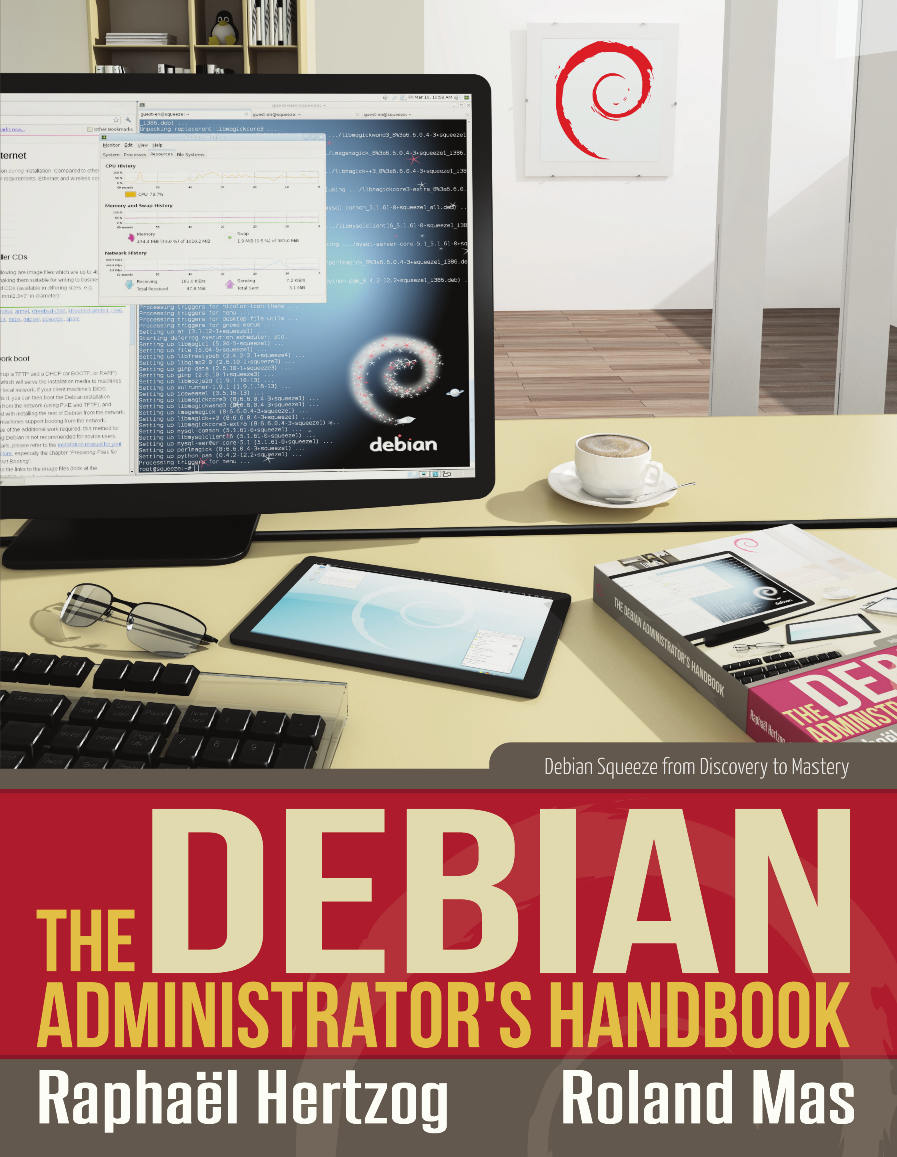
This is my monthly summary of my Debian related activities. If you re among the people who made a donation to support my work (227.83 , thanks everybody!), then you can learn how I spent your money. Otherwise it s just an interesting status update on my various projects. Dpkg Thanks to Guillem, dpkg with multiarch support is now available in Debian sid. The road has been bumpy, and it has again been delayed multiple times even after Guillem announced it on debian-devel-announce. Finally, the upload happened on March 19th. I did not appreciate his announce because it was not coordinated at all, and had I been involved from the start, we could have drafted it in a way that sounded less scary for people. In the end, I provided a script so that people can verify whether they were affected by one of the potential problems that Guillem pointed out. While real, most of them are rather unlikely for typical multiarch usage. Bernhard R. Link submitted a patch to add a new status command to dpkg-buildflags. This command would print all the information required to understand which flags are activated and why. It would typically be called during the build process by debian/rules to keep a trace of the build flags configuration. The goal is to help debugging and also to make it possible to extract that information automatically from build logs. I reviewed his patch and we made several iterations, it s mostly ready to be merged but there s one detail where Bernhard and I disagree and I solicited Guillem s opinion to try to take a decision. Unfortunately neither Guillem nor anyone else chimed in. On request of Alexander Wirt, I uploaded a new backport of dpkg where I dropped the DEB_HOST_MULTIARCH variable from dpkg-architecture to ensure multi-arch is never accidentally enabled in other backports. One last thing that I did not mention publicly at all yet, is that I contacted Lennart Poettering to suggest an improvement to the /etc/os-release file that he s trying to standardize across distributions. It occurred to me that this file could also replace our /etc/dpkg/origins/default file (and not only /etc/debian_version) provided that it could store ancestry information. After some discussions, he documented new official fields for that file (ID_LIKE, HOME_URL, SUPPORT_URL, BUG_REPORT_URL). Next step for me is to improve dpkg-vendor to support this file (as a fallback or as default, I don t know yet). Packaging I packaged quilt 0.60 (we re now down to 9 Debian-specific patches, from a whopping 26 in version 0.48!) and zim 0.55. In prevision of the next upstream version of Publican, I asked the Perl team to package a few Perl modules that Publican now requires. Less than two weeks after, all of them were in Debian Unstable. Congrats and many thanks to the Perl team (and Salvatore Bonaccorso in particular, which I happen to know because we were on the same plane during last Debconf!). On a side note, being the maintainer of nautilus-dropbox became progressively less fun over the last months, in particular because the upstream authors tried to override some of the (IMO correct) packaging decisions that I made and got in touch with Ubuntu community managers to try to have their way. Last but not least, I keep getting duplicates of a bug that is not in my package but in the official package and that Dropbox did not respond to my query. Book update The translation is finished and we re now reviewing the whole book. It takes a bit more time than expected because we re trying to harmonize the style and because it s difficult to coordinate the work of several volunteer reviewers. The book cover is now almost finalized (click on it to view it in higher definitions): We also made some progress on the interior design for the paperback. Unfortunately, I have nothing to show you yet. But it will be very nice and made with just a LaTeX stylesheet tailored for use with dblatex. The liberation fundraising slowed down with only 41 new supporters this month but it made a nice bump anyway thanks to a generous donation of 1000 EUR by Offensive security, the company behind Backtrack Linux. They will soon communicate on this, hopefully it will boost the operation. It would be really nice if we managed to raise the remaining 3000 EUR in the few weeks left until the official release of the book! The work on my book dominated the month and explains my relative inactivity on other fronts. I worked much more than usual, and my wife keeps telling me that I look tired and that I should go in bed earlier but I see the end of the tunnel: if everything goes well, the book should be released in a few weeks and I will be able to switch back to a saner lifestyle. Thanks See you next month for a new summary of my activities.

One comment Liked this article? Click here. My blog is Flattr-enabled.

Joey Hess: ls: the missing options

I'm honored and pleased to be the person who gets to complete ls. This project, begun around when I was born, was slow to turn into anything more than a simple for loop over a dirent. It really took off in the mid and late 80's, when Richard Stallman added numerous features, and the growth has been steady ever since. But, a glance at the man page shows that ls has never quite been complete. It fell to me to finish the job, and I have produced several handy patches to this end: The only obvious lack now is a -z option, which should make output filenames be NULL terminated for consuption by other programs. I think this would be easy to write, but I've been extermely busy IRL (moving lots of furniture) and didn't get to it. Any takers to write it? Due to the nature of these patches, they conflict with each other. Here's a combined patch suitable to be applied and tested.
diff -ur orig/coreutils-8.13/src/ls.c coreutils-8.13/src/ls.c
--- orig/coreutils-8.13/src/ls.c    2011-07-28 06:38:27.000000000 -0400
+++ coreutils-8.13/src/ls.c 2012-04-01 12:41:56.835106346 -0400
@@ -270,6 +270,7 @@
 static int format_group_width (gid_t g);
 static void print_long_format (const struct fileinfo *f);
 static void print_many_per_line (void);
+static void print_jam (void);
 static size_t print_name_with_quoting (const struct fileinfo *f,
                                        bool symlink_target,
                                        struct obstack *stack,
@@ -382,6 +383,7 @@
    many_per_line for just names, many per line, sorted vertically.
    horizontal for just names, many per line, sorted horizontally.
    with_commas for just names, many per line, separated by commas.
+   jam to fit in the most information possible.
 
    -l (and other options that imply -l), -1, -C, -x and -m control
    this parameter.  */
@@ -392,7 +394,8 @@
     one_per_line,      /* -1 */
     many_per_line,     /* -C */
     horizontal,            /* -x */
-    with_commas            /* -m */
+    with_commas,       /* -m */
+    jam            /* -j */
    ;
 
 static enum format format;
@@ -630,6 +633,11 @@
 
 static bool immediate_dirs;
 
+/* True means when multiple directories are being displayed, combine
+ * their contents as if all in one directory. -e */
+
+static bool entangle_dirs;
+
 /* True means that directories are grouped before files. */
 
 static bool directories_first;
@@ -705,6 +713,10 @@
 
 static bool format_needs_type;
 
+/* Answer "yes" to all prompts. */
+
+static bool yes;
+
 /* An arbitrary limit on the number of bytes in a printed time stamp.
    This is set to a relatively small value to avoid the need to worry
    about denial-of-service attacks on servers that run "ls" on behalf
@@ -804,6 +816,7 @@
    "escape", no_argument, NULL, 'b' ,
    "directory", no_argument, NULL, 'd' ,
    "dired", no_argument, NULL, 'D' ,
+   "entangle", no_argument, NULL, 'e' ,
    "full-time", no_argument, NULL, FULL_TIME_OPTION ,
    "group-directories-first", no_argument, NULL,
    GROUP_DIRECTORIES_FIRST_OPTION ,
@@ -849,12 +862,12 @@
 static char const *const format_args[] =
  
   "verbose", "long", "commas", "horizontal", "across",
-  "vertical", "single-column", NULL
+  "vertical", "single-column", "jam", NULL
  ;
 static enum format const format_types[] =
  
   long_format, long_format, with_commas, horizontal, horizontal,
-  many_per_line, one_per_line
+  many_per_line, one_per_line, jam
  ;
 ARGMATCH_VERIFY (format_args, format_types);
 
@@ -1448,6 +1461,9 @@
       print_dir_name = true;
      
 
+  if (entangle_dirs)
+      print_current_files ();
+
   if (print_with_color)
      
       int j;
@@ -1559,6 +1575,7 @@
   print_block_size = false;
   indicator_style = none;
   print_inode = false;
+  yes = false;
   dereference = DEREF_UNDEFINED;
   recursive = false;
   immediate_dirs = false;
@@ -1644,7 +1661,7 @@
      
       int oi = -1;
       int c = getopt_long (argc, argv,
-                           "abcdfghiklmnopqrstuvw:xABCDFGHI:LNQRST:UXZ1",
+                           "abcdefghijklmnopqrstuvw:xyABCDFGHI:LNQRST:UXZ1",
                            long_options, &oi);
       if (c == -1)
         break;
@@ -1667,6 +1684,10 @@
           immediate_dirs = true;
           break;
 
+   case 'e':
+          entangle_dirs = true;
+     break;
+
         case 'f':
           /* Same as enabling -a -U and disabling -l -s.  */
           ignore_mode = IGNORE_MINIMAL;
@@ -1697,6 +1718,10 @@
           print_inode = true;
           break;
 
+   case 'j':
+     format = jam;
+     break;
+
         case 'k':
           human_output_opts = 0;
           file_output_block_size = output_block_size = 1024;
@@ -1765,6 +1790,10 @@
           format = horizontal;
           break;
 
+   case 'y':
+     yes = true;
+     break;
+
         case 'A':
           if (ignore_mode == IGNORE_DEFAULT)
             ignore_mode = IGNORE_DOT_AND_DOTDOT;
@@ -2510,7 +2539,7 @@
       DEV_INO_PUSH (dir_stat.st_dev, dir_stat.st_ino);
      
 
-  if (recursive   print_dir_name)
+  if ((recursive   print_dir_name) && ! entangle_dirs)
      
       if (!first)
         DIRED_PUTCHAR ('\n');
@@ -2526,7 +2555,8 @@
   /* Read the directory entries, and insert the subfiles into the  cwd_file'
      table.  */
 
-  clear_files ();
+  if (! entangle_dirs)
+     clear_files ();
 
   while (1)
      
@@ -2615,7 +2645,7 @@
       DIRED_PUTCHAR ('\n');
      
 
-  if (cwd_n_used)
+  if (cwd_n_used && ! entangle_dirs)
     print_current_files ();
  
 
@@ -3464,6 +3494,10 @@
       print_with_commas ();
       break;
 
+    case jam:
+      print_jam ();
+      break;
+
     case long_format:
       for (i = 0; i < cwd_n_used; i++)
          
@@ -4418,6 +4452,24 @@
   putchar ('\n');
  
 
+static void
+print_jam (void)
+ 
+  size_t filesno;
+  size_t pos = 0;
+
+  for (filesno = 0; filesno < cwd_n_used; filesno++)
+     
+      struct fileinfo const *f = sorted_file[filesno];
+      size_t len = length_of_file_name_and_frills (f);
+
+      print_file_name_and_frills (f, pos);
+      pos += len;
+     
+  putchar ('\n');
+ 
+
+
 /* Assuming cursor is at position FROM, indent up to position TO.
    Use a TAB character instead of two or more spaces whenever possible.  */
 
@@ -4627,11 +4679,13 @@
   -D, --dired                generate output designed for Emacs' dired mode\n\
 "), stdout);
       fputs (_("\
+  -e, --entangle             display multiple directory contents as one\n\
   -f                         do not sort, enable -aU, disable -ls --color\n\
   -F, --classify             append indicator (one of */=>@ ) to entries\n\
       --file-type            likewise, except do not append  *'\n\
       --format=WORD          across -x, commas -m, horizontal -x, long -l,\n\
                                single-column -1, verbose -l, vertical -C\n\
+                               jam -j\n\
       --full-time            like -l --time-style=full-iso\n\
 "), stdout);
       fputs (_("\
@@ -4667,6 +4721,8 @@
   -i, --inode                print the index number of each file\n\
   -I, --ignore=PATTERN       do not list implied entries matching shell PATTERN\
 \n\
+  -j                         jam output together, makes the most of limited\n\
+                             space on modern systems (cell phones, twitter)\n\
   -k                         like --block-size=1K\n\
 "), stdout);
       fputs (_("\
@@ -4733,6 +4789,7 @@
   -w, --width=COLS           assume screen width instead of current value\n\
   -x                         list entries by lines instead of by columns\n\
   -X                         sort alphabetically by entry extension\n\
+  -y                         answer all questions with \"yes\"\n\
   -Z, --context              print any SELinux security context of each file\n\
   -1                         list one file per line\n\
 "), stdout);
It remains to be seen if multi-option enabled coreutils will be accepted into Debian in time for the next release. Due to some disagreements with the coreutils maintainer, the matter has been referred to the Technical Committee (Flattr me) Traditionally new ls contributors stop once enough options have been added that they can spell their name, in the best traditions of yellow snow. Once ls -richard -stallman worked, I'm sure RMS moved on other other more pressing concerns. The current maintainer, David MacKenzie, was clearly not done yet, since only ls -david -mack worked. But he was being slow to add these last few features, and ls was very deficient in the realm of spelling my name (ls -o -hss .. srsly?), so I took matter into my own hands in the best tradition of free software.

Kai Wasserb ch: kvpm in Debian now

Just a short announcement: kvpm (short for "KDE volume and partition manager") is now a part of Debian's unstable distribution, Sid, and should enter testing (Wheezy) soon. The big thank you for this goes to Benjamin, upstream author of kvpm who has become also the Debian Maintainer of his software! The story behind packaging kvpm started with Benjamin writing an e-mail to pkg-kde-extras, in which he asked for inclusion of kvpm into Debian. After an initial answer by myself about filing a RFP bug, in case he wouldn't like to package kvpm himself, a discussion in private ensued. There I explained that Debian is a do-ocracy, where things get packaged if some maintainer uses something herself or if the requesting party does the work. Benjamin took up the challenge and packaged kvpm, I helped only with feedback and finally sponsoring the upload. Why do I tell this story? Because I hope it encourages other people to do the same as Benjamin did: package the software they'd like to see become a part of Debian. We, the Debian Developers around the world, are more than happy to assist you. Just ask us (e.g. by e-mail or through IRC (#debian-mentors)).

Next.

Previous.