Daniel Pocock: Kamailio World and FSFE team visit, Tirana arrival

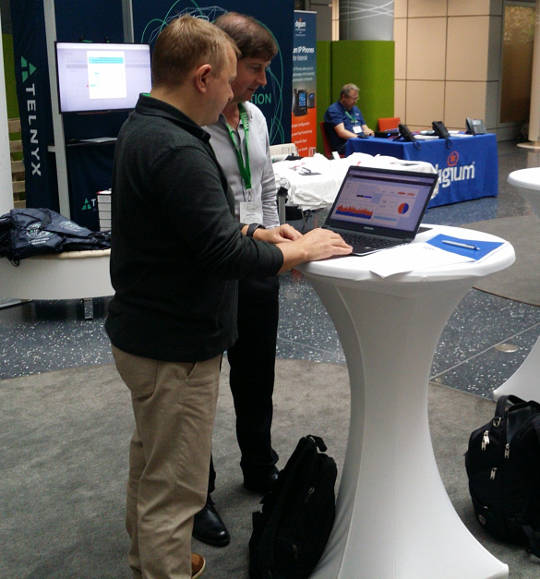
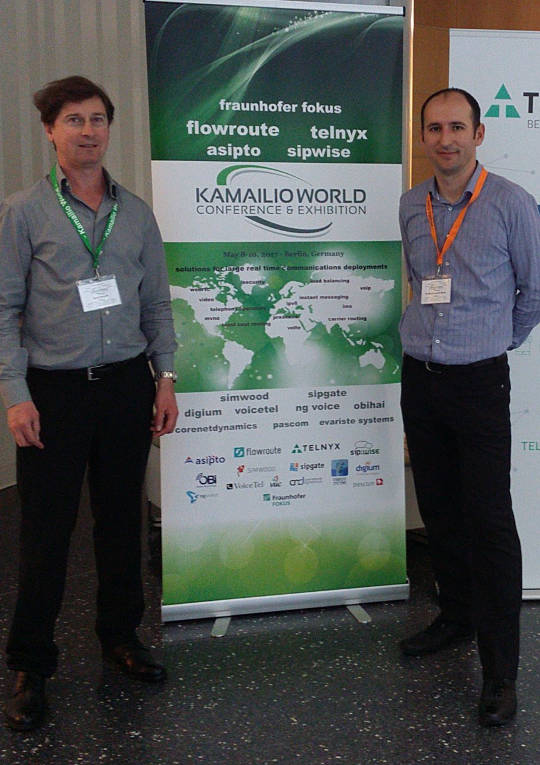
This week I've been thrilled to be in Berlin for Kamailio World 2017, one of the highlights of the SIP, VoIP and telephony enthusiast's calendar. It is an event that reaches far beyond Kamailio and is well attended by leaders of many of the well known free software projects in this space.
HOMER 6 is coming
Alexandr Dubovikov gave me a sneak peek of the new version of the HOMER SIP capture framework for gathering, storing and analyzing messages in a SIP network.
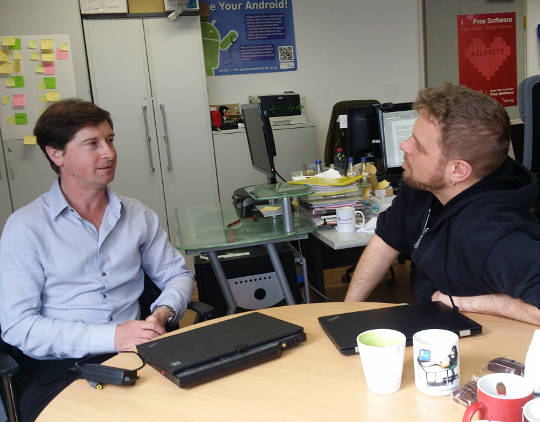
 Visiting the FSFE team in Berlin
Having recently joined the FSFE's General Assembly as the fellowship representative, I've been keen to get to know more about the organization. My visit to the FSFE office involved a wide-ranging discussion with Erik Albers about the fellowship program and FSFE in general.
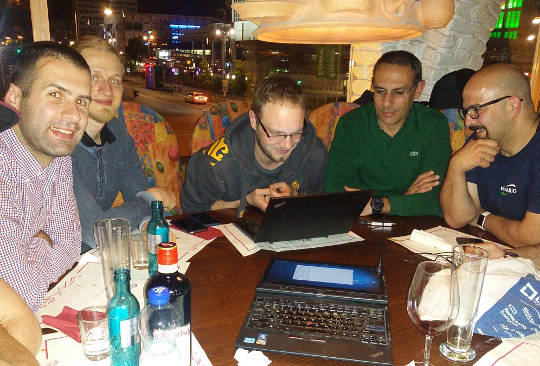
 Steak and SDR night
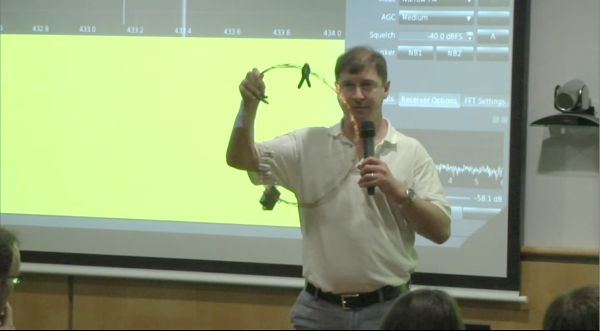
After a hard day of SIP hacking and a long afternoon at Kamailio World's open bar, a developer needs a decent meal and something previously unseen to hack on. A group of us settled at Escados, Alexanderplatz where my SDR kit emerged from my bag and other Debian users found out how easy it is to apt install the packages, attach the dongle and explore the radio spectrum.
 Next stop OSCAL'17, Tirana
Having left Berlin, I'm now in Tirana, Albania where I'll give an SDR workshop and Free-RTC talk at OSCAL'17. The weather forecast is between 26 - 28 degrees celsius, the food is great and the weekend's schedule is full of interesting talks and workshops. The organizing team have already made me feel very welcome here, meeting me at the airport and leaving a very generous basket of gifts in my hotel room. OSCAL has emerged as a significant annual event in the free software world and if it's too late for you to come this year, don't miss it in 2018.

Visiting the FSFE team in Berlin
Having recently joined the FSFE's General Assembly as the fellowship representative, I've been keen to get to know more about the organization. My visit to the FSFE office involved a wide-ranging discussion with Erik Albers about the fellowship program and FSFE in general.
Steak and SDR night
After a hard day of SIP hacking and a long afternoon at Kamailio World's open bar, a developer needs a decent meal and something previously unseen to hack on. A group of us settled at Escados, Alexanderplatz where my SDR kit emerged from my bag and other Debian users found out how easy it is to apt install the packages, attach the dongle and explore the radio spectrum.
Next stop OSCAL'17, Tirana
Having left Berlin, I'm now in Tirana, Albania where I'll give an SDR workshop and Free-RTC talk at OSCAL'17. The weather forecast is between 26 - 28 degrees celsius, the food is great and the weekend's schedule is full of interesting talks and workshops. The organizing team have already made me feel very welcome here, meeting me at the airport and leaving a very generous basket of gifts in my hotel room. OSCAL has emerged as a significant annual event in the free software world and if it's too late for you to come this year, don't miss it in 2018.
 Two days ago one of the most influential logician of the 20th century has passed away,
 I don t want to recall his achievements in mathematical logic, in particular proof theory, because I am not worth to write about such a genius. I want to recall a few personal stories from my own experience.
I came into contact with Prof. Takeuti via is famous book
 Debian has many years of history, about 25 years already.
With such a long travel over the continous field of developing our Universal
Operating System, some myths, false accusations and bad reputation has arisen.
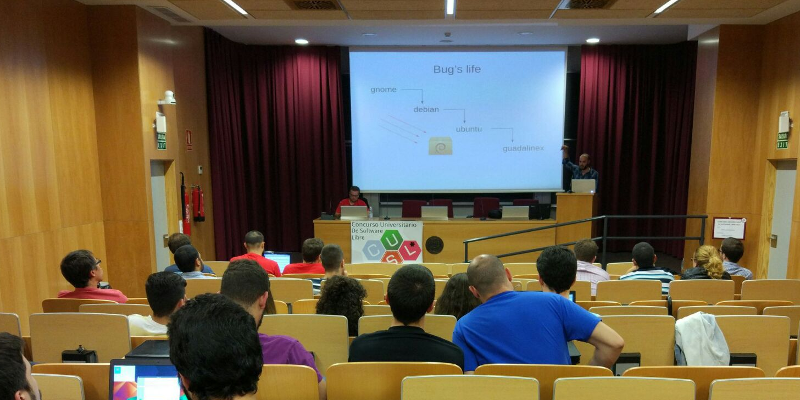
Today I had the opportunity to discuss this topic, I was invited to give a
Debian talk in the
 myth #1: Debian is old software
Please, use testing or stable-backports. If you use Debian stable your system
will in fact be stable and that means: updates contain no new software but
only fixes.
myth #2: Debian is slow
We compile and build most of our packages with industry-standard compilers and
options. I don t see a significant difference on how fast linux kernel or
mysql run in a CentOS or in Debian.
myth #3: Debian is difficult
I already discussed about this issue back in
 I run some Internet services on my home Internet connection, mostly for
myself but also for friends and family. The IPv4 address assigned to my home by
my ISP (currently: BT Internet) is dynamic and changes from time to time. To
get around this, I make use of a "dynamic dns" service: essentially, a web
service that updates a hostname whenever my IP changes.
Since sometime last year I have also had an IPv6 address for my home
connection: In fact, lots of them. There are more IPv6 addresses assigned to my
home than there are IPv4 addresses on the entire Internet:
4,722,366,482,869,645,213,696 compared to 4,294,967,296 IPv4 addresses for the
entire world (of which 3,706,452,992 are usable).
I am relatively new to IPv6 (despite having played with it on and off since
around the year 2000). I was curious to find out how stable the IPv6 addresses
are, compared to the IPv4 one. It turns out that it's very stable: I've had
four IPv4 addresses since February this year, but my IPv6 allocation has not
changed.

 If you see Thunderbird hanging during startup for a minute and then continuing to load fine, you are probably running into an issue similar to what I saw when Debian migrated Icedove back to the "official" Mozilla Thunderbird branding and changed
 I tried learning rust but making very little progress.

 More details about Intel's AMT vulnerablity

 I ve documented the process of installing a

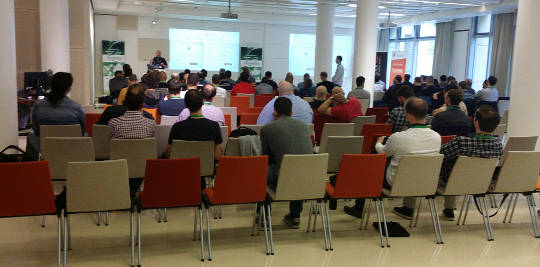 Kamailio World features a range of talks about developing and using SIP and telephony applications and offers many opportunities for SIP developers, WebRTC developers, network operators and users to interact. Wednesday, at midday, there is a Dangerous Demos session where cutting edge innovations will make their first (and potentially last) appearance.
 OSCAL'17, Tirana
OSCAL'17 is an event that has grown dramatically in recent years and is expecting hundreds of free software users and developers, including many international guests, to converge on Tirana, Albania this weekend.
On Saturday I'll be giving a workshop about
 Recently,
