Search Results: "sto"

25 May 2012

Matthew Garrett: Fedora 17 and Mac support

Fedora 17 will be shipping next week. It's got a bunch of new features, none of which I contributed to in the slightest. What I did work on was improving our support for installation on x86 Apple hardware. There's still a few shortcomings in this so it's not an announced or supported feature, but it's sufficient progress that it's worth writing about.

There's a few ways that Apple platforms differs from normal PC hardware. The first is that Apples are very much intended to be EFI first and BIOS second, while that's still not really true for commodity PC hardware. Apple launched Boot Camp shortly after they started shipping x86 Macs (and shortly after I'd got Ubuntu running on one for the first time[1]) but the focus of Boot Camp has always been to be good enough to boot Windows and not much else[2]. The other is the integration with the boot environment. You can boot Linux easily enough by setting the standard EFI boot variables, but if you ever boot back into OS X it's easy to trigger deletion of those. There's then no straightforward way of resetting them, and you're left having to recover your installation.

The other difficult bit has been actually starting the installer at all. If you're happy to use BIOS emulation than this can be done without too much misery, but you're then left with dealing with Apple's custom synchronised GPT/MBR. More modern Macs will boot via the standard EFI mechanisms, but there's a range of problems that can be caused that way. Fedora 17 is the first Linux distribution to ship install media that will EFI boot a Mac when either written to optical media or a USB stick[3]. Put the install media in your system and then either select it in the OS X Startup Disk preferences menu and reboot, or reboot and hold down the alt key. In the latter case there'll be a nice Fedora logo. Click on it and it'll boot.

The biggest difference between Apple hardware and anyone else is that we'd normally put the bootloader in a FAT partition that's shared with any other installed operating systems. That does actually work on Apples, but then you run into the earlier point I mentioned. The Apple startup picker that you get by holding down the alt key doesn't pay any attention to the standard EFI boot variables, so it won't show a FAT partition merely because it's got an EFI bootloader on it. The same is true of the OS X Startup Disk preferences. The best way to get a drive to appear in the menu is to make it look like an OS X drive.

This was problematic in a few ways, due to the requirement for an OS X drive to be HFS+. The first was that we didn't have any support for that in our installer, so work had to be done there. The second was that the state of HFS+ was woefully poor in Linux[4]. Linux will refuse to write to an HFS+ filesystem if it hasn't been cleanly unmounted or fscked, and since we can't rely on everyone always shutting their machine down cleanly that means a working fsck.hfsplus. In theory we were shipping one of those. In practice, it reliably segfaulted on 64-bit systems[5]. So I had to package the latest version of Apple's code, and doing that involved dealing with the fact that Apple now use blocks almost as much as Grub 2 uses nested functions, and that meant using Clang and that meant dealing with a bug where Clang segfaulted if it had been built with gcc 4.7[6], but finally once all of those yaks had been shaven we could trust our filesystem.

Of course, more problems existed. You can't just drop a bootloader onto an HFS+ partition and expect it to work. You need to write its inode value into the superblock. Trivial, except that if you do this from userspace then the kernel kindly overwrites your update when you unmount the disk and it updates the superblock. That required a mechanism for updating that data via the kernel, which meant adding an ioctl. This would have been fine, except the OS X Startup Disk preference looks for a bootloader in a location other than where Fedora installs it. Changing our bootloader install path wasn't a great option, so the easiest thing to do was just to link them together. Except HFS+ doesn't really support hardlinks. When you hardlink something the original file gets moved into a magic directory in the filesystem root and the links are special files that refer to it. And it turns out that it's not actually the inode that the firmware wants when finding the bootloader, it's the catalogue ID, and these aren't the same when hardlinks are involved. So, another kernel patch.

All that was left for the boot partition then was adding an icon and a drive label. We already had code for generating the icon, and the drive label wasn't that difficult. Hurrah!

Ok, so we can construct a filesystem that (a) appears in the bootpicker, and (b) appears in the OS X Startup Disk preferences. We can even put a bootloader on it. This led to the next problem. The bootloader started without any trouble. But the bootloader couldn't read any files off the boot partition, including its configuration. This should have been obvious with hindsight - the problem was simply that grub legacy[7] doesn't support HFS+. Writing an HFS+ driver seemed like an excessive amount of work, especially since the firmware already supported reading HFS+, so instead I wrote a simple grub filesystem driver that uses the UEFI interfaces to read files.

A working bootloader! One more problem there. grub looks in its startup directory to find its configuration file. We have two "copies" of grub hardlinked to each other, each looking in a different directory for configuration. Hardlinking the config files together worked fine, except that most tools that update config files have this irritating habit of writing to a temporary file and moving that over the original, thus breaking the hardlink. Easily solved by using a symlink instead, except that the UEFI filesystem semantics don't really support symlinks because UEFI only really envisaged using FAT. If you use Apple's UEFI HFS+ driver to open a symlink, you get a short file containing the target path of the symlink. Rather less than ideal, and a rather gross hack to cope with it.

All set now, other than a bug in some older Mac firmware where read would return BUFFER_TOO_SMALL without returning the real buffersize and the odd way that Apple treat CDs. Oh, and a bug in Apple's Broadcom wifi driver that could overwrite the kernel, and case-sensitivity, something that obviously isn't something you often hit on UEFI when all you usually see is FAT.

Kernel-side, we had a couple of things. Obviously there the bugs I'd mentioned in the past, but those had already been dealt with. New issues included the fact that we were frequently picking the wrong framebuffer address, especially on machines with multiple GPUs. Fixed now, along with another issue where we'd sometimes get confused by models with different GPU configurations. And at that point, most of the implementation work was done.

Of course, there was also the work of integrating this into the tools that we use to generate our install media, and I'd like to thank Will Woods, Brian Lane and Dennis Gilmore for the work they put into that, along with anyone I've forgotten. Tom Calloway handled getting the device label graphics generated right before deadline. A cast of thousands helped with testing.

So why did I mention shortcomings? First, this only works on machines with 64-bit firmware. Early 64-bit Apples still had 32-bit firmware. In theory we can support that case - in practice it's a moderate amount of writing, including some mildly awkward kernel code. But anything later than mid-2007 should have 64-bit firmware, so it's not a massive concern. Second, we seem to have fairly significant trouble with Radeon hardware on a lot of Macs. We fixed one bug there, but something's still going wrong in setup and you'll frequently end up with a black screen. And thirdly, I'm sure there's some other machines that still don't work for (as yet) undetermined reasons.

With luck we'll get these things dealt with by Fedora 18. But even with these flaws, Fedora 17 will work fine on a lot of Apple hardware, and testing it is as simple as downloading and booting a live image. Bugs go in the usual place.

[1] Note my charming belief that the Ubuntu installer would fully support this hardware via EFI in the near future. 6 years ago. It still doesn't.
[2] This can be fairly easily seen from little things like the name "Windows" being hardcoded into every UI that sees a Boot Camp drive.
[3] I cover this in more depth here
[4] To be fair, it mostly still is - there's plenty of work to be done there.
[5] Approximately nobody had noticed this, which is all kinds of unreassuring.
[6] Thanks to Kalev Lember for dealing with that
[7] Still the EFI bootloader in Fedora 17. We've already swapped Fedora 18 over to grub 2.

comment count unavailable comments

24 May 2012

Vincent Sanders: Interrupt Service Routines

Something a little low level for this post. I have been asked recently how to "test" for the maximum duration of an Interrupt Service Routine (ISR) in Linux

To do this I probably ought to explain what the heck an ISR is!

A CPU executes one instruction after another and runs your programs. However early in the history of the electronic computer it soon became apparent that sometimes there were events happening, generally caused by a hardware peripheral, that required some other code to be executed without having to wait for the running program to check for the event.

This could have been solved by having a second processor to look after those exceptional events but that would have been expensive, difficult to synchronize and the designers took the view that there was a perfectly good processor already sat there just running some users program. This Interruption in the code flow became known as, well, an Interrupt (and the other approach as polling).

The hardware for supporting interrupts started out very simply, the processor would complete execution of the current instruction and when the Program Counter (PC) was about to be incremented if an Interrupt ReQest (IRQ) was pending the PC would be stored somewhere (often a "special" IRQ stack or register) and then execution started at some fixed address.

The interrupting event would be dealt with by some code and execution returned to the original program without it ever knowing the CPU just wandered off to do something else. The code that deals with the interrupt is known as the Interrupt Service Routine (ISR).

Now I have glossed over a lot of issues here (sufficient to say there are a huge number of details in which to hide the devil) but the model is good enough for my purpose. A modern CPU has a extraordinarily complex system of IRQ controllers to deal with numerous peripherals requesting the CPU stop what its doing and look after something else.

This system of controllers will ultimately cause program execution to be delivered to an ISR for that device. If we were living in the old single thread of execution world we could measure how long execution remains within an ISR, perhaps by using a physical I/O line as a semaphore and an external oscilloscope to monitor the line.

You may well ask "Why measure this?" well historically while the ISR was running nothing else could interrupt it executing which meant even if there was an event that was more important it would not get the CPU until the first ISR was complete. This was known as IRQ latency which was undesirable if you were doing something that required an IRQ to be serviced in a timely manner (like playing audio)

This is no longer how things are done while the top half runs with IRQ disabled many are threaded interrupt handlers and are preemptable (I.e. can be interrupted themselves) which leads to the first issue with measuring ISR time in that the ISR may be executed in multiple chunks if something more important interrupts. Indeed it may appear an ISR has taken many times longer one time than another because the CPU has been off servicing multiple other IRQ.

Then we have the issue that Linux kernel drivers often do as little as possible within their ISR, often only as much as is required to clear the physical interrupt line. Processing is then continued in a "bottom half" handler this leads to ISR which take practically no time to execute but processing is still being caused elsewhere in the system.

The next issue is the world is not uniprocessor any more, how many processors does a machine have these days? even a small ARM SoC can often have two or even four cores. This makes our timing harder because it is now possible to be servicing multiple interrupts from a single peripheral on separate cores at the same time!

In summary measuring ISR execution time is not terribly enlightening and almost certainly not what you are interested in. The actual question is much more likely that you really want to be examining something that the ISR time was an historical proxy for like IRQ latency or system overheads in locking.

Mark Brown: regmap updates in 3.4

Things are really quieting down with the regmap API, while we re still seeing a trickle of new features coming in they re getting much smaller than they were. plus the general bug fixes and tweaks you d expect.

Ingo Juergensmann: About Gallery3 in Debian and MySQL

Years ago, when I started using a cheap Kodak DX3600 digital camera to make some digital photos, I used Gallery from Menalto to collect these pictures within a gallery. Gallery (version 1) was using plain text files to keep its information about galleries and photos and as the number of photos I put into the gallery the more it got slower and slower. Then Gallery2 was released which used a database, either MySQL or PostgreSQL, and was a huge improvement in speed. My main galleries do have about 10-20.000 pictures each. But Gallery2 is aged nowadays and the next logical step would be to migrate to Gallery3. But what a mess! Gallery3 has some drawbacks:
  1. there is currently no gallery3 package in Debian, although it's been released upstream for some time now.
  2. there is actually a bug open (#511715), stating that there are some license issues with Gallery3 and some SWF files
  3. it's been said that Gallery3 doesn't support per picture permissions anymore, only permission per album is now possible, which is giving me headache as I changed permissions of some personal pictures in the past for privacy reasons and which would either lead to completely unavailable albums to the public or the need of splitting album into a public and a private section, which breaks the timely order of the pictures
  4. whereas G2 supported both MySQL and PostgreSQL as database backends, G3 only supports MySQL. That's a real pitty because I prefer PostgreSQL because of its stability and easiness over MySQL. It already happened several times that MySQL databases were gone after a kernel crash or something. Even mysql.user table was gone more than once, whereas PostgreSQL never ever has shown such behaviour to me. It just works.
I'm really upset about the last point! Why is there such a strong believe in MySQL. In my eyes, MySQL is utter crap. It's more like MS Access than a real thing when talking DBMS/SQL. And my impression is that, after Oracle bought MySQL, Oracle did a good job to scare their customers off. PostgreSQL on the other hand gained a good momentum in usage since the Oracle/MySQL deal. So, it's a total mystery to me how a big software package with dozens of developers can decide not to support PostgreSQL or even drop the support of PostgreSQL for a new release! It's driving me nuts, again and again. Other big software packages like Drupal are doing the right thing: while PostgreSQL support in drupal6 was weak and buggy because of all these awful MySQLisms around, Drupal now uses a database abstraction layer in drupal7 to allow even sqlite or Oracle to be used as underlying database. That's the way to go, but it's totally awkward to drop PostgreSQL support as Gallery3 did. So, is there a way out of my dilemma? Will gallery3 be a package within Debian soon (no offense to Michael Schultheiss, I think he's doing a great job and needs assistance from upstream in this case)? Is there any good replacement for Gallery3 that can deal with tenthousends of images and dozens of users and supports PostgreSQL and has some kind of import tool from gallery2?
Kategorie:

23 May 2012

Gintautas Miliauskas: HP LaserJet 1018 on Ubuntu

An offtopic post for an issue that I just ran into for the n-th time: after upgrading to Ubuntu Precise, my HP LaserJet 1018 stopped working again, the issue being that the printer firmware was not being uploaded to the printer properly. For posterity, (one) way to fix this is to uninstall the printer-driver-foo2zjs package, remove the printer itself from the list of printers, and then use HP utilities to set up the printer:

sudo apt-get remove printer-driver-foo2zjs
sudo apt-get install hplip-gui
sudo hp-setup


You may need to turn the printer off and on after the procedure to trigger the firmware uploader.

Joey Hess: kickstarter for git-annex assistant

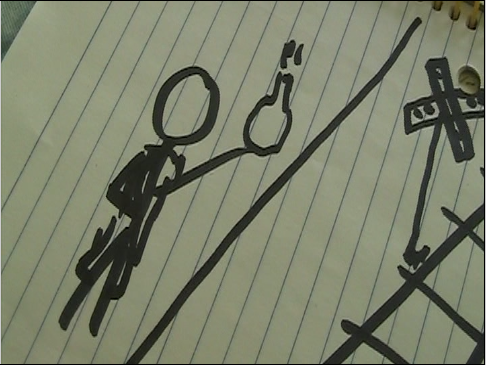
I'm doing a Kickstarter! The plan is to take git-annex and use it as the foundation to build a DropBox-like application, that can be used without any knowledge of git. The other part of the plan is for me to get through the summer with my finances intact. :) kickstarter My Kickstarter page explains in more detail, but the basic idea is to make git-annex watch a directory, with inotify, and automatically add and sync files placed there. Then build a local web app to control and configure it. I have a working prototype of the inotify part already; getting the distributed syncronisation to work well will be a major challenge; and overall it's going to be a challanging but I think very achievable project. One thing I'm really excited about is the potential of Kickstarter to connect me with a diverse group of potential users, who are interested enough in a distributed and autonomous equivilant to DropBox to fund my project. Because, with luck, their involvement won't stop at giving some money, but will extend to actually using what I'm developing, and giving me feedback on it. I hope this will widen the sphere of git-annex users, beyond the current very technically inclined crowd. It's awesome to have users doing things like taking git-annex on the transiberian railroad to help manage all their photos, and others using it to store scientific data ... but getting more regular folks using git, even if they don't know about it, is something I'm very interested in. xkcd-esque drawing BTW, I was surprised how much I got into doing the video for the Kickstarter. Using xkcd-style drawings used to explain technical concepts is a medium I enjoy working in. My own git-annex is stuffed with 17 gigabytes of video clips -- 99 separate takes! -- that boiled down to a 2 minute video. Anyway, please consider backing me if you can, and more importantly, do anything you can to help spread the word. Thanks!

Pietro Abate: configure a local apt repository for puppet

Puppet has a built-in functionality to serve small files to its clients. However, for my internal use I sometimes find easier to create a custom debian package to install a specific component then to write a puppet recipe and to copy files around. To create a local debian repository I use the package reprepro. This is a simple tool that creates and manages apt repository, it is easy to configure and for the moment it lived fully to my expectations. First of all you need to create a configuration file where you describe your distribution. In this case I choose /var/www/debian/conf/distributions and add the following content :
Origin: PCPool
Label: PCPool
Suite: stable
Codename: pcpool
Version: 3.0
Architectures: i386 amd64
Components: contrib
Description: puppet support package repository
SignWith: D3CF695E
Notice that since reprepro wants to sing you repository, you need to provide a gpg keyid for it. To add a package to the repository it is straightforward :
reprepro -Vb /var/www/debian/ includedeb pcpool /tmp/msm_1-2_all.deb
As I said, since the repository is signed, we need to make have a way to add the keyid to the known keys of the target machine. In order to achieve this, we add the following puppet recipe :
class apt
#local repo sign key
$keyid = "D3CF695E"

exec "apt-update":
command => "/usr/bin/apt-get update",
refreshonly => true;


file "/root/pcpool.key":
source => "puppet://$server/files/root/pcpool.key"


exec "apt-key":
path => '/bin:/usr/bin',
environment => 'HOME=/root',
command => "apt-key add /root/pcpool.key",
unless => "apt-key list grep $keyid",
subscribe => File["/root/pcpool.key"]


file "/etc/apt/sources.list.d/puppet.list":
content => "deb http://puppet/debian/ pcpool contrib\n",
owner => root,
group => root,
mode => 0644,
notify => Exec["apt-update"]


class msm
package "msm": ensure => installed
First we copy the keyid that we have stored in the puppet file bucket in the root directory of the client, then we exec the apt-key command. Note that since puppet executes each action in parallel, we must specify an execution order using the attributes subscribe and notify. Similarly as soon as the file /etc/apt/sources.list.d/puppet.list is added to the machine, we run apt-get update to refresh the cache of apt. The last stanza simply installs the package that we added to the local repository.

Pietro Abate: configuring a local apt repository for puppet

Puppet has a built-in functionality to serve small files to its clients. However, for my internal use I sometimes find easier to create a custom debian package to install a specific component then to write a puppet recipe and to copy files around. To create a local debian repository I use the package reprepro. This is a simple tool that creates and manages apt repository, it is easy to configure and for the moment it lived fully to my expectations. First of all you need to create a configuration file where you describe your distribution. In this case I choose /var/www/debian/conf/distributions and add the following content :
Origin: PCPool
Label: PCPool
Suite: stable
Codename: pcpool
Version: 3.0
Architectures: i386 amd64
Components: contrib
Description: puppet support package repository
SignWith: D3CF695E
Notice that since reprepro wants to sign your repository, you need to provide a gpg keyid for it. To add a package to the repository it is straightforward :
reprepro -Vb /var/www/debian/ includedeb pcpool /tmp/msm_1-2_all.deb
As I said, since the repository is signed, we need to make have a way to add the keyid to the known keys of the target machine. In order to achieve this, we add the following puppet recipe :
class apt
#local repo sign key
$keyid = "D3CF695E"

exec "apt-update":
command => "/usr/bin/apt-get update",
refreshonly => true;


file "/etc/apt/trusted.gpg.d/pcpool.gpg":
source => "puppet://$server/etc/apt/trusted.gpg.d/pcpool.gpg"


# file "/root/pcpool.key":
# source => "puppet://$server/files/root/pcpool.key"
#

# exec "apt-key":
# path => '/bin:/usr/bin',
# environment => 'HOME=/root',
# command => "apt-key add /root/pcpool.key",
# unless => "apt-key list grep $keyid",
# subscribe => File["/root/pcpool.key"]
#

file "/etc/apt/sources.list.d/puppet.list":
content => "deb http://puppet/debian/ pcpool contrib\n",
owner => root,
group => root,
mode => 0644,
notify => Exec["apt-update"]


class msm
package "msm": ensure => installed
First we copy the keyid that we have stored in the puppet file bucket in the root directory of the client, then we exec the apt-key command. Note that since puppet executes each action in parallel, we must specify an execution order using the attributes subscribe and notify. Similarly as soon as the file /etc/apt/sources.list.d/puppet.list is added to the machine, we run apt-get update to refresh the cache of apt. The last stanza simply installs the package that we added to the local repository.

Update There is a better way to add a gpg key, that is to put it in the /etc/apt/trusted.gpg.d directory. Thanks for the suggestion !

22 May 2012

Pietro Abate: bootstrap puppet with ganeti

Third post about ganeti. Ganet-debootstrap-instance contains a nice set of scripts to create a debian (or derivatives) image using debootstrap. Images can be configured and customized by writing simple hooks script to modify various aspects of the default installation. However writing these script is not really fun and pushing it too far can lead to long messy scripts, loosing the overall benefit of automatic configuration. Puppet is my configuration management tool of choice, but installing puppet on a new machine requires few magic incantations that the user should perform manually, or in a semi automatic mode (autosign=true) to make it work. My goal is to install puppet automatically on the newly created instance so it will run and configure the new instance at the first boot. From that moment on I'll forget about ganeti and configure all remaining services of my new VM using puppet. In order to do so, we need to install puppet (and apt-get update/upgrade...), create the ssl certificates for the client and enabling the puppet daemon on the client. We add another hook in /etc/ganeti/instance-debootstrap/hooks/ :
if [ -z "$TARGET" -o ! -d "$TARGET" ]; then
echo "Missing target directory"
exit 1
fi

LANG=C
chroot "$TARGET" apt-get -y --force-yes update
chroot "$TARGET" apt-get -y --force-yes upgrade

# install puppet on the client
chroot "$TARGET" apt-get -y --force-yes install puppet

DOMAIN=localnet.org
instance=$INSTANCE_NAME.$DOMAIN

echo "Installing puppet certificates for $instance"
puppetca clean $instance
puppetca -g $instance

mkdir -p $TARGET/etc/puppet
mkdir -p $TARGET/var/lib/puppet/ssl/private_keys/
mkdir -p $TARGET/var/lib/puppet/ssl/certs/

cp /var/lib/puppet/ssl/private_keys/$instance.pem $TARGET/var/lib/puppet/ssl/private_keys/
rm -f $TARGET/var/lib/puppet/ssl/public_keys/$instance.pem

cp /var/lib/puppet/ssl/certs/$instance.pem $TARGET/var/lib/puppet/ssl/certs/
cp /var/lib/puppet/ssl/certs/ca.pem $TARGET/var/lib/puppet/ssl/certs/

chown root. $TARGET/var/lib/puppet/ssl/private_keys/$instance.pem
chmod 0400 $TARGET/var/lib/puppet/ssl/private_keys/$instance.pem

chown root. $TARGET/var/lib/puppet/ssl/certs/$instance.pem
chmod 0640 $TARGET/var/lib/puppet/ssl/certs/$instance.pem

chown root. $TARGET/var/lib/puppet/ssl/certs/ca.pem
chmod 0641 $TARGET/var/lib/puppet/ssl/certs/ca.pem

#echo "server=puppet" >> /etc/puppet/puppet.conf

echo "START=yes" > $TARGET/etc/default/puppet
echo "DAEMON_OPTS=\"\"" >> $TARGET/etc/default/puppet
This script uses puppetca to create on the puppet (and ganeti) server the client key, sign it, and then copy it to the target machine. Notice that we create the certificate for a fqnd name $INSTANCE_NAME.$DOMAIN or otherwise puppet will complain loudly. This is not strictly needed, but if you want to do otherwise, you'll need to fiddle with the puppet configuration a bit more. The procedure to create a puppet certificate server-side is well documented on the puppet website, so if you are curious about the details duck-duck-it .

Russell Coker: Another USB Flash Failure

I previously wrote about a failure of a USB flash device in my Internet gateway [1]. I have since had another failure in the same system, so both the original 4G devices are now dead. That s two dead devices in 10 weeks. It could be that the USB devices that I got for free at an exhibition were just really cheap, I m sure that they weren t expecting them to be used in that way. The devices from the same batch which are used for their intended purpose (sneaker-net file sharing) are still working well. But in any case I m not going to resume this experiment until warmer weather. At this time of year some extra heat dissipation from computer gear in my home is more like a feature and less like a bug. The second USB device to fail appeared to have it s failure in the Ext4 journal (the errors were reported at around sector 2000), I didn t keep a record of the problem with the first device, but from memory I think it was much the same. Rumor has it that cheap flash storage devices don t implement wear-levelling to avoid patent infringement. If that rumor is correct then any filesystem that uses a fixed journal in the same way as Ext3/4 is probably unsuitable for any serious use on such devices, while a filesystem based on Copy On Write will probably perform better. In Spring I ll try using BTRFS on cheap USB flash devices and see if that works better. I have another spare device from the same batch to test so I can eliminate hardware differences. I can t do enough tests to be a good statistical sample, but if a device lasts from Spring to Autumn using BTRFS with the same use that caused failures with Ext4 in a few weeks then I will consider it a strong indication that BTRFS is better than Ext3/4 for such uses. For the next 5 months or so I ll be using a hard drive in my Internet gateway system again. Related posts:
  1. Flash Storage Update Last month I wrote about using USB flash storage devices...
  2. flash for main storage I was in a discussion about flash on a closed...
  3. USB Flash Storage For some years I have had my Internet gateway/firewall system...

Matthew Garrett: I've been a terrible person (and so have most of you)

John Scalzi recently wrote a piece on straight white male privilege. If you haven't read it already, go and do so. No rush. I'll wait.

So. Some facts:

(If you disagree with any of these then that's absolutely your right. You're wrong, but that's ok. But please do me a favour and stop reading here. Otherwise you'll just get angry and then you'll write something ill-tempered and still wrong in the comments and then I'll have to delete it and why not just save everybody the time and effort and go and eat ice cream or something instead)

I know I've said this before, but inappropriate and marginalising behaviour is rife in our community, and at all levels of our community. There's the time an open source evangelist just flat out told a woman that her experiences didn't match his so she must be an outlier. There's the time a leading kernel developer said that most rape statistics were basically made up. There's the time that I said the most useful thing Debian could do with its money would be to buy prostitutes for its developers, simultaneously sexualising the discussion, implying that Debian developers were all straight men and casting sex workers as property. These aren't the exceptions. It's endemic. Almost all of us have been part of the problem, and in doing so we've contributed to an environment that has at best driven away capable contributors. You probably don't want to know what it's done at worst.

But what people have done in the past isn't important. What's important is how we behave in the future. If you're not angry about social injustice like this then you're doing it wrong. If you're reading this then there's a pretty high probability that you're a white male. So, it's great that you're angry. You should be! As a straight white male born into a fairly well-off family, a native English speaker in an English speaking country, I have plenty of time to be angry before going back to my nice apartment and living my almost entirely discrimination-free life. So if it makes me angry, I have absolutely no way of comprehending how angry it must make the people who actually have to live with this shit on a daily basis.


(Were tampon mouse able to form and express coherent thoughts, tampon mouse would not put up with this shit)

The point isn't to be smugly self aware of our own shortcomings and the shortcomings of others. The point is to actually do something about it. If you're not already devoting some amount of your resources to improving fairness in the world, then why not? It doesn't have to be about women in technology - if you're already donating to charity or helping out at schools or engaging in local politics or any of the countless other ways an individual can help make the world a better place, large or small, then keep on doing that. But do consider that many of us have done things in the past that contributed to the alienation of an astounding number of potential community members, and if you can then please do do something to make up for it. It might be donating to groups like The Ada Initiative. It might be mentoring students for projects like the GNOME Outreach Program for Women, or working to create similar programs. Even just making our communities less toxic by pointing out unacceptable behaviour when you see it makes a huge difference.

But most importantly, be aware that it was people like me who were responsible for this problem in the first place and people like me who need to take responsibility for solving it. We can't demand the victims do that for us.

comment count unavailable comments

19 May 2012

Thorsten Glaser: MirBSD goes webservice manpages and WTF

While wtf(1) always has been a bit central to MirBSD, and the acronym database has been accessible by CVSweb, what we never had was a DAU compatible (and shellsnippets compatible) lookup. This has now changed: the above link to the acronyms file is a persistent link to its latest version (well, latest when the website was last recompiled), tooltips may very well follow soon, and we ve got an online WTF lookup service.
Contributions to the acronym database are welcome, of course; just eMail them to tg mirbsd org. Not to stop there, our online HTML manpage search is also new, shiny, and should replace the !mbsdman DuckDuckGo hash-bang shortly. (Both of these services offer a DDG search as fallback. Note that DDG is an external service included herein by linking, under their request to spread it, and not affiliated with The MirOS Project. They do, however, donate some advertising money to Debian.)
For all those who didn t know: only manpages for software in the MirOS BSD base system and for the MirPorts Framework package tools are listed, not for third-party applications installable using ports or, recently, pkgsrc . Still, if you want to have a peek at a modern classic BSD s documentation, you re welcome. (Not to mention content like re_format(7) and style(9) and that some of our documentation is much more legible than others.) And because writing all that perl(1) made me ill, not to mention I don t even know that language, I ve hacked a bit more in the mir make(1) and mksh(1) parts of the MirWebsite, finally implementing pointing out where in the navigation sidebar the visitor currently is. We also have exciting mksh porting news involving RT trying a larger number of ancient platforms than I dare count, me fixing bugs in Linux klibc and diving into other things, learning more about why I consider me lucky for hacking a BSD operating system sorry, I want to keep this short as it s mostly an announcement. The MirWebsite source code is, of course, also available. Improvements welcome. Except for these three CGIs, our website is fully statically precompiled, and that s a good thing. Please help in making the CGIs secure.

Andrew Pollock: [life] Maker Faire 2012 trip report

The Maker Faire is one of those awesome Bay Area things that always fills me with excitement and gets my imagination going. Zoe and I went again this year to check it out, as best we could within the time constraints we had to work within (opening time and her nap time, minus travel time). She definitely enjoyed herself. We took the Caltrain, because historically driving and parking has been a bit of a nightmare. The optimal train to get to get there before it opened (at 10am) was the 9:19 train from Mountain View, which was scheduled to get in at Hayward Park a little before 10am. It just so happened that there was a Giants game on in San Francisco today as well, and the train was absolutely packed. We only got a seat because one kind gentleman was getting off and explicitly gave his seat to us. One lesson learned: don't try and take the BOB stroller on the train. Even when collapsed, it's way too bulky. For future Caltrain outings, I'll take our City Mini stroller instead, as it folds much flatter. I also took our macpac Possum child carrier backpack, and Zoe was pretty happy to just sit in it for the bulk of the time. I think it had novelty value for her, as we haven't used it for a while. I probably could have gotten away without taking a stroller at all. I was very glad I took the backpack, as it gave her a much better vantage point for everything that was going on than she would have gotten from sitting in the stroller. There was supposed to be a free shuttle from the Hayward Park station to the Maker Faire, but there was a huge crowd waiting for it, so I decided to just walk. It didn't take too long. For the return trip, I think I exited from the wrong side of the fairgrounds, and couldn't figure out the shuttles, so I just walked to Hillsdale station. At least the return train wasn't crowded. Overall, using Caltrain to get in and out was successful. Zoe was very well behaved for the ~30 minute train ride each way. The Faire was quite a bit bigger this year, and has spilled out into the parking lot on one side. I'd heard stories that O'Reilly had quadrupled booth prices as well. Trying to abide by the program was too difficult, so we mostly just wandered through the main Expo hall and looked at various booths. I just did a full read through the website of all the exhibitors to see what I missed out on. Here's some of the stuff I saw in person, or discovered via the website: Kickstarter is really becoming huge in the maker community. There were heaps of exhibitors there with (mostly robotics) projects that were past the initial prototyping phase and were seeking funding on Kickstarter to go into mass production. Some of the talks I'd have liked to have seen: Zoe was really well behaved for the entire expedition. I don't think she really gave me any grief at all. There was a brief period where she wanted me to carry her, but I managed to negotiate her back into the stroller after not long. I think her favourite was ArcBotics, which had a robot insect that would dance and wave at her. She kept asking for it to do more dancing.

Richard Hartmann: Mongolia

I will start linking to places we stayed at etc, from now on. On the one hand, we already left those places so my paranoid self can rest assured that no one will come hunt us down, on the other hand, I decided to only to name and link to those places which really deserve a mention. If they are linked here, I can whole-heartedly recommend them. Mongolia After leaving through the Russian border fortifications, Mongolia was an instant and welcome change. Trees growing right next to the tracks, branches forming a bit of a natural tunnel; the trains passing by keeping branches at bay, but the trees free to grow wherever else they pleased. A few hundred meters later below a rocky ledge, a cow had apparently fallen down and died. Partially decomposed flesh still clinging halfway to its rib-cage, it proved to be a sign of the (mostly) more laid-back attitude Mongolians tend to take. After finally getting our passports back and being allowed to leave the train, we first headed to the station to get some money. At ~1800:1, the exchange rate for Tugruk against Euro speaks volumes about inflation; imagine my surprise that the MNT 20,000 note is the largest one. It's also the one and only amount any and all ATMs will default to. We were quite surprised by how cheap everything was, even in the one single store within the station directly behind the border. In Russia, travellers expect to pay hefty markups when shopkeepers know they can charge them, not so in Mongolia. The woman in the trash Upon returning from the station, our waggon was just merrily being driving away on its own by a lone engine, something we had not anticipated or appreciated a whole lot. A woman (we hadn't noticed her before) who was busy scavenging a trash container for food for herself and her scrawny-looking son happily stopped what she was doing and, with a big smile, moved her hands around and smacked them back together, signalling us that our waggon would be attached to a different train for the subsequent journey. To put it mildly, I was stunned; we had met people eating from the trash in Russia as well (yes, I always make a point of giving them enough for a few decent meals; anyone eating out of the trash actually needs and definitely deserves something good happening to them), but they were glum and disheartened. Here, there was someone who not only had to look out for herself, but for a three or four year old boy as well, and still was just so... positive... I don't know if I would have it in me to act the same way... As an aside, even though we were just a few kilometers across the border from Russia, she did not actually take the money from me, she cupped her hands to receive it by having me place it into her hands; this is a very Asian thing in my experience and something we would see both in Mongolia and China consistently. Later, when we were back in our waggon, she passed by and happened to see the Spot Messgenger 2 dangling in front of our window, its lights blinking every five seconds. For a solid twenty minutes, until the train started moving again, she squatted down with her son, oggling the Spot. I have no idea what she was thinking it was and I had no chance to explain it to her, but she was really fascinated and just kept staring and staring. When we finally left the station, we waved to and smiled at each other, she ran after us, and then she was gone. All in all, this was one the more memorable things which happened to us. Mongolian Infrastructure When I say that Mongolians as a whole tend to be a lot more laid back than Russians, this extends to infrastructure as well, but not in the good way. Ulan Bator Little Dhingis Khan We arrived in Ulan Bator at six in the morning and started haggling with taxi drivers. Our hostel had (stale, it turned out) information about acceptable fare from station to their place on their website, 5,000 MNT was supposedly OK. Our driver tried to get 20,000, then 15,000, then 12,000, then 10,000, went down to 7,000 and finally settled for 5,000, all this interspersed with frequent "no" by us and walking away. Once on the road, he wanted to convince me that we had agreed upon 5,000 per person, something that did not quite work out for him. When we arrived, he started to tell me that he was good friends with the hostel manager and that said manager would surely want us to pay more; again, that did not work too well. He made the mistake of getting our luggage out of his trunk immediately (we always kept all our stuff in the passenger area afterwards...) before I paid and even though I only had a 10,000 or 20,000 note, I insisted on correct change. The same old dance began anew, with him edging closer to the correct change in steps of 1,000 MNT. He tried to get away several times, but I stood in his door and held it open; if he had just driven off, I couldn't have stopped him, but that thankfully didn't occur to him. After he shoved all small change (MNT is bill only, no coins) he had with him at me and wanted to make off yet again, I was close to throwing all the small crap at him, but after he, a man of maybe 1.65 meter and sitting down, tried to signal his willingness for a fist fight and me, a man of 1.94 meter and standing started laughing, he gave me 2,000 more and drove off cursing. In case you forgot, at that exchange rate, we argued about two to three Euro, but as he tried to cheat, it became a matter of principle. The Hostel, part one All parking lots and other property in Ulan Bator have a small watchtower with private 24/7 guards; said guard ambled down, let us in and woke the poor woman who was forced to let us check in. As she was Mongolian as well, we were a bit surprised when she switched from broken English to perfect German, but the owners of the OASIS are a German-Austrian couple so I guess that makes sense. Fighting through the war Traffic in Ulan Bator is war. Lonely Planet talks about the city being too newly motorized and that it did not have to develop a culture of driving, yet. This is a euphemism for "no one has any qualms maiming or killing you". Everyone is driving like mad, nudging and racing their way in front of each other. If a driver has an oppurtunity to get ahead by a few centimeters with his small car, thereby blocking the way for several buses, making a whole parking lot grind to a halt and thereby deadlocking themselves, they will take said opportunity, and gladly. Red lights are gentle suggestions, there to be mainly ignored; police will not drive over red lights, but they will not stop anybody else from doing so, either. A hearse will have a dozen or more cars following it, all driving in a tight pack, aggressively attacking anyone who dares to wedge in between them and expecting all other traffic to make way even if they are driving over a red light. Crossing a main street in Ulan Bator as a pedestrian is hell. There are a few traffic lights and they help to some extent, but you still need to be extremely careful when crossing a street. Thailand, India, Russia, China, no matter where it's supposedly hard to cross a street by foot, I never had any issues weaseling through. In UB, it takes planning, determination, and a lot of attention, especially as there are stretches where there's not a traffic light in sight. While maintaining eye contact with a driver usually ensures that they will try not to hit you, this does not work in the least in UB. In the evening, I took to shining a high-powered flashlight at the ground to the oncoming traffic's side to mark ourselves and decrease the likelihood of being hit. This worked well in combination with sprinting through gaps in the traffic, except for one guy who actively aimed for us and did not slow down. He even changed lanes, just to keep us in front of his car... Shining the flashlight directly at him in highest mode made him break quite violently though; a good thing, as he may have hit us had he not slowed down. UB itself Ulan Bator is weird. It has clear signs of westernization, but it's still very much an old city. There is one large store which would fit into any random shopping center in Germany (which are tiny when compared to most other countries) and which carries most goods, if with a limited selection. Its supermarket is extremely well stocked with food and drink from all other the world and laughably cheap (for us) prices. While its infrastructure is definitely crumbling, the city is clean, especially when compared to Russia. Two girls from Stuttgart who we met during our Trans-Siberian travels commented on how clean Russian cities were when compared to home, but that may be more of a statement about Stuttgart than about Russia... Anyway, in Mongolia in general and in UB in particular, there's a concise effort to make what they have look nice and clean. There is no trash in the streets, loose gravel and earth is removed from the curb by dedicated workers, all areas of packed earth are sieved and all large stones removed. All in all, it's a lot cleaner (if more dusty and sandy) than Russian cities if somewhat older and more shabby-looking. That being said, Mongolia's countryside is littered There were several street stalls consisting of nothing more than a cardboard box on a stool selling single chewing gums and cigarettes from the original packaging; it's normal for people to buy one cigarette or one piece of chewing gum and walk on. The sights of UB were nice, but nothing too special. Outlook In the next part, I'll cover "The Hostel, part disaster" and generally talk more about excrement than I thought one could write before moving on to China (were I am located at the time of this writing).

Richard Hartmann: Motherland's bosom

I read a translated poem about Russia being "the Motherland" and its vast bosom years ago. Having driven through a significant part of it, I can agree on the "vast" part... Also, as I am on a train and without access to the Internet, I will refrain from linking to a lot of pages; sorry. (Turns out I am posting this a week later, but I will still not link to stuff now; no time). Russia in general Moscow Sights Kreml Our remaining time in Moscow was spent with touring the usual suspects; the Kreml is a lot less impressive in real life, the Red Square is tiny when compared to the stories I heard about it and the Chapel ofi St. Basil is even more colorful and impressive in real life. Lenin's body was inaccessible because workers built seats for the May 9th parade to the left and the right of it and they apparently thought it would be a good idea to block access to one of the main tourist attractions while doing so. A river tour of Moscow was a nice cool-off and we got to see quite a few things. We managed to see the weekly military parade within the Kreml grounds, but it was mostly pomp and little substance. The National Treasure which you can access with an extra ticket within the Kreml grounds is nice, but less impressive than the tourist guides would make you believe. That being said... There's another museum within the museum and.... Whoah... Tourists pay extra, visitors go through the only non-security-theater check I encountered in Russia, guards are armed, people can only enter and leave in batches, and the stuff which is presented is mind-boggling. Disregarding the fist-to-calf-sized chunks of gold and platinum which are still in their original form directly from the mine, there is real, actual treasure galore. Little heaps of uncut and cut diamonds, an outline of Russia filled with cut diamonds and other random "we have this stuff" displays can be found as well. Then, you have various tiaras and other jewellery made from various gems. Not incorporating, but largely made of. All that pales in comparison to the crown, royal apple, scepter, etc. It's hard to put the amount of tiny multi-colored light points that shine at you into words. I was just standing there, swaying back and forth to catch the moving pattern of pinpoints. It's said that this collection is equalled only by the ones in the Tower of London and the one Shaw of Iran had and boy do I believe it. TV Tower Getting up there was funny. The old-style Soviet queuing system was used: "Security" for approaching the tower was multi-level, the guards see you approach along a long walkway way in advance and the main guard shed had several small cabins separated by thick glass. So good so menacing. But in a twist that would make Bizarro and Garry Larson proud, I was required, by means of metal detector gate, metal detector wand and even an x-ray machine to remove every shred of metal and other hard objects from myself and the camera bag and put them onto a table. Once I was without anything except my clothes and the bag was completely empty, I could pass. Everything I had had to remove was just laying there, not inspected in the least, for me to stuff back into pockets and bag and to take with me. This "everything" included a Spot Messenger 2 with lots of green and red blinky lights. The guard did not even glance and it. Security theater? Security theater. The view from 364 meters down on Moscow was nice, but there was a lot of Smog so I couldn't see very far. Jumping on the glass floor while looking down was a lot of fun, though. Subway to Thiefing I bet Christopher Nolan rode the subway in Moscow at least once. That unnerving sound you hear during several key scenes in "The Dark Knight"? Two thirds of all subways make the same sound while moving. Also, I had an encounter with a pickpocket down there; very classical, too. Guy approaches quickly, talks loudly and sounds as if it's really important (in Russian... duh... that's sure to keep me interested). His approach made me turn and protect my left leg pocket automatically, most likely marking the target for the tiny woman standing behind me. Now, I have to tell you something about my usual travel layout. As my normal pockets are very deep, it looks as if their content was in the leg pocket. Plus, there's an extra, hidden leg pocket where I keep the passports and train tickets. The outermost leg pocket is protected by a velcro flap, but it contains nothing of value; usually the appropriate phrasebook, local map, maybe a tissue or chewing gum. Due to this layering, the outermost pocket looks as if it's full to the brim with stuff. Also, I took pains to make it a habit to protect said leg pocket with my hand, nothing else. This looks as if that's the target, but what I am actually doing is protect my normal pocket with my forearm. The right side is different, but the most easily accessibly pocket always holds some small change. I pay from that stash but my actual wallet is well out of reach. Anyway, once the guy ran off, talking to several others, most likely marking all them for the actual pickpockets, I wanted to enter the subway. While the Russian-style queuing took place, I felt an unusual tug at the velcro flap. I looked down and saw a tiny woman to the left of me with a jacket held over her right side with the left arm; I look up to check no one is trying to steal from my permanently assigned female, feel another tug, look the woman into the eyes, look up again and around me, look down again and she is gone. All that took maybe three seconds and I had boarded the subway after an additional two. In hindsight, it makes sense to choose the time of entry for attack. It's crowded, you are being pushed around, and once you are in the subway, it will start moving more or less immediately while the thief remains in the station. In this case, she would only have gotten a grubby map of Moscow's subway and an English-Russian phrasebook, but she got nothing at all. Moscow-Novosibirsk Where to begin... If you think a few hours on a train are a long time, try over fifty hours. Things get so bad, you start getting land-sick while not in a moving train. You even start missing the familiar tunk-cachunk, tunk-cachunk, tunk-cachunk... of driving over rails with gaps in them when you are not moving. The defining element of the Trans-Siberian Railway are birch trees. And birch trees. And then more birch trees. You would not believe how many birch trees there are. This is made "worse" by the way the Russian Railway protects their rails. Left and right of the track, there's a cleared area of maybe ten to twenty meters, sometimes as little as three. Outside of that, they plant ten to twenty meters of birch trees, presumably to catch snow during winter. Beyond that protective perimeter, there's the normal landscape.As a result, on top of the near endless stretches of birch woods, you see most if not all scenery through a layer of birch trees. You get sick sick of birch trees after a few hours and you see them for days on end. Bullet points to save myself some typing and you some reading... Novosibirsk The non-existent hostel We arrived at ~0200 local and made our way to the hostel we had booked a room with. Walking to the correct address, we saw several signs but they all turned out to be for a police station and some other state agency. We walked back, forth, double-checked, triple-checked: no hostel. We then walked around the building through some not-quite-nice back alleys, but other than a few entries to private flats, there was nothing. Thankfully, the booking slip included a number which we called and after at least twenty rings (no kidding), when I had given up and wanted to hang up, it stopped ringing. Dead silence. After maybe ten seconds, someone started talking in Russian. I asked him if he spoke English and told him that we could not find the hostel. He mumbled something about being sorry and that we should wait, he would come down. Fast forward a minute or two and someone walked towards us. Again, he mumbled about being sorry, that the hostel "did not work" at the moment and that we would need to sleep in his private apartment. He ushered us into some back alley entrance, into his flat, and proceeded to remove the sheets from the couch on which he had slept; after putting on new sheets, we had our "hostel" bed, ready to sleep on. We briefly considered if he would murder us in our sleep, but him and me even got to talking a bit. Over cheese, sausage and rum (at 0300), he admitted that the hostel did not exist and he merely planned to turn his flat into a hostel for the summer while he and his family moved into their summer house (the Russian term of which escapes me, at the moment) in the countryside. He had accepted our reservation as he thought he would be finished by that time. He did not even get started, though. While he sent us an overbooking notice through booking.com two days before, we were on the train at that time, so... booking.com even called him to check what happenend to us as we did not book another place through them. Good customer service/protection, that. Next morning, he didn't even want to take our money (we paid anyway) and, as a means of compensation, drove us into the city in the morning and to a train museum well outside the city limits, one of the fabled scientist cities, and a large lake which everyone in Novosibirsk claims is an ocean, in the afternoon. Foreigners, foreigners! All in all, Novosibirsk was relatively uneventful, safe for one bizarre episode. We took our lunch in a local fast food joint (why do all the good stories happen there, and not at the various truly local places?) and threw the cashier our well-rehearsed "Niet Russkie; anglisky?" with phrasebook in hand and he actually understood a few words of English (beef, chicken, fries). We told him, in our worst Russian, that we are from Germany wished him a nice day and went to sit down. A few minutes later, a girl approached us, literally hopping from one foot to the other and wringing her hands. She told us that the cashier had told her that we spoke English and if it would be OK if she talked to us. We suspected some sort of elaborate ruse, but went with it. Turns out, she had English at school and really wanted someone to practice English on. Two young men passed our table and exchanged a few words with her, sitting down out of sight. When she told us that she had to leave now but if it would be OK if the two boys joined us we suspected a ruse yet again. But those two were law students, one with a minor in English and one with a minor in German; both of them also extremely nervous, asking us if we would talk to them. When they had to leave, they told us that the three of them worked at the burger joint and that their shift was just about to start when the news that foreigners were here spread amongst staff like wildfire. The girl stopped by several times in between cleaning tables, getting in a sentence or two before being cussed at by her supervisor. All in all, this took about twenty minutes and seeing three people so nervous and grateful to talk with us felt beyond absurd. On the other hand, not a single traveller we met even considered stopping in Novosibirsk during their transit so there really does seem to be a shortage of non-Russians there. Weird, and memorable. Novosibirsk-Irkutsk Irkutsk / Listvianka / Lake Baikal Listvianka Aah, lake Baikal... the oldest and deepest lake on Earth which holds a fifth of the global non-salt water reserves; a must-see in my book. Quad tours at break-neck speeds, dry-suit diving with Russian regulators, walking barefoot in between and across drift ice that made its way onto the shorei, and extended hiking around the lake's coast... All of which I could not do because I was ill and had to spend two solid days in bed. The draft from the open window in between Novosibirsk and Irkutsk was enough to give me a rather bad cold which peaked at Lake Baikal. Still, the area was lovely and we were glad to be out of a train and able to unpack our stuff without having to repack immediately for once. I am not sure where my current losing streak with regards to diving is coming from (Grimsey, diving north of the Arctic circle with birds that plummet into the water and hunt fish: Only guy who does this is on the Icelandic mainland that day; Svalbard, diving north of the Arctic circle in permanent darkness: The few people who do this privately did not reply while I was there; Baikal, oldest, deepest, largest lake on Earth: ill), but I will most likely return to Russia for a week of ice diving in Lake Baikal next winter or the one after that. As an aside, I saw several people walking to Lake Baikal with buckets to get their water. Other people got it from a well which was still half frozen. If you have running water consider yourself lucky... Irkutsk Nice city, largely uneventful. The farther east you get within Russia, the more normal women look. In Moscow, just as in Paris, they are way over-dressed and even service personnel will walk with high heels. Thankfully, I don't have to wear heels, but for the other males out there: Walking and standing in these things hurts and thus most if not all people who stand and walk for a living have flat shoes. We happened upon preparations for a military parade, complete with cordon, viewing podests, at least half a dozen TV cameras etc, but were not sure if it would start soon enough for us to catch our train.We asked someone who told us it would start at 2100 local, at 1945 local it seemed about to start, and sure enough at 1955 sharp, the whole thing went under way. About a dozen groups of 50-100 people each, all in their own, respective uniforms stood against one side of a cordoned-off street and several higher-ups on the other side. Two highest-ups shouted into microphones and the throng of people on the other side shouted back answers. Then, the two highest-ups stood in the back of a jeep each and drove past said throng, stopping in front of each group, shouting into microphones mounted in the back of the jeeps and the groups shouted back once again. After that, all groups marched around the make-shift plaza once, saluting the higher ups. Once they were done, and they took ages, two trucks drove by with soldiers jumping out of the moving trucks and moving into crouching positions. They ran around in a circle a few times and engaged in pretend hand-to-hand combat. I am sure they are skilled at whatever style they wanted to show, but they were overdoing things so badly, they were funny, not imposing. When they jumped over some barriers, the barriers fell to pieces and everyone scrambled to make it look as if that was part of the show. While carrying off the gear, it fell into further pieces which was even more funny. An armoured personnel carrier ended the show; several tougher looking guys jumped off of that one and their mock combat involved fully automatic fire (of blanks), several flashbangs, smoke grenades and, to top things off, the machine gun mounted on the APC moving down the opposing team with blanks. I never witnessed a "real" military parade in person but this one was somewhat disappointing. On the one hand, there was a distinct lack of ballistic missile carriers and tanks like you see in movies, documentaries and games, on the other hand, the whole thing had a make-do feeling to it. The cordoning police had designated spots to stand on, yet walked around. They were standing to attention, yet checking their cell phones. Several people in one uniformed group were wearing track suits and jeans. Another uniformed guy had a grocery bag with him; yet another one was carrying a huge water bottle. Bikers zig-zagged through the cordon and when the whole show was just about to wrap up the police finally started putting up barriers around the unmoving pedestrians, not blocking the bikers. One little girl was standing well within the cordoned area, watching with big eyes and after she did not react to the police talking to her, they just built the barriers in a curve around her. And to top it all off, some guy with a cane walked all through the parade with his personal camcorder, trying to direct the whole show while being ignored by everyone. Still, I am sure he managed to mess up some otherwise perfectly good TV scenes. Irkutsk-Russian border TL;DR 3000 kilometers of birch trees

Johannes Schauer: network file transfer to marvell kirkwood

I have a Seagate GoFlex Net with two 2TB harddrives attached to it via SATA. The device itself is connected to my PC via its Gigabit Ethernet connection. It houses a Marvell Kirkwood at 1.2GHz and 128MB. I am booting Debian from a USB stick connected to its USB 2.0 port. The specs are pretty neat so I planned it as my NAS with 4TB of storage being attached to it. The most common use case is the transfer of big files (1-10 GB) between my laptop and the device. Now what are the common ways to achieve this? scp:

scp /local/path user@goflex:/remote/path
rsync:
rsync -Ph /local/path user@goflex:/remote/path
sshfs:
sshfs -o user@goflex:/remote/path /mnt
cp /local/path /mnt
ssh:
ssh user@goflex "cat > /remote/path" < /local/path
I then did some benchmarks to see how they perform: scp: 5.90 MB/s rsync: 5.16 MB/s sshfs: 5.05 MB/s ssh: 5.42 MB/s Since they all use ssh for transmission, the similarity of the result does not come as a surprise and 5.90 MB/s are also not too shabby for a plain scp. It means that I can transfer 1 GB in a bit under three minutes. I could live with that. Even for 10 GB files I would only have to wait for half an hour which is mostly okay since it is mostly known well in advance that a file is needed. But lets see if we can somehow get faster than this. Lets analyze where the bottleneck is. Lets have a look at the effective TCP transfer rate with netcat:
ssh user@goflex "netcat -l -p 8000 > /dev/null"
dd if=/dev/zero bs=10M count=1000   netcat goflex 8000
79.3 MB/s wow! Can we get more? Lets try increasing the buffer size on both ends. This can be done using nc6 with the -x argument on both sides.
ssh user@goflex "netcat -x -l -p 8000 > /dev/null"
dd if=/dev/zero bs=10M count=1000   netcat -x gloflex 8000
103 MB/s okay this is definitely NOT the bottleneck here. Lets see how fast I can read from my harddrive:
hdparm -tT /dev/sda
114.86 MB/s.. hmm... and writing to it?
ssh user@goflex "time sh -c 'dd if=/dev/zero of=/remote/path bs=10M count=100; sync'"
42.93 MB/s Those values are far faster than my puny 5.90 MB/s I get with scp. A look at the CPU usage during transfer shows, that the ssh process is at 100% CPU usage the whole time. It seems the bottleneck was found to be ssh and the encryption/decryption involved. I'm transferring directly from my laptop to the device. Not even a switch is in the middle so encryption seems to be quite pointless here. Even authentication doesnt seem to be necessary in this setup. So how to make the transfer unencrypted? The ssh protocol specifies a null cipher for not-encrypted connections. OpenSSH doesnt support this. Supposedly, adding
  "none", SSH_CIPHER_NONE, 8, 0, 0, EVP_enc_null  
to cipher.c adds a null cipher but I didnt want to patch around in my installation. So lets see how a plain netcat performs.
ssh user@goflex "netcat -l -p 8000 > /remote/path"
netcat goflex 8000 < /local/path
32.9 MB/s This is far better! Lets try a bigger buffer:
ssh user@goflex "netcat -x -l -p 8000 > /remote/path"
netcat -x goflex 8000 < /local/path
37.8 MB/s now this is far better! My Gigabyte will now take under half a minute and my 10 GB file under five minutes. But it is tedious to copy multiple files or even a whole directory structure with netcat. There are far better tools for this. An obvious candidate that doesnt encrypt is rsync when being used with the rsync protocol.
rsync -Ph /local/path user@goflex::module/remote/path
30.96 MB/s which is already much better! I used the following line to have the rsync daemon being started by inetd:
rsync stream tcp nowait root /usr/bin/rsync rsyncd --daemon
But it is slower than pure netcat. If we want directory trees, then how about netcatting a tarball?
ssh user@goflex "netcat -x -l -p 8000   tar -C /remote/path -x"
tar -c /local/path   netcat goflex 8000
26.2 MB/s so tar seems to add quite the overhead. How about ftp then? For this test I installed vsftpd and achieved a speed of 30.13 MB/s. This compares well with rsync. I also tried out nfs. Not surprisingly, its transfer rate is up in par with rsync and ftp at 31.5 MB/s. So what did I learn? Lets make a table: </dr></dr></dr></dr></dr></dr></dr></dr></dr></dr>
methodspeed in MB/s
scp5.90
rsync+ssh5.16
sshfs5.05
ssh5.42
netcat32.9
netcat -x37.8
netcat -x tar26.2
rsync30.96
ftp30.13
nfs31.5
For transfer of a directory structure or many small files, unencrypted rsync seems the way to go. It outperforms a copy over ssh more than five-fold. When the convenience of having the remote data mounted locally is needed, nfs outperforms sshfs at speeds similar to rsync and ftp. As rsync and nfs already provide good performance, I didnt look into a more convenient solution using ftp. My policy will now be to use rsync for partial file transfers and mount my remote files with nfs. For transfer of one huge file, netcat is faster. Especially with increased buffer sizes it is a quarter faster than without. But copying a file with netcat is tedious and hence I wrote a script that simplifies the whole remote-login, listen, send process to one command. First argument is the local file, second argument is the remote name and path just as in scp.
#!/bin/sh -e
HOST=$ 2%%:* 
USER=$ HOST%%@* 
if [ "$HOST" = "$2" -o "$USER" = "$HOST" ]; then
        echo "second argument is not of form user@host:path" >&2
        exit 1
fi
HOST=$ HOST#*@ 
LPATH=$1
LNAME= basename "$1" 
RPATH= printf %q $ 2#*: /$LNAME 
ssh "$USER@$HOST" "nc6 -x -l -p 8000 > $RPATH" &
sleep 1.5
pv "$LPATH"   nc6 -x "$HOST" 8000
wait $!
ssh "$USER@$HOST" "md5sum $RPATH" &
md5sum "$LPATH"
wait $!
I use pv to get a status of the transfer on my local machine and ssh to login to the remote machine and start netcat in listening mode. After the transfer I check the md5sum to be sure that everything went fine. This step can of course be left out but during testing it was useful. Escaping of the arguments is done with printf %q. Problems with the above are the sleep, which can not be avoided but must be there to give the remote some time to start netcat and listen. This is unclean. A next problem with the above is, that one has to specify a username. Another is, that in scp, one has to double-escape the argument while above this is not necessary. The host that it netcats to is the same as the host it ssh's to. This is not necessarily the case as one can specify an alias in ~/.ssh/config. Last but not least this only transfers from the local machine to the remote host. Doing it the other way round is of course possible in the same manner but then one must be able to tell how the local machine is reachable for the remote host. Due to all those inconveniences I decided not to expand on the above script. Plus, rsync and nfs seem to perform well enough for day to day use.

17 May 2012

Ritesh Raj Sarraf: Laptop Mode Tools - 1.61

Laptop Mode Tools, version 1.61, has been released and will land up soon for Debian. This is the version that would be targetting Wheezy.
This release includes many bug fixes and should make power savings much better on your machines.
This is mainly a bug fix release. Some parallel module execution approach has been used which could show runtime improvements.
Changelog:

1.61 - Thu May 17 17:44:26 IST 2012
* Handle devices with persistent device naming. This fixes the issues where
you don't have a disk referenced by a block name, the commit= value was
completely skipped
* Fix issue where hdparm skips SSDs for power management
* Add parallel execution for the modules. In theory this should speeden up the
execution. See git commit log comments for details
* Add support for non-deafult customized settings
* calculate design_capacity_warning on machines/arches where it is not readily
available

We have switched the SCM to git. The current code repository is
available at [1] along with the changelog.

The tarball is available here [2].
The md5 checksum for the tarball is 6685af5dbb34c3d51ca27933b58f484e

[1] https://github.com/rickysarraf/laptop-mode-tools
[2]http://samwel.tk/laptop_mode/tools/downloads/laptop-mode-tools_1.61.tar.gz

16 May 2012

David Welton: Up for Auction: LinuxSi.com

A number of years back, I read yet another complaint about someone having trouble finding a computer with Linux preinstalled. So I did something about it: I created LinuxSi.com, where it is possible to register computer stores in Italy (this was an Italian Linux mailing list) that are helpful towards people wishing to buy a Linux machine. Fast forward past getting married, having kids and buying a house, and LinuxSi.com is not something I have much time to run any more. I still think it's a useful service, even if the site itself is a bit creaky. In any event, I've put it up for auction with Flippa.com, and there's one week left on the auction. Right now, it's going for just $10, which even with the low amounts of adsense income it brings in, you'd make back pretty quickly. I hope that it goes to someone who cares about promoting Linux in Italy - if nothing else, the domain name is a good one that could be employed for many things.

Dirk Eddelbuettel: RProtoBuf 0.2.4

A new release 0.2.4 of RProtoBuf is now on CRAN. RProtoBuf provides GNU R bindings for the Google Protobuf data encoding library used and released by Google. This release once again contains a number of patches kindly contributed by Murray Stokely, as well as an added header file needed to build with the g++ 4.7 version which has become the build standard on CRAN. The NEWS file entry follows below:
0.2.4   2012-05-15
    o   Applied several patches kindly supplied by Murray Stokely to
         - properly work with repeated strings 
         - correct C++ function naming in a few instances
         - add an example of ascii export/import of messages
    o   Suppport g++-4.7 and stricter #include file checking by adding unistd
    o   Made small improvements to the startup code
CRANberries also provides a diff to the previous release 0.2.3. More information is at the RProtoBuf page which has a draft package vignette, a 'quick' overview vignette and a unit test summary vignette. Questions, comments etc should go to the rprotobuf mailing list off the RProtoBuf page at R-Forge. Updated to show NEWS rather than ChangeLog

15 May 2012

John Goerzen: Suspicious Blog Activity any advice?

I ve been noticing a number of odd things happening surrounding my blog lately, and I thought it s about time to figure out what s going on and how to stop it. The first problem is that people are illegally copying my posts, probably using RSS scraping, and putting them up on their own ad-infested sites. It is trivial to find them using Google for any somewhat unique word or phrase in one of my posts. Lately one of them, linux-support.com, actually sends me pingbacks announcing the fact that they ve scraped me! Most of these sites seem to be nothing but content farms for selling ad impressions, and almost none of them have any identifiable names for the owners. (There is an exception: I have specifically set up sites like Planet Debian and Goodreads to copy my blog posts.) I m obviously an advocate of open content, but I do not feel it right that others should be profiting by putting photos and stories about Free Software, or photos of my family, on their ad farms. While I release a great deal of content under GPL or Creative Commons licenses, I have never done so with my blog an intentional decision. What should I do about this? Is it worth fighting a battle over, or is it about as useless as trying to block every spam follower on my twitter account? So that s the first weird thing. The second weird thing just started within the last few weeks. I have been getting a surprising amount (a few a week) of email addressed to me. It does not bear the appearance of being 100% automated spam, though it is possible that it is. It s taken a few forms: The profit motive in all of these is high, and in at least the second and third, so is the sleaze factor. I ve gotten two emails lately of this form:
Hi John, I am curious if you are the administrator for this site: changelog.complete.org/archives/174-house-outlaws-fast-forwarding-senate-pres-next I am a researcher / writer involved with a new project whose mission it is to provide accurate and useful information for those interested in the practice of law, whether as a lawyer or paralegal. I recently produced an article detailing the complex relationship between law and technology and the legal implications on personal privacy and free speech. I would love to share this resource with those who might find it useful and am curious of you are the correct person to contact about such a request? Thank you! All my best,
The details vary the URLs appear to be random (the one cited above was little more than a link to an article), the topics the website claims to discuss range from law to schizophrenia (that one actually came with a link to the site, which again seemed to be a content farm). I am slightly tempted to reply to one of these and ask where the heck people are getting my name. It seems as if somebody has put me into a mailing list they sell containing sleazebag bloggers. Frankly, I am puzzled at this attention. I guess I haven t checked, but I can t imagine that my blog has anything even remotely resembling a high PageRank or anything else. It s not high-traffic, not Slashdot, etc. Either people are desperate, naive, failing to be selective, or maybe working some scam on me that I don t know yet. In any case, I m interested if others have seen this, or any advice you might have.

Next.

Previous.