Search Results: "ms"

11 June 2014

Yves-Alexis Perez: Debian, Xfce, policykit and permissions

So, it seems that for a lot of people using unstable, hardware-related permissions (shutdown/reboot, suspend/hibernate, devices mount/umount etc.) have been broken since some times. That's usually the case for people using GNOME with lightdm display manager, Xfce with either gdm or lightdm. It seems that recently, policykit (which is used by GNOME and Xfce) switched from consolekit backend to logind backend (yeah, systemd-logind). So applications using policykit needs to handle that correctly, and that means beeing sure a logind session is correctly setup, which is done by installing the package libpam-systemd. For now, it's still possible to not switch to systemd as init system, by installing the systemd-shim package before libpam-systemd. Be aware that (at least with the current state of affairs), this is only true with logind before 204. When systemd maintainers start transitionning to a later version, only systemd-sysv (so, systemd as init system) will work. For people reluctant to switch to systemd, they can use systemd-shim for now. Then when systemd 205+ enters the archive, either lose those hardware permissions, or try to improve systemd-shim to handle that situation. There's not much we (Xfce/LightDM maintainers) can do about that.

Daniel Pocock: Protest or Uber marketing stunt?

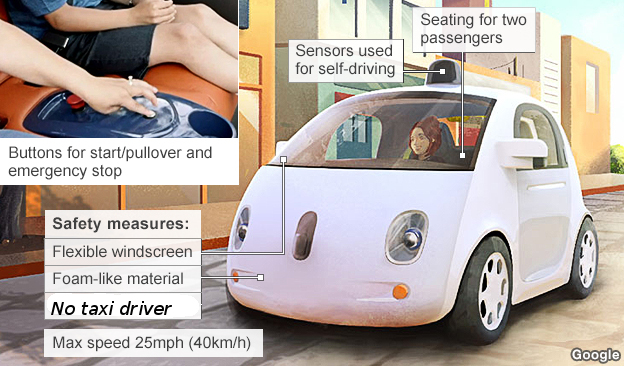
London's taxi "strike" today has been so successful that Uber claims to have had an 850% increase in new customer registrations this week. Well, that is a big success if you believe the strike may have been a guerrilla marketing tactic organised by Uber itself. No sympathy Personally, I have no sympathy for the taxi drivers. There is no city I have ever visited where I haven't encountered at least one taxi driver who tried to overcharge me. Honest drivers who give their customers value for money have less to fear from new technology than those who are unscrupulous. When I broke a leg a few years ago and was getting about on crutches for 6 weeks we decided to go out for dinner one night. This was the first time I went anywhere after having a long stint in hospital followed by a period of time I was confined to the house. The taxi driver deliberately skipped two turns leading directly to the restaurant, went another 1km past it and then followed a small street that winds back and forth and eventually demanded I pay him double what the fare should have been. This is exactly the type of abusive and despicable practice that is being eradicated by Uber's live GPS mapping technology. Although not every driver behaves so shamefully, this type of abuse of the weak or vulnerable is replicated in one way or another the world over. For example, in Melbourne, Australia, wheelchair taxis that have worked out they can make more money collecting families with suitcases at the airport leave genuine wheelchair users without a ride. Will Google be targeted next week? Google has just announced a step-change in plans to build their own self driving cars. Will Google offices around the world, including London be targetted by these crude blockades too? Political protest or anti-competitive mischief? Why were taxi drivers not arrested for their protest today? Given that the roads are the place where taxis and their competitors do business, can this blockade really be considered a political protest or is it an anti-competitive practice in blatant disregard of the law? Weapons of mass destruction Before even having breakfast you could probably find 10,000 cyclists in central London willing to sign a petition declaring taxis are a weapon of mass destruction. Once again, while there are honest drivers, there is a more than trivial number of taxi drivers who are a genuine danger to the lives of cyclists, scooters, motorcycles and occasionally pedestrians. I have personally experienced one of these thugs ramming my bicycle from behind (his hard-nosed insurer eventually paid up but without admitting liability). The police who attended the incident even told me they had seen so many accidents like this they wouldn't dare cycle themselves. The web is full of examples that appear to show malicious and criminal behavior by taxi drivers, thanks to Youtube and helmet cams: Will hotels protest about AirBNB? Now the taxi drivers have had their chance to cause mayhem, will hotel operators be next? What could they do though? Will they seek out AirBNB apartments and try to obstruct them somehow? Making mischief outside somebody's home is not a good way to make a point. Chances are, they would be prosecuted or served with restraining orders. So why do the taxi drivers get to jam up whole cities and get away with it? The Uber taxi meter loophole Will the courts decide that the Uber app is a taxi meter? This is actually a tough question. Even if courts rule against apps that perform live metering, Uber could simply remove all metering functions from the app itself and perform the metering calculations in the cloud. The app would just send start and finish locations to the cloud and the cloud would send a message back to the phone confirming the charge. The phone is then nothing more than a communication and positioning device. Remember the elevator man? When the automobile was first invented, laws were made requiring every car to be accompanied through public streets by a man carrying a flag. That job, like many others, no longer exists. elevator attendant In the good old days, every elevator had a man or woman who would sit on a stool and press buttons to operate the doors and motors. Some up-market department stores and hotels still have an elevator man to add a touch of nostalgia. The vast majority, however, have eliminated these jobs thanks to automatic elevators. Now, even aircraft can land automatically on a ship at sea. Look at all those people manning the deck in the video and contemplate how many of them might potentially be out of a job too in 50 years time as Terminator-style automated battleships patrol the seas. Technology, like the Terminator, is not going to stop.

10 June 2014

Maximilian Attems: xserver-xorg-video-intel 2.99.912 in experimental

With the release of xf86-video-intel 2.99.912 good sna support is expected for several generation of Intel devices. Again testing is very much appreciated: xserver-xorg-video-intel packages.

Russell Coker: Google Hardware Support

Ironically just 5 days after writing about how I choose Android devices for a long service life [1] my wife s Nexus 5 (with 32G of RAM (sorry Flash storage) to give it a long useful life) totally died. It reported itself as being fully charged and then 15 minutes later it was off and could not be revived. No combination of pushing the power button and connecting the power cable caused the screen to light up or any sound to be emitted. Google has a nice interactive support site for nexus devices that describes more ways of turning a phone on than any reasonable person could imagine. After trying to turn the phone on in various ways (plugged and unplugged etc) it gave me a link to get phone support. Clicking on that put me in the queue to RECEIVE a phone call and a minute later a lady who spoke English really well (which is unusual for telephone support) called me to talk me through the various options. Receiving a phone call is a much better experience than making a call. It meant that if the queue for phone support was long then I could do other things until the phone rings. It s impossible to be productive at other tasks while listening for hold music to stop and a person to start talking. The cost of doing this would be very tiny, while there would be some cost in hardware and software to have a web site that tells me how long I can expect to wait for a call a more basic implementation where I just submit my number and wait for a call would be very cheap to implement. The costs of calls from the US to Australia (and most places where people can afford a high end Android phone) are quite cheap for home users and are probably cheaper if you run a call center. If the average support call cost Google $1 and 3% of phones have support calls then that would be an extra cost of $0.03 per phone. I expect that almost everyone who buys a $450 phone would be happy to pay a lot more than $0.03 to avoid the possibility of listening to hold music! I received the phone call about a minute after requesting it, this was nice but I wonder how long I would have waited if I hadn t requested a call at 1AM Australian time (presumably during the day in a US call center). In any case getting a 1 minute response is great for any time of the day or night, lots of call centers can t do that. While the phone support is much better than most phone support, it would be nice if they added some extra options. I think it would be good to have webchat and SMS as options for support for the benefit of people who don t want to speak to strangers. This would be useful to a lot of people on the Autism Spectrum and probably others too. The phone call wasn t particularly productive, it merely confirmed that I had followed all the steps on the support website. Then I received an email telling me about the web site which was a waste of time as I d covered that in the phone call. I have just replied to their second email which asked for the IMEI of the phone to start the warranty return process. We could have saved more than 24 hours delay if this had been requested in the first email or the phone call. Google could have even requested the IMEI through the web site before starting the phone call. It would have been even easier if Google had included the device IMEI in the email they sent me to confirm the purchase as searching for old email is a lot easier than searching through my house for an old box. Another option for Google would be to just ask me for the Gmail account used for the purchase, as I only bought one Nexus 5 on that account they then have all the purchase details needed for a warranty claim. While the first call was a great experience the email support following that has been a waste of time. I m now wondering if they aim to delay the warranty process for a few days in the hope that the phone will just start working again.

9 June 2014

Konstantinos Margaritis: SIMD book, second update!

From the Indiegogo page: https://www.indiegogo.com/projects/simd-engines-comparative-reference-guide/x/4966960#activity
  • Added titlepage (simple, but will do the job)
  • Reorganized ALL instructions to include both unsigned/signed in the same entity
  • Added Saturated Addition, Subtraction and Saturated Subtraction
  • Added ARMv8 NEON instructions taken from ARM infocenter draft
  • Fixed some instructions (added 64-bit arithmetic for NEON)
  • Added some special addition/subtraction, like add/sub with carry(vmx/vsx), addsub(SSE3/AVX)
  • Added some in-vector sum additions, sum reductions but no descriptions yet
  • Added diagram for 8-bit addition/subtraction (still need lots more).
  • Removed VMX128, couldn't find enough information, an email to some IBM toolchain developers was left unanswered, so I guess noone really will really care if that engine is left out, if enough people insist on it, please also be kind enough to provide some documentation on it.

Daniel Pocock: reSIProcate v1.9 with WebRTC now available for Fedora 20 users

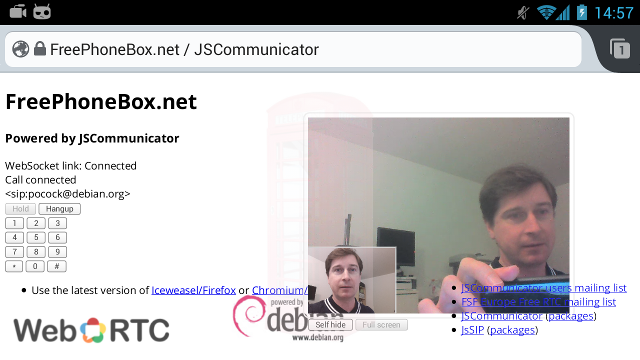
reSIProcate v1.9 has now moved from testing to stable and is available for Fedora 20 users. Version 1.9.7 has also propagated to Debian testing and wheezy-backports, delivering improved stability as discussed in my previous blog. Ready to try WebRTC? The quickest way to set up your own WebRTC trial is to install the repro (reSIProcate SIP proxy) packages for your preferred Linux distribution and then copy JSCommunicator into a directory on your web server. My earlier blog get WebRTC going faster gives specific examples of entries needed in repro.config.. WebRTC Calling from Android I've continued to have success making and receiving calls with both the Firefox and Chrome apps on Android. This is a great way to reach out to friends and family using free software for communication. More details and some screenshots are available in my earlier blog on Android WebRTC.

8 June 2014

Russ Allbery: INN 2.5.4

Julien LIE completed this release a few weeks ago, but between work and other things I'm only finally now posting the announcement. This is primarily a bug-fix release. The most user-visible changes are that the radius.conf file for the nnrpd RADIUS authenticator has been renamed to inn-radius.conf (to avoid a conflict with the configuration of the actual RADIUS server), and the sample innd and nnrpd MOTD files are now installed as samples and not as live configuration on a new server install. controlchan and pgpverify now check the signer of control messages in a way that works properly with UIDs containing spaces and keys that define multiple UIDs, which should fix long-standing problems with verifying the control messages for fido.ger.* and grisbi.*. The nnrpd posting filter now has access to the attributes hash, similar to the authentication and access Perl hooks. In addition, there are fixes for a variety of crash bugs, build issues, log rotation issues, and the normal variety of bug fixes that accumulate over time. You can get the latest version from the official ISC download page or from my personal INN pages. The latter also has links to the full changelog and the other INN documentation. As always, thanks to Julien LIE for doing the lion's share of work on the new release, including investigating and fixing bugs, merging patches, and doing all the hard parts of the release process.

Bits from Debian: DebConf14 - Call for talks, BoFs and events

The Debian project is excited to announce that we are now accepting presentations, discussion sessions and tutorials for our DebConf14 conference which will take place in Portland State University, Oregon, USA from 23 to 31 August. Submitting an event To submit an event, first register as an attendee for DebConf14 in the conference management system. If you have any doubts or have problems with the registration process please check the Registration FAQ. After registering, go to the event submission page, or click on the Create an event option from the management system. Describe your submission in the web form. The most common event types are Lecture or Open Discussion (BoF). Please include a short title (to make it easy to produce a compact schedule) and an engaging description of the event. Tracks We will organize some talks into thematic tracks. If you have a proposal for a DebConf track, such as "Debian ARM", "Debian Infrastructure", or "Community Outreach" please contact talks@debconf.org. If you would like to be a track coordinator, please volunteer on the given mail address. Format of the events A regular session will be 45 minutes long, including time for questions. There will be a 15 minute breaks between events. Submissions are not limited to traditional talks: you could propose a performance, art installation, debate, or anything else. If you have any specific requirements for your event, please send an email to talks@debconf.org with the details of your requirements and be sure to mention your event title in the subject. Deadline While we ask speakers to submit their events before the deadline of 7 July 2014, 23:59:59 UTC, late submissions will continue to be accepted for scheduling until the end of DebConf. All attendees will have an opportunity to schedule ad-hoc events during DebConf itself if we have space for them. Very promising late submissions may be considered for inclusion in the main conference. Note that ad-hoc events have a much lower chance of video archiving, and streaming, so if you want these services it's better to get your submissions in early. DebConf official events will be broadcast live on the Internet when possible, and videos of the talks will be published on the web along with the presentation slides and papers. For private communication regarding your talk, or for more general ideas, or questions about the event and talks, please mail us We hope to you see you and share some good times with you this year in Portland during DebConf14!

Joachim Breitner: ZuriHac 2014

I m writing this on the train back from the ZuriHac Haskell Hackathon in Z rich, generously sponsored by Better and Google. My goal for this event was to attract new people to work on GHC, the Haskell compiler, so I announced a GHC bugsquashing project . I collected a few seemingly simple ticket that have a good effort/reward ratio for beginners and encouraged those who showed up to pick one to work on. Roughly six people started, and four actually worked on GHC on all three days. The biggest hurdle for them was to get GHC built for the first time, especially those using a Mac or Windows. They also had to learn to avoid recompilation of the whole compiler, which takes an annoying amount of time (~30 minutes for most people). But once such hurdles weren taken all of them managed to find their way around the source code to the place they need to touch and were able to produce a patch, some of which are already merged into GHC master. When I wasn t giving tips and hints I was working on various small tickets myself, but nothing of great impact. I very much hope that this event will pay off and one or two of the newcomers end up being regular contributors to GHC.

We took breaks from our respective projects to listen to interesting talks by Edward Kmett and Simon Marlow, and on Saturday evening we all went to the shores of the Zurisee and had a nice Barbecue. It was a good opportunity to get into contact with more of the attendees (the hacking itself was separated in multiple smaller office rooms) and I was happy to hear about people having read my recent Call Arity paper, and even found it valuable.

Thanks to the organizers and sponsors for this nice opportunity!

Paul Tagliamonte: adventures in android

I ve been learning about android development over the last few weeks, and I think I m slowly getting the hang of best practices. It s a bit tough, there s a lot of stuff that s not super Java-idomatic that s become Android-idiomatic, so getting over that stuff has been interesting. I ve been finding that Android tends to re-implement most things in a similar enough way, but always with some small tweak that feels kinda funny. It s working well enough, and I m hoping that I can clean up a few android libraries to deal with some of the OpenGov datasets I m interested in. If anyone has any tips on proper handling of what to make a fragment, and what activities should look like, I d really love posts about that. It seems like sometimes I have a 1-to-1 mapping of Fragments to Activity, but I want to keep it a fragment for large devices. Anyway, best practices welcome.

Wouter Verhelst: Is Debian non-free?

According to the Free Software Foundation, the Debian distribution is not a Free System Distribution. While I, as a Debian Developer, disagree with that point of view, it should be obvious that the opinion of an organization that engages in politics (or, at the very least, in political lobbying) and of which I am not a member should not be my concern. However, it has long irked me the wrong way that these claims exist. A few weeks ago, I found the System distribution commitments page on Wikipedia. This does change the situation somewhat; I cannot say that a page explaining an opinion of the FSF is wrong; but if that opinion is copied nearly verbatim to a website which claims neutrality as one of its "Core content policies", then the situation is significantly different. When I originally found that page, it was immediately obvious where the content came from, but there was no reference listed, so I added a "citation needed" tag, the first time I ever did so on Wikipedia. Now, a few weeks later, a reference has been added, and the "citation needed" tag removed. However, as expected, the only reference which has been added is the highly opinionated document on the FSF's website, which is hardly neutral. I've added another tag (this time a "which" tag, asking for more clarification) and added a Talk page listing my concerns with the article. But I can't really explain in Wikipedia why I think the whole premise is wrong; that's what a blog is for. So, here goes. The FSF lists two reasons why they do not endorse Debian:
  1. The non-free and contrib repositories
  2. An unsubstantiated claim that "the installer in some cases recommends [...] non-free firmware files for the peripherals on the machine."
Let's have a look at them, each in turn.

Non-free and contrib It is true that Debian provides non-free software in separate repositories, and that software in these repositories does not comply with either the Debian Free Software Guidelines (DFSG) or the FSF's Free Software Definition. However, the non-free and contrib repositories are fairly small:
wouter@carillon:/var/lib/apt/lists$ awk -F':' 'BEGIN total=0 /^Size/ total+=$2 END print total ' ftp.be.debian.org_debian_dists_sid_non-free_binary-amd64_Packages
4398812934
That is, the non-free repository contains just over 4G of software (after installation). Contrib is even smaller:
wouter@carillon:/var/lib/apt/lists$ awk -F':' 'BEGIN total=0 /^Size/ total+=$2 END print total ' ftp.be.debian.org_debian_dists_sid_contrib_binary-amd64_Packages 
306578636
While, combined, this is approximately the same size as some other distributions, free and non-free together, it pales in comparison with the "main" repository:
wouter@carillon:/var/lib/apt/lists$ awk -F':' 'BEGIN total=0 /^Size/ total+=$2 END print total ' ftp.be.debian.org_debian_dists_sid_main_binary-amd64_Packages
60025033622
i.e., the "main" repository contains just shy of 60G of software. Of course, whether non-free is large or not should not matter at all; the fact that it exists in the first place is a problem for free software advocates. But of those 4 gigabytes, what exactly is the non-free repository used for? For that, the Debian popularity contest has a page specifically for the non-free section. Looking at this page, and ignoring the packages that are listed as "Not in sid" (which either means they were installed from third-party suppliers and therefore cannot be attributed to Debian, or were only available in older distributions so should not be held against the Debian of today anymore), we see three main uses of non-free:
  1. Various implementations of non-free algorithms (unrar, libfaac0, etc)
  2. A lot of packages containing non-free firmware
  3. A number of packages containing non-free documentation
The first package which does not fit any of those descriptions is iozone3, currently on the 64th position of the popularity contest (including packages "Not in sid"). The first item in this list is something which most free software advocates will try to avoid. After all, for all of those algorithms, alternatives exist, and so there is no real reason why one would want to use such software, other than "someone sent me a file encoded according to that algorithm, and I want to decode it". Debian gives you the option to do so, but a valid case could be made for not doing so. The second item in that list is really an alternate version of "the installer recommends non-free software", so I'll come back on that in the next section. The 3rd item in the above list deserves some special attention. Just over 10 years ago, Debian clarified its position where it clearly specified that documentation and programs (as both are interpreted as "software") should follow the same set of guidelines regarding freedom. The FSF disagrees with this position, and chose to release some of its documentation under the GFDL with invariant sections, which Debian decided is a non-free license in 2006. Since then, such GNU documentation would no longer be available were Debian to ditch the non-free repository.

Recommending non-free firmware As I said above, the FSF's page claims that the Debian installer recommends non-free firmware "in some cases", without going into much detail. Special care should be taken in understanding the word "recommend" here; wiktionary defines it as follows:
recommend (third-person singular simple present recommends, present participle recommending, simple past and past participle recommended)
  1. (transitive) To bestow commendation on; to represent favourably; to suggest, endorse or encourage as an appropriate choice.
The board recommends Philips, given his ample experience in similar positions.
  1. (transitive) To make acceptable; to attract favor to.
  2. (transitive) To advise, propose, counsel favorably
The therapist recommends resting the mind and exercising the body.
  1. (transitive, archaic) To commit, confide to another's care, confidence or acceptance, with favoring representations
A medieval oblate's parents recommended the boy for life to God and the monastery
However, according to the FSF, merely showing a firmware filename in unencrypted form counts as a recommendation. I've always found that use of the word "recommendation" to be dubious, at best. Ignoring that part, we can make the following observations: The debian-installer module ("udeb") which is responsible for configuring apt is called apt-mirror-setup (code in the apt-setup git repository). The actual debconf templates which allow the user to enable the non-free or contrib repositories are the apt-setup/non-free and apt-setup/contrib templates, and they look like this:
Template: apt-setup/non-free
Type: boolean
Default: false
# :sl1:
_Description: Use non-free software?
 Some non-free software has been made to work with Debian. Though this
 software is not at all a part of Debian, standard Debian tools can be used
 to install it. This software has varying licenses which may prevent you
 from using, modifying, or sharing it.
 .
 Please choose whether you want to have it available anyway.
Template: apt-setup/contrib
Type: boolean
Default: false
# :sl1:
_Description: Use contrib software?
 Some additional software has been made to work with Debian. Though this
 software is free, it depends on non-free software for its operation. This
 software is not a part of Debian, but standard Debian tools can be
 used to install it.
 .
 Please choose whether you want this software to be made available to you.
Note the lines Default: false, which imply that the default answer to these questions is to disable the non-free and contrib repositories. A question which defaults to false isn't a recommendation, nor do I read the text as any form of recommendation to install these repositories (quite the contrary, in fact). More important than whether the default is to enable or disable these repositories is whether this question is even shown to the user in normal installations. Whether this is the case isn't decided by any template; instead, it is decided by the code that calls the templates. That code currently looks like this:
STATE=1
while true; do
        case "$STATE" in
            1)
                db_input low apt-setup/non-free   true
                ;;
            2)
                # If they chose not to use non-free, ask about
                # contrib, with a default of no. If they chose to
                # use non-free, they get contrib too..
                db_get apt-setup/non-free
                if [ "$RET" = false ]; then
                        db_fget apt-setup/contrib seen
                        if [ "$RET" = false ]; then
                                db_set apt-setup/contrib false
                        fi
                        db_input low apt-setup/contrib   true
                else
                        db_fget apt-setup/contrib seen
                        if [ "$RET" = false ]; then
                                db_set apt-setup/contrib true
                        fi
                fi
                ;;
            *)
                break
                ;;
        esac
        if db_go; then
                STATE=$(($STATE + 1))
        else
                STATE=$(($STATE - 1))
        fi
done
Note the "low" in the db_input lines; it means the question is only shown at low priority, i.e., in "expert" mode. The result is that, unless you enable expert mode, you won't even see the question about the non-free repository, and it will be disabled by default. There won't even be any mention of it in your sources.list file. Of course, the above isn't about firmware files, which is what the FSF website claims. So, there is a second part to this story. If you run a system with hardware for which there is a non-free firmware package in the non-free repository, and you provided firmware for this hardware to the installer through various means, then the hw-detect module comes into play. This has code which currently looks like this:
# install cached firmware debs
if [ -d /var/cache/firmware ]; then
    for deb in /var/cache/firmware/*.deb; do
            if [ -f "$deb" ]; then
                    cp -a "$deb" /target/tmp
                    # TODO debconf passthrough
                    if ! in-target dpkg -i "/tmp/$(basename "$deb")"; then
                            # dpkg failed, force removal of package
                            in-target dpkg --force-depends --remove "$(deb_package "$deb")"   true
                    fi
                    rm -f "/target/tmp/$deb"
                    need_nonfree=1
            fi
    done
fi
if [ "$need_nonfree" ]; then
    db_set apt-setup/non-free true
fi
As can bee seen, if any firmware .deb files exist under /var/cache/firmware in the installer environment, then these will be installed on the target system and default answer to the apt-setup/non-free question will be changed to enable the non-free repository. How do such packages end up there? Well, that's done by the same hw-detect udeb, in a different script. The code there is a bit too long to quote in this already far too long blog post, but it boils down to:
  • If the installer detects missing firmware, the user is asked whether (s)he wants to install firmware, with the following template:
    Template: hw-detect/load_firmware
    Type: boolean
    Default: true
    # :sl2:
    _Description: Load missing firmware from removable media?
     Some of your hardware needs non-free firmware files to operate. The
     firmware can be loaded from removable media, such as a USB stick or
     floppy.
     .
     The missing firmware files are: $ FILES 
     .
     If you have such media available now, insert it, and continue.
    
  • If the user agreed to doing so (and to me, the above template does not read as a recommendation), any firmware .deb files that are provided to the installer are tested for the missing firmware files.
  • If any of those files are found, these .deb files are copied to the /var/cache/firmware directory, and the firmware files are made available to the running kernel.

Conclusion In my opinion, while some of the claims on the FSF website are correct, others are at the very least misleading. Debian does not recommend the use of non-free software; and while providing non-free firmware to the installer isn't too difficult, it isn't documented very well; and as such installing a system with non-free enabled isn't something you can easily do by accident. Debian and the FSF clearly disagree on certain things, and this disagreement, not any policies by the Debian project, is the main reason why the FSF won't encourage Debian as a free distribution. I don't think the Debian project will easily agree to get rid of the non-free repository while the FSF still produces non-free documentation or while non-free firmware is still a fact of life in this world. However, I do think the following should happen:
  1. The FSF should relicense its non-free documentation so it becomes truly free.
  2. Once that has happened, Debian should rename its non-free repository to a "hardware-support" repository (or something along those lines), and remove everything that does not exist solely for the support of proprietary hardware (i.e., non-free drivers, non-free firmware, etc).
  3. The installer could be clearer on the fact that if non-free firmware is found to be in use for the system, the user is using software that cannot be properly supported by the Debian project.
While the above wouldn't necessarily bring the opinions of the FSF and Debian 100% in line, it would at least bring their positions closer to eachother. Unfortunately, however, I doubt that this will happen; and that's a shame, because in the end, both Debian and the FSF want the same thing: a world where Free Software is the norm, not the exception.

Update
  • The first version of this text said that providing firmware is not very easy. As was pointed out to me, it isn't too hard, but it's not very well documented and not part of the 'regular' installer images.
  • Add contrib too, when we compare non-free and main
  • Clarify when GFDL is non-free

7 June 2014

Russ Allbery: Summer haul

More books. More reading is not yet happening, but I have hope. This particular set is quite random, mostly an excuse to pad out an order since My Real Children came out. Philip Ball Bright Earth (non-fiction)
Anthony Doerr All the Light We Cannot See (mainstream)
Leslie Jamison The Empathy Exams (non-fiction)
Dava Sobel Longitude (non-fiction)
Gore Vidal Julian (historical)
Jo Walton My Real Children (sff)
Markus Zusak The Book Thief (sff, sort of) My immediate inclination is to mark any book in which Death appears as a literal character as at least fantasy, but The Book Thief comes out of the mainstream genre, so we'll see what I think about the genre after reading it.

6 June 2014

Rhonda D'Vine: No Portland

This year's debconf in portland will happen without me being there. As much as I would love to be at home again, I won't be able to afford it. As much as I'd liked to help to keep portland weird, a discussion led to the feeling that I'm not welcome there and along that lines made me miss the deadline for sponsorship request due to not being very motivated to push for it because of that. And without sponsorship I won't be able to afford it, given that I need to save up for my upcoming move. This also means I won't be able to host the Poetry Night. I hope that someone will be picking up that ball and continue it. Personally I am more motivated than ever to start writing again, given that there is currently a Bus Bim Slam (Bus Tram Slam) happening over here in Vienna and I try to attend as much stations as possible, and there will be a Diary Slam during this year's FemCamp Vienna.
I'm indifferent on whether the Debconf Poetry Night should be recorded or not. On the one hand it would be great to see people performing, on the other hand it might shy away certain personal poems that one wouldn't want to have out in the wild. Whoever picks it up, think about that part. I wish everyone luck in Portland, and I'm looking forward to yet another great job by the video team so I can follow a few talks from at home. It sort of breaks my heart to not be able to hug you lot this year, and I wish you a great conference. We'll meet again next year in Heidelberg!

/debian permanent link Comments: 3 Flattr this

Gunnar Wolf: What defines an identity?

I must echo John Sullivan's post: GPG keysigning and government identification. John states some very important reasons for people everywhere to verify the identities of those parties they sign GPG keys with in a meaningful way, and that means, not just trusting government-issued IDs. As he says, It's not the Web of Amateur ID Checking. And I'll take the opportunity to expand, based on what some of us saw in Debian, on what this means. I know most people (even most people involved in Free Software development not everybody needs to join a globally-distributed, thousand-people-strong project such as Debian) are not that much into GPG, trust keyrings, or understand the value of a strong set of cross-signatures. I know many people have never been part of a key-signing party. I have been to several. And it was a very interesting experience. Fun, at the beginning at least, but quite tiring at the end. I was part of what could very well constitute the largest KSP ever in DebConf5 (Finland, 2005). Quite awe-inspiring We were over 200 people, all lined up with a printed list on one hand, our passport (or ID card for EU citizens) in the other. Actwally, we stood face to face, in a ribbon-like ring. And, after the basic explanation was given, it was time to check ID documents. And so it began. The rationale of this ring is that every person who signed up for the KSP would verify each of the others' identities. Were anything fishy to happen, somebody would surely raise a voice of alert. Of course, the interaction between every two people had to be quick More like a game than like a real check. "Hi, I'm #142 on the list. I checked, my ID is OK and my fingerprint is OK." "OK, I'm #35, I also printed the document and checked both my ID and my fingerprint are OK." The passport changes hands, the person in front of me takes the unique opportunity to look at a Mexican passport while I look at a Somewhere-y one. And all is fine and dandy. The first interactions do include some chatter while we grab up speed, so maybe a minute is spent Later on, we all get a bit tired, and things speed up a bit. But anyway, we were close to 200 people That means we surely spent over 120 minutes (2 full hours) checking ID documents. Of course, not all of the time under ideal lighting conditions. After two hours, nobody was checking anything anymore. But yes, as a group where we trust each other more than most social groups I have ever met, we did trust on others raising the alarm were anything fishy to happen. And we all finished happy and got home with a bucketload of signatures on. Yay! One year later, DebConf happened in Mexico. My friend Martin Krafft tested the system, perhaps cheerful and playful in his intent but the flaw in key signing parties such as the one I described he unveiled was huge: People join the KSP just because it's a social ritual, without putting any thought or judgement in it. And, by doing so, we ended up dilluting instead of strengthening our web of trust. Martin identified himself using an official-looking ID. According to his recount of the facts, he did start presenting a German ID and later switched to this other document. We could say it was a real ID from a fake country, or that it was a fake ID. It is up to each person to judge. But anyway, Martin brought his Transnational Republic ID document, and many tens of people agreed to sign his key based on it Or rather, based on it plus his outgoing, friendly personality. I did, at least, know perfectly well who he was, after knowing him for three years already. Many among us also did. Until he reached a very dilligent person, Manoj, that got disgusted by this experiment and loudly denounced it. Right, Manoj is known to have strong views, and using fake IDs is (or, at least, was) outside his definition of fair play. Some time after DebConf, a huge thread erupted questioning Martin's actions, as well as questioning what do we trust when we sign an identity document (a GPG key). So... We continued having traditional key signing parties for a couple of years, although more carefully and with more buzz regarding these issues. Until we finally decided to switch the protocol to a better one: One that ensures we do get some more talk and inter-personal recognition. We don't need everybody to cross-sign with everyone else A better trust comes from people chatting with each other and being able to actually pin-point who a person is, what do they do. And yes, at KSPs most people still require ID documents in order to cross-sign. Now... What do I think about this? First of all, if we have not ever talked for at least enough time for me to recognize you, don't be surprised: I won't sign your key or request you to sign mine (and note, I have quite a bad memory when it comes to faces and names). If it's the first conference (or social ocassion) we come together, I will most likely not look for key exchanges either. My personal way of verifying identities is by knowing the other person. So, no, I won't trust a government-issued ID. I know I will be signing some people based on something other than their name, but hey I know many people already who live pseudonymously, and if they choose for whatever reason to forgo their original name, their original name should not mean anything to me either. I know them by their pseudonym, and based on that pseudonym I will sign their identities. But... *sigh*, this post turned out quite long, and I'm not yet getting anywhere ;-) But what this means in the end is: We must stop and think what do we mean when we exchange signatures. We are not validating a person's worth. We are not validating that a government believes who they claim to be. We are validating we trust them to be identified with the (name,mail,affiliation) they are presenting us. And yes, our signature is much more than just a social rite It is a binding document. I don't know if a GPG signature is legally binding anywhere (I'm tempted to believe it is, as most jurisdictions do accept digital signatures, and the procedure is mathematically sound and criptographically strong), but it does have a high value for our project, and for many other projects in the Free Software world. So, wrapping up, I will also invite (just like John did) you to read the E-mail self-defense guide, published by the FSF in honor of today's Reset The Net effort.

Robert Edmonds: BIND and GCC 4.9

ISC has issued an operational notification advising the use of the -fno-delete-null-pointer-checks flag when compiling current versions of BIND with GCC 4.9:
Beginning with GCC 4.9.0, code optimization in GCC now includes (by default) an optimization which is intended to eliminate unnecessary null pointer comparisons in compiled code. Unfortunately this optimization removes checks which are necessary in BIND and the demonstrated effect is to cause unpredictable assertion failures during execution of named, resulting in termination of the server process. Future versions of BIND will be modified so that the optimizer does not incorrectly remove necessary checks when building from source, and until those versions are available multiple immediate workarounds are available.
According to the GCC documentation, -fdelete-null-pointer-checks performs the following optimization, and is enabled by default even when compiling with -O0:
Assume that programs cannot safely dereference null pointers, and that no code or data element resides there. This enables simple constant folding optimizations at all optimization levels. In addition, other optimization passes in GCC use this flag to control global dataflow analyses that eliminate useless checks for null pointers; these assume that if a pointer is checked after it has already been dereferenced, it cannot be null.
This optimization dates back to 1999 but it recently became more aggressive in the GCC 4.9 release:
GCC might now optimize away the null pointer check in code like:
int copy (int* dest, int* src, size_t nbytes)  
  memmove (dest, src, nbytes);
  if (src != NULL)
    return *src;
  return 0;
 
The pointers passed to memmove (and similar functions in <string.h>) must be non-null even when nbytes==0, so GCC can use that information to remove the check after the memmove call. Calling copy(p, NULL, 0) can therefore deference a null pointer and crash. The example above needs to be fixed to avoid the invalid memmove call, for example:
if (nbytes != 0)
  memmove (dest, src, nbytes);
It's interesting that the ISC operational advisory labels this an "incorrect" optimization. I wonder if this is a similar case to the Glibc optimization which exposed incorrect usage of memcpy() in many applications, including BIND. Fortunately, few users should be affected by this bug, since GCC 4.9 is fairly new. (The upcoming Fedora 21 release will probably be the first mainstream distribution to ship with GCC 4.9 as the default compiler.) Update: Debian bug #750760 filed.

5 June 2014

Matthew Palmer: An SSL Certificate Cooperative?

I ve been pondering co-ops, and their value in the world, lately. The thought has come to mind that a co-op which ran a Certificate Authority seems like an absolute no-brainer the members each contribute to the operational costs (servers, software, and the eye-watering auditing expenses) and in return get to issue all the domain-verified certificates they like (and pay reasonable rates for organization-verified certificates, and perhaps even EV certs). I know there are some superficially similar examples of this idea out there already. StartSSL captured my heart with their policy of only charging for what costs money (so you can get free DV certificates for personal use), but they made me sad when they charged for revocations (yes, I know revocations cost money to serve the CRL, but OCSP ain t free either ). CACert tickle my Free Software Fan-bone, being all about the freedom and community involvement, but lose some practicality points on the fact that they ve been trying to get their root certs into the browsers for a long time and haven t really gotten anywhere. So, assuming that DNSSEC (and hence DANE) doesn t become universally available any time soon, leaving the CA business model dead, buried, and worm-eaten, is the idea of a cooperative certificate authority of interest to anyone? Surely anyone who wished to have more control over their SSL certificates than you get with a reseller relationship, but couldn t justify becoming a root certificate holder themselves, would see the value of something of this nature?

Dirk Eddelbuettel: RcppArmadillo 0.4.300.8.0

A new minor / bug fix release 4.300.8 of Armadillo, the templated C++ library for linear algebra, was tagged by Conrad in his SVN repo a few days ago, following earlier snapshots in the 4.300.* series. We had prepared two earlier releases for GitHub but not CRAN in order to accomodate the CRAN maintainer's desire of "a release every one to two months" expressed in the CRAN Repo Policy. However, two actual bugs in the interaction between MinGW and C++11 were reported on the rcpp-devel mailing list, and this releases addresses these. Hence time for new release 0.4.300.8.0 of RcppArmadillo which is now on CRAN and in Debian. This release brings a few upstream changes detailed below such as nice new upstream changes such as more robust norm() (and related) functions, and fixes related to matrix and cube interactions. From our end, we added a better detection of Windows via both _WIN32 and WIN32 (as the former apparently gets undefined by MinGW in C++11 mode). We also added the ability to turn on C++11 support from R (possible since R 3.1.0) yet also turn it off for Armadillo. This is needed as the prescribed compiler on Windows is g++ 4.6.2 -- which offers a subset of C++11 which is good enough for a number of things from the C++11 standard, but not advanced enough for everything which Armadillo uses when C++11 support is turned on. As Armadillo continues to offer a choice of C++ standards, we can use the ability to deploy C++11 only outside of its internals. It is worth repeating that this issue should only affect Windows users wishing to use C++11; other platforms are fine as they generally have more modern compilers.
Changes in RcppArmadillo version 0.4.300.8.0 (2014-05-31)
  • Upgraded to Armadillo release Version 4.300.8 (Medieval Cornea Scraper)
    • More robust norm-related functions
    • Fixes between interactions between cube and vector types.
  • Adds a #define ARMA_DONT_USE_CXX11 to provide an option to turn C++11 off for Armadillo (but client packages may still use it)
  • More robust Windows detection by using _WIN32 as well as WIN32 as the latter gets diabled by MinGW with C++11
  • On Windows, C++11 can be turned off as the Armadillo code base uses more features of C++11 than g++ 4.6.2 version in Rtools implements
Changes in RcppArmadillo version 0.4.300.5.0 (2014-05-19)
  • Upgraded to Armadillo release Version 4.300.5 (Medieval Cornea Scraper)
    • Handle possible underflows and overflows in norm(), normalise(), norm_dot()
    • Fix for handling of null vectors by norm_dot()
Changes in RcppArmadillo version 0.4.300.2.0 (2014-05-13)
  • Upgraded to Armadillo release Version 4.300.2 (Medieval Cornea Scraper)
    • faster find()
Courtesy of CRANberries, there is also a diffstat report for the most recent release As always, more detailed information is on the RcppArmadillo page. Questions, comments etc should go to the rcpp-devel mailing list off the R-Forge page.

This post by Dirk Eddelbuettel originated on his Thinking inside the box blog. Please report excessive re-aggregation in third-party for-profit settings.

4 June 2014

Daniel Pocock: Trialing the xTuple/PostBooks next generation web UI

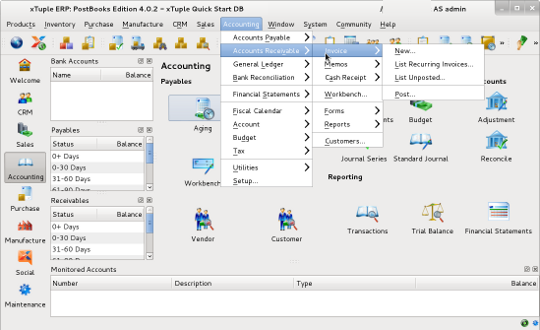
For some time I've been using PostBooks to keep track of finances. The traditional PostBooks system has a powerful Qt GUI. The xTuple team have been hard at work creating a shiny new web-based user interface. The traditional UI has no dedicated server - all users communicate directly with the PostgreSQL database where stored procedures and triggers ensure the correct logic is applied. The new model provides an xTuple application server that can handle requests from web users and potentially other third-party apps too. Who is it for? Some people may feel that the web UI is intended to appeal to mobile users. While it is useful for mobile and tablet devices, this is not strictly the aim, John has discussed this in a blog. One benefit of the web UI is that accountants and book-keepers do not need to have a copy of every exact PostBooks version that every client is using. Given that many people only need their accountant to look at their books for just a few hours at the end of each year, the ease of access with a web UI will make a big difference. Installing it quickly The xTuple Git repository provides a script to install the whole server quickly. Initially it just supported a single Ubuntu release, I just contributed some tweaks to generalize it for Debian wheezy and potentially other releases. It doesn't appear too difficult to generalize it further for Fedora or RHEL users. To get going, I recommend trying it in a fresh virtual machine, either in a server environment or desktop VirtualBox solution. The installation script will install various packages on the machine and mess about with the PostgreSQL setup so you will not want to run the automated setup script on any machine where you have existing databases. Once the virtual machine is setup, make sure sudo is installed and configured:
# apt-get install sudo
# visudo
and then run the install as your normal user:
git clone --recursive git://github.com/xtuple/xtuple.git
cd xtuple
git remote add XTUPLE git://github.com/xtuple/xtuple.git
git fetch XTUPLE
git checkout git describe --abbrev=0
chmod a+x scripts/install_xtuple.sh
scripts/install_xtuple.sh
If all goes well, 5-10 minutes later it is ready to run:
cd node-datasource
node main.js
The port numbers will appear on the screen and you can connect with a web browser. Trying it out Despite my comments above to the effect that this is not primarily aimed at mobile, the first and second device I tested with were both mobile devices, Samsung Galaxy S3 and a Samsung Galaxy Note 3. I feel the Note is far better for this type of application, primarily due to screen size and the fact that most of the forms in the application have fields that launch popup menus. It appears to work in both Chrome and Firefox on these devices. One handy feature is that the mobile device can dial numbers directly from the CRM address book, this is facilitated with the tel URI. My impression is that this is still a product that is in the final stages of development, although some people will be able to use it almost immediately. One significant thing to note is that the database schema is very stable due to the long history of the traditional xTuple/PostBooks products.

Russell Coker: Android Device Service Life

In recent years Android devices have been the most expensive things I ve purchased apart from airline tickets and other travel/holiday expenses. As they are expensive I d like to use them for as long as possible to get the most value for money. Also as I give my devices to relatives when they no longer work for me I d like to avoid having relatives hassling me about their phone not working as desired. So I ve been thinking about the features that I need to make it possible to use a phone or tablet for a long time. RAM The way Android works is that when an application in the foreground requests more memory background applications may be closed to free some memory. Android doesn t use swap by default, there is some documentation on how to enable it (and it s not difficult to figure out for anyone who has used Linux before) but generally it s not done. If you run a larger application the chances of apps closing in the background (causing delays when you switch back to them and possibly a loss of context if the app is buggy and doesn t preserve all state) are increased. As a general trend apps tend to get bigger to provide more features and also because users who own newer bigger devices don t complain as much about memory use. Also to make things worse new versions of Android tend to use more RAM. So a phone that runs well can suddenly start performing badly when you upgrade to a new version of Android (which incidentally usually can t be reversed) and upgrade to new versions of apps (which can t be reversed through the Google Play Store). The Sony Ericsson Xperia X10 was a very nice phone when it was released, it ran Android 2.1 very quickly. When I upgraded the Xperia X10s that my wife and I used to Android 2.3 (which was necessary to have the phone run as a Wifi access point) performance dropped considerably. The Android upgrade combined with newer larger apps means that those phones are barely usable now. 384M of RAM was plenty in early 2011 when I first used the Xperia X10 but it s not nearly enough now. Recently 2G of RAM has been the minimum for a mid-range or high-end phone. It seems difficult to imagine a new Android feature as compelling as the addition of Wifi access point support in Android 2.3 that would drive an upgrade to a future memory hogging version of the OS. It also seems difficult to imagine Android apps needing enough memory to destroy the performance of a phone with 2G of RAM. But then I couldn t imagine the 384M in an Xperia X10 becoming inadequate or the 512M in a Samsung Galaxy S becoming barely usable either. Storage Until fairly recently storage in an Android device was divided into USB attached storage (a VFAT filesystem that could be directly mounted on a PC) and a Linux filesystem that was used for all internal operations of the phone. On such devices it typically wasn t possible to change partition sizes without a lot more skill than most users possess and most of the storage space was reserved for USB attachment. If you only had a few Android apps and lots of photos, movies, etc then this worked well. But if you wanted to install larger Android apps then you would have big problems. Even with Android 4.x devices (which all seem to have a single filesystem) you can easily run out of space. Modern games often take several hundred megs of storage. Games that take 500M+ for the Android package install (which also requires the same amount of temporary space for installation and upgrade) are common. Sometimes games download data files after they have been installed for a total size approaching 2G (such as The Sims Freeplay). When I bought a Nexus 4 for my wife I got the version with 8G of storage because paying an extra $50 for the 16G version seemed unreasonable. 8G was fine for my wife, but when she got a new phone I gave the Nexus 4 to a relative who wanted to play The Sims and other big games. That relative isn t so happy about having a limited number of games on their phone and I have to fix it when storage space runs out and things start aborting (when storage runs out the Google App Store program aborts and uses lots of space for temporary files). I recently bought a tablet with 32G of storage and filled 16G on the first day (tablets are good for watching
TV and TV shows are big). Fortunately the tablet in question has a SD socket so that when space becomes a problem in a year or two I can buy an SD card and keep using it. An unfortunate recent decision by Google was to prevent apps from being run from a SD card. So even if you have a device with a SD socket you still need to have enough internal storage for all apps and their private data. At 500M+ for a modern game that means a device with 8G of storage (which includes space for the OS) will be lucky to get 8 games installed. If you want to use a phone to it s full capacity (playing various media files, games, etc) then it seems that the minimum storage capacity would be 8G of internal storage and a SD socket. For a device without an SD socket (such as the Nexus 5 with 16G or 32G of storage) your future use will be limited. 32G is probably enough for a phone given that you can recode movies to use less space (the FullHD screen on the Nexus 5 is nice but 720p movies will probably look good enough). But the larger screens of tablets demand better video quality so the Nexus tablets are probably a bad choice due to lack of storage space. Screen Size and Resolution I have previously written about the sizes of devices and how they may be used by people of various ages [1]. That should be of use for anyone who plans to use their old phone as an educational device for their children (which appears to be very common). But apart from that I can t think of any reason why size would suddenly make an old phone obsolete. Only young children will have their hands change size in any significant way. Resolution also shouldn t be a huge problem, the 480*854 screen on the Xperia X10 is fairly good for a 4 screen. While a higher resolution makes text more readable at a small size for most users the availability of a higher resolution screen isn t going to make their old phone obsolete. CPU The only Android devices I owned that appeared to develop CPU speed issues late in life were the Xperia X10 phones, and that might be more due to RAM limits and the OS upgrade. All the other devices were either obviously slow at purchase time or are still performing well now. CPU speed may make it difficult or impossible to play new games, but shouldn t affect other uses of a phone or tablet. Conclusion It seems to me that if you want to use an Android device for more than 2 years then storage capacity should be a major factor in choosing which device to purchase. It seems that lack of storage space is in many cases the main factor that makes older devices annoying or impossible to use.

3 June 2014

Konstantinos Margaritis: SIMD book, first draft published!

Check activity here: https://www.indiegogo.com/projects/simd-engines-comparative-reference-guide/x/4966960#activity From the update: Ok, I've been busy the past days, I started writing the book (using LaTeX :), and I'd like to say that progress has been good. I fixed the current list of SIMD engines that I'm going to include and it's a long one:

Next.

Previous.