Search Results: "ms"

22 June 2014

Asheesh Laroia: Interactive semi-automated package review (by abusing Travis-CI)

I just did some Debian package review in a somewhat unusual way, and I wanted to share that. I'm hoping other Debian developers (and other free software contributors) that need to review others' contributions can learn something from this, and that I can use this blog post as a way to find out if other people are doing something similar. It was pretty exciting! At the end of it, I joined #debian-mentors to talk about how my cool process. Someone summarized it very accurately:
<sney> it almost sounds like you're working to replace yourself with automation

Context about alpine in Debian (Skip to "Package review, with automation" if you're familiar with Debian.) I'm the maintainer of alpine in Debian. There are quite a few problems with the alpine package in Debian right now, the biggest of which are:
  • We're one version behind -- 2.11 is the latest available, but 2.10 is the newest that we have in Debian.
  • The packaging uses a decreasingly-popular packaging helper, cdbs, about which I happen to know less than the dh-style helper (aka dh7).
  • There are lots of bugs filed, and I don't respond in a timely fashion.
This doesn't change my deep love for alpine -- I've had that for about half my life now, and so far, I don't see it going away. A month or so ago, I got a friendly private message from Unit193, saying he had converted the package to the dh style, and also packaged the newer version. They wanted to know if they should clean this up into something high-enough quality to land in Debian. (In Debian, we have a common situation where enthusiastic users update or create a new package, and aren't yet Debian Developers, so they don't have permission to upload that directly to the "Debian archive", which is the Debian equivalent of git master. Package "sponsorship" is how we handle that -- a Debian Developer reviews the package, makes sure it is of high quality, and uploads it to the Debian archive along with the Debian Developer's OpenPGP signature, so the archive processing tools know to trust it.) On Friday evening, I had a spare moment, so I sent a private message to Unit193 apologizing for not getting back to them in a reasonable amount of time. Having another person help maintain is a pretty exciting prospect, and I wanted to treat that enthusiasm with the respect it deserves, or at least apologize when I haven't. I was surprised to see a reply within a few minutes. At that point, I thought: I wasn't planning on doing any package review this weekend, but if they're online and I'm online... might as well!

Package review, with automation Unit193 and I popped into ##alpine on irc.freenode.net, and I started reading through their packaging changes, asking questions. As I asked questions, I wondered -- how will I know if they are going to fix the issues I'm raising? Luckily, Unit193 wanted to use git to track the packaging, and we settled on using git-buildpackage, a tool that was fairly new to both of us. I thought, I might as well have some executable documentation so I don't forget how to use it. ("Executable documentation" is Asheesh-speak for a shell script.) One thing I knew was that I'd have to test the package in a pbuilder, or other pristine build environment. But all I had on me at the moment was my work laptop, which didn't have one set up. Then I had a bright idea: I could use Travis-CI, a public continuous integration service, to check Unit193's packaging. If I had any concerns, I could add them to the shell script and then point at the build log and say, "This needs to be fixed." Then there would be great clarity about the problems. Some wonderful things about Travis-CI:
  • They give you root access on an Ubuntu Precise (10.04) virtual machine.
  • Their build hosts are well-connected to the Internet, which means fast downloads in e.g. pbuilder.
  • They will let you run a build for up to 50 minutes, for free.
  • Build just means "command" or "set of commands," so you can just write a shell script and they will run it.
  • Travis-CI will watch a github.com repository, if you like. This means you can 'git commit --allow-empty' then 'git push' and ask it to re-run your script.
Since Unit193's packaging was in git (but not on github), I created a git repo containing the same contents, where I would experiment with fixes for packaging problems I found. It'd be up to Unit193 to fix the problems in the Alioth packaging. This way, I would be providing advice, and Unit193 would have an opportunity to ask questions, so it would be more like mentorship and less like me fixing things. We did a few rounds of feedback this way, and got the packaging to higher and higher quality. Every time Unit193 made a fix and pushed it, I would re-run the auto-build, and see if the problems I spotted had gone away. While the auto-build runs, I can focus on conversing with my mentee about problems or just generally chatting. Chatting is valuable community-building! It's extremely nice that I can do that while waiting on the build, knowing that I don't have to read it carefully -- I can just wait a few minutes, then see if it's done, and see if it's red or green. Having the mentee around while I'm reviewing it means that I can use the time I'm waiting on builds as fun free software social time. (Contrast this with asynchronous review, where, all alone, I would wait for a build to finish, then write up an email at the end of it all.) This kind of mentorship + chatting was spread out over Friday night, Saturday night, and Sunday morning. By the end of it, we had a superb package that I'm excited to sign and push into Debian when I'm next near my OpenPGP key.

Implementation details You can see the final shell script here: And you can see the various builds here: The shell script:
  • Alternates between the Alioth packaging vs. my fork of it. (This way, I can test packaging changes/suggestions.)
  • Disables ccache in pbuilder, due to a permissions problem with ccache/pbuilder/travis-ci, and I didn't need ccache anyway.
  • Handles 'git dch' slightly wrong. I need to figure that out.
  • Optionally passes --git-ignore-new to git-buildpackage, which was required initially, but should not be required by the time the package is ready. (This is an example of a thing I might forget to remark upon to my mentee.)
  • Plays games with git branches so that git-buildpackage on Travis-CI can find the pristine-tar branch.
  • Tries to use cdn.debian.net as its mirror, but on Saturday ran into problems with whicever mirror that is, so it falls back to mirror.mit.edu in case that fails.
  • Contains a GPG homedir, and imports the Debian archive key, so that it can get past Ubuntu-Debian pbuilder trust issues.
I also had a local shell script that would run, effectively:
  • git commit --allow-empty -m 'Trigger build'
  • git push
This was needed since I was basically using Travis-CI as remote shell service -- moreover, the scripts Travis-CI runs are in a different repo (travis-debcheck) than the software I'm actually testing (collab-maint/alpine.git). Unit193 and I had a technical disagreement at one point, and I realized that rather than discuss it, I could just ask Travis-CI to test which one of us was right. At one point in the revisions, the binary package build failed to build on Precise Pangolin (the Ubuntu release that the Travis-CI worker is running), and Unit193 said that it was probably due to a problem with building on Ubuntu. So I added a configuration option to build just the source package in Ubuntu, keeping the binary package test-build within the Debian sid pbuilder, although I believed that there was actually a problem with the packaging. This way, I could modify the script so that I could demonstrate the problem could be reproduced in a sid pbuilder. Of course, by the time I got that far, Unit193 had figured out that it was indeed a packaging bug. I also created an option to SKIP_PBUILDER; initially, I wanted to get quick automated feedback on the quality of the source package without waiting for pbuilder to create the chroot and for the test build to happen. You might notice that the script is not very secure -- Niels Thykier already did! That's fine by me; it's only Travis-CI's machines that could be worsened by that insecurity, and really, they already gave me a root shell with no password. (This might sound dismissive of Travis-CI -- I don't mean it to be! I just mean that their security model already presumably involves throwing away the environment in which my code is executing, and I enjoy taking advantage of that.) Since the Travis virtual machine is Ubuntu, and we want to run the latest version of lintian (a Debian packaging "lint" checker), we run lintian within the Debian sid pbuilder. To do that, I use the glorious "B90lintian" sample pbuilder hook script, which comes bundled with pbuilder in /usr/share/doc/pbuilder/. The full build, which includes creating a sid pbuilder from scratch, takes merely 7-10 minutes. I personally find this kind of shockingly speedy -- in 2005, when I first got involved, doing a pbuilder build seemed like it would take forever. Now, a random free shell service on the Internet will create a pbuilder, and do a test build within it, in about 5 minutes.

Package review, without automation I've done package review for other mentees in the past. I tend to do it in a very bursty fashion -- one weekend day or one weeknight I decide sure, it's a good day to read Debian packages and provide feedback. Usually we do it asynchronously on the following protocol:
  1. I dig up an email from someone who needed review.
  2. I read through the packaging files, doing a variety of checks as they occur to me.
  3. If I find problems, I write an email about them to the mentee. If not, success! I sign and upload the package.
There are some problems with the above:
  • The burstiness means that if someone fixes the issues, I might not have time to re-review for another month or longer.
  • The absence of an exhaustive list of things to look for means that I could fail to provide that feedback in the first round of review, leading to a longer wait time.
  • The person receiving the email might not understand my comments, which could interact really badly with the burstiness.
I did this for Simon Fondrie-Teitler's python-pypump package recently. We followed the above protocol. I wrote a long email to Simon, where I remarked on various good and bad points of the packaging. It was part commentary, part terminal transcript -- I use the terminal transcripts to explain what I mean. This is part of the email I sent:
I got an error in the man page generation phase -- because at 
build-time, I don't have requests-oauthlib:
make[2]: Leaving directory  /tmp/python-pypump-0.5-1+dfsg/docs'
help2man --no-info \
	-n 'sets up an environment and oauth tokens and allows for interactive testing' \
        --version-string=0.5.1 /tmp/python-pypump-0.5-1+dfsg/pypump-shell > /tmp/python-pypump-0.5-1+dfsg/debian/pypump-shell.1
help2man: can't get  --help' info from /tmp/python-pypump-0.5-1+dfsg/pypump-shell
Try  --no-discard-stderr' if option outputs to stderr
make[1]: *** [override_dh_auto_build] Error 1
This seems to be because:
   python-pypump-0.5-1+dfsg  ./pypump-shell 
Traceback (most recent call last):
  File "./pypump-shell", line 26, in <module>
    from pypump import PyPump, Client
  File "/tmp/python-pypump-0.5-1+dfsg/pypump/__init__.py", line 19, in <module>
    from pypump.pypump import PyPump, WebPump
  File "/tmp/python-pypump-0.5-1+dfsg/pypump/pypump.py", line 28, in <module>
    from six.moves.urllib import parse
ImportError: No module named urllib
$ ./pypump-shell 
Traceback (most recent call last):
  File "./pypump-shell", line 26, in <module>
    from pypump import PyPump, Client
  File "/tmp/python-pypump-0.5-1+dfsg/pypump/__init__.py", line 19, in <module>
    from pypump.pypump import PyPump, WebPump
  File "/tmp/python-pypump-0.5-1+dfsg/pypump/pypump.py", line 29, in <module>
    from requests_oauthlib import OAuth1
ImportError: No module named requests_oauthlib
The deeper problem was a missing build-dependency, and I explained that in my email. But the meta problem is that Simon didn't try building this in a pbuilder, or otherwise clean build environment. Simon fixed these problems, and submitted a fresh package to Paul Tagliamonte and myself. It happened to have some typos in the names of the new build dependencies. Paul reviewed the fixed package, noticed the typos, fixed them, and uploaded it. Simon had forgotten to do a test build the second time, too, which is an understandable human failure. There was a two-day delay between Simon's fixed resubmission, and Paul signing+uploading the fixed result. In a pedagogical sense, there's something disappointing about that exchange for me: Paul fixed an error Simon introduced, so we're not teaching Simon to take total responsibility for his packages in Debian, nor to understand the Debian system as well as he could. (Luckily, I think Simon already understands the importance of taking responsibility! In this case, it's just a hypothetical in this case.)

For the future The next time I review a package, I'm going to try to do something similar to my Travis-CI hack. It would be nice to have the do.sh script be a little more abstract; I imagine that as I try to use it for a different package, I'll discover the right abstractions. I'd love it if Travis-CI did not require the git repositories to be on GitHub. I'd also like if the .travis.yml file could be in a different path. If so, we could create debian/travis-configuration (or something) and keep the packaging files nice and separate from the upstream source. I'd also love to hear about other people's feedback. Are you doing something similar? Do you want to be? Would you have done some of this differently? Leave a comment here, or ping me (paulproteus) on #debian-mentors on irc.debian.org (aka irc.oftc.net). I'll leave you with some conversation from #debian-mentors:
<paulproteus> The automation here, I think, is really interesting.
<paulproteus> What I really want is for mentees to show up to me and say "Here is my package + build log with pbuilder, can you sponsor it please?"
<Unit193> Oooooh!
-*- Unit193 gets ideas.
<paulproteus> Although the irony is that I actually like the community-building and relationship-building nature of having these things be conversations.
<bremner> how will this brave new world cope with licensing issues?
<paulproteus> bremner: It's not a replacement for actual review, just a tool-assist.
<paulproteus> bremner: You might be relieved to know that much of Unit193's and my back and forth related to get-orig-source and licensing. (-:
<bremner> I didn't doubt you ;).
<paulproteus> If necessary I can just be a highly productive reviewer, but I would prefer to figure out some way that I can get other non-paulproteus people to get a similar assist.
<paulproteus> I think the current blocker is "omg travis why are you bound to githubbbbbbbb" which is a reasonable concern.

20 June 2014

Ian Donnelly: Week 4: New Release Work

Hi All, Team Elektra recently released version 0.8.6 to download, more information on that here: http://sourceforge.net/p/registry/mailman/message/32418614/ However, since I am working with Debian, and the Debian package isn t ready yet I have spent a large chunk of the week working on that. Namely I fixed a few minor lintian errors and worked on packaging the lua and python bindings for Elektra. These two packages, libelektra-python4 and libelektra-lua4 uses a tool called SWIG. SWIG allows C and C++ programs to connect to programs written in higher-level languages such as Python. So these two packages use the power of SWIG to bring the features of the Elektra API (which is written in C) to Python and Lua developers. I personally think it is a really neat feature and allows Elektra to be used more widely than ever before. As our project develops Elektra will support more languages and we are even moving to allowing Developers to write Elektra plugins using other languages. Additionally, I worked on improving the MergeTools library for Elektra. This library just contains the necessary functions to allow developers to complete a three-way merge of KeySets. This library also serves as the backbone of the kdb merge command. First, the KeySetMerge command now returns an empty KeySet if its unsuccessful. I added operator overloads for == and != to the KeySet.hpp class so developers can tell if the returned keyset is empty. I created a new function that takes in 3 KeySets, their parent keys (for the purposes of merging), and a merge_root key which will be where the merged keys are stored under. The prototype for this function is KeySet(KeySet base, Key base_root, KeySet ours, Key our_root, KeySet theirs, Key their_root, Key merge_root). A function still exists that just takes in 3 KeySets and a key, merge_root. That function attempts to find each root key and then calls the previously mentioned function. Why? This week I finalized the kdb merge command (not including options). This command takes in 4 root keys, one for base, one for ours, one for theirs, and one for where the merged keys should be stored. The merge command now uses the new function to be able to handle more complex KeySets and so far it works great! In this case we don t need to make any assumptions about the KeySet since the user needs to pass in the root keys (this is how the kdb commands typically work) so we make good use of this information. Now the kdb merge command only appends the merge KeySet to the database upon successful merge, otherwise it tells you what went wrong. Also, looking into the main feature of my GSoC project, automatic conffile merging, it seems that it will require patching dpkg. Originally I though package maintainers would have to edit their packages to not define their conffiles as such in order to use the automatic merge. However this is obviously a messy workaround. Patching dpkg however would allow very clean integration of this feature. If this project is successful and the patch makes its way upstream, all Debian packages that utilize conffiles (most of them) will basically allow automatic merging practically overnight. dpkg would attempt a merge on the conffiles during an upgrade and if unsuccessful would just prompt the user like it does now. In most situations however, because of the features of Elektra, conffiles should merge fine. This would make Debian much more user-friendly and could save users a lot of time manually merging conffiles. Oh, and look for a little tutorial and explanation of the kdb mount command in the next few days. I will post it here. Until Then,
Ian S. Donnelly

Steve Kemp: The perils of the cloud..

Recently two companies have suffed problems due to compromised AWS credentials: I'm just about to commit to using Amazon for hosting DNS for paying customers, so this is the kind of thing that makes me paranoid. I'll be storing DNS-data in Git, and if the zones were nuked on the Amazon-side I could re-upload them, but users would be dead regardless - because they'd need to update the nameservers in whois before the re-uploaded data would be useful. I suspect I need to upload to two DNS providers, to get more redundency. Currently I have a working system which allows me to push DNS records to a Git repository, and that seamlessly triggers a DNS update (i.e. A webhook trigged by github/bitbucket/whatever). Before I publish anything I need to write more code, more documentation, and agree on pricing details. Then I'll setup a landing-page at http://dns-api.com/. I've been challenged to find paying customers before launching, and thus far have two, which is positive. The DHCP.io site has now been freed. I'm no longer going to try to commercialize it, instead I will only offer the Git-based product as a commercial service. On that basis I upped the service so users could manage up to five names per account, more if you mail me privately and beg ;) (ObRandom: Google does hosted DNS with an API. They're expensive. I'm surprised I'd not heard of them doing this.)

Wouter Verhelst: Supporting the eID

Since about a month, I've been working for a customer whose customer is FedICT, and am now helping out with maintaining the official software for the Belgian electronic ID card (eID). One of the first things I did was revamp the way in which the official Linux binaries are built and distributed, and also made work of the (somewhat overdue) new release for Linux. Previously, the website contained downloadable packages for a number of distributions: two .deb files (one for i386 and one for amd64, for all .deb-based distributions), and a number of RPM files (one each for fedora 15, 16, and red hat enterprise 5, also for both architectures). The builds as well as the supported distributions were somewhat outdated. This was a problem in and of itself, as eID cards issued since March 2014 are signed by the new government CA3 certificate rather than the older CA2 one, which required minor updates for the middleware to work. Since the Linux packages available on the website predated the required change, they wouldn't work for more recent cards. Moreover, the actual distributions that were supported were also outdated Fedora 16 hasn't been supported in over a year by the Fedora project, for instance and there was a major gap in our list of supported distributions, in that openSUSE RPMs were not provided. If you check out the install on Linux pages now, however, you'll see that the installation instructions have been changed somewhat. Rather than links to packages to install, we now pass you an 'eid-archive' package that you can install; this package adds relevant configuration for your distribution, after which you can install the packages you need eid-mw for the PKCS#11 library and the firefox and chrome plugins; eid-viewer for the graphical viewer application to view and possibly print data from your id card. Apart from the fact that there are now repositories rather than just single-file downloads, the repositories (and in case of RPM packages, the RPM files themselves) are now also signed with an OpenPGP key. Actually, they are signed with two OpenPGP keys; the first one is for officially released builds (i.e., builds that have seen some extensive testing before they were deemed "working"), while the second one is for automatic builds that are generated through a continuous integration system after each and every commit. These untested packages are also in a separate repository that is disabled by default. In addition, there's also support for openSUSE now which required more work than I expected, but wasn't a major problem. Enjoy! (for clarity: while I now work at FedICT, there's an obvious reason why I'm publishing this on my blog and not on any .belgium.be website don't assume this is an official Belgian message or anything...)

Russell Coker: Expectations of Skill and Time

On many occasions I ve seen discussions about the background knowledge that people are expected to have to contribute to FOSS projects. Often the background knowledge is quite different from the core skills related to their contributions (EG documentation mark-up skills required for coding work or knowledge of code required for writing documentation). One argument in favor of requiring such skills is of the form anyone who s good at one aspect of the project can learn skills for the other areas . Another is of the form anyone who has time to contribute in one area has time to learn all the other areas, anyone who doesn t want to learn is being lazy . I think it s reasonable that someone who is considering donating their time to a project would want to start doing something productive immediately. If someone has to spend many hours learning how things work before contributing anything of value they may decide that it s not a good use of their time or just not fun. Also if the project is structured to require a lot of background knowledge then that will increase the amount of time that long-term contributors spend teaching newbies which is another way of sucking productive energy out of a project. I don t think it s lazy to want to avoid learning unusual tools before starting a project. Firstly there is the issue of wanting to make productive use of your time. If you have a day for FOSS contributions and you can choose between spending 6 hours learning an environment for one project or 1 hour for another project then there s a choice of 2 hours or 7 hours of productive work. Someone who has the luxury of being able to spend several days a month on FOSS projects might think it s lazy to want to make effective use of 1 day, but there are a lot of people out there who are really busy and can only spend a few days a YEAR contributing, spending half a day learning an obscure development environment or documentation system can take a significant amount of someone s yearly time for such work. To make things even worse some of the best programmers are the ones who have little free time. For documentation MediaWiki (the software behind Wikipedia and Wikia.com) has a lot going for it. While it s arguable that it s not the best Wiki software out there (many people have wanted to argue this with me even though I don t care) it s obvious that MediaWiki is the most widely used Wiki software. If you have documentation stored in MediaWiki then most people who have any exposure to the IT industry, the FOSS community, or the Internet in general will already have experience using it. Also Wikipedia serves as a large example of what can be done with MediaWiki, there have been more than a few occasions when I have looked at Wikipedia for examples of how to layout text. Some people might think I m lazy for never reading the MediaWiki documentation, but again I ve got lots of other things to do and don t want to spend a lot of time learning about MediaWiki instead of doing more useful things like creating content. Project source code should be as consistent as possible. While large projects may have lots of modules and dependencies it s best to try and keep them all in one place. If your project depends on libraries of code from other sources then it s helpful to distribute copies of those libraries from the same location as the project source particularly when the project depends on development versions of libraries. Then if there s any mismatch between versions of libraries it will be a clear unambiguous bug that can be reported or fixed instead of being an issue that requires checks of what versions everyone is using. One thing we should aim for in FOSS projects is to get the long tail of contributions. If someone spends a day fixing bugs in a dozen projects to get their own system working as desired then it would be good if they could submit patches without excessive effort at the same time. This doesn t just apply to FOSS development, it also applies to a large extent to any collaborative project on the Internet. For example if I was to start a Wiki for fans of a sci-fi series wikia would be the first option I d consider because most potential contributors know it. Proprietary Software Development I ve seen all the same problems when developing proprietary software. The difference is that money and morale is wasted instead of contributions. Often in commercial projects managers choose products that have a good feature list without considering whether all their staff need to be retrained. Programmers can usually train themselves so it s often a hidden cost, the training is paid for in lost development time (both directly in time spent learning and indirectly when people make mistakes). One significant advantage of using free software on Windows is that programmers can play with it on their own. For example I ve never done a fresh installation of SourceSafe or ClearCase, but if I was going to work on a project that involved Git or Subversion on Windows then I could play with it and learn without risking disruption to the rest of the team. If commercial software is to be used then being common and relatively cheap is a significant advantage. MS SourceSafe offers significant benefits over most version control software on Windows simply because the vast majority of Windows developers have already used it and because it s cheap and easy to setup a test instance if necessary. I don t care about the success or failure of proprietary software projects in general (I only care when I m paid to care). I also don t expect that people read my blog with the aim of getting advice on running successful proprietary software development projects. This section is merely to illustrate the general nature of such wasted effort on collaborative projects and I should put my observations of failing proprietary software development projects to use. Debian Some Debian Developers are having a discussion about such things at the moment. That discussion inspired me to write this post. But I m mostly writing about my experience over the course of 20+ years working in the IT industry and contributing to FOSS projects not in a direct response to the Debian discussion (most of which I haven t yet read).

19 June 2014

Joey Hess: what does docker.io run -it debian sh run?

When you type docker.io run -it debian sh, it goes off and gets "debian" and runs it. But what is in this "debian" image? How was it built? The docker hub does not really say. All it tells us is this is a "(Semi) Official Debian base image" and that its sources.list uses http.debian.net for geolocation. There's a link to https://github.com/dotcloud/stackbrew/blob/master/library/debian which in turn uses a very strange git repository, owned by Debian maintainer Tianon Gravi, that contains compressed tarballs of Debian: http://github.com/tianon/docker-brew-debian "Git is not a fan of what we're doing here." The "source", such as it is, that is used to build this image consists of:
FROM scratch
ADD rootfs.tar.xz /
CMD ["/bin/bash"]
and
mkimage.sh -t tianon/debian:wheezy -d . debootstrap --variant=minbase --components=main --include=inetutils-ping,iproute wheezy http://http.debian.net/debian
I don't know where mkimage.sh is. [Update: Probably /usr/share/docker.io/contrib/mkimage-debootstrap.sh or a modified version] And anyway, I have no reason to trust that this image is built the way it claims to be built. So, the question remains: What is in this image? To find out, I did a debootstap --variant=minbase stable and diffed the entire docker debian image against it. The diff was 6738 lines, from which I found the following interesting differences. added packages The image has iputils-ping and netbase and iproute added. These are not in a minbase debootstrap, but are in a regular debootstrap. It's rather weird that the docker image is based on a minbase debootstrap, since this means they have to add back important stuff like this on an ad-hoc basis.
If the expectation is that an experienced Unix person who found it missing would say "What on earth is going on, where is 'foo'?", it must be an 'important' package. -- Debian Policy
apt hooks
DPkg::Post-Invoke   "rm -f /var/cache/apt/archives/*.deb /var/cache/apt/archives/partial/*.deb /var/cache/apt/*.bin   true";  ;
APT::Update::Post-Invoke   "rm -f /var/cache/apt/archives/*.deb /var/cache/apt/archives/partial/*.deb /var/cache/apt/*.bin   true";  ;
Dir::Cache::pkgcache "";
Dir::Cache::srcpkgcache "";
Acquire::Languages "none";
These are some strange modifications to apt's config. The intent is clearly to avoid wasting disk space, even at the expense of making apt slower (by disabling caches) and losing translations. I am curious if apt might ever invoke the DPkg::Post-Invoke twice in an upgrade in which it runs dpkg twice. I'm also curious whether deleting /var/cache/apt/archives/lock could cause a problem. unsafe-io dpkg is configured to use unsafe-io. motd
Linux viper 3.12.20-gentoo #1 SMP Sun May 18 12:36:24 MDT 2014 x86_64
Yes, that's "gentoo". Presumably this tells us something about the build host. policy-rc.d /usr/sbin/policy-rc.d contains "exit 101", which prevents daemons from being automatically started after they are installed. This may or may not be desirable, depending on what you're doing with docker. It notably also prevents restarting running daemons in this container if they're upgraded for eg, a security fix. It would almost certianly be better if this script allowed restarting running daemons. diversions /sbin/initctl is diverted and replaced with /bin/true. This is a workaround for a bug in sysvinit; when upgraded inside a docker container it hangs while trying to run initctl. missing devices Some versions of the debian image are missing things in /dev. See this bug. (I had listed some device files that I thought were missing, but I was wrong.) some gpg thing is different
Binary files pure-debootstrap/etc/apt/trustdb.gpg and from-docker/etc/apt/trustdb.gpg differ
Oh well, that can't be important.. Or can it? I did not check. conclusions I would hardly consider this to be an "(Semi) Official Debian image". Some of the changes are quite dubious. The build environment is not Debian. There is no guarantee you'll get the same image I examined. Diffing thousands of lines of filesystem changes is not particularly fun or reliable way to spot accidental or malicious changes. I'd recommend only trusting docker images you build yourself. I have some docker images published somewhere that are built with 100% straight debootstrap with no modifications (and even an armel image that can be used on an x86 system thanks to qemu). But I'm not going to link to them, because again, you should only trust docker images you built yourself. To help increase your mistrust of me, I present this IRC snippet:
<joeyh> I'll bet I could publish an image that just did a killall5 as root on startup and get plenty of people to nuke their container hosts
Here are some ideas for things Debian could do to improve this: PS, if this wasn't enough fun, just consider the tweaks made to the "Debian" images on all the VPS hosts out there.

Simon Josefsson: Creating a small JPEG photo for your OpenPGP key

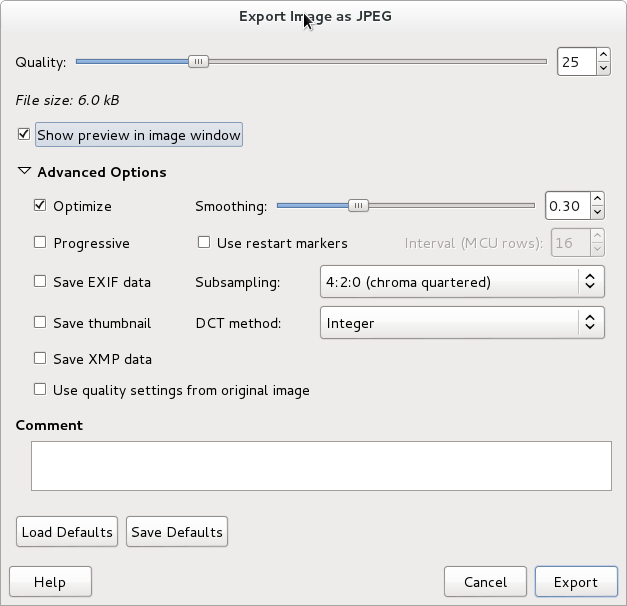
I m in the process of moving to a new OpenPGP key, and I want to include a small JPEG image of myself in it. The OpenPGP specification describes, in section 5.12.1 of RFC 4880, how an OpenPGP packet can contain an JPEG image. Unfortunately the document does not require or suggest any properties of images, nor does it warn about excessively large images. The GnuPG manual helpfully asserts that Note that a very large JPEG will make for a very large key. . Researching this further, it seems that proprietary PGP program suggests 120 144 as the maximum size, although I haven t found an authoritative source of that information. Looking at the GnuPG code, you can see that it suggests around 240 288 in a string saying Keeping the image close to 240 288 is a good size to use . Further, there is a warning displayed if the image is above 6144 bytes saying that This JPEG is really large . I think the 6kb warning point is on the low side today, however without any more researched recommendation of image size, I m inclined to go for a 6kb 240 288 image. Achieving this was not trivial, I ended up using GIMP to crop an image, resize it to 240 288, and then export it to JPEG. Chosing the relevant parameters during export is the tricky part. First, make sure to select Show preview in image window so that you get a file size estimate and a preview of how the photo will look. I found the following settings useful for reducing size: See screenshot below of the settings windows. GnuPG photo GIMP settings window Eventually, I managed to get a photo that I was reasonable happy with. It is 240 288 and is 6048 bytes large. GnuPG photo for Simon If anyone has further information, or opinions, on what image sizes makes sense for OpenPGP photos, let me know. Ideas on how to reduce size of JPEG images further without reducing quality as much would be welcome. flattr this!

Russell Coker: Phone Car Accessories

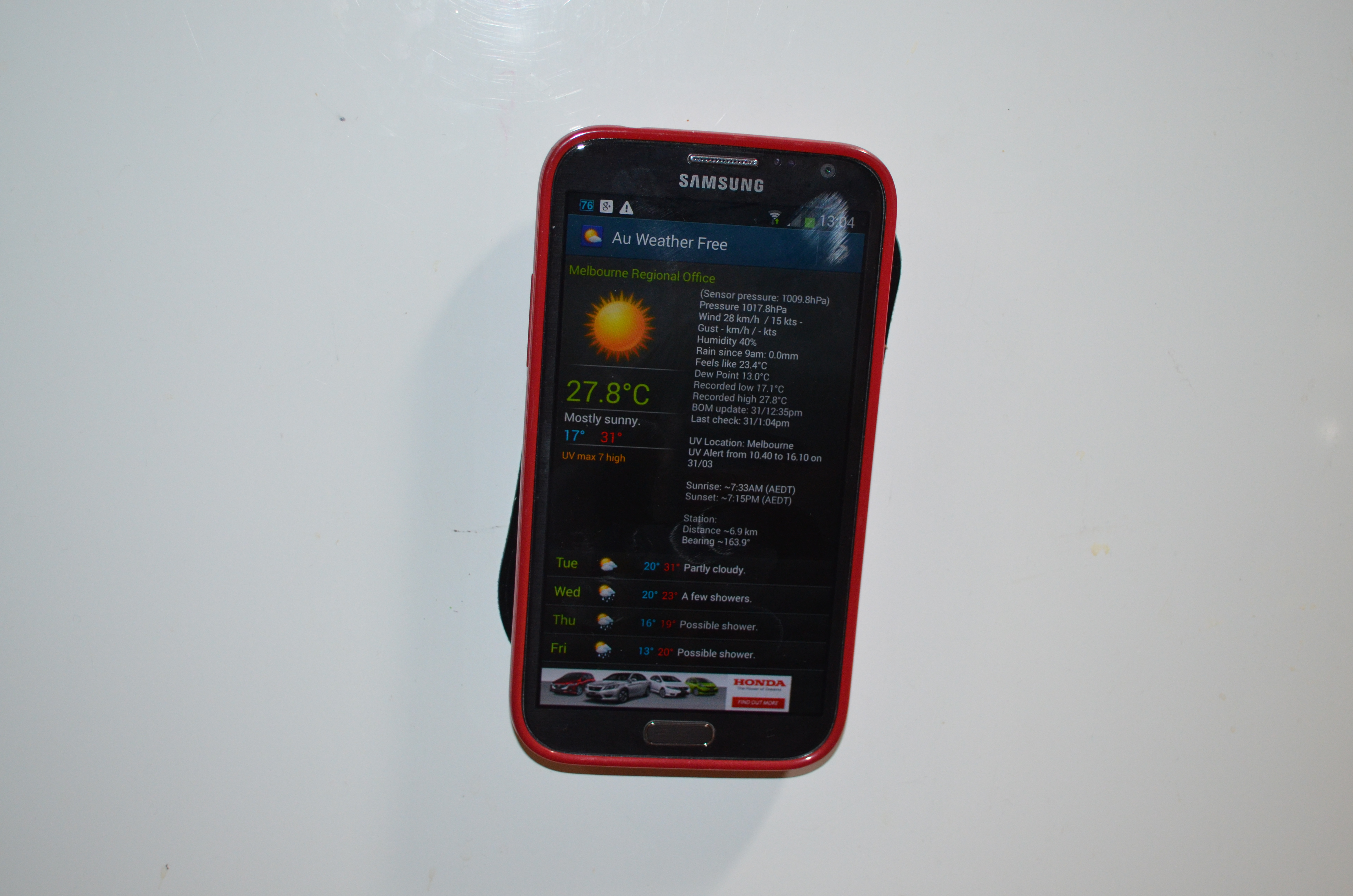
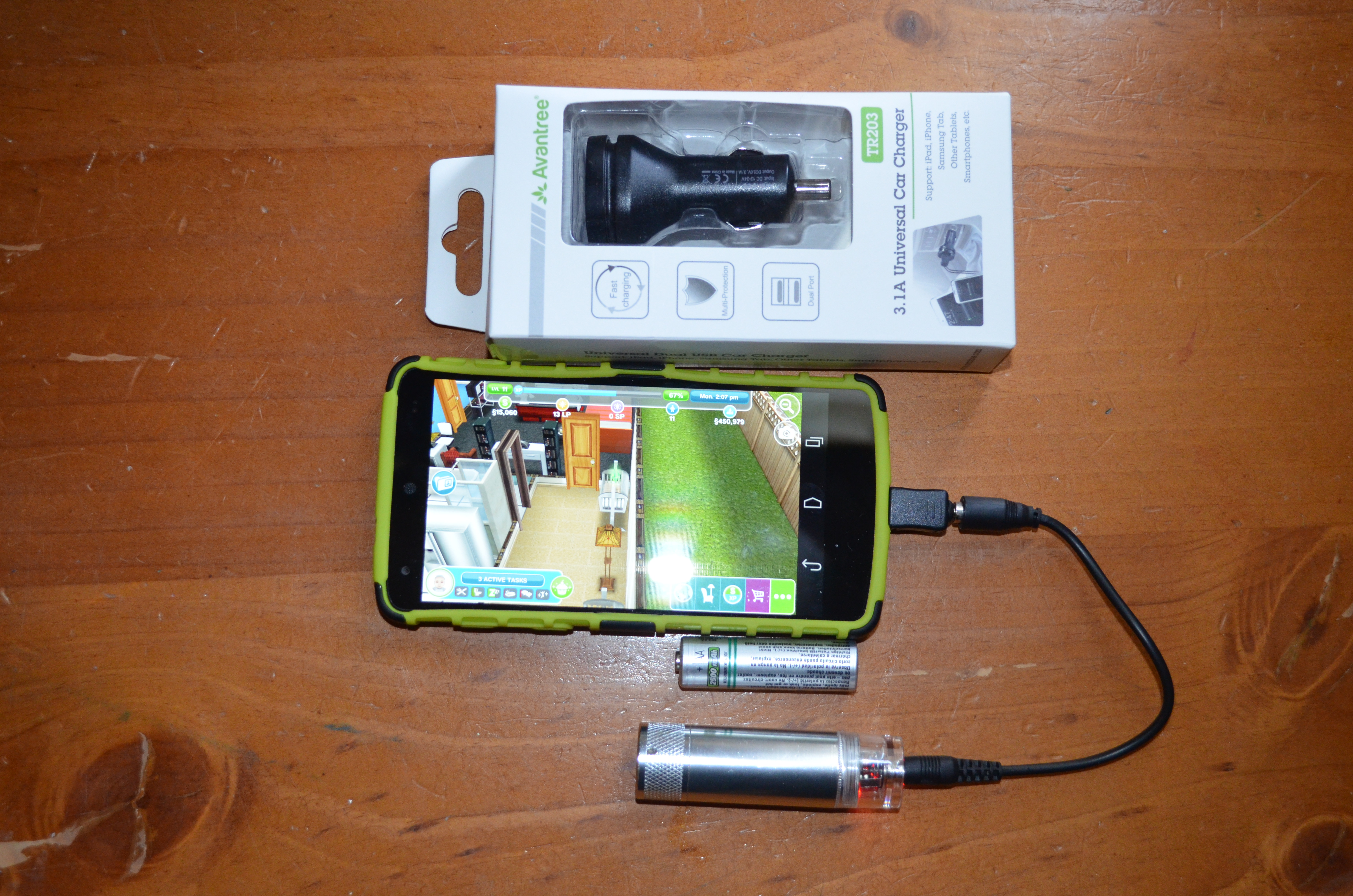
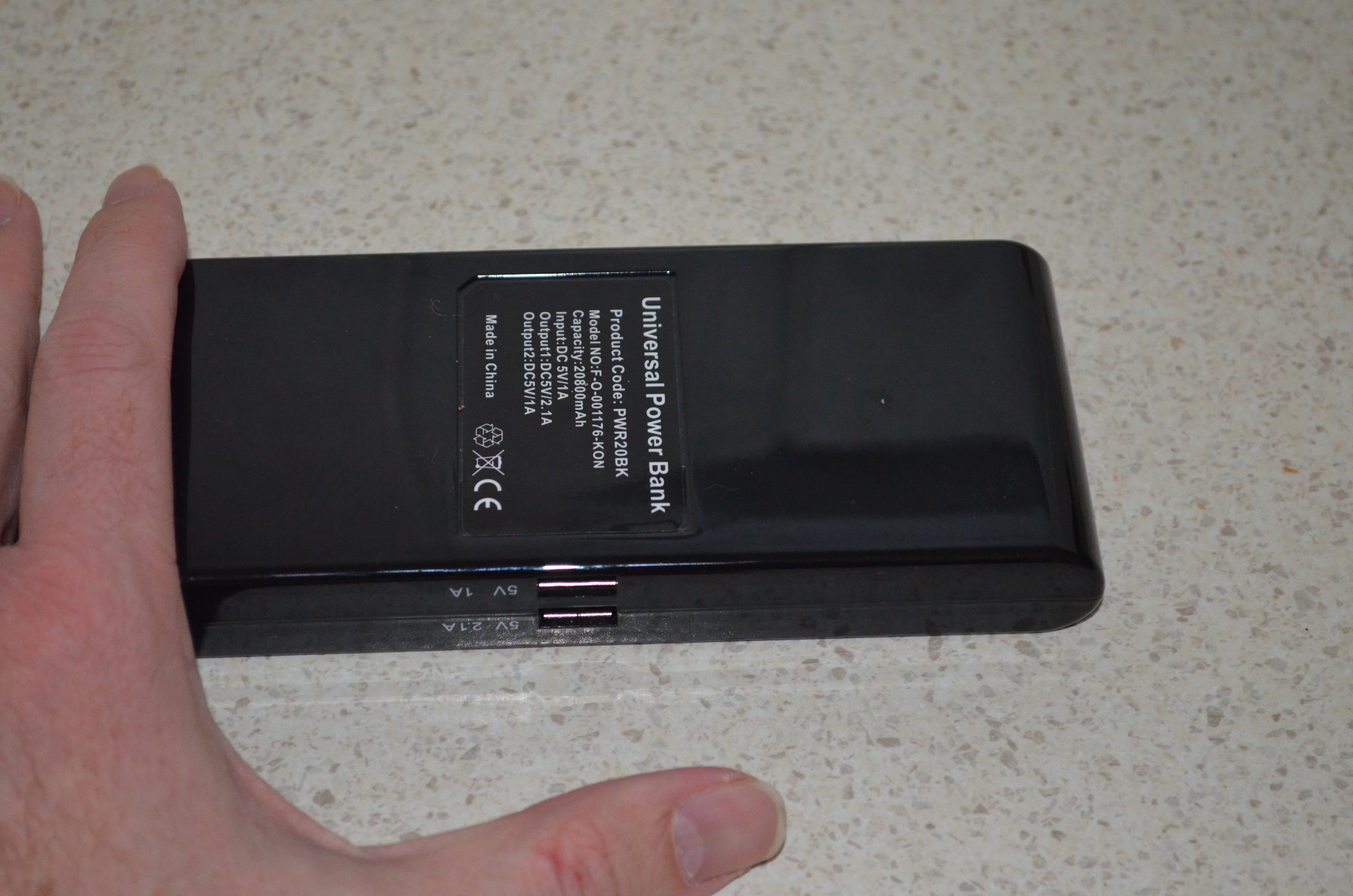
Tree Frog Dashboard Mat phone stuck to fridge I ve been given some more MobileZap products to review. The first is the Tree Frog anti-slip dashboard mat [1]. This is designed to allow a phone to stick to an angled surface of the inside of the car without slipping. The pictures on the web site show a phone stuck to a curved angular surface of a car dash. To test this I stuck my phone to my fridge, the flat metal surface of the fridge and the almost flat plastic surface of the gel case of my phone are pretty much ideal surfaces for the sticky mat to adhere to. But even so keeping my phone stuck to a vertical surface is impressive. This mat is cheap enough that it could be used for many other tasks than securing a phone in a car, for example it could be used to stick a phone to the wall of your office. It s apparently washable and can be expected to keep gripping things if washed regularly. One thing that could be improved in the mat would be to have some holes in it. When I detached my phone from the fridge some large air bubbles developed between the mat and the fridge, this would be a problem if I wanted to regularly stick my phone to a flat surface such as an office wall. When in my car it didn t work nearly as well. The pattern on the surface of the car dash which is designed to avoid glare when driving is difficult to stick to, it s a bit like trying to attach sticky-tape to unpainted wood for similar reasons. A phone will still remain in place on a 30 degree angle from the horizontal (which is significant) but the mat grips much more tightly to the phone than the dash, which is a little inconvenient as the mat stays attached to the phone when you remove it from the dash. Sorry for the boring picture, it s black and flat so there s not much scope for making it interesting. 3.1A USB Car Charger AA battery charger and 3.1A car charger Above is a picture of a 3.1A USB car charger and a AA battery charger. The car charger isn t particularly exciting, but providing 3.1A through two USB sockets is noteworthy it can charge one device at 2.1A (the maximum any device draws) or two devices for a total of up to 3.1A [2] (with protection against over-current). Previously in my car I used the 2.1A charger that shipped with my Galaxy Note 2 and an inverter to provide 240VAC as the devices I had to charge a phone from a car socket didn t provide enough current. This new device uses less space and also allows charging two phones at once. One problem with this device was finding USB cables that could handle the current, for benchmarking I used a phone that was running Ingress and acting as a Wifi access point. I discovered that the cables that Samsung ships with their recent devices (Galaxy Note 2 and Galaxy Note 10.1 tablet) seem to work best and support charging my Galaxy Note 2 or my wife s Nexus 5 while playing Ingress and running as a Wifi AP. Most of the other cables that I have in my collection won t even allow a phone to remain at the same charge level while playing Ingress. AA Emergency Phone Charger The AA phone charger is best suited for emergency use only, it takes one AA battery and has limited current capacity [3]. A NiMh rechargeable battery has a nominal Voltage of 1.2V, to provide 5V to charge a phone the Voltage has to be boosted by a factor of 4.16 which would reduce the current by a factor of 4.16 if the charger was 100% efficient. As 100% efficiency is impossible the current would be reduced even more. It seems unlikely that a AA battery would be able to sustain a current of 2A so the supply from that charger would be less than 500mA IE less than the least capable PC USB port or mains powered phone charger. A test with a Nexus 5 showed the phone charge level decreasing while being very lightly used (mostly just checking whether the charge level was increasing) when a NiMH battery was connected. A test with an alkaline battery and the same Nexus 5 showed the phone charge level increasing when lightly used but it probably wouldn t do so while playing Ingress. It seems that a single NiMH AA battery can only be used for charging a phone in a real emergency situation (IE an act of god type disaster not a need to level up in Ingress). If mains power was out then you could charge a phone while it s turned off (AFAIK all Android phones support this) and then use it once it s charged. This charger supports a wide range of phones (including LG phones from 5+ years ago and Nokia from ~10 years ago) so it could be good for charging an old phone in an emergency. Older phones need less power to charge and generally last longer between charges. With an alkaline battery the charger works a lot better, but it s still for emergency use as I generally only use rechargeable batteries. This is a device I might put in the bottom of my case when travelling, not a device that I ll use regularly. I don t think that this is a deficiency in the product, it s just a limit of what can be done with the power requirements of modern phones and the capabilities of AA batteries. If you want a battery to use while playing Ingress you definitely need something a lot larger. This charger is good for emergencies but not suitable for my main use (charging phones while playing Ingress) so I ll give it to my parents, they do a lot of hiking and camping and my father often goes fishing. Taking a few AA batteries to charge a phone would be much more convenient for such use than taking one of the larger batteries I use for Ingress. Also as the charger is relatively cheap there s less potential financial loss if you drop it in sea-water. 20800mAh Battery picture of 20800mAh USB battery Above is a picture of a 20800mAh battery pack that MobileZap sent me [4]. I haven t yet discovered what it s capacity is, during the recent Interitus anomaly it kept my Galaxy Note 2 and my wife s Nexus 5 adequately charged for 5 hours of intensive Ingress playing (we alternated between phones). Without an external battery it would be unusual for either of those phones to last for 2 hours. The battery has two ports labeled 1A and 2.1A which implies that it can supply a total of 3.1A. I am a little dubious of that implication. After the Interitus anomaly my wife and I had dinner with some friends and I let a friend charge her Samsung Galaxy S5 on the battery at the same time as my Note 2 (which claimed to be 2% charged). When I connected my friend s phone my phone instantly shut itself down due to lack of charge, so I presume that the supply on the 2.1A port is reduced when a demanding device is connected to the 1A port. The next day my wife and I went to the city again to play Ingress and attend a protest against some of the awful things that the Abbott government is doing. As an experiment I didn t charge this battery to see how it would go for two days of use charging two phones. Again there was no problem and it still claimed to be half charged when we got home. So far the only problem I ve found with this battery is that it never reports being fully charged, not even if I leave it on charge for days. That doesn t seem to be a great problem to me, if I disconnect it before it s fully charged then that won t hurt the battery life (unlike NiCd batteries that have to be fully charged every time) and even if it s not fully charged it will still charge phones for a long time. The battery is about 19cm long. I have jeans with unusually large pockets to fit large phones [5] so I can fit this battery in my pocket while a USB cable is connected to charge my phone. I also have a new winter jacket from Scottwear which has pockets that can fit the battery (and lots of other things). Anyone who doesn t have such clothing should plan to use a backpack, handbag, or some other bag this type of battery won t fit in the pockets in most clothing. MobileZap also has some other interesting Nexus 5 accessories [6].

18 June 2014

Aurelien Jarno: Debian is switching (back) to GLIBC

Five years ago Debian and most derivatives switched from the standard GNU C Library (GLIBC) to the Embedded GLIBC (EGLIBC). Debian is now about to take the reverse way switching back to GLIBC, as EGLIBC is now a dead project, the last release being the 2.19 one. At the time of writing the glibc package has been uploaded to experimental and sits in the NEW queue. EGLIBC is dead for a good reason: the GLIBC development has changed a lot in the recent years, due to two major events: Ulrich Drepper leaving Red Hat and the GLIBC development, and the GLIBC steering committe self-dissolving. This has resulted in a much more friendly development based on team work with good cooperation. The development is now based on peer review, which results in less buggy code (humans do make mistakes). It has also resulted in things that were clearly impossible before, like using the same repository for all architectures, and even getting rid of the ports/ directory. Before we used to have two sets of architectures, the main ones in the glibc repository with architectures like x86, SuperH or SPARC, and the secondary ones in the glibc-ports repository with architectures like ARM or MIPS. As you can see the separation was quite arbitrary, and often leaded to missing changes on the secondary architectures. We also got real stable branches, with regular fixes. The most important EGLIBC features have been merged to GLIBC, including for example the use of non-bash but POSIX shell, or the renaming of reserved keywords. The notable exception is the support for configurable components, which we originally planned to use for Debian-Installer, by building a smaller flavor using -Os and without NIS and RPC support. At the end we never worked on that, and it seems that the hardware targeted by Debian has grown faster than the GLIBC size, so that is not really a big loss. At the end, we ended up with only 5 missing patches from the EGLIBC tree: The package names are unchanged (except the source package and the binary package containing the sources) so the transition is fully transparent for the users. I would like to thank all the CodeSourcery employees who worked on EGLIBC, with a special thank to Joseph Myers who spent countless hours to merge the most important EGLIBC changes back to GLIBC, and sent regular emails about the merge status. I would also like to thanks all the people on the GLIBC side that made the change to happen, and all persons participating in the GLIBC development.

Matthias Klumpp: Tanglu 2 (Bartholomea annulata) status update #1

bartholomea-annulata

Bartholomea annulata (c) Kevin Bryant

It is time for a new Tanglu update, which has been overdue for a long time now! Many things happened in Tanglu development, so here is just a short overview of what was done in the past months. Infrastructure Debile The whole Tanglu distribution is now built with Debile, replacing Jenkins, which was difficult to use for package building purposes (although Jenkins is great for other things). You can see the Tanglu builders in action at buildd.tg.o. The migration to Debile took a lot of time (a lot more than expected), and blocked the Bartholomea development at the beginning, but now it is working smoothly. Many thanks to all people who have been involved with making Debile work for Tanglu, especially Jon Severinsson. And of course many thanks to the Debile developers for helping with the integration, Sylvestre Ledru and of course Paul Tagliamonte. Archive Server Migration Those who read the tanglu-announce mailinglist know this already: We moved the main archive server stuff at archive.tg.o to to a new location, and to a very powerful machine. We also added some additional security measures to it, to prevent attacks. The previous machine is now being used for the bugtracker at bugs.tg.o and for some other things, including an archive mirror and the new Tanglu User Forums. See more about that below :-) Transitions There is huge ongoing work on package transitions. Take a look at our transition tracker and the staging migration log to get a taste of it. Merging with Debian Unstable is also going on right now, and we are working on merging some of the Tanglu changes which are useful for Debian as well (or which just reduce the diff to Tanglu) back to their upstream packages. Installer Work on the Tanglu Live-Installer, although badly needed, has not yet been started (it s a task ready for taking by anyone who likes to do it!) however, some awesome progress has been made in making the Debian-Installer work for Tanglu, which allows us to perform minimal installations of the Tanglu base systems and allows easier support of alternative Tanglu falvours. The work on d-i also uncovered a bug which appeared with the latest version of findutils, which has been reported upstream before Debian could run into it. This awesome progress was possible thanks to the work of Philip Mu kovac and Thomas Funk (in really hard debug sessions).

Tanglu ForumsTanglu Users We finally have the long-awaited Tanglu user forums ready! As discussed in the last meeting, a popular demand on IRC and our mailing lists was a forum or Stackexchange-like service for users to communicate, since many people can work better with that than with mailinglists. Therefore, the new English TangluUsers forum is now ready at TangluUsers.org. The forum software is in an alpha version though, so we might experience some bugs which haven t been uncovered in the testing period. We will watch how the software performs and then decide if we stick to it or maybe switch to another one. But so far, we are really happy with the Misago Forums, and our usage of it already led to the inclusion of some patches against Misago. It also is actively maintained and has an active community. Misc Thingstanglu logo pure KDE We will ship with at least KDE Applications 4.13, maybe some 4.14 things as well (if we are lucky, since Tanglu will likely be in feature-freeze when this stuff is released). The other KDE parts will remain on their latest version from the 4.x series. For Tanglu 3, we might update KDE SC 4.x to KDE Frameworks 5 and use Plasma 5 though. GNOME Due to the lack manpower on the GNOME flavor, GNOME will ship in the same version available in Debian Sid maybe with some stuff pulled from Experimental, where it makes sense. A GNOME flavor is planned to be available. Common infrastructure We currently run with systemd 208, but a switch to 210 is planned. Tanglu 2 also targets the X.org server in version 1.16. For more changes, stay tuned. The kernel release for Bartholomea is also not yet decided. Artwork Work on the default Tanglu 2 design has started as well any artwork submissions are most welcome! Tanglu joins the OIN The Tanglu project is now a proud member (licensee) of the Open Invention Network (OIN), which build a pool of defensive patents to protect the Linux ecosystem from companies who are trying to use patents against Linux. Although the Tanglu community does not fully support the generally positive stance the OIN has about software patents, the OIN effort is very useful and we agree with it s goal. Therefore, Tanglu joined the OIN as licensee.

And that s the stuff for now! If you have further questions, just join us on #tanglu or #tanglu-devel on Freenode, or write to our newly created forum! You can, as always, also subscribe to our mailinglists to get in touch.

Ritesh Raj Sarraf: Laptop Mode Tools 1.65

I am very pleased to announce the release of Laptop Mode Tools, at version 1.65 This release took a toll given things have been changing for me, both personally and professionally. 1.64 was released on September 1st, 2013. So it was a full 9 month period, of which a good 2-3 months were procrastination. That said, this release has some pretty good bug fixes and I urge all distribution packagers to push it to their repositories soon. While I'd thank all contributors who have helped make this release, a special thank you to Stefan Huber. Stefan found/fixed many issues, did the messy code clean up etc.. Thank you. Worthy changes are mentioned below. For full details, please refer to the git commit logs. 1.65 - Wed Jun 18 19:22:35 IST 2014
* fix grep error on missing $device/uevent
* ethernet: replace sysfs/enabled by 'ip link down'
* wireless-iwl-power: sysfs attr enbable -> enabled
* wireless-iwl-power: Add iwlwifi support
* Use Runtime Power Managemet Framework is more robust now. Deprecates module
usb-autosuspend

* Fix multiple hibernate issue
* When resuming, run LMT in force initialization mode
* Add module for Intel PState driver
* GUI: Implement suspend/hibernate interface


AddThis:

Categories:

Keywords:

Wouter Verhelst: Belgium vs Algeria

Yesterday, the Belgian team played against Algeria, and won 2-1. Before the match, there was some criticism about coach Wilmots' decision not to field a number of top players in the team at the start of the match. Today, some journalists -- including, apparently, some Russian journalists -- seem to think that the team didn't play all that well, and that the Belgian team could be beaten by a better team. I don't think that's the case; I think the strategy of Wilmots was a stroke of genius. The Algerian coach fielded a wall of 5 defenders, and played a pretty good counter game. When the Belgian team had posession -- for about 65% of the time during the entire match -- the Algerians returned every man to their own half of the field. Whenever one of the Belgian strikers came close to the Algerian penalty area, at least two Algerian players would be near and block them off. How does one win from a team that doesn't want to give you a millimeter of room? One way is to wear them out, and that's exactly what the team did: by keeping the pressure on the Algerian defense, the Algerian defense had to run a lot. Running a lot makes you tired, and if you're tired you make mistakes, or you can't follow a fresh substitute player. During half-time, it was reported that Wilmots had relayed the message to his players that "the bench will make the difference". And indeed it did; some time into through the second half, Wilmots substituted three players -- two strikers and one offensive midfielder -- with the top players he'd kept on the bench. Two of these three players made the difference, scoring two goals to end up with 2-1. Reading some articles today, it seems like many analysts think that this was a spur of the moment thing by Wilmots; but I think it's more likely that this was a deliberate strategy. Making the opposing defense run a lot is certainly a good strategy; but the downside of that is that your own offensive players will need to run a lot, too. If you can swap those out for top players on the bench... It'll be interesting to see the next matches.

17 June 2014

Wouter Verhelst: Trying out bash completion

I've never liked the contents of the bash-completion package. I've found its results to be confusing, mildly buggy, and therefore terribly annoying. As such, for the longest time, one of the first things I used to do when installing a new system was to just remove it entirely -- or add "complete -r" or similar to my .bashrc on systems where I did not have sysadmin powers. However, that's not to say that I don't understand the reason for programmable completion. Filename completion is nice, but it's great if one can have things like command option completion, etc. As such, I've resolved to give the bash-completion another shot for, say, a month or so, and to actually file bugs when things happen that I think should not. Of course, it's very well possible that in the time since I last tried it, all those annoyingly small confusing bugs have been fixed. But somehow, I doubt that. I guess we'll find out.

Gunnar Wolf: My little Tor node: Alive again!

So, after writing my last blog post in frustration, several people knowing their way around Tor better than me wrote that I should just configure my machine not to be an exit relay, but a middle relay or a bridge. So, I set it up to be a bridge about five days ago. And, as they pointed out, I have not experienced any problems. Interesting: The traffic pattern is very different. Compare: Traffic pattern as an exit relay:
Traffic pattern as a bridge:
Anyway I'm happy to have Lobazal back online!

16 June 2014

Simon Kainz: on using crippled installers

Maybe someone else is using iDataPlex HW, so this might come in helpful... TL, DR: Dear Hardware Vendors! Please don't force people to use specific Linux distributions when a simple unzip command would do the same. At work we run (amongst others) an HPC system consisting of 120 IBM System X iDataPlex dx360 M4 Nodes. Recently, after some MCE logs caused by DIMM errors, the IBM guy refused to send me replacement DIMMs if if didn't update IMM firware and tortue test the machine some days more. Well, ok... IBM uses the so called UpdateXpress tool to update IMM and UEFI firmware. The tool is available for rhel4 to rhel7 (both 32 and 64 bit), SLES10 & SLES11 and Microsoft Windows. I tried all of the available UpdateXpress System Pack Installers, with basically the same result everytime:
WARNING! This package doesn't appear to match your system.
         The following information was determined for your system:
           distribution = Unknown
           release = -1
           processor architecture = Unknown
I tried to set up a fake RHEL environment (customized /usr/local/uname, custom /et/RHel-release, etc...) but after some more tries, the installer (yes, it's still the installer I am trying to run) fails with some strange SEGFAULTS. After some closer inspection, (well, the RHEL4 uxspi binary is about 109MB big!) i tried to unzip it, and voila:
~/firmware$ unzip ibm_utl_uxspi_9.60_rhel4_32-64.bin
Archive:  ibm_utl_uxspi_9.60_rhel4_32-64.bin
   creating: rhel6_64/image/
  inflating: rhel6_64/image/libpegasus.nsp.so  
  inflating: rhel6_64/image/libUxliteImmUsbLan.so  
  inflating: rhel6_64/image/eccConnect.properties  
  inflating: rhel6_64/image/libpegslp_client.so  
   creating: rhel6_64/image/esxi_assoc_templates/
  inflating: rhel6_64/image/esxi_assoc_templates/elxFC.uxt  
  inflating: rhel6_64/image/esxi_assoc_templates/elxCNA.uxt  
  inflating: rhel6_64/image/esxi_assoc_templates/ibmc.uxt  
  inflating: rhel6_64/image/esxi_assoc_templates/FPGA-S.uxt  
  inflating: rhel6_64/image/esxi_assoc_templates/degraded.uxt  
  inflating: rhel6_64/image/esxi_assoc_templates/brocadeFC.uxt  
  inflating: rhel6_64/image/esxi_assoc_templates/qlgcFC.uxt  
  inflating: rhel6_64/image/esxi_assoc_templates/broadcom.uxt  
  inflating: rhel6_64/image/esxi_assoc_templates/LSI.uxt  
  inflating: rhel6_64/image/esxi_assoc_templates/brocadeCNA.uxt  
  inflating: rhel6_64/image/esxi_assoc_templates/uefi.uxt  
  inflating: rhel6_64/image/esxi_assoc_templates/diags.uxt  
  inflating: rhel6_64/image/esxi_assoc_templates/qlgcCNA.uxt  
  inflating: rhel6_64/image/esxi_assoc_templates/VMwareESXi.uxt  
  inflating: rhel6_64/image/esxi_assoc_templates/ibmc2.uxt  
  inflating: rhel6_64/image/esxi_assoc_templates/FPGA.uxt  
  inflating: rhel6_64/image/libipmi_client.so  
  inflating: rhel6_64/image/UXLite_UPDATEID.dat  
  inflating: rhel6_64/image/libacpi.so  
  inflating: rhel6_64/image/libibmsp6_openipmi.so  
  ...
I managed to find a iflash64 binary, and after so trial and error, came up with the following workflow:
./iflash64 --host your_host_imm_IP --user your_username --password your_password --package imm2_1aoo56d-3.73.upd --reboot
IBM Command Line IMM Flash Update Utility v2.02.11
Licensed Materials - Property of IBM
(C) Copyright IBM Corp. 2009 - 2014  All Rights Reserved.
Connected to IMM at IP address x.x.x.x.
Update package firmware type: IMM2
Update package build level:   xxxxxx
Target's current build level: xxxxxx
Would you like to continue with the update? y/n: y
Node 0: The IMM is preparing to receive the update.
Node 0: Transferring image: 98%
Node 0: Transfer complete.
Node 0: Validating image.
Node 0: Updating firmware:  0%
Node 0: Updating firmware:  100%
Node 0: Update complete.
Performing activation of the firmware:
Connected to IMM at IP address 10.8.2.4 successfully.
..........
Waiting up to 360 seconds for the activation to complete:
..
..
And so on... Conclusio: Dear Hardware Vendors! Please don't force people to use specific Linux distributions when a simple unzip command would do the same.

Keith Packard: Altos1.4

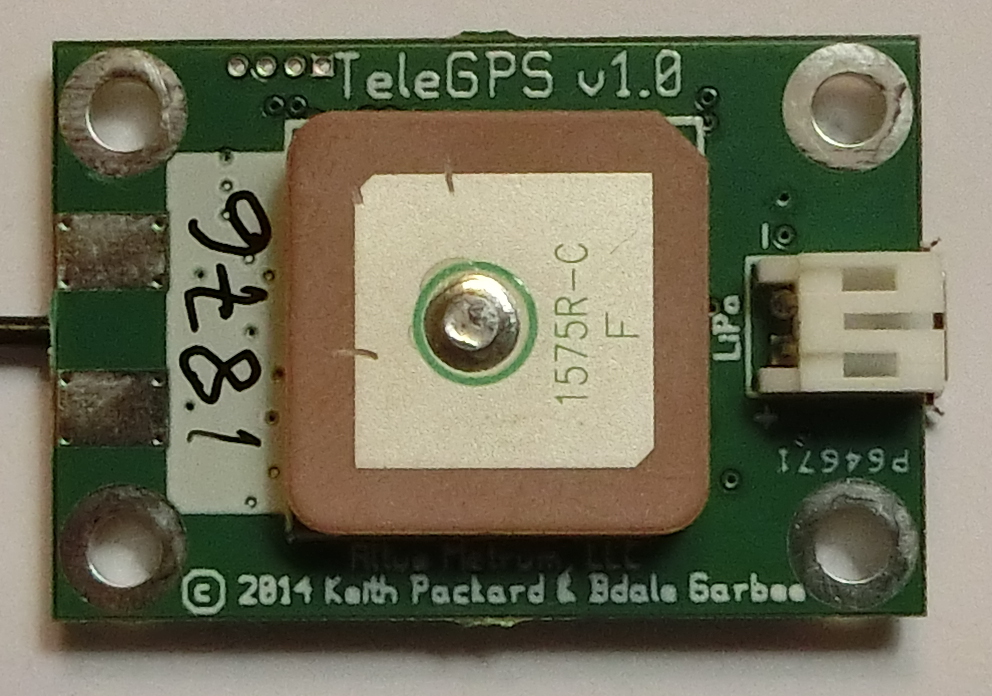
AltOS 1.4 TeleGPS support, features and bug fixes Bdale and I are pleased to announce the release of AltOS version 1.4. AltOS is the core of the software for all of the Altus Metrum products. It consists of firmware for our cc1111, STM32L151, LPC11U14 and ATtiny85 based electronics and Java-based ground station software. This is a major release of AltOS, including support for our new TeleGPS board and a host of new features and bug fixes AltOS Firmware TeleGPS added, new features and fixes Our new tracker, TeleGPS, works quite differently than a flight computer TeleGPS transmits our digital telemetry protocol, APRS and radio direction finding beacons. For TeleMega, we ve made the firing time for the additional pyro channels (A-D) configurable, in case the default (50ms) isn t long enough. AltOS Beeping Changes The three-beep startup tones have been replaced with a report of the current battery voltage. This is nice on all of the board, but particularly useful with EasyMini which doesn t have the benefit of telemetry reporting its state. We also changed the other state tones to Farnsworth spacing. This makes them all faster, and easier to distinguish from the numeric reports of voltage and altitude. Finally, we ve added the ability to change the frequency of the beeper tones. This is nice when you have two Altus Metrum flight computers in the same ebay and want to be able to tell the beeps apart. AltOS Bug Fixes Fixed a bug which prevented you from using TeleMega s extra pyro channel Flight State After configuration value. AltOS 1.3.2 on TeleMetrum v2.0 and TeleMega would reset the flight number to 2 after erasing flights; that s been fixed. AltosUI New Maps, igniter tab and a few fixes With TeleGPS tracks now potentially ranging over a much wider area than a typical rocket flight, the Maps interface has been updated to include zooming and multiple map styles. It also now uses less memory, which should make it work on a wider range of systems. For TeleMega, we ve added an Igniter tab to the flight monitor interface so you can check voltages on the extra pyro channels before pushing the button. We re hoping that the new Maps interface will load and run on machines with limited memory for Java applications; please let us know if this changes anything for you. TeleGPS All new application just for TeleGPS While TeleGPS shares the same telemetry and data logging capabilities as all of the Altus Metrum flight computers, its use as a tracker is expected to be both broader and simpler than the rocketry-specific systems. We ve build a custom TeleGPS application that incorporates the mapping and data visualization aspects of AltosUI, but eliminates all of the rocketry-specific flight state tracking.
15 June 2014

Daniel Pocock: Should Ireland rejoin the UK?

US President Obama has been widely quoted questioning Scottish independence. Does he have similar doubts about the Irish Republic? Ireland's decision to leave the UK was proclaimed in 1916 and ratified by elections and a decision in 1919. England finally signed the Anglo-Irish Treaty in 1921, simultaneously downgrading themselves from being the British Empire to the British Commonwealth of Nations. For a small nation, Ireland packs a big punch. What does the President have to say about Free Ireland? The US Embassy in Dublin is happy to share President Obama's insights like those below:
Some wise Irish man or woman once said that broken Irish is better than clever English. So here goes: T thas orm bheith in irinn I am happy to be in Ireland! I'm happy to be with so many cairde.
Mr Obama then switches into a more personal context:
if you believe the Corrigan Brothers, there s no one more Irish than me.
He is referring to his Irish roots in the village of Moneygall. He then goes on to look at the impact the free Irish spirit had on the way Americans gained the freedom they have over their own country today:
When the father of our country, George Washington, needed an army, it was the fierce fighting of your sons that caused the British official to lament, We have lost America through the Irish.
and America's freedom to move beyond our planet too:
it was our first Irish President our first Catholic President, John F. Kennedy, who made us believe 50 years ago this week that mankind could do something big and bold and ambitious as walk on the moon. He made us dream again.
In fact, US presidents traditionally have lunch with the Irish leadership for St Patrick's day each year. This year they discussed international issues like Ukraine - maybe the complexities of Northern Ireland provide insights into the challenges of the Crimea? Will Scotland choose to sit at this table and will they bring a good Scotch with them? US President Obama, Guinness/></p> </body></html>

14 June 2014

Steve Kemp: So here's a proof of concept

The simplest possible DNS-based service which I could write to explore Amazon's DNS offering has to be dynamic DNS, so I set one up.. The record skx.dhcp.io can be updated to point to your current IP by running:
curl http://dhcp.io/set/efa6961c-f3dd-11e3-955b-00163e0816a2
Or to a fixed IP:
curl http://dhcp.io/set/efa6961c-f3dd-11e3-955b-00163e0816a2/1.2.3.4
The code is modular and pretty nice, and the Amazon integration is simple. (Although I need to write code to allow users to sign-up. I'll do that if it seems useful, I suspect there are already enough free ddns providers out there - though I might be the first to support IPv6 when I commit my next chunk of work!)

13 June 2014

Steve Kemp: Amazon's Route53 API is nice.

It is unfortunate that some of the client libraries are inefficient, but I'm enjoying my exposure to Amazon's Route53 API. (This is unrelated to the previous post(s) about operating a DNS service..) For an idea of scale I host just over 170 zones at the moment. For the first 25 zones Amazon would charge $0.50 a month, then $0.10 after that. Which would mean:
25  * $0.50  +
150 * $0.10
             = $12.50
That seems reasonably .. reasonable.

11 June 2014

Bits from Debian: Introducing the Debian Continuous Integration project

Debian is a big system. At the time of writing, the unstable distribution has more than 20,000 source packages, building more then 40,000 binary packages on the amd64 architecture. The number of inter-dependencies between binary packages is mind-boggling: the entire dependency graph for the amd64 architecture contains a little more than 375,000 edges. If you want to expand the phrase "package A depends on package B", there are more than 375,000 pairs of packages A and B that can be used. Every one of these dependencies is a potential source of problems. A library changes the semantics of a function call, and then programs using that library that assumed the previous semantics can start to malfunction. A new version of your favorite programming language comes out, and a program written in it no longer works. The number of ways in which things can go wrong goes on and on. With an ecosystem as big as Debian, it is just impossible to stop these problems from happening. What we can do is trying to detect when they happen, and fix them as soon as possible. The Debian Continuous Integration project was created to address exactly this problem. It will continuously run test suites for source packages when any of their dependencies is updated, as well as when a new version of the package itself is uploaded to the unstable distribution. If any problems that can be detected by running an automated test suite arise, package maintainers can be notified in a matter of hours. Antonio Terceiro has posted on his blog an introduction to the project with a more detailed description of the project, its evolution since January 2014 when it was first introduced, an explanation of how the system works, and how maintainers can enable test suites for their packages. You might also want to check the documentation directly.

Next.

Previous.