Search Results: "ina"

8 August 2013

Lars Wirzenius: Obnam 1.5 (backup software) release

I've just pushed out the release files for Obnam version 1.5, my backup application, and Larch, my B-tree library, which Obnam uses. They are available via my home page (http://liw.fi/). These versions have alos been uploaded to Debian unstable. NEWS for Obnam: NEWS for larch:

7 August 2013

Keith Packard: embedded cpus

Choosing Embedded Processors for AltOS When Bdale and I started building rocketry hardware together, we had already picked out a target processor, the TI cc1111. We picked that chip almost entirely based on the digital transceiver that is built in to the chip, and not because we had any particular love for the 8051 microcontroller. At that time, I d seen people struggle with PIC processors, battle AVR to a draw and spend a lot of time trying to get various ARM processors running. So, the 8051 didn t seem all that far from normal, and the cc1111 implementation of it is pretty reasonable, including credible USB support and a built-in DMA engine. Since those early days, we ve gone on to build boards with a slightly wider range of processors: Bdale thinks we should reduce the number of components we use to focus our efforts better. He s probably right, but I have to admit that I ve had way too much fun getting each of these chips running. I thought I d spend a bit of time describing our general process for selecting a new CPU. CC1111 involved a lot of software hacking The 8051 processor in the CC1111 is very well documented, including the two-wire debugging interface. What was missing was a canned solution for programming and debugging the chip from Debian. However, with sufficient motivation and accurate docs, I was able to create a programmer from a USB device with a couple of GPIOs and a lot of ugly software on Linux. That sufficed to get the USB stack limping along, at which point I wrote a much faster programmer that ran on the cc1111 itself and could program another cc1111. With that, I created an assembly-level debugger that could be hooked to the existing SDCC source level debugger and had a full source-level debugging environment for the 8051. This turned out to be way better than what I could get on the Atmel processors, where I ve got a program loader and a whole lot of printf debugging. STM has been great The STM32L-Discovery board has a standard STM debugging setup for the Cortex SWD interface right on the same board as a target CPU. That made for completely self-contained development, with no jumper wires (a first for me, for sure). There s free software, stlink which can talk over the debugger USB connection to drive the SWD interface. This is sufficient to flash and debug applications using GDB. Of course, GCC supports ARM quite well; the only hard part was figuring out what to do for a C library. I settled on pdclib, which is at least easy to understand, if not highly optimized for ARM. We ve built a ton of boards with the STM32L151 and STM32L152; at this point I m pretty darn comfortable with the architecture and our tool chain. Adventures with NXP The NXP LPC11U14 is a very different beast. I m using this because: The LPCXpresso board looks much like the STM32L-Discovery, with a debugger interface wired to the CPU directly on the board. However, I haven t found free software tools to drive this programmer; all I ve found are binary-only tools from NXP. No thanks. Fortunately, the LPC11U14 uses exactly the same SWD interface as the STM32L, so I was able to sever the link between the programmer and the target on the LPCXpresso board and hook the target to an ST-Link device (either the one on the STM32L-Discovery board, or the new stand-along programming dongle I bought). With that, I wrote an openocd script to talk to the LPC11U14 and was in business. What I found in the NXP processor was a bit disturbing though there s a mask ROM that contains a boot loader, which always runs when the chip starts, and a bunch of utility code, including the only documented interface to programming the flash memory. I cannot fathom why anyone thought this was a good idea I don t want a BIOS in my embedded CPU, thankyouverymuch; I d really like my code to be the first instructions executed by the CPU. And, any embedded developer is more than capable of programming flash using a register specification, and calling some random embedded code in ROM from the middle of my operating system is more than a bit scary. NXP could do two simple things to make me like their parts a whole lot more: Right now, I m hoping the STM32L100C6 parts become available in small quantities so I can try them out; they promise to be as cheap as the LPC11U14, but are better supported by free software and offer more complete hardware documentation. Yeah, they re a bit larger; that will probably be annoying.

Enrico Zini: Debconf TODO-list

Debconf TODO-list Friday evening (2013-08-09) I'll arrive at Debcamp. Here is my TODO list for Debcamp and Debconf:

6 August 2013

Daniel Pocock: DebConf next week, free real-time communications session

DebConf13 is just about to get under way. While last year's event involved an exciting visit to Nicaragua, this year it is right here in Switzerland making it very convenient for many of those in the very populous community of free software enthusiasts across western Europe.
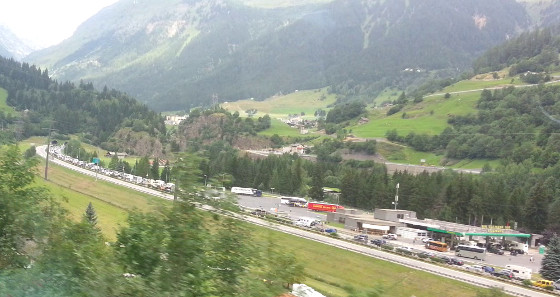
A long queue has already formed on the freeway going north from Italy into Switzerland's Gotthard Tunnel: did somebody put Debian's 20th birthday party on a social networking site? The big invitation On the final day of DebConf, Saturday 17 August, there is an afternoon track dedicated to the topic of free real-time communications. While DebConf is traditionally aimed at the Debian Developer community, real-time communications, by definition, requires cross-platform collaboration in order to succeed and it is a particularly hot topic thanks to recent revelations about communications privacy. Therefore, there is a wider invitation for visitors to attend this session, please just remember to register your details here, it is free (and private). To get a feel for the topic, please see the video of the Free, Open and Secure Communications panel from FOSDEM 2013 Seeing Switzerland
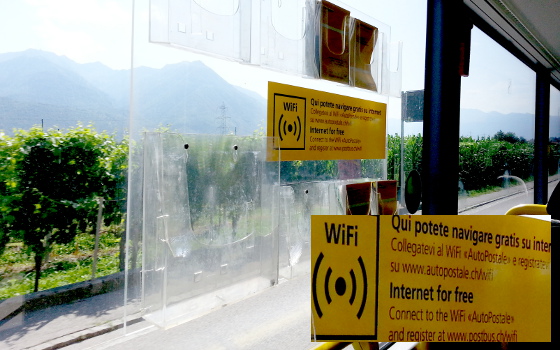
Who said Switzerland is expensive? Swiss Postbus is offering free wifi now Please see some of my previous blogs about Swiss travel for videos and pictures if you are looking for ideas for your time in .ch

5 August 2013

Ian Wienand: Skipping bash history for command-lines starting with space

I was recently reading about a case where part of the evidence appears to be a deleted bash history-file. From what I gather, the accused says that the removal was a clean-up job to remove inadvertently stored passwords rather than an attempt to hide nefarious activity. What had managed to pass me by in 15 or so years of using bash but not reading man bash properly is the HISTCONTROL variable. If it is set to ignorespace then commands entered with a leading-space will not be stored in the history. Like all the best discoveries I found this only by accident on a machine where it was turned on. It's been quite useful in keeping my history pruned. However, not usually for security reasons around hiding passwords passwords on the command-line have other problems and I'm sure any security person would tell you not to use them just from a defense-in-depth perspective. That said, from a "keeping ctrl-r reversi-search useful" point-of-view it's often helpful; for example I've mostly trained my fingers to <space>rm -rf because I'm sure I'm not the only one who has deleted the wrong thing via a history-recall-combined-with-typing-to-fast scenario. So, HISTCONTROL=ignoreboth (which also ignores duplicates) is certainly a useful one to slip into your .bashrc. At least it would be one-less thing to explain to the FBI!

Sylvestre Ledru: Switch to OpenJDK 7

As announcement on debian-devel-announce, I just uploaded java-common version 0.49. This version changes the default version of OpenJDK to version 7. That means that packages depending on default-jdk/default-jre will be now built with OpenJDK 7 (instead of the 6) and also that the java/javac commands will be providing Java 7.
I also used the opportunity of this upload to update the Java policy.

Wouter Verhelst: Hard disk partition pregap and grub2

A week or so back, I was at a customer to upgrade his server to wheezy. This server had originally been installed, not as squeeze but as something older, and was installed using an LVM-on-mdraid setup. Booting off such a setup (without a /boot partition outside of the raid/LVM) is certainly possible with several boot loaders, including grub2; however, it was having issues in this particular instance, producing an error message along the likes of:
/sbin/grub2-setup: warn: Your embedding area is unusually small. core.img won't fit in it..
It took me a while to figure out what that meant, but the Internet to the rescue:
Disk /dev/sda: 160.0 GB, 160041885696 bytes
255 heads, 63 sectors/track, 19457 cylinders, total 312581808 sectors
Units = sectors of 1 * 512 = 512 bytes
Sector size (logical/physical): 512 bytes / 512 bytes
I/O size (minimum/optimal): 512 bytes / 512 bytes
Disk identifier: 0x000b3c3b
   Device Boot      Start         End      Blocks   Id  System
/dev/sda1   *        2048   312580095   156289024   83  Linux
That partition starts at the 2048th block, resulting in a 1MiB gap before the first partition. The older default was to start on the 63rd block, for a pregap of just short of 32KiB. Unfortunately, the only way to fix this issue without ugly hacks (such as the chainloading suggested in this fedora forum thread) is to repartition. Luckily, thanks to the magic of LVM, this isn't difficult (if a little involved). Steps:
pvmove -v /dev/md0
vgreduce -a
mdadm -S /dev/md0
(...repartition the hard disks that make up /dev/md0...)
mdadm -C /dev/md0 (... other options required to recreate /dev/md0 on the desired RAID level...)
pvcreate /dev/md0
vgextend /dev/vg /dev/md0
... and then rinse, repeat for md1. At that point, installing grub will work as usual. An alternative (since we were using RAID1) could have been to remove one disk from the RAID array, repartition it, create a new RAID1 array in degraded mode, pvmove over to that, destroy the original array, and add the second disk to the new array. This would probably be a better idea when you only have one RAID array, for instance, or when you have more than one array and have more data than fits on a single array. However, that wasn't the case here (at least not after a resize2fs -M call followed by an appropriate lvresize one), and so I thought that not reducing redundancy, even if only temporarily, was a better move.

Daniel Pocock: Effectively supporting virtual domains with Mailman

When I first decided to run my own list server, I was well aware of the popularity of Mailman but I was deterred from using it by the complexity of setting up virtual hosts. In particular, 99% of the software I use for servers is packaged. Whenever I choose a new piece of software, using something that is packaged and supported is high on my list of priorities. Mailman's distribution tarball and the packages built from it only have limited support for virtual hosting. My own objective is to host lists for open source projects. As some of these projects don't have dedicated budgets, it is particularly important to find lightweight, low-maintenance solutions. Furthermore, it is important that those solutions don't detract from the time I want to invest in the projects themselves. I've developed some scripts to solve the problem: to start using them quickly, please see the README file. Here I provide a more detailed overview of the logic behind this approach. Mailman's limitations and workarounds For me, the biggest limitation of Mailman is that the site list is always linked to a single domain, which has to be chosen arbitrarily from the list of domains being hosted. Although it is not emphasized in the documentation, there is also the inconvenience of having all the lists from potentially unrelated projects appearing together on Mailman's main index page. Another limitation is that each list name must be globally unique across all domains. Some existing workarounds exist but they have limitations too. There is a virtual domain patch, but it is not clear how this handles the site list or the site index page. There is also the postfix-to-mailman script distributed by Debian and Ubuntu: using a transport-based solution looks elegant at first, but when you realise that you need to whitelist the addresses (to ensure messages are rejected at ingress rather than bounced), it becomes just as much work to maintain as the alternatives it aims to avoid: Mailman's authors do not endorse this approach. Experimenting with Sympa Deterred by Mailman's limitations, I initially went with Sympa and that seemed to run quite well for a number of years. In particular, it supports full virtual hosting out-of-the-box and all this is standard in the convenient Debian packages. From time-to-time, users have complained about the use of JavaScript in the web UI, but that was not something I could immediately resolve. However, when I upgraded to Debian 7 (wheezy), more serious problems appeared. Initially, the web UI (used for subscribing or browsing the archives) was completely broken. Anybody accessing the site would be given a download of the wws binary rather than the page that was supposed to be generated by the binary. I discovered errors about this in Apache's error.log and tried installing libapache2-mod-fcgid. The problem was resolved, but from then on, my whole web server became unstable and at least once every day I would have to restart the Apache process or it would become inaccessible. I put the details into a bug report and after not getting any feedback, decided to go and have another look at Mailman. A closer look at Mailman Looking at Mailman again, it appeared that the only way to achieve a relatively "pure" virtual hosting solution would be to run multiple installations of Mailman in different directory trees. Initially, I hoped this could be done by sharing copies of the binaries and just creating replicas of the structure under /var/lib/mailman. Looking under the hood, I discovered that the paths were compiled into the binaries and could not be easily overriden. It appears that this limitation could be overcome with some trivial patches to read directory names from the environment. The main aims of using shared binaries are disk space efficiency and also being able to benefit from security updates for the binary packages. However, if I had to patch the binaries, then I wouldn't be able to benefit from the security update packages anyway. So, it became inevitable that I would have to build binaries from source one way or another: either with a patch or by building multiple copies of each binary, each hardcoded with a different path. Putting it into practice Looking over the Mailman architecture, there are four things to be replicated for each installation:
  • init script to start a standalone qrunner per domain
  • cron jobs
  • CGI configuration from Apache (easily isolated by using a different ScriptAlias inside each Apache <VirtualHost>
  • Invocation of the Mailman binary from the mailer's aliases file
The init scripts and crontabs can be easily generated from a template (I used Debian's copies of these files as a base for that). Some of the Apache configuration can be handled by putting wildcards in the <Directory> specifications and the rest can be easily cut-and-pasted into <VirtualHost> definitions. Based on all of the above, all I had to do was run Mailman's configure script and make once for each virtual domain. I've scripted the whole process - my script is available here Managing the aliases file One particular limitation of my mailer (Postfix) is that the Mailman message processor can't be invoked directly from a rule in the virtual alias map. Scripts like this can only be invoked from the normal /etc/aliases file. This problem is not unique to Mailman: for Sympa, I also had to deal with this. The most common solution is to use the virtual file to translate all the virtual list addresses into very verbose usernames within the local domain:
Address Mapped to
widget-users@lists.example.org lists.example.org-widget-users@my-local-domain
The local part, lists.example.org-widget-users can then be used in the regular /etc/aliases file. This approach is described in the Sympa documentation and also in one of the virtual domain patches for Mailman. I've included a script for generating these alias mappings in the repository with my other scripts for building virtual Mailman installations. It would also be possible to patch Mailman itself to generate such files dynamically when new lists are created. Conclusion and next steps Using the techniques described and these small scripts, I successfully built independent virtual hosts for two of my domains, lists.lumicall.org and lists.dynalogin.org on a single mail host. Notice how each of them has the appearance of a clean, standalone Mailman installation? Going forward, I believe it would not be hard for the 2.x branch of Mailman to support this approach to virtual hosting with three changes:
  • Allowing the binaries to take their directory tree name from an environment variable or command line option or by inspecting argv[0] to discover their own location,
  • Generating the aliases file in the more verbose format and
  • Providing some convenient init script and crontab that iterates over all the domains

4 August 2013

Francois Marier: Debugging Gearman configuration

Gearman is a queuing system that has been in Debian for a long time and is quite reliable. I ran into problems however when upgrading a server from Debian squeeze to wheezy however. Here's how I debugged my Gearman setup.

Log verbosity First of all, I started by increasing the verbosity level of the daemon by adding --verbose=INFO to /etc/default/gearman-job-server (the possible values of the verbose option are in the libgearman documentation) and restarting the daemon:
/etc/init.d/gearman-job-server restart
I opened a second terminal to keep an eye on the logs:
tail -f /var/log/gearman-job-server/gearman.log

Listing available workers Next, I registered a very simple worker:
gearman -w -f mytest cat
and made sure it was connected properly by telneting into the Gearman process:
telnet localhost 4730
and listing all currently connected workers using the workers command (one of the commands available in the Gearman TEXT protocol). There should be an entry similar to this one:
30 127.0.0.1 - : mytest
Because there are no exit or quit commands in the TEXT protocol, you need to terminate the telnet connection like this:
  1. Press Return
  2. Press Ctrl + ]
  3. Press Return
  4. Type quit at the telnet prompt and press Return.
Finally, I sent some input to the simple worker I setup earlier:
echo "hi there"   gearman -f mytest
and got my input repeated on the terminal:
hi there

Gearman bug I traced my problems down to this error message when I sent input to the worker:
gearman: gearman_client_run_tasks : connect_poll(Connection refused)
getsockopt() failed -> libgearman/connection.cc:104
It turns out that it is a known bug that was fixed upstream but still affects Debian wheezy and some versions of Ubuntu. The bug report is pretty unhelpful since the work-around is hidden away in the comments of this "invalid" answer: be explicit about the hostname and port number in both gearman calls. So I was able to make it work like this:
gearman -w -h 127.0.0.1 -p 4730 -f mytest cat    
echo "hi there"   gearman -h 127.0.0.1 -p 4730 -f mytest
where the hostname matches exactly what's in /etc/default/gearman-job-server.

Ond&#345;ej &#268;ert&iacute;k: How to support both Python 2 and 3

I'll start with the conclusion: making backwards incompatible version of a language is a terrible idea, and it was bad a mistake. This mistake was somewhat corrected over the years by eventually adding features to both Python 2.7 and 3.3 that actually allow to run a single code base on both Python versions --- which, as I show below, was discouraged by both Guido and the official Python documents (though the latest docs mention it)... Nevertheless, a single code base fixes pretty much all the problems and it actually is fun to use Python again. The rest of this post explains my conclusion in great detail. My hope is that it will be useful to other Python projects to provide tips and examples how to support both Python 2 and 3, as well as to future language designers to keep languages backwards compatible. When Python 3.x got released, it was pretty much a new language, backwards incompatible with Python 2.x, as it was not possible to run the same source code in both versions. I was extremely unhappy about this situation, because I simply didn't have time to port all my Python code to a new language. I read the official documentation about how the transition should be done, quoting:
You should have excellent unit tests with close to full coverage.
  1. Port your project to Python 2.6.
  2. Turn on the Py3k warnings mode.
  3. Test and edit until no warnings remain.
  4. Use the 2to3 tool to convert this source code to 3.0 syntax. Do not manually edit the output!
  5. Test the converted source code under 3.0.
  6. If problems are found, make corrections to the 2.6 version of the source code and go back to step 3.
  7. When it's time to release, release separate 2.6 and 3.0 tarballs (or whatever archive form you use for releases).
I've also read Guido's blog post, which repeats the above list and adds an encouraging comment:
Python 3.0 will break backwards compatibility. Totally. We're not even aiming for a specific common subset.
In other words, one has to maintain a Python 2.x code base, then run 2to3 tool to get it converted. If you want to develop using Python 3.x, you can't, because all code must be developed using 2.x. As to the actual porting, Guido says in the above post:
If the conversion tool and the forward compatibility features in Python 2.6 work out as expected, steps (2) through (6) should not take much more effort than the typical transition from Python 2.x to 2.(x+1).
So sometime in 2010 or 2011 I started porting SymPy, which is now a pretty large code base (sloccount says over 230,000 lines of code, and in January 2010 it said almost 170,000 lines). I remember spending a few full days on it, and I just gave up, because it wasn't just changing a few things, but pretty fundamental things inside the code base, and one cannot just do it half-way, one has to get all the way through and then polish it up. We ended up using one full Google Summer of Code project for it, you can read the final report. I should mention that we use metaclasses and other things, that make such porting harder. Conclusion: this was definitely not "the typical transition from Python 2.x to 2.(x+1)". Ok, after months of hard work by a lot of people, we finally have a Python 2.x code base that can be translated using the 2to3 tool and it works and tests pass in Python 3.x. The next problem is that Python 3.x is pretty much like a ghetto -- you can use it as a user, but you can't develop in it. The 2to3 translation takes over 5 minutes on my laptop, so any interactivity is gone. It is true that the tool can cache results, so the next pass is somewhat faster, but in practice this still turns out to be much much worse than any compilation of C or Fortran programs (done for example with cmake), both in terms of time and in terms of robustness. And I am not even talking about pip issues or setup.py issues regarding calling 2to3. What a big mess... Programming should be fun, but this is not fun. I'll be honest, this situation killed a lot of my enthusiasm for Python as a platform. I learned modern Fortran in the meantime and with admiration I noticed that it still compiles old F77 programs without modification and I even managed to compile a 40 year old pre-F77 code with just minimal modifications (I had to port the code to F77). Yet modern Fortran is pretty much a completely different language, with all the fancy features that one would want. Together with my colleagues I created a fortran90.org website, where you can compare Python/NumPy side by side with modern Fortran, it's pretty much 1:1 translation and a similar syntax (for numerical code), except that you need to add types of course. Yet Fortran is fully backwards compatible. What a pleasure to work with! Fast forward to last week. A heroic effort by Sean Vig who ported SymPy to single code base (#2318) was merged. Earlier this year similar pull requests by other people have converted NumPy (#3178, #3191, #3201, #3202, #3203, #3205, #3208, #3216, #3223, #3226, #3227, #3231, #3232, #3235, #3236, #3237, #3238, #3241, #3242, #3244, #3245, #3248, #3249, #3257, #3266, #3281, #3191, ...) and SciPy (#397) codes as well. Now all these projects have just one code base and it works in all Python versions (2.x and 3.x) without the need to call the 2to3 tool. Having a single code base, programming in Python is fun again. You can choose any Python version, be it 2.x or 3.x, and simply submit a patch. The patch is then tested using Travis-CI, so that it works in all Python versions. Installation has been simplified (no need to call any 2to3 tools and no more hacks to get setup.py working). In other words, this is how it should be, that you write your code once, and you can use any supported language version to run it/compile it, or develop in. But for some reason, this obvious solution has been discouraged by Guido and other Python documents, as seen above. I just looked up the latest official Python docs, and that one is not upfront negative about a single code base. But it still does not recommend this approach as the one. So let me fix that: I do recommend a single code base as the solution. The newest Python documentation from the last paragraph also mentions
Regardless of which approach you choose, porting is not as hard or time-consuming as you might initially think.
Well, I encourage you to browse through the pull requests that I linked to above for SymPy, NumPy or SciPy. I think it is very time consuming, and that's just converting from 2to3 to single code base, which is the easy part. The hard part was to actually get SymPy to work with Python 3 (as I discussed above, that took couple months of hard work), and I am pretty sure it was pretty hard to port NumPy and SciPy as well. The docs also says:
It /single code base/ does lead to code that is not entirely idiomatic Python
That is true, but our experience has been, that with every Python version that we drop, we also delete lots of ugly hacks from our code base. This has been true for dropping support for 2.3, 2.4 and 2.5, and I expect it will also be true for dropping 2.6 and especially 2.7, when we can simply use the Python 3.x syntax. So not a big deal overall. To sum this blog post up, as far as I am concerned, pretty much all the problems with supporting Python 2.x and 3.x are fixed by having a single code base. You can read the pull requests above to see how to implemented things (like metaclasses, and other fancy stuff...). Python is still quite the same language, you write your code, you use a Python version of your choice and things will just work. Not a big deal overall. The official documentation should be fixed to recommend this approach, and deprecate the other approaches. I think that Python is great and I hope it will be used more in the future.
Written with StackEdit.

3 August 2013

R&#233;mi Vanicat: Xorg and special keys

Xorg and special keys: one solution for keycode>255 An historic I've buy an IR receiver, and an universal controller to control my multimedia computer, my TV, my ADSL box and my 2.1 Home cinema. I've been pleased to see that my universal controller do now more control than the remote that was sold with my IR receiver. But a lot of those control didn't work with Xorg, so I had to find someway to use them. At first, my logs where spamed with line like:
imon 4-4:1.0: imon_incoming_packet: unknown keypress, code 0x100000e
(imon is the real builder of the IR receiver). I looked for this on the internet and found So I waited, and Linux 3.10 was released, and the Debian Kernel Team did include it in debian sid, so I could easily use it. But some command was still unrecognized as key by Xorg, so I had to find how to let X know them. Reading documentation on internet, and trying some command lead nowhere: the kernel did in fact understood very well the command, but X did ignore them. After two day of trying to understood XKB, I found this bug: those key was unavailable to X and XKB because their keycode was bigger than 255. The first solution to this problem is this patch, but I prefer to use standard tool. I finally found that udev can remap key, hence my solution: The Solution To use key that have keycode bigger than 255, you need to have keycode smaller than 255. keycode are determined by a map in the kernel, that udev can set when the receiver is plugged. You need a keymap. input-kbd from the input-utils package will list the available scancode, and their current keycode (to know the number of your input device, use lsinput):
% sudo input-kbd 6
0x100007f = 106  # KEY_RIGHT
0x1000080 = 105  # KEY_LEFT
0x1007f00 = 108  # KEY_DOWN
0x1008000 = 103  # KEY_UP
0x1010000 = 272  # BTN_LEFT
0x1010080 = 272  # BTN_LEFT
0x1020000 = 273  # BTN_RIGHT
0x1020080 = 273  # BTN_RIGHT
0x200001e = 513  # KEY_NUMERIC_1
0x200001f = 514  # KEY_NUMERIC_2
(There is more, I just cut it there). Putting this in some file (say keymap), editing it, and running sudo input-kbd -f keymap 6 should change the kernel mapping. But it don't. It's not a problem, because the best solution is to use udev. Wrote a keyboard mapping in say /etc/udev/imon:
0x200001e  KP1
0x200001f  KP2
0x2000020  KP3
0x2000021  KP4
0x2000022  KP5
0x2000023  KP6
0x2000024  KP7
0x2000025  KP8
0x2000026  KP9
0x2000027  KP0
0x2800000  MENU
0x288795b7 PAGEDOWN
0x289395b7 PAGEUP
You then need to tell udev to load this mapping, with /etc/udev/rules.d/96-local-keymap.rules:
ACTION=="remove", GOTO="mykeyboard_end"
KERNEL!="event*", GOTO="mykeyboard_end"
ENV ID_INPUT_KEY =="", GOTO="mykeyboard_end"
SUBSYSTEMS=="bluetooth", GOTO="mykeyboard_end"
SUBSYSTEMS=="usb", IMPORT builtin ="usb_id"
ENV ID_VENDOR =="15c2", ENV ID_MODEL_ID =="0042", RUN+="keymap $name /etc/udev/imon"
LABEL="mykeyboard_end"
You will need to adapt 15c2 and 0042 to you own remote. I've found those using lsusb
Bus 004 Device 014: ID 15c2:0042 SoundGraph Inc.
I could now use xkb to further refine the way those key are used by xorg...

Daniel Leidert: Setting up a network buildd with pbuilder, ccache, inoticoming and NFS

I recently bought an N54L HP microserver, which shall act as a build-daemon (buildd) for Debian packaging. The idea of my workflow is the following:
  1. do the maintenance tasks locally, usually using svn-buildpackage, quilt etc.pp
  2. build a source package locally
  3. upload the source to an incoming directory on the server
  4. watch this incoming directory and start a build process as soon as a package is uploaded
  5. put the result into an accessible directory
  6. support different vendors (debian, ubuntu)
  7. support different releases (experimental, unstable, stable, oldstable)
  8. support different architectures (amd64, i386)
  9. speed up the build process
Setting up the building environmentMy first idea was to use sbuild as described in several places. However I went with pbuilder for a long time having a setup I personally like. So I decided to stay with it. I reduce the time and work to update the configure files by using
  • one central file /etc/pbuilderrc.inc defining all the common/shared settings and
  • small configure files defining vendor, release, architecture and mirrors
Here are the relevant parts of my central configure snippet:

[..]
EXTRAPACKAGES="apt-utils debconf debconf-utils libfile-fcntllock-perl"
[..]
BASETGZ="/var/cache/pbuilder/base.$DISTRIBUTION.$ARCHITECTURE.tgz"
APTCACHE="/var/cache/pbuilder/aptcache/$DISTRIBUTION/$ARCHITECTURE/"
BUILDRESULT="/var/cache/pbuilder/result/$DISTRIBUTION/$ARCHITECTURE/"
[..]
case "$VENDOR" in
ubuntu)
MIRRORSITE="http://archive.ubuntu.com/ubuntu"
COMPONENTS="main restricted universe multiverse"
OTHERMIRROR="\
deb http://de.archive.ubuntu.com/ubuntu $DISTRIBUTION main restricted universe multiverse \
deb http://archive.ubuntu.com/ubuntu $DISTRIBUTION-updates main restricted universe multiverse \
deb http://security.ubuntu.com/ubuntu $DISTRIBUTION-security main restricted universe multiverse \
"
;;
*)
MIRRORSITE="http://ftp.debian.org/debian"
COMPONENTS="main contrib non-free"
OTHERMIRROR="\
deb http://ftp.de.debian.org/debian $DISTRIBUTION main contrib non-free \
"
;;
esac
[..]
DEBBUILDOPTS="-us -uc -j2"
AUTO_DEBSIGN=no
USE_PDEBUILD_INTERNAL=yes
[..]
You get the main idea, right? Create own files and directories for each architecture, release and vendor. Further I only want to pull build related packages into the build environment, not into the server environment. So I enabled USE_PDEBUILD_INTERNAL. I don't want to sign anything on the buildd itself and use both cores. That's what DEBBUILDOPTS and AUTO_DEBSIGN are used for. Further I saw some warnings reported during build processes. I therefor install the packages mentioned in EXTRAPACKAGES to every build enviroment. The following are the configure files for the unstable amd64 (default) and the stable i386 build environments:

VENDOR="debian"
DISTRIBUTION="sid"
ARCHITECTURE="amd64"

. /etc/pbuilderrc.inc

VENDOR="debian"
DISTRIBUTION="wheezy"
ARCHITECTURE="i386"

. /etc/pbuilderrc.inc

OTHERMIRROR+="\
deb http://security.debian.org $DISTRIBUTION/updates main contrib non-free \
"
Now to not having to update all of these environments manually there is a small parallelized script /usr/local/sbin/update-pbuilder-chroots:

#!/bin/sh

t=$(tempfile -p .upc. -s .list) exit 1

cat > $t << EOF
/etc/pbuilderrc.amd64.sid
/etc/pbuilderrc.i386.sid
/etc/pbuilderrc.amd64.wheezy
/etc/pbuilderrc.i386.wheezy
/etc/pbuilderrc.amd64.squeeze
/etc/pbuilderrc.i386.squeeze
EOF

parallel /usr/sbin/pbuilder update --override-config --configfile :::: $t tee -a /var/log/pbuilder.log

rm -f $t

exit 0
The script will make sure, that every change to the configuration file(s) will be considered (--override-config) and is run once a week via cron. The default build environment is updated on a daily base without this restriction:

@reboot root rm -rf /var/cache/pbuilder/build/*/ >> /dev/null 2>&1
@daily root test -x /usr/sbin/pbuilder && /usr/sbin/pbuilder update --configfile /etc/pbuilderrc.amd64.sid tee -a /var/log/pbuilder.log >> /dev/null 2>&1
@weekly root test -x /usr/local/sbin/update-pbuilder-chroots && /usr/local/sbin/update-pbuilder-chroots >> /dev/null 2>&1
Speeding up the build processSometimes it is necessary to recompile a package. The tool to speed up this process is ccache, which can be easily integrated into pbuilder by setting CCACHEDIR in /etc/pbuilderrc.inc. It acts like a cache for compiled files and avoids recompilation in several buildd runs.

CCACHEDIR=/var/cache/pbuilder/ccache
It is also possible to use a TMPFS for BUILDPLACE to speed up the build process itself. In this case APTCACHEHARDLINK must be disabled. Well, yeah, I don't do this.Watch an incoming directory and start the build processNot much to say about this except that the user nobody is used to run the pbuilder command. Therefor it is necessary to mention this in /etc/sudoers to allow him to do this via sudo command:

Defaults env_keep = "DH_OPTIONS DH_VERBOSE DEB_BUILD_OPTIONS DH_OPTIONS MAKEFLAGS CC CXX CPP F77 F90"
[..]
nobody ALL=NOPASSWD:/usr/sbin/pbuilder
The first line is only necessary, if a pbuilder command is started with one of these environmental variables set. This can be useful when e.g. debugging a build failure with a future gcc version that is not yet the default or when debugging a clang build issue or when creating non-stripped binary packages for creating a backtrace (BTW: When there is a common repository of all debugging symbols created?).Now to start the build process, I created an incoming directory with mods 777 at /var/cache/pbuilder/incoming/ and use inoticoming to watch it. This is started during boot via cron. The following shows the entry for the default unstable amd64 build environment:

@reboot root /usr/bin/inoticoming --logfile /var/log/inoticoming.log --pid-file /var/run/inoticoming.pid /var/cache/pbuilder/incoming --chdir /var/cache/pbuilder/incoming --suffix .dsc --stderr-to-log --stdout-to-log /bin/su -c '/usr/bin/sudo /usr/sbin/pbuilder build --autocleanaptcache ' nobody \;
Done. That's how the basic buildd works.Getting the resultsThe pbuilder BUILDRESULT directory with mods 777 is shared via NFS mount to the workstation. After successfully building the package, debsign and dput can be used as usual.Setting up the workstationI use svn-buildpackage for most of my packages. Because pbuilder won't download source tarballs on demand by default (maybe via hook?), the tarball must always be included building the source package, which then gets uploaded via dput to the buildd. This is considered in the command listed in svn-builder in ~/.svn-buildpackage.conf (note, below shows my personal layout):

svn-builder=debuild --post-dpkg-buildpackage-hook=\"dput -f buildd /usr/local/src/packages/$PACKAGE/%p_%v_source.changes\" --no-lintian -d -sa -us -uc -S
svn-override=origDir=/usr/local/src/packages/$PACKAGE
svn-override=buildArea=/usr/local/src/packages/$PACKAGE
[..]
The host buildd has been added to ~/.dput.cf:

[buildd]
fqdn = mybuildd
login = mylogin
method = scp
incoming = /var/cache/pbuilder/incoming
allow_unsigned_uploads = 1
run_lintian = 0
Done. Now the svn-buildpackage command will create a source package including the source tarball and upload it to the buildd, where the package building starts right after the upload.ConclusionsThis is the main setup which works nicely for the default build environment so far. On the TODO list is to extend this setup so I can easily deal with all the architectures and releases (point 6..8 at the beginning).

Richard Hartmann: Death of a slowly demising platform

Let's assume you have been running a platform for over a decade. Let's assume you used to be one of the cornerstones, one of the central pillars, maybe even part of the very foundation FLOSS was built upon. Let's assume you slept through several major shifts and stopped innovating a long time ago (along with your other large sister project, owned by the same people). Let's assume you realize all this. You then try and get your act together, work over your feature set, create a UI that's easy and pleasant to use, encourage collaboration, visualize important data, and otherwise revamp yourself, start innovating again and regain your status of a platform which really matters. Or you just do this and call it a day.

2 August 2013

Rapha&#235;l Hertzog: My Free Software Activities in July 2013

This is my monthly summary of my free software related activities. If you re among the people who made a donation to support my work (167.67 , thanks everybody!), then you can learn how I spent your money. Otherwise it s just an interesting status update on my various projects. The Debian Administrator s Handbook After the successful crowdfunding campaign, I had a bunch of rewards to ship: I subcontracted most of the job but I had to take care of the books with dedication. I also dealt regularly with books/stickers coming back to the sender (due to invalid address or people not picking up their parcels in the post-office). After the rewards, we had to take care to actually finalize the liberation of the French translation. I merged the translations we had in Git and Roland updated/translated a few strings that weren t in the original book in French. Then I have put the book online. Last but not least, I started to work on updating the English book for Debian 7 (Roland started way before me) and we have put some updated chapters up for review. Debian France Elections. After Debian France s general assembly, the new board of administrators voted the officers: I have been re-elected as President, Sylvestre continues as Treasurer but we have a new Secretary in the person of Alexandre Delano . Welcome Alexandre! I did the administrative work to register the new board/officers in the Tribunal d instance and to give access to the internal git repositories to the new members. Galette. I also did a bunch of tests on Galette s new features that Debian France ordered to the upstream author. They should all land in the next upstream release due in the next weeks. \o/ Accounting. I worked on the accounting to bring it up-to-date so that Sylvestre can pick up the work from now on. We re learning how to best use ledger for our needs. PTS rewrite I continued to spend about 12 hours a week to mentor Marko Lalic who is rewriting the Package Tracking System. I m pretty happy with the results so far so I marked him as pass for the mid-term evaluation required by Google. You can have a look at the documentation and the web interface is starting to show some content. The email interface is fully working and I have configured the real PTS to forward all mails to our test instance (pts.debian.net) so that you can use the rewritten PTS for real-life work. Mail your subscription commands to control@pts.debian.net and start using it! Thanks to the test driven development methodology we re using, we re pretty confident that it works reasonably well! :-) I also packaged python-django-jsonfield (still in NEW) since Marko has been using this python module in his code, and filed bug #717900 on sqlite3 to raise a limit that we have hit with queries made by the PTS. Kali Linux I used the Calxeda Highbank node donated to Debian by Offensive Security to test the new -armmp kernel flavor on it. It seemed to work except for a missing network driver (filed in #717269). Misc Debian work Issues with social networks. With the move of identi.ca to pump.io, we don t have any possibility to auto-post status updates based on RSS feeds. Identi.ca s @debian account was also configured to push updates to the @debian account on twitter.com (and from there it was grabbed in the Debian page on Facebook). This is also gone so to limit the damage, I setup twitterfeed.com so that the twitter/facebook accounts continue to have updates). If you re looking for a development project, here s an area that is not well covered by free software! We need code to do what twitterfeed does and we need that code to also support pump.io. Dpkg work. It s been a long time since I last pushed some code to dpkg s git repository. I took care of reworking and merging a patch submitted by Steve Langasek to fix #716948 (an issue with dpkg-maintscript-helper rm_conffile messing with conffiles that the package no longer owns). Git mail notification. When I was still administrator of Alioth, I wrote git-commit-notice (a fork of Git s post-receive-email) and many packaging projects are using this hook script to send commit notices to mailing lists. This script has not been updated for multiple years and it started spewing warnings recently due to deprecated features in Wheezy s git. So I looked at updating it and while doing so I discovered a much better replacement with git-multimail. Thus I adapted git-commit-notice to work on top of this new script. The result has now been installed on git.debian.org (this is to be properly announced in the next DeveloperNews). Misc work. I packaged sql-ledger 3.0.5-1, forwarded #714739 on publican, and I participated in discussions to move the French Debian planets to planet.debian.org. Thanks See you next month for a new summary of my activities.

10 comments Liked this article? Click here. My blog is Flattr-enabled.

Justus Winter: There is no spoon...

This is the Hurd shutting down:
root@debian:~# init 0
INIT: Switching to runlevel: 0
INIT: Sending processes the TERM signal
INIT: Sending processes the KILL signal
Using makefile-style concurrent boot in runlevel 0.
Stopping deferred execution scheduler: atd.
Asking all remaining processes to terminate...done.
All processes ended within 1 seconds...done.
Stopping enhanced syslogd: rsyslogd.
Deconfiguring network interfaces...ifdown: failed to open pid file /run/network/ifdown-/dev/eth0.pid: No such file or directory
Internet Systems Consortium DHCP Client 4.2.2
Copyright 2004-2011 Internet Systems Consortium.
All rights reserved.
For info, please visit https://www.isc.org/software/dhcp/
can't create /var/lib/dhcp/dhclient./dev/eth0.leases: No such file or directory
Listening on Socket//dev/eth0
Sending on   Socket//dev/eth0
/bin/sh: 1: ifconfig: not found
done.
Deactivating swap...swapoff: /dev/hd0s5: 177152k swap space
done.
mount: cannot remount /: Device or resource busy
Will now halt.
INIT: no more processes left in this runlevel
The important line is the one saying Asking all remaining processes to terminate...done.. What happens there is that /sbin/killall5 is run, actually does its job and the system survives that. What was needed to fix killall5 is to mark some processes (all translators being started as root as well as any essential processes) as important and to exempt them from being frozen and killed by killall5. Furthermore it was necessary to fill in the correct values for the start_code and end_code fields of the /proc/*/stat records (this used to be an issue for Debian/kFreeBSD as well). I am still in the process of cleaning up the patch series, I will finish that first thing Monday morning. I also spent my time polishing my mtab translator, the patch series is in its fourth revision and I consider it ready for inclusion: http://lists.gnu.org/archive/html/bug-hurd/2013-07/msg00259.html I also had this moment of clarity and enlightenment. For the first time I thought I finally understood what the Hurd really was. It is just a bunch of Mach programs that talk to each other in this really strange language and as a result they behave very much like the equivalent programs would on a different POSIX-like system. This is of course hidden away from the application programmer in our libc. This language is a mere convention, Richard calls this system personality. On some other level I have known this for a long time, but I never grasped the profound implications for users and developers, and for composability and the security of the system as a whole. I will try to show some of the cool stuff that can be done with such a system, stuff that is hard to do on monolithic kernels. And I had to patch the exec server. You know what they say, once you looked into /hurd/exec, there is no going back. I am very happy to report that I addressed all three major issues I identified in my second week. Next week I will clean up my initscripts patch series and submit it for inclusion. I will also rebuild the hurd, sysvinit and libc packages with all my patches included for broader testing. And if I ever run out of stuff to do first, I will have to look at the network related issues.

Petter Reinholdtsen: 90 percent done with the Norwegian draft translation of Free Culture

It has been a while since my last update. Since last summer, I have worked on a Norwegian docbook version of the 2004 book Free Culture by Lawrence Lessig, to get a Norwegian text explaining the problems with the copyright law. Yesterday, I finally broken the 90% mark, when counting the number of strings to translate. Due to real life constraints, I have not had time to work on it since March, but when the summer broke out, I found time to work on it again. Still lots of work left, but the first draft is nearing completion. I created a graph to show the progress of the translation: When the first draft is done, the translated text need to be proof read, and the remaining formatting problems with images and SVG drawings need to be fixed. There are probably also some index entries missing that need to be added. This can be done by comparing the index entries listed in the SiSU version of the book, or comparing the English docbook version with the paper version. Last, the colophon page with ISBN numbers etc need to be wrapped up before the release is done. I should also figure out how to get correct Norwegian sorting of the index pages. All docbook tools I have tried so far (xmlto, docbook-xsl, dblatex) get the order of symbols and the special Norwegian letters wrong. There is still need for translators and people with docbook knowledge, to be able to get a good looking book (I still struggle with dblatex, xmlto and docbook-xsl) as well as to do the draft translation and proof reading. And I would like the figures to be redrawn as SVGs to make it easy to translate them. Any SVG master around? There are also some legal terms that are unfamiliar to me. If you want to help, please get in touch with me, and check out the project files currently available from github. If you are curious what the translated book currently look like, the updated PDF and EPUB are published on github. The HTML version is published as well, but github hand it out with MIME type text/plain, confusing browsers, so I saw no point in linking to that version.

1 August 2013

Michal &#268;iha&#345;: Weblate 1.6 in SUSE Studio

Finally, Weblate 1.6 is available as ready to use appliance in SUSE Studio. This took quite long as openSUSE 12.3 does not work as expected inside SUSE Studio and I was too lazy to find all necessary tweaks earlier. The same problem actually prevented from Weblate 1.5 being there at all. The biggest obstacle was MySQL setup - after enabling "Set up MySQL" in studio, you end up with MySQL database with empty mysql.users table, which obviously can not authenticate anybody. As I've found out, the only way around is manual setup. Once this was figured out, the appliance only needed minor tweaking and is now ready to use in SUSE Gallery in all formats used for virtualization.

Filed under: English Suse Weblate 0 comments Flattr this!

Russ Allbery: Review: And Playing the Role of Herself

Review: And Playing the Role of Herself, by K.E. Lane
Publisher: Regal Crest
Copyright: 2006
Printing: June 2010
ISBN: 1-932300-72-4
Format: Kindle
Pages: 336
Caidence Harris is an actress who has finally gotten her big shot: a starring role in the hit police drama 9th Precinct. She plays half of a police partnership; the other half is played by her best friend, the considerably more famous Liz Stokley. She's quite happy with her life and her work, and only tentatively pondering what to do about coming out (at least to herself) as a lesbian. But matters get considerably more complicated when she starts falling for Robyn Ward, a star in a parallel legal drama. And the very high-profile girlfriend of one of the best male tennis players in the world. Yes, another lesbian romance. This one has won several awards, including the highest recommendation from my friend who's been prefiltering the genre for me and pointing out only the best stories. And despite being set firmly among the rich and famous and involving TV dramas with the serial numbers filed off, he was right. This is a thoroughly enjoyable story. One of its strongest parts is how Lane develops the romance between Caidence and Robyn. There is a bit of the inevitable physical chemistry so common in romances (I still don't believe kisses work that way), and a few descriptions of physical beauty (after all, there's a built-in excuse for everyone to be TV-star beautiful). But Lane avoids putting either at the center of the relationship. Instead, this is a romance built on trust, tentative at first and then growing but rocky. That speaks to me a lot more than all the descriptions of physical chemistry. For example, we don't see Caidence and Robyn meet for the first time in the novel, as is usually the case. They've been around each other before, with Caidence acting rather tongue-tied and a bit star-struck and Robyn thinking she's rather silly. The story begins when, for whatever reason, Caidence finally manages to relax and become genuine, and then both of them become closer as they find themselves lowering barriers around each other that they normally don't lower. Lane does an excellent job using a few key facial expressions as symbols and hallmarks of that, letting the reader follow the way that trust builds through the story. The other great element of this book is Caidence's friend Liz. She could have been a stereotype of a movie star: drop-dead gorgeous, a new boyfriend each week, but not particularly intelligent. That's how she comes off at first. But as the story progresses, Lane shows more and more of their friendship, and the reader gets to see just how much Liz's first impression is a combination of an act and her unapologetic tendency to do what she wants. Underneath, she's a strong female character and an excellent, if meddling friend; by the end of the book, she was in the running for my favorite character. This is characterization of a quality that I rarely see in any genre of novel. Given that it's a romance that I enjoyed, you can correctly expect there not to be a lot of obnoxious communication breakdowns or chapters full of the main characters refusing to communicate with each other. There are, of course, a wide variety of barriers in the way of a relationship for the main characters, not the least of which being that neither of them was looking for something serious. But while they both do occasionally thoughtless or hurtful things, it's always clear just why they were thoughtless, or where their buttons were accidentally pressed, and few of the character actions are outright stupid. And, delightfully, Lane structures the story so that there are multiple, incremental payoffs. One can not only enjoy the characters getting together in the end, as they always do in this genre, but a lot of important and meaningful steps along the way. Lane does a great job putting the reader in Caidence's head, helped by first-person narration, so that one can feel just how much some moments mean to her emotionally. Add in several other fleshed-out and interesting supporting characters, some incredible architecture that was fun to imagine, and rather more in the way of plot twists and dramatic moments than I usually expect in a romance (and although the book worried me once, none of them go to the dark places that would have been less fun), and one gets a novel that kept me engrossed from start to finish. I'm tempted to read it again, and that's rare for me for a romance novel. If you're in the mood for a heart-warming story about intelligent people learning how to be together, I highly recommend this book. It's a great book to read as a stress relief when you want a story that you know will turn out "right." Rating: 9 out of 10

31 July 2013

Russell Coker: Links July 2013

Wayne Mcgregor gave an interesting TED talk about the creative processes of a choreographer [1]. The dancing in this talk is really good. Melissa McEwan wrote an interesting article on whether being an ally to members of a disadvantaged group is a state or a process [2]. It seems to me that the word ally is a problem here, maybe a word like supporter would be more useful. Ken Murray wrote an insightful article How Doctors Die about the end of life choices that people with medical experience make [3]. He makes a good case for rejecting the type of treatment which has a low probability of success and a certainty of lowering the quality of life. It would be good if health insurance offered patients with terminal illness an option of $1000 per day party funds if they chose to reject the expensive and painful methods that might extend their life, that might even save enough money to allow cheaper health insurance! Rick Falkvinge wrote an interesting post about the copyright to translations of the Bible [4]. I used to think that copyright issues with religious works was only a problem with cults Joshua Foer wrote an interesting article for the New Yorker about the invention of the language Quijada which is designed for maximum precision [5]. It also has a lot of background information on constructed languages and the way that they are used.

30 July 2013

Daniel Pocock: Switzerland's scariest railway (video)

Although promoted as a funicular railway, the Gelmerbahn funicular has the appearance of a giant roller coaster and all of the fun too. For all those still having nightmares about recent rail tragedies in the age of non-stop surveillance and on-line replays, the 108 degree ascent (or descent) may not be your thing. On the other hand, for those who experience the London Underground each morning, "mind the gap" takes on a whole new meaning as you see your feet hanging out the bottom of the train and the tracks descending vertically into the valley below. <video controls="" height="340" poster="http://danielpocock.com/sites/danielpocock.com/files/gbahn-preview.jpg" width="560">

<source src="http://video.danielpocock.com/Gelmerbahn.webm" type="video/webm"></source>
Click to access video on original page
</video> and here are download links for those who prefer to download now and watch later (about 160MB): At the top At the top, there is a scenic two hour walk around Lake Gelmer, the path takes you across the top of a dam built for hydro-electric power generation. Lake Gelmer - hydro-electric dam Getting there from DebConf13 and the Debian 20th birthday For those coming to Switzerland for DebConf13 next month, the Gelmerbahn is probably a little bit too far for a day trip but makes an excellent place to stop during a 2 or 3 day tour around Switzerland. It is accessible using the all-day bus pass for the tour of 3 or 4 mountain passes or by train to Innertkirchen and then a short ride on the bus. The busses are irregular, use sbb.ch to plan the journey. Walking down the mountain from the lake to the bus stop takes about 90 minutes and for those who choose this option, the ticket is cheaper. More Swiss travel blogs Please click here to access some of my previous blogs about Swiss travel with videos and useful ideas for day trips.

Next.

Previous.