Search Results: "ema"

14 December 2008

Neil Williams: A Debian morning

A variety of Debian tasks all lined up in the top priority - get it done now or not at all - work queue this morning. Two GR's, one RC bug fix and one long overdue experimental upload.
All I'm saying about the first GR (the "anti-ganeff" vote) is 2212. That was the most ridiculous GR I've come across so far, until vote3 which is just politics gone insane. My own opinion? 7235146 which disagrees quite a lot with bubulle even though I have the same aims as bubulle - that alone indicates the nature of the vote. The options are illogical, the vote is pointless, the subject matter is moot, the initial proposal doesn't have any understanding or relation to the real world and the amendments have been unnecessarily divided in such a way to make it all but impossible to be logical in the vote priorities. The abuse of votes by a vocal minority undermines the process itself. All in all, we desperately need an option that basically says stop being pathetic and get something useful done in all future GR's - as well as making it harder to make a GR in the first place. Over use of referenda is as poisonous to democracy as under use - just ask Ireland.
After all that political spin and muck spreading, I had to just do something useful as a partial compensation. So, after a ping from the MIT BSP I've fixed 507316.
I've also made the tslib experimental upload that has been quietly developing on my own system for a few days.
Right, now I'm getting back to adding more packages to Emdebian Grip - so far, we have enough packages for a basic XFCE/Gtk system with an email client, a blog client, a few GPE games and Thunar as file manager. Now need to add iceweasel and dependencies. Once that is done, I'll be switching my Acer Aspire1 from Debian Lenny to Emdebian Grip unstable and creating a testing repository for Grip. Once I've got some figures from that switch, I'll post some more details to debian-embedded@lists.debian.org.
Sigh. Emdebian Grip was meant to go alongside Debian Squeeze - it looks now as if Emdebian Grip will be released before Debian Lenny - it's even likely to use the Lenny installer and debian-live support. I hope the pedants are happy because I'm not.

13 December 2008

Biella Coleman: Outrageous

This person really is not happy I wrote about hacking on this disability blog.
HACKING?:??? PHREAKING???? These are all terms I have learned about from YEARS of investigating into HOW MY PRIVATE PHONE CONVERSATIONS COULD BE DISPLAYED BY SOMEONE IN A CHATROOM AND HOW SOME INDIVIDUAL COULD BOLDLY CLAIM MY LIFE AND HIS AND WITHOUT REMORSE ENGAGE IN THE MOST VICIOUS TYPE OF CYBERCRIMINALITY POSSIBLE, DEPENDING ON THE FLUIDITY OF THE LEGAL SYSTEM TO CONTINUE HIS ACTS. I think your article is an outrage.
An outrage

Bernhard R. Link: Ever wondered about java windows staying empty in some WMs?

It's a longstanding bug that java programs show empty gray windows when being used in many window managers. As there is OpenJDK now, I thought: It's free software now, so look at it and perhaps there is a way to fix it. As always, looking at java related stuff is a big mistake, but the code in question speaks volumes. The window configure code has:
        if (!isReparented() && isVisible() && runningWM != XWM.NO_WM
                &&  !XWM.isNonReparentingWM()
                && getDecorations() != winAttr.AWT_DECOR_NONE)  
            insLog.fine("- visible but not reparented, skipping");
            return;
         
and if you wonder how it detects if there is a non-reparenting window manager, it does it by:
     static boolean isNonReparentingWM()  
        return (XWM.getWMID() == XWM.COMPIZ_WM   XWM.getWMID() == XWM.LG3D_WM);
      
Yes, it really has a big list of 12 window managers built in for which it tests. And this is not the only place where it has special cases for some, but it does so all the time in the different places. But what Sun did not think about: There are more than 12 window managers out there. And with this buggy code it would need a list of every single one not doing reparenting (like ratpoison as when I read the bug reports correctly also awesome, wmii and a whole list of quite popular ones, too). Or it means that you are not supposed to run graphical java applications unless you use openlook, mwm (motif), dtwm (cde), enlightenment, kwm (kde), sawfish, icewm, metacity, compiz or lookinglass or no window manager at all. As I did not yet had realized that the old workaround of AWT_TOOLKIT=MToolkit no longer works in lenny before reading some debian-release mail, which means I haven't use any graphical java program for a long time, it seems I have decided for the latter. P.S.: I've sent a patch that one can at least manually tell java that one would like to see windows' contents as b.d.o/508650

Mike Hommey: Shared subtrees and per-process namespaces

Now we have seen what per-process namespaces and shared subtrees are and how to operate them, we can try to combine these two features. We ll be using our newns tool from this earlier post to create new namespaces. And for practical reasons, let s say you have a terminal with a 1$ prompt and a second terminal with a 2$ prompt (that will allow me to skip go to the second terminal phrases). In the kernel, per-process namespaces are a bit like bind mounts, such that shared subtrees work with namespaces like they do with bind mounts. As with standard bind mounts, the default shared subtree mode is private, which means mounts done on either namespaces will be private to the namespace. Only mount points active at the time of the new namespace creation will be in both namespaces:
1$ ./newns
1$ mount /dev/sda1 /mnt
1$ ls /mnt
config-2.6.26-1-amd64 grub initrd.img-2.6.26-1-amd64 System.map-2.6.26-1-amd64 vmlinuz-2.6.26-1-amd64
2$ ls /mnt
2$ mount /dev/sda1 /cdrom
2$ ls /cdrom
config-2.6.26-1-amd64 grub initrd.img-2.6.26-1-amd64 System.map-2.6.26-1-amd64 vmlinuz-2.6.26-1-amd64
1$ ls /cdrom
1$ umount /mnt
1$ exit
# Exit from newns
2$ umount /cdrom
shared mode allows both namespaces to share subsequent mounts. As with bind mounts, and for obvious reasons, you need to change the subtree mode before creating the new namespace:
1$ mount --make-rshared /
1$ ./newns
1$ mount --bind /usr /mnt
1$ ls /mnt
bin games include lib lib32 lib64 local sbin share src X11R6
2$ ls /mnt
bin games include lib lib32 lib64 local sbin share src X11R6
Like with shared bind mounts, the new mount point can be unmounted from either namespace:
2$ umount /mnt
1$ ls /mnt
1$ exit
# Exit from newns
A slave subtree will have mount points under its master (shared) subtrees propagated, while propagation won t happen in the other direction. Again, very much like bind mounts:
1$ mount --make-rshared / # For completeness, we already did that earlier
1$ ./newns
1$ mount --make-rslave /
1$ mount --bind /usr /mnt
1$ ls /mnt
bin games include lib lib32 lib64 local sbin share src X11R6
2$ ls /mnt
2$ mount --bind /usr /cdrom
2$ ls /cdrom
bin games include lib lib32 lib64 local sbin share src X11R6
1$ ls /cdrom
bin games include lib lib32 lib64 local sbin share src X11R6
1$ exit
# Exit from newns
2$ umount /cdrom
Contrary to shared and slave, unbindable doesn t add value when used in two different namespaces. This is only something that will have impact on the current namespace:
1$ mount --make-rshared / # For completeness, we already did that earlier
1$ ./newns
2$ mount --make-runbindable /
2$ mount --bind /usr /mnt
mount: wrong fs type, bad option, bad superblock on /usr,
missing codepage or helper program, or other error
In some cases useful info is found in syslog - try
dmesg tail or so
1$ mount --bind /usr /mnt
bin games include lib lib32 lib64 local sbin share src X11R6
1$ exit
# Exit from newns
1$ mount --make-rprivate # Set back to default
Now we ve seen what can be done with namespaces and shared subtrees, let s see what nice features can be implemented with both. As Russell revealed, pam-namespace is able to polyinstanciate some directories following rules set in /etc/security/namespace.conf (see namespace.conf(5)). The sad thing is that it apparently can t just create a new namespace without polyinstanciating a directory, which could be useful if you only want separate namespaces, but no polyinstanciated directory. Russell s recipe goes as follows: What this means is that in the newly created namespace, a user reading in /tmp will actually be reading in /tmp-inst/$USER without the user knowing. Also, if root mounts something on the parent namespace, it will be propagated (/ being shared) to the user namespace. This means that mounting USB storage, for example, will be propagated to the user namespace. This also means that something mounted from the user namespace will also be propagated to the parent namespace. In both cases, this only applies to mounts occuring outside of /tmp, for which mounts don t get propagated. Note that without setting /tmp as private, when PAM would be mounting /tmp/inst/$USER, it would propagate as well, setting /tmp to /tmp/inst/$USER for everyone. So setting /tmp as private is mandatory. There is, however, a flaw in Russell s recipe: If any of the user mounts something under a submount of /, under /var for example, if /var is mounted, it won t be mounted to a user that already had a session opened. For that to be possible, you have to use --make-rshared instead of --make-shared in Russell s recipe. Some nice setup that can be done with all these, is the following: Add the following to /etc/security/namespace.conf:
/tmp tmpfs tmpfs root
Add the following to /etc/pam.d/common-session:
session required pam_namespace.so
Until here, it is pretty much the same as Russell s, except /tmp is a tmpfs instead of a real directory in /tmp-inst/, which can have some advantages. It doesn t seem to be possible to give pam-namespace a size for the tmpfs, though. Add the following to /etc/rc.local:
mount --make-rshared /
mount --bind /tmp /tmp
mount --make-private /tmp
Here again, this is the same as Russell s except for the correction for --make-rshared as seen above. If /tmp is already a mount point (on my systems, it is a tmpfs), you can remove mount --bind /tmp /tmp from above. Add the following to /etc/security/namespace.init:
mount --make-rslave /
Now, this is where it gets interesting: we re setting the whole tree as slave in the user namespace which means that if a user mounts a file system anywhere, it will only be seen in his session. Which means the user can more safely mount encrypted volumes: they won t be available to other users (root can still go wandering in /dev/kmem, though). And you don t even need SE linux for that. The caveat is that if you open a root session with su, from the user session, you are still inside the user boundaries, and don t have access to the virtual filesystem as it is for init. And if you mount something as root then, while it will appear in the user namespace, it won t appear neither in other users namespace nor in init s, which can be a good thing in some cases, but a burden in others. It means you may need to setup a special user that won t get a new namespace in /etc/security/namespace.conf. An alternative model would be to only set the user s home as slave, which means anything mounted by the user in his home directory would stay private in his namespace, while anything mounted outside would be shared with other namespaces. For that, you may want to replace the lines we added to /etc/security/namespace.init with the following:
HOME=$(getent passwd $3 cut -d: -f6)
mount --bind "$HOME" "$HOME"
mount --make-rslave "$HOME"
Either way, the remaining problem is that a root session opened with su from the user session won t get access to the original /tmp. As we saw, there are various use cases for namespaces and shared subtrees. I ll follow-up again on these features soon, as I ll be using them in yet another way to achieve a very different purpose.

Filippo Giunchedi: don't exit bash on /etc with uncommitted changes

As explained before by Zack, it might happen that you co-administer a machine and have /etc under some VCS (which you should anyway by using etckeeper).
There are a few problems like detecting the identity of the committer and don't leave /etc with uncommitted changes so I recently came up with a slighly different solution than the one we thought two years ago (besides switching from bzr to git).
Take committer name/email from ~/.gitconfig of the user owning the tty or GIT_CONFIG or GIT_CONFIG_LOCAL if they are set.
Trap a function on shell's EXIT rather than loop on .bash_logout which applies only to login shell.
The resulting code to be put in /root/.bashrc:

git_functions="/path/to/git-etc-common"

# export GIT_* variables
if [ -f "$git_functions" ]; then
. "$git_functions"
git_export_env
fi

case $- in
*i*) # interactive shell
check_uncommitted()
if [ -f "$git_functions" ]; then
. "$git_functions"
if ! git_etc_status; then
echo "Uncommitted changes to /etc found, please commit them"
bash -$-
fi
fi

trap check_uncommitted EXIT
;;
esac

Where git-etc-common is to be found here.

12 December 2008

Biella Coleman: First Impressions

Today I spent most of the day hacking away at a new syllabus on technology and the body for a class I am teaching next semester. I am still hoping to find a (good) reading on body modification that covers body tattoos (any suggestions welcome) to complement my readings on other forms of body modification. Later in the day, after talking about my quest to find a great article on tattoos, my friend mentioned to me that she thought the mark on my face under my left eye was a tattoo. When I got home later, I asked a number of friends on IRC what they thought the mark on my face was they first met me and most of the answers were makeup or tattoo (and people have tried to rub it off my face, which, yes, makes for a pretty uncomfortable social situation). I guess if one thinks it is smeared eyeliner, one might think I am a total chump for being so sloppy with my makeup and if someone thinks is it is tattoo one might think I am either a bad ass for daring to tattoo my face, or bad ass for different reasons (and I have had many a conversation usually with security guys and drug dealers asking whether I once was in a gang). Or perhaps people might think I am just an old-fashioned attention-seeker. Back in college, when I had a nose ring most everyone thought the mark was a tattoo and I would receive many comments and complements on my innovative sense of aesthetics (the nose ring did bring out the mark quite a bit). Today, after having these conversations it really hit me that, while I really don’t mind or care all that much what impression of me is formed, it is probably the case that in many instances, this tiny mark on my face, which has been with me since birth, does feed into the formation of first impressions.

Russell Coker: Christmas Toys for Children

It’s almost Christmas and time to buy scientific toys for children. Here are some random ideas, of course it’s probably too late for the online stores to deliver - but there’s always next year. The MikroKopter is a kit helicopter based on four propellors (two rotating in each direction) and is capable of semi-autonomous flight while carrying a decent payload (such as a digital camera) [1]. The parts cost over E700 and the skill involved in assembling it is significant, but it would be an excellent present for anyone who is 14+. Of course the type of helicopter described in my previous post [2] is a much more affordable present and can be used by a young child. The scitoys.com site has a good range of scientific toys for sale [3], they are assembled into kits. The United Nuclear site has a huge range of chemical supplies and related things [4] that can be used for making some great science experiments and toys. They also have really detailed information about the potential hazards of the things that they sell (not that I was planning to buy Cesium or Uranium anyway). If buying exotic alloys elsewhere it’s probably a good idea to check the United Nuclear site for the hazard information (not all sites provide as much information as they should). Professor Bunsen is an Australian site selling similar produces to SciToys [5]. The range is slightly different, and if you are in Australia then it’s safer to buy locally - there is a significant amount of stuff on the United Nuclear site that would be unlikely to pass Australian customs. The Spirograph is a good way to introduce mathematical concepts to children [6], it would probably be a good present for children who’s parents are not interested in maths and science. Lego [7] is always good, but there are also other similar products to consider. Meccano is good for older children, but the ranges for younger children have some deficiencies (the 2+ stuff requires the finger strength of an adult to assemble all parts). The Italian company Quercetti has some great products [9]. Unfortunately their web site is only in Italian and they have no links to sites in other countries/languages (they do have the names of some distributors who may have web sites). Their products includes a gears set (suitable for teaching children as young as 1yo) and a model car with an engine that has pistons moving inside a clear plastic case, a two-speed gearbox, and a fully functional differential (designed for 2yo+). For more hands-on tasks that require supervision (not something that can go under a tree) one good option for ages 3+ is to disassemble a variety of computers and computer parts. CD-ROM drives are good because you can connect a 9V battery to the head assembly motor or the tray eject motor to make it work. Hard disks have insanely strong magnets inside them - don’t give two such magnets to a child. A multi-meter is a great educational toy that can be used for many great experiements (as well as for practical tasks such as determining which battery of a set is flat) [10]. The parts from a hard disk can be used to demonstrate how a generator works (the mechanism to move the heads provides you with strong magnets and a coil that fits them). Note that an analogue meter is needed for such experiments as the amount of electricity generated is small and AC - a digital meter will average it out to zero (at least for the more affordable meters that I have used). It’s probably best to own both a digital meter and an analogue one, the minimum age for owning such a meter is probably about 10, the minimum age for using one with supervision is about 3. An oscilloscope is a great educational toy [11], unfortunately they are quite expensive (Ebay seems to have nothing below about $450). They can be used for all sort of fun tasks such as measuring the speed of sound. The wikipedia page notes that you can get PC based Oscilloscopes (PCO) which are cheaper. I wonder if they have Linux support for such things… The OLPC is a great computer for kids in developing countries [12]. They are now available in Australia [13]. For most children in first-world countries a second-hand laptop of a more traditional design is probably a better option. There are a significant number of old laptops gathering dust which can easily have Linux installed with a variety of educational software. Buying an OLPC on the “give one get one” deal costs $400US plus tax and shipping, while a second-hand laptop can be purchased for significantly less than that. While giving an OLPC to some random needy child is a good thing, as the person who gives a laptop locally is probably going to provide support for it there are some benefits to giving a regular laptop. Conferences often have bags of random junk to give out to delegates, and trade shows always have lots of little toys with company logos on them. Such things are usually of little use - but children like them. Also the trinkets that computer companies give away are often educational. If you have a cupboard filled with such things then unloading them on some children is a good idea - of course you have to make sure that anything you give to young children can’t be swallowed and has no sharp points.

Biella Coleman: Craft Hackers

Craft Hackers is a panel being held tonight at the New Museum in NYC. Looks craftastic.
Craft Hackers is a panel discussion among artists who use crafting techniques to explore high-tech culture and the relationship between needlework and computer programming. Panelists include Cat Mazza, who translates moving images into stills knit in yarn; Christy Matson, who uses Jacquard Looms (some of the earliest computers) to knit landscape images from computer games; Ben Fino-Radin, whose witty needlepoint sculptures translate the World Wide Web into yarn and plastic, one pixel at a time; and Cody Trepte, whose embroidery of retired computer punch cards rekindles an old-fashioned love affair with the hand of the artist

11 December 2008

Russell Coker: Please Turn off Your Spam Protection

Hi, I’d like to send an email from a small domain that you’ve never heard of or from a big ISP that’s known for being slack about spam (*), I can’t send the mail to you because of your anti-spam measures. I think that this is unfair, it’s discrimination, and you are cutting off your nose to spite your face in rejecting my mail. So please reconfigure your mail server now and accept more spam in your inbox, my message is important enough to justify the extra time you will spend manually deleting mail and the risk of accidentally deleting legitimate mail while deleting heaps of spam (I am in fact more important than you). By not accepting my mail you are being an asshole. I only receive a dozen spam messages a day and I don’t mind it, without even knowing you or having bothered to do a web search to see how well your email address is known I’m sure that you don’t receive any more spam than me and therefore you too can turn off most anti-spam measures and manually sort through the spam. You don’t really have a problem with spam, you are just paranoid, I’m sure that you installed your anti-spam measures before receiving any spam and then never bothered to check the hit rates. My sys-admin knows that one of the DNSBLs has an old entry from when his server was broken, but he won’t request that it be removed - so you can change your server because my sys-admin doesn’t want to click on a URL that you sent him. The RFC-ignorant.org service is used and run by ignorant people - I know this without even reading their web site to discover how it works. The above is a summary of a number of complaints that I have received about my anti-spam measures. I’ve para-phrased them so that they make sense, I have not actually had someone directly say “I’m more important than you so you should just accept more spam”, but the implication is quite clear. Now there are some legitimate reasons for requesting that anti-spam measures be reduced. In the distant past almost everyone had working reverse DNS entries which matched the forward entries and it was common to reject mail from systems that didn’t have valid DNS. Nowadays there are many big ISPs that delegate IP address space without permitting reverse DNS entries, and there are companies that have one department in charge of IP addresses (who don’t have a clue about reverse DNS) and another department running mail servers (who are cluefull). So the environment has changed to make reverse DNS checks a non-viable anti-spam measure. Requesting that people remove such checks is reasonable. Anti-spam measures that attack innocent third parties are bad. Sending “warnings” about viruses has made no sense for many years as all modern viruses fake the sender address, an employee of one company once admitted to me that they were sending out anti-virus “warning” messages as a way of sending unsolicited advertising to random people (I reported them as a spam source). Some time ago on a routine upgrade of ClamAV I accidentally copied in a default configuration file that made it send such warnings - I was grateful when someone informed me of my mistake so that I could fix it. Challenge-response is another technology that causes harm to others. I think it makes a lot of sense for mailing lists (every modern list server will confirm subscription requests), while it does result in sending unwanted mail to innocent third parties (every time a new virus becomes prevalent I receive a number of confirmation messages from list servers), but it’s not something that I will use on a regular email account (but I am prepared to do paid work implementing CR for other people). Requesting that manually implemented blocks be removed is quite reasonable. Occasionally I find that mail from one of my servers is blocked because a previous owner of the IP address space did bad things. In such a situation it is quite reasonable to provide an assurance that the new owner takes abuse issues seriously and to request that the block be removed. Requesting that I make any change to my system without making a minimal effort to get your broken mail server fixed is totally unreasonable. If the system administrator is not prepared to click on a URL to get their system removed from a black-list or if the user is unwilling to report the problem to the sysadmin then I will probably be unwilling to make any change to my system. The only exceptions to this rule are for clients, colleagues, and for people who use mail services that are large and unresponsive to users (IE the users don’t directly pay). I recently made a white-list entry for a large European ISP that is used by a Debian Developer for their work, as the ISP is known to be unresponsive to requests and mail related to Debian work is important to me I added a white-list entry. One thing I am planning to do is to document my anti-spam measures and then allow people the opportunity of suggesting new anti-spam measures that I haven’t tried yet if they want me to turn off any of my current protections. (*) I’m not aware of any big ISP that takes strong measures against spamming customers and customers whose computers are trojaned. I am aware of one having done it in the past, but I suspect that they may have ceased doing so after their brush with bankruptcy. I suspect that many ISPs simply rate-limit their customers connections to the outbound mail relays and hope that they don’t get enough infected customers at any time to get themselves listed as a spam source.

Biella Coleman: Geek girl list

Many many (great) additions/clarifications have been made the Geek Girl list in the comments about geek representations in mainstream media. Two of the most important additions/comments were 1) “One glaring omission is Lisa Simpson” (Could not agree more ) 2) “Gadget was a mouse, not a chipmunk!” :-) Also, for those that may not know, here is Nerd Girls, which I have written about in the past and really deserves to be part of this conversation. I have added some more comments and thoughts but below in the comment section.

Martin-Éric Racine: xf86-video-geode 2.11.0: last call!

With yesterday's release of version 2.11.0 of the X.org driver for the Geode GX2/LX, a whole cycle was wrapped up for many of the developers involved: As such, remaining bugs and our milestone goal to merge back support for older GX1 Geodes might never be taken care of. From this perspective, we welcome active participation of new developers with access to a wide variety of Geode hardware to contribute and, eventually, take over upstream maintenance of xf86-video-geode.
10 December 2008

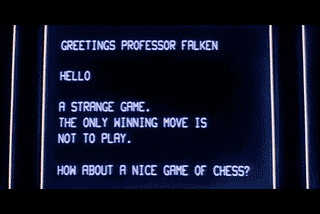
Biella Coleman: The Only Winning Move is Not To Play


nice-game-chess, originally uploaded by the biella.
Today I wrapped up both of my classes. Usually the end of class/semester represents and is experienced as nothing short of pure, unadulterated joy and at both ends of the stick (student and professors alike experience similar emotions :-). Like my students, I am pretty beat and more than ready for a break. But I have to admit, I experienced the end of my hacker class with a tinge of sadness. This is the third time I have taught this class and each time, it seems like it becomes harder and harder to contain the class conversation and I enjoy them through and through. The last few classes were brimming with talk, which is what should exactly happen because by the last month students are walking/talking on a foundation built over the course of many weeks. There is not much I would have changed about the syllabus (most of the readings were great-to-stellar) nor the class. But if there is one thing I am sorry about it is that we never watched War Games. The last time I taught the class, I was able to arrange various movie sessions and we watched War Games, Tron, and Sneakers (among a few others) and the students not only learned something about hacker media representations but did a little out-of-class bonding with the movies and lots of food. Since space is such an issue at NYU, I decided not to forage or hunt for a suitable room (I have since found a connection who I think can hook me up with a room). But by missing War Games, we missed an important event in the history of hackerdom. The movie undoubtedly led to many a kids asking for a modem for xmas and I am sure led to a spike in hacking and phreaking 9 months later (or however long it takes for a kid to plead for a modem, get it, learn some new tricks etc). It is also the case that while it helped usher in the image of the hacker as nefarious computer trickster, David Lightman was also a pretty cool, cute, and likable kid. Not a nerd but a geek. It perhaps represents the glimmerings of the transformation of the negative nerd into the positive geek (oh and the list keeps the list of girl geeks growing ), signaling the spread of the computer into mainstream society. So next time I teach the class, there will certainly be more movies, War Games on the top of the list so that we can learn that “the only winning move is not to play.”

Gunnar Wolf: githubredir.debian.net - Delivering .tar.gz from Github tags

There is quite a bit of software whose upstream authors decide that, as they are already using Git for development, the main distribution channel should be GitHub - This allows, yes, for quite a bit of flexibility, which many authors have taken advantage of. So, I just registered and set up http://githubredir.debian.net/ to make it easier for packagers to take advantage of it. Specifically, what does this redirector make? Given that GitHub allows for downloading as a .zip or as a .tar.gz any given commit, it suddenly becomes enough to git tag with a version number, and GitHub magically makes that version available for download. Which is sweet! Sometimes it is a bit problematic, though, to follow their format. Github gives a listing of the tags for each particular prooject, and each of those tags has a download page, with both archiving formats. I won't go into too much detail here - Thing is, going over several pages becomes painful for Debian's uscan, widely used for various of our QA processes. There are other implemented redirectors, such as the one used for SourceForge. This redirector is mainly meant to be consumed by Debian's uscan. Anybody who finds this system useful can freely use it, although you might be better served by the rich, official GitHub.com interface. Anyway - Enough repeating what I said on the http://githubredir.debian.net/ base page. Find it useful? Go ahead and use it!

Alexis Sukrieh: My two cents about the RubyGems polemic

Hey planet, it s been a very long time since I took my e-pen to write something down here, my work is taking pretty much all my time nowdays. Anyway, it seems that there is sort of a polemic rising here and there about RubyGems and its packaging philosophy. I d like to take that opportunity to contribute to the debate with the experience I had at Yoolink. Yes, we provide Ruby on Rails applications and are defacto dealing (or trying to) with Ruby and its gems. Wouter enlightened the main reason why it s such a mess to put into production a Rails app and to maintain it : the Ruby on Rails ecosystem is unstable. If you start writing your app, there are very big chances that when it gets mature for production mode, one or more of the Ruby libs you depend on will have a new version. And sadly, chances are there too that one of those libs will provide an API change. This can happen in a lot of places in a Rails app, because of its modular structure: plugins, gems or even Rails core upgrades (try to upgrade a real-working Rails app from 1.x to 2.x if you like tricky games). I agree with Joss when he said that Debian packages and Ruby gems are not designed for the same purpose, the latter are for a developer ecosystem and the first suitable for long-working production ecosystems. That s why setting up a complex Rails app in production is a nightmare : no Debian packages for all your Ruby needs on the first hand and API-unstable and hard-to-upgrade gems on the other hand. At Yoolink, the only working way we ve found to maintain in production our Rails apps is to freeze pretty much every Ruby-thing we can. Our production servers are then Rails/Ruby free (nothing installed system-wide) and the apps provides all their Ruby dependencies in their vendor/ directory. You can t do that for native gems but that works for 90% of a random Rails app s dependencies. To conclude, I d say that most of these issues come from the philosophy of the Ruby/Rails people : they don t fear to change anything they want from one release to another, just take a look at the gettext support in Rails 2.2 and you ll understand what I mean . It s like they don t even take in mind that people are now using their stuff, in real world, with customers relying on their apps. It s not a pet project anymore guys, if Rails want to remain the killer app it is, it will have to be someting stable and maintainable.

9 December 2008

Gerfried Fuchs: Better backports.org Support

Since last weekend backports.org has two more services supporting tracking of what's going on. I will list them in chronological order: Tracking of Security issues in backports packages: This was one of the many topics that was discussed at the Security Team meeting in Essen at the end of last month and Florian Weimer implemented a first version of tracking security issues within backports.org. It currently compares the backported version against the one fixed for unstable, so at the moment it still has some false-positives (e.g. libspf2 because the fix was taken from lenny-security), but this is still a big step forward and helpful to track outstanding issues here, too. Diffs between etch-backports and lenny: Something similar was available at some other places before but strangely got discontinued. In here you can see which packages in backports are older (meaning only debian revision difference), outdated (newer upstream version in lenny) newer (backported from unstable?), have a wrong version schema or are not available in lenny (propably even removed from unstable). It will hopefully help people to get their backports in sync. At least it's an indicator of how well the packages are tracked. Hope you consider them already as useful as myself, even though there is obvious space for improvements. But they are both quite helpful already in their current state so that shouldn't hinder you from using them. :)

8 December 2008

Biella Coleman: dino-anon (or how to end your hacker class on a lulzy note)


dino-anon, originally uploaded by the biella.
As I mentioned in my last entry, the end of the semester is one of overwhelming, seemingly unstoppable entropy. People and Professors are tired and to help move us through this thickness, I try to pick fun readings. Today I also had the opportunity to have a group of NYC-based Anonymous come to class today to give us a window into the politics of protesting Scientology and this of course worked magnificently against the end-of-semester-entropy. In a nutshell: they did not fail or in their own lingo, it was an Epic Win. They provided a really nice set of presentations (and then also proceeded to collectively draw the lulzy image featured above) about their origins, their purpose and some of the tensions within the group. Then we had a class discussion about a number of topics, including their argot and “offensive” (offensive) [I am not sure whether to put " " or not] online language. While I am still ambivalent about their use of “fag” and “nigger”, I greatly admire Anonymous for their politics of pleasure and aesthetic audacity (not to mention creativity). They insist that protest must be fun, must be wild, must go beyond simply rational discourse. If you are interested in this topic, check out Stephen Duncombe’s excellent (and very readable) book Dream, which I happened to be (somewhat randomly) reading right now and it helped give me a new fresh perspective about the politics driving Anon.
Duncombe is a professor at NYU Passionate (with a Capital P) about politics with a lot of real world political experience who examines the importance of desire, fantasy, and pleasure for progressives and leftists who tend to shy away or even denigrate such impulses. And it is certainly the case that Anonymous is experimenting, consciously and unconsciously, with these very questions and impulses which helps explain why many people jumped on board. I hope to post the audio from the class a little later on.

7 December 2008

Biella Coleman: Nerds, Geeks, and Nerd/Geek Grrrls

I have not sat behind the helm of teaching for very long but I already have a few tricks up my sleeve. One of them is that I assign some of my favorite readings at the end of the semester so as to counter the downtrodden and tepid spirit and mood (not to mention attention) of my students, which drops precipitously with each passing day. Let’s face it post Thanksgiving, we are all a little tired and I try to find the readings, which uplift, intrigue, and challenge cherished assumptions about marriage and sex. So far it seems to pay off and I often can tell because the conversational pitch and excitement in class is high and the student writings are good, great, even exceptional, which, again, is hard to produce/induce this late in the semester. Readers of this blog would probably be most interested in one of these lively readings, Ben Nugent’s American Nerd (and it might be interesting to hear how the European Nerd story would diverge or converge with this one). One of my students, an audio geek and Free Culture President/Free Software junkie, by the name of John Randall produced a very nice little response (not research) paper on the Nugent reading as well as a short piece by Sarah Seltzer from Bitch Magazine
The(Girl) Geek Stands Alone (and thanks to Joe> for cluing me into this piece). Seltzer piece basically argues, in her own words, the following:
Imagine this scene from a comedy: a group of female friends sit around smoking a bowl and working on the Wikipedia page for Lord of the Rings. Their fashion sense is decidedly iconoclastic and several sport thick-rimmed glasses. Without a trace of self-consciousness, they have a hilariously ribald discussion on the relative traits of elves and orcs.
Awesome as it is, you’ll never see this scene onscreen. No mainstream movie or TV series would dare group so many female nerds together, or celebrate them so unabashedly
So John’s whole response paper is here and here is the pdf. In the paper, he makes a number of excellent points but what I loved most about it was his very geeky move at the end of the paper to prove Sarah (somewhat wrong) by listing all the girl geeks that do and have appeared in mainstream (and not-so mainstream) entertainment venues/shows, etc. They are as follows and in his own words:
I will now showcase my own geekiness through my knowledge of geeky female characters. Why? Because I can. But also because I want to demonstrate that if you look hard enough for representations of female geekyiness in pop culture, you will find plenty. Moreover, if you pick the right ones, you can make them support your argument about gender relations, whatever that argument might be. Some of these charters and personalities are hardly gendered, some are hyper-sexual. Some are incredibly attractive but completely asexual. Some undergo a transformation into/out of geekiness, while others to not. Some are powerful, while some are powerless. Some (most?) celebrate their geekiness, others are tortured by it. They are all geeks take your pick: Aeon Flux, a sexy geek who’s technological gadgets give her super powers (Comic drawings then Charlize TheronAeon Flux) Wonder Woman, attractive pilot of an invisible plane Lara Croft, a female Indiana Jones in short shorts, wielding guns and cracking computer codes (CGI and then Angelina Jolie in Tomb Raider) She-Ra, who was way smarter than He-Man (Masters of the Universe cartoons) Gadget Hackwrench, beautiful chipmonk technician for Chip and Dale (Rescue Rangers cartoon) Velma, featuring eyeglasses, awkwardness and brains (Scooby Doo), Hermonie Granger, a geek who is temporarily rejected because she is a geek, remains a geek, and finds love and happiness (Harry Potter) Barbarella, who, through comic strips and a 1968 film, helped introduce science fiction and sex to young women (Barbarella) La Femme Nikita, a skillful, savvy, and very feminine girl who doubles as a covert spy Kate Libby, aka ‘Acid Burn’, uber-sexualized hacker (played by Angelina Jolie in Hackers) Kathryn Janeway, smart and powerful captain of the USS Voyager (Star Trek Voyager) Starbuck (Battlestar Galactica), Dana Scully, FBI agent with encyclopedic media knowledge. The bizzare subtex of non-realized sexual tension was part of the magic The X-Files. Willow Rosenberg, geeky sidekick turned geeky supervillian (Alyson Hannigan in buffy the Vampire Slayer) Michelle Flaherty, hyper-sexual band geek (Alyson Hannigan in American Pie series) Dr Ellie Sattler, heroniene scientist (Jurrasic Park) Ellie, scientis hero (played by both Jenna Malone and Jodi Foster in Carl Sagan’s Contact) Dawn Wiener (Heather Matarazzo in Welcome to the Dollhouse Enid and Rebecca (Thora Birch and Scarlett Johanson in Ghost World) just about every charater ever played by Jenna Malone (Donie Darko, The Dangerous Lives of Altar Boys, The United States of Leland, Saved!, etc) half of the charaters played within the last decade by Jodi Foster (Panic Room, The Dangerous Lives of Altar Boys, Flightplan, The Addams Family half of the charaters played by Christina Ricci (Mermaids, The Addams Family, Little Red Riding Hood, The Ice Storm, Buffalo ‘66, Prozac Nation, Pumpkin, Speed Racer) half of the characters played by Natalie Portman (The Professional, Mars Attacks!, Star Wars, V for Vendette, The Darjeeling Limited, Mr. Magorium’s Wonder Emporium, Garden State) Molly Ringwald. characters played by Molly Ringwald. Rock musician Ani DiFranco and geeky Riot Grrls everywhere. Sarah Vowell, NPR commentator celebrating her geeky life. Voiceover for geeky cartoon characters. Rachel Maddow, for being Rachel Maddow.
First, awesome list, though he forgot a few (like one of my favorites, Bionic Woman and a more recent one, Juno) and it is nice to have it in one compact place. But, I have to say, I still agree to some degree with Sarah Setlzer, though I also agree with John. On the one hand there are representations and it is as important just to strut this stuff publicly as it is to claim that there is not enough female geeky representations in mainstream media. This is what John has done quite nicely. One the other hand, as he himself says ” if you look hard enough for representations of female geekyiness in pop culture, you will find plenty.” I think those words, “if you look hard enough” also speaks volumes of the continued disparity that does exist. One should not have to look “hard,” and the only blockbusters, so to speak, which feature a female geek, is Tomb Raider, which for being so hyper-sexualized is not so geeky to me, no matter how good she is with the gadgets. That said, what I find so important, and have emphasized in different contexts, is the need for what I think of simultaneous positive and negative form of critique, the former being about pointing to already exisitng examples to get people jazzed and excited and to put things in perspective. The later form of critique, negative critique, identifies a lack, a void to fill, just the type of excellent commentary in the Seltzer piece… But now for the most important question, who has John overlooked?

Neil Williams: langupdate for Emdebian Grip - borne from edos-debcheck

Whilst building more and more packages into Emdebian Grip, I came across gettext
which depends on libglib2.0-0
which surprised me somewhat. However, this is extremely useful because langupdate - the Emdebian-only utility that I wrote to correlate Emdebian TDebs with installed packages and supported locales - also uses libglib2.0-0 as it is one of my favourite libraries for all my C code. So now there is no need to rewrite langupdate to not use libglib2.0-0 (I wasn't looking forward to that particular task so it's even better).
Secondly, I thought about using reportbug --kudos edos-debcheck but AFAICT that merely sends an email to Stefano Zacchiroli so I thought I'd put the "kudos" into a blog post for more people to read:
If you haven't used edos-debcheck before you probably haven't done any work at all with repositories - edos-debcheck is becoming fundamental to everything I do. Emdebian simply could not function without these checks - it would take hours to identify the missing dependencies. (I know because before edos-debcheck was released, I did spend (s/spend/waste/) hours upon hours on a fruitless chase through the dependency trees in Debian.)
Consider my current task - adding packages to Emdebian Grip in such a way as to retain the smallest possible package set in which all dependencies are met (excluding Recommends that do not apply in Emdebian). edos-debcheck makes it almost trivial:

codehelp@ant:/org/emdebian$ ./scripts/grip-binary.sh libxml2
....
codehelp@ant:/org/emdebian$ edos-debcheck -explain -failures < grip/dists/unstable/main/binary-amd64/Packages
Parsing package file... 0.0 seconds 135 packages
Generating constraints... 0.0 seconds
gettext (= 0.17-6em1): FAILED
The following constraints cannot be satisfied:
gettext (= 0.17-6em1) depends on gettext-base NOT AVAILABLE
Checking packages... 0.0 seconds
codehelp@ant:/org/emdebian$ ./scripts/grip-binary.sh gettext-base

Simple. A second script then goes around behind and ensures that each binary added to the repo has the corresponding source package also added. The key is that Emdebian Grip does not have to have all binaries from that source - we only use the binaries that are needed, either directly or as direct dependencies of others.
Zack - and all the people who worked on edos-debcheck - your code is just indispensable to me.

6 December 2008

Biella Coleman: Fast, Fiery, and Fantastic.

I like dance music. A lot. So I am extra happy to have been clued into the musical world of Buraka Som Sistema and Nordloef (playing tomorrow night at the Blip Festival). Genre wise they are pretty different, but both are fast, fiery, and fantastic. Enjoy.

Lior Kaplan: liorkaplan


I got my hands on a laptop with Windows XP installed, and can do whatever I want with it, except deleting the windows. I decided not to have a dual boot on it, but to try and make it free software only (well, except the windows itself). The main uses for the computer are surfing the web (browser only, not email), editting documents, watching videoes and being able to burn files. The results for now:
  • Mozilla Firefox (browser) - set to be the default browser, and I also removed Internet Explorer (well, windows only removes the links to the software and not the software itself).
  • OpenOffice.org (productivity suite) - set the be the default application to the doc, xls and ppt files. Can also read OOXML format.
  • ClamWin (anti virus)
  • InfraRecoder (CD/DVS recorder)
  • VLC (video player)- set to be the default video player (including Microsoft’s file formats).
  • Sumatra PDF (PDF reader).
See “open source as alternative” if you want to find an alternative for a specific closed software.       

Next.

Previous.