Search Results: "ads"

22 March 2015

Robert Edmonds: Bad Google repository signatures

Update: I was able to get in touch with the Googlers responsible for the dl.google.com service, and the root cause for the mismatched signature problem described below has been found and fixed. I now consistently receive from Google's servers Release and Release.gpg files that pass apt's signature validation on my home connection. Google publishes Linux software repositories for several of their products, including Google Chrome, which is available from the following apt source:
deb http://dl.google.com/linux/chrome/deb/ stable main
These repositories are signed with an 8 year old 1024-bit DSA key:
pub   1024D/7FAC5991 2007-03-08
      Key fingerprint = 4CCA 1EAF 950C EE4A B839  76DC A040 830F 7FAC 5991
uid                  Google, Inc. Linux Package Signing Key <linux-packages-keymaster@google.com>
sub   2048g/C07CB649 2007-03-08
Asymmetric 1024-bit keys are not considered strong enough and were, for instance, aggressively retired from Google's SSL frontends almost two years ago. Such short keys should not be used to protect the integrity of software package repositories. Note that this key has a longer 2048-bit ElGamal subkey, which is not actually used to produce signatures, but only for encryption. In fact, only a signing key is needed to sign the files in a secure apt repository, and, for instance, the archive keys used to sign official debian.org repositories do not contain an encryption subkey. Since years, many users have reported an error message like the following when running apt-get update:
W: GPG error: http://dl.google.com stable Release: The following signatures were
invalid: BADSIG A040830F7FAC5991 Google, Inc. Linux Package Signing Key
<linux-packages-keymaster@google.com>
This error might resolve itself if apt-get update is run again. Apparently, this is due to "bad pushes" occurring in the Google infrastructure. An example of this can be seen in the following curl output:
$ curl -v http://dl.google.com/linux/chrome/deb/dists/stable/Release \
        http://dl.google.com/linux/chrome/deb/dists/stable/Release.gpg
* Hostname was NOT found in DNS cache
*   Trying 74.125.196.136...
* Connected to dl.google.com (74.125.196.136) port 80 (#0)
> GET /linux/chrome/deb/dists/stable/Release HTTP/1.1
> User-Agent: curl/7.38.0
> Host: dl.google.com
> Accept: */*
> 
< HTTP/1.1 200 OK
< Accept-Ranges: bytes
< Content-Length: 1347
< Content-Type: application/octet-stream
< Etag: "518b8"
< Expires: Sun, 22 Mar 2015 18:55:19 PDT
< Last-Modified: Fri, 20 Mar 2015 04:22:00 GMT
* Server downloads is not blacklisted
< Server: downloads
< X-Content-Type-Options: nosniff
< X-Frame-Options: SAMEORIGIN
< X-Xss-Protection: 1; mode=block
< Date: Sun, 22 Mar 2015 01:55:19 GMT
< Alternate-Protocol: 80:quic,p=0.5
< 
Origin: Google, Inc.
Label: Google
Suite: stable
Codename: stable
Version: 1.0
Date: Thu, 19 Mar 2015 22:55:29 +0000
Architectures: amd64 i386
Components: main
Description: Google chrome-linux repository.
MD5Sum:
 53375c7a2d182d85aef6218c179040ed 144 main/binary-i386/Release
 c556daf52ac818e4b11b84cb5943f6e0 4076 main/binary-i386/Packages
 867ba456bd6537e51bd344df212f4662 960 main/binary-i386/Packages.gz
 2b766b2639b57d5282a154cf6a00b172 1176 main/binary-i386/Packages.bz2
 89704f9af9e6ccd87c192de11ba4c511 145 main/binary-amd64/Release
 fa88101278271922ec9b14b030fd2423 4082 main/binary-amd64/Packages
 1ba717117027f36ff4aea9c3ea60de9e 962 main/binary-amd64/Packages.gz
 19af18f376c986d317cadb3394c60ac5 1193 main/binary-amd64/Packages.bz2
SHA1:
 59414c4175f2cc22e67ba6c30687b00c72a7eafc 144 main/binary-i386/Release
 1764c5418478b1077ada54c73eb501165ba79170 4076 main/binary-i386/Packages
 db24eafac51d3e63fd41343028fb3243f96cbed6 960 main/binary-i386/Packages.gz
 ad8be07425e88b2fdf2f6d143989cde1341a8c51 1176 main/binary-i386/Packages.bz2
 153199d8f866350b7853365a4adc95ee687603dd 145 main/binary-amd64/Release
 7ce66535b35d5fc267fe23af9947f9d27e88508b 4082 main/binary-amd64/Packages
 a72b5e46c3be8ad403df54e4cdcd6e58b2ede65a 962 main/binary-amd64/Packages.gz
 dbc7fddd28cc742ef8f0fb8c6e096455e18c35f8 1193 main/binary-amd64/Packages.bz2
* Connection #0 to host dl.google.com left intact
* Found bundle for host dl.google.com: 0x7f24e68d06a0
* Re-using existing connection! (#0) with host dl.google.com
* Connected to dl.google.com (74.125.196.136) port 80 (#0)
> GET /linux/chrome/deb/dists/stable/Release.gpg HTTP/1.1
> User-Agent: curl/7.38.0
> Host: dl.google.com
> Accept: */*
> 
< HTTP/1.1 200 OK
< Accept-Ranges: bytes
< Content-Length: 198
< Content-Type: application/octet-stream
< Etag: "518f4"
< Expires: Sun, 22 Mar 2015 18:55:19 PDT
< Last-Modified: Fri, 20 Mar 2015 04:05:00 GMT
* Server downloads is not blacklisted
< Server: downloads
< X-Content-Type-Options: nosniff
< X-Frame-Options: SAMEORIGIN
< X-Xss-Protection: 1; mode=block
< Date: Sun, 22 Mar 2015 01:55:19 GMT
< Alternate-Protocol: 80:quic,p=0.5
< 
-----BEGIN PGP SIGNATURE-----
Version: GnuPG v1.4.10 (GNU/Linux)
iEYEABECAAYFAlULm7YACgkQoECDD3+sWZFyxACeNPuK/zQ0v+3Py1n2s09Wk/Ti
DckAni8V/gy++xIinu8OdUXv7c777V9H
=5vT6
-----END PGP SIGNATURE-----
* Connection #0 to host dl.google.com left intact
Note that both the Release and Release.gpg files were fetched with the same HTTP connection, so the two files must have come from the same web frontend. (Though, it is possible they were served by different backends.) However, the detached signature in Release.gpg does not match the content in Release:
gpgv: Signature made Fri 20 Mar 2015 12:01:58 AM EDT using DSA key ID 7FAC5991
gpgv: BAD signature from "Google, Inc. Linux Package Signing Key <linux-packages-keymaster@google.com>"
Performing the same pair of fetches again, the same Release.gpg file is returned, but the Release file is slightly different:
$ curl -v http://dl.google.com/linux/chrome/deb/dists/stable/Release \
        http://dl.google.com/linux/chrome/deb/dists/stable/Release.gpg
* Hostname was NOT found in DNS cache
*   Trying 74.125.196.136...
* Connected to dl.google.com (74.125.196.136) port 80 (#0)
> GET /linux/chrome/deb/dists/stable/Release HTTP/1.1
> User-Agent: curl/7.38.0
> Host: dl.google.com
> Accept: */*
> 
< HTTP/1.1 200 OK
< Accept-Ranges: bytes
< Content-Length: 1347
< Content-Type: application/octet-stream
< Etag: "518f3"
< Expires: Sun, 22 Mar 2015 18:55:04 PDT
< Last-Modified: Fri, 20 Mar 2015 04:05:00 GMT
* Server downloads is not blacklisted
< Server: downloads
< X-Content-Type-Options: nosniff
< X-Frame-Options: SAMEORIGIN
< X-Xss-Protection: 1; mode=block
< Date: Sun, 22 Mar 2015 01:55:04 GMT
< Alternate-Protocol: 80:quic,p=0.5
< 
Origin: Google, Inc.
Label: Google
Suite: stable
Codename: stable
Version: 1.0
Date: Fri, 20 Mar 2015 04:02:02 +0000
Architectures: amd64 i386
Components: main
Description: Google chrome-linux repository.
MD5Sum:
 89704f9af9e6ccd87c192de11ba4c511 145 main/binary-amd64/Release
 fa88101278271922ec9b14b030fd2423 4082 main/binary-amd64/Packages
 1ba717117027f36ff4aea9c3ea60de9e 962 main/binary-amd64/Packages.gz
 19af18f376c986d317cadb3394c60ac5 1193 main/binary-amd64/Packages.bz2
 53375c7a2d182d85aef6218c179040ed 144 main/binary-i386/Release
 c556daf52ac818e4b11b84cb5943f6e0 4076 main/binary-i386/Packages
 867ba456bd6537e51bd344df212f4662 960 main/binary-i386/Packages.gz
 2b766b2639b57d5282a154cf6a00b172 1176 main/binary-i386/Packages.bz2
SHA1:
 153199d8f866350b7853365a4adc95ee687603dd 145 main/binary-amd64/Release
 7ce66535b35d5fc267fe23af9947f9d27e88508b 4082 main/binary-amd64/Packages
 a72b5e46c3be8ad403df54e4cdcd6e58b2ede65a 962 main/binary-amd64/Packages.gz
 dbc7fddd28cc742ef8f0fb8c6e096455e18c35f8 1193 main/binary-amd64/Packages.bz2
 59414c4175f2cc22e67ba6c30687b00c72a7eafc 144 main/binary-i386/Release
 1764c5418478b1077ada54c73eb501165ba79170 4076 main/binary-i386/Packages
 db24eafac51d3e63fd41343028fb3243f96cbed6 960 main/binary-i386/Packages.gz
 ad8be07425e88b2fdf2f6d143989cde1341a8c51 1176 main/binary-i386/Packages.bz2
* Connection #0 to host dl.google.com left intact
* Found bundle for host dl.google.com: 0x7ffa33d8b6a0
* Re-using existing connection! (#0) with host dl.google.com
* Connected to dl.google.com (74.125.196.136) port 80 (#0)
> GET /linux/chrome/deb/dists/stable/Release.gpg HTTP/1.1
> User-Agent: curl/7.38.0
> Host: dl.google.com
> Accept: */*
> 
< HTTP/1.1 200 OK
< Accept-Ranges: bytes
< Content-Length: 198
< Content-Type: application/octet-stream
< Etag: "518f4"
< Expires: Sun, 22 Mar 2015 18:55:05 PDT
< Last-Modified: Fri, 20 Mar 2015 04:05:00 GMT
* Server downloads is not blacklisted
< Server: downloads
< X-Content-Type-Options: nosniff
< X-Frame-Options: SAMEORIGIN
< X-Xss-Protection: 1; mode=block
< Date: Sun, 22 Mar 2015 01:55:05 GMT
< Alternate-Protocol: 80:quic,p=0.5
< 
-----BEGIN PGP SIGNATURE-----
Version: GnuPG v1.4.10 (GNU/Linux)
iEYEABECAAYFAlULm7YACgkQoECDD3+sWZFyxACeNPuK/zQ0v+3Py1n2s09Wk/Ti
DckAni8V/gy++xIinu8OdUXv7c777V9H
=5vT6
-----END PGP SIGNATURE-----
* Connection #0 to host dl.google.com left intact
Note that the Date line in the Release file is different:
@@ -6 +6 @@
-Date: Thu, 19 Mar 2015 22:55:29 +0000
+Date: Fri, 20 Mar 2015 04:02:02 +0000
The file hashes listed in the Release file are in a different order, as well, though the actual hash values are the same. This Release file does have a valid signature:
gpgv: Signature made Fri 20 Mar 2015 12:01:58 AM EDT using DSA key ID 7FAC5991
gpgv: Good signature from "Google, Inc. Linux Package Signing Key <linux-packages-keymaster@google.com>"
Note that the Release.gpg files in the good and bad cases are the same, and the same signature cannot cover two files with different content. Also note that the same mis-signed content is available via HTTPS, so it is probably not caused by a MITM attack. The possibility of skew between the Release and Release.gpg files is precisely why inline signed Release files were introduced, but Google's repositories use only the older format with a detached signature. It would be nice if Google could fix the underlying bug in their infrastructure that results in mis-signed repositories being published frequently, because it trains users to ignore cryptographic failures.

21 March 2015

Junichi Uekawa: Test.

Test.

20 March 2015

Steve McIntyre: Tour of Australia

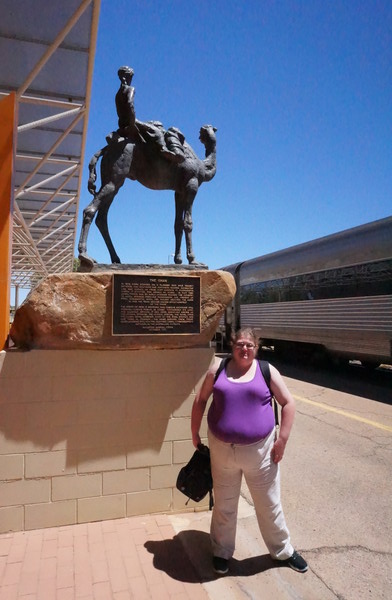
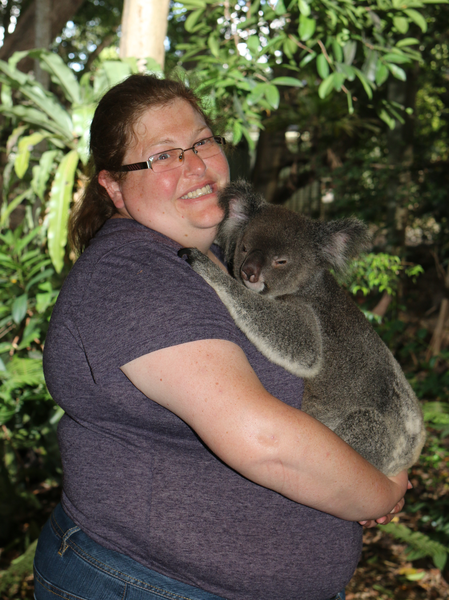
Jo and I just got back from our massive holiday in Australia. We had an awesome time overall, fitting in lots of stuff in 4 weeks. Time for a quick write-up and some photos! Ayers Rock We flew into Sydney, then straight onto Uluru for the obligatory sunset and sunrise viewings. We didn't climb the Rock, both for sensitivity reasons and (to be more honest!) it looked way too much like hard work in 40-plus degree heat. Ghan train Coach over to Alice Springs, where we had a very quick look around before taking the Ghan train down to Adelaide. The train was fun for a day, and we got to see a lot of desert. In Adelaide, we had a look around the city (lovely colonial feel!) and got a couple of evenings in fun comedy shows at the Fringe. Great fun! Cuddling a sleepy wombat! On to Tasmania, where we did a quick (3 days) run around the island by car: into Hobart, up the east coast. Stopped in Swansea (a nice version!) for some heavenly Devonshire teas, then on up to Grindelwald near Launceston. Visited Trowunna Wildlife Park to see (and cuddle!) lots of local animals, which was amazing - Jo's favourite day of the holiday. Then on to Queenstown and drive back down to Hobart past some impossibly beautiful views around Cradle Mountain. Tassie's gorgeous - like the best bits of Scotland, Wales and Cornwall but with even fewer people and better weather. Sydney Opera House Next, on to Sydney for Harry and Cath's wedding. We stayed up in Chatswood. Not knowing anything about the area beforehand, we were a little surprised to basically find ourselves back in Hong Kong! We spent most of the weekend catching up with friends from the wedding group, and the wedding itself was at Quarantine Station, overlooking the harbour. It couldn't have been a more perfect location / weather / view for our friends' big day! We squeezed in a couple of the open-top bus tours of Sydney on the Sunday, but got caught in the horrendous storm that hit and ended up sheltering downstairs under cover on the bus. I'm told Bondi is lovely, but it all looked grey from the bus. :-P Puffing Billy, Yarra Valley Down to Melbourne on the train (bit of a wasted day, in hindsight), where we wandered around the city quite a bit. Caught up with an old friend who lives there for a day, and we did a wine tour up the Yarra Valley which was fun too. Snorkelling at the Reef - all OK! Up to Port Douglas, where we headed out to the Reef for my highlight of the holiday: a snorkelling tour with some local marine experts who showed us the local flora and fauna. We also visited a local Aboriginal cultural centre, skyrail and scenic railway around Kuranda village. Koala! :-) Down to Hervey Bay and a 1-day tour of Fraser Island - an amazing place in combination with quite a thrill-ride experience just being driven around on the sand tracks. Finally, down to Brisbane where we wandered around and visited both the Lone Pine Koala Sanctuary (more cuddles!) and the Gold Coast. Then the long flights home. Whew! We're knackered now. We knew we could't fit everything in, but we're glad we travelled all over and got tastes of almost everything. Now we can work out where we want to spend more time on our future visit(s). We'll definitely want to head over and see Perth and some of WA next time, and definitely more time in Tasmania, Sydney and Adelaide.

Lucas Nussbaum: Several improvements to UDD s Bug Search and Maintainer Dashboard

Several improvements have been made to UDD s Bug Search and Maintainer Dashboard recently. On the Maintainer Dashboard side, the main new feature is a QA checks table that provides an overview of results from lintian, reproducible builds, piuparts, and ci.debian.net. Check the dashboard for the Ruby team for an example. Also, thanks to Daniel Pocock, the TODO items can now be exported as iCalendar tasks. Bugs Search now has much better JSON and YAML outputs. It s probably a good start if you want to do some data-mining on bugs. Packages can now be selected using the same form as the Maintainer Dashboard s one, which makes it easy to build your own personal bug list, and will suppress the need for some of the team-specific listings. Many bugs have been fixed too. More generally, thanks to the work of Christophe Siraut, the code is much better now, with a clean separation of the data analysis logic and the rendering sides that will make future improvements easier. As the reminder, it s quite easy to hack on UDD (even if you are not a DD). Please report bugs, including about additional features you would like to see!

Noah Meyerhans: Building OpenWRT with Docker

I've run OpenWRT on my home router for a long time, and these days I maintain a couple of packages for the project. In order to make most efficient use of the hardware resources on my router, I run a custom build of the OpenWRT firmware with some default features removed and others added. For example, I install bind and ipsec-tools, while I disable the web UI in order to save space. There are quite a few packages required for the OpenWRT build process. I don't necessarily want all of these packages installed on my main machine, nor do I want to maintain a VM for the build environment. So I investigated using Docker for this. Starting from a base jessie image, which I created using the Docker debootstrap wrapper, the first step was to construct a Dockerfile containing instructions on how to set up the build environment and create a non-root user to perform the build:
FROM jessie:latest
MAINTAINER Noah Meyerhans <frodo@morgul.net>
RUN DEBIAN_FRONTEND=noninteractive apt-get update && apt-get -y install \
asciidoc bash bc binutils bzip2 fastjar flex git-core g++ gcc
util-linux gawk libgtk2.0-dev intltool jikespg zlib1g-dev make \
genisoimage libncurses5-dev libssl-dev patch perl-modules \
python2.7-dev rsync ruby sdcc unzip wget gettext xsltproc \
libboost1.55-dev libxml-parser-perl libusb-dev bin86 bcc sharutils \
subversion
RUN adduser --disabled-password --uid 1000 --gecos "Docker Builder,,," builder
And we generate a docker image based on this Dockerfile per the docker build documentation. At this point, we've got a basic image that does what we want. To initialize the build environment (download package sources, etc), I might run: docker run -v ~/src/openwrt:/src/openwrt -u builder -t -i jessie/openwrt sh -c "cd /src/openwrt/openwrt && scripts/feeds update -a" Or configure the system: docker run -v ~/src/openwrt:/src/openwrt -u builder -t -i jessie/openwrt make -C /src/openwrt/openwrt menuconfig And finally, build the OpenWRT image itself: docker run -v ~/src/openwrt:/src/openwrt -u builder -t -i jessie/openwrt make -C /src/openwrt/openwrt -j3 The -v ~/src/openwrt:/src/openwrt flags tell docker to bind mount my ~/src/openwrt directory (which I'd previously cloned using git) to /src/openwrt inside the running container. Without this, one might be tempted to clone the git repo directly into the container at runtime, but the changes to non-bind-mount filesystems are lost when the container terminates. This could be suitable for an autobuild environment, in which the sources are cloned at the start of the build and any generated artifacts are archived externally at the end, but it isn't suitable for a dev environment where I might be making and testing small changes at a relatively high frequency. The -u builder flags tell docker to run the given commands as the builder user inside the container. Recall that builder was created with UID 1000 in the Dockerfile. Since I'm storing the source and artifacts in a bind-mounted directory, all saved files will be created with this UID. Since UID 1000 happens to be my UID on my laptop, this is fine. Any files created by builder inside the container will be owned by me outside the container. However, this container should not have to rely on a user with a given UID running it! I'm not sure what the right way to approach this problem is within Docker. It may be that someone using my image should create their own derivative image that creates a user with the appropriate UID (creation of this derivative image is a cheap operation in Docker). Alternatively, whatever Docker init system is used could start as root, add a new user with a specific UID, and execute the build commands as that new user. Neither of these seems as clean as it could be, though. In general, Docker seems quite useful for such a build environment. It's easy to set up, and it makes it very easy to generate and share a common collection of packages and configuration. Because images are self-contained, I can reclaim a bunch of disk space by simple executing "docker rmi".

19 March 2015

Lior Kaplan: CVE assignment without upstream knowledge

In the past few months I ve been dealing with aligning PHP CVE information to enable easier tracking of security fixes. The two main locations are the NEWS file which is part of each release and the changelog available on the website which is more popular (and easier to update). Usually the CVE are assigned per PHP.net security team request or with cooperation with one of the Linux distribution s teams (either PHP or security), as should be in a good ecosystem. Recently I got a few notifications issued by Debian about its PHP package, which I wasn t familiar with these CVE IDS. When checking this, I found out a few CVE assigned per 3rd party (Linux distribution, bug reporter, etc ) request without upstream knowledge. Digging deeper I found out that some CVE were assigned a month after the fixes were released, while others were only a week or two after. While this makes sure the security information is documented, it s harder to add the information after tagging and releasing. In another case, while discussing about a CVE for a specific bug, we found out one was already assigned per the reporter s request but without the our or the upstream library knowledge. Even if the issue isn t severe, upstream should get a fair chance to fix issue before making them public. Which also leads to a problem with requesting CVE IDs on a public mailing list which in some cases leads to security information leakage. We should balance transparency with some grace period for upstreams (as projects share code).
Filed under: Debian GNU/Linux, PHP

Patrick Matth i: Egypt 2015

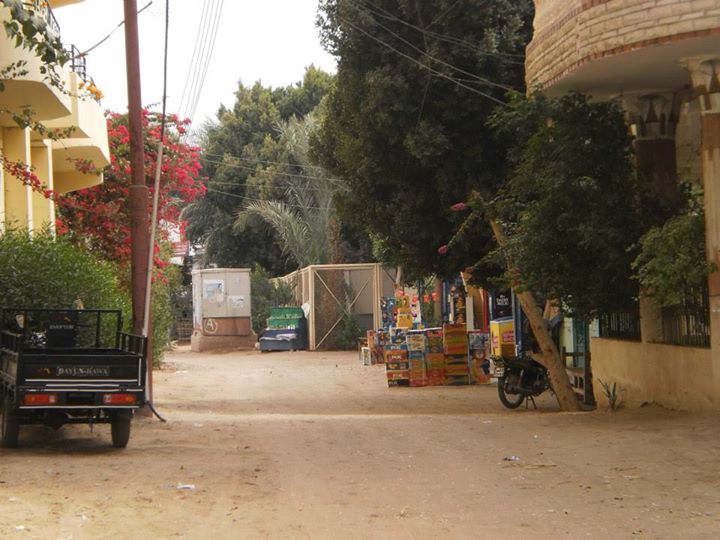
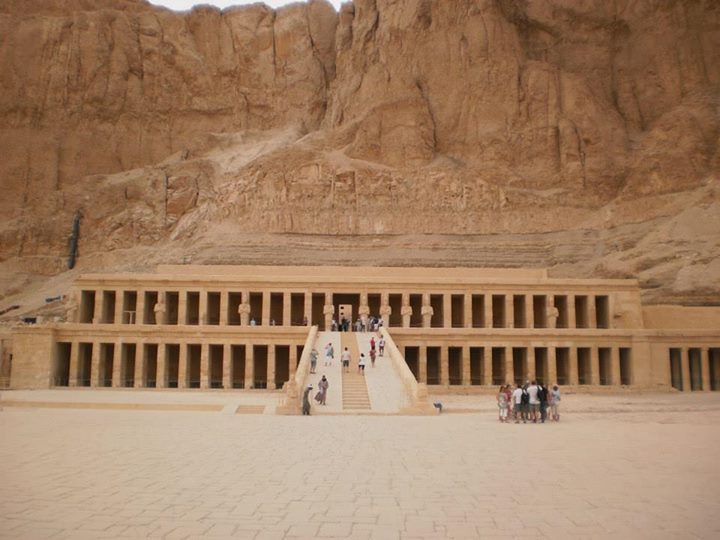
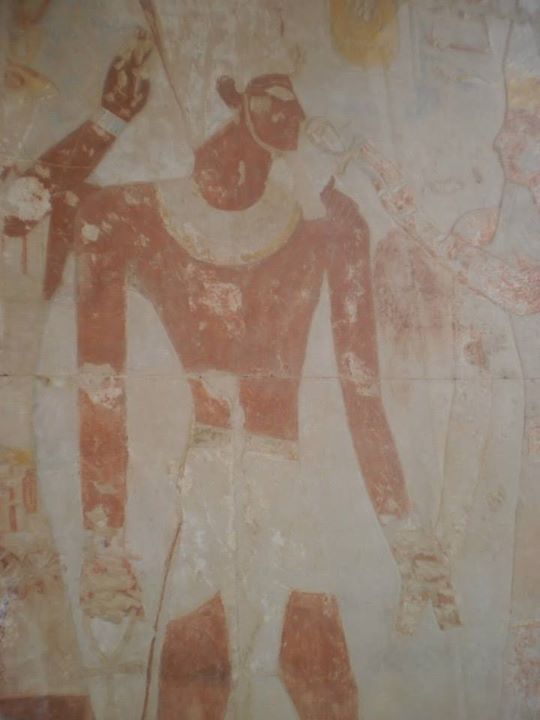
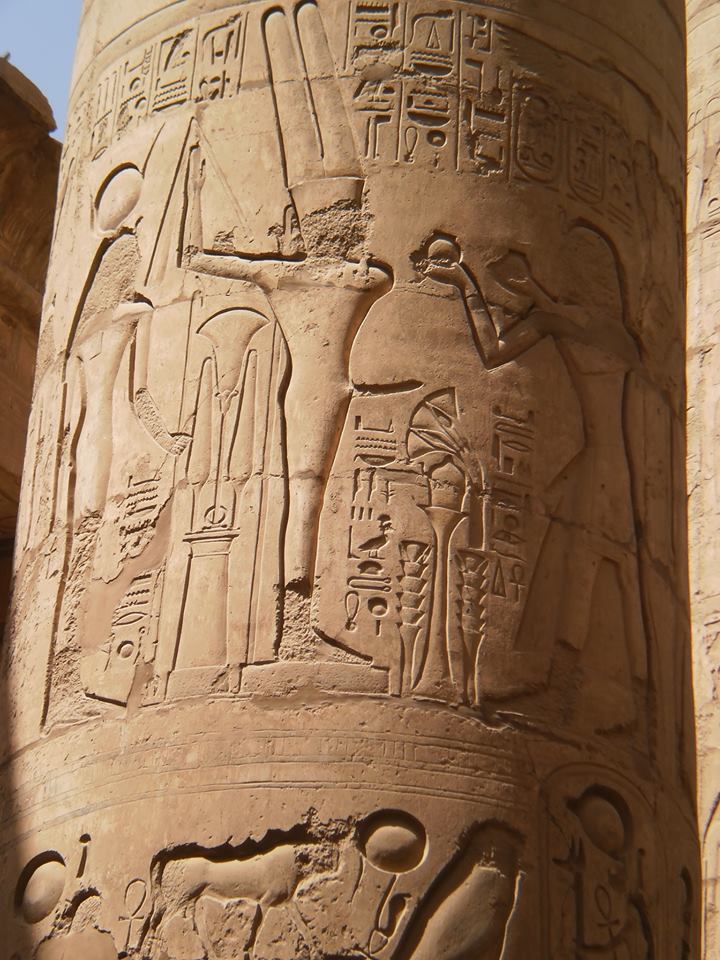
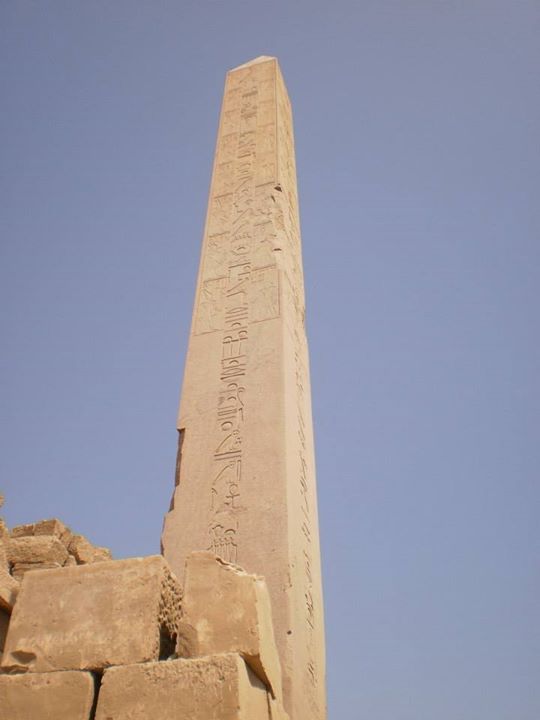
Hi, until the end of last week I were my first time in Egypt at Hurghada. Interesting country and culture but I have to think about it if I would travel again to Egypt :D I also travelled to Luxor to visit the city itself, to drive on the Nil river and to visit some attractions like the Luxor-Temple and the Totent11017433_1796663110558337_7374756648991575472_n11008408_1796659850558663_2925510544698606712_nempel of Hatschepsut .10403407_1796662590558389_1133044057957090257_n11050726_1796659530558695_8174734951625786041_n11036989_1796654460559202_4279833744609842255_n 20150305_11585310818350_1796654457225869_5757796598030450751_o10818350_1796654453892536_4219854051826227153_o10818350_1796654450559203_1302840257479631236_o20150305_12500010818350_1796654463892535_7726453475719800892_o13371_1796660463891935_6860209192560525302_n

18 March 2015

Mario Lang: Call for Help: BMC -- Braille Music Compiler

Since 2009, I am persuing a personal programming project. As I am not a professional programmer, I have spent quite a lot of that time exploring options. I have thrown out about three or four prototype implementations already. My last implementation seems to contain enough accumulated wisdom to be actually useful. I am far from finished, but the path I am walking now seems relatively sound. So, what is this project about? I have set myself a rather ambitious goal: I am trying to implement a two-way bridge between visual music notation and braille music code. It is called BMC (Braille Music Compiler). My problem: I am, as some of you might remember, 100% blind. So I am trying to write a translator between something I will never see directly, and its counterpart representation in a tactile encoding I had to learn from scratch to be able to work on this project. Braille music code is probably the most cryptic thing I have ever tried to learn. It basically is a method to represent a 2-dimensional structure like staff-notation as a stream of characters encoded in 6-dot braille. As the goal above states, I am ultimately trying to implement a converter that works both ways. One of my prototypes already implemented reading digital staff notation (MusicXML) and transcribing it to Braille. However, to be able to actually understand all the concepts involved, I ended up starting from the other end of the spectrum with my new implementation: parsing braille music code and emitting digital staff notation (LilyPond and MusicXML). This is a rather unique feature, since while there is commercial (and very expensive) software out there to convert MusicXML to braille music code, there is, as far as I know, no system that allows to input un-annotated braille music code and have it automatically converted to sighted music notation. So the current state of things is, that we are able to read certain braille music code formats, and output either reformatted (to new line-width) braille music code, LilyPond or MusicXML. The ultimate goal is to also implement a MusicXML reader, and convert the data to something that can be output as braille music code. While the initial description might not sound very hard, there are a lot of complications arising from how braille music code works, which make this quite a programming challenge. For one, braille music note and rest values are ambigious. A braille music note or rest that looks like a whole can mean a whole or 16th. A braille music note or rest that looks like a half can mean a half or a 32nd. And so on. So each braille music code value can have two meanings. The actual value can be caluclated with a recursive algorithm that I have worked out from scratch over the years. The original implementation was inspired by Samuel Thibault (thanks!) and has since then evolved into something that does what we need, while trying to do that very fast. Most input documents can be processed in almost no time, however, time signatures with a value > 1 (such as 12/8) tend to make the number of possible choices exploed quite heavily. I have found so far one piece from J.S. Bach (BWV988 Variation 3) which takes about 1.5s on my 3GHz AMD (and the code is already using several CPU cores). Additionally, braille music code supports a form of "micro"-repetitions which are not present in visual staff notation which effectively allow certain musical patterns to be compressed if represented in braille. Another algorithmically interesting part of BMC that I have started to taclke just recently is the linebreaking problem. Braille music code has some peculiar rules when it comes to breaking a measure of musical material into several lines. I ended up adapting Donald E. Knuth's algorithm from Breaking Paragraphs into Lines for fixed-width text. In other words, I am ignoring the stretch/shrink factors, while making use of different penalty values to find the perfect solution for the problem of breaking a paragraph of braille music code into several lines. One thing that I have learnt from my perivous prototype (which was apparently useful enough to already acquire some users) is that it is not enough to just transcribe one format to another. I ultimately want to store meta information about the braille that is presented to the user such that I can implement interactive querying and editing features. Braille music code is complicated, and one of the original motivations to work on software to deal with it was to ease the learning curve. A user of BMC should be able to ask the system for a description of a character at a certain position. The user interface (not implemented yet) should allow to play a certain note interactively, or play the measure under the cursor, or play the whole document, and if possible, have the cursor scroll along while playback plays notes. These features are not implemented in BMC yet, but they have been impleemnted in the previous prototype and their usefulness is apparent. Also, when viewing a MusicXML document in braille music code, certain non-structural changes like adding/removing fingering annotations should be possible while preserving unhandled features of the original MusicXML document. This also has been implemented in the previous prototype, and is a goal for BMC.

I need your help The reason why I am explaining all of this here is that I need your help for this project to succeed. Helping the blind to more easily work with traditional music notation is a worthwhile goal to persue. There is no free system around that really tries to adhere to the braille music code standard, and aims to cover converting both ways. I have reached a level of conformance that surpasses every implementation of the same problem that I have seen so far on the net. However, the primary audience of this software is going to be using Windows. We desperately need a port to that OS, and a user interface resembling NotePad with a lot fewer menu entires. We also need a GTK interface that does the same thing on Linux. wxWindows is unfortunately out of question, since it does not provide the same level of Accessibility on all the platforms it supports. Ideally, we'd also have a Cocoa interface for OS X. I am afraid there is no platform independent GUI framework that offers the same level of Accessibility on all supported platforms. And since much of our audience is going to rely on working Accessibility, it looks like we need to implement three user interfaces to achieve this goal :-(. I also desperately need code reviews and inspiration from fellow programmers. BMC is a C++11 project heavily making use of Boost. If you are into one of these things, please give it a whirl, and emit pull requests, no matter how small they are. While I have learnt a lot in the last years, I am sure there are many places that could use some fresh winds of thought by people that are not me. I am suffering from what I call "the lone coder syndrome". I also need (technical) writers to help me complete the pieces of documentation that are already lying around. I have started to write a braille music tutorial based on the underlying capabilities of BMC. In other words, the tutorial includes examples which are being typeset in braille and staff notation, using LilyPond as a rendering engine. However, something like a user manual is missing, basically, because the user interface is missing. BMC is currently "just" a command-line tool (well enough for me) that transcribes input files to STDOUT. This is very good for testing the backend, which is all that has been important to me in the last years. However, BMC has reached a stage now where its functionality is likely useful enough to be exposed to users. While I try to improve things steadily as I can, I realize that I really need to put out this call for help to make any useful progress in a foreseeable time. If you think it is a worthwhile goal to help the blind to more easily work with music notation, and also enable communication between blind and sighted musicians in both ways, please take the time and consider how you could help this project to advance. My email address can be found on my GitHub page. Oh, and while you are over at GitHub, make sure to star BMC if you think it is a nice project. It would be nice if we could produce a end-user oriented release before the end of this year.

DebConf team: DebConf15 Call for Proposals (Posted by Michael Banck)

We re now calling for proposals for DebConf15. Proposals are accepted from now until 15 June 2015. To submit an event, go to the Propose an Event page once you are registered for the conference. The DebConf Content Team will decide on a first round of submissions in May, so be sure to submit your proposal soon if you need it to be accepted by then, e.g. for sponsorship requests. The current, non-exhaustive list of proposed topics is: For all further information, please see the Proposals page of the DebConf15 website.

17 March 2015

Rapha&#235;l Hertzog: Freexian s report about Debian Long Term Support, February 2015

Like each month, here comes a report about the work of paid contributors to Debian LTS. Individual reports In February, 58 work hours have been equally split among 4 paid contributors. Their reports are available: Evolution of the situation During the last month, we gained 3 paid work hours: we re now at 61 hours per month sponsored by 28 organizations and we have one supplementary sponsor in the pipe that should bring 4 more hours. The increase is not very quick but seems to be steady. Hopefully at some point, we will have enough resources to do a more exhaustive job. For now, the paid contributors handle in priority the most popular packages used by the sponsors and there are some packages in the end of the queue which have open security issues for months already (example: CVE-2012-6685 on libnokogiri-ruby). So, as usual, we are looking for more sponsors. In terms of security updates waiting to be handled, the situation looks a little bit worse than last month: the dla-needed.txt file lists 40 packages awaiting an update (3 more than last month), the list of open vulnerabilities in Squeeze shows about 58 affected packages in total (5 less than last month). We are getting a bit more effective with CVE triage. A logo for the LTS project? Every time that I write an LTS report, I remember that it would be nice if my LTS related articles could feature a nice picture/logo that reminds people of the LTS team/initiative. Is there anyone up for the challenge of creating that logo? :-) Thanks to our sponsors The new sponsors of the month are in bold.

No comment Liked this article? Click here. My blog is Flattr-enabled.

16 March 2015

Daniel Kahn Gillmor: Bootable grub USB stick (EFI and BIOS for Intel)

I'm using grub version 2.02~beta2-2. I want to make a USB stick that's capable of booting Intel architecture EFI machines, both 64-bit (x86_64) and 32-bit (ia32). I'm starting from a USB stick which is attached to a running debian system as /dev/sdX. I have nothing that i care about on that USB stick, and all data on it will be destroyed by this process. I'm also going to try to make it bootable for traditional Intel BIOS machines, since that seems handy.I'm documenting what I did here, in case it's useful to other people. Set up the USB stick's partition table:
parted /dev/sdX -- mktable gpt
parted /dev/sdX -- mkpart biosgrub fat32 1MiB 4MiB
parted /dev/sdX -- mkpart efi fat32 4MiB -1
parted /dev/sdX -- set 1 bios_grub on
parted /dev/sdX -- set 2 esp on
After this, my 1GiB USB stick looks like:
0 root@foo:~# parted /dev/sdX -- print
Model:  USB FLASH DRIVE (scsi)
Disk /dev/sdX: 1032MB
Sector size (logical/physical): 512B/512B
Partition Table: gpt
Disk Flags: 
Number  Start   End     Size    File system  Name      Flags
 1      1049kB  4194kB  3146kB  fat32        biosgrub  bios_grub
 2      4194kB  1031MB  1027MB               efi       boot, esp
0 root@foo:~# 
make a filesystem and mount it temporarily at /mnt:
mkfs -t vfat -n GRUB /dev/sdX2
mount /dev/sdX2 /mnt
ensure we have the binaries needed, and add three grub targets for the different platforms:
apt install grub-efi-ia32-bin grub-efi-amd64-bin grub-pc-bin grub2-common
grub-install --removable --no-nvram --no-uefi-secure-boot \
     --efi-directory=/mnt --boot-directory=/mnt \
     --target=i386-efi
grub-install --removable --no-nvram --no-uefi-secure-boot \
     --efi-directory=/mnt --boot-directory=/mnt \
     --target=x86_64-efi
grub-install --removable --boot-directory=/mnt \
     --target=i386-pc /dev/sdX
At this point, you should add anything else you want to /mnt here! For example: And don't forget to cleanup:
umount /mnt
sync
Tags: bios, efi, grub, tip

15 March 2015

Gunnar Wolf: Crowdfunding call: "Natura" short film

My good friend Felipe Esquivel is driving a crowdfunded project: the first part of the "Natura" short film. I urge every reader of my blog to support Felipe's work! Felipe, the director for this project, is a very talented Chilean-Mexican animator. He has produced short animated films such as A duel and One fine day. Not only that: It might be interesting for my blog's readers that a good deal of the work of Cham n Animation's work (of course, I am not qualified to state that "all of" their work But it might well be the case) is done using Free Software, specifically, using Blender. So, people: Go look at their work. And try to be part of their work!

14 March 2015

Yves-Alexis Perez: ThinkPad X250

So, I also got myself a new toy. My current ThinkPad is a bit ancient, but still sturdy. It's an X201s from 2010 (brought refurbished), and it's still working pretty fine, but eh, I couldn't resist. The X230 was nice, but didn't have a large resolution screen (1366 768). The X240 brought a full HD (1920 1080) IPS screen, but lost the hardware trackpoint buttons. Finally, the X250 brings back the buttons, still have a nice screen (not qHD or some other trendy resolutions, but still FHD and IPS). And on top of that, it comes with Broadwell, so that means I get smap. It runs mostly fine out of the box on Debian sid, but for full support some tuning is needed. I've setup a page with more information on the laptop, and some images can be found over there.

Dirk Eddelbuettel: littler 0.2.3

max-heap image A new minor release of littler is available now. It adds or extends a number of things: See the littler examples page for more details. Full details for the littler release are provided as usual at the ChangeLog page. The code is available via the GitHub repo, from tarballs off my littler page and the local directory here. A fresh package has gone to the incoming queue at Debian; Michael Rutter will probably have new Ubuntu binaries at CRAN in a few days too. Comments and suggestions are welcome via the mailing list or issue tracker at the GitHub repo.

This post by Dirk Eddelbuettel originated on his Thinking inside the box blog. Please report excessive re-aggregation in third-party for-profit settings.

Steve Kemp: Moving to Newcastle

Although things are not 100% certain it seems highly likely we'll be moving to Newcastle in five months time. If I seem distracted/absent/busy over the next month or two this will be a good excuse!

13 March 2015

Dirk Eddelbuettel: Why Drat? A Guest Post by Steven Pav

Editorial Note: The following post was kindly contributed by Steven Pav.

Why Drat? After playing around with drat for a few days now, my impressions of it are best captured by Dirk's quote:
It just works.

Demo To get some idea of what I mean by this, suppose you are a happy consumer of R packages, but want access to, say, the latest, greatest releases of my distribution package, sadist. You can simply add the following to your .Rprofile file:
drat::add("shabbychef")
After this, you instantly have access to new releases in the github/shabbychef drat store via the package tools you already know and tolerate. You can use
install.package('sadists')
to install the sadists package from the drat store, for example. Similarly, if you issue
update.packages(ask=FALSE)
all the drat stores you have added will be checked for package updates, along with their dependencies which may well come from other repositories including CRAN.

Use cases The most obvious use cases are:
  1. Micro releases. For package authors, this provides a means to get feedback from the early adopters, but also allows one to push small changes and bug fixes without burning through your CRAN karma (if you have any left). My personal drat store tends to be a few minor releases ahead of my CRAN releases.
  2. Local repositories. In my professional life, I write and maintain proprietary packages. Pushing package updates used to involve saving the package .tar.gz to a NAS, then calling something like R CMD INSTALL package_name_0.3.1.9001.tar.gz. This is not something I wanted to ask of my colleagues. With drat, they can instead add the following stanza to .Rprofile: drat:::addRepo('localRepo','file:///mnt/NAS/r/local/drat'), and then rely on update.packages to do the rest.
I suspect that in the future, drat might be (ab)used in the following ways:
  1. Rolling your own vanilla CRAN mirror, though I suspect there are better existing ways to accomplish this.
  2. Patching CRAN. Suppose you found a bug in a package on CRAN (inconceivable!). As it stands now, you email the maintainer, and wait for a fix. Maybe the patch is trivial, but suppose it is never delivered. Now, you can simply make the patch yourself, pick a higher revision number, and stash it in your drat store. The only downside is that eventually the package maintainer might bump their revision number without pushing a fix, and you are stuck in an arms race of version numbers.
  3. Forgoing CRAN altogether. While some package maintainers might find this attractive, I think I would prefer a single huge repository, warts and all, to a landscape of a million microrepos. Perhaps some enterprising group will set up a CRAN-like drat store on github, and accept packages by pull request (whether github CDN can or will support the traffic that CRAN does is another matter), but this seems a bit too futuristic for me now.

My wish list In exchange for writing this blog post, I get to lobby Dirk for some features in drat:
  1. I shudder at the thought of hundreds of tiny drat stores. Perhaps there should be a way to aggregate addRepo commands in some way. This would allow curators to publish their suggested lists of repos.
  2. Drat stores are served in the gh-pages branch of a github repo. I wish there were some way to keep the index.html file in that directory reflect the packages present in the sources. Maybe this could be achieved with some canonical RMarkdown code that most people use.

This post by Dirk Eddelbuettel originated on his Thinking inside the box blog. Please report excessive re-aggregation in third-party for-profit settings.

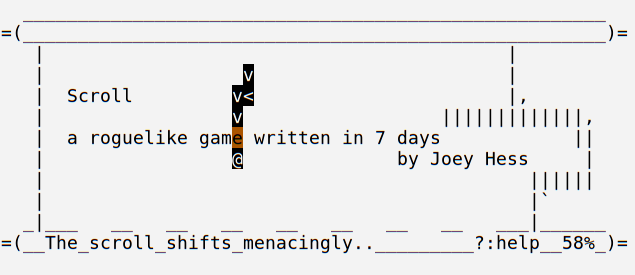
Joey Hess: 7drl 2015 day 7 scroll success

A frantic last day of work on Scroll. Until 3 am last night, I was working on adding a new procedurally generated level. This morning, fixed two major bugs reported by playesters overnight. Also fixed crashes on small screens and got the viewport to scroll. Added a victory animation in time for lunch. After lunch, more level generation work. Wasted an entire hour tracking down a bug in level gen I introduced last night, when I was bad and didn't create a data type to express an idea. Added a third type of generated level, with its own feel. Finished up with a level selection screen, which needed just 47 lines of code and features a playable character. I have six hours until my 7drl is officially over, but I'm done! Success! You can download the code, play, etc, at Scroll's homepage

Wouter Verhelst: New toy: Fujitsu Lifebook e734

My Lenovo x220, which I've owned for almost four years now (I remember fetching it from the supplier shortly before driving off to Banja Luka), was getting somewhat worn out. The keyboard and the screen had both been replaced at some point already, and the wwan interface had given up as well. The case was all cracked, and the NIC connector wasn't doing very well anymore either; there have been a few cases of me trying to configure the wireless network at a customer, but this being harder than it needs to be because the NIC will only work if I put in the network cable just so, and someone dropped a piece of paper onto the cable. In other words, it was time for a new one. At first I wanted to buy a Lenovo x250, but then I noticed that the Fujitsu came with an i7 4712MQ, which I liked (as today it is still quite exceptional for an ultrabook to have a quadcore processor). Fujitsu also claims up to 9 hours of battery life, but it's not clear to me whether this is supposed to be the case with the default battery only. They also have a battery for the modular bay, which I bought as well (to replace the optical drive whic I sometimes use, but only rarely), and on top of that it came with a free port replicator. Not all is well, however. In the x220, getting the WWAN interface to work involved some creative use of chat against /dev/ttyACM0 wherein I issue a few AT commands to put the WWAN interface into a particular mode, and from then on the WWAN interface is just a regular Ethernet interface on which I can do DHCP. The new laptop has a "Sierra Wireless, Inc." WWAN interface (USB id 1199:9041) which annoyingly doesn't seem to expose the ttyACM (or similar) devices, and I'm not sure what to use instead. Just trying to do DHCP doesn't work -- yes, I tried. Unfortunately, the keyboard isn't very good; it's of the bubble gum type, and I keep getting annoyed at it not picking up my keystrokes all the time. When I'm at home or at my main customer, I have a Das Keyboard Ultimate S (3rd (customer) and 4th (home) generation), so it's only a problem when I'm not at home, but it's still extremely annoying. There is a "backlight" function in that keyboard, but that's not something I think I'll ever use (hint: "das keyboard ultimate s"). The display can't do more than 1366x768, which is completely and utterly wrong for a computer -- but it's the same thing as my x220, so it's not really a regression. The "brightness" ACPI keys don't seem to work. I may have to fiddle with some ACPI settings at some point, I suppose, but it's not a major problem. When I plugged it in, I noticed that fdpowermon ignored the second battery. I had originally written fdpowermon with support for such a second battery, but as my x220 had only one, I never tested it. Apparently there was a bug, but that's been fixed now -- at least in unstable. On the good side of the equation, it has three USB3 ports in the laptop, and four in the port replicator, with no USB2; this is a major leap forwards from the one USB3 and six USB2 in the x220. A positive surprise was the CCID smartcard reader that I somehow missed while reading the specs, but which -- given my current major customer, is very welcome, indeed. Update: After having used it a few days, there were a few minor annoyances:

12 March 2015

Joey Hess: 7drl 2015 day 6 must add more

Last night I put up a telnet server and web interface to play a demo of scroll and send me playtester feedback, and I've gotten that almost solid today. Try it! Today was a scramble to add more features to Scroll and fix bugs. The game still needs some balancing, and generally seems a little too hard, so added a couple more spells, and a powerup feature to make it easier. Added a way to learn new spells. Added a display of spell inventory on 'i'. For that, I had to write a quick windowing system (20 lines of code). Added a system for ill effects from eating particular letters. Interestingly, since such a letter is immediately digested, it doesn't prevent the worm from moving forwards. So, the ill effects can be worth it in some situations. Up to the player to decide. I'm spending a lot of time now looking at letter frequency historgrams to decide which letter to use for a new feature. Since I've several times accidentially used the same letter for two different things (most amusingly, I assigned 'k' to a spell, forgetting it was movement), I refactored all the code to have a single charSet which defines every letter and what it's used for, be that movement, control, spell casting, or ill effects. I'd like to use that to further randomize which letters are used for spell components, out of a set that have around the same frequency. However, I doubt that I'll have time to do that. In the final push tonight/tomorrow, I hope to add an additional kind of level or two, make the curses viewport scroll when necessary instead of crashing, and hopefully work on game balance/playtester feedback. I've written ~2800 lines of code so far this week!

Marko Lalic: solicit - an HTTP/2 Library for Rust

For quite some time now, I've been following Rust, a new(ish) programming language by Mozilla. It's been around for a while, but recently it's been attracting a lot of buzz. Around the new year, I finally decided to take a deeper look into the language. I find that the best way to learn a new programming language is to simply dive in and try to build something nontrivial. At that point I'd also been interested in learning more about the specifics behind the new HTTP/2 spec, so I decided to combine the two... The result is a (work in progress) client library for HTTP/2 written in Rust, which can be found at this GitHub repository: https://github.com/mlalic/solicit What follows is a description of what I aim to achieve with the library, as well as an overview of its current design. If that doesn't interest you, you can just check out the GitHub repo for some examples or the source code itself. Goals Given that there are already some fairly popular HTTP libraries for Rust (hyper leading the way), I decided that I wouldn't aim to replace them. Rather, the idea is to focus on the lower levels of the HTTP/2 protocol what is essentially another transport protocol and expose an API that allows those libraries to use an HTTP/2 connection to send requests and receive responses. HTTP/2 doesn't change the semantics of the protocol, so once any HTTP/1.1 library gets the raw headers and body, it should be able to represent the response regardless of the fact that it came on an HTTP/2 connection. The same holds for sending requests: only the representation of the request changes, not its content. There are some minor differences, such as HTTP/2 doing away with the reason phrases being part of the response, but those were only meant to be human readable and "MUST NOT" have had any influence on the semantics of the response. Therefore, the primary goal for the library is to provide an API for using an HTTP/2 connection on the lowest level, but making it easy for clients to customize or augment any particular step of handling a response, without having to know the details of functionality below the layer they want to customize. As an example, if one wanted to build a client that sends out progress notifications for downloads, it wouldn't be good if they needed to muck about with raw HTTP/2 frames ideally, they'd only need to implement a new way to handle incoming data chunks for streams. The same applies for implementing a client that streams the download into a file (instead of saving it in memory) or one that sends the chunks to a different component for processing as soon as they're received (e.g. parsing HTML). Since the Rust standard library only exposes blocking IO primitives, I decided to base this library on blocking IO, as well. However, the goal was to make it flexible enough so that clients that would like to allow multiple requests to be sent concurrently on the same HTTP/2 connection can be built, but without the library itself spawning any threads. Finally, on a less conceptual level (and more of an implementation level), the code should have extensive test coverage. Design The library is split into several layers, each of which provides services to the one above it. A brief description of each layer follows. Transport Layer This layer provides the API for raw byte stream communication with the peer. Essentially, it's a wrapper around the particular transport protocol that is used for the HTTP/2 connection. As the HTTP/2 spec allows the transport protocol to be either a cleartext TCP connection or a TLS-protected one, those are the ones that need to be implemented at this level. The API of the layer is represented by a single trait TransportStream that simply requires io::Read and io::Write to be implemented and (for now) provides a single convenience method based on the underlying io::Read implementation. For a clear-text TCP connection, the only thing that was required to implement it was one line of code:
impl TransportStream for TcpStream  
HTTP/2 Connection Layer The connection layer provides an API for reading and writing to a raw HTTP/2 connection. This means reading and writing HTTP/2 frames, not arbitrary bytes. Each HTTP/2 frame has to follow the same basic structure(a 9-byte header followed by a sequence of byte representing the payload of the frame). This is represented by the RawFramestruct. Each HTTP/2 frame type can have its own specific format for the content of the payload and assign meaning to the flags found in the header. Therefore, each frame needs to have its own implementation that can parse a RawFrame or return an error if the raw frame does not represent a valid frame of that type. Some common methods that each frame type implementation needs to support are given by the Frametrait that must be implemented by the implementations. Finally, the HttpConnectionstruct handles reading the byte stream from the underlying TransportStream instance, correctly delineating frames and parsing them into the appropriate frame type implementation (by delegating to the correct Frame implementation based on the frame type found in the header). Obviously, varying the implementation of the transport layer is a matter of choosing the appropriate TransportStream implementation. This includes using mock implementations for testing the HttpConnection itself. HTTP/2 Client Connection The ClientConnectionbuilds upon the HttpConnection by using it to expose functionality that is specific to the client side of an HTTP/2 connection. This includes sending requests and reading responses. The struct takes care of creating frames that need to be sent for a given request (including HPACK header encoding) and shipping them off to the server (using the underlying HttpConnection instance). As for handling a response, the ClientConnection expects to get an instance of a struct implementing the Sessiontrait when constructed. This trait essentially defines a number of callbacks: methods that will be called on this instance when the corresponding event occurs in the ClientConnection. Therefore, the ClientConnection understands the semantics of the particular frames that it reads (e.g. performs the decoding of the HEADERS frames' payloads, passing the raw data received in a DATA frame to the session, etc.). However, it does not know anything about streams; it only passes the stream ID up to the session layer, without thinking about whether the stream is open, valid, etc. HTTP/2 Session As mentioned in the previous section, each ClientConnection requires an instance of a struct implementing the Sessiontrait to be passed to it at construction time. The Session trait defines a number of callbacks that are invoked in the appropriate moments during the processing of frames read on a client connection. For example, new_headers (takes a list of heaers and a stream on which they were received) or new_data_chunk (a buffer and a stream on which the data arrived). The session is in charge of handling these events as they arise. It is up to it to decide what (if anything) should be done with the data that it receives. There is a default implementation of the Session trait (unimaginatively named DefaultSession), which provides an implementation that tracks which streams are currently open and delegates the processing of new events on particular streams to instances of a Streamtrait. This allows for client implementations to simply vary the implementation of a Stream that they provide to the DefaultSession in order to change how a particular part of a response is handled, but let the DefaultSession take care of tracking which streams are open and valid. Different implementations of a Session still can exist, if the particular client needs more fine-grained customization over how these events are handled, but for most purposes the default session, along with Stream customization should probably be enough. HTTP/2 Stream Again, as mentioned previously, the DefaultSessionimplementation of the Session trait relies on a Streamtrait providing the handling for events arising on individual streams. This level should be the one that gets customized most often in alternate implementations. A default stream implementation DefaultStreamhandles the messages by building up a response in-memory. Different implementations could instead send progress notifications on an associated channel, for instance. HTTP/2 Client The final layeris that of a client that exposes methods that would usually be expected for a client HTTP library: sending requests, obtaining responses. This layer is not the primary focus, though, and it only exposes two simple implementations that showcase how the lower level APIs can be used to build a client. The second purpose it fulfills is as a "sanity check" that the APIs actually do allow the goals to be met. Therefore, one of the clients allows for requests to be sent from concurrently running threads and the responses to those requests to be obtained asynchronously (in the form of a Future<Response>). However, the responses are basic and very raw: they are stored fully in memory (not available until they've been read until the end) and both the body, as well as the headers, exposed as raw byte sequences. As an example how this clientcan be used (as well as the simpler single-threaded version), check out the Examplessection in the GitHub repository's README file. Future Work Refactoring APIs As the project was started as a Rust learning exercise, the initial APIs are slightly awkward and fairly inefficient to work with. For example, the solicit::hpackmodule requires headers to be represented as a tuple of Vec<u8>, which means that whenever we need to encode a header list, even though their values might be (statically known) byte sequence literals, such as (b":method", b"GET"), we need to make a bunch of to_vec calls on the &[u8]s before passing them to the encoder, leading not only to a really ugly and tedious way of obtaining the encoded representation of the headers, but also to a lot of unnecessary allocations. Another API that will see some refactoring and improvement is the TransportStream, as well as the HttpConnection in order to make it possible to have separate threads perform reads and writes on the connection. Currently, the socket is owned by the HttpConnection instance and all writes and reads require a &mut reference, making this impossible. This change would tackle this by embracing Rust's new try_clone method on the TcpStream into the TransportStream and refactoring the HttpConnection to allow splitting it into a write and read handle. HTTP/2 Features As already mentioned, only a small subset of the full HTTP/2 spec is currently implemented, so, obviously, implementing the rest of it falls under the most important future work. Some near- to mid-term priorities that will be tackled are: Obviously, those aren't all the features of HTTP/2, but it's a rough list of things I'm planning on working on myself as the next steps. Integration With an (existing?) HTTP Library I would like it if in the end the library or at least some of its pieces ended up being used in the scope of one of the fully featured HTTP libraries. If there's any interest in this, I wouldn't mind putting in some extra legwork to help make it happen. Conclusion While I'm certain that there can be better, more efficient, more elegant implementations, I've had a lot of fun working on this so far (learning new things is always fun!) and if nothing else I'll continue in order to gain the deepest possible understanding of HTTP/2. For anyone that might have read all the way through, thanks for reading and I'm open for any sort of feedback!

Next.

Previous.