Nick Pettigrew was an anti-social behavior officer for council housing for
over a decade. This book is a diary of one year in the life of that job.
According to the author, the dates, names, and some of the identifying
details have been changed but not exaggerated. While it's hard to verify
that, and I'm sure a few of the stories have been tweaked to make better
narratives, it has a messiness and chaos of half-resolved drama mixed with
mundane office tedium that makes it ring true.
The subject matter requires some explanation for US readers.
Council housing is the UK's version of what the US would call public
housing or "the projects," although it's a far larger percentage of the
housing stock in the UK than it is in the US. These are buildings built
by the government and run by local governments or non-profits to provide
housing to working class and poor people at reduced cost compared to the
private market. As in the US, new council housing construction has
dropped off dramatically; as in the US, a bunch of it has been privatized,
although in the UK the Right to Buy law at least sells the housing to the
people living in it, as opposed to slumlords.
The 1998 UK Crime and Disorder Act collects under anti-social behavior a
bunch of low-grade irritations that in the US would fall under public
nuisance laws, noise ordinances, and other vague misdemeanors like
"creating a public disturbance": essentially, all the irritating and
obnoxious things that people subject their neighbors to, but which fall
short of obvious criminal behavior like theft or assault. As Pettigrew
puts it:
"I just don't want to hear the word 'cunt' shouted repeatedly at 3am
every night any more. I don't think that's unreasonable."
That law required the organizations managing council estates to have a
procedure to deal with anti-social behavior, and thus the job of an
anti-social behavior officer was created.
In the US, these sorts of problems are dealt with by the local police,
which is a little like trying to get rid of a raccoon by running it over
with a balky, thirty-year-old car. The best outcome is that the raccoon
gets freaked out by your efforts to get the car to start and leaves. The
worst outcome is that you accidentally run over your neighbor's kid while
aiming for the raccoon. Either way, neither you nor the car nor your
neighbors are going to be happy about the process.
An anti-social behavior officer is someone with some authority to do
things like install cameras, tell people who don't live somewhere that
they need to stop coming there, and start eviction proceedings, but who
doesn't carry guns, can't arrest people, and enforces those rules when
necessary via court proceedings or calling the police. In other words,
it's one of the types of alternative responders whose job is to solve
problems rather than stop crimes that we've been talking about in the
United States. And although Pettigrew is quite grumpy and cynical about
his job (for very understandable reasons explained in this book), my
takeaway from another country with even worse problems is that the system
sort of works. It's underfunded and poorly managed and nebulous and
sometimes very sad, but it also achieves some of what it sets out to do,
and you can see the outlines of a better system beneath it.
My favorite thing about this book is that it forces the reader to grapple
with the actual job in all its messiness, rather than our ideals of what
we want the job to be. For example, if you're going to hire a bunch of
people to do this job, you need some way to figure out whether they're any
good at it, but it's not obvious how to measure success.
One infuriating KPI we're measured on is the final question a resident
is asked once their case is closed: "Are you happy with the outcome of
your case?" Because unless you evict the problem neighbor within a
fortnight, erect a security wall around the complainant's house
manned by armed guards, and bake them a cake, the answer will almost
certainly be no.
Pettigrew has a background in comedy so he's sarcastically funny rather
than strident or didactic, which for me was just the tone I needed to
enjoy reading this enough to think deeply about it.
The thing that most surprised me, even though it probably shouldn't, was
just how many of the problems Pettigrew had to deal with stemmed from
drugs. My guess is that a good 75% of the issues he described were a
direct result of someone dealing drugs, growing drugs, stealing things to
buy drugs, throwing parties with druggie friends, doing bizarre and
dangerous things because they were on drugs, not taking care of their
property because they were too busy doing drugs, or letting their property
be taken over by other people doing or selling drugs. It's just
never-ending. The case load is clearly made worse by chronic
understaffing and underfunding, and spending more money on giving people
more assistance is part of any reasonable solution, but so is reducing the
demand. If the pattern of complaints in the US is at all similar (and I
bet it is), it's no wonder that the police perceive drugs as central to
their job.
Pettigrew talks about this at some length in the epilogue, and I think one
of his conclusions is worth quoting here:
Years of interacting with class A drug users has shown me that they
really don't want to be out hustling to make enough money for their
next score of diluted heroin. They want to sit at home, take drugs
and when those drugs wear off, take some more. You may view this as a
wasted life, and you may well be right, but here's the thing: they are
going to do this anyway, whether we decide to criminalize them or not.
If, after a lengthy period of honest, mature drug education across the
country via schools, further education, government advertising and so
on, class A drugs were made legally available on prescription to
adults via pharmacies, the vast majority of users would pick up their
prescriptions, go home, take their drugs and leave everyone else
alone. They couldn't be arsed to break into your car if they didn't
have to.
The decriminalization argument is a lot larger than the space of this book
review, so I won't get into it further, except to say that if you think
that conclusion sounds unreasonable or dangerous or destructive to
society, consider reading this book. One of the things that becomes
obvious from Pettigrew's diary of incidents is that most people just want
to feel safe, and a truly stunning amount of crime and anti-social
behavior that makes them feel not safe is a direct or indirect result of
people trying to get drugs or to get money to get drugs.
The other pattern that's obvious from this book (and obvious from most
writing by anyone involved in the justice system) is that the system
doesn't really work.
The best way to describe going to court is that it's like paying a
visit to a run-down hospital where nobody gets better.
Some of that is because it's not set up to solve problems, and a lot of
that is because solving problems is a lot more expensive than we want to
admit and we don't want to pony up the resources.
I'm probably making this book sound hopelessly depressing, but it's not.
It's angry and cynical, but it's also very funny (particularly if you like
sarcasm), extremely quotable, insightful, and deeply empathetic. There
are people trying their best to help other people despite a system that
doesn't reward them for doing so, and surprisingly often they manage to do
so. The path to helping more people isn't even that difficult to find.
The epilogue of this book is full of solid and straightforward ideas that
don't require some novel insight into humanity, just a bunch of hard work.
And, while reading about the work of helping people and being exasperated
by people, you'll also get to laugh at the bits of office nonsense that
are universal.
The old form for monthly one-to-ones used to have two questions
"What did you do over the last month?" and "What do you plan to do in
the next month?" and my line manager at the time seemed unimpressed
when I answered "my job" to both.
I loved this book. It was one of my favorite random finds of the year,
and, at least judging from how difficult it is to find in Amazon search
results, it's not gotten enough attention in the United States. Highly
recommended.
Rating: 9 out of 10
Recently, I needed to package a Rust crate libslirp for a Apertis, a Debian derivative. libslirp is used by the newly release UML backend of debos, our Debian image build tool. Unfortunately, this crate hasn t yet been properly packaged for Debian proper, so I could not simply pull the packaging from Debian. Even worse, its build dependencies haven t all been packaged yet. Most importantly, I have only uploaded zbus to Debian today, and at that time none of its dependencies were in Debian either.
Another issue with this were that each crate is packaged for Debian as a separate package, making the process a bit more tricky since I d need to import all of the crates into Apertis separately. Doing that takes time and is further complicated by the CI loop we re using which requires the full build process to complete for a package before a pipeline a dependent package can run.
Having all that considered, I took a shortcut: I vendored all the build dependencies with the package itself, and here s how.
I started with debcargo-conf, where the not-yet-complete packaging lives. With debcargo, I generated the source package as if I were to upload to Debian. Since I ll be vendoring the dependencies, I have removed most of the Rust dependencies and replaced them with those extra dependencies needed by those crates.
So, I replaced this:
I wanted to keep the delta to the future Debian package at a bare minimum, so I kept the original dh-cargo build process, only making sure the vendored dependencies are found in the right place. The cleanest approach in my view was to use the fact that the 3.0 (quilt) source format allows multiple original tarballs: the main tarball would be the same orig tarball as in Debian, and an extra tarball would contain the vendored code. When we sync with Debian, the extra tarball would be dropped, just as the adjustments to the debian/rules.
To generate the vendor tarball, I added this to the rules file:
include /usr/share/dpkg/pkg-info.mkvendor:
-[ -d vendor ]&& rm -rf vendor
rm -rf Cargo.lock
cargo vendor
tar Jcf ../$(DEB_SOURCE)_$(DEB_VERSION_UPSTREAM).orig-vendor.tar.xz vendor/
.PHONY:vendor
This target, being run manually and not as part of the build process, download the latest dependencies satisfying the requirements in Cargo.toml and rolls them into a vendor tarball.
Now, to make dh-cargo use the vendored code, we need to link it into the right place. dh-cargo creates a Cargo registry tree in a subdirectly under debian/ where it symlinks crates from the Rust development packages. This extra code makes sure the vendored dependencies are available there too:
override_dh_auto_configure:
dh_auto_configure $@for d in vendor/* ;\do\[ -L debian/cargo_registry/$$(basename $$d)]&& rm debian/cargo_registry/$$(basename $$d);\
ln -rs $$d debian/cargo_registry ;\done
An important thing here is that if the build happens on a non-clean system, dh-cargo may have symlinked a system crate already installed so we need to remove that symlink and replace it by ours. We build packages in clean chroots, so this is not that important, otherwise for reproducibility reasons it would be better to create the registry directory from scratch.
The final package can be found at the Apertis GitLab.
TL;DR: CPS-conversion and defunctionalization can help you to come up with a constant-stack algorithm.
Update: Turns out I inadvertedly plagiarized the talk The Best Refactoring You ve Never Heard Of by James Koppel. Please consider this a form of sincere flattery.
The starting point
Today, I ll take you on a another little walk through the land of program transformations. Let s begin with a simple binary tree, with value of unknown type in the leaves, as well as the canonical map function:
dataT a =L a B (T a) (T a)
map1 :: (a -> b) ->T a ->T b
map1 f (L x) =L (f x)
map1 f (B t1 t2) =B (map1 f t1) (map1 f t2)
As you can see, this map function is using the program stack as it traverses the tree. Our goal is now to come up with a map function that does not use the stack!
Why? Good question! In Haskell, there wouldn t be a strong need for this, as the Haskell stack is allocated on the heap, just like your normal data, so there is plenty of stack space. But in other languages or environments, the stack space may have a hard limit, and it may be advised to not use unbounded stack space.
That aside, it s a fun exercise, and that s sufficient reason for me.
(In the following, I assume that tail-calls, i.e. those where a function end with another function call, but without modifying its result, do not actually use stack space. Once all recursive function calls are tail calls, the code is equivalent to an imperative loop, as we will see.)
Think?
We could now just stare at the problem (rather the code), and try to come up with a solution directly. We d probably think ok, as I go through the tree, I have to remember all the nodes above me so I need a list of those nodes and for each of these nodes, I also need to remember whether I am currently processing the left child, and yet have to look at the right one, or whether I am done with the left child so what do I have to remember about the current node ?
ah, my brain spins already. Maybe eventually I figure it out, but why think when we can derive the solution? So let s start with above map1, and rewrite it, in several, mechanical, steps into a stack-less, tail-recursive solution.
Go!
Before we set out, let me rewrite the map function using a local go helper, as follows:
map2 :: forall a b. (a -> b) ->T a ->T b
map2 f t = go t
where go ::T a ->T b
go (L x) =L (f x)
go (B t1 t2) =B (go t1) (go t2)
This transformation (effectively the static argument transformation ) has the nice advantage that we do not have to pass f around all the time, and that when we copy the function, I only have to change the top-level name, but not the names of the inner functions.
Also, I find it more aesthetically pleasing.
CPS
A blunt, effective tool to turn code that is not yet using tail-calls into code that only uses tail-calls is use continuation-passing style. If we have a function of type -> t, we turn it into a function of type -> (t -> r) -> r, where r is the type of the result we want at the very end. This means the function now receives an extra argument, often named k for continuation, and instead of returning some x, the function calls k x.
We can apply this to our go function. Here, both t and r happen to be T b; the type of finished trees:
map3 :: forall a b. (a -> b) -> T a -> T b
map3 f t = go t (\r -> r)
  where
    go :: T a -> (T b -> T b) -> T b
    go (L x) k  = k (L (f x))
    go (B t1 t2) k  = go t1 (\r1 -> go t2 (\r2 -> k (B r1 r2)))
Note that when initially call go, we pass the identity function (\r -> r) as the initial continuation.
Alas, suddenly all function calls are in tail position, and this codes does not use stack space! Technically, we are done, although it is not quite satisfying; all these lambdas floating around obscure the meaning of the code, are maybe a bit slow to execute, and also, we didn t really learn much yet. This is certainly not the code we would have writing after thinking hard .
Defunctionalization
So let s continue rewriting the code to something prettier, simpler. Something that does not use lambdas like this.
Again, there is a mechanical technique that can help it. It likely won't make the code prettier, but it will get rid of the lambdas, so let s do that an clean up later.
The technique is called defunctionalization (because it replaces functional values by plain data values), and can be seen as a form of refinement.
Note that we pass around vales of type (T b -> T b), but we certainly don t mean the full type (T b -> T b). Instead, only very specific values of that type occur in our program, So let us replace (T b -> T b) with a data type that contains representatives of just the values we actually use.
We find at all values of type (T b -> T b). These are:
(\r -> r)
(\r1 -> go t2 (\r2 -> k (B r1 r2)))
(\r2 -> k (B r1 r2))
We create a datatype with one constructor for each of these:
dataK=IK1K2
(This is not complete yet.)
We introduce an interpretation function that turns a K back into a (T b -> T b):
eval ::K-> (T b ->T b)
eval = (*TBD*)
In the function go, instead of taking a parameter of type (T b -> T b), we take a K. And when we actually use the continuation, we have to turn the K back to the function using eval:
go ::T a ->K a b ->T b
go (L x) k = eval k (L (f x))
go (B t1 t2) k = go t1 K1
We also do this to the code fragments identified in the first step; these become:
(\r -> r)
(\r1 -> go t2 K2)
(\r2 -> eval k (B r1 r2))
Now we complete the eval function: For each constructor, we simply map it to the corresponding lambda from step 1:
eval ::K-> (T b ->T b)
eval I= (\r -> r)
eval K1= (\r1 -> go t2 K2)
eval K2= (\r2 -> eval k (B r1 r2))
This doesn t quite work yet: We have variables on the right hand side that are not bound (t2, r1, k). So let s add them to the constructors K1 and K2 as needed. This also changes the type K itself; it now needs to take type parameters.
This leads us to the following code:
dataK a b
=IK1 (T a) (K a b)
K2 (T b) (K a b)
map4 :: forall a b. (a -> b) ->T a ->T b
map4 f t = go t Iwhere go ::T a ->K a b ->T b
go (L x) k = eval k (L (f x))
go (B t1 t2) k = go t1 (K1 t2 k)
eval ::K a b -> (T b ->T b)
eval I= (\r -> r)
eval (K1 t2 k) = (\r1 -> go t2 (K2 r1 k))
eval (K2 r1 k) = (\r2 -> eval k (B r1 r2))
Not really cleaner or prettier, but everything is still tail-recursive, and we are now working with plain data.
We like lists
To clean it up a little bit, we can notice that the K data type really is just a list of values, where the values are either T a or T b. We do not need a custom data type for this! Instead of our K, we can just use the following, built from standard data types:
type K' a b = [Either (T a) (T b)]
Now I replace I with [], K1 t2 k with Left t2 : k and K2 r1 k with Right r1 : k. I also, very suggestively, rename go to down and eval to up:
map5 :: forall a b. (a -> b) ->T a ->T b
map5 f t = down t []
where down ::T a ->K' a b ->T b
down (L x) k = up k (L (f x))
down (B t1 t2) k = down t1 (Left t2 : k)
up ::K' a b ->T b ->T b
up [] r = r
up (Left t2 : k) r1 = down t2 (Right r1 : k)
up (Right r1 : k) r2 = up k (B r1 r2)
At this point, the code suddenly makes more sense again. In fact, I can try to verbalize it:
As we traverse the tree, we have to remember for all parent nodes, whether there is still something Left to do when we come back to it (so we remember a T a), or if we are done with that (so we have a T b). This is the list K' a b.
We begin to go down the left of the tree (noting that the right siblings are still left to do), until we hit a leaf. We transform the leaf, and then go up.
If we go up and hit the root, we are done. Else, if we go up and there is something Left to do, we remember the subtree that we just processed (as that is already in the Right form), and go down the other subtree. But if we go up and there is nothing Left to do, we put the two subtrees together and continue going up.
Quite neat!
The imperative loop
At this point we could stop: the code is pretty, makes sense, and has the properties we want. But let s turn the dial a bit further and try to make it an imperative loop.
We know that if we have a single tail-recursive function, then that s equivalent to a loop, with the function s parameter turning into mutable variables. But we have two functions!
It turns out that if you have two functions a -> r and b -> r that have the same return type (which they necessarily have here, since we CPS-converted them further up), then those two functions are equivalent to a single function taking a or b , i.e. Either a b -> r. This really nothing else than the high-school level algebra rule of rarb = ra + b.
So (after reordering the arguments of down to put T b first) we can rewrite the code as
map6 :: forall a b. (a -> b) ->T a ->T b
map6 f t = go (Left t) []
where go ::Either (T a) (T b) ->K' a b ->T b
go (Left (L x)) k = go (Right (L (f x))) k
go (Left (B t1 t2)) k = go (Left t1) (Left t2 : k)
go (Right r) [] = r
go (Right r1) (Left t2 : k) = go (Left t2) (Right r1 : k)
go (Right r2) (Right r1 : k) = go (Right (B r1 r2)) k
Do you see the loop yet? If not, maybe it helps to compare it with the following equivalent imperative looking pseudo-code:
mapLoop :: forall a b. (a -> b) -> T a -> T b
mapLoop f t
  var node = Left t;
  var parents = [];
  while (true)
    switch (node)
      Left (L x) -> node := Right (L (f x))
      Left (B t1 t2) -> node := Left t1; parents.push(Left t2)
      Right r1 ->
        if (parents.len() == 0)
          return r1;
          else
          switch (parents.pop())
            Left t2  -> node := Left t2; parents.push(Right r1);
            Right r2 -> node := Right (B r1 r2)
Conclusion
I find it enlightening to see how apparently very different approaches to a problem (recursive, lazy functions and imperative loops) are connected by a series of rather mechanical transformations. When refactoring code, it is helpful to see if one can conceptualize the refactoring as one of those mechanical steps (refinement, type equivalences, defunctionalization, cps conversion etc.)
If you liked this post, you might enjoy my talk The many faces of isOrderedTree, which I have presented at MuniHac 2019 and Haskell Love 2020.
The people who are pro-Government and in this case pro-Corporate do not have any success stories that they can share. Hence, most of the time the arguments are that the other are bad. For e.g. quite a few people argue that we don t need farmers, we can just order from restaurant. They have completely disassociated the idea that even then you need farmers as unless the farmers put the seed in, till the soil and wait for the rains or have irrigation you won t get ripe vegetables which then has to be taken out, and somehow sold to the wholesaler from where it comes to the restaurant and then to your plate. Sadly, even the farm-to-fork infographics are so depressingly sad, you want to look away. If you see the infographic you see it is just not non-veg but also vegetarian food grains which go under lot of questionable practices. Even, with such scenarios that is done by corporations our people want to go ahead. I will share stories from other countries which tell how they are doing more.
The Soldier-Farmer
Another sad part of these protests have been soldiers who have been returning their medals. The ones who oppose have the gall to say they should return the cash rewards they got. So just like farmers, seems soldiers also do not need money to survive. They are supposed to live only on air and water. This is after the present Govt. has reduced their pensions after retirement and that too without any discussion
GOI pensions to ex-servicemen
Now I nor anybody else would have minded if these conditions were shared going forward rather than doing it retrospectively. People who usually go to the army are not in it for money but for the adventure and glory they bring. But they do also have a family and have a family responsibility. In most other countries, the soldier and his families are well-looked after. If you know that even after you die, the Government would look after your family, you will do your best. Unfortunately, many veterans in India themselves are asked to help by many war widows as the widows don t get family pensions. The proposal naturally has left many miffed. In fact many of the veterans who used to advise people to join the armed forces now advise young people to pursue civilian life and careers. This is when Indian Army has been ironically having shortage of officers from well over a decade and stresses felt by Army personnel also known for a long time.
Even under this nationalistic Government, if it cannot take care of its soldiers, then forget about others.
India Defence Spending vis-a-vis other countries.
Now it is nobody s argument that India needs to improve its tooth-to-tail ratio but this is the wrong way to go about it. I would probably talk about that some other time as that totally needs its whole place.
Even OROP, which was the mandate of this Government hasn t had been done in full as there are quite a few cases in the Supreme Court. Almost all the cases have been heard and only decisions have to be given which the SC for whatever reason doesn t want to give. They just keep changing the date of the hearing. Nowadays, in many suits/cases, the SC asks for fresh hearings even though all the old records are there. This is a newish phenomena which is being observed in SC. Why is it being done? Your guess is as good as mine. One thing for sure has changed, the SC which used to be citizen-focussed or enabler of human rights and used to be held as a beacon for judicial activism has changed but these are other topics which need their own space.
Update 16/12/2020 The SC recommends setting up a committee to discuss farmer issues. And this is nothing new. This is called death by committee. When there is already so much literature on the subject, including the works done by Swaminathan Commission. There has been 6 reports which do look at farmer issues in a holistic manner. This is the Supreme Court giving an escape route to GOI. They also have abstained from having a whole session citing Covid. This is when the ruling Govt. is putting a massive 1000 crore on a new building on which the SC has put on hold. And even then the GOI went ahead and did a Bhoomi-Pujan (traditional ceremony when making a new construction from scratch.)
Naturally due to the double whammy of both the pension reforms and now the laws to make corporate farming more aggressive has left a deep impact on the soldier-farmer that the state does not think or feel for him.
Even the United States farm-aid eloquently describes how corporate farming has made independent farmers suffer. You read that, and it seems it is as the state of our farmers here in India. Even their average land-holding has dropped a bit. I have shared about the state of farmers in India, in twoblog posts previously. And it is not just farm owners who have had it bad, even farm workers in U.S. The issue may look to be about the pandemic but goes far deeper.
The Israeli Model
The Israelis have always used collective farming and do have a large share in farming there. The old model called Kibbutz is what made Israelis self-sufficient in food and water and actually are world-leaders where they export their services to other nations on the same thing.
France
Just like many other countries, France also seems to have favored farmer co-operatives. Almost 75% of all farmers are in co-operatives.
Italy
The country world-famous for its wines and cheese are made by its co-operatives. In fact co-ops are the buzzword it seems in Italy, more so in Northern Italy.
Asian economies
Even Asian economies, especially East Asian economies by and large have been turning to co-operatives.
Brazil
Now Brazil is almost 40% more than India. In fact, in most of the indices, Brazil beats India handsomely. So one would be forgiven to think that Brazil must have corporate farming. But nothing could be further from the truth. The only downer is that they have high crime in some areas. Otherwise, they are in many ways better than India. In fact, I was surprised a few years ago to learn about Mercsour. I would have to admit though I learned much about Brazil when Debian was holding a debconf about a year back. Otherwise, I had known about the country for number of years but apart from its carnival and samba, hadn t known much about it. I did come to know that most of Latin America also loves spices as much as Indians do. They show that love by using hot sauces. I do one day wanna try one of their sauces to see what makes it tick. I do know they like to barbecuevegetables as much as barbecuing non-veg food. This is going a bit OT but then that s the foodie in me Conclusion
I could have shared more countries which have chosen the co-operative way rather than corporate farming and that is simply because they know what is best for their people and what is best even politically. The new farm laws are neither grounded in farmer s welfare nor anything else. The Govt. has been trying to undermine the farmers for years together. In fact, Madhya Pradesh has openly said that they will not allow farmers from other states to sell in their state. Although, even before these laws there was nothing to restrict the farmer from selling his produce anywhere in the country. Angering the farmers is not good politics as was found sometime back but guessing some lessons need to be re-learned.
One comment though, on social media I have seen many people especially youngsters having no real understanding of what inflation is all about. For e.g. if you ask them how come we are having a sort of record inflation in a technical recession (there has been a contraction, actually) and you see them putting themselves into bigger and bigger ditches. This does explain in part why the BJP wins in elections. If you do more rhetoric, which BJP is good as, rather than educating people than you are bound to win. You don t need plans, you don t need a vision, just rhetoric will do. What more evidence is needed when the economy is and was in a worse shape even before the pandemic and BJP won. I would probably write about that as that again needs lot of background and understanding as well as related terms.
Like many other people, I first became aware of Anne Helen Petersen's
journalism when her Buzzfeed article
"How Millennials Became the Burnout Generation" went viral. Can't
Even is the much-awaited (at least by me) book-length expansion of that
thesis: The United States is, as a society, burning out, and that burnout
is falling on millennials the hardest. We're not recognizing the symptoms
because we think burnout looks like something dramatic and flashy. But
for most people burnout looks less like a nervous breakdown and more like
constant background anxiety and lack of energy.
Laura, who lives in Chicago and works as a special ed teacher, never
wants to see her friends, or date, or cook she's so tired, she just
wants to melt into the couch. "But then I can't focus on what I'm
watching, and end up unfocused again, and not completely relaxing,"
she explained. "Here I am telling you I don't even relax right! I
feel bad about feeling bad! But by the time I have leisure time, I
just want to be alone!"
Petersen explores this idea across childhood, education, work, family, and
parenting, but the core of her thesis is the precise opposite of the
pervasive myth that millennials are entitled and lazy (a persistent
generational critique that Petersen points out was also leveled at their
Baby Boomer parents in the 1960s and 1970s). Millennials aren't slackers;
they're workaholics from childhood, for whom everything has become a
hustle and a second (or third or fourth) job. The struggle with
"adulting" is a symptom of the burnout on the other side of exhaustion,
the mental failures that happen when you've forced yourself to keep going
on empty so many times that it's left lingering damage.
Petersen is a synthesizing writer who draws together the threads of other
books rather than going deep on a novel concept, so if you've been reading
about work, psychology, stress, and productivity, many of the ideas here
will be familiar. But she's been reading the same authors that I've been
reading (Tressie McMillan Cottom,
Emily Guendelsberger, Brigid Schulte, and even Cal Newport), and
this was the book that helped me pull those analyses together into a
coherent picture.
That picture starts with the shift of risk in the 1970s and 1980s from
previously stable corporations with long-lasting jobs and retirement
pensions onto individual employees. The corresponding rise in precarity
and therefore fear led to a concerted effort to re-establish a feeling of
control. Baby Boomers doubled down on personal responsibility and
personal capability, replacing unstructured childhood for their kids with
planned activities and academic achievement. That generation, in turn,
internalized the need for constant improvement, constant grading, and
constant achievement, accepting an implied bargain that if they worked
very hard, got good grades, got into good schools, and got a good degree,
it would pay off in a good life and financial security.
They were betrayed. The payoff never happened; many millennials graduated
into the Great Recession and the worst economy since World War II. In
response, millennials doubled down on the only path to success they were
taught. They took on more debt, got more education, moved back in with
their parents to cut expenses, and tried even harder.
Even after watching our parents get shut out, fall from, or simply
struggle anxiously to maintain the American Dream, we didn't reject
it. We tried to work harder, and better, more efficiently, with more
credentials, to achieve it.
Once one has this framework in mind, it's startling how pervasive the
"just try harder" message is and how deeply we've internalized it. It is
at the center of the time management literature: Getting Things Done focuses almost entirely on individual
efficiency. Later time management work has become more aware of the
importance of pruning the to-do list and doing fewer things, but addresses
that through techniques for individual prioritization.
Cal Newport is more aware than most that
constant busyness and multitasking interacts poorly with the human brain,
and has taken a few tentative steps towards treating the problem as
systemic rather than individual, but his focus is still primarily on
individual choices. Even when tackling a problem that is clearly
societal, such as the monetization of fear and outrage on social media,
the solutions are all individual: recognize that those platforms are bad
for you, make an individual determination that your attention is being
exploited, and quit social media through your personal force of will.
And this isn't just productivity systems. Most of public discussion of
environmentalism in the United States is about personal energy
consumption, your individual carbon footprint, household recycling, and
whether you personally should eat meat. Discussions of monopoly and
monopsony become debates over whether you personally should buy from
Amazon. Concerns about personal privacy turn into advocacy for using an
ad blocker or shaming people for using Google products. Articles about
the growth of right-wing extremism become exhortations to take
responsibility for the right-wing extremist in your life and argue them
out of their beliefs over the dinner table. Every major systemic issue
facing society becomes yet another personal obligation, another place we
are failing as individuals, something else that requires trying harder,
learning more, caring more, doing more.
This advice is well-meaning (mostly; sometimes it is an intentional and
cynical diversion), and can even be effective with specific problems. But
it's also a trap. If you're feeling miserable, you just haven't found the
right combination of time-block scheduling, kanban, and bullet journaling
yet. If you're upset at corporate greed and the destruction of the
environment, the change starts with you and your household. The solution
is in your personal hands; you just have try a little harder, work a
little harder, make better decisions, and spend money more ethically
(generally by buying more expensive products). And therefore, when we're
already burned out, every topic becomes another failure, increasing our
already excessive guilt and anxiety.
Believing that we're in control, even when we're not, does have
psychological value. That's part of what makes it such a beguiling trap.
While drafting this review, I listened to Ezra Klein's interview with
Robert Sapolsky on poverty and stress, and one of the points he made is
that, when mildly or moderately bad things happen, believing you have
control is empowering. It lets you recast the setback as a larger
disaster that you were able to prevent and avoid a sense of futility. But
when something major goes wrong, believing you have control is actively
harmful to your mental health. The tragedy is now also a personal
failure, leading to guilt and internal recrimination on top of the effects
of the tragedy itself. This is why often the most comforting thing we can
say to someone else after a personal disaster is "there's nothing you
could have done."
Believing we can improve our lives if we just try a little harder does
work, until it doesn't. And because it does work for smaller things, it's
hard to abandon; in the short term, believing we're at the mercy of forces
outside our control feels even worse. So we double down on
self-improvement, giving ourselves even more things to attempt to do and
thus burning out even more.
Petersen is having none of this, and her anger is both satisfying and
clarifying.
In writing that article, and this book, I haven't cured anyone's
burnout, including my own. But one thing did become incredibly clear.
This isn't a personal problem. It's a societal one and it will not
be cured by productivity apps, or a bullet journal, or face mask skin
treatments, or overnight fucking oats. We gravitate toward those
personal cures because they seem tenable, and promise that our lives
can be recentered, and regrounded, with just a bit more discipline, a
new app, a better email organization strategy, or a new approach to
meal planning. But these are all merely Band-Aids on an open wound.
They might temporarily stop the bleeding, but when they fall off, and
we fail at our new-found discipline, we just feel worse.
Structurally, Can't Even is half summaries of other books and
essays put into this overall structure and half short profiles and quotes
from millennials that illustrate her point. This is Petersen's typical
journalistic style if you're familiar with her other work. It gains a lot
from the voices of individuals, but it can also feel like argument from
anecdote. If there's a epistemic flaw in this book, it's that Petersen
defends her arguments more with examples than with scientific study. I've
read enough of the other books she cites, many of which do go into the
underlying studies and statistics, to know that her argument is
well-grounded, but I think Can't Even works better as a roadmap and
synthesis than as a primary source of convincing data.
The other flaw that I'll mention is that although Petersen tries very hard
to incorporate poorer and non-white millennials, I don't think the effort
was successful, and I'm not sure it was possible within the structure
of this book. She frequently makes a statement that's accurate and
insightful for millennials from white, middle-class families, acknowledges
that it doesn't entirely apply to, for example, racial minorities, and
then moves on without truly reconciling those two perspectives. I think
this is a deep structural problem: One's experience of American life
is very different depending on race and class, and the phenomenon that
Petersen is speaking to is to an extent specific to those social classes
who had a more comfortable and relaxing life and are losing it.
One way to see the story of the modern economy is that white people are
becoming as precarious as everyone else already was, and are reacting by
making the lives of non-white people yet more miserable. Petersen is
accurately pointing to significant changes in relationships with
employers, productivity, family, and the ideology of individualism, but
experiencing that as a change is more applicable to white people than
non-white people. That means there are, in a way, two books here: one
about the slow collapse of the white middle class into constant burnout,
and a different book about the much longer-standing burnout of being
non-white in the United States and our systemic failure to address the
causes of it. Petersen tries to gesture at the second book, but she's not
the person to write it and those two books cannot comfortably live between
the same covers. The gestures therefore feel awkward and forced, and
while the discomfort itself serves some purpose, it lacks the insight that
Petersen brings to the rest of the book.
Those critiques aside, I found Can't Even immensely clarifying.
It's the first book that explained to me in a way I understood what's so
demoralizing and harmful about Instagram and its allure of cosplaying as a
successful person. It helped me understand how productivity and
individual political choices fit into a system that emphasizes individual
action as an excuse to not address collective problems. And it also gave
me a strange form of hope, because if something can't go on forever, it
will, at some point, stop.
Millennials have been denigrated and mischaracterized, blamed for
struggling in situations that set us up to fail. But if we have the
endurance and aptitude and wherewithal to work ourselves this deeply
into the ground, we also have the strength to fight. We have little
savings and less stability. Our anger is barely contained. We're a
pile of ashes smoldering, a bad memory of our best selves.
Underestimate us at your peril: We have so little left to lose.
Nothing will change without individual people making different decisions
and taking different actions than they are today. But we have gone much
too far down the path of individual, atomized actions that may produce
feelings of personal virtue but that are a path to ineffectiveness and
burnout when faced with systemic problems. We need to make different
choices, yes, but choices towards solidarity and movement politics rather
than personal optimization.
There is a backlash coming. If we let it ground itself in personal
grievance, it could turn ugly and take a racist and nationalist direction.
But that's not, by in large, what millennials have done, and that makes me
optimistic. If we embrace the energy of that backlash and help shape it
to be more inclusive, just, and fair, we can rediscover the effectiveness
of collective solutions for collective problems.
Rating: 8 out of 10
A new release 0.3.3.9.1 of RcppEigen arrived on CRAN today (and just went to Debian too) bringing support for Eigen 3.3.9 to R. Eigen is a C++ template library for linear algebra: matrices, vectors, numerical solvers, and related algorithms.
The release started with a gentle nudge from the Stan team to package Eigen 3.3.8. And once I got around to it and sat down, Eigen 3.3.9 had just been released the previous day. The freshly prepared release 0.3.3.9.0 was then announced on Twitter (and the rcpp-devel mailing list) along with a request for testing alongside the usual extended reverse dependency checking we do (just like CRAN asks us to). And it turns out that Eigen 3.3.9 required an update to StanHeaders, a CRAN package that is itself quite widely used. This took a couple of days and its round of testing, but Ben Goodrich shipped it to CRAN last night, so we were able to ship RcppEigen in turn today.
So this release once again bring few required changes to Eigen (see this directory for details). As we said for the previous three releases:
One additional and recent change was the accomodation of a recent CRAN Policy change to not allow gcc or clang to mess with diagnostic messages. A word of caution: this may make your compilation of packages using RcppEigen very noisy so consider adding -Wno-ignored-attributes to the compiler flags added in your ~/.R/Makevars.
I actually find this requirement rather annoying. Eigen is then only usable if you set, say,
as g++ options in ~/.R/Makevars. But CRAN makes the rules. Maybe if a few of us gently and politely nudge them they may relent one day. One can only hope.
The complete NEWS file entry follows.
Changes in RcppEigen version 0.3.3.9.1 (2020-12-17)
After an unexpectedly short discussion on debian-project, we re moving forward with this new initiative. The Debian security team submitted a project proposal requesting some improvements to tracker.debian.org, and since nobody of the security team wants to be paid to implement the project, we have opened a request for bids to find someone to implement this on a contractor basis.
If you can code in Python following test-driven development and know the Django framework, feel free to submit a bid! Ideally you have some experience with the security tracker too but that s not a strong requirement.
About the project
If you haven t read the discussion on debian-project, Freexian is putting aside part of the money collected for Debian LTS to use it to fund generic Debian development projects. The goal is two-fold:
First, the LTS work necessarily had an impact on other Debian teams that made the project possible (security team, DSA, buildd, ftpmasters, debian-www mainly) and we wanted to be able to give back to those teams by funding improvements to their infrastructure.
We have always allowed paid contributors to go beyond just preparing security updates for the LTS release. They can pick tasks that improve the LTS project at large (we try to collect such tasks here: https://salsa.debian.org/lts-team/lts-extra-tasks/-/issues) but they should not go over 25% of their allocated monthly hours so this limits their ability to tackle bigger projects and we would like to be able to tackle bigger projects that can have a meaningful impact on the LTS project and/or Debian in general.
We have tried to formalize a process to follow from project submission up to its implementation in this salsa project: https://salsa.debian.org/freexian-team/project-funding https://salsa.debian.org/freexian-team/project-funding/-/blob/master/Rules-LTS.md
We highly encourage the above-mentioned Debian teams to make proposals. A member of those teams can implement the project and be paid for it. Or they can decide to let someone else implement it (we expect some of the paid LTS contributors to be willing to implement such projects), and just play the reviewer role driving the person doing the work in the right direction. Contrary to Google s Summer of code and other similar projects, we put the focus on the results (and not in recruiting new volunteers), so we expect to work with experienced persons to implement the project. But if the reviewer is happy to be a mentor and spend more time, then it s OK for us too. The reviewer is (usually) not a paid position.
If you re not among those teams, but if you have a project that can have a positive impact on Debian LTS (even if only indirectly in the distant future), feel free to try your chance and to submit a proposal.
If you're familiar with linguistics as a field of scientific study (as
opposed to the tool-based fields of grammar or writing advice), you'll be
familiar with the dichotomy between written and spoken language. We may
spend more time thinking about written language since it is central to
most types of education and carries much of the intellectual and social
weight of society. Linguists, however, see spoken language as more
fundamental, since speech is wired into our brains and universal in human
societies. Written language is a recent and somewhat artificial
invention.
One also learns from linguistics that spoken language does not follow many
of the rules of written language that we painstakingly memorized in
school. In casual speech, people split infinitives, speak in partial and
run-on sentences, ignore nit-picking pronoun case rules, and rarely notice
or care about the difference between less and fewer. Spoken language does
have rules, but they're more subtle and nuanced than the grammar rules we
learn in school. (I think the real fun of linguistics is separating the
rules that native speakers follow effortlessly from the artificial rules
used as education markers.) This is, in part, because nearly all spoken
language is informal, whereas nearly all written language is formal.
Enter the Internet, and enter this book. For the first time in human
history we have both an explosion of informal writing and easy
availability of that writing to linguists for study.
Informal writing is not entirely new, of course. We've had personal
letters for nearly as long as we've had writing, not to mention private
notes, diaries, and other writing intended for tiny audiences. But
consider who wrote private letters and, on top of that historical filter,
whose private letters were preserved for linguistic research. Until
relatively recently, only the upper classes were literate and had access
to the infrastructure to write and send letters. Someone's letters or
private notes were unlikely to be preserved unless they were someone
famous and important, and thus often well-educated and more likely to take
a more formal tone in writing.
If you compare this to the Internet-driven blizzard of work and personal
email, SMS conversations, chatrooms, and social media posts, the
difference is obvious in both volume and level of informality. We're all
on the Internet, we all read and write with a frequency that would be
staggering to the average person from even fifty years ago, and while one
may take a bit of additional care with a tricky email to one's manager,
the SMS message to one's friend is as informal of a use of language as a
conversation over coffee.
Gretchen McCulloch is a professional linguist and Because Internet
is about exactly this phenomenon: the new conventions of informal writing,
how it has changed and evolved, and the new subtleties and shortcuts we've
invented to make written communication easier. That goes beyond words and
grammar to encompass punctuation, emoji and emoticons, memes and reaction
gifs, and even the subtleties of timing, whitespace, and the construction
of virtual places via our choices in how and where we write.
This topic is my catnip, so it's not surprising I love this book. I've
been heavily involved with online communities that communicate in writing
since 1993 (making me, in McCulloch's classification, an Old Internet
Person; each wave of introduction to the Internet has its own conventions
that can be in conflict with later waves). I've now spent more than half
my life carrying out most of my social activity and most of my closest
friendships primarily in writing, so I found a lot of satisfaction in a
linguistic study that takes that seriously rather than treating it as a
curiosity. But, even better, I was amazed at how much I didn't know, in
part because I am from a specific wave. I have a deep intuition for the
Usenet conventions, but not as good of an understanding of the ones from
AIM and LiveJournal one wave later (the Full Internet People). And I had
a lot to learn about the conventions of the Instagram and Snapchat cluster
(the Post Internet People, who have never known life without the
Internet).
One of the things that struck me while reading this book is how most of
the language innovations that McCulloch describes are addressing the old
complaint that written communication is inferior to face-to-face
conversation because it lacks emotional nuance. My knee-jerk reply is
that, no, written communication is full of emotional nuance and the
complainer is just bad at reading it, but that's somewhat unfair. A
better statement of the problem is that there is not a standardized
language for emotional nuance in written communication, in part because
it's so new in human history. Most humans are extremely good at reading
facial expressions and body language for emotional cues, and those
physical expressions are largely subconscious, reliable, and similar among
different people (particularly within a culture; one can get in trouble
with body language variations across cultures). This is not true of
writing. With friends I've talked to over chat for twenty-five years, I
can read volumes about their emotional state in a couple of short lines of
text. But with strangers, despite decades of Internet communications, I
will still misread cues and misinterpret simple intentions.
The other standard response to this complaint is that it is possible to
put extensive emotional nuance into formal writing. Just get better at
writing! This is true, but unhelpful. There's a reason why we give book
contracts to people who are very good at investing formal writing with
emotional nuance. It's difficult, time-consuming, and requires a great
deal of practice. That may be appropriate for formal, paid writing, but
it won't do for informal writing, which by definition needs to be as
effortless as possible.
It's therefore unsurprising that once millions of people were using the
Internet regularly for informal writing, they started adding new
mechanisms, shortcuts, and conventions for emotional nuance. The
standardization is growing, but conventions still vary widely between
waves of Internet users. One of the most fascinating parts of this book
for me was McCulloch's explanation of why periods (and, to a lesser
extent, capital letters) in short chat messages are perceived by younger
users as harsh or passive-aggressive. I still have the formal writing
mindset of treating proper capitalization and punctuation as a point of
pride, but McCulloch makes an excellent argument for letting go of my
biases and understanding how and why language is changing.
The realization I had while reading this is that many of the changes that
look like sloppiness or laziness to someone trained in formal writing have
the effect of giving language greater dynamic range. If one always uses
periods uniformly, the period becomes meaningless except as a sentence
boundary (which is redundant with newlines in most short informal chat
messages). If one normally doesn't use it, and then suddenly starts using
it, the period can carry semantic weight. It can convey a snippy tone of
voice, a note of annoyance, or other subtle shades of meaning.
I still use periods in most of my Slack messages because habits are hard
to break, but I'm remembering to leave them off some of the time and
paying more attention to what emotional weight they're carrying when
present. Because Internet is therefore the rare book that meets
the bar of changing my day-to-day behavior.
"lol" is another excellent example that McCulloch spends some time on. It
started life as LOL, an abbreviation for "laughing out loud," and that's
still how it's stuck in my head. But, as McCulloch explains, it no longer
means that to newer waves of Internet users. It now carries a far more
complicated and nuanced meaning that has very little to do with physical
laughter and that doesn't easily translate to a single word or sentence.
I went from being mildly irritated by and mildly superior towards the
ubiquitous "lol" to realizing that it's a fascinating new word that
carries primarily emotional nuance and that I don't understand well enough
to read or use properly (yet).
One more example of the type of analysis McCulloch brings to this book:
emoji. The tendency when talking about emoji is to treat them as rebuses
(pictures that stand in for a word, or at least a specific concept). They
are sometimes used that way, but McCulloch argues that they more often
function in the same role that gestures play in informal speech, including
the gestures that have no simple name and no independent meaning outside
of the context of the words being said at the same time. This seems
obvious in retrospect, but before reading Because Internet I had
never thought about what a gesture is, what function it plays in speech,
and how that could be translated into informal written communication.
If you're as interested in this area as I am, this is great stuff. I'd
seen several mentions of this book go past on Twitter and kept holding off
because I had lots of things to read and was worried it would only cover
the superficial things I already knew as a long-time Internet user who has
listened to a few lectures on linguistics. That was not the case at all.
I learned so much from this book and had a delightful time reading it. If
you're also interested in these topics, recommended.
Rating: 9 out of 10
Okay, getting a title that will ensure clicks for this post was easy. Now comes the hard part: content!
When you deploy The Foreman, you want a secure setup by default. That's why we ship (and enable) a SELinux policy which allows you to run the involved daemons in confined mode.
We have recently switched our default Ruby application server from Passenger (running via mod_passengerinside Apache httpd) to Puma (running standalone and Apache just being a reverse proxy). While doing so, we initially deployed Puma listening on localhost:3000 and while localhost is pretty safe, a local user could still turn out evil and talk directly to Puma, pretending to be authenticated by Apache (think Kerberos or X.509 cert auth).
Obviously, this is not optimal, so the next task was to switch Puma to listen on an UNIX socket and only allow Apache to talk to said socket.
This doesn't sound overly complicated, and indeed it wasn't. The most time/thought was spent on doing that in a way that doesn't break existing setups and still allows binding to a TCP socket for setups where users explicitly want that.
We also made a change to the SELinux policy to properly label the newly created socket and allow httpd to access it.
The whole change was carefully tested on CentOS 7 and worked like a charm. So we merged it, and it broke. Only on CentOS 8, but broken is broken, right?
This is the start of my Thanksgiving story "learn how to debug SELinux issues" ;)
From the logs of our integration test I knew the issue was Apache not being able to talk to that new socket (we archive sos reports as part of the tests, and those clearly had it in the auditd logs). But I also knew we did prepare our policy for that change, so either our preparation was not sufficient or the policy wasn't properly loaded.
The same sos report also contained the output of semanage fcontext --list which stated that all regular files called /run/foreman.sock would get the foreman_var_run_t type assigned. Wait a moment, all regular files?! A socket is not a regular file! Let's quickly make that truly all files. That clearly changed the semanage fcontext --list output, but the socket was still created as var_run_t?!
It was time to actually boot a CentOS 8 VM and try more things out. Interestingly, you actually can't add a rule for /run/something, as /run is an alias (equivalency in SELinux speak) for /var/run:
I have no idea how the list output in the report got that /run rule, but okay, let's match /var/run/foreman.sock.
Did that solve the issue? Of course not! And you knew it, as I didn't get to the juciest part of the headline yet: systemd!
We use systemd to create the socket, as it is both convenient and useful (no more clients connecting before Rails has finished booting). But why is it wrongly labeling our freshly created socket?! A quick check with touch shows that the policy is correct now, the touched file gets the right type assigned. So it must be something with systemd
A bit of poking (and good guesswork based on prior experience with a similar issue in Puppet: PUP-2169 and PUP-10548) led to the realization that a systemctl daemon-reexec after adding the file context rule "fixes" the issue. Moving the poking to Google, you quickly end up at systemd issue #9997 which is fixed in v245, but that's in no EL release yet. And indeed, the issue seems fixed on my Fedora 33 with systemd 246, but I still need it to work on CentOS 7 and 8
Well, maybe that reexec isn't that bad after all? At least the socket is now properly labeled and httpd can connect to it on CentOS 8.
Btw, no idea why the connection worked on CentOS 7, as there the socket was also wrongly labeled, but SELinux didn't deny httpd to open it.
Big shout out to lzap and ewoud for helping me with this beast!
Issues with Farm Laws
While I have written about the farm laws a bit sometime back. The issue is still in the nation s eye and that is due to the policies which have been done. I have been reading up on it quite a bit and also have been seeing what has been happening in here and now. The problems are with the three bills themselves which I have shared as below
Click to access farmers-produce-trade-and-commerce-promotion-and-facilation-bill.pdfClick to access farmers-empowerment-and-protection-bill.pdfClick to access essential-commodities-bill-2020.pdfBiggest issue with the laws
While there are many issues with the laws themselves but for me the biggest issue is that the fundamental right of the farmer to get justice via civil courts has been railroaded. From the laws itself. Standard disclaimer not a lawyer, please consult one for any issues per-se.
Farmers-produce-trade-and-commerce (promotion and facilitation-bill) 2020
Page 4 Chapter 3 Section 8 (1)8. (1) In case of any dispute arising out of a transaction between the farmer and a trader under section 4, the parties may seek a mutually acceptable solution through conciliation by filing an application to the Sub-Divisional Magistrate who shall refer such dispute to a Conciliation Board to be appointed by him for facilitating the binding settlement of the dispute.
(2) Every Board of Conciliation appointed by the Sub-Divisional Magistrate under sub-section (1), shall consist of a chairperson and such members not less than two and not more than four, as the Sub-Divisional Magistrate may deem fit.10
(5) If the parties to the transaction under sub-section (1) are unable to resolve the dispute within thirty days in the manner set out under this section, they may approach the Sub-Divisional Magistrate concerned who shall be the Sub-Divisional Authority for settlement of such dispute.
(8) Any party aggrieved by the order of the Sub-Divisional Authority may prefer an appeal before the Appellate Authority (Collector or Additional Collector nominated by the Collector) within thirty days of such order who shall dispose of the appeal within thirty days from the date of filing of such appeal.
10. (1) Any person aggrieved by an order under section 9 may, prefer an appeal within sixty days from the date of such order, to an officer not below the rank of Joint Secretary to the Government of India to be nominated by the Central Government for this purpose:
Page 6 of the bill. 13. No suit, prosecution or other legal proceedings shall lie against the Central Government or the State Government, or any officer of the Central Government or the State Government or any other person in respect of anything which is in good faith done or intended to be done under this Act or of any rules or orders made thereunder.
Page 7 of the bill, 15. No civil court shall have jurisdiction to entertain any suit or proceedings in respect of any matter, the cognizance of which can be taken and disposed of by any authority empowered by or under this Act or the rules made thereunder.
Now the same laws have been reiterated for the farmers (Empowerment and Protection) Agreement on Price Assurance and Farm Services Bill, 2020.
The problem is that too much power is being put into the hands of the executive. All the three, whether it is SDM (Sub-Divisional Magistrate) , the Appellate Authority or the Government Secretary directly are subservient to the whims and fancies of the Central Govt. They after all get their salaries from the Govt. itself. So there will be no independent oversight to any injustices done to the farmer.
The third bill i.e. the Essential Commodities Bill, 2020 does away with stock limits on traders and big players like Adani and Ambani. This means that both these players can take and keep produce at their end thereby forcing consumers like you and me who at the retail end would have to pay higher prices for fruits and vegetables while from the producer they will take at the lowest price possible.
While I have shared is just one of the points. That is the reason why even the Supreme Court bar association which almost never takes part in politics has been forced to take sides with the farmers. In many ways, one is forced to remember the Emergency
Update 11/12/20 Came across this article on the wire which tells how everybody s rights, not just the farmer s rights are being shod over. I think it depicts correctly the signs of time to come. While arguing on SM, also came to know about Article 300 (1), thanks to Sachin Kumar which shows multiple instances where Government was sued because somebody was working in official capacity and did mistakes, malafide or otherwise and it was the state who was made to pay.
FWIW, today farmers from Maharashtra, my state arrived at Delhi border where they were also kept at bay. I did come across an infographic which shows how the various states have fared. Most tellingly, is the state of Bihar. It was in 2006 (one of the most backward states) where APMC was taken off. While others have tried to paint a flattering picture of Bihar, they have failed to share that in the interim 15 odd years, there hasn t been any sort of infrastructure created for farmers which is the reason it is still the lowest earner. These are the last available figures we have about the farmer s income. From 2014 to 2020 there hasn t been any update.
Situation Assessment Survey of Agricultural Household 2013 Copyright GOI,
This concludes just one portion of the bill. I will take other parts of the bill. I may dwell on some other parts as and when I have the time. A cartoon which depicts the current issue
I stand with farmers Copyright Sanitary Panels Too much democracy Amitabh Kant
Yesterday, the Niti Aayog chief Amitabh Kant remarked that we are too much of a democracy at an event called for Atmanirbhar Bharat which is basically a coinage for import substitution. Whether this is desirable or not I have argued and if needed will re-argue the same later as well. What is and was interesting were the gentleman s context, the media reactions and our overall Democracy Index which has been going downhill for quite some years. Now the gentleman who is the Niti Aayog chief and who is supposed to have the ear of the Prime Minister had opined it in an event organized by Swarajya Magazine (a far-right magazine) known to be Islamophobic and all things undemocratic. It has been a target of defundthehate campaign and with good reason. But that s a different story altogether. His full statement was as below
Tough reforms are very difficult in the Indian context, as we are too much of a democracy but the government has shown courage and determination in pushing such reforms across sectors, including mining, coal, labour and agriculture. Niti Aayog chief. The upper quotation remarks and the statement has been from the article in Indian Express which I have linked to. I have archived it as a pdf just in case the link goes dead. Yesterday, after the statement became viraled, tweets of media houses which shared the tweet suddenly become unavailable. Seems too much democracy, became too little democracy all of a sudden. I think Mr. Amitabh Kant didn t visualize as the opposition as well as most people who are on Twitter to share their opinion on the same. Few examples
Too much Democracy copyright Satish Acharya
Too much democracy Illustration and Copyright Alok
Sterlite protest 13 dead, 100 injured Copyright Business Standard too much democracy
Erosion of Democracy V-dem institute Copyright The Hindu Web Team
The last one requires a bit more information. This comes from V-Dem Institute which is an independent research institute based out of Department of Political Science, University of Gothenburg, Sweden. I am gonna leave the methods they use for another day as the blog post itself has become rather big/large.
Apart from that is the Economists own Democracy Index -2019
Click to access democracy-index-2019.pdf
Now for many people, both the V-Dem report and the Economist Index are some sort of attack against India. Doesn t matter that in V-Dem 200+ countries have been taken a variety of indicators and data or the Economist which has data from 150+- countries. Somehow India is supposed to be bigger than all these countries, they do think that other countries data specifically our neighbor China or any other neighbor, those are all accurate. How the dissonance is, has to be gauged from statements of various people.
Update 11/12/20 Sadly, the newest V-Dem report marks India as getting into authoritarianism.
Gag on Press and Media owners
I had shared about the gag on the press especially with respect to western media or reports or anything. This news made its way to straitstimes which normally covers a wide-range of stories covering East Asia vis-a-vis India/South-East Asia. What has also been a big worry that most of the media has been in the hands of a few people. Caravan ran a story on the same in 2016, it has been four years, god only knows what the current situation might be. Any wonder that there is dearth of investigative journalism in India.
India media ownership 2016 Copyright Caravan
Incidentally, a reporter called Akarshan Uppal, who is a reporter on a channel called IBN24 had showecased just few days back how Adani has got land which was shot down for land change use in 2017 to 2020 around 100 acres. There seem to be very less details as to how the land was acquired, whose land it was etc. etc. The reporter was supposedly following a story on drugs on which he was attacked and is now lying in hospital.
Akarshan Uppal Reporter, IBN24 Copyright IBN24
While it would take a whole article/blog post to talk about either Adani or Ambani, in the recent case, the land that has been taken over by Adani is 100 acres and there are private rail lines. And all of this was secret till few days back. The place where these massive godowns/silos have been made are Panipat s Jondhan Kalan and Naultha villages in Haryana. This is Adani AgiLogistics. Almost 7 odd companies have registered and come up in the last couple of years. As can be seen, almost all have come up within the last 2-3 years. Seems to be a lot of coincidence, isn t it?
Personal Anecdote on Data Collection and child marriages in India.
Around 1995 -96 when Internet had started to become a thing in India, there had been quite a few non-profits which were working on various issues. One of those which I initially came in contact with and which I found to be a bit absurd was non-profit which was working in the field of women against Violence. Now it is and was not the concept or the idea which was absurd to me, it was what these women were doing. Instead of the traditional ways in which you counsel women and try and figure out issues, these women were collecting data points from newspapers and magazines. This was way way before data science became a thing in India. They had their own structure where a story about violence against women which would be above the fold would be 5 points, the one below 2.5 points, in inner pages, it would be less and less. Patriarchy at that time was so strong, even today is but at that time it was such, that it felt a waste of time. I did consult them but never said that but did privately feel the above. In hindsight, they were doing the right thing and yet even today crimes against women goes unreported and is suppressed by both State and Central Governments as well as NCRB (National Crime Records Bureau).
Interestingly, just few days back, the case against M.J. Akbar by Priya Ramani had taken a back seat and the defamation case by M.J. Akbar was taken forward. Even then, Priya Ramani s counsel s arguments were such that the court wound up in half an hour when they were expecting to do a whole day hearing. The next hearing would be happening today which I will look at in few hours from now. Why Priya Ramani was singled out rather than other tweets may probably be because she is an NRI and most NRI s usually do not want to be part of the bureaucratic Indian court system. This is also the reason that most companies from outside India especially those who are into startups prefer to change ownership, IPR etc. to their own or any country outside India which does make a loss to the exchequer. But this again is a story for another day.
At the end, while I did not want to end on a negative note, it seems in many ways status-quo remains. For e.g. 2 years back, a BJP candidate (part of the ruling dispensation) had made a controversy saying that if they win the police won t interfere in child marriages. This is and was in Rajasthan where they have been trying to eradicate it forever. Till date, neither the NHRC (National Human Rights Commission) nor NCW (National Commission for Women) has taken cognizance of the statement. This is our state of democracy.
TL;DR: Some mildly tricky tricks allow you to select subgoals by name, like in Isabelle. This leads to more readable proofs, and proofs that are more robust against changes.
The need for case names
Consider the following Coq proof, right out of the respected Software Foundations book, Chapter Inductively Defined Propositions (and slightly simplified):
Lemma star_app: forall T (s1 s2 : list T) (re : reg_exp T),
  s1 =~ Star re ->
  s2 =~ Star re ->
  s1 ++ s2 =~ Star re.
Proof.
  intros T s1 s2 re H1.
  remember (Star re) as re'.
   generalize dependent s2.
  induction H1.
  - (* MEmpty *) discriminate.
  - (* MChar *) discriminate.
  - (* MApp *) discriminate.
  - (* MUnionL *) discriminate.
  - (* MUnionR *) discriminate.
  - (* MStar0 *)
    injection Heqre' as Heqre''. intros s H. apply H.
  - (* MStarApp *)
    injection Heqre' as Heqre''.
    intros s3 H1. rewrite <- app_assoc.
    apply MStarApp.
    + apply H1_.
    + apply IHexp_match2.
      * rewrite Heqre''. reflexivity.
      * apply H1.
Qed.
This is a very typical example for a proof by induction over an inductively defined relation (in this case, the relations s =~ re which indicates that the string s matches the regular expression re): After some preparation, the invocation of a tactic like induction (could also be inversion or others) creates a number of new goals, one of for each rule of the relation. Then the modern(!) Coq user uses proof bullets to focus the goals, one after another, in order, to solve them.
We can see from this example that proof bullets (which were a big improvement) are not quite satisfactory, and the author of this proof felt the need to annotate each subproof with the case it corresponds to.
But these are mere comments! This is unsatisfactory, as there is nothing keeping them correct as my proof changes. And anyone who came to Coq from Isabelle is just flabbergasted that the state of art in Coq is still at that level
So, wouldn t it be great if
I could focus goals by their name (e.g. MEmpty)
Focus them in any order (so that refactoring of my data types do not break my proofs)
This even worked when simultaneously inducting over or inverting multiple relations?
Simulating named goals in Coq
Well, with a few tricks we can! It just takes three simple steps:
I load a small file full of hacks (explained below):
Require Import NamedCases.
This allows me to prefix the type of the constructors of the inductive relations (i.e. the rules of the relation) with case <name>, , as follows:
Reserved Notation "s =~ re" (at level 80).
Inductive exp_match  T  : list T -> reg_exp T -> Prop :=
    MEmpty:
    case empty,
    [] =~ EmptyStr
    MChar:
    case char,
    forall x,
    [x] =~ (Char x)
    MApp:
    case app,
    forall s1 re1 s2 re2
    (H1 : s1 =~ re1)
    (H2 : s2 =~ re2),
    (s1 ++ s2) =~ (App re1 re2)
    MUnionL:
    case union_l,
    forall s1 re1 re2
    (H1 : s1 =~ re1),
    s1 =~ (Union re1 re2)
    MUnionR:
    case union_r,
    forall re1 s2 re2
    (H2 : s2 =~ re2),
    s2 =~ (Union re1 re2)
    MStar0:
    case star0,
    forall re,
    [] =~ (Star re)
    MStarApp:
    case star_app,
    forall s1 s2 re
    (H1 : s1 =~ re)
    (H2 : s2 =~ (Star re)),
    (s1 ++ s2) =~ (Star re)
  where "s =~ re" := (exp_match s re).
This is the definition from the Software Foundations book; only the case <name>, lines are added.
Now I can change the proof: After the induction tactic I use ; name_cases to name the cases, and then I can use the relatively new named goal focusing feature ([name]: , which I suggested two years ago, and was implemented by Th o Zimmermann) to focus a specific case:
Lemma star_app2: forall T (s1 s2 : list T) (re : reg_exp T),
  s1 =~ Star re ->
  s2 =~ Star re ->
  s1 ++ s2 =~ Star re.
Proof.
  intros T s1 s2 re H1.
  remember (Star re) as re'.
   generalize dependent s2.
  induction H1; name_cases.
  [empty]:
     discriminate.

  [char]:
     discriminate.

  [app]:
     discriminate.

  [unionL]:
     discriminate.

  [unionR]:
    discriminate.

  [star0]:
    injection Heqre' as Heqre''. intros s H. apply H.

  [starApp]:
    injection Heqre' as Heqre''.
    intros s3 H1. rewrite <- app_assoc.
    apply MStarApp; clear_names.
    + apply H1_.
    + apply IHexp_match2.
      * rewrite Heqre''. reflexivity.
      * apply H1.

Qed.
The comments have turned into actual names!
Goal focusing is now just much more reliable. For example, let me try to discharge the boring cases by using ; try discriminate after the induction. This means there are suddenly only two goals left. With bullets, the first bullet would now suddenly focus a different goal, and my proof script would likely fail somewhere. With named goals, I get a helpful error message No such goal: empty and I can t even enter the first subproof. So let me delete these goals and, just to show off, focus the remaining goals in the wrong order:
Lemma star_app: forall T (s1 s2 : list T) (re : reg_exp T),
  s1 =~ Star re ->
  s2 =~ Star re ->
  s1 ++ s2 =~ Star re.
Proof.
  intros T s1 s2 re H1.
  remember (Star re) as re'.
   generalize dependent s2.
  induction H1; name_cases; try discriminate.
  [starApp]:
    injection Heqre' as Heqre''.
    intros s3 H1. rewrite <- app_assoc.
    apply MStarApp; clear_names.
    + apply H1_.
    + apply IHexp_match2.
      * rewrite Heqre''. reflexivity.
      * apply H1.

  [star0]:
    injection Heqre' as Heqre''. intros s H. apply H.

Qed.
I did not explain the clear_names tactic yet that I had to use after apply MStarApp. What I am showing here is a hack, and it shows these case names are extra hypothesis (of a trivially true type CaseName), and this tactic gets rid of it.
Even better than Isabelle
The above even works when there are multiple inductions/inversions involved. To give an example, let s introduce another inductive predicate, and begin proving a lemma that one can do by induction on one and inversion on the other predicate.
Inductive Palindrome  T  : list T -> Prop :=
  EmptyPalin:
  case emptyP,
  Palindrome []
  SingletonPalin:
  case singletonP,
  forall x,
  Palindrome [x]
  GrowPalin:
  case growP,
  forall l x,
  Palindrome l -> Palindrome ([x] ++ l ++ [x])
.
Lemma palindrome_star_of_two:
  forall T (s : list T) x y,
  Palindrome s -> s =~ Star (App (Char x) (Char y)) ->
  s = [] \/ x = y.
Proof.
  intros T s x y HPalin HRe.
  induction HPalin; inversion HRe; name_cases.
At this point we have four open goals. Can you tell why there are four, and which ones they are?
Luckily, Show Existentials will tell us their names (and Coq 8.13 will just show them in the proof state window). These names not only help us focus the goal in a reliable way; they even assist us in understanding what goal we have to deal with. For example, the last goal arose from the GrowP rule and the StarApp rule. Neat!
  [emptyP_star0]:
    left. reflexivity.

  [emptyP_starApp]:
     left. reflexivity.

  [singletonP_starApp]:
    inversion HRe; clear HRe.
    inversion H5; clear H5.
    inversion H10; clear H10.
    inversion H11; clear H11.
    subst.
    inversion H3.

 [growP_starApp]:
    admit. (* I did not complete the proof *)
Under the hood (the hack)
The above actually works, but it works with a hack, and I wish that Coq s induction tactic would just do the right thing here. I hope eventually this will be the case, and this section will just be curiosity but until, it may actually be helpful.
The trick1 is to leave markers in the proof state. We use a dedicate type CaseName, and a hypothesis name : CaseName indicates that this goal arose from the that case.
Inductive CaseName := CaseNameI.
With this, we can write StarApp: forall (starApp : CaseName), to name this case.
For a little bit of polish, we can introduce notation for that:
Notation "'case' x , t" := (forall x : CaseName , t) (at level 200).
This allows us to use the syntax you saw above.
To easily discharge these CaseName assumptions when using the introduction forms, I wrote these tactics:
Finally I wrote the tactic name_cases. What it does is relatively simple:
For each subgoal: Take all hypotheses of type CaseName, concatenate their names, change the name of the current goal to that, and clear these hypotheses
Unfortunately, my grasp of Coq tactic programming is rather rudimentary, and the only way I manged to solve this is a horrible monster of Ltac2, including hand-rolled imperative implementations of string concatenation and a little nested Ltac1 tactic within. You have been warned:
From Ltac2 Require Import Ltac2.
From Ltac2 Require Option.
Set Default Proof Mode "Classic".
Ltac name_cases := ltac2:(
  (* Horribly manual string manipulations. Does this mean I should
     go to the Ocaml level?
  *)
  let strcpy s1 s2 o :=
    let rec go := fun n =>
      match Int.lt n (String.length s2) with
        true => String.set s1 (Int.add o n) (String.get s2 n); go (Int.add n 1)
        false => ()
      end
    in go 0
  in
  let concat := fun s1 s2 =>
    let l := Int.add (Int.add (String.length s1) (String.length s2)) 1 in
    let s := String.make l (Char.of_int 95) in
    strcpy s s1 0;
    strcpy s s2 (Int.add (String.length s1) 1);
    s
  in
  Control.enter (let rec go () :=
    lazy_match! goal with
      [ h1 : CaseName, h2 : CaseName  - _ ] =>
      (* Multiple case names? Combine them (and recurse) *)
      let h := concat (Ident.to_string h1) (Ident.to_string h2) in
      Std.clear [h1; h2];
      let h := Option.get (Ident.of_string h) in
      assert ($h := CaseNameI);
      go ()
      [ _ : CaseName  - _ ] =>
      (* A single case name? Set current goal name accordingly. *)
      ltac1:(
        (* How to do this in ltac2? *)
        lazymatch goal with
          [ H : CaseName  - _ ] => refine ?[H]; clear H
        end
      )
      [  - _ ] =>
      Control.backtrack_tactic_failure "Did not find any CaseName hypotheses"
    end
  in go)
).
If someone feels like re-implementing this in a way that is more presentable, I ll be happy to update this code (and learn something along the way
That s all it takes!
Conclusion
With some mild hackery, we can get named cases in Coq, which I find indispensable in managing larger, evolving proofs. I wonder why this style is not more common, and available out of the box, but maybe it is just not known well enough? Maybe this blog post can help a bit here.
I have vague recollections of seeing at least parts of this trick on some blog some years ago, and I do not claim originality here.
This time a year ago, I visited Toronto, Canada for my first (and hopefully not
last) time, for the Red Hat Java team's face-to-face meetings. The hotel we were
staying in was right next to Nathan Phillip's Square, which is an open-air Ice
Rink for the winter months. I love Ice Skating and rarely took opportunities to
do it (even before Covid-19) so I decided to take full advantage of the locality.
Skating was free, but boot rental was not, so I bought some new skates. That
meant an interesting problem getting them home on the plane.
I think I got out there about 5 times over 5 days. It was busy during the day
and very quiet at other times. 8am worked pretty well.
My local Ice Rink has been intermittently open
over the year as and when the Lockdown rules have allowed it, but the
combination of cold air, indoor circulation and strenuous activity seem to me
to be very unsafe, so I won't risk it. In Newcastle, the Centre for Life
usually puts an outdoor rink on around Christmas, which is very expensive to
skate on. Unfortunately they've decided against it this year.
Toronto was great for more than just Ice Skating! I had a fantastic time meeting
my team members; good food, good drink (especially Ice Wine); The CN Tower; a
funky music instrument shop, and the first Teenage Engineering OP-1 I've ever
seen in the flesh; not much Maple syrup, which surprised me. Good coffee. A
comfortable-feeling city.
It'll probably be a long while before I travel for work (or anything else) quite
like this again. I'm glad to have made the most of it, whilst I could!
Welcome to the 31th post in the rapturously rampant R recommendations series, or R4 for short. This post will once again feature Docker for use with R.
Earlier this week, I received a note from CRAN about how my RcppTOML package was no longer building with the (as of right now of course unreleased) version 11 of the GNU C++ compiler, i.e.g++-11. And very kindly even included a hint about the likely fix (which was of course correct). CRAN, and one of its maintainers in particular, is extremely forward-looking in terms of toolchain changes. A year ago we were asked to updated possible use of global variables in C code as gcc-10 tightened the rules. This changes is a C++ one, and a fairly simple one of simply being more explicit with include headers. Previous g++ release had done the same.
The question now was about the least painful way to get g++-11 onto my machine, with the least amount of side-effects. Regular readers of this blog will know where this is headed, but even use of Docker requires binaries. A look at g++-11 within packages.debian.org comes up empty. No Debian means no Ubuntu. But there is a PPA for Ubuntu with toolchain builds we have used before. And voil there we have it: within the PPA for Ubuntu Toolchain repository is the volatile packages PPA with both g++-10 and g++-11. Here Ubuntu 20.10 works with g++-10, but g++-11 requires Ubuntu 21.04. Docker containers are there for either. So with the preliminaries sorted out, the key steps are fairly straightforward:
start from ubuntu:21.04 to be able to install g++-11 later
install the software-properties-common package to be able to add a PPA
(plus a few more packages to deal with the repository signing key)
run the sudo add-apt-repository ppa:ubuntu-toolchain-r/volatile command to add the volatile packages PPA
install g++-11 (along with, for good measure) gcc-11 and gfortran-11
use update-alternative (a clever Debian/Ubuntu command) to make version 11 the default
install R itself (via r-base-core) which we simply take from the distro as 21.04 is by construction very recent
install Rcpp via the r-cran-rcpp binary which covers all dependencies for the package in question
And that is it! RcppTOML is fairly minimal and could be a member of the tinyverse so no other dependencies are needed if your package has any you could just use the standard steps to install from source, or binary (including using RSPM or bspm). You can see the resulting Dockerfile which contains a minimal amount of extra stuff to deal with some environment variables and related settings. Nothing critical, but it smoothes the experience somewhat.
This container is now built (under label rocker/r-edge with tags latest and gcc-11), and you can download it from Docker Hub. With that the proof of the (now fixed and uploaded) package building becomes as easy as
edd@rob:~/git/rcpptoml(master)$ docker run --rm -ti -v $PWD:/mnt -w /mnt rocker/r-edge:gcc-11 g++ --versiong++ (Ubuntu 11-20201128-0ubuntu2) 11.0.0 20201128 (experimental) [master revision fb6b29c85c4:a331ca6194a:e87559d202d90e614315203f38f9aa2f5881d36e]Copyright (C) 2020 Free Software Foundation, Inc.This is free software;see the source for copying conditions. There is NOwarranty;not even for MERCHANTABILITY or FITNESS FOR A PARTICULAR PURPOSE.edd@rob:~/git/rcpptoml(master)$ edd@rob:~/git/rcpptoml(master)$ docker run --rm -ti -v $PWD:/mnt -w /mnt rocker/r-edge:gcc-11 R CMD INSTALL RcppTOML_0.1.7.tar.gz* installing to library /usr/local/lib/R/site-library * installing *source* package RcppTOML ...** using staged installation** libsg++ -std=gnu++11 -I"/usr/share/R/include" -DNDEBUG -I../inst/include/ -DCPPTOML_USE_MAP -I'/usr/lib/R/site-library/Rcpp/include' -fpic -g -O2 -fdebug-prefix-map=/build/r-base-Fuvi9C/r-base-4.0.3=. -fstack-protector-strong -Wformat -Werror=format-security -Wdate-time -D_FORTIFY_SOURCE=2 -g -c RcppExports.cpp -o RcppExports.og++ -std=gnu++11 -I"/usr/share/R/include" -DNDEBUG -I../inst/include/ -DCPPTOML_USE_MAP -I'/usr/lib/R/site-library/Rcpp/include' -fpic -g -O2 -fdebug-prefix-map=/build/r-base-Fuvi9C/r-base-4.0.3=. -fstack-protector-strong -Wformat -Werror=format-security -Wdate-time -D_FORTIFY_SOURCE=2 -g -c parse.cpp -o parse.og++ -std=gnu++11 -shared -L/usr/lib/R/lib -Wl,-Bsymbolic-functions -Wl,-z,relro -o RcppTOML.so RcppExports.o parse.o -L/usr/lib/R/lib -lRinstalling to /usr/local/lib/R/site-library/00LOCK-RcppTOML/00new/RcppTOML/libs** R** inst** byte-compile and prepare package for lazy loading** help*** installing help indices** building package indices** testing if installed package can be loaded from temporary location** checking absolute paths in shared objects and dynamic libraries** testing if installed package can be loaded from final location** testing if installed package keeps a record of temporary installation path* DONE (RcppTOML)edd@rob:~/git/rcpptoml(master)$
I hope both the availability of such a base container with gcc-11 (and g++-11 and gfortran-11) as well as a recipe for building similar containers with newer clang version will help other developers.
If you like this or other open-source work I do, you can sponsor me at GitHub.
The goblins are at war, a messy multi-sided war also involving humans,
elves, and orcs. The war was not exactly their idea, although the humans
would claim otherwise. Goblins kept moving farther and farther into the
wilderness to avoid human settlements, and then they ran out of
wilderness, and it wasn't clear what else to do. For the Nineteenth
Infantry, the war is a confusing business, full of boredom and screaming
and being miserable and following inexplicable orders. And then they run
into a wizard.
Wizards in this world are not right in the head, and by not right I mean
completely psychotic. That's the only way that you get magical powers.
Wizards are therefore incredibly dangerous and scarily unpredictable, so
when the Whinin' Nineteenth run into a human wizard who shoots blue out of
his mouth, making him stop shooting blue out of his mouth becomes a high
priority. Goblins have only one effective way of stopping things: charge
at them and hit them with something until they stop. Wizards have things
like emergency escape portals. And that's how the entire troop of nine
goblins ended up far, far behind enemy lines.
Sings-to-Trees's problems, in contrast, are rather more domestic. At the
start of the book, they involve, well:
Sings-to-Trees had hair the color of sunlight and ashes, delicately
pointed ears, and eyes the translucent green of new leaves. His shirt
was off, he had the sort of tanned muscle acquired from years of
healthy outdoor living, and you could have sharpened a sword on his
cheekbones.
He was saved from being a young maiden's fantasy unless she was a
very peculiar young maiden by the fact that he was buried up to the
shoulder in the unpleasant end of a heavily pregnant unicorn.
Sings-to-Trees is the sort of elf who lives by himself, has a healthy
appreciation for what nursing wild animals involves, and does it anyway
because he truly loves animals. Despite that, he was not entirely
prepared to deal with a skeleton deer with a broken limb, or at least with
the implications of injured skeleton deer who are attracted by magical
disturbances showing up in his yard.
As one might expect, Sings-to-Trees and the goblins run into each other
while having to sort out some problems that are even more dangerous than
the war the goblins were unexpectedly removed from. But the point of this
novella is not a deep or complex plot. It pushes together a bunch of
delightfully weird and occasionally grumpy characters, throws a challenge
at them, and gives them space to act like fundamentally decent people
working within their constraints and preconceptions. It is, in other
words, an excellent vehicle for Ursula Vernon (writing as T. Kingfisher)
to describe exasperated good-heartedness and stubbornly determined
decency.
Sings-to-Trees gazed off in the middle distance with a vague, pleasant
expression, the way that most people do when present at other people's
minor domestic disputes, and after a moment, the stag had stopped
rattling, and the doe had turned back and rested her chin trustingly
on Sings-to-Trees' shoulder.
This would have been a touching gesture, if her chin hadn't been made
of painfully pointy blades of bone. It was like being snuggled by an
affectionate plow.
It's not a book you read for the twists and revelations (the resolution is
a bit of an anti-climax). It's strength is in the side moments of
characterization, in the author's light-hearted style, and in descriptions
like the above. Sings-to-Trees is among my favorite characters in all of
Vernon's books, surpassed only by gnoles and a few characters in
Digger.
The Kingfisher books I've read recently have involved humans and magic and
romance and more standard fantasy plots. This book is from seven years
ago and reminds me more of Digger. There is less expected plot
machinery, more random asides, more narrator presence, inhuman characters,
no romance, and a lot more focus on characters deciding moment to moment
how to tackle the problem directly in front of them. I wouldn't call it a
children's book (all of the characters are adults), but it has a bit of
that simplicity and descriptive focus.
If you like Kingfisher in descriptive mode, or enjoy Vernon's descriptions
of D&D campaigns on Twitter, you are probably going to like this. If you
don't, you may not. I thought it was slight but perfect for my mood at
the time.
Rating: 7 out of 10
Once a year folks interested in Netfilter technologies gather together to discuss past, ongoing and
future works. The Netfilter Workshop is an opportunity to share and discuss new ideas, the state of
the project, bring people together to work & hack and to put faces to people who otherwise are just
email names. This is an event that has been happening since at least 2001, so we are
talking about a genuine community thing here.
It was decided there would be an online format, split in 3 short meetings, once per week on
Fridays. I was unable to attend the first session on 2020-11-06 due to scheduling conflict, but I
made it to the sessions on 2020-11-13 and 2020-11-20. I would say the sessions were joined by about
8 to 10 people, depending on the day. This post is a summary with some notes on what happened in
this edition, with no special order.
Pablo did the classical review of all the changes and updates that happened in all the Netfilter
project software components since last workshop. I was unable to watch this presentation, so I have
nothing special to comment. However, I ve been following the development of the project very
closely, and there are several interesting things going on, some of them commented below.
Florian Westphal brought to the table status on some open/pending work for mptcp option matching,
systemd integration and finally interfacing from nft with cgroupv2. I was unable to participate in
the talk for the first two items, so I cannot comment a lot more. On the cgroupv2 side, several
options were evaluated to how to match them, identification methods, the hierarchical tree that
cgroups present, etc. We will have to wait a bit more to see how the final implementation looks
like.
Also, Florian presented his concerns on conntrack hash collisions. There are no real-world known
issues at the moment, but there is an old paper that suggests we should keep and eye on
this and introduce improvements to prevent future DoS attack vectors. Florian mentioned
these attacks are not practical at the moment, but who knows in a few years. He wants to explore
introducing RB trees for conntrack. It will probably be a rbtree structure of hash
tables in order to keep supporting parallel insertions. He was encouraged by others to go ahead and
play/explore with this.
Phil Sutter shared his past and future iptables development efforts. He highlighted fixed bugs and
his short/midterm TODO list. I know Phil has been busy lately fixing iptables-legacy/iptables-nft
incompatibilities. Basically addressing annoying bugs discovered by all ruleset managers out there
(kubernetes, docker, openstack neutron, etc). Lots of work has been done to improve the situation;
moreover I myself reported, or forwarded from the Debian bug tracker, several bugs. Anyway I was
unable to attend this talk, only learnt a few bits in the following sessions, so I don t have a lot
to comment here.
But when I was fully present, I was asked by Phil about the status of netfilter components in
Debian, and future plans. I shared my information. The idea for the next Debian stable release is
to don t include iptables in the installer, and include nftables instead. Since Debian
Buster, nftables is the default firewalling tool anyway. He shared the plans for the RedHat-related
ecosystem, and we were able to confirm that we are basically in sync.
Pablo commented on the latest Netfilter flowtable enhancements happening. Using the flowtable
infrastructure, one can create kernel network bypasses to speed up packet throughput. The latest
changes are aimed for bridge and VLAN enabled setups. The flowtable component will now know how
to bypass in these 2 network architectures as well as the previously supported ingress hook. This
is basically aimed for virtual machines and containers scenarios. There was some debate on use
cases and supported setups. I commented that a bunch of virtual machines connected to a classic
linux bridge and then doing NAT is basically what Openstack Neutron does, specifically in DVR
setups. Same can be found in some container-based environments. Early/simple benchmarks done by
Pablo suggest there could be huge performance improvements for those use cases.
There was some inevitable comparison of this approach to what others, like DPDK/XDP can do. A
point was raised about this being a more generic and operating system-integrated solution, which
should make it more extensible and easier to use.
Stefano Bravio commented on several open topics for nftables that he is interested on working on.
One of them, issues related to concatenations + vmap issues. He also addressed concerns with
people s expectations when migrating from ipset to nftables. There are several corner features in
ipset that aren t currently supported in nftables, and we should document them. Stefano is also
wondering about some tools to help in the migration. A translation layer like there is in place
for iptables. Eric Gaver commented there are a couple of semantics that will not be suitable for
translation, such as global sets, or sets of sets. But ipset is way simpler than iptables, so a
translation mechanism should probably be created. In any case, there was agreement that anything
that helps people migrate is more than welcome, even if it doesn t support 100% of the use cases.
Stefano is planning to write documentation in the nftables wiki on how the pipapo algorithm
works and the supported use cases. Other plans by Stefano include to work on some optimisations for
faster matches. He mentioned using architecture specific instruction to speed up sets operations,
like lookups.
Finally, he commented that some folks working with eBPF have showed interest in reusing some parts
of the nftables sets infrastructure (pipapo) because they have detected performance issues in their
own data structures in some cases. It is not clear how to best achieve it, how to better bridge the
two things together. Probably the ideal is to generalize the pipapo data structures and integrate
it into the generic bitmap library or something which can be used by anyone. Anyway, he hopes to
get some more time to focus on Netfilter stuff begining with the next year, in a couple of months.
Moving a bit away from the pure software development topics, Pablo commented on the
netfilter.org infrastructure. Right now the servers are running on gandi.net,
on virtual machines that are being basically donated to us. He pointed that the plan is to
simplify the infrastructure. For that reason, for example, FTP services has been shut down. Rsync
services have been shut down as well, so basically we no longer have a mirrors infrastructure. The
bugzilla and wikis we have need some attention, given they are old software pieces, and we need
to migrate them to be more modern. Finally, the new logo that was created was presented.
Later on, we spent a good chunk of the meeting discussing options on how to address the inevitable
iptables deprecation situation. There are some open questions, and we discussed several approaches.
From doing nothing at all, which means keeping the current status-quo, to setting a deadline date
for the deprecation like the python community did with python2. I personally like this deadline
idea, but it is perceived like a negative push by other. We all agree that the current do nothing
approach is not sustainable either. Probably the way to go is basically to be more informative. We
need to clearly communicate that choosing iptables for anything in 2020 is a bad idea. There are
additional initiatives to help on this topic, without being too aggressive. A FAQ will probably be
introduced. Eric Garver suggested we should bring nftables front and center. Given the website
still mentions iptables everywhere, we will probably refresh the web content, introduce additional
informative banners and similar things.
There was an interesting talk on the topic of nft table ownership. The idea is to attach a table,
and all the child objects, to a process. Then, we prevent any modifications to the table or the
child objects by external entities. Basically, allocating and locking a table for a certain
netlink socket. This is a nice way for ruleset managers, like firewalld, to ensure
they have full control of what s happening to their ruleset, reducing the chances for ending with
an inconsistent configuration. There is a proof-of-concept patch by Pablo to support this, and Eric
mentioned he is pretty much interested in any improvements to support this use case.
The final time block in the final session day was dedicated to talk about the next workshop.
We are all very happy we could meet. Meeting virtually is way easier (and cheaper) than in person.
Perhaps we can make it online every 3 or 6 months instead of, or in addition to, one big annual
physical event. We will see what happens next year.
That s all on my side!
One of the most interesting (and possibly unknown) features of the nftables framework is the native
python interface, which allows python programs to access all nft features programmatically, from
the source code.
There is a high-level library, libnftables, which is responsible for translating the human-readable
syntax from the nft binary into low-level expressions that the nf_tables kernel subsystem can
run. The nft command line utility basically wraps this library, where all actual nftables logic
lives. You can only imagine how powerful this library is. Originally written in C, ctypes is used
to allow native wrapping of the shared lib object using pure python.
To use nftables in your python script or program, first you have to install the libnftables library
and the python bindings. In Debian systems, installing the python3-nftables package should be
enough to have everything ready to go.
To interact with libnftables you have 2 options, either use the standard nft syntax or the JSON
format. The standard format allows you to send commands exactly like you would do using the nft
binary. That format is intended for humans and it doesn t make a lot of sense in a programmatic
interaction. Whereas JSON is pretty convenient, specially in a python environment, where there
are direct data structure equivalents.
The following code snippet gives you an example of how easy this is to use:
This is functionally equivalent to running nft -j list ruleset. Basically, all you have to do in
your python code is:
import the nftables & json modules
init the libnftables instance
configure library behavior
run commands and parse the output (ideally using JSON)
The key here is to use the JSON format. It allows adding ruleset modification in batches, i.e.
to create tables, chains, rules, sets, stateful counters, etc in a single atomic transaction, which
is the proper way to update firewalling and NAT policies in the kernel and to avoid inconsistent
intermediate states.
The JSON schema is pretty well documented in the libnftables-json(5) manpage.
The following example is copy/pasted from there, and illustrates the basic idea behind the JSON
format. The structure accepts an arbitrary amount of commands which are interpreted in order of
appearance. For instance, the following standard syntax input:
I encourage you to take a look at the manpage if you want to know about how powerful this interface
is. I ve created a git repository to host several source code examples using different features of
the library: https://github.com/aborrero/python-nftables-tutorial. I plan to introduce
more code examples as I learn and create them.
There are several relevant projects out there using this nftables python integration already. One
of the most important pieces of software is firewalld. They
started using the JSON format back in 2019.
In the past, people interacting with iptables programmatically would either call the iptables
binary directly or, in the case of some C programs, hack libiptc/libxtables libraries into their
source code. The native python approach to use libnftables is a huge step forward, which should
come handy for developers, network engineers, integrators and other folks using the nftables
framework in a pythonic environment.
If you are interested to know how this python binding works, I invite you to take a look at the
upstream source code, nftables.py, which contains all the magic behind the scenes.
This post is hard to write, both in the emotional sense but also in the I would
have written a shorter letter, but I didn t have the time sense. Hence, please
assume the best of intentions when reading it it is not my intention to make
anyone feel bad about their contributions, but rather to provide some insight
into why my frustration level ultimately exceeded the threshold.
Debian has been in my life for well over 10 years at this point.
A few weeks ago, I have visited some old friends at the Z rich Debian meetup
after a multi-year period of absence. On my bike ride home, it occurred to me
that the topics of our discussions had remarkable overlap with my last visit. We
had a discussion about the merits of systemd, which took a detour to respect in
open source communities, returned to processes in Debian and eventually
culminated in democracies and their theoretical/practical failings. Admittedly,
that last one might be a Swiss thing.
I say this not to knock on the Debian meetup, but because it prompted me to
reflect on what feelings Debian is invoking lately and whether it s still a good
fit for me.
So I m finally making a decision that I should have made a long time ago: I am
winding down my involvement in Debian to a minimum.
What does this mean?
Over the coming weeks, I will:
transition packages to be team-maintained where it makes sense
remove myself from the Uploaders field on packages with other maintainers
orphan packages where I am the sole maintainer
I will try to keep up best-effort maintenance of the
manpages.debian.org service and the
codesearch.debian.net service, but any help
would be much appreciated.
For all intents and purposes, please treat me as permanently on vacation. I will
try to be around for administrative issues (e.g. permission transfers) and
questions addressed directly to me, permitted they are easy enough to answer.
Why?
When I joined Debian, I was still studying, i.e. I had luxurious amounts of
spare time. Now, over 5 years of full time work later, my day job taught me a
lot, both about what works in large software engineering projects and how I
personally like my computer systems. I am very conscious of how I spend the
little spare time that I have these days.
The following sections each deal with what I consider a major pain point, in no
particular order. Some of them influence each other for example, if changes
worked better, we could have a chance at transitioning packages to be more
easily machine readable.
Change process in Debian
The last few years, my current team at work conducted various smaller and larger
refactorings across the entire code base (touching thousands of projects), so we
have learnt a lot of valuable lessons about how to effectively do these
changes. It irks me that Debian works almost the opposite way in every regard. I
appreciate that every organization is different, but I think a lot of my points
do actually apply to Debian.
In Debian, packages are nudged in the right direction by a document called the
Debian Policy, or its programmatic
embodiment, lintian.
While it is great to have a lint tool (for quick, local/offline feedback), it is
even better to not require a lint tool at all. The team conducting the change
(e.g. the C++ team introduces a new hardening flag for all packages) should be
able to do their work transparent to me.
Instead, currently, all packages become lint-unclean, all maintainers need to
read up on what the new thing is, how it might break, whether/how it affects
them, manually run some tests, and finally decide to opt in. This causes a lot
of overhead and manually executed mechanical changes across packages.
Notably, the cost of each change is distributed onto the package maintainers in
the Debian model. At work, we have found that the opposite works better: if the
team behind the change is put in power to do the change for as many users as
possible, they can be significantly more efficient at it, which reduces the
total cost and time a lot. Of course, exceptions (e.g. a large project abusing a
language feature) should still be taken care of by the respective owners, but
the important bit is that the default should be the other way around.
Debian is lacking tooling for large changes: it is hard to programmatically
deal with packages and repositories (see the section below). The closest to
sending out a change for review is to open a bug report with an attached
patch. I thought the workflow for accepting a change from a bug report was too
complicated and started mergebot, but only Guido
ever signaled interest in the project.
Culturally, reviews and reactions are slow. There are no deadlines. I literally
sometimes get emails notifying me that a patch I sent out a few years ago (!!)
is now merged. This turns projects from a small number of weeks into many years,
which is a huge demotivator for me.
Interestingly enough, you can see artifacts of the slow online activity manifest
itself in the offline culture as well: I don t want to be discussing systemd s
merits 10 years after I first heard about it.
Lastly, changes can easily be slowed down significantly by holdouts who refuse
to collaborate. My canonical example for this is rsync, whose maintainer refused
my patches to make the package use debhelper purely out of personal preference.
Granting so much personal freedom to individual maintainers prevents us as a
project from raising the abstraction level for building Debian packages, which
in turn makes tooling harder.
How would things look like in a better world?
As a project, we should strive towards more unification. Uniformity still
does not rule out experimentation, it just changes the trade-off from easier
experimentation and harder automation to harder experimentation and easier
automation.
Our culture needs to shift from this package is my domain, how dare you
touch it to a shared sense of ownership, where anyone in the project can
easily contribute (reviewed) changes without necessarily even involving
individual maintainers.
Fragmented workflow and infrastructure
Debian generally seems to prefer decentralized approaches over centralized
ones. For example, individual packages are maintained in separate repositories
(as opposed to in one repository), each repository can use any SCM (git and svn
are common ones) or no SCM at all, and each repository can be hosted on a
different site. Of course, what you do in such a repository also varies subtly
from team to team, and even within teams.
In practice, non-standard hosting options are used rarely enough to not justify
their cost, but frequently enough to be a huge pain when trying to automate
changes to packages. Instead of using GitLab s API to create a merge request,
you have to design an entirely different, more complex system, which deals with
intermittently (or permanently!) unreachable repositories and abstracts away
differences in patch delivery (bug reports, merge requests, pull requests,
email, ).
Wildly diverging workflows is not just a temporary problem either. I
participated in long discussions about different git workflows during DebConf
13, and gather that there were similar discussions in the meantime.
Personally, I cannot keep enough details of the different workflows in my
head. Every time I touch a package that works differently than mine, it
frustrates me immensely to re-learn aspects of my day-to-day.
After noticing workflow fragmentation in the Go packaging team (which I
started), I tried fixing this with the workflow changes
proposal, but did not
succeed in implementing it. The lack of effective automation and slow pace of
changes in the surrounding tooling despite my willingness to contribute time and
energy killed any motivation I had.
Old infrastructure: package uploads
When you want to make a package available in Debian, you upload GPG-signed files
via anonymous FTP. There are several batch jobs (the queue daemon, unchecked,
dinstall, possibly others) which run on fixed schedules (e.g. dinstall runs
at 01:52 UTC, 07:52 UTC, 13:52 UTC and 19:52 UTC).
Depending on timing, I estimated that you might wait for over 7 hours (!!)
before your package is actually installable.
What s worse for me is that feedback to your upload is asynchronous. I like to
do one thing, be done with it, move to the next thing. The current setup
requires a many-minute wait and costly task switch for no good technical
reason. You might think a few minutes aren t a big deal, but when all the time I
can spend on Debian per day is measured in minutes, this makes a huge difference
in perceived productivity and fun.
The last communication I can find about speeding up this process is ganneff s
post from 2008.
How would things look like in a better world?
Anonymous FTP would be replaced by a web service which ingests my package and
returns an authoritative accept or reject decision in its response.
For accepted packages, there would be a status page displaying the build
status and when the package will be available via the mirror network.
Packages should be available within a few minutes after the build completed.
Old infrastructure: bug tracker
I dread interacting with the Debian bug
tracker. debbugs is a piece of software
(from 1994) which is only used by Debian and the GNU project these days.
Debbugs processes emails, which is to say it is asynchronous and cumbersome to
deal with. Despite running on the fastest machines we have available in Debian
(or so I was told when the subject last came up), its web interface loads very
slowly.
Notably, the web interface at bugs.debian.org is read-only. Setting up a working
email setup for
reportbug(1)
or manually dealing with attachments is a rather big hurdle.
For reasons I don t understand, every interaction with debbugs results in many
different email threads.
Aside from the technical implementation, I also can never remember the different
ways that Debian uses pseudo-packages for bugs and processes. I need them rarely
enough to establish a mental model of how they are set up, or working memory of
how they are used, but frequently enough to be annoyed by this.
How would things look like in a better world?
Debian would switch from a custom bug tracker to a (any) well-established
one.
Debian would offer automation around processes. It is great to have a
paper-trail and artifacts of the process in the form of a bug report, but the
primary interface should be more convenient (e.g. a web form).
Old infrastructure: mailing list archives
It baffles me that in 2019, we still don t have a conveniently browsable
threaded archive of mailing list discussions. Email and threading is more widely
used in Debian than anywhere else, so this is somewhat
ironic. Gmane used to paper over this
issue, but Gmane s availability over the last few years has been spotty, to say
the least (it is down as I write this).
I tried to contribute a threaded list archive, but our listmasters didn t seem
to care or want to support the project.
Debian is hard to machine-read
While it is obviously possible to deal with Debian packages programmatically,
the experience is far from pleasant. Everything seems slow and cumbersome. I
have picked just 3 quick examples to illustrate my point.
debiman needs help from
piuparts in analyzing the
alternatives mechanism of each package to display the manpages of
e.g. psql(1). This
is because maintainer scripts modify the alternatives database by calling shell
scripts. Without actually installing a package, you cannot know which changes it
does to the alternatives database.
pk4 needs to maintain its own cache to look up
package metadata based on the package name. Other tools parse the apt database
from scratch on every invocation. A proper database format, or at least a binary
interchange format, would go a long way.
Debian Code Search wants to ingest new
packages as quickly as possible. There used to be a
fedmsg instance for Debian, but it no
longer seems to exist. It is unclear where to get notifications from for new
packages, and where best to fetch those packages.
Complicated build stack
See my Debian package build tools post. It
really bugs me that the sprawl of tools is not seen as a problem by others.
Developer experience pretty painful
Most of the points discussed so far deal with the experience in developing
Debian, but as I recently described in my post Debugging experience in
Debian , the experience when
developing using Debian leaves a lot to be desired, too.
I have more ideas
At this point, the article is getting pretty long, and hopefully you got a rough
idea of my motivation.
While I described a number of specific shortcomings above, the final nail in the
coffin is actually the lack of a positive outlook. I have more ideas that seem
really compelling to me, but, based on how my previous projects have been going,
I don t think I can make any of these ideas happen within the Debian project.
I intend to publish a few more posts about specific ideas for improving
operating systems here. Stay tuned.
Lastly, I hope this post inspires someone, ideally a group of people, to improve
the developer experience within Debian.
I measured how long the most popular Linux distribution s package manager take
to install small and large packages (the
ack(1p) source code search Perl script
and qemu, respectively).
Where required, my measurements include metadata updates such as transferring an
up-to-date package list. For me, requiring a metadata update is the more common
case, particularly on live systems or within Docker containers.
All measurements were taken on an Intel(R) Core(TM) i9-9900K CPU @ 3.60GHz
running Docker 1.13.1 on Linux 4.19, backed by a Samsung 970 Pro NVMe drive
boasting many hundreds of MB/s write performance. The machine is located in
Z rich and connected to the Internet with a 1 Gigabit fiber connection, so the
expected top download speed is 115 MB/s.
See Appendix C for details on the measurement method and command
outputs.
Measurements
Keep in mind that these are one-time measurements. They should be indicative of
actual performance, but your experience may vary.
ack (small Perl program)
distribution
package manager
data
wall-clock time
rate
Fedora
dnf
114 MB
33s
3.4 MB/s
Debian
apt
16 MB
10s
1.6 MB/s
NixOS
Nix
15 MB
5s
3.0 MB/s
Arch Linux
pacman
6.5 MB
3s
2.1 MB/s
Alpine
apk
10 MB
1s
10.0 MB/s
qemu (large C program)
distribution
package manager
data
wall-clock time
rate
Fedora
dnf
226 MB
4m37s
1.2 MB/s
Debian
apt
224 MB
1m35s
2.3 MB/s
Arch Linux
pacman
142 MB
44s
3.2 MB/s
NixOS
Nix
180 MB
34s
5.2 MB/s
Alpine
apk
26 MB
2.4s
10.8 MB/s
(Looking for older measurements? See Appendix B (2019).
The difference between the slowest and fastest package managers is 30x!
How can Alpine s apk and Arch Linux s pacman be an order of magnitude faster
than the rest? They are doing a lot less than the others, and more efficiently,
too.
Pain point: too much metadata
For example, Fedora transfers a lot more data than others because its main
package list is 60 MB (compressed!) alone. Compare that with Alpine s 734 KB
APKINDEX.tar.gz.
Of course the extra metadata which Fedora provides helps some use case,
otherwise they hopefully would have removed it altogether. The amount of
metadata seems excessive for the use case of installing a single package, which
I consider the main use-case of an interactive package manager.
I expect any modern Linux distribution to only transfer absolutely required
data to complete my task.
Pain point: no concurrency
Because they need to sequence executing arbitrary package maintainer-provided
code (hooks and triggers), all tested package managers need to install packages
sequentially (one after the other) instead of concurrently (all at the same
time).
In my blog post Can we do without hooks and
triggers? , I outline that hooks and
triggers are not strictly necessary to build a working Linux distribution.
Thought experiment: further speed-ups
Strictly speaking, the only required feature of a package manager is to make
available the package contents so that the package can be used: a program can be
started, a kernel module can be loaded, etc.
By only implementing what s needed for this feature, and nothing more, a package
manager could likely beat apk s performance. It could, for example:
skip archive extraction by mounting file system images (like AppImage or snappy)
use compression which is light on CPU, as networks are fast (like apk)
skip fsync when it is safe to do so, i.e.:
package installations don t modify system state
atomic package installation (e.g. an append-only package store)
automatically clean up the package store after crashes
Conclusion
As per the current landscape, there is no
distribution-scoped package manager which uses images and leaves out hooks and
triggers, not even in smaller Linux distributions.
I think that space is really interesting, as it uses a minimal design to achieve
significant real-world speed-ups.
I have explored this idea in much more detail, and am happy to talk more about
it in my post Introducing the distri research linux distribution".
Appendix A: related work
There are a couple of recent developments going into the same direction:
NixOS s Nix takes a little over 5s to fetch and unpack 15 MB.
% docker run -t -i nixos/nix
39e9186422ba:/# time sh -c 'nix-channel --update && nix-env -iA nixpkgs.ack'
unpacking channels...
created 1 symlinks in user environment
installing 'perl5.32.0-ack-3.3.1'
these paths will be fetched (15.55 MiB download, 85.51 MiB unpacked):
  /nix/store/34l8jdg76kmwl1nbbq84r2gka0kw6rc8-perl5.32.0-ack-3.3.1-man
  /nix/store/9df65igwjmf2wbw0gbrrgair6piqjgmi-glibc-2.31
  /nix/store/9fd4pjaxpjyyxvvmxy43y392l7yvcwy1-perl5.32.0-File-Next-1.18
  /nix/store/czc3c1apx55s37qx4vadqhn3fhikchxi-libunistring-0.9.10
  /nix/store/dj6n505iqrk7srn96a27jfp3i0zgwa1l-acl-2.2.53
  /nix/store/ifayp0kvijq0n4x0bv51iqrb0yzyz77g-perl-5.32.0
  /nix/store/w9wc0d31p4z93cbgxijws03j5s2c4gyf-coreutils-8.31
  /nix/store/xim9l8hym4iga6d4azam4m0k0p1nw2rm-libidn2-2.3.0
  /nix/store/y7i47qjmf10i1ngpnsavv88zjagypycd-attr-2.4.48
  /nix/store/z45mp61h51ksxz28gds5110rf3wmqpdc-perl5.32.0-ack-3.3.1
copying path '/nix/store/34l8jdg76kmwl1nbbq84r2gka0kw6rc8-perl5.32.0-ack-3.3.1-man' from 'https://cache.nixos.org'...
copying path '/nix/store/czc3c1apx55s37qx4vadqhn3fhikchxi-libunistring-0.9.10' from 'https://cache.nixos.org'...
copying path '/nix/store/9fd4pjaxpjyyxvvmxy43y392l7yvcwy1-perl5.32.0-File-Next-1.18' from 'https://cache.nixos.org'...
copying path '/nix/store/xim9l8hym4iga6d4azam4m0k0p1nw2rm-libidn2-2.3.0' from 'https://cache.nixos.org'...
copying path '/nix/store/9df65igwjmf2wbw0gbrrgair6piqjgmi-glibc-2.31' from 'https://cache.nixos.org'...
copying path '/nix/store/y7i47qjmf10i1ngpnsavv88zjagypycd-attr-2.4.48' from 'https://cache.nixos.org'...
copying path '/nix/store/dj6n505iqrk7srn96a27jfp3i0zgwa1l-acl-2.2.53' from 'https://cache.nixos.org'...
copying path '/nix/store/w9wc0d31p4z93cbgxijws03j5s2c4gyf-coreutils-8.31' from 'https://cache.nixos.org'...
copying path '/nix/store/ifayp0kvijq0n4x0bv51iqrb0yzyz77g-perl-5.32.0' from 'https://cache.nixos.org'...
copying path '/nix/store/z45mp61h51ksxz28gds5110rf3wmqpdc-perl5.32.0-ack-3.3.1' from 'https://cache.nixos.org'...
building '/nix/store/m0rl62grplq7w7k3zqhlcz2hs99y332l-user-environment.drv'...
created 49 symlinks in user environment
real	0m 5.60s
user	0m 3.21s
sys	0m 1.66s
Debian s apt takes almost 10 seconds to fetch and unpack 16 MB.
% docker run -t -i debian:sid
root@1996bb94a2d1:/# time (apt update && apt install -y ack-grep)
Get:1 http://deb.debian.org/debian sid InRelease [146 kB]
Get:2 http://deb.debian.org/debian sid/main amd64 Packages [8400 kB]
Fetched 8546 kB in 1s (8088 kB/s)
[ ]
The following NEW packages will be installed:
  ack libfile-next-perl libgdbm-compat4 libgdbm6 libperl5.30 netbase perl perl-modules-5.30
0 upgraded, 8 newly installed, 0 to remove and 23 not upgraded.
Need to get 7341 kB of archives.
After this operation, 46.7 MB of additional disk space will be used.
[ ]
real	0m9.544s
user	0m2.839s
sys	0m0.775s
Arch Linux s pacman takes a little under 3s to fetch and unpack 6.5 MB.
% docker run -t -i archlinux/base
[root@9f6672688a64 /]# time (pacman -Sy && pacman -S --noconfirm ack)
:: Synchronizing package databases...
 core            130.8 KiB  1090 KiB/s 00:00
 extra          1655.8 KiB  3.48 MiB/s 00:00
 community         5.2 MiB  6.11 MiB/s 00:01
resolving dependencies...
looking for conflicting packages...
Packages (2) perl-file-next-1.18-2  ack-3.4.0-1
Total Download Size:   0.07 MiB
Total Installed Size:  0.19 MiB
[ ]
real	0m2.936s
user	0m0.375s
sys	0m0.160s
Alpine s apk takes a little over 1 second to fetch and unpack 10 MB.
NixOS s Nix takes almost 34s to fetch and unpack 180 MB.
% docker run -t -i nixos/nix
83971cf79f7e:/# time sh -c 'nix-channel --update && nix-env -iA nixpkgs.qemu'
unpacking channels...
created 1 symlinks in user environment
installing 'qemu-5.1.0'
these paths will be fetched (180.70 MiB download, 1146.92 MiB unpacked):
[ ]
real	0m 33.64s
user	0m 16.96s
sys	0m 3.05s
Debian s apt takes over 95 seconds to fetch and unpack 224 MB.
% docker run -t -i debian:sid
root@b7cc25a927ab:/# time (apt update && apt install -y qemu-system-x86)
Get:1 http://deb.debian.org/debian sid InRelease [146 kB]
Get:2 http://deb.debian.org/debian sid/main amd64 Packages [8400 kB]
Fetched 8546 kB in 1s (5998 kB/s)
[ ]
Fetched 216 MB in 43s (5006 kB/s)
[ ]
real	1m25.375s
user	0m29.163s
sys	0m12.835s
Arch Linux s pacman takes almost 44s to fetch and unpack 142 MB.
% docker run -t -i archlinux/base
[root@58c78bda08e8 /]# time (pacman -Sy && pacman -S --noconfirm qemu)
:: Synchronizing package databases...
 core          130.8 KiB  1055 KiB/s 00:00
 extra        1655.8 KiB  3.70 MiB/s 00:00
 community       5.2 MiB  7.89 MiB/s 00:01
[ ]
Total Download Size:   135.46 MiB
Total Installed Size:  661.05 MiB
[ ]
real	0m43.901s
user	0m4.980s
sys	0m2.615s
Alpine s apk takes only about 2.4 seconds to fetch and unpack 26 MB.
% docker run -t -i alpine
/ # time apk add qemu-system-x86_64
fetch http://dl-cdn.alpinelinux.org/alpine/v3.10/main/x86_64/APKINDEX.tar.gz
fetch http://dl-cdn.alpinelinux.org/alpine/v3.10/community/x86_64/APKINDEX.tar.gz
[ ]
OK: 78 MiB in 95 packages
real	0m 2.43s
user	0m 0.46s
sys	0m 0.09s
Appendix B: measurement details (2019)
ack
You can expand each of these:
Fedora s dnf takes almost 30 seconds to fetch and unpack 107 MB.
% docker run -t -i nixos/nix
39e9186422ba:/# time sh -c 'nix-channel --update && nix-env -i perl5.28.2-ack-2.28'
unpacking channels...
created 2 symlinks in user environment
installing 'perl5.28.2-ack-2.28'
these paths will be fetched (14.91 MiB download, 80.83 MiB unpacked):
  /nix/store/57iv2vch31v8plcjrk97lcw1zbwb2n9r-perl-5.28.2
  /nix/store/89gi8cbp8l5sf0m8pgynp2mh1c6pk1gk-attr-2.4.48
  /nix/store/gkrpl3k6s43fkg71n0269yq3p1f0al88-perl5.28.2-ack-2.28-man
  /nix/store/iykxb0bmfjmi7s53kfg6pjbfpd8jmza6-glibc-2.27
  /nix/store/k8lhqzpaaymshchz8ky3z4653h4kln9d-coreutils-8.31
  /nix/store/svgkibi7105pm151prywndsgvmc4qvzs-acl-2.2.53
  /nix/store/x4knf14z1p0ci72gl314i7vza93iy7yc-perl5.28.2-File-Next-1.16
  /nix/store/zfj7ria2kwqzqj9dh91kj9kwsynxdfk0-perl5.28.2-ack-2.28
copying path '/nix/store/gkrpl3k6s43fkg71n0269yq3p1f0al88-perl5.28.2-ack-2.28-man' from 'https://cache.nixos.org'...
copying path '/nix/store/iykxb0bmfjmi7s53kfg6pjbfpd8jmza6-glibc-2.27' from 'https://cache.nixos.org'...
copying path '/nix/store/x4knf14z1p0ci72gl314i7vza93iy7yc-perl5.28.2-File-Next-1.16' from 'https://cache.nixos.org'...
copying path '/nix/store/89gi8cbp8l5sf0m8pgynp2mh1c6pk1gk-attr-2.4.48' from 'https://cache.nixos.org'...
copying path '/nix/store/svgkibi7105pm151prywndsgvmc4qvzs-acl-2.2.53' from 'https://cache.nixos.org'...
copying path '/nix/store/k8lhqzpaaymshchz8ky3z4653h4kln9d-coreutils-8.31' from 'https://cache.nixos.org'...
copying path '/nix/store/57iv2vch31v8plcjrk97lcw1zbwb2n9r-perl-5.28.2' from 'https://cache.nixos.org'...
copying path '/nix/store/zfj7ria2kwqzqj9dh91kj9kwsynxdfk0-perl5.28.2-ack-2.28' from 'https://cache.nixos.org'...
building '/nix/store/q3243sjg91x1m8ipl0sj5gjzpnbgxrqw-user-environment.drv'...
created 56 symlinks in user environment
real	0m 14.02s
user	0m 8.83s
sys	0m 2.69s
Debian s apt takes almost 10 seconds to fetch and unpack 16 MB.
% docker run -t -i debian:sid
root@b7cc25a927ab:/# time (apt update && apt install -y ack-grep)
Get:1 http://cdn-fastly.deb.debian.org/debian sid InRelease [233 kB]
Get:2 http://cdn-fastly.deb.debian.org/debian sid/main amd64 Packages [8270 kB]
Fetched 8502 kB in 2s (4764 kB/s)
[ ]
The following NEW packages will be installed:
  ack ack-grep libfile-next-perl libgdbm-compat4 libgdbm5 libperl5.26 netbase perl perl-modules-5.26
The following packages will be upgraded:
  perl-base
1 upgraded, 9 newly installed, 0 to remove and 60 not upgraded.
Need to get 8238 kB of archives.
After this operation, 42.3 MB of additional disk space will be used.
[ ]
real	0m9.096s
user	0m2.616s
sys	0m0.441s
Arch Linux s pacman takes a little over 3s to fetch and unpack 6.5 MB.
% docker run -t -i archlinux/base
[root@9604e4ae2367 /]# time (pacman -Sy && pacman -S --noconfirm ack)
:: Synchronizing package databases...
 core            132.2 KiB  1033K/s 00:00
 extra          1629.6 KiB  2.95M/s 00:01
 community         4.9 MiB  5.75M/s 00:01
[ ]
Total Download Size:   0.07 MiB
Total Installed Size:  0.19 MiB
[ ]
real	0m3.354s
user	0m0.224s
sys	0m0.049s
Alpine s apk takes only about 1 second to fetch and unpack 10 MB.
% docker run -t -i alpine
/ # time apk add ack
fetch http://dl-cdn.alpinelinux.org/alpine/v3.10/main/x86_64/APKINDEX.tar.gz
fetch http://dl-cdn.alpinelinux.org/alpine/v3.10/community/x86_64/APKINDEX.tar.gz
(1/4) Installing perl-file-next (1.16-r0)
(2/4) Installing libbz2 (1.0.6-r7)
(3/4) Installing perl (5.28.2-r1)
(4/4) Installing ack (3.0.0-r0)
Executing busybox-1.30.1-r2.trigger
OK: 44 MiB in 18 packages
real	0m 0.96s
user	0m 0.25s
sys	0m 0.07s
qemu
You can expand each of these:
Fedora s dnf takes over a minute to fetch and unpack 266 MB.
% docker run -t -i nixos/nix
39e9186422ba:/# time sh -c 'nix-channel --update && nix-env -i qemu-4.0.0'
unpacking channels...
created 2 symlinks in user environment
installing 'qemu-4.0.0'
these paths will be fetched (262.18 MiB download, 1364.54 MiB unpacked):
[ ]
real	0m 38.49s
user	0m 26.52s
sys	0m 4.43s
Debian s apt takes 51 seconds to fetch and unpack 159 MB.
% docker run -t -i debian:sid
root@b7cc25a927ab:/# time (apt update && apt install -y qemu-system-x86)
Get:1 http://cdn-fastly.deb.debian.org/debian sid InRelease [149 kB]
Get:2 http://cdn-fastly.deb.debian.org/debian sid/main amd64 Packages [8426 kB]
Fetched 8574 kB in 1s (6716 kB/s)
[ ]
Fetched 151 MB in 2s (64.6 MB/s)
[ ]
real	0m51.583s
user	0m15.671s
sys	0m3.732s
Arch Linux s pacman takes 1m2s to fetch and unpack 124 MB.
% docker run -t -i archlinux/base
[root@9604e4ae2367 /]# time (pacman -Sy && pacman -S --noconfirm qemu)
:: Synchronizing package databases...
 core       132.2 KiB   751K/s 00:00
 extra     1629.6 KiB  3.04M/s 00:01
 community    4.9 MiB  6.16M/s 00:01
[ ]
Total Download Size:   123.20 MiB
Total Installed Size:  587.84 MiB
[ ]
real	1m2.475s
user	0m9.272s
sys	0m2.458s
Alpine s apk takes only about 2.4 seconds to fetch and unpack 26 MB.
% docker run -t -i alpine
/ # time apk add qemu-system-x86_64
fetch http://dl-cdn.alpinelinux.org/alpine/v3.10/main/x86_64/APKINDEX.tar.gz
fetch http://dl-cdn.alpinelinux.org/alpine/v3.10/community/x86_64/APKINDEX.tar.gz
[ ]
OK: 78 MiB in 95 packages
real	0m 2.43s
user	0m 0.46s
sys	0m 0.09s
Technology must be transparent in order to be knowable. Technology must be knowable in order for us to be able to consent to it in good faith. Good faith informed consent is necessary to preserving our (digital) autonomy.
Let s now look at this in reverse, considering first why informed consent is necessary to our digital autonomy.
Let s take the concept of our digital autonomy as being one of the highest goods. It is necessary to preserve and respect the value of each individual, and the collectives we choose to form. It is a right to which we are entitled by our very nature, and a prerequisite for building the lives we want, that fulfill us. This is something that we have generally agreed on as important or even sacred. Our autonomy, in whatever form it takes, in whatever part of our life it governs, is necessary and must be protected.
One of the things we must do in order to accomplish this is to build a practice and culture of consent. Giving consent saying yes is not enough. This consent must come from a place of understand to that which one is consenting. Informed consent is consenting to the unknowable. (1)
Looking at sexual consent as a parallel, even when we have a partner who discloses their sexual history and activities, we cannot know whether they are being truthful and complete. Let s even say they are and that we can trust this, there is a limit to how much even they know about their body, health, and experience. They might not know the extent of their other partners experience. They might be carrying HPV without symptoms; we rarely test for herpes.
Arguably, we have more potential to definitely know what is occurring when it comes to technological consent. Technology can be broken apart. We can share and examine code, schematics, and design documentation. Certainly, lots of information is being hidden from us a lot of code is proprietary, technical documentation unavailable, and the skills to process these things is treated as special, arcane, and even magical. Tracing the resource pipelines for the minerals and metals essential to building circuit boards is not possible for the average person. Knowing the labor practices of each step of this process, and understanding what those imply for individuals, societies, and the environments they exist in seems improbable at best.
Even though true informed consent might not be possible, it is an ideal towards which we must strive. We must work with what we have, and we must be provided as much as possible.
A periodic conversation that arises in the consideration of technology rights is whether companies should build backdoors into technology for the purpose of government exploitation. A backdoor is a hidden vulnerability in a piece of technology that, when used, would afford someone else access to your device or work or cloud storage or whatever. As long as the source code that powers computing technology is proprietary and opaque, we cannot truly know whether backdoors exist and how secure we are in our digital spaces and even our own computers, phones, and other mobile devices.
We must commit wholly to transparency and openness in order to create the possibility of as-informed-as-possible consent in order to protect our digital autonomy. We cannot exist in a vacuum and practical autonomy relies on networks of truth in order to provide the opportunity for the ideal of informed consent. These networks of truth are created through the open availability and sharing of information, relating to how and why technology works the way it does.
(1) Heintzman, Kit. 2020.
Rewrote my build system in C++.
I used to write build rules in Nodejs, but I figured if my projects are mostly C++ I should probably write them in C++.
I wanted to make it a bit more like BUILD files but couldn't really and ended up looking more C++ than I wanted to.
Seems like key-value struct initialization isn't available until C++20.
 TL;DR: CPS-conversion and defunctionalization can help you to come up with a constant-stack algorithm.
Update: Turns out I inadvertedly plagiarized the talk
 The people who are pro-Government and in this case pro-Corporate do not have any success stories that they can share. Hence, most of the time the arguments are that the other are bad. For e.g. quite a few people argue that we don t need farmers, we can just order from restaurant. They have completely disassociated the idea that even then you need farmers as unless the farmers put the seed in, till the soil and wait for the rains or have irrigation you won t get ripe vegetables which then has to be taken out, and somehow sold to the wholesaler from where it comes to the restaurant and then to your plate. Sadly, even the farm-to-fork infographics are so depressingly

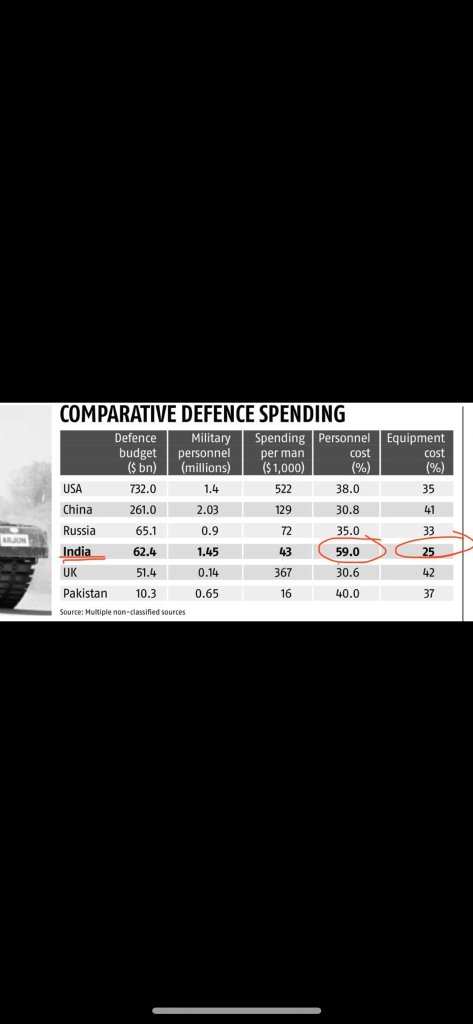

 A new release 0.3.3.9.1 of

 After an unexpectedly short

 Update 11/12/20 Came across this article on the wire which tells how everybody s


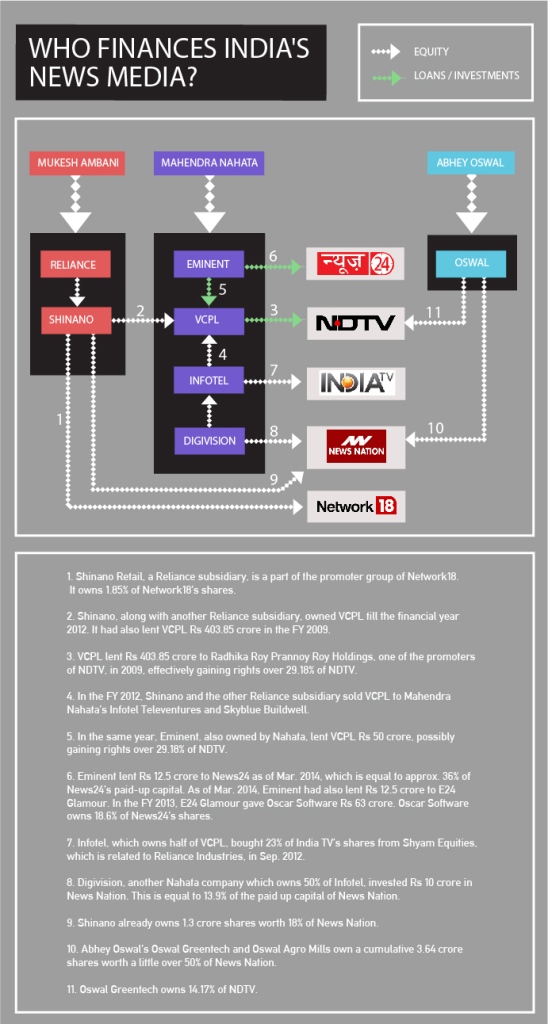
 Akarshan Uppal Reporter, IBN24 Copyright IBN24
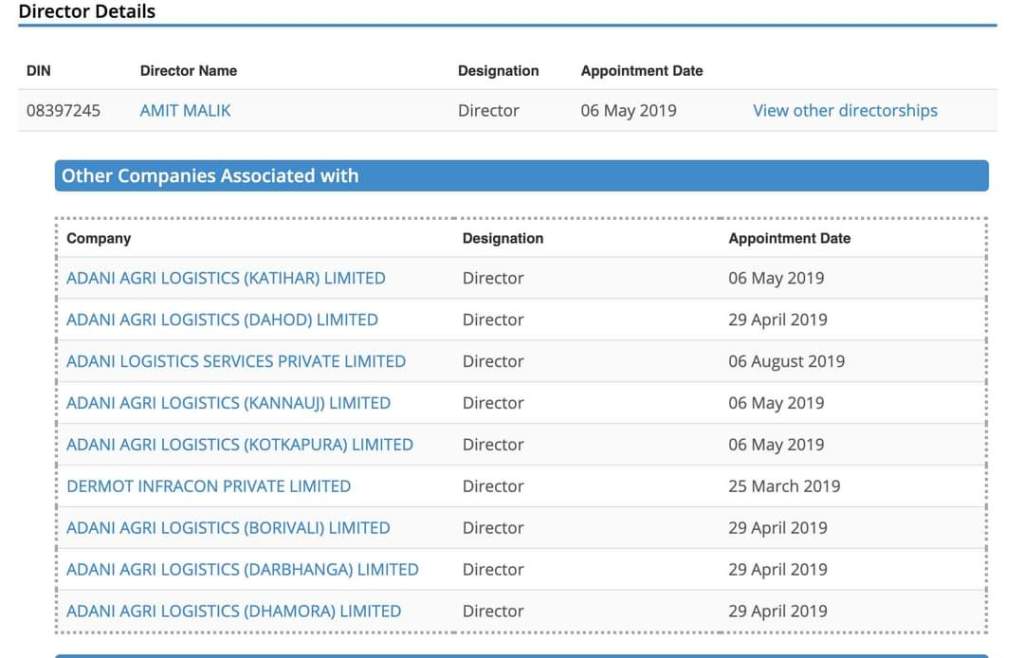


 Once a year folks interested in Netfilter technologies gather together to discuss past, ongoing and
future works. The Netfilter Workshop is an opportunity to share and discuss new ideas, the state of
the project, bring people together to work & hack and to put faces to people who otherwise are just
email names. This is an event that
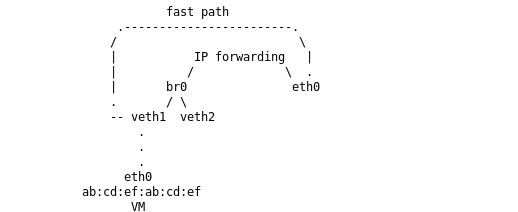 Stefano Bravio commented on several open topics for nftables that he is interested on working on.
One of them, issues related to concatenations + vmap issues. He also addressed concerns with
people s expectations when migrating from ipset to nftables. There are several corner features in
ipset that aren t currently supported in nftables, and we should document them. Stefano is also
wondering about some tools to help in the migration. A translation layer like there is in place
for iptables. Eric Gaver commented there are a couple of semantics that will not be suitable for
translation, such as global sets, or sets of sets. But ipset is way simpler than iptables, so a
translation mechanism should probably be created. In any case, there was agreement that anything
that helps people migrate is more than welcome, even if it doesn t support 100% of the use cases.
Stefano is planning to write documentation in the
 Rewrote my build system in C++.
I used to write build rules in Nodejs, but I figured if my projects are mostly C++ I should probably write them in C++.
I wanted to make it a bit more like BUILD files but couldn't really and ended up looking more C++ than I wanted to.
Seems like key-value struct initialization isn't available until C++20.