Search Results: "mats"

10 January 2007

Miriam Ruiz: A cute toy

One of the most typical religious traditions in Spain, within the Xmas celebrations, is the Kings’ day (”D a de Reyes”), which is celebrated every year on the 6th of January remembering the arrival of the three Kings to bring their presents to baby Jesus. It is quite typical to have presents that day, and one of the things I got this year was an external 2.5′’ HD case with multimedia playing capacity. I also got a 120 Gb 2.5′’ HD for it. The strongest point I had for it was that my brother already has one and it seems to support many file formats and codecs without problem. In my very short experience with it, just a few days for the moment, it has been able to reproduce all the films I have tried. The main drawback is that it only supports VFAT/FAT32 and NTFS partitions, and only 2 different partitions, no more. Thus, I had to cope with NTFS if I wanted to use the whole HD. I created one VFAT partition as big as supported by that filesystem (32 Gb, with a file limit of 4 Gb) just in case I need it when I go to some friends’ house, and another NTFS partition for the rest of the disk. The next point was to be able to read and write to it from my Debian-powered computer. Reading NTFS is no problem at all, as it seems to be built-in in the kernel by default, but for being able to write on it, I had to use ntfs-3g. It seems to work perfect for me, on an Intel-compatible 32bit computer.

Ian Murdock: Best of breed 2.0

Richard MacManus: “Instead of using the entire product suite of a Google or an MSN or a Yahoo, you [should be able to] use the particular apps you like most from not only big players - but small startups too.” I agree wholeheartedly. I’m a big believer in the componentization of the web, as I’ve written about before. Without a way to write independent apps that integrate with each other regardless of where they’re hosted, the future starts to look more and more like the mainframe era (albeit with better graphics). The world needs only five computers (shaping up to be Amazon, Google, Salesforce.com, Windows Live and Yahoo!). However, we need to ensure that these five computers operate more as computing utilities where a thousand flowers can bloom than as centralized monoliths where the only way to integrate is to be assimilated.

9 January 2007

Uwe Hermann: OpenOffice / OpenDocument and MS Office 2007 / Open XML security

Interesting paper from the PacSec 2006 security conference: OpenOffice / OpenDocument and MS Office 2007 / Open XML security (PDF) Not too surprising when you come to think of it, there are tons of possibilities to embed various kinds of malware in the new office document formats. Also, you always have the risk of leaving sensitive metadata in there... If you publish stuff, you better convert to PDF before. But even that might leave sensitive data in the PDF, mind you! Oh, and one nice detail you might enjoy: And that doesn't even describe all of the format (e.g. VBA macros are missing)! No further comment required...

6 January 2007

Russell Coker: document storage

I have been asked for advice about long-term storage of documents. I decided to blog about it because my thoughts may be useful to others, and because if I get something wrong then surely people will correct me. ;)

Many organizations are looking at using computers for storing all documents. This gives savings on the costs of storing paper - the promise of the paperless office is being fulfilled. There are some potential issues about whether a signature in a PDF file that's scanned from paper is valid - but I guess it's the same as a signature on a FAX and everyone seems to accept FAXed contracts.

The technical problem is how to reliably store data long-term. The problem is that all modern methods of storing data will degrade over time. Anything less than engraving a message in stone, gold, or platinum and burying it will have some data loss eventually.

If the documents that need to be archived have no special requirements and if you have a good backup system in place (testing backup media, off-site storage in case of disaster, multiple sets of hardware that can read the backup media in case of hardware failure, etc) then you might be able to just store the documents on a server and include them in the backup plan. The regular backups should cater for replacing media over the long term. If however there is a significant amount of data or the data has confidentiality requirements that preclude having it all online all the time then you need a separate infrastructure for such storage.

Regular backup systems have to deal with files being deleted from storage and files that have their contents changed. For a document archiving system no file will ever be changed once it has been created and no file will be deleted. This allows some simplifications to the backup strategy. For example if you have multiple terabytes of documents backed up by tape and stored off-site you could use CD-ROMs or other media for storing recent changes. It would be very easy for an employee to grab a couple of CDs before rushing out of a burning building, but grabbing a set of tapes (or the correct tape from a large set) may not be possible.

It would be possible to use a tape library system as the primary storage for documents. If a large organization was going to implement this a few years ago that might be a good option. Nowadays storage is getting increasingly large and cheap. Terabytes are available in desktop PCs and hundreds of terabytes are available for server storage. So having the primary document store on a server with a decent amount of space and then making tape backups for storage in secure locations seems viable.

One thing to note about such document storage is that having everything on a server allows a much larger amount of data to be accessed and copied more easily than on paper. Sorting through a billion paper documents and copying the thousand most useful ones would be a difficult task for someone who was involved in industrial espionage. Finding the most useful files when they are indexed on a server should be quite easy and copying a few thousand is also easy (one thousand scanned documents of medium size should fit on a USB memory stick - much smaller than a few reams of copied documents).

Finally documents have to be archived in publicly documented file formats that can be easily read in the future. The PDF specification is well known and there are multiple programs that can display data in such files, another good option for scanned documents is JPEG. Proprietary formats such as MS-Word should never be used, you never know whether you will be able to read them in four years, let alone the seven years for which many documents must be retained or the 20-30 years that some documents must be retained.

26 December 2006

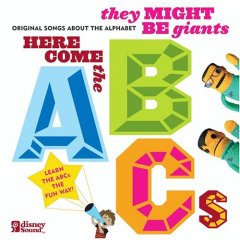
Adam Rosi-Kessel: They Might Be Giants Are Marketing Geniuses

When They Might Be Giants started releasing kid’s albums back in 2002 with “No!”, I didn’t really understand why they had chosen to go in that direction. Two years later, though, I had a kid, and now I realize They are marketing geniuses.
(my kid)
They Might Be Giants made their mainstream debut in 1986. The oddball audience that really got it would have been between 13 and 25 years old at the time (as was I). Most of those folks now have settled down into stable jobs, disposable income (read: can afford to purchase music), and kids. For those of us worried about inculcating our children with an appropriately developed sense of irony to get them through the next century, TMBG is the perfect prescription. We can play our kids these new albums and rest assured that our kids will eventually appreciate Terry Gilliam, Ze Frank, John Belushi, and the like. And learn the alphabet (mp3) (ogg) while they’re at it:
F is far too fussy and only eats with fancy wine
G eats only gourmet but never can decide
H burns food so horrible
all I tastes is smoke
J just likes drinking juice
and K drinks only soda
(Please note the Cake tribute — which is interesting, since Cake was undoubtedly influence by TMBG.) (If you don’t get the joke, it’s “soda.”) The target audience, of course, is still “us” — those of us over 30, who are more likely to actually purchase music rather than copy it. It’s an interesting reversal of the more typical marketing plan which involves getting kids to nag their parents to buy things. It thus makes a lot of sense that TMBG is selling tracks direct online from their website in unencumbered formats — $9.99/album in MP3 format, or $11.99/album as FLAC files. An extra two bucks for lossless audio? Of course I’ll buy that! You should too.

16 December 2006

Holger Levsen: no video homework?

Due to the excellent infrastructure here, four out of five talks are already online at the usual suspects location, and the fifth talk, well, has not been held yet :-)

I expect other formats to be available later today, and then I'll also come up with better filenames and send a mail to the qa-list.

Now off for breakfast!

11 December 2006

Amaya Rodrigo: Frustrating toys

I work at the Ministerio de Administraciones P blicas, the MAP. My main task there is to administer an email cluster for something between 8.000 and 10.000 users, based on free software (LDAP, Postfix, Amavis...) which has been pretty fulfilling so far.

The problem they have is a lot of consultants from external companies that come for big or small projects and they know of no easy way of being able to grant enough permissions to achieve certain tasks without giving away the root password and having to change it every other day. I am one of these external consultants, only I am there for a long term project. I have been there for more than a year and a half now, and our contract was just renovated for two more years. This basically means I am doing my job pretty well.

But a couple of months ago, the company I work for, Alanta, agreed with the MAP on me giving a 12h a training session on sudo. After spending 100 hours in preparing my slides on a sudo workshop (spanish only, sorry), starting from file permissions to ssh public-private key pairs, and ending with sudo, a high amount of stress, as I had to work full time as I prepared this in paralel, I bitterly complained to my boss. (That s when the cleaning started, BTW).

So we had a nice lunch in which I was given a 200 EUR 2GB 2nd Generation Silver Ipod Nano. Which is nice, but taking into account that when I worked for IBM as a certified trainer I made something between 24-60 EUR per hour, depending on the subject, and all the material (slides, exercises, TOC and Trainer material) was already done for me, so I just had to prepare and give my lessons, I felt patronized and a bit insulted, even if I did not expect any compensation for this extra effort that really damaged my (mental) health. Getting presents in exchange for hard work doesn t make sense for me, specially when I can hardly make it to the end of the month, constantly being in (small, to be honest) debt.

But you could be making more money, couldn t you? Yes, sure. But at what price? I like the relaxed work environment and the lack of sexism in my current project. I have plenty of spare time, and my life quality is overall great, I can walk home from work, I am not juiced and then disposed of, despite the punctual stressful periods everyone gets every once in a while (which are rare here, at MAP).

And this thing will never run IpodLinux or Rockbox. I feel like I want to throw it out the window. It lacks support for my favourite music file formats, UTF-8 and hangs up more than MS Windows 95.

Edd Dumbill: Afraid of the POX?

The other day I had was tinkering with that cute little poster child of Web 2.0, Flickr. Looking for a lightweight way to incorporate some photos into a web site, I headed to their feeds page to find some XML to use.Before you read on, don't forget that the XTech 2007 call for participation ends this week. The result was interesting. Flickr have a variety of outputs in RSS dialects, but you just can't get at the raw data using XML. The bookmarking service del.icio.us is another case in point. My friend Matt Biddulph recently had to resort to screenscraping in order to write his tag stemmer, until some kind soul pointed out there's a JSON feed.Both of these services support XML output, but only with the semantics crammed awkwardly into RSS or Atom. Neither have plain XML for public consumption (some is available behind a registration protected API), but do support serialization via other formats. We don't really have "XML on the Web". We have RSS on the web, plus a bunch of mostly JSON and YAML for those who didn't care for pointy brackets.Did we as supporters of XML get it wrong somehow? I think we did. The success of the XML project and the W3C as a unifying forum was seductive, and we felt more bound to the edicts of the W3C than we thought. Our justified love of open standards inadvertently promoted a straitjacketed approach to using XML. XML was felt to need a schema language.What we missed was that settling on schemas for data serialization represented much more of an up-front commitment than most developers could really make. The rise of agile programming techniques further emphasizes the hazards of prematurely freezing a design.Schemas never really came with great evolution or migration strategies.
And of course it didn't help that both DTDs and W3C XML Schema are pretty darn obscure. Somehow we never got the word out, despite the "standalone" XML declaration, that it's OK to spread schema-less XML around.We had of course the Simple XML movement, but it came to little. Other voices pointed the way forward. Walter Perry notably promoted an agenda that required little a priori agreement between communicators, but it gained little ground in common thought. Ironically it took James Clark to push the agenda of developer convenience, with the RELAX NG compact syntax giving us all permission not to think in angle brackets.Meanwhile, busy developers with work to do on the web have created non-XML syntaxes such as JSON and YAML. Though I deliberately closeted myself in XML for a long time, I have come to appreciate the utility of these syntaxes.One of the more intriguing developments is that the Semantic Web crowd, while still very much W3C oriented, have really proved themselves more flexible in their attitude than the XML world at large. RDF/XML is hardly the only acceptable way to approach the throne of Tim, and the man himself threw out XML syntax pretty early on with the development of the N3 scribble format. More recently, the work on GRDDL to scrape semantics from HTML has shown the semweb folks' amenability to outside initiatives such as microformats.Maybe it's not such a bad world, as making an XML mapping of YAML, JSON and friends isn't really very hard. I'd just like to get the message out to web application developers that Plain Old XML is fine by me. I live in hope yet that the rise of REST will hit this home.So while markup has most definitely won on the web, it's a shame XML hasn't yet achieved as much as it could. It's not too late for an injection of pragmatism and a little less constraint.

4 December 2006

Jesus Climent: Rockbox rocks my box.

David. Rockbox just integrated last.fm logging so that you can use it to push plays of your music. And it plays open formats.

3 December 2006

Zak B. Elep: Who moved my sundae?

WTF IS THIS SHIT? Ok, that above would be what a newly-baptized “FOSS advocate-slash-zealot” would say upon seeing Federico Pascual Jr.’s PostScript regarding the FOSS bill. I suppose I could have said that myself a couple of lifetimes ago. But, there is more than meets the eye. While I would like to think of myself as a “FOSS veteran”–believe me, I have still so much to learn about it–I would like to step into the shoes of such a person when approaching an article as sensational as Mr. Pascual’s. Despite what seems to be a most interesting article on the mechanics of government software usage, it fails to address the one particular bit that is just as important as the proposed bill itself: the real Free and Open Source Software. Let me nitpick this article bit by bit:
FREE RIDE: A bill is being pushed in Congress forbidding all government agencies and state-controlled firms from buying and using any of the computer software sold in the market!
Alas, when I first heard of the FOSS bill sometime before September, I also had a bad impression of it. Perhaps I was just too politically allergic at that time (yeah right,) but I tried to adopt a wait-and-see’ approach first and let the dice roll. Perhaps because this bill was to be introduced by a very visible congressman with alleged leftist ties made me feel uncomfortable, but then, so was (and still is) with the current administration. Or perhaps I just felt it wasn’t damn right to legislate FOSS as an end-all solution, preferring instead of presenting is as a process for reforming the local software industry. Looks like first impressions definitely make a difference.
The proposed law to be called “Free/Open Source Software (FOSS) Act of 2006″ commands government offices to use only information and communications software that are given away for free and have no restrictions as to their use. The objectives appear to be to save money for the government and to encourage the making of free (non-commercial) software.
So? What’s wrong with these objectives? FWIW, the early FOSS bill draft did seem to have such a Draconian section as forcing the government and allied offices to use, and use only, FOSS. IMHO that by itself ran against the very fundamental ideal of FOSS: the freedom of choice. Not Hobson’s choice, but real choice. The current bill IIRC now allows this true choice; unless there is an extreme case where FOSS cannot be applied without becoming non-self-sustaining (not to mention self-liquidating,) agencies may implement their infrastructure using FOSS as their primary instrument, with the application of open standards (that is, open document formats, open communications protocols, etc) unifying the disparate components. Perhaps right now, this situation may seem kind of far-fetched, but its not really that far-off, considering what other nations and cities have done (or not done) with FOSS. Munich, Extremadura, Beijing… the list is not yet that long, but its bound to go a long way ;-) Now, while the government may now adopt open standards and open-everything, does not mean that the openness’ forgoes security, either; the government may opt to use well-known encryption protocols and even base their own security infrastructure on them. In fact, they are free to even look inside the source of these well-known standards, to study them, and to branch off new implementation that may even change the way these standards work. In fact, even without this bill in place, the government can participate in the production and development of FOSS!!! Wait a minute, wasn’t I supposed to defend this bill? Eh, well. I suppose this bill is good and all, but like I said earlier, there are those first impressions made by the parties involved in the making of this bill which unsettles me. IMHO I would rather see applications of this first in key cities (the happy works in Munich and in Extremadura are no accident, believe me) which in turn, would allow both local the national government to see just exactly how this FOSS magic works. Then, when the observations have been made, the papers are in, and the workers get hired, then, maybe, we’ll have a nation where FOSS can be mandated as a very strong preference, but never a forced one. Its all about growing up, really. I’m being reminded of Tom DeMarco’s The Deadline, where a newly-retrenched guy from a telco literally lands into the fantastic job of his life, managing an entire nation of software engineers and architects to develop several killer apps within a year (or so; raid you nearest Book Sale and be lucky ;) Its a great experiment: when it succeeds, you’ll be the first to be present, but when it fails, you’ll be the first to be nowhere.
But I can also hear in the background a call to an unholy war against multinationals whose popular software run virtually all maybe 95 percent? of the computers of the world.
Now this is a low blow. Maybe partly because of the prevailing images of the advocates–geeks and leftists, my, what a c-c-c-combo!–is what drives Mr. Pascual to make this point. But really, multinationals are not the main concern. FWIW, FOSS is multinational in nature: it is even multi-denominational and multidisciplinary. FOSS is one of the things that make anonymous people like you and me Internet superheroes. FOSS connects the Internet’s tubes and keeps away the trucks. FOSS makes the Internet serious business, yet also drives them crazy. The Linux distros that I have worked, am working, and continue to work on, are all multinational: Debian and Ubuntu. People from all over the world, from all 7 continents, participate and work on what would arguably be the biggest software distribution the human world may ever produce, freely, regardless of motivation or goal. I suppose all the folks involved have only one common goal, and that is to see a work created for the benefit of the community by the community. I suppose the background howl comes from somewhere altogether, but its hardly just from FOSS. FOSS is the epitome of what is truly multinational, and one thing that is not truly controlled by any one single person, corporation or not.

23 November 2006

Russell Coker: Linux support by politicians

In two days time we are having a state election in Victoria (Australia). For this election there is only one party with policies that are positive towards free software, that is the Australian Greens. The policy documents include an IT policy (note that the IT policy is on a link that may change while the policy documents is a permanent link).

The Greens IT policy has three sections under the goals, one of those is about open standards (ensuring that government data is in documented file formats for use by all with no need to purchase software) and another is about Open Source which directly advocates the use of free software by government agencies. The principles part of the document is also very positive towards free software and explains why it's beneficial for Australia.

Any Greens representatives that are elected on the weekend have to abide by the party policy, that means that they must advocate the use of open standards and Open Source in government use and vote accordingly when any legislation related to computers is being considered!

Some of the members of the Greens are also members of the free software community, we were able to explain to the other party members the benefits for Australia and for social justice in the use of free software, and thus we reached an agreement about on a policy that suits people who use free software - not to benefit such people, but because of the benefits to society of the use of free software.

I think it would be good if members of the free software community in other countries would also join their local Green party and promote similar policies. While there is no direct connection between the Green parties in different countries the aims are very similar and therefore the arguments that persuaded Green members in Australia can be expected to work reasonably well in other countries (I am happy to provide advise in this regard via private mail if requested).

Also it would be good if other parties could be persuaded to have similar policies. If you want to help the free software community but for some reason you don't support the Greens then please join a party that matches your views and advocate an IT policy that promotes free software.

Currently people who want to vote for free software in the Victorian election have no option other than to vote for the Greens. As a member of the Greens I am happy to document this as a reason to vote Green. But as a member of the free software community I would like to see other parties adopt policies that promote free software.

The Greens adoption of a policy that promotes free software was largely driven by the issue of social justice. We believe that every Australian citizen has the right to access all public government data. If government data is available in proprietary formats then access is only granted to people who can afford the latest software ($800 for a full copy of MS Office) and hardware to run it ($600 at least). We believe that unemployed people who receive free Linux computers from Computerbank should be able to access government data. We also believe that when FOI laws apply in 30 years time all current data should be accessible, there's no chance that whatever version of Office is being sold in 30 years time will read current MS file formats, and there's no guarantee that MS will even be in business then. File formats for which there are authoritative open-source programs written to use them will be accessible in 30 years time and more.

21 November 2006

Benjamin Seidenberg: How to set up an encrypted filesystem in several easy steps

Introduction: This guide will walk you through the creation of an encrypted filesystem using LUKS. LUKS is the Linux Unified Key Setup and is a standard format for linux hard disk encryption. It has a lot of interesting features such as using a key on a removable disk, keeping multiple keys, and more. This is the technology used by the Debian Installer (since etch beta3) and is quickly becoming a standard in the linux world. Who this guide is for: This guide is for anyone who wants to secure their data using an encrypted partition. While it is tailored to users of Debian, it should apply elsewhere in the linux world. This guide is intended to add an encrypted device to an existing install, if you are contemplating a fresh install, the Debian Installer will configure encrypted filesystems for you. Ready? Then let’s begin Prepare the partition (or other block device) to be used This can be a partition on disk, a logical volume in LVM or some other block device. For this example, I created a 40 GB volume in LVM. Install cryptsetup This utility provides an interface into the code in the linux kernel that handles encrypted block devices. It’s packaged for Debian in both testing and unstable, stable has an older version and I don’t know whether or not it will work in the same manner.
apt-get install cryptsetup Set up encryption on the partition: This initializes the partition for encryption and sets the initial key. People not using LVM will want a path like /dev/hdxY where hdxY is the partition on their hard drive that will be used for encryption. Important! This command will wipe out anything on that partition
cryptsetup luksFormat /dev/mapper/asimov--vol-crypto_test
WARNING!
========
This will overwrite data on /dev/mapper/asimov–vol-crypto_test irrevocably. Are you sure? (Type uppercase yes): YES
Enter LUKS passphrase:
Verify passphrase:
Command successful.
Congratulation! You now have an encrypted block device! However, it’s not quite ready to use. Open and map the device: This opens the device (prompting for a passphrase) and maps it to a block device in /dev/mapper. This can be used like any other block device, and the encryption/decryption is transparent. The first path (/dev/mapper/asimov–vol-crypto_test) is the encrypted partition you set up earlier. The name (crypto_test) is the name of the volume, the block device will be mapped as /dev/mapper/<name>.
cryptsetup luksOpen /dev/mapper/asimov--vol-crypto_test crypto_test
Enter LUKS passphrase:
key slot 0 unlocked.
Command successful.
Create the filesystem of your choice on the device: This is just like setting up any other block device. I use ext3, others may prefer different formats.
mkfs.ext3 /dev/mapper/crypto-test Add the definition to /etc/crypttab: /etc/crypttab is a list of encrypted devices that are mapped on boot. The format is <map name> <path to device> <key file> <options> Since we’re using a passphrase, we don’t have a key file.
crypto_test /dev/mapper/asimov--vol-crypto_test none luks Create a mount point: This is where the encrypted device will be mounted on your filesystem.
mkdir /mnt/crypto_test Add the device to /etc/fstab: /etc/fstab tells the computer where to mount different devices on the filesystem. The format is
<source path> <mount path> <type of filesystem> <options> <mount options options> <dump frequency> <fsck pass> More information can be found by reading man 5 fstab. You will want to add a line like this: /dev/mapper/crypto_test /mnt/crypto_test ext3 defaults 0 2 somewhere in this file. Update the initial ramdisk. The initial ramdisk is used to jumpstart the boot process and load modules for the kernel that it can’t load itself (such as drivers for block devices that contain the modules it uses). I’m not sure if this is needed or not, but I wanted to be on the safe side.
update-initramfs -u -k all Congratulations Now your encrypted filesystem is completely set up! Reboot the system and you will see it prompt you for your passphrase during the boot cycle. Once the password has entered, the encryption is completely transparent. If you want to use your encrypted filesystem before rebooting, simply type mount /path/to/mountpoint.

19 November 2006

Junichi Uekawa: Debian BOF at Kansai Open Source.

Yesterday we had a BOF at Kansai Open Source.Around 30people in the Kansai region gathered to meet.From Tokyo, Iwamatsu, Yamane, and I went there to represent Debian JP.

17 November 2006

MJ Ray: Want a Pint? Give us your prints!

As if the underhand registration of children wasn't bad enough, this NO2ID newsletter describes another way to encourage people to submit to scanning:
"The scheme which is backed by the Home Office was first trialled in Yeovil but plans are afoot to expand the system to Coventry, Hull, Sheffield, Leeds, Gwent, Nottingham, Taunton and possibly Swindon. Drinkers must have their thumbprints scanned and supply their name, address and date of birth to enrol onto the system before they are allowed to enter licensed premises taking part in the scheme." "If you are in any of the towns affected, especially Yeovil, and are willing to do something then send an e-mail to phil@no2id.net (please put "pub fingerprinting" in the Subject).Don't get depressed, don't give in and get a home-brew kit - get angry and do something!" "PS. If anyone knows a pub that would like to take NO2ID beer mats, Newcastle NO2ID has created some with our logo on the front and key counter-arguments on the back, ideal for starting the discussions of the scheme that we need."
Not even our beer is safe from the ID State!

31 October 2006

Russell Coker: religious requirements for free software developme...


Relgions commonly require contributions to charitable causes and helping other people. Developing free software without expecting a reward seems to fit that criteria.

If my primary religious belief (atheism) turns out to be incorrect then I am certain that whatever deity might exist would want me to do Free Software development.

It seems to me that denying people the ability to contribute to Free Software development or forcing them to use proprietary software is therefore an infringement of their rights to freely practice their religion.

Prisoners should be permitted to do Free Software development. Kevin Mitnik was prevented from using computers while incarcerated and after being released (which is wrong in so many ways). It has been recently announced that pagan prisoners in the UK are being given time off prison duties for haloween. I think that allowing free software development for people who believe that it is a religious requirement deserves at least the same protection.

Also government agencies should not require the use of MS file formats or IE for communication.

PS Day 24 of the beard is depicted above.

30 October 2006

Axel Beckert: BarCamp Zurich -- Resume

The BarCamp Zurich 2006 is over. On the way there I thought about what I would do during time slots with no interesting talks. But when I tried to make up my personal schedule, I noticed that I rather would have the opposite problem: Too many interesting talks at the same time… Well, to many interesting talks at all, although I only went to tech talks and left out the biz talks. I first went to the Podcasting & Co. talk by Timo Hetzel, since I never heard or made a podcast, but was curious about podcasts in general. Besides statistics and rankings he spoke about where people listen to podcast (most listeners seem to do that during commuting), what people like in podcasts, why companies podcast, etc. And that a very big share of all podcast listeners use iTunes as podcast client and except juice (never heard of it before) all other podcast clients seem to be irrelevant. My conclusion: I haven’t missed anything not having listened to or made podcasts neither do I need to listen or make podcasts in the future. They’re irrelevant. To me. :-) Then I had to choose between the talks AJAX@localhost (PDF) by Harry Fuecks and Realtime Collaborative Text Editing and SubEthaEdit by the Coding Monkeys. I heard about realtime collaborative editing once know that it’s a challenging task for the developer. I also know what AJAX is (and that I would only use or recommend it for bells and whistles, but not for content in general), but “AJAX@localhost” sounded like writing normal applications using AJAX. It sounded interesting and evil at the same time. I had to go there! ;-) Others had similar expectations after reading the talk’s title, so I was quite surprised that it was about something completely different, namely about debugging AJAX on the localhost but under conditions usually only appearing if you’re running AJAX application not from localhost but from somewhere on the net: You may have different lags with every request, so some requests may reach the server before others, which may screw up the whole AJAX application, if the developers didn’t think about it and only tested it on localhost. (Hence the talk’s title…) My conlusion: I will use and recommend AJAX even more seldom, since there seem to be even more design misconceptions than I thought before. But I’ll once have a look at the Webtuesday meeting, he mentioned. For the third time-slot, I didn’t need long to decide where to go: I already knew a little bit about Microformats and I wanted to know more. Tag Trade also sounded interesting, but the second part of the talk’s title, Paid Learning sounded like business and so I had no scruples to cold-shoulder that talk. I probably didn’t learn anything really new in the microformats talk, but my knowledge about microformats is now more concrete, and after talking with Cédric Hüsler later during a break, I would even trust myself to start and define a new microformat. Then I went to the HG Caféteria together with Gürkan and two German guys. While waiting in the queue, we were talking about our jobs and our favourite Linux distributions. I got some rhubarb pie and a rum truffles, assuming that the Caféteria uses no alcohol in their products like all other SV restaurant I know. But this one seemed to have quite a lot of alcohol, since it felt like my breath was burning… Well, this resulted in my second SV feedback form submission… Next I went to Alex Schröder’s talk about multilingual websites, Oddmuse and the Emacs Wiki, although also the talk A-Life about simulating evolution sounded promising. Alex asked the listeners about their experiences with multilingual websites and showed what Oddmuse offers as partial solution to the general multilingualism problems. But regarding the comments from the auditorium, there probably won’t be a perfect solution until computers can translate perfectly… The next talk I visited was Gabor’s talk about his master thesis Organizing E-Mail which resulted in a soon to be released Mozilla Thunderbird extension called BuzzTrack. From the other concepts he showed, I found Microsoft’s SNARF (Social Network and Relationship Finder) and IBM’s Thread Arcs most interesting as well as the fact that there is no e-mail client seems to have a majority at all. Directly after Gabor I had my own talk about Understanding Shell Quoting, so I also couldn’t go to Adrian Heydecker’s talk about Learning with Hypertext and Search Engines. I had only about three and a half listeners of whom several to my surprise where here because they didn’t know what “shell quoting” is. I really didn’t expect that. But that seems to be one of the differences between a BarCamp and a Linux Conferences: People come here to see something new, something they haven’t heard about before. On Linux events most people come, because they already heard about some special topic and want to know more or learn something about it. On Linux event my shell talks usually were attracting many visitors while at a BarCamp, talks presenting an idea, a concept or a tool seem to much more interesting for the attendees. So for the next BarCamp I perhaps exhume my Website Meta Language talk which never seemed to hit the nerve of Linux event attendees, since it tried to “sell” a different concept of generating website than most were used to. At least one listener excepted the talk to be named “shell escaping”, but IMHO escaping is only one quoting technic and it’s not only used for quoting. But perhaps I should take the word “escaping” in the title though for the next time. Happily most of the listeners seem to have learned something new from the talk and Silvan Gebhardt was really happy about his new knowledge about ssh ~ escapes, although I mainly talked about how to quote them than how to use them. :-) During the last slot I visited the session about the upcoming BarCamp Alsace 2 and the yet to be planned BarCamp Rhine, a BarCamp to be held on a ship traveling from Basel in Switzerland down the Rhine, stopping in Strasbourg, Karlsruhe, Rhein-Main-Area and perhaps even Cologne and Amsterdam. Contrary to my initial thoughts, the day was over very fast and I had no single boring minute during the BarCamp. Wow! After we’ve been kicked out of the building by ETH janitors, we joined again at the Bar N-68. On the way there I met Urban M ller who attended BarCamp Zurich, too. We talked quite a lot and it was very interesting to see behind the scenes of e.g. map.search.ch. Later I joined the French speaking table, talking with Gregoire Japiot from WineCamp France and Alex Schröder. Around 9pm I left the N-68 as one of the last BarCampers, tired but with new knowledge, new ideas, new acquaintances and a new hobby: BarCamping. What a luck that BarCamps aren’t that often, otherwise I couldn’t afford this new hobby. ;-) As a relaxing end I met with Alex Schröder and Christophe Ducamp on Sunday morning for brunch in the restaurant Gloria in the Industriequartier. When we were leaving the Gloria I noticed their book board with a lots of BookCrossing books and I took “The Da Vinci Code” with me, since I saw the movie and people were telling me that the book is much better. I’ll see…

29 October 2006

Junichi Uekawa: Open Source Conference Tokyo 2006 Fall, Debian booth.

Yesterday Tokyo Area Debian Meeting held a Debian Booth.Gotom, Iwamatsu, Yamane, Komuro, Eto, Kobayashi and I attended.We had Yoshinoya beef bowl for lunch.We had several Debian/SuperH evaluation boards and a Zaurus and several Debian/MacBook on display.Yamane, Kobayashi, and I presented in a BOF session, where we talked about Translation, IceWeasel update, and about what we do in our Monthly Meeting.

24 October 2006

Per Olofsson: useful firefox extensions

Some useful Firefox, uhm, I mean IceWeasel, extensions. You can find them at the usual place (Tools->Extensions->Get More Extensions).
Oh, but maybe I shouldn't use Fireweasel anyway for political and technical reasons. And it's a memory hog you know, but my recent memory upgrade really gave it a boost. Maybe I'll switch someday, but not right now.

22 October 2006

Junichi Uekawa: Summarising this month's Tokyo Debian meeting.

Yesterday we had another Tokyo Debian meeting. It is a monthly meeting held in Tokyo, Japan.approx. 23 people attended.Kobayashi, kashiwagi, kurasawa, Maeda, Sutou, Muto, Yamane, Nokubi, Komuro, Takasugi, Eto, Yoshida@Itabashi, mhatta, Kitahara, gotom, nakano, ysjj. Matsuyama, Kawachi, David Smith, Charles Plessy, et moi.Report follows:

Kenshi Muto: Tokyo Debian monthly meeting, October 2006

Yesterday, I had a chance to talk about Extremadura i18n meeting at Tokyo Debian monthly meeting. This meeting was organized by Junichi Uekawa and wonderfully 20 or more people came and filled the meeting room (awesome!), thanks! My paper is included in this PDF [in Japanese]. I picked up and spoke some themes from what we discussed at Extremadura; i18n task force, Pootle system, and language-pack/tdeb. PO-based translation has an advantage and a disadvantage. The tools support PO are mature and PO is very useful for the short messages. But using it for documents, such as manuals or Web pages is not so useful. Especially translating to Japanese sometimes add/delete/reform sentences. Some attendees suggested that we would always use the original XML (or something) format for translating/reviewing and have PO format in the central database. Masayuki Hatta pointed the license of translation. For example, Japanese is completely different from English, both words aren't always correspond 1 on 1... Translators use their creativity power. He said translators would have a copyright for their translation instead of original author. When I talked with Warren Togami was Fedora US leader last month at Tokyo, he said his project asked to agree "translation license agreement" to all translators. If we Debian or Debian-JP apply a central translation system like Pootle and use its translation memories, it's time to consider making similar license. Although current idea of Tdeb is still under the development, most attendees loved that idea rather than language-pack. For me, the goal of this meeting was not only speaking my experience report but recruiting more people for i18n/l10n working also. I'd like to recommend Nabetaro-san for next i18n meeting attendee instead of me, and Noritada Kobayashi for next of next. I strongly suggested attending next Debconf to them also. They are hardly working for Debian i18n/l10n in Japan. I hope attending such meetings expands their personal connections and motivations. There were two other sessions at the meeting. Matsuyama-san demonstrated creating Flash on Debian by using ming, and Junichi talked about profiling apt-get by oprofile tool. Both topics were interesting for me.

Next.

Previous.