After my server that has hosted my blog for some years had given out its last breath (second motherboard failure), I decited it was time for a change. And not just server change, but also change in the blog engine itself. As I now focus on Python and Django almost exclusively at work, it felt logical to use some kind of Django-based blog or CMS. I tried django-cms and mezzanine and ... Mezzanine is so fast and simple, that I simply stopped looking.
After simply following the tutorial and creating a skeleton project, I had a ready-to go site with all the CMS features, incuding a blog. I just had to change a few settings to have the blog module be the home page of the site, change site settings for the title and Google Analytics settings and such and tweak the theme a bit to my liking.
This was my first real exposure to a Bootstrap design. I must say - it is very simple to understand and modify if your needs fit within its limits. For example, I wanted to remove the left sidebar and expand the main content block to fill that. All I had to do was to remove the div element with class "left-sidebar span-2" and change the class of the main content part from "span-7" to "span-9". To do that I simply copied the templates/base.html file from mezzanine default templates and modified it. The information from django-debug-toolbar showed me what files were used in rendering the page.
But the feature that really got me hooked was the Wordpress import. Using a simple management command I was able to feed into Mezzanine instance the XML export file from Wordpress. It created blog posts, categories, comments, static pages and even redirects from Wordpress permalinks to Mezzanine permalinks. It was not flawless - there were a few issues:
I had to set the COMMENT_MAX_LENGTH setting to something higher than the default 3000 chars to accomodate some longer comments
As I failed to clean up the comments before exporting, comments marked as spam in Wordpress still got into the XML and showed up in the new blog without being marked as spam there
Some comments (mostly spam) had a much longer user name than 50 char maximum. Even with a --noinput setting that should have truncated the names, the import errored-out as Django passed the long strings to the Postgress database which promptly refused to store too much data or to truncate it. I chose to work around that by increasing the column size in Postgress.
One of the posts did not have a set title, so the import took the whole first paragraph as the title and then failed to create a good slug from it. This caused the redirect creation to fail. I fixed this by editing the XML file and setting a title.
It looks like the slug creation for the redirect and the actual slug are slightly different. Some permalink redirects for posts with non-ascii symbols in the title failed to link up correctly
After that was done it was a relatively straightforward process of picking up the code and data and deploying it to a Django-friendly hosting service. There is a plenty of good competition out there, most now offer a simple one-click Django installation, so I just created a simple Django skeleton via their web interface and then replace what they generated with my app while keeping their settings as local_settings.py . I should probably write a bit more details about the process. After I create a custom fabric file for this.
It is quite a strange feeling to have a Mezzanine blog that responds faster from a shared server half a continent away, compared to a Wordpress on dedicated server in the same room
There are a few features that I am still missing - most notably draft post autosave. That has bitten me hard while writing this post :P Also a Twitter digest post feature. But on the bright side - that is a great motivation to write such features, preferably in a portable way that other people can use too :)
I was aware of the #718533 bug, which happens when you have a software RAID with anything higher than 3.2.0 (mine is RAID 1 with 2 disks). At least that has been my case since I tried to upgrade, hence I was delaying upgrades again and again.
Unfortunately today things went worse when I tried to plug my USB 3.0 device on the system:
Oct 20 17:52:51 busgosu kernel: [20799.672127] xhci_hcd 0000:02:00.0: Timeout while waiting for address device command
Oct 20 17:52:51 busgosu kernel: [20799.876136] xhci_hcd 0000:02:00.0: ERROR no room on ep ring
Oct 20 17:52:51 busgosu kernel: [20799.876148] xhci_hcd 0000:02:00.0: ERR: No room for command on command ring
Oct 20 17:52:51 busgosu kernel: [20800.080148] usb 2-2: device not accepting address 2, error -12
Oct 20 17:52:51 busgosu kernel: [20800.080202] xhci_hcd 0000:02:00.0: ERROR no room on ep ring
Oct 20 17:52:51 busgosu kernel: [20800.080209] xhci_hcd 0000:02:00.0: ERR: No room for command on command ring
Oct 20 17:52:51 busgosu kernel: [20800.080221] xhci_hcd 0000:02:00.0: ERROR no room on ep ring
Oct 20 17:52:51 busgosu kernel: [20800.080227] xhci_hcd 0000:02:00.0: ERR: No room for command on command ring
Oct 20 17:52:51 busgosu kernel: [20800.080235] hub 2-0:1.0: couldn't allocate port 2 usb_device
Oct 20 17:52:53 busgosu kernel: [20801.568169] xhci_hcd 0000:02:00.0: ERROR no room on ep ring
Oct 20 17:52:53 busgosu kernel: [20801.568181] xhci_hcd 0000:02:00.0: ERR: No room for command on command ring
Oct 20 17:52:53 busgosu kernel: [20801.568190] hub 2-0:1.0: couldn't allocate port 2 usb_device
And of course the device didn't show up. As there's not much relevant stuff about this issue on the googlesphere, thought it may have been solved. And turned out that I was right: upgrading fixes this, and now the device works again.
I wish I had known about that quote from Michael Graves before now. I would have perhaps had an answer to some recent visitors to makespace.
There are regular scheduled visits to makespace where people can come and view our facilities, and perhaps start the process of becoming a member if they decide they like what they see.
However, we sometimes get people who just turn up at the door. If a member feels charitable they may choose to give a short tour rather than just turn the person away. I happened to be in one Friday afternoon recently varnishing a folding chair when two such people rang the doorbell. There were few other members about and because watching varnish dry was dull I decided to be helpful and do a quick tour.
I explained that they really ought to return for a scheduled event for a proper tour, gave the obligatory minimal safety briefing, and showed them the workshops and tools. During the tour it was mentioned they were attending a certain local higher education establishment and were interested in makespace as an inexpensive studio.
Before they left I was asked what I was working on. I explained that I had been creating stools and chairs from plywood. At this point the conversation took a somewhat surreal turn, one of them asked, well more demanded, who my principle influence had been in designing with plywood.
When I said that I had mainly worked from a couple of Google image searches they were aghast and became quite belligerent. They both insisted I must have done proper research and my work was obviously influenced by Charles and Ray Eames and Arne Jacobsen and surely I intended to cite my influences in my design documents.
My admission that I had never even heard the names before and had no design documents seemed to lead to a distinctly condescending tone as they explained that all modern plywood design stemmed from a small number of early 20th century designers and any competent designers research would have revealed that.
At this point in proceedings I was becoming a bit put out that my good deed of showing off the workshop had not gone unpunished. I politely explained that I designed simply by generating a requirement in my head, maybe an internet search to see what others had done, measuring real things to get dimensions and then a great deal of trial and error.
I was then abruptly informed that my "design process was completely invalid and there were well established ways to design furniture correctly and therefore my entire design was invalid" and that I was wasting time and material. I thanked them for their opinion and showed them out, safe and well before anyone gets any ideas.
I put the whole incident out of my mind until I finished writing up the final folding chair post the other day. It struck me that perhaps I had been unknowingly influenced by these designers. It was certainly true I had generated ideas from the hundreds of images my searches had revealed.
I did some research and it turns out that from the 1930s to the 1950s there were a string of designers using plywood in novel ways from the butterfly stool by Sori Yanagi through formed curvy chairs by Alvar Aalto and eero saarinen.
While these designers produced some wonderfully iconic and contemporary furniture I think that after reviewing my initial notes that two more modern designers Christian Desile and Leo Salom probably influenced me more directly. Though I did not reference their designs beyond seeing the images along with hundreds of others, certainly nothing was directly copied.
And there in lies an often repeated observation: no one creates anything without being influenced by their environment. The entire creative process of several billion ape descendants (or Golgafrincham telephone sanitisers if you prefer) is based on the simple process of copying, combining and transforming what is around us.
In my case I am privileged enough to live in a time where my environment has grown to the size of the world thanks to the internet. My influences, and therefore what I create, is that much richer but at the same time it means that my influence on others is similarly diminished.
I have joined the maker community because I want to create. The act of creation teaches me new skills in a physical, practical way and additionally I get to exercise my mind using new techniques or sometimes things I had forgotten I already knew. I view this as an extension of my previous Open Source software work, adding a physical component to a previously purely mental pursuit.
But importantly I like that my creations might provide inspiration for someone else. To improve those chances in the wider world I force myself to follow a few basic rules:
Release
Possibly one of the hardest things for any project. I carefully avoided the word finish here because my experience leads me to the conclusion that I always want to improve my designs.
But it is important to get to a point in a project where you can say "that is good enough to share", this is more common in software but it really applies to any project.
Share
If your aim here is to improve your society with your contribution sharing your designs and information is important. I think there is nothing better than someone else taking one of your designs and using it and perhaps improving on it, remember that is what you probably did in one way or another better to make it less hard for that to happen.
Ensure your design files are appropriately licensed and they are readily accessible. I personally lean towards the more generally accessible open source licences like MIT but the decision is ultimately yours.
Licencing is important, especially in the current copyright happy society. I know it sounds dull and no one takes that seriously, right? Sorry, but yes they do and it is better for you to be clear from the start, especially if there is a software component to your project. Oh one personal plea, use an existing well known licence, the world simply does not need another one!
Write about it
The blog posts about the things I have made sometimes take almost as much time as the creation. The clear recording on my thoughts in written and photographic form often gives me more inspiration for improvements or other projects.
If someone else gets pleasure from the telling then that can only be good. If you do not do this then your voice cannot be heard and you wasted an opportunity to motivate others.
Feedback
If you do manage to get feedback on your creation, read it. You may disagree or not be interested for the current project but the feedback process is important. In software this often manifests as bug reports, in more physical projects this often becomes forum or blog comments.
Just remember that you need a thick skin for this, the most vocal members of any society are the minority with inflammatory opinion, the silent majority are by definition absent but there is still useful feedback out there.
Create again
By this I simply mean that once you are satisfied yourself on a project move on to the next. This may sound a little obvious but once you have some creative momentum it is much easier to keep going project to project than in you leave time between.
Also do not have too many projects ongoing, by all means have a couple so you do not get stuck waiting for materials or workshop time but more than three and four and you will never be able to release any of them.
Those students were perhaps somewhat misguided in how they stated their opinions, but they are correct that in the world in which we find ourselves we are all influenced. Though contrary to received wisdom those influences are more likely to be from the internet and our peers in the global maker society than historical artists.
This week's lesson on the Arte y cultura en circulaci n: crear y compartir en tiempos digitales course talks about piracy and the circulation of culture, a topic that over time has been debated over and over. And a topic, yes, that can always lead to interesting discussions.
This time, we are requested to choose one among ten ideas among the media groups' discourse on what piracy is and means for the "cultural industry". There are tons of material written already on several of those ten lines (i.e. piracy disincentivates creativity, or two that can be seen as two faces of the same argument, If a consumer can have free access to cultural products, he will stop spending his money on them and Every time a consumer has access to an illegal copy, the industry loses a sale), and some are quite obvious (i.e. Piracy makes job positions be lost... Just look at the amount of people the unauthorized distribution industry feeds! Or possibly, Piracy is a prosper industry that gives money to people distributing illegal products Of course, that is true. The problem is, what causes said products to be illegal to begin with? Should they be so?). Some other ideas talk about harsher penalties and ways to punish illegal copying in order to drive actors out of that sector (and into the... void?)
So, I chose item #4: Cultural products have a high cost because their production is complex (and a tag could be made, linking complex with expensive). I think this item can lead to a long discussion as to what does this complexity and cost mean.
Some cultural products do require quite a bit of investment, yes. Others don't. How do content producers make the jump to produce expensive works?
If I am a new programmer/artist/writer/screenplayer/whatever, most likely, my products will be not very complex or expensive. I will start small. And if I excel at my work, somebody will look at me and, in some way, become my patron, my sponsor. Being a sponsor might mean that, based on the results of my good work, I could get hired as a software developer at a large company, or an editorial company would buy the patrimonial rights of my book/music (be it for a fixed fee or for a percentage of sales), or whatever. But the leap is not made quantically A newcomer to the cultural scene will at first, most likely, have a hard time selling his products.
At first, it takes convincing just getting people to take a shot at looking at your work ( Hey, please take a look at my program and tell me what you think about it! , Would you be interested in listening to my latest song? And those two are by far ahead of the first attempts where the interactions would more likely be Turn off that $#^#!^ computer, it's well past bedtime or stop murdering that guitar, I'm having a headache ). Maybe the toughest part is to get people to agree to read/hear your work. And there, you start into a continuum Selling your CDs while performing on the street, then getting to play to a bar, then getting somebody to want to produce (maybe even "discover"!) you. Publish some short stories in your school magazine, then in a "From our audience" section in a larger magazine, then a collective book, your self-published book, yet-unwritten books by contract... The same story over and over again, in each different field.
Ok, yes, but... This logic succession still leaves space for the Important Producers with the Mighty Big Pockets for the most wanted/largest productions, right? And were unauthorized distribution (piracy) to be the norm (as it currently is, dare I say), wouldn't they stop producing an important portion of cultural works?
I'd be tempted to say so. However, a different actor comes into play. When Mighty Big Pockets comes into play, they no longer worry only about getting money from each cultural creation, but from all derived uses of it. And the cultural creation industry (when seen as an industry) goes very much hand in hand with the advertising, marketing industries They end up blending with each other.
So, the biggest best sellers will most likely have a hit from illegal copiers. Books are still a great business, but hey An even better business is (usually) movie making. And when you make a movie out of a great story, you will surely link some advertising into it (or at the very least, push advertising/product pushing campaigns to go after it). And there, illegal distribution actually helps the money circle to grow stronger. In the early 1990s, the link between dinosaurs and carbonated drinks was a top seller (because Pepsi was a Jurassic Park sponsor). Although I have always loathed the madness around the World Cups (and basically anything that involves football of any kind), I can perfectly remember several of the theme songs for most of the world cups played during my lifetime.
So, in short... No. Illegal distribution does marginally little harm to the money income to the cultural business, at any level. And where it does get some direct harm, it increases the money flux given the auxiliary channels.
I ve just been given a set of Hive Bluetooth speakers by MobileZap (see this link for all their Bluetooth speakers) [1].
The speakers charge by a micro-USB cable so I started charging them in my car immediately after collecting them. To connect them to a phone or other Bluetooth device you just press the Bluetooth button on top and get the phone to be visible and scanning for devices, they identify themselves as Hive , after that they just work. My first test of using them was playing Ingress and the quality of the sound was impressive, I had thought that the Ingress recommendation to use headphones was due to the risk of annoying other people or alerting other players, but the quality of the sound was impressive and the internal speakers of a phone can t do it justice.
After getting home I did some tests listening to music. For watching music videos it didn t work so well as the sound was too far removed from the video, but the audio quality was very good. I listened to Vow by Garbage (a good benchmark for stereo sound) and even though the Hive speakers are only 16.5cm wide I could still notice the stereo effect when they were about 1.5m away from me. The audio quality didn t compare well with my Bose QC-15 headphones, but for affordable and portable speakers it was quite good and an obvious improvement over the speakers that are built in to any phone I ve used.
According to the Bluetooth Wikipedia page the range of a class 2 device is 10m and the range of a class 3 device is 1m. When my Samsung Galaxy Note 2 is talking to it I get a reliable range of about 5 meters and a mostly working range of 6 or 7 meters (sound randomly drops out and gets choppy). It could be that other phones would support a longer range due to having a higher transmission power (either class 1 or being closer to the limits of class 2) and a more sensitive receiver. But it doesn t seem likely that a 5m range is going to be a problem.
Volume and Quality
The speakers are rated at 5 Watt, when running at maximum volume (both through the phone volume setting and the volume control on the speakers) the sound is reasonably distortion free, as good as can be expected from playing an MP3 that s not compressed with the highest quality. Sound Meter [2] reports the sound volume as almost 85dB on a Galaxy S3 and as almost 100dB on a Galaxy Note 2, that would be somewhere between the volume of a busy street or alarm clock and the volume of a subway train or blow dryer which seems like a reasonable description, I find it very unpleasant to be within a meter of the speakers at maximum volume. With the typical amount of background noise in my house I can play music on the Hive speakers at one end of my house and hear it clearly at the other end.
These speakers are more than capable of supplying the music for any party I d want to host or attend. I m not really into wild parties, but I think that anyone who has a one room party would be more than satisfied with the Hive speakers. Obviously the sound quality of portable speakers in a box that s 16.5cm wide and 6cm high isn t going to equal that of a full size set of speakers, but I think that hardly anyone who attends a party would expect better sound quality than the Hive speakers can provide. The aim of such speakers is to be portable, not really expensive, and to provide good sound quality within those constraints. I think that they meet such aims well.
Over the years there have been many occasions when I have used a Thinkpad to provide the music for a party and found it to be quite loud enough. My current Thinkpad is a T420 which can produce 75dB according to my Galaxy S3 or 85dB according to my Galaxy Note 2. So it seems that I only really need about 10dB less than the maximum volume of the Hive speakers.
Appearance
The designers obviously made an effort on the appearance of the device. They have gone with the Hive concept and used hexagons everywhere. It really looks nice.
Unfortunately when I took the photo there was some dust on it which didn t look bad to the eye but caught the camera flash. But with a matte black device there s always the problem of light colored dust. Even with a bit of dust it still looks great as a set of speakers, the dust just detracts from the appearance in photos.
Line In
One of the features I looked for was an audio line input so I could connect it directly to a non-Bluetooth device. I m assuming that this feature works as it s something that s difficult to stuff up when designing such a product, but I haven t got around to testing it. Once I started using the device I just found that I didn t have a real need for that feature.
One thing that it might be useful for is PC desktop speakers that are powered by a USB port on the monitor. Currently I have a bearable (but not great) set of speakers for each PC and I don t need to change anything. But having the option of another set of speakers is very handy in case I suddenly need to make hardware changes.
Other People s Reviews
When I review a product I generally try and get opinions from random other people if possible. My mother and my mother-in-law were both impressed by the Hive speakers and expressed interest in owning a set. My mother-in-law was particularly interested as she uses her phone to listen to radio stations from outside Australia (I m going to get her onto Aldi for cheap 3G data ASAP so she can listen to Internet radio when travelling).
Generally the impression that other people have of this device seems to be very positive. It seems that Bluetooth speakers aren t just a Geek toy.
Conclusion
While I m very impressed by this product, at this stage I m not sure whether I would pay for this one or something cheaper if I was paying for it. MobileZap offers a range of other products that look appealing at lower price points. It really depends on how much I use it.
I ve just got a Makerbot Replicator 3D printer working and I ve found the Hive speakers very useful for the purpose of drowning out it s noise. If I keep doing that sort of thing then I ll get enough use out of the speakers to justify the price.
On a regular basis, I find myself the odd-man-out when it comes to talking
about how to work with Python on Debian systems. I'm going to write this and
post it so that I might be able to point people at my thoughts without having
to write the same email in response to each thread that pops up.
Turns out I don't fit in with the Debian hardliners (which is to say, the
mindset that pip sucks and shouldn't exist), nor do I fit in with the Python
hardliners (which is to say apt and dpkg are out of date, and neither have
a place on a Development machine).
I think our discourse on this topic has become petty and stupid in general.
Let's all try to step back and drop a bit of the attitude.
pip doesn't suck, and neither does apt.
The truth is, both sides are wrong. As with any subject, the real
answer here is much more nuanced than either side presents it. I'm going to
try and present my opinion on this, in the way that both my Pythonista self
and my Debianite self see the issue. Hopefully I can keep this short, to
the point, and caked with logic.
The case for dpkg (the Debianite in me)
In defense of dpkg and apt, imagine having to install python-gnome2
on all your systems when you install. It'd be hell on earth.
Imagine having a user try to do this. It's insane to assume that
end-users will be using pip for this purpose.
pip is fun and all, but it's also installing 100% untrusted code to your
system (perhaps as root, if you're using pip with sudo for some reason),
and hasn't been reviewed for software freeness, which is something Debian
(and Debian users) take seriously. This isn't even to mention the hell that
pip wreaks on dpkg controlled files / packages.
Try to remember how much of your system running (yes, right now) is running
because of Python or Python modules. Try to imagine how much of a pain in
the ass it'd be if you couldn't boot into GNOME to use nm-applet to connect
to wifi to pip install something. I'm sure even the most extreme pip'er
understands the need for Operating System level package management.
Debian also has a bigger problem scope - we're not maintaining a library
in Debian for kicks, we're maintaining it so that end user applications may
use the library. When we update something like Django, we have to make sure
that we don't break anything using it (although, to be honest, the fact that we
package webapps is an entire rant for later) before we get to update it to the
newest release.
Hell, with a few coffees, I could automate the process of releasing a .deb
with a new upstream release, 100% unattended. I won't, however, since this is
an insane idea. Let's go over a brief list of things I do before uploading a
new package:
Review the entire codebase for simple mistakes.
Review the entire codebase for license issues.
Review the entire codebase for files without source, and track down
(and include source for) any sourceless files (such as pickle
files, etc).
Get to know the upstream, get to know open bugs, write something using
the lib, in case I need to debug later.
Install the package.
Test the package.
Work out any Debian package issues (this is easy).
Now, a brief list of things I do before I update a package:
Review the changes between the last uploaded version (in diff format, if
it's sane, otherwise get the VCS and review), ensure all the above are still
OK.
Review for Debian-local issues (such as how it will upgrade, using
piuparts, and adequate, etc).
Check to make sure it won't break any reverse dependencies.
Review for bugfixes that I might need to bring back to the stable release.
Figure out if I should (or even can) backport the package, if API is
stable.
Review for bugs (upstream or in Debian) that I need to mention in the
debian/changelog.
Clearly, this isn't a quick-and-dirty task. It's not a matter of getting a
package updated (technically), it's a much more detailed process than that.
This is also why Debian is so highly regarded for its technical virtuosity,
and why the
ISS decided to deploy Debian in space,
despite other commercial distros such as Red Hat, or Ubuntu, and
community distros, such as Fedora or Arch.
It's also not Debian's job to package the world in the archive. This is an
insane task, and it's not Debian's place to do it. We introduce libraries
as things need them, not because we wrote some new library that someone
may find slightly useful at some point in the future. maybe.
Upstream developers and language communities (not only Python here) tend to
lose sight of why we're doing this in the first place, which
is our users. This isn't some sort of technical pissing contest to see who can
distribute the software in the best way. Debian-folk always keep end users
as our highest priority.
I quote the
Debian Social Contract, when I say
that Our priorities are our users and free software. No one's trying to
get developers to use dpkg to create software. In fact, as you'll see
below, I actively discourage using system modules for development.
The case for pip (the Pythonista in me)
In defense of pip, the idea that Debian will keep the latest versions of
packages is insane. The idea that we can keep pace with upstream releases is
nuts, and the idea that every upstream release on pypi is ready to ship is
bananas. b-a-n-a-n-a-annas.
As a developer, I don't want to support every release, and I surely don't want
other people depending on some random snapshot.
Often times, I'll put stuff up on pypi as a preview, or to release often, and
solicit feedback without having to give out instructions on using a git
checkout (it's also easier to have them try a version from pypi so I can
cross-ref the git tag to reproduce issues when they file them)
pypi is easy, ubiquitous and works regardless of the platform, which means
less of my development time is spent packaging stuff up for platforms I don't
really care about (Arch, Fedora, OSX, Windows), even though I value
feedback from users on those systems. The effort it takes to release something
is limited to python setup.py sdist upload, and it's in a place (and in a
shape) that anyone can use it without having 10 sets of platform-local
instructions.
Even ignoring all the above, when I'm writing a new app or bit of code,
I want to be sure I'm targeting the latest version of the code I depend on,
so that future changes to API won't hit me as hard. By following
along with my dependencies' development, I can be sure that my code breaks
early, and breaks in development, not production. Upstreams also tend to not
like bug reports against old branches, so ensuring I have the latest code from
pypi means I can properly file bugs.
Lastly, I prefer virtualenv based setups for development, since I'm usually
working on many things at once. This often means version mismatches in
libraries, which brings in API changes (another whole rant here as well).
I don't want to keep installing and uninstalling packages to switch between
the two projects, and using a chroot(8) means a lot of overhead and that it's
disconnected from my development environment / filesystem, so I resort to
virtualenv to isolate my Development environment.
Final notes
I don't want to keep arguing about this. Just accept that the world's a big
place and that there exist use-cases that both apt and pip need to exist
and work in the way they're working now. At the very least, try and understand
there exist smart people on both sides, and no one is trying to screw anyone
over or keep their own little private club to themselves. Hopefully, going
forward, we can make sure that the integration between these two tools gets
better, not worse.
Help make this dream a reality. Contribute to a productive tone, not a
destructive one. In short:
Use pip without sudo always. Don't tell people to use sudo.
Use apt or dpkg when deploying system-wide.
Understand people are going to package, and they will be more concerned
about software using your library then keeping your library up to date.
Understand Debian Developers and package maintainers have to do a lot of
work when updating or sponsoring an upload.
Understand upstream developers can't be bothered to fix every issue
with every release (release early, release often) with some snapshot
you introduced into unstable.
Use pip and virtualenv in development setups, so we can upgrade your
app when we upgrade the lib.
I seem to be adhering to Beckett's approach recently but for some reason, after my previous stool attempts, despite having a functioning design I felt I had to do just one more iteration.
Going back to a previous concept of having five legs instead of three while this did not improve the rotational problems with the 12mm thick material, it did make the design more stable overall and less prone to tipping.
The five legged solution realised in 18mm plywood resulted in my final design for this concept. As my friend Stephen demonstrates the design is pretty solid even for those of us with a more ample frame. There are now a couple of them in use at the space alongside the three legged earlier versions.
I was finally satisfied with the result and thought I was done with furniture making for a while. My adorable wife then came up with a challenge, she wanted a practical foldable chair her requirements were:
Must be robust enough to cope with guests of all sizes
Use as little storage space as possible.
Not ugly.
Inexpensive enough they can be given as gifts.
Things for individual humans to sit on raised off the floor, or chairs as we call them, have been around for a long time. My previous research for the stool indicated that chairs have a long history with examples still surviving from the ancient egyptians. From this I assumed there would be nothing novel in this project and to quote the song it's all been done before
Given this perspective my research started with an image search for "folding chair". The results immediately showed there were two common shapes. Either the chair base was formed with a pair of linked X shapes with the seat across the top, or an A frame style where the seat is across the centre.
My initial thoughts were to replicate the IKEA style A frame design until I noticed that some designs were made from a single sheet of timber with a small number of profile cuts. I searched for pre-existing design files but found none, perhaps I had found something novel to do after all.
Some quick measurements of chairs in shops (and more weird looks, mainly from my family) suggested 900mm is generally the highest a chair ought to stand. I selected a popliteal height of 420mm as a general use compromise which is a bit less than the 430mm of most mass produced chairs. I also decided there should be a front to rear drop across the seat which ought to improve comfort a little.
Material selection was based upon what I had to hand which consisted of a couple of sheets of structural plywood (1220x606x18mm temperate softwood - probably spruce although not specified) which had not become stools yet. Allowing for edge wastage and tool width this gave me a working area from a sheet of 1196x582mm.
I sketched the side view of the chair numbering the three parts. I decided part 1 would be 1000mm total height with top and bottom cross braces 80mm high, assuming the 900mm tall target, the A frame apex would be at 820mm height.
If we assert that the apex is immediately below the top cross brace on part 1 this gives 920mm at which point we have two sides of a right angled triangle (820 and 920) from which we can calculate the top angle is 26 . This also means part 2 will be 840mm long with the same 820 height this gives an angle of 10 .
I did the maths for the seat triangle using the 36 angle and 420mm popliteal height. Having experienced how flexible 18mm plywood was in the face dimension I decided to make the frame sides 50mm wide leaving, after 6mm tool path widths, enough space for a 358mm wide seat .
Once the dimensions were decided the design went pretty quickly producing something that looked similar to the designs I had seen earlier.
Generating toolpaths for this design proved challenging with the CAM software we had available, mainly because arranging multiple "inner" and "outer" cuts along the same path and having the tabs line up was obviously not an anticipated feature.
Things had been going far too well for me and during the routing operation our machine decided to follow an uncommanded toolpath excursion mid job (it cut a dirty great hole through the middle of my workpiece where I did not want it) ruining the sheet of material.
Fortunately, once factory reset and reconfigured, the machine ran the job correctly the second time although we still do not know why it went wrong. The parts were cut free of their tabs and hinges fitted.
The resulting design worked with a couple of problems:
I had made an error in my maths and added when I should have subtracted, as a result the seat slopes back to front which is not very comfortable.
The chair feels very wide and tall.
The front face (part 1) flexes alarmingly between the seat and the ground when subjected to large loads.
So time for a second iteration, this time I selected a thicker plywood to reduce the bend under large loads (OK already, I mean me). After shopping around for several days I discovered that unlike 12mm and 18mm thick plywood 24mm thick is much harder to find at a sensible price especially if you want it cut into 1220x606 sheets from the full 1220x2440.
I eventually physically went to Ridgeons and looked at what they actually had in the warehouse and got a price on a sheet of brazilian elliotis pine structural plywood for 43.96 which they cut for me while I waited. Being physically present also gave me the opportunity to pick a "less bad" sheet from the stack much to the annoyance of the Ridgeons employee for not just taking the top one.
This time I reduced the apex height by 30mm, the length of part 1 by 80mm. I also reduced the frame width by 10mm relying on the increased thickness of the plywood to maintain the strength. In area terms it is actually an increase in material (50mm*17.7mm = 885 against 40mm*22.80 = 912). I also included rebates for the top hinges within the design allowing them to be mounted flush within the sheet width.
The new design was cut (without incident this time) and the edges rounded off. I also added some simple catches to keep the seat and back inline while being transported.
While this version worked I had made a couple of mistakes again. The first was simply a radius versus diameter error on the handles which meant too much material was removed from a high stress area causing increased bending.
The second error was a stupid mistake that where I had worked the latch holes in the seat to the wrong side of my measure line meaning the apex angle was 35.5 not the expected 33.6 which meant the backrest felt "too far forward"
The third version rectified those two errors and improved the seat front curve a little to further reduce the unneeded material in the back rest.
The fabrication of this design was double sided allowing for the seat hinge to be fully rebated and become flush and also adding some text similar to the stools.
This version still suffers from a backrest that is a bit too far forward and my sons complain it makes them sit up too straight. The problem is that the angle of the front face (23.6 ) means that to move the rest back 20mm means the piece needs to extend another 50mm beyond the frame apex which would probably make the chair feel tall again.
I guess this is a compromise that would take another iteration or two to solve, alas my wife has declared a moratorium on more chairs unless I find somewhere to put the failed prototypes other than her conservatory.
One other addition would be a better form of catch for transport. The ones in version 2 work but are ugly, magnets inset into the frame have been suggested but not actually implemented yet.
In conclusion I think I succeeded with the original brief and am pretty pleased with the result. A neatly folding chair that can be stacked simply by having a pile of them and are easy to move and setup.
The price per chair is a little higher than I would like at 22 ( 11 for timber, 5 for hinges and screws , 5 for varnish and 1 for tool wear) plus about 2 hours labour (two sided routing plus roundover takes ages)
DebConf 13 report (by Andreas Tille)
General impression
I'm beginning my DebConf report in an unofficial
"Scenic Hacklab" right at the edge of the lake in Yverdon. This
is the right place to memorise the last days. When I started from
this place cycling to Le Camp 12 days ago I was full of great
expectations and what should I say - the reality has even beaten
these.
Once it comes about comparing DebConfs even if it is an unfair
comparison due all the differences my secret long term favourite was
Helsinki very closely followed by Argentina and also very closely
followed by all the other great DebConfs I joined (and I joined all in
Europe). Would Le Camp be able to beat it? The short answer is: Yes,
it is now my favourite DebConf while I think I do not suffer from the
last-Debconf-was-the-best-DebConf-syndrome (and I realised there are
others
thinking the same).
As you might probably know I'm a bit addicted to swimming. While
Helsinki had admittedly the better conditions I was at least able to
fix the distance issue using my bicycle. (Hey, those Le Camp
photographers did a great job in hiding the fact that you can not
actually touch the lake right from the meadow of Le Camp.) Being able
to have my bicycle at DebConf scored some extra points. However, the
really great view of the lake, the inspiring "Scenic Hacklab" which
was my favourite place has bumped DebConf13 at first place in my
personal ranking.
So it comes quite natural to say: "Kudos to the great organisation
team!" They did a Swiss-like precise work and perfectly succeeded in
hiding any problems (I assume there were some as always) from the
attendees so everything went smooth, nice and shiny for the attendees.
The local team was even precise in setting up great weather conditions
for DebConf.
While saying thanks to the local team I would like to also explicitly
thank Luca Capello who has quite some share that this DebConf was
possible at all (while I have to decrease my DebConf score one point
because he was not really there - Luca to bad that you were not able to
come full time!) Also thanks to Gunnar and Gannef who helped remotely
(another score down because I were missing them this year as well).
Even if it was my favourite DebConf I was not able to work down my
todo list fully (which was not only uploading one package per day
which I at least statistically fullfilled). But that's probably a
general feature of todo lists anyway. One item was definitely done:
Doing my daily swimming BoF. I actually was able to do the other
parts of the triathlon which was skipped by Christian and have done in
summary about 150km cycling with 3500m elevation and estimated 7-8km
swimming (0m elevation ;-)). Considering the great view at sunrise
over the lake I was not hating my "Senile bed
escape" disease too much (I was every day waking up at sunset) -
it was simply a great experience. I will never forget seeing water
drips glimmering like gold inside the morning sun while seeing the
Alps panorama in the distant. I hope I was able to help all
interested swimmers with the DebConf Beach Map
which was just a by-product of my activities in DebCamp.
Speaking about OSM: I was astonished that the area was way less
covered than I expected. Thanks to several DebConf attendees the
situation became better and the map does not only show random trees in
the wild but also the tracks leading to these. (Remark: It was no
DebConf attendee who is responsible for plastering the map with single
trees.) While I had my mapping focus basically close to the edge of
the lake I was also able to even map my very
own street. :-)
I clearly remember one specific mapping tour when I was invited by the
DPL: He convinced me to join him on a bicycle tour and since I was
afraid to get fired I joined him instead to keep on hacking. Also
Sorina was brave enough to join us on the tour and she did quite well.
(Sorina, do you remember the agreement about your work on the installer?
;-)) Lucas described the tour as: going uphill on only asphalted roads.
Sorina and me were witnessing the mighty DPL powers when we left the
wood around Le Camp to reach the described road: The asphalt was just
put onto the road - no doubt that it was done on the immediate demand of
mighty DPL. :-)
DebCamp time was flying like nose dive and a lot of known (and unknown)
faces arrived at Le Camp. What I really liked a lot this year was that
several really young children has pulled down the average age of DebConf
attendees. I clearly remember all the discussion one year ago what to
do about children. As always the issue was solved in a typical Debian
way: Just do it and bring your children - they had obviously a great
time as well. I think the youngest child was 2 months and the oldest
"child" above 20. ;-) Actually Baptiste Perrier did great in making the
C&W party a success and had obviously a nice time. (I wished my son
would have been able to come as well but he needs to write his
bachelor s thesis in physics. :-()
It was nice to see the kids using all playing facilities and
communicating with geeks. Also I would like to point out that even the
very young attendees had their share at the success of DebConf: Just
think of the three "bell ringing assistants" who helped me ringing the
bells for lunch and dinner. I've got this cool job from Didier in the
beginning of DebCamp. I must say having some real bells ringing is by
far nicer than just the "lunch / dinner starts in 10 minutes" from IRC
bot. The only thing I did not understand was that people did not
considered ringing the bells at 8:00 for breakfast as a good idea.
Regarding the food in general I would also like to send kudos to the
kitchen: It was tasty, freshly prepared, regional food with a good
change rate. I really liked this. Extra points for having the chance
to sit outside when eating.
Talks
But lets have a look into the conference programme. I'd really
recommend watching the videos of the talks Bits
from the DPL (video)
and Debian
Cosmology (video).
I considered both talks as entertaining and interesting. I also
really hope that the effort Enrico Zini started in Debian
Contributors (video)
will be successful.
I had some talks and BoFs myself starting with Why
running a Blend (video)
and I admit that (as usual) the number of attendees was quite low even
if I think there is some proof (see below) that it is interesting for
way more people who should consider working more "blendish" in their
team. Do you know how to recruit one developer per year and relax the
man power problem in your team? Feel free to watch the video.
We have confirmation that ten DDs of our team have considered to join
Debian only because Debian Med exists. Admittedly biology and
medicine are really leaf topics inside the Debian universe. So if
even this topic that has a very tiny share of the Debian users is able
to attract this level of attention - how many more people could we win
for multimedia, games, GIS and others?
So if you feel you are quite overworked with your packaging and you
have no time this is most probably wrong. The amount of time is
basically a matter of priorities you set for your tasks. Try to put
some higher priority onto using the just existing Blends tools I
explained in my talk to attract more users and developers to your team
and by doing so spread the workload over more people. It works, the
prove was given in my
main talk. So before you start working on a specific
package you should wonder who else could have an even stronger
interest to get this work done and provide him with some additional
motivation and help to get the common goal done.
The interesting thing is that my BoF about How
to attract new developers for your team (video)
- which was a simple report about some by-product of the Blends work -
made it into the main talk room and got way more attention. For me
this is the proof that the Blends concept itself is probably badly
perceived as something like "a few outsiders are doing damn specific
stuff which is not really interesting for anybody else" instead of
what is really is: Smoothing the way from specific upstream
applications to the end user via Debian.
Once you see the video
of this BoF you can observe how my friend Asheesh Laroia became
more and more excited about the Blends concept and admitted what I
said above: We should have more Blends for different fields. Funnily
enough Asheesh asked me in his excitement to talk more about Blends.
This would have been a really good suggestion ten years ago. At
DebConf 3 in Oslo I had my very
first talk about Blends (at this time under the name "Debian
Internal Projects"). I continuously kept on talking about this
(MiniDebConf
Peking 2005, DebConf
5, Helsinki (video),
DebConf
7, Edinburgh (video),
DebConf
8, Mar del Plata (video),
DebConf
9, C ceres (video),
MiniDebConf
Berlin 2010 (video
in German),
MiniDebConf
Paris 2010 (not video recorded),
DebConf
11, Banja Luka (video)
... and these are only (Mini)DebConfs my talks page is full
of this topic)
and every new year I try different ways to communicate the idea to my
fellow Debianistas. I'm wondering how I could invent a title +
abstract avoiding the term Blends, put "Git", "release" and "systemd
versus upstart" in and being able to inform about Blends reasonably by
not becoming to off topic with the abstract.
I also registered the Debian
Science round table. I admit we were lacking some input from
remote via IRC which used to be quite helpful in the past. The
attendees agreed upon the handling of citations in debian/upstream
files which was invented by Debian Med team to create even stronger
bounds to our upstream developers by giving their work extra reward
and providing users with even better documentation (see my summary in
Wiki).
As usual I suggested to create some Debian Science offsprings like
"Debian Astronomy", "Debian Electronics", "Debian Mathematics",
"Debian Physics" etc. who could perfectly leave the Debian Science
umbrella to get a more fine grained structure and a more focused team
to enhance the contact to our users. Unfortunately there is nobody
who volunteers to take over the lead for such Blends. I have given a
short summary about this BoF on the Debian
Science mailing list.
In the Debian
Med meeting I have given some status report. No other long term
team members were attending DebConf and so I gave some kind of
introduction for newcomers and interested people. I touched also the
DebiChem topic which maintains some packages that are used by
biologists frequently and so we have a good connection to this team.
Finally I had registered three BoFs in Blends I'm actually not (or not
yet) active part of. My motivation was to turn the ideas I have
explained in my
main talk into specific application inside these teams and helping
them to implement the Blends framework.
In the first BoF about Debian GIS I have shown the usual team metrics
graphs to demonstrate, that the one packaging team Pkg-OSM is in danger
to become MIA. There are only three persons doing actual uploads. Two
of them were at DebConf but did not joined the BoF because they do not
consider their contribution to Pkg-OSM as a major part of their general
Debian work. I will contact the main contributor David Paleino about
his opinion to move the packages step by step into maintenance of Debian
GIS packaging team to try to overcome the split of two teams that are
sharing a good amount of interest. At least if I might become an
Uploader for one of the packages currently maintained by Pkg-OSM I will
move this to pkg-grass-devel (which is the name of the packaging team of
Debian GIS for historical reasons). The attendees of the BoF have
considered this plan as sensible.
Moreover I talked about my experiences with OSGeo Live - an Ubuntu
derivative that tries to provide a full tool chain to work on GIS and
OSM problems ... basically the same goal as Debian GIS has just
provided by the OSGeo project. I'm lurking on OSGeo mailing list when
I asked explicitly I've got the answer that they are working together
with Debian GIS and are using common repository (which is IMHO the
optimal way of cooperation). However, it seems that several
protagonists of OSGeo Live are underestimating the resources provided
by Debian. For instance there was a question about Java packaging
issues but people were not aware about the existence of the
debian-java mailing list. I was able to give an example how the
Debian Med team managed to strengthen its ties to BioLinux that
is also an Ubuntu derivative for biologists. At our first Debian
Med sprint in 2011 we invited developers from BioLinux and reached
a state where they are using the very same VCS on Alioth where we are
maintaining our packages. At DebConf I was able to upload two
packages where BioLinux developers did certain changes for enhancing
the user experience. My "work" was just bumping the version number in
changelog and so we did profit from the work of the BioLinux
developers as well as they are profiting from our work. I plan to
dive a bit more into Debian GIS and try to strengthen the connection
to OSGeo Live a bit.
The next BoF was the Debian Multimedia meeting. It was nice that the
current leader of Ubuntu Studio
Kaj Ailomaa joined the meeting. When I was explaining my ideas about
cooperation with derivatives I repeated my detailed explanation about
the relation with BioLinux. It seems every topic you could cover
inside Debian has its related derivative. So to me it seems to be
quite natural to work together with the developers of the derivative
to join forces. I actually consider a Blend a derivative done the
right way = inside Debian. The final work for the derivers that might
be left for them is doing some shiny customising of backgrounds or
something like this - but all the hard work could and should be done
in common with the relevant Debian team. My dream is to raise such
relevant teams inside Debian ... the Blends.
Finally the last BoF of this series was the Debian Games meeting. As
always I presented the team metrics graphs and the Debian Games team
members who attended the BoF were quite interested. So it seems to be
some unknown fact that team metrics are done
for several teams in side Debian and so I repeat the link to it for
those who are not yet aware of it. As a result of the BoF Debian
Games team members agreed to put some more effort into maintaining
their Blends tasks. Moreover Miriam Ruiz wants to put some effort
into reviving Debian Jr. Regarding Debian Jr. there was an
interesting talk
about DouDouLinux - in case you might want to watch the video I'd
recommend skipping the first 30min and rather watch the nice live
demo. There was also an ad hoc BoF about Debian Jr scheduled to bring
together all people interested into this cute project and Per Anderson
volunteered to take over the lead. I have given a
summary about this specific BoF at the Debian Jr list.
For some other talks that I'd regard as remarkable for some reasons:
I'd regard the talk "Debian-LAN"
by Andreas Mundt as some hidden pearl because it did not got a lot
of attention but after having seen the video I was quite impressed -
specifically because it is also relevant for the Blends topic.
Memories
I also liked "Paths
into Debian" by Moray Allan (and I was only able to enjoy the
latter talks thanks to the great work of the video team!) because it
also scratched the same topic I was concerned about in my
mentoring talk. Related to this was in my opinion also "Women
in Debian 2013" were we tried to find out reasons for the lack of
woman compared to other projects and how to overcome this issue.
Besides the talks I will probably never forget
two specific moments that make DebConf so special. One of these
moments is recorded on an image that clearly needs no words - just
see Geert hovering over the grass.
Another strong moment in my personal record was in the DebConf Newbies
BoF "First
time at DebConf" that unfortunately was not recorded but at least
for this statement it would have been very great if we would have some
reference better than personal memory. Aarsh Shah a GSoC student from
India suddenly raised up and said: "Four months ago I was not even
aware that Free Software exists. Now I'm here with so many people who
are totally equal. If I will tell my mother at home that I was
standing in the same queue where the Debian Project Leader was queuing
up for food she will never believe me." He was totally excited about
things we are regarding as normal. IMHO we should memorise moments
like this that might be part of the key to success in cultures, where
Debian is widely unknown and very rarely in use.
Amongst these not scheduled great moments the scheduled day trip was also
a great thing. I had a really hard time to decide what tour I might
join but ended up in the "long distance walking (or should I say
running) group". Inspired by the "running Bubulle" who was flashing
between the walking groups we went uphill with 5.4km/h which was a nice
exercise. Our destination the large cliff was an exciting landscape and
I guess we all enjoyed the dinner organised by the "Trout cabal". ;-)
So I had a hard time to leave Le Camp and tried hard to
make sure my memories will remain as long as possible. Keeping some
signs attached to my bicycle, conserving the "Scenic Hacklab" sign
for my private "scenic hacklab @ home" was one part. I also have cut
some branches of the Buxus sempervirens in Le Camp and have put them
in my garden at home (where I create some hedgerow from places where
I spent some great time). These will probably build a great part of
the hedgerow ...
Thanks for reading this longish report.
Looking forward to see you all in Germany 2015 (or earlier)
Andreas.
When it comes to provide redundant services, several options are available:
The service can be hosted behind a set of load-balancers. They
will detect any faulty node. However, you need to ensure that this
new layer is also fault-tolerant.
The nodes providing the service can rely on IP failover to
share a set of IP using protocols like VRRP1 or CARP. The IP
address of a faulty node will be assigned to another node. This
requires all nodes to be part of the same IP subnet.
The clients of the service can ask a third-party for available
nodes. Usually, this is achieved through round-robin DNS where
only working nodes are advertised in a DNS record. The failover
can be quite long because of caches.
A common setup is a combination of those solutions: web servers are
behind a couple of load-balancers achieving both redundancy and
load-balancing. The load-balancers use VRRP to ensure redundancy. The
whole setup is replicated to another datacenter and round-robin DNS
is used to ensure both redundancy and load-balacing of the datacenters.
There is a fourth option which is similar to VRRP but relies on
dynamic routing and therefore is not limited to nodes in the same subnet:
The nodes advertise their availability with BGP to announce the
set of service IP addresses they are able to serve. Each address is
weighted such that IP addresses are balanced among the available nodes.
We will explore how to implement this fourth option using ExaBGP,
the BGP swiss army knife of networking, in a small lab
based on KVM. You can grab the
complete lab from GitHub. ExaBGP 3.2.5 is needed to run this lab.
Environment
We will be working in the following (IPv6-only) environment:
BGP configuration
BGP is enabled on ER2 and ER3 to exchange routes with peers and
transits (only R1 for this lab). BIRD is used as a BGP
daemon. Its configuration is pretty basic. Here is a fragment:
First, in , we declare the routes that we want to export to our
peers. We don t try to summarize them from the IGP. We just
unconditonnaly export the networks that we own. Then, in , R1 is
defined as a neighbor and we export the static route we declared
previously. We import any route that R1 is willing to send us. In ,
we share everything we know with our pal, ER3, using internal
BGP.
OSPF configuration
OSPF will distribute routes inside the AS. It is enabled on ER2,
ER3, DR6, DR7 and DR8. For example, here is the relevant part
of the configuration of DR6:
Web nodes
The web nodes are pretty basic. They have a default static route to
the nearest router and that s all. The interesting thing here is that
they are each on a separate IP subnet: we cannot share an IP using
VRRP2.
Why are those web servers on different subnets? Maybe they are not in
the same datacenter or maybe your network architecture is using a
routed access layer.
Let s see how to use BGP to enable redundancy of those web nodes.
Redundancy with ExaBGP
ExaBGP is a convenient tool to plug scripts into BGP. They can
then receive and advertise routes. ExaBGP does the hard work of
speaking BGP with your routers. The scripts just have to read routes
from standard input or advertise them on standard output.
The big picture
Here is the big picture:
Let s explain it step by step:
Three IP addresses will be allocated for our web service:
2001:db8:30::1, 2001:db8:30::2 and 2001:db8:30::3. Those are
distinct from the real IP addresses of W1, W2 and W3.
Each web node will advertise all of them to the route servers
we added in the network. I will talk more about those route
servers later.
Each route comes with a metric to help the route server
choose where it should be routed. We choose the metrics such that
each IP address will be routed to a distinct web node (unless
there is a problem).
The route servers (which are not routers) will then advertise the
best routes they learned to all the routers in our network. This
is still done using BGP.
Now, for a given IP address, each router knows to which web node
the traffic should be directed.
Here are the respective metrics announced routes for W1, W2 and
W3 when everything works as expected:
Route
W1
W2
W3
Best
Backup
2001:db8:30::1
102
101
100
W3
W2
2001:db8:30::2
101
100
102
W2
W1
2001:db8:30::3
100
102
101
W1
W3
ExaBGP configuration
The configuration of ExaBGP is quite simple:
A script is entailed to check if the service (an nginx web server)
is up and running and advertise the appropriate IP addresses to the
two declared route servers. If we run the script manually, we can see
the advertised routes:
$ python /lab/healthcheck.py --config /lab/healthcheck-nginx.conf --start-ip 0
INFO[healthcheck] send announces for UP state to ExaBGPannounce route 2001:db8:30::3/128 next-hop self med 100announce route 2001:db8:30::2/128 next-hop self med 101announce route 2001:db8:30::1/128 next-hop self med 102[...]WARNING[healthcheck] Check command was unsuccessful: 7INFO[healthcheck] Output of check command: curl: (7) Failed connect to ip6-localhost:80; Connection refusedWARNING[healthcheck] Check command was unsuccessful: 7INFO[healthcheck] Output of check command: curl: (7) Failed connect to ip6-localhost:80; Connection refusedWARNING[healthcheck] Check command was unsuccessful: 7INFO[healthcheck] Output of check command: curl: (7) Failed connect to ip6-localhost:80; Connection refusedINFO[healthcheck] send announces for DOWN state to ExaBGPannounce route 2001:db8:30::3/128 next-hop self med 1000announce route 2001:db8:30::2/128 next-hop self med 1001announce route 2001:db8:30::1/128 next-hop self med 1002
When the service becomes unresponsive, the healthcheck script detect
the situation and retry several times before acknowledging that the
service is dead. Then, the IP addresses are advertised with higher
metrics and the service will be routed to another node (the one
advertising 2001:db8:30::3/128 with metric 101).
This healthcheck script is now part of ExaBGP.
Route servers
We could have connected our ExaBGP servers directly to each
router. However, if you have 20 routers and 10 web servers, you now
have to manage a mesh of 200 sessions. The route servers are here
for three purposes:
Reduce the number of BGP sessions (from 200 to 60) between
equipments (less configuration, less errors).
Avoid modifying the configuration on routers each time a new
service is added.
Separate the routing decision (the route servers) from the
routing process (the routers).
You may also ask yourself: why not use OSPF? . Good question!
OSPF could be enabled on each web node and the IP addresses
advertised using this protocol. However, OSPF has several
drawbacks: it does not scale, there are restrictions on the allowed
topologies, it is difficult to filter routes inside OSPF and a
misconfiguration will likely impact the whole network. Therefore,
it is considered a good practice to limit OSPF to network equipments.
The routes learned by the route servers could be injected into
OSPF. On paper, OSPF has a next-hop field to provide an explicit
next-hop. This would be handy as we wouldn t have to configure
adjacencies with each router. However, I have absolutely no idea
how to inject BGP next-hop into OSPF next-hop. What happens is that
BGP next-hop is resolved locally using OSPF routes. For example, if
we inject BGP routes into OSPF from RS4, RS4 will know the
appropriate next-hop but other routers will route the traffic to
RS4.
Let s look at how to configure our route servers. RS4 will use
BIRD while RS5 will use Quagga. Using two different
implementations will help with resiliency by avoiding a bug to hit the
two route servers at the same time.
Bird configuration
There are two sides for BGP configuration: the BGP sessions with the
ExaBGP nodes and the ones with the routers. Here is the
configuration for the later:
The AS number used by our route server is 65002 while the AS number
used for routers is 65003 (the AS numbers for web nodes will be
65001). They are reserved for private use by RFC 6996. All routes
known by the route server are exported to the routers but no routes
are accepted from them.
Let s have a look at the other side:
# Only import loopback IPsfilteronly_loopbacks# ifnet~[2001:db8:30::/64128,128 ]thenaccept;reject;# General template for an EXABGP nodetemplatebgpEXABGPlocalas65002;importfilteronly_loopbacks;# exportnone;routelimit10;# rsclient;holdtime6;# multihop10;igptableinternal;protocolbgpW1fromEXABGPneighbor2001:db8:6::11as65001;protocolbgpW2fromEXABGPneighbor2001:db8:7::12as65001;protocolbgpW3fromEXABGPneighbor2001:db8:8::13as65001;
To ensure separation of concerns, we are being a bit more picky. With
and , we only accept loopback addresses and only if they are
contained in the subnet that we reserved for this use. No server
should be able to inject arbitrary addresses into our network. With ,
we also limit the number of routes that a server can advertise.
With , we reduce the hold time from 240 to 6. It means that after 6
seconds, the peer is considered dead. This is quite important to be
able to recover quickly from a dead machine. The minimal value
is 3. We could have use a similar setting with the session with the routers.
Quagga configuration
Quagga s configuration is a bit more verbose but should be strictly equivalent:
router bgp 65002 view EXABGP bgp router-id 1.1.1.5 bgp log-neighbor-changes no bgp default ipv4-unicast neighbor R peer-group neighbor R remote-as 65003 neighbor R ebgp-multihop 10 neighbor EXABGP peer-group neighbor EXABGP remote-as 65001 neighbor EXABGP ebgp-multihop 10 neighbor EXABGP timers 2 6! address-family ipv6 neighbor R activate neighbor R soft-reconfiguration inbound neighbor R route-server-client neighbor R route-map R-IMPORT import neighbor R route-map R-EXPORT export neighbor 2001:db8:1::2 peer-group R neighbor 2001:db8:1::3 peer-group R neighbor 2001:db8:1::6 peer-group R neighbor 2001:db8:1::7 peer-group R neighbor 2001:db8:1::8 peer-group R neighbor EXABGP activate neighbor EXABGP soft-reconfiguration inbound neighbor EXABGP maximum-prefix 10 neighbor EXABGP route-server-client neighbor EXABGP route-map RSCLIENT-IMPORT import neighbor EXABGP route-map RSCLIENT-EXPORT export neighbor 2001:db8:6::11 peer-group EXABGP neighbor 2001:db8:7::12 peer-group EXABGP neighbor 2001:db8:8::13 peer-group EXABGP exit-address-family!ipv6 prefix-list LOOPBACKS seq 5 permit 2001:db8:30::/64 ge 128 le 128ipv6 prefix-list LOOPBACKS seq 10 deny any!route-map RSCLIENT-IMPORT deny 10!route-map RSCLIENT-EXPORT permit 10 match ipv6 address prefix-list LOOPBACKS!route-map R-IMPORT permit 10!route-map R-EXPORT deny 10!
The view is here to not install routes in the kernel3.
Routers
Configuring BIRD to receive routes from route servers is straightforward:
# BGP with route serversprotocolbgpRS4importall;exportnone;localas65003;neighbor2001:db8:1::4as65002;gatewayrecursive;protocolbgpRS5importall;exportnone;localas65003;neighbor2001:db8:8::5as65002;multihop4;gatewayrecursive;
It is important to set gateway recursive because most of the time,
the next-hop is not reachable directly. In this case, by default,
BIRD will use the IP address of the advertising router (the route servers).
Testing
Let s check that everything works as expected. Here is the view from RS5:
# show ipv6 bgp
BGP table version is 0, local router ID is 1.1.1.5Status codes: s suppressed, d damped, h history, * valid, > best, i - internal, r RIB-failure, S Stale, R RemovedOrigin codes: i - IGP, e - EGP, ? - incomplete Network Next Hop Metric LocPrf Weight Path* 2001:db8:30::1/128 2001:db8:6::11 102 0 65001 i*> 2001:db8:8::13 100 0 65001 i* 2001:db8:7::12 101 0 65001 i* 2001:db8:30::2/128 2001:db8:6::11 101 0 65001 i* 2001:db8:8::13 102 0 65001 i*> 2001:db8:7::12 100 0 65001 i*> 2001:db8:30::3/128 2001:db8:6::11 100 0 65001 i* 2001:db8:8::13 101 0 65001 i* 2001:db8:7::12 102 0 65001 iTotal number of prefixes 3
For example, traffic to 2001:db8:30::2 should be routed through
2001:db8:7::12 (which is W2). Other IP are affected to W1 and
W3.
RS4 should see the same thing4:
$ birdc6 show route
BIRD 1.3.11 ready.2001:db8:30::1/128 [W3 22:07 from 2001:db8:8::13] * (100/20) [AS65001i] [W1 23:34 from 2001:db8:6::11] (100/20) [AS65001i] [W2 22:07 from 2001:db8:7::12] (100/20) [AS65001i]2001:db8:30::2/128 [W2 22:07 from 2001:db8:7::12] * (100/20) [AS65001i] [W1 23:34 from 2001:db8:6::11] (100/20) [AS65001i] [W3 22:07 from 2001:db8:8::13] (100/20) [AS65001i]2001:db8:30::3/128 [W1 23:34 from 2001:db8:6::11] * (100/20) [AS65001i] [W3 22:07 from 2001:db8:8::13] (100/20) [AS65001i] [W2 22:07 from 2001:db8:7::12] (100/20) [AS65001i]
Let s have a look at DR6:
$ birdc6 show route
2001:db8:30::1/128 via fe80::5054:56ff:fe6e:98a6 on eth0 * (100/20) [AS65001i] via fe80::5054:56ff:fe6e:98a6 on eth0 (100/20) [AS65001i]2001:db8:30::2/128 via fe80::5054:60ff:fe02:3681 on eth0 * (100/20) [AS65001i] via fe80::5054:60ff:fe02:3681 on eth0 (100/20) [AS65001i]2001:db8:30::3/128 via 2001:db8:6::11 on eth1 * (100/10) [AS65001i] via 2001:db8:6::11 on eth1 (100/10) [AS65001i]
So, 2001:db8:30::3 is owned by W1 which is behind DR6 while the
two others are in another part of the network and will be reached
through the appropriate link-local addresses learned by OSPF.
Let s kill W1 by stopping nginx. A few seconds later, DR6 learns
the new routes:
$ birdc6 show route
2001:db8:30::1/128 via fe80::5054:56ff:fe6e:98a6 on eth0 * (100/20) [AS65001i] via fe80::5054:56ff:fe6e:98a6 on eth0 (100/20) [AS65001i]2001:db8:30::2/128 via fe80::5054:60ff:fe02:3681 on eth0 * (100/20) [AS65001i] via fe80::5054:60ff:fe02:3681 on eth0 (100/20) [AS65001i]2001:db8:30::3/128 via fe80::5054:56ff:fe6e:98a6 on eth0 * (100/20) [AS65001i] via fe80::5054:56ff:fe6e:98a6 on eth0 (100/20) [AS65001i]
Demo
For a demo, have a look at the following video (it is also available
as an Ogg Theora video).
The primary target of VRRP is to make a default gateway for
an IP network highly available by exposing a virtual router
which is an abstract representation of multiple routers. The
virtual IP address is held by the master router and any
backup router can be promoted to master in case of a
failure. In practice, VRRP can be used to achieve high
availability of services too.
However, you could deploy an L2 overlay network using, for
example, VXLAN and use VRRP on it.
I have been told on the Quagga mailing-list that such a
setup is quite uncommon and that it would be better to not
use views but use --no_kernel flag for bgpd instead. You
may want to look at the whole thread for more details.
The output of birdc6 shows both the next-hop as
advertised in BGP and the resolved next-hop if the route
have to be exported into another protocol. I have
simplified the output to avoid confusion.
Altimeter Testing at Airfest
Bdale and I, along with AJ Towns and Mike Beattie, spent last weekend
in Argonia, Kansas, flying rockets with our Kloudbusters friends at
Airfest 19. We had a
great time! AJ and Mike both arrived a week early at Bdale s to build
L3 project airframes, and both flew successful cert flights at Airfest!
Airfest was an opportunity for us to test fly prototypes of new flight
electronics Bdale and I have spent the last few weeks developing, and I
thought I d take a few minutes today to write some notes about what we
built and flew.
TeleMega
We ve been working on TeleMega
for quite a while. It s a huge step up in complexity from our original
TeleMetrum, as it has a raft of external sensors and six pyro
circuits.
Bdale flew TeleMega in his new fiberglass 4 airframe on a Loki 75mm
blue M demo motor. GPS tracking was excellent; you can see here that
GPS altitude tracked the barometric sensor timing exactly:
GPS lost lock when the motor lit, but about 3 seconds after motor
burnout, it re-acquired the satellite signals and was reporting usable
altitude data right away.
The GPS reported altitude was higher than the baro sensor, but that
can be explained by our approximation of an atmospheric model used to
convert pressure into altitude.
The rest of the flight was also nominal; TeleMega deployed drogue and
main chutes just fine.
TeleMetrum
We ve redesigned TeleMetrum. The
new version uses better sensors (MS5607 baro sensor, MMA6555
accelerometer) and a higher power radio (CC1120 40mW). The board is
the same size, all the connectors are in the same places so it s a drop-in
replacement, and it s still got two pyro channels and USB for configuration,
data download and battery charging.
I loaded up my Candy-Cane airframe with a small 5 grain 38mm CTI
classic:
The flight computer worked perfectly, but GPS reception was not as
good as we d like to see:
Given how well TeleMega was receiving GPS signals, I m hopeful that
we ll be able to tweak TeleMetrum to improve performance.
TeleMini
We ve also redesigned TeleMini.
It s still a two-channel flight computer with logging and telemetry,
but we ve replaced the baro sensor with the MS5607, added on-board
flash for increased logging space and added on-board screw terminals
for an external battery and power switch. You can still use one of our
3.7V batteries, but you can also use another battery providing from
3.7 to 15V.
I was hoping to finish up the firmware and fly it, but I ran out of
time before the launch. The good news is that all of the components of
the board have been tested and work correctly, and the firmware is
feature complete , meaning we ve gotten all of the features coded,
it s just not quite working yet.
EasyMini
EasyMini is a new product for
us. It s essentially the same as a TeleMini, but without a radio. Two
channels, baro-only, with logging. Like TeleMini, it includes an
on-board USB connector and can use either one of our 3.7V batteries,
or an external battery from 3.7V to 15V. EasyMini and TeleMini are
the same size, and have holes in the same places, so you can swap
between them easily.
I flew EasyMini in my Koala airframe with a 29mm 3 grain CTI
blue-streak motor. EasyMini successfully deployed the main chute and
logged flight data:
We also sent a couple of boards home with Kevin Trojanowski and Greg Rothman
for them to play with.
TeleGPS
TeleGPS is a GPS tracker,
incorporating a u-blox Max receiver and a 70cm transmitter. It can
send position information via APRS or our usual digital telemetry
formats.
I was also hoping to have the TeleGPS firmware working, and I spent a
couple of nights in the motel coding, but didn t manage to finish
up. So, no data from this board either.
Production Plans
Given the success of the latest TeleMega prototype, we re hoping to
have it into production first. We ll do some more RF testing on the
bench with the boards to make sure it meets our standards before sending
it out for the first production run. The goal is to have TeleMega ready to
sell by the end of October.
TeleMetrum clearly needs work on the layout to improve GPS RF
performance. With the testing equipment that Bdale is in the midst of
re-acquiring, it should be possible to finish this up fairly soon. However,
the flight firmware looks great, so we re hoping to get these done in time to
sell by the end of November.
TeleMini is looking great from a hardware perspective, but the
firmware needs work. Once the firmware is running, we ll need to make enough
test flights to shake out any remaining issues before moving forward with it.
EasyMini is also looking finished; I ve got a stack of prototypes and
will be getting people to fly them at my local launch in another
couple of weeks. The plan here is to build a small batch by hand and
get them into the store once we re finished testing, using those to gauge
interest before we pay for a larger production run.
This DebConf has been the first one where I ran every day. That proved
to be kinda hard on some mornings, but I found a way to circumvent
that by proposing group runs at the end of the relevant days.
In total, I managed to run 12 days in a row, for a grand total of
186.88km, in 21h22', for a total height difference of 6972m. In short,
I nearly climbed Mount Aconcagua, Americas highest peak..:-)
Most of these runs were quite slow ones and rather "short" ones
(around 15km), because of the nature of the paths around (nearly
impossible to find something flat except by running around the
football field).
The longest run was for the DayTrip, with about 25km in about 4 hours
(including some pauses) and 1600m height difference. I'm definitely
working on my moutain running skills more than marathon and other kind
of "speed" races.
That followed a great results for my last race, the "EDF Cenis Tour"
50km trail race in Lanslebourg, French Alps, where I completed the
race in 6h38, nearly the sametime than Mont-Blanc marathon, 1 month
earlier....which was 8 kilometers shorter.
I'm apparently ready for very long distance mountain races, now, as it
seems. Thanks you DebConf 13 organizers for choosing such a great
locations for us, crazy runners.
And, despite that, my next running goal is a "classical" marathon, the
Toulouse marathon in late October, where I expect breaking the 3h30
barrier, that would indeed be a qualifier for the Boston Marathon, one
of my dreams for the future (and, yes, it is still a dream, despite
this year's events).
Some years ago when I first got a LG U990 Viewty (which in some ways is the best phone I ever owned) I went swimming and left my phone in my bag. My phone happened to rest on my car keys and had vibration mode enabled, after a couple of missed calls I had a nasty scratched area on the phone screen. Since then I ve been very wary about allowing metal objects to come in contact with a phone screen.
Now I have a Samsung Galaxy S with some sort of motherboard damage (it won t even boot and I know it s not a software issue because it was initially intermittent). A phone that old isn t worth repairing (they sell on ebay for as little as $50) so it seemed worth testing how hard the screen is. The screen cover is Gorilla Glass which was the hardest glass available at the time the phone was new (apparently there are better versions of Gorilla Glass available now and my more recent phones should be tougher).
My first test was with one of my favorite Japanese kitchen knives, it didn t scratch at all. Then I chose a knife sharpening stone as an obvious item that s harder than a knife, it scratched the screen easily. A quartz pebble also scratched the screen when I used some force, so presumably concrete and brick would also scratch it. Tests with all current Australian coins and my car keys showed that the screen is too hard to be scratched by them. I also tested hitting the phone screen with my keys, I hit it much harder than would happen if I was to run while having my phone and my keys in the same pocket and there was no damage.
My conclusion is that any metal object you are likely to carry in your pocket is unlikely to cause any problem if knocked against the screen of a modern phone.
When starting a new HTML project, a common base is to use
HTML5 Boilerplate which helps by setting up the essential
bits. Such a template is quite useful for both beginners and
experienced developers as it is kept up-to-date with best practices
and it avoids forgetting some of them.
Recently, I have started several little projects written in C for a
customer. Each project was bootstrapped from the previous one. I
thought it would be useful to start a template that I could reuse
easily. Hence, bootstrap.c1, a template for simple projects written
in C with the autotools, was born.
Usage
A new project can be created from this template in three steps:
Run Cookiecutter, a command-line tool to create projects from
project templates, and answer the questions.
Setup Git.
Complete the todo list .
Cookiecutter
Cookiecutter is a new tool to create projects from project
templates. It uses Jinja2 as a template engine for file names and
contents. It is language agnostic: you can use it for Python, HTML,
Javascript or C!
Cookiecutter is quite simple. You can read an
introduction from Daniel Greenfeld. The Debian package is
currently waiting in the NEW queue and should be available in a
few weeks in Debian Sid. You can also install it with pip.
Bootstrapping a new project is super easy:
$ cookiecutter https://github.com/vincentbernat/bootstrap.c.git
Cloning into 'bootstrap.c'...remote: Counting objects: 90, done.remote: Compressing objects: 100% (68/68), done.remote: Total 90 (delta 48), reused 64 (delta 22)Unpacking objects: 100% (90/90), done.Checking connectivity... donefull_name (default is "Vincent Bernat")? Alfred Thirstyemail (default is "bernat@luffy.cx")? alfred@thirsty.eurepo_name (default is "bootstrap")? secretprojectproject_name (default is "bootstrap")? secretprojectproject_description (default is "boilerplate for small C programs with autotools")? Super secret project for humans
Cookiecutter asks a few questions to instantiate the template
correctly. The result has been stored in the supersecret
directory:
Then, you need to extract the todo list built from the comments
contained in source files:
$ git ls-tree -r --name-only HEAD\> xargs grep -nH "T[O]DO:"\> sed 's/\([^:]*:[^:]*\):\(.*\)T[O]DO:\(.*\)/\3 (\1)/'\> sort -ns \> awk '(last != $1) print "" last=$1 ; print '2003 Add the dependencies of your project here. (configure.ac:52)2003 The use of "Jansson" here is an example, you don't have (configure.ac:53)2003 to keep it. (configure.ac:54)2004 Each time you have used PKG_CHECK_MODULES macro (src/Makefile.am:12)2004 in configure.ac , you get two variables that (src/Makefile.am:13)2004 you can substitute like above. (src/Makefile.am:14)3000 It's time for you program to do something. Add anything (src/secretproject.c:76)3000 you want here. */ (src/secretproject.c:77)[...]
Only a few minutes are needed to complete those steps.
What do you get?
Here are the main features:
Minimal configure.ac and Makefile.am.
Changelog based on Git logs and automatic version from Git tags2.
Manual page skeleton.
Logging infrastructure with variadic functions like log_warn(),
log_info().
About the use of the autotools
The autotools are a suite of tools to provide a build system for a
project, including:
autoconf to generate a configure script, and
automake to generate makefiles using a similar but higher-level language.
Understanding the autotools can be a quite difficult task. There are
a lot of bad documentations on the web and the manual does not help by
describing corner-cases that would be useful if you wanted your
project to compile for HP-UX. So, why do I use it?
I have invested a lot of time in the understanding of this build
system. Once you grasp how it should be used, it works reasonably
well and can cover most of your needs. Maybe CMake would be a
better choice but I have yet to learn it. Moreover, the
autotools are so widespread that you have to know how they work.
There are a lot of macros available for autoconf. Many of them
are included in the GNU Autoconf Archive and ready to use. The
quality of such macros are usually quite good. If you need to
correctly detect the appropriate way to compile a program with
GNU Readline or something compatible, there is a macro for that.
If you want to learn more about the autotools, do not read the
manual. Instead, have a look at Autotools Mythbuster. Start with a
minimal configure.ac and do not add useless macros: a macro should
be used only if it solves a real problem.
Happy hacking!
Retrospectively, I think boilerplate.c would have been a
better name.
For more information on those features, have a look at their
presentation in a previous post about lldpd.
The rewrite has already achieved some of the major goals which have been set in the beginning, as well as made some changes and improvements along the way. Some of the major points of the new system implemented so far will be presented here.
Tasks framework
The current PTS implementation regenerates the HTML pages for all packages a few times per day. A goal of the rewrite was to make smaller incremental updates possible so that the information displayed for each package can be much more dynamic.
In order to allow incremental updates, it is necessary to consider the situation where updating some information should trigger an update of other information.
This is where the tasks framework comes in. It allows developers to define a task with a list of "events" that it produces. An event can be triggered by any change to shared information or anything else the task would like to signal. Each event is identified by a simple unique string name. Events can also contain arbitrary (JSON-serializable) objects. Other than events that it produces, a task defines a list of dependencies events it depends on.
When a single task should be executed, the tasks framework uses this information to build a dependency graph (a DAG) and executes the tasks in topological sort order, making sure each task runs only after all tasks which could raise an event it depends on have finished. It automatically makes the raised events available to the task so that it can access the extra data. Tasks for which no event was raised are skipped.
Such execution of a task along with all its dependencies is called a Job. A Job's state is persisted to the database after each task completes its operation. This allows Jobs to be continued if there is an unexpected error causing it to terminate.
So far, the tasks framework has already proven useful. For example, there are tasks which extract some package information to a denormalized model suited for directly displaying the data in the package page after a new package version is detected in a repository. Other examples are tasks which update standards-version warnings (after a new package version is detected) and the news generation task based on various detected changes to the packages (new source version, version removed from repository, version migrated to another repository).
Vendor-specific customizationAnother goal of the rewrite was to make the PTS less Debian-specific. This is so that derivatives could easily deploy their own versions of the PTS. The idea is to have a number of core PTS services which alternative deployments can customize and augment.
The simplest way vendors can customize PTS is by changing some of the local settings values. An example of this would be changing the PTS_VENDOR_NAME which leads to this name being displayed in any part of the system.
This is fairly uninteresting since the information is always static. What is more interesting is when the vendor should provide different information based on some context, e.g. package name, received message, etc. This requirement led to the concept of the vendor app with a rules module.
Various core parts of the PTS specify hook functions which different vendors can implement to provide customized behavior of the core component. Some examples are:
providing a URL to a bug tracker for a particular package (based on the package type and bug category type)
providing additional rules to tag received package mails with keywords
providing additional headers to be injected in the forwarded package mails
providing a list of bugs which should be displayed in the bugs panel
A settings value is set giving the full dotted path to the Python module containing the implementation of these hook functions.
Vendor-specific featuresA step beyond customizing core features is for vendors to include their own specific functionality. The already described tasks framework allows for implementing custom data update/generation processes (optionally depending on core events). Furthermore, since a vendor-specific Django app is expected, it can contain any vendor-specific models which are managed just as the core models are (syncdb, migrations, etc. all work as expected). The last piece of the puzzle is displaying this information on the package page.
Currently, all package information is provided in various boxes (general, bugs, links, etc.) which were named panels. The rewrite has made it possible to implement additional panels in a really elegant way.
It is required to implement a class with some properties giving:
the panel's title
position in the page (left, center, right)
panel importance (higher importance panels are placed above lower importance ones in the same column)
To generate the HTML for a package, two alternatives are allowed. The first is to provide a property which gives (explicitly marked safe) HTML output which is then included in the correct position verbatim. The second alternative, which is what should cover most needs and should be preferred, is to provide a property giving a template name and a property giving the additional context variables necessary to render this template. By using the power of Python properties, the context can be dynamically generated for each package by the panel. The PTS then makes sure to pass the correct panel's context when rendering its template and to include the rendered result in the final package page.
Various convenience classes are implemented in the panel API, but those are better left to be read about in the panels API documentation.
Changes from current PTSSome existing features of PTS were not simply rewritten to fit into a Django project, but also improved upon.
One of the first such changes was reducing the number of confirmation mails sent by the email control bot to only one per received control mail (as per a wishlist PTS bug).
Work started by Markus Wanner (see this bug) was expanded on and integrated with the new News model so that any inline GPG signatures found in the content of a news item are automatically extracted and the signers name displayed in the package page.
The existing TODO and Probems panels have been merged into a single Action Needed panel. However, besides merging their representation in the package page, all the package issues are now represented as an ActionItem Django model which provides additional meta-data (item type, date created/updated, severity level) which could be used in the future to provide additional functionality (such as all packages with a certain issue type).
The descriptions of the action items were also shortened from their current rendition, with the detailed description being moved to a dedicated item page. If Javascript is enabled in the user's browser, it can also be displayed in a popup.
GUIThe graphical interface has seen some changes, however I hesitate to claim improvements. In my opinion, some of it is definitely better, more polished and more "modern" (for what it's worth).
Still, this could benefit from more people getting involved in testing and providing feedback so that the design is polished to suit the largest number of users. For example, the padding between the panels is increased, which to me definitely looks better, however, it is possible that this introduces too much whitespace and reduces the information density below what some may expect.
RecapOverall, I am quite pleased with where the project is currently. Most of the information provided by the current PTS has been reimplemented, with only a few smaller ones remaining. For now, since we are nearly entering the final month of GSoC, the development will switch focus from porting old features to the new PTS to adding in some new ones. Namely, user registration and account management is in the pipeline for the coming week. It entails features such as managing package subscriptions via the online interface (for multiple emails associated with the account) and sso.debian.org integration for Debian Developers.
This post aimed to provide the most notable changes and improvements made so far to the PTS. In reality, there has been quite a lot of them and not everything is covered here. For more information, check out the PTS documentation which is updated weekly (corresponding to the weekly deployments) or the source code repository.
I used to be a fan of the Google company. I used to think of this as
a future career opportunity, as I've received a number of invitations to
apply for a job with them.
But I am no longer a fan.
Recently, the company has in my opinion turned to the "evil" side; they
probably became worse than Microsoft ever was and the "do no evil" principle
is long gone.
So what has changed? In my perception, Google:
Is much more focused on making money now, than making technology happen.
Instead of making cool technology, it tries more and more to be a "hipster"
thing and following the classic old 80-20 rule: get 80% of the users with 20%
of the effort. Think of the GMail changes that received so much hate and the various
services it shuts down (Code search, Reader, Googlecode downloads) and how
much Google is becoming a walled garden.
Google leverages its search market dominance as well as Android to push their
products that don't perform as good as desired. Plus for example. There is a
lot of things I like about plus. In particular when you use it as a "blog" type
of conversation tool instead of a site for sharing your private data, then it's
much better than Facebook because of the search function and communities. (And I
definitely wouldn't cry if a Facebook successor emerges). But what I hate is
how Google tries hard to leverage their Android and YouTube power to force
people to Plus. And now they are spreading even further, into TV (ChromeCast)
and ISP (Google Fiber) markets.
Hangups, oops, Hangouts is another such example. I've been using XMPP for
a long time. At some point, Google started operating an XMPP server, and it would
actually "federate" with other servers, and it worked quite nicely. But at some
point they decided they need to have more "hipster" features, like
ponies.
Or more likely, they decided that they want all these users to use Plus. So now
they are moving it away from an open standard towards a walled garden.
But since 90% of my use is XMPP outside of Google, I will instead just move away
from them. Worse.
Reader. They probably shut this down to support Currents and on the long
run move people over to Plus, too. Fortunately here, there now exist a number of
good alternatives such as Feedly. But again: Google failed my needs.
Maps. Again an example where they moved from "works good" to "hipster crap".
The first thing the new maps always greets me with is a gray screen. The new 3D
view looks like an earthquake happened, without offering any actual benefit over
the classic (and fast) satellite imagery. Worse. In fact my favorite
map service right now is an OpenStreetmap offline map.
Google Glass is pure hipsterdom crap. I have yet to see an actual
use case for it. People use it to show off, and that's about it. If you are
serious about photos, you use a DSLR camera with a large objective and sensor.
But face it: it's just distraction. If you want productive, it's actually best to
turn of all chat and email and focus. Best productivity tip ever:
Turn off email notifications. And turn of chat, always-on and Glass, too.
We are living in worrisome times. The U.S.A., once proud defenders of freedom,
have become the most systematic spies in the world, even on their own people.
The surveillance in the Eastern Bloc is no match for this machinery built the
last decade. Say hello to
Nineteen Eighty-Four.
Surveillance, in a mixture of multi-state and commercial surveillance has
indeed become omnipresent. Wireless sensors in trash cans track your device
MACs. Your email is automatically scanned both by the NSA and Google. Your
social friendships are tracked by Facebook and your iPhone.
I'm not being paranoid. These things are real, and it can only be explained
with a "brainwashing" with both the constantly raised fear of terror (note that
you are much more likely to be killed in a traffic accident or by a random gun
crazy in the U.S.A. than by terrorists) and the constant advertisement for
useless technology such as Google Glass. Why have so many people stopped
fighting for their freedom?
So what now? I will look into options to move away stuff from Google
(that is mostly, my email -- although I'd really like to see a successor to
email finally emerge). Maybe I can find a number of good services located e.g.
in Switzerland or
Norway (who still seem to hold
freedom in high respect - neither the UK nor Germany are an alternative these
days). And I hope that some politicians will have the courage to openly discuss
whether it may be necessary to break up Google into "Boogles" (Baby-Googles),
just as Reagan did with AT&T. But unfortunately, todays politicians are
really bad at such decisions, in particular when it might lower their short-run
popularity. They are only good at making excuses.
I recently worked on activating power management functions, reduce energy consumption and noise of my little HP N54L "toy". During this process I tried to avoid the usage of /etc/rc.local and set things by udev, hdparm and friends. Below are my results. Actual resultsWith the following steps my system (N54L + 3xWD20EFRX HDD +1xWD5003AZEX HDD + LCD-mod + case fan mod + Debian Wheezy) uses 27W in idle mode. The USB W-LAN card uses another 10W. In active mode, e.g. compiling source code, the system runs (and boots) with around 57W. The highest power consumption observed is during startup phase with 88W. First things firstFor the following steps it might be necessary to have some packages installed, that maybe do not occur in this post. If I missed something, I appreciate a hint. Further the following steps might produce even better results with a custom kernel. I'm using the stock linux-image-3.2.0-4-amd64 kernel image as the time of writing and I have these packages installed: amd64-microcode, firmware-linux, firmware-linux-free, firmware-linux-nonfree and firmware-atheros (the latter for my WLAN card). ASPM and ACPIFirst I enabled PCIE ASPM in my (non-modded) BIOS and forced it together with ACPI via grub by changing GRUB_CMDLINE_LINUX_DEFAULT in /etc/default/grub so it looks like this:
Even so /sys/module/pcie_aspm/parameters/policy will still show as below:
[default] performance powersave
I'll show how to set the powersave value in /sys/module/pcie_aspm/parameters/policy in the next section.JFTR: These are my ACPI related packages installed: acpi, acpid, acpi-support and acpi-support-base. Enable powersaving via UDEVThe following rules file /etc/udev/rules.d/90-local-n54l.rules has been inspired by a blog post. It enables powersaving modes for all PCI, SCSI and USB devices and ASPM. Further the internal RADEON cards power profile is set to the low value. There is no monitor connected usually. The file contains these rules:
Set harddrives spindown timeoutI decided to sent my system drive to standby after 20 minutes and the RAID drives after 15 minutes. This is usually ok, because the RAID isn't always used. hdparm is the right tool to realize this. Many people use the /dev/disk/by-uuid/... syntax here, to avoid having to touch the configuration file if some system configuration changes. Because I'm running a RAID, I couldn't use this syntax, although it might be possible to use /dev/disk/by-id/... instead. Well for the moment I stay with the configuration below. The relevant part of /etc/hdparm.conf is:
[..]

# system harddrive
/dev/sda
        spindown_time = 240


# below are the WD20EFRX drives
/dev/sdb
        spindown_time = 180


/dev/sdc
        spindown_time = 180


/dev/sdd
        spindown_time = 180
Idle modeWhen there is nothing to do for the system, all I hear is the (still a bit noisy) fan of the power supply, which I might replace in the future too. Either by testing a different fan or by replacing the whole power supply unit by the fanless FORTRON FSP150-50TNF or (even better) a picoPSU.The system currently shows a power consumption of around 37W in idle mode whereas the USB W-LAN card itself needs around 10W. There is a possibility to enable power savings mode for this card too. I could add this entry to /etc/udev/rules.d/90-local-n54l.rules:
SUBSYSTEM=="net", ACTION=="add", KERNEL=="wlan*" RUN+="/usr/bin/iw dev %k set power_save on"
But it turned out that the connection became a bit unstable after it. So I don't use this rule. More on the roadThere are a lot more options one can easily find via $search_engine. The N54L system could be brought to sleep and woken up by LAN via Wake-on-LAN (WOL). This is a feature I don't use. I've also read rumors about enabling different sleep/suspend states of the system, which seems to require to install a modded BIOS. Well, I'll post news and changes if they happen to come;)
Since becoming interested in triathlon in October of last year, my goal in 2013 was not to just finish a "70.3" (or "Half-Ironman"), but to complete one in under 5 hours.
At the time, each discipline was woefully inadequate; I had not swum in over a decade, my cycling was average and I had only begun running again after years away from exercise.
The somewhat arbitrary target time would dictate my training. For example, the high proportion of time spent on the bike combined with the injury-sensitive nature of running meant that cycling would have a highest return on investment of the three disciplines. Despite that, I would need to take the run seriously but carefully - I decided to enter a series of monthly 10K races where I could steadily reduce my times over the year.
Races themselves formed a crucial part of my preparation and a carefully balanced race calendar was surprisingly important, balancing upcoming milestones that would provide an achievable goal as well as uncovering weaknesses in enough time so they could be worked on.
Whilst I did post about my first triathlon, I felt no compulsion with the interleaving five or six races as I was evaluating them in the context of the 70.3 rather than as races in their own right.
Swim
Distance
1900m
Time
37:42
Whilst this wasn't my worst open water swim, it was certainly not my best. The first 500m was straightforward, but I lost my form over the next 500m and I overcompensated with excessive kick. My calves responded by cramping badly two or three times after that, losing both momentum and time.
Curiously, whenever I could identify my speed relative to my effort (for example, by some underwater reeds) I could use that as feedback and my rotation (etc.) would temporarily return. Pool swimming always has markers of this kind, whilst a murky lake does not.
In conclusion, my lack of open water training outside of races held me back more than I expected.
Bike
Distance
52 miles
Time
2:22 (21.9 mph average)
I had thoroughly absorbed the advice that you should prepare for your primary race so that it feels like another day at the office. On this criterion, the bike leg was almost perfect.
My nutrition strategy energy drink every 5 minutes, gel every 30 minutes worked fine until mile 35 where I felt like I had taken on too much fluid (and no time to take a bathroom break).
I had a temporary hiccup with my rear derailleur but my "tame" 52/34 12x28 gearing was vindicated on the climbs, although in retrospect that might mostly be schadenfreude.
Tens of hours acclimatising to a time trial bike was rewarded by being able to spend the entire leg in "aero" position (ignoring 90-degree turns or serious gradients), improving efficiency.
Run
Distance
13.1 miles (21km)
Time
1:54:18 (5:25/km)
I had prepared a chart which provided the pace I required based on the race time at the start of the run. I would then only need to monitor my run pace instead of repeatedly extrapolating a finish time as even basic arithmetic can become impossible when fatigued.
This strategy was chosen as I was too risk-adverse to aim for a faster time than strictly required; the downside of missing the target from aiming too high and "blowing up" outweighed going a few minutes faster overall. Despite that, I ran half-marathon personal best.
Unfortunately, due to pressing the wrong watch button after the swim, the chart was worthless unless I could assume the race started exactly at 6:30AM. With no other option I decided to trust that with some padding, but the uncertainly it added was unsettling. Adding to that feeling, my left hip started to twinge at 7K, something it has never done before.
My plan was to get to 16K, take a caffeine gel and then keep ratcheting up the pace until the finish. In my long run training I could speed up to a 4:10/km pace but after 5 hours of racing and being reasonably sure I was going to reach my goal, the best I could summon was 4:45/km.
My form completely shot, I crossed the finish line and got into a fetal position in the shade behind a tent, scaring the race organisers for a few minutes.
Overall
Total time
4:56:50
Writing this the day after the race, I am still a little unsure of how I feel. I am obviously extremely content that I reached my goal but given the volume and detail of preparation it was not a huge surprise to me on race day that I did so.
This combined with the "real" work and progress being achieved throughout the training seems to have robbed the event of some element of triumph it could have had, but that in itself was somewhat expected.
Where next? I had always dismissed the consensus view of needing to take a decent break after the season has ended but now I am looking forward to putting triathlon-specific training on hold for a while and explore other things. I highly doubt this will be my last triathlon though.
(Full results)
I'll start with the conclusion: making backwards incompatible version of a language is a terrible idea, and it was bad a mistake. This mistake was somewhat corrected over the years by eventually adding features to both Python 2.7 and 3.3 that actually allow to run a single code base on both Python versions --- which, as I show below, was discouraged by both Guido and the official Python documents (though the latest docs mention it)... Nevertheless, a single code base fixes pretty much all the problems and it actually is fun to use Python again. The rest of this post explains my conclusion in great detail. My hope is that it will be useful to other Python projects to provide tips and examples how to support both Python 2 and 3, as well as to future language designers to keep languages backwards compatible. When Python 3.x got released, it was pretty much a new language, backwards incompatible with Python 2.x, as it was not possible to run the same source code in both versions. I was extremely unhappy about this situation, because I simply didn't have time to port all my Python code to a new language. I read the official documentation about how the transition should be done, quoting:
You should have excellent unit tests with close to full coverage.
Port your project to Python 2.6.
Turn on the Py3k warnings mode.
Test and edit until no warnings remain.
Use the 2to3 tool to convert this source code to 3.0 syntax. Do not manually edit the output!
Test the converted source code under 3.0.
If problems are found, make corrections to the 2.6 version of the source code and go back to step 3.
When it's time to release, release separate 2.6 and 3.0 tarballs (or whatever archive form you use for releases).
I've also read Guido's blog post, which repeats the above list and adds an encouraging comment:
Python 3.0 will break backwards compatibility. Totally. We're not even aiming for a specific common subset.
In other words, one has to maintain a Python 2.x code base, then run 2to3 tool to get it converted. If you want to develop using Python 3.x, you can't, because all code must be developed using 2.x. As to the actual porting, Guido says in the above post:
If the conversion tool and the forward compatibility features in Python 2.6 work out as expected, steps (2) through (6) should not take much more effort than the typical transition from Python 2.x to 2.(x+1).
So sometime in 2010 or 2011 I started porting SymPy, which is now a pretty large code base (sloccount says over 230,000 lines of code, and in January 2010 it said almost 170,000 lines). I remember spending a few full days on it, and I just gave up, because it wasn't just changing a few things, but pretty fundamental things inside the code base, and one cannot just do it half-way, one has to get all the way through and then polish it up. We ended up using one full Google Summer of Code project for it, you can read the final report. I should mention that we use metaclasses and other things, that make such porting harder. Conclusion: this was definitely not "the typical transition from Python 2.x to 2.(x+1)". Ok, after months of hard work by a lot of people, we finally have a Python 2.x code base that can be translated using the 2to3 tool and it works and tests pass in Python 3.x. The next problem is that Python 3.x is pretty much like a ghetto -- you can use it as a user, but you can't develop in it. The 2to3 translation takes over 5 minutes on my laptop, so any interactivity is gone. It is true that the tool can cache results, so the next pass is somewhat faster, but in practice this still turns out to be much much worse than any compilation of C or Fortran programs (done for example with cmake), both in terms of time and in terms of robustness. And I am not even talking about pip issues or setup.py issues regarding calling 2to3. What a big mess... Programming should be fun, but this is not fun. I'll be honest, this situation killed a lot of my enthusiasm for Python as a platform. I learned modern Fortran in the meantime and with admiration I noticed that it still compiles old F77 programs without modification and I even managed to compile a 40 year old pre-F77 code with just minimal modifications (I had to port the code to F77). Yet modern Fortran is pretty much a completely different language, with all the fancy features that one would want. Together with my colleagues I created a fortran90.org website, where you can compare Python/NumPy side by side with modern Fortran, it's pretty much 1:1 translation and a similar syntax (for numerical code), except that you need to add types of course. Yet Fortran is fully backwards compatible. What a pleasure to work with! Fast forward to last week. A heroic effort by Sean Vig who ported SymPy to single code base (#2318) was merged. Earlier this year similar pull requests by other people have converted NumPy (#3178, #3191, #3201, #3202, #3203, #3205, #3208, #3216, #3223, #3226, #3227, #3231, #3232, #3235, #3236, #3237, #3238, #3241, #3242, #3244, #3245, #3248, #3249, #3257, #3266, #3281, #3191, ...) and SciPy (#397) codes as well. Now all these projects have just one code base and it works in all Python versions (2.x and 3.x) without the need to call the 2to3 tool. Having a single code base, programming in Python is fun again. You can choose any Python version, be it 2.x or 3.x, and simply submit a patch. The patch is then tested using Travis-CI, so that it works in all Python versions. Installation has been simplified (no need to call any 2to3 tools and no more hacks to get setup.py working). In other words, this is how it should be, that you write your code once, and you can use any supported language version to run it/compile it, or develop in. But for some reason, this obvious solution has been discouraged by Guido and other Python documents, as seen above. I just looked up the latest official Python docs, and that one is not upfront negative about a single code base. But it still does not recommend this approach as the one. So let me fix that: I do recommend a single code base as the solution. The newest Python documentation from the last paragraph also mentions
Regardless of which approach you choose, porting is not as hard or time-consuming as you might initially think.
Well, I encourage you to browse through the pull requests that I linked to above for SymPy, NumPy or SciPy. I think it is very time consuming, and that's just converting from 2to3 to single code base, which is the easy part. The hard part was to actually get SymPy to work with Python 3 (as I discussed above, that took couple months of hard work), and I am pretty sure it was pretty hard to port NumPy and SciPy as well. The docs also says:
It /single code base/ does lead to code that is not entirely idiomatic Python
That is true, but our experience has been, that with every Python version that we drop, we also delete lots of ugly hacks from our code base. This has been true for dropping support for 2.3, 2.4 and 2.5, and I expect it will also be true for dropping 2.6 and especially 2.7, when we can simply use the Python 3.x syntax. So not a big deal overall. To sum this blog post up, as far as I am concerned, pretty much all the problems with supporting Python 2.x and 3.x are fixed by having a single code base. You can read the pull requests above to see how to implemented things (like metaclasses, and other fancy stuff...). Python is still quite the same language, you write your code, you use a Python version of your choice and things will just work. Not a big deal overall. The official documentation should be fixed to recommend this approach, and deprecate the other approaches. I think that Python is great and I hope it will be used more in the future.
Review: And Playing the Role of Herself, by K.E. Lane
Publisher:
Regal Crest
Copyright:
2006
Printing:
June 2010
ISBN:
1-932300-72-4
Format:
Kindle
Pages:
336
Caidence Harris is an actress who has finally gotten her big shot: a
starring role in the hit police drama 9th Precinct. She plays half
of a police partnership; the other half is played by her best friend, the
considerably more famous Liz Stokley. She's quite happy with her life and
her work, and only tentatively pondering what to do about coming out (at
least to herself) as a lesbian. But matters get considerably more
complicated when she starts falling for Robyn Ward, a star in a parallel
legal drama. And the very high-profile girlfriend of one of the best male
tennis players in the world.
Yes, another lesbian romance. This one has won several awards, including
the highest recommendation from my friend who's been prefiltering the
genre for me and pointing out only the best stories. And despite being
set firmly among the rich and famous and involving TV dramas with the
serial numbers filed off, he was right. This is a thoroughly enjoyable
story.
One of its strongest parts is how Lane develops the romance between
Caidence and Robyn. There is a bit of the inevitable physical chemistry
so common in romances (I still don't believe kisses work that way), and a
few descriptions of physical beauty (after all, there's a built-in excuse
for everyone to be TV-star beautiful). But Lane avoids putting either at
the center of the relationship. Instead, this is a romance built on
trust, tentative at first and then growing but rocky. That speaks to me a
lot more than all the descriptions of physical chemistry.
For example, we don't see Caidence and Robyn meet for the first time in
the novel, as is usually the case. They've been around each other before,
with Caidence acting rather tongue-tied and a bit star-struck and Robyn
thinking she's rather silly. The story begins when, for whatever reason,
Caidence finally manages to relax and become genuine, and then both of
them become closer as they find themselves lowering barriers around each
other that they normally don't lower. Lane does an excellent job using a
few key facial expressions as symbols and hallmarks of that, letting the
reader follow the way that trust builds through the story.
The other great element of this book is Caidence's friend Liz. She could
have been a stereotype of a movie star: drop-dead gorgeous, a new
boyfriend each week, but not particularly intelligent. That's how she
comes off at first. But as the story progresses, Lane shows more and more
of their friendship, and the reader gets to see just how much Liz's first
impression is a combination of an act and her unapologetic tendency to do
what she wants. Underneath, she's a strong female character and an
excellent, if meddling friend; by the end of the book, she was in the
running for my favorite character. This is characterization of a quality
that I rarely see in any genre of novel.
Given that it's a romance that I enjoyed, you can correctly expect there
not to be a lot of obnoxious communication breakdowns or chapters full of
the main characters refusing to communicate with each other. There are,
of course, a wide variety of barriers in the way of a relationship for the
main characters, not the least of which being that neither of them was
looking for something serious. But while they both do occasionally
thoughtless or hurtful things, it's always clear just why they were
thoughtless, or where their buttons were accidentally pressed, and few of
the character actions are outright stupid. And, delightfully, Lane
structures the story so that there are multiple, incremental payoffs. One
can not only enjoy the characters getting together in the end, as they
always do in this genre, but a lot of important and meaningful steps along
the way. Lane does a great job putting the reader in Caidence's head,
helped by first-person narration, so that one can feel just how much some
moments mean to her emotionally.
Add in several other fleshed-out and interesting supporting characters,
some incredible architecture that was fun to imagine, and rather more in
the way of plot twists and dramatic moments than I usually expect in a
romance (and although the book worried me once, none of them go to the
dark places that would have been less fun), and one gets a novel that kept
me engrossed from start to finish. I'm tempted to read it again, and
that's rare for me for a romance novel.
If you're in the mood for a heart-warming story about intelligent people
learning how to be together, I highly recommend this book. It's a great
book to read as a stress relief when you want a story that you know will
turn out "right."
Rating: 9 out of 10
In a new paper, recently published in the open access journal PLOSONE, Aaron Shaw and I build on new research in survey methodology to describe a method for estimating bias in opt-in surveys of contributors to online communities. We use the technique to reevaluate the most widely cited estimate of the gender gap in Wikipedia.
A series of studies have shown that Wikipedia s editor-base is overwhelmingly male. This extreme gender imbalance threatens to undermine Wikipedia s capacity to produce high quality information from a full range of perspectives. For example, many articles on topics of particular interest to women tend to be under-produced or of poor quality.
Given the open and often anonymous nature of online communities, measuring contributor demographics is a challenge. Most demographic data on Wikipedia editors come from opt-in surveys where people respond to open, public invitations. Unfortunately, very few people answer these invitations. Results from opt-in surveys are unreliable because respondents are rarely representative of the community as a whole. The most widely-cited estimate from a large 2008 survey by the Wikimedia Foundation (WMF) and UN University in Maastrict (UNU-MERIT) suggested that only 13% of contributors were female. However, the very same survey suggested that less than 40% of Wikipedia s readers were female. We know, from several reliable sources, that Wikipedia s readership is evenly split by gender a sign of bias in the WMF/UNU-MERIT survey.
In our paper, we combine data from a nationally representative survey of the US by the Pew Internet and American Life Project with the opt-in data from the 2008 WMF/UNU-MERIT survey to come up with revised estimates of the Wikipedia gender gap. The details of the estimation technique are in the paper, but the core steps are:
We use the Pew dataset to provide baseline information about Wikipedia readers.
We apply a statistical technique called propensity scoring to estimate the likelihood that a US adult Wikipedia reader would have volunteered to participate in the WMF/UNU-MERIT survey.
We follow a process originally developed by Valliant and Dever to weight the WMF/UNU-MERIT survey to correct for estimated bias.
We extend this weighting technique to Wikipedia editors in the WMF/UNU data to produce adjusted estimates of the demographics of their sample.
Using this method, we estimate that the proportion of female US adult editors was 27.5% higher than the original study reported (22.7%, versus 17.8%), and that the total proportion of female editors was 26.8% higher (16.1%, versus 12.7%). These findings are consistent with other work showing that opt-in surveys tend to undercount women.
Overall, these results reinforce the basic substantive finding that women are vastly under-represented among Wikipedia editors.
Beyond Wikipedia, our paper describes a method online communities can adopt to estimate contributor demographics using opt-in surveys, but that is more credible than relying entirely on opt-in data. Advertising-intelligence firms like ComScore and Quantcast provide demographic data on the readership of an enormous proportion of websites. With these sources, almost any community can use our method (and source code) to replicate a similar analysis by: (1) surveying a community s readers (or a random subset) with the same instrument used to survey contributors; (2) combining results for readers with reliable demographic data about the readership population from a credible source; (3) reweighting survey results using the method we describe.
Although our new estimates will not help us us close the gender gap in Wikipedia or address its troubling implications, they give us a better picture of the problem. Additionally, our method offers an improved tool to build a clearer demographic picture of other online communities in general.
 After my server that has hosted my blog for some years had given out its last breath (second motherboard failure), I decited it was time for a change. And not just server change, but also change in the blog engine itself. As I now focus on Python and Django almost exclusively at work, it felt logical to use some kind of Django-based blog or CMS. I tried django-cms and mezzanine and ... Mezzanine is so fast and simple, that I simply stopped looking.
After simply following the tutorial and creating a skeleton project, I had a ready-to go site with all the CMS features, incuding a blog. I just had to change a few settings to have the blog module be the home page of the site, change site settings for the title and Google Analytics settings and such and tweak the theme a bit to my liking.
This was my first real exposure to a Bootstrap design. I must say - it is very simple to understand and modify if your needs fit within its limits. For example, I wanted to remove the left sidebar and expand the main content block to fill that. All I had to do was to remove the div element with class "left-sidebar span-2" and change the class of the main content part from "span-7" to "span-9". To do that I simply copied the templates/base.html file from mezzanine default templates and modified it. The information from django-debug-toolbar showed me what files were used in rendering the page.
But the feature that really got me hooked was the Wordpress import. Using a simple management command I was able to feed into Mezzanine instance the XML export file from Wordpress. It created blog posts, categories, comments, static pages and even redirects from Wordpress permalinks to Mezzanine permalinks. It was not flawless - there were a few issues:
 No, not to



 This week's lesson on the

 On a regular basis, I find myself the odd-man-out when it comes to talking
about how to work with Python on Debian systems. I'm going to write this and
post it so that I might be able to point people at my thoughts without having
to write the same email in response to each thread that pops up.
Turns out I don't fit in with the Debian hardliners (which is to say, the
mindset that
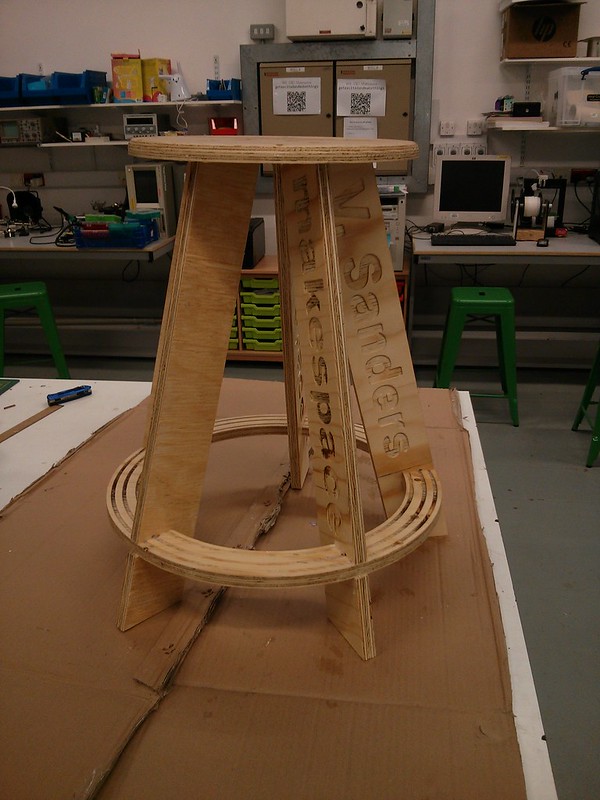


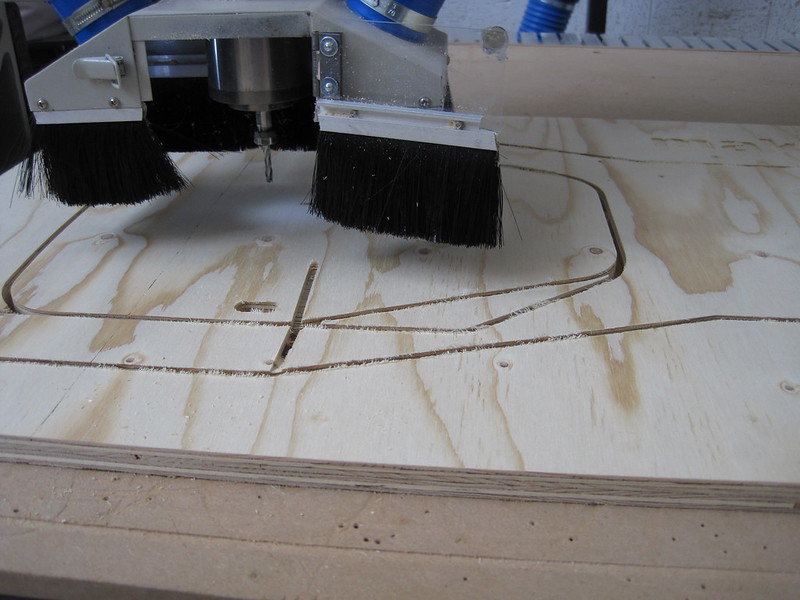

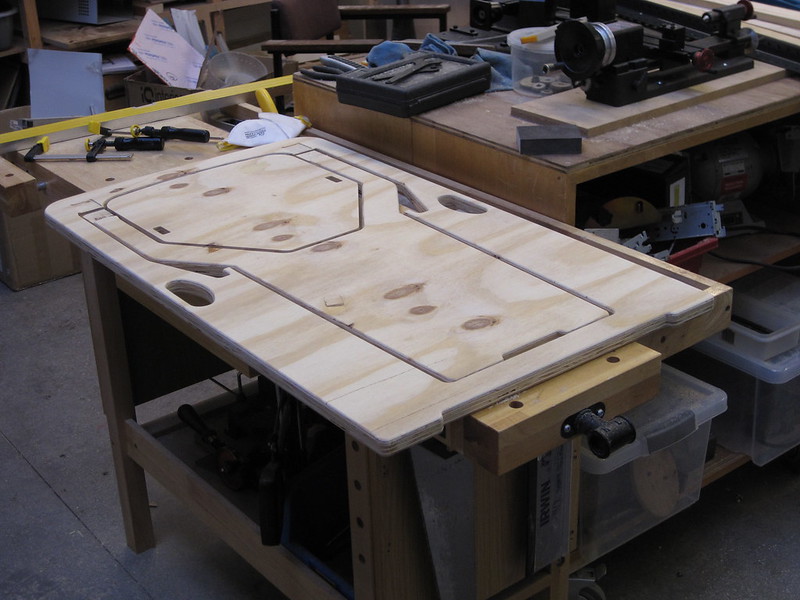

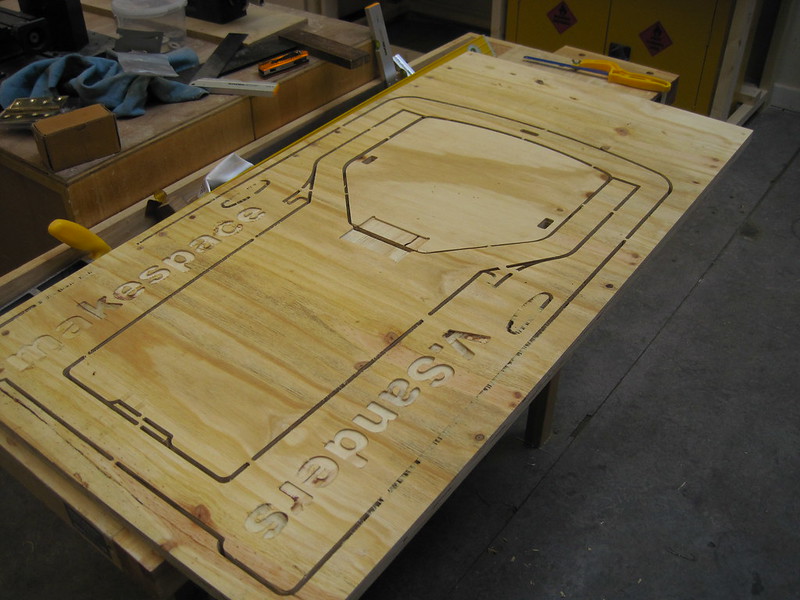
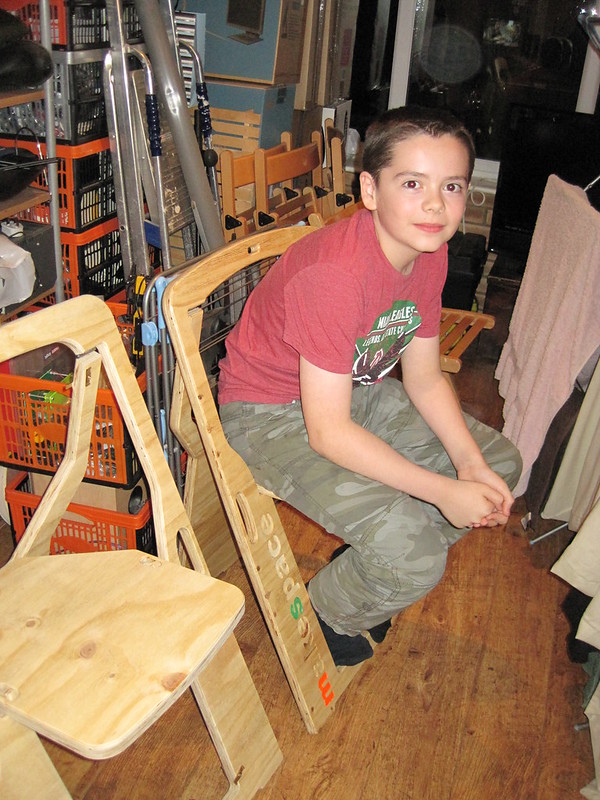
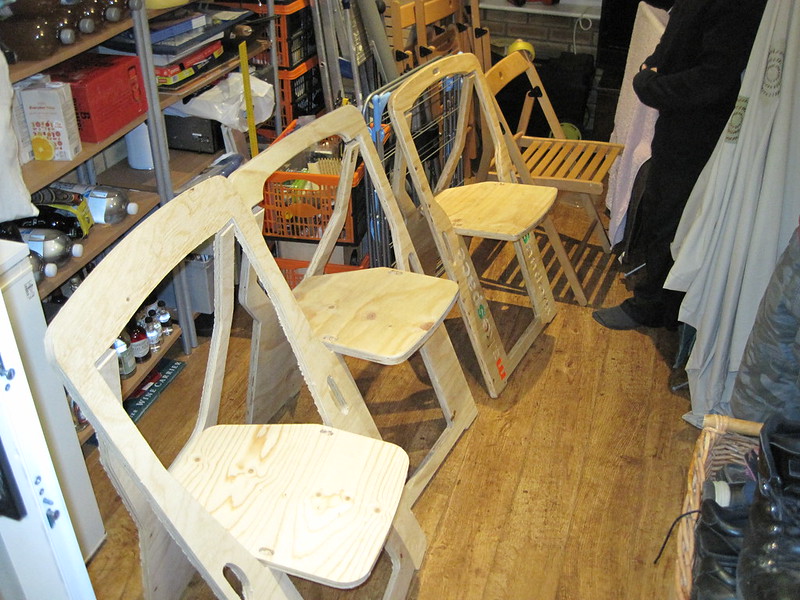
 When it comes to provide redundant services, several options are available:

 Let s explain it step by step:
 Altimeter Testing at Airfest
Bdale and I, along with AJ Towns and Mike Beattie, spent last weekend
in Argonia, Kansas, flying rockets with our Kloudbusters friends at


 This DebConf has been the first one where I ran every day. That proved
to be kinda hard on some mornings, but I found a way to circumvent
that by proposing group runs at the end of the relevant days.
In total, I managed to run 12 days in a row, for a grand total of
186.88km, in 21h22', for a total height difference of 6972m. In short,
I nearly climbed Mount Aconcagua, Americas highest peak..:-)
Most of these runs were quite slow ones and rather "short" ones
(around 15km), because of the nature of the paths around (nearly
impossible to find something flat except by running around the
football field).
The longest run was for the DayTrip, with about 25km in about 4 hours
(including some pauses) and 1600m height difference. I'm definitely
working on my moutain running skills more than marathon and other kind
of "speed" races.
That followed a great results for my last race, the "EDF Cenis Tour"
50km trail race in Lanslebourg, French Alps, where I completed the
race in 6h38, nearly the sametime than Mont-Blanc marathon, 1 month
earlier....which was 8 kilometers shorter.
I'm apparently ready for very long distance mountain races, now, as it
seems. Thanks you DebConf 13 organizers for choosing such a great
locations for us, crazy runners.
And, despite that, my next running goal is a "classical" marathon, the
Toulouse marathon in late October, where I expect breaking the 3h30
barrier, that would indeed be a qualifier for the Boston Marathon, one
of my dreams for the future (and, yes, it is still a dream, despite
this year's events).



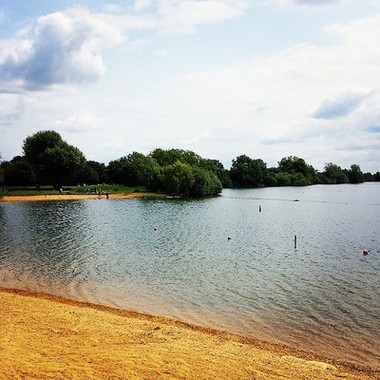 Since becoming interested in triathlon in October of last year, my goal in 2013 was not to just finish a "70.3" (or "Half-Ironman"), but to complete one in under 5 hours.
At the time, each discipline was woefully inadequate; I had not swum in over a decade, my cycling was average and I had only begun running again after years away from exercise.
The somewhat arbitrary target time would dictate my training. For example, the high proportion of time spent on the bike combined with the injury-sensitive nature of running meant that cycling would have a highest return on investment of the three disciplines. Despite that, I would need to take the run seriously but carefully - I decided to enter a series of monthly 10K races where I could steadily reduce my times over the year.
Races themselves formed a crucial part of my preparation and a carefully balanced race calendar was surprisingly important, balancing upcoming milestones that would provide an achievable goal as well as uncovering weaknesses in enough time so they could be worked on.
Whilst I did post about
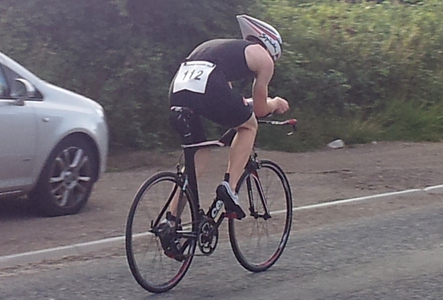
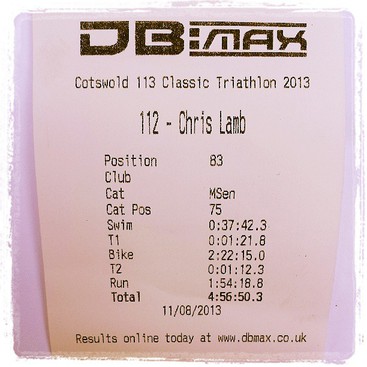 (
 In