Search Results: "cts"

1 July 2024

Sahil Dhiman: Personal ASNs From India

Internet and it s working are interesting and complex. We need an IP address to connect to the Internet. A group of IP addresses with common routing policy is known as an Autonomous System (AS). Each AS has a globally unique Autonomous System Number (ASN) and is maintained by a single entity or individual(s). Your ISP would have an ASN. IP addresses/prefixes are advertised (announced) by an AS through Border Gateway Protocol (BGP) to its peers (ASes which it connects to) to steer traffic in its direction or back. Take for example Google DNS service at 8.8.8.8 owned and operated by AS15169 Google LLC. AS15169 through BGP announcements, lets all its peers know that traffic for whole of 8.8.8.0/24 (including 8.8.8.8) prefix should be sent to them. See the following screenshot response of mtr -zt 8.8.8.8 from my system. From my Internet Service Provider (ISP), AS133982 Excitel Broadband, traffic travels to AS15169 to reach 8.8.8.8 (dns.google) and returns via the same path. This Inter-AS traffic makes the Internet tick. mtr from Excitel to Google ASes comes in different sizes and purposes. Like AS749 DoD Network Information Center which holds more than 200 million+ IPv4 addresses for historical reasons or AS23860 Alliance Broadband Services which has 68 thousand+ IPv4 address for purpose of providing consumer Internet. Similarly, some individuals also run their personal ASN including a bunch of Indians. Most of these Indian ASNs are IPv6 (primary or only) networks run for hobby and educational purposes. I was interested in this data, so complied a list of active ones (visible in the global routing table) from BGP.Tools: Let me know if I m missing someone.

Russell Coker: VoLTE in Australia

Introduction In Australia the 3G mobile frequencies are to be reused so they are in the process of shutting down the 3G service. That means that everyone has to use VoLTE (Voice Over LTE) for phone calls (including emergency calls). The shutdown time varies by telco, Kogan Mobile (one of the better services which has good value for money and generally works well) shut down their 3G service in January. Aldi Mobile (another one of the good services which is slightly more expensive but has included free calls to most first-world countries and uses the largest phone network) will shut theirs down at the end of August. For background there s a Fosdem talk about OpenSIPS with VoLTE and VoNR [1], it s more complex than you want to know. Also VoNR (Voice over New Radio) is the standard for 5G voice and it s different from VoLTE and has a fallback to VoLTE. Another good lecture for background information is the Fosdem talk on VoLTE at the handset end [2]. The PinePhonePro In October 2023 I tried using my PinePhonePro as my main phone but that only lasted a few days due to problems with calls and poor battery life [3]. Since then I went back to the Huawei Mate 10 Pro that I bought refurbished in June 2019 for $389. So that has been my main phone for 5 years now, giving a cost of $1.50 per week. I had tried using a Huawei Nova 7i running Android without Google Play as an experiment but that had failed, I do many things that need Android apps [4]. I followed the PinePhone wiki to get my PinePhonePro working with VoLTE [5]. That worked fine for me, the only difference from the instructions is that I had to use device /dev/ttyUSB3 and that the modem kept resetting itself during the process and when that happened I had to kill minicom and start again. After changing the setting and saving it the PinePhonePro seemed to work well with VoLTE on a Kogan Mobile SIM (so definitely not using 3G). One issue I have found is that Plasma Mobile (my preferred FOSS phone GUI) appears to have a library issue that results in polling every 14ms even when the screen is locked [6]. If you have a few processes doing that (which means the most lightly used Plasma system) it really hurts battery use. The maintainer has quite reasonably deferred action on this bug report given the KDE 6 transition. Later on in the Trixie development cycle I hope to get this issue resolved, I don t expect it to suddenly make battery life good. But it might make battery life acceptable. I am now idly considering carrying around my PinePhonePro in a powered off state for situations where I might need to do high security operations (root logins to servers or online banking) but for which carrying a laptop isn t convenient. It will do well for the turn on, do 30 mins of work that needs security, and then turn off scenario. Huawei Mate 10 Pro and Redmi 9A The Huawei Mate 10 Pro has been my main phone for 5 years and it has worked well, so it would be ideal if it could do VoLTE as the PinePhonePro isn t ready yet. All the web pages I ve seen about the Mate 10 Pro say that it will either allow upgrading to a VoLTE configuration if run with the right SIM or only support it with the right SIM. I did a test with a Chinese SIM which gave an option of turning on VoLTE but didn t allow any firmware updates and the VoLTE option went away when I put an Australian SIM in. Some forum comments had led me to believe that it would either permanently enable VoLTE or allow upgrading the firmware to one that enables VoLTE if I used a Chinese SIM but that is not the case. I didn t expect a high probability of success but I had to give it a go as it s a nice phone. I did some tests on a Redmi 9A (a terrible phone that has really bad latency on the UI in spite of having reasonably good hardware). The one I tested on didn t have VoLTE enabled when I got it, to test that I used the code *#*#4636#*#* in the dialler to get the menu of SIM information and it showed that VoLTE was not provisioned. I then had to update to the latest release of Android for that phone and enter *#*#86583#*#* in the dialler to enable VoLTE, the message displayed after entering that magic number must end in DISABLE . I get the impression that the code in question makes the phone not check certain aspects of whether the carrier is good for VoLTE and just do it. So apparently Kogan Mobile somehow gives the Redmi 9A the impression that VoLTE isn t supported but if the phone just goes ahead and connects it will work. I don t plan to use a Redmi 9A myself as it s too slow, but I added it to my collection to offer to anyone else I know who needs a phone with VoLTE and doesn t use the phone seriously or to someone who needs a known good phone for testing things. Samsung Galaxy Note 9 I got some Samsung Galaxy Note 9 phones to run Droidian as an experiment [7]. But Droidian dropped support for the Note 9 and I couldn t figure out how to enable VoLTE via Droidian, which was very annoying after I had spent $109 on a test phone and $215 on a phone for real use (I have no plans to try Droidian again at this time). I tried installing LineageOS on one Note 9 [8] which was much easier than expected (especially after previously installing Droidian). But VoLTE wasn t an option. According to Reddit LineageOS doesn t support VoLTE on Samsung devices and you can use a magisk module or a VoLTE enabler module but those aren t supported by LineageOS either [9]. I downloaded an original image for the Note 9 from SamsMobile.com [10]. That image booted past the orange stage (where if you have problems then your phone is probably permanently useless) but didn t boot into the OS. A friend helped me out with that and it turned out that the Heimdal flash tool on Linux didn t do something it needed to do and that Odin on Windows was required. After using Odin everything was fine and I have a Note 9 with VoLTE running the latest Samsung firmware which is security patch level 1st July 2022!!! So I have a choice between using a Note 9 for data and SMS while running a current version of Lineage OS with all security fixes or running a Samsung image with no security updates for 2 years which supports phone calls. So based on this I have to recommend Pixel as the phone of choice, it has a decent level of support from Google and long term support from LineageOS. According to the LineageOS web site you can run the current version of Lineage on the original Pixel phone from 2016! Of course getting VoLTE to work on it might be another saga, but it would probably be easier to do with LineageOS on a Pixel than on a Samsung phone. Conclusion The operation of the Note 9 for me is decent now apart from the potential security issues. The same goes for selling one of the phones. The PinePhonePro still has potential to become my daily driver at some future time if I and others can optimise power use. Also a complicating factor is that I want to have both Jabber and Matrix be actually instant IM systems not IM with a 5 minute delay, so suspend mode isn t a good option. Pixel phones will be a much higher priority when looking at phones to buy in future. The older Pixel phones go for as little as $100 on eBay and can still run the latest LineageOS. VoLTE seems needlessly complicated.

Russell Coker: Links June 2024

Modos Labs have released the design of an e-ink display connected by USB-C [1]. They have provided a lot of background information on e-ink displays which isn t available elsewhere. Excellent work! Informative article about a company giving renters insecure locks while facilitating collusion to raise rents [2]. Insightful video by JimmyTheGiant about the destruction of housing estates in the UK [3]. I wonder how much of this was deliberate by the Tories. Insightful video by Modern Vintage Gamer about the way Nintendo is destroying history by preventing people playing old games [4]. Interesting video by Louis Rossmann about the low quality of products and reviews on Amazon [5]. We all know about Enshittification, but it seems that Amazon is getting to the stage of being unusable for some products. Amusing video by Folding Ideas about Decentraland an attampt at a blockchain based second life type thing which failed as you expect blockchain things to fail [6]. The top comment is a transcription of the actions of the speaker s pet cat. ;)

Abhijith PA: A lazy local file sharing setup

At home, I have both a laptop and a *desktop PC. Most of my essential things, such as emails, repositories, password managers, contacts, and calendars are synced between the two devices. However, when I need to share some documents and I am lazy enough to go pick a flash drive, my only option is to push them to the Internet and download them on the other system, which is sitting at 20~ meters away. Typically, I do this either through email attachments or a matrix client. Occasionally, I think about setting up a network storage solution at home. But then I ask myself do I really need one. In my home network, I already have a Raspberry Pi running as my Wi-Fi router, doing DNS level ad blocking with Dnsmasq and DNS over TLS with stubby. Rpi has a 16GB memory card. I can mount RPi remote directory to both machines. I use pcmanfm as my file manager. It has the ability (like every other file managers) to mount remote storage over ssh. But one annoying thing is that whenever I open the mount directory, by default it shows the root file system of the remote device even when I explicitly mentioned the path. Then I discovered sshfs. I wrote the following script, which mount remote directory and open that in pcmanfm.
#!/bin/bash
LOCMOUNT="/home/user/Public"
sshfs raspberrypi:Public $LOCMOUNT
pcmanfm $MOUNT
I haven t enabled any encryption for the memory until now since other than some logs RPi wasn t writing anything to it. I set up fscrypt on Rpi storage now. And ta-da, a lazy person s local sharing solution. *Desktop - Well, technically it s an old laptop with a broken keyboard and trackpad, connected to a monitor, keyboard and mouse. I don t feel keeping it on a shelf.

Russ Allbery: Review: Snuff

Review: Snuff, by Terry Pratchett
Series: Discworld #39
Publisher: Harper
Copyright: October 2011
Printing: January 2013
ISBN: 0-06-221886-7
Format: Mass market
Pages: 470
Snuff is the 39th Discworld novel and the 8th (and last) Watch novel. This is not a good place to start reading. Sam Vines has been talked, cajoled, and coerced into taking a vacation. Since he is now the Duke of Ankh, he has a country estate that he's never visited. Lady Sybil is insistent on remedying this, as is Vetinari. Both of them may have ulterior motives. They may also be colluding. It does not take long for Vimes to realize that something is amiss in the countryside. It's not that the servants are uncomfortable with him talking to them, the senior servants are annoyed that he talks to the wrong servants, and the maids turn to face the wall at the sight of him. Those are just the strange customs of the aristocracy, for which he has little understanding and even less patience. There's something else going on. The nobility is wary, the town blacksmith is angry about something more than disliking the nobles, and the bartender doesn't want to get involved. Vimes smells something suspicious. When he's framed for a murder, the suspicions seem justified. It takes some time before the reader learns what the local nobility are squirming about, so I won't spoil it. What I will say is that Snuff is Pratchett hammering away at one of his favorite targets: prejudice, cruelty, and treating people like things. Vimes, with his uncompromising morality, is one of the first to realize the depth of the problem. It takes most of the rest longer to come around, even Sybil. It's both painful, and painfully accurate, to contemplate how often recognition of other people's worth only comes once they do something that you recognize as valuable. This is one of the better-plotted Discworld novels. Vimes starts out with nothing but suspicions and stubbornness, and manages to turn Snuff into a mystery novel through dogged persistence. The story is one continuous plot arc with the normal Pratchett color (Young Sam's obsession with types of poo, for example) but without extended digressions. It also has considerably better villains than most Pratchett novels: layers of foot soldiers and plotters, each of which have to be dealt with in a suitable way. Even the concluding action sequences worked for me, which is not always a given in Discworld. The problem, unfortunately, is that the writing is getting a bit wobbly. Pratchett died of early-onset Alzheimer's in 2015, four years after this book was first published, and this is the first novel where I can see some early effects. It mostly shows up in the dialogue: it's just a bit flabby and a bit repetitive, and the characters, particularly towards the end of the book, start repeating the name of the person they're talking to every other line. Once I saw it, I couldn't unsee it, and it was annoying enough to rob a bit of enjoyment from the end of the book. That aside, though, this was a solid Discworld novel. Vimes testing his moral certainty against the world and forcing it into a more ethical shape is always rewarding, and here he takes more risks, with better justification, than in most of the Watch novels. We also find out that Vimes has a legacy from the events of Thud!, which has interesting implications that I wish Pratchett had more time to explore. I think the best part of this book is how it models the process of social change through archetypes: the campaigner who knew the right choice early on, the person who formed their opinion the first time they saw injustice, the person who gets there through a more explicit moral code, the ones who have to be pushed by someone who was a bit faster, the ones who have to be convinced but then work to convince others, and of course the person who is willing to take on the unfair and far-too-heavy burden of being exceptional enough that they can be used as a tool to force other people to acknowledge them as a person. And, since this is Discworld, Vetinari is lurking in the scenery pulling strings, balancing threats, navigating politics, and giving Vimes just enough leeway to try to change the world without abusing his power. I love that the amount of leeway Vimes gets depends on how egregious the offense is, and Vetinari calibrates this quite carefully without ever saying so openly. Recommended, and as much as I don't want to see this series end, this is not a bad entry for the Watch novels to end on. Followed in publication order by Raising Steam. Rating: 8 out of 10

27 June 2024

Russ Allbery: Review: Lyorn

Review: Lyorn, by Steven Brust
Series: Vlad Taltos #17
Publisher: Tor
Copyright: 2024
ISBN: 1-4668-8971-3
Format: Kindle
Pages: 274
Lyorn is the 17th Vlad Taltos book and a direct sequel to 2014's Hawk. (Yes, actual main story progress!) You do not want to start reading here; you would be hopelessly confused. When this series is complete, I want to re-read the entire thing from the beginning and pick up more of the bits I missed the first time. Vlad is not, in fact, free to see his friends and get entangled in imperial politics again as I thought after Hawk. Despite the successes of that story, there is one remaining small problem: incredibly powerful magic users still want to kill him. His immediate solution is to shelter in a theater, since Draegaran theaters are well-known for their excellent magical shielding. This works well enough at first, but the theater is rehearsing a play about Draegaran politics that is highly offensive to the Lyorn and the theater may be shut down because of it. Vlad's enemies are also willing to lean on his friends to find him and kill him. This series continues to be thoroughly enjoyable. Lyorn is "just" more of Vlad being Vlad, meddling in everyone's business and coming up with elaborate plans with too many moving parts that he somehow manages to pull off, but I'll happily read lots of books like that. Vlad is both anxious and grumpy, both of which give the plot some needed tension without being overwhelming. There are no truly major world-building revelations here (or, if there are, I missed them), but there's a lot of processing of what the reader learned in Tsalmoth. It's increasingly looking like the payoff from those revelations is going to be the series finale. This is the first Vlad book that contains solid confirmation of where the series as a whole is headed. Brust mentioned some time ago that the last book is titled The Last Contract, and Lyorn comes close to stating explicitly what that contract will be. I am sure that it will be more complicated than it appears now and there are misdirections yet to come, but I am excited to see where Brust takes this idea. Vlad has been insistently apolitical for much of the series, meddling in politics only when he has to or to help his friends and otherwise treating it as a system that he has to navigate and survive. That was the root of the conflict in Teckla, all the way back at the start of the series. This may be starting to change, and when Brust ties it together with the Jenoine, the Great Weapon Godslayer, and the rest of the world-building he's cued up, the results are going to be explosive. Two books left: Chreotha and The Last Contract. I can hardly wait. In every Vlad book, Brust plays some sort of structural game. This time, befitting the setting, it's a musical. The action is interspersed with quotes from a fictional history about the play the theater is putting on, a work called Song of the Presses about political censorship during the reign of a Lyorn emperor in the 14th cycle, thousands of years before the time of this book. This was, at times, nearly as interesting as the main plot. The chapters are also numbered like the acts and scenes of a play, although this I didn't notice as much since books often have that structure anyway. Since this is a musical, there are also songs. Specifically, each chapter is introduced by a parody of songs from various musicals in our world, rewritten so that they fit within Brust's fictional musical. Brust is also a musician and a filker, so these songs are actually good, or at least they amused me a great deal. I'm not much of a musical fan and I still could hear the tune playing when I read most of them. Lyorn is not so good that I would rave about it. It's one of those functional connective books of a series that advances the plot, tells a good story, and has some fun along the way. The guns on the mantelpiece of this world have not gone off yet, and Vlad is still maneuvering into position. But it's looking like we're going to get the conclusion, and it's going to be spectacular. If you have read this far, you will want to keep reading. Followed by Chreotha, which may be a bit of a wait because apparently Brust is going to write The Last Contract first to make sure he ties up loose ends properly. Rating: 7 out of 10

26 June 2024

Gunnar Wolf: Many terabytes for students to play with. Thanks Debian!

LIDSOL students receiving their new hard drives My students at LIDSOL (Laboratorio de Investigaci n y Desarrollo de Software Libre, Free Software Research and Development Lab) at Facultad de Ingenier a, UNAM asked me to help them get the needed hardware to set up a mirror for various free software projects. We have some decent servers (not new servers, but mirrors don t require to be top-performance), so A couple of weeks ago, I approached the Debian Project Leader (DPL) and suggested we should buy two 16TBhard drives for this project, as it is the most reasonable cost per byte point I found. He agreed, and I bought the drives. Today we had a lab meeting, and I handed them over the hardware. Of course, they are very happy and thankful with the Debian project In the last couple of weeks, they have already set up an Archlinux mirror (https://archlinux.org/mirrors/fi-b.unam.mx), and now that they have heaps of storage space, plans are underway to set up various other mirrors (of course, a Debian mirror will be among the first).

24 June 2024

Dirk Eddelbuettel: digest 0.6.36 on CRAN: Big endian, maintenance

Release 0.6.36 of the digest package arrived at CRAN today and has also been uploaded to Debian. digest creates hash digests of arbitrary R objects. It can use a number different hashing algorithms (md5, sha-1, sha-256, sha-512, crc32, xxhash32, xxhash64, murmur32, spookyhash, blake3,crc32c, xxh3_64 and xxh3_128), and enables easy comparison of (potentially large and nested) R language objects as it relies on the native serialization in R. It is a mature and widely-used package (with 69.1 million downloads just on the partial cloud mirrors of CRAN which keep logs) as many tasks may involve caching of objects for which it provides convenient general-purpose hash key generation to quickly identify the various objects. This release updates one contributed C++ function to be compliant with R s revent preference for explicit declaration of REMAP, and improves the behavior under the (increasingly rare) big endian system via a patch to blake3 as well as a hint that spookyhash under big endian may not meed its reference output from little endian . My CRANberries provides a summary of changes to the previous version. For questions or comments use the issue tracker off the GitHub repo. For documentation (including the changelog) see the documentation site. If you like this or other open-source work I do, you can now sponsor me at GitHub.

This post by Dirk Eddelbuettel originated on his Thinking inside the box blog. Please report excessive re-aggregation in third-party for-profit settings.

21 June 2024

Gunnar Wolf: A new RISC-V toy... requiring almost no tinkering

Shortly before coming back from Argentina, I got news of a very interesting set of little machines, the MilkV Duo. The specs looked really interesting and fun to play with, particularly those of the bigger model, Milk-V DUO S Some of the highlights: Milk-V Duo S Naturally, for close to only US$12 (plus shipping) for the configuration I wanted I bought one, and got it delivered in early May. The little box sat on my desk for close to six weeks until I had time to start tinkering with it I must say I am surprised. Not only the little bugger delivers what it promises, but it is way more mature than what I expected: It can be used right away without much tinkering with! I mean, I have played with it for less than an hour by now, and I ve even managed to get (almost) regular Debian working. Milk-V distributes a simple, 58.9MB compressed Linux image, based on Buildroot, a simple Linux image generator mostly used for embedded applications, as well as its source tree. I thought that would be a good starting point to work on setting up a minimal Debian filesystem, as I did with the CuBox-i4Pro ten years ago, and maybe even to grow towards a more official solution, akin to what we currently have for the Raspberry Pi family Until I discovered what looks like a friendly and very active online community of Milk-V users! I haven t yet engaged in it, but I stumbled across a thread announcing the availability of Debian images for the Milk-V family. And yes, it feels like a very normal Debian system. /etc/apt/sources.list does point to a third-party repository, but it s for only four packages, all related to pinmux controlfor CVITEK chips. It does feel like a completely normal Debian system! It is not as snappy and fast to load as Buildroot, but given Debian s generality, that s completely as expected. Even the wireless network, one of the usual pain points, works just out of the box! The Debian images can be built or downloaded from this Git repository. In case you wonder how is this system booting or what hardware it detects, I captured two boot logs:

20 June 2024

C.J. Collier: Signed NVIDIA drivers on Google Cloud Dataproc 2.2

Hello folks, I ve been working this year on better integrating NVIDIA hardware with the Google Cloud Dataproc product (Hadoop on Google Cloud) running the default cluster node image. We have an open bug[1] in the initialization-actions repo regarding creation failures upon enabling secure boot. This is because with secure boot, kernel driver code has its signature verified before insmod places the symbols into kernel memory. The verification process involves reading trust root certificates from EFI variables, and validating that the signatures on the kernel driver either a) were made directly by one of the certificates in the boot sector or b) were made by certificates which chain up to one of them. This means that Dataproc disk images must have a certificate installed into them. My work on the internals will likely start producing images which have certificates from Google in them. In the meantime, however, our users are left without a mechanism to have both secure boot enabled and install out-of-tree kernel modules such as the NVIDIA GPU drivers. To that end, I ve got PR #83[2] open with the GoogleCloudDataproc/custom-images github repository. This PR introduces a new argument to the custom image creation script, trusted-cert , the argument of which is the path to a DER-encoded certificate to be included in the certificate database in the EFI variables of the disk s boot sector. I ve written up the instructions on creating a custom image with a trusted certificate here: https://github.com/cjac/custom-images/blob/secure-boot-custom-image/examples/secure-boot/README.md Here is a set of commands that can be used to create a Dataproc custom image with certificate installed to the EFI s db variable. You can run these commands from the root directory of a checkout such as this:

git clone https://github.com/cjac/custom-images.git --branch secure-boot-custom-image --single-branch
pushd custom-images
PROJECT_ID=your-project-here
PROJECT_NUMBER=your-project-nnnn-here
my_bucket=your-bucket-here
custom_image_zone=your-zone-here
gcloud projects add-iam-policy-binding $ PROJECT_ID  \
        --member=serviceAccount:$ PROJECT_NUMBER -compute@developer.gserviceaccount.com \
        --role=roles/secretmanager.secretAccessor
gcloud config set project $ PROJECT_ID 
gcloud auth login
eval $(bash examples/secure-boot/create-key-pair.sh)
metadata="public_secret_name=$ public_secret_name "
metadata="$ metadata ,private_secret_name=$ private_secret_name "
metadata="$ metadata ,secret_project=$ secret_project "
metadata="$ metadata ,secret_version=$ secret_version "
#dataproc_version=2.1-debian11
dataproc_version=2.2-debian12
#customization_script=examples/secure-boot/install-nvidia-driver-debian11.sh
customization_script=examples/secure-boot/install-nvidia-driver-debian12.sh
#image_name="nvidia-open-kernel-bullseye-$(date +%F)"
image_name="nvidia-open-kernel-bookworm-$(date +%F)"
disk_size_gb="50"
python generate_custom_image.py \
    --image-name $ image_name  \
    --dataproc-version $ dataproc_version  \
    --trusted-cert "tls/db.der" \
    --customization-script $ customization_script  \
    --metadata "$ metadata " \
    --zone "$ custom_image_zone " \
    --disk-size "$ disk_size_gb " \
    --no-smoke-test \
    --gcs-bucket "$ my_bucket "
popd
I d love to hear your feedback! [1] https://github.com/GoogleCloudDataproc/initialization-actions/issues/1058
[2] https://github.com/GoogleCloudDataproc/custom-images/pull/83

19 June 2024

Dirk Eddelbuettel: nanotime 0.3.8 on CRAN: More Maintenance

Leonardo and I are happy to annunce that a new version 0.3.8 of our nanotime package arrived on CRAN today. It is the first release in over 1 1/2 years. nanotime relies on the RcppCCTZ package (as well as the RcppDate package for additional C++ operations) and offers efficient high(er) resolution time parsing and formatting up to nanosecond resolution, using the bit64 package for the actual integer64 arithmetic. Initially implemented using the S3 system, it has benefitted greatly from a rigorous refactoring by Leonardo who not only rejigged nanotime internals in S4 but also added new S4 types for periods, intervals and durations. This release responds to a number of enhancements including a new paramter accurate for POSIXct to nanotime conversions, a vector date converter, a switch to double return value when durations objects are dividded as well as a small battery of CRAN requests for changes and updates. This started with a move away from the now non-API function SET_S4_OBJECT which has been replaced by use of Rf_asS4. We also no longer need a custom compiler flag on Windows (where for some reasons nobody understands or remembers, bitfields are not packed) to small enhancements of manual page formatting and last-but-not-least avoidance of some new UBSAN warnings. The NEWS snippet has the full details.

Changes in version 0.3.8 (2024-06-19)
  • Time format documentation now has a reference to RcppCCTZ
  • The package no longer sets a default C++ compilation standard of C++11 (Dirk initially in #114, and later switched to C++17)
  • New accurate parameter for conversion from POSIXct to nanotime (Davor Josipovic and Leonardo in #116 closing #115)
  • The as.Date() function is now vectorized and can take a TZ argument (Leonardo and Dirk in #119 closing #118)
  • Use of internal function SET_S4_OBJECT has been replaced by API function Rf_asS4 (Leonardo in #121 closing #120)
  • An nanoduration / nanoduration expression now returns a double (Leonardo in #122 closing #117)
  • Bitfield calculations no longer require an Windows-only compiler switch (Leonardo in #124)
  • A simple manual page format nag involving has been addressed (Dirk in #126 fixing #125)
  • An set of tests tickling an UBSAN issue via Rcpp code no longer run unless CI is set (Dirk in #127 fixing #123)

Thanks to my CRANberries, there is a diffstat report for this release. More details and examples are at the nanotime page; code, issue tickets etc at the GitHub repository and all documentation is provided at the nanotime documentation site. If you like this or other open-source work I do, you can sponsor me at GitHub.

This post by Dirk Eddelbuettel originated on his Thinking inside the box blog. Please report excessive re-aggregation in third-party for-profit settings.

Sahil Dhiman: First Iteration of My Free Software Mirror

As I m gearing towards setting up a Free Software download mirror in India, it occurred to me that I haven t chronicled the work and motivation behind setting up the original mirror in the first place. Also, seems like it would be good to document stuff here for observing the progression, as the mirror is going multi-country now. Right now, my existing mirror i.e., mirrors.de.sahilister.net (was mirrors.sahilister.in), is hosted in Germany and serves traffic for Termux, NomadBSD, Blender, BlendOS and GIMP. For a while in between, it hosted OSMC project mirror as well. To explain what is a Free Software download mirror thing is first, I ll quote myself from work blog -
As most Free Software doesn t have commercial backing and require heavy downloads, the concept of software download mirrors helps take the traffic load off of the primary server, leading to geographical redundancy, higher availability and faster download in general.
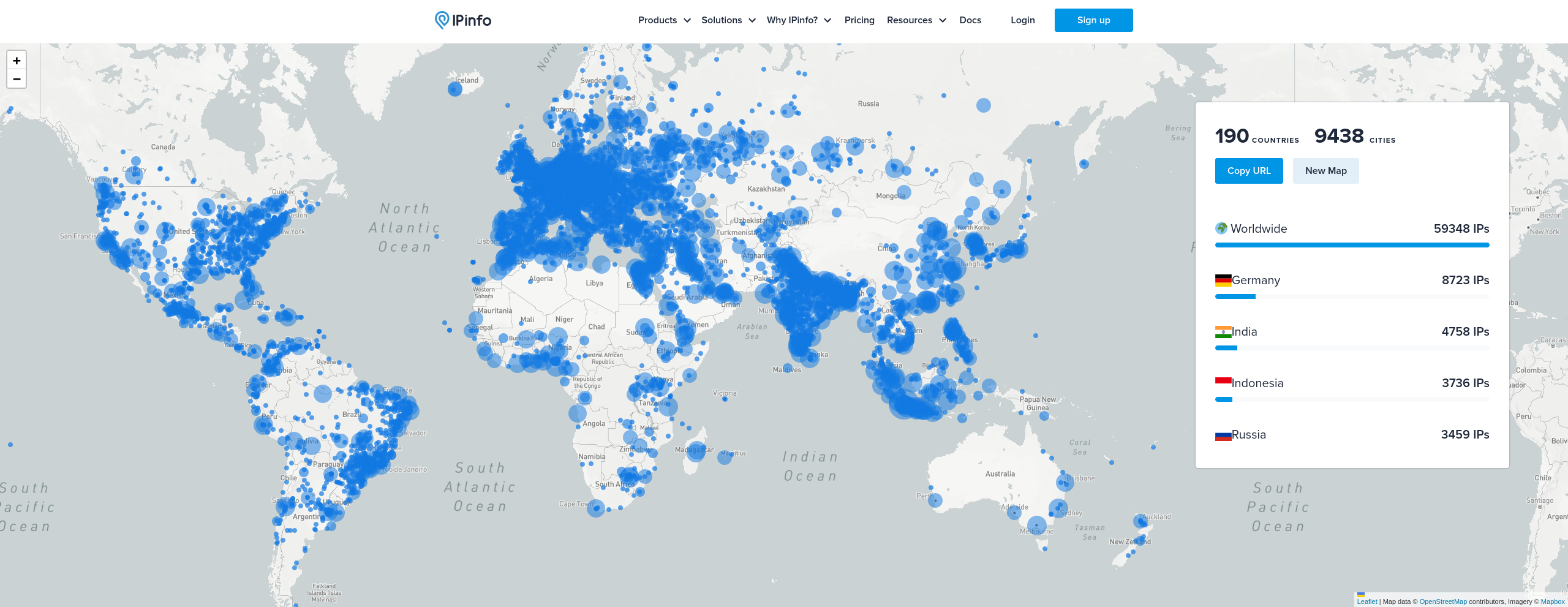
So whenever someone wants to download a particular (mirrored) software and click download, upstream redirects the download to one of the mirror server which is geographical (or in other parameters) nearby to the user, leading to faster downloads and load sharing amongst all mirrors. Since the time I got into Linux and servers, I always wanted to help the community somehow, and mirroring seemed to be the most obvious thing. India seems to be a country which has traditionally seen less number of public download mirrors. IITB, TiFR, and some of the public institutions used to host them for popular Linux and Free Softwares, but they seem to be diminishing these days. In the last months of 2021, I started using Termux and saw that it had only a few mirrors (back then). I tried getting a high capacity, high bandwidth node in budget but it was hard in India in 2021-22. So after much deliberation, I decided to go where it s available and chose a German hosting provider with the thought of adding India node when conditions are favorable (thankfully that happened, and India node is live too now.). Termux required only 29 GB of storage, so went ahead and started mirroring it. I raised this issue in Termux s GitHub repository in January 2022. This blog post chronicles the start of the mirror. Termux has high request counts from a mirror point of view. Each Termux client, usually checks every mirror in selected group for availability before randomly selecting one for download (only other case is when client has explicitly selected a single mirror using termux-repo-change). The mirror started getting thousands of requests daily due to this but only a small percentage would actually get my mirror in selection, so download traffic was lower. Similar thing happened with OSMC too (which I started mirroring later). With this start, I started exploring various project that would be benefit from additional mirrors. Public information from Academic Computer Club in Ume s mirror and Freedif s mirror stats helped to figure out storage and bandwidth requirements for potential projects. Fun fact, Academic Computer Club in Ume (which is one of the prominent Debian, Ubuntu etc.) mirror, now has 200 Gbits/s uplink to the internet through SUNET. Later, I migrated to a different provider for better speeds and added LibreSpeed test on the mirror server. Those were fun times. Between OSMC, Termux and LibreSpeed, I was getting almost 1.2 millions hits/day on the server at its peak, crossing for the first time a TB/day traffic number. Next came Blender, which took the longest time to set up of around 9 10 months. Blender had a push-trigger requirement for rsync from upstream that took quite some back and forth. It now contributes the most amount of traffic on the mirror. On release days, mirror does more than 3 TB/day and normal days, it hovers around 2 TB/day. Gimp project is the latest addition. At one time, the mirror traffic touched 4.97 TB/day traffic number. That s when I decided on dropping LibreSpeed server to solely focus on mirroring for now, keeping the bandwidth allotment for serving downloads only. The mirror projects selection grew organically. I used to reach out many projects discussing the need of for additional mirrors. Some projects outright denied mirroring request as Germany already has a good academic mirrors boosting 20-25 Gbits/s speeds from FTP era, which seems fair. Finding the niche was essential to only add softwares, which would truly benefit from additional capacity. There were months when nothing much would happen with the mirror, rsync would continue to update the mirror while nginx would keep on serving the traffic. Nowadays, the mirror pushes around 70 TB/month. I occasionally check logs, vnstat, add new security stuff here and there and pay the bills. It now saturates the Gigabit link sometimes and goes beyond that, peaking around 1.42 Gbits/s (the hosting provider seems to be upping their game). The plan is to upgrade the link to better speeds. vnstat yearly
Yearly traffic stats (through vnstat -y )
On the way, learned quite a few things like - GeoIP Map of Clients from Yesterday Access Logs
GeoIP Map of Clients from Yesterday's Access Logs. Click to enlarge
Generated from IPinfo.io
In hindsight, the statistics look amazing, hundreds of TBs of traffic served from the mirror, month after month. That does show that there s still an appetite for public mirrors in time of commercially donated CDNs and GitHub. The world could have done with one less mirror, but it saved some time, lessened the burden for others, while providing redundancy and traffic localization with one additional mirror. And it s fun for someone like me who s into infrastructure that powers the Internet. Now, I ll try focusing and expanding the India mirror, which in itself started pushing almost half a TB/day. Long live Free Software and public download mirrors.

13 June 2024

Russ Allbery: Security review of tag2upload

For some time now, Debian has been discussing a possible enhancement to the way that Debian packages are uploaded to the archive. The basic idea is to allow a package upload to be triggered by pushing a signed tag, with some structured metadata, to Salsa, the instance of GitLab that Debian provides for packaging repositories. This would allow Debian package maintainers to use a more typical Git-first workflow, where releases are triggered by Git tags and the release artifacts are built in a clean CI environment, while still enforcing the existing Debian rules about who is allowed to upload packages. As part of that effort, I recently completed a detailed security review of the tag2upload design. I sent it to debian-vote as part of the ongoing discussion, but have also posted it at the link above to give it a more permanent home. This security review may be revised based on the discussion if people point out things that I missed.

8 June 2024

Reproducible Builds: Reproducible Builds in May 2024

Welcome to the May 2024 report from the Reproducible Builds project! In these reports, we try to outline what we have been up to over the past month and highlight news items in software supply-chain security more broadly. As ever, if you are interested in contributing to the project, please visit our Contribute page on our website. Table of contents:
  1. A peek into build provenance for Homebrew
  2. Distribution news
  3. Mailing list news
  4. Miscellaneous news
  5. Two new academic papers
  6. diffoscope
  7. Website updates
  8. Upstream patches
  9. Reproducibility testing framework


A peek into build provenance for Homebrew Joe Sweeney and William Woodruff on the Trail of Bits blog wrote an extensive post about build provenance for Homebrew, the third-party package manager for MacOS. Their post details how each bottle (i.e. each release):
[ ] built by Homebrew will come with a cryptographically verifiable statement binding the bottle s content to the specific workflow and other build-time metadata that produced it. [ ] In effect, this injects greater transparency into the Homebrew build process, and diminishes the threat posed by a compromised or malicious insider by making it impossible to trick ordinary users into installing non-CI-built bottles.
The post also briefly touches on future work, including work on source provenance:
Homebrew s formulae already hash-pin their source artifacts, but we can go a step further and additionally assert that source artifacts are produced by the repository (or other signing identity) that s latent in their URL or otherwise embedded into the formula specification.

Distribution news In Debian this month, Johannes Schauer Marin Rodrigues (aka josch) noticed that the Debian binary package bash version 5.2.15-2+b3 was uploaded to the archive twice. Once to bookworm and once to sid but with differing content. This is problem for reproducible builds in Debian due its assumption that the package name, version and architecture triplet is unique. However, josch highlighted that
This example with bash is especially problematic since bash is Essential:yes, so there will now be a large portion of .buildinfo files where it is not possible to figure out with which of the two differing bash packages the sources were compiled.
In response to this, Holger Levsen performed an analysis of all .buildinfo files and found that this needs almost 1,500 binNMUs to fix the fallout from this bug. Elsewhere in Debian, Vagrant Cascadian posted about a Non-Maintainer Upload (NMU) sprint to take place during early June, and it was announced that there is now a #debian-snapshot IRC channel on OFTC to discuss the creation of a new source code archiving service to, perhaps, replace snapshot.debian.org. Lastly, 11 reviews of Debian packages were added, 15 were updated and 48 were removed this month adding to our extensive knowledge about identified issues. A number of issue types have been updated by Chris Lamb as well. [ ][ ]
Elsewhere in the world of distributions, deep within a larger announcement from Colin Percival about the release of version 14.1-BETA2, it was mentioned that the FreeBSD kernels are now built reproducibly.
In Fedora, however, the change proposal mentioned in our report for April 2024 was approved, so, per the ReproduciblePackageBuilds wiki page, the add-determinism tool is now running in new builds for Fedora 41 ( rawhide ). The add-determinism tool is a Rust program which, as its name suggests, adds determinism to files that are given as input by attempting to standardize metadata contained in binary or source files to ensure consistency and clamping to $SOURCE_DATE_EPOCH in all instances . This is essentially the Fedora version of Debian s strip-nondeterminism. However, strip-nondeterminism is written in Perl, and Fedora did not want to pull Perl in the buildroot for every package. The add-determinism tool eliminates many causes of non-determinism and work is ongoing to continue the scope of packages it can operate on.

Mailing list news On our mailing list this month, regular contributor kpcyrd wrote to the list with an update on their source code indexing project, whatsrc.org. The whatsrc.org project, which was launched last month in response to the XZ Utils backdoor, now contains and indexes almost 250,000 unique source code archives. In their post, kpcyrd gives an example of its intended purpose, noting that it shown that whilst there seems to be consensus about [the] source code for zsh 5.9 in various Linux distributions, it does not align with the contents of the zsh Git repository . Holger Levsen also posted to the list with a pre-announcement of sorts for the 2024 Reproducible Builds summit. In particular:
[Whilst] the dates and location are not fixed yet, however if you don help us with finding a suitable location soon, it is very likely that we ll meet again in Hamburg in the 2nd half of September 2024 [ ].
Lastly, Frederic-Emmanuel Picca wrote to the list asking for help understanding the non-reproducible status of the Debian silx package and received replies from both Vagrant Cascadian and Chris Lamb.

Miscellaneous news strip-nondeterminism is our tool to remove specific non-deterministic results from a completed build. This month strip-nondeterminism version 1.14.0-1 was uploaded to Debian unstable by Chris Lamb chiefly to incorporate a change from Alex Muntada to avoid a dependency on Sub::Override to perform monkey-patching and break circular dependencies related to debhelper [ ]. Elsewhere in our tooling, Jelle van der Waa modified reprotest because the pipes module will be removed in Python version 3.13 [ ].
It was also noticed that a new blog post by Daniel Stenberg detailing How to verify a Curl release mentions the SOURCE_DATE_EPOCH environment variable. This is because:
The [curl] release tools document also contains another key component: the exact time stamp at which the release was done using integer second resolution. In order to generate a correct tarball clone, you need to also generate the new version using the old version s timestamp. Because the modification date of all files in the produced tarball will be set to this timestamp.

Furthermore, Fay Stegerman filed a bug against the Signal messenger app for Android to report that their reproducible builds cannot, in fact, be reproduced. However, Fay is quick to note that she has:
found zero evidence of any kind of compromise. Some differences are yet unexplained but everything I found seems to be benign. I am disappointed that Reproducible Builds have been broken for months but I have zero reason to doubt Signal s security in any way.

Lastly, it was observed that there was a concise and diagrammatic overview of supply chain threats on the SLSA website.

Two new academic papers Two new scholarly papers were published this month. Firstly, Mathieu Acher, Beno t Combemale, Georges Aaron Randrianaina and Jean-Marc J z quel of University of Rennes on Embracing Deep Variability For Reproducibility & Replicability. The authors describe their approach as follows:
In this short [vision] paper we delve into the application of software engineering techniques, specifically variability management, to systematically identify and explicit points of variability that may give rise to reproducibility issues (e.g., language, libraries, compiler, virtual machine, OS, environment variables, etc.). The primary objectives are: i) gaining insights into the variability layers and their possible interactions, ii) capturing and documenting configurations for the sake of reproducibility, and iii) exploring diverse configurations to replicate, and hence validate and ensure the robustness of results. By adopting these methodologies, we aim to address the complexities associated with reproducibility and replicability in modern software systems and environments, facilitating a more comprehensive and nuanced perspective on these critical aspects.
(A PDF of this article is available.)
Secondly, Ludovic Court s, Timothy Sample, Simon Tournier and Stefano Zacchiroli have collaborated to publish a paper on Source Code Archiving to the Rescue of Reproducible Deployment. Their paper was motivated because:
The ability to verify research results and to experiment with methodologies are core tenets of science. As research results are increasingly the outcome of computational processes, software plays a central role. GNU Guix is a software deployment tool that supports reproducible software deployment, making it a foundation for computational research workflows. To achieve reproducibility, we must first ensure the source code of software packages Guix deploys remains available.
(A PDF of this article is also available.)

diffoscope diffoscope is our in-depth and content-aware diff utility that can locate and diagnose reproducibility issues. This month, Chris Lamb made a number of changes such as uploading versions 266, 267, 268 and 269 to Debian, making the following changes:
  • New features:
    • Use xz --list to supplement output when comparing .xz archives; essential when metadata differs. (#1069329)
    • Include xz --verbose --verbose (ie. double) output. (#1069329)
    • Strip the first line from the xz --list output. [ ]
    • Only include xz --list --verbose output if the xz has no other differences. [ ]
    • Actually append the xz --list after the container differences, as it simplifies a lot. [ ]
  • Testing improvements:
    • Allow Debian testing to fail right now. [ ]
    • Drop apktool from Build-Depends; we can still test APK functionality via autopkgtests. (#1071410)
    • Add a versioned dependency for at least version 5.4.5 for the xz tests as they fail under (at least) version 5.2.8. (#374)
    • Fix tests for 7zip 24.05. [ ][ ]
    • Fix all tests after additon of xz --list. [ ][ ]
  • Misc:
    • Update copyright years. [ ]
In addition, James Addison fixed an issue where the HTML output showed only the first difference in a file, while the text output shows all differences [ ][ ][ ], Sergei Trofimovich amended the 7zip version test for older 7z versions that include the string [64] [ ][ ] and Vagrant Cascadian relaxed the versioned dependency to allow version 5.4.1 for the xz tests [ ] and proposed updates to guix for versions 267, 268 and pushed version 269 to Guix. Furthermore, Eli Schwartz updated the diffoscope.org website in order to explain how to install diffoscope on Gentoo [ ].

Website updates There were a number of improvements made to our website this month, including Chris Lamb making the print CSS stylesheet nicer [ ]. Fay Stegerman made a number of updates to the page about the SOURCE_DATE_EPOCH environment variable [ ][ ][ ] and Holger Levsen added some of their presentations to the Resources page. Furthermore, IOhannes zm lnig stipulated support for SOURCE_DATE_EPOCH in clang version 16.0.0+ [ ], Jan Zerebecki expanded the Formal definition page and fixed a number of typos on the Buy-in page [ ] and Simon Josefsson fixed the link to Trisquel GNU/Linux on the Projects page [ ].

Upstream patches This month, we wrote a number of patches to fix specific reproducibility issues, including:

Reproducibility testing framework The Reproducible Builds project operates a comprehensive testing framework running primarily at tests.reproducible-builds.org in order to check packages and other artifacts for reproducibility. In May, a number of changes were made by Holger Levsen:
  • Debian-related changes:
    • Enable the rebuilder-snapshot API on osuosl4. [ ]
    • Schedule the i386 architecture a bit more often. [ ]
    • Adapt cleanup_nodes.sh to the new way of running our build services. [ ]
    • Add 8 more workers for the i386 architecture. [ ]
    • Update configuration now that the infom07 and infom08 nodes have been reinstalled as real i386 systems. [ ]
    • Make diffoscope timeouts more visible on the #debian-reproducible-changes IRC channel. [ ]
    • Mark the cbxi4a-armhf node as down. [ ][ ]
    • Only install the hdmi2usb-mode-switch package only on Debian bookworm and earlier [ ] and only install the haskell-platform package on Debian bullseye [ ].
  • Misc:
    • Install the ntpdate utility as we need it later. [ ]
    • Document the progress on the i386 architecture nodes at Infomaniak. [ ]
    • Drop an outdated and unnoticed notice. [ ]
    • Add live_setup_schroot to the list of so-called zombie jobs. [ ]
In addition, Mattia Rizzolo reinstalled the infom07 and infom08 nodes [ ] and Vagrant Cascadian marked the cbxi4a node as online [ ].

If you are interested in contributing to the Reproducible Builds project, please visit our Contribute page on our website. However, you can get in touch with us via:

7 June 2024

Freexian Collaborators: Debian Contributions: DebConf Bursaries, /usr-move, sbuild, and more! (by Stefano Rivera)

Contributing to Debian is part of Freexian s mission. This article covers the latest achievements of Freexian and their collaborators. All of this is made possible by organizations subscribing to our Long Term Support contracts and consulting services.

DebConf Bursary updates, by Utkarsh Gupta Utkarsh is the bursaries team lead for DebConf 24. Bursary requests are dispatched to a team of volunteers to review. The results are collated, adjusted and merged to produce priority lists of requests to fund. Utkarsh raised the team, coordinated the review, and issued bursaries to attendees.

/usr-move, by Helmut Grohne More and more, the /usr-move transition is being carried out by multiple contributors and many performed around a hundred of the requested uploads. Of these, Helmut contributed five patches and two uploads. As a result, there are less than 350 packages left to be converted, and all of the non-trivial cases have patches. We started with three times that number. Thanks to everyone involved for supporting this effort. For people interested in background information of this transition, Helmut gave a presentation at MiniDebConf Berlin 2024 (slides).

sbuild, by Helmut Grohne While unshare mode of sbuild has existed for quite a while, it is now getting significant use in Debian, and new problems are popping up. Helmut looked into an apparmor-related failure and provided a diagnosis. While relevant code would detect the chroot nature of a schroot backend and skip apparmor tests, the unshare environment would be just good enough to run and fail the test. As sbuild exposes fewer special kernel filesystems, the tests will be skipped again. Another problem popped up when gobject-introspection added a dependency on the host architecture Python interpreter in a cross build environment. sbuild would prefer installing (and failing) a host architecture Python to installing the qemu alternative. Attempts to fix this would result in systemd killing sbuild. ischroot as used by libc6.postinst would not classify the unshare environment as a chroot. Therefore libc6.postinst would run telinit which would kill the build process. This is a complex interaction problem that shall eventually be solved by providing triggers from libc6 to be implemented by affected init systems.

Salsa CI updates, by Santiago Ruano Rinc n Several issues arose about Salsa CI last month, and it is probably worth mentioning part of the challenges of defining its framework in YAML. With the upcoming end-of-support of Debian 10 buster as LTS, armel was removed from deb.debian.org, making the jobs that build images for buster/armel to fail. While the removal of buster/armel from the repositories is a natural change, it put some light on the flaws in the Salsa CI design regarding the support of the different Debian releases. Currently, the images are defined like these (from .images-debian.yml):
.all-supported-releases: &all-supported-releases
  - stretch
  - stretch-backports
  - buster
  - bullseye
  - bullseye-backports
  - bookworm
  - bookworm-backports
  - trixie
  - sid
  - experimental
And from them, different images are built according to the different jobs and how they are supported, for example:
images-prod-arm:
  stage: build
  extends: .build_template
  tags:
    - $SALSA_CI_ARM_RUNNER_TAG
  parallel:
    matrix:
      # Base image, all releases, all arches
      - IMAGE_NAME: base
        ARCH:
          - arm32v5
          - arm32v7
          - arm64v8
        RELEASE: *all-supported-releases
The removal of buster/armel could be easily reflected as:
images-prod-arm:
  stage: build
  extends: .build_template
  tags:
    - $SALSA_CI_ARM_RUNNER_TAG
  parallel:
    matrix:
      # Base image, fully supported releases, all arches
      - IMAGE_NAME: base
        ARCH:
          - arm32v5
          - arm32v7
          - arm64v8
        RELEASE:
          - stretch
          - buster
          - bullseye
          - bullseye-backports
          - bookworm
          - bookworm-backports
          - trixie
          - sid
          - experimental
      # buster only supports armhf and arm64
      - IMAGE_NAME: base
        ARCH:
          - arm32v7
          - arm64v8
        RELEASE: buster
Evidently, this increases duplication of the release support data, which is of course not optimal and it is error prone when changing the data about supported releases. A better approach would be to have two different YAML lists, such as:
# releases that have partial support. E.g.: buster is transitioning to
# Debian LTS, and buster armel is no longer found in deb.debian.org
.old-releases: &old-releases
  - stretch
  - buster

.currently-supported-releases: &currently-supported-releases
  - bullseye
  - bullseye-backports
  - bookworm
  - bookworm-backports
  - trixie
  - sid
  - experimental
and then a unified list:
.all-supported-releases: &all-supported-releases
  - *old-releases
  - *currently-supported-releases
that could be used in the matrix of the jobs that build all the images available in the pipeline container registry. However, due to limitations in GitLab, it is not possible to expand the variables or mapping values in a parallel:matrix context. At least not in an elegant fashion. This is the kind of issue that recently arose and that Santiago is currently working to solve, in the simplest possible way. Astute readers would notice that stretch is listed in the fully supported releases. And there is no problem with stretch, because it is built from archive.debian.org. Otto actually has tried to fix the broken image build job doing the same, but it is still incorrect, because the security repository is not (yet) available in archive.debian.org. Additionally, Santiago has also worked on other merge requests, such as:
  1. support branch/tags as target head in the test projects,
  2. build autopkgtest image on top of stable
  3. Add .yamllint and make it happy in the autopkgtest-lxc project
  4. enable FF_SCRIPT_SECTIONS to log multiline commands, among others.

Archiving DebConf Websites, by Stefano Rivera DebConf, the annual Debian conference, has its own new website every year. These are typically complex dynamic web applications (featuring registration, call for papers, scheduling, etc.) Once the conference is over, there is no need to keep maintaining these applications, so we archive the sites off as static HTML, and serve them from Debian s static CDN. Stefano archived the websites for the last two DebConfs. The schedule system behind DebConf 14 and 15 s websites was a derivative of Canonical s summit system. This was only used for a couple of years before migrating to wafer, the current system. Archiving summit content has been on the nice to have list for years, but nobody has ever tackled it. The machine that served the sites went away a couple of years ago. After much digging, a backup of the database was found, and Stefano got this code running on an ancient Python 2.7. Recently Stefano put this all together and hooked in an archive export to finally get this content preserved.

Python 3.x and pypy3 security bug triage, by Stefano Rivera Stefano Rivera triaged all the open security bugs against the Python 3.x and PyPy3 packages for Debian s stable and LTS releases. Several had been fixed but this wasn t recorded in the security tracker.

Linux livepatching support for Debian, by Santiago Ruano Rinc n In collaboration with Emmanuel Arias, Santiago filed ITP bug #1070494. As stated in the bug, more than an Intent to Package, it is an Intent to Design and Implement live patching support for the Linux kernel in Debian. For now, Emmanuel and Santiago have done exploratory work and they are working to understand the different possibilities to implement livepatching. One possible direction is to rely on kpatch, and the other is to package the modules using regular packaging tools. Also, it is needed to evaluate if it is possible to rely on distributing the modules via packages, or instead as a service, as it is done by some commercial distributions.

Miscellaneous contributions
  • Thorsten Alteholz uploaded cups-bjnp to improve packaging.
  • Colin Watson tracked down a baffling CI issue in openssh to unblock several merge requests, removed the user_readenv=1 option from its PAM configuration, and started on the first stage of his plan to split out GSS-API key exchange support to separate packages.
  • Colin did his usual routine work on the Python team, upgrading 26 packages to new upstream versions, and cherry-picking an upstream PR to fix a pytest 8 incompatibility in ipywidgets.
  • Colin NMUed a couple of packages to reduce the need for explicit overrides in Packages-arch-specific, and removed some other obsolete entries from there.
  • Emilio managed various library transitions, and helped finish a few of the remaining t64 transitions.
  • Helmut sent a patch for enabling piuparts to work as a regular user building on earlier work.
  • Helmut sent patches for 7 cross build failures, 6 other debian bugs and fixed an infrastructure problem in crossqa.debian.net.
  • Nicholas worked on a sponsored package upload, and discovered the blhc tool for diagnosing build hardening.
  • Stefano Rivera started and completed the re2 transition. The release team suggested moving to a virtual package scheme that includes the absl ABI (as re2 now depends on it). Adopted this.
  • Stefano continued to work on DebConf 24 planning.
  • Santiago continued to work on DebConf24 Content tasks as well as Debconf25 organisation.

1 June 2024

Ian Jackson: What your vote is worth - a back of the envelope calculation

tl;dr: Your vote really counts! Each vote in a UK General Election is worth maybe 100,000 - to you and all your fellow citizens taken together. If you really care about the welfare of everyone affected by actions of the UK government, then it s worth that to you too. Introduction It seems a common perception that one vote, in amongst all those millions, doesn t really matter. So maybe it s not worth voting. But, voting is (largely) what determines what the government does - and the government is big. It s as big as all the people. If you are the kind of person who cares about what happens to everyone in your polity and indeed everyone its actions affect, then even your one vote is very important indeed. A method for back of the envelope calculation It would be nice to give a quantitative estimate. Many things in our society are measured in money, so let s try taking a stab at calculating the money value of your vote. The argument I m going to make is this: the government (by which I include the legislature), which is selected by our votes, decides how to spend the national budget. So, basically, I m going to divide the budget, by the electorate. UK Parliament UK Parliamentary elections decide not only the House of Commons, but, through that, the government. The upper house, the House of Lords, has very limited influence. So I think it s fair to regard the Parliamentary election as, simply, controlling that budget. Being lazy, I m going to use Wikipedia data. We have the size of the electorate, for 2019, 47.6 million. But your influence isn t shared with the whole electorate, only with the other people who also vote. Turnout in 2019 was 67.3%. The 2019 budget isn t listed but I ll just average the 2018 and March 2020 figures 842bn and 873bn, so 857 billion. (Strictly speaking I should add up the budgets for the period of the Parliament, but that seems like a lot of effort.) There s a discrepancy in the timescale we need to account for. Your vote influences the budgets for several years, depending how long it is until the next election. Taking Wikipedia s list of elections this century there ve been 7 in 24 years. So that s an average of about 3.4y. So, multiplying it through, we have ( 857b * (24 / 7)) / (47.6M * 67.3%), giving a guess at the value of your UK General Election vote: 92,000. European Parliament 2022 budget for the European Union (Wikipedia again) was 170.6 bn. The last election, in 2019, had a turnout of 198,352,638. Each EU Parliament lasts 5 years. The Parliament, however, shares responsibility for the budget with the European Council, which is controlled, ultimately, by national governments. We have to pick a numerical value for the Parliament s share of the influence. Over the past years the Parliament has gradually been more willing to exercise its powers in this area. I m going to arbitrarily call its share 50%. The calculation, then, is 170.6 bn * 5 * 50% / 198M, giving a guess at the value of your EU Parliamentary Election vote: 2150. This much smaller figure reflects simply that the EU doesn t spend very much money, for a polity of its size. (Those stories in the British press giving the impression that the EU is massively wasteful are, simply, lies.) The interaction of this calculation with the Council s share of the influence, and with national budgets, is a bit of a question, but given the much smaller amounts involved, it doesn t seem worth thinking about that too hard. Only if you care about other people as much as yourself! All of this is only true for you if you value and want to help everyone in your society. That includes immigrants, women, unemployed people, disabled people, people who are much poorer or richer than you, etc. If you think about it in purely personal terms, your vote is hardly worth anything - because while the effect of your vote, overall, is very large, that effect is shared by everyone in your polity. So if you only care about yourself, voting is a total waste of time. The more selfish and xenophobic and racist and so on you are - caring only about people like yourself - the less your vote is worth. This is why voting is rightly seen as a civic duty. I just spent 30 to courier my EP vote to Den Haag. That only makes sense because I m very willing to spend that 30 to try to improve the spending of the 2000 or so that s my share of the EU budget. This is a very rough analysis These calculations neglect a lot of very important things: politics isn t just about the allocation of resources. It s also about values, and bad politics can seriously harm people. Arguably many of those effects of your vote, are much more important than just how the budget is set and spent. It would be interesting to see an attempt at a similar analysis but for taking into account life and death questions like hate crime, traffic violence, healthcare, refugees welfare, and so on. I m not sure how to approach that. Maybe some real social scientists have done so? References welcome. Also, even on its own terms, this analysis is very rough and ready. We haven t modelled the ability of the government to change its tax rates; perhaps we should be multiplying GDP (or some other better measure) by 90% percentile total tax rate amongst countries like this one . The amount of influence that can be wielded by one vote is probably nonlinear in the size of the political faction, but IDK in which direction. In unfair voting systems like the UK s, some people s votes are worth much more than others. In a very marginal constituency, which is a target seat, your vote might be worth tens of millions. In a safe seat, it might only be worth a few thousand. And in practical terms you don t get to choose precisely the policies you want; you have to pick a party, which is sometimes very much a question of the lesser evil. So, there is much I haven t modelled. But the key point stands: Conclusion Although your vote is diluted by everyone else s votes, together, we control the government, which affects us all. So if you care about the whole of society, the big numbers in the divisor, and the numerator, cancel out. You can think of your vote as controlling one citizen s worth of government activity.
edited 2024-06-01 09:40 Z to fix a grammar botch


comment count unavailable comments

31 May 2024

Dirk Eddelbuettel: RcppArmadillo 0.12.8.4.0 on CRAN: Upstream Bugfix

armadillo image Armadillo is a powerful and expressive C++ template library for linear algebra and scientific computing. It aims towards a good balance between speed and ease of use, has a syntax deliberately close to Matlab, and is useful for algorithm development directly in C++, or quick conversion of research code into production environments. RcppArmadillo integrates this library with the R environment and language and is widely used by (currently) 1151 other packages on CRAN, downloaded 34.6 million times (per the partial logs from the cloud mirrors of CRAN), and the CSDA paper (preprint / vignette) by Conrad and myself has been cited 584 times according to Google Scholar. Conrad released a new upstream bugfix yesterday (to improve views of sparse matrices). We uploaded it yesterday too but it once agfain took a day for the hard-working CRAN maintainers to concur that the two NOTEs from reverse-dependency checking over 1100 packages were in a fact false positves. And so it appeared on CRAN earlier today. We also increased the versioned dependency on Rcpp to match the use of optional entry-point headers Rcpp/Light, Rcpp/Lighter and Rcpp/Lightest. No other changes were made. The set of changes since the last CRAN release follows.

Changes in RcppArmadillo version 0.12.8.4.0 (2024-05-30)
  • Upgraded to Armadillo release 12.8.4 (Cortisol Injector)
    • Faster handling of sparse submatrix views
  • Update versioned Depends on Rcpp to 1.0.8 or later to match use of Light/Lighter/Lightest headers.

Courtesy of my CRANberries, there is a diffstat report relative to previous release. More detailed information is on the RcppArmadillo page. Questions, comments etc should go to the rcpp-devel mailing list off the Rcpp R-Forge page. If you like this or other open-source work I do, you can sponsor me at GitHub.

This post by Dirk Eddelbuettel originated on his Thinking inside the box blog. Please report excessive re-aggregation in third-party for-profit settings.

Joachim Breitner: Blogging on Lean

This blog has become a bit quiet since I joined the Lean FRO. One reasons is of course that I can now improve things about Lean, rather than blog about what I think should be done (which, by contraposition, means I shouldn t blog about what can be improved ). A better reason is that some of the things I d otherwise write here are now published on the official Lean blog, in particular two lengthy technical posts explaining aspects of Lean that I worked on: It would not be useful to re-publish them here because the technology verso behind the Lean blog, created by my colleage David Thrane Christansen, enables such fancy features like type-checked code snippets, including output and lots of information on hover. So I ll be content with just cross-linking my posts from here.

29 May 2024

Antoine Beaupr : Playing with fonts again

I am getting increasingly frustrated by Fira Mono's lack of italic support so I am looking at alternative fonts again.

Commit Mono This time I seem to be settling on either Commit Mono or Space Mono. For now I'm using Commit Mono because it's a little more compressed than Fira and does have a italic version. I don't like how Space Mono's parenthesis (()) is "squarish", it feels visually ambiguous with the square brackets ([]), a big no-no for my primary use case (code). So here I am using a new font, again. It required changing a bunch of configuration files in my home directory (which is in a private repository, sorry) and Emacs configuration (thankfully that's public!). One gotcha is I realized I didn't actually have a global font configuration in Emacs, as some Faces define their own font family, which overrides the frame defaults. This is what it looks like, before:
A dark terminal showing the test sheet in Fira Mono Fira Mono
After:
A dark terminal showing the test sheet in Fira Mono Commit Mono
(Notice how those screenshots are not sharp? I'm surprised too. The originals look sharp on my display, I suspect this is something to do with the Wayland transition. I've tried with both grim and flameshot, for what its worth.) They are pretty similar! Commit Mono feels a bit more vertically compressed maybe too much so, actually -- the line height feels too low. But it's heavily customizable so that's something that's relatively easy to fix, if it's really a problem. Its weight is also a little heavier and wider than Fira which I find a little distracting right now, but maybe I'll get used to it. All characters seem properly distinguishable, although, if I'd really want to nitpick I'd say the and are too different, with the latter (REGISTERED SIGN) being way too small, basically unreadable here. Since I see this sign approximately never, it probably doesn't matter at all. I like how the ampersand (&) is more traditional, although I'll miss the exotic one Fira produced... I like how the back quotes ( , GRAVE ACCENT) drop down low, nicely aligned with the apostrophe. As I mentioned before, I like how the bar on the "f" aligns with the other top of letters, something in Fira mono that really annoys me now that I've noticed it (it's not aligned!).

A UTF-8 test file Here's the test sheet I've made up to test various characters. I could have sworn I had a good one like this lying around somewhere but couldn't find it so here it is, I guess.
US keyboard coverage:
abcdefghijklmnopqrstuvwxyz 1234567890-=[]\;',./
ABCDEFGHIJKLMNOPQRSTUVWXYZ~!@#$%^&*()_+ :"<>?
latin1 coverage:  
EURO SIGN, TRADE MARK SIGN:  
ambiguity test:
e coC0ODQ iI71lL! 
b6G&0B83  []() /\. 
zs$S52Z%   '" 
all characters in a sentence, uppercase:
the quick fox jumps over the lazy dog
THE QUICK FOX JUMPS OVER THE LAZY DOG
same, in french:
Portez ce vieux whisky au juge blond qui fume.
d s no l, o  un z phyr ha  me v t de gla ons w rmiens, je d ne
d exquis r tis de b uf au kir,   l a  d ge m r, &c tera.
D S NO L, O  UN Z PHYR HA  ME V T DE GLA ONS W RMIENS, JE D NE
D EXQUIS R TIS DE B UF AU KIR,   L A  D GE M R, &C TERA.
Ligatures test:
-<< -< -<- <-- <--- <<- <- -> ->> --> ---> ->- >- >>-
=<< =< =<= <== <=== <<= <= => =>> ==> ===> =>= >= >>=
<-> <--> <---> <----> <=> <==> <===> <====> :: ::: __
<~~ </ </> /> ~~> == != /= ~= <> === !== !=== =/= =!=
<: := *= *+ <* <*> *> <  < >  > <. <.> .> +* =* =: :>
(* *) /* */ [   ]     ++ +++ \/ /\  - -  <!-- <!---
Box drawing alignment tests:


Dashes alignment test:
HYPHEN-MINUS, MINUS SIGN, EN, EM DASH, HORIZONTAL BAR, LOW LINE
--------------------------------------------------


__________________________________________________
Update: here is another such sample sheet, it's pretty good and has support for more languages while being still relatively small. So there you have it, got completely nerd swiped by typography again. Now I can go back to writing a too-long proposal again. Sources and inspiration for the above:
  • the unicode(1) command, to lookup individual characters to disambiguate, for example, - (U+002D HYPHEN-MINUS, the minus sign next to zero on US keyboards) and (U+2212 MINUS SIGN, a math symbol)
  • searchable list of characters and their names - roughly equivalent to the unicode(1) command, but in one page, amazingly the /usr/share/unicode database doesn't have any one file like this
  • bits/UTF-8-Unicode-Test-Documents - full list of UTF-8 characters
  • UTF-8 encoded plain text file - nice examples of edge cases, curly quotes example and box drawing alignment test which, incidentally, showed me I needed specific faces customisation in Emacs to get the Markdown code areas to display properly, also the idea of comparing various dashes
  • sample sentences in many languages - unused, "Sentences that contain all letters commonly used in a language"
  • UTF-8 sampler - unused, similar

Other fonts In my previous blog post about fonts, I had a list of alternative fonts, but it seems people are not digging through this, so I figured I would redo the list here to preempt "but have you tried Jetbrains mono" kind of comments. My requirements are:
  • no ligatures: yes, in the previous post, I wanted ligatures but I have changed my mind. after testing this, I find them distracting, confusing, and they often break the monospace nature of the display
  • monospace: this is to display code
  • italics: often used when writing Markdown, where I do make use of italics... Emacs falls back to underlining text when lacking italics which is hard to read
  • free-ish, ultimately should be packaged in Debian
Here is the list of alternatives I have considered in the past and why I'm not using them:
  • agave: recommended by tarzeau, not sure I like the lowercase a, a bit too exotic, packaged as fonts-agave
  • Cascadia code: optional ligatures, multilingual, not liking the alignment, ambiguous parenthesis (look too much like square brackets), new default for Windows Terminal and Visual Studio, packaged as fonts-cascadia-code
  • Fira Code: ligatures, was using Fira Mono from which it is derived, lacking italics except for forks, interestingly, Fira Code succeeds the alignment test but Fira Mono fails to show the X signs properly! packaged as fonts-firacode
  • Hack: no ligatures, very similar to Fira, italics, good alternative, fails the X test in box alignment, packaged as fonts-hack
  • Hermit: no ligatures, smaller, alignment issues in box drawing and dashes, packaged as fonts-hermit somehow part of cool-retro-term
  • IBM Plex: irritating website, replaces Helvetica as the IBM corporate font, no ligatures by default, italics, proportional alternatives, serifs and sans, multiple languages, partial failure in box alignment test (X signs), fancy curly braces contrast perhaps too much with the rest of the font, packaged in Debian as fonts-ibm-plex
  • Inconsolata: no ligatures, maybe italics? more compressed than others, feels a little out of balance because of that, packaged in Debian as fonts-inconsolata
  • Intel One Mono: nice legibility, no ligatures, alignment issues in box drawing, not packaged in Debian
  • Iosevka: optional ligatures, italics, multilingual, good legibility, has a proportional option, serifs and sans, line height issue in box drawing, fails dash test, not in Debian
  • Jetbrains Mono: (mandatory?) ligatures, good coverage, originally rumored to be not DFSG-free (Debian Free Software Guidelines) but ultimately packaged in Debian as fonts-jetbrains-mono
  • Monoid: optional ligatures, feels much "thinner" than Jetbrains, not liking alignment or spacing on that one, ambiguous 2Z, problems rendering box drawing, packaged as fonts-monoid
  • Mononoki: no ligatures, looks good, good alternative, suggested by the Debian fonts team as part of fonts-recommended, problems rendering box drawing, em dash bigger than en dash, packaged as fonts-mononoki
  • Source Code Pro: italics, looks good, but dash metrics look whacky, not in Debian
  • spleen: bitmap font, old school, spacing issue in box drawing test, packaged as fonts-spleen
  • sudo: personal project, no ligatures, zero originally not dotted, relied on metrics for legibility, spacing issue in box drawing, not in Debian
So, if I get tired of Commit Mono, I might probably try, in order:
  1. Hack
  2. Jetbrains Mono
  3. IBM Plex Mono
Iosevka, Monoki and Intel One Mono are also good options, but have alignment problems. Iosevka is particularly disappointing as the EM DASH metrics are just completely wrong (much too wide). This was tested using the Programming fonts site which has all the above fonts, which cannot be said of Font Squirrel or Google Fonts, amazingly. Other such tools:

27 May 2024

Thomas Koch: Minimal overhead VMs with Nix and MicroVM

Posted on March 17, 2024
Joachim Breitner wrote about a Convenient sandboxed development environment and thus reminded me to blog about MicroVM. I ve toyed around with it a little but not yet seriously used it as I m currently not coding. MicroVM is a nix based project to configure and run minimal VMs. It can mount and thus reuse the hosts nix store inside the VM and thus has a very small disk footprint. I use MicroVM on a debian system using the nix package manager. The MicroVM author uses the project to host production services. Otherwise I consider it also a nice way to learn about NixOS after having started with the nix package manager and before making the big step to NixOS as my main system. The guests root filesystem is a tmpdir, so one must explicitly define folders that should be mounted from the host and thus be persistent across VM reboots. I defined the VM as a nix flake since this is how I started from the MicroVM projects example:
 
  description = "Haskell dev MicroVM";
  inputs.impermanence.url = "github:nix-community/impermanence";
  inputs.microvm.url = "github:astro/microvm.nix";
  inputs.microvm.inputs.nixpkgs.follows = "nixpkgs";
  outputs =   self, impermanence, microvm, nixpkgs  :
    let
      persistencePath = "/persistent";
      system = "x86_64-linux";
      user = "thk";
      vmname = "haskell";
      nixosConfiguration = nixpkgs.lib.nixosSystem  
          inherit system;
          modules = [
            microvm.nixosModules.microvm
            impermanence.nixosModules.impermanence
            ( pkgs, ...  :  
            environment.persistence.$ persistencePath  =  
                hideMounts = true;
                users.$ user  =  
                  directories = [
                    "git" ".stack"
                  ];
                 ;
               ;
              environment.sessionVariables =  
                TERM = "screen-256color";
               ;
              environment.systemPackages = with pkgs; [
                ghc
                git
                (haskell-language-server.override   supportedGhcVersions = [ "94" ];  )
                htop
                stack
                tmux
                tree
                vcsh
                zsh
              ];
              fileSystems.$ persistencePath .neededForBoot = nixpkgs.lib.mkForce true;
              microvm =  
                forwardPorts = [
                    from = "host"; host.port = 2222; guest.port = 22;  
                    from = "guest"; host.port = 5432; guest.port = 5432;   # postgresql
                ];
                hypervisor = "qemu";
                interfaces = [
                    type = "user"; id = "usernet"; mac = "00:00:00:00:00:02";  
                ];
                mem = 4096;
                shares = [  
                  # use "virtiofs" for MicroVMs that are started by systemd
                  proto = "9p";
                  tag = "ro-store";
                  # a host's /nix/store will be picked up so that no
                  # squashfs/erofs will be built for it.
                  source = "/nix/store";
                  mountPoint = "/nix/.ro-store";
                   
                  proto = "virtiofs";
                  tag = "persistent";
                  source = "~/.local/share/microvm/vms/$ vmname /persistent";
                  mountPoint = persistencePath;
                  socket = "/run/user/1000/microvm-$ vmname -persistent";
                 
                ];
                socket = "/run/user/1000/microvm-control.socket";
                vcpu = 3;
                volumes = [];
                writableStoreOverlay = "/nix/.rwstore";
               ;
              networking.hostName = vmname;
              nix.enable = true;
              nix.nixPath = ["nixpkgs=$ builtins.storePath <nixpkgs> "];
              nix.settings =  
                extra-experimental-features = ["nix-command" "flakes"];
                trusted-users = [user];
               ;
              security.sudo =  
                enable = true;
                wheelNeedsPassword = false;
               ;
              services.getty.autologinUser = user;
              services.openssh =  
                enable = true;
               ;
              system.stateVersion = "24.11";
              systemd.services.loadnixdb =  
                description = "import hosts nix database";
                path = [pkgs.nix];
                wantedBy = ["multi-user.target"];
                requires = ["nix-daemon.service"];
                script = "cat $ persistencePath /nix-store-db-dump nix-store --load-db";
               ;
              time.timeZone = nixpkgs.lib.mkDefault "Europe/Berlin";
              users.users.$ user  =  
                extraGroups = [ "wheel" "video" ];
                group = "user";
                isNormalUser = true;
                openssh.authorizedKeys.keys = [
                  "ssh-rsa REDACTED"
                ];
                password = "";
               ;
              users.users.root.password = "";
              users.groups.user =  ;
             )
          ];
         ;
    in  
      packages.$ system .default = nixosConfiguration.config.microvm.declaredRunner;
     ;
 
I start the microVM with a templated systemd user service:
[Unit]
Description=MicroVM for Haskell development
Requires=microvm-virtiofsd-persistent@.service
After=microvm-virtiofsd-persistent@.service
AssertFileNotEmpty=%h/.local/share/microvm/vms/%i/flake/flake.nix
[Service]
Type=forking
ExecStartPre=/usr/bin/sh -c "[ /nix/var/nix/db/db.sqlite -ot %h/.local/share/microvm/nix-store-db-dump ]   nix-store --dump-db >%h/.local/share/microvm/nix-store-db-dump"
ExecStartPre=ln -f -t %h/.local/share/microvm/vms/%i/persistent/ %h/.local/share/microvm/nix-store-db-dump
ExecStartPre=-%h/.local/state/nix/profile/bin/tmux new -s microvm -d
ExecStart=%h/.local/state/nix/profile/bin/tmux new-window -t microvm: -n "%i" "exec %h/.local/state/nix/profile/bin/nix run --impure %h/.local/share/microvm/vms/%i/flake"
The above service definition creates a dump of the hosts nix store db so that it can be imported in the guest. This is necessary so that the guest can actually use what is available in /nix/store. There is an effort for an overlayed nix store that would be preferable to this hack. Finally the microvm is started inside a tmux session named microvm . This way I can use the VM with SSH or through the console and also access the qemu console. And for completeness the virtiofsd service:
[Unit]
Description=serve host persistent folder for dev VM
AssertPathIsDirectory=%h/.local/share/microvm/vms/%i/persistent
[Service]
ExecStart=%h/.local/state/nix/profile/bin/virtiofsd \
 --socket-path=$ XDG_RUNTIME_DIR /microvm-%i-persistent \
 --shared-dir=%h/.local/share/microvm/vms/%i/persistent \
 --gid-map :995:%G:1: \
 --uid-map :1000:%U:1:

Next.

Previous.