Search Results: "beh"

21 April 2021

Enrico Zini: Python output buffering

Here's a little toy program that displays a message like a split-flap display:
#!/usr/bin/python3
import sys
import time
def display(line: str):
    cur = '0' * len(line)
    while True:
        print(cur, end="\r")
        if cur == line:
            break
        time.sleep(0.09)
        cur = "".join(chr(min(ord(c) + 1, ord(oc))) for c, oc in zip(cur, line))
    print()
message = " ".join(sys.argv[1:])
display(message.upper())
This only works if the script's stdout is unbuffered. Pipe the output through cat, and you get a long wait, and then the final string, without the animation. What is happening is that since the output is not going to a terminal, optimizations kick in that buffer the output and send it in bigger chunks, to make processing bulk I/O more efficient. I haven't found a good introductory explanation of buffering in Python's documentation. The details seem to be scattered in the io module documentation and they mostly assume that one is already familiar with concepts like unbuffered, line-buffered or block-buffered. The libc documentation has a good quick introduction that one can read to get up to speed. Controlling buffering in Python In Python, one can force a buffer flush with the flush() method of the output file descriptor, like sys.stdout.flush(), to make sure pending buffered output gets sent. Python's print() function also supports flush=True as an optional argument:
    print(cur, end="\r", flush=True)
If one wants to change the default buffering for a file descriptor, since Python 3.7 there's a convenient reconfigure() method, which can reconfigure line buffering only:
sys.stdout.reconfigure(line_buffering=True)
Otherwise, the technique is to reassign sys.stdout to something that has the behaviour one wants (code from this StackOverflow thread):
import io
# Python 3, open as binary, then wrap in a TextIOWrapper with write-through.
sys.stdout = io.TextIOWrapper(open(sys.stdout.fileno(), 'wb', 0), write_through=True)
If one needs all this to implement a progressbar, one should make sure to have a look at the progressbar module first.

17 April 2021

Dirk Eddelbuettel: RcppAPT 0.0.7: Micro Update

A new version of the RcppAPT package interfacing from R to the C++ library behind the awesome apt, apt-get, apt-cache, commands and their cache powering Debian, Ubuntu and the like arrived on CRAN yesterday. This comes a good year after the previous maintenance update for release 0.0.6. RcppAPT allows you to query the (Debian or Ubuntu) package dependency graph at will, with build-dependencies (if you have deb-src entries), reverse dependencies, and all other goodies. See the vignette and examples for illustrations. The maintenance release responds to call for updates from CRAN desiring that make all implicit dependencies on packages markdown and rmarkdown explicit via a Suggests: entry. Two of the many packages I maintain were part of the (large !!) list in the CRAN email, and this is one of them. While making the update, we refreshed two other packaging details.

Changes in version 0.0.7 (2021-04-16)
  • Add rmarkdown to Suggests: as an implicit conditional dependency
  • Switch vignette to minidown and its water framework, add minidown to Suggests as well
  • Update two URLs in the README.md file

Courtesy of my CRANberries, there is also a diffstat report for this release. A bit more information about the package is available here as well as as the GitHub repo. If you like this or other open-source work I do, you can now sponsor me at GitHub.

This post by Dirk Eddelbuettel originated on his Thinking inside the box blog. Please report excessive re-aggregation in third-party for-profit settings.

16 April 2021

Dirk Eddelbuettel: Announcing Introductions to Emacs Speaks Statistics

A new website containing introductory videos and slide decks is now available for your perusal at ess-intro.github.io. It provides a series of introductions to the excellent Emacs Speaks Statistics (ESS) mode for the Emacs editor. This effort started following my little tips, tricks, tools and toys series of short videos and slide decks for the command-line and R, broadly-speaking . Which I had mentioned to friends curious about Emacs, and on the ess-help mailing list. And lo and behold, over the fall and winter sixteen of us came together in one GitHub org and are now proud to present the initial batch of videos about first steps, installing, using with spaceemacs, customizing, and org-mode with ESS. More may hopefully fellow, the group is open and you too can join: see the main repo and its wiki. This is in fact the initial announcement post, so it is flattering that we have already received over 350 views, four comments and twenty-one likes. We hope it proves to be a useful starting point for some of you. The Emacs editor is quite uniquely powerful, and coupled with ESS makes for a rather nice environment for programming with data, or analysing, visualising, exploring, data. But we are not zealots: there are many editors and environments under the sun, and most people are perfectly happy with their choice, which is wonderful. We also like ours, and sometimes someone asks tell me more or how do I start . We hope this series satisifies this initial curiousity and takes it from here. With that, my thanks to Fr d ric, Alex, Tyler and Greg for the initial batch, and for everybody else in the org who chipped in with comments and suggestion. We hope it grows from here, so happy Emacsing with R from us!

12 April 2021

Russell Coker: Storage Trends 2021

The Viability of Small Disks Less than a year ago I wrote a blog post about storage trends [1]. My main point in that post was that disks smaller than 2TB weren t viable then and 2TB disks wouldn t be economically viable in the near future. Now MSY has 2TB disks for $72 and 2TB SSD for $245, saving $173 if you get a hard drive (compared to saving $240 10 months ago). Given the difference in performance and noise 2TB hard drives won t be worth using for most applications nowadays. NVMe vs SSD Last year NVMe prices were very comparable for SSD prices, I was hoping that trend would continue and SSDs would go away. Now for sizes 1TB and smaller NVMe and SSD prices are very similar, but for 2TB the NVMe prices are twice that of SSD presumably partly due to poor demand for 2TB NVMe. There are also no NVMe devices larger than 2TB on sale at MSY (a store which caters to home stuff not special server equipment) but SSDs go up to 8TB. It seems that NVMe is only really suitable for workstation storage and for cache etc on a server. So SATA SSDs will be around for a while. Small Servers There are a range of low end servers which support a limited number of disks. Dell has 2 disk servers and 4 disk servers. If one of those had 8TB SSDs you could have 8TB of RAID-1 or 24TB of RAID-Z storage in a low end server. That covers the vast majority of servers (small business or workgroup servers tend to have less than 8TB of storage). Larger Servers Anandtech has an article on Seagates roadmap to 120TB disks [2]. They currently sell 20TB disks using HAMR technology Currently the biggest disks that MSY sells are 10TB for $395, which was also the biggest disk they were selling last year. Last year MSY only sold SSDs up to 2TB in size (larger ones were available from other companies at much higher prices), now they sell 8TB SSDs for $949 (4* capacity increase in less than a year). Seagate is planning 30TB disks for 2023, if SSDs continue to increase in capacity by 4* per year we could have 128TB SSDs in 2023. If you needed a server with 100TB of storage then having 2 or 3 SSDs in a RAID array would be much easier to manage and faster than 4*30TB disks in an array. When you have a server with many disks you can expect to have more disk failures due to vibration. One time I built a server with 18 disks and took disks from 2 smaller servers that had 4 and 5 disks. The 9 disks which had been working reliably for years started having problems within weeks of running in the bigger server. This is one of the many reasons for paying extra for SSD storage. Seagate is apparently planning 50TB disks for 2026 and 100TB disks for 2030. If that s the best they can do then SSD vendors should be able to sell larger products sooner at prices that are competitive. Matching hard drive prices is not required, getting to less than 4* the price should be enough for most customers. The Anandtech article is worth reading, it mentions some interesting features that Seagate are developing such as having 2 actuators (which they call Mach.2) so the drive can access 2 different tracks at the same time. That can double the performance of a disk, but that doesn t change things much when SSDs are more than 100* faster. Presumably the Mach.2 disks will be SAS and incredibly expensive while providing significantly less performance than affordable SATA SSDs. Computer Cases In my last post I speculated on the appearance of smaller cases designed to not have DVD drives or 3.5 hard drives. Such cases still haven t appeared apart from special purpose machines like the NUC that were available last year. It would be nice if we could get a new industry standard for smaller power supplies. Currently power supplies are expected to be almost 5 inches wide (due to the expectation of a 5.25 DVD drive mounted horizontally). We need some industry standards for smaller PCs that aren t like the NUC, the NUC is very nice, but most people who build their own PC need more space than that. I still think that planning on USB DVD drives is the right way to go. I ve got 4PCs in my home that are regularly used and CDs and DVDs are used so rarely that sharing a single DVD drive among all 4 wouldn t be a problem. Conclusion I m tempted to get a couple of 4TB SSDs for my home server which cost $487 each, it currently has 2*500G SSDs and 3*4TB disks. I would have to remove some unused files but that s probably not too hard to do as I have lots of old backups etc on there. Another possibility is to use 2*4TB SSDs for most stuff and 2*4TB disks for backups. I m recommending that all my clients only use SSDs for their storage. I only have one client with enough storage that disks are the only option (100TB of storage) but they moved all the functions of that server to AWS and use S3 for the storage. Now I don t have any clients doing anything with storage that can t be done in a better way on SSD for a price difference that s easy for them to afford. Affordable SSD also makes RAID-1 in workstations more viable. 2 disks in a PC is noisy if you have an office full of them and produces enough waste heat to be a reliability issue (most people don t cool their offices adequately on weekends). 2 SSDs in a PC is no problem at all. As 500G SSDs are available for $73 it s not a significant cost to install 2 of them in every PC in the office (more cost for my time than hardware). I generally won t recommend that hard drives be replaced with SSDs in systems that are working well. But if a machine runs out of space then replacing it with SSDs in a RAID-1 is a good choice. Moore s law might cover SSDs, but it definitely doesn t cover hard drives. Hard drives have fallen way behind developments of most other parts of computers over the last 30 years, hopefully they will go away soon.

11 April 2021

Vishal Gupta: Sikkim 101 for Backpackers

Host to Kanchenjunga, the world s third-highest mountain peak and the endangered Red Panda, Sikkim is a state in northeastern India. Nestled between Nepal, Tibet (China), Bhutan and West Bengal (India), the state offers a smorgasbord of cultures and cuisines. That said, it s hardly surprising that the old spice route meanders through western Sikkim, connecting Lhasa with the ports of Bengal. Although the latter could also be attributed to cardamom (kali elaichi), a perennial herb native to Sikkim, which the state is the second-largest producer of, globally. Lastly, having been to and lived in India, all my life, I can confidently say Sikkim is one of the cleanest & safest regions in India, making it ideal for first-time backpackers.

Brief History
  • 17th century: The Kingdom of Sikkim is founded by the Namgyal dynasty and ruled by Buddhist priest-kings known as the Chogyal.
  • 1890: Sikkim becomes a princely state of British India.
  • 1947: Sikkim continues its protectorate status with the Union of India, post-Indian-independence.
  • 1973: Anti-royalist riots take place in front of the Chogyal's palace, by Nepalis seeking greater representation.
  • 1975: Referendum leads to the deposition of the monarchy and Sikkim joins India as its 22nd state.
Languages
  • Official: English, Nepali, Sikkimese/Bhotia and Lepcha
  • Though Hindi and Nepali share the same script (Devanagari), they are not mutually intelligible. Yet, most people in Sikkim can understand and speak Hindi.
Ethnicity
  • Nepalis: Migrated in large numbers (from Nepal) and soon became the dominant community
  • Bhutias: People of Tibetan origin. Major inhabitants in Northern Sikkim.
  • Lepchas: Original inhabitants of Sikkim

Food
  • Tibetan/Nepali dishes (mostly consumed during winter)
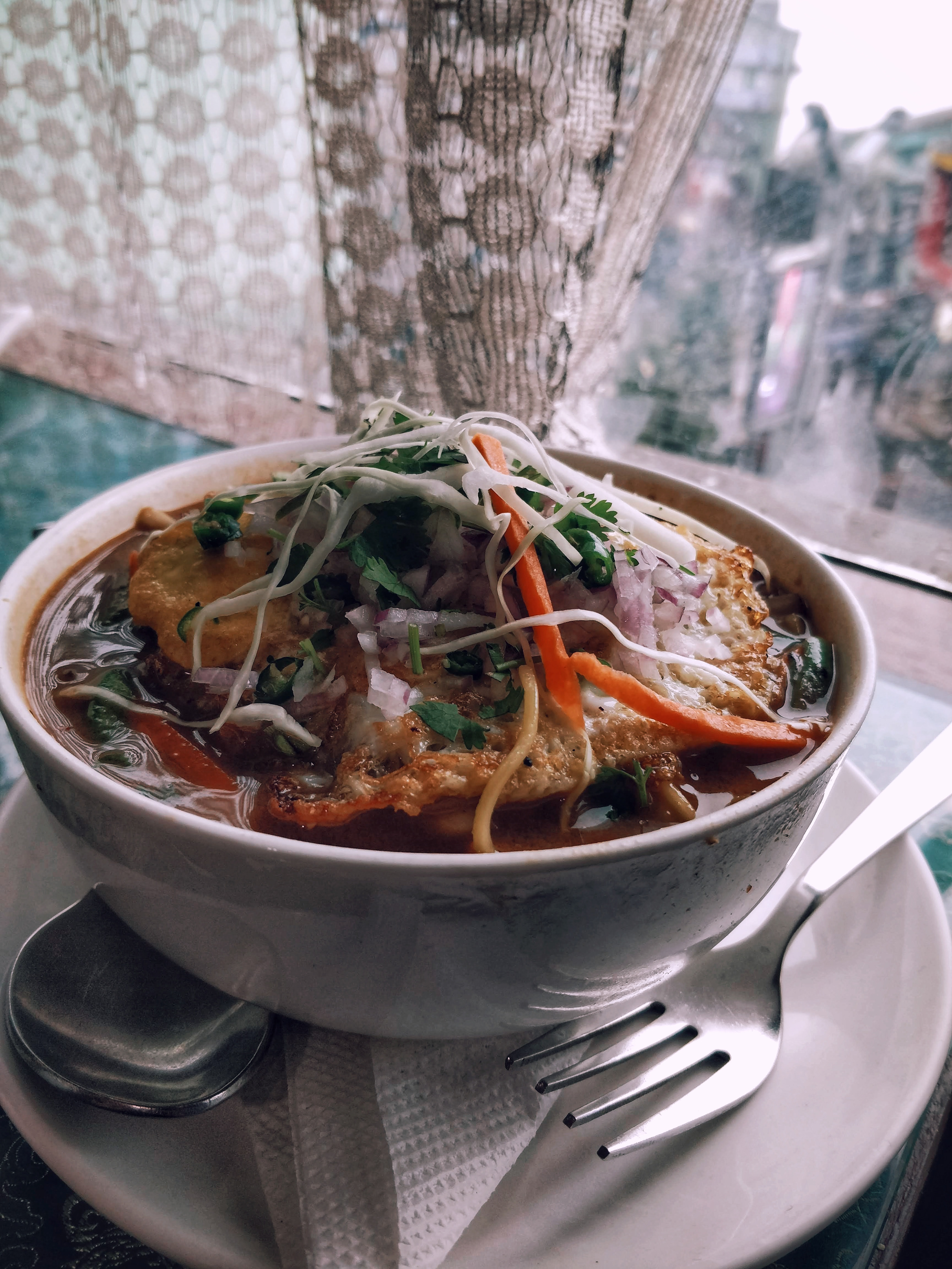
    • Thukpa: Noodle soup, rich in spices and vegetables. Usually contains some form of meat. Common variations: Thenthuk and Gyathuk
    • Momos: Steamed or fried dumplings, usually with a meat filling.
    • Saadheko: Spicy marinated chicken salad.
    • Gundruk Soup: A soup made from Gundruk, a fermented leafy green vegetable.
    • Sinki : A fermented radish tap-root product, traditionally consumed as a base for soup and as a pickle. Eerily similar to Kimchi.
  • While pork and beef are pretty common, finding vegetarian dishes is equally easy.
  • Staple: Dal-Bhat with Subzi. Rice is a lot more common than wheat (rice) possibly due to greater carb content and proximity to West Bengal, India s largest producer of Rice.
  • Good places to eat in Gangtok
    • Hamro Bhansa Ghar, Nimtho (Nepali)
    • Taste of Tibet
    • Dragon Wok (Chinese & Japanese)

Buddhism in Sikkim
  • Bayul Demojong (Sikkim), is the most sacred Land in the Himalayas as per the belief of the Northern Buddhists and various religious texts.
  • Sikkim was blessed by Guru Padmasambhava, the great Buddhist saint who visited Sikkim in the 8th century and consecrated the land.
  • However, Buddhism is said to have reached Sikkim only in the 17th century with the arrival of three Tibetan monks viz. Rigdzin Goedki Demthruchen, Mon Kathok Sonam Gyaltshen & Rigdzin Legden Je at Yuksom. Together, they established a Buddhist monastery.
  • In 1642 they crowned Phuntsog Namgyal as the first monarch of Sikkim and gave him the title of Chogyal, or Dharma Raja.
  • The faith became popular through its royal patronage and soon many villages had their own monastery.
  • Today Sikkim has over 200 monasteries.

Major monasteries
  • Rumtek Monastery, 20Km from Gangtok
  • Lingdum/Ranka Monastery, 17Km from Gangtok
  • Phodong Monastery, 28Km from Gangtok
  • Ralang Monastery, 10Km from Ravangla
  • Tsuklakhang Monastery, Royal Palace, Gangtok
  • Enchey Monastery, Gangtok
  • Tashiding Monastery, 35Km from Ravangla


Reaching Sikkim
  • Gangtok, being the capital, is easiest to reach amongst other regions, by public transport and shared cabs.
  • By Air:
    • Pakyong (PYG) :
      • Nearest airport from Gangtok (about 1 hour away)
      • Tabletop airport
      • Reserved cabs cost around INR 1200.
      • As of Apr 2021, the only flights to PYG are from IGI (Delhi) and CCU (Kolkata).
    • Bagdogra (IXB) :
      • About 20 minutes from Siliguri and 4 hours from Gangtok.
      • Larger airport with flights to most major Indian cities.
      • Reserved cabs cost about INR 3000. Shared cabs cost about INR 350.
  • By Train:
    • New Jalpaiguri (NJP) :
      • About 20 minutes from Siliguri and 4 hours from Gangtok.
      • Reserved cabs cost about INR 3000. Shared cabs from INR 350.
  • By Road:
    • NH10 connects Siliguri to Gangtok
    • If you can t find buses plying to Gangtok directly, reach Siliguri and then take a cab to Gangtok.
  • Sikkim Nationalised Transport Div. also runs hourly buses between Siliguri and Gangtok and daily buses on other common routes. They re cheaper than shared cabs.
  • Wizzride also operates shared cabs between Siliguri/Bagdogra/NJP, Gangtok and Darjeeling. They cost about the same as shared cabs but pack in half as many people in luxury cars (Innova, Xylo, etc.) and are hence more comfortable.

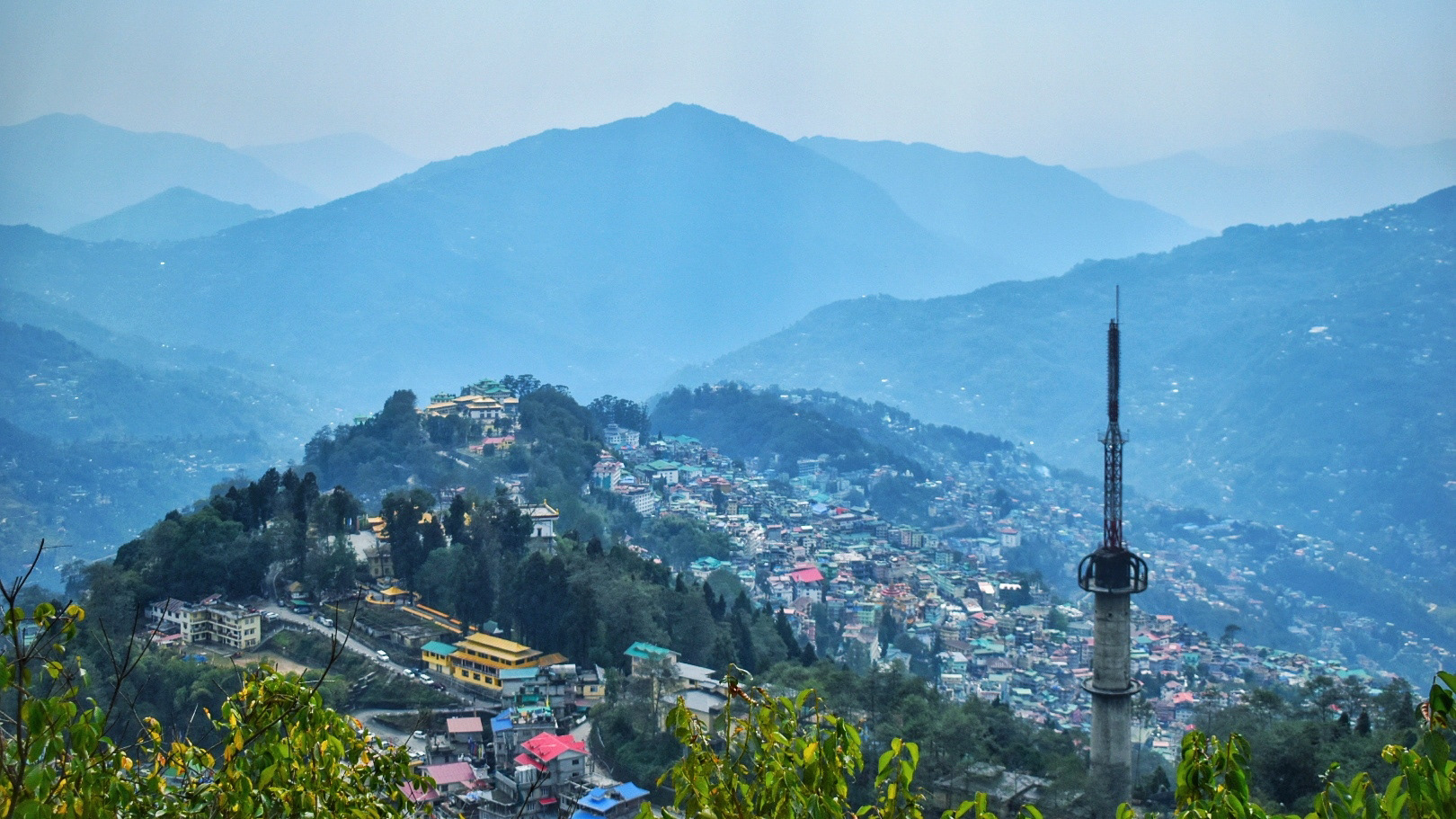
Gangtok
  • Time needed: 1D/1N
  • Places to visit:
    • Hanuman Tok
    • Ganesh Tok
    • Tashi View Point [6,800ft]
    • MG Marg
    • Sikkim Zoo
    • Gangtok Ropeway
    • Enchey Monastery
    • Tsuklakhang Palace & Monastery
  • Hostels: Tagalong Backpackers (would strongly recommend), Zostel Gangtok
  • Places to chill: Travel Cafe, Caf Live & Loud and Gangtok Groove
  • Places to shop: Lal Market and MG Marg

Getting Around
  • Taxis operate on a reserved or shared basis. In case of the latter, you can pool with other commuters your taxis will pick up and drop en-route.
  • Naturally shared taxis only operate on popular routes. The easiest way to get around Gangtok is to catch a shared cab from MG Marg.
  • Reserved taxis for Gangtok sightseeing cost around INR 1000-1500, depending upon the spots you d like to see
  • Key taxi/bus stands :
    • Deorali stand: For Darjeeling, Siliguri, Kalimpong
    • Vajra stand: For North & East Sikkim (Tsomgo Lake & Nathula)
    • Rumtek taxi: For Ravangla, Pelling, Namchi, Geyzing, Jorethang and Singtam.
Exploring Gangtok on an MTB

North Sikkim
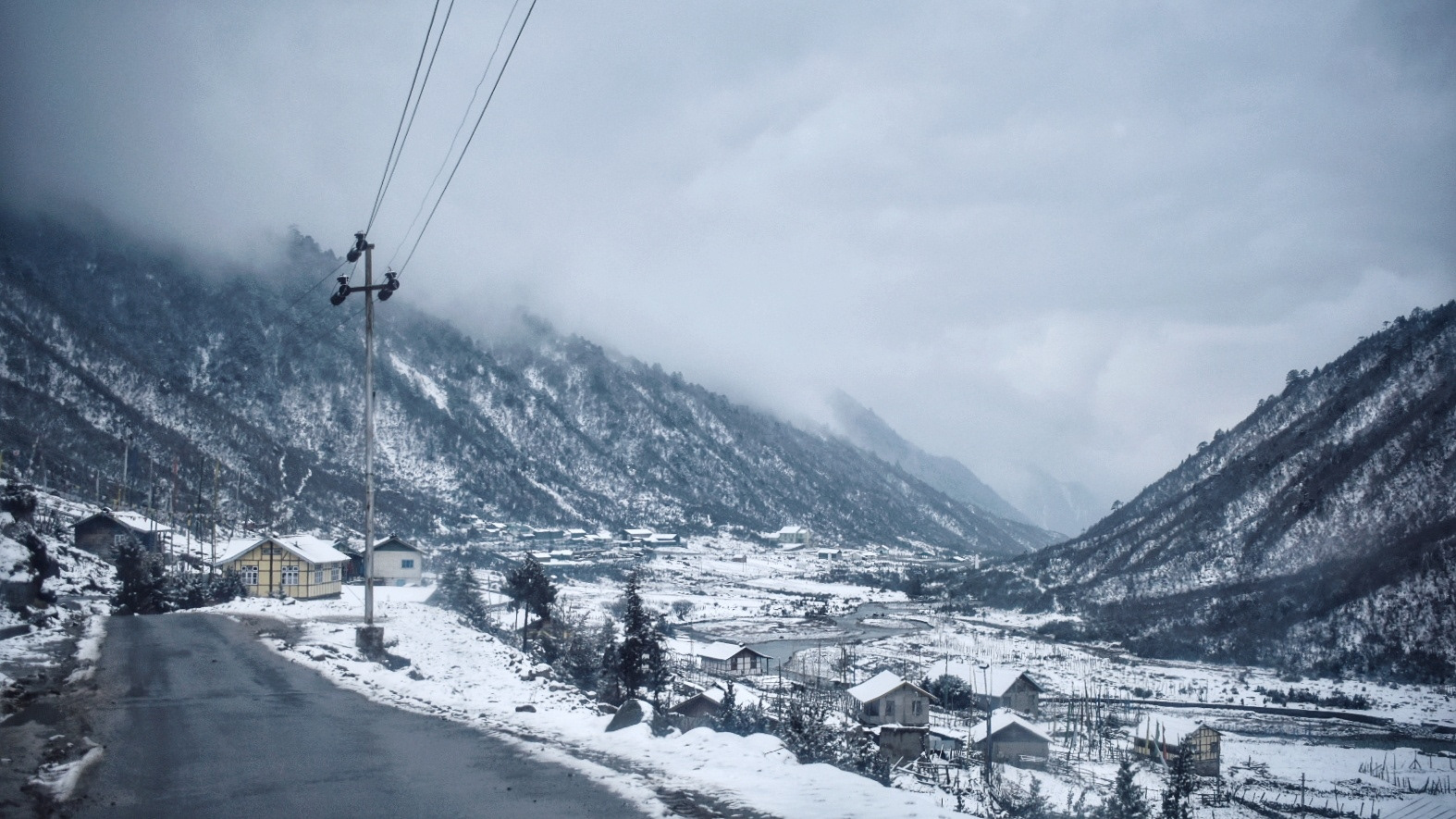
  • The easiest & most economical way to explore North Sikkim is the 3D/2N package offered by shared-cab drivers.
  • This includes food, permits, cab rides and accommodation (1N in Lachen and 1N in Lachung)
  • The accommodation on both nights are at homestays with bare necessities, so keep your hopes low.
  • In the spirit of sustainable tourism, you ll be asked to discard single-use plastic bottles, so please carry a bottle that you can refill along the way.
  • Zero Point and Gurdongmer Lake are snow-capped throughout the year
3D/2N Shared-cab Package Itinerary
  • Day 1
    • Gangtok (10am) - Chungthang - Lachung (stay)
  • Day 2
    • Pre-lunch : Lachung (6am) - Yumthang Valley [12,139ft] - Zero Point - Lachung [15,300ft]
    • Post-lunch : Lachung - Chungthang - Lachen (stay)
  • Day 3
    • Pre-lunch : Lachen (5am) - Kala Patthar - Gurdongmer Lake [16,910ft] - Lachen
    • Post-lunch : Lachen - Chungthang - Gangtok (7pm)
  • This itinerary is idealistic and depends on the level of snowfall.
  • Some drivers might switch up Day 2 and 3 itineraries by visiting Lachen and then Lachung, depending upon the weather.
  • Areas beyond Lachen & Lachung are heavily militarized since the Indo-China border is only a few miles away.

East Sikkim

Zuluk and Silk Route
  • Time needed: 2D/1N
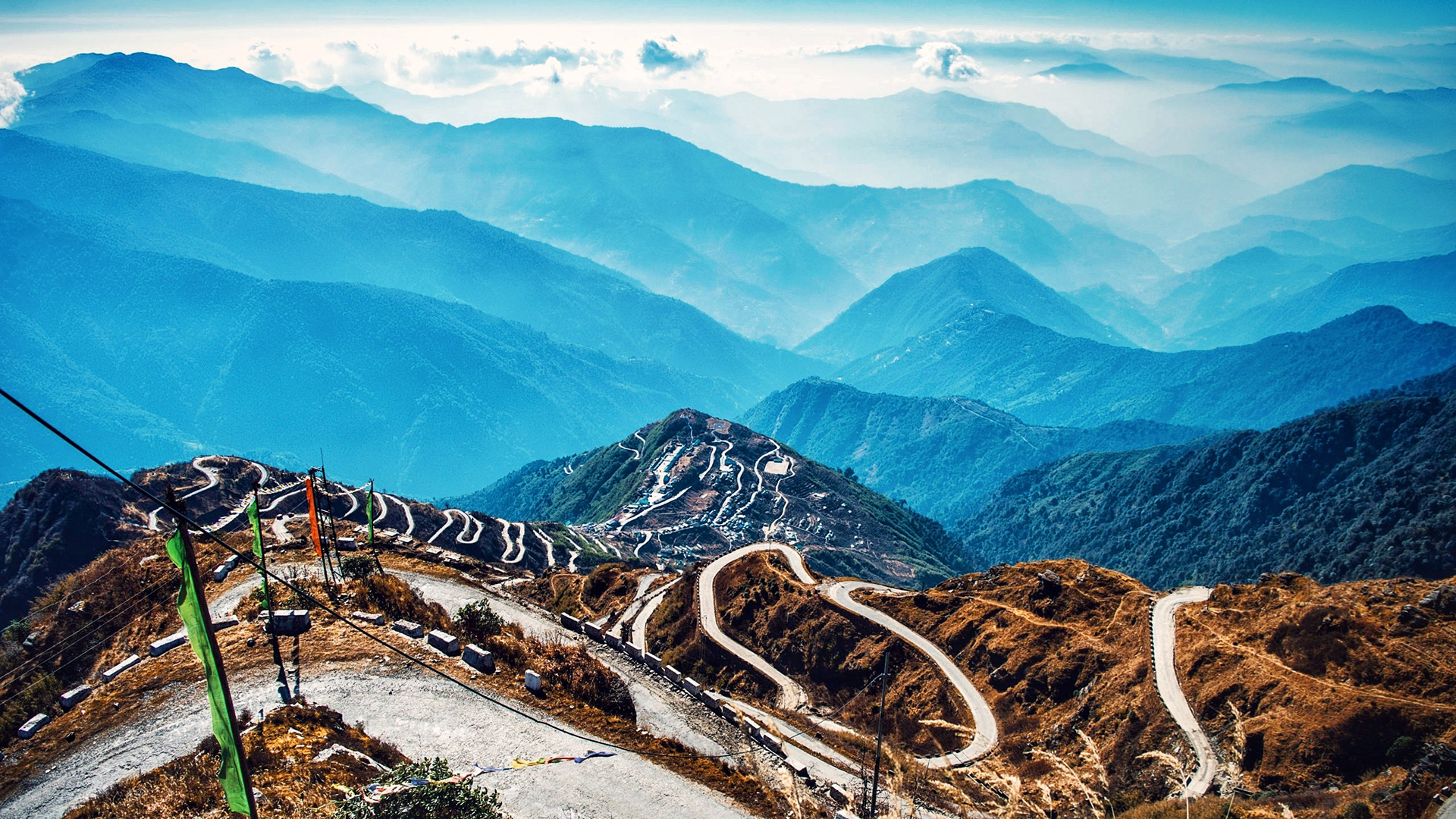
  • Zuluk [9,400ft] is a small hamlet with an excellent view of the eastern Himalayan range including the Kanchenjunga.
  • Was once a transit point to the historic Silk Route from Tibet (Lhasa) to India (West Bengal).
  • The drive from Gangtok to Zuluk takes at least four hours. Hence, it makes sense to spend the night at a homestay and space out your trip to Zuluk

Tsomgo Lake and Nathula
  • Time Needed : 1D
  • A Protected Area Permit is required to visit these places, due to their proximity to the Chinese border
  • Tsomgo/Chhangu Lake [12,313ft]
    • Glacial lake, 40 km from Gangtok.
    • Remains frozen during the winter season.
    • You can also ride on the back of a Yak for INR 300
  • Baba Mandir
    • An old temple dedicated to Baba Harbhajan Singh, a Sepoy in the 23rd Regiment, who died in 1962 near the Nathu La during Indo China war.
  • Nathula Pass [14,450ft]
    • Located on the Indo-Tibetan border crossing of the Old Silk Route, it is one of the three open trading posts between India and China.
    • Plays a key role in the Sino-Indian Trade and also serves as an official Border Personnel Meeting(BPM) Point.
    • May get cordoned off by the Indian Army in event of heavy snowfall or for other security reasons.


West Sikkim
  • Time needed: 3N/1N
  • Hostels at Pelling : Mochilerro Ostillo

Itinerary

Day 1: Gangtok - Ravangla - Pelling
  • Leave Gangtok early, for Ravangla through the Temi Tea Estate route.
  • Spend some time at the tea garden and then visit Buddha Park at Ravangla
  • Head to Pelling from Ravangla

Day 2: Pelling sightseeing
  • Hire a cab and visit Skywalk, Pemayangtse Monastery, Rabdentse Ruins, Kecheopalri Lake, Kanchenjunga Falls.

Day 3: Pelling - Gangtok/Siliguri
  • Wake up early to catch a glimpse of Kanchenjunga at the Pelling Helipad around sunrise
  • Head back to Gangtok on a shared-cab
  • You could take a bus/taxi back to Siliguri if Pelling is your last stop.

Darjeeling
  • In my opinion, Darjeeling is lovely for a two-day detour on your way back to Bagdogra/Siliguri and not any longer (unless you re a Bengali couple on a honeymoon)
  • Once a part of Sikkim, Darjeeling was ceded to the East India Company after a series of wars, with Sikkim briefly receiving a grant from EIC for gifting Darjeeling to the latter
  • Post-independence, Darjeeling was merged with the state of West Bengal.

Itinerary

Day 1 :
  • Take a cab from Gangtok to Darjeeling (shared-cabs cost INR 300 per seat)
  • Reach Darjeeling by noon and check in to your Hostel. I stayed at Hideout.
  • Spend the evening visiting either a monastery (or the Batasia Loop), Nehru Road and Mall Road.
  • Grab dinner at Glenary whilst listening to live music.

Day 2:
  • Wake up early to catch the sunrise and a glimpse of Kanchenjunga at Tiger Hill. Since Tiger Hill is 10km from Darjeeling and requires a permit, book your taxi in advance.
  • Alternatively, if you don t want to get up at 4am or shell out INR1500 on the cab to Tiger Hill, walk to the Kanchenjunga View Point down Mall Road
  • Next, queue up outside Keventers for breakfast with a view in a century-old cafe
  • Get a cab at Gandhi Road and visit a tea garden (Happy Valley is the closest) and the Ropeway. I was lucky to meet 6 other backpackers at my hostel and we ended up pooling the cab at INR 200 per person, with INR 1400 being on the expensive side, but you could bargain.
  • Get lunch, buy some tea at Golden Tips, pack your bags and hop on a shared-cab back to Siliguri. It took us about 4hrs to reach Siliguri, with an hour to spare before my train.
  • If you ve still got time on your hands, then check out the Peace Pagoda and the Darjeeling Himalayan Railway (Toy Train). At INR 1500, I found the latter to be too expensive and skipped it.


Tips and hacks
  • Download offline maps, especially when you re exploring Northern Sikkim.
  • Food and booze are the cheapest in Gangtok. Stash up before heading to other regions.
  • Keep your Aadhar/Passport handy since you need permits to travel to North & East Sikkim.
  • In rural areas and some cafes, you may get to try Rhododendron Wine, made from Rhododendron arboreum a.k.a Gurans. Its production is a little hush-hush since the flower is considered holy and is also the National Flower of Nepal.
  • If you don t want to invest in a new jacket, boots or a pair of gloves, you can always rent them at nominal rates from your hotel or little stores around tourist sites.
  • Check the weather of a region before heading there. Low visibility and precipitation can quite literally dampen your experience.
  • Keep your itinerary flexible to accommodate for rest and impromptu plans.
  • Shops and restaurants close by 8pm in Sikkim and Darjeeling. Plan for the same.

Carry
  • a couple of extra pairs of socks (woollen, if possible)
  • a pair of slippers to wear indoors
  • a reusable water bottle
  • an umbrella
  • a power bank
  • a couple of tablets of Diamox. Helps deal with altitude sickness
  • extra clothes and wet bags since you may not get a chance to wash/dry your clothes
  • a few passport size photographs

Shared-cab hacks
  • Intercity rides can be exhausting. If you can afford it, pay for an additional seat.
  • Call shotgun on the drives beyond Lachen and Lachung. The views are breathtaking.
  • Return cabs tend to be cheaper (WB cabs travelling from SK and vice-versa)

Cost
  • My median daily expenditure (back when I went to Sikkim in early March 2021) was INR 1350.
  • This includes stay (bunk bed), food, wine and transit (shared cabs)
  • In my defence, I splurged on food, wine and extra seats in shared cabs, but if you re on a budget, you could easily get by on INR 1 - 1.2k per day.
  • For a 9-day trip, I ended up shelling out nearly INR 15k, including 2AC trains to & from Kolkata
  • Note : Summer (March to May) and Autumn (October to December) are peak seasons, and thereby more expensive to travel around.

Souvenirs and things you should buy

Buddhist souvenirs :
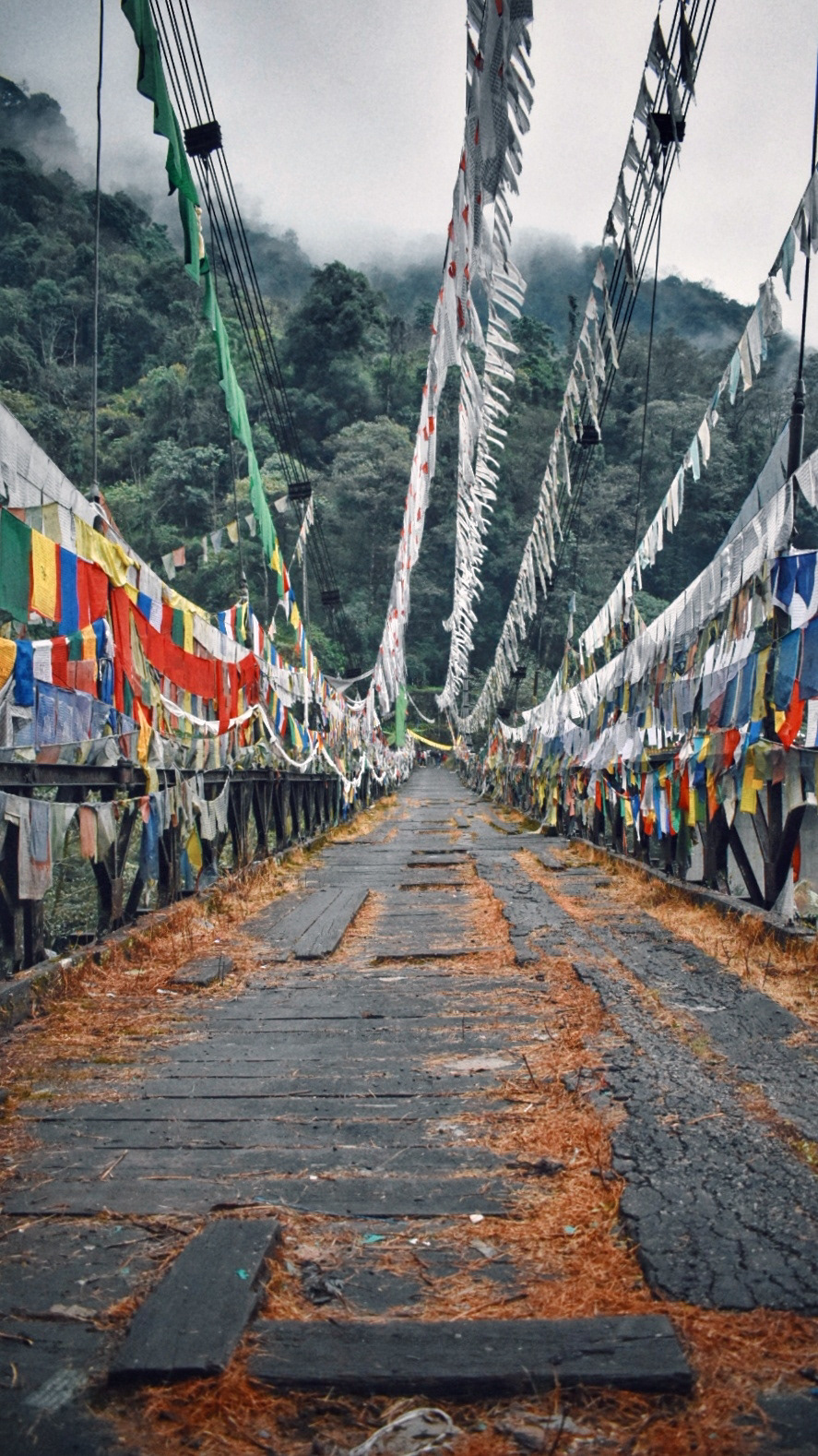
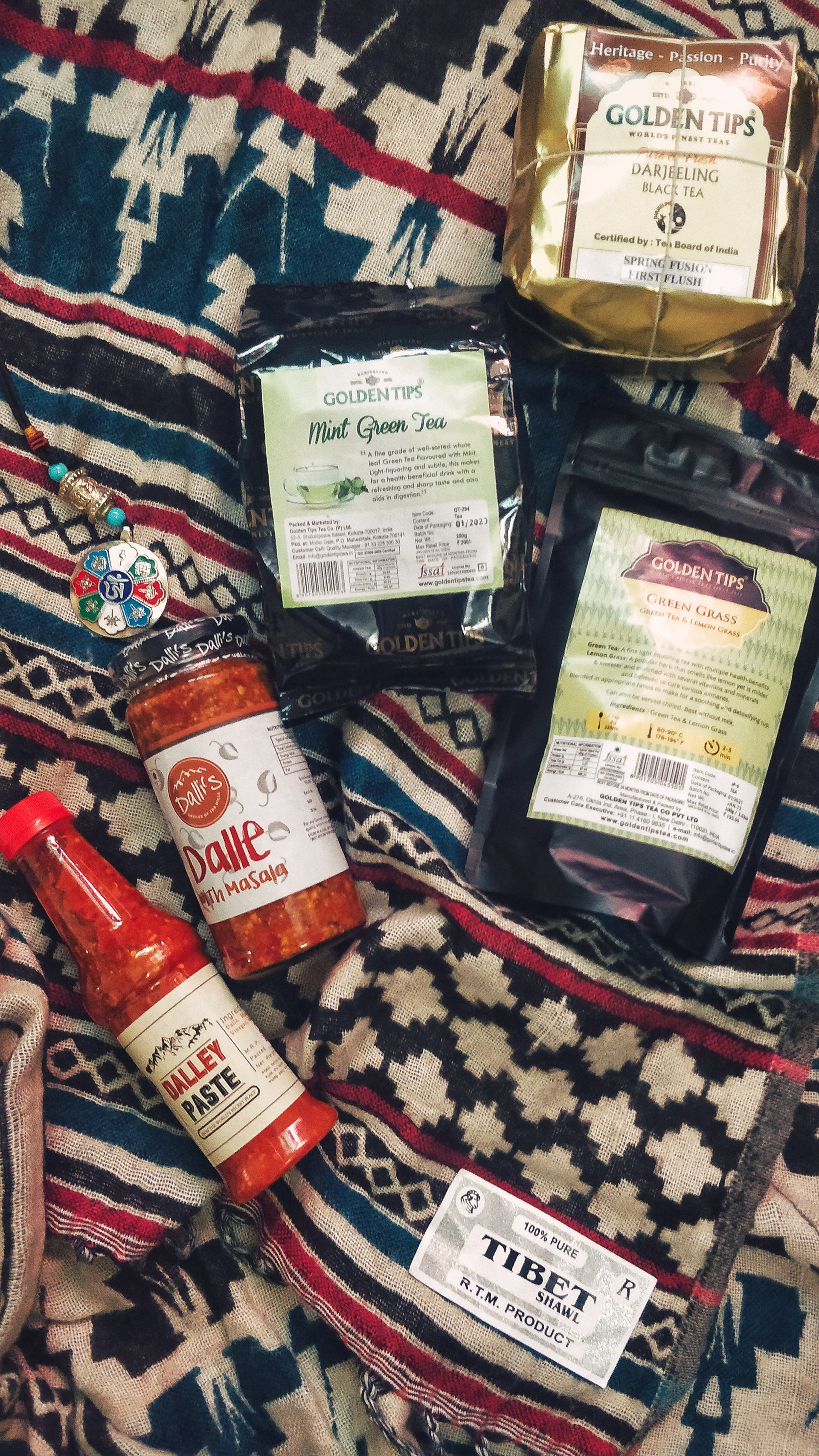
  • Colourful Prayer Flags (great for tying on bikes or behind car windshields)
  • Miniature Prayer/Mani Wheels
  • Lucky Charms, Pendants and Key Chains
  • Cham Dance masks and robes
  • Singing Bowls
  • Common symbols: Om mani padme hum, Ashtamangala, Zodiac signs

Handicrafts & Handlooms
  • Tibetan Yak Wool shawls, scarfs and carpets
  • Sikkimese Ceramic cups
  • Thangka Paintings

Edibles
  • Darjeeling Tea (usually brewed and not boiled)
  • Wine (Arucha Peach & Rhododendron)
  • Dalle Khursani (Chilli) Paste and Pickle

Header Icon made by Freepik from www.flaticon.com is licensed by CC 3.0 BY

9 April 2021

Michael Prokop: A Ceph war story

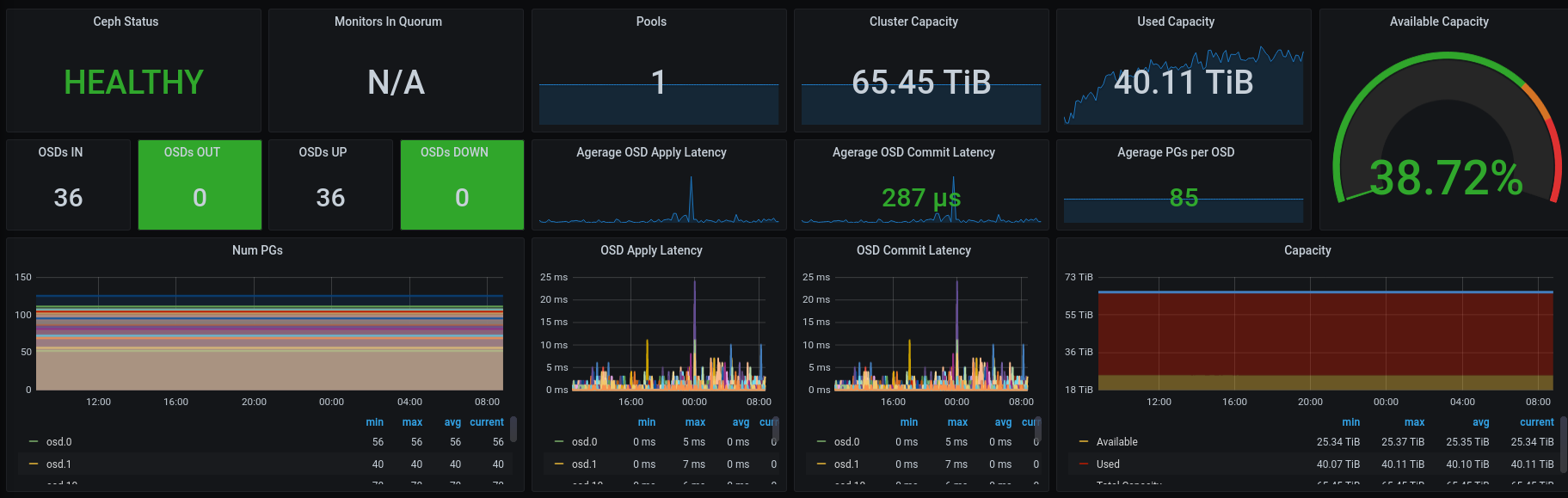
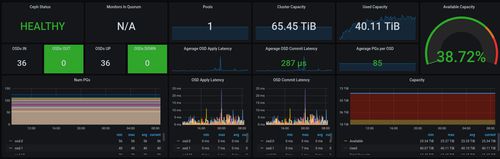
It all started with the big bang! We nearly lost 33 of 36 disks on a Proxmox/Ceph Cluster; this is the story of how we recovered them. At the end of 2020, we eventually had a long outstanding maintenance window for taking care of system upgrades at a customer. During this maintenance window, which involved reboots of server systems, the involved Ceph cluster unexpectedly went into a critical state. What was planned to be a few hours of checklist work in the early evening turned out to be an emergency case; let s call it a nightmare (not only because it included a big part of the night). Since we have learned a few things from our post mortem and RCA, it s worth sharing those with others. But first things first, let s step back and clarify what we had to deal with. The system and its upgrade One part of the upgrade included 3 Debian servers (we re calling them server1, server2 and server3 here), running on Proxmox v5 + Debian/stretch with 12 Ceph OSDs each (65.45TB in total), a so-called Proxmox Hyper-Converged Ceph Cluster. First, we went for upgrading the Proxmox v5/stretch system to Proxmox v6/buster, before updating Ceph Luminous v12.2.13 to the latest v14.2 release, supported by Proxmox v6/buster. The Proxmox upgrade included updating corosync from v2 to v3. As part of this upgrade, we had to apply some configuration changes, like adjust ring0 + ring1 address settings and add a mon_host configuration to the Ceph configuration. During the first two servers reboots, we noticed configuration glitches. After fixing those, we went for a reboot of the third server as well. Then we noticed that several Ceph OSDs were unexpectedly down. The NTP service wasn t working as expected after the upgrade. The underlying issue is a race condition of ntp with systemd-timesyncd (see #889290). As a result, we had clock skew problems with Ceph, indicating that the Ceph monitors clocks aren t running in sync (which is essential for proper Ceph operation). We initially assumed that our Ceph OSD failure derived from this clock skew problem, so we took care of it. After yet another round of reboots, to ensure the systems are running all with identical and sane configurations and services, we noticed lots of failing OSDs. This time all but three OSDs (19, 21 and 22) were down:
% sudo ceph osd tree
ID CLASS WEIGHT   TYPE NAME      STATUS REWEIGHT PRI-AFF
-1       65.44138 root default
-2       21.81310     host server1
 0   hdd  1.08989         osd.0    down  1.00000 1.00000
 1   hdd  1.08989         osd.1    down  1.00000 1.00000
 2   hdd  1.63539         osd.2    down  1.00000 1.00000
 3   hdd  1.63539         osd.3    down  1.00000 1.00000
 4   hdd  1.63539         osd.4    down  1.00000 1.00000
 5   hdd  1.63539         osd.5    down  1.00000 1.00000
18   hdd  2.18279         osd.18   down  1.00000 1.00000
20   hdd  2.18179         osd.20   down  1.00000 1.00000
28   hdd  2.18179         osd.28   down  1.00000 1.00000
29   hdd  2.18179         osd.29   down  1.00000 1.00000
30   hdd  2.18179         osd.30   down  1.00000 1.00000
31   hdd  2.18179         osd.31   down  1.00000 1.00000
-4       21.81409     host server2
 6   hdd  1.08989         osd.6    down  1.00000 1.00000
 7   hdd  1.08989         osd.7    down  1.00000 1.00000
 8   hdd  1.63539         osd.8    down  1.00000 1.00000
 9   hdd  1.63539         osd.9    down  1.00000 1.00000
10   hdd  1.63539         osd.10   down  1.00000 1.00000
11   hdd  1.63539         osd.11   down  1.00000 1.00000
19   hdd  2.18179         osd.19     up  1.00000 1.00000
21   hdd  2.18279         osd.21     up  1.00000 1.00000
22   hdd  2.18279         osd.22     up  1.00000 1.00000
32   hdd  2.18179         osd.32   down  1.00000 1.00000
33   hdd  2.18179         osd.33   down  1.00000 1.00000
34   hdd  2.18179         osd.34   down  1.00000 1.00000
-3       21.81419     host server3
12   hdd  1.08989         osd.12   down  1.00000 1.00000
13   hdd  1.08989         osd.13   down  1.00000 1.00000
14   hdd  1.63539         osd.14   down  1.00000 1.00000
15   hdd  1.63539         osd.15   down  1.00000 1.00000
16   hdd  1.63539         osd.16   down  1.00000 1.00000
17   hdd  1.63539         osd.17   down  1.00000 1.00000
23   hdd  2.18190         osd.23   down  1.00000 1.00000
24   hdd  2.18279         osd.24   down  1.00000 1.00000
25   hdd  2.18279         osd.25   down  1.00000 1.00000
35   hdd  2.18179         osd.35   down  1.00000 1.00000
36   hdd  2.18179         osd.36   down  1.00000 1.00000
37   hdd  2.18179         osd.37   down  1.00000 1.00000
Our blood pressure increased slightly! Did we just lose all of our cluster? What happened, and how can we get all the other OSDs back? We stumbled upon this beauty in our logs:
kernel: [   73.697957] XFS (sdl1): SB stripe unit sanity check failed
kernel: [   73.698002] XFS (sdl1): Metadata corruption detected at xfs_sb_read_verify+0x10e/0x180 [xfs], xfs_sb block 0xffffffffffffffff
kernel: [   73.698799] XFS (sdl1): Unmount and run xfs_repair
kernel: [   73.699199] XFS (sdl1): First 128 bytes of corrupted metadata buffer:
kernel: [   73.699677] 00000000: 58 46 53 42 00 00 10 00 00 00 00 00 00 00 62 00  XFSB..........b.
kernel: [   73.700205] 00000010: 00 00 00 00 00 00 00 00 00 00 00 00 00 00 00 00  ................
kernel: [   73.700836] 00000020: 62 44 2b c0 e6 22 40 d7 84 3d e1 cc 65 88 e9 d8  bD+.."@..=..e...
kernel: [   73.701347] 00000030: 00 00 00 00 00 00 40 08 00 00 00 00 00 00 01 00  ......@.........
kernel: [   73.701770] 00000040: 00 00 00 00 00 00 01 01 00 00 00 00 00 00 01 02  ................
ceph-disk[4240]: mount: /var/lib/ceph/tmp/mnt.jw367Y: mount(2) system call failed: Structure needs cleaning.
ceph-disk[4240]: ceph-disk: Mounting filesystem failed: Command '['/bin/mount', '-t', u'xfs', '-o', 'noatime,inode64', '--', '/dev/disk/by-parttypeuuid/4fbd7e29-9d25-41b8-afd0-062c0ceff05d.cdda39ed-5
ceph/tmp/mnt.jw367Y']' returned non-zero exit status 32
kernel: [   73.702162] 00000050: 00 00 00 01 00 00 18 80 00 00 00 04 00 00 00 00  ................
kernel: [   73.702550] 00000060: 00 00 06 48 bd a5 10 00 08 00 00 02 00 00 00 00  ...H............
kernel: [   73.702975] 00000070: 00 00 00 00 00 00 00 00 0c 0c 0b 01 0d 00 00 19  ................
kernel: [   73.703373] XFS (sdl1): SB validate failed with error -117.
The same issue was present for the other failing OSDs. We hoped, that the data itself was still there, and only the mounting of the XFS partitions failed. The Ceph cluster was initially installed in 2017 with Ceph jewel/10.2 with the OSDs on filestore (nowadays being a legacy approach to storing objects in Ceph). However, we migrated the disks to bluestore since then (with ceph-disk and not yet via ceph-volume what s being used nowadays). Using ceph-disk introduces these 100MB XFS partitions containing basic metadata for the OSD. Given that we had three working OSDs left, we decided to investigate how to rebuild the failing ones. Some folks on #ceph (thanks T1, ormandj + peetaur!) were kind enough to share how working XFS partitions looked like for them. After creating a backup (via dd), we tried to re-create such an XFS partition on server1. We noticed that even mounting a freshly created XFS partition failed:
synpromika@server1 ~ % sudo mkfs.xfs -f -i size=2048 -m uuid="4568c300-ad83-4288-963e-badcd99bf54f" /dev/sdc1
meta-data=/dev/sdc1              isize=2048   agcount=4, agsize=6272 blks
         =                       sectsz=4096  attr=2, projid32bit=1
         =                       crc=1        finobt=1, sparse=1, rmapbt=0
         =                       reflink=0
data     =                       bsize=4096   blocks=25088, imaxpct=25
         =                       sunit=128    swidth=64 blks
naming   =version 2              bsize=4096   ascii-ci=0, ftype=1
log      =internal log           bsize=4096   blocks=1608, version=2
         =                       sectsz=4096  sunit=1 blks, lazy-count=1
realtime =none                   extsz=4096   blocks=0, rtextents=0
synpromika@server1 ~ % sudo mount /dev/sdc1 /mnt/ceph-recovery
SB stripe unit sanity check failed
Metadata corruption detected at 0x433840, xfs_sb block 0x0/0x1000
libxfs_writebufr: write verifer failed on xfs_sb bno 0x0/0x1000
cache_node_purge: refcount was 1, not zero (node=0x1d3c400)
SB stripe unit sanity check failed
Metadata corruption detected at 0x433840, xfs_sb block 0x18800/0x1000
libxfs_writebufr: write verifer failed on xfs_sb bno 0x18800/0x1000
SB stripe unit sanity check failed
Metadata corruption detected at 0x433840, xfs_sb block 0x0/0x1000
libxfs_writebufr: write verifer failed on xfs_sb bno 0x0/0x1000
SB stripe unit sanity check failed
Metadata corruption detected at 0x433840, xfs_sb block 0x24c00/0x1000
libxfs_writebufr: write verifer failed on xfs_sb bno 0x24c00/0x1000
SB stripe unit sanity check failed
Metadata corruption detected at 0x433840, xfs_sb block 0xc400/0x1000
libxfs_writebufr: write verifer failed on xfs_sb bno 0xc400/0x1000
releasing dirty buffer (bulk) to free list!releasing dirty buffer (bulk) to free list!releasing dirty buffer (bulk) to free list!releasing dirty buffer (bulk) to free list!found dirty buffer (bulk) on free list!bad magic number
bad magic number
Metadata corruption detected at 0x433840, xfs_sb block 0x0/0x1000
libxfs_writebufr: write verifer failed on xfs_sb bno 0x0/0x1000
releasing dirty buffer (bulk) to free list!mount: /mnt/ceph-recovery: wrong fs type, bad option, bad superblock on /dev/sdc1, missing codepage or helper program, or other error.
Ouch. This very much looked related to the actual issue we re seeing. So we tried to execute mkfs.xfs with a bunch of different sunit/swidth settings. Using -d sunit=512 -d swidth=512 at least worked then, so we decided to force its usage in the creation of our OSD XFS partition. This brought us a working XFS partition. Please note, sunit must not be larger than swidth (more on that later!). Then we reconstructed how to restore all the metadata for the OSD (activate.monmap, active, block_uuid, bluefs, ceph_fsid, fsid, keyring, kv_backend, magic, mkfs_done, ready, require_osd_release, systemd, type, whoami). To identify the UUID, we can read the data from ceph --format json osd dump , like this for all our OSDs (Zsh syntax ftw!):
synpromika@server1 ~ % for f in  0..37  ; printf "osd-$f: %s\n" "$(sudo ceph --format json osd dump   jq -r ".osds[]   select(.osd==$f)   .uuid")"
osd-0: 4568c300-ad83-4288-963e-badcd99bf54f
osd-1: e573a17a-ccde-4719-bdf8-eef66903ca4f
osd-2: 0e1b2626-f248-4e7d-9950-f1a46644754e
osd-3: 1ac6a0a2-20ee-4ed8-9f76-d24e900c800c
[...]
Identifying the corresponding raw device for each OSD UUID is possible via:
synpromika@server1 ~ % UUID="4568c300-ad83-4288-963e-badcd99bf54f"
synpromika@server1 ~ % readlink -f /dev/disk/by-partuuid/"$ UUID "
/dev/sdc1
The OSD s key ID can be retrieved via:
synpromika@server1 ~ % OSD_ID=0
synpromika@server1 ~ % sudo ceph auth get osd."$ OSD_ID " -f json 2>/dev/null   jq -r '.[]   .key'
AQCKFpZdm0We[...]
Now we also need to identify the underlying block device:
synpromika@server1 ~ % OSD_ID=0
synpromika@server1 ~ % sudo ceph osd metadata osd."$ OSD_ID " -f json   jq -r '.bluestore_bdev_partition_path'    
/dev/sdc2
With all of this, we reconstructed the keyring, fsid, whoami, block + block_uuid files. All the other files inside the XFS metadata partition are identical on each OSD. So after placing and adjusting the corresponding metadata on the XFS partition for Ceph usage, we got a working OSD hurray! Since we had to fix yet another 32 OSDs, we decided to automate this XFS partitioning and metadata recovery procedure. We had a network share available on /srv/backup for storing backups of existing partition data. On each server, we tested the procedure with one single OSD before iterating over the list of remaining failing OSDs. We started with a shell script on server1, then adjusted the script for server2 and server3. This is the script, as we executed it on the 3rd server. Thanks to this, we managed to get the Ceph cluster up and running again. We didn t want to continue with the Ceph upgrade itself during the night though, as we wanted to know exactly what was going on and why the system behaved like that. Time for RCA! Root Cause Analysis So all but three OSDs on server2 failed, and the problem seems to be related to XFS. Therefore, our starting point for the RCA was, to identify what was different on server2, as compared to server1 + server3. My initial assumption was that this was related to some firmware issues with the involved controller (and as it turned out later, I was right!). The disks were attached as JBOD devices to a ServeRAID M5210 controller (with a stripe size of 512). Firmware state:
synpromika@server1 ~ % sudo storcli64 /c0 show all   grep '^Firmware'
Firmware Package Build = 24.16.0-0092
Firmware Version = 4.660.00-8156
synpromika@server2 ~ % sudo storcli64 /c0 show all   grep '^Firmware'
Firmware Package Build = 24.21.0-0112
Firmware Version = 4.680.00-8489
synpromika@server3 ~ % sudo storcli64 /c0 show all   grep '^Firmware'
Firmware Package Build = 24.16.0-0092
Firmware Version = 4.660.00-8156
This looked very promising, as server2 indeed runs with a different firmware version on the controller. But how so? Well, the motherboard of server2 got replaced by a Lenovo/IBM technician in January 2020, as we had a failing memory slot during a memory upgrade. As part of this procedure, the Lenovo/IBM technician installed the latest firmware versions. According to our documentation, some OSDs were rebuilt (due to the filestore->bluestore migration) in March and April 2020. It turned out that precisely those OSDs were the ones that survived the upgrade. So the surviving drives were created with a different firmware version running on the involved controller. All the other OSDs were created with an older controller firmware. But what difference does this make? Now let s check firmware changelogs. For the 24.21.0-0097 release we found this:
- Cannot create or mount xfs filesystem using xfsprogs 4.19.x kernel 4.20(SCGCQ02027889)
- xfs_info command run on an XFS file system created on a VD of strip size 1M shows sunit and swidth as 0(SCGCQ02056038)
Our XFS problem certainly was related to the controller s firmware. We also recalled that our monitoring system reported different sunit settings for the OSDs that were rebuilt in March and April. For example, OSD 21 was recreated and got different sunit settings:
WARN  server2.example.org  Mount options of /var/lib/ceph/osd/ceph-21      WARN - Missing: sunit=1024, Exceeding: sunit=512
We compared the new OSD 21 with an existing one (OSD 25 on server3):
synpromika@server2 ~ % systemctl show var-lib-ceph-osd-ceph\\x2d21.mount   grep sunit
Options=rw,noatime,attr2,inode64,sunit=512,swidth=512,noquota
synpromika@server3 ~ % systemctl show var-lib-ceph-osd-ceph\\x2d25.mount   grep sunit
Options=rw,noatime,attr2,inode64,sunit=1024,swidth=512,noquota
Thanks to our documentation, we could compare execution logs of their creation:
% diff -u ceph-disk-osd-25.log ceph-disk-osd-21.log
-synpromika@server2 ~ % sudo ceph-disk -v prepare --bluestore /dev/sdj --osd-id 25
+synpromika@server3 ~ % sudo ceph-disk -v prepare --bluestore /dev/sdi --osd-id 21
[...]
-command_check_call: Running command: /sbin/mkfs -t xfs -f -i size=2048 -- /dev/sdj1
-meta-data=/dev/sdj1              isize=2048   agcount=4, agsize=6272 blks
[...]
+command_check_call: Running command: /sbin/mkfs -t xfs -f -i size=2048 -- /dev/sdi1
+meta-data=/dev/sdi1              isize=2048   agcount=4, agsize=6336 blks
          =                       sectsz=4096  attr=2, projid32bit=1
          =                       crc=1        finobt=1, sparse=0, rmapbt=0, reflink=0
-data     =                       bsize=4096   blocks=25088, imaxpct=25
-         =                       sunit=128    swidth=64 blks
+data     =                       bsize=4096   blocks=25344, imaxpct=25
+         =                       sunit=64     swidth=64 blks
 naming   =version 2              bsize=4096   ascii-ci=0 ftype=1
 log      =internal log           bsize=4096   blocks=1608, version=2
          =                       sectsz=4096  sunit=1 blks, lazy-count=1
 realtime =none                   extsz=4096   blocks=0, rtextents=0
[...]
So back then, we even tried to track this down but couldn t make sense of it yet. But now this sounds very much like it is related to the problem we saw with this Ceph/XFS failure. We follow Occam s razor, assuming the simplest explanation is usually the right one, so let s check the disk properties and see what differs:
synpromika@server1 ~ % sudo blockdev --getsz --getsize64 --getss --getpbsz --getiomin --getioopt /dev/sdk
4685545472
2398999281664
512
4096
524288
262144
synpromika@server2 ~ % sudo blockdev --getsz --getsize64 --getss --getpbsz --getiomin --getioopt /dev/sdk
4685545472
2398999281664
512
4096
262144
262144
See the difference between server1 and server2 for identical disks? The getiomin option now reports something different for them:
synpromika@server1 ~ % sudo blockdev --getiomin /dev/sdk            
524288
synpromika@server1 ~ % cat /sys/block/sdk/queue/minimum_io_size
524288
synpromika@server2 ~ % sudo blockdev --getiomin /dev/sdk 
262144
synpromika@server2 ~ % cat /sys/block/sdk/queue/minimum_io_size
262144
It doesn t make sense that the minimum I/O size (iomin, AKA BLKIOMIN) is bigger than the optimal I/O size (ioopt, AKA BLKIOOPT). This leads us to Bug 202127 cannot mount or create xfs on a 597T device, which matches our findings here. But why did this XFS partition work in the past and fails now with the newer kernel version? The XFS behaviour change Now given that we have backups of all the XFS partition, we wanted to track down, a) when this XFS behaviour was introduced, and b) whether, and if so how it would be possible to reuse the XFS partition without having to rebuild it from scratch (e.g. if you would have no working Ceph OSD or backups left). Let s look at such a failing XFS partition with the Grml live system:
root@grml ~ # grml-version
grml64-full 2020.06 Release Codename Ausgehfuahangl [2020-06-24]
root@grml ~ # uname -a
Linux grml 5.6.0-2-amd64 #1 SMP Debian 5.6.14-2 (2020-06-09) x86_64 GNU/Linux
root@grml ~ # grml-hostname grml-2020-06
Setting hostname to grml-2020-06: done
root@grml ~ # exec zsh
root@grml-2020-06 ~ # dpkg -l xfsprogs util-linux
Desired=Unknown/Install/Remove/Purge/Hold
  Status=Not/Inst/Conf-files/Unpacked/halF-conf/Half-inst/trig-aWait/Trig-pend
 / Err?=(none)/Reinst-required (Status,Err: uppercase=bad)
 / Name           Version      Architecture Description
+++-==============-============-============-=========================================
ii  util-linux     2.35.2-4     amd64        miscellaneous system utilities
ii  xfsprogs       5.6.0-1+b2   amd64        Utilities for managing the XFS filesystem
There it s failing, no matter which mount option we try:
root@grml-2020-06 ~ # mount ./sdd1.dd /mnt
mount: /mnt: mount(2) system call failed: Structure needs cleaning.
root@grml-2020-06 ~ # dmesg   tail -30
[...]
[   64.788640] XFS (loop1): SB stripe unit sanity check failed
[   64.788671] XFS (loop1): Metadata corruption detected at xfs_sb_read_verify+0x102/0x170 [xfs], xfs_sb block 0xffffffffffffffff
[   64.788671] XFS (loop1): Unmount and run xfs_repair
[   64.788672] XFS (loop1): First 128 bytes of corrupted metadata buffer:
[   64.788673] 00000000: 58 46 53 42 00 00 10 00 00 00 00 00 00 00 62 00  XFSB..........b.
[   64.788674] 00000010: 00 00 00 00 00 00 00 00 00 00 00 00 00 00 00 00  ................
[   64.788675] 00000020: 32 b6 dc 35 53 b7 44 96 9d 63 30 ab b3 2b 68 36  2..5S.D..c0..+h6
[   64.788675] 00000030: 00 00 00 00 00 00 40 08 00 00 00 00 00 00 01 00  ......@.........
[   64.788675] 00000040: 00 00 00 00 00 00 01 01 00 00 00 00 00 00 01 02  ................
[   64.788676] 00000050: 00 00 00 01 00 00 18 80 00 00 00 04 00 00 00 00  ................
[   64.788677] 00000060: 00 00 06 48 bd a5 10 00 08 00 00 02 00 00 00 00  ...H............
[   64.788677] 00000070: 00 00 00 00 00 00 00 00 0c 0c 0b 01 0d 00 00 19  ................
[   64.788679] XFS (loop1): SB validate failed with error -117.
root@grml-2020-06 ~ # mount -t xfs -o rw,relatime,attr2,inode64,sunit=1024,swidth=512,noquota ./sdd1.dd /mnt/
mount: /mnt: wrong fs type, bad option, bad superblock on /dev/loop1, missing codepage or helper program, or other error.
32 root@grml-2020-06 ~ # dmesg   tail -1
[   66.342976] XFS (loop1): stripe width (512) must be a multiple of the stripe unit (1024)
root@grml-2020-06 ~ # mount -t xfs -o rw,relatime,attr2,inode64,sunit=512,swidth=512,noquota ./sdd1.dd /mnt/
mount: /mnt: mount(2) system call failed: Structure needs cleaning.
32 root@grml-2020-06 ~ # dmesg   tail -14
[   66.342976] XFS (loop1): stripe width (512) must be a multiple of the stripe unit (1024)
[   80.751277] XFS (loop1): SB stripe unit sanity check failed
[   80.751323] XFS (loop1): Metadata corruption detected at xfs_sb_read_verify+0x102/0x170 [xfs], xfs_sb block 0xffffffffffffffff 
[   80.751324] XFS (loop1): Unmount and run xfs_repair
[   80.751325] XFS (loop1): First 128 bytes of corrupted metadata buffer:
[   80.751327] 00000000: 58 46 53 42 00 00 10 00 00 00 00 00 00 00 62 00  XFSB..........b.
[   80.751328] 00000010: 00 00 00 00 00 00 00 00 00 00 00 00 00 00 00 00  ................
[   80.751330] 00000020: 32 b6 dc 35 53 b7 44 96 9d 63 30 ab b3 2b 68 36  2..5S.D..c0..+h6
[   80.751331] 00000030: 00 00 00 00 00 00 40 08 00 00 00 00 00 00 01 00  ......@.........
[   80.751331] 00000040: 00 00 00 00 00 00 01 01 00 00 00 00 00 00 01 02  ................
[   80.751332] 00000050: 00 00 00 01 00 00 18 80 00 00 00 04 00 00 00 00  ................
[   80.751333] 00000060: 00 00 06 48 bd a5 10 00 08 00 00 02 00 00 00 00  ...H............
[   80.751334] 00000070: 00 00 00 00 00 00 00 00 0c 0c 0b 01 0d 00 00 19  ................
[   80.751338] XFS (loop1): SB validate failed with error -117.
Also xfs_repair doesn t help either:
root@grml-2020-06 ~ # xfs_info ./sdd1.dd
meta-data=./sdd1.dd              isize=2048   agcount=4, agsize=6272 blks
         =                       sectsz=4096  attr=2, projid32bit=1
         =                       crc=1        finobt=1, sparse=0, rmapbt=0
         =                       reflink=0
data     =                       bsize=4096   blocks=25088, imaxpct=25
         =                       sunit=128    swidth=64 blks
naming   =version 2              bsize=4096   ascii-ci=0, ftype=1
log      =internal log           bsize=4096   blocks=1608, version=2
         =                       sectsz=4096  sunit=1 blks, lazy-count=1
realtime =none                   extsz=4096   blocks=0, rtextents=0
root@grml-2020-06 ~ # xfs_repair ./sdd1.dd
Phase 1 - find and verify superblock...
bad primary superblock - bad stripe width in superblock !!!
attempting to find secondary superblock...
..............................................................................................Sorry, could not find valid secondary superblock
Exiting now.
With the SB stripe unit sanity check failed message, we could easily track this down to the following commit fa4ca9c:
% git show fa4ca9c5574605d1e48b7e617705230a0640b6da   cat
commit fa4ca9c5574605d1e48b7e617705230a0640b6da
Author: Dave Chinner <dchinner@redhat.com>
Date:   Tue Jun 5 10:06:16 2018 -0700
    
    xfs: catch bad stripe alignment configurations
    
    When stripe alignments are invalid, data alignment algorithms in the
    allocator may not work correctly. Ensure we catch superblocks with
    invalid stripe alignment setups at mount time. These data alignment
    mismatches are now detected at mount time like this:
    
    XFS (loop0): SB stripe unit sanity check failed
    XFS (loop0): Metadata corruption detected at xfs_sb_read_verify+0xab/0x110, xfs_sb block 0xffffffffffffffff
    XFS (loop0): Unmount and run xfs_repair
    XFS (loop0): First 128 bytes of corrupted metadata buffer:
    0000000091c2de02: 58 46 53 42 00 00 10 00 00 00 00 00 00 00 10 00  XFSB............
    0000000023bff869: 00 00 00 00 00 00 00 00 00 00 00 00 00 00 00 00  ................
    00000000cdd8c893: 17 32 37 15 ff ca 46 3d 9a 17 d3 33 04 b5 f1 a2  .27...F=...3....
    000000009fd2844f: 00 00 00 00 00 00 00 04 00 00 00 00 00 00 06 d0  ................
    0000000088e9b0bb: 00 00 00 00 00 00 06 d1 00 00 00 00 00 00 06 d2  ................
    00000000ff233a20: 00 00 00 01 00 00 10 00 00 00 00 01 00 00 00 00  ................
    000000009db0ac8b: 00 00 03 60 e1 34 02 00 08 00 00 02 00 00 00 00  ... .4..........
    00000000f7022460: 00 00 00 00 00 00 00 00 0c 09 0b 01 0c 00 00 19  ................
    XFS (loop0): SB validate failed with error -117.
    
    And the mount fails.
    
    Signed-off-by: Dave Chinner <dchinner@redhat.com>
    Reviewed-by: Carlos Maiolino <cmaiolino@redhat.com>
    Reviewed-by: Darrick J. Wong <darrick.wong@oracle.com>
    Signed-off-by: Darrick J. Wong <darrick.wong@oracle.com>
diff --git fs/xfs/libxfs/xfs_sb.c fs/xfs/libxfs/xfs_sb.c
index b5dca3c8c84d..c06b6fc92966 100644
--- fs/xfs/libxfs/xfs_sb.c
+++ fs/xfs/libxfs/xfs_sb.c
@@ -278,6 +278,22 @@ xfs_mount_validate_sb(
                return -EFSCORRUPTED;
         
        
+       if (sbp->sb_unit)  
+               if (!xfs_sb_version_hasdalign(sbp)  
+                   sbp->sb_unit > sbp->sb_width  
+                   (sbp->sb_width % sbp->sb_unit) != 0)  
+                       xfs_notice(mp, "SB stripe unit sanity check failed");
+                       return -EFSCORRUPTED;
+                 
+         else if (xfs_sb_version_hasdalign(sbp))   
+               xfs_notice(mp, "SB stripe alignment sanity check failed");
+               return -EFSCORRUPTED;
+         else if (sbp->sb_width)  
+               xfs_notice(mp, "SB stripe width sanity check failed");
+               return -EFSCORRUPTED;
+        
+
+       
        if (xfs_sb_version_hascrc(&mp->m_sb) &&
            sbp->sb_blocksize < XFS_MIN_CRC_BLOCKSIZE)  
                xfs_notice(mp, "v5 SB sanity check failed");
This change is included in kernel versions 4.18-rc1 and newer:
% git describe --contains fa4ca9c5574605d1e48
v4.18-rc1~37^2~14
Now let s try with an older kernel version (4.9.0), using old Grml 2017.05 release:
root@grml ~ # grml-version
grml64-small 2017.05 Release Codename Freedatensuppe [2017-05-31]
root@grml ~ # uname -a
Linux grml 4.9.0-1-grml-amd64 #1 SMP Debian 4.9.29-1+grml.1 (2017-05-24) x86_64 GNU/Linux
root@grml ~ # lsb_release -a
No LSB modules are available.
Distributor ID: Debian
Description:    Debian GNU/Linux 9.0 (stretch)
Release:        9.0
Codename:       stretch
root@grml ~ # grml-hostname grml-2017-05
Setting hostname to grml-2017-05: done
root@grml ~ # exec zsh
root@grml-2017-05 ~ #
root@grml-2017-05 ~ # xfs_info ./sdd1.dd
xfs_info: ./sdd1.dd is not a mounted XFS filesystem
1 root@grml-2017-05 ~ # xfs_repair ./sdd1.dd
Phase 1 - find and verify superblock...
bad primary superblock - bad stripe width in superblock !!!
attempting to find secondary superblock...
..............................................................................................Sorry, could not find valid secondary superblock
Exiting now.
1 root@grml-2017-05 ~ # mount ./sdd1.dd /mnt
root@grml-2017-05 ~ # mount -t xfs
/root/sdd1.dd on /mnt type xfs (rw,relatime,attr2,inode64,sunit=1024,swidth=512,noquota)
root@grml-2017-05 ~ # ls /mnt
activate.monmap  active  block  block_uuid  bluefs  ceph_fsid  fsid  keyring  kv_backend  magic  mkfs_done  ready  require_osd_release  systemd  type  whoami
root@grml-2017-05 ~ # xfs_info /mnt
meta-data=/dev/loop1             isize=2048   agcount=4, agsize=6272 blks
         =                       sectsz=4096  attr=2, projid32bit=1
         =                       crc=1        finobt=1 spinodes=0 rmapbt=0
         =                       reflink=0
data     =                       bsize=4096   blocks=25088, imaxpct=25
         =                       sunit=128    swidth=64 blks
naming   =version 2              bsize=4096   ascii-ci=0 ftype=1
log      =internal               bsize=4096   blocks=1608, version=2
         =                       sectsz=4096  sunit=1 blks, lazy-count=1
realtime =none                   extsz=4096   blocks=0, rtextents=0
Mounting there indeed works! Now, if we mount the filesystem with new and proper sunit/swidth settings using the older kernel, it should rewrite them on disk:
root@grml-2017-05 ~ # mount -t xfs -o sunit=512,swidth=512 ./sdd1.dd /mnt/
root@grml-2017-05 ~ # umount /mnt/
And indeed, mounting this rewritten filesystem then also works with newer kernels:
root@grml-2020-06 ~ # mount ./sdd1.rewritten /mnt/
root@grml-2020-06 ~ # xfs_info /root/sdd1.rewritten
meta-data=/dev/loop1             isize=2048   agcount=4, agsize=6272 blks
         =                       sectsz=4096  attr=2, projid32bit=1
         =                       crc=1        finobt=1, sparse=0, rmapbt=0
         =                       reflink=0
data     =                       bsize=4096   blocks=25088, imaxpct=25
         =                       sunit=64    swidth=64 blks
naming   =version 2              bsize=4096   ascii-ci=0, ftype=1
log      =internal log           bsize=4096   blocks=1608, version=2
         =                       sectsz=4096  sunit=1 blks, lazy-count=1
realtime =none                   extsz=4096   blocks=0, rtextents=0
root@grml-2020-06 ~ # mount -t xfs                
/root/sdd1.rewritten on /mnt type xfs (rw,relatime,attr2,inode64,logbufs=8,logbsize=32k,sunit=512,swidth=512,noquota)
FTR: The sunit=512,swidth=512 from the xfs mount option is identical to xfs_info s output sunit=64,swidth=64 (because mount.xfs s sunit value is given in 512-byte block units, see man 5 xfs, and the xfs_info output reported here is in blocks with a block size (bsize) of 4096, so sunit = 512*512 := 64*4096 ). mkfs uses minimum and optimal sizes for stripe unit and stripe width; you can check this e.g. via (note that server2 with fixed firmware version reports proper values, whereas server3 with broken controller firmware reports non-sense):
synpromika@server2 ~ % for i in /sys/block/sd*/queue/ ; do printf "%s: %s %s\n" "$i" "$(cat "$i"/minimum_io_size)" "$(cat "$i"/optimal_io_size)" ; done
[...]
/sys/block/sdc/queue/: 262144 262144
/sys/block/sdd/queue/: 262144 262144
/sys/block/sde/queue/: 262144 262144
/sys/block/sdf/queue/: 262144 262144
/sys/block/sdg/queue/: 262144 262144
/sys/block/sdh/queue/: 262144 262144
/sys/block/sdi/queue/: 262144 262144
/sys/block/sdj/queue/: 262144 262144
/sys/block/sdk/queue/: 262144 262144
/sys/block/sdl/queue/: 262144 262144
/sys/block/sdm/queue/: 262144 262144
/sys/block/sdn/queue/: 262144 262144
[...]
synpromika@server3 ~ % for i in /sys/block/sd*/queue/ ; do printf "%s: %s %s\n" "$i" "$(cat "$i"/minimum_io_size)" "$(cat "$i"/optimal_io_size)" ; done
[...]
/sys/block/sdc/queue/: 524288 262144
/sys/block/sdd/queue/: 524288 262144
/sys/block/sde/queue/: 524288 262144
/sys/block/sdf/queue/: 524288 262144
/sys/block/sdg/queue/: 524288 262144
/sys/block/sdh/queue/: 524288 262144
/sys/block/sdi/queue/: 524288 262144
/sys/block/sdj/queue/: 524288 262144
/sys/block/sdk/queue/: 524288 262144
/sys/block/sdl/queue/: 524288 262144
/sys/block/sdm/queue/: 524288 262144
/sys/block/sdn/queue/: 524288 262144
[...]
This is the underlying reason why the initially created XFS partitions were created with incorrect sunit/swidth settings. The broken firmware of server1 and server3 was the cause of the incorrect settings they were ignored by old(er) xfs/kernel versions, but treated as an error by new ones. Make sure to also read the XFS FAQ regarding How to calculate the correct sunit,swidth values for optimal performance . We also stumbled upon two interesting reads in RedHat s knowledge base: 5075561 + 2150101 (requires an active subscription, though) and #1835947. Am I affected? How to work around it? To check whether your XFS mount points are affected by this issue, the following command line should be useful:
awk '$3 == "xfs" print $2 ' /proc/self/mounts   while read mount ; do echo -n "$mount " ; xfs_info $mount   awk '$0 ~ "swidth" gsub(/.*=/,"",$2); gsub(/.*=/,"",$3); print $2,$3 '   awk '  if ($1 > $2) print "impacted"; else print "OK" ' ; done
If you run into the above situation, the only known solution to get your original XFS partition working again, is to boot into an older kernel version again (4.17 or older), mount the XFS partition with correct sunit/swidth settings and then boot back into your new system (kernel version wise). Lessons learned Thanks: Darshaka Pathirana, Chris Hofstaedtler and Michael Hanscho. Looking for help with your IT infrastructure? Let us know!

5 April 2021

Kees Cook: security things in Linux v5.9

Previously: v5.8 Linux v5.9 was released in October, 2020. Here s my summary of various security things that I found interesting: seccomp user_notif file descriptor injection
Sargun Dhillon added the ability for SECCOMP_RET_USER_NOTIF filters to inject file descriptors into the target process using SECCOMP_IOCTL_NOTIF_ADDFD. This lets container managers fully emulate syscalls like open() and connect(), where an actual file descriptor is expected to be available after a successful syscall. In the process I fixed a couple bugs and refactored the file descriptor receiving code. zero-initialize stack variables with Clang
When Alexander Potapenko landed support for Clang s automatic variable initialization, it did so with a byte pattern designed to really stand out in kernel crashes. Now he s added support for doing zero initialization via CONFIG_INIT_STACK_ALL_ZERO, which besides actually being faster, has a few behavior benefits as well. Unlike pattern initialization, which has a higher chance of triggering existing bugs, zero initialization provides safe defaults for strings, pointers, indexes, and sizes. Like the pattern initialization, this feature stops entire classes of uninitialized stack variable flaws. common syscall entry/exit routines
Thomas Gleixner created architecture-independent code to do syscall entry/exit, since much of the kernel s work during a syscall entry and exit is the same. There was no need to repeat this in each architecture, and having it implemented separately meant bugs (or features) might only get fixed (or implemented) in a handful of architectures. It means that features like seccomp become much easier to build since it wouldn t need per-architecture implementations any more. Presently only x86 has switched over to the common routines. SLAB kfree() hardening
To reach CONFIG_SLAB_FREELIST_HARDENED feature-parity with the SLUB heap allocator, I added naive double-free detection and the ability to detect cross-cache freeing in the SLAB allocator. This should keep a class of type-confusion bugs from biting kernels using SLAB. (Most distro kernels use SLUB, but some smaller devices prefer the slightly more compact SLAB, so this hardening is mostly aimed at those systems.) new CAP_CHECKPOINT_RESTORE capability
Adrian Reber added the new CAP_CHECKPOINT_RESTORE capability, splitting this functionality off of CAP_SYS_ADMIN. The needs for the kernel to correctly checkpoint and restore a process (e.g. used to move processes between containers) continues to grow, and it became clear that the security implications were lower than those of CAP_SYS_ADMIN yet distinct from other capabilities. Using this capability is now the preferred method for doing things like changing /proc/self/exe. debugfs boot-time visibility restriction
Peter Enderborg added the debugfs boot parameter to control the visibility of the kernel s debug filesystem. The contents of debugfs continue to be a common area of sensitive information being exposed to attackers. While this was effectively possible by unsetting CONFIG_DEBUG_FS, that wasn t a great approach for system builders needing a single set of kernel configs (e.g. a distro kernel), so now it can be disabled at boot time. more seccomp architecture support
Michael Karcher implemented the SuperH seccomp hooks, Guo Ren implemented the C-SKY seccomp hooks, and Max Filippov implemented the xtensa seccomp hooks. Each of these included the ever-important updates to the seccomp regression testing suite in the kernel selftests. stack protector support for RISC-V
Guo Ren implemented -fstack-protector (and -fstack-protector-strong) support for RISC-V. This is the initial global-canary support while the patches to GCC to support per-task canaries is getting finished (similar to the per-task canaries done for arm64). This will mean nearly all stack frame write overflows are no longer useful to attackers on this architecture. It s nice to see this finally land for RISC-V, which is quickly approaching architecture feature parity with the other major architectures in the kernel. new tasklet API
Romain Perier and Allen Pais introduced a new tasklet API to make their use safer. Much like the timer_list refactoring work done earlier, the tasklet API is also a potential source of simple function-pointer-and-first-argument controlled exploits via linear heap overwrites. It s a smaller attack surface since it s used much less in the kernel, but it is the same weak design, making it a sensible thing to replace. While the use of the tasklet API is considered deprecated (replaced by threaded IRQs), it s not always a simple mechanical refactoring, so the old API still needs refactoring (since that CAN be done mechanically is most cases). x86 FSGSBASE implementation
Sasha Levin, Andy Lutomirski, Chang S. Bae, Andi Kleen, Tony Luck, Thomas Gleixner, and others landed the long-awaited FSGSBASE series. This provides task switching performance improvements while keeping the kernel safe from modules accidentally (or maliciously) trying to use the features directly (which exposed an unprivileged direct kernel access hole). filter x86 MSR writes
While it s been long understood that writing to CPU Model-Specific Registers (MSRs) from userspace was a bad idea, it has been left enabled for things like MSR_IA32_ENERGY_PERF_BIAS. Boris Petkov has decided enough is enough and has now enabled logging and kernel tainting (TAINT_CPU_OUT_OF_SPEC) by default and a way to disable MSR writes at runtime. (However, since this is controlled by a normal module parameter and the root user can just turn writes back on, I continue to recommend that people build with CONFIG_X86_MSR=n.) The expectation is that userspace MSR writes will be entirely removed in future kernels. uninitialized_var() macro removed
I made treewide changes to remove the uninitialized_var() macro, which had been used to silence compiler warnings. The rationale for this macro was weak to begin with ( the compiler is reporting an uninitialized variable that is clearly initialized ) since it was mainly papering over compiler bugs. However, it creates a much more fragile situation in the kernel since now such uses can actually disable automatic stack variable initialization, as well as mask legitimate unused variable warnings. The proper solution is to just initialize variables the compiler warns about. function pointer cast removals
Oscar Carter has started removing function pointer casts from the kernel, in an effort to allow the kernel to build with -Wcast-function-type. The future use of Control Flow Integrity checking (which does validation of function prototypes matching between the caller and the target) tends not to work well with function casts, so it d be nice to get rid of these before CFI lands. flexible array conversions
As part of Gustavo A. R. Silva s on-going work to replace zero-length and one-element arrays with flexible arrays, he has documented the details of the flexible array conversions, and the various helpers to be used in kernel code. Every commit gets the kernel closer to building with -Warray-bounds, which catches a lot of potential buffer overflows at compile time. That s it for now! Please let me know if you think anything else needs some attention. Next up is Linux v5.10.

2021, Kees Cook. This work is licensed under a Creative Commons Attribution-ShareAlike 4.0 License.
CC BY-SA 4.0

31 March 2021

Chris Lamb: Free software activities in March 2021

Here is my monthly update covering what I have been doing in the free software world during March 2021 (previous month):
  • Reviewed and merged a number of contributions from Dan Palmer for my django-autologin library aimed at applications that use the Django web-development framework that wish to include automatic "login" links in emails (etc.). Changes made include allowing callers to override max-age [...], ensuring we always retrieve the same user account [...] and to improve the usability of the public API [...].
  • Opened a pull request to make the build process for Scrapy (a framework for extracting data from websites) reproducible. [...]
Reproducible Builds One of the original promises of open source software is that distributed peer review and transparency of process results in enhanced end-user security. However, whilst anyone may inspect the source code of free and open source software for malicious flaws, almost all software today is distributed as pre-compiled binaries. This allows nefarious third-parties to compromise systems by injecting malicious code into ostensibly secure software during the various compilation and distribution processes. The motivation behind the Reproducible Builds effort is to ensure no flaws have been introduced during this compilation process by promising identical results are always generated from a given source, thus allowing multiple third-parties to come to a consensus on whether a build was compromised. The project is proud to be a member project of the Software Freedom Conservancy. Conservancy acts as a corporate umbrella allowing projects to operate as non-profit initiatives without managing their own corporate structure. If you like the work of the Conservancy or the Reproducible Builds project, please consider becoming an official supporter. This month, I:
  • Categorised a huge number of packages and issues in the Reproducible Builds "notes" repository.
  • In Debian:
    • Kept isdebianreproducibleyet.com up to date. [...]
    • I submitted 4 patches to fix specific reproducibility issues in cdebootstrap, jalview, php8.0 & python-scrapy.
    • Whilst looking into reproducible builds issues, I noticed that the heudiconv package could not be built reproducibly. This was because the call to help2man fails, so the manual page includes a Python traceback instead of the actual manpage. I filed a bug with a patch as Debian bug #984778.
    • I uploaded flask-peewee (0.6.7-3) to Debian to make the build reproducible (#885326) and did the same for pyvows (3.0.0-3) (#977487) too, refreshing the packaging at the same time.

I also made the following changes to diffoscope, including uploading versions 169, 170 and 171 to Debian:
  • New features:
    • If zipinfo(1) shows a difference but we cannot uncover a difference within the underlying .zip or .apk file, add a comment to the output and actually show the binary comparison. (#246)
    • Ensure all our temporary directories have useful names. [...]
    • Ignore --debug and similar arguments when creating a (hopefully-useful) temporary directory suffix. [...]
  • Optimisations:
    • Avoid frequent long lines in RPM header outputs that cause extremely slow HTML output generation. (#245)
    • Use larger read buffer block sizes when extracting files from archives. [...]
    • Use a much-shorter HTML class name instead of diffponct to optimise HTML output. [...]
  • Output improvements:
    • Make error extracting X, falling back to binary comparison 'Y' error message in diffoscope's output nicer. [...]
    • Don't emit "Unable to stat file" debug messages at all. We have entirely-artificial directory "entries" such as ELF sections which, of course, will never exist as files. [...]
  • Logging improvements:
    • Add the target directory when logging which directory we are extracting containers to. [...]
    • Format report size messages when generating HTML reports. [...]
    • Don't emit a Returning a FooContainer logging message too, as we already emit Instantiating a FooContainer log message. [...]
    • Reduce "Unable to stat file" warnings to debug messages as these are sometimes by design. [...]
  • Misc improvements:
    • Clarify a comment regarding not extracting excluded files. [...]
    • Remove trailing newline from updated test file (re: #243). [...]
    • Fix test_libmix_differences failure on openSUSE Tumbleweed. (#244)
    • Move test_rpm to use the assert_diff utility helper.
Debian Uploads
  • redis:
    • 6.0.12-1 New upstream release.
    • 6.2.1-1 New upstream release.
  • python-django (3.2~rc1-1) New upstream beta release.
  • flask-peewee (0.6.7-3) (via the Debian Python packaging team) Upload to refresh packaging and to make the build reproducible. (#885326)
  • bfs (2.2-1) New upstream release.
  • pyvows (3.0.0-3) (via the Debian Python packaging team) Refresh packaging and make the build reproducible. (#977487)

Debian LTS This month I worked 18 hours on Debian Long Term Support (LTS) and 12 hours on its sister Extended LTS project.
  • Frontdesk duties, responding to user/developer questions, attending monthly meeting, reviewing others' packages, participating in internal mailing list discussions, etc.
  • Investigated and triaged botan1.10 (CVE-2021-24115), busybox (CVE-2021-28831), courier-authlib (CVE-2021-28374), edk2 (CVE-2021-28210 & CVE-2021-28211), netty (CVE-2021-21295), open-build-service (CVE-2020-8031), openjpeg2 (CVE-2020-27844), python2.7 (CVE-2021-23336), rpm (CVE-2021-20248, [CVE-2021-20249](https://security-tracker.debian.org/tracker/CVE-2021-20249), CVE-2021-20266 & CVE-2021-20271), ruby-activerecord-session-store (CVE-2019-25025), ruby-carrierwave (CVE-2021-21288), salt (CVE-2020-28243, etc.), slic3r (CVE-2020-28591), squid3 (CVE-2020-25097 & CVE-2021-28116), velicity-tools (CVE-2020-13959), velocity (CVE-2020-13936) & yara (CVE-2021-3402).
  • Proposed an stable update for python-django in buster. (#983526)
  • Prepared and uploaded a stable update for redis in buster. (#983527)
  • Issued DLA 2595-1 and ELA 380-1 for velocity, a Java-based template engine for writing web applications. Velocity could be exploited to run arbitrary code by applications that allowed untrusted users to upload/modify templates.
  • Issued DLA 2597-1 and ELA 381-1 to address a cross-site scripting (XSS) vulnerability in velocity-tools, a collection of useful tools for the Velocity template engine. The default error page could be exploited to steal session cookies, perform requests in the name of the victim, used for phishing attacks and many other similar attacks.
  • Issued DLA 2600-1 and ELA 384-1 for pygments as it was discovered that there was a series of denial of service vulnerabilities in this syntax highlighting library for Python. A number of regular expressions had cubic (or even exponential) worst-case complexity which could cause a remote denial of service (DoS) when provided with malicious input.
  • Issued DLA 2603-1 to address a number of vulnerabilities in libmediainfo, a library reading metadata such as track names, lengths, etc. from media files.
You can find out more about the Debian LTS via the following video:

Russ Allbery: Review: Paladin's Strength

Review: Paladin's Strength, by T. Kingfisher
Series: The Saint of Steel #2
Publisher: Red Wombat Studio
Copyright: 2021
ASIN: B08WWKXXVY
Format: Kindle
Pages: 474
Paladin's Strength is a sequel of sorts to Paladin's Grace, but it has different protagonists. It picks up a subplot from that novel with another former follower of the Saint of Steel. You can safely read the books in any order; there are some minor spoilers for the Paladin's Grace subplot in this book, but nothing that would matter for the enjoyment of the story. Istvhan and his fellow brother Galen are acting as the head of a mercenary band, which has hired on to escort Master Distiller Brant and his collection of Emperor Oak barrels. In truth, they have another mission from the Temple of the White Rat: to track down a disturbing monster that leaves a trail of beheaded bodies. Clara is a lay sister of St. Ursa, a convent that was raided by slavers who hauled away the nuns. She was left for dead in Arral territory when she fell sick, and was taken as a house slave after they nursed her back to life. The story opens with her holding a sword in front of Istvhan's tent, part of the fallout of Istvhan killing a young Arral in self-defense. The politics of that fallout are not at all what Istvhan expects. They end with Clara traveling with Istvhan's company, at least for a while. Both Istvhan and Clara are telling the truth: Istvhan is escorting a merchant, and Clara is hoping to rescue her sisters. Both of them are also hiding a great deal. Istvhan's quiet investigation of the trail of a monster is easy enough to reveal once he knows Clara well enough. That he's a berserker who no longer has a god in control of his battle rage is another matter; the reader knows that, and of course so does Galen, but Istvhan has no intention of telling anyone else. Clara has her own secrets about herself and the sisters of St. Ursa, ones that neither the reader nor Istvhan knows. This is a T. Kingfisher novel about paladins, so of course it's also a romance. If you've read Kingfisher's other books, you know she writes slow burn romances, but Paladin's Strength is next level. Istvhan and Clara have good reasons to not want to get involved and to doubt the other person's attraction or willingness, but this goes far beyond the obvious to become faintly absurd. If you like the sort of romance where both leads generate endless reasons to not pursue the relationship (some legitimate, some not) while steadfastly refusing to talk to each other about them and endlessly rehashing hints and interpretations, you're in for a treat. For me, it was too much and crossed over into irritation. By the two-thirds point, Kingfisher was gleefully throwing obstacles in their way to drag out the suspense, and I just wanted everyone to shut up about having sex and get on with the rest of the story. That's unfortunate because I really liked Clara. She isn't the same type as Grace, Halla from Swordheart, or even Slate from Clockwork Boys and The Wonder Engine, the other novels set in this universe. She's self-contained, physically intimidating, cautious, deliberate, and very good at keeping her own counsel. I won't spoil her secret, since it's fun to work it out at the start of the book, but it's a lovely bit of characterization and world-building that Kingfisher handles with a thoughtful eye for its ramifications and effect on Clara's psychology. I would happily read more books about Clara. I liked Istvhan well enough when he was doing anything other than mooning over Clara. As with all of Kingfisher's paladins, he's not a very subtle person, but he's a good straight man for Clara's quiet bemusement. He fills the paladin slot in this story, which is all he needs to do. There's enough else going on with Clara and with the plot two separate major plotlines, plus a few subplots that Paladin's Strength can use a protagonist who heads straight forward and hits things until they fall down. The mooning, though... this is going to be a matter of personal taste. I think the intent was to contrast Istvhan's rather straightforward lustful appreciation with Clara's nuanced and trauma-laced reservations, and to play Istvhan's reactions in part for humor. I'm sure it works for some people, but I found Istvhan juvenile and puerile (albeit, to be clear, in a respectful and entirely consensual way), which didn't help me invest in a romance plot that I already thought dragged on too long. Thankfully the characters finally get past this in time for a dramatic and satisfying conclusion to the plot. The joy of Paladin's Grace (and Swordheart for that matter) was the character dynamics and quirky female lead, which made the romance work even when Stephen was being dense. The joy of Paladin's Strength for me was primarily Clara's matter-of-fact calm bemusement and secondarily the plot and the world-building. (Kingfisher's gnoles continue to be the best thing about this setting.) None of that helps the romance as much, and the slow burn was far, far too slow for me, which lowers this one a notch. Still, this was fun, and I'll keep reading books about the Temple of the White Rat and their various friends and encounters for as long as Kingfisher keeps writing them. Rating: 7 out of 10

29 March 2021

Jamie McClelland: The problem with Richard Stallman is not about free speech

Free speech and censorship are critically important issues. And, using them to defend Richard Stallman's return to the Free Software Foundation (FSF) board is just plain wrong. Richard Stallman resigned from the Board in 2019 after he sent an email in defense of Marvin Minsky (Minsky is accused of raping one of Jeffreys Epstein's victims). Stallman's fateful email, however, is just one piece of the reason for why he should not be on the board. The full story is about his history of abuse toward women and is extensive. On March 21st, 2021, Stallman announced he is back on the board. There are profound reasons why any movement interested in equitable and open participation would want to publicly distance themselves from Stallman. However, the long form defenses of Stallman, including a note from Nadine Strossen, the former executive director of the ACLU, quoted in this defense, persist. Many of the arguments defending Richard Stallman (including the one from Strossen) are grounded in a belief that Stallman is being punished for his unpopular political views, which deserve to be defended on the grounds of freedom of expression. That's wrong. Stallman should be kicked off the board because he has a long history of abusing his position to hit on women, which, when combined with his public opinions on under-age sex and his defense of Minsky, send a strong signal that the FSF does not care about the participation of women. Being on a board of directors is a privilege, not a right. Being removed from a board is not a punnishment. And being criticized and removed from a board because your behavior and public statements are an obstacle to building an inclusive and equitable movement is what every board should strive to do. If we are going to make this an issue about free expression, it should be about all the political expression lost to the free software movement because Stallman's unequal behavior toward women excluded an enormous number of talented individuals.

27 March 2021

Andrew Cater: Debian 10.9 release - 202103271900UTC - pushing through live image testing

So we're a fair way through the release, then. Testing of almost all the standard images has finished. Pretty much all of the disk images are now complete and in place.People are working their way through the tests of the debian-live images in the various desktop flavours. These have to be done on real hardware - so it does take time. A new tester - peylight - has dropped in to help for the first time. Sqrt not has also joined us from the other end of the timezone scale - we have somebody at UTC-0700 and somebody at UTC+0430 today. [I can't remember where Linux-fan is timezone wise] All of the help from all the testers is very welcome, as ever.
A slight pause - a couple of us have a meal to eat - but it looks as if we've done well on timings. The original estimate was for 2000UTC - maybe a little after that and we'll be finished and the images release can be published - there were a couple of minor hiccups but we've done well so far.
Thanks, as always, to the people behind the scenes doing all the work, to DSA and admins providing large machines for us to do the builds on and to the people who drop in and spend a few hours of their time on a working day/weekend to help out.

Neil Williams: Free and Open

A long time, no blog entries. What's prompted a new missive? Two things:
  • my own hankering to get back into free software after too many years faced with daily struggles against proprietary software
  • the upcoming GR in Debian.
All the time I've worked with software and computers, the lack of diversity in the contributors has irked me. I started my career in pharmaceutical sciences where the mix of people, at university, would appear to be genuinely diverse. It was in the workplace that the problems started, especially in the retail portion of community pharmacy with a particular gender imbalance between management and counter staff. Then I started to pick up programming. I gravitated to free software for the simple reason that I could tinker with the source code. To do a career change and learn how to program with a background in a completely alien branch of science, the only realistic route into the field is to have access to the raw material - source code. Without that, I would have been seeking a sponsor, in much the same way as other branches of science need grants or sponsors to purchase the equipment and facilities to get a foot in the door. All it took from me was some time, a willingness to learn and a means to work alongside those already involved. That's it. No complex titration equipment, flasks, centrifuges, pipettes, spectrographs, or petri dishes. It's hard to do pharmaceutical science from home. Software is so much more accessible - but only if the software itself is free. Software freedom removes the main barrier to entry. Software freedom enables the removal of other barriers too. Once the software is free, it becomes obvious that the compiler (indeed the entire toolchain) needs to be free, to turn the software into something other people can use. The same applies to interpreters, editors, kernels and the entire stack. I was in a different branch of science whilst all that was being created and I am very glad that Debian Woody was available as a free cover disc on a software magazine just at the time I was looking to pick up software programming. That should be that. The only next step to be good enough to write free software was the "means to work alongside those already involved". That, it turns out, is much more than just a machine running Debian. It's more than just having an ISP account and working email (not commonplace in 2003). It's working alongside the people - all the people. It was my first real exposure to the toxicity of some parts of many scientific and technical arenas. Where was the diversity? OK, maybe it was just early days and the other barriers (like an account with an ISP) were prohibitive for many parts of the world outside Europe & USA in 2003, so there were few people from other countries but the software world was massively dominated by the white Caucasian male. I'd been insulated by my degree course, and to a large extent by my university which also had courses which already had much more diverse intakes - optics and pharmacy, business and human resources. Relocating from the insular world of a little town in Wales to Birmingham was also key. Maybe things would improve as the technical barriers to internet connectivity were lowered. Sadly, no. The echo chamber of white Caucasian input has become more and more diluted as other countries have built the infrastructure to get the populace online. Debian has helped in this area, principally via DebConf. Yet only the ethnicity seemed to change, not the diversity. Recently, more is being done to at least make Debian more welcoming to those who are brave enough to increase the mix. Progress is much slower than the gains seen in the ethnicity mix, probably because that was a benefit of a technological change, not a societal change. The attitudes so prevalent in the late 20th century are becoming less prevalent amongst, and increasingly abhorrent to, the next generation of potential community members. Diversity must come or the pool of contributors will shrink to nil. Community members who cling to these attitudes are already dinosaurs and increasingly unwelcome. This is a necessary step to retain access to new contributors as existing contributors age. To be able to increase the number of contributors, the community cannot afford to be dragged backwards by anyone, no matter how important or (previously) respected. Debian, or even free software overall, cannot change all the problems with diversity in STEM but we must not perpetuate the problems either. Those people involved in free software need to be open to change, to input from all portions of society and welcoming. Puerile jokes and disrespectful attitudes must be a thing of the past. The technical contributions do not excuse behaviours that act to prevent new people joining the community. Debian is getting older, the community and the people. The presence of spouses at Debian social events does not fix the problem of the lack of diversity at Debian technical events. As contributors age, Debian must welcome new, younger, people to continue the work. All the technical contributions from the people during the 20th century will not sustain Debian in the 21st century. Bit rot affects us all. If the people who provided those contributions are not encouraging a more diverse mix to sustain free software into the future then all their contributions will be for nought and free software will die. So it comes to the FSF and RMS. I did hear Richard speak at an event in Bristol many years ago. I haven't personally witnessed the behavioural patterns that have been described by others but my memories of that event only add to the reality of those accounts. No attempts to be inclusive, jokes that focused on division and perpetuating the white male echo chamber. I'm not perfect, I struggle with some of this at times. Personally, I find the FSFE and Red Hat statements much more in line with my feelings on the matter than the open letter which is the basis of the GR. I deplore the preliminary FSF statement on governance as closed-minded, opaque and archaic. It only adds to my concerns that the FSF is not fit for the 21st century. The open letter has the advantage that it is a common text which has the backing of many in the community, individuals and groups, who are fit for purpose and whom I have respected for a long time. Free software must be open to contributions from all who are technically capable of doing the technical work required. Free software must equally require respect for all contributors and technical excellence is not an excuse for disrespect. Diversity is the life blood of all social groups and without social cohesion, technical contributions alone do not support a community. People can change and apologies are welcome when accompanied by modified behaviour. The issues causing a lack of diversity in Debian are complex and mostly reflective of a wider problem with STEM. Debian can only survive by working to change those parts of the wider problem which come within our influence. Influence is key here, this is a soft issue, replete with unreliable emotions, unhelpful polemic and complexity. Reputations are hard won and easily blemished. The problems are all about how Debian looks to those who are thinking about where to focus in the years to come. It looks like the FSFE should be the ones to take the baton from the FSF - unless the FSF can adopt a truly inclusive and open governance. My problem is not with RMS himself, what he has or has not done, which apologies are deemed sincere and whether behaviour has changed. He is one man and his contributions can be respected even as his behaviour is criticised. My problem is with the FSF for behaving in a closed, opaque and divisive manner and then making a governance statement that makes things worse, whilst purporting to be transparent. Institutions lay the foundations for the future of the community and must be expected to hold individuals to account. Free and open have been contentious concepts for the FSF, with all the arguments about Open Source which is not Free Software. It is clear that the FSF do understand the implications of freedom and openness. It is absurd to then adopt a closed and archaic governance. A valid governance model for the FSF would never have allowed RMS back onto the board, instead the FSF should be the primary institution to hold him, and others like him, to account for their actions. The FSF needs to be front and centre in promoting diversity and openness. The FSF could learn from the FSFE. The calls for the FSF to adopt a more diverse, inclusive, board membership are not new. I can only echo the Red Hat statement:
in order to regain the confidence of the broader free software community, the FSF should make fundamental and lasting changes to its governance.
...
[There is] no reason to believe that the most recent FSF board statement signals any meaningful commitment to positive change.
And the FSFE statement:
The goal of the software freedom movement is to empower all people to control technology and thereby create a better society for everyone. Free Software is meant to serve everyone regardless of their age, ability or disability, gender identity, sex, ethnicity, nationality, religion or sexual orientation. This requires an inclusive and diverse environment that welcomes all contributors equally.
The FSF has not demonstrated the behaviour I expect from a free software institution and I cannot respect an institution which proclaims a mantra of freedom and openness that is not reflected in the governance of that institution. The preliminary statement by the FSF board is abhorrent. The FSF must now take up the offers from those institutions within the community who retain the respect of that community. I'm only one voice, but I would implore the FSF to make substantive, positive and permanent change to the governance, practices and future of the FSF or face irrelevance.

23 March 2021

Ian Jackson: Signing the open letter about RMS

I have signed the open letter calling for RMS to be removed from all leadership positions, including the GNU Project, and for the whole FSF board to step down. Here is what I wrote in my commit message:
    I published my first Free Software in 1989, under the GNU General
    Public Licence.  I remain committed to the ideal of software freedom,
    for everyone.
    
    When the CSAIL list incident blew up I was horrified to read the
    stories of RMS's victims.  We have collectively failed those people
    and I am glad to see that many of us are working to make a better
    community.
    
    I have watched with horror as RMS has presided over, and condoned,
    astonishingly horrible behaviour in many GNU Project discussion
    venues.
    
    The Free Software Foundation Board are doing real harm by reinstating
    an abuser.  I had hoped for and expected better from them.
    
    RMS's vision and ideals of software freedom have been inspiring to me.
    But his past behaviour and current attitudes mean he must not and can
    not be in a leadership position in the Free Software community.
Comments are disabled. Edited 2021-03-23T21:44Z to fix a typo in the commit message.


comment count unavailable comments

22 March 2021

Rapha&#235;l Hertzog: Freexian s report about Debian Long Term Support, February 2020

A Debian LTS logo
Like each month, have a look at the work funded by Freexian s Debian LTS offering. Debian project funding In February, we put aside 5475 EUR to fund Debian projects. The first project from this initiative was finished and thus Carles Pina was able to issue the first invoice! We are looking forward to receive more projects from various Debian teams and contributors. Learn more about the rationale behind this initiative in this article. Debian LTS contributors In February, 12 contributors have been paid to work on Debian LTS, their reports are available:
  • Abhijith PA did 19.0h (out of 7h assigned and 12h from January).
  • Ben Hutchings did 19h (out of 16h assigned and 15.25h from January), thus carrying over 12.25h to March.
  • Brian May did 10h (out of 10h assigned).
  • Chris Lamb did 18h (out of 18h assigned).
  • Emilio Pozuelo Monfort did not report back about their work so for now we assume they did nothing (out of 28h assigned plus 35.5h from January), thus is carrying over 63.5h for March.
  • Holger Levsen did 6h coordinating/managing the LTS team.
  • Markus Koschany did 23.25h (out of 23.25h assigned).
  • Ola Lundqvist did 7h (out of 12h assigned and 10h from January) and gave back 5h, thus carrying over 10h to March.
  • Roberto C. S nchez did 10.5h (out of 32h assigned), thus carrying over 21.5h to March.
  • Sylvain Beucler did 30h (out of 30h assigned).
  • Thorsten Alteholz did 30h (out of 30h assigned).
  • Utkarsh Gupta did 60h (out of 60h assigned).
Evolution of the situation In February we released 28 DLAs (including one regression update) and we held an internal team meeting using video chat.
Finally, as every month we would like to remark once again that we are constantly looking for new contributors. Please contact Holger if you are interested! The security tracker currently lists 46 packages with a known CVE and the dla-needed.txt file has 34 packages needing an update. Thanks to our sponsors Sponsors that joined recently are in bold.

20 March 2021

Dirk Eddelbuettel: An Ode to Stable Interfaces: R and R Core Deserve So Much Praise

A few days ago, a friend and I were riffing about the wonderful stability of R and (subsets of) R packages. The rigorous ASAN/UBSAN/Valgrind/ checks, while at times frustrating for us package maintainers when we do not have easily replicable setups [1], really help in ensuring code quality. As do of course all other layers of quality control at CRAN, and for R. In passing, I mentioned there was an older blog post demonstrating a little power-law-alike behaviour between the most frequent R Core committer and everybody else. So I was intrigued. Could we just pick up a blog post I had written in August of 2007, or almost fourteen years ago, and run it as is? [2] Yes, we can. Which is truly, truly awesome. Back then I must have taken a minor shortcut and analysed just one calendar year of SVN that was pre-extracted (and a few more still exists here if one scrolls down). Maybe then I might not have had the r-devel SVN repo checkout. But these days (and for probably a decade now) I do, and just a few lines of bash get us a full log:
#!/bin/bash

## adjust as needed
svn=$ HOME /svn/r-devel

rev=$(cd $ svn  && svn info --show-item revision)
today=$(date +%Y-%m-%d)

echo -n "Extracting $ rev  revisions at $ today  ... "
(cd $ svn  && svn log --limit $ rev  )   gzip -9 > svn-log-$ today .txt.gz
echo "done"
So that leads to one code adjustments given the different input source. But otherwise the first paragraph runs as is (and now gives us 49.2% for the amazing Prof Ripley):
logfile <- "svn-log-2021-03-20.txt.gz"

## cf http://dirk.eddelbuettel.com/blog/2007/08/11/
x <- readLines(logfile)
rx <- x[grep("^r",x)]
who <- gsub(" ","",sapply(strsplit(rx,"\\ "),"[",2))
twho <- table(who)
twho["ripley"]/sum(twho)
That is what one gets by trusting stable interfaces: code untouched for fourteen years runs unchanged. R itself has had well over sixty releases since then, including two major and eighteen minor releases. Yet the code just runs, including the code for two graphs one can reproduce with the exact same code as we show next.
tod <- unlist(sapply(rx,function(x)strsplit(x,split=" ")[[1]][6]))
tod <- tod[who=="ripley"]

tz <- sub(pattern=".*(-[0-9] 4 ).*",replacement="\\1",x=rx)
tz <- tz[who=="ripley"]
tz <- as.numeric(tz)/100
offset <- 3600*tz

z <- strptime(tod,format="%H:%M:%S")
hist(z,"hours",main="Ripley Commit Times in SVN TZ")

h <- z - offset
h <- format(h,format="%H")
h <- factor(as.numeric(h), levels=0:23)
## added as.vector() here to suppress a warning
dotchart(as.vector(table(h)), main="Ripley Commit Times, By Hour in GMT",
         labels=paste(0:23,1:24,sep=":"))
The code reproduces the chart from 2008, but this time uses the full twenty plus years of SVN history. I added just one as.vector() to suppress one new warning which appears under current R and which was presumably added in the fourteen years since (at the chart is produces without it too). The remainder of the code also runs. I just added one library(zoo) my blog post had omitted. No other changes.
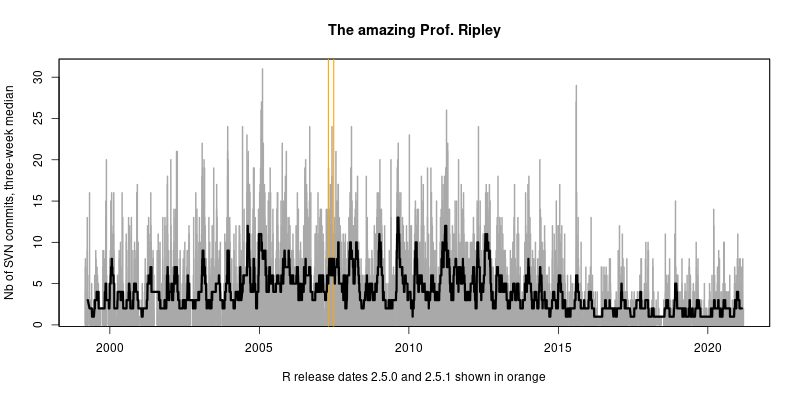
## rather extract both  date and time
dat <- unlist(sapply(rx, function(x)  
  txt <- strsplit(x,split=" ")[[1]]
  paste(txt[5], txt[6])
 ))
## subset on Prof Ripley
dat <- dat[who == "ripley"]
## and convert to POSIXct, correcting by tz as well
datpt <- as.POSIXct(strptime(dat,format="%Y-%m-%d %H:%M:%S")) - offset

## turn into zoo -- we use a constant series of ones as each
## committ is taken as a timestamped event
library(zoo)
datzoo <- zoo(1, order.by=datpt)
## and use zoo to aggregate into commits per date
daily <- aggregate(datzoo, as.Date(index(datzoo)), sum)

## now plot as grey bars
plot(daily, col='darkgrey', type='h', lwd=2,
     ylab="Nb of SVN commits, three-week median",
     xlab="R release dates 2.5.0 and 2.5.1 shown in orange",
     main="The amazing Prof. Ripley")
## mark the two R releases of 2007
abline(v=c(as.Date("2007-04-24"),as.Date("2007-06-28")),col='orange',lwd=1.5)
## and do a quick centered rolling median
lines(rollmedian(daily, 21, align="center"), lwd=3)
It produces this chart spanning two decades of commits. [3] The subtitle highlighting the then-most-recent releases is a little quaint now given that R has had eighten major.minor releases, and over sixty total releases, since then. Stable and rigourously maintained interfaces are a fantastic resource that is dramatically under-appreciated. Efforts such as the ten-year reproduction challenge demonstrate that this really is not a given. Maybe instead of celebrating band aides ( look, I reproduce via code I have frozen in a virtual environment / container / machine / ) we should celebrate languages, ecosystems, packages, that allow us to rely on just the code itself. Because we can. And we should strengthen and reinforce that ability. And discourage rapid changes just for changes sake. Code running for a decade, or even longer, is a huge boon to everybody relying on it. Three cheers to R Core. [1] Docker containers would be really good, and a step above the specs in the README. Winston s nice r-debug sumo container comes closest and helps a lot, and is updated regularly (which my earlier r-devel-san container is not). [2] The post owes some of its code ideas to Ben Bolker and Simon Jackman, but links to now-stale prior affiliations of theirs. [3] And the singularly impressive contributions charted remain unparalled, but were already the focus of the previous post. Yet over three times as a long period, they remain even more stunning. Edit 2021-03-21: Two minor fixes for grammar and typing.

19 March 2021

Antoine Beaupr : Securing my IRC (irssi, screen) session with dtach and systemd

A recent vulnerability in GNU screen caused some people to reconsider their commitment to the venerable terminal multiplexing program. GNU screen is probably used by thousands of old sysadmins around the world to run long-standing processes and, particularly, IRC sessions, which are especially vulnerable to arbitrary garbage coming on ... screen, so to speak. So this vulnerability matters, and you should definitely pay attention to it. If you haven't switched to tmux yet, now might be a good time to get your fingers trained. But don't switch to it just yet for your IRC session, and read on for a better, more secure solution. After all, it's not because we found this flaw in screen that it doesn't exist in tmux (or your favorite terminal emulator, for that matter, a much scarier thought).

Hardening my bouncer Back in March 2019, I had already switched away from screen for IRC, but not to tmux like many did, but to dtach. I figured that I didn't actually need multiplexing to run my long-running IRC session: I just needed to be able to reattach to the terminal. That's what dtach does. No windows, no panes, and, especially, no way to start a new shell, which is exactly the kind of hardening I need. So I came up with this, to start irssi:
dtach -N /run/$USER/dtach-irssi.socket irssi
To attach:
dtach -a /run/$USER/dtach-irssi.socket
Fairly simple no? Already one attack vector gone: evil attacker can't get a new shell through my terminal multiplexer, yay.

Splitting into another user But why stop there! Why am I running irssi as my main user anyways! Let's take the lessons from good UNIX security, and run this as a separate user altogether. This requires me to create another user, say foo-irc:
adduser foo-irc
... and run it as a systemd service, because how else are you going to start this thing anyways, cron? I came up with something like this unit file:
[Unit]
Description=IRC screen session
After=network.target
[Service]
Type=simple
Environment="TERM=screen.xterm-256color"
User=%i
RuntimeDirectory=%i
ExecStart=-/usr/bin/dtach -N /run/%i/dtach-irssi.socket irssi
ExecStop=-/bin/sh -c 'echo /quit stopping service...   exec /usr/bin/dtach -p /run/%i/dtach-irssi.socket'
ExecReload=-/bin/sh -c 'echo /restart   exec /usr/bin/dtach -p /run/%i/dtach-irssi.socket'
Notice this is a service template, because of the %i stuff. I don't actually remember how to enable this thing, but let's say you drop this in /etc/systemd/system/irssi@.service, then you run:
systemctl daemon-reload
And then, not sure about this bit, instantiate that template:
systemctl enable irssi@foo-irc.service
And then this should start the irssi session:
systemctl start irssi@foo-irc.service
To access the session:
sudo -u foo-irc dtach -a /run/foo-irc/dtach-irssi.socket
Obviously, you will probably need to migrate your irssi configuration over, otherwise you'll end up with a blank, old-school irssi. Take a moment to savor the view though. Nostalgia. Ah.

Hardening irssi But this is still not enough. That pesky foo-irc user can still launch arbitrary commands, thanks to irssi /exec (and a generous Perl scripting environment). Let's throw the entire kitchen sink at it and see what sticks. At this point, the unit file becomes too long to just maintain in a blog post (which would be silly, but not unheard of), so just look at this git repository instead.

Password-less remote irssi The neat thing with this hardening is that I now feel comfortable enough with the setup to just add a password-less SSH key to that (basically throwaway) account: worst that can happen if someone gets a hold of that SSH key is they land in a heavily sandboxed irssi session. So yay, no password to jump on chat. Like a real client or something. Just make sure to secure the SSH key you'll deploy in authorized_keys with:
restrict,pty,command="dtach -a /run/foo-irc/dtach-irssi.socket" [...]
Obviously, make sure the keys are not writable by the user, by placing it somewhere outside their home, which might require hacking at your server's SSH configuration. Because otherwise a compromised user will be able to change his own authorized_keys, which could be bad.

Configuration management And at this point, you may have noticed that you shouldn't actually followed my instructions to the letter. Instead, just use this neat little Puppet module which does all of the above, but also include some little wrapper so that mosh still works. It also includes instructions on how to setup your SSH keys. Enjoy, and let me know if (or rather, how) I messed up.

Updates
  1. it seems that dtach is not very active upstream: the last release (0.9) is from 2016, and the last commit (at the time of writing) is from 2017
  2. dtach is not necessarily safer than screen or tmux from arbitrary input from the outside, in fact there was a vulnerability on dtach CVE-2012-3368 that led to an attacker accessing stack memory (but maybe not code execution)
  3. after writing the Puppet module and publishing this article, I started to get weird behavior from dtach: i would leave the office at night and then return the next morning to find that I was timed out on servers. from my perspective, irssi noticed only when I re-attached the session:
    09:39:51 -!- Irssi: warning Broken pipe
    09:39:51 -!- Irssi: warning SSL write error: Broken pipe
    09:39:51 -!- Irssi: warning SSL write error: Broken pipe
    09:39:51 -!- Irssi: warning SSL write error: Broken pipe
    09:39:51 -!- Irssi: warning SSL write error: Broken pipe
    09:39:51 [bitlbee] -!- Irssi: Connection lost to localhost
    09:39:51 -!- Irssi: warning SSL write error: Broken pipe
    09:39:51 [gitter] -!- Irssi: Connection lost to irc.gitter.im
    09:39:51 [OFTC] -!- Irssi: Connection lost to irc.oftc.net
    09:42:34 [IMC] -!- Irssi: Connection lost to irc.indymedia.org
    09:42:34 -!- Irssi: Connection lost to irc.hackint.org
    09:42:34 -!- Irssi: Connection lost to chat.freenode.net
    09:42:34 -!- dtach_away: Set away
    
    from the outside I actually timed out a few minutes after I detached, which also makes for a weird asymmetry:
    22:31:00 -!- anarcat [~anarcat@ocean] has quit [Ping timeout: 250 seconds]
    
    that is eleven hours before the error I get.
  4. the mosh wrapper script seems to not work as well as it did before. somehow just running mosh $server hangs with a blank screen instead of instantly rejoining the session. I'm not sure it is related to the timeout problem but I did rewrite the wrapper before publication. this is the old version:
    #!/bin/sh
    # inspired by https://serverfault.com/questions/749474/ssh-authorized-keys-command-option-multiple-commands
    command="dtach -a /run/anarcat-irc/dtach-irssi.socket"
    case "$SSH_ORIGINAL_COMMAND" in
        mosh-server*)
        exec mosh-server -- $command
        ;;
        *)
        exec $command
        ;;
    esac
    
    I'm thinking of trying that one out for a while to see if it's related. The weirdest thing is that mosh "un-hangs" if i reattach with plain ssh, so there's definitely something fishy going on here.

18 March 2021

Arturo Borrero Gonz lez: Debugging ip token set RTNETLINK error

Networking At the Wikimedia Foundation they configure basically all servers with IPv4/IPv6 dual stack, at least in the control plane interface (those used for SSH management, etc). IPv6 is not supported yet on the Cloud Services dataplane (openstack), but it will in the near future. An elegant solution for this IPv4/IPv6 dual stack configuration in the control plane is to embed the IPv4 address into the IPv6 address, something like this:
IPv4: 208.80.154.23
IPv6: 2620:0:861:1:208:80:154:23
                   ^^^^^^^^^^^^^
The gateways send prefix advertisements and by default IPv6 autoconfiguration uses such routers prefixes plus the interface MAC address to build the final address. This behavior can be somewhat changed, you can explicitly set some data instead of the MAC address for the kernel to use when building the final IPv6 address. The trick is to use the ip token command, and further context and reasoning for this can be seen in the puppet manifest that the SRE team uses to configure this:
The token command explicitly configures the lower 64 bits that will be used with any autoconf
address, as opposed to one derived from the macaddr. This aligns the autoconf-assigned address with
the fixed one set above, and can do so as a pre-up command to avoid ever having another address
even temporarily, when this is all set up before boot.
For example:
user@debian:~$ sudo ip token list
token ::208:80:154:23 dev eno1
token :: dev eno2
token :: dev eno3
token :: dev eno4
user@debian:~$ sudo ip token set dev eno2 ::beef
user@debian:~$ ip token get dev eno2
token ::beef dev eno2
user@debian:~$ ip token list
token ::208:80:154:23 dev eno1
token ::beef dev eno2
token :: dev eno3
token :: dev eno4
I was installing a new server the other day and the networking service (ifupdown) was failing to bring the interface up. The issue was the ip token command failing:
root@cloudgw2002-dev:~# ip token set ::10:192:20:18 dev eno1
RTNETLINK answers: Invalid argument
RTNETLINK error reporting is awful. What could be wrong about that command? Well, I had to dig into the kernel source code to try figuring out where was that EINVAL being generated. The routine can be seen in the function inet6_set_iftoken() (source):
static int inet6_set_iftoken(struct inet6_dev *idev, struct in6_addr *token)
 
	struct inet6_ifaddr *ifp;
	struct net_device *dev = idev->dev;
	bool clear_token, update_rs = false;
	struct in6_addr ll_addr;
	ASSERT_RTNL();
	if (!token)
		return -EINVAL;
	if (dev->flags & (IFF_LOOPBACK   IFF_NOARP))
		return -EINVAL;
	if (!ipv6_accept_ra(idev))
		return -EINVAL;
	if (idev->cnf.rtr_solicits == 0)
		return -EINVAL;
[..]
I couldn t identify the reason at first glance, apparently I pass every check in there:
  • the token is being set, obviously
  • the interface is not loopback
  • the interface has the sysctl net.ipv6.conf.eno1.accept_ra = 1 (enabled)
  • the interface has the sysctl net.ipv6.conf.eno1.router_solicitations = -1 (disabled)
Something was wrong here. Upon deeper checks, I finally read the ipv6_accept_ra() function (source):
static inline bool ipv6_accept_ra(struct inet6_dev *idev)
 
	/* If forwarding is enabled, RA are not accepted unless the special
	 * hybrid mode (accept_ra=2) is enabled.
	 */
	return idev->cnf.forwarding ? idev->cnf.accept_ra == 2 :
	    idev->cnf.accept_ra;
 
That was it! Forwarding was enabled on the interface, and it shouldn t. I fixed my configuration with a simple patch for the sysctl configuration. Original issue on the Wikimedia Foundation ticketing system: Phabricator T277287

13 March 2021

Jonathan Dowland: Internal Gotek

This is the eleventh part in a series of blog posts. The previous post was FlashFloppy OLED display. The whole series is available here: Amiga.
It's still mostly all quiet on the Amiga project front. The last few months with both my kids at home have been too difficult and busy with no time for side projects. Primary Schools in the UK went back this week, and I've finally got around to installing the Gotek floppy emulator inside the Amiga A500's chassis. I followed A short "Internal Gotek Floppy" Installation Guide , which explains that you don't need to print (or buy) a special mount for it: Simply removing the Gotek's top plastic case is enough for it to fit inside, and you can support it with some nuts and bolts.
Gotek bolted into place Gotek bolted into place
Easy in theory, but it still took me a while, with plenty of trial and error to line it up just right. I ended up using some M4 bolts and smaller (the kind that you use in electrical sockets) to support the bottom part of the Gotek case in three places: one, at the front, re-using an original vertical support for the old floppy drive; and two at the back, screwing through two holes in the A500's outer case and mainboard. If I'd chosen short enough bolts, the back of the Gotek case could have probably just rested on the ends of those bolts, but the ones I had were another few cm longer, so I drilled holes in the Gotek case to run the bolts through, and secured it with nuts.
Knob, display and mount, external Knob, display and mount, external
In that guide, the author has an OLED display for their Gotek that they wanted on the top of the Amiga case, so they fed the four tiny wires through the grill. I had a go at that, but I've got the OLED display and a rotary encoder, so that's 8 wires total, and damn fiddly. Instead for now I've just routed them all out through the hole left behind by the floppy drive's Button. I'm going to try and tidy it up with some heat shrink or similar. So finally, my Amiga is one "unit" again, without dangly bits hanging off it (if you ignore those 8 tiny wires for now) that I can move around to store or use much more easily.

Louis-Philippe V ronneau: Preventing an OpenPGP Smartcard from caching the PIN eternally

While I'm overall very happy about my migration to an OpenPGP hardware token, the process wasn't entirely seamless and I had to hack around some issues, for example the PIN caching behavior in GnuPG. As described in this bug the cache-ttl parameter in GnuPG is not implemented and thus does nothing. This means once you type in your PIN, it is cached for as long as the token is plugged. Security-wise, this is not great. Instead of manually disconnecting the token frequently, I've come up with a script that restarts scdameon if the token hasn't been used during the last X minutes. It seems to work well and I call it using this cron entry: */5 * * * * my_user /usr/local/bin/restart-scdaemon To get a log from scdaemon, you'll need a ~/.gnupg/scdaemon.conf file that looks like this:
debug-level basic
log-file /var/log/scdaemon.log
Hopefully it can be useful to others!
 #!/usr/bin/python3
# Copyright 2021, Louis-Philippe V ronneau <pollo@debian.org>
#
# This script is free software: you can redistribute it and/or modify it under
# the terms of the GNU General Public License as published by the Free Software
# Foundation, either version 3 of the License, or (at your option) any later
# version.
# 
# This script is distributed in the hope that it will be useful, but WITHOUT
# ANY WARRANTY; without even the implied warranty of MERCHANTABILITY or FITNESS
# FOR A PARTICULAR PURPOSE. See the GNU General Public License for more
# details.
# 
# You should have received a copy of the GNU General Public License along with
# this script. If not, see <http://www.gnu.org/licenses/>.
"""
This script restarts scdaemon after X minutes of inactivity to reset the PIN
cache. It is meant to be ran by cron each X/2 minutes.
This is needed because there is currently no way to set a cache time for
smartcards. See https://dev.gnupg.org/T3362#137811 for more details.
"""
import os
import sys
import subprocess
from datetime import datetime, timedelta
from argparse import ArgumentParser
p = ArgumentParser(description=__doc__)
p.add_argument('-l', '--log', default="/var/log/scdaemon.log",
               help='Path to the scdaemon log file.')
p.add_argument('-t', '--timeout', type=int, default="10",
               help=("Desired cache time in minutes."))
args = p.parse_args()
def get_last_line(scdaemon_log):
    """Returns the last line of the scdameon log file."""
    with open(scdaemon_log, 'rb') as f:
        f.seek(-2, os.SEEK_END)
        while f.read(1) != b'\n':
            f.seek(-2, os.SEEK_CUR)
        last_line = f.readline().decode()
    return last_line
def check_time(last_line, timeout):
    """Returns True if scdaemon hasn't been called since the defined timeout."""
    # We don't need to restart scdaemon if no gpg command has been run since
    # the last time it was restarted.
    should_restart = True
    if "OK closing connection" in last_line:
        should_restart = False
    else:
        last_time = datetime.strptime(last_line[:19], '%Y-%m-%d %H:%M:%S')
        now = datetime.now()
        delta = now - last_time
        if delta <= timedelta(minutes = timeout):
            should_restart = False
    return should_restart
def restart_scdaemon(scdaemon_log):
    """Restart scdaemon and verify the restart process was successful."""
    subprocess.run(['gpgconf', '--reload', 'scdaemon'], check=True)
    last_line = get_last_line(scdaemon_log)
    if "OK closing connection" not in last_line:
        sys.exit("Restarting scdameon has failed.")
def main():
    """Main function."""
    last_line = get_last_line(args.log)
    should_restart = check_time(last_line, args.timeout)
    if should_restart:
        restart_scdaemon(args.log)
if __name__ == "__main__":
    main()

9 March 2021

Sylvestre Ledru: Debian running on Rust coreutils

tldr: Rust/coreutils ( https://github.com/uutils/coreutils/ ) is now available in Debian, good enough to boot a Debian with GNOME, install the top 1000 packages, build Firefox, the Linux Kernel and LLVM/Clang. Even if I wrote more than 100 patches to achieve that, it will probably be a bumpy ride for many other use cases.
It is also a terrific project to learn Rust. See the list of good first bugs. Even if I see Rust code every day at Mozilla, I was looking for an actual personal project (i.e. this isn't a Mozilla project) to learn Rust during the various COVID lockdowns. I started contributing to the alternative Coreutils developed in Rust. The project aims at proposing a drop-in replacement of the C-based GNU Coreutils, and I wanted to evaluate if this could be used to run a regular Debian. Similar to what I have done with clang.debian.net a few years ago (rebuilding the Debian archive using clang instead of gcc). I expect that most of the readers know what is the Coreutils. It is a set of programs performing simple operations (copy/move file, change permissions/ownership, etc). Even if some commands are from the 70s, they are at the base of Linux, Unix and macOS. While different implementations can be found, they are trying to remain compatible in terms of arguments, options, etc. This implementation of Coreutils isn t different! If you want to learn more about the history of Unix, I recommend this great Corecursive podcast with Brian Kernighan. While a lot of people contributed to this project, much was left to be done:
  • missing programs to be implemented. See https://github.com/uutils/coreutils#utilities
  • missing options in the various programs
  • code not following latest Rust best practices
  • lack of consistency in the code base (ex: functions with too many arguments)
  • lack of tests/low code coverage
  • Lots of failures when running the GNU Coreutils testsuite (141 tests pass on 613) - Some trivial to fix, some others harder A good way to start on a Rust project!

To start easy, I defined 4 goals for this work:
  1. Package Coreutils in Debian/Ubuntu
  2. Boot a Debian system with a Rust-based coreutils
  3. Install the top 1000 packages in Debian - including GNOME
  4. Build Firefox, the Linux Kernel and LLV/Clang

Packaging of Coreutils in Debian Packaging in Debian isn't a trivial or even simple task. It requires uploading independently all the dependencies in the archive. Rust, with its new ecosystem and small crates, is making this task significantly harder. The package is called rust-coreutils - https://tracker.debian.org/pkg/rust-coreutils For Debian/Ubuntu users, to have an idea of the complexity of packaging such applications, just run
debtree --build-dep rust-coreutils dot -Tsvg > coreutils.svg (should be around 1M). Since it isn't production ready, the rust-coreutils is installable in parallel with coreutils. This package does NOT replace the GNU/coreutils files (yet?), the new files are installed in /usr/lib/cargo/bin/. They can be used with: export PATH=/usr/lib/cargo/bin/:$PATH Or, uglier, overriding the files with the new ones.

Booting Debian with rust-coreutils To achieve this, because I knew I would likely break the image a few times, I created a new project to quickly install a full Debian with PXE and preseed. The project is available here: https://github.com/opencollab/qemu-debian-install-pxe-preseed/ A script to create the full qemu image: build_qemu_debian_image.sh A second script to boot on the newly created image: boot.sh Then, building and installing coreutils on the system (yeah, it is ugly - don t do that at home): apt install rust-coreutils
cd /usr/lib/cargo/bin/
for f in *; do
cp -f $f /usr/bin/
done
First surprise, unlike the old init.d init system, as systemd is not relying on a series of scripts (it is mostly written in C), replacing the coreutils did not have an impact. Therefore, I didn't experience any issue during the boot process

Implementing missing options A significant number of problems could be easily identified as a lack of support for some options. Here is a list of most of the fixes I had to implement to make this plan work:

Different behavior Most of the programs behaved as expected. Here is a list of differences:
  • install doesn't support using /dev/null as source file
    Setting up libreoffice-common (1:6.1.5-3+deb10u6) ...
    install: error: install: cannot install /dev/null to /etc/apparmor.d/local/usr.lib.libreoffice.program.oosplash : the source path is not an existing regular file
    A limitation of rust itself https://github.com/rust-lang/rust/issues/79390

Compile Firefox, Clang and the Linux Kernel Build systems can vary significantly one from the other. To verify their usage of coreutils, I built these three major projects

Firefox As Firefox relies mostly on Python as a build system, it went smoothly. I didn t encounter any issue. The only unrelated issue that I noticed working on it was apt-key was broken because the script relied on a buggy option of mktemp.

Linux Kernel I identified only two issues compared to GNU Coreutils:
  • The chown command on a non-existing symlink target doesn t fail on the GNU version, the Rust one was triggering an error.
    https://github.com/uutils/coreutils/pull/1694
  • Linux kernel
    ln -fsn ../../x86/boot/bzImage ./arch/x86_64/boot/bzImage
    ln: error: Unrecognized option: 'n'

LLVM/Clang The llvm toolchain relies on Cmake. Just like for Firefox, I didn t face any issue.

Comparing with GNU coreutils using its testsuite Recently, James Robson added a new test to run the GNU testsuite on the Rust/coreutils.

# TOTAL: 611
# PASS: 144
# SKIP: 86
# XFAIL: 0
# FAIL: 342
# XPASS: 0
# ERROR: 39
compared to 546 test passing with the GNU version. Even if a bunch of errors are just different outputs, it demonstrates that there is still a long road ahead.

Next steps & contribute First, we will need more motivated contributors to work on this project. Many features remain to be implemented, optimizations to be done (e.g. decreasing the memory usage), etc.
I started to create a list of good first bugs for newcomers: https://github.com/uutils/coreutils/issues?q=is%3Aissue+is%3Aopen+label%3A%22Good+first+bug%22
I will update this list of there is some interest for this project.
Helping improve the support of the GNU coreutils testsuite would be a huge step while being a great way to learn Rust! Then, once it is in a better state, we will be able to make it a reliable alternative in Debian/Ubuntu to the GNU/Coreutils. This might be also interesting for other folks who prefer a BSD license over a GPL.

Next.

Previous.