Search Results: "sto"

27 June 2012

Michal Čihař: Weblate - over 20000 translations in 3 months

Today, I wondered how much translations were done using Weblate since it was born. Of course I can give only numbers for services I maintain, the biggest one being translation server for phpMyAdmin, Gammu and Weblate. Looking at the logs, the server l10n.cihar.com helped to contribute over 20000 (actually little bit more as tracked are only changes after releasing Weblate 0.8), what is quite impressive number. Of course biggest amount of contributions came in time of preparing phpMyAdmin 3.5.0 release, where I gave it huge amount of publicity (AKA spamming my blog), but number of people accessing the website still grows since then (still number of submitted translations is slightly lower). Now as 1.0 release proved to be quite stable, it's time to focus on 1.1 development, which will bring offloading of fulltext indexing (it was proven to be unreliable to update index online for bigger sites). Almost all issues targeted for 1.1 are already fixed and all what needs to be done is testing in real life situations.

Filed under: English Phpmyadmin Weblate 0 comments Flattr this!

26 June 2012

Neil McGovern: Digital Economy Act And so it begins

Today, OFCOM issued a press release entitled "New measures to protect online copyright and inform consumers". According to the announcement, internet users will be encouraged to download music and films through legal channels under the measures. Ofcom has published a draft code for consultation that would require large internet service providers (ISPs) to inform customers of allegations that their internet connection has been used to infringe copyright. There does seem to have been a number of concessions made, which is welcome, but I do still have a number of concerns. The code 'only' covers ISPs with more than 400k fixed lines - BT, Everything Everywhere, O2, Sky, TalkTalk Group and Virgin Media. This covers about 93% of the UK retail market. If an allegation of copyright infringement is made, the ISP would need to write to the customer with notice that an infringement has occurred, and in a new change, the number of copyright infringement reports connected to their account. If more than three letters are received in a year, anonymous information may be provided on request to copyright owners showing them which infringement reports are linked to that customer s account. The copyright owner may then seek a court order requiring the ISP to reveal the identity of the customer. Two more changes have been implemented: Obviously the former of these will require further scrutiny, but I'm happier that this is not with the vested interest themselves. As for the latter, this gets a bit interesting. The Act states that
an appeal on any grounds must be determined in favour of the subscriber unless the copyright owner or internet service provider shows that a) the apparent infringement was an infringement of copyright, and b) the report relates to the subscriber s IP address at the time of that infringement.
This is good as it puts the burden of proof on the copyright owner, although it still uses IP addresses which is problematic. For example, New York Judge Gary Brown has ruled IP addresses are insufficient evidence to identify pirates, and has provided a lengthy and thoughtful explanation in his ruling. There has also been a consultation published on the how to share costs costs. The suggestion is fairly simple:
"Copyright Owners should bear all of the costs incurred by Ofcom, the majority of costs incurred by the appeals body, and 75% of the costs efficiently and reasonably incurred by Qualifying ISPs in carrying out their obligations."
This has the risk of driving up internet access prices as ISPs have to recover the costs of these notifications. Additionally:
"Under the Order, subscribers will have to pay a 20 fee to make an appeal against a report of infringement, which will be refunded in the event the appeal succeeds; the remaining costs of determining an appeal will be met by the Copyright Owner who submitted the CIR which has been appealed."
I disagree with the concept of having to pay for an appeal in this way. If accused, someone should be able to refute the argument without cost. This will introduce a barrier to entry, and even if it is refundable is something I believe should be avoided. Finally, the exact costs of implementing this have been set out. It looks like the Copyright Owners would have to pay 60p per letter (with the ISPs shouldering the remaining 20p), a similar split around capital costs - which are the ones that are actually significant. Taking the above, it seems that in total that content owners will have to shell out 15M to use the DEA scheme. The cost seems to be more or less fixed which could encourage content owners to send out frivolous accusations. There's an iterative process which will run to determine the estimated number of notifications, and if eventually the Content Owners don't agree with the pricing, they will have elected not to take advantage of the provisions of the Initial Obligations Code, as they have not been able to make binding commitments to fund CIR processing. So, in summary, this is something to keep an eye on. It certainly hasn't gone away, it's due to start in March 2014. The revised draft code and consultation, which closes on 26 July 2012, can be found here, and the sharing of costs consultation runs until 18th September 2012, found here.

Russ Allbery: Review: Quiet

Review: Quiet, by Susan Cain
Publisher: Crown
Copyright: 2012
ISBN: 0-307-45220-4
Format: Kindle
Pages: 263
I've always been an introvert. This is something that surprises some people when they first meet me since they equate introversion with shyness, and I'm not at all shy. It surprises others because I'm quite vocal and outspoken in meetings, but introversion also doesn't imply a lack of self-confidence. I can run meetings, give presentations, and argue my perspective in front of just about anyone, but I don't like parties, I crave time by myself, and I could happily go for weeks without seeing another human being. I'm an introvert because I find people draining rather than invigorating, written communication far easier and more comfortable than spoken, and superficial social contact more irritating and frustrating than enjoyable. If you think think that means there may be something wrong with me, or that I would be happier if "drawn out of my shell," I wish you would read this book. But I suspect its core audience will be people like me: those who are tired of being pushed to conform with extrovert beliefs about social interaction, those who are deeply disgusted by the word "antisocial" or feel pangs of irrational guilt when hearing it, or those who just want to read an examination of interpersonal interactions that, for once, is written by and about people who like quiet and solitude just like they do. I first encountered Susan Cain via her TED talk, which I think is both the best possible summary of this book and the best advertisement for it. If you've not already seen it, watch it; it's one of the best TED talks I've seen, good enough that I've watched it three times. If you then want more of the same, buy Quiet. Quiet has, I think, three messages. First, it's a tour of the science: what is introversion and extroversion? Is there evidence that these are real physiological differences? (Spoiler: yes.) What do we know about introversion? How do we know those things what experiments have been done and what methods have been used? Here, it's a good general introduction, although Cain is careful to point out that it only scratches the surface and there's much more scientific depth. For example, she touches on the connections between introversion and sensitivity to stimulus and points out that they're two separate, if related, categorizations, but doesn't have the space here to clarify the distinctions and tease them apart. But she lays a reasonable foundation, particularly in defense of introversion as a natural, physiologically grounded, scientifically analyzable, common, and healthy way of interacting with the world. (For those who are curious about the distinctions between introversion and sensitivity, and the argument that most of what Cain says here about introversion is actually about sensitivity, see the blog post by Elaine Aron.) The second message, the one that resonated with me the most, was Cain's passionate defense of introversion. Business culture (at least in the United States, which is what both Cain and I know) is strongly biased towards extroversion; at least faking extroversion seems to be required for some career advancement. Extrovert culture dominates politics and most public discourse. It's common to find people who consider introversion, particularly in children, to be a sign of unhappiness, poor social adjustment, psychological problems, or other issues that should be "cured" or changed. Cain's gentle but firm passion in defense of introversion is a breath of fresh air. She attacks open plan offices, the current obsession with group learning and social school settings, and the modern group-think bias towards collaboration over solitude and concentration, and she does that with a combination of polite frustration and the conclusions of multiple studies. Introverts will be cheering as she constructs solid arguments and musters evidence against things that we've always found miserable and then been told we were wrong, short-sighted, or socially inept for finding miserable. I am so utterly on her side in this argument that I have no way of knowing how persuasive it will be, but it's lovely just to hear someone put into words what I feel. This defense does skew the book. Quiet is not, and does not purport to be, an even-handed presentation of introversion and extroversion. It's written proudly and unabashedly from the introvert's point of view. I'm fine with that: I, like Cain, think the US is saturated in extrovert perspectives and extrovert advice, particularly in the business world, and could use some balancing by activism from the other perspective. But be aware that this is not the book to look to for an objective study of all angles of the introvert/extrovert dichotomy, and I'm not sure her descriptions of extroversion are entirely fair or analogous to those of introversion. The extroversion described here seems somewhat extreme to me. I'm dubious how many extroverts would recognize themselves in it, which partly undermines the argument. The third message of the book, once Cain has won the introvert's heart, is some advice on how to be a proud introvert, to make the space and find the quiet that one desires, and to balance that against places where one may want and need to act like an extrovert for a while. Cain thankfully does not try to make this too much of the book, nor does she hold up any particular approach as The Answer. All the answers are going to be individual. But she does offer some food for thought, particularly around how to be conscious of and make delibrate choices about one's energy expenditures and one's recharge space. She also captures beautifully something that I've not seen explained this well before: the relief that an introvert can feel in the company of an extrovert who helps navigate social situations, make conversation, and keep discussions going until they can reach the depth and comfort level where the introvert can engage. I wish anyone in a position of authority over social situations would read this book, or at least watch the TED talk and be aware of the issues. Particularly managers, since (at least in my relatively limited experience) workplace culture is so far skewed towards extroversion that it can be toxic to introverts. Many of the techniques used by extrovert managers, and the goals and advice they give their employees, are simply wrong for introverts, and even damaging. Cain speaks well to the difficulties of empathy between people with very different interaction preferences, such as the problems with extroverts trying to "draw out" introverts who have hit social overload (or sensitive people who have hit stimulus overload). She also discusses something that I'd previously not thought about, namely how the pressure towards extroversion leads people to act extroverted even when naturally introverted, and how it's therefore very difficult to tell from behavior (and sometimes even to tell internally!) what one's natural interaction style is. But mostly I recommend this book if you're an introvert, if the TED talk linked above speaks to you. Even if we can't convince the world to respect introversion more, or at least stop treating it as abnormal, it's a lovely feeling to read a book from someone who gets it. Who understands. Who fills a book with great stories about introverts and how they construct their worlds and create quiet space in which to be themselves. Rating: 9 out of 10

24 June 2012

Joey Hess: trying obnam

Obnam 1.0 was released during several months when I had no well-connected server to use for backups. Yesterday I installed a terabyte disk in a basement with a fiber optic network connection, so my backupless time is over. Now, granted, I have a very multi-layered approach to backups; all my data is stored in git, most of it with dozens of copies automatically maintained, and with archival data managed by git-annex. But I still like to have a "real" backup system underneath, to catch anything else. And to back up those parts of my user's data that I have not given them tools to put into git yet... My backup server is not my basement, so I need to securely encrypt the backups stored there. Encrypting your offsite backups is such a good idea that I've always been surprised at the paucity of tools to do it. I got by with duplicity for years, but it's increasingly creaky, and the few times I've needed to restore, it's been a terrific pain. So I'm excited to be trying Obnam today. So far I quite like it. The only real problem is that it can be slow, when there's a transatlantic link between the client and the server. Each file backed up requires several TCP round-trips, and the latency kills the bandwidth. Large files are still sent fast, and obnam uses little resources on either the client or server while running. And this mostly only affects the initial, full backup. But the encryption and ease of use more than make up for this. The real killer feature with Obnam's encryption isn't that it's industry-standard encryption with gpg, that can be trivially enabled with a single option (--encrypt-with=DEADBEEF). No, the great thing about it is its key management. I generate a new gpg key for each system I back up. This prevents systems reading each other's backups. But that means you have to backup the backup keys.. or when a system is lost, the backup would be inaccessible. With Obnam, I can instead just grant my personal gpg key access to the repository: obnam add-key --keyid 2512E3C7. Now both the machine's key and my gpg key can access the data. Great system; can't revoke access, but otherwise perfect. I liked this so much I stole the design and used it in git-annex too. :) I'm also pleased I can lock down .ssh/authorized_keys on my backup server, to prevent clients running arbitrary commands. Duplicity runs ad-hoc commands over ssh, which defeated me from ever locking it down. Obnam can be easily locked down, like this: command="/usr/lib/openssh/sftp-server" This could still be improved, since clients can still read the whole filesystem with sftp. I'd like to have something like git-annex's git-annex-shell, which can limit access to only a specific repository. Hmm, if Obnam had its own server-side program like this, it could stream backup data to it using a protocol that avoids the roundtrips needed by the SFTP protocol, and fix the latency issue too. Lars, I know you've been looking for a Haskell starter project ... perhaps this is it? :)

23 June 2012

Richard Darst: The size of DebConf12

Phil blogged about DebConf12 having many fewer attendees than past DebConfs (10 and 11). Dealing with registration for several years, I can say these numbers tell a different story.First and foremost, these numbers tell me that DebConf12 hasn't happened yet, DC10 and DC11 have. People are told to sign up register early and reconfirm, but in reality, only the people who have accommodations with us have a significant motivation to do it. Once DebConf starts, lots of day-attendees will drop by, be told to register, and greatly inflate our numbers without staying for a very long time. The number of advance registrants also depends on how much advertisement is done. In terms of people who have both dates in the registration system (Phil's updated graph), I don't place much weight on this number, either.It's my opinion that number of beds occupied is a better indication of the scale of a DebConf, and especially at this stage. This also roughly correlates to number of Debian developers staying, though for years with cheap rooms or lots of external funding, even this number can get inflated. We need some things like t-shirts and badges for every attendee (possibly registered before a certain time), but for now, the number of rooms is what matters.In fact, I wouldn't be surprised if DebConf13 had lower "reconfirmed" numbers, because it is further away form population centers, yet still was a "bigger" conference because there are more people staying on-site or coming for multiple days.For DebConf12, I see an average of 130 people/night, for DebConf11, I see an average of 240 people/night, and for DebConf10, I see an average of 200 people/night. So, DebConf12 is smaller, but in a different way than it seems, and even this is subject to change or variable interpretation. I'm not really wanting to predict DebConf sizes at this stage.So basically, one does not simply expect DebConf registration data to make sense. One should not simply dismiss any DebConf before it happens. And most importantly, one can not simply use this data to plan a conference. The registration team has been frantically running around trying to correct every possible inconsistency you can imagine.Tags: debconf

21 June 2012

Aigars Mahinovs: Fish-ing for tips

I am trying to get used to fish as a default shell. I like some things in it, but can not quite get used to other things, so I wonder maybe I am cooking it wrong? So here are things that I could not find a solution for, while switching from bash. I do like the colors, the shortened cwd in the prompt, the univeral history and univeral variables, lower memory usage and funkier completions. Any other fish features people like? Especially I am interested in features that are not enabled by default.

John Goerzen: I introduced my 5-year-old and 2-year-old to startx and xmonad. They re DELIGHTED!

Two years ago, Jacob (then 3) and I built his first computer together. I installed Debian on it, but never put a GUI on the thing. It s command-line, and has provided lots of enjoyment off and on over the last couple of years. I ve written extensively about what our boys like to do, and the delight they have at learning things on the command line. The looks of shock I get from people when I explain, as if it s perfectly natural, that my child has been able to log in by himself to a Linux shell since age 3, are amusing and astounding. Especially considering that it is really not that hard. Instead of learning how to run an Xbox, he s learned how to run bash. I like that. Lately, Jacob (now 5) hasn t been spending much time with it. He isn t really at a stage where he wants to push his limits too far, I think, but yet also gets bored with the familiar. So I thought it was time to introduce a GUI in a limited fashion, perhaps to let him download photos and video from his Vtech toy camera (that takes real low-res photos and videos which can be downloaded over a USB1 link). He s familiar with the concept, at least somewhat, having seen GUIs on Terah s computer (Gnome 2) and mine (xfce4 + xmonad). So last night, Oliver (age 2) and I went down to the basement on a mouse-finding expedition. Sure enough, I had an old PS/2 mouse down there that would work fine. The boys both helped string it through the desk up on our play room, and were tremendously excited to see the red light underneath it when the computer came on. Barely able to contain the excitement, really. A bit like I remember being when I got my first mouse (at a bit of an older age, I suppose.) I helped him them in as root for the very first time. (Jacob typed root , and I typed the password, and provided the explanation for why we were telling the computer we were root .) Jacob and Oliver alternated typing bits of some apt-get command lines. Then while we waited for software to download, I had to answer repeated questions of how soon will the mouse work? and what does install mean? Finally it was there, and I told Jacob to type startx. I intentionally did not install a display manager; more on that later. He pressed Enter, the screen went blank for about 5 seconds, and then X appeared. Excited can t begin to describe how they acted. They took turns playing with the mouse. They loved how the trash can icon (I started with XFCE) showed trash IN the trash can. But they are just learning the mouse, and there s a lot about a typical GUI that is unfriendly to someone that isn t yet proficient with a mouse. The close buttons are disappointingly small, things can be too easily dragged on and off the panel and menus. When I sat down to think about it, the typical GUI design does not present a very good it always works the same interface that would be good for a child. And then it occurred to me: the perfect GUI for a child would be simply xmonad (a tiling window manager that can be controlled almost entirely by keyboard and has no need for mouse movements in most cases.) No desktop environment, no file manager in the root window. Just a window manager in the classic X way. Of course! So after the boys were in bed, I installed xmonad. I gave Jacob s account a simple .xsession that starts a terminal and xmonad. Today, Jacob informed me that he wanted his computer to look just like yours. Playing right into my hands, that was! But when he excitedly typed startx, he said it wasn t just like mine. Uh oh. Turns out he wanted the same wallpaper as my computer uses. Whew. We found it, I figured out that xli(1) loads it in the root window, and so I added a third line to .xsession. More delight unlocked! Jacob mastered the basics of xmonad really quickly. Alt-Shift-C to close a window. Alt-Shift-Q to quit back to the big black screen . Alt-Shift-Enter to get a terminal window. We launched thunar (the XFCE file manager) and plugged in his camera. He had a good deal of fun looking at photos and videos from it. But then I dropped the true highlight of the day for him: I offered to install Tuxpaint for him. That s probably his favorite program of all time. He watched impatiently as apt-get counted down 1m30s for tuxpaint and its libraries. Then we launched it, and he wanted to skip supper so he could keep playing Tuxpaint on my VERY OWN COMPUTER! I d been debating how to introduce GUIs for a very long time. It has not escaped my attention that children that used Commodores or TRS-80s or DOS knew a lot more about how their computers worked, on average, than those of the same age that use Windows or MacOS. I didn t want our boys to skip an entire phase of learning how their technology works. I am pleased with this solution; they still run commands to launch things, yet get to play with more than text-based programs. At bedtime, Jacob asked me, very seriously: Dad, how do I start tuxpaint again? First you log in and type startx. Then you can use the mouse. Jacob nods, a contemplative look on his face.. Then, I continue, you type tuxpaint in the terminal, and it comes right up. Jacob nodded very seriously a second time, as if committing this very important information to long-term memory. Then gave a single excited clap, yelled Great! , and dashed off.

20 June 2012

DebConf team: Call for DebConf14 venues! (Posted by Gunnar Wolf)

2000, Bordeaux, France. 2001, Bordeaux, France. 2002, Ottawa, Canada. 2003, Oslo, Norway. 2004, Porto Alegre, Brazil. 2005, Helsinki, Finland. 2006, Oaxtepec, Mexico. 2007, Edinburgh, United Kingdom. 2008, Mar del Plata, Argentina. 2009, C ceres, Spain. 2010, New York, United States. 2011, Banja Luka, Bosnia and Herzegovina. 2012, Managua, Nicaragua. 2013, Vaumarcus, Switzerland. We have gone to all different latitudes (although not yet longitudes!). We have had very hot and very cold weather. Great cities and small villages have hosted us. What will be the next addition to this great list? As we approach DebConf12 (10 days to DebCamp and counting, yay!), we should keep the future in mind. So, as every year in recent history, we will once again have a DebConf session presenting possible venues for the next year. Organizing DebConf in your city means a lot of hard work. It also means one of the greatest personal experiences you can imagine. And it is a great way to contribute to Debian. The decision process for every DebConf venue starts two years before, with presentations during DebConf(n-2). That means, if you consider presenting a bid for DebConf14, now is the moment to act! Do you have to be present at Managua to propose your bid? No. You can proxy via somebody I d suggest to do it via somebody who knows the location you are suggesting, but basically, choose a friend that you trust that trusts you. Of course, you can participate in the presentation session via IRC. Do you have to be a Debian Developer to propose a bid? No. For DebConf9, none of the C ceres guys was a DD; for DebConf10, some of the people most involved from the local New Yorkers were not DDs. For DC11, none of our hosts in Bosnia are DDs. And for DC12, the dear and overworked Nicaraguan crew is also made from people interested in getting closer to the Debian project, but not DDs. Do you have to decide now? No. This is just a call for a first presentation, but the decision regarding DC14 will be taken probably around March 2013. However, giving a nice presentation at DebConf helps a lot, gives you visibility, and will get the ball rolling. Is there a geographical bias? Slight. So far, and since the second DebConf, we have kept the tradition not to repeat continents on two successive DebConfs. This is not a hard condition, however! While there is some probability that DebConf14 will be somewhere in America (the continent, of course), it depends on the proposals more than on any pseudo-rule. What do you need to start thinking about? Go visit our prospective location checklist. You can also look at what other teams have historically presented. And of course, go to the DebConf14 wiki planning page Register there, even if you are just in the early phases of finding data.

Andrew Pollock: [life] On running, Android apps, personal area networks and fund raising

Sarah and I are running in the 5K Packard Summer Scamper on Saturday. Sarah's been working on her fitness for a few months now, and I belatedly started working on mine about a 6 weeks ago. (Sarah's fund raising, so if you'd like to sponsor her, her page is here) I've been using the Couch to 5K program to get my fitness up, but I haven't managed to stick to it exactly, due to a combination of injury and wet weather. I have still managed to get myself to the point where I can run for 28 minutes solidly, which is close to 5K (I'm doing my last training run tomorrow, so I'll see what the distance comes out to). I've been doing up to three runs a week at lunchtime around the Shoreline Amphitheatre area, using my Galaxy Nexus and some Bluetooth headphones, and I've got a pretty nice little setup. I'm using Pandora for some music to listen to, C25K Pro for the actual running intervals. It has voice prompts that tell me when to run, or to start a walk interval. Finally, I'm using Strava Run for recording the run and getting some additional statistics during the run (kilometre markers, split times and time elapsed). These also come through as voice prompts. I'm not currently wearing a watch, and I want to keep track of the wall time, so I've also found Audio Clock, which verbally announces the time (I've set it to do it every 15 minutes that a Bluetooth headset is connected). What I really like about all of this is that I get spoken voice prompts and information, seamlessly mixed in with the music from Pandora, all while I'm running. I've got my phone strapped to my arm, and I don't have to look at it during the run, and there's no wires. I'm a huge personal metrics junkie, and that was why I previously eschewed running outdoors. I wanted that information on the treadmill display so I could push myself that little bit further. Sure, I'm not getting the constant information as much as if I had a treadmill display in front of me the whole time, but I'll settle for running in the great outdoors and getting some feedback every kilometre (if I get really desperate, Strava will do it every half kilometre). Not to diss optical augmented reality efforts too much, but I'd rather go for a combination of discreet audio announcements through a Bluetooth earpiece, perhaps complemented with something I choose to look at like a Pebble watch, than an in-your-face pair of glasses. My Bluetooth headphones are the around the back of the head variety that aren't going to bounce off during a run. I've really enjoyed doing the runs during the week, and when I was doing the full 3 runs a week of a given week of the Couch to 5K program, I'd really notice a difference by run number 3. I'm currently planning on sticking with doing a 5K run hopefully at least twice a week after this weekend. It's certainly done wonders for my waistline.

19 June 2012

Neil Williams: subversion 1.7.5 insane upgrade requirement wasting days and days of effort

Upgrading the local version of subversion against a large subversion repository has so far taken three DAYS. It goes through this multi-gigabyte repository in no perceivable order, it goes through every single directory in every single tag and every single branch and refuses to run in any sub-directory. (Even after clearing out some older tags, the tags/ directory is still nearly 8Gb and that doesn't include any binary files.) Each tag within tags/ is 500Mb and contains nearly 6000 sub-directories. Yes, it's large but svn upgrade should still be able to handle it without crippling every machine.

I can't image how svn is going to manage when the server finally gets upgraded. Probably be quicker to dump the entire repo and reimport it.

When I finally give up the will to proceed or simply need to use this LAPTOP for something else, I have to interrupt it with Ctrl-C at which point is starts all over again!

This isn't a slow machine, it's a i5 quad-core T410 with 8Gb of RAM and 1Tb of storage - and svn has made it crawl for days. The only way to pair down the working copy is to delete every tag and branch which means losing data like old build logs and old packages. The repository is this large because it's tracking the development of multiple commercial products which share common code but which also have numerous releases and release updates.

I can't even use svn st on this repo without this completing - I haven't been able to work on this repo since this started. Absolutely insane.

Pondering filing an RC bug on the basis of unjustifiable data loss. We have many machines at work with this repository checked out and if we ever migrate to Wheezy, it's going to mean a WEEK of lost work!!

subversion                    1.7.5-1


So, a warning for anyone else using subversion 1.7.5 with a very large repository: DELETE ALL TAGS and BRANCHES and any other directory anywhere in every single working copy tree on every machine which ever wants to use that copy again before even thinking about upgrading to 1.7.5.

The tags directories don't even need to be upgraded because we only use those to rebuild the code as it was in chroots.

Unspeakably furious about such a completely dumb tool being thrown into the mix DAYS before the Wheezy freeze. Now I have to kill it AGAIN just so that I can suspend the laptop. IDIOTS.

Steve Kemp: Writing a status panel the modern way

So status displays are cool. Seeing what is happening in real time is cool. As a proof of concept I put together a trivial load-graph: This is broken down into three parts:
Load Client
The load client is a trivial script which reads /proc/loadavg, and sends the 1-minute entry to a remote server, via a single UDP packet.
Load Server
The load-server is a service which listens for UDP traffic, and when it receives a new integer records that in a redis data-store.
Load Display
This is a HTML page which has the values from the store in it, which is then plotted using javscript.
So the UDP-server which receives load will receive two things: This is inserted into a Redis database as an array. This array could then be fetched via an AJAX script to update the HTML display in real-time, but at the moment I just have a shell script which updates it in near-real time. The idea of having a UDP-server receive values from remote clients is interesting. We just need to define a mapping to redis. For me I've just done this:
receive a UDP packet with value "load:1.2" from source 1.2.3.4
append "1.2" to key "1.2.3.4-load".
append the value "1.2.3.4" to the global "known_hosts"
The values received can be truncated (i.e. keep only the most recent 60 entries) with ease, due to the available Redis primitives, and we can easily graph these using the qjplot library. Adding more metrics just means updating the clients to send "memfree:400m", "disk-free:50%", "users:2", "uptime:12345s", or similar. The storage is wonderfully abstract - all you need to do is get the graph-drawing code to a) Know which source to display, and b) which metric. For example, if we did extend the client to send that data I could draw a graph of the memory on host foo.example.com just by selecting "memfree" against the origin "1.2.3.4". ObQuote: "Come here, damn you, I want to touch you. " - Hellraiser

18 June 2012

Gunnar Wolf: Turning failure into apparent success, and carrying on: e-voting in Jalisco

I will sound monothematic, but I have been devoting quite a bit of work to this topic lately: Trying to stop the advance of e-voting in Mexico, Latin America and the world. Why trying to stop it? Isn't technology supposed to help us, to get trustable processes? Yes, it's supposed to... but it just cannot achieve it, no matter how hard it is tried I won't get into explanations in this blog post, but there is plenty of information. Feel free to ask me for further details. Anyway Yesterday (Sunday, 2012-06-17) was the fifth simulated voting that will lead to the first wide-scale deployment of electronic voting booths in my country: About 10% of the population of the state of Jalisco (that means, ~500,000 people) will cast their votes on July 1st electronically. This particular case illustrates how simulated votings can be used to forge a lie: Pounce Consulting, the company that won the e-voting project for IEPC (Jalisco's voting authority), delivered their booths over 40 days late, just before the deadline for the project to be canceled. Oh, and by the way, it's the same company that just failed to deliver on time for another planned local authority (10% of the booths in the Federal District, where I live, where fortunately 100% of the votes will be cast on traditional, auditable and cheap paper). After this delay, five voting simulations were programmed, to get the local population acquinted with them. The first ones just failed to get the population's interest and had close to 40% failure rates (mainly regarding transmission). Several other "minor details" were reported, including mechanical details that allowed subsequent voters to see the vote of who had just left. Anyway, making long story short: The fifth and last simulation was held yesterday. Officially, it was finally successful (about time). As these booths include the "facilities" to communicate the results via the cellular network, but the populations where they are to be deployed do not yet have cellular coverage, 10% of the booths will have to be carried back to the Districtal Header (that can be a ~10hr trip) to be counted. Also, in all places, traditional paper stationery and paraphernalia will be printed just in case it is needed (and when will they now? When half of the votes are cast and lost?) Anyway... e-voting is still in its first stage in Mexico. Right now, I'm sure, no attempts to rig the election will be made (centrally). But every effort will be made (as it has been made) to dismiss the obviously big and nontrivial ways it has failed and will fail, and any problems will be labeled as "minor". And probably by 2018 we will be facing many more states (even nationwide) deployments. But propaganda fails to see the obvious: E-voting is more expensive, more complicated, leads to more possible failure states. E-voting should not be deployed in large-scale (i.e. more than a couple of hundred voters) elections. Electronic voting is insecure, violates secrecy, allows for fraud. No matter how many locks are put into it.

Lars Wirzenius: In Kindle store: Getting Things Done for Hackers booklet

cover.jpg I've made some tweaks and fixes to my Gettings Things Done for Hackers booklet on personal productivity, and updated the website and the ebooks (see sidebar on the site). I've also published it on the Amazon Kindle store in case anyone wants to buy it ($1.99). The book remains licensed under the CC-BY-SA 3.0 license, and the Mobipocket version on my site is the same as the one Amazon publishes, modulo any changes Amazon's automation may have done. The Kindle store version is really there for only overly generous people.

17 June 2012

Russell Coker: Debian SE Linux Status June 2012

It s almost the Wheezy freeze time and I ve been working frantically to get things working properly. Policy Status At the moment I m preparing an upload of the policy which will support KDE (and probably most desktop environment) logins and many little fixes related to server operations (particularly MTAs). I would like to get another version done before Wheezy is released, but if Wheezy releases with version 2.20110726-6 of the policy that will be OK. It will work well enough for most things that users will be able to use local changes for the things that don t work. One significant lack with the current policy is that systemd won t work. I ve included most of the policy changes needed, but haven t done any of the testing and tweaking that is necessary to make it work properly. I would like to see policy support for systemd in a Wheezy update if I don t get it done in time for the first release. If I don t get it done in time for the release and if the release team don t accept it for an update then I ll put it in my own repository so anyone who needs it can get it. /run Labelling One significant change for Wheezy is to use a tmpfs mounted on /run instead of /var/run. This means that lots of daemon start scripts create subdirectories of /run at boot time which need to have SE Linux labels applied for correct operation. The way things work is that usually the daemon will write to the directory immediately after the init script has created it, so I can t just have my own script recursively relabel all of /run. Some packages that need to be patched are x11-common #677831, clamav-daemon #677686, sasl2-bin #677685, dkim-filter #677684, and cups #677580. I am sure that there are others. [ -x /sbin/restorecon ] && /sbin/restorecon -R $DIR Generally if you are writing an init script and creating a directory under /run then you need to have some shell code like the above immediately after it s created. Also the same applies for directories under /tmp and any other significant directories that are created at boot time. Upgrading Currently there are some potential problems with the upgrade process, I m working on them at the moment. Ideally an apt-get dist-upgrade would cleanly upgrade everything. But at the moment it seems likely that the upgrade might initially go wrong and then work on the second try. There are some complications such as the selinux-policy-default package owning a config file which is used by mcstransd (which is part of the policycoreutils package), when the config file format changes you get order dependencies for the upgrade. Kernel Support My aim when developing a new SE Linux release for Debian is that the policy should work as much as possible with the user-space from the previous release. So if you upgrade from Squeeze to Wheezy you should be able to start the process by upgrading the SE Linux policy (which drags in the utilities and lots of libraries). This means that if you have a server running you don t have to put it out of action for the entire upgrade, you can get the policy going and then get other things going. I haven t tested this yet but I don t expect any problems (apart from all the dependencies). Also the policy should work with the kernel from the previous release. So if you have a virtual server where it s not convenient to upgrade the kernel then that shouldn t stop you from upgrading the user-space and the SE Linux policy. I ve tested this and found one bug, the sepolgen-ifgen utility that you need to run before audit2allow -R won t work if the kernel is older than the utilities #677730. I don t know if it will be possible to get this fixed. Anyway it s not that important, you can always copy the audit log to another system running the same policy to run audit2allow, it s not convenient but not THAT difficult either. The End Result I think that the result of using SE Linux in Wheezy will be quite good for the people who get the upgrade done and who modify a few init scripts that don t get the necessary changes in time. I anticipate that someone who doesn t know much about SE Linux will be able to get a basic workstation or small server installation done in considerably less than an hour if they read the documentation and someone who knows what they are doing will get it done in a matter of minutes (plus download and install time which can be significant on old hardware). At the moment I m in the process of upgrading all of my systems to Unstable (currently Testing has versions of some SE Linux packages that are too broken). While doing this I will keep discovering bugs and fix as many of them as possible. But it seems that I ve already fixed most things that affect common users. Also BTRFS works well. Not that supporting a new filesystem is a big deal (all that s needed is XATTR support), but having all the nice new features on one system is a good thing. Now I just need to get systemd working. Related posts:
  1. SE Linux Status in Debian 2012-01 Since my last SE Linux in Debian status report [1]...
  2. SE Linux Status in Debian 2012-03 I have just finished updating the user-space SE Linux code...
  3. SE Linux Status in Debian 2011-10 Debian/Unstable Development deb http://www.coker.com.au wheezy selinux The above APT sources.list...

C.J. Adams-Collier: Service Interruption

They heard my internets were down BEGIN PGP SIGNED MESSAGE
Hash: SHA256 , During the month of June, we experienced a service interruption which
has caused our mutual customer, School, an
inability to initiate outgoing calls. CenturyLink has also caused the
interruption of the school s DSL Internet service. During the interim
period, I have installed a VoIP phone and tied in to one of my backup
providers so that the school can function during the CenturyLink outage. My understanding is that will begin paying CenturyLink
directly for its service again due to the service interruption. Until
such time as I receive acknowledgment from you, we will continue paying
roughly $27/mo for the school s phone service. Once the transfer has
been completed to the satisfaction of the school board, Collier
Technologies LLC will discontinue payment for the DID - - ,
leaving a single DID, - - . I expect that the DID will be
moved back into the school s name within the next week. Please confirm
this or provide information as to why this will not happen. I have CC d
and , who represent the school board on this
email. Please include them in the reply. Since the DSL service has been interrupted at both the School s address
and at ours, and since CenturyLink has failed to provision the remaining
two $14.99/mo 10Mbit DSL circuits which Collier Technologies LLC has
been paying for despite their un-provisioned state, we will be reducing
the monthly payment from $150 to $70. My understanding is that $70 will
be more than sufficient to cover the two voice lines, inside wire
maintenance and regulatory fees. If this is not the case, please keep
us appraised of the situation. Do note that our decision to stop payment for service which is not being
provided does not, in our estimation, relieve CenturyLink from the three
year contract period negotiated verbally by you on its behalf on October
4th 2011. We currently consider CenturyLink to be in breach of
contract. Sincerely, C.J. Adams-Collier BEGIN PGP SIGNATURE
Version: GnuPG v1.4.12 (GNU/Linux) iQEcBAEBCAAGBQJP3TqdAAoJEEyimPmPQm23qqoH/jRmiIVHNCnH8EqgzsNQiUIm
LVrFg7kvpRIM692mzrGgkZTxG9KlVK+1/dZl1aPsmMP5Q6ni3NigzRDnywJZI53a
yTwTZhid8B4Tf+JOrhUhKPpmm+2YoHTYaobwgxk+rRgUGUHEMCZMPnjKNGGPDCgO
2jNz5fSnI6IinRz4nXwhAtGQRUXVJWXGrUCX1kQXGH4pNvjbgE8n6yAsC6sixlPa
ljDaNjxUEjUY4PmQdKNetkzQLxlq/OGJgRHZXHzfg37cJEF4L28DJBYvf8CHbt2K
87ELXGs6nDn54yI4q4ojODln9k/GzC+NY6MDXYdof7dNbeEPujvjQCiyRgjLc9E=
=uLKs
END PGP SIGNATURE

16 June 2012

Vincent Bernat: GPG Key Transition Statement 2012

I am transitioning my GPG key from an old 1024-bit DSA key to a new 4096-bit RSA key. The old key will continue to be valid for some time but I prefer all new correspondance to be encrypted with the new key. I will be making all signatures going forward with the new key. I have followed the excellent tutorial from Daniel Kahn Gillmor which also explains why this migration is needed. The only step that I did not execute is issuing a new certification for keys I have signed in the past. I did not find any search engine to tell me which key I have signed. Here is the signed transition statement (I have stolen it from Zack):
-----BEGIN PGP SIGNED MESSAGE-----
Hash: SHA256,SHA1
I am transitioning GPG keys from an old 1024-bit DSA key to a new
4096-bit RSA key.  The old key will continue to be valid for some
time, but I prefer all new correspondance to be encrypted in the new
key, and will be making all signatures going forward with the new key.
This transition document is signed with both keys to validate the
transition.
If you have signed my old key, I would appreciate signatures on my new
key as well, provided that your signing policy permits that without
reauthenticating me.
The old key, which I am transitional away from, is:
  pub   1024D/F22A794E 2001-03-23
      Key fingerprint = 5854 AF2B 65B2 0E96 2161  E32B 285B D7A1 F22A 794E
The new key, to which I am transitioning, is:
  pub   4096R/353525F9 2012-06-16 [expires: 2014-06-16]
      Key fingerprint = AEF2 3487 66F3 71C6 89A7  3600 95A4 2FE8 3535 25F9
To fetch the full new key from a public key server using GnuPG, run:
  gpg --keyserver keys.gnupg.net --recv-key 95A42FE8353525F9
If you have already validated my old key, you can then validate that
the new key is signed by my old key:
  gpg --check-sigs 95A42FE8353525F9
If you then want to sign my new key, a simple and safe way to do that
is by using caff (shipped in Debian as part of the "signing-party"
package) as follows:
  caff 95A42FE8353525F9
Please contact me via e-mail at <vincent@bernat.im> if you have any
questions about this document or this transition.
  Vincent Bernat
  vincent@bernat.im
  16-06-2012
-----BEGIN PGP SIGNATURE-----
Version: GnuPG v1.4.12 (GNU/Linux)
iQIcBAEBCAAGBQJP3LchAAoJEJWkL+g1NSX5fV0P/iEjcLp7EOky/AVkbsHxiV30
KId7aYmcZRLJpvLZPz0xxThZq2MTVhX+SdiPcrSTa8avY8Kay6gWjEK0FtB+72du
3RxhVYDqEQtrhUmIY2jOVyw9c0vMJh4189J+8iJ5HGQo9SjFEuRrP9xxNTv3OQD5
fRTMUBMC3q1/KcuhPA8ULp4L1OS0xTksRfvs6852XDfSJIZhsYxYODWpWqLsGEcu
DhQ7KHtbOUwjwsoiURGnjwdiFpbb6/9cwXeD3/GAY9uNHxac6Ufi4J64bealuPXi
O4GgG9cEreBTkPrUsyrHtCYzg43X0q4B7TSDg27j0xm+xd+jW/d/0AlBHPXcXemc
b+pw09qLOwQWbsd6d4bx22VXI75btSFs8HwR9hKHBeOAagMHz+AVl5pLXo2rYoiH
34fR1HWqyRdT3bCt19Ys1N+d0fznsZNFOMC+l23QyptOoMz7t7vZ6GbB20ExafrW
+gi7r1sV/6tb9sYMcVV2S3XT003Uwg8PXajyOnFHxPsMoX9zsk1ejo3lxkkTZs0H
yLZtUj3iZ3yX9e2yfv3eOxitR4+bIntEbMecnTI9xJn+33QTz/pWBqg9uDosqzUo
UoQtc6WVn9x3Zsi7aneDYcp06ZdphgsyWhgiLIhQG9MAK9wKthKiZv8DqGYDOsKt
WwpQFvns33e5x4SM4KxXiEYEARECAAYFAk/ctyEACgkQKFvXofIqeU5YLwCdFhEL
P7vpUJA2zv9+dpPN5GLfBlcAn0mDGJcjJpYZl/+aXEnP/8cE0day
=0QnC
-----END PGP SIGNATURE-----
For easier access, I have also published it in text format. You can check it with:
$ gpg --keyserver keys.gnupg.net --recv-key 95A42FE8353525F9
gpg: requesting key 353525F9 from hkp server keys.gnupg.net
gpg: key 353525F9: "Vincent Bernat <bernat@luffy.cx>" not changed
gpg: Total number processed: 1
gpg:              unchanged: 1
$ curl http://vincent.bernat.im/media/files/key-transition-2012.txt   \
>       gpg --verify
To avoid signing/encrypting with the old key who share the same email addresses than the new one, I have saved it, removed it from the keyring and added it again. The new key is now first in both the secret and the public keyrings and will be used whenever the appropriate email address is requested.
$ gpg --export-secret-keys F22A794E > ~/tmp/secret
$ gpg --export F22A794E > ~/tmp/public
$ gpg --delete-secret-key F22A794
sec  1024D/F22A794E 2001-03-23 Vincent Bernat <bernat@luffy.cx>
Delete this key from the keyring? (y/N) y
This is a secret key! - really delete? (y/N) y
$ gpg --delete-key F22A794E
pub  1024D/F22A794E 2001-03-23 Vincent Bernat <bernat@luffy.cx>
Delete this key from the keyring? (y/N) y
$ gpg --import ~/tmp/public
gpg: key F22A794E: public key "Vincent Bernat <bernat@luffy.cx>" imported
gpg: Total number processed: 1
gpg:               imported: 1
gpg: 3 marginal(s) needed, 1 complete(s) needed, classic trust model
gpg: depth: 0  valid:   2  signed:   0  trust: 0-, 0q, 0n, 0m, 0f, 2u
gpg: next trustdb check due at 2014-06-16
$ gpg --import ~/tmp/secret
gpg: key F22A794E: secret key imported
gpg: key F22A794E: "Vincent Bernat <bernat@luffy.cx>" not changed
gpg: Total number processed: 1
gpg:              unchanged: 1
gpg:       secret keys read: 1
gpg:   secret keys imported: 1
$ rm ~/tmp/public ~/tmp/secret
$ gpg --edit-key F22A794E
[...]
gpg> trust
[...]
Please decide how far you trust this user to correctly verify other users' keys
(by looking at passports, checking fingerprints from different sources, etc.)
  1 = I don't know or won't say
  2 = I do NOT trust
  3 = I trust marginally
  4 = I trust fully
  5 = I trust ultimately
  m = back to the main menu
Your decision? 5
Do you really want to set this key to ultimate trust? (y/N) y
I now need to gather some signatures for the new key. If this is appropriate for you, please sign the new key if you signed the old one.

Wouter Verhelst: Life: general update

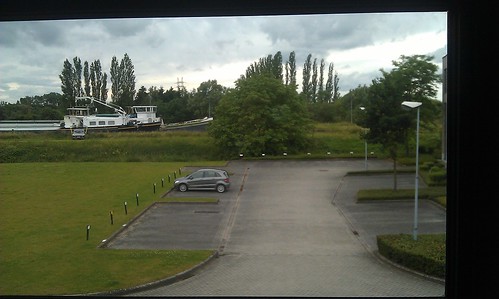
In case you were wondering what had happened to my blog over the past few weeks: the server on which it runs, samba.nixsys.be, has been down for that time, since we've just moved office. There's a story behind it, with which I won't bore you; suffice to say that we had to move out because of circumstances beyond our control. If you really do care, ask me over a beer or something (at debconf would be a good opportunity). I'll happily tell you the story. Meanwhile, the server on which this blog runs and which was located in a separate room at our office was now no longer available. But that's now over, albeit that it's behind a different IP address, and ignoring the fact that I still have some minor things to finish after the move. During this move, I found that we'd accumulated quite an amount of old unused hardware. While I've retained some of it (mostly my m68k machines, and some other machines that were given to me in order to add or improve Debian support for them), most of it has been given or thrown away. And that's even ignoring the other crap that had been in the cellar or the server/storage room. Oh my. I had severely underestimated the amount of work that would be required to clean out the office, which unfortunately also meant that I overshot the official date on which I were to leave the office by about two weeks. Luckily the landlord wasn't in a hurry or something, so no harm done. But I'll say this: if I ever say "yes" to anyone offering me some old decrepit hardware again for which I have no immediate purpose, may I be struck by lightning where I stand. Anyway. There's one significant advantage from this particular move: the view. I've gone from a dead wall to this: IMAG0004 Which is clearly an improvement... Additionally, now just over a month ago, my bother's fianc e gave birth to a boy, which makes me an uncle for the first time ever. Scary.
Steve Kemp: Sometimes the important things are those you don't do

Usually in life we focus upon the things we do, and not the things we don't do, or avoid. I don't have many "rules" for the way I behave, the things I do, but there are some. I could go on, but the "rules" are surprisingly hard to remember, having been in place for many years, they're just part of the way that I do (or do not do) things! Finally: As of this year I've now lived in Edinburgh for over half my life. ObQuote: "I don't know. We should go and like, stalk him or something. " - Megan Is Missing

Brett Parker: Things that piss me off #1

You know what really pisses me off? Idiots in takeaways... More to the point, racist, idiotic, drunken idiots in takeaways - having just been to one of the few places still open at "silly o'clock" i.e. a place that's open after the pub has shut, it's really annoying and disappointing in the human race, to hear someone refer to the staff as a "paki bastard". I'm disgusted with the customer in question. I mean, WTF, how absolutely fucking stupid have you got to be to both be racist and do it loud enough to not only piss off the staff, but piss off any customer that actually just views people as people - we're in this world together ffs, stop being such fucking moronic, racist cunts. It's not difficult. People are people. All of them. The whole world. (apologies for bad language in the post, it's just, well, as the title says, something that really pisses me off).

15 June 2012

Erich Schubert: Dritte Startbahn - 2 gewinnt!

Usually I don't post much about politics. And this even is a highly controversial issue. Please do not feel offended.
This weekend, there is an odd election in Munich. Outside of Munich, nearby the cities of Freising and Erding, there is the Munich airport. The company operating the airport is owned partially by the city of Munich, which gives the city a veto option.
The Munich airport has grown a lot. Everybody who has been flying a bit knows that big airports (such as Heathrow) are oft the worst. If anything goes wrong, you are busted, because it will take them a long time to resume operations. This just happened to me in Munich, where the luggage system was down, and no luggage arrived at the airplanes.
Yet, they want to take the airport further down this road, and make it even bigger: add two satellite terminals, and a third runway. I'm convinved that this will make the airport much worse for anybody around here. The security checkpoints will be even more crowded, the lines for the baggage drop-off too, and you will have to walk much further on the airport.
Up to now, the Munich airport was pretty good compared to others. In particular given that is is one of the largest in Europe! It is because it had been designed from the ground up for this size. Now they plan to screw it up.
But there are other arguments against this, not the egoist view of a traveller. The first is the money issue. The airport is continuously making losses. It's the taxpayer that has to pay for all of this - and the current cost estimation is 1200 million. This is not appropriate, in particular since history shows that you can take this x2 to x10 to get the real number. They should first get the airport into a financial stable condition, then plan on making it even bigger.
Then there are the numbers. Just like with any polticial large-scale project, the numbers are all fake. The current airport was planned to cost 800 million, in the end it was about 8550 million. The politicians happily lie to us. Because they want to push their pet projects. We must no longer accept such projects based on fake numbers and old predictions.
If you are already one of the 10 largest airports in Europe, can you really expect to grow even further?!? There is a natural limit to growth, unless you want to have every single passenger on the world first travel to Munich multiple times, then go to his final destination ...
One thing they seem to have completely neglected is that Berlin is currently getting a brand new airport. And very likely, this is going to divert quite some traffic away from Munich. Just like the Munich airport diverted a lot of traffic away from Frankfurt. To some extend because many people actually want to go to Berlin, not Munich, but they currently have to change planes here or in Frankfurt. So when Berlin finally is operational, this will have an impact on Munich.
And speaking of the Berlin airport, this is a good example to not trust the numbers and our politicians. It is another example of a way-over-budget, way-behind-time project the politicians screwed up badly and where they lied to us. If we should not have trusted them with Berlin, why should we trust them with the Munich addon?
A lot of people whose families have been living there for years will have to be resettled. Whole towns are going to disappear. An airport is huge. Yet, they cannot vote against it, because their small towns do not own shares of the airport. The polticians don't even talk to them, not even to their poltical representatives.
Last but not least, the airport is in a sensitive ecological area. The directly affected area is an European special protection area for wild birds. There are nature preserves nearby, and all this area already suffers badly from airport drainage, pollution and noise. When they built the airport originally, the replacement areas they setup were badly done, and are mostly inhabited by nettles and goldenrod (which is not even native to Europe). See this article in S ddeutsche Zeitung on the impact on nature. You can't replace the loss of the original habitats just by digging some pools and filling them with water ...
If you want more information, go to this page, by Bund Naturschutz.
This is not about progress ("Fortschritt"). That is a killer argument the politicians love, but it doesn't hold. Nobody is trying to shut down the airport. Munich will be better of by keeping the balance having both a reasonably sized airport (and in fact, the airport is already one of the 10 largest in Europe!) and preserving some nature to make it worth living here.
If you are located in Munich, please go vote against the airport extension, and enjoy the DEN-GER soccer game afterwards. Thank you.

Next.

Previous.