Search Results: "nic"

27 November 2010

Axel Beckert: Useful but Unknown Unix Tools: units

Ever wondered how to easily convert e.g. 10 seamiles into kilometres? Use units:
$ units 
2411 units, 71 prefixes, 33 nonlinear units
You have: 10 seamiles
You want: km
        * 18.288
        / 0.054680665
You have: ^C
$
Of course this is interactive. There s also a non-interactive mode:
$ units '10 seamiles' 'km'
        * 18.288
        / 0.054680665
$ 
The line with the asterisk means that 10 seamiles are 18.288 kilometres or 1 kilometre is the 0.054680665th part of 10 seamiles. This quite non-intuitive output is caused by the fact that unit is designed to be used with units only:
$ units seamiles km
        * 1.8288
        / 0.54680665
$
Now this makes more sense: You have to multiply seamiles with 1.8288 to get kilometres and you have to multiply (not divide) kilometres with 0.54something to get seamiles. But this output is still a little bit cumbersome, and annoying if you want to use it in shell scripts. But for luck, units knows some nice options, especially -v ( verbose ) and -t ( terse ):
$ units -v '10 seamiles' km
        10 seamiles = 18.288 km
        10 seamiles = (1 / 0.054680665) km
$ units -t '10 seamiles' km
18.288
Now that s way easier to read and script! You can also script more complex things like
$ units -v '100 attoparsec/microfortnight' m/s
        100 attoparsec/microfortnight = 2.5509901 m/s
        100 attoparsec/microfortnight = (1 / 0.39200466) m/s
Unfortunately not all common units are unambiguous for units:
units -v '100 km/h' m/s
conformability error
        100 km/h = 1.5091905e+38 s / kg m
        m/s = 1 m / s
Well, h seems not to be units unit for hours , so lets tell it explicity that we want km per hour:
units -v '100 km/hour' m/s
        100 km/hour = 27.777778 m/s
        100 km/hour = (1 / 0.036) m/s
Looks more like what I expected. units behaves though a little bit strange when I try to convert litres per 100 kilometres into miles per gallon:
$ units -t '6L/100km' 'mpg'
conformability error
6e-08 m^2
425143.71 / m^2
$
Interestingly changing the verbosity helps already in this case:
$ units -v '6L/100km' 'mpg'
        reciprocal conversion
        1 / (6L/100km) = 39.202431 mpg
        1 / (6L/100km) = (1 / 0.025508622) mpg
Greetings from the Debian booth at LinuxDay.at and thanks to Y_Plentyn, rhalina and bzed for example ideas and the suggestion to write a blog posting about units. :-)

Petter Reinholdtsen: Why isn't Debian Edu using VLC?

In the latest issue of Linux Journal, the readers choices were presented, and the winner among the multimedia player were VLC. Personally, I like VLC, and it is my player of choice when I first try to play a video file or stream. Only if VLC fail will I drag out gmplayer to see if it can do better. The reason is mostly the failure model and trust. When VLC fail, it normally pop up a error message reporting the problem. When mplayer fail, it normally segfault or just hangs. The latter failure mode drain my trust in the program. But even if VLC is my player of choice, we have choosen to use mplayer in Debian Edu/Skolelinux. The reason is simple. We need a good browser plugin to play web videos seamlessly, and the VLC browser plugin is not very good. For example, it lack in-line control buttons, so there is no way for the user to pause the video. Also, when I last tested the browser plugins available in Debian, the VLC plugin failed on several video pages where mplayer based plugins worked. If the browser plugin for VLC was as good as the gecko-mediaplayer package (which uses mplayer), we would switch. While VLC is a good player, its user interface is slightly annoying. The most annoying feature is its inconsistent use of keyboard shortcuts. When the player is in full screen mode, its shortcuts are different from when it is playing the video in a window. For example, space only work as pause when in full screen mode. I wish it had consisten shortcuts and that space also would work when in window mode. Another nice shortcut in gmplayer is [enter] to restart the current video. It is very nice when playing short videos from the web and want to restart it when new people arrive to have a look at what is going on.

26 November 2010

Leo 'costela' Antunes: My kingdom for a VGA cable

So you have two geeks in a university room after a relatively late and (at least for one of them) unproductive learning session. It s just natural that they decide to kick back and watch some mind-numbingly stupid geek series, which in this case happened to be Stargate SG-1 (so absurdly shitty its actually very entertaining).
The first lazy geek instinct is to just watch it on the laptop that has the file, which with its 11 display and shitty speakers doesn t turn out to be a great idea. The next try involves the other laptop, but a 13 screen isn t that big of an improvement.
Since the room our intrepid heroes are in happens to have a pretty decent built-in projector and a couple of small but still a lot better than a laptop s Bose speakers, the obvious next step would be using it. The only problem is the lack of a VGA cable. Inspired by the brief sight of MacGyver on the 11 screen, one particularly enterprising geek comes up with the challenge of making a VGA cable out of the only material available at the time: one horribly yellow cat5 ethernet cable.
Being the helpful little extra-dimensional entity that it is, the internet happily provided all the needed information and after some slight problems trying to appropriately deprive the cat5 of its connectors (no scissors and no blades of any kind in sight) and some annoying and manual sticking-cable-to-socket action what did you mother tell you about sticking things in sockets? our reluctant hackers get it right: it's ALIIIIIVEEEE!!! The final solution looked like this: nothing like cable salad for dinner And if you re wondering where those white wires came from, one final touch of ber-hackerdom: notepads have never been more useful This might seem like overkill, but after a nice nice 4 hour movies and series marathon, we can safely say it was totally worth it (but no, we didn t stand 4 hours of Stargate; even geeks have their limits). Just in case the Instructables page gets hosed at some point, here s the invaluable connection diagram, originally scraped off of a since dead Geocities page.

Matt Zimmerman: Three ways for Ubuntu to help developers

Developers are a crucial part of any successful software platform. In the same way that an operating system is just a means for people to use applications, a platform is just a means for developers to create applications and make them available to people. There are three primary ways in which Ubuntu can help developers do their work. They are all related, but distinct, and so we should consider them individually: 1. Developing for Ubuntu Today, Ubuntu bundles thousands of free software applications, for both clients and servers, most of which are packaged by Debian. Ubuntu also carries certifications for a variety of third-party ISV software, both open source and proprietary, which are coordinated through Canonical s partner program. In both of these cases, many of these applications are actually developed on other platforms, and ported to Ubuntu, either by the free software community or by the creators of the software. 2. Developing on Ubuntu Ubuntu is already quite popular among developers, who mainly run Desktop Edition on their workstations. They might be developing: 3. Distributing through Ubuntu Like other modern operating systems, Ubuntu isn t just a platform where applications run, but also a system for finding and installing applications. Starting with APT, which originated in Debian, we ve added Software Center, the ISV partner repository, and various other capabilities in this area. They all help to connect developers with users, facilitating distribution of software to users, and feedback to developers. So, where should we focus? Some developers might be interested in all three of these, while others might only care about one or two. However, most of the developer improvements we could make in Ubuntu would only address one of these areas. For this reason, I think it s important that we consider the question of the relative importance of these three developer scenarios. Given that we want Ubuntu to flourish as a platform, how would we prioritize them? I have my own ideas, which I ll write about in subsequent posts, but here s your chance to tell me what you think. :-)

David Welton: Kindle thoughts

I went ahead and got myself a Kindle for my birthday. Thanks to everyone for their comments in the last post. Here are my thoughts on it, in no particular order:
I like it a lot. I was worried that I would not actually enjoy reading with it, or that it would be significantly inferior to real books. However, I do enjoy reading with it, and I think they have achieved their aim of making it so that it 'just disappears' like a good book does. It's a very small and light device, even with the leather cover I got for it (always best with a small child in the house), so it's in no way heavy or uncomfortable. It's relatively more expensive and fragile than a copy of The Economist or a paperback, so I don't sling it around quite so casually, and do try and remember to keep it out of reach of said small child, which makes it a little less worry-free than an actual book. On the other hand, it's much cheaper than an ipad or samsung galaxy or something like that, so it's not the end of the world if something happens to it, although it would be unfortunate to be without reading material for the time it took to replace it!
The selection of material available for it is ok, but I'm just a bit disappointed - I thought offhand there were more books than there are. I regularly bump into things I might consider getting if they were available for it, but are not. On the other hand, there are quite a few books available for it for *free* because they're old and out of copyright. Stuff you might get for 99 cents at a used book store as a paperback, but it's pretty cool to be able to just zip it right to the device, for nothing at all. I am not convinced that the economics of it all has settled down yet. It's pretty absurd, for instance, that The Intelligent Investor costs nearly twice as much for the Kindle version as for the paperback! Especially since I can never resell it. I think a lot of the value I get from the device is derived from my situation: living abroad here in Italy, it's expensive and slow to get English language books, and now I can get them *instantly*, which is absolutely wonderful, and will significantly increase my reading. Also, should we ever move back to the US or elsewhere, it means a few less books to lug along or go through the sorrow of parting with. Were I in the US in a place with a decent used book store, and sure about staying in the same place for a while, I am not sure I would have bothered. I find it somehow a bit monotonous to read everything in the same form factor and with the same fonts. It takes something away from the character of a book, especially a well-done hardback. Of course, what counts is the content, but the presentation counts for something too, I think. I really do like the size and shape of the Kindle, and could see the 'smaller tablet' size catching on. Speaking of which, I'm curious to see how reading devices and tables will intersect. Clearly, a generic device that can also read books is going to be a lot more popular, but for now e-ink still has a few advantages: it's better for reading - I can stare at it much longer than I can at an LCD screen; also the battery life is much better, meaning I don't have to worry about/fiddle with charging it every day. Also, in some ways, it's nice not to have the siren-call of the web just a click away... I think though that at some point, generic devices will likely overtake dedicated readers. Who knows when, though.
Yes, it does have a browser, however, the screen refresh is so slow that I'd only really consider using it for reading web pages - wikipedia, say, rather than doing much with it. Still, I think it's nice to have and hope they continue the experiment.
Coming back to the comparison with 'real' books, I don't like the fact that I can no longer finish a book and then hand it to my wife if it's good. We could get her a Kindle too, but I'm still not sure they have the sharing thing worked out that well. 2 weeks - and then what? One way to do it might be that you can share it with anyone who you trust with one-click purchases. That'd limit it to family members or really trustworthy friends. Although... even there, I regularly loan books to friends, and would like to continue to be able to do so. Also, like I mentioned in the previous article, I'm leary of a future where my daughter doesn't have a multitude of books to peruse on our bookshelves. Bookshelves are a great way of making serendipitous discoveries that recommendation engines (those I've used at least) don't really account for. All in all, I'm very pleased with the Kindle, though, and look forward to seeing what the future holds.

25 November 2010

Cyril Brulebois: Debian XSF News

Since people seem to like it, I ll be trying to publish some news about ongoing work on the XSF side, on a (possibly) regular basis. Let s have a look at what happened since last time I blogged about X in Debian, mostly by checking what appeared in my =debian-x mailbox. Debian XSF News #1 What are the XSF plans?

Raphaël Hertzog: People behind Debian: Colin Watson, the tireless man-db maintainer and a debian-installer developer

Colin Watson is not a high-profile Debian figure, you rarely see him on mailing lists but he cares a lot about Debian and you will see him on Debconf videos sharing many thoughtful comments. I have the pleasure to work with him on dpkg as he maintains the package in Ubuntu, but he does a lot of more interesting things. I also took the opportunity to ask some Ubuntu specific questions since he s worked for Canonical since the start. Read on. My questions are in bold, the rest is by Colin. Who are you? Hi. I m 32 years old, grew up in Belfast in Northern Ireland, but have been living in Cambridge, England, since I was 18. I m married with a stepson and a daughter. I became interested in Debian due to the critical mass of Debian work happening in Cambridge at the time (and perhaps more immediately because my roommate was running Debian: hey, what s that? ), started doing random bits of development in 2000, and joined as a developer in 2001 (a really exciting time, with lots of new people joining who became integral parts of the project). I d only really been intending to do QA work and various bits of packaging around the edges, and maybe some work on the BTS, but then Fabrizio Polacco died and I took over man-db from him, and it sort of snowballed from there. I graduated from university shortly before becoming a Debian developer. I worked for a web server company (Zeus), then a hardware cryptography company (nCipher), before moving to work for Canonical in 2004, since when I ve been working full-time on Ubuntu. By this point, I suspect that going back to work in an office every day would be pretty tough. What s your biggest achievement within Debian or Ubuntu? One thing I should say: I rarely start projects. Firstly I don t think I m very good at it, and secondly I much prefer coming on to an existing project and worrying away at all the broken bits, often after other people have got bored and wandered off to the next new and shiny thing. That s probably why I ended up in the GNU/Linux distribution world in the first place, rather than doing lots of upstream development from the start I like being able to polish things into a finished product that we can give to end users. So, I ve had my fingers in a lot of pies over the years, doing ongoing maintenance and fixing lots of bugs. I think the single project I m most proud of would have to be my work on the Debian installer. I joined that team in early 2004 (a few months before Canonical started up) partly because I was a release assistant at the time and it was an obvious hot-spot, and partly because I thought it d be a good idea to make sure it worked well on the shiny new G4 PowerBook I d just treated myself to. I ended up as one of the powerpc d-i port maintainers for a while (no longer, as that machine is dead), but I ve done a lot of core work as well: much of the work to put progress bars in front of absolutely everything that used to have piles of text output, rescue mode, the current kernel selection framework, a good deal of udev support, several significant debconf extensions, lots of os-prober work, and I think I can claim to be one of the few people who understands the partitioner almost top to bottom. :-) d-i is the very first thing many of our users see, and has a huge range of uses, from simple desktop installs to massive corporate deployments; it s unspeakably important that it works well, and it s a testament to its design that it s been able to trundle along without actually very much serious refactoring for the best part of five years now. I have a soft spot for man-db too. It was my first major project in Debian, starting out from an embarrassingly broken state, and is now nice and stable to the point where I recently had time to spawn a useful generic library out of it (libpipeline). What are your plans for Debian Wheezy? d-i has a lot of code to deal with disks and partitions. Of course a lot of it is in the partitioner, and for that we use libparted so we don t have to worry very much about the minutiae of device naming. But there are several other cases where we do need to care about naming, mainly before the partitioner when detecting disks, and after the partitioner when installing the boot loader. Back in etch, we introduced list-devices , which abstracted away the disk naming assumptions involved in hardware detection. In wheezy, I would like to take all the messy, duplicated, and error-prone code that handles disk naming in the boot loader installers, and design a simple interface to cover all of them. This has only got more important following the addition of the kFreeBSD and Hurd d-i ports in squeeze, but it bites us every time we notice that, say, CCISS arrays aren t handled consistently, and it s a pain to test all that duplicated code. I d also like to spread the use of libpipeline through C programs in the archive, which I think has potential to eliminate a class of security vulnerabilities in a much simpler way than was previously available. If you could spend all your time on Debian, what would you work on? I would love to systematically reduce the need for the current mass of boot loaders. There s a significant cost to having so much variation across architectures here: it s work that needs to be done in N different places, the wildly differing configuration means that d-i has to have huge piles of code to manage them all differently, and there are a bunch of strange arbitrary limitations on what you can do. The reason I m working on GRUB 2 is that, in my view, it s the project with the best chance of centralising all this duplicated work into a single place, and making it easier to bring up new hardware in future (in a way that doesn t compromise software freedom, as many proprietary boot loaders of the kind often found on phones do). Of course, with flexibility tends to come complexity, and some people have a natural objection to that and prefer something simpler. The things I don t quite have time to do here are to figure out a coherent way to address the specific over-complexity problems people have with the configuration framework while still keeping the flexibility we need, and to do enough QA and porting work to be able to roll out GRUB 2 at installation time to all the Debian architectures it theoretically supports. What s the biggest problem of Debian? Backbiting, and too much playing the man rather than the ball. With one or two honourable exceptions, I ve largely stopped reading most Debian mailing lists since it just never seems a productive way to spend time compared to writing code and fixing bugs; and yet I m conscious that they re one of the primary means of communication for the project and I m derelict in not taking part in them. I do find it a bit frustrating that people are seen primarily in terms of their affiliations. I suppose it s natural for people to see me as an Ubuntu guy , but I don t really see myself that way: I ve been working on Debian for nearly twice as long as I ve been working on Ubuntu, and, while I care a great deal about both projects, I ve put far more of my own personal time into Debian and I try to make sure that a decent number of the things I m involved with there aren t to do with work. Work/life separation is a good thing, not that I m very good at it. Generally speaking, when I m working on Debian, I m doing so as a Debian developer, because I want Debian to be better. When that s not the case, if it matters, I try to indicate it explicitly. You re working for Canonical since Ubuntu s inception. If you were Mark Shuttleworth, is there something that you would have done differently? We had many good intentions when we founded Ubuntu. We also had a huge amount of work to deliver, to the point where it wasn t at all clear whether it would be possible (the warty release was named based on the expectations of it, after all, and came out much more usable than we d dared to hope). In hindsight, it might have helped to be quieter about our good intentions, so that we could exceed expectations rather than in some cases failing to meet them. That might have set a very different tone early on. (Personally, I m happy I m not Mark. The decisions in my office are much easier to take.) It seems to me that the community part of Ubuntu is much more eager to cooperate with Debian than the corporate part. It s probably just that more and more Canonical employees are not former Debian contributors. Do you also have this feeling? Are there processes in place to ensure everybody at Canonical is trying to do the right thing towards Debian cooperation? Just to be clear, I m wearing my own hat here which, ironically, is a fedora rather than a company hat. It makes sense for Canonical to be taking on more non-Debian folks; after all, we can t simply hire from the Debian community forever, and a variety of backgrounds is healthy. As you say, it may well be natural that Ubuntu developers who don t work for Canonical are more likely to have a Debianish background, as it tends to take something significant to get people to switch to a very different family of GNU/Linux distributions, and changing jobs is one of the most obvious of those things. Certainly, there was a definite sense among the early developers that we were all part of the Debian family and cared about the success of Debian as well. As Ubuntu has developed its own identity, people involved in it now tend to care primarily about the success of Ubuntu. At the same time, pragmatically, it s still true that getting code changes into Debian is one of the most economical ways to land them; changes made in Debian or upstream land once and tend to stay in place, while changes made only in Ubuntu incur an ongoing merge overhead, which is not at all trivial. In many ways it s human nature to try to fulfil your immediate goals in the most direct way possible. If your goal is to deliver changes to Ubuntu users, then it s natural to concentrate on that rather than looking at the bigger picture (which takes experience). Debian developers often fail to send changes upstream for much the same reason, although there s more variation there because they re normally working on Debian of their own volition and thus tend to have wider goals; the economics are more or less parallel though. Thus, I think the best way to improve things is to make it the path of least resistance for Ubuntu developers to send changes to Debian. We re already seeing how this works with the Ubuntu MOTU group; if you send a patch for review, or work on merging a package from Debian, very often the response includes have you sent these changes to Debian? . We re working on both streamlining our code review through a regular patch pilot programme and requiring more code review for changes in general, so I think this will be a good opportunity to ask more people to work with Debian when they propose changes to Ubuntu. For myself, this may be obvious, but I notice that I m much better at getting changes into Debian when I already have commit access to the Debian package in question. All the work on improving collaborative maintenance in Debian can only help, for Ubuntu as well as for everyone else. It doesn t make so much difference for large changes that require extensive discussion, but there are lots of small changes too. Canonical is upstream of many software projects (unity, indicators infrastructure, etc.). Why aren t those software immediately packaged in Debian? Do you think we can get this to change? I m not sure what the right approach is here, particularly as I haven t been involved with much of that on the Ubuntu side. I suspect it would be helpful to look at this in a similar way to Ubuntu changes in general. It s understandable that those developers have getting changes into Ubuntu as their first goal. And yet, having code in Debian offers a wider, and often technically adept, audience, and most developers like having their code reach a wider audience even if it s not their first priority, particularly if that audience is likely to be able to help with finding problems and fixing bugs. It should be seen as something beneficial to both distributions. The hardest problems will be with things that aren t merely optional add-ons (which should generally be fairly non-controversial in Debian, given the breadth of the archive in general the existence of things like bzr and germinate as Debian packages was never a hard question), but which require changes in established packages. For example, gnome-power-manager in Ubuntu is built with application indicator support, and that s an important part of having a good indicator-based panel: a lot of the point of indicators is consistency. Since I do very little desktop work myself, I don t know exactly what would be involved in making it possible to choose this system based on a Debian desktop, but I think it s probably a bit more complicated than just making sure all the new packages exist in Debian too. Obviously you have to start somewhere. Is there someone in Debian that you admire for his contributions? Christian Perrier is absolutely tireless and has done superb things for the state of translations in Debian. And Russ Allbery, even aside from his fine ongoing work on policy, Lintian, and Kerberos, is a constant voice of sanity and calmness. Release management is incredibly hard work, as I know from my own experience, and anyone who can sustain involvement in it for a long period is somebody pretty special. Steve Langasek and I got involved at about the same time but he outlasted me by quite a few years. He deserves some kind of medal for everything he s done there.
Thank you to Colin for the time spent answering my questions. I hope you enjoyed reading his answers as I did. Subscribe to my newsletter to get my monthly summary of the Debian/Ubuntu news and to not miss further interviews. You can also follow along on Identi.ca, Twitter and Facebook.

11 comments Liked this article? Click here. My blog is Flattr-enabled.

24 November 2010

Tim Retout: The Archers website

For those who are not aware, The Archers is a soap opera about rural life, broadcast on BBC Radio 4. Its website has recently been revamped. Unfortunately, I appear to be served the mobile version when I visit the front page (in all of Chromium, Iceweasel and Epiphany on Debian - admittedly not the most mainstream of browsers). BBC Mobile is doing some over-zealous useragent sniffing, it seems. Also amusing: there's a "Who's Who" database of Archers characters, and several of them share the birthday "1st Jan 1970". There was I thinking that Harry Mason and Fallon Rogers had a 15 year age gap... but no. This will be as a result of the underlying database storing values in Unix time, and having a default value of "0". An explanation of Unix time popped up in an episode of The Infinite Monkey Cage the other week, which was nice to hear.

Jonathan Wiltshire: Shibboleet

Boy, I wish that word worked. Today I had cause to email O2, the local Telefonica outpost, to have them disassociate my phone from the Cloud hotspot network, to which I get a subscription with my contract. This is so that I can associate my new Desire Z instead. I explained that I can connect to the AP, but when I enter my phone number to associate it is refused. Their considered response to this request was as follows:
As you re using a Palm Pre, I d request you to switch on Palm Pre by following the steps provided below
Of course, I m so silly I forgot to switch the phone on! Any suggestions for a UK SIM-only provider with a clue (and optionally including free use of Cloud hotspots)?
Comments flattr this!

Alexander Wirt: Cool things with grub2 and syslinux - booting floppy and iso images

From time to time I have to boot an iso or even a floppy. Unfortunately my X200 doesn't have a CD-Rom or a Floppy. Grub isn't able to boot isos and floppy images on its own, thats the point where syslinux comes into play: from version 4.x the syslinux memdisk driver is able to boot most iso and floppy images. The syslinux wiki has some details about the supported image types. Yesterday I had to boot an iso image and instead of editing grub.cfg by hand I decided to create a snippet for grub.d to automate things. If you drop an .iso or an .img into the IMAGES path and run update-grub2 afterwards you get a nice boot entry that boots the floppy or iso image. The only thing you have to do is to install syslinux and copy /usr/lib/syslinux/memdisk to /boot. And here it comes:
#!/bin/sh
set -e
IMAGES=/boot/images
. /usr/lib/grub/grub-mkconfig_lib
if test -e /boot/memdisk ; then
    MEMDISKPATH=$( make_system_path_relative_to_its_root "/boot/memdisk" )
    echo "Found memdisk: $MEMDISKPATH" >&2
    find $IMAGES -name "*.iso" -o -name '*.img'   sort   
    while read image ; do
        IMAGEPATH=$( make_system_path_relative_to_its_root "$image" )
        case "$image" in
            *.iso)
                echo "Found iso image: $IMAGEPATH" >&2
                cat << EOF
menuentry "Bootable ISO Image: $(basename $IMAGEPATH   sed s/.img//)"  
EOF
                prepare_grub_to_access_device $ GRUB_DEVICE_BOOT    sed -e "s/^/\t/"
                cat << EOF
    linux16 $MEMDISKPATH iso
    initrd16 $IMAGEPATH
 
EOF
                ;;
            *.img)
                echo "Found floppy image: $IMAGEPATH" >&2
                cat << EOF
menuentry "Bootable Floppy Image: $(basename $IMAGEPATH   sed s/.img//)"  
EOF
                prepare_grub_to_access_device $ GRUB_DEVICE_BOOT    sed -e "s/^/\t/"
                cat << EOF
    linux16 $MEMDISKPATH raw
    initrd16 $IMAGEPATH
 
EOF
                ;;
        esac
    done
fi
P.S. I got the idea and some code snippets from several blog and wiki entries in the net and just added the iso part, so thats not all my code :)

Matthew Garrett: Viewsonic and the GPL

Somebody linked me to this reddit story about the fact that Viewsonic appear to be engaging in the currently fashionable trend of shipping Android devices without providing any source. This one's more interesting though, in that Viewsonic appear to be entirely happy to publicly state that they have no intention of following their license obligations. I've pulled the kernel image for the device and confirmed that it contains code that's not present in the generic Android Tegra tree, so I don't think they have a leg to stand on here.

So of the companies I'm currently complaining about (Fusion Garage, Barnes and Noble, Viewsonic): One is in Singapore and two are based in the US. Chinese companies may be the current easy target when it comes to complaining about GPL violations, but the truth is that companies in countries with stronger IP enforcement are also either blissfully ignorant or feel that the risk of failing to follow their license obligations is low. This isn't a sustainable position. We've got three real choices here - do nothing, start lawsuits or start educating companies. The third is probably the most productive in the long run, though I wouldn't absolutely rule out the second if we don't get anywhere. I'm currently exploring the education possibilities. We'll see what happens next.

23 November 2010

Russell Coker: Links November 2010

Guy Deutscher wrote an interesting article for the New York Times about how language shapes how we think [1]. The example of people who have no language construct for self-sentered directions and how they describe things is particularly interesting.TED published an interesting interview with Shaffi Mather the founder of India s first organised ambulance service (with differential pricing based on ability to pay) [2]. He also talks about founding schools in small towns and his BribeBusters.com company.World Changing has an interesting article about a legislative change in California that allows car-sharing of personal vehicles [3]. The concept is that if you own a car that you don t use most of the time (as is usually the case) then you can contract with a car-share company to share it to others when you don t need it. This saves the car share company from the capital expense of owning cars and thus allows them to place cars in remote locations that wouldn t otherwise be financially viable (IE the street in front of random people who sign up). The person who owns the car may get about $2 per hour for the time when it s rented. The car owner gets to specify when the car may be available.Charles Stross wrote an entertaining and informative rant about Steam-Punk [4]. He cites Michael Moorcock s informative essay about Starship Troopers and other right-wing apologist themes in sci-fi [5] as well as China Mieville s essay about politics and The Lord of the Rings [6].Glenn Greenwald wrote an informative article about the New York Times defending torture by the US military [7]. I have unsubscrubed from the @Times mailout and will avoid citing NYT articles wherever possible. I sent the URL for Glenn s article to the NYT feedback address but I don t expect them to take any notice.Fate Of the World is a new computer game that s in beta where you have a simulation of the next 200 years of climate change [8]. It s currently in beta for Windows only, they hope to have a Mac version in March and have no stated plans for Linux support.Cory Doctorow wrote an interesting article for Locus about Sci-Fi fans and cosmopolitanism taking the best option after consideration rather than doing what s locally fashionable [9]. He uses the term Martian to refer to some of the viewpoints, but it seems to me that Vulcan would be more appropriate.The Wall St Journal has an interesting article about people who manufacture drugs that aren t yet illegal, every time one drug gets banned they market a new one [10]. This is yet another example of the War on Drugs doing more harm than good, instead of taking drugs which have well known effects (that can be treated by hospitals) people are taking weird new drugs and no-one knows what will happen to them.Mieke Meijer in the Netherlands has invented a new product known as newspaper wood [11], it involves gluing paper together to create a form of chip-board that keeps the layers of paper distinct to give a result like wood grain. The World Changing commentary suggests that this could give a heirloom quality to objects made with it, while I m dubious about that I think that the surface would be pleasing to look at in a kitchen or office environment.Ze Frank gave an interesting TED talk about unusual social projects that he s run on the Internet [12]. This includes an attempt to reconcile Red and Blue voters after the 2008 US presidential election, the creation of inspirational songs, and remixing the Whip Somebody s Ass song. This is really worth watching!The Chronicle Review has an interesting article by someone who is paid to complete academic assignments for other people [13]. The scope of cheating that is claimed is profound. Naturally we have to take claims by someone who admits acting unethically with a grain of salt, but if there is any truth to this then it s a serious matter. I m surprised that no-one has made a serious attempt to catch the customers of such people.David Brin (the famous sci-fi author) gave an interesting short lecture about the future of humanity [14]. He promotes the Lifeboat Foundation (of which he is a director) and describes his concern about the Fermi Paradox.Shimon Schocken gave an inspiring TED talk about his work rehabilitating juvenile prisoners through taking them mountain-bike riding [15]. This shows that anyone can do great things to help other people, he got this idea when riding past a prison, convinced the prison governor that it was a good idea and then started doing it.Conrad Wolfram gave an insightful TED talk about math education [16]. His claim is that the entire mathematical education system is wrong in it s focus on hand calculation, instead the aim should be to teach children how to use computers to solve problems which is what is mostly done in the real world.

Mike Hommey: Improving libxul startup I/O by hacking the ELF format

If you have been following this blog during the past months, you might have gathered that I ve been focusing on I/O patterns on library initialization, more specifically libxul.so. The very patterns there s not much to do about, except enduring them, or hacking ld.so and/or the toolchain. The latter is not necessarily easy, and won t benefit everyone until all linux distros use an improved glibc and/or toolchain. This could take years before any actual result would reach end users. But with a little creativity, one can overcome these limitations and improve the situation today. Here is a summary of my recent hacks. Backwards static initializers As Taras showed in the past, static initializers are executed in reverse order. It turns out it is an unfortunate design choice in gcc, and it also turns out not to impact all ELF binary files. As far as I know there are currently two different implementations of the static initializers call loop, one provided by gcc, and one provided by ld.so. In the gcc case, the compiler creates a .ctors section, starting with 0xffffffff, ending with 0x00000000, and filled with pointers to the various static initializer functions, in ascending order. The compiler also injects an initializer function, called from .init, going through this .ctors section, starting from the end (__do_global_ctors_aux in crtend.o). A similar .dtors section is created for functions to run when the library is unloaded, and the pointers in it are called in ascending order. There is actually no importance in the order in which .ctors and .dtors are executed. All that matters is that they are executed in reverse order from each other, because that limits the risks of bad ordering. It is only unfortunate that .ctors was chosen to be the one backwards. In the ld.so case, the compiler creates a .init_array section, filled with pointers to the various static initializer functions, in ascending order. It also stores the location and the size of this section in the PT_DYNAMIC ELF header. At runtime, ld.so itself reads this information and executes the static initializers in ascending orders. A similar .fini_array section is created for functions to run when the library in unloaded, and ld.so goes through it in descending order. The .init_array section is newer, and for backwards compatibility reasons, is not used on systems that have been using the .ctors approach forever. On the other hand, some newer ABIs, such as arm EABI, uses the new facility, which means they are not victim of backwards static initialization. I however wonder if backwards compatibility is still needed, considering how long .init_array support has been around (more than 11 years, according to glibc git repository). While we could obviously bug the gcc maintainers to revert their .ctors execution order, or ditch .ctors support on glibc systems, which means we wouldn t get any immediate global benefit, we can also just revert the .ctors section content. Please note the source code out there doesn t take care of reverting the .dtors section accordingly, because it is currently empty in libxul.so. Relocations As I mentioned in an earlier post, relocations are what make it possible to load libraries at arbitrary locations. Unfortunately, a great number of relocations means awful I/O patterns: ld.so reads and applies them one by one, and while the kernel reads ahead by 128 KB chunks, when your relocation section exceeds that amount by more than an order of magnitude, it means I/O goes back and forth a lot between the relocation section and where the relocations take place. There are two classes of relocations: REL and RELA. In both cases, there are several types of relocations, some of which require an addend. The difference between both classes is in REL relocations, the addend is stored at the offset the relocation takes place, and in RELA relocations, the addend is stored in the relocation entry. It means that RELA relocations effectively waste space, as the addend ends up actually being stored twice: it is also stored at the offset the relocation takes place, like with REL relocations, though it could technically be nulled out, there ; in any case, the space is wasted. REL relocations thus take 2 words of storage, and RELA relocations, 3. On x86, the ELF ABI only uses REL relocations, and words are 32 bits, making each relocation take 8 bytes ; on x86-64, the ELF ABI only uses RELA relocations, and words are 64 bits, thus making each relocation take 24 bytes, 3 times that of x86 relocations. On ARM, both may be used, but apparently the compiler and the linker only use REL relocations. These words of storage are used to store 3 or 4 bits of informations: The linker splits relocations in two main categories: those for dynamic linking at startup and those for procedure linkage table (PLT) resolution at runtime. Here is what the repartition look like on libxul.so (taken from the mozilla-central nightly from Nov, the 22nd):
dynamic relocations PLT relocations
Architecture number size (bytes) number size (bytes)
x86 231,836 1,854,688 3,772 30,176
x86-64 235,893 5,661,432 3,773 90,528
So, PLT relocations are quite negligible, and dynamic relocations are just huge, especially on x86-64. Compared to the binary size, it s pretty scary:
Architecture libxul.so size relocations size %
x86 21,869,684 1,884,864 8.61%
x86-64 29,629,040 5,751,984 19.41%
Let me remind you that not only do we need to read these relocations at startup (at least the dynamic ones, but the PLT ones are just negligible), but we only read them by chunks, and need to read other data in between. Of the many existing types of relocations, only a few are actually used in dynamic libraries. Here is a summary of those in use in libxul.so:
x86 relocation type number x86-64 relocation type number
dynamic relocations
R_386_TLS_DTPMOD32 1 R_X86_64_DTPMOD64 1
R_386_GLOB_DAT 213 R_X86_64_GLOB_DAT 238
R_386_32 27,643 R_X86_64_64 27,611
R_386_RELATIVE 203,979 R_X86_64_RELATIVE 208,043
PLT relocations
R_386_JUMP_SLOT 3,772 R_X86_64_JUMP_SLOT 3,773
The above types can be separated in two distinct categories: In the second category, it means we are wasting all the bits for the symbol reference in each entry: 24 on x86 and 32 on x86-64. Unfortunately, the vast majority of the relocations in libxul.so are from that category. At this point, this is how much waste we identified:
description num. entries waste per entry (bytes) total % of relocation size
x86
Relocation without symbol ref. 203,980 3 611,937 32.46%
x86-64
Duplicated addend 239,666 8 1,917,328 33.33%
Relocation type encoded on 32 bits 239,666 3 718,998 12.49%
Relocation without symbol ref. 208,044 4 832,176 14.46%
Total 3,468,502 60.30%
On top of that, one could argue that we don t need 24 or 32 bits for symbol reference (which is the entry number in the symbol table), and that we re really far from requiring 64 bits for r_offset on 64 bits systems, as libxul.so is far from being bigger than 4GB. Anyways, that means we have room for improvement here, and it means that the ELF format, especially on 64 bits systems with RELA relocations, really doesn t help with big programs or libraries with a lot of relocations. (For that matter, the mach-o format used on OS-X has some kind of similar issues ; I don t know for the DLL format) Another interesting data point is looking at how relocations r_offset are following each other, once relocations are reordered (to avoid too much symbol resolution, they are actually grouped by symbol). It turns out 206,739 relocations r_offset are at 4 bytes from the previous one on x86 (i.e. strictly following it), and 210,364 at 8 bytes from the previous on x86-64. The main reason why this happens is that most relocations are happening in pointer tables, and libxul.so has lots of them: And when I say libxul.so has lots of them, that s not an understatement: there are 184,320 relocations due to vtables (function tables you get when using virtual methods in C++) on x86 and 184,098 on x86-64. That s respectively 78.23% and 76.81% of the total number of relocations. Interestingly, while most of these relocations are R_*_RELATIVE, 26,853 are R_386_32, and 26,829 are R_X86_64_64. Except for a very few, these non relative relocations are for the __cxa_pure_virtual symbol, which is a dummy function that does nothing, used for pure virtual methods, such as the following:
class Abstract
public:
virtual void pure_virtual() = 0;
;
As for the remaining relative relocations, there are a few pointer tables responsible for several thousand relocations, such as JSString::length2StringTable, gEntries, GkAtoms_info, Html5Atoms_info, kUnixCharsets, nsIDOMCSS2Properties_properties, etc. Packing relocations While they are not detrimental to most binaries, we saw that relocations can have a bad effect on startup I/O for big binaries. Reducing how much space they take would have a direct impact on these startup I/Os. One way to do so is obviously to reduce the number of relocations. But as we saw above, the vast majority are due to vtables. While reducing vtables would be a nice goal, it s a long way before this can have a significant impact on the relocations number. So another possible way is to try to avoid wasting so much space in relocations. The main problem is that relocations are applied by ld.so, and that, as mentioned in the introduction, while we can hack ld.so to do what we want, it won t work everywhere before a long time. Moreover, it s difficult to test various implementations, and binary compatibility needs to be guaranteed once something is applied in the upstream libc. The idea I started to test a few weeks ago, is to effectively apply relocations by hand instead of relying on ld.so doing it. Considering the first thing ld.so does with a library after applying relocations is to call its DT_INIT function, the idea was to replace the dynamic relocations we can with a new DT_INIT function we would inject that d apply those relocations, while storing them in a more efficient manner. The function would obviously need to call the original DT_INIT function once done. Some parts of the PT_DYNAMIC section also obviously need to be adjusted accordingly. The first iteration I tested a few weeks ago helped validating the idea, but didn t change much of the binary: the dynamic relocation section still was taking all the space it took before, though its content was mostly empty (we ll see further below how efficient even the current dumb format is). Once the theory that an injected DT_INIT function could apply the relocations without breaking everything, I went on to implement a program that would actually strip the ELF binary. I won t get too much into the gory details, but it required PT_LOAD splitting, thus program headers growth, which means moving the following sections, then removing a huge part of the relocations, shrinking the relocations section, injecting our code and the packed relocations as sections, and moving the remaining sections after these new sections, to avoid empty space, but still respecting the proper offsets for both PT_LOAD and the code itself. So far, I only took care of the R_*_RELATIVE relocations. Some but not all other relocations could be taken care of, too, but everything involving symbol resolution from other libraries would be really difficult to handle from the injected code. The relocations are currently stored with a quite dumb format: As we only take care of one type of relocations, we can skip any information about the type. Also, the addend already being stored at r_offset, we just strip it from RELA relocations ; the binary being far from 4GB big, 32 bits is enough on 64 bits systems too. We also saw that a lot of relocations were next to the following ones, so instead of storing r_offset for each one, storing some kind of range is more efficient. As I ve so far been focusing on getting something that actually works more than on getting something really efficient, I only tested this format, but the results are already nice:
x86 x86-64
before
dynamic relocations (bytes) 1,854,688 5,661,432
libxul.so size 21,869,684 29,629,040
after
dynamic relocations (bytes) 222,856 668,400
injected code size 129 84
packed relative relocations (bytes) 224,816 228,568
libxul.so size 20,464,836 (-6.42%) 24,865,520 (-16.07%)
Getting rid of the __cxa_pure_virtual relocations would help getting this even further down, and an even better storage format could be used, too. Gathering new startup coverage data should be interesting as well. The code is available via mercurial. Please note the Makefile deeply sucks, and that the code is in the middle of its third refactoring. Anyways, once you get the code to compile, you just need to run test-x86 or test-x64 depending on your architecture, from the build directory, and give it the libxul.so file as an argument. It will create a libxul.so.new file that you can use to replace libxul.so. You may successfully use the tool on other libraries, but chances are you ll bump into an assert(), or in the worst case, that the resulting library ends up broken. The tool might work on PIE executables, but most probably not on other executables. If you wonder, Chrome is not PIE. It s not even relocatable (which means ASLR won t work with it) ; or at least the x86-64 binaries I just got aren t. More possible ELF hacking The code I wrote to pack relocations allows to do various tricks on ELF files, and it opens various opportunities, such as: Some of the above could probably be done with linker scripts, but using linker scripts is unnecessarily over complicated: as soon as you start using a linker script to fiddle with sections, you need to reimplement the entire default linker script (the one you can see with ld --verbose). And it s not guaranteed to work (Taras told me he had a hard time failing to align the .bss section). And as far as I know, you can t use the same thing depending whether you use ld or gold (AIUI, gold doesn t support the whole ld linker script syntax).

Dominique Dumont: How about a configfs with Config::Model ?

Hello During the Config::Model presentation at Debian mini-conf, I was asked whether Config::Model could be used from other languages than Perl. Of course, config-edit command line can be launched from any program with any language, but we can hardly call it an API. There s also the possibility to use Config::Model::SimpleUI to fork a process and send commands on its STDIN and get results on STDOUT. But using this from another program is awkward. On kernel side, /proc and /sys are widely used to get information from the kernel and set kernel configuration. How about using a similar approach with system configuration data ? Configuration data from config files is already mapped into a tree within Config::Model. This tree can also be mapped to a file system structure. This file system structure could have the following layout:
/conf/
system/
sshd/
PermitRootLogin # contain 0 or 1
ssh/

popcon/
As a bonus, this file system would provide a unified access to all system configuration data available through Config::Model. In any case, people would still be able to tinker configuration with their favorite text editor on a file in /etc. The modification will be propagated to the corresponding entry in the /conf virtual file system. The reverse will also be done. Anyone interested ? All the best PS: Further technical discussion will be held on Config::Model mailing list: config-model-users at lists.sourceforge.net 2010.11.25 edit: specified that config data can still be written in usual config file.

22 November 2010

Rapha&#235;l Hertzog: How Ubuntu builds up on Debian

I have been asked how Ubuntu relates to Debian, and how packages flow from one to the other. So here s my attempt at clarifying the whole picture.

Where do the packages come from? Most packages are created by Debian contributors and they are uploaded in Debian unstable (or Debian experimental). New packages are reviewed by the Debian ftpmasters before being accepted in the official archive. The packages are held in the NEW queue until the review is over, and the time spent there varies between a few hours and a few months (usually they are processed within one week or two). Ubuntu imports all the official Debian packages, but they also add some packages of their own. About 7% of the Ubuntu packages are third-party software that have been packaged for Ubuntu but not for Debian. What are the changes made by Ubuntu? From all the source packages coming from Debian, 17% have additional changes made by Ubuntu. Many of them are part of the main repository, which is actively maintained by Canonical and Ubuntu core developers. The universe repository is usually closer to the official Debian packages. Many of the changes made by Ubuntu are the results of the decisions taken during the Ubuntu Developer Summit in order to reach specific goals: provide a better user interface, offer faster boot times, become a better platform for third-party software developers, offer a good integration with their online services (Launchpad, Ubuntu One), etc. Other changes are simply the result of fixing bugs reported by Ubuntu users. Note that even non-modified source packages will result in different binary packages for Ubuntu. That s because Ubuntu has made changes to the build environment. They only support Intel-based computers with a 686-class (or newer) CPU, they enable some compiler options that Debian doesn t, etc. And all binary packages are modified by a program called pkgbinarymangler. Ubuntu s release cycle and the relation with Debian Ubuntu releases every 6 months (that s what time based releases is about). Debian has a very different schedule. How does Ubuntu manage to reuse Debian s work? Ubuntu imports packages from Debian unstable (even experimental sometimes) to get the newest packages. If the Ubuntu package already has Ubuntu-specific changes, they merge their changes in the updated Debian package. Otherwise the Debian package is simply grabbed and rebuilt in Ubuntu. This works well because Debian unstable is much more usable than the name suggests. And this process only goes on during the first 2 months of the cycle (until the Debian Import Freeze), so there s plenty of time afterward to fix the biggest problems. In the third and fourth month, it s still possible to pick updated packages from Debian but it must be requested by a developer, it won t be done automatically. At the end of the fourth month, the feature freeze is put in place. The 2 months left are dedicated to bug fixing and polishing the distribution. There are various sub-freezes that happen in this period, you can check the Natty release schedule as an example. Picking updated packages from Debian is now the exception, it will only be allowed if the update on the Debian side is a bug-fix only release. Credits: some figures taken from a talk of Lucas Nussbaum, they were collected based on the packages available in the Lucid Lynx release of Ubuntu. Click here to subscribe to my newsletter and get my monthly update on what s going on in Debian and Ubuntu.

15 comments Liked this article? Click here. My blog is Flattr-enabled.

Petter Reinholdtsen: Migrating Xen virtual machines using LVM to KVM using disk images

Most of the computers in use by the Debian Edu/Skolelinux project are virtual machines. And they have been Xen machines running on a fairly old IBM eserver xseries 345 machine, and we wanted to migrate them to KVM on a newer Dell PowerEdge 2950 host machine. This was a bit harder that it could have been, because we set up the Xen virtual machines to get the virtual partitions from LVM, which as far as I know is not supported by KVM. So to migrate, we had to convert several LVM logical volumes to partitions on a virtual disk file. I found a nice recipe to do this, and wrote the following script to do the migration. It uses qemu-img from the qemu package to make the disk image, parted to partition it, losetup and kpartx to present the disk image partions as devices, and dd to copy the data. I NFS mounted the new servers storage area on the old server to do the migration.
#!/bin/sh
# Based on
# http://searchnetworking.techtarget.com.au/articles/35011-Six-steps-for-migrating-Xen-virtual-machines-to-KVM
set -e
set -x
if [ -z "$1" ] ; then
    echo "Usage: $0 <hostname>"
    exit 1
else
    host="$1"
fi
if [ ! -e /dev/vg_data/$host-disk ] ; then
    echo "error: unable to find LVM volume for $host"
    exit 1
fi
# Partitions need to be a bit bigger than the LVM LVs.  not sure why.
disksize=$( lvs --units m   grep $host-disk   awk ' sum = sum + $4  END   print int(sum * 1.05)  ')
swapsize=$( lvs --units m   grep $host-swap   awk ' sum = sum + $4  END   print int(sum * 1.05)  ')
totalsize=$(( ( $disksize + $swapsize ) ))
img=$host.img
#dd if=/dev/zero of=$img bs=1M count=$(( $disksize + $swapsize ))
qemu-img create $img $ totalsize MMaking room on the Debian Edu/Sqeeze DVD
parted $img mklabel msdos
parted $img mkpart primary linux-swap 0 $disksize
parted $img mkpart primary ext2 $disksize $totalsize
parted $img set 1 boot on
modprobe dm-mod
losetup /dev/loop0 $img
kpartx -a /dev/loop0
dd if=/dev/vg_data/$host-disk of=/dev/mapper/loop0p1 bs=1M
fsck.ext3 -f /dev/mapper/loop0p1   true
mkswap /dev/mapper/loop0p2
kpartx -d /dev/loop0
losetup -d /dev/loop0
The script is perhaps so simple that it is not copyrightable, but if it is, it is licenced using GPL v2 or later at your discretion. After doing this, I booted a Debian CD in rescue mode in KVM with the new disk image attached, installed grub-pc and linux-image-686 and set up grub to boot from the disk image. After this, the KVM machines seem to work just fine.

21 November 2010

Gunnar Wolf: 3D modelling on old home equipment

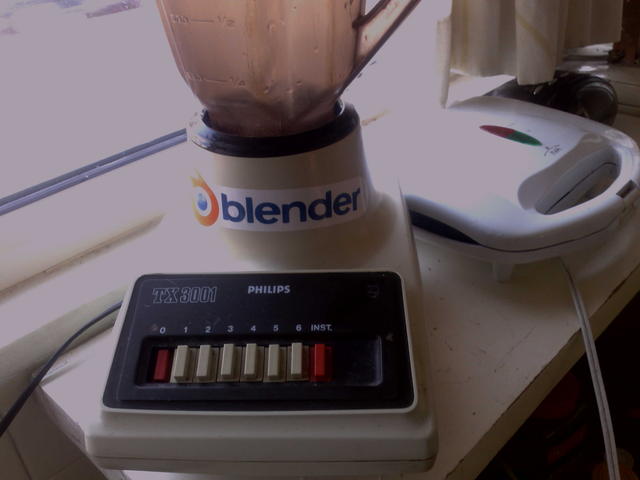
3D modelling on old home equipment
...Or something like that ;-) For those who don't understand the silly joke Blender is a production-quality free 3D rendering/animation engine, which you can download for basiclally any operating system you can think of. Thanks to Claudia and Octavio, from the G-Blender Spanish-speaking community, for the nice sticker :-

Russell Coker: Ruxcon 2010

Yesterday and today I attended Ruxcon the leading technical security conference in Australia [1]. The first lecture I attended was Breaking Linux Security Protections by Andrew Griffiths. This included a good overview of many current issues with Linux security. One thing that was particularly noteworthy was his mention of SE Linux policy, he cited the policy for the FTP server as an example of policy that can be regarded as too lax but also noted the fact that to get SE Linux used the policies had to be more liberal than we might desire. There is probably scope for someone to give a good lecture about how we are forced to make uncomfortable choices between making security features stronger and making them more usable.The next lecture I attended was Breaking Virtualisation by Endrazine. It makes me wonder how long it will be before someone cracks one of the major cloud hosting services such as EC2 it s not an appealing thought.Billy Rios gave a really interesting lecture titled Will it Blend? about blended exploits. The idea is to try and find a few programs which do things that are slightly undesired (arguably not even bugs) but which when combined can result in totally cracking a system. One example was a way of tricking IE into loading a DLL from the desktop and a way of tricking Safari into saving arbitrary files to the desktop, combine them and you can push a DLL to a victim and make them load it. Learning about these things can really change the way you think about misbehaving programs!Ben Nagy gave an interesting lecture about Prospecting for Rootite . His systematic way of finding test cases that cover a large portion of the code of a large application such as MS-Word seems quite effective. Once you have test cases that cover a lot of code then you can use fuzzing to find flaws.Edward Farrell gave an informative lecture about RFID Security , I didn t really learn that much though, he confirmed my suspicions that RFID implementations generally suck.Mark Goudie gave a very informative lecture titled We ve been Hacked! What Went Wrong and Why . Mark works for Verizon and often with the US Secret Service in investigating security breaches. He presented a lot of information that I have not seen before and made some good arguments in support of companies being more proactive in protecting their systems from attack.Stephen Glass and Mark Robert gave a lecture titled Security in Public Safety Radio Systems which mainly focussed on digital radios used by the Australian police. It would be good if the police got people like them to test out new kit before ordering it in bulk, it seems that they will be using defective radios for a long time (it s not easy or cheap to replace them once they are deployed).Edward Farrell gave an interesting lecture titled Hooray for Reading: The Kindle & You about hacking the Kindle. Unfortunately they haven t worked out how to get GUI code going on a hacked Kindle yet so there are some limitations as to what can be done.I think that the most interesting lecture of the conference was This Job Makes you Paranoid by Alex Tilley of the Australian Federal Police. He gave some interesting anecdotes about real cases to illustrate his points and he advocated the police position really well. I ve attended several lectures by employees of law enforcement agencies, but none of them demonstrated anywhere near the understanding of their audience that Alex did.The last lecture I attended was Virtualisation Security State of the Union by David Jorn of Red Hat. He gave an interesting summary of some of the issues including mentioning how SE Linux is being used for confining KVM virtual machines.Ruxcon was a great conference and I definitely recommend attending it. I have to note that even though there are police attending and lecturing it s not entirely a white-hat affair. One thing that I hope they do next year is to get a bigger venue. The foyer was rather crowded and because it had a hard floor was really noisy between lectures. Space and carpet are two really important things when you have lots of people in one room!

20 November 2010

Jon Dowland: music players: from old to new

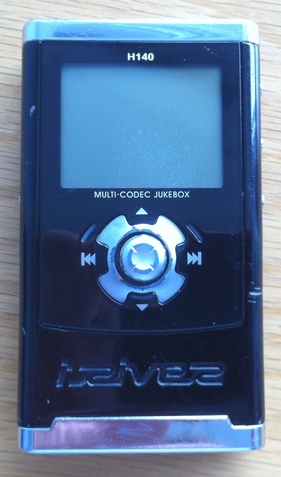
the iRiver music player
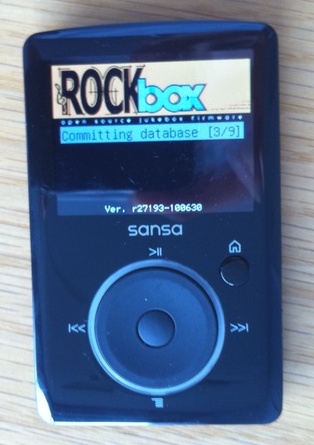
About six years ago, I spent a chunk of my very first salary on a portable music player, the iRiver H140, a relatively bulky and large hard-disk based player, with a capacity of 40G. Uniquely for music players before or since, the iRiver features both digital and analogue line ins and outs. It also has (more common) recording facilities and an FM tuner, the latter of which I used a great deal (and rules out just about all the iPods). This remarkable player has lasted nearly six years of moderate daily use. For the majority of that time, I've ran the rockbox open source firmware on the player, which has provided me with really wide codec support and excellent recording facilities. In the last month I finally had to replace the iRiver. I bought a Sansa Fuze player, featuring 8G of flash storage and a microsd expansion slot. The Fuze is also capable of running rockbox. This year, 32G microsd cards have arrived. Adding one of those brings the capacity of the new player right back up to 40G. For those who are curious: yes, a Sandisk 32G microsd does work in the Fuze, at least with rockbox, for playback. At the moment, rockbox cannot write to storage on the Fuze, so you need to either use the original firmware or an external reader/writer to manipulate the contents of the microsd. However, I am not sure how well the original firmware can handle the 32G. Whenever I boot it, I see a "refreshing your media" message which lasts longer than my patience. I will write an update once I've established further the degree of support.
the fuze player
I kept a canonical copy of my music library on a desktop computer and used rsync to keep the iRiver up-to-date. I can use almost exactly the same procedure for the new player (with some small changes to cope with the split-storage) I now have a 40G player running rockbox exactly as I had before, albeit at a fraction of the size and weight (and cost: approximately half as expensive), and with a nicer display including colours, album art, etc. They both can even play doom (although the controls are even more awkward than iPhone Doom).

Jon Dowland: transition

I've just finished reading and thoroughly enjoying Transition by Iain Banks. Despite a terrible writeup in the Guardian, I found the book to concentrate just as strongly on character as world-building, but I wouldn't be surprised if a sequel was on the cards. The novel is, in part, an exploration of the many worlds theory of quantum mechanics. Or at least that's it's setting. In the UK, it has been published without the traditional 'M' infix denoting Science Fiction, although it is undeniably so: It's not even pretending to be anything else. The book reminded me of Quarantine, and to a lesser extend Permutation City, both by Greg Egan; and another book I've read recently which I can't reveal without spoiling this one.

Next.

Previous.