Search Results: "gt"

9 June 2017

Jonathan Dowland: Western Digital Hard Drive head parking

I stumbled across some information about pathological behaviour of Western Digital Green (and some Red) hard drives relating to drive-head parking when the device is idle. In some circumstances, a particular pattern of drive activity can result in the drive head being repeatedly parked and un-parked in short intervals, possibly* resulting in excess wear on the drive. Apparently* the drive head parking is recorded in the S.M.A.R.T. "Load Cycle Count" attribute. I have two WD Red drives in my NAS, one for live data and one for backup. The latter drive is basically unused most of the day until scheduled backup jobs kick in and those jobs are all clustered together. I already unmount the backup filesystems when the jobs are not active (I wrote about this in mount-on-demand backups). Inspecting the S.M.A.R.T. attributes was surprising:
drive power on hours load cycle count
regular 12143 348
backup 12191 13043
It certainly looks like my backup drive has a much higher load cycle count than you might expect for a mostly-idle drive. I checked the attributes again 24 hours later and the regular drive had incremented by a single cycle, whilst the backup drive went up by 56. There are some official tools from Western Digital that makes an adjustment to the idle timeouts for head parking on the drives. There's also an unofficial tool idle3tcl to do the same, which is packaged in Debian. The unofficial tool let you set and fetch a particular value from the drive firmware. I don't know for sure* that the official tool does exactly the same thing, and nothing else. One advantage of the unofficial tool is it lets you read the value as well as write it. I tried the unofficial tool to get the drive's default value, which was 0x8a, and bump it to the maximum of 0xff. I then tried the official tool then fetched the value again: interestingly the official tool had reset the value back to 0x8a. I haven't managed to assess the impact of these changes on the attrition rate yet because I need to perform a cold boot for the change to take effect and that isn't convenient just now. My plan is to try and disable the feature completely via the unofficial tool. If that rectifies the issue I will then investigate changing the power management settings by hand at backup start/end time, perhaps via hdparm. ( The problem with these kind of issues is there is precious little in the way of reliable documentation as to the real issue, real drive behaviour, etc. I've marked a few sections of this blog post with * asterisks to indicate where we are having to make informed guesses. )

Jonathan Dowland: Minimalism

My wife and I have read about minimalism. I plan to write about it.

Norbert Preining: Calibre 3 beta for Debian

I have updated my Calibre Debian repository to include packages of the upcoming version 3, currently version 2.99.10. As with the previous packages, I kept RAR support in to allow me to read comic books.
The repository location hasn t changed, see below. Please report your experiences to the Calibre beta support channel at MobileRead.
deb http://www.preining.info/debian/ calibre main
deb-src http://www.preining.info/debian/ calibre main
The releases are signed with my Debian key 0x6CACA448860CDC13 Enjoy

8 June 2017

Norbert Preining: Running in the Kanazawa hills

Sometimes I needed a short break from work, and usually I go a bit running. Normally I run between five and ten km, just around our flat. But yesterday I somehow thought it might be a good idea to run through the hills near by. I usually drive up there to a climbing spot or a cafe, so it will for sure not be that long. Well, my estimation was wrong
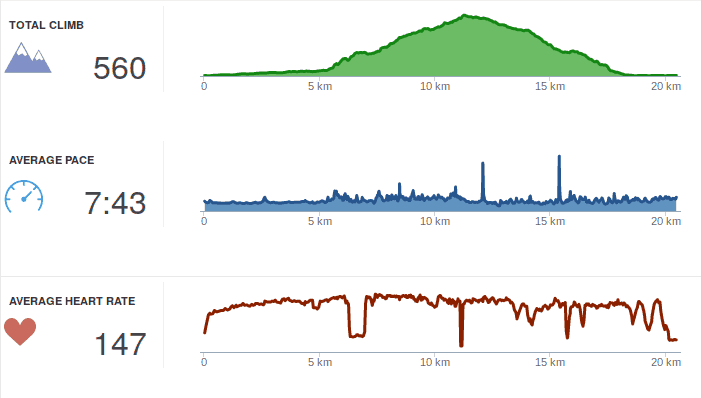
Turned out to be 20km and quite a trip up and down, in fact 560mH running up wasn t what I could actually do, so I walked the steeper parts. Due to the permanent rain the views weren t that great, but one gets a feeling how far it is back to town. I used my new fenix 5x for the run (was helpful with the built-in map, report later), so I got very detailed data from Garmin Connect. Not that I really understand what it is all for, but Garmin told me that I am overtraining and that I am not a good runner (due to vertical oscillation etc). I guess there is a whole lot to learn and improve. Anyway, I made it back alive, and the first thing I needed was loads of water to drink

Eriberto Mota: OpenVAS 9 from Kali Linux 2017.1 to Debian 9

The OpenVAS OpenVAS is a framework of several services and tools offering a comprehensive and powerful vulnerability scanning and vulnerability management solution. The framework is part of Greenbone Networks' commercial vulnerability management solution from which developments are contributed to the Open Source community since 2009. OpenVAS is composed of some elements, as OpenVAS-Cli, Greenbone Security Assistant, OpenVAS Scanner and OpenVAS Manager. The official OpenVAS homepage is http://www.openvas.org. From Kali Linux 2017.1 to Debian 9 Ok, this is a temporary solution. Now (June 2017), Debian 9 wasn't released yet and OpenVAS 9 is not available in Debian in good conditions (it is in Experimental but a bit problematic). I think that we will have OpenVAS in backports soon. The OpenVAS 9 from Kali is working perfect for Debian 9. So, to take advantage of this, adopt the following procedures:

1. Add a line to end of /etc/apt/sources.list file:

deb http://http.kali.org/kali kali-rolling main

2. Run:

# apt-get update
# apt-get install -t kali-rolling openvas

(if you want to simulate before install, add a -s option before -t)

3. Rermove or comment the previous line added to /etc/apt/sources.list file to avoid future problems in your Debian.

4. Run the following command to configure the OpenVAS and to download the initial database:

# openvas-setup

This step may take some time. Note that the initial password for user admin will be created and shown.

5. Finally, open a web browser and access the address https://127.0.0.1:9392 (use https!!!). Alternatively, you can call http://127.0.0.1 to be automagically redirected to https://127.0.0.1:9392.

The default user is admin and the password was shown in the last step. You will can change this password inside OpenVAS (menu Administration > Users > Edit User, which is an blue icon).

If your password was lost, you will be able to create a new administrative user via shell command. See the section "Some tips" below.

6. To see the packages installed from Kali Linux, use the command:

$ dpkg -l   grep kali
Some tips To create a new administrative user called test:
# openvasmd --create-user test --role Admin
To update the database (NVTs):
# openvasmd --update
# openvasmd --rebuild
# service openvas-scanner restart
To solve the message "Login failed. Waiting for OMP service to become available":
# openvas-start
To make OpenVAS listen all network interfaces, allowing one to call the service in a remote web browser (http://remote-server, port 80 only), edit the /lib/systemd/system/greenbone-security-assistant.service and change:
ExecStart=/usr/sbin/gsad --foreground --listen=127.0.0.1 --port=9392 --mlisten=127.0.0.1 --mport=9390

to

ExecStart=/usr/sbin/gsad --foreground --listen=0.0.0.0 --port=9392 --mlisten=127.0.0.1 --mport=9390
After the change, reload the configuration and restart the service:
# systemctl daemon-reload
# systemctl restart greenbone-security-assistant
Quick start for beginners If OpenVAS isn't familiar for you, I have a suggestion for a quick test. Firstly, download Ubuntu Server 8.04 from this page and install it inside a virtual machine, selecting all services as LAMP, SSH etc. I used the i386 version and VirtualBox. After this, use OpenVAS to scan the Ubuntu (menu Scans > Tasks > a pink icon with a magic wand in the upper left corner). After the scan, click over the blue bar where we will can see the word "Done". Enjoy!

7 June 2017

Alexander Wirt: Upcoming Alioth Sprint

As some of you already know we do need a replacement for alioth.debian.org. It is based on wheezy and a heavily modified version of Fusionforge. Unfortunately I am the last admin left for alioth and I am not really familiar with fusionforge. After some chatting with a bunch of people we decided that we should replace alioth with a stripped down version of new services. We want to start with the basic things, git and and identity provider. For git there are two candidates: gitlab and pagure. Gitlab is really nice, but has a big problem: it is Opencore, which that it is not entirely opensource. I don t think we should use software licensed under such a model for one of our core services. That brings us to the last candidate: pagure. Pagure is a nice project based on gitolite, it is developed by the fedora project which use it for all their repos. Pagure isn t packaged for Debian yet, but that is work in progress (#829046). If you can lend a helping hand to the packager, please do so. To get things started we will have a Alioth Sprint from 18th to 20th August 2017 in Hamburg, Germany. If you want to join us, add yourself to the wikipage. For further discussions I created a mailinglist on alioth. Please subscribe if you are interested in that topic.
Alexander Wirt: New blog

After a long time I decided to move my blog again to something with git and markdown in the background. I decided to give hugo a chance on my uberspace account. Uberspace is a nice, geek driven hoster in germany from geeks for geeks. The blog itself is hosted on github, it pushes commits to a simple golang based webhook service based on adnanh/webhook.

Jeremy Bicha: GNOME Tweak Tool 3.25.2

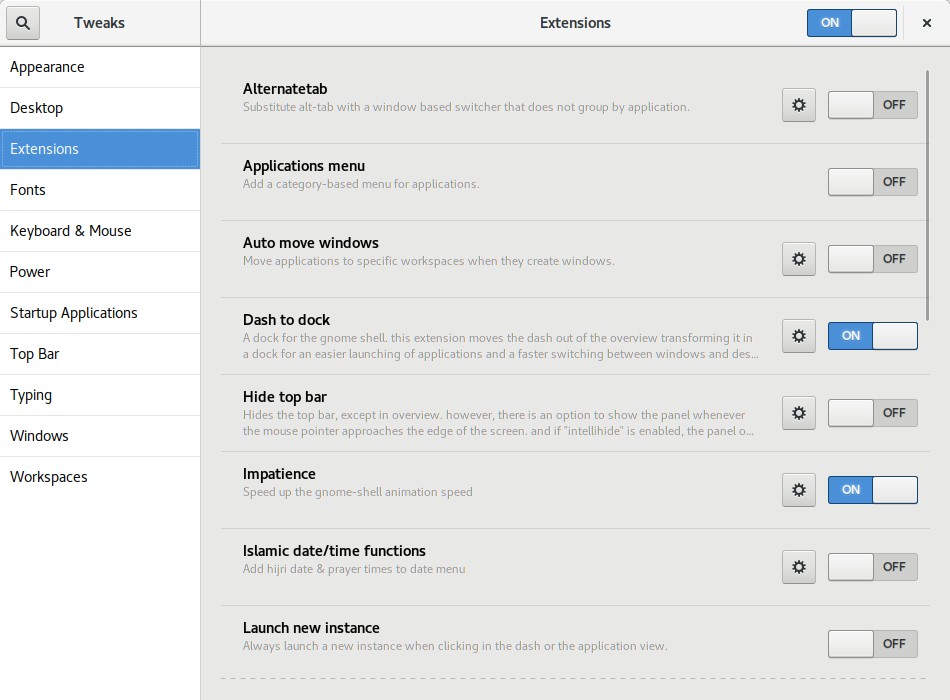
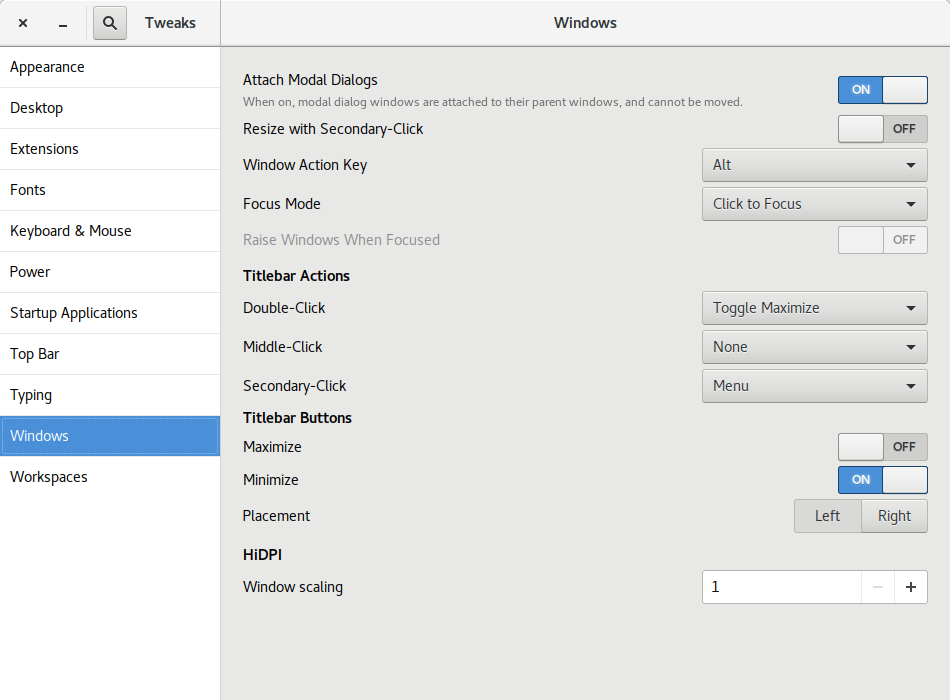
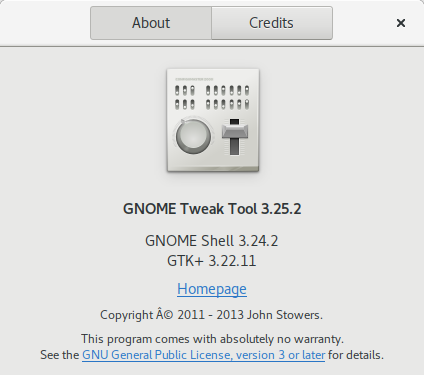
Today, I released the first development snapshot (3.25.2) of what will be GNOME Tweak Tool 3.26. Many of the panels have received UI updates. Here are a few highlights. Before this version, Tweak Tool didn t report its own version number on its About dialog! Also, as far as I know, there was no visible place in the default GNOME install for you to see what version of GTK+ is on your system. Especially now that GNOME and GTK+ releases don t share the same version numbers any more, I thought it was useful information to be in a tweak app. Florian M llner updated the layout of the GNOME Shell Extensions page: Rui Matos added a new Disable While Typing tweak to the Touchpad section. Alberto Fanjul added a Battery Percentage tweak for GNOME Shell s top bar. I added a Left/Right Placement tweak for the window buttons (minimize, maximize, close) . This screenshot shows a minimize and close button on the left. I think it s well known that Ubuntu s window buttons have been on the left for years but GNOME has kept the window buttons on the right. In fact, the GNOME 3 default is a single close button (see the other screenshots). For Unity (Ubuntu s default UI from 2011 until this year), it made sense for the buttons to be on the left because of how Unity s menu bar worked (the right side was used by the indicator system status menus). I don t believe the Ubuntu Desktop team has decided yet which side the window buttons will be on or which buttons there will be. I m ok with either side but I think I have a slight preference towards putting them on the right like Windows does. One reason I m not too worried about the Ubuntu default is that it s now very easy to switch them to the other side! If Ubuntu includes a dock like the excellent Dash to Dock in the default install, I think it makes sense for Ubuntu to add a minimize button by default. My admittedly unusual opinion is that there s no need for a maximize button.
  1. For one thing, GNOME is thoroughly tested with one window button; adding a second one shouldn t be too big of a deal, but maybe adding a 3rd button might not work as well with the design of some apps.
  2. When I maximize an app, I either double-click the titlebar or drag the app to the top of the screen so a maximize button just isn t needed.
  3. A dedicated maximize just doesn t make as much sense when there is more than one possible maximization state. Besides traditional maximize, there is now left and right semi-maximize. There s even a goal for GNOME 3.26 to support quarter-tiling .
Other Changes and Info

Petter Reinholdtsen: Idea for storing trusted timestamps in a Noark 5 archive

This is a copy of an email I posted to the nikita-noark mailing list. Please follow up there if you would like to discuss this topic. The background is that we are making a free software archive system based on the Norwegian Noark 5 standard for government archives. I've been wondering a bit lately how trusted timestamps could be stored in Noark 5. Trusted timestamps can be used to verify that some information (document/file/checksum/metadata) have not been changed since a specific time in the past. This is useful to verify the integrity of the documents in the archive. Then it occured to me, perhaps the trusted timestamps could be stored as dokument variants (ie dokumentobjekt referered to from dokumentbeskrivelse) with the filename set to the hash it is stamping? Given a "dokumentbeskrivelse" with an associated "dokumentobjekt", a new dokumentobjekt is associated with "dokumentbeskrivelse" with the same attributes as the stamped dokumentobjekt except these attributes: This assume a service following IETF RFC 3161 is used, which specifiy the given MIME type for replies and the .tsr file ending for the content of such trusted timestamp. As far as I can tell from the Noark 5 specifications, it is OK to have several variants/renderings of a dokument attached to a given dokumentbeskrivelse objekt. It might be stretching it a bit to make some of these variants represent crypto-signatures useful for verifying the document integrity instead of representing the dokument itself. Using the source of the service in formatDetaljer allow several timestamping services to be used. This is useful to spread the risk of key compromise over several organisations. It would only be a problem to trust the timestamps if all of the organisations are compromised. The following oneliner on Linux can be used to generate the tsr file. $input is the path to the file to checksum, and $sha256 is the SHA-256 checksum of the file (ie the ".tsr" value mentioned above).
openssl ts -query -data "$inputfile" -cert -sha256 -no_nonce \
    curl -s -H "Content-Type: application/timestamp-query" \
      --data-binary "@-" http://zeitstempel.dfn.de > $sha256.tsr
To verify the timestamp, you first need to download the public key of the trusted timestamp service, for example using this command:
wget -O ca-cert.txt \
  https://pki.pca.dfn.de/global-services-ca/pub/cacert/chain.txt
Note, the public key should be stored alongside the timestamps in the archive to make sure it is also available 100 years from now. It is probably a good idea to standardise how and were to store such public keys, to make it easier to find for those trying to verify documents 100 or 1000 years from now. :) The verification itself is a simple openssl command:
openssl ts -verify -data $inputfile -in $sha256.tsr \
  -CAfile ca-cert.txt -text
Is there any reason this approach would not work? Is it somehow against the Noark 5 specification?

Michal Čihař: Gammu family releases

During last weeks I was finally able to push out some releases of Gammu and related tools. Those were mostly waiting for quite some time in Git, but still will be useful for many users. Gammu 1.38.3 brings several SMSD performance improvements (I'd like to hear feedback here how much it helped in real world workloads), fixes USSD related crashes and adds support for new devices. python-gammu 2.8 finally brings emoji fixes to Python users as well. Those were fixed in Gammu quite some time ago, but the Python API still didn't handle them properly. There was also simplification in the calls API. Wammu release will follow shortly in next days, the most important change there being license change to GPLv3 or later.

Filed under: Debian English Gammu python-gammu Wammu

6 June 2017

Gunnar Wolf: Made with Creative Commons: Starting a translation project

Dear Lazyweb, About a week ago, I learnt about the release of an interesting book by the fine people at Creative Commons: Made with Creative Commons. The book itself is, of course, CC BY-SA-licensed. I downloaded it and started reading right away. Some minutes later, I ordered a dead-tree copy, which arrived a couple of days ago. (I'm linking to the publisher's page, but bought it from Amazon M xico... Shipping it from Denmark would not have been as cheap and fast, I guess). Anyway, given my workplace, given the community I know, given I know something like this is much needed... I will start a Spanish translation of the content. There are at least two other people interested in participating, and I haven't yet publicized my intentions (this is the first public statement about it). So, dear Lazyweb: What I need is a good framework for doing this. I started by creating a Git repository, and we were discussing to translate to Markdown (to later format according to the desired output) but then I thought... If we want the translation to be updateable, and to be able to properly accept other people's work, maybe a better format is warranted? So, my current idea is to create a Markdown version for the English original, and find a way to shoehorn^Wseparate it by paragraphs and feed it to Gettext, which is the best translation framework I have used (but is meant for code translation, not for full-text)... Dear lazyweb: What tools do you recommend me to use? Quite important to me: Are they Free tools? Are they easy to use by third-parties, maybe incorporating work via Git? Or, at least, via a Web front-end that allows me as a project lead to review and approve/fix/reject strings? Thanks, lazyweb!

Reproducible builds folks: Reproducible Builds: week 110 in Stretch cycle

Here's what happened in the Reproducible Builds effort between Sunday May 28 and Saturday June 3 2017: Past an upcoming events Documentation updates Toolchain development and fixes Patches and bugs filed 4 package reviews have been added, 6 have been updated and 25 have been removed in this week, adding to our knowledge about identified issues. Weekly QA work During our reproducibility testing, FTBFS bugs have been detected and reported by: diffoscope development tests.reproducible-builds.org Mattia Rizzolo: Daniel Kahn Gillmor: Vagrant Cascadian: Holger Levsen: Misc. This week's edition was written by Chris Lamb, Bernhard M. Wiedemann and Holger Levsen & reviewed by a bunch of Reproducible Builds folks on IRC & the mailing lists.

Russ Allbery: Review: Star Healer

Review: Star Healer, by James White
Series: Sector General #6
Publisher: Orb
Copyright: 1984
Printing: 2002
ISBN: 0-312-87770-6
Format: Trade paperback
Pages: 206
Star Healer is the sixth book of the Sector General series, and I think it may be the first novel in the series that was written as a novel instead of a fix-up of short stories. That makes it not a bad place to start in the series if one would rather not deal with fix-ups or barely-disguised short story collections. There isn't a huge amount of character development over the course of this series (at least to this point), so the main thing you would lose by starting here is some built-up reason for caring about the main character. This is the third book in the Alien Emergencies omnibus (the book referenced in the publication information here). Most of the previous stories have focused on Conway, a Senior Physician in the sprawling and wonderfully well-equipped multi-species hospital called Sector General and, in recent stories, the head physician in the hospital's ambulance ship. Becoming a Senior Physician at Sector General is quite the accomplishment, and a fine point to reach in the career of any doctor specializing in varied life forms, but there is another tier above: the Diagnosticians, who are the elite of Sector General. The difference is education tapes. Deep knowledge of even one specific type of life is a lot to ask of a doctor, as shown by the increasing specialization of human medicine. Sector General, which deals with wildly varying ailments of thousands of species including entirely unknown ones (if, admittedly, primarily trauma, at least in the stories shown), would be an impossible task. White realizes this and works around it with education tapes that temporarily embed in a doctor's head the experience of a doctor of another species entirely. This provides the native expertise missing, but it comes with the full personality of the doctor who recorded the tape, including preferences for food and romantic attachment that may be highly disorienting. Senior Physicians use a tape at a time, and then have it erased again when they don't need it. Diagnosticians juggle four or more tapes at the same time, and keep them for long periods or even permanently, allowing them to do ground-breaking original research. The opening of Star Healer is an offer from the intimidating Chief Psychologist of Sector General: he has a shot at Diagnostician. But it's a major decision that he should think over first, so the next step is to take a vacation of sorts on a quiet world with a small human scientific station. Oh, and there's a native medical problem, although not one with much urgency. Conway doesn't do a lot of resting, because of course he gets pulled into trying to understand the mystery of an alien species that is solitary to the point of deep and unbreakable social taboos against even standing close to other people. This is a nice cultural puzzle in line with the rest of the series, but it also leaves Conway with a new ally: an alien healer in a society in which being a doctor is difficult to the point of near hopelessness. It's not much of a spoiler to say that of course Conway decides to try for Diagnostician after his "vacation." The rest of the book is him juggling multiple cases with his new and often conflicting modes of thinking, and tackling problems that require a bit less in the way of puzzle-solving and a bit more in the way of hard trade-off decisions and quick surgical action. Senior Physicians may be able to concentrate on just one puzzle at a time; Diagnosticians have to juggle several. And they're larger, more long-term problems, focusing on how to improve a general problem for a whole species rather than just heal a specific injured alien. One interesting aspect of this series, which is very much on display here, is that Sector General most definitely does not have a Prime Directive. They are cautious about making contact with particularly primitive civilizations for fear that spacefarers would give them an inferiority complex, but sometimes they do anyway. And if they run into some biological system that offends their sensibilities, they try to fix it, not just observe it. White frequently shows species caught in what the characters call "biological traps," unable to develop farther because of some biological adaptation that gets in their way, and Sector General tries to fix those. It's an interesting ethical problem that I wish they'd think about a bit more. It's not clear they're wrong, and I think it's correct to take an expansive view of the mission to heal, but there's also a sense in which Sector General is modifying culture and biology to make aliens more like them. (The parallels between this and all the abusive paternalism that human cultures do around disability is a little too close to home to be comfortable, and now I kind of wish it hadn't occurred to me.) The gender roles, sadly, continue to be dire, although mostly ignorable because the one major female character is generally just shown as another doctor with little attention to sex. But apparently women (of every species!) cannot become Diagnosticians because they have an insurmountable biological aversion to sharing their minds with a learning tape from any doctor who doesn't find them physically attractive, which is just... sigh. It's sad that someone who could write an otherwise remarkably open-minded and pacifist series of stories, in sharp contrast with most of SF history, would still have that large of a blind spot. Apart from the times gender comes up, I liked this book more than the rest of the series, in part because I strongly prefer novels to short stories. There's more room to develop the story, and while characterization continues to not be White's strong point and that space mostly goes to more puzzles instead, he does provide an interesting set of interlocking puzzles. The problem posed by the aliens Conway meets on his "vacation" isn't fully resolved here (presumably that's for a future book), but he does solve several other significant problems and develops his own problem-solving style in more depth than in previous stories. Mildly recommended, particularly if you like this series in general. Followed by Code Blue - Emergency. Rating: 7 out of 10

John Goerzen: Family Spring: A Story in Photos

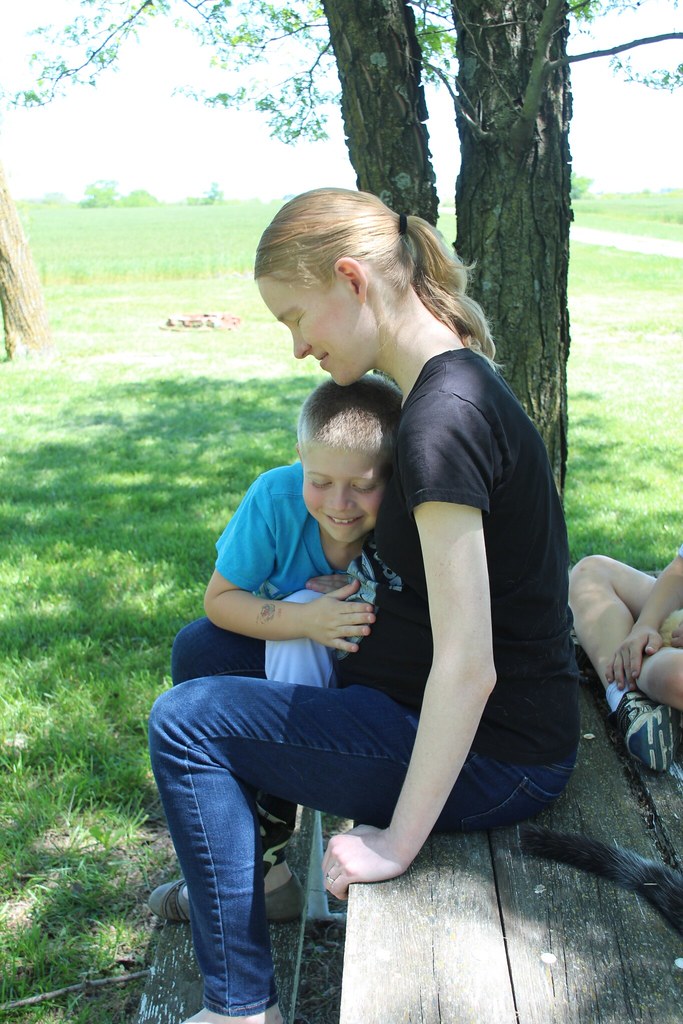
This has been a spring with times to relax, times to be busy, times of anticipation of a new baby, and times of enjoying our family. Rather than write a lot of words about it, I m telling the story in photos. To view, click here, then click Show Info in the upper right to see captions. You can pause it with the button in the lower left, and use arrow keys to advance. Alternatively, there s a captionless slideshow available here. Here s one photo to get you started: Happy about the little sister on the way

Dirk Eddelbuettel: anytime 0.3.0

A new version of the anytime package is now on CRAN. It marks the eleventh release since the inaugural version late last summer. anytime is a very focused package aiming to do just one thing really well: to convert anything in integer, numeric, character, factor, ordered, ... format to either POSIXct or Date objects -- and to do so without requiring a format string. See the anytime page, or the GitHub README.md for a few examples. This release brings a little more consistency to how numeric or integer arguments are handled. Previously, we were overly eager in accepting something such as 20150605 (i.e. today) as a (numerical or integer) input to both anytime() and anydate(). That is well-intentioned, but ultimately foolish. We relied on heuristic cutoffs to determine whether input was "meant to be" a date or time offset. There lies madness. We now differentiate whether we were called via anytime() (in which case numerical data is second offset to the epoch, just as.POSICct()) or anytime() (in which case it is days offset to the (date) epoch, just like as.Date()). The previous behaviour can be restored via a options, both function-local as well as global are supported. And of course, there is no change for all other (and more common) input formats, notably character or factor. A full list of changes follows.

Changes in anytime version 0.3.0 (2017-06-05)
  • Numeric input is now always an offset to epoch, with anytime() using seconds, and anydate() using dates. (#65 fixing #63).
  • Old behaviour can be re-enabled with an option also supporting a global setting getOption("anytimeOldHeuristic")
  • RStudio versions 1.1.129 or later can run all functions without fear of crashing due to a change in their use of Boost.
  • Replaced init.c with registration code inside of RcppExports.cpp thanks to Rcpp 0.12.11.

Courtesy of CRANberries, there is a comparison to the previous release. More information is on the anytime page. For questions or comments use the issue tracker off the GitHub repo.

This post by Dirk Eddelbuettel originated on his Thinking inside the box blog. Please report excessive re-aggregation in third-party for-profit settings.

5 June 2017

Clint Adams: nibus daisens

What s up with narcissists and sexual predators frequently reapplying their lipstick?
Posted on 2017-06-05
Tags: ranticore

Jonathan Dowland: On blogging

For a while now, I've wanted to increase my frequency of blogging. I've got roughly 24 draft posts which I haven't finished writing, stretching back to at least 2009, and several other topics that I haven't even begun to write about but have something in the back of my mind which I'd like to express. I have been self-censoring to an extent for two reasons: Neither of these are good enough reasons to do so: in the case of Facebook, I make very little use of it, and if people didn't find my posts interesting they can mute me, block me or ignore them. In the case of Twitter, my interest in it as a platform has waned since they have made it increasingly difficult to interact with them as a developer. I've given up trying to archive my own tweets, and so on longer think of it as a good place to express anything in isolation. Going forward I'm going to make an effort to ignore their influence on me.

Sean Whitton: skiessequel

Hey Sega, Why the Hell is There No Skies of Arcadia Sequel? USgamer
There was still plenty of world left to be explored, if it came to that
I don t understand this remark there really wasn t much left. They d have to make changes in order to squash more in, as I ve found when trying to convert the world of Arcadia to D&D.

John Goerzen: Flying with my brothers

Picture one Sunday morning. Three guys are seemingly-randomly walking into a Mennonite church in rural Nebraska. One with long hair and well-maintained clothes from the 70s. Another dressed well enough to be preaching. And the third simply dressed to be comfortable, with short hair showing evidence of having worn a headset for a couple of hours that morning. This was the scene as we made a spur-of-the-moment visit to that church which resulted in quite some surprise all around, since my brother knew a number of people there. For instance:
Pastor: Peter! What are you doing here? Peter: [jokingly] Is that how you greet visitors here?
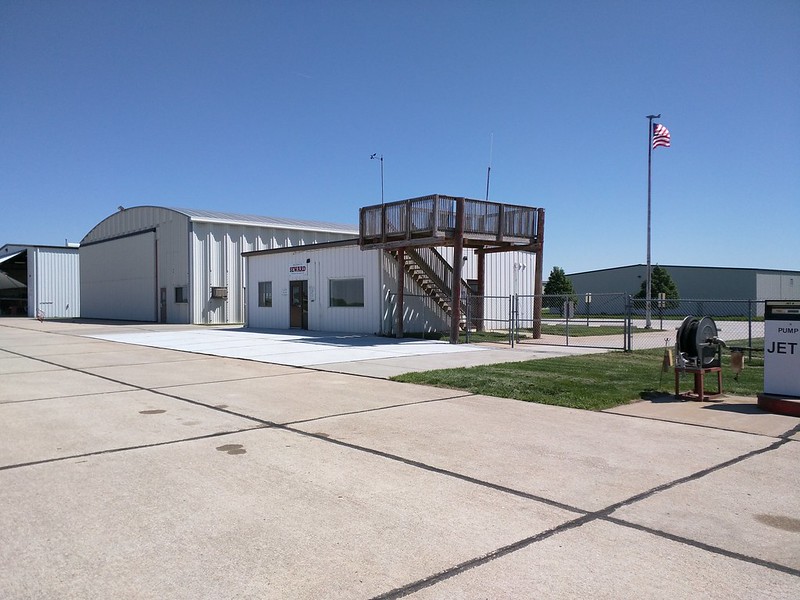
And then, of course, Peter would say, Well, we were flying home from South Dakota and figured we d stop in at Beatrice for fuel. And drop in on you. Followed by some surprise that we would stop at their little airport (which is quite a nice one). This all happened because it was windy. This is the fun adventure of aviation. Sometimes you plan to go to Texas, but the weather there is terrible, so you discover a 100-year-old landmark in Indiana instead. Or sometimes, like a couple of weeks ago, we planned to fly straight home but spent a few hours exploring rural Nebraska. The three of us flew to Sioux Falls, SD, in a little Cessna to visit my uncle and aunt up there. On our flight up, we stopped at the little airport in Seward, NE. It was complete with this unique elevated deck. In my imagination, this is used for people to drink beer while watching the planes land. IMG_20170512_113323 In South Dakota, we had a weekend full of card and board games, horseshoes, and Crokinole with my uncle and aunt, who are always fun to visit. We had many memories of visits up there as children and the pleasant enjoyment of the fact that we didn t need an 8-hour drive to get there. We flew back with a huge bag of large rhubarb from their garden (that too is something of a tradition!) It was a fun weekend to spend with my brothers first time we d been able to do this in a long while. And it marked the 11th state I ve flown into, and over 17,000 miles of flying.

4 June 2017

Dirk Eddelbuettel: RcppArmadillo 0.7.900.2.0

armadillo image The new RcppArmadillo release 0.7.900.2.0 is now on CRAN, and the Debian package was just updated as well. Armadillo is a powerful and expressive C++ template library for linear algebra aiming towards a good balance between speed and ease of use with a syntax deliberately close to a Matlab. RcppArmadillo integrates this library with the R environment and language--and is widely used by (currently) 350 other packages on CRAN---an increase of 32 since the last CRAN release of 0.7.800.2.0 in April! With the 7.900.* series of Armadillo, Conrad has started to more fully utilize OpenMP (also see Wikipedia on OpenMP) for operations that can be parallelized. To use this in your package you need to update its src/Makevars ,.win file similarly to what the skeleton default now uses
PKG_CXXFLAGS = $(SHLIB_OPENMP_CXXFLAGS) 
PKG_LIBS = $(SHLIB_OPENMP_CFLAGS) $(LAPACK_LIBS) $(BLAS_LIBS) $(FLIBS)
and you may want to enable C++11 while you are at it---though this may pose issues with older-than-ancient RHEL installations which are still (way too) pervasive so we do not do it by default (yet). Here, we once again rely on the build infrastructure automagically provided by R itself: if and when OpenMP is available, R will use it via $(SHLIB_OPENMP_CXXFLAGS) etc; see the fine WRE manual for details. That said, some operating systems make this harder than other, and macOS usually takes the crown. See for example this blog post by James for surviving in that environment. I am a little short of details because on Linux these things just work, and have for well over a decade. The rcpp-devel mailing list will be the best place for questions. Changes in this release relative to the previous CRAN release are as follows:

Changes in RcppArmadillo version 0.7.900.2.0 (2017-06-02)
  • Upgraded to Armadillo release 7.900.2 (Evil Banana Republic)
    • Expanded clamp() to handle cubes
    • Computationally expensive element-wise functions (such as exp(), log(), cos(), etc) can now be automatically sped up via OpenMP; this requires a C++11/C++14 compiler with OpenMP 3.0+ support for GCC and clang compilers
    • One caveat: when using GCC, use of -march=native in conjunction with -fopenmp may lead to speed regressions on recent processors
  • Added gcc 7 to support compiler check (James Balamuta in #128 addressing #126).
  • A unit test helper function for rmultinom was corrected (#133).
  • OpenMP support was added to the skeleton helper in inline.R

Courtesy of CRANberries, there is a diffstat report. More detailed information is on the RcppArmadillo page. Questions, comments etc should go to the rcpp-devel mailing list off the R-Forge page.

This post by Dirk Eddelbuettel originated on his Thinking inside the box blog. Please report excessive re-aggregation in third-party for-profit settings.

Next.

Previous.