Search Results: "ana"

17 February 2010

Martin F. Krafft: ACTA documents leaked

Shortly after I wrote my last article about ACTA and the lack of transparency, I was delighted to find out that a report of the recent negotiations in Mexico has been leaked. I find it a bit disconcerting that our politicians, who are theoretically supposed to represent our interests, are writing documents that can leak to the public, when they should have been available to the public from the start. The document and the coverpage are available for direct download. Michael Geist has a first analysis
A brief report from the European Commission authored by Pedro Velasco Martins (an EU negotiator) on the most recent round of ACTA negotiations in Guadalajara, Mexico has leaked, providing new information on the substance of the talks, how countries are addressing the transparency concerns, and plans for future negotiations. (read more )
NP: Dimmer: Degrees of Existence

Daniel Stone: sam varghese not part of the open source community

I'm glad to see that Sam 'When All Else Fails, Call 'Em Racists' Varghese has admitted that he's definitely not a part of the open source community. Which is good, because I'd be pretty upset if he was. (Though his claim to be a professional journalist is no doubt fairly upsetting and phenomenally insulting to actual journalists.)

16 February 2010

Russell Coker: Would you Short-Change a Pedophile?

For some time the film industry has been running an anti-piracy campaign with slogans such as you wouldn t steal a car [1] in an attempt to draw a false analogy between downloading a movie and stealing a significant and valuable object the modern equivalent to being a horse thief . One of the many ways that such poor analogies break down is the fact that downloading a movie is not a crime, it s copyright infringement. The best analogy that I can think of for non-commercial copyright infringement is the practice of short-changing. I expect that almost everyone has at some time received less change than they deserved when buying something at a shop, the cashier aims to collect $1 or $2 from each customer and can easily double the amount of money that they take home at the end of the day. When a customer complains they just pretend to have made a mistake and although short-changing is a crime (unlike copyright infringement) it almost never results in police action. The practice is tolerated to such a degree that some people know the shops where they are likely to be short-changed, they count their change more carefully and demand the full amount but don t bother complaining to the manager! The film industry also tries to portray itself as representing struggling artists who deserve the money, it s described as a moral issue good people pay for movies while bad people download movies and steal cars. But then there s the case of Roman Polanski who is a well known movie director and child rapist [2]. I expect that most store employees would gladly palm some of the change if Roman Polanski was a customer that is of course if they weren t too busy arranging a lynch mob. So instead of you wouldn t steal a car a more reasonable statement would be you would short-change a pedophile if you weren t organising a lynch mob . Please note that murdering a criminal as part of a lynch mob is a crime (unlike making an unauthorised copy of a DVD), so I encourage people not to perform lynchings. Many important people in the movie industry have different ideas, the Wall Street Journal has an article about the petition to free Roman Polanski which demonstrates the difference between Hollywood attitudes and those of the rest of the world [3]. For them, violent crime is no big deal if the criminal is famous and the victim isn t but anything which affects their own wealth is regarded as a serious issue. Indiewire has a copy of the petition to free Roman and a list of the names of 100 people who signed it [4] (I heard that the latest count was nearer 150 but couldn t find a reference). I believe that the matter of morals is not whether someone who rapes children deserves jail time (that issue is really clear) but whether it is morally acceptable to give money to such a criminal or their supporters. I suggest that the list of signatories to the pro-rape petition be black-listed, any movie that involves any of them should not be paid for either don t see the movie or download it without paying at your own whim. If anyone knows of a web site that is being regularly updated with a list of all past and current projects involving people who signed the petition for Roman then please let me know it would be good to have a list of movies that I will never pay for. Anyone who feels morally obliged to pay something for a movie and who has a great desire to watch a movie made by Roman Polanski or his supporters could download it and then make a donation to a charity equivalent to the purchase price rumor has it that women s refuges are always short of funds. As an aside I find Wikipedia a good reference for movies that I don t plan to see, I read the plot summary on the wiki page and then have no curiosity about what happens in the movie if that isn t adequate I ask friends for spoilers or do a Google search on the movie name and spoilers .

Ana Beatriz Guerrero Lopez: Not the Debian-KDE post you were waiting for

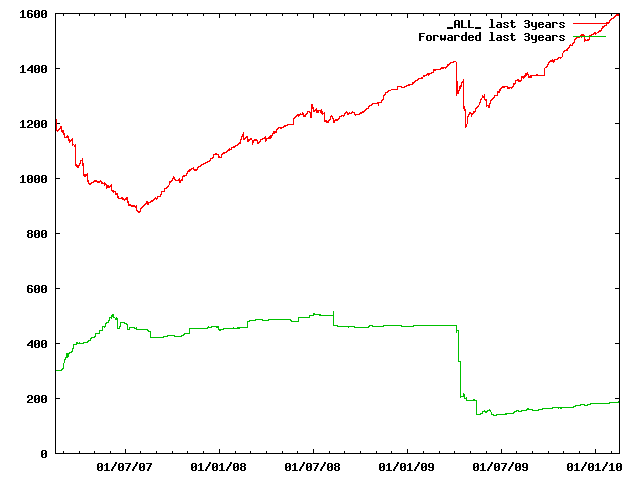
Sorry! I cannot tell you when KDE 4.4 will be uploaded to unstable. I am not working on that. My initial plan was writing about other tasks I am planning to work on and asking for your help. But I realized people would be more interested in knowing about KDE 4.4 packages. Once you know about this, I might trick you into helping in others areas ;) Debian packages for KDE 4.4 are being worked on, just slowly and of course, keeping on with the quality you are used to. There will be also some changes that have been in some people s TODO for long time. The goal is having them in very good shape for Squeeze, that will ship with some point release of 4.4. The doubt is which point release will be: 4.4.2? 4.4.3 ? The schedule for the point releases has not been made yet, so it makes a bit harder trying to predict it. In the same lines, I can not tell you when Squeeze will be released neither, it needs to be frozen first! If you want to know about the reasons of this delay, it is simple math: KDE has been growing a lot of more than the number of people working in Debian packages of KDE. I am not talking about size in lines of code in KDE, it is more the number of new dependencies that the KDE team have to take care now too: soprano, libutempter, Have you wondered why some are under the name of Debian Krap maintainers? :) And there are releases much more often than in the KDE 3 times. You might have notice not only 4.3.5 have been skipped, it also was the case with 4.2.3 or 4.1.4. This is not good or bad, it is just the same number of maintainers (or less) with more work. And what is worse with more bugs open in the Debian BTS! I think reiterated calls for not to file upstream bugs in the Debian BTS and directly in KDE bugzilla (see my blog post about this here) have helped but still we have a large amount of bugs piled through the years. This graph could give you an estimate how we tried in the past fighting against without too much success:
Number of bugs reported against KDE in Debian in the last 3 years Olivier Vitrat, we miss you :) One of the most heavy (and boring) talks that needs to be done for the KDE 4.4 packages is the copyright checking. I am not sure a total newbie can help with this, but if you have knowledge about licenses and you want to try helping, we are waiting for you. About other areas of the packaging maintenance, if you are interested in start learning and helping with future releases, you are welcome to start lurking in the #debian-qt-kde channel in OFTC and in the mailing lists. Update February 21th: 4.4.0 is for sure not being uploaded into the archive. Probably KDE SC 4.4.1 to be released 2nd March will be uploaded to unstable or experimental.

Vincent Sanders: Tempus fugit

Seems I managed to loose a month in there. Been working very hard on a project with an improbable deadline which has not left much time for anything else.

Finally brought to a standstill this weekend by something Joshua brought home (I think it was some form of micro biological warfare agent, judging by how I feel) It is incrediably hard to shrug off the lethargy of illness when you realize all you have to go back to is work.

On the plus side the project deadline is in three weeks time so whatever happens It will all be over by then! Whereupon I can take some time off, calm down and then start all over on the next project...

Yay?

Steve Kemp: I am lightened, can we drop this?

As part of some house-keeping I've been checking over my systems and ensuring they're all tickity-boo for the past couple of days. One thing that I'm getting increasingly tempted by is converting my kvm guest to a 64-bit system. I've not quite sold myself on the prospect of what will be a fair amount of downtime, but I'm 90% there. I do think that a lot of my setup needs an overhaul, for example: One possible plan is to wipe my system, and then restore data from backups. A perhaps saner approach is divide my guest into two smaller ones, and migrate services over one by one (e.g. website1, website2, .. websiteN, email, etc). For the moment I've taken a complete dump of my existing guest, and I'm running it with an IP in the 10.0.0.0/24 range on my desktop. That's at least given me a clear idea of the amount of work involved. I'm still a little unclear on how best to manage running N websites with the intention they'll each run under their own UID. I guess it comes down to having a few instances of nginx/lighttpd/apache and then proxy from *:80 to the actual back-end. Precisely which mixture of services to use is a little overwhelming. Though at some point soon I need to start enabling IPv6 support, and that changes things a little. (Not least because nginx has no IPv6 support present in the Lenny release - I've got a backported package which I run on the Debian Administration website.) It's possible I could hack mod_vhost_alias to redirect/proxy to a local port based upon the virtual hostname present in the request - that's pretty trivial and I've already done something similar for work purposes. Though something like that should presumably already exist? I would expect a map of some form:
example.org: 127.0.0.1:8080
example.net: 127.0.0.1:9090
That has to be about the minimum necessary information to make the decision; a pair of vhost name & local destination. /me googles some.. Update
OK quick update I've added local users for some of my sites, and now have them running under thttpd.
skx:/etc/thttpd# ls -ltr /home/www/   tail -n 4
drwxr-sr-x  4 s-static   s-static   4096 Jan 15 01:41 static.steve.org.uk
drwxr-sr-x  5 s-openid   s-openid   4096 Feb 16 21:31 openid.steve.org.uk
drwxr-sr-x  6 s-images   s-images   4096 Feb 16 21:52 images.steve.org.uk
drwxr-sr-x  5 s-packages s-packages 4096 Feb 16 22:03 packages.steve.org.uk
That seems to work well, with a small wrapper script to start N instances of thttpd instead of a single one. Minor issues are that I'm using mod_proxy to forward requests to the thtpd instances running upon the loopback - and it was initially logging 127.0.0.1 as the source IP. A quick patch later all is well. I'll leave it running a couple of the simple sites for the next few days and see if it kills children. If it does I'll convert the rest. Probably will aim to have nginx in front of thttpd, instead of Apache, but this way I don't have to worry about mod_rewrite rules just yet.
ObFilm: Cruel Intentions

15 February 2010

Russell Coker: Links February 2010

Popular Mechanics has a good article about 911 [1]. Experts in all the relevant fields were consulted to debunk popular myths. It s an old article but I hadn t read it before and learned a lot. Former CIA analyst Raw McGovern and former FBI attorney/special agent Coleen Rowley, a colleague in Veteran Intelligence Professionals for Sanity wrote an interesting article titled Why Counter-Terrorism Is in Shambles [2]. Such sanity from people who are associated with the intelligence industry is unusual. Gizmodo has an amusing and informative poster about the true risks of airline travel post 911 [3]. Reuters has an interesting article about drug smugglers using Gulfstream and 727 aircraft to smuggle cocaine from South America to Africa [4]. They claim a link to al Quaeda, but such a link seems tenuous from the evidence provided, it does seem reasonable to claim that groups who claim affiliation to al Quaeda are involved in smuggling anyone can claim anything really. An 8yo boy is on the TSA terrorism watch list , he regularly gets frisked when traveling by air [5]. His mother had a security clearance to fly on Air Force 2 when Al Gore was the Vice President, any sane security system would look at the parents rather than an 8yo child children of that age aren t going to independently become terrorists. The Dallas Observer has an interesting article by Kimberly Thorpe about how to beat debt collectors [6]. Apparently most debt collectors break the law in some way and can be sued for damages with a typical settlement of $3,500. Some debtors are suing multiple debt collectors, after one debt collector is successfully sued the debt is passed to another collector who also breaks the law. What I really like about this is that the community of people who sue debt collectors keep the industry honest and protect the majority of the population who don t have the time or interest for engaging in law suits. Read Write Web has an informative article about SourceForge being forced to deny access to people in Cuba, Iran, North Korea, Sudan and Syria [7]. A problem for free software developers is that we often don t know the location of the people we collaborate with so it s best to be as open as possible. This means that the US is not a good place to host servers, probably some part of the EU would be better. Also this sort of thing makes the field of free software development less welcoming to US citizens. Did the congress people learn nothing in high-school? They should know that someone who starts a campaign of ostracism may end up being in the small group. Google is developing a new Native Client (NaCl) system that seems to be like Microsoft ActiveX [8]. I can t imagine this doing anything that couldn t be done with Java, it seems most likely to just marginalise the less popular platforms which isn t in the best interests of Google. Kevin Kelly of the Technium wrote an interesting post about 1000 true fans [9]. The concept is that if you are doing creative work you only need 1000 dedicated fans who buy everything you sell to make a living. If you make $20 per year from each of the 1000 fans and you will earn enough to live. Make $100 per year from each of the 1000 fans and you will be earning more money than most people. The updates show that artists who try this aren t having much success yet, but the Internet population is still increasing dramatically PaxStreamline offers an innovation in commercial air-conditioning, apparently a significant amount of electricity is wasted on heating the air after chilling it excessively to remove moisture [10]. So instead of cooling it they use a liquid dessicant to extract the moisture. Ben Schwartz explains why you should never create files in H.264 or MPEG formats, unless you have a special commercial license then you (and your viewers) will all be liable for patent infringement for any type of commercial use [11]. Note that storing the data on a web site with Google adverts counts as commercial use. I wonder if all those digital cameras and mobile phones that create MPEG videos have appropriate licenses, maybe uploading a file created on your phone breaches the patent. J. K. Rowling (author of Harry Potter) gave an inspiring speech for Harvard graduates [12]. I particularly liked the following reference to her work for Amnesty International Choosing to live in narrow spaces leads to a form of mental agoraphobia, and that brings its own terrors. I think the willfully unimaginative see more monsters. They are often more afraid . Peter Eigen gave an interesting TED talk about the formation of Transparency International and the economic problems that are caused by corruption [13]. The Monthly Review has an interesting article about the failure of the US justice system [14]. The prison industrial complex has captured part of the US government, neo-liberalism is to blame. 59% of Americans agree that homosexuals ought to be able to serve in the U.S. military. But 70 percent believe that gays and lesbians ought to be able to serve in the military [15]. Apparently 11% of Americans think that gays and lesbians are better than homosexuals .

William Pitcock: Healthy Menu for Slim with Diet Software

sofwarediet285
Want a healthy diet, but difficulty determining diet have much less heart disease and diabetes, now do not need to be confused. The problem currently existing software can determine which food or menu with us. This tool was created Muhammad Burhanuddin SI students majoring in the College information systems Information Management and Computer Engineering (STIKOM). Pemuda Surabaya original was inspired by his desire to want to get the ideal body weight. He then sought a reference from a variety of books on diet and sehata the ideal body shape. From the book, he then designed a program for determining menu diet with computerized systems. Yes at first it was because I found it difficult to lose weight and see the number of experts in determining the diet for patients with certain diseases, he said on the red building STIKOM Surabaya, Jalan Kedung Baruk, Thursday (15/10/2009). During the decisive finishing diet program, she had difficulty in the verification phase of the rule which took one month of a total of four months of completion of the program is the final project. This 21 year young man said this program can ciptaanya to help digunakanahli nutrition diet suitable for the patient. At first nutritionist to determine the menu of resus a patient s blood type that has gone through laboratory tests. Then determine the disease
patients suffered until finally obtained the results of a diet, he said.

William Pitcock: How to Fight Lazy For Sports

OLAHRAGA(getactivechallenge)-DALAM Everyone knows that exercise can heal the body. But why only a few people who routinely perform the activity? Ask yourself. The answer is, maybe you less motivated to do so. A survey ever conducted to find out why people rarely do sports. The survey involving 15,000 women from 25 countries showed that although nearly half of them know that exercise is very important for health, but less than 25 percent of it done. Why? More than two-thirds of respondents said that they would exercise more often if the gym was fun. So far, they consider it as a routine or demand to stay healthy so feel burdened. Although the facts say so, but it is unfortunate if people take sport as a less desirable activity. If you are not motivated to do the morning run, bike or fitness, try these few tips that may improve your mood for a workout without having to feel it as a demand or load. 1. Participate In A Club
Come in a club full of adventure and can arrange your sporting activity each week. Find information from friends or open the website that provides these facilities. 2. Involve Friends
If you are interested in joining a club, you can do sports with your friends or beloved. Sport activities together can evoke passion and spirit to not realize that you are really doing is exercise, not just recreation. 3. Try New Types
Trying something new will make you feel to have new experiences and unexpected. Make your muscles work with the new type of sport and do not usually very good for your body. 4. Make A Game
You would be very interested in an adventure or a game. Making sport like games is a good idea. Make activities as the game ran find treasure limited time, and you will feel more happy and challenged. 5. Back to Boyhood
Do you remember when as a child running around all day without feeling tired and bored? It feels good right? That s what you should do now. Create a day where you can be reunited with friends and do sports or play activities you usually do in childhood. Rollerblading in the park to play or jump rope can be very enjoyable. 6. Give Credits For Yourself
If you ve managed to do sports, try giving a gift to yourself. Watching the film series, enjoying a plate of spaghetti or relax at the spa can be temoat rewards you deserve for successfully achieving exercise goals. Most people who do not enjoy the sport has a very dense activity and also because they are not used to doing. But if once you find that it is a routine exercise that is enjoyable, you will begin to enjoy it. Without realizing it, you also have to do two things at once is fun, physical exercise and psychological. Good luck.

Adrian von Bidder: Papillon

Another attempt to shorten my list of movies where not having seen them makes me an absolute philistine, according to various friends: Papillon, with Steve McQueen and Dustin Hoffmann. Ignoring the tragic history behind it (the French penal system in French Guiana during the colonial era I didn't know about this from school), it's great entertainment. There is a kind of happy end, but nowhere close to what Hollywood does to its stories these days... A long time on the to watch list: The Fifth Element by Luc Besson. I don't know why but I had always been sceptical if I'd enjoy this one, but my feeling was completely wrong. Real fun. While I think the basic idea of superheroes getting older and having a midlife crisis, or a daughter, (and of course during the film, getting back into action) could make a wonderful film, the ending of Watchmen left me with a bad feeling about the whole film. But then I never read or watched superhero cartoons anyway, so maybe it's just that I'm not the intended audience for this one. Finally, V for Vendetta is another interpretation of the 1984 theme (actually, it's the interpretation of a graphic novel, but I've not read that), with a very well chosen John Hurt as Big Brother (or, I should say, High Chancellor Adam Sutler.) With quite a few slapstick moments, this isn't really as dark as the theme might suggest.

Russell Coker: Will Aliens be Alien?

The Telegraph has a silly article titled Aliens are likely to look and behave like us [1]. It s based on the ideas of Professor Simon Conway Morris [2] who is a big fan of evolutionary convergence. He seems to believe that humans evolved in a way that is close to optimal and that aliens would have to evolve in a similar manner. The article s claim that aliens will look and behave like us has three flaws, one is assuming that humans are the ideal form for space travel, another is the significant possibilities for vast objective differences between species, and the final one is the human tendency to regard small differences as being really significant. The Arrogance of Assuming that Humans are Ideal. It seems extremely arrogant to assume that humans have the ideal form for performing tasks that we have not yet performed such as traveling to another star system. To assume that it is certain that humans will colonise the stars is also extremely arrogant and foolish as well, I think that a significant amount of money should be devoted to existential risks that we face. People who believe that humans will inevitably colonise the stars (probably because God told them there s no other reason for such certainty) will tend to oppose taking prudent measures to reduce the probability of failure. We should also consider the possibility that a human society that colonises another star system at some future time might be so different from us that we regard them as alien. How Might Aliens be Different? It seems to me that one problem with the theory of convergent evolution (as applied to different planets) is that evolution doesn t seem to work in big steps. It seems to me that for an increasing portion of the jobs in our technological society there would be a benefit in having four arms and two legs, and maybe having more than four fingers on two of the hands. But evolving a bone structure that makes four arms useful is not a minor tweak so it seems unlikely to happen naturally we might be able to genetically modify humans to have four arms and two legs with some future technology. I can t believe that four limbs is the optimal number for every mammal, amphibian and reptile (apart from the legless ones), that two legs plus two wings is the optimal number for every bird, and that six legs is the optimal number for every insect. I also can t believe that two arms and two legs is the optimum number for every primate with the only significant difference in limbs being the primates that possess a prehensile tail. Evolution doesn t produce perfect creatures, what it does is to produce creatures that tend to be slightly fitter than their ancestors. So even if there was an optimal form for a species that develops interstellar-craft, there would be no reason to assume that humans have such a form even if we had developed interstellar travel. I think it s relatively safe to assume that aliens would have two eyes (stereoscopic vision is a significant advantage), but apart from that I don t think we can assume much about their appearance. For example I don t think that there s any inherent reason why creatures as intelligent as current humans could not evolve from octopuses 8 arms would be quite useful for operating machines. Aliens that spread beyond their own home planet don t have to be optimal for such tasks, they only need to become the dominant species on their planet, develop decent technology, and then want to leave their planet. A species that took 100,000 years to achieve what humans have achieved in the past 100 years might not be considered optimal but it might still be able to eventually launch interstellar craft. I don t think it s reasonable to assume that aliens would have to be as intelligent as humans to do that. But it does seem most likely that any aliens who manage to get here would be more intelligent than us. Guns, Germs, and Steel: The Fates of Human Societies by Jared Diamond has a really interesting analysis of how human history was determined by geography and the availability of plants and animals suitable for domestication. Part of the explanation for the apparent lack of intelligent aliens could be planets where the dominant species was stuck in a situation like that of the people of New Guinea, the lack of plants and animals suitable for domestication prevented their society from developing. A stone-age human civilisation could potentially be stable for millions of years. The article says Extra-terrestrials might not only resemble us but have our foibles, such as greed, violence and a tendency to exploit others resources . Well for starters a species that can displace all other contenders to become the dominant species in their planet would have to be capable of greed and violence. So that is probably correct but is not really going out on a limb. Physorg.com has a short article describing the benefits of sexual reproduction in terms of the rate of accumulation of harmful mutations [3]. So it seems that sexual reproduction is most likely among intelligent aliens. But I don t think that there is any reason to assume that aliens couldn t be hermaphrodites. The Telegraph article claims that Star Wars and Star Trek could be more accurate than they ever imagined in depicting alien life , but given that Star Trek has avoided homosexuality even when demanded by the plot it seems that whatever aliens do in the bedroom would be way outside the range of activities alluded to in Star Trek. It seems that almost all sci-fi has aliens that are less alien than a significant portion of the human population. I think it s safe to predict that if we should meet aliens they will not look like humans wearing cheap make-up or rubber suits that has more to do with the budgets assigned to movie studios than any claim to potential realism. It seems most likely that a society capable of developing space travel would need a great deal of training for it s young before they become self-sufficient. Species of animal that abandon their eggs and hope for the best seem unlikely to succeed in doing that. I think that this implies that a pair-bonded species that spends an extended amount of time raising their young is most likely to succeed. Perceptions of Aliens Vulcans are widely regarded as being on the Autism spectrum. So it seems that having some similarities in personality to about 1% of the human population is enough to convince most human viewers that the character in question is an alien. A Google search for such things just turns up many references to people on the Autism spectrum who feel like aliens which incidentally is the source of the alias ETBE [4] that I used for more than 10 years before being diagnosed as an Aspie. Star Trek aliens aren t actually very alien by human standards! Given the repeated demonstrations of the general human inability to recognise the psychological similarities in people from different countries or racial/ethnic/religious backgrounds it seems likely that few people would recognise aliens as being at all similar to us. As so many people are unable to recognise the fundamental similarities in people who happen to have a different skin color I can t imagine many people immediately regarding beings that look like octopuses as having human traits. Could an eusocial organism (such as bees or ants) develop space travel? It seems to me that most people wouldn t regard humans who act in a manner that resembles ants (such as the Borg Collective) as being like us . The possibility of an eusocial race evolved from humans is explored in Coalescent: A Novel (Destiny s Children, Bk. 1) by Stephen Baxter (and more briefly in the sequels). Probability The universe is a large place. Making a specific prediction about the first alien species that we might encounter might make some sense. But given the potentially billions of species that might be out there we should assume that some of the more improbable forms are represented. Claiming that anything in particular is impossible seems very rash. Also anyone who makes claims about what evolution should do seems to have missed the point. What evolution does is to give rise to species that tend to be a better fit for the environment. Different environments result in different creatures. We can try and predict what creatures might evolve, but we don t get to say that things should happen.

Mike Hommey: RC_buggy_arches = 0

(maybe) After the two updates in the previous post, I got further and eventually fixed the root of the remaining problems on ARM. It appears I got on the wrong track at the very beginning of the investigation. My first test was to disable the JIT compiler during the tests, and it didn t affect the result. I assumed from there that the JIT compiler was doing fine and wasn t involved. Which led me to believe the alignment of the stack at 32-bits word boundary instead of 64-bits was a standard behaviour. I turns out my first test itself was wrong, because I hadn t disabled the JIT compiler at all. You need to modify the runxpcshelltests.py script to disable the JIT, and not fiddle with the javascript.options.jit.chrome preference. The JIT compiler was misaligning the stack, and disassembling the generated code leading to broken behaviour revealed that it was doing so when setting up arguments on the stack for function calls. While I was afraid this would be difficult to fix without changing a lot of code, and first only disabled the JIT compiler, it turns out the way nanojit works by compiling the last instructions first did make it straightforward to fix. But ARM was not the only RC buggy architecture left after sparc and powerpc were fixed. MIPS remained. Alpha fails, too, but it is not a release architecture. Update: It appears hurd fails too, but like Alpha, it is not a release architecture. So, while I didn t want to wait 50 hours for a build, I managed to execute a failing test with the last xulrunner-1.9.1 packages that got built (before I enabled the test suite) under qemu. And I was able to track down the origin of the bug: the xpcom layer that translate function calls between languages doesn t fill arguments correctly when they are smaller than 32 bits. While the code is adapted to the mipsel case, which is little endian, it doesn t work on mips, which is big endian. I came up with a patch that should work, and which I hope won t break mipsel as a consequence. All that is left to do is to build and test the fix. I hope someone else will be able to do that for me. All in all except a 1.9.1.8 release this week with a lot less red on the buildd status page.

Bdale Garbee: TeleMetrum v0.2 First Test Flight

On Saturday, I joined The Albuquerque Rocket Society monthly launch in Rio Rancho, NM. A friend, Mike, who lives in the area joined me for the launch. While the morning started off clear and calm, if a bit cold... the wind came up hard and we had to call it quits before lunch. But before the wind "blew us away", I managed to get one flight in. And it was an absolutely perfect test of one of my brand-new TeleMetrum v0.2 boards! My cut-down Hawk Mountain "Raptor" kit, renamed "G-Spot" last October during my quest to exceed 50 g acceleration, was loaded with TeleMetrum serial number 51... and launched on a Cesaroni 229H255WT-14A motor. The ascent was beautiful! I've put a few photos of the rocket leaving the launch rail up on flickr. However, despite a clear sky, we quickly lost sight of it! I managed to spot a bit of the smoke trail from the delay grain as the rocket approached apogee, but that was it! None of us at the launch saw anything after apogee! After losing sight of the rocket, I turned my attention to my computer, where we were receiving a solid telemetry stream. It quickly became apparent that the rocket was descending normally under chute. As it got closer to the ground, I started calling out elevation, azimuth, and distance numbers, but still nobody could spot the rocket. As expected, we lost the RF link once the rocket reached the ground. As various folks on the flight line wished me luck finding my rocket, I put the last reported GPS position into my hand-held receiver. Staring at the map display, Mike and I realized the rocket was far down range, near one of the roads into the site. We jumped into my vehicle and drove down the road to the point closest to the rocket's reported position. We then walked to where the GPS receiver said the rocket should be... And found the rocket within about 20 feet! That was well within the window of position uncertainty my hand-held GPS was reporting at the time. Things just don't get much better than that! We picked up the rocket, and returned to the flight line only a few minutes after leaving it. After dumping the data from the board's on-board memory, I quickly generated the usual plots, along with a kml file that can be viewed in Google Earth. The rocket reached 1881 meters apogee, or around 6173 feet, and the maximum acceleration was 19.5 g. It touched down nearly 1.3 miles down range from the launch rail, in sage-brush desert. I honestly don't think I would have found the rocket without at least the radio beacon. It was hugely gratifying that the GPS worked and let me walk right up to the rocket! I could not have asked for a better test of the new electronics! Later in the day, Keith flew a successful test of serial number 52 at a launch in Wilsonville, Oregon. We're very happy with these results! Weather permitting, I hope to get more test flights in next weekend at Hudson Ranch. Stay tuned!

Christine Spang: a foray into emacs

This spring I'm taking a class that does all its programming assignments in MIT Scheme. The last time I had to write Scheme for class, we used PLT Scheme, and thus the DrScheme editor. This time, with that option out, I've decided to do the assignments in Emacs. It is, after all, an editor built out of lisp. I've used vim for the last five years or so. Some people ask me why this is so I do go to MIT after all, where Emacs was originally written. The answer to that is simply that Debian got to me first, and at the time at least, the people I knew there used vim. I've heard Emacs is good, but up until this point every time I've tried it I've thrown it down in frustration and then couldn't figure out how to exit the damn thing. This time I was more determined, and made it through the initial hump of being completely useless at the editor. Here are a few of my observations so far, after mucking around for a couple days over a period of about two weeks: I'm pretty sure at this point that I'm still trying to bend emacs into being vim with different keybindings instead of figuring out how emacs wants to be used. It's also difficult to compare and contrast between the two editors in that my .vimrc contains years of tweaks and customizations whereas my .emacs started out as a clean slate. There are two things I'm doing to try to mentally separate emacs from vim, to avoid my fingers' muscle memory from becoming confused:
  1. I'm always using emacs in an X window with dark-on-light text, whereas I always use vim in a terminal with light-on-dark text.
  2. I'm only writing scheme in emacs. No other languages so far.
I'm planning to keep working on these programming assignments in emacs, despite it being annoying slower than I would be in vim. Tips and pointers for improving my experience are welcome.

14 February 2010

Russell Coker: Which People are Stupid on the Internet?

I don t think that the answer is everyone or even everyone other than my geeky friends , but obviously it is a large number of people. Many people apparently type facebook into Google and try to login to the first thing that they see, if it happens to not be Facebook then they whine this became known after a Google search for facebook login happened to not return the Facebook login page as the first link [1]. This blog post claims that they are not stupid [2] the specific claim is that URLs etc are just too complex. I disagree, if my mother and my mother-in-law can both do better than that then I think that we should expect that a significant portion of retirees can do so and we should also expect that younger people will do better than older people. In a more specific sense, when I was in primary school I was taught the Dewey Decimal System aka Dewey Decimal Classification. With the DDC a primary school student can look up the location of a book in the library index system (cardboard files when I was at school) and then know where to find it. After looking up a book on one occasion no-one would want to repeat the effort so the sensible thing to do is to write down the DDC index to any interesting book. The same mental processes can be used for dealing with URLs, someone might find Facebook etc through Google on the first occasion but they can then use browser bookmarks and written notes for traveling to track the URLs that interest them. I think we should expect that a typical adult nowadays should be able to complete any task that would be expected of a 10yo when I was young, and I don t think it s unreasonable to call an adult stupid if they can t compare to a 10yo from the early 80 s! As a specific example, while 10yo children were given assignments to look up various books in the DDC I think that an adult can be expected to work out the value of an index on their own young children should be expected to require a little more training than adults! Some people will claim that it s not stupidity but ignorance. What exactly is supposed to have prevented these people from learning? Have the primary school libraries stopped teaching the DDC and most other things related to storing written knowledge? Is there supposed to be such an utter lack of computer skills in the general population that anyone who wants to learn will be unable to do so? I m sure that there are plenty of retirees who could seek advice from my mother or my mother-in-law if they wanted to learn about such things. NB I m not making any general comment about gender specific computer skills here, my father and my father-in-law don t seem to use the Internet much and they aren t the ones to complain to me when things break so I can t assess their skills. I am talking about four individuals and the only generalisation that I am making is that 2/4 retirees I know well seem to have good Internet skills and therefore I expect there to be a reasonable number of retirees who successfully use the Internet. The Making Light analysis and discussion of the issue has a lot of good points (Making Light does in fact make light ) [3]. But does have some claims that I find really strange, one example concerns a woman who misunderstood the way the up/down buttons work to call an elevator. Misunderstanding the buttons is one thing, but she also shared her knowledge of elevators with others, presumably she had more than a few people try to correct her and she ignored their advice. I think that someone who ignores advice from a variety of people, ignores advice that can easily be tested (just push the elevator buttons and observe what happens), and then goes around sharing their wrong ideas seems to have clearly crossed the line separating cluelessness from stupidity. One of the Making Light comments references the Clients From Hell blog a summary of strange, stupid, and amusing requests that clients have made to web design companies [4]. It seems to me that there are two noteworthy categories of anecdote on that site. One is requests that demonstrate ignorance of the work, such as requesting something significant and complex to be done in an hour. The other is requests that demonstrate contempt for the people doing the work, such as offering to pay $10 per hour. Misjudging the time taken to complete work is forgivable if someone has the skill to accurately estimate the time required then they would be able to do the work and wouldn t be asking for a quote for someone else to do it. Demonstrating contempt for someone that you are about to hire is stupid no matter how or why it s done. Clients From Hell also documents people who have requests that are obviously silly, it s understandable that someone might expect a blurry image to be sharpened as done on CSI , but wanting use image editing to reveal the face of a person who was facing away from the camera is simply assigning magical powers to the computer the fact that this sort of thing is done in shows such as Star Trek says a lot about the shows in question and their viewers. Often car metaphors are used for computers, you can be a good driver without knowing the details of how a car works but you do have to know how the pedals, switches, and steering wheel work as well as the meanings of the various dials. You can be competent at using the Internet without knowing much about bits, bytes, assembler code, or how a CPU works but you do need to know how the controls work and this means knowing how to type a URL. The basic operations of browsing the web require considerably less skill than driving a car and less skill than is commonly used in operating the telephone system (including PABX systems, mobile phones, and international calls). Anyone who is unable (not unwilling) to drive a car or make any phone call other than a local direct call and yet is reasonably intelligent could be used as an example of how an intelligent person could be unable to understand some aspects of technology, I don t think that there are many people in that situation it s difficult to find an adult in Australia who can t drive a car. Finally while it s reasonable to be uninterested in some things, it s not reasonable to be interested in doing something without wanting to learn how to do it properly. If typing facebook.com is so difficult that it exceeds someone s level of interest in the service then they shouldn t complain if they find that they can t access the service. Really typing facebook.com into the address bar of a web browser is easier than starting the engine of a car with a manual transmission, it s easier than filling the fuel tank of a car with the correct fuel, or figuring out when a car is due for service. Now there are serious security issues revealed by this event. I m sure that lots of people use similar methods to access their online banking etc. I just did a quick Google search for online banking with Australian banks, and I noticed that a few of the search results have adverts from rival banks. So it seems quite plausible that someone could trick Google into thinking that they run a bank (there are many thousands of banks in the world), run adverts competing against established banks, and phish the people who click on them. I wonder whether the best solution would be for the banks to test the security of their customers. Then any customer who gets phished by the bank s anti-fraud division would receive increased bank fees for the next few years and the rest of us who are less risk to the bank could receive lower fees. The current situation seems to be that my bank fees are partly determined by the need to recoup the money that the bank loses from customers who just use Google to find their bank s web site. I would rather not pay for the stupidity of such people. In the end all security comes down to people issues, technology just helps people do the right thing. I believe that one of the groups of stupid people on the Internet are those who believe that the Internet should be made safe for people who want to know nothing about it not even the basic library skills that are taught to primary school students.

13 February 2010

Martin F. Krafft: ACTA: less knowledge means less resistance

Right now, your government is probably engaged in the discussion of the Anti-Counterfeiting Trade Agreement (ACTA). You are likely not aware of that because your government has been actively keeping these negotiations and details surrounding them secret. Your government does not want you to know about a treaty that has far-reaching negative effects on your freedom, as well as your basic human rights. If you did know, you might speak up and make it difficult for the drivers of ACTA to smoothly push their interests past you. The red light should light up in your head right now! The goals of the trade agreement that is being negotiated are multifarious, but essentially seem to centre around challenges related to intellectual property, and copyright in the digital age, even though it is sometimes claimed that the agreement serves primarily to contain trade of fake Prada bags and Rolex watches. In reality, ACTA is about content producers like movie studios, who try everything to prevent you from copying their work without paying for it even if you cannot actually purchase the work, because of e.g. technical measures designed to prevent certain people from legally obtaining content, or simply because the media companies are greedy and consider it PR-savvy to delay the release of a given work in certain countries until after people have had a chance to pay a lot of money to the cinemas. In theory, a creative work goes out of copyright 50 or 75 years after its author died, depending on whether the creativity can be attributed to a person or a corporation, respectively. Therefore, 50 or 75 years after creation, it gets increasingly hard to monetise a work that has not been reinvented in that period of time. Sounds plausible to you and me, but this sort of stuff frightens companies like Disney, who seem powerful enough to simply have the law changed. That is not how things should work. The media producers are failing to control the Internet, and hence they want to turn it into something more like cable TV, which they do know how to control. ACTA aims to make copyright infringement a criminal offence. ACTA wants to make it possible for a government to cut you off the Internet because someone thinks you did something bad they don t actually have to prove it though, accusation is enough. Similar efforts have already failed all over the world, e.g. in France and New Zealand. That s a sign, not a reason to try again. ACTA wants to set in stone that you have absolutely no rights when you cross borders. This is largely already the case border officials can pretty much do with you whatever they want now it s supposed to be made official, and legally binding. ACTA will create a culture of surveillance and suspicion. ACTA is designed to break the Internet, among other things. But worst of all: I am just speculating because we are not supposed to know the details. The best current source of information on ACTA seems to be Canadian law professor Dr. Michael Geist, who has been collecting content and linking to articles consistently since the ACTA negotiations commenced 2 3 years ago. The Electronic Frontier Foundation also has comprehensive resources available. It s even more important today than before to put an end to this secrecy. Don t let your government enter secret agreements that affect you and your life, refusing to talk to you about it beforehand, and probably refusing all responsibility afterwards. Talk to your politicians and ask questions that cannot be answered with stock replies. If you have specific contact addresses for politicians, please let me know so I can add them. Colin Jackson helped me with this article at Kiwi Foo Camp. He also takes an issue with the secrecy around ACTA.

11 February 2010

Robert Collins: Using UEC instead of EC2


So, we wanted to move a Hudson CI server at Canonical from using chroots to VM s (for better isolation and security), and there is this great product Ubuntu Enterprise Cloud (UEC basically Eucalyptus). To do this I needed to make some changes to the Hudson EC2 plugin and thats where the fun starts. While I focus on getting Hudson up and running with UEC in this post, folk generally interested in the differences between UEC and EC2, or getting a single-machine UEC instance up for testing should also find this useful. Firstly, getting a test UEC instance installed was a little tricky I only had one machine to deploy it on, and this is an unusual configuration. Nicely though, it all worked, once a few initial bugs and misconfiguration items got fixed up. I wrote up the crux of the outcome on the Ubuntu community help wiki. See 1 Physical system . The particular trap to watch out for seems to be that this configuration is not well tested, so the installation scripts have a hard time getting it right. I haven t tried to make it play nice with Network Manager in the loop, but I m pretty sure that that can be done via interface aliasing or something similar. Secondly I needed to find out what was different between EC2 and UEC (Note that I was running on Karmic (Ubuntu 9.10) so things could be different in Lucid). I couldn t find a simple description of this, so this list may be incomplete:
  1. UEC runs an old version of the EC2 API. This is because it hasn t implemented everything in the new API versions yet.
  2. UEC defaults to port 8773, not port 80 (for both the EC2 and S3 API s)
  3. The EC2 and S3 API s are rooted differently: at AWS they are at /, for UEC they are at /services/Eucalyptus and /services/Walrus
  4. UEC doesn t supply a SSL API port as far as I can tell.
  5. DescribeImages has something wonky with it.
So the next step then is to modify the Hudson EC2 plugin to support these differences. Fortunately it is in Java, and the Java community has already updated the various libraries (jets3t and typica) to support UEC I just needed to write a UI for the differences and pass the info down the various code paths. Kohsuke has let me land this now even though it has an average UI (in rev 27366), and I m going to make the UI better now by consolidating all the little aspects into a couple of URL s. Folk comfortable with building their own .hpi can get this now by svn updating and rebuilding the ec2 plugin. We ve also filed another bug asking for a single API call to establish the endpoints, so that its even easier for users to set this up. Finally, and this isn t a UEC difference, I needed to modify the Hudson EC2 plugin to work with the ubuntu user rather than root, as Ubuntu AMI s ship with root disabled (as all Ubuntu installs do). I chose to have Hudson reenable root, rather than making everything work without root, because the current code paths assume they can scp things as root, so this was less disruptive. With all that done, its now possible to configure up a Hudson instance testing via UEC nodes. Here s how:
  1. Install UEC and make sure you can run up instances using euca-run-instances, ssh into them and that networking works for you. Make sure you have installed at least one image (EMI aka AMI) to run tests on. I used the vanilla in-store UEC Karmic images.
  2. Install Hudson and the EC2 plugin (you ll need to build your own until a new release (1.6) is made).
  3. Go to /configure and near the bottom click on Add a new cloud and choose Amazon EC2.
  4. Look in ~/.euca/eucarc, or in the zip file that the UEC admin web page lets you download, to get at your credentials. Fill in the Access Key and Secret Access key fields accordingly. You can put in the private key (UEC holds onto the public half) that you want to use, or (once the connection is fully setup) use the Generate Key button to have a dedicated Hudson key created. I like to use one that I can ssh into to look at a live node YMMV. (Or you could add a user and as many keys as you want in the init script more on that in a second).
  5. Click on Advanced, this will give you a bunch of details like EC2 Endpoint hostname . Fill these out.
  6. Sensible values for a default UEC install are: 8773 for both ports, /services/Eucalyptus and /services/Walrus for the base URLs, and SSL turned off. (Note that the online help tells you this as well).
  7. Set an instance cap, unless you truely have unlimited machines. E.g. 5, to run 5 VMs at a time.
  8. Click on Test Connection it should pretty much instantly say Success .
  9. Thats the Cloud itself configured, now we configure VM s that Hudson is willing to start. Click on Add right above the List of AMIs to be launched as slaves text.
  10. Fill out the AMI with your EMI e.g. emi-E027107D is the Ubuntu 9.10 image I used.
  11. for remote FS root, just put /hudson or something, unless you have a preseeded area (e.g. with a shared bzr repo or something) inside your image.
  12. For description describe the intent of the image e.g. DB test environment
  13. For the labels put one or more tags that you will use to tell test jobs they should run on this instance. They can be the same as labels on physical machines it will act as an overflow buffer. If no physical machines exist, a VM will be spawned when needed. For testing I put euca
  14. For the init script, its a little more complex. You need to configure up java so that hudson itself can run:
    cat >> /etc/apt/sources.list << EOF
    deb http://archive.ubuntu.com/ubuntu/ karmic multiverse
    deb http://archive.ubuntu.com/ubuntu/ karmic-updates multiverse
    deb http://archive.ubuntu.com/ubuntu/ karmic-security multiverse
    EOF
    export http_proxy=http://192.168.1.1:8080/
    export DEBIAN_FRONTEND=noninteractive
    apt-get update
    echo "buildd shared/accepted-sun-dlj-v1-1 boolean true"   debconf-set-selections
    apt-get install -y -f sun-java6-jre
    
    Note that I have included my local HTTP proxy there just remove that line if you don t have one.
  15. Click on Advanced, to get at the less-common options.
  16. For remote user, put ubuntu , and for root command prefix put sudo .
  17. For number of executors, you are essentially choosing the number of CPU s that the instance will request. E.g. putting 20 will ask for an extra-large high-cpu model machine when it deploys. This will then show up as 20 workers on the same machine.
  18. Click save :)
  19. Now, when you add a job a new option in the job configuration will appear tie this job to a node . Select one of the label(s) you put in for the AMI, and running the job will cause that instance to start up if its not already available.
Note that Hudson will try to use java from s3 if you don t install it, but that won t work right for a few reasons I ll be filing an issue in the Hudson tracker about it, as thats a bit of unusual structure in the existing code that I m happier leaving well enough alone :) .

Ana Beatriz Guerrero Lopez: DudesConf III \o/

The news is out (link in Spanish). We will have this year the third edition of the DudesConf a.k.a. the Spanish DebConf. Special thanks to GPUL for hosting us another year!

Alexander Reichle-Schmehl: [Updated] RC-Bug statistics for Squeeze, calendar week 6:

Back in the Lenny release cycle, I published some statistics of the release critical bugs. As we are (try to) get nearer to a freeze of Squeeze I think it's time to start that again. But first, a small explanation follows, what these numbers actually mean. If you look at our official bug tracking system currently lists 750 release critical bugs affecting the next stable release. While this number is kind of true, it is not accurate to use it to measure the state of the release. The unofficial rc bug thingy at bts.turmzimmer.net is quite more powerful to actual get some interesting numbers, as you can ignore specific kinds of bug and filter them properly. Note, that at the very end of the detailed list of the bugs you get the total number. With that interface you can for example filter them by different distributions. For example it currently lists 650 rc bugs in total for any distribution, but if you filter for squeeze bugs, you get only 518. That's a different number as the official bug tracker shows; I'm not entirely sure why, but a part of that difference is that both the official and the unofficial web pages are only synced periodically. Should someone be able to give a good explanation about the differences, please step forward ;) But let's play more: You can filter for bugs valid in squeeze-only, but not in sid. These bugs are already fixed in sid, but the packages haven't yet migrated to squeeze. Currently that are 94 bugs. We can furthermore ignore bugs only in sid; when squeeze is unaffected, we just don't migrate the broken package from sid to squeeze. The number that is most interesting for contributors is the number of bugs affecting both, sid and squeeze, as these are the ones which really need to be fixed as no fix is known, yet. So filtering for bugs for both we are down to 424 at the moment. But of these 424 remaining release critical bugs, we can still ignore some (for now). For example bugs concerning packages in non-free or contrib (9 currently) won't stop us from release, will they? There are also many bugs marked as pending (32), meaning that the maintainer is aware of the bug has a fix prepared and is just waiting with the upload a moment. Some of this bugs have already a patch (64), but no one reviewed it and uploaded it by now. You'll also see that you can ignore merged bug reports (47). That are bug reports reporting the very same bug several times. Finally there are bug fixes already uploaded to the so called delayed queue (6). This are bug fixes which where uploaded by someone else than the real maintainer, but to give the maintainer a chance to act on himself or to comment, the upload is delayed by some days before it will actually hit the archive. Currently 6 bugs are fixed by uploads to delayed. 17 bugs are claimed meaning that someone already said he will take care of this bug (but they are not finished, yet). You could also ignore the bugs invalidated by today's britney bug category, representing bugs which will vanish after the next migration of packages from sid to freeze, but as we are only looking at rc bugs in both sid and squeeze, this number will always 0 ;) That leaves bugs somehow other marked as fixed which are bugs (39) where I honestly have no Idea what they are... If someone can explain them, please do so ;) Here is a small tabular showing the above numbers:
Total:650
Affecting Squeeze:518
Squeeze-only:94
Unfixed bugs remaining in Squeeze:424
Of these 424 bugs...
... are pending32
... are patched:64
... are duplicates:47
... are in Non-free or contrib:9
... are claimed by someone:17
... are fixed in the delayed queue:6
... are somehow marked as fixed:39
Or in other words:
Release critical bugs left in squeeze, when ignoring all these:
260 That's a pretty number, isn't it? There are only 260 bugs left which need our immediate attention :) But that is a rather optimistic view of the situation. We e.g. assume that all bugs having a patch are really fixed by the patch. We also ignored, that some bugs in squeeze are already fixed in sid, but the package can't migrate because the package in sid contains a new bug. (Which happens to release wizard Marc Brockschmidt quite often.) So if we take off the purple classes and take a more pessimistic view (release mangers must be pessimists to ensure high quality packages ;) we count the bugs in squeeze and ignore only those bugs, which are: With this release managers views, 424 bugs remain to be fixed somehow before we can release. As far as I know, we can freeze once that number is reliable under 300. So we better get working ;) When asked, what is the thing mostly needed to help the release, I was told: mips porter!
As you might have read we have some problems with the mips and mipsel architectures. It seems we have all the hardware we need, but it doesn't work very reliable. I have been told, that over 300 packages are only waiting to be build on mips* architectures. So if you can help us in that regard, please contact our mips porter mailing list. Update: Andreas Barth just told me, that he already send a couple of mails to the mips list describing the problem and asking questions. Answers to these questions would be most welcome and accpeted gladly.

Michal &#268;iha&#345;: Preparing for Google Summer of Code 2010

It might be quite premature, but in phpMyadmin we've started our preparations for this year Google Summer of Code. This is basically just one of followups to the team meeting at FOSDEM, where we decide to apply again this year, but to try as hard as we can to be standalone project and not hidden inside of MySQL. We're grateful for participation in their project, however we feel it would be easier to manage if we're standalone project. So if you are a student who might be interested in participating, you can already browse our ideas list (this time PHP coding skills are not strictly necessary as I've given there a documentation improvements also) or come with your ideas and follow our student checklist, to see what you can do to get accepted (in case we're accepted to GSoC).

Next.

Previous.