Search Results: "spa"

27 March 2010

Tollef Fog Heen: Why I think you should publish your infrastructure

GNOME's current sysadmin team is entirely voluneer-based, but as they are having problems finding enough (trusted) volunteers they are looking at hiring a part-time sysadmin. From looking at the GNOME wiki, it looks like they have had a meeting about the shortage of sysadmins. Citing from the minutes
The biggest problem that we've always had with the maintaining an active sysadmin team is the need for trust. If somebody shows up and wants to help out with a GNOME coding project, then it's easy to build up trust over time. Suggest a project, have the person send patches, review the patches, if the patches are good, eventually give them direct commit access. However, for sysadmin work, we get a lot of people who want to help out, but it's very hard for someone to contribute without being given a "dangerous" level of access to the GNOME systems.
Without having looked very hard, I would guess at the GNOME infrastructure being about as open as most proprietary software projects. There's no way for me, as a third party to take a look at their infrastructure, take a look at their ticket backlog and submit patches for problems. Similarly, their nagios setup is behind a password prompt, so there's no way for me to look at what services often have performance problems, suggest new monitors or point out any servers or services that are not monitored. I'm not saying this to pick on GNOME, and as I'll touch on below, they do seem to mostly do the right thing, and as one of the Freedesktop.org sysadmins, I know we're not any better at least not yet. One way to make it at least somewhat easier to contribute and get involved is to use a tool like Chef or Puppet and publishing the recipes. This won't magically make everything transparent, but it'll be a big step up. Ideally, the recipes should be complete enough that you can bootstrap a working system from them and so easier reproduce the infrastructure and any problems. It seems like GNOME is using puppet, but I couldn't find the recipes. Moving a complete infrastructure from something managed by hand to something managed using automation tools is a fairly big and involved process. However, if you're serious about getting more people involved in your sysadmin team, I think it's one of the more reasonable ways to opening up. It also means that when one of your servers is stolen, catches fire or suffers other catastrophic failure you can rebuild the service much quicker. My last point is to open up your ticket tracker. Most tickets aren't security sensitive, so provide a way for people to mark those tickets that are sensitive as such and make the rest public. The GNOME wiki makes this a bit confusing as it talks a bit about RT, but it seems like they actually use bugzilla for sysadmin tickets and just hide security-sensitive ones.

Clint Adams: DPL Campaign Questions 002

Raphael Hertzog:
Imagine a DD contacts you, she wants to setup an infrastructure to finance Debian related projects (i.e. paying people to enable them to work on the projects that they'd like to do for Debian) but she wants to avoid the main mistakes made during Dunc-Tank; in her project: - everybody can propose projects to be financed - the projects to be financed are selected by the Debian developers and by the donors - eligible projects can only concern new developements and not recurring tasks
I am imagining that this contact took place in public. I see very few legitimate and good reasons to approach the DPL privately, and as DPL I would encourage people to to work toward transparency unless there were very good reasons to do otherwise. I would begin by telling her about the beauty of Debian as a gift economy community, and point out how great it is that I do not need to pay people to respond to my bug reports, apply my patches, release new versions, or develop any code not funded by corporate sponsors. I would recount my recent experience with a different free software community, where there was much talk of the motivational power of money, and how best to link PayPal to bug tracking systems and write a boilerplate email response template suggesting a donation of $5,000 to help facilitate the development of any feature requests. I would confess my suspicion that if this trend continues, any goodness in that community will be driven elsewhere, and the gift economy, which I believe to be a very important basis for free software, will be severely undermined. When I have completed my feeble attempt at political persuasion, if she is still firm and stubborn in her desire to proceed (and when monetary greed is involved, I expect this kind of stubbornness), I would suggest the following points: Then I would ask her once again not to do anything like this. Dmitrijs Ledkovs:
Please finish "In ten years I'd like Debian...."
In ten years I'd like Debian to still be my favorite operating system. In ten years I'd like Debian to be egalitarian and cooperative. In ten years I'd like Debian to be completely free software, without a non-free section.

Christine Spang: Christine Spang: a late Ada Lovelace Day tribute

I meant to participate in Ada Lovelace Day, a day to celebrate and acknowledge the accomplishments of women in science and technology, but I got distracted and then it was late and I fell asleep. Such is my life. Anyway, I'd like to acknowledge a woman who I've only recently met, mostly through the Free Software Foundation's women's outreach events. Marina Zhurakhinskaya works for RedHat, and is a developer for GNOME Shell. She's always enthusiastic about sharing her work with other people in person and inviting others to get involved, and is one of those people who is in there every day getting stuff done. I wish I were as confident about the things that I work on. Marina has also been working on the second incarnation of the GNOME Women's Summer Outreach Program, I believe. And she keeps giving talks all over the place, which is great! Go visibility. Now if only she would blog more. ;) I'd never met Marina before last September, despite living in the same metropolitan area! I'm glad women that I don't know about and who work on free software exist and that I get to meet them and find out that they live nearby.

26 March 2010

John Goerzen: Trip part 3: L beck

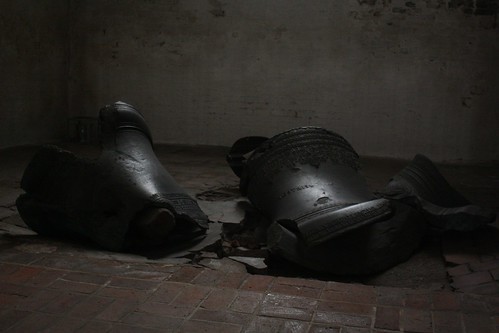
Note: This post was written in March 14-15 and posted after our return. When I think about L beck, the first thing that strikes me is the feeling of history underfoot. It struck me most when we set foot inside the Marienkirche. I had never quite felt a wave of a feeling of stepping back in time like that before. The stones on the floor were uneven and imperfect. L beck has had a wet and snowy winter, so the city had spread sand everywhere: sidewalks and roads. Walking into any grand church, I could hear the sound of sand under the shoes of everyone nearby, and feel it under my own shoes. I think I will long associate with L beck the feeling of walking into a grand old church, looking up at the top of the old building at seemingly impossible heights, while feeling the grit of sand and uneven stone beneath my feet. IMG_2643 Marienkirche isn t perfect, like some American churches I ve been in, such as the Basilica of Notre Dame. It doesn t have a lot of gold, either, and both of these attributes are wonderful. Look at a column of bricks, and you can see that each brick isn t exactly like its neighbor, and the entire column isn t perfectly straight. Lots of things in L beck are so old that they aren t perfectly straight, and it made me think that our American notion of always having to fix such things might be somewhat off sometimes. IMG_2629 Look up, and you see the frescos from the 1300s, revealed after many years after the building was struck by an allied bombing raid in 1942. This heavily damaged the building and knocked down plaster from the walls and ceiling, revealing the old artwork. Many parts of Marienkirche were lost as a result of the bombing, which perhaps adds to its slightly sparse and ancient feel. The church bells were sadly melted and crashed to the ground due to the bombing, and have been left exactly where they fell as a memorial. IMG_2641 Look down, and you see the uneven floor, and the concrete slabs above where important people were buried under the floor an attribute common to many of the churches we visited. It was common to see dates of graves from the 1600s and 1700s, though in some places it would go as far back as the 900s. The main part of the church has no heating or cooling, and visiting it on a day just a bit above freezing adds to the feeling of, well, old. Marienkirche has to be my favorite sight in L beck. Walking around the city, I get a similar feel. Many streets and sidewalks are made of stone. The streets that weren t damaged in the war have rows of beautiful old facades. Walk down many streets, and every so often I d see a little tunnel ( just wide enough for a coffin ) that goes under the street-facing houses to a nice little inner courtyard. These are open to the public, but tend to be very quiet and somewhat private. In the courtyard are smaller houses, which would have originally been used by the less wealthy. We also saw the L beck Dom (cathedral), which had a small museum about the destruction due to the Royal Air Force bombing in 1942. It was very sad to see the photo of the Dom in ruins, still smoking, even now. Burning L beck Cathedral after an air raid in 1942 I can only imagine what it must have felt like to residents of L beck to wake up to see many of their priceless centuries-old landmarks and places of worship so horribly destroyed and all of this for little strategic purpose really focused on the morale of the enemy civil population . It s sad that the allies would do such a short-sighted and terrible thing. Europeans have long had to live with the legacy of war upon war, while we Americans have rarely had to see the consequences of war up close. I think it would be good for more of us to visit these sites and come up face to face with what a bomb can do, and then perhaps we will be more judicious with them in the future. Shifting gears now to where we stayed: Andreas & Sigrid, with whom we stayed, have a beautiful 500-year-old house, with lots of original wood beams exposed, and some very old paintings on the walls and ceilings. Nearby were excellent bakeries and a chocolate shop. Terah and I visited it today and bought some very good chocolate. And this brings me to the second thing I ll remember: Andreas & Sigrid s children, Lukas and Rahel. Now, Terah knows no German, I know only a little bit, and the children know no English. So it was a bit slow getting to know each other to start out, but we managed to work around the communication barrier and had a great time. Terah played board games with Rahel, while with me, she kept inventing games to play: hiding somewhere, saying Hallo! , and laughing at how many unsuccessful attempts I might make to find her. I showed Lukas the camera on my Droid, which he used a lot, though a racing game on Terah s iPod Touch was more exciting. They both enjoyed looking at videos of American trains a bit, but especially pictures of our house and yard with Jacob and Oliver. They tried to teach me the German words for things, and also made futile attempts to correct my pronunciation! When we were leaving today, Rahel came over and gave me a kiss on the hand, then the same to Terah s hand, then a little kiss on one of our suitcases. It was touching and sweet. This was one of those experiences no guidebook prepared me for, and no tour bus would have provided. It is something neat to make friends with children despite the large language barrier. On to the rest of the visit We had arrived a little late into Hamburg. After getting our bags and some Euros at an ATM, the next step was to find the bus to L beck. No signs for it were evident, so I found an information desk. The person at the desk was carrying on a conversation in German with the person ahead of me in line. I figured an information desk person in a busy airport would speak English, and was all ready to ask Sprechen Sie Englisch? , but when I walked up, he got a polite smile, and said, Good morning! How can I help? Guess I m obvious. He directed me to the bus, gave me a brochure about it, and told me what time it would leave. Terah and I found the spot to wait, and for a moment I stepped inside the airport terminal. Terah won t let me forget that someone came up to her and asked a question in German, whereas I was spoken to in English. Anyhow, we found the bus, managed to communicate with the driver that doesn t speak English, and sat next to the friendly person that was talking to Terah. He turned out to be a violin player from Munich, and we had a great conversation for the next hour he asking questions about the USA, us asking questions about Germany and Munich. At one point, he commented, You two are so open minded and you re also Americans! He sounded surprised. We exchanged email addresses at the train station. Andreas found us there, and we walked through the city to his house, with him pointing out the sights along the way. L beck is a beautiful city, and though it was damaged in World War II, much of the really old parts still remain. The famous Holstentor Gate has a museum inside, which was fascinating to visit. On Sunday, we went to church with the family we were staying with, Andreas helpfully translating for us. There I met a British Python programmer, which was fun. His wife is a social worker, which was fun for Terah. Monday it was time to get on the train to Berlin. We again walked through a cold and rainy city to the Hauptbahnhof, ready to head to Berlin. There we got on a train to Hamburg, then an ICE train to Berlin. Despite having just a few minutes for a connection in Hamburg, it all went perfectly smoothly. The train left Leipzig about 10 seconds late the clock inside turned over to the minute, then the doors closed and we were off. Impressive. Note: the rest of my photos from L beck are available on Flickr.

Russell Coker: Hacker Spaces

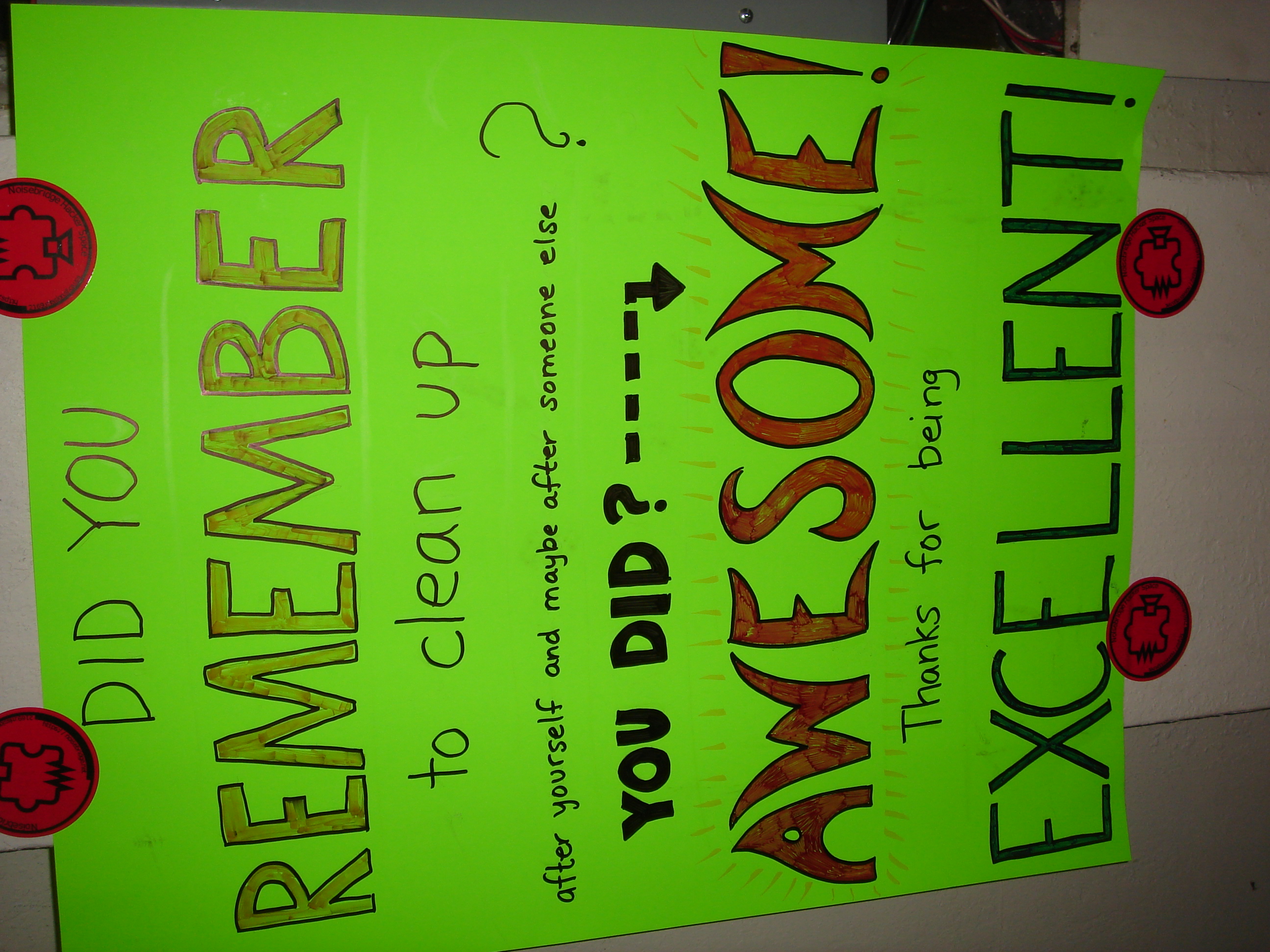
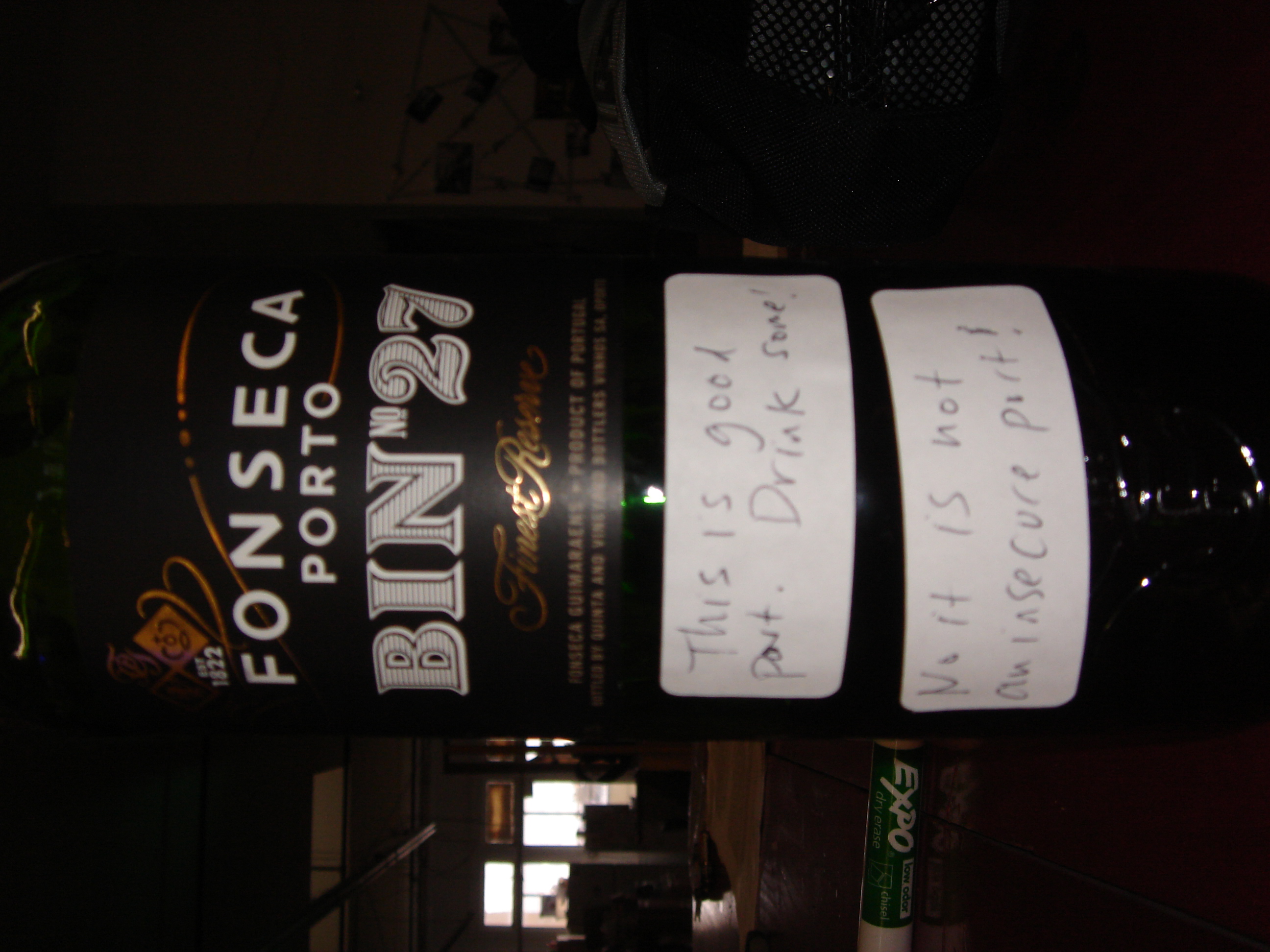
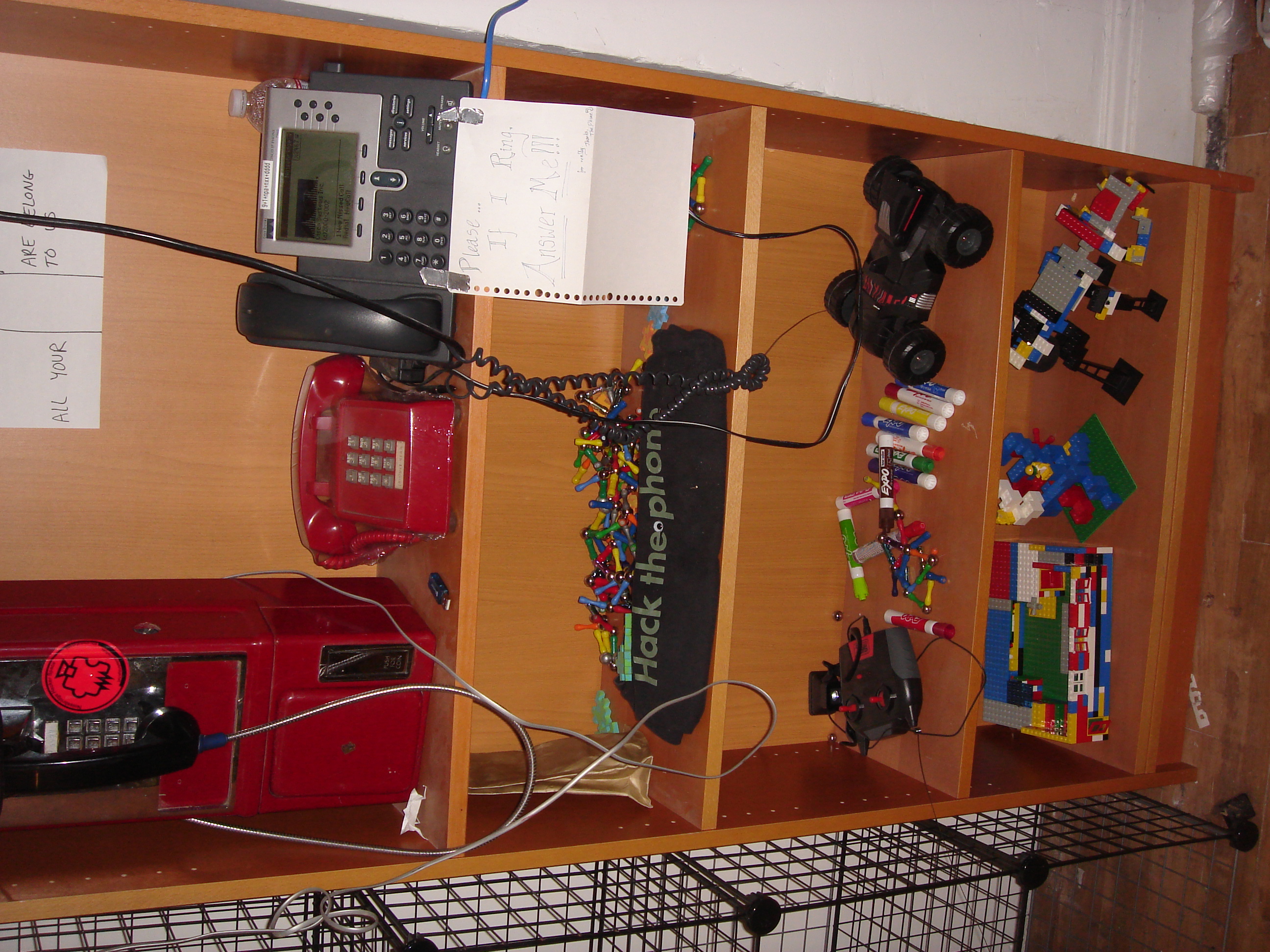
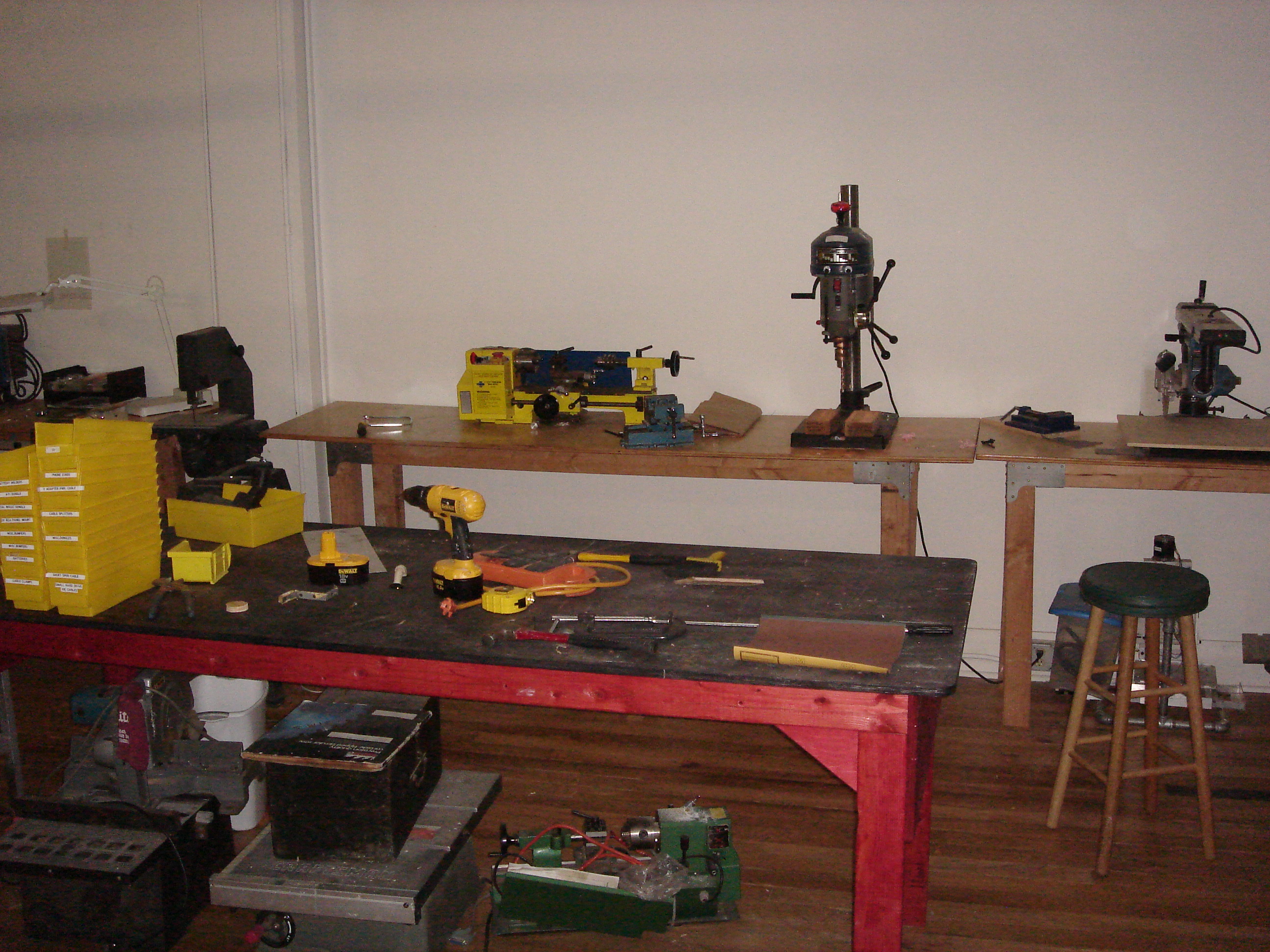
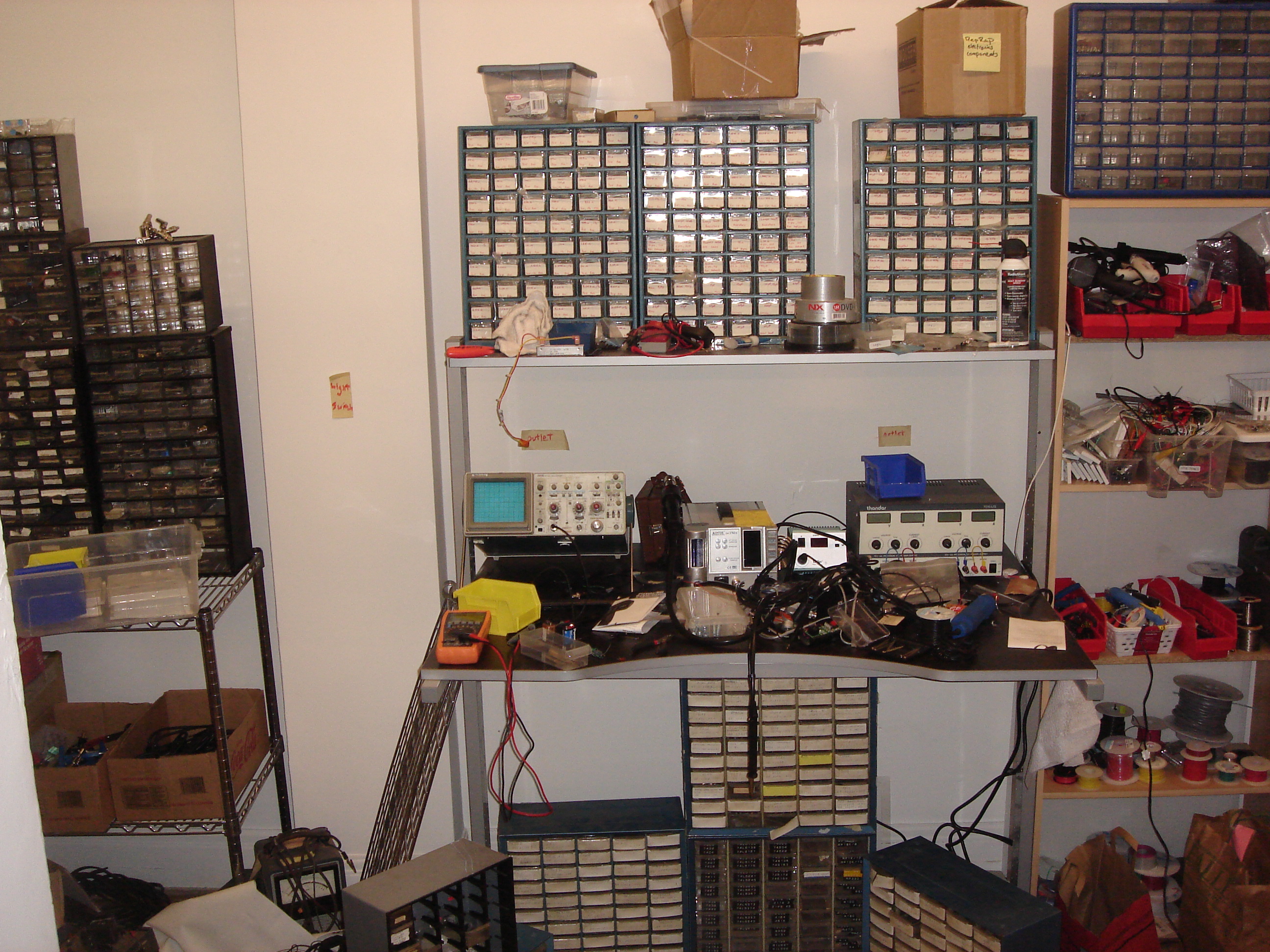
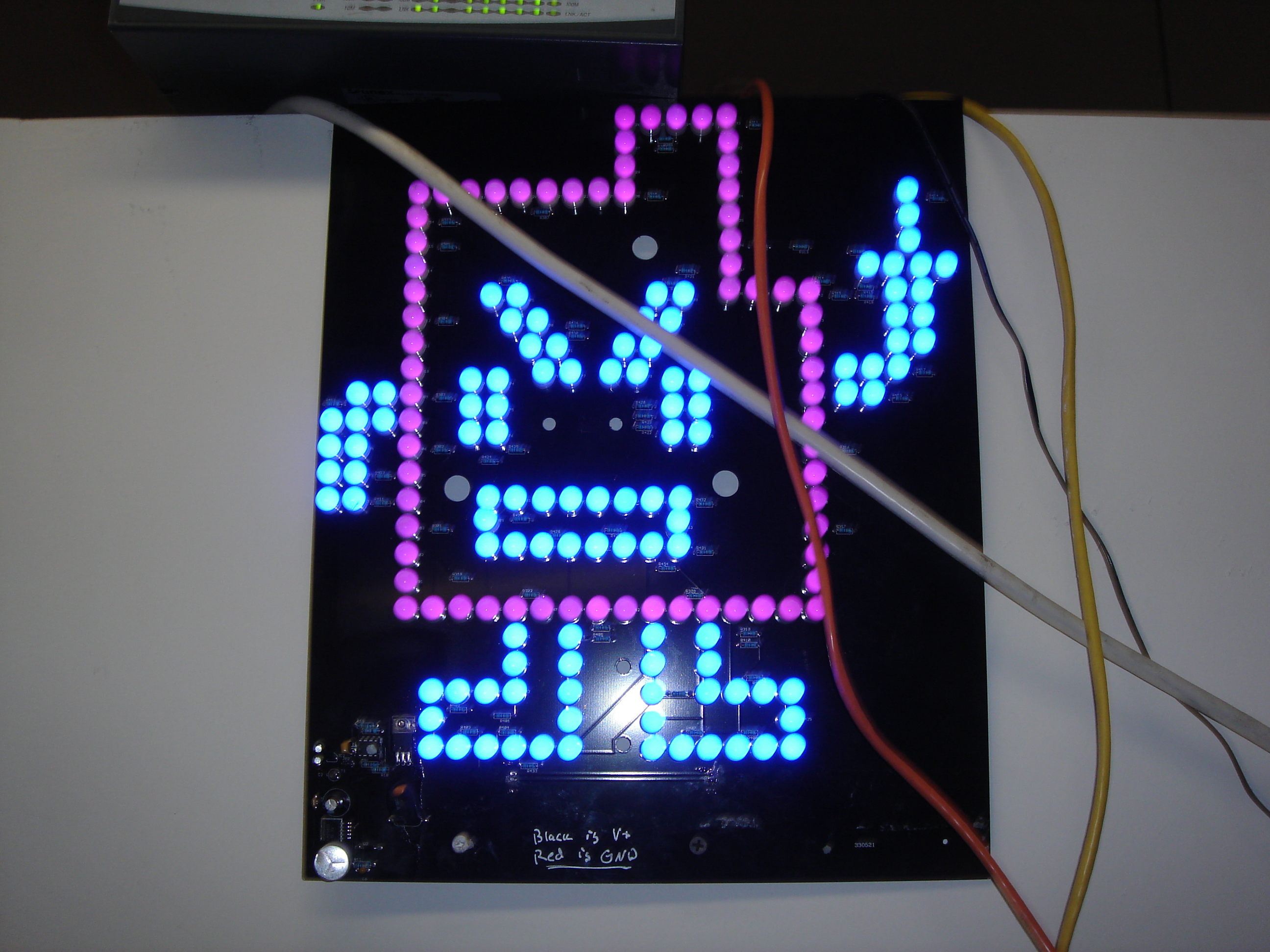
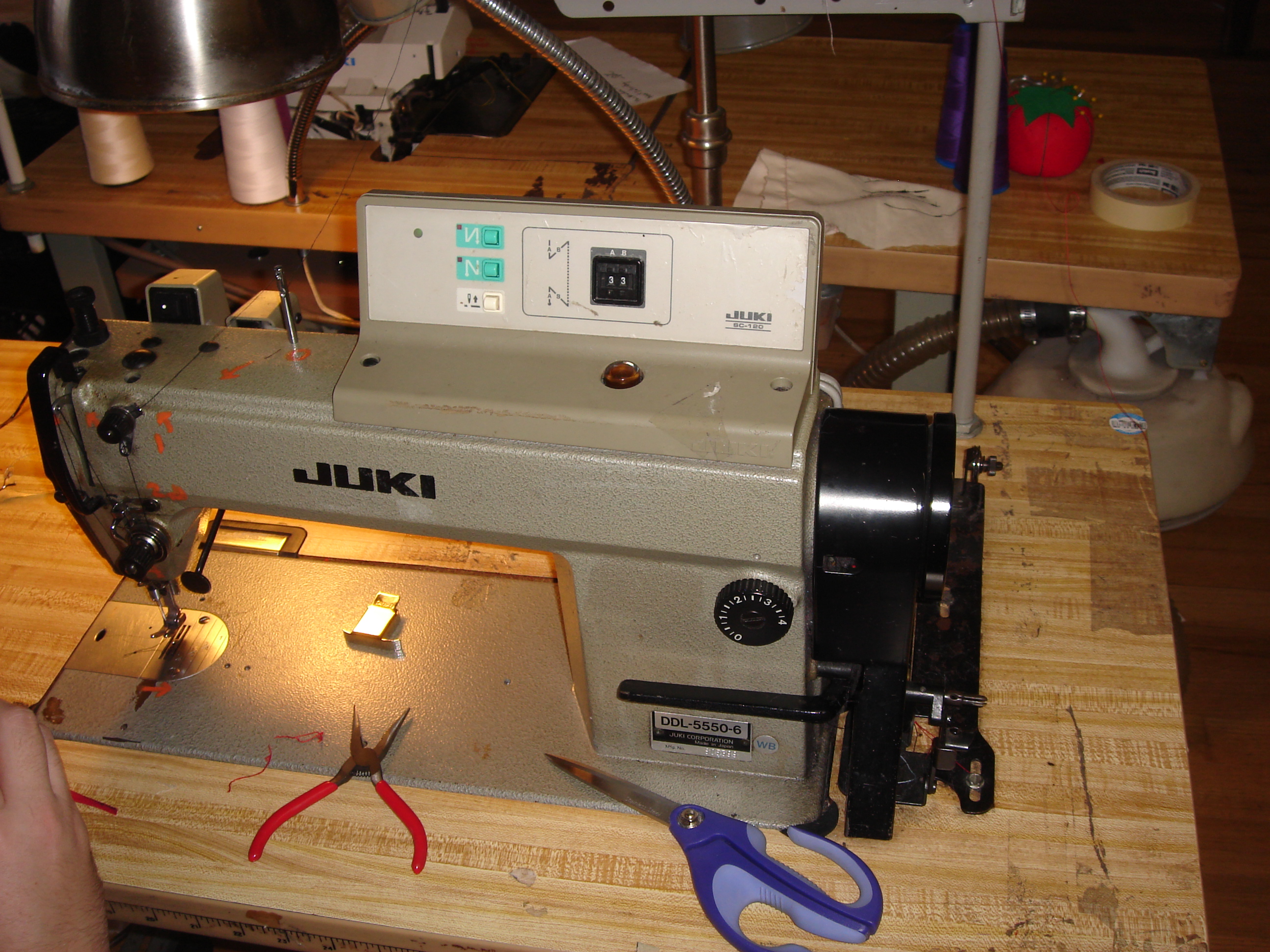
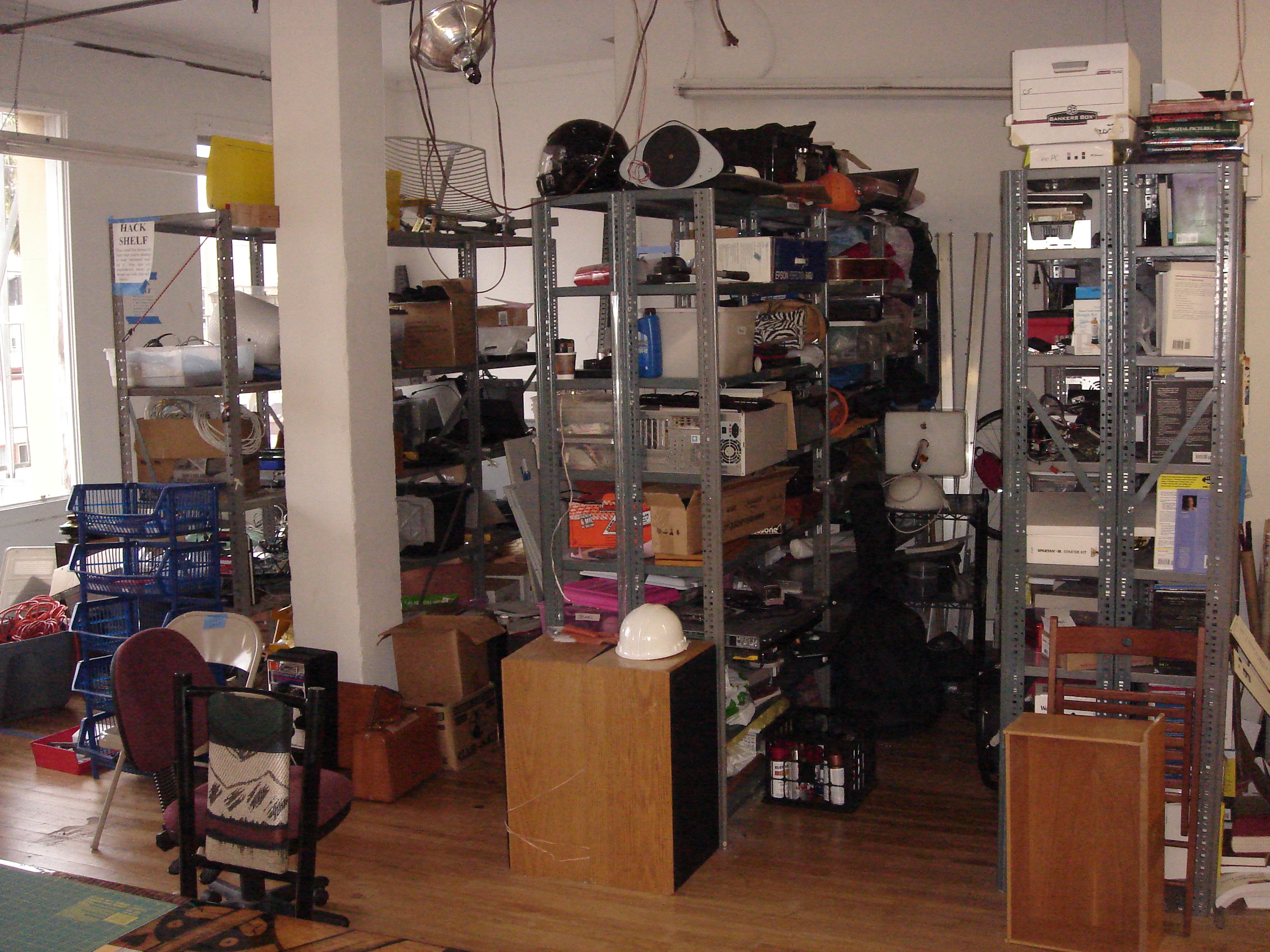
When in California last year I visited the NoiseBridge [1] Hackerspace. I was very impressed with what I saw, good equipment and very friendly people. The general concept of a HackerSpace is that it is an environment to support random creative projects. The first picture is a sign near the door which is clearly visible to anyone who is leaving, it encourages people to be AWESOME and EXCELLENT by cleaning up after themselves (and maybe others). I think that this demonstrates the core of what is needed to get such a community project going. Generosity towards others was on display everywhere, there was some free fruit on a table as well as a bottle of Port for anyone to drink. Someone had written a note saying that it s not an insecure Port (a computer security joke). Someone had created an artwork that resembled an advert which some idiots had mistaken for a terrorist bomb (the creature displaying the Impudent Finger). The main (only?) phone in NoiseBridge is apparently a VOIP phone, it is located next to an old pay-phone along with some Magnetix and other toys that can be used by curious people of any age. Magnetix have had repeated safety problems that caused recalls so maybe such things are best placed in an 18+ environment. When I visited about 10 people were working on electronics projects. There were a number of soldering irons in use and some serious test equipment (including a couple of CROs) was available. The people doing the soldering were eager to teach other people about their work. Other equipment that was available included some serious industrial sewing machines and some drill presses. A lot of that equipment is unreasonably expensive to buy for personal use and is also rather bulky to store, having it available in a central location is a great service for the community. Finally Noisebridge has a lot of space. There are rooms that could be used for giving small lectures and couches in the central area for people to relax and have impromptu meetings. Of course they had wireless net access too. Australian Hacker Spaces Kylie Willison has written about the Adelaide Hackerspace which sounds promising [2]. The Connected Community Hackerspace is a new one in Melbourne [3]. It operates out of the homes of members so it s not nearly as big as Noisebridge (which has a substantial property rented for 24*7 operation). I hope that we can get something running permanently in the Melbourne city area in the near future. The Noisebridge membership dues are $80 per month (or $40 for starving hackers). I would pay that for a comfortable chair in a convenient city location with net access surrounded by cool people! Poster telling people that they are AWESOME and EXCELLENT if they clean upFree bottle of port with sign saying - this is not an insecure portVOIP phone in use, pay-phone for decoration, and MagnetixDrill presses and other heavy equipmentParts and CROs for electronic workRecreation of an advert that some idiots thought was a bombIndustrial sewing machineShelves full of random spare parts

24 March 2010

Gerfried Fuchs: rxvt-unicode Matcher Patch for Bug Numbers

A while ago Ganneff wondered weather it would be possible to make the matcher extension of rxvt-unicode also pick up something like #12345 and turn it into a link into the BTS. It isn't or rather, it wasn't. The idea got stuck in my head and invested some time to make it happen. Here is the quick'n'dirty diff to make it happen:
--- /usr/lib/urxvt/perl/matcher.distrib	2009-11-30 06:44:07.000000000 +0100
+++ /usr/lib/urxvt/perl/matcher.rhonda	2010-03-24 23:57:01.000000000 +0100
@@ -3,13 +3,14 @@
 # Author: Tim Pope <rxvt-unicodeNOSPAM@tpope.info>
 
 my $url =
-   qr 
+   qr (?:
       (?:https?:// ftp:// news:// mailto: file:// \bwww\.)
       [a-zA-Z0-9\-\@;\/?:&=%\$_.+!*\x27,~#]*
       (
          \([a-zA-Z0-9\-\@;\/?:&=%\$_.+!*\x27,~#]*\)  # Allow a pair of matched parentheses
          [a-zA-Z0-9\-\@;\/?:&=%\$_+*~]  # exclude some trailing characters (heuristic)
       )+
+      ) \#[0-9] 4, 
     x;
 
 sub on_user_command  
@@ -145,6 +146,7 @@
          my @begin = @-;
          my @end = @+;
          if (!defined($col)   ($-[0] <= $col && $+[0] >= $col))  
+            $match =~ s/^#/http:\/\/bugs.debian.org\//;
             if ($launcher !~ /\$/)  
                return ($launcher,$match);
               else  
The diff is intentionally small so it is clear what is happening here. And it should give ideas for other extensions that one would like to make. I don't consider it though flexible enough to submit it upstream. Enjoy anyway!

Benjamin Drung: Eclipse 3.5.2-1 in Debian unstable

We, the Debian Orbital Alignment Team (DOA team), have released eclipse 3.5.2-1 to Debian unstable today after nearly seven month of work and 612 commit to our git repository. Many thanks to our hero Niels Thykier (222 commits). Without him we wouldn t have eclipse in Debian now. Thanks to Pablo Duboue, Adnan Hodzic, and Adrian Perez for their work on the Debian package. Last but not least, I want to thank Alexander Kurtakov and Andrew Overholt for eclipse-build, which we use to build eclipse. You should have modern hardware, if you want to build eclipse. It will need three gigabytes free disk space, two gigabytes memory, and at least 12 minutes to build, but it can need hours (on old hardware or if you have not enough memory). Update: Four days later we released 3.5.2-2 to Debian unstable. Today eclipse 3.5.2-2 was synced to Ubuntu 10.04 (lucid).

Adnan Hodzic: Need help setting up my Linux development platform

Maintaining stable life with unstable distro? This post may sound ludicrous to some of you but please hear me out. I ve been on Debian unstable/Sid for awhile now and it was all cool until yesterday. Besides my work on Debian DebConf/some devel, I m university student, also I do web devel which is my primary source of income, besides all those I try to go out on weekends and have some kind of social life. Somehow I manage to do all these things and I d say I manage them pretty successfully too. Now I m hardcore to the bone, but this is just too much, last week started working on immense web devel project didn t sleep more then 2hrs/day whole week; I also didn t shut down my notebook and just kept it on suspend as I usually do. Either way I was about to print/scan something and I connect my printer and what happens? My whole system freezes, now I ll let you figure out the result of doing hard reset and having a lot of gedit docs open at that time. And yes, I did had that bug reported awhile ago, can t find it now, but it was fixed, seems like it s back again. In the end I m left with weekend completing the lost work + late school work + eclipse 3.5.2-2 ought to be uploaded. I do almost all the work (didn t upload eclipse) and literally pass out on Sunday. Wake up sometime on Monday, wasn t able to get up from bed. Plan: Change my base distro, keep Sid as dualboot or virtual machine
Now, for my time of being Sid user this isn t the first time something like this happened, and by this I mean unexpected/unprovoked bugs. I might not be as hardcore as I used to be, or it s just that I don t have time anymore. So my plan is to get Stable or even Ubuntu for my work/study platform, while I d have dual boot or virtual machine of Debian Unstable/Sid. I m sure I can t be the only one who s doing this, so please give me your advice on this one.
1. Main question is dualboot or virtual machine? Reason I d like it to be a virtual machine instead of dual boot is that my notebook HDD is 64GB SSD (Lenovo X300). By todays standards 64GB is quite small, while the price of SSD is quite opposite of small. So I d like to use this only for my main/base OS, nothing else. Since I use external HDD s having it virtual it s more convenient for me to carry around my image/s. Other day I ordered 4GB of RAM so I shouldn t have problems with performance of this virtual machine. Or even with that much RAM, devel on virtual machine is just not possible? 2. In case I go for Ubuntu, and decide to start packaging for Ubuntu as well, what s the best way to have my work/packages synced within both Debian and Ubuntu (sshfs?). 3. How do I take my PGP keys with me? If I just copy .gnupg and .ssh will that be enough? 4. Can I have same keys both on my host machine and virtual machine at the same time? 5. Some other idea of sticking with Sid?
Input to any of these questions/other suggestions would be greatly appreciated.

23 March 2010

Miriam Ruiz: Ada Lovelace Day 2010

Today is March 24th, that means Ada Lovelace Day, and it is being pushed as an international day of blogging to celebrate the achievements of women in technology and science. The aim of Ada Lovelace Day is to focus on building female role models not just for girls and young women but also for those of us in tech who would like to feel that we are not alone in our endeavours. There are some very good examples of women that have been important in the development of science and technology, starting with Ada Lovelace herself (the first developer of an algorithm intended to be processed by a machine), Rear Admiral Grace Murray Hopper (developer of the first compiler for a computer programming language), Adele Goldstine (who wrote the complete technical description for the first digital computer, ENIAC), as well as the six women who did most of the programming of if (Kay McNulty, Betty Jennings, Betty Snyder, Marlyn Wescoff, Fran Bilas and Ruth Lichterman), or women scientists, or women inventors, etc. Well, I m not going to write about any of those, even when any of them would surely deserve that and more for sure. I m going to write about a woman who has definitely been very inspiring and supportive for me when I was starting to get in touch with Free Software and Debian, and who is probably the most important single reason I decided to go for it. It is definitely hard to write about someone you admire when she happens to be one of your best friends, and in fact I m pretty sure that most of the people reading this article already know her, so there s no great mistery. I m talking about Amaya Rodrigo, the first european female Debian Developer (AFAIK) and co-founder of the Debian Women project, and also member of Hispalinux Board in the golden days. The first time I met her she was giving a talk in Madrid about a project that was starting then, Debian Women, and it was very inspiring for me. Inspiring enough for me to join the project. Afterwards I ve learnt more about her, how she overcame many dificulties, like starting to work with computers quite late, among others. The real merit of a pioneer is not really to be the best techie out there, but to overcome the difficulties and doing it the best you can, when no one else has done it before. I m not going to write her biography here, it s not really the purpose of this blog entry, and you probably can ask herself directly. This blog entry is, as I said at the beginning, to highlight women in technology that I consider inspiring and relevant. You know, I admire you, Amaya :)

Gunnar Wolf: Plead for help: Transcriptors for videoconferences (Spanish)

Help! Help! Help wanted! Please help! Dear world, As many among you know, I have spent a good portion of the last year (together, of course, with a great and interesting group of people) working on Seminario de Construcci n Colaborativa del Conocimiento (Collaborative Construction of Knowledge Seminar, or SECO3), derived from the Encuentro en L nea de Educaci n y Software Libre (On-line Encounter of Education and Free Software, EDUSOL). We have been working on producing a book that illustrates several different aspects of knowledge-building communities Among them, of course, the Free Software movement. Now, we need some help: Although we do have the chapters from most of the authors, some did not manage to produce them. And we are very interested in having them as part of the book as well, even if only as an appendix (as, of course, the kind of work of a transcription is completely different than the ellaboration for a well-rounded and written chapter). As the little academic I am, I have to request for your help: I have no students assigned to me. But I would love to have interested people on board. We need to transcribe two of the videoconferences that were given as part of the seminar. Please, if you are interested, contact me so we can arrange (and have no work duplication!) Thanks a lot,

Debian News: Brief updates: release team, eclipse and Debian related events

Brett Parker: So... shortened urls then...

Turns out that I do get shortened urls in twirssi if I manage to install libwww-shorten-perl, so having now installed that it appears that I've got a fairly much fully working twirssi, which is rather nice.

Dirk Eddelbuettel: RInside release 0.2.2

The shiny new 0.2.2 release of RInside has just been uploaded to CRAN; it should hit mirrors tommorow. Sources are also at my RInside page. RInside is a set of convenience classes to facilitate embedding of R inside of C++ applications. It works particularly well with Rcpp and now depends on it. This is the first release since version 0.2.1 in early January. Romain and I made numerous changes to Rcpp in the meantime. With this release, RInside is starting to catch up by taking advantage of many new automatic (templated) type converters. We have updated the existing examples, and added several new ones. These are all visibile directly via the Doxygen-generated documentation under the Files heading. Two examples are also shown directly on the RInside page. Also added are new examples showing how to use RInside to embed R inside C++ applications using MPI for parallel computing. This was contributed via two examples files by Jianping Hua, and we reworked the examples slightly (and added two variants that use MPI's C++ API). As it is so short, here is the basic 'Hello, World' example now showing the simpler Rcpp-based variable assignment:
// -*- mode: C++; c-indent-level: 4; c-basic-offset: 4;  tab-width: 8; -*-
//
// Simple example showing how to do the standard 'hello, world' using embedded R
//
// Copyright (C) 2009 Dirk Eddelbuettel
// Copyright (C) 2010 Dirk Eddelbuettel and Romain Francois
//
// GPL'ed
#include <RInside.h>                    // for the embedded R via RInside

int main(int argc, char *argv[])  
    RInside R(argc, argv);              // create an embedded R instance
    R["txt"] = "Hello, world!\n";	// assign a char* (string) to 'txt'
    R.parseEvalQ("cat(txt)");           // eval the init string, ignoring any returns
    exit(0);
 
One minor setback is that the examples currently segfault on Windows. That may be an issue with linking and class instantiation or something related. Romain and I focus much more on Linux and OS X, so this has not gotten a lot of attention. Debugging help would be appreciated.

22 March 2010

Russell Coker: Links March 2010

Blaise Aguera y Arcas gave an exciting demonstration of new augmented reality mapping software from Microsoft that combines video (including live video) with static mapping data and pictures [1]. This is a significant advance over current mapping systems such as Google Earth but it s not released yet either. It will be interesting to see whether Google or Microsoft gets this released first. The New York Review of Books has an insightful atricle by Garry Kasparov about human/computer chess [2]. It s surprising the degree to which a combination of human and computer chess playing can give a good result. Amateur human chess players plus regular PCs can beat grandmasters with computers or high-end computers with human help. It s apparently the quality of human-computer interaction that determines the quality of play. But the article contains a lot more, I recommend reading it. Daniel Kahneman gave an interesting TED talk about the difference between experiential and memory happyness [3]. As the concept of the moment is so short (about 3 seconds) apparently most people try to optimise their actions for the best memories of being happy. But to do so requires some different strategies. For example a two week vacation gives a memory that s not much different from a one week vacation. Therefore it seems that you would be better off staying in a five star hotel for a week than a four star hotel for two weeks, and eat dinner at a Michelin Star restaurant at least once per holiday even if it means eating at McDonalds on other occasions due to lack of funds. Temple Grandin gave an interesting TED talk The World Needs all Kinds of Minds [4] which mostly focussed on teaching children who are on the Autism spectrum. She is concerned that autistic children won t end up where they belong in Silicon Valley . Anupam Mishra gave an interesting TED talk about how the people of India s Golden desert built structures to harvest and store water [5]. Some of their ideas should be copied in Australia, due to mismanagement and stupidity Australians are failing to survive in much more hospitable places. Michael Tieman wrote an insightful and well researched article about the OSI s rejection of the IIPA s attacks on Open Source [6]. This is worth reading by anyone who wants to make a business or social case for free software. Mark Shuttleworth wrote an interesting post about the new visual style for Ubuntu and Canonical [7]. Apparently this includes the creation of a new font set which will be available for free use. Divorced Before Puberty an informative New York Times article by Nicholas Kristof about the links between treatment of women and terrorism [8]. The New York Times has an interesting article on Human Flesh Searches on the Internet in China [9]. It s basically crowds targetting people to find private information and harass them (similar to what some griefers are known for doing on the English-language part of the Internet). But they seem more interested in vigilante justice than lulz. The New York Times has an informative article about the Cult of Scientology (Co$) [10]. Among other interesting news it suggests that the number of cult victims in the US has dropped from 55,000 to 25,000 in the 2001-2008 time period. Senator Xenophon has called for an inquiry into the crimes committed by the cult and a review of it s tax-exempt status [11]. As always Xenu.net is the authoritative source for information on the Cult of Scientology AKA the Church of Scientology. The New York Times has an interesting article about formally studying the skills related to school teaching [12]. It largely focuses on Doug Lemov s Taxonomy of Effective Teaching describes 49 techniques that improve school results and some other related research. The article also mentions that increasing teacher salaries is not going to help much due to the large number of teachers, it s only professions that employ small numbers of people that can potentially have their overall skills improved by increasing salaries. Andy Wingo wrote an interesting article about Julius Caesar [13] based on the book The Assassination of Julius Caesar: A People s History of Ancient Rome by Michael Parenti. It seems that Caesar was more of a populist than a despot. Interesting article in The Register about the Large Hadron Collider (LHC) [14]. Apparently one 3.5TeV proton beam has as much energy as a British aircraft carrier running at 8 knots.

21 March 2010

C.J. Adams-Collier: I ve disabled my user approve plugin

Sorry for the inconvenience folks. I was annoyed by having to mark so many comments as spam, but the plugin interface was so klugy that I had no idea how to find the users who would contribute useful posts. So. Feel free to comment Nao!

Gunnar Wolf: Baroque spam, repetition ad nauseam

Sitting at my hotel room in Tijuana, about to hit the bed, quite tired because of a nice, long walk I will write more about tomorrow, I have been listening for at least five minutes to a long, stupid infomerciative spam in the History Channel: A fountain pen, a five-point pen, and three other pen-like implements (plus extra and extra and extra things... They are listing a case with 63 implements now!) Now, what is the hook into getting somebody to call for a classy pen? Elegance, of course! Just for the sake of this exercise, the spam continues to be played. And yes, it's only been two short paragraphs. But believe me, I am very tired, and trying to get some coherent English out of my brain is not as easy as it could. Elegance, I said, right? Good. How do you convey elegance to TV spam/infomercials? Well, what's more classy and refined than a 30 second sample of Haydn? Man, Haydn is *so* classy that the viewer will not even notice the snippets of blabber have incoherent redaction. Anyway... Spam goes on. I cannot stand any more repetitions of this 30 Haydn seconds. They are stronger than me. And that old lady says that anybody is writing in their computer now I will only write with my fountain pen from now on! I will surely follow her wise advise! (STOP IT WITH THE STUPID HORN!)

20 March 2010

Robert Collins: LibrePlanet 2010 Day 2

John Gilmore keynote What do we do next, having produced a free software system for our computers? Perhaps we should aim at Windows? Wine + an extended ndiswrapper to run other hardware drivers + a better system administration interface/resources/manuals. However that means knowing a lot about windows internals something that open source developers don t seem to want to do. We shouldn t just carry on tweaking its not inspiring; whats our stretch goal? Discussion followed reactos, continue integrating software and people with a goal of achieving really close integration: software as human rights issue! Desktop paradigm needs to be replaced : need to move away from a document based desktop to a device based desktop. Concern about the goal of running binary drivers for hardware: encourages manufacturers to sell hardware w/out specs; we shouldn t encourage the idea that that is ok. Lots of concern about cloning, lots of concern about what will bring more freedom to users, and what it will take to have a compelling vision to inspire 50000 free software hackers. Free software in cars lots of safety issues in .e.g brake controllers, accelerators. Eben Moglen We re at the inflection point of free software because any large scale global projects these days are not feasible without free software. Claims that doing something that scales from tiny to huge environment requires us A claim I would (sadly) dispute. Lots of incoming and remaining challenges. Entirely clear that the patent systems relationship to technology is pathological and dangerous that I agree with! Patent muggings are a problem patent holders are unhappy with patents granted to other people :) . Patent pools are helping slowly as they grow. Companies which don t care about the freedom aspect of GPLv3 are adopting it because of the patent protection aspects. Patent system is at the head of the list of causes-of-bad-things affecting free software. SFLC is building coalitions outside the core community to protect the interests of the free software community. We are starting to be taken for granted at the high end of mgmt in companies that build on free software. We face a problem in the erosion of privacy. We need to build a stack, running on commodity hardware that runs federated services rather than folk needing centralised services. Marina Zhurakhinskaya on GNOME Shell: Integrates old and new ideas in an overall comprehensive design. Marina ran through the various goals of the shell growing with users, being delightful, starting simply so new users are not overwhelmed. The activities screen looks pretty nice ;) The workspace rearrangement UI is really good. The notifications thing is interesting; you can respond to a chat message in-line in the notification. Richard Stallman on Software as a Service he presented verbally the case made in the paper. Some key quotes All your data on a server is equivalent to total spyware I think this is a worst-case analogy; it suggests that you can never trust another party: kindof a sad state of paranoia to assume that all network servers are always out to get you all the time. And I have to ask should we get rid of Savannah then (because all the data is stored there) the argument for why Savannah is not SaaS is not convincing: its just file storage, so what makes it different to e.g. Ubuntu One? If there is a server and only a little bit of it is SaaS, perhaps just say don t worry about it because that little bit is often the hardest bit to replace. Lets write systems for collaborative word process that don t involve a central server abiword w/the sharing plugin ? :) RMS seems to be claiming that someone else sysadmining a server for you is better than someone else sysadmining a time-shared server for you: I don t actually see the difference, unless you re also asserting that you ll always have root over your own machine . The argument seems very fuzzy and unclear to me as to why there is really a greater risk in particular when there is a commercial relationship with the operator (as opposed to, say, an advertising supported relationship).

Maximilian Attems: New klibc release 1.5.17

Not only fixes ipconfig regressions due to fixes in 1.5.16, but ipconfig should no longer discard useful packages. We also fixed a long standing klibc sparc specific socket bug (#444087): sparc lists socket system calls, but does not provide all of them natively. So one is better off on sparc to use sys_socketcall. Thanks to Jan Hauke Rahm the packaging switched to modern Source Format 3.0 (quilt) with debhelper 7 usage reducing cdbs overhead on build. This is a big switch and makes me very happy. New addition include a $(make help) target in Makefile to ease klibc build. A small losetup got added to klibc-utils. i386 and sparc build fine against current linux-libc-dev: klibc-1.5.17 released
P.S.: New outfall seem to include armel and s390 due to libgcc changes.
Update: Seems only a small packaging error due to test target invocation, should be fixed in 1.5.17-3.

Alejandro Rios P.: MiniDebconf at Panama (day Two)

Yesterday began the central america and caribbean MiniDebconf at Panama. Over 50 people from Mexico, Belice, Nicaragua, Guatemala, Costa Rica, Salvador, Colombia and Venezuela, among others, are here to share experiences around Free Software and Debian contributions. All this is possible to several sponsors from Panama and SPI, and the hard work from many people, specially Anto Recio, Mauro Rosero, Carolina Flores, Gunnar Wolf and the local team.

More info(in spanish), including live streaming url can be found on: http://softwarelibre.ca/wiki/MiniDebconf2010

update: Also, on a personal note, I'll take the chance of this event to start my transition to a stronger gpg key, so If you have signed my old one, please take a look at: http://people.debian.org/~alerios/key-transition-2010-03-20.txt

19 March 2010

Robert Collins: LibrePlanet GNU Hackers Meetup

GNU Hackers meetups are a face to face meeting to balance the online collaboration that GNU maintainers and contributors do all the time. These are a recent (since 2007) thing, and are having a positive effect within GNU and the FSF. The LibrePlanet 2010 GNU Hackers meetup runs concurrent with the first day of LibrePlanet. We started with some project updates: Felipe Sanches presented his list of things that should be on the high priority project list: lunch John Eaton on Octave. John compared the octave contributors 30 or so over the years, and never more than 2 at a time. The Proprietary product Matlab that Octave is very similar to has 2000 staff working at the company producing it. Users seem to expect the two products to be equivalent, and are disappointed that Octave is less capable, and that the community is not as able to do the sort of support that a commercial organisation might have done. Octave would like to gain some more developers and be able to educe users more effectively convert more to become developers. Rob Myers, the chief GNU webmaster gave a description of his role: The webmasters deal with adding new content, dealing with mail to webmaster@, which can be queries for the GNU project, random questions about CDs, and an endless flood of spam. The webmasters project is run as a free software project the site is in CVS (yes CVS), visible on Savannah. Templates could be made nicer and perhaps move to a CMS. Aubrey Jaffer on cross platform. There is a thing called Water which is meant to replace all the different languages used in web apps generates html, css, alters the DOM, does what you d do with javascript. So there is a Water -> backend translator that outputs Java for servers, C# for windows, and so on. (I think, this wasn t entirely clear). He went on to talk about many of the internals of a thing called Schlep which is used as a compiler to get scheme code running in C/C#/Java so as to make it available to Water backends in different environments. Matt Lee spoke about GNU FM GNU FM is a free last.fm site. The site is running at http://libre.fm/. 24ish devs, but stalle after 6 months whats next? Matt has started GNU Social to build a communication framework for GNU projects to talk to each other e.g. for each GNU FM site to communicate on the back end, with a particular focus on doing social functionality groups, friendships, personal info. The wiki page needs ideas! GNU advisory board discussion too much to capture, but focused GNU wide issues things like how projects get contributors, contributions, coordination. Teams were a big discussion point, bug trackers how to coordinate teams followed up of that, and there is s GNU Source Release Collection project to do coordinated releases of GNU software that are all known to work together.

Next.

Previous.