Search Results: "cas"

18 February 2010

Alexander Reichle-Schmehl: RC-Bug statistics for Squeeze, calendar week 7:

Note: Please see RC-Bug statistics for Squeeze, calendar week 7 for an explanation of the numbers.
Total:699+49
Affecting Squeeze:559+41
Squeeze-only:117+23
Unfixed bugs remaining in Squeeze:442+18
Of these 442 bugs...
... are pending36+4
... are patched:65+1
... are duplicates:47+-0
... are in Non-free or contrib:10+10
... are claimed by someone:14-3
... are fixed in the delayed queue:5-1
... are somehow marked as fixed:53+14
Or in other words:
Release critical bugs left in squeeze, when ignoring all these:
262 (+2 compared to previous week). With this release managers views, 472 (+48 compared to previous week) bugs remain to be fixed somehow before we can release. Some notes: So much for this week. Let's see, how the numbers evolve in the coming seven days...

17 February 2010

Bastian Venthur: Links not opening in Thunderbird 3?

If you re using KDE and upgraded to Thunderbird 3 lately you might have the problem that links in emails don t open in a browser anymore. For my case that happened even without a user visible error message. If that sounds familiar for you, check the error console (Tools/Error-Console). If there is an error like:
Error: uncaught exception: [Exception... "Component returned failure
code: 0x80004005 (NS_ERROR_FAILURE)
[nsIExternalProtocolService.loadUrl]   nsresult:  0 80004005
(NS_ERROR_FAILURE)   location:  JS frame ::
chrome://communicator/content/contentAreaClick.js :: openLinkExternally
:: line 188   data: no]
Then Thunderbird just (silently) fails to launch the browser. Guido pointed me to gconftool. gconftool -R / grep url-handlers told me that some components of gnome still had Firefox configured as http-handler (which is strange since it was rebranded to iceweasel ages ago). Resetting them solved the problem for me. The sad part of the story: x-www-browser, sensible-browser and KDE s http handler where all correctly configured and pointed to iceweasel. All applications behaved correctly only Icedove used a (for me) hidden setting pointing to firefox.

Stefano Zacchiroli: RC bugs of the week - issue 21

RCBW - #21 I've accumulated one more day of delay, but here is a full RCBW issue. Still, I've a nice good excuse for the extra delay: I've changed house in Paris, the new one is very small (a chambre de bonne), but also very comfortable. Without any further ado, here are this week's squashes: And here are the usual highlights:

Russell Coker: Can the NBN Ever Break Even?

I previously wrote about how the National Broadband Network (NBN) seems more suited to porn delivery than regular Internet use [1]. It doesn t seem to be of much use really. In a particularly insightful comment John Hughes suggested that the real purpose would be TV delivery. The ABC is currently delivering 640*360 resolution MPEG4 files via iView for it s TV content. To use iView on Linux you need Jeremy Visser s Python-iView program [2] in conjunction with Luke Kenneth Casson Leighton s rtmp program [3]. Note that to get this working on Debian/Lenny you need to install the python-simplejson package as well. For the current ABC service it requires 251652 of data for a 3167.6 second Torchwood episode, that averages to 79.4KB/s of data. In contrast a video of Dan Gilbert from TED.com at high quality was in 640*480 resolution and required 301652KB of data for 1276.5 seconds which averaged out to 236.3KB/s. My ADSL2+ connection is theoretically capable of something over 1MB/s and occasionally gets such speeds for unusual download situations (such as downloading multiple large files at the same time). But generally I can t rely can t rely on sustained transfer rates of more than about 200KB/s. So I could watch streaming TED talks at reasonable quality, but for the best results I have to download them and watch them from disk. Assuming the same ratio of compressed data to raw pixels used for HDTV as used for TED talks a 1920*1080 HDTV resolution MPEG4 with the same quality as a TED talk would take 1600KB/s. It is possible to vary the compression level and possibly the usage of a TV stream would permit better compression than the usage of a TED talk for the number of pixels. But it seems reasonable to assume that something like 1600KB/s is needed for best HDTV, that is more than the vast majority of ADSL2+ installations can be relied on to sustain. But 100Mb/s would allow at least two 1920*1080 HDTV transmissions to be viewed at the same time, and maybe three or four as few homes have only one TV this should be of great interest. Now the question is how much people would pay for this. Currently there are two main pay TV companies in Australia, Foxtel which charges $916 for a 12 month plan [4] and Optus who s web site is so awful that I gave up before discovering what they cost (I will assume that they are competitive with Foxtel). Now I think it s reasonable to assume that $916 is at the high end of what potential customers are prepared to pay, as they are competing with free to air TV, DVD sales, Youtube, and downloads of pirate content. The current bank interest rate on term deposits from the Commonwealth bank is 6.3%, the interest rate on raising the finance would have to be greater than that let s assume 7%. So the $5000 per household will require an interest payment of $350 per annum. If a household signs up to pay TV services at a cost of $1200 per annum that might be enough money to pay slightly more than $350 to the NBN plus make a profit for the pay TV company. So if every household in Australia signed up for pay TV over the NBN it should be profitable. But that seems unlikely. The majority of the Australian population (IE the majority of the city population) is used to paying not much more than $240 per annum for a basic phone service and not much more than $360 per annum for a basic broadband Internet service. A bundled deal of $1600 per annum for phone, Internet and pay TV should allow the pay TV company and the NBN to be barely profitable if everyone accepts the deal (unless of course interest rates rise). If half the population aren t interested then the bundled deal would have to cost $2000 to have the potential for being profitable. If three quarters of the population aren t interested then it would have to cost $2300 or more! The Australian Bureau of Statistics documents that in 2008 the median household disposable income in capital cities was $593 per week [5]. So it seems that the idea of the NBN being profitable is based on plan to have more than three weeks of household disposable income per year being spent on Internet/phone/TV services. But fortunately for the pay TV companies and the content companies there is no requirement for the NBN to be profitable, it s being paid by tax money so if it loses money then we can just pay more tax! It s the ideal public private partnership , the citizens take all the risk and the corporations reap all the profits! James Purser describes how Stephen Conroy gave the TV networks something between $250,000,000 and $500,000,000 a year for the next two years [6]. It was claimed that this huge gift would be conditional on the production of more Australian content but they ended up not putting any conditions on it. In a strange coincidence Stephen Conroy did this a month after having a meeting with Kerry Stokes (head of Channel 7). Based on this I don t believe that there was ever a serious plan to make the NBN profitable. I think that the plan was just to take our tax money and spend it on things that benefit friendly corporations. Really it s better for us if the government just hands out $500,000,000 at a time instead of spending $43,000,000,000 on a project that has the same aim of giving a few hundred million to cronies.

16 February 2010

Russell Coker: Would you Short-Change a Pedophile?

For some time the film industry has been running an anti-piracy campaign with slogans such as you wouldn t steal a car [1] in an attempt to draw a false analogy between downloading a movie and stealing a significant and valuable object the modern equivalent to being a horse thief . One of the many ways that such poor analogies break down is the fact that downloading a movie is not a crime, it s copyright infringement. The best analogy that I can think of for non-commercial copyright infringement is the practice of short-changing. I expect that almost everyone has at some time received less change than they deserved when buying something at a shop, the cashier aims to collect $1 or $2 from each customer and can easily double the amount of money that they take home at the end of the day. When a customer complains they just pretend to have made a mistake and although short-changing is a crime (unlike copyright infringement) it almost never results in police action. The practice is tolerated to such a degree that some people know the shops where they are likely to be short-changed, they count their change more carefully and demand the full amount but don t bother complaining to the manager! The film industry also tries to portray itself as representing struggling artists who deserve the money, it s described as a moral issue good people pay for movies while bad people download movies and steal cars. But then there s the case of Roman Polanski who is a well known movie director and child rapist [2]. I expect that most store employees would gladly palm some of the change if Roman Polanski was a customer that is of course if they weren t too busy arranging a lynch mob. So instead of you wouldn t steal a car a more reasonable statement would be you would short-change a pedophile if you weren t organising a lynch mob . Please note that murdering a criminal as part of a lynch mob is a crime (unlike making an unauthorised copy of a DVD), so I encourage people not to perform lynchings. Many important people in the movie industry have different ideas, the Wall Street Journal has an article about the petition to free Roman Polanski which demonstrates the difference between Hollywood attitudes and those of the rest of the world [3]. For them, violent crime is no big deal if the criminal is famous and the victim isn t but anything which affects their own wealth is regarded as a serious issue. Indiewire has a copy of the petition to free Roman and a list of the names of 100 people who signed it [4] (I heard that the latest count was nearer 150 but couldn t find a reference). I believe that the matter of morals is not whether someone who rapes children deserves jail time (that issue is really clear) but whether it is morally acceptable to give money to such a criminal or their supporters. I suggest that the list of signatories to the pro-rape petition be black-listed, any movie that involves any of them should not be paid for either don t see the movie or download it without paying at your own whim. If anyone knows of a web site that is being regularly updated with a list of all past and current projects involving people who signed the petition for Roman then please let me know it would be good to have a list of movies that I will never pay for. Anyone who feels morally obliged to pay something for a movie and who has a great desire to watch a movie made by Roman Polanski or his supporters could download it and then make a donation to a charity equivalent to the purchase price rumor has it that women s refuges are always short of funds. As an aside I find Wikipedia a good reference for movies that I don t plan to see, I read the plot summary on the wiki page and then have no curiosity about what happens in the movie if that isn t adequate I ask friends for spoilers or do a Google search on the movie name and spoilers .

Ana Beatriz Guerrero Lopez: Not the Debian-KDE post you were waiting for

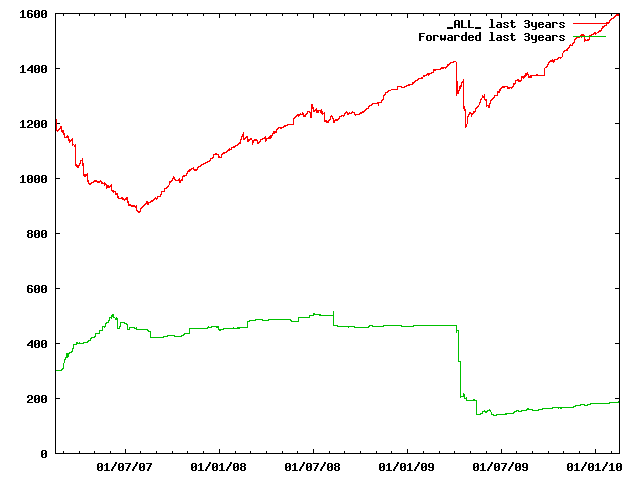
Sorry! I cannot tell you when KDE 4.4 will be uploaded to unstable. I am not working on that. My initial plan was writing about other tasks I am planning to work on and asking for your help. But I realized people would be more interested in knowing about KDE 4.4 packages. Once you know about this, I might trick you into helping in others areas ;) Debian packages for KDE 4.4 are being worked on, just slowly and of course, keeping on with the quality you are used to. There will be also some changes that have been in some people s TODO for long time. The goal is having them in very good shape for Squeeze, that will ship with some point release of 4.4. The doubt is which point release will be: 4.4.2? 4.4.3 ? The schedule for the point releases has not been made yet, so it makes a bit harder trying to predict it. In the same lines, I can not tell you when Squeeze will be released neither, it needs to be frozen first! If you want to know about the reasons of this delay, it is simple math: KDE has been growing a lot of more than the number of people working in Debian packages of KDE. I am not talking about size in lines of code in KDE, it is more the number of new dependencies that the KDE team have to take care now too: soprano, libutempter, Have you wondered why some are under the name of Debian Krap maintainers? :) And there are releases much more often than in the KDE 3 times. You might have notice not only 4.3.5 have been skipped, it also was the case with 4.2.3 or 4.1.4. This is not good or bad, it is just the same number of maintainers (or less) with more work. And what is worse with more bugs open in the Debian BTS! I think reiterated calls for not to file upstream bugs in the Debian BTS and directly in KDE bugzilla (see my blog post about this here) have helped but still we have a large amount of bugs piled through the years. This graph could give you an estimate how we tried in the past fighting against without too much success:
Number of bugs reported against KDE in Debian in the last 3 years Olivier Vitrat, we miss you :) One of the most heavy (and boring) talks that needs to be done for the KDE 4.4 packages is the copyright checking. I am not sure a total newbie can help with this, but if you have knowledge about licenses and you want to try helping, we are waiting for you. About other areas of the packaging maintenance, if you are interested in start learning and helping with future releases, you are welcome to start lurking in the #debian-qt-kde channel in OFTC and in the mailing lists. Update February 21th: 4.4.0 is for sure not being uploaded into the archive. Probably KDE SC 4.4.1 to be released 2nd March will be uploaded to unstable or experimental.

Russell Coker: National Broadband/Porn Network

Currently we have a new National Broadband Network under construction in Australia [1]. It is going to cost $43,000,000,000 which is $5,000 per household. It is designed to deliver 100Mb/s speeds to most homes that is the homes that can currently get more than 8Mb/s through ADSL2+ or cable connections. The question is, what can we do with 100Mb/s that we can t do with 8Mb/s? It seems that ADSL2+ works pretty well for VOIP, video-conferencing, online games, and transferring CD/DVD images (with a little patience). It seems to me that the only benefit in having download speeds faster than 8Mb/s is for downloading high resolution images and video files in a small amount of time and porn surfing seems likely to be the only reason for someone being so impatient to get high resolution images! Now there are some potential technical benefits to this, FTTH will allow synchronous upload and download speeds and being able to transmit data at 100Mb/s will be a significant benefit. If the data transfer quota was reasonable then I could run my blog, my web site (including my Debian package repositories), and some other new projects from a server in my own home. Currently Internet access in Australia sucks mostly because of the cost of international bandwidth [2]. Also while Telstra was run by the awful Sol Trujillo it was trying to gain a monopoly on domestic services via it s Fiber To The Node (FTTN) scheme, it seems that one of the biggest benefits of the NBN is to prevent Telstra gaining such a monopoly but as they are going to pay the NBN CEO a $2,000,000 salary [3] it seems that some of the same mistakes are being made. In any case $43,000,000,000 is a lot of money to pay to break a monopoly, there are much cheaper ways of doing this. Now if the money was to be spent intelligently on Internet access the first area would have to be submarine cables, if the capacity of the connections between Australia and the rest of the world could be significantly increased then it would change the way the Internet is used. I have a US-based colleague who transfers more data from his mobile phone than I do through my home ADSL connection and he pays about the same amount of money as me! I think that most serious Internet users would rather have an ADSL2+ connection that is cheaper and has a larger bandwidth quota than a FTTN connection with a high transfer rate but a small quota of data that can be transferred from what I ve read about the NBN it doesn t sound like a service I would want to sign up for. Then there is the issue of servers, currently for most uses Australia is not a viable location for a server due to bandwidth costs. This decreases the job opportunities for Australian system administrators and decreases the Australian IT skills base. The next area that needs attention is wireless net access. The first issue that should be addressed is the minimum cost, the cheapest net access in Australia is via 3G because it avoids all the costs of wiring [4]. It would be good if instead of paying about $150 per annum for 3G net access there were some options for cheaper plans, maybe $60 per annum for 6G of data. In many ways the current Australian lifestyle requires Internet access, and many aspects of interaction with government organisations requires net access, so it seems that the government should make it a priority to provide cheap net access to the entire population. A 3G net access plan of $60 per annum plus a subsidised purchase plan for cheap PCs (maybe taking a Netbook from $350 to $250) should significantly decrease the number of people who can t use the Internet. 3G access (both Internet and telephony) also needs to be available in more areas. Currently Telstra has the widest coverage of any mobile phone company, but it uses a non-standard frequency which limits the availability of suitable phones and it doesn t compete on price [5]. So rural users have to pay through the nose for Telstra mobile telephony and they get a limited choice of phones. It would be really good if we had a NBN for 3G phones that covered the areas surrounding most rural population centers to compete with Telstra. If rural users could pay $60 per annum for 3G Internet access and a reasonable rate for mobile phone access (maybe a combined phone/data plan similar to those offered by Three and Virgin) then it would significantly improve the rural access to services that urban residents take for granted. The NBN plan does include providing wireless and satellite net access to the 10% of the population who will be out of range of FTTH. But I am concerned that it will provide a bare minimum of service and not an integrated voice/data service that permits using the newest features of phone OSs such as Android. In the past I ve had some commercial experience with satellite Internet access and I have not been impressed with it, the response times were very poor and fully interactive services were almost unusable. The government should aim to provide support for interactive services that facilitate business operations (including video-conferencing and remote server access via ssh, VNC, etc) to as much of the population as possible. I expect that a significant portion of the Internet using applications on smart-phones such as those running the Android OS will require fast response times, so even if a satellite version of an Android phone is ever produced it still wouldn t be as useful as the current phones. Finally the government should offer free wireless net access in all major urban areas for the purpose of accessing government services, Australian content, and Australian mirrors of foreign content. This would be a convenience feature for most people and would also be good for emergency access I shouldn t have been denied access to government services when the PSU for my ADSL modem died in the heat last week, I should have been able to take a laptop to the nearest government Wifi access point! In conclusion I think that the government should spend money on lowering the cost of Internet and mobile telephony access for everyone and granting greater access to government services. I am not aware of any evidence to suggest that the current NBN plan will do anything to achieve such aims. But it should be really good for accessing porn sites that use a CDN with an Australian presence. Update: John Hughes pointed out in an insightful comment that 100Mb/s can be used for watching TV. So this could be a ploy to try and convert Internet access into better TVs paid for by our tax money!

15 February 2010

Gustavo Noronha Silva: WebKitGTK+, and the Page Cache

So, one of the things I get to do during work hours for Collabora is to contribute code, and do maintenance tasks for WebKitGTK+, and have been doing so since early last year, working on all kinds of things, from improving the network backend to handle the real-world web, to fixing scrolling problems, while reviewing patches from the many awesome developers who have been joining us (more on that later =D). One of the big features I have worked on this past month or so, along with Xan Lopez is the Page Cache. The page cache is a feature of web browsers that makes going back, and forward between pages in the same view very fast. It s better explained in this post, but to summarize, the idea is that instead of destroying all the work you have done since downloading the resources, and having to reparse/rebuild the structures the view uses to display the page from the cached resources, you hit pause on the page, and store the whole thing as is, and when coming back to it, you just hit play. You can see in the video two instances of Epiphany, one with the page cache enabled, one with it disabled. Easy to see which was has it enabled. Thanks to KiBi for the suggestion regarding a page that shows this easily =D. <video controls="controls" height="302" src="http://kov.eti.br/media/webkit/page-cache.ogv" width="450"></video> We initially thought we had this feature enabled, since our initialization functions (that exists since before the current maintainers were involved) did setup the number of desired pages in the cache, but during the hackfest we held in December we found out we were fooled all this time. Enabling the page cache does make going back faster, but also made lots of things become unstable and crash. Since then, we have been working on figuring out all the problems, and fixing them, using help from adventurous users of in-development software ;D. I believe we re now at a point in which I can happily declare the GTK+ port has a working page cache in trunk! If you re interested in the nasty details, bear with me! Let me go back in time a bit, and show you what problems we had. First, some background: the GTK+ port deviates a lot from the other ports when it comes to scrolling. This is because, when designing this part of the port, Holger Freyther had a very nice idea in mind: that the WebView should be a first-class citizen GTK+ scrollable widget. Meaning it would use GTK+ s adjustments for scrolling, and be able to interact with any parent scrolling widget, be it a GtkScrolledWindow, or a MokoFingerScroll. We cannot just throw away all the rest of the scrolling code in WebCore, though, that deals with all the details related to interacting with the DOM, and JavaScript code. This means our WebView contains adjustments that need to be set, and unset on our port s version of WebKit s own representation of the view, called the FrameView, to interact with it, and to get updates on the bounds of content, and such. For every load, in the non-page-cache case, a new FrameView is created, the previous one is destroyed - this means we need to set the adjustments on every load. The problem starts when you have the page cache enabled, because the code path used to do what is called commit the load of a cached page (that is, start replacing the content that is currently being displayed by the one that should now be displayed) is completely different, and we were not setting the adjustments on this new view, so we started with that. But all was not well. We were still having weird behaviour with scrollbars disappearing, and becoming the wrong size, and worse, crashes when back was hit. We then started investigating in more detail how it is that the page cache does its magic, to try and figure out the source of all evil. It turns out that when you leave a page that can be cached, the existing FrameView is no longer destroyed - it is stored as is in a CachedFrame to be restored if you go back, and a new one is created for the new page. This was having the undesired effect of having the adjustment be set in more than one FrameView at once, causing all kinds of (predictable, after we knew for real what was going on) unwanted effects. Thus, we reworked the code to make sure the adjustments are only ever set in one FrameView at once, making sure they are unset when the FrameView is being frozen, and reset when it s being restored from the page cache. Last, but not least, it was discovered that going back to a page that contained resources with data: URIs (such as Google results pages which contain a small number of image hits) also caused a crash. This was because our network backend was not storing the data: URI in the ResourceResponse objects it fed into WebCore. The page cache relies on those responses to recreate the requests it uses to artificially replay the load when restoring the page from the page cache, so we fixed that as well. What can be taken from all this? Building browsers is a lot of hard work! I can t think how we could deal with this level of complexity without the awesome testing suite of WebKit. The good news is all of those issues I talked about in this post are now covered by the automate tests that run as part of the normal buildbot cycle in our bots, so we re covered for the future, at least for these specific problems =D.

Biella Coleman: Timing Life

The Chronicle recently published a piece that drew a lot of attention on the difficulties that female academics with kids face during the first 4-7 seven years of their job when academics are expected to do nothing but produce, produce, and produce and yet because they have produced children, they can t produce all that much writing. I don t share the author s predicament in that I don t have kids. But I have had to be an (often long-distance) caretaker for the last 8 years, 4 of which I spent considerable time in PR taking over my mom s caretaker s duties. Although when it comes to female academics and kids there is a lot that can (really must) be done to facilitate a career and motherhood, when it comes to taking care of my mom, being an academic has been an odd and mixed blessing, although it did require me to play with the system self-consciously or else it would have been an early academic death. When my mom was first falling pretty ill, I was wrapping up my dissertation. Though I was ready (on paper at least) to go on the market, I did not step foot in it. I knew that if I landed a job it would be the end of seeing my mom and since she only had a few years of capacity left, I decided to 1) apply only for one postdoctoral position (that had no teaching and was in NJ making it very easy to fly home frequently) 2) if I did not land it, I would return home to spend time with her, keep on writing but not graduate. If I had started a job right after my dissertation, I would have killed my chances of churning out articles, and worse, not have seen much of my mom. I was lucky enough to land this postdoctoral fellowship, which was a life savior. I was able to get a heck of a lot of work done that I would never ever would have been able to do my first two years of teaching (kids or no kids) and I spent many months in PR as well. I always encourage graduate students to apply for these positions because the payback is enormous (with the exception of fellowships that require a ton of teaching), even if the applications are really time consuming, more so than applying for jobs. Though rarely stated in such terms, the first few years of an academic position is not unlike medical residency. It takes a brutal amount of time, not only because of the sheer time you have to work but also because there is so much new to learn and so many different responsibilities to juggle. It is exhiliarting but draining, even disorienting. But there is one important difference from our medical school counterparts (aside from the blood and guts and gore :-)): their hell continues throughout the year, while our hell diminishes during the summer when classes end and writing is supposed to dominate your attention. Also since I am not required to be here once classes ended, I am able to leave NYC and spend it back home. I would simply not be able to do this with most any other full time job (unless it involved telecommunting) and for that I am grateful I landed the job I did. Academia, despite its rat race quality, has allowed me to visit my mom throughout the year and summer. Given the importance of summers for writing it seem that departments/universities can do a lot for female faculty simply by sponsoring or helping to pay for summer day care for two years, thus offsetting some of the costs and then providing them with the space needed to write/produce.This can accompany the policy that some, though not enough schools have, which is turning off your tenure clock for the year you are pregnant, and in some cases, even giving you leave. Thankfully at NYU you can stop your clock not just for pregnancy (which they now automatically do because when it was optional some female professors were not taking it!) but also for circumstances like mine. I was given a short tenure extension, which was not easy to ask for but it is important to do so. I am extremely grateful they have this policy. Something else partially unique about caring for a parent is the perspective it affords. Although it would be a lie to say I suffer no anxieties about my job, I find it hard to get embroiled in a lot of the petty politics of academia, a perspective that clings to me, especially after having to take care of someone with Alzheimers, and especially my mom who we nicknamed the Russian Terror for her turbulent (but really fun) personality. Sitting in front of your computer to write and think about some obscure academic topic feels not only easy after those experiences but a scamish sort of privilege. My mom is now in a nursing home and I no longer have to spend time taking care of her. Instead I visit and see her and get overwhelmingly sad when I do. In one month, it will be her 2 year anniversary in a nursing home and I still have not come to grips with the situation. It strikes me as obscene and unreasonably cruel that this illness can afflict a person for years, even a decade or more. Perhaps more than anything it is the sheer massive length and persistence of this illness that makes it so hard to bear. And I am sure my work for better or for worse has acted as an emotional refuge, where I drown myself in work that I love instead of drowning in the sorrow that I often feel, making what is a difficult job far easier.

Martin-&#201;ric Racine: Wanted: unsyndicated web mail service - say Google Mail and you're dead

A few days ago, I woke up to the fact that Google has become yet another MSN. The stupid opt-out policy of their latest gadget, Google Buzz, means that I can no longer entrust Google with anything. In case it wasn't obvious to the idiots at Google, no, I do not want every single person that ever sent me a random e-mail to suddenly get automated access to whatever on-line content I'm producing; I want to choose who will get access to what and be able to change my mind about what any particular individual will get access to at any given time. Most of all, I want this to be opt-in by default. That is, unless I explicitly enabled access to some specific content to a specific individual, the assumption shall be that nobody has access to anything that I produce. Alas, it seems too much to ask from Google. So now I'm looking for a reliable no-frills webmail service that is too boring to ever get under the radar of any media content giant. First, it was Hotmail no more, now it's Google no more. I also have another simple request: that the selected e-mail address can include hyphens and periods. If anybody knows of any such simple and reliable on-line webmail service, please drop me a line via this blog article's comments. Thanks!

Mike Hommey: RC_buggy_arches = 0

(maybe) After the two updates in the previous post, I got further and eventually fixed the root of the remaining problems on ARM. It appears I got on the wrong track at the very beginning of the investigation. My first test was to disable the JIT compiler during the tests, and it didn t affect the result. I assumed from there that the JIT compiler was doing fine and wasn t involved. Which led me to believe the alignment of the stack at 32-bits word boundary instead of 64-bits was a standard behaviour. I turns out my first test itself was wrong, because I hadn t disabled the JIT compiler at all. You need to modify the runxpcshelltests.py script to disable the JIT, and not fiddle with the javascript.options.jit.chrome preference. The JIT compiler was misaligning the stack, and disassembling the generated code leading to broken behaviour revealed that it was doing so when setting up arguments on the stack for function calls. While I was afraid this would be difficult to fix without changing a lot of code, and first only disabled the JIT compiler, it turns out the way nanojit works by compiling the last instructions first did make it straightforward to fix. But ARM was not the only RC buggy architecture left after sparc and powerpc were fixed. MIPS remained. Alpha fails, too, but it is not a release architecture. Update: It appears hurd fails too, but like Alpha, it is not a release architecture. So, while I didn t want to wait 50 hours for a build, I managed to execute a failing test with the last xulrunner-1.9.1 packages that got built (before I enabled the test suite) under qemu. And I was able to track down the origin of the bug: the xpcom layer that translate function calls between languages doesn t fill arguments correctly when they are smaller than 32 bits. While the code is adapted to the mipsel case, which is little endian, it doesn t work on mips, which is big endian. I came up with a patch that should work, and which I hope won t break mipsel as a consequence. All that is left to do is to build and test the fix. I hope someone else will be able to do that for me. All in all except a 1.9.1.8 release this week with a lot less red on the buildd status page.

Keith Packard: TeleMetrum v0.2 testing

Test Flying TeleMetrum v0.2 Bdale and I got a chance to test fly the new version (0.2) of our TeleMetrum flight computers. Bdale flew with the Albuquerque Rocket Society down in New Mexico while I flew near home with Oregon Rocketry during our February model launch. I flew my Dynastar Grappler which I have modified to create a large payload bay out of a foot of the original body tube: I cut a sled out of plywood and mounted the TeleMetrum on one side, and a small 110mAh battery on the back: The field we use for model launches is surrounded by tall fir trees, so we tend to stick to reasonably small motors. This time, I loaded up an Aerotech 24mm E18 motor and trimmed the delay down to about 5 seconds as this rocket uses simple motor ejection. This flight didn t exercise the new ejection circuitry. In any case, the flight was perfect, telemetry worked all the way down to the ground using just a 1/4 wave whip antenna on the receiver. Here s the data recorded in the on-board eeprom: The maximum reported altitude was 186m, velocity was 49m/s and acceleration was 53m/s . As expected, the GPS loses tracking during boost, but rapidly re-acquires near apogee and tracks the rocket all the way back to the ground. The flight track can be viewed in Google Earth. Needless to say, both Bdale and I are extremely pleased with the performance of the new hardware.

14 February 2010

Russell Coker: I Just Bought a new Thinkpad and the Lenovo Web Site Sucks

I ve just bought a Thinkpad T61 at auction for $AU796. My Thinkpad T41p has cooling problems which I have previously described[1]. It s also started to rattle a bit when I hold it upside down since I took it apart so I guess I didn t do a great job at trying to fix it (probably the fan is getting obstructed). Now it has developed some screen problems where the screen back-light will periodically turn off and stay off until I press and release the lid-close button (to turn the screen off and on again), this is apparently the symptom of a broken inverter [2]. I was quoted $160 to fix the inverter and $250 to replace the entire screen by laptop.com.au (a very reliable laptop sales and repair company that I ve dealt with before) [3]. Also the system has the red screen problem where intermittently the screen turns reddish so paying $250 for a replacement screen is worth considering. I decided not to do this as I have seen refurbished Thinkpad T41p systems on sale for about $400 and spending $160 now and possibly $250 later on a $400 system didn t seem like a good idea. One thing that has annoyed me about my Thinkpad for a long time is the lack of PAE support in the Pentium-M CPU which makes it impossible to run Xen [4], so upgrading to a newer system will allow me to use virtualisation for the purpose of fixing bugs in Debian/Unstable among other things. As I want a Trackpoint it seems that a Thinkpad is the best option (Thinkpads are also great in many other ways). So really all want is a new Thinkpad with an equal or higher resolution screen, more than 1.5G of RAM (what I ve currently got) and at least PAE (but ideally hardware virtualisation for KVM) as rumor has it that ACPI doesn t work well with Xen and also Xen has a history of being a little unreliable at the best of times. I m after a portable desktop replacement system, so I m not after an X series or anything else light either. Even though the new prices on Thinkpads are generally more than I want to pay I first checked the Lenovo web site. It sucks in a magnificent way. First there were some basic site navigation issues, such as the fact that I often can t click my middle mouse button on a link to open it in a new tab (I get some sort of Javascript error) it seems that the Lenovo web team didn t consider the possibility that I might want to have the details of different series of Thinkpad open in different tabs for the purpose of comparison. But the kicker is the fact that most Thinkpads don t have the screen resolution displayed! It seems to me that one of the most important factors in purchasing a laptop is the screen resolution and Lenovo generally don t provide it! The Ideapad is described as having a resolution of 1024*600 (a netbook not a laptop), the Thinkpad Edge has 1366*768 (not that good), and the R400 and R500 are WXGA which is anything between 1280*720 (sucky) and 1366*768 (slightly less sucky). So it seems that the low end models have technical details which could allow a potential customer to reject them, while the high end models don t have technical details needed to justify the purchase price! Fortunately a friend who works for IBM was able to find me the necessary information, this site allows you to enter the part number of any Thinkpad and receive a reasonably complete set of specifications (including display resolution) [5]. With the information on that site I was able to successfully bid on the single Thinkpad in a Lenovo auction of refurbished systems that had a resolution that was satisfactory. The fact that the Lenovo auctions of refurbished systems also lack the details is another think that Lenovo do wrong. In this case I started bidding one minute before the auction closed and had to push the price up by $125 to win it. Given the number of auctions that Lenovo runs world-wide they would probably benefit from fixing their web site just to get the occasional Thinkpad price increased by $125. Not to mention the number of people who are discouraged from buying new Thinkpads because they can t get information on what they might be paying for.

Julien Blache: forked-daapd: Remote support, more to come

A few weeks ago, I ve added support for Remote, Apple s iPhone application for controlling iTunes remotely. Here, support means Remote can be paired with forked-daapd and can be used to browse the library. And that s it, for now. At this point, there won t be much visible activity on forked-daapd for some time. I m working on a couple of things, but they take time and they require a lot of new code. So, for a couple weeks now, I ve been working on that. I have some code outside forked-daapd that is starting to work well, but it s not there yet, far from it. Then it ll have to be integrated into forked-daapd, which means a lot of new code there too. Bug fixes will still happen in the meantime, and some smaller new features may also appear before the Big Thing . So if you find or encounter bugs, feel free to report them still. If you have patches or ideas you want to discuss, feel free too. As I wrote to a couple people by mail already, good things come to those who wait or contribute. With all that, I ve updated the Debian packages, given that there won t be important changes for a while; I hope they re useful to some of you out there. Note that I m making an amd64 binary package available alongside the source package; it s built on a current Debian unstable system, but if that s not suitable for you, in terms of dependencies or architecture, you can trivially build a suitable binary package from the source package. As a reminder, I have packages of the ANTLRv3 C runtime too. I ve also added antlr-3.1.3.jar there, in case you need it and can t find it at the upstream download site.

Russell Coker: Which People are Stupid on the Internet?

I don t think that the answer is everyone or even everyone other than my geeky friends , but obviously it is a large number of people. Many people apparently type facebook into Google and try to login to the first thing that they see, if it happens to not be Facebook then they whine this became known after a Google search for facebook login happened to not return the Facebook login page as the first link [1]. This blog post claims that they are not stupid [2] the specific claim is that URLs etc are just too complex. I disagree, if my mother and my mother-in-law can both do better than that then I think that we should expect that a significant portion of retirees can do so and we should also expect that younger people will do better than older people. In a more specific sense, when I was in primary school I was taught the Dewey Decimal System aka Dewey Decimal Classification. With the DDC a primary school student can look up the location of a book in the library index system (cardboard files when I was at school) and then know where to find it. After looking up a book on one occasion no-one would want to repeat the effort so the sensible thing to do is to write down the DDC index to any interesting book. The same mental processes can be used for dealing with URLs, someone might find Facebook etc through Google on the first occasion but they can then use browser bookmarks and written notes for traveling to track the URLs that interest them. I think we should expect that a typical adult nowadays should be able to complete any task that would be expected of a 10yo when I was young, and I don t think it s unreasonable to call an adult stupid if they can t compare to a 10yo from the early 80 s! As a specific example, while 10yo children were given assignments to look up various books in the DDC I think that an adult can be expected to work out the value of an index on their own young children should be expected to require a little more training than adults! Some people will claim that it s not stupidity but ignorance. What exactly is supposed to have prevented these people from learning? Have the primary school libraries stopped teaching the DDC and most other things related to storing written knowledge? Is there supposed to be such an utter lack of computer skills in the general population that anyone who wants to learn will be unable to do so? I m sure that there are plenty of retirees who could seek advice from my mother or my mother-in-law if they wanted to learn about such things. NB I m not making any general comment about gender specific computer skills here, my father and my father-in-law don t seem to use the Internet much and they aren t the ones to complain to me when things break so I can t assess their skills. I am talking about four individuals and the only generalisation that I am making is that 2/4 retirees I know well seem to have good Internet skills and therefore I expect there to be a reasonable number of retirees who successfully use the Internet. The Making Light analysis and discussion of the issue has a lot of good points (Making Light does in fact make light ) [3]. But does have some claims that I find really strange, one example concerns a woman who misunderstood the way the up/down buttons work to call an elevator. Misunderstanding the buttons is one thing, but she also shared her knowledge of elevators with others, presumably she had more than a few people try to correct her and she ignored their advice. I think that someone who ignores advice from a variety of people, ignores advice that can easily be tested (just push the elevator buttons and observe what happens), and then goes around sharing their wrong ideas seems to have clearly crossed the line separating cluelessness from stupidity. One of the Making Light comments references the Clients From Hell blog a summary of strange, stupid, and amusing requests that clients have made to web design companies [4]. It seems to me that there are two noteworthy categories of anecdote on that site. One is requests that demonstrate ignorance of the work, such as requesting something significant and complex to be done in an hour. The other is requests that demonstrate contempt for the people doing the work, such as offering to pay $10 per hour. Misjudging the time taken to complete work is forgivable if someone has the skill to accurately estimate the time required then they would be able to do the work and wouldn t be asking for a quote for someone else to do it. Demonstrating contempt for someone that you are about to hire is stupid no matter how or why it s done. Clients From Hell also documents people who have requests that are obviously silly, it s understandable that someone might expect a blurry image to be sharpened as done on CSI , but wanting use image editing to reveal the face of a person who was facing away from the camera is simply assigning magical powers to the computer the fact that this sort of thing is done in shows such as Star Trek says a lot about the shows in question and their viewers. Often car metaphors are used for computers, you can be a good driver without knowing the details of how a car works but you do have to know how the pedals, switches, and steering wheel work as well as the meanings of the various dials. You can be competent at using the Internet without knowing much about bits, bytes, assembler code, or how a CPU works but you do need to know how the controls work and this means knowing how to type a URL. The basic operations of browsing the web require considerably less skill than driving a car and less skill than is commonly used in operating the telephone system (including PABX systems, mobile phones, and international calls). Anyone who is unable (not unwilling) to drive a car or make any phone call other than a local direct call and yet is reasonably intelligent could be used as an example of how an intelligent person could be unable to understand some aspects of technology, I don t think that there are many people in that situation it s difficult to find an adult in Australia who can t drive a car. Finally while it s reasonable to be uninterested in some things, it s not reasonable to be interested in doing something without wanting to learn how to do it properly. If typing facebook.com is so difficult that it exceeds someone s level of interest in the service then they shouldn t complain if they find that they can t access the service. Really typing facebook.com into the address bar of a web browser is easier than starting the engine of a car with a manual transmission, it s easier than filling the fuel tank of a car with the correct fuel, or figuring out when a car is due for service. Now there are serious security issues revealed by this event. I m sure that lots of people use similar methods to access their online banking etc. I just did a quick Google search for online banking with Australian banks, and I noticed that a few of the search results have adverts from rival banks. So it seems quite plausible that someone could trick Google into thinking that they run a bank (there are many thousands of banks in the world), run adverts competing against established banks, and phish the people who click on them. I wonder whether the best solution would be for the banks to test the security of their customers. Then any customer who gets phished by the bank s anti-fraud division would receive increased bank fees for the next few years and the rest of us who are less risk to the bank could receive lower fees. The current situation seems to be that my bank fees are partly determined by the need to recoup the money that the bank loses from customers who just use Google to find their bank s web site. I would rather not pay for the stupidity of such people. In the end all security comes down to people issues, technology just helps people do the right thing. I believe that one of the groups of stupid people on the Internet are those who believe that the Internet should be made safe for people who want to know nothing about it not even the basic library skills that are taught to primary school students.

13 February 2010

Mike Hommey: When will Iceweasel 3.6 come ?

That is a question I hear more and more, and I felt it had to be answered publicly. Short answer: when it s ready. The current target for Squeeze is 3.5, for various reasons, but the main is that it shares the same Gecko version as Iceape (SeaMonkey) and Icedove (Thunderbird), which means that while the security team (or myself) will have to update these three for security updates, they will share patches. So 3.6 is less a priority than having 3.5 in shape for the release. Last week, I wrote on a mailing list post that I was expecting 3.6 to come this week. Well, that was before I discovered the sad reality about the state of the current version. But 3.6 is still on the radar. I already went through all the patches we apply on 1.9.1, and rebasing should now be straightforward. Most of the 3.5 failures have now also been addressed: sparc and powerpc were fixed first, and I am now (re-re-re -re)building on arm for, I hope, the last time. Unfortunately, mips is still missing, and without a porterbox, I can t do much. I tried, some time ago, in qemu, but there is no way I m going to wait 50 hours for a build again ; it was already painful on a real arm box (where it takes 90 minutes just to link libxul.so). Anyways, 2 patches stolen from upstream and 5 patches sent (or almost sent for the one currently under validation) later, we should be down to one release architecture failing instead of four. Which is already good. On the other hand, a new 3.5 upstream release, with security fixes, is planned for next tuesday, which means some time will have to be spent for stable updates, too. So, in the next few days, expect that I ll be working on stable security updates, then unstable updates, including the three architectures fix, and then work on 3.6 will continue. Which means we can hope for a 3.6 release in experimental by the end of next week, or the following one, in the worst case. Update: *sigh* 4 patches on arm is not enough :(. At least this time I think I m done with xptcinvoke and xptcstubs. Update:In the end, 2 patches and disabling the JIT compiler did the trick on arm. The 2 other patches were actually addressing bugs that only existed because the JIT is doing something wrong with the stack alignment.

Martin F. Krafft: ACTA: less knowledge means less resistance

Right now, your government is probably engaged in the discussion of the Anti-Counterfeiting Trade Agreement (ACTA). You are likely not aware of that because your government has been actively keeping these negotiations and details surrounding them secret. Your government does not want you to know about a treaty that has far-reaching negative effects on your freedom, as well as your basic human rights. If you did know, you might speak up and make it difficult for the drivers of ACTA to smoothly push their interests past you. The red light should light up in your head right now! The goals of the trade agreement that is being negotiated are multifarious, but essentially seem to centre around challenges related to intellectual property, and copyright in the digital age, even though it is sometimes claimed that the agreement serves primarily to contain trade of fake Prada bags and Rolex watches. In reality, ACTA is about content producers like movie studios, who try everything to prevent you from copying their work without paying for it even if you cannot actually purchase the work, because of e.g. technical measures designed to prevent certain people from legally obtaining content, or simply because the media companies are greedy and consider it PR-savvy to delay the release of a given work in certain countries until after people have had a chance to pay a lot of money to the cinemas. In theory, a creative work goes out of copyright 50 or 75 years after its author died, depending on whether the creativity can be attributed to a person or a corporation, respectively. Therefore, 50 or 75 years after creation, it gets increasingly hard to monetise a work that has not been reinvented in that period of time. Sounds plausible to you and me, but this sort of stuff frightens companies like Disney, who seem powerful enough to simply have the law changed. That is not how things should work. The media producers are failing to control the Internet, and hence they want to turn it into something more like cable TV, which they do know how to control. ACTA aims to make copyright infringement a criminal offence. ACTA wants to make it possible for a government to cut you off the Internet because someone thinks you did something bad they don t actually have to prove it though, accusation is enough. Similar efforts have already failed all over the world, e.g. in France and New Zealand. That s a sign, not a reason to try again. ACTA wants to set in stone that you have absolutely no rights when you cross borders. This is largely already the case border officials can pretty much do with you whatever they want now it s supposed to be made official, and legally binding. ACTA will create a culture of surveillance and suspicion. ACTA is designed to break the Internet, among other things. But worst of all: I am just speculating because we are not supposed to know the details. The best current source of information on ACTA seems to be Canadian law professor Dr. Michael Geist, who has been collecting content and linking to articles consistently since the ACTA negotiations commenced 2 3 years ago. The Electronic Frontier Foundation also has comprehensive resources available. It s even more important today than before to put an end to this secrecy. Don t let your government enter secret agreements that affect you and your life, refusing to talk to you about it beforehand, and probably refusing all responsibility afterwards. Talk to your politicians and ask questions that cannot be answered with stock replies. If you have specific contact addresses for politicians, please let me know so I can add them. Colin Jackson helped me with this article at Kiwi Foo Camp. He also takes an issue with the secrecy around ACTA.

12 February 2010

Tim Retout: Facebook and XMPP

So Facebook Chat now uses XMPP. And the Empathy development version has some nice integration. This could mean that I can finally chat to non-Jabber using friends on a regular basis. It's been nearly four years since I switched from MSN to Jabber, and I think I lost contact with a lot of people. Facebook chat via AJAX is unreliable, and my visits to the site are quite irregular, so hopefully this will work around both problems. I for one welcome our social network monopoly overlords

11 February 2010

Michal &#268;iha&#345;: Preparing for Google Summer of Code 2010

It might be quite premature, but in phpMyadmin we've started our preparations for this year Google Summer of Code. This is basically just one of followups to the team meeting at FOSDEM, where we decide to apply again this year, but to try as hard as we can to be standalone project and not hidden inside of MySQL. We're grateful for participation in their project, however we feel it would be easier to manage if we're standalone project. So if you are a student who might be interested in participating, you can already browse our ideas list (this time PHP coding skills are not strictly necessary as I've given there a documentation improvements also) or come with your ideas and follow our student checklist, to see what you can do to get accepted (in case we're accepted to GSoC).

Next.

Previous.