Search Results: "rui"

16 April 2008

Miriam Ruiz: More on OOXML: ISO tries to recover lost credibility through press notes

After the unfortunate show that Microsoft and ISO provided us recently, ISO’s response is a FAQ note about ISO/IEC 29500 (OOXML, that’s it) in which they threaten Microsoft with the most severe of penalties if they’re tricking on as. Funny. In that statement, they try to answer all the issues that initially were concerns but that now has turned into proven facts about the OOXML standard and it’s approval, and to try to recover some of their lost credibility. It’s sad to be commenting on this, words don’t come easy, as if to say. Microsoft has already proven who’s the one in charge here, who owns the committees, who takes the decisions and in which terms, and nothing happens. It’s gonna take more than to publish a FAQ note saying how well you did it and to threaten Microsoft to behave or else. No one seriously believe you at the moment, you know? A funny thing is that ISO dismisses any responsibility about standardization, and relies on the market taking the decisions for them. Microsoft has said many times that they consider something positive and healthy to have multiple standards for the same, and let the market decide. Now ISO declares to think along the same lines: “After a period of co-existence, it is basically the market that decides which survives”. We don’t really need an organization for standardization for that, do we? We already have the market for that. Will ISO apply the same policy for every standard from now on? Like, say, having a couple of competing standards at least for every need, and let the market decide? ISO tries to recover from their credibility loss with this note (“the standards development process is credible, works well and is delivering the standards needed, and widely implemented, by the market“), without much success at least in what I’m concerned. If they keep trying to convince with press notes instead of with real acts, no one is gonna believe them ever again.

15 April 2008

Neil Williams: NM delays still impeding Debian activity

The delays in granting accounts have other effects on Debian as a whole, besides possibly dissuading people from joining.
The constant stream of sponsoring requests from people who are stuck in the final stages of NM are impeding sponsoring generally. DM is not a complete solution because a lot of these uploads are QA uploads - very useful they are too. It's just that there is no good reason why the nearly-DD's preparing the QA upload should even need a sponsor when the only thing preventing them making the upload themselves is a bottleneck in Debian that hasn't changed or improved in what seems like years.
Personally, I don't see evidence of people being dissuaded from joining - I've advocated a couple of new people recently and I know a few more who are prepared to do what is necessary to become a DD. However, I do not think it is right that existing DDs are expected to sponsor uploads from people who have passed all the hurdles of NM and are simply waiting for another DD to do an administrative task.
To echo Lucas, Debian cannot afford to impede recruitment. Debian also cannot afford to distract the existing manpower with increasing amounts of "workarounds" that fail to fix the problem.
Creating the accounts for new NMs should be considered in a similar manner to an RC bug - if the regular DD cannot find time to do it within a particular timeframe, then the task must be opened up to others who have the time to get it done. With RC bugs, we have NMUs. With NM, we need assistants to be given whatever access is necessary to step in and prevent backlogs.

Lucas Nussbaum: 4 months and 10 days without any new Debian developer. Is Debian dying?

It has now been more than 4 months since the last Debian developer account was created. 18 contributors have been through all steps, and are simply waiting for this simple administrative task to be done. We are sending a terrible message to potential contributors. We have strong requirements on the technical level of our developers. During the new maintainer process, we ask them to answer about 80 questions about Debian. We ask them to do grunt work. We review their reports twice (New Maintainers’ Front Desk, then Debian Account Manager). But even after we are totally satisfied about what they did, even after they became more qualified than many of our current DDs, we ask them to wait for months, so that the only person allowed to create accounts can finally do his “job”. It discourages the contributors currently in the NM process. I’ve seen several signs of frustration, or even depression. Some of them reduce their involvement in Debian, so we lose them before they even became Debian developers. Some of them consider resigning from the NM process. We should all feel guilty about that. But it also discourages people from joining Debian. Instead, they go to other more welcoming projects, which is totally understandable. Debian isn’t the only distribution with developers from the community those days. There’s Gentoo, Ubuntu, Fedora, openSUSE. Some of those have nice programs for new contributors, like “school” sessions. Sure, Debian is the “biggest” distribution without a company behind it. But is independance worth all the trouble? Of course, we have Debian Maintainers. DM is great for people who want to work on their packages. But, when we are trying to release lenny, we need more: people who are going to go through RC bugs, submitting patches. Who are going to do QA work. In short: people who care more about the whole distribution. Can we afford not recruiting anybody? Can we run Debian with the current manpower? I don’t think so. There are more than 550 RC bugs in lenny, many packages are currently blocked from migrating to lenny because they are RC-buggy, and many packages are orphaned or neglected. There are also a lot of bugs which haven’t been filed yet (I asked for help with running piuparts, which would probably result in 100-200 new RC bugs, but nobody had time to help). Most of the work that needs to be done is not rocket science. We could use a lot more manpower. Currently, the same small set of developers is doing most of the grunt work. They will get tired too. So, what can we do, as simple developers? There’s no magic solution, but we can try a few things.
  1. It seems that some people disagree that there’s a problem. Let’s prove them wrong: we could start a blog meme with “I, too, agree that the Debian accounts and keyring situation is severely hurting Debian, and that a solution needs to be found RSN.” It’s not going to solve the problem by itself, but it will at least show that we consider it very important. Pressure could help.
  2. We could start discussing solutions together. Our newly elected DPL said that he would talk with the problematic teams to determine how the situation could be improved. Unfortunately, this has been tried in the past (and failed). It might work this time, of course, but we could prepare a backup plan. So let’s find one or two good plans, and vote on them. (I liked the idea of giving accounts creation/management to DSA. After all, it’s only an sysadmin task once the report has been approved by FD and DAM.)
  3. We could push forward Josip Rodin’s proposal about infrastructure teams. It might not solve the DAM problem immediately, but would probably help avoid similar problems in the future.
Notes:
1. Maybe the 18 waiting accounts will be created today or tomorrow. Even if that happens, it won’t solve anything. Waiting 4 months for a simple administrative task is not acceptable, and we need to fix that problem anyway.
2. Account creation is not the only problem. Some people have been unable to upload packages or to vote for the DPL election, because their PGP key expired, and nobody updated it even if they have been asking for more than 4 months.

13 April 2008

Joey Hess: secret code

I'm still following The Lost Ring, but it got a little too intense today when someone who was not very familiar with what was going on was recruited to pick up an envolope hidden in an umbrella stand at a gallery in Hong Kong became disturbed by the contents and destroyed it. All we're left with is some fuzzy pictures. blur This fragment contains a code. If we can figure out enough of the code, it can be used to download a digital copy of the paper that got torn up. It's a kind of checksum, was written with a typewriter (that writes capital letters a bit higher than the rest of the line, and tends to fade bottoms of numbers), and will look something like "SS71/124P/84JH/HFGS/CEAS". After playing with the gimp, I'm fairly sure that the code starts out "C??L/T4GA/L". enhanced In the movies, this is easy, you just zoom in on the blurry picture until you can see fingerprints. In the "real" world, it's gonna be tricky.

7 April 2008

Miriam Ruiz: Dunning-Kruger effect

People who have little knowledge tend to think that they know more than they do, while others who have much more knowledge tend to think that they know less. That’s what Justin Kruger and David Dunning (both of Cornell University) demonstrated in a series of experiments they carried out. Incompetent individuals tend to overestimate their own level of skill, fail to recognize genuine skill in others and fail to recognize the extremity of their inadequacy. If they can be trained to substantially improve their own skill level, these individuals can recognize and acknowledge their own previous lack of skill. In one of their investigations, they discovered that 98% of university professors believed they were above the average, while that is obviously impossible statistically. Bright students, far above the others, considered themselves below their real skills, standard students saw themselves as above the average, while real bad ones were fully convinced of being among the best. In fact, the worse the person was, the most their conviction was that they were right. Even more, the most incompetent ones were incapable of realising the superiority of others, and they tended to think that the answers of the tests were the wrong ones, and not themselves. “Ignorance more frequently begets confidence than does knowledge”, quoting Charles Darwin. Most of the people react to this study with a smile, thinking about the incompetent people they know and how well this study describes them. It should be noted that everyone is incompetent about many things, and this effect affects all of us. How can a person realize that they’re wrong? The lesson that comes out of the study is that it’s really hard to find out, according to Dunning. His recommendation is not to trust just one’s own thoughts, but to ask for other’s opinions, especially before taking important decisions. Nobody should ever stop trying to improve and to learn, because it’s really difficult to know when to do it.

3 April 2008

Miriam Ruiz: The European Commision and OOXML

After the approval of OOXML as a standard by ISO, it seems that there are two months for appealing the decision. The European Commission, Europe’s top antitrust authority, will investigate whether OOXML, as the format is known, is “sufficiently interoperable with competitors’ products”, as well as if there have there been any irregularities or attempts to influence the debate or vote. If national ISO bodies return evidence that Microsoft attempted to influence the votes to secure acceptance of OOXML, it would strengthen the Commission’s antitrust case. According to Thomas Vinje, legal counsel for the European Committee for Interoperable Systems (ECIS), “Even if the votes were legitimately won, which I doubt, OOXML is not an open standard because it isn’t fully implemented on competing platforms, and its future shape is subject purely to Microsoft’s control”. “Granting ISO status to OOXML doesn’t begin to resolve the competition law questions the Commission is looking into”. Lets hope the European Union investigates and clarifies all this. “An appeal would have to be resolved before publication of a document as an International Standard”, said Roger Frost, spokesperson for ISO. In other words, if an appeal is filed, it’s conceivable that final publication of OOXML as a standard could be delayed. Lets hope ISO appealing process, if followed, is less irregular than the approval one. Maybe I can still recover my trust in ISO. Lest see how it goes.

2 April 2008

Miriam Ruiz: ISO/IEC DIS 29500 (OOXML) is now an International Standard

Today is a sad day. Corruption has won over rationality. ISO sucks. I guess I lost all the trust I had on the standards organizations. OOXML is a standard covered by many patents, ambiguous enough for Microsoft to keep the real specs closed, far worse than the previous ISO standard for the same task (ODF), and approved in a very suspicious way, in a process full of irregularities, which I hope the European Union will investigate.

23 March 2008

Francois Marier: Background compilation using ionice as a normal user

Most people know that you can run commands "in the background" on UNIX by prefixing them with "nice":
nice run_long_script.sh
What that does of course is reduce the priority of the process so that the CPU scheduler only runs it when nothing else (of a higher priority) wants to run. What it doesn't do however is run the process without any impact whatsoever on your other tasks. The reason is that the background process can still ruin the performance of your computer by monopolizing the hard disk.

It turns out that Linux 2.6.13 or later (with the CFQ scheduler) support a tool called ionice which is a "nice" command for I/O operations (like disk accesses). It works like this:
ionice -c3 command
The only problem is that you can only reduce the IO priority of a process as root. The reason being that if you're not careful you could have a high priority (CPU priority that is) IO-blocked by a lower-priority process.

But if you run your compilation like this:
sudo ionice -c3 make
it will run the whole thing as root, which is probably not what you want. So you could do something like:
sudo ionice -c3 sudo -u myusername make
to run the compilation as yourself. Though one problem persists: sudo strips out your environment. So things like distcc and ccache may not work anymore.

Here's how I solved these problems in my background compilation script for custom kernel Debian packages:
#!/bin/bash
nice fakeroot make-kpkg --revision=custom.1.0 kernel_image &
BACKGROUND_BUILD=$!
sudo ionice -c3 -p $BACKGROUND_BUILD
wait $BACKGROUND_BUILD exit 1

22 March 2008

Raphael Geissert: the echo nightmare...

$ echo 'Foo\nBar'
Foo
Bar
?
or
Foo\nBar
?

$ cat echo-trivia.sh
#!/bin/bash

set -e

test='Foo:\n\tI do not like bar!!\n\nBar:\n\tI do not like you either'
nexpand=0
tests=0

for shell in bash dash ksh zsh posh pdksh sash; do
[ -x "/bin/$shell" ] continue
set -x
o="$($shell <<< "echo 'Foo:\n\tI do not like bar!!\n\nBar:\n\tI do not like you either'")"
set +x
[ "$test" = "$o" ] && nexpand=$(($nexpand + 1))
tests=$(($tests + 1))
done

echo "==Trivia results=="
echo "Shells tested: $tests"
echo "Shells expandind backslashes: "$(($tests - $nexpand))
[ "$test" = "$(/bin/echo 'Foo:\n\tI do not like bar!!\n\nBar:\n\tI do not like you either')" ] && \
echo "/bin/echo does NOT expand" echo "/bin/echo does expand"


$ bash echo-trivia.sh
++ bash
+ o='Foo:\n\tI do not like bar!!\n\nBar:\n\tI do not like you either'
+ set +x
++ dash
+ o='Foo:
I do not like bar!!

Bar:
I do not like you either'
+ set +x
++ ksh
+ o='Foo:\n\tI do not like bar!!\n\nBar:\n\tI do not like you either'
+ set +x
++ zsh
+ o='Foo:
I do not like bar!!

Bar:
I do not like you either'
+ set +x
++ posh
+ o='Foo:
I do not like bar!!

Bar:
I do not like you either'
+ set +x
++ pdksh
+ o='Foo:
I do not like bar!!

Bar:
I do not like you either'
+ set +x
==Trivia results==
Shells tested: 6
Shells expandind backslashes: 4
/bin/echo does NOT expand


:ko: Time to reach concensus?
Note: tabs are ruined by the blog

In other words, scripts using:

echo expecting backlashes not to be expanded are broken by 4
echo expecting backlashes to be expanded are broken by 2
echo -e expecting backlashes to be expanded are partially broken by 2

zsh, and pdksh silently ignore the -e option when specified.

What a mess...

19 March 2008

Pierre Habouzit: [RC-Bug-A-Day] Day 5

Today, I cheated a bit, and used my Release Assistant super powers, and removed from testing 2 packages with long standing RC bugs and no activity from the maintainers: See my hint file:
 #20080319
 # 467096
 remove traverso/0.42.0-1
 # 243363
 remove xcruise/0.30-8
edit: twinkle removal was a bit hasty, I totally missed that the bug wasn't RC from the beginning. And as a second thought I'm not either sure it's really RC.

17 March 2008

Miriam Ruiz: OpenRating Game Classification System

Some time ago I started developing a system to classify free games for Debian, based in Enrico’s DebTags. Up to now I’ve been able to develop a basic set of tags to classify the games, so it’s time to start tagging the games. I’d really like to get as much feedback as possible, especially from teachers, educators, parents and in general people that work with and study about children. The idea is not to develop a fully exhaustive system with a thousand tags. I believe that parents and tutors must check themselves the games before letting their kids play with them, and supervise them while they do if they’re little. This does not try to be a replacement for parents, but a helper to let them have a rough idea about where to look at the games in the repositories according to their own criteria. Being exhaustive is thus not as a priority as keeping the system simple and easy enough. I’ve designed the tags along 3 main lines:
1) Contents that might not be wanted by some parents, teachers or tutors.
2) Games too complex for some children’s cognitive and/or coordination skills
3) Educative contents and skills that the game might help to develop. Right now some of the tags are already being used by GoPlay!, a system to find games in Debian, but it a very alpha state. The purpose is to make it configurable so that parents can decide which tags are important for them. I hope to achieve that in the next version of the program. I hope that the overall scheme can be understood, but I plan to write a rationale about it as soon as I can, as well as develop some examples so that they can be easily understood. I know that the tags might be a bit subjective and probably a bit culturally biased. The former is not avoidable, there will always be some kind of subjectivity in these kind of classification, so I won’t fight the impossible to achieve absolute objectiveness. I’m trying to compensate that by allowing parents and tutors decide the subjectivity they want to have by selecting and priorizing the tags. About being multicultural, I cannot do that on my own, as I’m not that multicultural myself, so I won’t try to invent what other cultures might be worried about or not based on some fuzzy stereotypes I might have about them. If someone from a different culture steps forward and wants to help, they will be welcome. I prefer to rely on other people from different cultures help me to broaden the classification. Feedback is of course welcome and encouraged.

11 March 2008

Miriam Ruiz: Gnash 0.8.2 in Debian

The first beta release for Gnash has finally been published. There are a lot of improvements in this version, and it now supports the majority of Flash opcodes up to SWF version 7, and a wide sampling of ActionScript 2 classes for SWF version 8.5. Flash version 9 and ActionScript 3 support is being worked on. I’ve just uploaded it to Debian, so it will soon be available in the mirrors. YouTube of course works, but not all of the other video streaming web pages are supported yet. Don’t forget to install the recommended packages if you want to have the video streaming features available, as some plugins for gstreamer are necessary for that.

9 March 2008

Enrico Zini: ldap-userdb-fields

Fields used by an LDAP Unix user database Some notes about LDAP for Unix user management: Meaning of fields for objectClass posixAccount: Meaning of fields for objectClass posixGroup: For objectClass inetOrgPerson: what you put there can be used as if it were a vCard by mail programs and contact lists. Now, the name of people could potentially be split in cn,givenName,sn,gecos and displayName (possibly more): how would normal user tools deal with the redundancy? To show a gecos field, pam_ldap will search for a gecos field first, then automatically fallback on building a gecos field out of the other suitable info it finds. To show a name, sane programs try displayName first and if it's not present they guess using the rest. Then there is the issue of how to chose the dn to identify users, groups and so on. Users usually go in uid=$USERNAME,ou=People,$SUFFIX, while groups would usually go in cn=$GROUPNAME,ou=Groups,$SUFFIX. Should you need to create the People and Groups organizational units, this could be the proper bit of LDIF:
dn: ou=$NAME,$SUFFIX
ou: $NAME
objectClass: organizationalUnit
To add fields that are not already part of a schema, one needs to create their own schema. To do that, one needs to first obtain (free of charge) a Private Enterprise Number that is used in various places in the schema definition. Making up your own one means risking conflicts if you eventually grow larger. But it is rarely needed, because for most things there are already schemas available. Many thanks to Wouter and noshadow for allowing me to crudely extract all this content from their brains.

6 March 2008

Anthony Towns: The second half...

Continuing from where we left off… The lower bound for me becoming a DD was 8th Feb ‘98 when I applied; for comparison, the upper bound as best I can make out was 23rd Feb, when I would have received this mail through the debian-private list:
Resent-Date: 23 Feb 1998 18:18:57 -0000
From: Martin Schulze 
To: Debian Private 
Subject: New accepted maintainers
Hi folks,
I wish you a pleasant beginning of the week.  Here are the first good
news of the week (probably).
This is the weekly progress report about new-maintainers.  These people
have been accepted as new maintainer for Debian GNU/Linux within the
last week.
[...]
Anthony Towns <ajt@debian.org>
    Anthony is going to package the personal proxy from
    distributed.net - we don't have the source... He may adopt the
    transproxy package, too.
Regards,
        Joey
I never did adopt transproxy – apparently Adam Heath started fixing bugs in it a few days later anyway, and it was later taken over by Bernd Eckenfels (ifconfig upstream!) who’s maintained it ever since. Obviously I did do other things instead, which brings us back to where we left off…
Geez, this was meant to be briefer...

24 February 2008

Joey Hess: grapefruit

Today's xkcd reminds me that about 15 pounds of grapefruit into this year, I tried to calculate how many I could eat a day, if I were to do were peel and eat grapefruit, all day. I may have been trying to figure out if it is possible to live on a pure grapefruit diet. I remember arriving at a figure around 70. My actual daily consumption at the height of grapefruit season is 3 to 5. It's become my favorite winter fruit and quite puts one off nasty sweet oranges. There's a trick to both the peeling and the eating of grapefruit which the xkcd guy has apparently never learned, that avoids the healhful skin and leaves only the delicious tart flavour droplets behind. I'm available for lessons, the first 2 or 3 weeks that the Texas ruby reds are in season.
(Of course as wrong as Randall is about grapefruit, he's 5 million times as wrong about a proper tomato..)

21 February 2008

Miriam Ruiz: FOSDEM 08: There I go!

I'm going to FOSDEM From Valladolid (VLL) to Charleroi Brussels (CRL)
Fri, 22-Feb-08; Flight FR1912, Depart VLL at 17:25, Arrive to CRL at 19:35
From Charleroi Brussels (CRL) to Valladolid (VLL)
Sun, 24-Feb-08; Flight FR1911, Depart CRL at 15:00, Arrive to VLL at 17:00 I hope not to have problems with the flight this time! See you all there!

20 February 2008

Davide Viti: Font tips #1: PDF charts with fntsample

Around the end of 2006 I come up with the idea of setting up something I called font-machine: a collection of scripts / utilities, intended to improve quality of fonts by defining and implementing automatic tests able to catch errors and provide screenshots. Some pioneering work on this area was done a while ago by Miriam who set up a page showing how fonts currently in Debian look like. I did something similar focusing on the fonts used by the Debian graphical installer (will write a separate post to describe the way it works). I'll start describing the tools which I've used more frequently; of course my preference goes to the ones which can be run non-interactively: those that can be invoked inside shell scrips and keep your CPU busy! fntsample is probably one of the programs I've used more frequently during the last months: it was written by Eugeniy Meshcheryakov, who also made it available as a Debian package, and creates really nice and professional PDF / PS charts showing all the glyphs contained in a particular font file. The following code snippet shows how you can use fntsample to create pdf charts for each of the ttf files contained in ttf-dejavu package (will often refer to this package since I maintain it :-) ):
font="http://ftp.de.debian.org/debian/pool/main/t/ttf-dejavu/ttf-dejavu-core_2.23-1_all.deb"
deb=$(basename $ font )
wget $font
dpkg -x $ deb $ deb/.deb/

outdir="out"
mkdir $outdir
for ttf in $(find $ deb/.deb/ -name '*.ttf') ; do
pdf="$(basename $ ttf sed -e "s \.ttf$ \.pdf ")"
fntsample -f $ ttf -o $ outdir /$ pdf -l > $ outdir /$ pdf/.pdf/.outline
pdfoutline $ outdir /$ pdf $ outdir /$ pdf/.pdf/.outline $ outdir /$ pdf
done

Note that PDF files will have useful outlines (aka bookmarks) courtesy of the pdfoutline tool shipped with the fntsample package. Results are IMHO very imperessive! PS: looking at the above chart for Cyrillic, I've just noticed the glyphs are ordered as to read "SEX"... I did not choose that particular chart snippet on purpose!

Miriam Ruiz: #466664: Such a cute number!

#466664 , not only a palindromic number, but also its digits sum 32!

17 February 2008

Martin F. Krafft: The Penny & Martin adventure: phase 2

Following the first phase, the second and final phase of the Penny and Martin adventure ended last Friday at Wellington airport. I am now 11 500 metres high on my way from Bangkok to Zurich, looking back at seven days on the New Zealand South Island, another in Wellington, and a night in Melbourne. Here s the summary of the 2200km we travelled, with selected photos inline. Penny has more pictures in her Flickr album. My New Zealand beer top-ten, in reverse order: Monteith s Original, Monteith s Black, Mac s Great White, Monteith s Golden, Monteith s Celtic, Monteith s Pilsener, Emerson s Pilsener, Mac s Hop Rocker, Emerson s 1812 India Pale Ale, and (drum-roll): Mac s Sassy Red. Yum! The Emerson beers get no links because the brewery website uses Flash. Thanks, Penny, for a fabulous two weeks! NP: The Flower Kings: Back in the World of Adventures

15 February 2008

MJ Ray: The Phone Coop: Annual Meeting

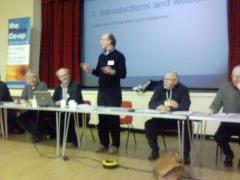
agmphoto Saturday 2 February 2008 was the annual meeting of the Phone Coop (agent link). I travelled to Chipping Norton for it and took a few abbreviated notes, which I've expanded slightly here. Ask questions if you want, but it's already fading in my memory:- Local Loop Unbundling workshop: 20 years of calls for it. 1999 ofcom announced 01 eu announced. 05 threat to breakup BT. 06 openreach split. By 2007-04 there were 2million unbundled. Distribution points and cabinets. Exchange may make even cheaper faster video. TPC LLU should launch this summer. Should take minutes to transfer. Equivalence problems - want evidence of when BT is preferred. Alarm lines: coop unable to take some. Broadband workshop: at year 2000 launch was a .5M service for GBP 40pcm. Now charge represents use. The coop has 4 ADSL specialists and it accounts for 15pc of income. Bought in three parts: tails are the links to the customers, bandwidth is then 155 or 622M fused 60m base plus extra. Home contention is 50:1, business is 20:1. Available in bundles. My.phone.coop offers a usage view with only a day's delay - might be a first for retail broadband. Ambassadors workshop: Harness cooperative difference. Customers can help to get more customers. Possibly give half our local adverts to our phone agency. Interaction with agent scheme unknown yet. Someone asked about running cinema ads. AGM: intros apologies evaluations mugs window stickers 1b 565m mins. Directors report record sales and growth. Profit again. Service progress: 2nd of 19 in Which surveys. Sven is new manager. Midcounties. Sustainability fund. Finances. Highest dividend. Sales mix changed kind rental growth. Costs down 200k. 9k postage saving. Record balance sheet. Recruiting membership manager and secretary. Currently 6735 members. Negotiating .5k sales acquisition - no info to members yet as commercially sensitive. Shortlisted for green business awards on 12 march. Questions: Mobiles? high volume only economic. What is cws? Cooperative Wholesale Society, part of the Cooperative Group. Member profile. Coop purchases. Diversity. Southern acquisitions? Regulator Dependent. Name. Biodiesel. Satisfaction, corp members, large corp custs. Miles travelled. Walking payments. Group promotion of AOL is annoying. Third party card discouraged? Member-account links. Larger affinity. Works bus. 1 against scrutineer. Directors spend on average 4 hours a week on the coop.

Next.

Previous.