Search Results: "pini"

13 January 2012

Raphaël Hertzog: People Behind Debian: Steve McIntyre, debian-cd maintainer, former Debian Project Leader

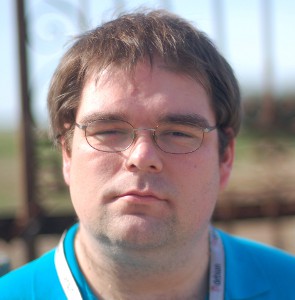
Steve McIntyre has been contributing to Debian since 1996, 2 years before I joined! But I quickly stumbled upon Steve: in 1999, he was struggling with getting his debian-cd script to produce 2 ISO images (it was the first time that Debian did no longer fit on a single CD), I helped him by rewriting debian-cd with a robust system to split packages on as many ISO images as required. I remember those times very well because Steve was very supportive of my efforts and it was a real pleasure to get this done. His friendly nature probably also explains why he got elected Debian Project Leader twice! Anyway, enough history, check out his interview to learn more about the great work he s doing nowadays. My questions are in bold, the rest is by Steve. Raphael: Who are you? Steve: I m a professional software engineer, 37, living in Cambridge (England) with my new wife Jo. I studied for the EIST degree at the University of Cambridge, then (like many people here, it seems) I just forgot to go home again afterwards and settled here. I spent more of my study time playing with Linux than working on my degree, so I guess I m lucky that it worked and I found a career in that area! Raphael: How did you start contributing to Debian? Steve: During my time in college, I started hacking on software in my free time, using Slackware as my first Linux distribution from the middle of 1994. After encountering more and more problems with Slackware, I was encouraged by a number of friends to make the jump over to Debian and in October 1996 I did. The installation process back then was much harder than anything people see today, but after a long weekend I finally had my Debian system up and running. I was already one of the main upstream developers for the Mikmod music player at that time, so that very same weekend I applied to be a DD so I could maintain it in Debian too. Back then, the NM process was much simpler: I just mailed a key to Bruce and he set me up with an account almost immediately! I then found that Joey Hess had beaten me to it and already packaged Mikmod. Grrr! :-) Raphael: What s your biggest achievement within Debian? Steve: Without a doubt, my proudest achievement within Debian is being elected Project Leader for 2 years by the other developers. It s a great feeling to have earned the trust of your friends and peers, and also a great responsibility to go and help Debian where needed: talking to the press about Debian, assisting wherever problems crop up, etc. The DPL job is certainly a lot of hard work, and I have nothing but respect for anybody who volunteers for it.
It s a great feeling to have earned the trust of your friends and peers.
Elsewhere, I ve been leading the Debian CD team for years too, both doing most of the maintenance of the debian-cd package and producing and testing the regular installation CDs and DVDs that we ship to the world. Again, this is a time-consuming job but it needs doing and it s worthwhile. Raphael: You re currently employed by ARM. What are you working on and are they supportive of your Debian involvement? Steve: The situation within ARM is very interesting; I m employed in PDSW (Processor Division, SoftWare), a new group founded just a couple of years back to help improve the state of software on ARM. Most of the people in the group are working on Free Software at this stage (e.g. toolchains, browsers, Linux kernel), which is lovely. Some of the engineers have also been seconded into a new non-profit company Linaro, which is a collaboration between ARM and a number of other companies investing in core Linux software and tools for ARM-based CPUs. I m one of the ARM engineers in Linaro, and I m a Technical Architect in the Office of the CTO. My role includes looking at future projects for Linaro to help with (e.g. ARM servers), but for the last few months I ve been concentrating on the new armhf architecture in Debian, Ubuntu and elsewhere. armhf is a new architecture in Debian and Ubuntu terms, but it s not strictly a new type of hardware. Instead, it s a new ABI. We have two reasons for doing this work:
  1. It targets the latest version of 32-bit ARM CPUs (v7) and makes better use of the hardware, for better performance. Compare targetting i686 instead of i386, for example. We ll still support the older armel port for the foreseeable future for users with older hardware that can t run armhf.
  2. More importantly: we are standardising on the ABI / compiler options / hardware support for future users.
In the past, there has been a huge amount of specialisation (aka fragmentation) in the ARM Linux environment, and that worked OK for specialised devices that only ever ran the software shipped with them. ARM CPUs are now becoming more and more mainstream, so people will expect to be able to install generic software on their machines. That gives a requirement for a standard base platform, and armhf (arm-linux-gnueabihf in GNU triplet terms) is that standard that we are pushing in the community. Debian, Ubuntu, Fedora, Suse and others are all going to use this, making compatibility possible. I ve been working with a small team of people to make armhf happen, helping where needed: putting together build machines; patching Debian packages directly; discussing and fixing toolchain issues with Ubuntu folks; agreeing ABI specifications with people from Fedora; advising people from other distros bootstrapping their new ARM ports. ARM and Linaro are very supportive of this work, and it s been lovely being sponsored to work directly on Free Software like this. It s work that will directly benefit ARM and its partners (of course!), but it s also helping out more generally too: Debian QA work, cross-build support, bootstrapping efforts, multi-arch. More and more of the ARM market is driven by Free Software, and companies are acknowledging that. I should probably also mention that we re hiring ! :-) Raphael: What are your plans for Debian Wheezy? Steve: There are three main tracks here. Obviously, I m interested in seeing armhf release with Wheezy. We ve just been added to Testing last weekend, so that s going well. We ve got over 90% of the archive built now, and we re mopping up the remaining issues. I m the primary maintainer of cdrkit at this point, but I d prefer to have it go away. Xorriso and the associated software in libisoburn is almost capable of replacing all the aging cdrtools-derived software that we have in Debian, The only missing feature that I m aware of is creating the HFS hybrid filesystems that we use for installations on Mac systems. I ve been talking with the upstream folks about this for some time already, and I m hoping we can finish this soon enough that we can get it into Wheezy. Finally, I ve got the ever-growing wishlist of things for debian-cd. We ve got the beginnings of an automated test suite that Mart n Ferrari has written, but it needs integrating and improving. I want to help get regular weekly/daily/release debian-live builds running on the main CD build machine. There s work needed if we want to make good installation media for the new multi-arch world, too. The Emdebian people are asking for help making CD images The list goes on :-) Raphael: The ARM community seems to be very interested in multi-arch. Can you explain why? Steve: There are a number of reasons for ARM people to be interested in multi-arch; two really stand out for me:
This is potentially the killer app for multi-arch: simply install the libraries for the target architecture [ ], install a simple cross-gcc package [ ] and you re all set.
Raphael: What s the biggest problem of Debian? Steve: For me, Debian s biggest problem has been the same for a long time: we are forever short of enough people to do the work that we re trying to do. That might sound like a weird thing to claim when Debian is one of the largest Free Software projects on the planet, but it s more a statement of just how huge our goals are. Many of the largest things in Debian are developed or controlled by very small teams working very hard, and there s always a risk of losing people due to burnout in those situations.
We are forever short of enough people to do the work that we re trying to do.
Some of the tasks that should be easy given our large membership (e.g. large-scale packaging transitions) can often instead take a very long time. We are fortunate to have more people wanting to join in Debian s work all the time, but we also need to be careful to keep on promoting what we re doing and recruiting new contributors, encouraging them to get more and more involved in core work. Debian gets ever bigger in terms of the size and the number of packages we distribute; we re not currently matching that growth rate elsewhere. Raphael: What motivates you to continue to contribute year after year? Steve: This one is much easier to answer! The thing that first attracted me to Debian was the fact that I could help to develop it, help to decide how things could and should be done within it. Instead of being forced to accept what some corporation decided I could do with my computer, I could change the software to suit my needs and preferences. Alongside that, I could get involved with a strong community of similar people all over the world, all with their own strong opinions about how software should work. I joined in and found it was great fun and very rewarding. That hasn t changed for me in the intervening years, and that s why I m still around. I work on Debian because it helps me to get the OS that I want to use. It seems that lots of people around the world find it useful too, and that s awesome. :-) Raphael: Do you believe that Stefano Zacchiroli will be the first DPL who managed to stay 3 consecutive years on the seat? Would you like him to candidate again? Steve: To be honest, I would be very surprised if Zack stood again for DPL this year. He told me himself that he wasn t planning on it, and I can understand that decision. He s been an awesome DPL in my opinion, and I m glad that he took the job. But: it is also a very difficult and time-consuming task that would be enough to wear down anybody. If Zack does decide to stand again, I would support him 100%. But I know that we also have lots of other good people in Debian who would be ready to take up the challenge next. Raphael: Is there someone in Debian that you admire for their contributions? Steve: There are lots of people I admire in Debian, so many so that I almost don t want to list individuals here for fear of missing people out. But :-) Bdale Garbee has been an inspiration to many of us, for many years. He s technically excellent, a great friend to many of us, an endless source of sage advice and (last but not least) he has some wonderful stories to tell about his experiences over the years. On top of that, he s just cool. :-) Christian Perrier is another exceptional developer, in my eyes he s great at co-ordinating people in translations, working tirelessly to make this very important part of Debian work better and better with every release. He s also a really nice guy and we all love him. I also have to mention Joey Hess here, whether he likes it or not. *grin* He s been responsible for so many good things in Debian over the years, even if he did steal my first package Finally, the teams of people who make sure that Debian is always working: the security team and DSA. The rest of us can choose to take time off from Debian to go and do other things, but these people need to cover things every day. That s a major responsibility, and I salute them for taking on that challenge.
Thank you to Steve for the time spent answering my questions. I hope you enjoyed reading his answers as I did. Note that you can find older interviews on http://wiki.debian.org/PeopleBehindDebian.

Subscribe to my newsletter to get my monthly summary of the Debian/Ubuntu news and to not miss further interviews. You can also follow along on Identi.ca, Google+, Twitter and Facebook.

One comment Liked this article? Click here. My blog is Flattr-enabled.

4 January 2012

Russell Coker: Autism and a Child Beauty Contest

Fenella Wagener wrote an article for the Herald Sun about an Autistic girl who won the best personality award from the controversial new Australian children s beauty pageant [1]. The girl s mother is complaining that an Autistic girl shouldn t win a prize for personality and is critizing the pageant organisers. A beauty contest involves queuing, being quiet, appearing on stage, wearing cosmetics and unusual/uncomfortable clothes. It probably also involves having someone else assist with dressing and applying cosmetics (being touched by another person). These are all things which tend to be difficult or impossible for Autistic kids. So any girl who can get on stage wearing make-up can probably do whatever is required to avoid being obviously excluded from a personality prize. As any such prize has to be largely subjective I don t think it would ever be possible to prove that someone was the correct choice for the winner, it would merely be possible to prove that some candidates excluded themselves. But whether the girl deserved to win isn t the real issue here. I think that beauty pageants should be restricted to adults, merely entering a child in such a contest is bad enough, but making nasty public statements about a child is horrible. If other children made a Facebook page claiming that the girl in question didn t deserve to win a best personality prize it would probably be reported as cyber-bullying. I don t think that publishing the name or photo of the girl in question is in the public interest either. Many news sites that have picked up the story have shown the same lack of journalistic ethics so now the girl has some high traffic sites with her name linked to this story, it seems unlikely that anything good she might do in the near future will get a higher ranking for her name in search engines. So any time she searches for her name on Google (which most people do regularly) she will be reminded that her mother thinks she has some sort of defective personality because she is Autistic. High school is generally bad for almost everyone on the Autism Spectrum. Presumably any parent who would abuse their child by allowing such an article to be published would also send them to a regular school (as opposed to Home Schooling which is probably the only good option for Autistic kids in Australia). I m sure that the standard practice at every high school nowadays is that the kids all use Google to discover things to tease each other about. So in a few years the Herald Sun article will probably be the basis of a high school bullying campaign. The girl in question is only 9, so she s got another 6 or 7 years before she can legally leave her mother. In Australia 16 is the minimum legal age to live without parents and the police won t forcibly return runaway children who are almost 16. The Journalistic Code of Ethics Here is a link to the Australian Media Alliance code of Journalistic Ethics [2]. Section 8 includes Never exploit a person s vulnerability or ignorance of media practice . I think that publishing the name and photograph of a 9yo girl in a way that is likely to lead to bullying in a few years is a clear example of exploiting a vulnerable person. The code of ethics has a guidance clause which says Only substantial advancement of the public interest or risk of substantial harm to people allows any standard to be overridden . Even if it was a proven fact that a beauty pageant was issuing awards to unqualified children there would not be any substantial advancement of the public interest in publishing that. Beauty Contests are Evil The Australian has an article about the same beauty contest by Caroline Overington which quotes adolescent and child psychotherapist Collett Smart calling for government intervention [3]. Catherine Manning has written a good article explaining some of the reasons for opposing child beauty pageants [4]. The American Psychological Association has published a report on the Sexualization of Girls [5], they have lots of references to psychological research which gives a variety of reasons for opposing child beauty contests. IMHO each of the reasons alone should be sufficient to convince people that child beauty pageants are bad. Finally the pictures of contestants who are less than 10yo but made up to look like they are 20+ are rather disturbing. Related posts:
  1. Child Abuse and Censorship In Australia we are currently in the middle of a...
  2. Autism Awareness and the Free Software Community It s Autism Awareness Month April is Autism Awareness month, there...
  3. Autism, Food, etc James Purser wrote Stop Using Autism to Push Your Own...

1 January 2012

Russ Allbery: 2011 Book Reading in Review

For the year of 2011, I finished and reviewed 60 books. This is a huge milestone for me; it's the first time since the second year I started doing this that the number of books I read actually increased. This gives me more confidence that I've stabilized the year-by-year decline in my reading. I did that while substantially increasing the amount of time I spent enjoying video games, which was another major goal of the year. Only two books received a 10 out of 10 this year, one fiction and one non-fiction. The novel was Jo Walton's Among Others: the best book I read this year. It's a delightful look at the process of finding a place for oneself in the world and features one of the best protagonists that I've seen. The non-fiction book was Rory Stewart's The Prince of the Marshes, which means that both of Stewart's books that I've read have received 10 ratings. The Prince of the Marshes is his look at his time spent in the provisional government of Iraq after the overthrow of Saddam Hussein. I think it should be required reading for anyone expressing an opinion on what the US and other western powers should or should not have done in Iraq. It lays bare the difficulties, confusion, and frequent stupidity of going into someone else's country and trying to fix it, and I think seriously calls into question whether this sort of international intervention can ever work. Other fiction highlights of the year were Kelley Eskridge's Solitaire, a startling and deep look at identity and social connection, and Mira Grant's Feed, a zombie apocalypse story that completely overcame my deep dislike of zombie apocalypse stories. Feed should have won the Hugo in 2011, despite some unbelievable politics and a bit too much cheering for bloggers. This was the year for excellent protagonists, with all three of my top-rated fiction books featuring unique and memorable characters who left a deep and lasting emotional impact. The two other non-fiction standouts were both a bit dry, but if you have the patience and attention, they reward persistance. Richard Hofstadter's Anti-Intellectualism in American Life is a deserved classic that gave me an eye-opening perspective on the long history of interactions between intellectualism and populism in US politics and culture. David Levering Lewis's God's Crucible is a wonderful history of Islam as it related to Europe and filled in some large gaps in my knowledge of world and religious history. 60 books a year, or five books a month, feels like a comfortable and sustainable level, although I'm going to keep my formal goal at a book a week (52 in the year) to give myself some leeway to either get distracted by video games or by other projects. My reading did concentrate more than usual in science fiction and fantasy this year, and I'd like to add more mainstream fiction and more non-fiction. The full analysis includes some additional personal reading statistics, probably only of interest to me.

16 December 2011

Patrick Schoenfeld: Why Gnome3 sucks (for me)

When I started using Linux, I started with a desktop environment (KDE) and then tried a lot of (standalone) window managers, including but not limited to Enlightenment, Blackbox, Fluxbox and Sawfish. But I was never really satisfied as it felt as if something was missing.
It then came, that I became a user of a desktop environment again. Now I have been a GNOME user for at least five years.

Among the users of desktop environments, I'm probably not a typical user. In 2009 my setup drifted from a more or less standard GNOME 2.3 to a combination of GNOME and a tiling window manager, which I called Gnomad, as a logical continuation of something I've done for a long time since using computers: Simplifying tasks, which are not my main business.
I just didn't want to care about the hundred techniques to auto mount an USB stick or similar tasks, which are handed just fine by a common Desktop Environment. And I didn't want to care about arranging windows, because after all the arrangement of my windows was always more or less the same.

But there were rumors that GNOME3 significantly changed the user experience and I wanted to give it a try at some point in the future. This try was forced by latest updates in Debian unstable, so I tested it for some days.

Day 1: Getting to know each other
My first day was GNOME3 was a non-working-day. When I'm at home I'm mostly using my computer for some chatting and surfing in the web, so I don't have great demands on the
Window manager/Desktop Environment.
Accordingly the very first experience with GNOME3 was mostly a good one, except some minor issues.
The first thing to notice in a positive way, is the activities screen. I guess this one is inspired by Mac Expos , but its nevertheless a nice thing, as it provides an overview over opened applications.
Apart from that, its possible to launch applications from there. The classical application menu is gone, but this one is better. One can either choose with the mouse or start typing the applications name and it will incrementally search for it and show it immediately. Hitting Enter is enough to launch the application.
Additionally, on the left, there is a launcher for your favorite applications.

This one lead to the first question mark above my head.

I had opened a terminal via this launcher and now wanted to open another terminal, after I switched to a different workspace.
So I just clicked it again and had to notice that GNOME developers and I have a different perception, of whats intuitive, because that click
led me back to the terminal on the first workspace. It took me some minutes to realize how I'm able to start a second terminal, by just right clicking on the icon and click on Open new window or similar.

Day 2: Doing productive work
The next day was a work day and I was on a customer appointment to do support/maintenance tasks. On this appointments my notebook is not my primary work machine and so I could softly go over to using GNOME3 when doing productive work.
I can say that it worked, although I soon started to miss some keystrokes which I'm used to. Like switching workspaces with Meta4+Number or at least switch workspaces by cycling through them with STRG+Alt+Left and Right Arrow Keys. While the first is a shortcut specific to my GNOmad setup, the latter is something I knew back from the good old Gnome2 days.
It just vanished from the default keybindings and did nothing. Appearently, as I learned afterwards, it has been decided to use the Up/Down arrow keys instead.

While for new users this will not be a problem at all, this is really hard for someone using GNOME for about 5 years as these are keystrokes one is really used to.

Day 3: Going mulithead

The appointment ended on the third day at afternoon, so when I came back into the office, I had the chance to test the whole thing in my usual work environment. At office I have my notebook attached to a docking station which has a monitor attached to it. So usually I work in dual head mode, with my primary work screen being the bigger external screen.

That was the point, where GNOME3 became painful.

At first everything was fine. GNOME3 detected the second monitor and made it available for use with the correct resolution. But things started to become ugly, when I actually wanted to work with it. GNOME3 decided that the internal screen is the primary screen, so the panel (or what has stood around from it) was on that screen. I can live with that, as thats basically the same with GNOME2, but the question was: How to start an application in a way that its started on the big screen?
I knew that I couldn't just use the keystrokes I'm used to, like Meta4+p, which were bound to launching dmenu in my GNOmad setup, as I knew that I was not running GNOmad at present. So I thought hard and remembered that GNOME had a run dialog itself, bound to Alt+F2. Relieved I noticed, that this shortcut had not gone away. I typed 'chromium' and waited. A message appeared telling me that the file was not found. Okay. No, wait. What? I did not uninstall it, so I guess it should be there.
I tried several other applications and all were told not to be available. Most likely this is a bug and bugs happen but this was really serious for me.

Another approach was to use the activity screen. At first I used it manually, by moving the mouse to there, launch chromium (surprise, surprise, it was still there) and moved it to the right screen, because I haven't found a shorter way to do that. There must be a better way to that, I thought and so I googled. Actually there are more then one better way to do it.

  1. There is a hidden hot spot in the corner of the second screen, too. If one finds and moves the mouse over it, the activity screen will open on the primary monitor and on the secondary monitor, but the application list is only one the first. One can now type what he wants to start, hit Enter and Tada its on the screen where my mouse is. Not very intuitive, in my opinion, and I really would prefer if I had the same level of choice on the second screen.
  2. I can hit Meta4 and its opening the activitiy screen. From there everything is the same as described above.

There were many other small quirks that disturbed me, like that the desktop has vanished away (I used it seldom, but it was irritating that it wasn't there anymore), shortcuts I were missing and so on. lot of this is really specific to me being used to my previous setup, but I can't help myself but I really need those little helpers.

So, at some point I decided to go back to GNOmad again, knowing that I will run into the next problem again, because I would have to permanently disable the new gnome3 mode and instead launch GNOME in the fallback mode. Luckily that is as easy as typing the following in a terminal

gsettings set org.gnome.desktop.session session-name 'gnome-fallback'

I quickly got this working again, but had to notice another cruel thing in GNOME3, that even disturbed my GNOmad experience. GNOME3 now binds to Meta4+p to a function, which switches internal/extern monitor setting, and now that is a real PITA.

From this point on another journey began, that eventually ended in switch to a Gnome/Awesome setup but this is a different story for a different time.

15 December 2011

Martin F. Krafft: The rating agencies' circus

This is not about any real or alleged might of (private) rating agencies you know, the ones roughening up the financial markets these days. Given the recent influx of news about downgrades of banks and nations, I simply start to wonder what will happen when the triple-A category empties out (which it will the last few nations will be ejected as a consequence of currency explosions (CHF) and forced bailouts of others (EU). Will the whole circus start anew? And if so, why do we even pay any attention?? Gosh do I wish that people started to form their own opinions again. NP: Fila Brazillia: Power Clown

10 December 2011

Patrick Schoenfeld: Migrating from blogspot to Movable Type

A while ago I decided to migrate my existing blogspot blog to an own domain and webspace again. My reasoning was mostly, that blogspot lacked some features, which I'd like to have in my blog.
Additionally, my requirements have changed a bit since I originally moved to blogspot and, last but not least, Blogspot was a compromise anyway.

So I started re-evaluating a possible software platform for my blog. In my numerous previous attempts to start blogging (there were several blogs of me in the internet since at least 2006), before I moved to Blogspot, I used Wordpress. But there were quiet some reasons against it, one of the biggest concerns being its security history. Also, while I worked a lot with PHP in the past years, I have developed a serious antipathy against software written in PHP, which I couldn't just ignore.

In the end, the decision fell on Movable Type, because its written in Perl, which is the language I prefer for most of my projects, because its features were matching my wishes (mostly) and because I heard some good opinions about it. Also it is used by my employer for our company blog.

So the next question was: How to migrate?

I decided to use Movable Type 5, although, at present, it seems not to be the communities choice. At least the list of plugins supporting MT5 is really short. Foremost there was no plugin to import blogger posts, which, after all, was the most important thing about the migration.
Luckily there is such a plugin for Movable Type and so I basically did the following:

  1. Install Movable Type 4
  2. Install the Blogger Import Plugin
  3. Import posts (it supports either the export file of blogger or directly importing posts via the Google API)
  4. Upgrade to Movable Type 5
  5. Check the result
Check the results, or: The missing parts

Obviously such an import is not perfect. Some posts contain images or in-site links. The importer is not able to detect that and honestly it would have a hard time to track that anyway.
So as soon as content is migrated, its time to look for the missing parts.

The process to find missing parts is basically very easy and common among the various missing parts:
Just search for your blogspot URL via the Search & Replace option in the Movable Type administration.

Now how to fix that? For links its quiet easy (although I forgot about them in the first run), as long as the permalinks have kept the same scheme.
In my case that is the case, since I decided to use the Preferred Archive option "Entry" in the blog settings for the new blog and the default (if there is an option, because I don't know)
in Blogspot. The importer does import the Basename of the document, so fixing links is just a matter of replacing the domain part of the URL.

For images its some more work. One has to get the images somehow and upload them in Movable Type. Eventually it then boils down to search and replace, but I decided to do that manually, since I only have a very low number of images in my posts so far.

After that I did everything else, which is not specific to the migration, like picking a template, modifying it to my wishes, considering the additions of plugin etc.
And here we are. There were some issues during the migration, which I haven't handled here. I will blog about them another time.

9 December 2011

Russell Coker: Some OWS Stuff

There is an interesting interview with Richard Wilkinson on ted.com about the damage to society that is caused by excessive inequality [1]. The conclusion is interesting, it seems that one part of the solution is to send the message that excessive greed is anti-social. The demonstrations against the greedy 1% seem likely to do some good in this regard. He also has a TED talk about this in which he shows that even the rich don t benefit from great inequality [2]. If nothing else the links between great inequality and high rates of mental illness and murder should convince people that they don t want to live in such a society. Buying Cameras Some of the radio news reports have claimed that some of the people in OWS camps in Australia are somehow unworthy because they have smart-phones and digital cameras. They seem to believe that people have to demonstrate great poverty to have standing to complain. The problem here is that owning a mobile phone is essential to getting employment in many industries, so the vast majority of people who are old enough to work but not near retirement age just have to own a mobile phone. Once you have decided to use a phone if you are going to use it a lot (which you probably will if living in a tent in a public place) then being on a contract usually makes economic sense. As the cheapest contracts include a free Android phone that means almost everyone who is old enough to be allowed out alone at night and young enough to be willing to sleep rough for a cause will have such a phone. A related complaint is about people owning good cameras. One reason for this is the fact that the huge number of cameras deters the police from using excessive force that s a good justification for spending money on a good camera. But then a good camera doesn t cost much nowadays, the specs on $100 cameras are quite impressive and a camera that costs $400 new will have features that are useful for professional photographers and cameras are even cheaper on ebay. In Australia social security payments for a single person who is out of work are as much as $486.80 per fortnight [3]. Therefore someone who is living on social security could buy a great camera if they saved up two weeks of social security payments or buy a similar camera on ebay for one week s worth of payments. When at a protest the widespread use of cameras is essential for protection against police brutality. It s worth saving up for a camera. But really they are missing the point, OWS is about representing ~99% of the population. Even people on the average income are suffering because of the greed of the rich. Is Australia such a Great Place? There have been claims that Australia is such a great place that OWS protests are not needed, supposedly we have a very egalitarian society. The ABS data shows that the level of inequality as expressed by numbers isn t that great when restricted to just income if you restrict the analysis to the top 20% [4]. The mean gross household income per week is $340 for the lowest quintile and $2,380 for the highest quintile giving a ratio of 1:7.0. But when you look at total household net worth it s $27,400 vs $1,720,700 a ratio of 1:62.8! The ratio for the richest 1% would surely be a lot greater but a quick search of abs.gov.au didn t turn up any statistics on them. Also Richard Wilkinson s analysis puts Australia quite close to the US. If the people who are in the top 1% earned their money, paid taxes, and didn t pervert the political process then there wouldn t be any OWS protests. The corruption in the political process and rent seeking by corporations isn t as bad here as it is in the US, but it s bad enough that we need some serious changes. Emily Manuel wrote an interesting article for Tiger Beatdown about the need for an Occupy movement in Australia [5]. Her description of the political problems in Australia is quite clear. But I wasn t convinced by her analysis which suggested that Australia is different from the US in any significant way. Really Comparing Income To properly compare income it doesn t make sense to compare a ratio of money earned, or disposable income which is often misleading due to disagreements about what is considered disposable. It s really about which of the things that you want to do can be achieved on your income. One possible way of comparing it is based on Maslow s hierarchy of human needs. The poorest 20% of households in Australia have a gross income of $340 per week. The ABS shows that the average of private rental prices in the 8 capital cities (where most of the population lives) is $218 per week [6]. Obviously the poorest households can t afford an average rent unless you have lots of people packed in one house. No matter how you look at the numbers it s going to be difficult for low income people to pay for rent and food. That puts them on the bottom level of Maslow s higherarchy. It seems to me that the benefits of increased income diminish and it becomes more of a contest to be richer than other people. Owning an old car is a significant benefit over having no car. Owning a new car has some real benefits over an old car. Luxury cars usually have safety features before they are introduced to cheaper cars, but apart from that the benefit of owning a luxury car is small. Owning multiple Rolls-Royces doesn t seem to provide any real benefit, someone who would want to do that would probably be better served by hiring a good psychologist. Update: In a comment Brendan Scott cited The Theory of the Leisure Class by Thorstein Veblen. That s a great point, and I ll have to read that book! I still maintain that owning two Rolls Royces is a symptom of psychological problems, people who can sort out such problems won t feel the need to try and prove that they have more money than others. Charles Stross has an interesting article about wealth disparity etc [7]. Being a sci-fi author he also explores what life might be like after Drexler boxes satisfy most of our current materiel needs. The Age has an informative article by Suzy Freeman-Greene contrasting the OWS protests in Melbourne which were broken up by police to the Catholic anti-abortion protests that have been going on for more than 20 years [8]. It seems that corporations aren t the only large organisations that are pwning democracy!

26 November 2011

Jonathan McDowell: All I need is a large enough white wall

I think I'm currently supposed to be out buying a TV at the moment. Or something else expensive. Instead I'm lying on the sofa listening to Whale and drinking tea. That's much better in my opinion, but it reminded me that I hadn't mentioned that I bought a projector. I had the loan of a projector for a while when I was in Belfast. It was a huge thing that made a lot of noise, but was pretty cool for watching films with. When I moved to the US I decided not to bother with a TV to start with - using my laptop did just fine for most things. Except films. They really benefit from a bigger screen. Especially if you want to watch them with someone else. So I started looking at pico projectors, because I wanted something small and cute that I could throw in a bag with my tiny laptop. At the time the best the pico projectors could do was 840x480, which I felt wasn't really that great. However back in January TI announced their DLP Pico HD chipset, offering a resolution 1280x800. I kept a look out for projectors using this to appear, and eventually, in July, Amazon claimed to have availability of the Vivtek Qumi. So I bought one. And I'm very happy with it. I'm not a heavy user, and there are some niggles, but it's small and does exactly what I want. In low light conditions it'll happily throw an image all the way across the room, which is more than it's rated at. There's a mini-HDMI connector on the back, so it's a doddle to plug it into my laptop using the supplied HDMI to mini-HDMI cable. The laptop auto-detects the device and extends the desktop appropriate, as you'd expect. It'll also do media playback itself - there's a USB host port and a micro SD slot on the back. This works ok, and the included remote means you can easily set the projector somewhere above your head and still be able to easily control it. Unfortunately the built in speakers are fairly useless. There's a 3.5mm socket for external speakers, but having to plug something else in detracts from the convenience factor of the built-in media player. Also my unit had the power switch installed upside down (the little red line indicating the power is on actually shows up when it's off), but that's the only complaint I've got about the build quality. There's a little neoprene case to store the thing in as well. So, er, yeah. I think I can continue to make do without a normal TV for a while longer and avoid the nightmare that I suspect are the shops on Black Friday.

24 November 2011

Matt Brown: How I m voting in 2011

It s general election time again in New Zealand this year, with the added twist of an additional referendum on whether to keep MMP as our electoral system. If you re not interested in New Zealand politics, then you should definitely skip the rest of this post. I ve never understood why some people consider their voting choices a matter of national security, so when via Andrew McMillan, I saw a good rationale for why you should share your opinion I found my excuse to write this post. Party Vote

I ll be voting for National. I m philosophically much closer to National than Labour, particularly on economic and personal responsibility issues, but even if I wasn t the thought of having Phil Goff as Prime Minister would be enough to put me off voting Labour. His early career seems strong, but lately it s been one misstep and half-truth after another, the remainder of the Labour caucus and their likely support partners don t offer much reassurance either. If I was left-leaning and the mess that Labour is in wasn t enough to push me over to National this year then I d vote Greens and hope they saw the light and decided to partner with National. Electorate Vote
I live in Dublin, but you stay registered in the last electorate where you resided, which for me is Tamaki. I have no idea who the candidates there are, so I ll just be voting for the National candidate for the reasons above. MMP Referendum
I have no real objections to MMP and I think it s done a good job of increasing representation in our parliament. I like that parties can bring in some star players without them having to spend time in an electorate. I don t like the tendency towards unstable coalitions that our past MMP results have sometimes provided. Of the alternatives, STV is the only one that I think should be seriously considered, FPP and it s close cousin SM don t give the proportionality of MMP and PV just seems like a simplified version of STV with limited other benefit. If you re going to do preferential voting, you might as well do it properly and use STV. So, I ll vote for a change to STV, not because I m convinced that MMP is wrong, but because I think it doesn t hurt for the country to spend a bit more time and energy confirming that we have the right electoral system. If the referendum succeeds and we get another referendum between MMP and something other than STV in 2014, I ll vote to keep MMP. If we have a vote between MMP and STV in 2014 I m not yet sure how I d vote. STV is arguably an excellent system, but I worry that it s too complex for most voters to understand. PS. Just found this handy list of 10 positive reasons to vote for National, if you re still undecided and need a further nudge. Kiwiblog: 10 positive reasons to vote National

Andrew McMillan: The Obligation to Vote

Could you not trust this man?Max and Fraser are very interested in this year's election. I guess political awareness starts at the first election after you turn 10, or so. They're both very curious about how mum and dad are voting, and while their mother will not tell (though we all have our suspicions :-) I don't see any reason not to discuss my political leanings with them.I've been what is commonly termed a 'floating' voter for most of my voting life. I imagine the politicians themselves might term people like me 'floaters', with an eye to the scatalogical implications. After all, their livelihoods are on the line!So, after reading this blog post I thought I might as well also share my personal voting plans with the world.

Could you not trust this man?

Max and Fraser are very interested in this year's election. I guess political awareness starts at the first election after you turn 10, or so. They're both very curious about how mum and dad are voting, and while their mother will not tell (though we all have our suspicions :-) I don't see any reason not to discuss my political leanings with them. I've been what is commonly termed a 'floating' voter for most of my voting life. I imagine the politicians themselves might term people like me 'floaters', with an eye to the scatalogical implications. After all, their livelihoods are on the line! So, after reading this blog post I thought I might as well also share my personal voting plans with the world. In the referendum I will be voting to retain MMP MMP is a straightforward system which gives a representation in parliament almost directly proportional to the proportion of votes for each party. It seems like a no-brainer to anyone aged five to twenty-five, and I figure it's important for their future that I vote this way. Some older folk seem shocked at the idea that a government might have to negotiate with representatives of large minorities in order to actually get legislation passed which would annoy one person in twenty. In voting for an alternative to MMP, should an insufficiency of fairness-loving voters visit the polls, I will be voting for STV. STV is a stupid alternative, because it's complicated and confusing, and so if we really end up going down to the wire against some less fair system than MMP it will be much easier to argue against STV, but I'm really hoping that doesn't happen. MMP has been a great enabler to produce a much more inclusive government for New Zealand since it's introduction. In the Mana Electorate I will be voting for Hekia Parata I've been disappointed with Kris Fa'afoi who seems to think that "communicating with the electorate" means "standing on street corners shouting into a megaphone", and I believe Hekia is much more aware of the issues, and a much more capable and experienced politician. My party vote will go to the Green Party It's pretty obvious that National don't need my party vote, and I've been disappointed with their performance on important environmental and economic issues in any case. In an ideal world they'd have to form a coalition with the Green Party in order to govern, but that seems unlikely unless every Labour and Green voter who can still draw breath turns up at the polling places while the National voters all sleep in and forget to vote. Unlikely. What I see from John Key seems increasingly like patronising gloss, and I can only imagine he has his hand behind his back with his fingers crossed. We're getting little real information in between the sound bites, for example the National Party has refused to answer the questions from Radio NZ. That can't be good. And what do the kids think? They tell me that they believe that these are good choices for the future. Fraser's fairly easily swayed by the opinions of those around him, but he's only 10 after all. Max does look at all the options, thinks about them and has interesting things to say. I don't think they're saying it just to please dad! Oh, and Max drew the politician for this post. I'll let you guess who he definitely doesn't trust...

23 November 2011

Jon Dowland: In response to Andrew Cowie

Andrew Cowie blogs about 'A good GNOME 3 Experience'. He writes
I think it s a bit odd not to expect that something that was widely advertised as being such a different user experience is different.
and
if they had gone and bought an Apple laptop with Mac OS X on it they would be perfectly reasonably working through learning how to use a new Desktop and not complaining about it at all. But here we are admonishing the GNOME hackers had the temerity to do something new and different.
I think Andrew's phrasing here is a bit disingeneous. Or perhaps he genuinely mistakes the frustration that has been felt by GNOME 3. I don't want to whine on too much, so I'll try to get this out of the way in one paragraph. F/OSS users are members of a community. There is inevitably a wall between the majority of community members and the blessed: the decision makers, the developers. The art of maintaining a good community is partly to do with making this wall as invisible as possible: encouraging participation, lowering the barrier for contributions; welcoming feedback; etc.1. The GNOME community have invested a lot into the GNOME 2 way of doing things, and GNOME 3, by breaking away from that so fundamentally, has devalued the community's investment. It screams: we don't want your panel widgets! We don't want your themes! Your working practices are wrong: this is the right way! GNOME 3 is opinionated software, and it's opinion differs from a large body of the GNOME community. The result? resentment. Remember: GNOME 3 is not just something new: it's the abrupt termination of something old, tried and tested. and hopefully that's the last time I need to vent about my GNOME 3 frustration. It's hear to stay, the question for the frustrated is: are you? Moving on Andrew goes on to recommend:
One thing I do recommend is mapping (say) CapsLock as an additional Hyper You do the mapping in: System Settings Keyboard Layout Layout tab Options..
I used to do this with GNOME 2, but I couldn't find how to do it on GNOME 3. Andrew's post gave me the important hint that it was still possible, but the precise location doesn't match: On my Fedora 16 / GNOME 3.2 system, it's System Settings Region and Language Layouts Options ". This is especially useful on my beloved UltraNav keyboard which lacks the Windows 95 keys. Sadly it does not work very well through various remote desktop tools: I get an inconsistent capslock state within VMs connected to via VNC. rdesktop seems ok.

  1. I have more to write about GNOME in this context in a future post.

22 November 2011

Steve Kemp: Goodbye mysql ..

Yesterday evening I updated my server to remove MySQL:
steve:~# dpkg --purge mysql-client-5.1 \
                      mysql-common     \
                      mysql-server-5.1 \
                      mysql-server-core-5.1 \
                      python-mysqldb        \
                      libdbd-mysql-perl     \
                      libdatetime-format-mysql-perl
Until last month I had two database in use, one each for a pair of web-applications. As of now one is using redis - which I'm already using for my image hosting - and the other application is using SQLite. Until recently I had a high opinion of SQLite, although that has now been downgraded a little, it is still a thoroughly excellent piece of software. I was just surprised at little things it was missing, to the extent I had to rewrite my applications SQL. Still one less service is a good thing, and the migration wasn't so painful.. In more productive news I recently acquired a nice external flash - the Yongnuo YN-460 II is (very) cheap and cheerful, it can be fired remotely with my triggers so I've had a lot of fun with opportunistically taking pictures and experimenting with lighting. Most of the results are NSFW, but there are some other examples lurking around including the first time I managed to successfully capture a falling water-drop. (Not the best picture, not the most explicit effect, but fun regardless. I both can and will do better next time!)
Somebody recently asked me to write about "camera stuff under linux" and happily I declined. Why decline? Because there are so many good tools, applications, and utilities. (I use local tools for organisation and duplicate detection, rawtherapee for RAW conversion and GIMP for touchups). Having many available options is fantastic though, and something hard to appreciate for "newcomers" to Linux. (Yeah I waited 90 seconds - if I remembered to add -nojava - for Netscape Navigator to start, under X10, with 8Mb of RAM. Happier days are here. Sure DRM is bad, secure boot .. an open question, but damn we have it good compared to almost any previous point in time!)
ObQuote: "Yeah, obviously it is only a tactical party. I'm only having a party to eventually get sex." - Peep Show

Raphaël Hertzog: People behind Debian: Stefano Zacchiroli, Debian Project Leader

picture by Tiago Bortoletto Vaz, CC BY-NC-SA 2.0


It s been one year since the first People behind Debian interview. For this special occasion, I wanted a special guest and I m happy that our Debian Project Leader (DPL) Stefano Zacchiroli accepted my invitation. He has a difficult role in the community, but he s doing a really great job of it. He s a great mediator in difficult situations, but he s also opinionated and can push a discussion towards a conclusion. Read on to learn how he became a Debian developer and later DPL, what he s excited about in the next Debian release, and much more. Raphael: Who are you? Stefano: I m Stefano Zacchiroli, but I prefer to be called Zack, both on the Internet and in real life. I m 32, Italian, emigrated to France about 4 years ago. I live in Paris, and I find it to be one of the most gorgeous and exciting cities in the world. As my day job I m a Computer Science researcher and teacher at University Paris Diderot and IRILL. In my copious free time I contribute to Debian, and I m firmly convinced that doing so is an effective way to help the cause of Free Software. Besides, I find it to be a lot of fun! Raphael: How did you start contributing to Debian? Stefano: Flash back to 1999, when I was a 2nd year student in Computer Science at the University of Bologna. Back then in Italy it was uncommon for young geeks to get exposed to Free Software: Internet was way less pervasive than today and most computer magazines didn t pay much attention to GNU/Linux. Luckily for me, the professor in charge of the student lab was a Free Software enthusiast and all students machines there were running Debian. Not only that, but there was also a student program that allowed volunteers to become sysadmins after having shown their skills and convinced the director they were trustworthy. Becoming one of those volunteer Debian admins quickly became one of my top objectives for the year, and that is were I ve learned using Debian. The year after that, I got in touch with a research group that was to become the happy bunch of hackers with whom I would have done both my master and PhD theses. They were designing a new proof assistant. Most of the development was in OCaml and happened on Debian. OCaml was available in Debian, but many of the libraries we needed were not. So I approached the Debian OCaml Team offering to help. Before I realize what was going on I was (co-)maintainer of tens of OCaml-related packages. At some point I got told I think you should apply as a Debian Developer . So I did and in a couple of months I went through the New Member (NM) process, that was back then in its infancy. I still remember my happiness while reading the account created mail, the day after my 22nd birthday. I know the NM process went through some bad publicity in the past, but I m happy to see that nowadays the process can be as swift as it has been for me 10 years ago. Raphael: It s your second year as Debian Project Leader (DPL). Are you feeling more productive in the role? Do you fear to burn out? Stefano: I m feeling way more productive, no doubts. The task of the Debian Project Leader is not necessarily difficult, but it is a complex and scarcely documented one. It is also profoundly different from any other task that Debian people usually work on, so that experience doesn t help much in getting started. Before becoming effective as DPL one needs to get to know many people and mechanisms he is not familiar with. More importantly, one needs to set up a personal work-flow that allows to keep up with day-to-day DPL tasks (which are aplenty) as well as with urgencies (that tend to pop-up in the leader@debian.org INBOX at the least convenient time). Finally, one also needs to do proper traffic shaping and always retain enough motivation bandwidth to keep the Project informed about what is going on in DPL-land. Finding the right balance among all these ingredients can take some time. Once one is past it, everything goes way more smoothly. The above is why I m constantly encouraging people interested in running for DPL in the future to reach out to me and work on some tasks of the current DPL s TODO list. I swear it is not just a cheap attempt at slavery!. It is rather an attempt at DPL mentoring that could be beneficial: both to give future candidates more awareness of the task, and to reduce the potential downtime when handing over from one DPL to the next. Regarding burn out, I don t feel prone to its risk these days. If I look back, I can say that my contributions as DPL have been pretty constant in volume over time; my enthusiasm for the task, if anything, is on the rise. The effectiveness of my contributions as DPL are, on the other hand, not mine to judge. Raphael: If you had to single out two achievements where you were involved as DPL, what would they be? Stefano: I d go for the following two, in no particular order: OK, let me cheat and add a third one I m also proud of having been able to report to the Project my whereabouts as DPL, thoroughly and periodically, since the very beginning is first term. People annoyed by my reporting logorrhea now have all my sympathies. Raphael: Among the possible new features of Debian Wheezy, which one gets you excited most? Stefano: It s multi-arch, no doubt. Even though it is not a directly user visible change, it s a very far reaching one. It is also one of those changes that make me feel that moment of truth of coders, when you realize you are finally doing the right thing and ditching piles of ugly hacks.
It s multi-arch [ ] you realize you are finally doing the right thing and ditching piles of ugly hacks.
Raphael: If you were not DPL and could spend all your time on Debian, what project would you do? Stefano: I would sit down and do software development for Debian. It s impressive how many important and beneficial changes for Debian could be delivered by specific software improvements in various parts of our infrastructure. We tend to attract many packagers, but not so many people willing to maintain Debian infrastructure softwares like dak, britney, debbugs, the PTS, etc. Their maintenance burden then falls on the shoulders of the respective teams which are generally very busy with other important tasks. As a project, we seem to be more appealing to packagers than to software developers. That is a pity given the amount of exciting coding tasks that are everywhere in Debian. Part of the reason we are not appealing to developers is that we are not particularly good at collecting coding tasks in a place where interested developers could easily pick them up. It also takes quite a bit of inside knowledge to spot infrastructure bugs and understand how to fix them. I long for some spare hacking time to check if I m still good enough of a coder to hunt down longstanding bugs in our infrastructure, which have ended up being my pet peeves. I d also love to dive again into RCBW. It s less committing than package maintenance, more diverse and challenging, and also an immensely useful activity to get Debian releases done. Raphael: Martin Michlmayr is worried that there is so few paid opportunities around Debian. Do you agree with his sentiment, and if yes do you have ideas on how to improve this situation? Stefano: The idealistic me wishes Debian to be a community made only of volunteers that devote their free time to the Project. Oh, and that me also wishes Debian to be competitive with similar projects, no matter how many full-time employees others have! That is coherent with a view of society where everyone has a day job, but also engages in volunteering activities ensuring that public interest is pursued by people motivated by interests other than profit. But I do realize that for Free Software to succeed companies, employees, and salaries should all have a role. I admire projects that strike a good balance between volunteer and paid work. The Linux kernel is emblematic in that respect: many developers are paid by companies that have a commercial or strategic interest in Linux. Nevertheless volunteers contributions are aplenty and the Linux community gives a convincing impression that choices are driven by the community itself (or by its benevolent dictator) without money-driven impositions.
I do realize that for Free Software to succeed companies, employees, and salaries should all have a role.
Such an ecosystem does not exist around Debian. We do have a partner program that allows for it to happen, but we have very few partners with an interest in doing distribution development work. Like Martin, I m worried by this state of affairs, because it de facto means we lag behind in terms of available people power. In a community of volunteers, that might frustrate people and that is not good. To improve over the status quo the first step is to federate together small and medium companies that have a strategic interest in Debian and listen to their needs. I m already in touch with representatives of such companies that, in many cases, already employ Debian Developers to do some distribution work in Debian. We will be soon sending out a call to reach out to more such companies, but since we are discussing this, why waiting? If some of our readers here are representative of such companies, I encourage them to get in touch with me about this. Raphael: You know that the fundraising campaign for the Debian Administrator s Handbook is on good track but the liberation of the book is not yet assured. What do you think of this project? Stefano: I m happy about the project, to the point that I ve accepted writing a testimonial for it :-) . I m sad about the scarce availability of up to date and high quality (DFSG-)Free books about Debian and I welcome any initiative that might help closing that gap.
I m sad about the scarce availability of up to date and high quality (DFSG-)Free books about Debian.
Free Culture is a great offspring of Free Software and I m convinced we need to stand up against double standards in the two camps. Letting aside software-specific licensing details, the basic freedoms to be defended are the same. They are those freedoms that ensure that a reader is in full control of his book, pretty much as they ensure that a computer user is in full control of the software that runs on it. I m therefore proud that Debian has long resolved that the Debian Free Software Guidelines (DFSG) apply not only to software but also to books and other pieces of documentation. But the status quo implies that not only we have very few up to date, high quality books about Debian. It also implies that, at present, we have no such book that we can distribute in the Debian archive, showing off the Free Software (and Free Culture!) values we stand for.
Crowdfunding is considered to be a good mate for Free Culture, where the services model that applies to Free Software is more difficult to exploit. I so wish any luck to yours and Roland s initiative. A different matter is whether Debian, as a project, should endorse the initiative and actively campaign for it. As you know, I think it should not. While we do advertise general project donations, we don t do mission-specific fundraising campaign for Debian itself. Coherently with that, I don t think we should relay crowdfunding campaigns for 3rd parties, even when the result would be beneficial to Debian. Raphael: Is there someone in Debian that you admire for their contributions? Stefano: There are two classes of people that I particularly admire in Debian:
Thank you to Zack for the time spent answering my questions. I hope you enjoyed reading his answers as I did.

Subscribe to my newsletter to get my monthly summary of the Debian/Ubuntu news and to not miss further interviews. You can also follow along on Identi.ca, Google+, Twitter and Facebook .

7 comments Liked this article? Click here. My blog is Flattr-enabled.

17 November 2011

Raphaël Hertzog: People Behind Debian: Mark Shuttleworth, Ubuntu s founder

I probably don t have to present Mark Shuttleworth he was already a Debian developer when he became millionaire after having sold Thawte to Verisign in 1999. Then in 2002 he became the first African (and first Debian developer) in space. 2 years later, he found another grandiose project to pursue: bring the Microsoft monopoly to an end with a new alternative operating system named Ubuntu (see bug #1). I have met Mark during Debconf 6 in Oaxtepec (Mexico), we were both trying to find ways to enhance the collaboration between Debian and Ubuntu. The least I can say is that Mark is opinionated but any leader usually is, and in particular the self-appointed ones! :-) Read on to discover his view on the Ubuntu-Debian relationship and much more. Raphael: Who are you? Mark: At heart I m an explorer, inventor and strategist. Change in technology, society and business is what fascinates me, and I devote almost all of my time and wealth to the catalysis of change in a direction that I hope improves society and the environment. I m 38, studied information systems and finance at the University of Cape Town. My hearts home is Cape Town, and I ve lived there and in Star City and in London, now I live in the Isle of Man with my girlfriend Claire and 14 precocious ducks. I joined Debian in around 1995 because I was helping to setup web servers for as many groups as possible, and I thought Debian s approach to packaging was very sensible but there was no package for Apache. In those days, the NM process was a little easier ;-) Raphael: What was your initial motivation when you decided to create Ubuntu 7 years ago? Mark: Ubuntu is designed to fulfill a dream of change; a belief that the potential of free software was to have a profound impact on the economics of software as well as its technology. It s obvious that the technology world is enormously influenced by Linux, GNU and the free software ecosystem, but the economics of software are still essentially unchanged. Before Ubuntu, we have a two-tier world of Linux: there s the community world (Debian, Fedora, Arch, Gentoo) where you support yourself, and the restricted, commercial world of RHEL and SLES/SLED. While the community distributions are wonderful in many regards, they don t and can t meet the needs of the whole of society; one can t find them pre-installed, one can t get certified and build a career around them, one can t expect a school to deploy at scale a platform which is not blessed by a wide range of institutions. And the community distributions cannot create the institutions that would fix that. Ubuntu brings those two worlds together, into one whole, with a commercial-grade release (inheriting the goodness of Debian) that is freely available but also backed by an institution. The key to that dream is economics, and as always, a change in economics; it was clear to me that the flow of money around personal software would change from licensing ( buying Windows ) to services ( paying for your Ubuntu ONE storage ). If that change was coming, then there might be room for a truly free, free software distribution, with an institution that could make all the commitments needed to match the commercial Linux world. And that would be the achievement of a lifetime. So I decided to dedicate a chunk of my lifetime to the attempt, and found a number of wonderful people who shared that vision to help with the attempt. It made sense to me to include Debian in that vision; I knew it well as both a user and insider, and believed that it would always be the most rigorous of the community distributions. I share Debian s values and those values are compatible with those we set for Ubuntu.
Debian would always be the most rigorous of the community distributions.
Debian on its own, as an institution, could not be a partner for industry or enterprise. The bits are brilliant, but the design of an institution for independence implies making it difficult to be decisive counterparty, or contractual provider. It would be essentially impossible to achieve the goals of pre-installation, certification and support for third-party hardware and software inside an institution that is designed for neutrality, impartiality and independence. However, two complementary institutions could cover both sides of this coin. So Ubuntu is the second half of a complete Debian-Ubuntu ecosystem. Debian s strengths complement Ubuntu s, Ubuntu can achieve things that Debian cannot (not because its members are not capable, but because the institution has chosen other priorities) and conversely, Debian delivers things which Ubuntu cannot, not because its members are not capable, but because it chooses other priorities as an institution. Many people are starting to understand this: Ubuntu is Debian s arrow, Debian is Ubuntu s bow. Neither instrument is particularly useful on its own, except in a museum of anthropology ;)
Ubuntu is Debian s arrow, Debian is Ubuntu s bow.
So the worst and most frustrating attitude comes from those who think Debian and Ubuntu compete. If you care about Debian, and want it to compete on every level with Ubuntu, you are going to be rather miserable; you will want Debian to lose some of its best qualities and change some of its most important practices. However, if you see the Ubuntu-Debian ecosystem as a coherent whole, you will celebrate the strengths and accomplishments of both, and more importantly, work to make Debian a better Debian and Ubuntu a better Ubuntu, as opposed to wishing Ubuntu was more like Debian and vice versa. Raphael: The Ubuntu-Debian relationship was rather hectic at the start, it took several years to mature . If you had to start over, would you do some things differently? Mark: Yes, there are lessons learned, but none of them are fundamental. Some of the tension was based on human factors that cannot really be altered: some of the harshest DD critics of Canonical and Ubuntu are folk who applied for but were not selected for positions at Canonical. I can t change that, and wouldn t change that, and would understand the consequences are, emotionally, what they are. Nevertheless, it would have been good to be wiser about the way people would react to some approaches. We famously went to DebConf 5 in Porto Allegre and hacked in a room at the conference. It had an open door, and many people popped a head in, but I think the not-a-cabal collection of people in there was intimidating and the story became one of exclusion. If we d wanted to be exclusive, we would have gone somewhere else! So I would have worked harder to make that clear at the time if I d known how many times that story would be used to paint Canonical in a bad light. As for engagement with Debian, I think the situation is one of highs and lows. As a high, it is generally possible to collaborate with any given maintainer in Debian on a problem in which there is mutual interest. There are exceptions, but those exceptions are as problematic within Debian as between Debian and outsiders. As a low, it is impossible to collaborate with Debian as an institution, because of the design of the institution.
It is generally possible to collaborate with any given maintainer [ ] [but] it is impossible to collaborate with Debian as an institution.
In order to collaborate, two parties must make and keep commitments. So while one Debian developer and one Ubuntu developer can make personal commitments to each other, Debian cannot make commitments to Ubuntu, because there is no person or body that can make such commitments on behalf of the institution, on any sort of agile basis. A GR is not agile ;-) . I don t say this as a critique of Debian; remember, I think Debian has made some very important choices, one of those is the complete independence of its developers, which means they are under no obligation to follow a decision made by anyone else. It s also important to understand the difference between collaboration and teamwork. When two people have exactly the same goal and produce the same output, that s just teamwork. When two people have different goals and produce different product, but still find ways to improve one anothers product, that s collaboration. So in order to have great collaboration between Ubuntu and Debian, we need to start with mutual recognition of the value and importance of the differences in our approach. When someone criticises Ubuntu because it exists, or because it does not do things the same way as Debian, or because it does not structure every process with the primary goal of improving Debian, it s sad. The differences between us are valuable: Ubuntu can take Debian places Debian cannot go, and Debian s debianness brings a whole raft of goodness for Ubuntu. Raphael: What s the biggest problem of Debian? Mark: Internal tension about the vision and goals of Debian make it difficult to create a harmonious environment, which is compounded by an unwillingness to censure destructive behaviour. Does Debian measure its success by the number of installs? The number of maintainers? The number of flamewars? The number of packages? The number of messages to mailing lists? The quality of Debian Policy? The quality of packages? The freshness of packages? The length and quality of maintenance of releases? The frequency or infrequency of releases? The breadth of derivatives? Many of these metrics are in direct tension with one another; as a consequence, the fact that different DD s prioritise all of these (and other goals) differently makes for interesting debate. The sort of debate that goes on and on because there is no way to choose between the goals when everyone has different ones. You know the sort of debate I mean :-) Raphael: Do you think that the Debian community improved in the last 7 years? If yes, do you think that the coopetition with Ubuntu partly explains it? Mark: Yes, I think some of the areas that concern me have improved. Much of this is to do with time giving people the opportunity to consider a thought from different perspectives, perhaps with the benefit of maturity. Time also allows ideas to flow and and of course introduces new people into the mix. There are plenty of DD s now who became DD s after Ubuntu existed, so it s not as if this new supernova has suddenly gone off in their galactic neighbourhood. And many of them became DD s because of Ubuntu. So at least from the perspective of the Ubuntu-Debian relationship, things are much healthier. We could do much better. Now that we are on track for four consecutive Ubuntu LTS releases, on a two-year cadence, it s clear we could collaborate beautifully if we shared a freeze date. Canonical offered to help with Squeeze on that basis, but institutional commitment phobia reared its head and scotched it. And with the proposal to put Debian s first planned freeze exactly in the middle of Ubuntu s LTS cycle, our alignment in interests will be at a minimum, not a maximum. Pure <facepalm />. Raphael: What would you suggest to people (like me) who do not feel like joining Canonical and would like to be paid to work on improving Debian? Mark: We share the problem; I would like to be paid to work on improving Ubuntu, but that s also a long term dream ;-) Raphael: What about using the earnings of the dormant Ubuntu Foundation to fund some Debian projects? Mark: The Foundation is there in the event of Canonical s failure to ensure that commitments, like LTS maintenance, are met. It will hopefully be dormant for good ;-) Raphael: The crowdfunding campaign for the Debian Administrator s Handbook is still going on and I briefly envisioned the possibility to create the Ubuntu Administrator s Handbook. What do you think of this project? Mark: Crowdfunding is a great match for free software and open content, so I hope this works out very well for you. I also think you d find a bigger market for an Ubuntu book, not because Ubuntu is any more important than Debian but because it is likely to appeal to people who are more inclined to buy or download a book than to dive into the source. Again, this is about understanding the difference in audiences, not judging the projects or the products. Raphael: Is there someone in Debian that you admire for their contributions? Mark: Zack is the best DPL since 1995; it s an impossible job which he handles with grace and distinction. I hope praise from me doesn t tarnish his reputation in the project!
Thank you to Mark for the time spent answering my questions. I hope you enjoyed reading his answers as I did.

Subscribe to my newsletter to get my monthly summary of the Debian/Ubuntu news and to not miss further interviews. You can also follow along on Identi.ca, Google+, Twitter and Facebook .

32 comments Liked this article? Click here. My blog is Flattr-enabled.

8 November 2011

Jon Dowland: GNOME 3

Oh, boy. Where do I start I postulate that there exists something called the "UI Singularity". Those who spend too much time considering the optimal way to interact with computing devices eventually pass through this singularity and can no longer effectively communicate with those of us on the other side. At least that's one way to explain what seems to be happening to free-software desktop environments. From the outside, it would appear this happened to KDE with KDE 4, and now, unfortunately, it has happened to GNOME, with GNOME 3. I've had GNOME 3.0 running on my Debian laptop for a few months, which I have used casually. At work, we installed Fedora 15 (GNOME 3.0) on our 69-seat Linux lab over the summer, which I have used on occasion to achieve specific things. I haven't dared upgrade my main work machine yet. So, it could be argued that I haven't spent enough time immersed in the GNOME 3 experience to really judge it fairly. On the face of it, I wish 3 was an iterative development from 2, and didn't throw so many babies out with the bathwater. My casual use of it so far has not endeared it to me at all. In the interests of being fair, rather than deliver my opinion of GNOME 3 as it currently stands, I've decided to try and use it in anger for a while to truly see whether I can "get it". Now that we're past the start of term, I am attempting to use a lab-configured Fedora 15 machine as my main work environment. I'll run with this for a while, and then try a Fedora 16 instance (I need to consider whether we should move to F16 for the second semester anyway) to see what improvements GNOME 3.2 brings.

7 November 2011

Jo Shields: Bansheegeddon

It s seeming increasingly likely that reports regarding the future of Banshee, Tomboy, and the rest of the Mono stack in the default Ubuntu desktop install are accurate. Ubuntu 12.04 will likely be the first Ubuntu release since 5.10 not to ship with any Mono apps in the default install ending a run of 12 releases over 6 years. The decision seems to have come about during the default apps session at the Ubuntu Developer Summit just ended in Orlando, Florida. Prior to heavy vandalism, the only reasons cited for the change in the UDS session log are Banshee not well maintained and porting music store to GTK3 is blocked on banshee ported to GTK3 . Other reasons mentioned but not in the session logs are complaints that it doesn t work on ARM. I m using a lot of conjecture in this first paragraph because the news about the decision appeared on the blogosphere before anywhere else. The first many Banshee or Tomboy developers read about it was reading a flurry of activity on the Tweetosphere from the anti-Mono activists declaring victory. So first, a word on the cited reasoning. Banshee works fine on ARM, since Mono works fine on ARM. Xamarin, the company behind most upstream Mono work, earns their income almost entirely from ARM versions of Mono, running on the varied ARM implementations found in smartphones. Every major Banshee release is personally tested on my Genesi EfikaMX, an ARM system with a Freescale i.mx51 processor. I ve also demonstrated Banshee running in an Ubuntu chroot on my HP Touchpad, an ARM-based tablet. What is known is that Banshee has some problems running on Texas Instruments OMAP4 processors the target ARM platform for Canonical s ARM work. None of the Banshee upstream developers, Mono upstream developers, or Mono Ubuntu team has ever been able to reproduce the cited problems, since problems specific to an exact ARM chip are impossible to reproduce without the requisite hardware and none of us owns an ARM system matching Canonical s target. That Banshee is still a GTK+2 app is true. A port to GTK+3 is almost complete, but blocking on a single technical bug deep within GTK# s guts, which could be fixed by someone with sufficient knowledge of GTK+ semantics. Nobody with the required GTK+ knowledge has stepped forward with a fix at this point in time. As for the final point, that Banshee is not well maintained, this seems like a directed personal insult against the active and responsive Banshee maintainer, Chow Loong Jin, and upstream bug triager David Nielsen, in addition to the immeasurable hours contributed free of charge for the benefit of Ubuntu users by various other members of related Mono app and library teams, including myself. I need to stress at this point that my annoyance with this decision has nothing to do with the actual app changes. Keeping Tomboy and gbrainy, at a cost of about 25 meg of unsquashed disk space, is a hard argument to make compared with those two plus Banshee for 40 meg. Dropping gbrainy and Tomboy, and switching to Rhythmbox, will save about 30 meg of unsquashed space, all told.I m unconvinced that Rhythmbox is a technically superior app to Banshee several features which were gained by the first app swap will be lost again but that s another long tedious argument to be had. No, what has me deeply angered is the shambolic way the changes were made and announced. Significant accommodations were made by Banshee upstream in order to make life easier for Canonical to integrate Banshee into their OS. For one thing, that s why the Ubuntu One Music Store support is a core Banshee feature, not part of the third-party community extensions package. If Banshee was being considered for replacement due to unresolved technical issues, then perhaps it would have been polite to, I don t know, inform upstream that it was on the cards? Or, if Canonical felt that problems specific to their own itches required scratching, then is it completely beyond the realm of possibility to imagine they might have spent developer resources on bug fixing their OS and sending those fixes upstream? Or even and call me crazy providing access for upstream to specialized hardware such as a $174 Pandaboard to empower upstream to isolate and fix unreproducible bugs specific to Canonical s target hardware? And here s where it gets more astonishing for me Canonical paid money to ship one of the community-based packagers responsible for the stack, Iain Lane, to Orlando for UDS, and didn t think it was worth bothering to perhaps inform him hey, the stuff you work on is in danger of being axed from the default install, maybe you should go to this session . So I m not cross that the stuff I work on has been removed from the default install. I intend to continue working on it as I have for the last 4 years, through my work in Debian. No, why I m cross that I heard about it from fucking Boycott Novell. Regardless of your opinions regarding Banshee or its stack, if you read the above and don t see it as an abysmal failure of community engagement by a company whose community manager wrote a book on the damn topic, then there s something seriously wrong with your understanding of how community labour should be seen as a resource. Maybe someone at Canonical should try reading Jono s book. It s not a first-time offence, and this mail from a PiTiVi developer regarding changes in 11.10 makes for useful further reading. [edit] There is some worthwhile discussion going on on the ubuntu-desktop mailing list covering the technical issues surrounding the decision, I would suggest it s a good place for ongoing technical discussion.

6 November 2011

Michael Banck: 6 Nov 2011

I am currently sitting in the train to Goslar, where the German Conference on Cheminformatics will take place. As part of the Free Software Session, I will give a session on DebiChem. This is the first I attend this conference and I am looking forward to meet Noel O'Boyle and hopefully others from the community.

In light of this, I have packaged and uploaded RDKit and Cinfony over the last weeks and also updated the Debichem task pages, introducing a Cheminformatics Task at the same time. I feel we still need at least tasks for Chemical Education (to expose e.g. Kalzium more prominently), and possibly Protein Docking and Crystallography. So if you have experience/opinions in these fields (or want to propose other fields), drop me a mail or contact us at debichem-devel@lists.alioth.debian.org.

2 November 2011

Benjamin Mako Hill: Slouching Toward Autonomy

I care a lot about free network services. Recently, I have been given lots of reasons to be happy with the progress the free software community has made in developing services that live up to my standards. I have personally switched from a few proprietary network services to alternative systems that respect my autonomy and have been very happy both with the freedom I have gained and with the no-longer-rudimentary feature sets that the free tools offer. Although there is plenty left to do, here are four tools I'm using now instead of the proprietary tools that many people use, or that I used to use myself: In trying to switch away from proprietary services, I have found that there still a lack of good information comparing the different systems out there and giving folks advice on who might be able to help with things like setup or hosting. I really value hearing from other people about what they use and what they find useful but finding this information online still seems to be a struggle. The autonomo.us wiki seems like the natural place to host or summarize this discussion and to collect and share information useful for those of us slouching (or running) toward autonomy in our use of network services. I invite folks to get involved in improving that already useful resource. For example, this week, I spent a few hours researching free social bookmarking tools and produced a major update to the (already useful) social bookmarking page on the autonomo.us wiki. Of course, I can imagine lots of ways to improve that page and to collect similar information on other classes of network services. Please join me in that effort!

31 October 2011

Russell Coker: Links October 2011

Ron has written an interesting blog post about the US as a lottery economy [1]. Most people won t win the lottery (literally or metaphorically) so they remain destined for poverty. Tim Connors wrote an informative summary of the issues relating to traffic light timing and pedestrians/cyclists [2]. I have walked between Southgate and the Crown Casino area many times and have experienced the problem he describes many times. Scientific American has an interesting article about a new global marketplace for scientific research [3]. The concept is that instead of buying a wide range of research equipment (and hiring people to run it) you can outsource non-core research for a lower cost. Svante P bo gave an interesting TED talk about his work analysing human DNA to determine prehistoric human migration patterns [4]. Among other things he determined that 2.5% of the DNA from modern people outside Africa came from the Neandertals. Lisa wrote an informative article about Emotional Support Animals (as opposed to Service Animals such as guide dogs) for disabled people [5]. It seems that the US law is quite similar to Australian law in that reasonable accommodations have to be made for disabled people which includes allowing pets in rental properties even if such pets aren t officially ESAs. Beyond Zero Emissions has an interesting article about electricity prices which explains how wind power forces prices down [6]. This should offset the new carbon tax . Problogger has an article listing some of the ways that infographics can be used on the web [7]. This can be for blog posts or just for your personal understanding. Petter Reinholdtsen wrote a handy post about ripping DVDs which also explains how to do it when the DVD has errors [8], I haven t yet ripped a DVD but this one is worth noting for when I do. Miriam has written about the Fantastic Park ICT training for 8-12yo kids [9]. It s run in Spain (and all the links are in Spanish but Google Translation works well) and is a camp to teach children about computers and robotics using Lego Wedo among other things. We need to have more of these things in other countries. The Atlantic Cities has an interesting article comparing grid and cul-de-sac based urban designs [10]. Apparently the cul-de-sac design forces an increase in car use and therefore an increase in fatal accidents while also decreasing the health benefits of walking. Having lived in both grid and cul-de-sac based urban areas I have personally experienced the benefits of the grid based layout. Sarah Chayes wrote an interesting LA Times article about governments being taken over by corruption [11]. She argues that arbitrary criminal government leads to an increase in religious fundamentelism. Michael Lewis has an insightful article in Vanity Fair about the bankruptcy of US states and cities [12]. Ben Goldacre gave an interesting TED talk about bad medical science [13]. He starts with the quackery that is published in tabloid newspapers and then moves on to deliberate scientific fraud by medical companies. Geoff Mulgan gave an interesting TED talk about the Studio Schools in the UK which are based around group project work [14]. The main thing I took from this is that the best method of teaching varies by subject and by student. So instead of having a monolithic education department controlling everything we should have schools aimed at particular career paths and learning methods. Sophos has an interesting article about the motion sensors of smart phones being used to transcribe keyboard input based on vibration [15]. This attack could be launched by convincing a target to install a trojan application on their phone. It s probably best to regard your phone with suspicion nowadays. Simon Josefsson wrote a good article explaining how to use a GPG smart-card to authenticate ssh sessions with particular reference to running backups over ssh [16]. C ran wrote a good article explaining how to use all the screen space when playing DVDs on a wide screen display with mplayer [17]. Charles Stross has an informative blog post about Wall St Journal circulation fraud [18]. Apparently the WSJ was faking readership numbers to get more money from advertisers, this should lead to law suits and more problems for Rupert Murdoch. Is everything associated with Wall St corrupt?

28 October 2011

Lars Wirzenius: On the future of Linux distributions

Executive summary Debian should consider: Introduction I've taken a job with Codethink, as part of a team to develop a new embedded Linux system, called Baserock. Baserock is not a distribution as such, but deals with many of the same issues. I thought it might be interesting to write out my new thoughts related to this, since they might be useful for proper distributions to think about too. I'll hasten to add that many of these thoughts are not originally mine. I shamelessly adopt any idea that I think is good. The core ideas for Baserock come from Rob Taylor, Daniel Silverstone, and Paul Sherwood, my colleagues and bosses at Codethink. At the recent GNOME Summit in Montreal, I was greatly influenced by Colin Walters. This is also not an advertisment for Baserock, but since my of my current thinking come from that project, I'll discuss things in the context of Baserock. Finally, I'm writing this to express my personal opinion and thoughts. I'm not speaking for anyone else, least of all Codethink. On the package abstraction Baserock abandons the idea of packages for all individual programs. In the early 1990s, when Linux was new, and the number of packages in a distribution could be counted on two hands in binary, packages were a great idea. It was feasible to know at least something about every piece of software, and pick the exact set of software to install on a machine. It is still feasible to do so, but only in quite restricted circumstances. For example, picking the packages to install a DNS server, or an NFS server, or a mail server, by hand, without using meta packages or tasks (in Debian terminology), is still quite possible. On embedded devices, there's also usually only a handful of programs installed, and the people doing the install can be expected to understand all of them and decide which ones to install on each specific device. However, those are the exceptions, and they're getting rarer. For most people, manually picking software to install is much too tedious. In Debian, we've realised this a great many years ago, and developed meta packages (whose only purpose is to depend on other packages) and tasks (solves the same problem, but differently). These make it possible for a user to say "I want to have the GNOME desktop environment", and not have to worry about finding every piece that belongs in GNOME, and install that separately. For much of the past decade, computers have had sufficient hard disk space that it is no longer necessary to be quite so picky about what to install. A new cheap laptop will now typically come with at least 250 gigabytes of disk space. An expensive one, with an SSD drive, will have at least 128 gigabytes. A fairly complete desktop install uses less than ten gigabytes, so there's rarely a need to pick and choose between the various components. From a usability point of view, choosing from a list of a dozen or two options is much easier than from a list of thirty five thousand (the number of Debian packages as I write this). This is one reason why Baserock won't be using the traditional package abstraction. Instead, we'll collect programs into larger collections, called strata, which form some kind of logical or functional whole. So there'll be one stratum for the core userland software: init, shell, libc, perhaps a bit more. There'll be another for a development environment, one for a desktop environment, etc. Another, equally important reason, to move beyond packages is the problems caused by the combinatorial explosion of packages and versions. Colin Walters talks about this very well. When every system has a fairly unique set of packages, and versions of them, it becomes much harder to ensure that software works well for everyone, that upgrades work well, and that any problems get solved. When the number of possible package combinations is small, getting the interactions between various packages right is easier, QA has a much easier time to test all upgrade paths, and manual test coverage improves a lot when everyone is testing the same versions. Even debugging gets easier, when everyone can easily run the same versions. Grouping software into bigger collections does reduce flexibility of what gets installed. In some cases this is important: very constrainted embedded devices, for example, still need to be very picky about what software gets installed. However, even for them, the price of flash storage is low enough that it might not matter too much, anymore. The benefit of a simpler overall system may well outweigh the benefit of fine-grained software choice. Everything in git In Baserock, we'll be building everything from source in git. It will not be possible to build anything, unless the source is committed. This will allow us to track, for each binary blob we produce, the precise sources that were used to bulid it. We will also try to achieve something a bit more ambitious: anything that affects any bit in the final system image can be traced to files committed to git. This means tracking also all configuration settings for the build, and the whole build environment, in git. This is important for us so that we can reproduce an image used in the field. When a customer is deploying a specific image, and needs it to be changed, we want to be able to make the change with the minimal changes compared to the previous version of the image. This requires that we can re-create the original image, from source, bit for bit, so that when we make the actual change, only the changes we need to make affect the image. We will make it easy to branch and merge not just individual projects, but the whole system. This will make it easy to do large changes to the system, such as transitioning to a new version of GNOME, or the toolchain. Currently, in Debian, such large changes need to be serialised, so that they do not affect each other. It is easy, for example, for a GNOME transition to be broken by a toolchain transition. Branching and merging has long been considered the best available solution for concurrent development within a project. With Baserock, we want to have that for the whole system. Our build servers will be able to build images for each branch, without requiring massive hardware investment: any software that is shared between branches only gets built once. Launchpad PPAs and similar solutions provide many of the benefits of branching and merging on the system level. However, they're much more work than "git checkout -b gnome-3.4-transition". I believe that the git based approach will make concurrent development much more efficient. Ask me in a year if I was right. Git, git, and only git There are a lot of version control systems in active use. For the sake of simplicity, we'll use only git. When an upstream project uses something else, we'll import their code into git. Luckily, there are tools for that. The import and updates to it will be fully automatic, of course. Git is not my favorite version control system, but it's clearly the winner. Everything else will eventually fade away into obscurity. Or that's what we think. If it turns out that we're wrong about that, we'll switch to something else. However, we do not intend to have to deal with more than one at a time. Life's too short to use all possible tools at the same time. Tracking upstreams closely We will track upstream version control repositories, and we will have an automatic mechanism of building our binaries directly from git. This will, we hope, make it easy to follow closely upstream development, so that when, say, GNOME developers make commits, we want to be able to generate a new system image which includes those changes the same day, if not within minutes, rather than waiting days or weeks or months. This kind of closeness is greatly enhanced by having everything in version control. When upstream commits changes to their version control system, we'll mirror them automatically, and this then triggers a new system image build. When upstream makes changes that do not work, we can easily create a branch from any earlier commit, and build images off that branch. This will, we hope, also make it simpler to make changes, and give them back to upstream. Whenever we change anything, it'll be done in a branch, and we'll have system images available to test the change. So not only will upstream be able to easily get the change from our git repository, they'll also be easily verify, on a running system, that the change fixes the problem. Automatic testing, maybe even test driven development We will be automatically building system images from git commits for Baserock. This will potentially result in a very large number of images. We can't possibly test all of them manually, so we will implement some kind of automatic testing. The details of that are still under discussion. I hope to be able to start adding some test driven development to Baserock systems. In other words, when we are requested to make changes to the system, I want the specification to be provided as executable tests. This will probably be impossible in real life, but I can hope. I've talked about doing the same thing for Debian, but it's much harder to push through such changes in an established, large project. Solving the install, upgrade, and downgrade problems All mainstream Linux distributions are based on packages, and they all, pretty much, do installations and upgrades by unpacking packages onto a running system, and then maybe running some scripts from the packages. This works well for a completely idle system, but not so well on systems that are in active use. Colin Walters again talks about this. For installation of new software, the problem is that someone or something may invoke it before it is fully configured by the package's maintainer script. For example, a web application might unpack in such a way that the web server notices it, and a web browser may request the web app to run before it is configured to connect to the right database. Or a GUI program may unpack a .desktop file before the executable or its data files are unpacked, and a user may notice the program in their menu and start it, resulting in an error. Upgrades suffer from additonal problems. Software that gets upgraded may be running during the upgrade. Should the package manager replace the software's data files with new versions, which may be in a format that the old program does not understand? Or install new plugins that will cause the old version of the program to segfault? If the package manager does that, users may experience turbulence without having put on their seat belts. If it doesn't do that, it can't install the package, or it needs to wait, perhaps for a very long time, for a safe time to do the upgrade. These problems have usually been either ignored, or solved by using package specific hacks. For example, plugins might be stored in a directory that embeds the program's version number, ensuring that the old version won't see the new plugins. Some people would like to apply installs and upgrades only at shutdown or bootup, but that has other problems. None of the hacks solve the downgrade problem. The package managers can replace a package with an older version, and often this works well. However, in many cases, any package maintainer scripts won't be able to deal with downgrades. For example, they might convert data files to a new format or name or location upon upgrades, but won't try to undo that if the package gets downgraded. Given the combinatorial explosion of package versions, it's perhaps just as well that they don't try. For Baserock, we absolutely need to have downgrades. We need to be able to go back to a previous version of the system if an upgrade fails. Traditionally, this has been done by providing a "factory reset", where the current version of the system gets replaced with whatever version was installed in the factory. We want that, but we also want to be able to choose other versions, not just the factory one. If a device is running version X, and upgrades to X+1, but that version turns out to be a dud, we want to be able to go back to X, rather than all the way back to the factory version. The approach we'll be taking with Baserock relies on btrfs and subvolumes and snapshots. Each version of the system will be installed in a separate subvolume, which gets cloned from the previous version, using copy-on-write to conserve space. We'll make the bootloader be able to choose a version of the system to boot, and (waving hands here) add some logic to be able to automatically revert to the previous version when necessary. We expect this to work better and more reliably than the current package based one. Making choices Debian is pretty bad at making choices. Almost always, when faced with a need to choose between alternative solutions for the same problem, we choose all of them. For example, we support pretty much every init implementation, various implementations of /bin/sh, and we even have at least three entirely different kernels. Sometimes this is non-choice is a good thing. Our users may need features that only one of the kernels support, for example. And we certainly need to be able to provide both mysql and postresql, since various software we want to provide to our uses needs one and won't work with the other. At other times, the inability to choose causes trouble. Do we really need to support more than one implemenation of /bin/sh? By supporting both dash and bash for that, we double the load on testing and QA, and introduce yet another variable to deal with into any debugging situation involving shell scripts. Especially for core components of the system, it makes sense to limit the flexibility of users to pick and choose. Combinatorial explosion d j vu. Every binary choice doubles the number of possible combinations that need to be tested and supported and checked during debugging. Flexibility begets complexity, complexity begets problems. This is less of a problem at upper levels of the software stack. At the very top level, it doesn't really matter if there are many choices. If a user can freely choose between vi and Emacs, and this does not add complexity at the system level, since nothing else is affected by that choice. However, if we were to add a choice between glibc, eglibc, and uClibc for the system C library, then everything else in the system needs to be tested three times rather than once. Reducing the friction coefficient for system development Currently, a Debian developer takes upstream code, adds packaging, perhaps adds some patches (using one of several methods), builds a binary package, tests it, uploads it, and waits for the build daemons and the package archive and user-testers to report any problems. That's quite a number of steps to go through for the simple act of adding a new program to Debian, or updating it to a new version. Some of it can be automated, but there's still hoops to jump through. Friction does not prevent you from getting stuff done, but the more friction there is, the more energy you have to spend to get it done. Friction slows down the crucial hack-build-test cycle of software development, and that hurts productivity a lot. Every time a developer has to jump through any hoops, or wait for anything, he slows down. It is, of course, not just a matter of the number of steps. Debian requires a source package to be uploaded with the binary package. Many, if not most, packages in Debian are maintained using version control systems. Having to generate a source package and then wait for it to be uploaded is unnecessary work. The build daemon could get the source from version control directly. With signed commits, this is as safe as uploading a tarball. The above examples are specific to maintaining a single package. The friction that really hurts Debian is the friction of making large-scale changes, or changes that affect many packages. I've already mention the difficulty of making large transitions above. Another case is making policy changes, and then implementing them. An excellent example of that is in Debian is the policy change to use /usr/share/doc for documentation, instead of /usr/doc. This took us many years to do. We are, I think, perhaps a little better at such things now, but even so, it is something that should not take more than a few days to implement, rather than half a decade. On the future of distributions Occasionally, people say things like "distributions are not needed", or that "distributions are an unnecessary buffer between upstream developers and users". Some even claim that there should only be one distribution. I disagree. A common view of a Linux distribution is that it takes some source provided by upstream, compiles that, adds an installer, and gives all of that to the users. This view is too simplistic. The important part of developing a distribution is choosing the upstream projects and their versions wisely, and then integrating them into a whole system that works well. The integration part is particularly important. Many upstreams are not even aware of each other, nor should they need to be, even if their software may need to interact with each other. For example, not every developer of HTTP servers should need to be aware of every web application, or vice versa. (It they had to be, it'd be a combinatorial explosion that'd ruin everything, again.) Instead, someone needs to set a policy of how web apps and web servers interface, what their common interface is, and what files should be put where, for web apps to work out of the box, with minimal fuss for the users. That's part of the integration work that goes into a Linux distribution. For Debian, such decisions are recorded in the Policy Manual and its various sub-policies. Further, distributions provide quality assurance, particularly at the system level. It's not realistic to expect most upstream projects to do that. It's a whole different skillset and approach that is needed to develop a system, rather than just a single component. Distributions also provide user support, security support, longer term support than many upstreams, and port software to a much wider range of architectures and platforms than most upstreams actively care about, have access to, or even know about. In some cases, these are things that can and should be done in collaboration with upstreams; if nothing else, portability fixes should be given back to upstreams. So I do think distributions have a bright future, but the way they're working will need to change.

Next.

Previous.