Search Results: "gio"

24 November 2012

Russ Allbery: Review: Dune

Review: Dune, by Frank Herbert
Series: Dune #1
Publisher: Ace
Copyright: 1965
Printing: September 1990
ISBN: 0-441-17271-7
Format: Mass market
Pages: 537
The Atreides family, distant cousins to the imperial family, have ruled the planet of Caladan for twenty generations. Caladan is a wet farming world, comfortable and pleasant, but not horribly important. But House Atreides is feuding with House Harkonnen, and, at the start of Dune, that feud maneuvers Duke Leto into giving up his holdings and moving his family to take possession of Arrakis. Arrakis is a desert planet, previously controlled by Baron Harkonnen. It is unrelentingly hostile, home to smugglers and dangerous local desert dwellers called Fremen. But it's also one of the most important planets in the galaxy, since it's the sole origin of the chemical called melange, or spice. Spice permits a limited form of prescience, which allows the navigators of the Spacing Guild to successfully steer ships across the interstellar void. Arrakis's production of spice is what makes interstellar travel, and therefore all of interstellar civilization, possible. Dune is the story of Paul Atreides, son and heir to Duke Leto Atreides. His mother, Lady Jessica, is one of the Bene Gesserit, a secretive order of women devoted to mental and physical discipline and to the long-term genetic improvement of mankind. He is not supposed to exist; Lady Jessica was supposed to only bear a daughter of Leto. But he may be something special, the long-sought (but also dangerous) Kwisatz Haderach who can unite male and female Bene Gesserit powers. The Bene Gesserit take great interest in him from the start of Dune. More surprisingly, so do the Fremen of Arrakis; from the moment he arrives there, he seems to be fulfilling prophecies of theirs that are partly, but not entirely, ones planted by the Bene Gesserit long ago. The feud with the Harkonnens, the unstable place of Arrakis in galactic politics, the dreams of the Fremen and the Imperial ecologist on Arrakis of terraforming, Bene Gesserit plans, Paul's abilities, and the legends of the Fremen all combine in a complex mix of politics, battle, and clashes of culture. Dune is an acknowledged SF masterpiece, one of the best-known classics of the genre. It's usually found in short lists of the best SF novels ever written. It spawned five sequels by Frank Herbert (about which more in a moment), as well as numerous additional sequels and prequels by Kevin J. Anderson and Brian Herbert. It's been adopted for the screen twice, not to mention board games, video games, and numerous other projects. This is my second reading, the first in about twenty years, but the story was still immediately familiar from having seen films and having discussed and read about the universe. This is not science fiction in any strict sense. Dune is science fiction in the same way that Star Wars is: a futuristic gloss on top of power structures inspired by feudalism, heavily mixed with mysticism, mental powers, magic, and implausible but convenient science that creates the story effects the author wants. Both Bene Gesserit powers in general and Paul's abilities in particular are effectively magic. There is some hand-waving explanation of their ability to verbally control other people as taking advantage of specific pitches and intonations that people are vulnerable to, but it's effectively spell-casting (and is a direct inspiration for Jedi mind tricks). All of the mysticism (and there's quite a lot of it in Dune, including race memory, precognition, and even molecular transformation) resembles the Force from Star Wars more than anything scientific. Dune is epic fantasy told on a science fiction stage, complete with a young protagonist coming into his powers and dangerous and sometimes hostile mentors. What Dune gets right, and what has put it so high in the pantheon of great science fiction, is the world building. Herbert sets the story tens of thousands of years into the future of humanity and then effectively projects the feeling of deep history over everything in the novel. This is the kind of book that has appendices with more background information; more to the point, it's the kind of book where you may actually read them out of curiosity. Mankind has a vast interstellar empire (Herbert's universe, like Asimov's Foundation universe, admits no aliens) governed by a system akin to the early British monarchy. An emperor rules in balance with the Great Houses, who meet in a sort of parliament. But against both is a third force: the Spacing Guild, who maintains a monopoly over all interstellar travel. (And the Bene Gesserit form an underground, secretive fourth power base.) Herbert plays with vast swaths of time and great forces of history as well as very good epic fantasy and better than nearly all SF I've read. The detailed world-building is equally good. Nearly all of Dune takes place on the desert planet of Arrakis, which has a lovingly-described ecology and local culture built entirely around scarcity of water. (The details of that ecology are much of the plot and mystery of the book, so I won't spoil them further.) While I doubt the precise details hold up to close scientific scrutiny, this is an obvious precursor to the great ecological stories of later SF, such as Kim Stanley Robinson's Mars trilogy. The details all feel right and hang together in satisfying ways, while also generating the great Sand Worms of Arrakis, a key ingredient in several of the best set pieces in the history of SF. This is the sort of book where the fascinating details and discoveries about the world do as much to keep one turning the pages as the plot, although the plot is also satisfyingly twisty and tense. Unfortunately, Dune doesn't get everything right. The amount of mysticism involved is a bit much, and at times the drug-trip mystical experiences of viewpoint characters turn into excessively purple prose and nearly incomprehensible descriptions. Those mystical experiences also involve race and genetic memory, a concept that's just scientific enough to be unbelievable. A few of the other scentific cheats are also rather blantant; for example, Herbert constructs an elaborate, artificial technology of shielding that seems designed primarily as an excuse to add sword combat to a futuristic story, and I have always struggled to suspend disbelief about the way lasers and shields interact in Dune. The Spacer Guild's monopoly on interstellar travel can be explained; their monopoly on local orbital space, or even the high stratosphere, both vital to allow certain things on Arrakis to remain secret, are much more dubious. Herbert mostly doesn't try to explain these things, and as with Star Wars the less explained the cheats are, the better they work as part of the story. But the technological background doesn't hold up against much examination. Worse, for me, is the general quality of the writing. Herbert does some things very well, such as world-building, and avoids awkward infodumps. Characterization and pacing are both fairly solid; he does a good job with Paul and Jessica in particular, and I've always liked the Fremen. But he wants to put the reader in everyone's head, frequently by giving character thoughts as italicized dialogue, and to enable that he uses a perspective that I always find distracting. Most fiction is written in tight third person. This means that the viewpoint character for any given section of the book is referred to in the third person, like all the other characters, but the reader has special access to their thoughts and emotions. We get to know what they're really thinking and feeling, not just the impressions they give to others, while the non-viewpoint characters are shown only from external appearances and the thoughts of the viewpoint character. Some books hold to the same viewpoint character throughout, but more commonly books move between viewpoint characters at scene breaks to provide more angles on the book's events. First person, in which the story is told by a specific character as if they were telling a story or writing it down, is the most common alternative. Third person objective, in which we don't get any special insight into the internal thoughts of any of the characters, is less common but still unsurprising. Dune does not use any of those perspectives. Instead, Dune uses wandering third-person omniscient, in which we get the inner thoughts and emotions of a character in a scene and then a few lines later the inner thoughts and emotions of a different character. This is the sort of thing that may or may not bug you depending on how much you've read, how deep the expectations of perspective are ingrained, and how much you notice perspective. It drives me nuts. I subconsciously align with the viewpoint character of a section, and pay attention to the ways that authors indicate which character will be the viewpoint character at the start of a scene. Herbert's constant flitting from character to character makes me dizzy. We get the verbatim thoughts of everyone almost indiscriminately, making me feel like I'm randomly hopscotching through the scene. For me, this does two things: it hurts my ability to get engrossed in the story, since I'm constantly thrown out of my normal reading mode when the viewpoint unexpectedly shifts, and it makes the writing feel repetitive. One keeps hearing about the same thing from multiple perspectives, and at times the story bogs down in everyone's internal dialogues rather than showing character reactions and letting the reader draw their own conclusions. I think it tries for a cinematic perspective, but ends up making the story feel muddled. The other flaw, which I didn't notice originally but which leaped out at me during this re-read, is that Herbert's world-building uses quite a few stereotypes. The most notorious, and most widely discussed, is of course the Fremen. Herbert draws heavily on Arab and Islamic culture even beyond the obvious similarities of people living in a harsh, arid climate. He borrows some rather loaded terms and cultural markers, such as jihad, to construct a culture of potential religious fanatics. This is not all bad; the Fremen are clearly portrayed as the good guys, which is a refreshing change from more typical current portrayals of Islam. But it becomes clear that they have aligned their entire culture around influences from outside, and the whole plot of Dune can be fairly characterized as an instance of "what these people need is a white man." Paul (and Kynes before him) joins their culture as well, but Paul becomes a better native than the natives, while simultaneously bringing his outside perspective. It's the sort of plot that is more widely noticed today than it would have been in 1965. Another major example of this, and one that I found more blatant, is that Herbert turns the Harkonnen into hissable, one-sided villains and uses some nasty stereotypes to do it. The insane torturer is consistently and repeatedly described as effeminate, fat is used as a marker of moral inferiority and evil, and the primary villain is homosexual and prefers drugged young male slaves. Here too, this sort of characterization short-cut was more common in 1965, but it's not appealing and makes the (already rather camp) scenes set among the Harkonnen even less enjoyable. Less clear-cut is the way women are handled throughout Dune. I do have to give Herbert some credit, particularly for the era in which he was writing. There are powerful female characters in Dune, including both Jessica and Alia, who have their own independent power and successfully pursue their own agendas throughout. The effectively all-female Bene Gesserit is a major political power in the story and is treated by the other players with respect as well as fear. But it's hard not to also notice the general position of women as subservient to men, not only in the general culture of the Great Houses but also in the more positively-portrayed Fremen culture. Indeed, the subservience of women is even worse in Fremen culture, where they're treated like property and where being killed by a woman is a sign of shame. Again, Herbert deserves some credit for doing better than a lot of 1960s fiction, but the sexism fairy has still been at work here. None of these flaws change the fact that Dune is a masterpiece. Herbert brings together history, world building, ecology, politics, and a compelling coming-of-age story about a messiah figure into a fast-paced, sweeping epic with a thoroughly satisfying conclusion. I think they do make it a flawed masterpiece, but it's still one of those SF novels that everyone should read at least once. Sadly, it's also a masterpiece that I think has suffered from its own success in the form of sequels, prequels, and a ton of supporting material. This is one of the problems that truly excellent world building can lead to. Human history is fractal: any specific detail can be examined in more depth and will usually lead (provided that information is available at all) to even more fascinating detail. The best world building conveys that impression of depth. That's what Herbert achieves here with hints, notes, and asides: the sense that galactic history is a vast ediface with the same fractal complexity as real human history. It makes for a compelling background, but it also inspires people to dig into that background and flesh out all of the details the way that we do with human history. But this doesn't actually work; invented history created by one person simply cannot be fractal in the same way. Human history is endlessly complex because it was generated by the complex interactions of many people. Invented history is an illusion that hints at complexity by building the same surface, but one mind, or even a small number of minds, cannot generate the same depth. The result is that if one digs too deep, one removes that convincing surface and ends up with a mundane, simplistic, and unsatisfyingly fake set of events. I think that's what's happened with all of the supporting material that's been written around Dune since its original publication. Dune is of a piece, a single story that's deeply enjoyable on its own terms and leaves the reader with a satisfying impression of complexity. The systemic excavation of that complexity lessens it and reveals too much of the illusion. Yes, I want to know more about the Butlerian Jihad, but that's the point: the wanting is the sign of succesful crafting of imagined history. Reading the definitive account is more likely to leave me unsatisfied than to lead to the recursive curiosity that human history can create. The sequels to Dune written by Herbert himself are, for me, another matter. Some reviewers level the same criticism at them: that Herbert dives too far into background best left unexplored. But they have the advantage of moving forward, telling more of the story set off by Paul, and the end of Dune is a clear setup for a sequel. One of Paul's goals throughout most of the book has been left unaccomplished. I don't think Herbert dove too deep into his creation; rather, my problem with his sequels (all of which I've read, although it's been some years now) is that he took the story in a direction that I actively disliked and found painful to read. Regardless, the general consensus is that the sequels aren't as good as the original, and while Dune doesn't fully resolve its story, it's complete enough that it's possible to stop here. Stopping is the general recommendation, although I still may re-read and review the sequels at some point. Followed by Dune Messiah. Rating: 8 out of 10

17 November 2012

Craig Sanders: done

OK, I m finished my experiment. It s over now and I can break character . First, I have to offer special thanks to tshirtman for being the first to unambiguously exemplify one of my main points. well done! In case it s not blindingly obvious (as it should be), the reason for my post was that I was outraged by the spectacle of one fairly high-profile member of the linux community trying to rally support to shun and exclude another fairly high-profile member because a nightmare had upset her. WTF? Is that really all it s going to take to destroy someone s reputation and perhaps their career? even with the shunning target s own words available and archived to disprove the ridiculous straw-man mis-characterisations of what he actually said? Not one of the arguments against him actually addressed anything he said, they ALL attacked him for things he didn t say, for things that other people claimed he said. I was further outraged by seeing everyone who even suggested that questioning of stats (or, indeed, ANY claim of fact or evidence) may be, in some small way, a valid and reasonable thing to do get instantly put in their place and dismissed as Yet Another Rape Apologist. Are we supposed to be anti-science, anti-scientific method now? or are rape stats a special case like religion where we are just supposed to switch off our analytical brains and accept what we are told on faith, without question? Surely we are capable of better than that? i know we are capable of better than that. Or, at least, i used to know that. Now i m not so sure. In 2011, all it took was Ted Tso ( TT ) making some fairly reasonable statements about the need for any claimed evidence or statistics to be viewed skeptically and that dissenting research should also be considered and he was instantly vilified as a rape apologist . Sorry, but questioning extremely dodgy stats (that even in feminist circles are viewed more as ideological propaganda than as serious research) is NOWHERE NEAR SUFFICIENT to earn the label of rape-apologist. That is not how debate works you can t just refuse to engage with someone s point and simply accuse them of being the enemy for not agreeing 100% with whatever you say at least, not if you have any intellectual honesty or self-respect. (sure, some people are complete jerks and deserve to be told to FOAD in no uncertain terms but a) jerks like that are self-evident and obvious, and b) TT s participation in that thread was at all times civil and reasonable) But that thread is ancient history it was over and done with nearly two years ago.
In October this year, for reasons which are not at all clear, Valerie Aurora ( VA ) decided to revive the issue (which had been resolved back in 2011 with a resounding fuck no, we don t want misogynist shit or porn in our conferences from pretty much the entire linux community including near-universal support for improved anti-harassment policies both for linux.conf.au and for geek conferences in general) and use it to attack TT. And she did so by twisting his words and claiming in a post on The Ada Initiative blog that he said something which he didn t, that rape was impossible if both people were drunk enough . If he chose, he could quite easily win a libel case against her and TAI on that. It s not what he said, it s not even close to what he said, and VA is clearly too smart to honestly believe that it is what he said. In another post on her personal, blog she talks about how what he said was so terrible that it even now gives her nightmares, and that she can t bear the thought of working with him. Again, WTF? VA can say I had nightmares and was upset and furious and THAT is enough to justify a call to shun TT?? He didn t attack her, or threaten her (explicitly or implicitly), he was polite and civil. What he did was disagree with VA by referring to other research that disputed VA s preferred studies. I agree with and support many (perhaps most) of VA s and The Ada Initiative s aims, I certainly believe that linux and open source etc should be very welcoming and supportive of human diversity (including gender and sexuality, identity, religion, politics and so on), believe that it s a good thing that The Ada Initiative exists as part of that diversity welcome to be particularly supportive of women in geekdom. And i wholeheartedly agree that Linux leaders should not make public statements belittling and condoning rape BUT: a) I haven t seen one instance of that happening, ever and b) I find VA s choice of tactics here to be despicable. as i do when anyone else uses similar tactics, because they ARE despicable tactics. They are exactly the same as accusing someone of being a child pornographer for being against net censorship: You dared to disagree with me so I m going to accuse you of being a monster. (and, i must admit, the enthusiasm level of my support for The Ada Initiative is somewhat .diminished by this tactical blunder by the spokesperson and co-founder) There are far more deserving targets of VA s ire than TT. And there are far better ways for the Ada Initiative to achieve their aims.
Why? So why did I decide to comment when I knew that I was inevitably going to be accused of hating women and being a rape apologist? Mostly because I thought it would be gutless of me not to. Hardly anyone else had, and they quickly backed down under the accusations of misogyny and since I consider myself to be psychologically fairly strong, I felt that I am capable of wearing a little shit (or even a lot) for a while. In my egocentric fashion, I thought if I can t do then it s no wonder that no one else dares . And also because anyone who cared to make even the slightest effort to find out what my actual views on sexual harassment, rape, women s rights and numerous inter-related issues are can fairly easily see a very consistent record of the kinds of things I argue for and against, and my scathing responses to actual misogynists when they appear on lists that I participate in. they are not my kind of people. and even then, i hesitated. it s scary and intimidating to be putting yourself forward to be accused of being one of the things you hate. this is, of course, an instance of the chilling effect. So, I found the prospect scary, almost terrifying .and I can t think of a single person who has met me online or in real life who would even remotely describe me as being any kind of delicate or sensitive wall-flower. again, if i can t do it, it s no wonder no one else dares . so i clicked the Publish button. an ego is useful for some things. Also, I took VA s words but don t be silent as inspiration. In the process, i discovered why it is that some people just simply refuse to engage in rational discourse. I ve seen it many times from the other side, but i ve never experienced the seductive pleasure of indulging in it myself before there s a liberating freedom in just ignoring any and every point that someone makes and simply accuse them of being the enemy. You don t have to try to understand what they wrote, hell you don t even have to really read it you just need to quickly scan it for overall tone and if they don t seem like they re 100% supportive, you just accuse them of being the enemy or an apologist for the enemy. it s that fucking simple and easy. well, sort of easy. easy for some, perhaps. i personally found it extremely difficult a struggle to refrain from engaging, to remain in character (i m not much of an actor). especially when i kind of agreed with whoever was arguing against my experimental character or if i thought they made a good point. and even more so when i thought that some comments skirted a bit too close to being the kind of misogynist crap that i didn t want to tolerate having on MY blog. (i resolved that issue by just approving any reply that didn t squick me or that i could squint at and think hmmm borderline, give benefit of doubt ) but even though i don t like it, i can recognise the attraction it holds for some people.
Other thoughts: I m particularly disgusted by the men who intervene way too early without an explicit invitation or request for help or a clear need such as an immediate threat of violence in womens issues. Many or maybe even most may not realise it, but they are just taking over and asserting male strength and control by protecting women rather than giving them the support and space to discover and practice their own strength and their own voices. These uninvited interventions do not help women, they weaken and undermine them, they perpetuate dependence, they steal strength from the movement. It is patronising and enfeebling. But mostly, they just re-assert male dominance and are an attempt to make women s spaces more comfortable, more palatable, for men.(*) (it s also quite often very transparent self-serving and ingratiating behaviour from blokes who want to lay the groundwork for perhaps getting laid one day) IMO this goes far beyond a problem with men over-involving themselves in feminist causes i feel the same way for any relatively less-privileged group with a need to find their own voice and their own power they ll never find it if members of the privileged class (i.e. white males like me) just ride roughshod over the movement and speak FOR them rather then just silently lending their strength in support. For the most part, they (we) should just shut up and listen we already have more than enough opportunities to have our say. (*) yes, i m well aware of the difficulty in writing something like that paragraph as a member of a privileged class, without coming across as either self-hating or patronising or both. if i ve failed here, it s not for want of trying. done is a post from: Errata

11 November 2012

Gregor Herrmann: RC bugs 2012/45

again, not one of my best RCBW weeks. still, here's the short report:

9 November 2012

Gunnar Wolf: Road trip to ECSL 2012 in Guatemala

Encuentro Centroamericano de Software Libre! Guatemala! During a national (for us) holiday, so it's easy to go without missing too much work time! How would I miss the opportunity? Several years ago, I started playing with the idea of having a road trip Probably this was first prompted with the UK crew and the Three Intrepid Motorcycle Riders arriving by land to DebConf 9 I don't know. Fact is, I wanted to go to DebConf10 in New York by land, as well as to DebConf12 in Nicaragua. Mostly due to a lack of time, I didn't Although we did start making some longish trips. Of course, my desire to show Regina what Mexico is like also helped! So, up until a week ago, our (according to my standards) long distance driving experience included:
  • M xico Guanajuato Puerto Vallarta Guanajuato M xico, in early November 2011, for Festival de Software Libre and with Regina and our Blender friends Octavio and Claudia. Totalling almost 1900Km, mostly consisting of wide, toll highway.
  • M xico Xilitla San Luis Potos M xico, in April 2012, just for fun and for a nice short vacation, alone with Regina. Totalling almost 1200Km, but through Sierra Gorda de Quer taro, a very tough stretch of about 250Km which we did at about 50Km/h on average. Beautiful route for sure! We didn't originally intend to go through San Luis Potos , and it does not appear to make much sense, as it adds ~350Km to the total, but it was even quicker than going back by the same route and according to those who now, even faster than our planned route, via Tamazunchale and Ixmiquilpan!
  • M xico San Luis Potos Zacatecas Aguascalientes Guanajuato M xico, in May 2012, for Congreso Internacional de Software Libre, again with Octavio and Claudia. Totalling 1250Km, and following very good roads, although most of them were toll-free.
But there is always a certain halo over crossing a border, maybe more so in countries as large as Mexico. We convinced Pooka and Moni, and granted, with some aprehension, as we knew of some important security risks in the more rural areas we wanted to go through we decided to go to Guatemala. And, although we wanted to go with a bit more time, Real Life took its toll: We could not take more time than the intersection of what our respective jobs offered. So, here goes a short(?) recap of our six day long, 3200Km trip. Of course, we have a map detailing this. Mexico Veracruz I came to my office early on Wednesday (31-oct), and left with Regina around 10AM towards Veracruz. We agreed to meet there with Moni and Pooka, who would take the night bus, and continue together. Crossing Mexico City proved to be the longest obstacle We arrived to Veracruz already past 3PM, and spent a nice evening walking down the center and port of the city. Veracruz port can still be seen as part of central Mexico; I knew the road quite well. Veracruz San Andr s Tuxtla Catemaco San Cristobal de las Casas We met with our friends at the iconic Gran Caf de la Parroquia at 6:30AM. Had a nice breakfast with coffee, and by 7:30 we were heading south-west. The reason to have a road trip was to get to know the route, to enjoy the countryside So, given we "only" had to make 650Km this day, we took the non-toll road A narrow path stretching along the coastal plains of Veracruz, until Acayucan. Doing so, we also saved some money, as the equivalent toll road is around MX$300 (~US$25)! Veracruz is a hot state. We ended up all sweaty and tired by 19:00, when we reached San Cristobal. We had agreed not to drive at night, due to security issues, but fortunately there was quite a bit of traffic both ways between Tuxtla Guti rrez (Chiapas State capital, around 1hr from San Cristobal, where darkness got us) and our destination, so we carried on. Now, San Cristobal is a high city, almost as high as Mexico City (2100m), and being more humid, it was quite chilly. We went for a walk, and were convinced that at a later time, we had to stay for several days there. The city is beautiful, the region is breath-taking, there is a lot of great handicrafts as well, and it's overall very cheap. Really lovely place. San Cristobal de las Casas Cd. Cuauht moc La Mesilla Guatemala Once again, this day started early. We woke up ready to leave at 7AM, and not earlier because the hotel's parking didn't open earlier. After a very quick visit to San Cristobal downtown, to take some photos that were not right the night before, we took the road to Comit n, stopping just for some tamales de bola y chipil n for breakfast. Central Chiapas is almost continuously populated, differing from most of my experience in Mexico. It is all humid, and has some very beautiful landscapes. We passed Comit n, which is a much larger city than what we expected, went downhill after La Trinitaria, crossed a plain, and continued until hills started taking over again. We stopped in a very chaotic, dirty place: Just accross the border, where Ciudad Cuauht moc becomes La Mesilla. This border was basically what we expected: There is no half-official place to exchange money, so we had to buy quetzales from somebody who offered them on the street, at MX$2 per Q1 (where the real exchange should be around 1.50 to 1). While on the road, I was half-looking for exchange posts in Comit n and onwards, and found none (and being a festive day, they would probably be closed anyway). But we were expecting this, after all, and exchanged just the basic minimum: MX$600 (US$50, which by magic became Q300, US$40). The tramit consists of:
  • Spraying the car against diseases (which has a cost of Q18)
  • Each of us has to go through migration. Note, in case you cross this border: We didn't expressly cross Mexican migration, so officially there was no record of us going out. Be sure to go through migration to avoid problems at re-entry!
    Migration has no cost.
  • Customs. As we were entering by car, I had to purchase a permit for circulation. I don't remember the exact quote, but it was around Q150, and the permit is valid for 90 days.
  • That's it! Welcome to Guatemala!
La Mesilla is in Guatemala's Huehuetenango Department, and from all of the Departments we crossed until Guatemala city (Huehuetenango, Quetzaltenango, Totonicap n, Solol , Chimaltenango, Sacatep quez and Guatemala), this is the largest one. Huehuetenango is home to the Cuchumatanes mountain ridge. We found beautiful, really steep, really fertile mountains. It is plainly amazing: Mountains over 60 , and quite often full with agricultural use Even at their steepest points! The CA-1 highway is, in general, in very good shape. There are however many (many, many) speed bumps (or topes, in Mexican terminology. Or t mulos in Guatemalan), at least a couple at every village we crossed, not always painted. The road is narrow and quite winding; it follows river streams for most of the way. We feared it would be in much worse shape, from what we have heard, but during the whole way we found only three points where the road was unusable due to landslides and an alternative road was always in place when we needed it. After Totonicap n, the narrow road becomes a wide (four lane) highway. Don't let that fool you! It still goes through the center of every village along the road, so it's really not meant for speeding. Also, even though the pavement is in very good condition, it is really steep quite often. It is not the easiest road to drive, but it's (again) by far not as bad as we expected. We arrived to Guatemala City as dawn was falling, and got promptly lost. Guatemala has a very strange organization scheme: The city is divided in several zones, laid out in a swirl-like fashion. East-west roads are called Calle and North-south roads are called Avenida (except for zona 4, I think, where they are diagonal, and some are Rutas while the others are V as). I won't go into too much detail). Thing is, many people told us it's a foolproof design, and people from different countries understand the system perfectly. We didn't... At least not when we arrived. We got quite lost, and it took us around one hour to arrive to our hotel, at almost 19:00 Almost 12 hours since we left San Cristobal. Went for a quick dinner, and then waited for our friends to arrive after the first day of work of ECSL, which we missed completely. And, of course, we were quite tired, so we didn't stay up much longer. Antigua Guatemala On Saturday, ECSL's activities started after 14:00 so we almost-kidnapped Wences, the local organization lead, and took him to show us around Antigua Guatemala. Antigua was the capital of Guatemala until an earthquake destroyed it in the 1770s; the capital was moved to present-day Guatemala city, but Antigua was never completely abandoned. Today, it is a world heritage site, a beautiful city, where we could/should have stayed for several days. But we were there for the conference, so we were in Antigua just a couple of hours, and headed back to Guatemala. Word of caution: Going from Guatemala to Antigua, we went down via the steepest road I have ever driven. Again, a real four-lane highway... but quite scary! The main focus for this post is to give some roadtrip advice to potential readers... So, this time around, I won't give much detail regarding ECSL. It was quite interesting, we had some very good discussions... but it would take me too much space to talk about it! The road back: Guatemala Tec n Um n; Cd. Hidalgo Arriaga So, about the road back: Yes, we just spent three days getting to Guatemala City. We were there only for ~36 hours. And... We needed to be here by Tuesday morning no matter what. So, Sunday at noon we said goodbye to our good friends in ECSL and started the long way back. To get to know more of Guatemala, we went back by the CA-2 highway, which goes via the coastal plains Not close to the Pacific ocean, which we didn't get to see at all, but not through the mountains. To get to CA-2, we took CA-9 from Guatemala. If I am not mistaken, this is the only toll road in Guatemala (at least, the only we used, and we used some pretty good highways!) It is not expensive; I don't remember right now, but must have been around Q20 (US$3). Went South past Palin and until CA-2, just outside Escuintla city, and headed West. All of Escuintla and Suchitep quez it is again a four lane highway; somewhere in Retalhueu it becomes a two lane highway. We were strongly advised not to take this road at night because, as the population density is significantly lower than in CA-1, it can get lonely at times And there are several reports of robberies. We did feel the place much less populated, but saw nothing suspicious in any way. Something important: There are almost no speedbumps in CA-2! The terrain stayed quite flat and easy as we crossed Quetzaltenango, and only in San Marcos we found some interesting hills and a very strong rain that would intermitetntly accompany us for the rest of the ride. So, we finally arrived to the border city of Tec n Um n at around 16:30 Approximately four hours after leaving the capital. The Tec n Um n Cd. Hidalgo cities and border pass are completely different from the disorderly and dirty Cd. Cuauht moc La Mesilla ones. The city of Tec n Um n could be just a nice town anywhere in the country, it does not feel aggressive as most border cities I have seen in our continent. We stopped to eat at El pollo campero and headed to the border. In the Mexican side, we also saw a very well consolidated, big and ordered migration area. Migration officers were very kind and helpful As we left Cd. Cuauht moc, Regina didn't get a stamp of leaving Mexico, so technically she was ilegally out of the country (as she is not a national... They didn't care about the rest of us). The tramit to fix this was easy, simple, straightforward. We only paid for the fumigation again (MX$60, US$5), and were allowed to leave. Anyway, we crossed the border. There is a ~30Km narrow road between Cd. Hidalgo and Tapachula, but starting in Tapachula we went on Northwards via a very good, four lane and very straight highway. Even though we had agreed not to drive at night... Well, we were quite hurried and still too far from Mexico City, so we decided to push it for three more hours, following the coastline until the city of Arriaga, almost at the border between Chiapas and Oaxaca. Found a little hotel to sleep some hours and collapsed. Word of warning: This road (from Tapachula to Arriaga) is also known for its robberies. We saw only one suspicious thing: Two guys were pushing up their motorcycle, from which they had apparently fallen. We didn't stop, as they looked healthy and not much in need of help, but later on talked about this Even though this was at night, they were not moving as if they had just crashed; nothing was scratched, not the motorcycle and not their clothes. That might have been an attempt to mug us (or whoever stopped by). This highway is very lonely, and the two directions are separated by a wall of vegetation, so nobody would have probably seen us were we to stop for some minutes. Be aware if you use this road! The trip comes to an end: Arriaga Niltepec Istmo C rdoba M xico The next (last, finally!) day, we left at 6:30AM. After driving somewhat over one hour, we arrived to Niltepec, where a group of taxi drivers had the highway closed as a protest against their local government's tolerance of mototaxis. We evaluated going back to Arriaga and continue via the Tuxtla Guti rrez highway, but that would have been too long. We had a nice breakfast of tlayudas (which resulted in Pooka getting an alergic reaction shortly afterwards) and, talking with people here and there, were told about an alternative route by an agricultural road that surrounds the blockade. So, we took this road the best way we could, and after probably 1hr of driving at 20Km/h, finally came back to the main road. We planned on crossing the isthmus using the Acayucan-Juchit n road We were amazed at the La Ventosa ("the windy") area, where we crossed a huge eolic plant for electricity generation, so of course we got our good share of photos. From then onwards, not much more worth mention. Crossed the isthmus via a quite secondary road in not too good shape (although there is a lot of machinery, and the road will much likely improve in the next few months/years), then took the toll freeway along Veracruz until C rdoba. We stopped for a (delilcious and revigorizing!) cup of coffee in Hotel Zeballos, where Agust n de Iturbide signed with Viceroy Juan O'Donoj the treaties that granted Mexico the independence. Traveller, beware: When crossing between Puebla and Veracruz, there is a steep slope of almost 1000m where , you will almost always (except if it's close to noon) find very thick fog; taking the highway from C rdoba, this is in the region known as Cumbres de Maltrata. We had the usual fog, and just as we left it, a thin but constant rain that went on with us up until we got home. Crossed Puebla state with no further eventualities, and arrived to Pooka and Moni's house by 22:00. Less than one hour later, Regina and me arrived home as well. This was four days ago... and I have finally finished writing it all down ;-) Hope you find this useful, or if not, at least entertaining! If you read this post in my blog, you will find many pictures taken along the trip below (Well, if you are reading the right page, not in the general blog index...). If you are reading from a planet or other syndication service... Well, come to the blog! Dreamhost woes Oh, and... Yes, it sometimes happens: My blog is hosted at Dreamhost. This means that usually it works correctly... But sometimes, specially when many people request many nontrivial pages, it just gives an error. If you get an error, reload once or twice... Or until your patience manages ;-)

5 November 2012

MJ Ray: Seize the Media! @theBoyler @coopsutd

image

1 Angel Square

So when I arrived on Thursday (ten minutes early despite a cancelled train, thanks to help from the cooperative fellow traveller mentioned last post), I was in time to go to a workshop on media cooperatives led by @theBoyler. It wasn t what I expected. It seemed to concentrate on the opportunity presented by the current awful state of news media companies in many countries and the technology-driven changes to their businesses. For example, WordPress is a viable way to start online first, then move into print later. There are already news co-ops in places where there would be no local news media. The challenge well be how to overcome what I d call spoiling or scorched earth tactics from departing media companies. Some local news media owners are looking for a way out. One obvious one is to turn a local title into a minor variation on a regional-or-worse service or publication, maybe by selling it to a bigger media business. That loses some audience but many will put up with it, so it avoids creating an obvious gap in the market for more truly local reporting. Much else was covered and the audience suggested tons of examples. I m not sure we reached many firm conclusions, but there seem quite a few examples to learn from (Morning Star, taz, ) and Dave Boyle s work is continuing

2 November 2012

Bastian Venthur: Introducing The Art of Asking

Since October 2011 my flatmate and I where quite busy realizing a little pet project of ours called The Art of Asking. The ultimate goal is to visualize the world s opinion in an intuitive fashion and make it easy for everyone to play around with the data. The idea behind The Art of Asking is that users submit interesting questions which are answered by users around the world. But instead of showing only the boring result, we want to provide interesting insights and statistics about the answers given. For now the users can see the results of the question visualized by geographical regions. For example on the page for the question How are you today? you can see the interactive map with the pie chart. The map shows the average/dominating answer for each continent encoded by color, and the pie chart the distribution of the different answers for that region. If you move the mouse over a continent the pie chart updates and shows the distribution of answers for that continent. You can also click to zoom into the map to see the same for countries and regions. This allows you to investigate how the answers are distributed around the world. This is already quite nice and fancy to play around with, but of course we want much more. Right now we re working on a feature which will users allow to combine two arbitrary questions and see how the answers are related. This doesn t sound like much, but it is very addictive to crawl through the list of questions and find interesting correlations. Here is a little plot how it could look like (the data is from the actual data base of answers). For each possible combination of answers it shows the percentage of people who answered in that combination. Of course those plots only make sense when enough users answered for both questions you want to compare which is right now not very often the case, so I guess we ll roll out that feature sometime later when we have more data. But we have lots of ideas and are working on further ways to investigate the answers. Obviously one low hanging fruit for example would be the distribution of the answers over time. We ve been working for over a year now on this project in our spare time and we built it more or less from scratch. I wrote a small WSGI framework in Python and on top of that the WSGI application which runs the site. We use MongoDB for the storage of the data, uWSGI and nginx for the server, Jinja2 and Bootstrap for the HTML and D3.js for the visualization of the data, where Maci did a wonderful job realizing the interactive map and charts. We re running this site since July 2012 now and are already quite satisfied with the number of users, and the quality of the questions. But of course we could always use more (especially more answers). So if you want to try it out, go to theartofasking.com and fill out the blank spots on the map! We re happy about every answer and question we can get and are eager to hear your suggestions.

25 October 2012

Russ Allbery: Review: Passion Play

Review: Passion Play, by Sean Stewart
Publisher: Ace
Copyright: 1992
Printing: December 1993
ISBN: 0-441-65241-7
Format: Mass market
Pages: 194
Diane is a shaper: an empath, a sort of telepath, who sees emotions and the actions of others in the form of patterns and stories that she is nearly compelled to follow. She uses that skill as an investigator, a semi-official adjunct to the police who can read crime scenes and motives and hunt down criminals with uncanny ability. That makes her almost socially acceptable, but a shaper is still not something it's safe to be, something best kept hidden. Diane's world is one of theocracy, of dominance by aggressive religion, and even shapers working with the police are not exactly okay. This is Sean Stewart's first novel. He's since gone on to write many other books, one of which I've read and quite enjoyed (Nobody's Son) and another (Galveston) that won several awards, although he's probably most famous for his work on the ilovebees ARG. Passion Play won a minor award itself: the Aurora for the best Canadian SF novel of the year. I found it surprising as a first novel, since it's sharp, focused, and very short. Usually first novels are stuffed to the gills with ideas and plot, as if material had built up for years and exploded in the first book. Passion Play doesn't have that problem; if anything, it errs on the side of telling too little. This is, at its heart, a mystery. A famous actor died in the middle of a play. It was possibly suicide, possibly an accident, and possibly murder; the events of the death are quite ambiguous. But the actor is very important in Redemptionist politics, which warrants an investigation, and then Diane's shaper instincts start finding a pattern and a story in the death. The rest of the cast and crew form the obvious set of suspects, and have the normal mystery novel variety of flaws, foibles, strong personalities, and possible motives. I'm not much of a mystery novel reader, and to be honest I had some trouble tracking all of the characters and remembering Diane's suspicions about each one. But the details of the mystery are less important to this book than Diane herself. Shapers are not exactly stable. The patterns they see are all-consuming, the experience of others' strong emotions acts like a sort of drug, and shapers can burn themselves out. They can fall into a spiral of seeking stronger and stronger emotions until they can't feel anything at all. That's the core conflict of the book: Diane is slowly losing herself. She has a tenuous existence at the outskirts of a society that has inculcated her with an inflexible set of religious beliefs and an uncompromising attitude towards law and justice, but it's not a stable existence, she knows it, and she doesn't know what to do about it. She knows that the pattern of this particular death is deep and powerful, but she can't stay away from it. This is an unusual, and sometimes disturbing, focus for a story. It's risky, unconventional, and doesn't quite work. I think some of the failure is because of first novel problems, but most of it is due to character problems. In the first novel problems category, Passion Play is a bit too choppy and a bit too disjointed. I think Stewart was trying hard to keep the story focused, fast-moving, and tight, but the introduction of the world background is not particularly smooth, and Diane's first-person account of her emotional state is a bit too labored. The plot wants to build in a smooth arc towards its climax, but the writing and scene-setting jerks and jumps instead of flowing. But the larger problem for me is that there aren't enough interesting characters in this book; specifically, there aren't enough to show all sides of Diane's character. Stewart tries, by introducing Jim early in the book to serve essentially as Diane's friend (and she's desperately in need of one), but he's too much of a non-entity. He serves some plot purposes, but he doesn't have a strong enough voice and character to hold his ground against Diane and balance her obsessive internal monologue. And, other than Jim, all the other characters in the book (with the possible exception of the murder victim) are playing bit roles. They're not bad characters, but they don't feel fully real to either Diane or to the reader. It's very easy to put them into boxes that they never break out of. This does support the feeling of narrative inevitability about some parts of the book, but I think it would have been stronger with more conflict, more open challenging of Diane's perspective. I would characterize Passion Play as interesting but flawed, and ultimately a minor work. I'm not sorry I read it, but neither would I have missed much if I'd gone through life without reading it. It has a few interesting ideas, and a bravely unconventional narrative resolution, but it felt choppy and off-balance. Unless you love Stewart's writing and want to read everything he wrote, or unless you (like me) has a quirk about reading all award winners, this is probably best skipped over in favor of Stewart's later work. Rating: 6 out of 10

6 October 2012

Lars Wirzenius: Obnam 1.2 (backup software)

I've just made release 1.2 of Obnam, my backup program. The NEWS file entry: Bug fixes: This release has been uploaded to my own apt repository on code.liw.fi, for squeeze and unstable. Due to the Debian freeze, I am not uploading this to Debian at this time, though some changes may eventually be uploaded there.

28 September 2012

Keith Packard: DRI-Next

Thoughts about DRI.Next On the way to the X Developer s Conference in Nuremberg, Eric and I chatted about how the DRI2 extension wasn t really doing what we wanted. We came up with some fairly rough ideas and even held an informal presentation about it. We didn t have slides that day, having come up with the content for the presentation in the hours just before the conference started. This article is my attempt to capture both that discussion and further conversations held over roast pork dinners that week. A brief overview of DRI2 Here s a list of the three things that DRI2 currently offers. Application authentication. The current kernel DRM authentication mechanism restricts access to the GPU to applications connected to the DRM master. DRI2 implements this by having the application request the DRM cookie from the X server which can then be passed to the kernel to gain access to the device. This is fairly important because once given access to the GPU, an application can access any flink d global buffers in the system. Given that the application sends screen data to the X server using flink d buffers, that means all screen data is visible to any GPU-accessing application. This bypasses any GPU hardware access controls. Allocating buffers. DRI2 defines a set of attachment points for buffers which can be associated with an X drawable. An application needing a specific set of buffers for a particular rendering operation makes a request of the X server which allocates the buffers and passes back their flink names. The server automatically allocates new buffers when window sizes change, sending an event to the application so that it knows to request the new buffers at some point in the future. Presenting data to the user. The original DRI2 protocol defined only the DRI2CopyRegion request which copied data between the allocated buffers. SwapBuffers was implemented by simply copy data from the back buffer to the front buffer. This didn t provide any explicit control over frame synchronization, so a new request, DRI2SwapBuffers, was added to expose controls for that. This new request only deals with the front and back buffers, and either copies from back to front or exchanges those two buffers. Along with DRI2SwapBuffers, there are new requests that wait for various frame counters and expose those to GL applications through the OMLsynccontrol extension What s wrong with DRI2? DRI2 fixed a lot of the problems present with the original DRI extension, and made reliable 3D graphics on the Linux desktop possible. However, in the four years since it was designed, we ve learned a lot, and the graphics environment has become more complex. Here s a short list of some DRI2 issues that we d like to see fixed. Proposed changes for DRI.Next Given the three basic DRI2 operations (authentication, allocation, presentation), how can those be improved? Eliminate DRI/DRM magic-cookie based authentication Kristian H gsberg, Martin Peres, Timoth e Ravier & Daniel Vetter gave a talk on DRM2 authentication at XDC this year that outlined the problems with the current DRM access control model and proposed some fairly simple solutions, including using separate device nodes one for access to the GPU execution environment and a separate, more tightly controlled one, for access to the display engine. Combining that with the elimination of flink for communicating data between applications and there isn t a need for the current magic-cookie based authentication mechanism; simple file permissions should suffice to control access to the GPU. Of course, this ignores the whole memory protection issue when running on a GPU that doesn t provide access control, but we already have that problem today, and this doesn t change that, other than to eliminate the global uncontrolled flink namespace. Allocate all buffers in the application DRI2 does buffer allocation in the X server. This ensures that that multiple (presumably cooperating) applications drawing to the same window will see the same buffers, as is required by the GLX extension. We suspected that this wasn t all that necessary, and it turns out to have been broken several years ago. This is the traditional way in X to phase out undesirable code, and provides an excellent opportunity to revisit the original design. Doing buffer allocations within the client has several benefits: Present buffers through DMA-buf The new DMA-buf infrastructure provides a cross-driver/cross-process mechanism for sharing blobs of data. DMA-buf provides a way to take a chunk of memory used by one driver and pass it to another. It also allows applications to create file descriptors that reference these objects. For our purposes, it s the file descriptor which is immediately useful. This provides a reliable and secure way to pass a reference from an underlying graphics buffer from the client to the X server by sending the file descriptor over the local X socket. An additional benefit is that we get automatic integration of data from other devices in the system, like video decoders or non-primary GPUs. The Prime support added in DRI version 2.8 hacks around this by sticking a driver identifier in the driverType value. Once the buffer is available to the X server, we can create a request much like the current DRI2SwapBuffers request, except instead of implicitly naming the back and front buffers, we can pass an arbitrary buffer and have those contents copied or swapped to the drawable. We also need a way to copy a region into the drawable. I don t know if that needs the same level of swap control, but it seems like it would be nice. Perhaps the new SwapBuffers request could take a region and offset as well, copying data when swapping isn t possible. Managing buffer allocations One trivial way to use this new buffer allocation mechanism would be to have applications allocate a buffer, pass it to the X server and then simply drop their reference to it. The X server would keep a reference until the buffer was no longer in use, at which point the buffer memory would be reclaimed. However, this would eliminate a key optimization in current drivers the ability to re-use buffers instead of freeing and allocating new ones. Re-using buffers takes advantage of the work necessary to setup the buffer, including constructing page tables, allocating GPU memory space and flushing caches. Notifying the application of idle buffers Once the X server is finished using a buffer, it needs to notify the application so that the buffer can be re-used. We could send these notifications in X events, but that ends up in the twisty mess of X client event handling which has already caused so much pain with Invalidate events. The obvious alternative is to send them back in a reply. That nicely controls where the data are delivered, but causes the application to block waiting for the X server to send the reply. Fortunately, applications already want to block when swapping buffers so that they get throttled to the swap buffers rate. That is currently done by having them wait for the DRI2SwapBuffers reply. This provides a nice place to stick the idle buffer data. We can simply list buffers which have become idle since the last SwapBuffers reply was delivered. Releasing buffer memory Applications which update only infrequently end up with a back buffer allocated after their last frame which can t be freed by the system. The fix for this is to mark the buffer purgable, but that can only be done after all users of the buffer are finished with it. With this new buffer management model, the application effectively passes ownership of its buffers to the X server, and the X server knows when all use of the buffer are finished. It could mark buffers as purgable at that point. When the buffer was sent back in the SwapBuffers reply, the application would be able to ask the kernel to mark it un-purgable again. A new extension? Or just a new DRI2 version? If we eliminate the authentication model and replace the buffer allocation and presentation interfaces, what of the existing DRI2 protocol remains useful? The only remaining bits are the other synchronization requests: DRI2GetMSC, DRI2WaitMSC, DRI2WaitSBC and DRI2SwapInterval. Given this, does it make more sense to leave DRI2 as it is and plan on deprecating, and eventually eliminating, it? Doing so would place a support burden on existing applications, as they d need to have code to use the right extension for the common requests. They ll already need to support two separate buffer management versions though, so perhaps this burden isn t that onerous?

17 September 2012

Petter Reinholdtsen: Debian Edu interview: Giorgio Pioda

After a long break in my row of interviews with people in the Debian Edu and Skolelinux community, I finally found time to wrap up another. This time it is Giorgio Pioda, which showed up on the mailing list at the start of this year, asking questions and inspiring us to improve the first time administrators experience with Skolelinux. :) The interview was conduced in May, but I only found time to publish it now. Who are you, and how do you spend your days? I have a PhD in chemistry but since several years I work as teacher in secondary (15-18 year old students) and tertiary (a kind of "light" university) schools. Five years ago I started to manage a Learning Management Service server and slowly I got more and more involved with IT. 3 years ago the graduating schools moved completely to Linux and I got the head of the IT for this. The experience collected in chemistry labs computers (for example NMR analysis of protein folding) and in the IT-courses during university where sufficient to start. Self training is anyway very important I live in the Italian speaking part of Switzerland, and the SPSE school (secondary) is a very special sport school for young people who try to became sport pro (for all sports, we have dozens of disciplines represented) and we are recognised by the Olympic Swiss Organisation. How did you get in contact with the Skolelinux/Debian Edu project? Looking for Linux / Primary Domain Controller (PDC) I found it already several years ago. But since the system was still not Kerberized and since our schools relies strongly on laptops I didn't use it. I plan to introduce it in the next future, probably for the next school year, since the squeeze release solved this security hole. What do you see as the advantages of Skolelinux/Debian Edu? Many. First of all there is a strong and living community that is very generous for help and hints. Chat help is crucial, together with the mailing list. Second. With Skolelinux you get an already well engineered platform and you don't have to start to build up your PDC and your clients from GNU/scratch; I've already done this once and I can tell it, it is hard. Third, since Skolelinux is a standard platform, it is way easier to educate other IT people and even if the head IT is sick another one could pick up the task without too much hassle. What do you see as the disadvantages of Skolelinux/Debian Edu? The only real problem I see is that it is a little too less flexible at client level. Debian stable is rocky and desirable, but there are many reasons that force for another choice. For example the need of new drivers for new PC, or the need for a specific OS for some devices that have specific software packages for another specific distribution (I have such a case for whiteboards that have only Ubuntu packages). Thus, I prepared compatibility packages educlient and eduroaming, hoping not to use them ;-) Which free software do you use daily? I have a Debian Stable PDC at school (Kerberos, NIS, NFS) with mixed Debian and Ubuntu clients. If you think that this triad combination is exotic... well I discovered right yesterday that Perceus has the same... For myself I run Debian wheezy/sid, but this combination is good only I you have enough competence to fix stuff for yourself, if something breaks. Daily I use texmacs, gnumeric, a little bit of R statistics, kmplot, and less frequently OpenOffice.org. Which strategy do you believe is the right one to use to get schools to use free software? I think that the only real argument that school managers "hear" is cost reduction. They don't give too much weight on quality, stability, just because they are normally not open to change. Students adapts very quickly to GNU/Linux (and for them being able to switch between different OS is a plus value); teachers and managers don't. We decided to move to Linux because students at our school have own laptop and we have the responsibility to keep the laptop ready to use; we were really unsatisfied with Microsoft since every Monday we had 20 machine to fix for viral infections... With Linux this has been reduced to zero, since people installs almost only from official repositories. I think that our special needs brought us to Linux. Those who don't have such needs will hardly move to Linux.

9 September 2012

Patrick Matth i: Hide process information for other users

Debian GNU/Linux Debian 7.0 (aka Wheezy) will be a general hardened distribution in my eyes. Not only that it now enabled hardened building of packages (see http://wiki.debian.org/Hardening), the Kernel team also backported with 3.2.20-1 the IMO very interesting hidepid option (already available in Wheezy since some weeks)! What is the job of hidepid ? hidepid is an new mount option for the procfs (/proc), with that you can hide processes and its information to other users, like other shell users and to web scripts. hidepid accepts three different values: Additionaly you can specifiy an user/group ID which is still able to look up the processes with the gid option. So if you want to hide all processes to other users, except root (uid=0) and in this example gid=1001 (some semi administrative user in this example) your /etc/fstab has to look like this: proc /proc proc defaults,hidepid=2,gid=1001 0 0 It was a good descision to backport this feature IMO, but also be careful, it *may* break programs. I did not found any server related application which will break with hidepid=2, but we had to adjust our Nagios monitoring to execute some process checks with another UID, since the nagios user itself could not see anymore, if process A and B is still running. UPDATE 1:
Since a few people asked (thanks for it) with hidepid=2 the process IDs are not invisible, they are unavailable:
$ ls /proc/1
ls: cannot access /proc/1: No such file or directory
$

27 August 2012

Michael Prokop: jenkins-debian-glue: Continuous Integration for Debian and Ubuntu made easy

jenkins-debian-glue is an open source project of mine which recently celebrated its first birthday and it s time to finally write about it. jenkins-debian-glue allows you to build Debian and Ubuntu packages directly from the Jenkins continuous integration system. It retrieves package sources from a version control repository, adjusts debian/changelog (handle version number + mention changes that took place) and builds according source and binary packages out of it. Its lintitan integration provides Q/A reports about the resulting source and binary Debian packages. It started as a small pet project of mine to get integration of Debian packaging inside Jenkins. I mainly had the needs for the Grml project in mind and starting with Grml 2011.12 every release (including also all the daily builds) was built using Jenkins since then. It turned out that my project would also be a perfect match for one of my customers, Sipwise GmbH. In December 2011 the sip:provider 2.4 was the first stable release that was built 100% through Jenkins and featuring jenkins-debian-glue. Thanks to special needs and the open source friendliness of Sipwise I could invest further time into the project. Recently the project got even some further drive thanks to interest by some fellow Debian Developers, most notably are the icinga, nagios-plugins, packages and the PostgreSQL in Debian Hackathon. Now if you re also interested in it: there s an automated deployment procedure available for your service to get started with the whole jenkins-debian-glue and Jenkins stack in less than 10 minutes, working just fine on Debian as well as Ubuntu. For further details please head over to jenkins-debian-glue.org or check out this 6:36min screencast (safe for work, no audio :) ): <iframe allowfullscreen="allowfullscreen" frameborder="0" height="315" src="http://www.youtube.com/embed/9asp2ZvH90A?autohide=1&amp;showinfo=0" width="560"></iframe> This embedded video doesn t work for you? Try heading over to YouTube.

19 August 2012

John Goerzen: Crazy Enough?

So far this year, I ve read somewhere in the neighborhood of 5000 pages. As I ve started to read more, I ve started to watch TV, movies, and Youtube less, because they are simply boring and shallow in comparison. War and Peace, in particular, deeply touched me. Lately I have been reading the Wheel of Time series, which has its own unique characteristics. Whether an epic (or super-epic, such as Wheel of Time) novel, or the Sherlock Holmes series, or nonfiction works, there is something magical about reading a book. We often see characters, real or fictional, that rise from obscurity to do great things for the world. We are transported in time and place to a time or place we will never be able to experience, perhaps because it is long past, or perhaps because it never was. But in any case, we can be inspired. I am reminded of this quote: The people crazy enough to think they can change the world are the ones that do. If someone told me that a street vendor in Tunisia would, in less than a year, cause the overthrow of 4 dictatorships and reform in a handful more, I would have, yes, thought that was crazy. And while Mohamed Bouazizi isn t a household name in much of the world, he managed exactly that. But not just him. It took crazy unarmed people to occupy Tahrir Square, some to die, for progress to be made in Egypt. This story is written all over history. People have done the impossible, have defied all odds, through sheer belief that they could. Civil rights have been granted due to the leaders we all know, but also due to the millions of marchers we don t. Changing the world doesn t have to mean that the world knows you. It just has to mean that you love the world, as Tolstoy pointed out:
Love hinders death. Love is life. All, everything that I understand, I understand only because I love. Everything is, everything exists, only because I love. Everything is united by it alone. Love is God, and to die means that I, a particle of love, shall return to the general and eternal source.
Whatever your stance on religion, this is a powerful quote. Sometimes particles of love might look crazy. But isn t it then that they are the most alive? Isn t it then that they are the greatest hindrance to death and despair?

24 July 2012

Gunnar Wolf: Ten theses in favor of free download of cultural goods on the Internet (by Enrique G. Gallegos)

This is one of the days where reading my everyday newspaper was worth more than just getting bitter at the news. I found this text in La Jornada, my usual newspaper. I liked it very much, and decided to translate it for a wider audience. Of course, if you can read Spanish, do yourself a favor and go to the original. It is not that the text is so easy to translate. And, after all, I'm not a native English writer. I'm trying to do a literal translation, even when disagreeing with the author. Ten theses in favor of free download of cultural goods on the Internet Enrique G. Gallegos Poet and philosopher. Currently a researcher in Universidad Aut noma Metropolitana-C
  1. Historical legacy. Criticists who promote the persecution of piracy and free downloads of cultural works from the Internet argue that the patrimonial rights have been wronged; they start off suposing that a cultural work is formed from a historical void, as if there was a "nothing" to begin with, and then a "something" appeared. Nothing more fallacious: All cultural products has its precedents, and thanks to these it generates part of its best forces.
  2. Opening towards the future. Human beings are projected into the future. As the main philosophies of the 20th century have explored, one of the singular characteristics of mankind is the ability to think and imagine the future. Products of culture are the best ways to think and project society, politics, love, hope, needs, failures A song, a poem, an essay, can trigger imaginary worlds with a transformative potential. To deny this to humanity with "patrimonial damage" as an argument is to mutilate man's temporal nature.
  3. Recognition of the present. Cultural works generate moments of reflection, criticism and pleasure; they can trigger actions demanding commitment, solidarity and strong indignation against injustice. If every cultural work is adscribed in some way to a historic tradition, and if cultural products anre necessary to imagine other possible worlds and open our future, it's not less true that they also allow us to recognize our present by making us more sensitive to others' ideas, sensations and emotions. Without culture, there is no present nor others' presence.
  4. Divulgation of the cultural heritage. If culture is "heritage of mankind", it should be also spread by any possible way. But not just spread, but actively sought for the biggest number of people to be able to effectively have access to it. In a potentially interconnected world, Internet is the most adequate world for it (despite its limitations). Therefore, penalizing free downloads means avoiding spreading it and restricting access to those groups who don't have enough economic resources.
  5. Preserving cultural heritage. If we agree that cultural works are heritage of mankind, we need to take every action needed to preserve them. But preserving culture does not only mean keeping the products in museums, galleries or never-polluted drawers; it rather means to keep them in the collective memory and in the flow of constant interpretations and appropiations. Said in other words, the genuine way to preserve culture is to allow universal access to cultural goods. That's why, holding that free copies and downloads of books, music, videos, etc. over the Internet are harmful, is an incompatible argument with the obligation to preserve cultural heritage.
  6. They are not goods. Cultural works are material and spiritual manifestations of mankind, concretions of its historicity; they are, also, expressions of emotions, ideas and projections of other lives and other worlds. That's why they cannot be equated to goods or inserted in patrimonialist logic. The market might want to cheat by giving a certain price to a painting by Orozco or auctioning a Baudelaire manuscript, but it will never be able to aprehend their true meaning as cultural works. And it's not that culture is not faluable, but taht its estimation criteria do not follow the rules of market, but those of the imponderable and unlimited.
  7. Price disproportion. Assuming we accept the possibility that intermediaries charge for the services they perform, the value of a book, record or movie should never exceed the daily wage of a worker or employee. But this ellection would only be one more option within the effective possibility that people opt to download or freely copy the cultural work. The final decision as to which media to go to should be a sovereign resolution of the culture-interested person.
  8. The principle of the most benefit. Even when copies and free downloads over Internet could generate a patrimonial "wrong" to third parties, the cultural benefit obtained by it will always be greater in as much that it carries out intensely the principle to foster, spread and access the cultural heritage of mankind. To think otherwise is to privilege the few over the many.
  9. The real evil is elsewhere. Murder, women- and children-trade, poverty and misery are the real evils that ache mankind. According to the United Nations, in 2010 there were 468 thousand murders in the world; the estimation is that 3500 million people live in poverty; in their 2009 inform, the UN found over 2400 victims of "people trade", kidnapped as sex slaves; in some regions in Africa, close to 30% of children suffer acute malnutrition and six people (between children and adults) die every day from hunger. That's why pretending that free download of cultural works is an evil is clearly a tricky and deceptive speech
  10. Against the intermediary-salesman. Culture does not need intermedieries that reduce cultural works to goods. Culture is too important to leavie it in the hands of salespeople that simplistly equate cultural goods with cakes. An intermediary of this kind will never understand the difference between a work of art and a disposable razor blade. What the world needs is more support from the government from every country to artists, creators and poets, as well as ensuring the conditions for the absolute mobility freedom for cultural works.

21 July 2012

Siegfried Gevatter: A gentle introduction to Zeitgeist s Python API

In this post I ll make a quick introduction by example on how to use Zeitgeist s Python API for good and profit. If you re interested in using Zeitgeist from C instead, see the libzeitgeist examples; to use it with C++/Qt, Trever s a web browser in 4 steps may be of interest. First things first In case you re not familiar with Zeitgeist, it may prove helpful to first read Mikkel s introduction to Zeitgeist post. If that s too much to read, just should know that Zeitgeist is an event log. Like the history in your browser, it keeps track of what websites you open at which point in time. It also keeps track of when you close them, and of what browser you used, since it s a system-wide service. Furthermore, it does the same for files, conversations, e-mails, and anything else you want to insert into it. So Zeitgeist is a database of events, and an event can be pretty much anything. But what does it look like? It s main attributes are the following: Additionally, each event has one or more subjects, which have the following attributes: Retrieving recent data Okay, so let s say you want to know the last song you ve listened to (if you have a Zeitgeist-enabled music player). It s a simple as:
from zeitgeist.client import ZeitgeistClient
from zeitgeist.datamodel import *
 
zeitgeist = ZeitgeistClient()
 
def on_events_received(events):
    if events:
        song = events[0]
        print "Last song: %s" % song.subjects[0].uri
    else:
        print "You haven't listened to any songs."
 
template = Event.new_for_values(subject_interpretation=Interpretation.AUDIO)
zeitgeist.find_events_for_template(template, on_events_received, num_events=1)
 
# Start a mainloop - note: the Qt mainloop also works
from gi.repository import GLib
GLib.MainLoop().run()
This may need some explaining. We start by importing the Zeitgeist client and some associated data structures (such as Event and Interpretation), and create an instance of the client. The ZeitgeistClient class is a wrapper around Zeitgeist s D-Bus API which not only makes it much nicer to use, but also makes it easy to install monitors (as we will see later) and provides convenient functionality such as automatic reconnection if the connection to the engine is lost. To query for the most recent song, we just need to create a template with the restrictions we want to impose and submit it to Zeitgeist using the find_events_for_template call. If you haven t read Mikkel s post yet, please do so, as it introduces the structure of events and subjects (in short: an event has a timestamp, some other properties, and one or more subjects representing the resources -files, websites, people - involved in the event). The Python API is inherently asynchronous (if for some reason you need a synchronous API, you may still use the lower level ZeitgeistDBusInterface class), so we need to define a callback function to handle the results we receive from the Zeitgeist engine. Finally, we need to create a main loop so the asynchronous functions can run.
Now this was a pretty simple example. Let s make it more interesting. One song isn t much, so let s get the 5 most recent songs. Also, now we want both songs and videos. The first part is pretty easy, we just need to change the num_events parameter. For the second extension, we have to change the event template. In fact, now we need two different event templates and the find_events_for_templates function, which takes an arbitrary number of event templates and ORs them. The result is as follows:
from zeitgeist.client import ZeitgeistClient
from zeitgeist.datamodel import *
 
zeitgeist = ZeitgeistClient()
 
def on_events_received(events):
    for event in events:
        print "- %s" % event.subjects[0].uri
 
tmpl1 = Event.new_for_values(subject_interpretation=Interpretation.AUDIO)
tmpl2 = Event.new_for_values(subject_interpretation=Interpretation.VIDEO)
zeitgeist.find_events_for_templates([tmpl1, tmpl2],
                                    on_events_received, num_events=5)
 
# Start a mainloop
from gi.repository import GLib
GLib.MainLoop().run()
This will work, but unless you re lucky you re likely to get some duplicate line. Why is this? Well, other than that you may have used the same file twice, don t forget that what you are requesting are actually events. If you ve started playing a given song, you probably also stopped playing it, so that s actually two of them (an AccessEvent and a LeaveEvent). Since this isn t what we want, we ll change the query a bit:
zeitgeist.find_events_for_templates(
    [tmpl1, tmpl2],
    on_events_received,
    num_events=5,
    result_type=ResultType.MostRecentSubjects,
    storage_state=StorageState.Available)
By requesting the most recent subjects, vs. the most recent events, we can filter out events with duplicate URI. See the ResultType documentation for other modes you can use. Note particularly the MostPopularSubjects result type. I also used the chance to introduce the storage_state parameter. This one will filter out events for files Zeitgeist knows aren t available (this mostly means online resources won t be shown if you don t have a network connnection; there s also support for handling external storage media, but because of problems with GIO this is currently disabled). Last but not least, the find_events_for_* methods also accept a timerange parameter. It defaults to TimeRange.until_now(), but you may change it to TimeRange.always() (if for some reason you re working with events in the future) or to any other time range of your choice. Here it s important to note that Zeitgeist s timestamps use millisecond precision.
For more advanced queries, you can use more complex combinations of events and subject templates. The rule to keep in mind here is that events are OR d and subjects are ANDed. Additionally, some field (actor, origin, mimetype, uri and current_uri) may be prefixed with an exclamation mark ( ! ) for NOT, or you may append an asterisc ( * ) to them for prefix search. You can even combine the two operators together. Here s an example of a template you could build:
subj1 = Subject.new_for_values(interpretation=Interpretation.SOURCE_CODE,
                               uri="file:///home/rainct/Development/*")
subj2 = Subject.new_for_values(uri="!file:///home/rainct/Development/zeitgeist/*")
tmpl1 = Event.new_for_values(interpretation=Interpretation.MODIFY_EVENT,
                             subjects=[subj1, subj2])
templates = [tmpl1]
In my case, this template would fetch a list of the source code files I modified most recently but excluding those related to the Zeitgeist project. Working with big sets of data In case you re trying to do something crazy, you may end up with a Zeitgeist query complaining that it exceeded the memory limit. You re not supposed to do that. Instead, we provide some methods for working with large collections of events.
from zeitgeist.client import ZeitgeistClient
from zeitgeist.datamodel import *
 
zeitgeist = ZeitgeistClient()
 
def on_events_received(events):
    for event in events:
        print '- %s' % event.subjects[0].uri
 
def on_ids_received(event_ids):
    print 'A total of %d source code files were found.' % len(event_ids)
    print 'Fetching the first 100...'
    zeitgeist.get_events(event_ids[:100], on_events_received)
 
tmpl = Event.new_for_values(subject_interpretation=Interpretation.SOURCE_CODE)
zeitgeist.find_event_ids_for_templates(
    [tmpl],
    on_ids_received,
    num_events=10000, # you can use 0 for "all events", but do you really need to?
    timerange=TimeRange.from_seconds_ago(3600*24*30*3),
    result_type=ResultType.MostPopularSubjects)
 
# Start a mainloop
from gi.repository import GLib
GLib.MainLoop().run()
And there you have the source code files you worked with during the last 3 months, ordered from most to least popular (popularity is measured counting the number of events; for more precision, maybe you could limit the results to events with interpretation AccessEvent). Why do we provide this mechanism instead of querying with a simple offset? Well, this avoids problems when the log changes (events are inserted or deleted). Have you ever been exploring the latest posts in some website, and as you change to the next page some of the results from the previous page show up again (because new posts have been added in the meantime)? With Zeitgeist this won t happen. Receiving information in real time At this point you re an expert at requesting all sorts of data from Zeitgeist, but now you want to show a list of the last kitten images you ve viewed, updated in real time. Don t worry, Zeitgeist can provide for this:
from zeitgeist.client import ZeitgeistClient
from zeitgeist.datamodel import *
 
zeitgeist = ZeitgeistClient()
 
def on_insert(time_range, events):
    # do awesome stuff with the events here
    print events
 
def on_delete(time_range, event_ids):
    # a previously inserted event was deleted
    print event_ids
 
templates = [Event.new_for_values(subject_uri='file:///home/user/kittens/*',
                                  subject_interpretation=Interpretation.IMAGE)]
zeitgeist.install_monitor(TimeRange.always(), templates, on_insert, on_delete)
 
# Start a mainloop
from gi.repository import GLib
GLib.MainLoop().run()
It s important to note that on_delete won t be called when an image is deleted (that d be a newly inserted event with interpretation=DELETE_EVENT); rather, it s called when a previously inserted event is deleted (for example, using the forget recent history option in Activity Log Manager). In case you re curious: for best performance, this doesn t actually use D-Bus signals. Instead, this little call will setup a D-Bus object behind the scenes and register it with the Zeitgeist engine, so it can notify said object when (and only when) an event of its interest is registered. To stop receiving notifications for a template, you ll need the save the object returned by the install_monitor call:
m = zeitgeist.install_monitor(TimeRange.always(), templates, on_insert, on_delete)
zeitgeist.remove_monitor(m)
Pro Tip: You can use the Zeitgeist Explorer GUI to quickly try out different queries (note: it s still work in progress, so much funcionality is missing, but it does work somewhat). Contextual awesomeness: finding related events By now you re familiar with retrieving events and keeping them up to date. Now it s time for a little secret:
import time
from zeitgeist.client import ZeitgeistClient
from zeitgeist.datamodel import *
 
zeitgeist = ZeitgeistClient()
 
def on_related_received(uris):
    print 'Related URIs:'
    for uri in uris:
        print ' - %s' % uri
 
query_templates = [Event.new_for_values(
    subject_interpretation=Interpretation.SOURCE_CODE,
    subject_uri='file:///home/rainct/Development/zeitgeist/*',
    subject_mimetype="text/x-vala")]
 
result_templates = [Event.new_for_values(
    subject_interpretation=Interpretation.WEBSITE,
    subject_manifestation=Manifestation.WEB_DATA_OBJECT)]
 
now = time.time()*1000
zeitgeist.find_related_uris_for_events(
    query_templates,
    on_related_received,
    time_range=TimeRange(now - 1000*3600*24*30*6, now),
    result_event_templates=result_templates,
    num_events=10)
 
# Start a mainloop
from gi.repository import GLib
GLib.MainLoop().run()
This little query example will return up to 10 websites I used at the same time as the Vala files inside my Zeitgeist directory, considering only data from the last 6 months. Nice, huh? This is an experimental feature, and it doesn t work well when operating on big inputs, so it s usually better to use the find_related_uris_for_uris variant (which replaces the first query_templates parameter with a list of URIs). Advanced searching: the FTS extension Some people think prefix searches aren t good enough for them, and this is why the Zeitgeist engine ships by default with a FTS (Full Text Search) extension. Using the methods provided by this extension you can perform more advanced queries against subjects current_uri and text properties (unlike the name may suggest, the FTS extension doesn t index the content of the files, but just the information in the event). This is exposed as zeitgeist_index_search in libzeitgeist (the C library), but unfortunately isn t currently available in the Python API. If you still need it, you ll have to fallback to pretty much using the D-Bus interface (you still get reconnection support, though). Here s an example:
from zeitgeist.client import ZeitgeistClient
from zeitgeist.datamodel import *
 
zeitgeist = ZeitgeistClient()
index = zeitgeist._iface.get_extension('Index', 'index/activity')
 
query            = 'hello' # search query
time_range       = TimeRange.always()
event_templates  = []
offset           = 0
num_events       = 10
result_type      = 100 # magic number for "relevancy" (ResultType.* also work)
 
def on_reply(events, num_estimated_matches):
    print 'Got %d out of ~%d results.' % (len(events), num_estimated_matches)
    events = map(Event, events)
    for event in events:
        print ' - %s' % event.subjects[0].uri
 
def on_error(exception):
    print 'Error from FTS:', exception
 
index.Search(query, time_range, event_templates,
             offset, num_events, result_type,
             reply_handler=on_reply, error_handler=on_error)
 
# Start a mainloop
from gi.repository import GLib
GLib.MainLoop().run()
The most interesting thing here is the query parameter. Quoting from the C documentation:
The default boolean operator is AND. Thus the query foo bar will
be interpreted as foo AND bar. To exclude a term from the result
set prepend it with a minus sign - eg foo -bar. Phrase queries
can be done by double quoting the string "foo is a bar". You can
truncate terms by appending a *.
There are a few keys you can prefix to a term or phrase to search
within a specific set of metadata. They are used like key:value.
The keys name and title search strictly within the text field of
the event subjects. The key app searches within the application
name or description that is found in the actor attribute of the
events. Lastly you can use the site key to search within the
domain name of the subject URIs.
You can also control the results with the boolean operators AND
and OR and you may use brackets, ( and ), to control the operator
precedence.
Modifying the log So far we ve only queried Zeitgeist for information, let s get a bit more active. You can delete events from Zeitgeist with the following query:
from zeitgeist.client import ZeitgeistClient
 
zeitgeist = ZeitgeistClient()
 
def on_deleted(timerange):
    print 'Deleted events going from %s to %s' % (timerange[0], timerange[1])
 
event_ids = [50] # put the IDs of the events you want to delete here
 
zeitgeist.delete_events(event_ids, on_deleted)
 
# Start a mainloop
from gi.repository import GLib
GLib.MainLoop().run()
The confirmation callback will receive a timerange going from the first to the last event. If no events were deleted (because they didn t exist), you ll get (-1, -1).
And now for the interesting part. If your application involves resources (files, websites, contacts, etc.) of any sort, you ll probably want to let Zeitgeist know that you re using them. It s time that you write a data-source! We start by registering the data-source. Here we go:
import time
from gi.repository import GLib
from zeitgeist.client import ZeitgeistClient
from zeitgeist.datamodel import *
 
zeitgeist = ZeitgeistClient()
 
def on_status_changed_callback(enabled):
    """ This method will be called whenever someone enables or disables
        the data-source. """
    if enabled:
        print 'Data-source enabled and ready to send events!'
    else:
        print 'Data-source disabled; don\'t send event, they\'ll be ignored.'
 
def register():
    # Always use the same unique_id. Name and description can change
    # freely.
    unique_id = 'com.example.your.data.source'
    name = 'user visible name (may be translated)'
    description = 'user visible description (may be translated)'
 
    # Describe what sort of events will be inserted (optional)
    subject_template = Subject()
    subject_template.interpretation = Interpretation.PLAIN_TEXT_DOCUMENT
    subject_template.manifestation = Manifestation.FILE_DATA_OBJECT
    templates = []
    for interp in (Interpretation.ACCESS_EVENT, Interpretation.LEAVE_EVENT):
        event_template = Event()
        event_template.interpretation = interp
        event_template.manifestation = Manifestation.USER_ACTIVITY
        event_template.append_subject(subject_template)
        templates.append(event_template)
 
    zeitgeist.register_data_source(unique_id, name, description, templates,
                                   on_status_changed_callback)
Once that s done (and if it is enabled), we are free to send our events:
def log(title, uri, opened):
    subject = Subject.new_for_values(
        uri=uri,
        interpretation=Interpretation.PLAIN_TEXT_DOCUMENT,
        manifestation=Manifestation.FILE_DATA_OBJECT,
        origin=GLib.path_get_dirname(uri),
        mimetype='text/plain',
        text=title)
    event = Event.new_for_values(
        timestamp=time.time()*1000,
        manifestation=Manifestation.USER_ACTIVITY,
        actor='application://your_application_name.desktop',
        subjects=[subject])
    if opened:
        event.interpretation = Interpretation.ACCESS_EVENT
    else:
        event.interpretation = Interpretation.LEAVE_EVENT
 
    def on_id_received(event_ids):
        print 'Logged %s (%d) with event id %d.' % (title, opened, event_ids[0])
 
    zeitgeist.insert_events([event], on_id_received)
 
if __name__ == '__main__':
    register()
 
    log('test.txt', 'file:///tmp/test.txt', opened=True)
    log('another_file.txt', 'file:///tmp/another_file.txt', opened=True)
    log('another_file.txt', 'file:///tmp/another_file.txt', opened=False)
    log('test.txt', 'file:///tmp/test.txt', opened=False)
 
    # Start a mainloop
    GLib.MainLoop().run()
If you don t know what interpretation and manifestation your subject should have, you can use the following utility methods:
from zeitgeist.mimetypes import *
 
print get_interpretation_for_mimetype('text/plain')
print get_manifestation_for_uri('file:///tmp/test.txt')
Event better, with Zeitgeist 0.9 you can just leave the subject (but not event!) interpretation and manifestation fields empty, and they ll be guessed the same way as if you used those utility methods. Pro Tip: You can examine all registered data-sources and toggle whether they are enabled or not using the zeitgeist-data-sources-gtk.py tool. Conclusion Wow, I m impressed if you ve got this far. By now you should have quite a good idea on how to use the Zeitgeist API, and I m looking forward to seeing what you do with it in your next awesome project. If you have any problem with Zeitgeist, feel free to visit us on IRC (#zeitgeist on irc.freenode.net), or join our mailing list. We ll also be at GUADEC next week, so if you re there make sure to say hi! In case you missed them, here are some useful links:
No comments
Siegfried-Angel Gevatter Pujals, 2012. Permalink License Post tags: ,
flattr this!

11 July 2012

Paul Tagliamonte: The "hell-server"

I s pose a better name would be How to preform automated deep-source checks I ve pushed the code to paultag/qlight, and it s just for personal use at the moment. It s built to use paultag/sb around sbuild. Basically, it preforms a crudload of tests such as licensecheck, suspicious-source, pyflakes, bashisms, cppcheck, php in linter mode, and a ton of other checks. You can see a large majority of them in the source file. The batch runner is a singleton , so it s safely called more then once. It s running on a 5-minute cron, and I ve configured a dput target to push it into it s queue & run the enqueue script. Here s some example output from a random package I had lying around:

  ===== build status =====
sbo-run-clang  successful
sbo-run-gcc  successful
  ===== global status =====
Ran plugin extract, exit code 0
Ran plugin watch, exit code 0
Ran plugin licensecheck, exit code 0
Ran plugin validate-source, exit code 0
Ran plugin build, exit code 0
Ran plugin descr, exit code 0
Ran plugin lintian, exit code 0
  ===== descr =====
I: PT: Does this sound right? "gbemol is/are a(n) Graphical frontend for the Music Player Daemon (MPD)"
  ===== piuparts =====
   [last 20 lines]
  ===== licenses =====
BSD (3 clause) 
GPL (v2 or later) 
GPL (v2 or later) GENERATED FILE
GPL (v2 or later) (with incorrect FSF address) 
LGPL (v2 or later) (with incorrect FSF address) 
*No copyright* GPL (v2 or later) 
*No copyright* UNKNOWN
  ===== lintian =====
I: gbemol: spelling-error-in-binary usr/bin/gbemol Wheter Whether
W: gbemol: hardening-no-relro usr/bin/gbemol
I: gbemol: spelling-error-in-manpage usr/share/man/man1/gbemol.1.gz allows to allows one to
  ===== watch =====
-- Scanning for watchfiles in .
-- Found watchfile in ./debian
-- In debian/watch, processing watchfile line:
   http://sf.net/gbemol/gbemol-(.*)\.tar.gz
-- Found the following matching hrefs:
     gbemol-0.3.tar.gz
     gbemol-0.3.1.tar.gz
     gbemol-0.3.2.tar.gz
Newest version on remote site is 0.3.2, local version is 0.3.2
 => Package is up to date
-- Scan finished
  ===== source issues =====
suspicious-source:
bashisms:
script ./ltmain.sh does not appear to have a #! interpreter line;
you may get strange results
possible bashism in ./ltmain.sh line 368 ($RANDOM):
        my_tmpdir="$ my_template -$ RANDOM-0 $$"
error: ./ltmain.sh: Unterminated quoted string found, EOF reached. Wanted: <">
pyflakes:
cppcheck:
[src/gbemol-utils.c:167]: (error) Memory leak: path
[src/libmpdclient.c:1654]: (error) Possible null pointer dereference: output - otherwise it is redundant to check if output is null at line 1663
[src/libmpdclient.c:1655]: (error) Possible null pointer dereference: output - otherwise it is redundant to check if output is null at line 1663
[src/libmpdclient.c:1656]: (error) Possible null pointer dereference: output - otherwise it is redundant to check if output is null at line 1663
[src/libmpdclient.c:1664]: (error) Possible null pointer dereference: output - otherwise it is redundant to check if output is null at line 1663
phplint:
desktop validate:
.//.pc/desktop_file.patch/gbemol.desktop: warning: key "Encoding" in group "Desktop Entry" is deprecated
.//.pc/desktop_file.patch/gbemol.desktop: error: (will be fatal in the future): value "gbemol.png" for key "Icon" in group "Desktop Entry" is an icon name with an extension, but there should be no extension as described in the Icon Theme Specification if the value is not an absolute path
.//.pc/desktop_file.patch/gbemol.desktop: warning: value "Application;AudioVideo;Player;" for key "Categories" in group "Desktop Entry" contains a deprecated value "Application"
mp3check:
mp3val:
fontlint:
ftvalid:
msgfmt:
POFileChecker:
POFileSpell:
pngcheck:
jpeginfo:
ogginfo:
oggz-validate:
xmllint:
lacheck:
jslint:
check for environ calls to home:
check for use of /tmp:
./intltool-extract.in:    $OUTFILE     = "./tmp/$OUTFILE.h"
check for use of system():
./aclocal.m4:    lt_ld_extra= awk '/^include /   system(sprintf("cd /etc; cat %s 2>/dev/null", \[$]2)); skip = 1;     if (!skip) print \[$]0; skip = 0;  ' < /etc/ld.so.conf   $SED -e 's/#.*//;/^[  ]*hwcap[    ]/d;s/[:,  ]/ /g;s/=[^=]*$//;s/=[^= ]* / /g;/^$/d'   tr '\n' ' ' 
./intltool-merge.in:    return 1 if ((-x $file) or (system("$file -l >$devnull") == 0));
./intltool-merge.in:    system ("$iconv -f $encoding -t UTF-8 <$devnull 2>$devnull");
./intltool-update.in:    return 1 if ((-x $file) or (system("$file --version >$devnull") == 0));
./intltool-update.in:          system ($EXTRACT, "--update", "--srcdir=$SRCDIR",
./intltool-update.in:          system ($EXTRACT, "--update", "--type=$gettext_type", 
./intltool-update.in:    system ("$MSGMERGE", "-o", $outfile, $infile, "$MODULE.pot");
./intltool-update.in:    system ("$MSGFMT", "-o", "$devnull", "--verbose", $output_file);
./intltool-update.in:   system ("$MSGFMT", "-o", "$devnull", "--verbose", "$SRCDIR/$lang.po");
./configure:    lt_ld_extra= awk '/^include /   system(sprintf("cd /etc; cat %s 2>/dev/null", \$2)); skip = 1;     if (!skip) print \$0; skip = 0;  ' < /etc/ld.so.conf   $SED -e 's/#.*//;/^[   ]*hwcap[    ]/d;s/[:,  ]/ /g;s/=[^=]*$//;s/=[^= ]* / /g;/^$/d'   tr '\n' ' ' 
./intltool-extract.in:        system ("mkdir -p $dirname");
./intltool-extract.in:        system("mkdir tmp/"); 
./debian/gbemol.1:the \fBDebian\fP system (but may be used by others).  Permission is 
./debian/manpage.sgml:      the &debian; system (but may be used by others).  Permission is
  ===== sbo-run-clang.log warnings =====
update-binfmts: warning: unable to close /proc/sys/fs/binfmt_misc/register: Invalid argument
update-binfmts: warning: unable to enable binary format python2.6
dpkg-source: warning: extracting unsigned source package (gbemol_0.3.2-2.dsc)
dpkg-buildpackage: warning: using a gain-root-command while being root
gbemol-preferences.c:483:13: warning: 'gbemol_preferences_load_spin' defined but not used [-Wunused-function]
gbemol-net.c:60:11: warning: variable 'res' set but not used [-Wunused-but-set-variable]
dpkg-shlibdeps: warning: package could avoid a useless dependency if debian/gbemol/usr/bin/gbemol was not linked against libfontconfig.so.1 (it uses none of the library's symbols).
dpkg-shlibdeps: warning: package could avoid a useless dependency if debian/gbemol/usr/bin/gbemol was not linked against libatk-1.0.so.0 (it uses none of the library's symbols).
dpkg-shlibdeps: warning: package could avoid a useless dependency if debian/gbemol/usr/bin/gbemol was not linked against librt.so.1 (it uses none of the library's symbols).
dpkg-shlibdeps: warning: package could avoid a useless dependency if debian/gbemol/usr/bin/gbemol was not linked against libgio-2.0.so.0 (it uses none of the library's symbols).
dpkg-shlibdeps: warning: package could avoid a useless dependency if debian/gbemol/usr/bin/gbemol was not linked against libcairo.so.2 (it uses none of the library's symbols).
dpkg-shlibdeps: warning: package could avoid a useless dependency if debian/gbemol/usr/bin/gbemol was not linked against libpango-1.0.so.0 (it uses none of the library's symbols).
dpkg-shlibdeps: warning: package could avoid a useless dependency if debian/gbemol/usr/bin/gbemol was not linked against libpangocairo-1.0.so.0 (it uses none of the library's symbols).
dpkg-shlibdeps: warning: package could avoid a useless dependency if debian/gbemol/usr/bin/gbemol was not linked against libfreetype.so.6 (it uses none of the library's symbols).
dpkg-shlibdeps: warning: package could avoid a useless dependency if debian/gbemol/usr/bin/gbemol was not linked against libpangoft2-1.0.so.0 (it uses none of the library's symbols).
dpkg-gencontrol: warning: File::FcntlLock not available; using flock which is not NFS-safe
     + add misc-depends to fix lintian warning.
  ===== sbo-run-gcc.log warnings =====
dpkg-source: warning: extracting unsigned source package (gbemol_0.3.2-2.dsc)
dpkg-buildpackage: warning: using a gain-root-command while being root
gbemol-preferences.c:483:13: warning: 'gbemol_preferences_load_spin' defined but not used [-Wunused-function]
gbemol-net.c:60:11: warning: variable 'res' set but not used [-Wunused-but-set-variable]
dpkg-shlibdeps: warning: package could avoid a useless dependency if debian/gbemol/usr/bin/gbemol was not linked against libfontconfig.so.1 (it uses none of the library's symbols).
dpkg-shlibdeps: warning: package could avoid a useless dependency if debian/gbemol/usr/bin/gbemol was not linked against libatk-1.0.so.0 (it uses none of the library's symbols).
dpkg-shlibdeps: warning: package could avoid a useless dependency if debian/gbemol/usr/bin/gbemol was not linked against librt.so.1 (it uses none of the library's symbols).
dpkg-shlibdeps: warning: package could avoid a useless dependency if debian/gbemol/usr/bin/gbemol was not linked against libgio-2.0.so.0 (it uses none of the library's symbols).
dpkg-shlibdeps: warning: package could avoid a useless dependency if debian/gbemol/usr/bin/gbemol was not linked against libcairo.so.2 (it uses none of the library's symbols).
dpkg-shlibdeps: warning: package could avoid a useless dependency if debian/gbemol/usr/bin/gbemol was not linked against libpango-1.0.so.0 (it uses none of the library's symbols).
dpkg-shlibdeps: warning: package could avoid a useless dependency if debian/gbemol/usr/bin/gbemol was not linked against libpangocairo-1.0.so.0 (it uses none of the library's symbols).
dpkg-shlibdeps: warning: package could avoid a useless dependency if debian/gbemol/usr/bin/gbemol was not linked against libfreetype.so.6 (it uses none of the library's symbols).
dpkg-shlibdeps: warning: package could avoid a useless dependency if debian/gbemol/usr/bin/gbemol was not linked against libpangoft2-1.0.so.0 (it uses none of the library's symbols).
dpkg-gencontrol: warning: File::FcntlLock not available; using flock which is not NFS-safe
     + add misc-depends to fix lintian warning.
Not as interesting as it can get, but still pretty cool. Andrea, I swear I m not picking on you :) More to come later (hopefully) :)

8 July 2012

Petter Reinholdtsen: Debian Edu interview: George Bredberg

The Debian Edu / Skolelinux project have users all over the globe, but until recently we have not known about any users in Norway's neighbour country Sweden. This changed when George Bredberg showed up in March this year on the mailing list, asking interesting questions about how to adjust and scale the just released Debian Edu Wheezy setup to his liking. He granted me an interview, and I am happy to share his answers with you here. Who are you, and how do you spend your days? I'm a 44 year old country guy that have been working 12 years at the same school as 50% IT-manager and 50% Teacher. My educational background is fil.kand in history and religious beliefs, an exam as a "folkhighschool" teacher, that is, for teaching grownups. In Norwegian I believe it's called "Vuxenupplaring". I also have a master in "Technology and social change". So I'm not really a tech guy, I just like to study how humans and technology interact and that is my perspective when working with IT. How did you get in contact with the Skolelinux/Debian Edu project? I have followed the Skolelinux project for quite some time by now. Earlier I tested out the K12-LTSP project, which we used for some time, but I really like the idea of having a distribution aimed to be a complete solution for schools with necessary tools integrated. When K12-LTSP abandoned that idea some years ago, I started to look more seriously into Skolelinux instead. What do you see as the advantages of Skolelinux/Debian Edu? The big point of Skolelinux to me is that it is a complete distribution, ready to install. It has LDAP-support, MS Windows integration tools and so forth already configured, saving an administrator a lot of time and headache. We were using another Linux based thin-client system called Thinlinc, that has served us very well. But that Skolelinux is based on VNC and LTSP, to me, is better when it comes to the kind of multimedia used in schools. That is showing videos from Youtube or educational TV. It is also easier to mix thin clients with workstations, since the user settings will be the same. In our VNC-based solution you had to "beat around the bush" by setting up a second, hidden, home-directory for user settings for the workstations, because they will be different from the ones used on the thin clients. Skolelinux support for diskless workstations are very convenient since a school today often need to use a class room projector showing videos in full screen. That is easily done with a small integrated media computer running as a diskless workstation. You have only two installs to update and configure. One for the thin clients and one for the workstations. Also saving a lot of time. Our old system was also based on Redhat and CentOS. They are both very nice distributions, but they are sometimes painfully slow when it comes to updating multimedia support and multimedia programs (even such as Gimp), leaving us with a bit "oldish" applications. Debian is quicker to update. What do you see as the disadvantages of Skolelinux/Debian Edu? Debian is a bit too quick when it comes to updating. As an example we use old HP terminals as thinclients, and two times already this year (2012) the updates you get from the repositories has stopped sound from working with them. It's a kernel/ALSA issue. So you have to be more careful properly testing the updates before you run them in a production environment. This has never happened with CentOS. I also would like to be able to set my own domain-settings at install time. In Skolelinux they are kind of hard coded into the distribution, when it comes to LDAP and at least samba integration. That is more a cosmetic/translation issue, and not a real problem. Running MS Windows applications within the Skolelinux environment needs to be better supported. That is, running them seamlessly via RDP, and support for single-sign on. That will make the transition to free software easier, because you can keep the applications you really need. No support will make it impossible if you work in a school where some applications can't be open source. As for us we really need to run Adobe InDesign in our journalist classes. We run a journalist education, and is one of the very few non university ones that is ok:d by Svenska journalistf rbundet (Swedish journalist association). Our education gives the pupils the right of membership there, once they are done. This is important if you want to get a job. Adobe InDesign is the program most commonly used in newspapers and magazines. We used Quark Express before, but they seem to loose there market to Adobe. The only "equivalent" to InDesign in the opensource world is Scribus, and its not advanced enough. At least not according to the teacher. I think it would be possible to use it, because they are not supposed to learn a program, they are supposed to learn how to edit and compile a newspaper. But politically at our school we are not there yet. And Scribus lacks a lot of things you find i InDesign. We used even a windows program for sound editing when it comes to the radio-journalist part. The year to come we are going to try Audacity. That software has the same kind of limitations compared to Adobe Audition, but that teacher is a bit more open minded. We have tried Ardour also, but that instead is more like a music studio program, not intended for the kind of editing taking place in a radio studio. Its way to complex and the GUI is to scattered when you only want to cut, make pass-overs, add extra channels and normalise. Those things you can do in Audacity, but its not as easy as in Audition. You have to do more things manually with envelopes, and that is a bit old fashion and timewasting. Its also harder to cut and move sound from one channel to another, which is a thing that you do frequently because you often find yourself needing to rearrange parts of the sound file. So, I am not sure we will succeed in replacing even Audition, but we will try. The problem is the students have certain expectations when they start an education towards a profession. So the programs has to look and feel professional. Good thing with radio, there are many programs out there, that radio studios use, so its not as standardised as Newspaper editing. That means, it does not really matter what program they learn, because once they start working they still have to learn the program the studio uses, so instead focus has to be to learn the editing part without to much focus on a specific software. Which free software do you use daily? Myself I'm running Linux Mint, or Ubuntu these days. I use almost only open source software, and preferably Linux based. When it comes to most used applications its OpenOffice, and Firefox (of course ;) ) Which strategy do you believe is the right one to use to get schools to use free software? To get schools to use free software there has to be good open source software that are windows based, to ease the transition. But it's also very important that the multimedia support is working flawlessly. The problems with Youtube, Twitter, Facebook and whatever will create problems when it comes to both teachers and students. Economy are also important for schools, so using thin clients, as long as they have good multimedia support, is a very good idea. It's also important that the open source software works even for the administration. It's hard to convince the teachers to stick with open source, if the principal has to run Windows. It also creates a problem if some classes has to use Windows for there tasks, since that will create a difference in "status" between classes, so a good support for running windows applications via the thin client (Linux) desktop is essential. At least at our school, where we have mixed level of educations, from high-school to journalist-school. Update 2012-07-09 08:30: Paul Wise tipped me on IRC about three useful sources related to Free Software for radio stations: the LWN article Radio station management with Airtime, Airtime which claim to be a Free open source radio automation software and Rivendell which claim to be complete radio broadcast automation solution. All of them seem useful to the aspiring radio producer.

7 July 2012

Christian Perrier: DebConf running: take 5 (South-West suburbs of Managua)

The challenge is now more and more to find good places to run without too much cars and noises....and not too far away. Today, I think I made it well..:-) After a look on the map, and some wild guess from what I now know of the way the city is organized, I decided to go south-west of Managa, from the hotel Seminole. This is again a hilly run because, anyway, wherever you go south in Managua, you're going up. Ralf, who arrived just yesterday, joined me and, I guess, enjoyed the run. After going through an obviously quite rich neighbourhood with nice villas, gardeners, huge US truck-style cars, we went close to the Mormonschurch...and a mosque, then headed westward close to "Colegio Americano", with fences, walls, guards in the corner, etc. Seems that any tiny bit of USA in the world needs an army to protect it. Crossing la Pista Suburbana, we then went on a very quiet roads towards the hill, in a very green and peaceful area. House there were really not as fancy as in other places, even seeming quite "poor" in some way. However, we never felt any problem and people we meet on the way are always friendly and smiling : "Hola", "Buenos Dias", etc. At the end of the road, after about half an hour, we decided to head back. However, as going back the same way is boring, I suggested we head up west as my phone's map (it is very helpful to have a smartphone with GPS and Google Maps for wandering through unknwon places) was mentioning another road going north-west a little bit westward. So we entered a small trail between house farms...with dogs! These were a bit "scary" as they were barking at us and of course running entirely freely. On the other hand, none was really aggressive and we had no problem. I however saw a few people really staring at us as I guess there are not so many runners in this place..:-). But still, we never felt unsafe: just in a quite uncommon place. After abotu 500m we found the "road" that was on my map: indeed a path going down slowly along the hill. And there was the marvel. An incredible panoramic view going going the volcanoes that are East and North of Leon : San Cristobal, Telica Rota, Pilas elHoj and last but definitely not least: EL MOMOTOMBO. A nearly perfect pyramid-style volcano that lies about 50km north-west of Managua, on the eastern shore of Managua Lake. The view there is...just fantastic with also a 180 panorama to West and North-West of the lake and the volcanoes area. After this, all we had to do was heading back to the hotel and share this with you...:-) As usual, the full GPS trace is here.

2 July 2012

Matthew Garrett: Fun with firmware ABI confusion

I spent a bunch of the past week trying to figure out why my UEFI bootloader code was crashing in bizarre ways. It turns out to be a known issue that various people have hit in the past. After a lot of staring (and swearing) I finally got to the point where I could run a debugger against a running UEFI binary under qemu and found that I was entering a function with valid arguments but executing it with invalid ones. After spending a while crying on IRC people suggested that maybe the red zone was getting corrupted, and it turned out that this was the problem.

The red zone is part of the AMD64 System V ABI and consists of 128 bytes at the bottom of the stack frame. This region is guaranteed to be left untouched by any interrupt or signal handlers, so it's available for functions to use as scratch space. For the code in question, gcc was copying the registers onto the stack before executing the function. Something then trod on those registers. This also explained why I wasn't seeing the problem when I added debug print statements - signal and interrupt handlers won't touch it, but other functions might, so it tends to only be used by functions that don't call any other functions. Adding a print statement meant that the compiler left the red zone alone.

But why was it getting corrupted? UEFI uses the Microsoft AMD64 ABI rather than the System V one, and the Microsoft ABI doesn't define a red zone. UEFI executables built on Linux tend to use System V because that means we can link in static libraries built for Linux, rather than needing an entirely separate toolchain and libraries to build UEFI executables. The problem arises when we run one of these executables and there's a UEFI interrupt handler still running. Take an interrupt, Microsoft ABI interrupt handler gets called and the red zone gets overwritten.

There's a simple fix - we can just tell gcc not to assume that the red zone is there by passing -mno-red-zone. I did that and suddenly everything was stable. Frustrating, but at least it works now.

comment count unavailable comments

30 June 2012

Andrea Veri: Nagios IRC Notifications

Lately (as I earlier pointed out on my blog) I ve been working on improving GNOME s infrastructure monitoring services. After configuring XMPP it was time to find out a good way for sending out relevant notifications to our IRC channel hosted on GIMPNET. I achieved that with a nice combo: supybot + supybot-notify, all that mixed up with a few grains of Nagios command definitions. But here we go with a little step-by-step guide: Requirements 1. Install supybot and configure a new installation:
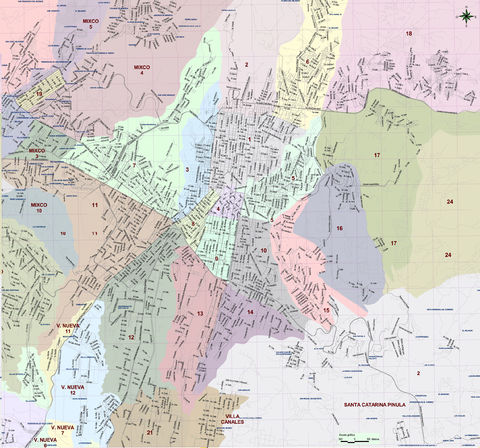
apt-get install supybot or yum install supybot
mkdir /home/$user/nagbot && cd /home/$user/nagbot
supybot-wizard (follow the directions to get the bot initially configured)
2. Install and load the supybot-notify plugin by doing:
git clone git://git.fedorahosted.org/supybot-notify.git && cd supybot-notify
mkdir -p /home/$user/nagbot/plugins/notify && cp -r * /home/$user/nagbot/plugins/notify
Finally, load the plugin. (this will require you to authenticate to the bot) Nagios configuration 1. Add the relevant command definitions to the commands.cfg file:
# 'notify-by-ircbot' command definition
define command 
    command_name    notify-by-ircbot
    command_line    /usr/bin/printf "%b" "#channel $NOTIFICATIONTYPE$ - $HOSTALIAS$/$SERVICEDESC$ is $SERVICESTATE$: $SERVICEOUTPUT$ ($$(hostname -s))"   nc -w 1 localhost 5050
     
# 'host-notify-by-ircbot' command definition
define command 
	command_name	host-notify-by-ircbot
	command_line	/usr/bin/printf "%b" "#channel $NOTIFICATIONTYPE$ - $HOSTALIAS$ is $HOSTSTATE$: $HOSTOUTPUT$ ($$(hostname -s))"   nc -w 1 localhost 5050
	 
* adjust the Netcat s host and port to your needs, in my case Supybot and Nagios were running on the same host. In the case of a Supybot running on a different host than Nagios, tweak Iptables to allow the desired port:
-A INPUT -m state --state NEW,ESTABLISHED -m tcp -p tcp --dport 5050 -j ACCEPT
2. Add a new entry on the contacts.cfg file:
define contact 
 	contact_name    nagbot
   	use             generic-contact
        alias		Nagios IRC Bot
        email           example@example.com
        service_notification_commands   notify-by-ircbot
 	host_notification_commands      host-notify-by-ircbot
 
3. Reload Nagios:
sudo /etc/init.d/nagios3 reload
And finally, enjoy the result:
 PROBLEM - $hostalias/load average is CRITICAL: CRITICAL - load average: 30.45, 16.24, 7.16 (nagioshost)
 RECOVERY - $hostalias/load average is OK: OK - load average: 0.06, 0.60, 3.65 (nagioshost)

Next.

Previous.