Search Results: "eric"

15 October 2016

Dirk Eddelbuettel: anytime 0.0.3: Extension and fixes

anytime arrived on CRAN with releases 0.0.1 and 0.0.2 about a month ago. anytime aims to convert anything in integer, numeric, character, factor, ordered, ... format to POSIXct (or Date) objects. Release 0.0.3 brings a bugfix for Windows (where for dates before the epoch of 1970-01-01, accessing the tm_isdst field for daylight savings would crash the session) and a small (unexported) extension to test format strings. This last feature plays well the ability to add format strings which we added in 0.0.2. The NEWS file summarises the release:

Changes in Rcpp version 0.0.3 (2016-10-13)
  • Added (non-exported) helper function testFormat()
  • Do not access tm_isdst on Windows for dates before the epoch (pull request #13 fixing issue #12); added test as well

Courtesy of CRANberries, there is a comparison to the previous release. More information is on the anytime page. For questions or comments use the issue tracker off the GitHub repo.

This post by Dirk Eddelbuettel originated on his Thinking inside the box blog. Please report excessive re-aggregation in third-party for-profit settings.

9 October 2016

Bits from Debian: Debian is participating in the next round of Outreachy!

Following the success of the last round of Outreachy, we are glad to announce that Debian will take part in the program for the next round, with internships lasting from the 6th of December 2016 to the 6th of March 2017. From the official website: Outreachy helps people from groups underrepresented in free and open source software get involved. We provide a supportive community for beginning to contribute any time throughout the year and offer focused internship opportunities twice a year with a number of free software organizations. Currently, internships are open internationally to women (cis and trans), trans men, and genderqueer people. Additionally, they are open to residents and nationals of the United States of any gender who are Black/African American, Hispanic/Latin@, American Indian, Alaska Native, Native Hawaiian, or Pacific Islander. If you want to apply to an internship in Debian, you should take a look at the wiki page, and contact the mentors for the projects listed, or seek more information on the (public) debian-outreach mailing-list. You can also contact the Outreach Team directly. If you have a project idea and are willing to mentor an intern, you can submit a project idea on the Outreachy wiki page. Here's a few words on what the interns for the last round achieved within Outreachy: Debian would not be able to participate in Outreachy without the help of the Software Freedom Conservancy, who provides administrative support for Outreachy, as well as the continued support of Debian's donors, who provide funding for the internships. If you want to donate, please get in touch with one of our trusted organizations. Debian is looking forward to welcoming new interns for the next few months, come join us!

Laura Arjona Reina: New phone: Samsung Galaxy S III phone with Replicant

Thanks to the Bazaar effort of The Guardian Project, I ve been offered a phone to test F-Droid and other free software apps for Android. I accepted the offer, and chose a Samsung Galaxy S III phone with Replicant 4.2.2, installed and shipped by Tehnoetic.
I m using it now as my main phone, and since it uses Android 4.x I m able to install more modern apps than in my old Galaxy Ace (which remains usable with CyanongenMod 7.2 (Android 2.3.7)).
My plans with this new phone are:
  • Test Replicant and free software for Android on it
  • Get more involved in translations of Android apps
  • Get more involved in the F-Droid community
  • Keep an eye on Android tools in Debian
  • Post here in my blog articles about what I ve been doing (and of course report issues and contributions upstream)
Migration to the new phone
I ve migrated my stuff from the old phone to this one. Some notes:
  • Wrote down my list of apps
  • Used Slight Backup for contacts, call logs and messages
  • Periodical has its own backup tool
  • Whatsapp has its own backup tool
  • Exported settings in K-9 Mail
  • Exported Kontalk GPG key
  • Simply Do has its own backup tool
  • I don t use calendars in the phone so I didn t migrate any events (I have Offline Calendar to ad temporary notes/reminders, but that s all)
I moved the SIM card and the SD Card to the new phone and tried the restore tool for each app.
I found out that several apps could not find the backups because they were not looking at the SD Card for the files (seems that they were using internal memory locations). So for recovering my backups, I made new backups in the new phone with the empty apps, then found out where those backups were created (in the internal memory, /storage/emulated/0), and then copied the authentic backup files there (overwriting teh dummy ones), and then used the app to restore the backup.
For some apps (K-9) I had to set again the folder for attachments, since the SD was not anymore in /media/sdcard, now it was in /storage/sdcard1.
Apart from that, everything went well.
I was a bit upset that I could not migrate Kontalk conversations (there is no backup/export tool, and I am not sure where are the files/database stored).
I noticed that although Kontalk is registered using the phone number, and it uses the phone numbers for contacts, it kept working in the old phone (Whatsapp detects when you change to a new phone and kind of deactivates itself in the old one, but that s not the case for Kontalk: it works as any XMPP client (if it s open, it can send/receive messages)).
Replicant 4.2 in a Galaxy S III (i9300)
Here I write some particularities that I found in the phone, mostly bugs or problems. But don t get me wrong: overall I m very happy with it!
I experienced a problem when using the phone to make/receive calls, it seemed that the proximity sensor was not working well. I thought it was a Replicant issue, but later I realized that there was a Tehnoetic sticker that was partially covering the sensor. I removed the sticker and everything worked well.
The phone came with F-Droid installed which is nice. I upgraded to the latest alpha and I m testing the alpha releases since then
I found that I cannot choose where to install apps nor move apps from internal memory to the SD Card: there is no such option in Settings > Apps > Manage Apps (there is such setting in my CyanogenMod 7.2 phone, though). Since my phone is rooted and I have full access to both internal memory and SDCard, and I have plenty of room in the internal memory, I didn t bother too much. I m not sure if this is a bug, a feature, something related to Android 4 or specific to Replicant, o specific to this phone model. Pending to investigate, but low priority.
Replicant is almost fully translated to Spanish, yay!. I only found one untranslated string: You go to Settings > Wireless > Cell Broadcasts, and in the settings page, Cell Broadcasts is untranslated (but the settings themselves are). I still need to find where/how to send a patch for this (not sure if it comes from Android, CyanogenMod, or it s something specific for Replicant. Also, being Android 4.x, I m not sure about the usefulness of reporting such a minimal and unimportant patch upstream ).
When I turn on the phone, I get the Samsung S III splash screen, later the Replicant Splash screen, later the numeric pad to unlock the SIM card. After that, I see the screen lock but when I press the lock to enter the pattern, the screen turns off and on, screen lock appearing again (and I have to press the lock again to enter the pattern). If after unlocking the SIM card I wait a bit, I see the screen lock and again black screen and screen lock, so it s not my tap causing it. Doing like this (waiting a bit for the phone to show the screen lock for 2nd time) is less annoying, but I wonder why this happen and I cannot unlock the screen directly in the first attempt. This is also pending for research, but low priority.
When the phone boots, I find the splash screens too bright (the Samsung Galaxy S III splash, and later the red Replicant one). I don t know if I can change that. I know that other people have created different Replicant splash screens, so maybe I can create one almost black and only the Replicant text in very dark grey. But this is obviously a workaround, not a fix. OTOH, it s an annoying thing just some seconds: when the unlock screen is shown, the phone shows the brightness level that I ve set (usually, the lowest one).
From time to time, I suffer soft reboots:
  1. the phone hangs for 2-3 seconds
  2. then the red Replicant splash screen is shown (the phone is not totally rebooted, because I don t see the Samsung Galaxy S III splash screen and and the SIM card unlock PIN is not requested)
  3. after unlocking the screen, I see a normal desktop (similar to what I see after rebooting the phone: no apps running, and no last used apps history. Time and date are ok, wireless or 3G starts correctly etc).
I ve tried to track the causes of these soft reboots, but I couldn t find anything specific. They are not frequent at all, and when I decide to launch CatLog to try to catch any hint, the phone works perfectly for hours or days :s
Replicant is currently using the fallback Android EGL implementation, which is incomplete. The missing features of this implementation cause multiple issues, which are described in #705. These are the ones that I experience (or I miss):
  • The phone comes with a video editor preinstalled: Movie Studio. I got excited about it, because I was jealous of the small built-in video editor that comes with Whatsapp, but I became sad because Movie Studio does not work
  • The camera does not record video.
  • When I long-press the central button of my phone to see the list of recent apps, I don t see their thumbnails (only the name, and their icons). This is quite unimportant for me, names and icons are enough.
  • The stock Gallery app does not work well: I cannot see thumbnails of the albums. This is not very important, because I installed Gallery.
  • I cannot use Firefox, Orfox and other derivative web browsers (I usually use the stock browser, and I installed Lightning too).
  • I cannot use barcode or QR scanners.
  • My son cannot play Shattered Pixel Dungeon (nor Pixel Dungeon). Fortunately he uses now my old Android 2.x devide for that.
I installed the non-free firmware to be able to use Wifi and tethering, GPS and some other things. This does not fix the graphics problems listed above.
New apps, and translations
Note: when I write about Android apps, I usually link to their pages in the F-Droid website. Here I talk about translations (contributions), so I ll link to their original website or souce code repos. But you can find all those apps in F-Droid too.
As I told before, I installed another gallery app called Gallery and submitted an update to it Spanish translation.
I installed Red Moon to reduce (even more) the screen brightness. At night it s a relieve. Maybe the brightness of the splash screen is not so much, and I perceive them annoying because I got accostumed to Red Moon! I contributed some strings to the Spanish translation.
I liked RadioDroid very much, and I translated the app to Spanish.
I translated Wifi Privacy Police, and I used for some time, but I became tired that it keeps asking all the time that I walk across my workplace (multiple buildings within the same Wifi network, but quite a lot access points ).
I keep on contributing to K-9 Mail to make it 100% translated to Spanish. Now with a modern Android I can move to the development branch (5.1xx releases), and just did it.
I submitted a Spanish translation to DAVDroid, although I m not using it yet (I have to see if my University s Owncloud instance allows to sync contacts and calendar).
I updated the Spanish translation of PassAndroid, although I don t use it yet (I tend to print my train/airplane tickets ). I keep it installed in my phone, just in case.
Other apps that I use
I m testing OwnCloud, NextCloud and NexCloud Beta clients with my University s Owncloud and with Davros in my Sandstorm box (with Davros, I could only make it work installing an old version of Owncloud/Nexcloud client, and then upgrading. See #65).
I didn t get accostumed to Conversations. Not sure why, though. Maybe it s just that I got accostumed to Xabber-Classic, so I upgraded to Xabber. It works like a charm, dark theme, and I can close it easily when I don t want to chat.
I got in love with KDE Connect. Later I realized that I could have been using it in my Android 2.x phone since long
Sometimes I have fun activating Voice Notification and entering the redeslibres XMPP multi user chat at salas.mijabber.es, for example while I m cooking in the kitchen (in that room people talk in Spanish and make many wordplays, mixing Spanish and English, and use tech slang, etc so it s really fun to hear the Spanish-TTS deal with the conversation there!).
More to come
As I told at the beginning of this long post, my plan is to keep on tinkering with the phone, testing and translating apps, and becoming more involved. So expect some more posts about Android in this blog, in the future.
For now, some big things in my TODO:
  • Watching again some videos: DebConf16 videos about Android tools in Debian, FOSDEM talks about Replicant, and some other talks about free software in Android.
  • I track the #fdroid and #fdroid-dev channels in IRC, but I m not very talkative there. I guess I could do more user support.
  • Participate more in the F-Droid (client, server, data) issue trackers (I send reports when the alpha version crashes, and comment on few issues, but I don t triage the issue tracker to find issues that I could reproduce or help to diagnose or contribute to fix).
  • Long time ago I learned to setup an Android development environment and build apps. I would like to re-learn and maybe do some small fixes in unmaintained or near unmaintained apps, and maybe adopt them or join their development teams (I m thinking, for example, in Puma, an Android client for pump.io network, the MediaGoblin app, or the DebianDroid app). And ship new versions of unmaintained apss, including Spanish translations.
We ll see how far I can go!
Comments?
You can comment about this post in this pump.io thread.

Filed under: My experiences and opinion, Tools Tagged: Android, Debian, English, F-Droid

Nathan Handler: Ohio Linux Fest

This weekend, I traveled to Columbus, Ohio to attend Ohio Linux Fest. I departed San Francisco early on Thursday. It was interesting getting to experience the luxurious side of flying as I enjoyed a mimosa in the American Express Centurion lounge for the first time. I even happend to cross paths with Corey Quinn, who was on his way to [DevOpsDays Boise]. While connecting in Houston, I met up with the always awesome Jos Antonio Rey, who was to be my travel companion for this trip. The long day of travel took its toll on us, so we had a lazy Friday morning before checking in for the conference around lunch time. I was not that interested in the afternoon sessions, so I spent the majority of the first day helping out at the Ubuntu booth and catching up with friends and colleagues. The day ended with a nice Happy Hour sponsored by Oracle. Saturday was the main day for the conference. Ethan Galstad, Founder and CEO of Nagios, started the day with a Keynote about Becoming the Next Tech Entrepreneur. Next up was Elizabeth K. Joseph with A Tour of OpenStack Deployment Scenarios. While I ve read plenty about OpenStack, I ve never actually used it before. As a result, this demo and introduction was great to watch. It was entertaining to watch her login to CirrOS with the default password of cubswin:), as the Chicago Cubs are currently playing the San Francisco Giants in the National League Divisional Series (and winning). Unfortunately, I was not able to win a copy of her new Common OpenStack Deployments book, but it was great getting to watch her signing copies for other attendees after all of the hard work that went into writing the book. For lunch, Jos , Elizabeth, and Svetlana Belkin all gathered together for an informal Ubuntu lunch. Finally, it was time for me to give my talk. This was the same talk I gave at FOSSCON, but this time, I had a significantly larger audience. Practice definitely makes perfect, as my delivery was a lot better the second time giving this talk. Afterwards, I had a number of people come up to me to let me know that they really enjoyed the presentation. Pro Tip: If you ever attend a talk, the speaker will really appreciate any feedback you send their way. Even if it is a simple, Thank You , it really means a lot. One of the people who came up to me after the talk was Unit193. We have known each other through Ubuntu for years, but there has never been an opportunity to meet in person. I am proud to be able to say with 99% confidence that he is not a robot, and is in fact a real person. Next up was a lesson about the /proc filesystem. While I ve explored it a bit on my own before, I still learned a few tips and tricks about information that can be gained from the files in this magical directory. Following this was a talk about Leading When You re Not the Boss. It was even partially taught by a dummy (the speaker was a ventriloquist). The last regular talk of the day was one of the more interesting ones I attended. It was a talk by Patrick Shuff from Facebook about how they have built a load balancer than can handle a billion users. The slide deck was well-made with very clear diagrams. The speaker was also very knowledgeable and dealt with the plethora of questions he received. Prior to the closing keynote was a series of lightning talks. These served as a great means to get people laughing after a long day of talks. The closing keynote was given by father and daughter Joe and Lilly Born about The Democratization of Invention. Both of them had very interesting stories, and Lily was quite impressive given her age. We skipped the Nagios After Party in favor of a more casual pizza dinner. Overall, it was a great conference, and I am very glad to have had the opportunity to attend. A big thanks to Canonical and the Ubuntu Community for fudning my travel through the Ubuntu Community Fund and to the Ohio Linux Fest staff for allowing me the opportunity to speak at such a great conference.

7 October 2016

Petter Reinholdtsen: Isenkram, Appstream and udev make life as a LEGO builder easier

The Isenkram system provide a practical and easy way to figure out which packages support the hardware in a given machine. The command line tool isenkram-lookup and the tasksel options provide a convenient way to list and install packages relevant for the current hardware during system installation, both user space packages and firmware packages. The GUI background daemon on the other hand provide a pop-up proposing to install packages when a new dongle is inserted while using the computer. For example, if you plug in a smart card reader, the system will ask if you want to install pcscd if that package isn't already installed, and if you plug in a USB video camera the system will ask if you want to install cheese if cheese is currently missing. This already work just fine. But Isenkram depend on a database mapping from hardware IDs to package names. When I started no such database existed in Debian, so I made my own data set and included it with the isenkram package and made isenkram fetch the latest version of this database from git using http. This way the isenkram users would get updated package proposals as soon as I learned more about hardware related packages. The hardware is identified using modalias strings. The modalias design is from the Linux kernel where most hardware descriptors are made available as a strings that can be matched using filename style globbing. It handle USB, PCI, DMI and a lot of other hardware related identifiers. The downside to the Isenkram specific database is that there is no information about relevant distribution / Debian version, making isenkram propose obsolete packages too. But along came AppStream, a cross distribution mechanism to store and collect metadata about software packages. When I heard about the proposal, I contacted the people involved and suggested to add a hardware matching rule using modalias strings in the specification, to be able to use AppStream for mapping hardware to packages. This idea was accepted and AppStream is now a great way for a package to announce the hardware it support in a distribution neutral way. I wrote a recipe on how to add such meta-information in a blog post last December. If you have a hardware related package in Debian, please announce the relevant hardware IDs using AppStream. In Debian, almost all packages that can talk to a LEGO Mindestorms RCX or NXT unit, announce this support using AppStream. The effect is that when you insert such LEGO robot controller into your Debian machine, Isenkram will propose to install the packages needed to get it working. The intention is that this should allow the local user to start programming his robot controller right away without having to guess what packages to use or which permissions to fix. But when I sat down with my son the other day to program our NXT unit using his Debian Stretch computer, I discovered something annoying. The local console user (ie my son) did not get access to the USB device for programming the unit. This used to work, but no longer in Jessie and Stretch. After some investigation and asking around on #debian-devel, I discovered that this was because udev had changed the mechanism used to grant access to local devices. The ConsoleKit mechanism from /lib/udev/rules.d/70-udev-acl.rules no longer applied, because LDAP users no longer was added to the plugdev group during login. Michael Biebl told me that this method was obsolete and the new method used ACLs instead. This was good news, as the plugdev mechanism is a mess when using a remote user directory like LDAP. Using ACLs would make sure a user lost device access when she logged out, even if the user left behind a background process which would retain the plugdev membership with the ConsoleKit setup. Armed with this knowledge I moved on to fix the access problem for the LEGO Mindstorms related packages. The new system uses a udev tag, 'uaccess'. It can either be applied directly for a device, or is applied in /lib/udev/rules.d/70-uaccess.rules for classes of devices. As the LEGO Mindstorms udev rules did not have a class, I decided to add the tag directly in the udev rules files included in the packages. Here is one example. For the nqc C compiler for the RCX, the /lib/udev/rules.d/60-nqc.rules file now look like this:
SUBSYSTEM=="usb", ACTION=="add", ATTR idVendor =="0694", ATTR idProduct =="0001", \
    SYMLINK+="rcx-%k", TAG+="uaccess"
The key part is the 'TAG+="uaccess"' at the end. I suspect all packages using plugdev in their /lib/udev/rules.d/ files should be changed to use this tag (either directly or indirectly via 70-uaccess.rules). Perhaps a lintian check should be created to detect this? I've been unable to find good documentation on the uaccess feature. It is unclear to me if the uaccess tag is an internal implementation detail like the udev-acl tag used by /lib/udev/rules.d/70-udev-acl.rules. If it is, I guess the indirect method is the preferred way. Michael asked for more documentation from the systemd project and I hope it will make this clearer. For now I use the generic classes when they exist and is already handled by 70-uaccess.rules, and add the tag directly if no such class exist. To learn more about the isenkram system, please check out my blog posts tagged isenkram. To help out making life for LEGO constructors in Debian easier, please join us on our IRC channel #debian-lego and join the Debian LEGO team in the Alioth project we created yesterday. A mailing list is not yet created, but we are working on it. :) As usual, if you use Bitcoin and want to show your support of my activities, please send Bitcoin donations to my address 15oWEoG9dUPovwmUL9KWAnYRtNJEkP1u1b.

27 September 2016

C.J. Adams-Collier: OpenDaylight Symposium 2016

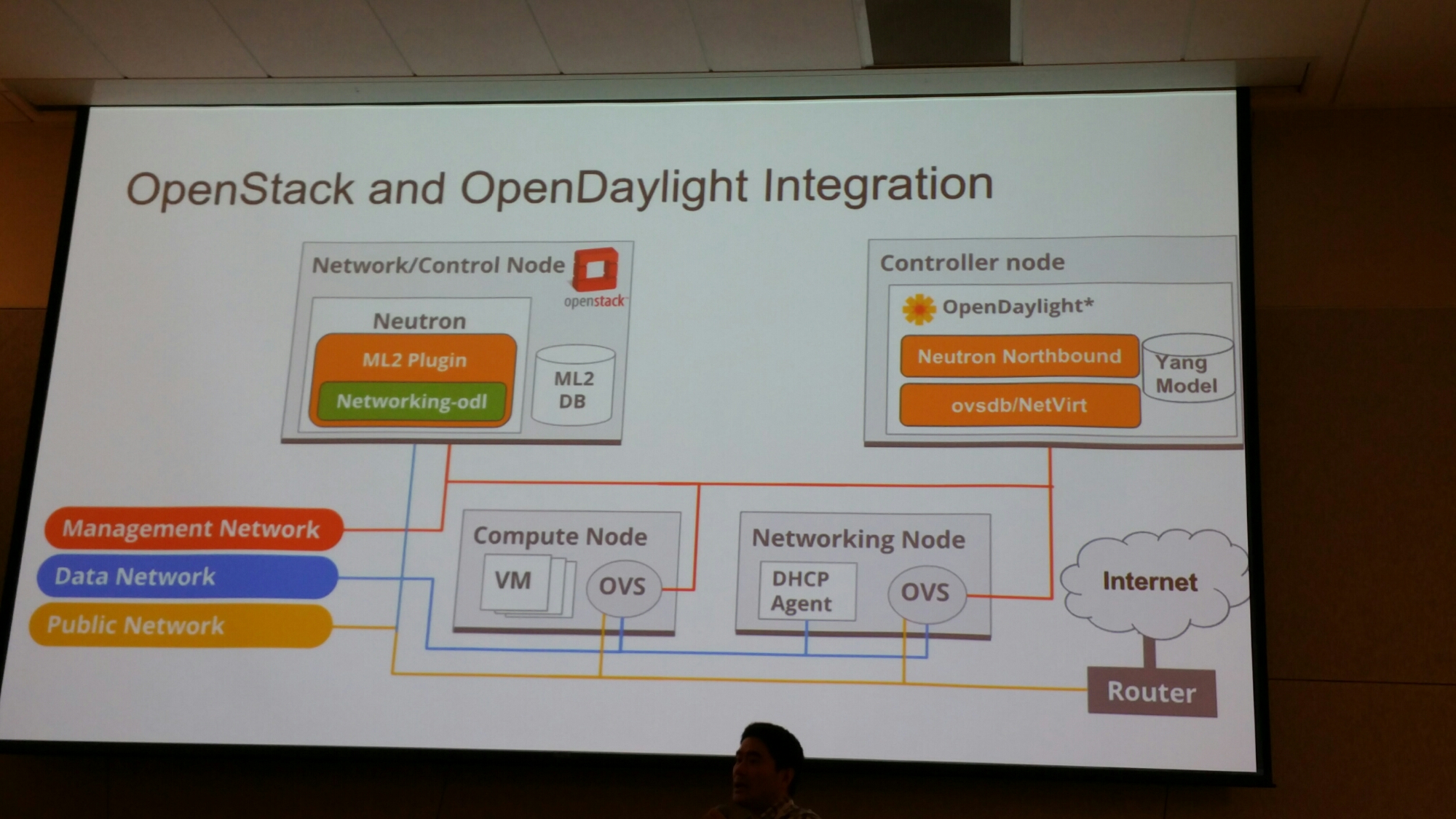
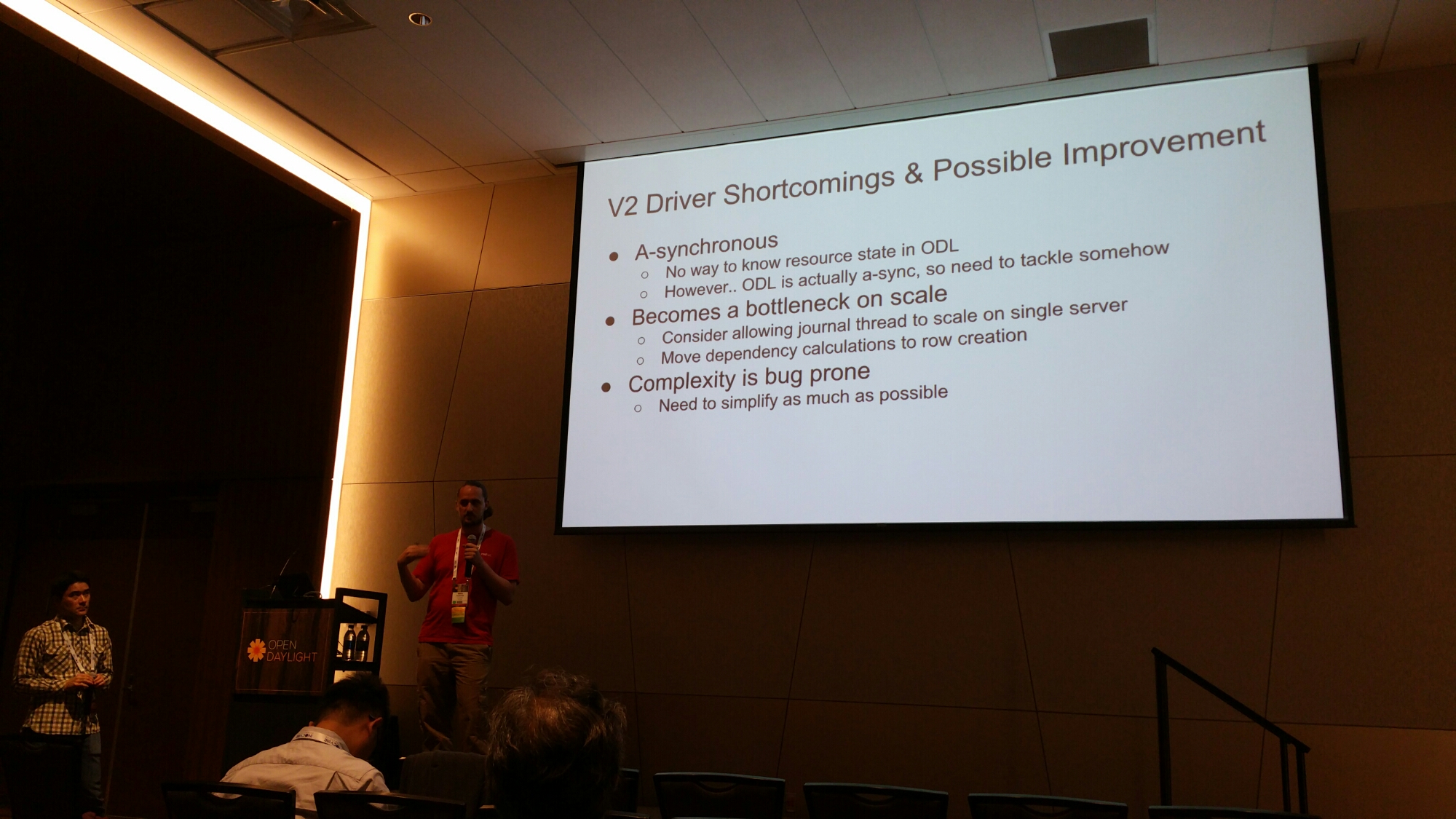
I ll write this later. Keywords and notes inline Cloud 5G AT&T Ericsson SDN FD.io Cisco Intel Linux Debian Ubuntu Open Source Hydrogen Helium Lithium OSI stack Usability Developers and users working together. Fast Dev/Test cycles Sessions start at 10:30 Message bus Minimal install needs to be smaller Most functionalities must be implemented in modules Upgrade path complexity Out of band control channel.
OPNFV customers don t run stock releases, make customisations and plugins easier. Message bus Distribution vendors should not be expected to perform package maintenance. Get the distribution ready for fast pathing in to backports, security, testing and unstable.

25 September 2016

Julian Andres Klode: Introducing TrieHash, a order-preserving minimal perfect hash function generator for C(++)

Abstract I introduce TrieHash an algorithm for constructing perfect hash functions from tries. The generated hash functions are pure C code, minimal, order-preserving and outperform existing alternatives. Together with the generated header files,they can also be used as a generic string to enumeration mapper (enums are created by the tool). Introduction APT (and dpkg) spend a lot of time in parsing various files, especially Packages files. APT currently uses a function called AlphaHash which hashes the last 8 bytes of a word in a case-insensitive manner to hash fields in those files (dpkg just compares strings in an array of structs). There is one obvious drawback to using a normal hash function: When we want to access the data in the hash table, we have to hash the key again, causing us to hash every accessed key at least twice. It turned out that this affects something like 5 to 10% of the cache generation performance. Enter perfect hash functions: A perfect hash function matches a set of words to constant values without collisions. You can thus just use the index to index into your hash table directly, and do not have to hash again (if you generate the function at compile time and store key constants) or handle collision resolution. As #debian-apt people know, I happened to play a bit around with tries this week before guillem suggested perfect hashing. Let me tell you one thing: My trie implementation was very naive, that did not really improve things a lot Enter TrieHash Now, how is this related to hashing? The answer is simple: I wrote a perfect hash function generator that is based on tries. You give it a list of words, it puts them in a trie, and generates C code out of it, using recursive switch statements (see code generation below). The function achieves competitive performance with other hash functions, it even usually outperforms them. Given a dictionary, it generates an enumeration (a C enum or C++ enum class) of all words in the dictionary, with the values corresponding to the order in the dictionary (the order-preserving property), and a function mapping strings to members of that enumeration. By default, the first word is considered to be 0 and each word increases a counter by one (that is, it generates a minimal hash function). You can tweak that however:
= 0
WordLabel ~ Word
OtherWord = 9
will return 0 for an unknown value, map Word to the enum member WordLabel and map OtherWord to 9. That is, the input list functions like the body of a C enumeration. If no label is specified for a word, it will be generated from the word. For more details see the documentation C code generation
switch(string[0]   32)  
case 't':
    switch(string[1]   32)  
    case 'a':
        switch(string[2]   32)  
        case 'g':
            return Tag;


return Unknown;
Yes, really recursive switches they directly represent the trie. Now, we did not really do a straightforward translation, there are some optimisations to make the whole thing faster and easier to look at: First of all, the 32 you see is used to make the check case insensitive in case all cases of the switch body are alphabetical characters. If there are non-alphabetical characters, it will generate two cases per character, one upper case and one lowercase (with one break in it). I did not know that lowercase and uppercase characters differed by only one bit before, thanks to the clang compiler for pointing that out in its generated assembler code! Secondly, we only insert breaks only between cases. Initially, each case ended with a return Unknown, but guillem (the dpkg developer) suggested it might be faster to let them fallthrough where possible. Turns out it was not faster on a good compiler, but it s still more readable anywhere. Finally, we build one trie per word length, and switch by the word length first. Like the 32 trick, his gives a huge improvement in performance. Digging into the assembler code The whole code translates to roughly 4 instructions per byte:
  1. A memory load,
  2. an or with 32
  3. a comparison, and
  4. a conditional jump.
(On x86, the case sensitive version actually only has a cmp-with-memory and a conditional jump). Due to https://gcc.gnu.org/bugzilla/show_bug.cgi?id=77729 this may be one instruction more: On some architectures an unneeded zero-extend-byte instruction is inserted this causes a 20% performance loss. Performance evaluation I run the hash against all 82 words understood by APT in Packages and Sources files, 1,000,000 times for each word, and summed up the average run-time:
host arch Trie TrieCase GPerfCase GPerf DJB
plummer ppc64el 540 601 1914 2000 1345
eller mipsel 4728 5255 12018 7837 4087
asachi arm64 1000 1603 4333 2401 1625
asachi armhf 1230 1350 5593 5002 1784
barriere amd64 689 950 3218 1982 1776
x230 amd64 465 504 1200 837 693
Suffice to say, GPerf does not really come close. All hosts except the x230 are Debian porterboxes. The x230 is my laptop with a a Core i5-3320M, barriere has an Opteron 23xx. I included the DJB hash function for another reference. Source code The generator is written in Perl, licensed under the MIT license and available from https://github.com/julian-klode/triehash I initially prototyped it in Python, but guillem complained that this would add new build dependencies to dpkg, so I rewrote it in Perl. Benchmark is available from https://github.com/julian-klode/hashbench Usage See the script for POD documentation.
Filed under: General

18 September 2016

Gregor Herrmann: RC bugs 2016/37

we're not running out of (perl-related) RC bugs. here's my list for this week:

16 September 2016

Dirk Eddelbuettel: anytime 0.0.2: Added functionality

anytime arrived on CRAN via release 0.0.1 a good two days ago. anytime aims to convert anything in integer, numeric, character, factor, ordered, ... format to POSIXct (or Date) objects. This new release 0.0.2 adds two new functions to gather conversion formats -- and set new ones. It also fixed a minor build bug, and robustifies a conversion which was seen to be not quite right under some time zones. The NEWS file summarises the release:
Changes in Rcpp version 0.0.2 (2016-09-15)
  • Refactored to use a simple class wrapped around two vector with (string) formats and locales; this allow for adding formats; also adds accessor for formats (#4, closes #1 and #3).
  • New function addFormats() and getFormats().
  • Relaxed one tests which showed problems on some platforms.
  • Added as.POSIXlt() step to anydate() ensuring all POSIXlt components are set (#6 fixing #5).
Courtesy of CRANberries, there is a comparison to the previous release. More information is on the anytime page. For questions or comments use the issue tracker off the GitHub repo.

This post by Dirk Eddelbuettel originated on his Thinking inside the box blog. Please report excessive re-aggregation in third-party for-profit settings.

13 September 2016

Dirk Eddelbuettel: anytime 0.0.1: New package for 'anything' to POSIXct (or Date)

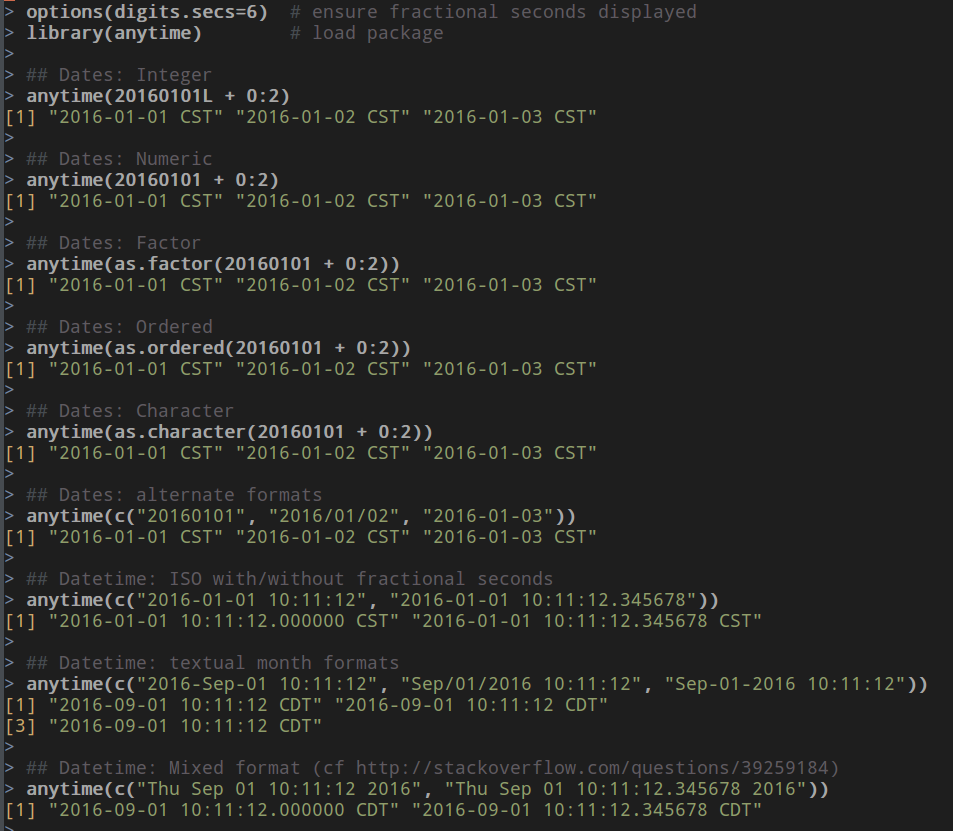
anytime just arrived on CRAN as a very first release 0.0.1. So why (yet another) package dealing with dates and times? R excels at computing with dates, and times. By using typed representation we not only get all that functionality but also of the added safety stemming from proper representation. But there is a small nuisance cost: How often have we each told as.POSIXct() that the origin is epoch '1970-01-01'? Do we have to say it a million more times? Similarly, when parsing dates that are in some recogniseable form of the YYYYMMDD format, do we really have to manually convert from integer or numeric or factor or ordered to character first? Having one of several common separators and/or date / time month forms (YYYY-MM-DD, YYYY/MM/DD, YYYYMMDD, YYYY-mon-DD and so on, with or without times, with or without textual months and so on), do we really need a format string? anytime() aims to help as a small general purpose converter returning a proper POSIXct (or Date) object nomatter the input (provided it was somewhat parseable), relying on Boost date_time for the (efficient, performant) conversion. See some examples on the anytime page or the GitHub README.md, or in the screenshot below. And then just give it try! anytime examples For questions or comments use the issue tracker off the GitHub repo.

This post by Dirk Eddelbuettel originated on his Thinking inside the box blog. Please report excessive re-aggregation in third-party for-profit settings.

12 September 2016

Reproducible builds folks: Reproducible Builds: week 72 in Stretch cycle

What happened in the Reproducible Builds effort between Sunday September 4 and Saturday September 10 2016: Reproducible work in other projects Python 3.6's dictonary type now retains the insertion order. Thanks to themill for the report. In coreboot, Alexander Couzens committed a change to make their release archives reproducible. Patches submitted Reviews of unreproducible packages We've been adding to our knowledge about identified issues. 3 issue types have been added: 1 issue type has been updated: 16 have been have updated: 13 have been removed, not including removed packages: 100s of packages have been tagged with the more generic captures_build_path, and many with captures_kernel_version, user_hostname_manually_added_requiring_further_investigation, user_hostname_manually_added_requiring_further_investigation, captures_shell_variable_in_autofoo_script, etc. Particular thanks to Emanuel Bronshtein for his work here. Weekly QA work FTBFS bugs have been reported by: diffoscope development strip-nondeterminism development tests.reproducible-builds.org: Misc. This week's edition was written by Chris Lamb and Holger Levsen and reviewed by a bunch of Reproducible Builds folks on IRC.

1 September 2016

Jamie McClelland: Trusted Mobile Device: How hard could it be?

I bought a new phone. After my experiences with signal and the helpful comments readers gave regarding the ability to run android and signal without Google Play using microg I thought I would give it a shot. Since microg reports that signature spoofing is required and comes out-of-the-box with omnirom I thought I'd aim for installing omnirom's version of Android 6 (marshmallow) after years of using cyanomgenmod's version of Android. The Nexus line of phones seemed well-supported by omnirom in particular (and the alternative ROM community in general) so I bought a Nexus 5x. I carefully followed the directions for installing omnirom however when it came time to boot into omnirom, I just got the boot sequence animation over and over again. Frustrated, I decided to go back to cyanogenmod and see if I could use one of the microg recommended methods for getting signature spoofing to work. The easiest seemed to be Needle by moosd but alas no such luck with Marshmallow. Someone else forked the code and might fix it one day. I then spent too much time trying to understand what xposed is before I gave up understanding it and just tried to install it (woops, looks like the installer page is out of date so instead I followed sketchy instructions from a forum thread). Well, to make a long story short it resulted in a boot loop. So, I decided to return to omnirom. After reading some vague references to omnirom and supersu, I decided to flash both of them together and voila, it worked! Next, I decided to enable full disk encryption. Not so fast. After clicking through the screens and hitting the final confirmation, my phone rebooted and spent the next 5 hours showing me the omnirom boot animation. Somehow, powering down and starting again resulted in a working machine, but no disk encryption. After much web searching, guessing and trial and error, I fixed the problem by clicking on the SuperSU option to "Full unroot" the device (I pressed "no" when prompted to attempt to restore stock image). Then I rebooted and followed the directions to encrypt the device. And it worked! Hooray! I had to reboot and re-flash the supersu to regain su privileges. All was great. The first root action I decided to take was to install the cryptfs program from f-droid because using the same password to decrypt your device as you use to unlock the screen seems either tedious or insecure. That process didn't work so well. I got a message saying: use this command from a root shell before you reboot: vdc cryptfs changepw <password>. I followed the advice, carefully typing in my 12 character password which includes numbers and letters. Then, I happily did what I expected to be my last reboot when, to my horror, I was prompted to decrypt my disk with ... a numeric-only keypad. That wasn't going to work. At this point I had already spent 5 days and about 8 hours on this project. Sigh. So, I started over. Guess what? It only took me 25 minutes but, it seems that cryptfs is broken. Even with a numeric password it fails. Ok, I guess I need a long pin to unlock my phone. This time it only took my 15 minutes to wipe and re-install everything. There are only two positive things I can think of: p.s. I haven't even tried to install microg yet... which was the whole point.

29 August 2016

Russell Coker: Monitoring of Monitoring

I was recently asked to get data from a computer that controlled security cameras after a crime had been committed. Due to the potential issues I refused to collect the computer and insisted on performing the work at the office of the company in question. Hard drives are vulnerable to damage from vibration and there is always a risk involved in moving hard drives or systems containing them. A hard drive with evidence of a crime provides additional potential complications. So I wanted to stay within view of the man who commissioned the work just so there could be no misunderstanding. The system had a single IDE disk. The fact that it had an IDE disk is an indication of the age of the system. One of the benefits of SATA over IDE is that swapping disks is much easier, SATA is designed for hot-swap and even systems that don t support hot-swap will have less risk of mechanical damage when changing disks if SATA is used instead of IDE. For an appliance type system where a disk might be expected to be changed by someone who s not a sysadmin SATA provides more benefits over IDE than for some other use cases. I connected the IDE disk to a USB-IDE device so I could read it from my laptop. But the disk just made repeated buzzing sounds while failing to spin up. This is an indication that the drive was probably experiencing stiction which is where the heads stick to the platters and the drive motor isn t strong enough to pull them off. In some cases hitting a drive will get it working again, but I m certainly not going to hit a drive that might be subject to legal action! I recommended referring the drive to a data recovery company. The probability of getting useful data from the disk in question seems very low. It could be that the drive had stiction for months or years. If the drive is recovered it might turn out to have data from years ago and not the recent data that is desired. It is possible that the drive only got stiction after being turned off, but I ll probably never know. Doing it Properly Ever since RAID was introduced there was never an excuse for having a single disk on it s own with important data. Linux Software RAID didn t support online rebuild when 10G was a large disk. But since the late 90 s it has worked well and there s no reason not to use it. The probability of a single IDE disk surviving long enough on it s own to capture useful security data is not particularly good. Even with 2 disks in a RAID-1 configuration there is a chance of data loss. Many years ago I ran a server at my parents house with 2 disks in a RAID-1 and both disks had errors on one hot summer. I wrote a program that s like ddrescue but which would read from the second disk if the first gave a read error and ended up not losing any important data AFAIK. BTRFS has some potential benefits for recovering from such situations but I don t recommend deploying BTRFS in embedded systems any time soon. Monitoring is a requirement for reliable operation. For desktop systems you can get by without specific monitoring, but that is because you are effectively relying on the user monitoring it themself. Since I started using mon (which is very easy to setup) I ve had it notify me of some problems with my laptop that I wouldn t have otherwise noticed. I think that ideally for desktop systems you should have monitoring of disk space, temperature, and certain critical daemons that need to be running but which the user wouldn t immediately notice if they crashed (such as cron and syslogd). There are some companies that provide 3G SIMs for embedded/IoT applications with rates that are significantly cheaper than any of the usual phone/tablet plans if you use small amounts of data or SMS. For a reliable CCTV system the best thing to do would be to have a monitoring contract and have the monitoring system trigger an event if there s a problem with the hard drive etc and also if the system fails to send a I m OK message for a certain period of time. I don t know if people are selling CCTV systems without monitoring to compete on price or if companies are cancelling monitoring contracts to save money. But whichever is happening it s significantly reducing the value derived from monitoring.

28 August 2016

Reproducible builds folks: Reproducible builds: week 70 in Stretch cycle

What happened in the Reproducible Builds effort between Sunday August 21 and Saturday August 27 2016: GSoC and Outreachy updates Packages reviewed and fixed, and bugs filed Reviews of unreproducible packages 10 package reviews have been added and 6 have been updated this week, adding to our knowledge about identified issues. A large number of issue types have been updated: Weekly QA work 29 FTBFS bugs have been reported by: diffoscope development Holger also created another test job for diffoscope on jenkins.debian.net, so that now also all commits to branches other than master are being tested. strip-nondeterminism development strip-nondeterminism 0.023-1 was uploaded by Chris Lamb:
 * Support Android .apk files with the JAR normalizer.
 * handlers/png.pm: Drop unused Archive::Zip import
 * Remove hyphen from non-determinism and non-deterministic.
 * javaproperties.pm: Match more styles of .properties and loosen filename matching.
 * Improve tests:
   - Make fixture runner generic to all normalizer types.
   - Replace (single) pearregistry test with a fixture.
   - Set a canonical time for fixture tests.
   - Add gzip testcase fixture.
   - Replace t/javadoc.t with fixture
   - Replace t/ar.t with a fixture.
   - t/javaproperties: move pom.properties and version.properties tests to fixtures
   - t/fixtures.t: move to using subtests
   - t/fixtures.t: Explicitly test that we can find a normalizer
   - t/fixtures.t: Don't run normalizer if we didn't find one.
strip-nondeterminism 0.023-2 uploaded by Mattia Rizzolo to allow stderr in autopkgtest. disorderfs development tests.reproducible-builds.org Debian: Somewhat related to reproducible builds there has been a first Debian jenkins team maintainance meeting on the #debian-qa IRC channel, to discuss current issues with the setup and to start the work of migrating jenkins.debian.net to jenkins.debian.org. The next meeting will take place on September 28th 2016 at 19 UTC. Misc. This week's edition was written by Chris Lamb and Holger Levsen and reviewed by a bunch of Reproducible Builds folks on IRC.

22 August 2016

Vincent Sanders: Down the rabbit hole

My descent began with a user reporting a bug and I fear I am still on my way down.

Like Alice I headed down the hole. https://commons.wikimedia.org/wiki/File:Rabbit_burrow_entrance.jpg
The bug was simple enough, a windows bitmap file caused NetSurf to crash. Pretty quickly this was tracked down to the libnsbmp library attempting to decode the file. As to why we have a heavily used library for bitmaps? I am afraid they are part of every icon file and many websites still have favicons using that format.

Some time with a hex editor and the file format specification soon showed that the image in question was malformed and had a bad offset header entry. So I was faced with two issues, firstly that the decoder crashed when presented with badly encoded data and secondly that it failed to deal with incorrect header data.

This is typical of bug reports from real users, the obvious issues have already been encountered by the developers and unit tests formed to prevent them, what remains is harder to produce. After a debugging session with Valgrind and electric fence I discovered the crash was actually caused by running off the front of an allocated block due to an incorrect bounds check. Fixing the bounds check was simple enough as was working round the bad header value and after adding a unit test for the issue I almost moved on.

Almost...

american fuzzy lop are almost as cute as cats https://commons.wikimedia.org/wiki/File:Rabbit_american_fuzzy_lop_buck_white.jpg
We already used the bitmap test suite of images to check the library decode which was giving us a good 75% or so line coverage (I long ago added coverage testing to our CI system) but I wondered if there was a test set that might increase the coverage and perhaps exercise some more of the bounds checking code. A bit of searching turned up the american fuzzy lop (AFL) projects synthetic corpora of bmp and ico images.

After checking with the AFL authors that the images were usable in our project I added them to our test corpus and discovered a whole heap of trouble. After fixing more bounds checks and signed issues I finally had a library I was pretty sure was solid with over 85% test coverage.

Then I had the idea of actually running AFL on the library. I had been avoiding this because my previous experimentation with other fuzzing utilities had been utter frustration and very poor return on investment of time. Following the quick start guide looked straightforward enough so I thought I would spend a short amount of time and maybe I would learn a useful tool.

I downloaded the AFL source and built it with a simple make which was an encouraging start. The library was compiled in debug mode with AFL instrumentation simply by changing the compiler and linker environment variables.

$ LD=afl-gcc CC=afl-gcc AFL_HARDEN=1 make VARIANT=debug test
afl-cc 2.32b by <lcamtuf@google.com>
COMPILE: src/libnsbmp.c
afl-cc 2.32b by <lcamtuf@google.com>
afl-as 2.32b by <lcamtuf@google.com>
[+] Instrumented 751 locations (64-bit, hardened mode, ratio 100%).
AR: build-x86_64-linux-gnu-x86_64-linux-gnu-debug-lib-static/libnsbmp.a
COMPILE: test/decode_bmp.c
afl-cc 2.32b by <lcamtuf@google.com>
afl-as 2.32b by <lcamtuf@google.com>
[+] Instrumented 52 locations (64-bit, hardened mode, ratio 100%).
LINK: build-x86_64-linux-gnu-x86_64-linux-gnu-debug-lib-static/test_decode_bmp
afl-cc 2.32b by <lcamtuf@google.com>
COMPILE: test/decode_ico.c
afl-cc 2.32b by <lcamtuf@google.com>
afl-as 2.32b by <lcamtuf@google.com>
[+] Instrumented 65 locations (64-bit, hardened mode, ratio 100%).
LINK: build-x86_64-linux-gnu-x86_64-linux-gnu-debug-lib-static/test_decode_ico
afl-cc 2.32b by <lcamtuf@google.com>
Test bitmap decode
Tests:606 Pass:606 Error:0
Test icon decode
Tests:392 Pass:392 Error:0
TEST: Testing complete

I stuffed the AFL build directory on the end of my PATH, created a directory for the output and ran afl-fuzz

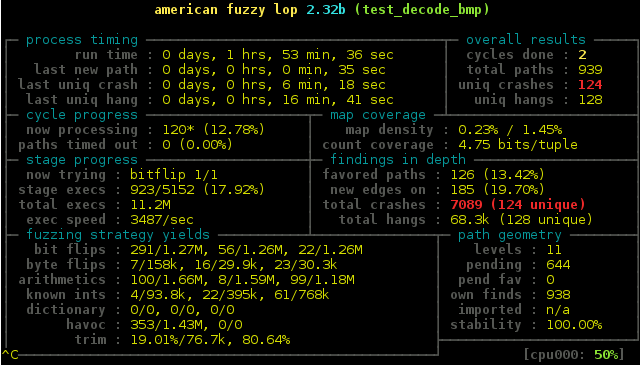
afl-fuzz -i test/bmp -o findings_dir -- ./build-x86_64-linux-gnu-x86_64-linux-gnu-debug-lib-static/test_decode_bmp @@ /dev/null

The result was immediate and not a little worrying, within seconds there were crashes and lots of them! Over the next couple of hours I watched as the unique crash total climbed into the triple digits.

I was forced to abort the run at this point as, despite clear warnings in the AFL documentation of the demands of the tool, my laptop was clearly not cut out to do this kind of work and had become distressingly hot.

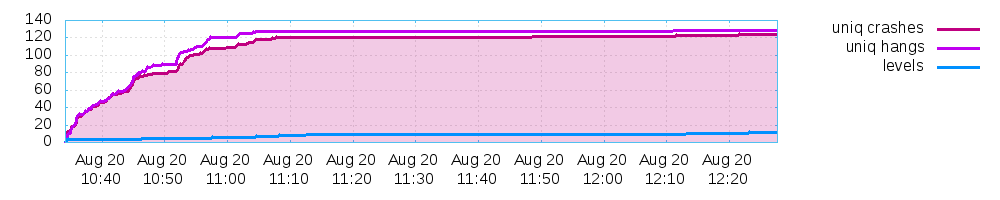
AFL has a visualisation tool so you can see what kind of progress it is making which produced a graph that showed just how fast it managed to produce crashes and how much the return plateaus after just a few cycles. Although it was finding a new unique crash every ten minutes or so when aborted.

I dove in to analyse the crashes and it immediately became obvious the main issue was caused when the test tool attempted allocations of absurdly large bitmaps. The browser itself uses a heuristic to determine the maximum image size based on used memory and several other values. I simply applied an upper bound of 48 megabytes per decoded image which fits easily within the fuzzers default heap limit of 50 megabytes.

The main source of "hangs" also came from large allocations so once the test was fixed afl-fuzz was re-run with a timeout parameter set to 100ms. This time after several minutes no crashes and only a single hang were found which came as a great relief, at which point my laptop had a hard shutdown due to thermal event!

Once the laptop cooled down I spooled up a more appropriate system to perform this kind of work a 24way 2.1GHz Xeon system. A Debian Jessie guest vm with 20 processors and 20 gigabytes of memory was created and the build replicated and instrumented.

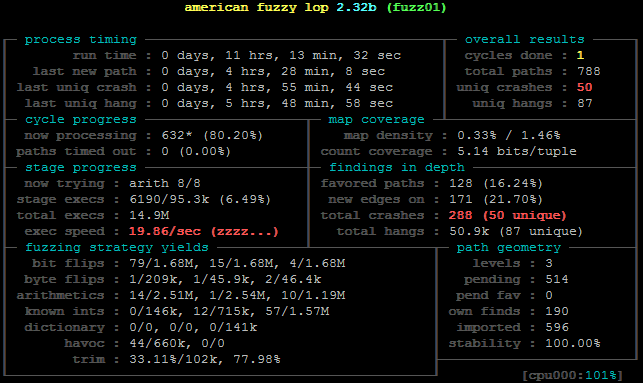
AFL master node display
To fully utilise this system the next test run would utilise AFL in parallel mode. In this mode there is a single "master" running all the deterministic checks and many "secondary" instances performing random tweaks.

If I have one tiny annoyance with AFL, it is that breeding and feeding a herd of rabbits by hand is annoying and something I would like to see a convenience utility for.

The warren was left overnight with 19 instances and by morning had generated crashes again. This time though the crashes actually appeared to be real failures.

$ afl-whatsup sync_dir/
Summary stats
=============

Fuzzers alive : 19
Total run time : 5 days, 12 hours
Total execs : 214 million
Cumulative speed : 8317 execs/sec
Pending paths : 0 faves, 542 total
Pending per fuzzer : 0 faves, 28 total (on average)
Crashes found : 554 locally unique

All the crashing test cases are available and a simple file command immediately showed that all the crashing test files had one thing in common the height of the image was -2147483648 This seemingly odd number is actually meaningful to a programmer, it is the largest negative number which can be stored in a 32bit integer (INT32_MIN) I immediately examined the source code that processes the height in the image header.

if ((width <= 0)   (height == 0))          
return BMP_DATA_ERROR;
if (height < 0)
bmp->reversed = true;
height = -height;

The bug is where the height is made a positive number and results in height being set to 0 after the existing check for zero and results in a crash later in execution. A simple fix was applied and test case added removing the crash and any possible future failure due to this.

Another AFL run has been started and after a few hours has yet to find a crash or non false positive hang so it looks like if there are any more crashes to find they are much harder to uncover.

Main lessons learned are:
I will of course be debugging any new crashes that occur and perhaps turning my sights to all the projects other unit tested libraries. I will also be investigating the generation of our own custom test corpus from AFL to replace the demo set, this will hopefully increase our unit test coverage even further.

Overall this has been my first successful use of a fuzzing tool and a very positive experience. I would wholeheartedly recommend using AFL to find errors and perhaps even integrate as part of a CI system.

20 August 2016

Daniel Stender: Collected notes from Python packaging

Here are some collected notes on some particular problems from packaging Python stuff for Debian, and more are coming up like this in the future. Some of the issues discussed here might be rather simple and even benign for the experienced packager, but maybe this is be helpful for people coming across the same issues for the first time, wondering what's going wrong. But some of the things discussed aren't easy. Here are the notes for this posting, there is no particular order. UnicodeDecoreError on open() in Python 3 running in non-UTF-8 environments I've came across this problem again recently packaging httpbin 0.5.0. The build breaks the following way e.g. trying to build with sbuild in a chroot, that's the first run of setup.py with the default Python 3 interpreter:
I: pybuild base:184: python3.5 setup.py clean 
Traceback (most recent call last):
  File "setup.py", line 5, in <module>
    os.path.join(os.path.dirname(__file__), 'README.rst')).read()
  File "/usr/lib/python3.5/encodings/ascii.py", line 26, in decode
    return codecs.ascii_decode(input, self.errors)[0]
UnicodeDecodeError: 'ascii' codec can't decode byte 0xe2 in position 2386: ordinal not in range(128)
E: pybuild pybuild:274: clean: plugin distutils failed with: exit code=1: python3.5 setup.py clean 
One comes across UnicodeDecodeError-s quite oftenly on different occasions, mostly related to Python 2 packaging (like here). Here it's the case that in setup.py the long_description is tried to be read from the opened UTF-8 encoded file README.rst:
long_description = open(
    os.path.join(os.path.dirname(__file__), 'README.rst')).read()
This is a problem for Python 3.5 (and other Python 3 versions) when setup.py is executed by an interpreter run in a non-UTF-8 environment1:
$ LANG=C.UTF-8 python3.5 setup.py clean
running clean
$ LANG=C python3.5 setup.py clean
Traceback (most recent call last):
  File "setup.py", line 5, in <module>
    os.path.join(os.path.dirname(__file__), 'README.rst')).read()
  File "/usr/lib/python3.5/encodings/ascii.py", line 26, in decode
    return codecs.ascii_decode(input, self.errors)[0]
UnicodeDecodeError: 'ascii' codec can't decode byte 0xe2 in position 2386: ordinal not in range(128)
$ LANG=C python2.7 setup.py clean
running clean
The reason for this error is, the default encoding for file object returned by open() e.g. in Python 3.5 is platform dependent, so that read() fails on that when there's a mismatch:
>>> readme = open('README.rst')
>>> readme
<_io.TextIOWrapper name='README.rst' mode='r' encoding='ANSI_X3.4-1968'>
Non-UTF-8 build environments because $LANG isn't particularly set at all or set to C are common or even default in Debian packaging, like in the continuous integration resp. test building for reproducible builds the primary environment features that (see here). That's also true for the base system of the sbuild environment:
$ schroot -d / -c unstable-amd64-sbuild -u root
(unstable-amd64-sbuild)root@varuna:/# locale
LANG=
LANGUAGE=
LC_CTYPE="POSIX"
LC_NUMERIC="POSIX"
LC_TIME="POSIX"
LC_COLLATE="POSIX"
LC_MONETARY="POSIX"
LC_MESSAGES="POSIX"
LC_PAPER="POSIX"
LC_NAME="POSIX"
LC_ADDRESS="POSIX"
LC_TELEPHONE="POSIX"
LC_MEASUREMENT="POSIX"
LC_IDENTIFICATION="POSIX"
LC_ALL=
A problem like this is solved mostly elegant by installing some workaround in debian/rules. A quick and easy fix is to add export LC_ALL=C.UTF-8 here, which supersedes the locale settings of the build environment. $LC_ALL is commonly used to change the existing locale settings, it overrides all other locale variables with the same value (see here). C.UTF-8 is an UTF-8 locale which is available by default in a base system, it could be used without installing the locales package (or worse, the huge locales-all package):
(unstable-amd64-sbuild)root@varuna:/# locale -a
C
C.UTF-8
POSIX
This problem ideally should be taken care of upstream. In Python 3, the default open() is io.open(), for which the specific encoding could be given, so that the UnicodeDecodeError disappears. Python 2 uses os.open() for open(), which doesn't support that, but has io.open(), too. A fix which works for both Python branches goes like this:
import io
long_description = io.open(
    os.path.join(os.path.dirname(__file__), 'README.rst'), encoding='utf-8').read()
non-deterministic order of requirements in egg-info/requires.txt This problem appeared in prospector/0.11.7-5 in the reproducible builds test builds, that was the first package of Prospector running on Python 32. It was revealed that there were differences in the sorting order of the [with_everything] dependencies resp. requirements in prospector-0.11.7.egg-info/requires.txt if the package was build on varying systems:
$ debbindiff b1/prospector_0.11.7-5_amd64.changes b2/prospector_0.11.7-5_amd64.changes 
 ... 
  prospector_0.11.7-5_all.deb
      file list
      @@ -1,3 +1,3 @@
       -rw-r--r--   0        0        0        4 2016-04-01 20:01:56.000000 debian-binary
      --rw-r--r--   0        0        0     4343 2016-04-01 20:01:56.000000 control.tar.gz
      +-rw-r--r--   0        0        0     4344 2016-04-01 20:01:56.000000 control.tar.gz
       -rw-r--r--   0        0        0    74512 2016-04-01 20:01:56.000000 data.tar.xz
      control.tar.gz
          control.tar
              ./md5sums
                  md5sums
                  Files in package differ
      data.tar.xz
          data.tar
              ./usr/share/prospector/prospector-0.11.7.egg-info/requires.txt
              @@ -1,12 +1,12 @@
               
               [with_everything]
              +pyroma>=1.6,<2.0
               frosted>=1.4.1
               vulture>=0.6
              -pyroma>=1.6,<2.0
Reproducible builds folks recognized this to be a toolchain problem and set up the issue randonmness_in_python_setuptools_requires.txt to cover this. Plus, a wishlist bug against python-setuptools was filed to fix this. The patch which was provided by Chris Lamb adds sorting of dependencies in requires.txt for Setuptools by adding sorted() (stdlib) to _write_requirements() in command/egg_info.py:
--- a/setuptools/command/egg_info.py
+++ b/setuptools/command/egg_info.py
@@ -406,7 +406,7 @@ def warn_depends_obsolete(cmd, basename, filename):
 def _write_requirements(stream, reqs):
     lines = yield_lines(reqs or ())
     append_cr = lambda line: line + '\n'
-    lines = map(append_cr, lines)
+    lines = map(append_cr, sorted(lines))
     stream.writelines(lines)
O.k. In the toolchain, nothing sorts these requirements alphanumerically to make differences disappear, but what is the reason for these differences in the Prospector packages, though? The problem is somewhat subtle. In setup.py, [with_everything] is a dictionary entry of _OPTIONAL (which is used for extras_require) that is created by a list comprehension out of the other values in that dictionary. The code goes like this:
_OPTIONAL =  
    'with_frosted': ('frosted>=1.4.1',),
    'with_vulture': ('vulture>=0.6',),
    'with_pyroma': ('pyroma>=1.6,<2.0',),
    'with_pep257': (),  # note: this is no longer optional, so this option will be removed in a future release
 
_OPTIONAL['with_everything'] = [req for req_list in _OPTIONAL.values() for req in req_list]
The result, the new _OPTIONAL dictionary including the key with_everything (which w/o further sorting is the source of the list of requirements requires.txt) e.g. looks like this (code snipped run through in my IPython):
In [3]: _OPTIONAL
Out[3]: 
 'with_everything': ['vulture>=0.6', 'pyroma>=1.6,<2.0', 'frosted>=1.4.1'],
 'with_vulture': ('vulture>=0.6',),
 'with_pyroma': ('pyroma>=1.6,<2.0',),
 'with_frosted': ('frosted>=1.4.1',),
 'with_pep257': () 
That list comprehension iterates over the other dictionary entries to gather the value of with_everything, and Python programmers know that of course dictionaries are not indexed and therefore the order of the key-value pairs isn't fixed, but is determined by certain conditions. That's the source for the non-determinism of this Debian package revision of Prospector. This problem has been fixed by a patch, which just presorts the list of requirements before it gets added to _OPTIONAL:
@@ -76,8 +76,8 @@
     'with_pyroma': ('pyroma>=1.6,<2.0',),
     'with_pep257': (),  # note: this is no longer optional, so this option will be removed in a future release
  
-_OPTIONAL['with_everything'] = [req for req_list in _OPTIONAL.values() for req in req_list]
-
+with_everything = [req for req_list in _OPTIONAL.values() for req in req_list]
+_OPTIONAL['with_everything'] = sorted(with_everything)
In comparison to the list method sort(), the function sorted() does not change iterables in-place, but returns a new object. Both could be used. As a side note, egg-info/requires.txt isn't even needed, but that's another issue.

  1. As an alternative to prefixing LC_ALL, env -i could be used to get an empty environment.
  2. 0.11.7-4 already but this package revision was in experimental due to the switch to Python 3 and therefore not tested by reproducible builds continuous integration.

14 August 2016

Steinar H. Gunderson: Linear interpolation, source alignment, and Debian's embedding policy

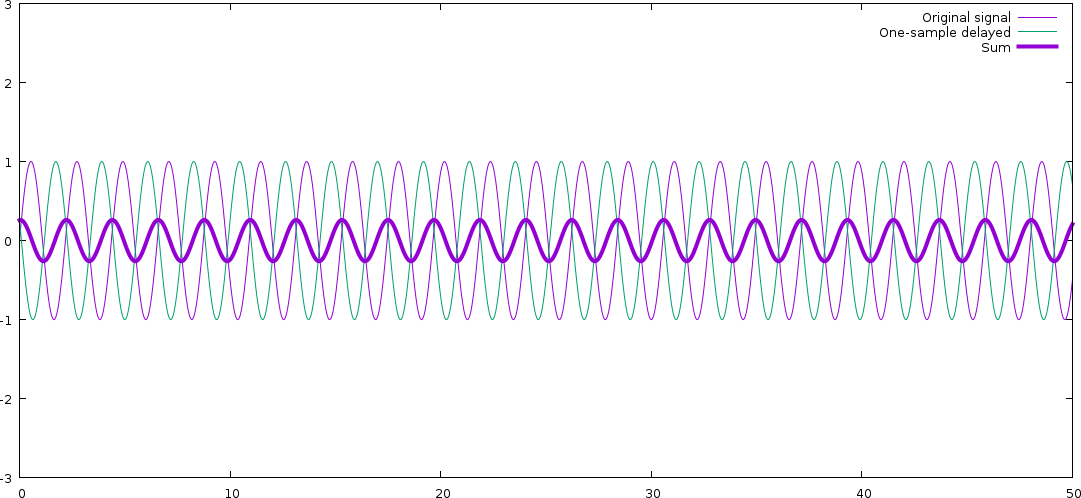
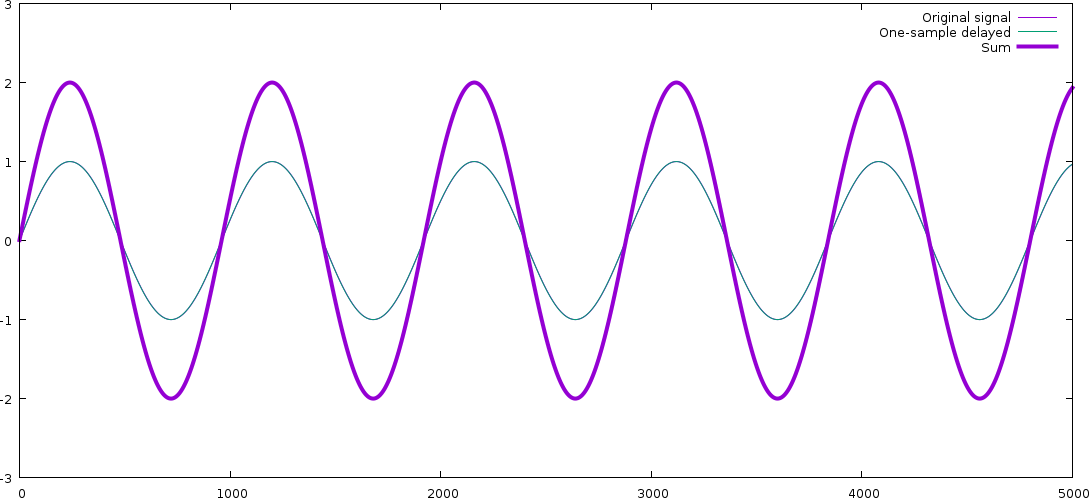
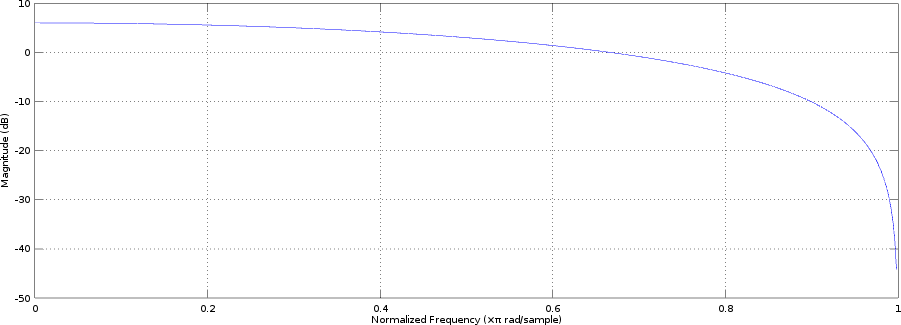
At some point back when the dinosaurs roamed the Earth and I was in high school, I borrowed my first digital signal processing book from a friend. I later went on to an engineering education and master's thesis about DSP, but the very basics of DSP never stop to fascinate me. Today, I wanted to write something about one of them and how it affects audio processing in Nageru (and finally, how Debian's policies put me in a bit of a bind on this issue). DSP texts tend to obscure profound truths with large amounts of maths, so I'll try to present a somewhat less general result that doesn't require going into the mathematical details. That rule is: Adding a signal to weighted, delayed copies of itself is a filtering operation. (It's simple, but ignoring it will have sinister effects, as we'll see later.) Let's see exactly what that means with a motivating example. Let's say that I have a signal where I want to get rid of (or rather, reduce) high frequencies. The simplest way I can think of is to add every neighboring sample; that is, set yn = xn + xn-1. For each sample, we add the previous sample, ie., the signal as it was one sample ago. (We ignore what happens at the edges; the common convention is to assume signals extend out to infinity with zeros.) What effect will this have? We can figure it out with some trigonometry, but let's just demonstrate it by plotting instead: We assume 48 kHz sample rate (which means that our one-sample delay is 20.83 s) and a 22 kHz note (definitely treble!), and plot the signal with one-sample delay (the x axis is sample number): Filtered 22 kHz As you can see, the resulting signal is a new signal of the same frequency (which is always true; linear filtering can never create new frequencies, just boost or dampen existing ones), but with much lower amplitude. The signal and the delayed version of it end up cancelling each other mostly out. Also note that there signal has changed phase; the resulting signal has been a bit delayed compared to the original. Now let's look at a 50 Hz signal (turn on your bass face). We need to zoom out a bit to see full 50 Hz cycles: Filtered 50 Hz The original signal and the delayed one overlap almost exactly! For a lower frequency, the one-sample delay means almost nothing (since the waveform is varying so slowly), and thus, in this case, the resulting signal is amplified, not dampened. (The signal has changed phase here, too actually exactly as much in terms of real time but we don't really see it, because we've zoomed out.) Real signals are not pure sines, but they can be seen as sums of many sines (another fundamental DSP result), and since filtering is a linear operation, it affects those sines independently. In other words, we now have a very simple filter that will amplify low frequencies and dampen high frequencies (and delay the entire signal a little bit). We can do this for all frequencies from 0 to 24000 Hz; let's ask Octave to do it for us: Frequency plot for simple filter (Of course, in a real filter, we'd probably multiply the result with 0.5 to leave the bass untouched instead of boosting it, but it doesn't really change anything. A real filter would have a lot more coefficients, though, and they wouldn't all be the same!) Let's now turn to a problem that will at first seem different: Combining audio from multiple different time sources. For instance, when mixing video, you could have input from two different cameras or sounds card and would want to combine them (say, a source playing music and then some audience sound from a camera). However, unless you are lucky enough to have a professional-grade setup where everything runs off the same clock (and separate clock source cables run to every device), they won't be in sync; sample clocks are good, but they are not perfect, and they have e.g. some temperature variance. Say we have really good clocks and they only differ by 0.01%; this means that after an hour of streaming, we have 360 ms delay, completely ruining lip sync! This means we'll need to resample at least one of the sources to match the other; that is, play one of them faster or slower than it came in originally. There are two problems here: How do you determine how much to resample the signals, and how do we resample them? The former is a difficult problem in its own right; about every algorithm not backed in solid control theory is doomed to fail in one way or another, and when they fail, it's extremely annoying to listen to. Nageru follows a 2012 paper by Fons Adriaensen; GStreamer does well, something else. It fails pretty badly in a number of cases; see e.g. this 2015 master's thesis that tries to patch it up. However, let's ignore this part of the problem for now and focus on the resampling. So let's look at the case where we've determined we have a signal and need to play it 0.01% faster (or slower); in a real situation, this number would vary a bit (clocks are not even consistently wrong). This means that at some point, we want to output sample number 3000 and that corresponds to input sample number 3000.3, ie., we need to figure out what's between two input samples. As with so many other things, there's a way to do this that's simple, obvious and wrong, namely linear interpolation. The basis of linear interpolation is to look at the two neighboring samples and weigh them according to the position we want. If we need sample 3000.3, we calculate y = 0.7 x3000 + 0.3 x3001 (don't switch the two coefficients!), or, if we want to save one multiplication and get better numerical behavior, we can use the equivalent y = x3000 + 0.3 (x3001 - x3000). And if we need sample 5000.5, we take y = 0.5 x5000 + 0.5 x5001. And after a while, we'll be back on integer samples; output sample 10001 corresponds to x10000 exactly. By now, I guess it should be obvious what's going on: We're creating a filter! Linear interpolation will inevitably result in high frequencies being dampened; and even worse, we are creating a time-varying filter, which means that the amount of dampening will vary over time. This manifests itself as a kind of high-frequency flutter , where the amount of flutter depends on the relative resampling frequencies. There's also cubic resampling (which can mean any of several different algorithms), but it only really reduces the problem, it doesn't really solve it. The proper way of interpolating depends a lot on exactly what you want (e.g., whether you intend to change the rate quickly or not); this paper lays out a bunch of them, and was the paper that originally made me understand why linear interpolation is so bad. Nageru outsources this problem to zita-resampler, again by Fons Adriaensen; it yields extremely high-quality resampling under controlled delay, through a relatively common technique known as polyphase filters. Unfortunately, doing this kind of calculations takes CPU. Not a lot of CPU, but Nageru runs in rather CPU-challenged environments (ultraportable laptops where the GPU wants most of the TDP, and the CPU has to go down to the lowest frequency), and it is moving in a direction where it needs to resample many more channels (more on the later), so every bit of CPU helps. So I coded up an SSE optimization of the inner loop for a particular common case (stereo signals) and sent it in for upstream inclusion. (It made the code 2.7 times as fast without any structural changes or reducing precision, which is pretty much what you can expect from SSE.) Unfortunately, after a productive discussion, suddenly upstream went silent. I tried pinging, pinging again, and after half a year pinging again, but to no avail. I filed the patch in Debian's BTS, but the maintainer understandably is reluctant to carry a delta against upstream. I also can't embed a copy; Debian policy would dictate that I build against the system's zita-resampler. I could work around it by rewriting zita-resampler until it looks nothing like the original, which might be a good idea anyway if I wanted to squeeze out the last drops of speed; there are AVX optimizations to be had in addition to SSE, and the structure as-is isn't ideal for SSE optimizations (although some of the changes I have in mind would have to be offset against increased L1 cache footprint, so careful benchmarking would be needed). But in a sense, it feels like just working around a policy that's there for good reason. So like I said, I'm in a bit of a bind. Maybe I should just buy a faster laptop. Oh, and how does GStreamer solve this? Well, it doesn't use linear interpolation. It does something even worse it uses nearest neighbor. Gah. Update: I was asked to clarify that this is about the audio resampling done by the GStreamer audio sink to sync signals, not in the audioresample element, which solves a related but different problem (static sample rate conversion). The audioresample element supports a number of different resampling methods; I haven't evaluated them.
David Moreno: I quit

I just recently quit my job at the startup company I had been working in for almost five years. In startup terms, such long time might be a whole lifetime, but in my case, I grew liking it more and more as the years came, I had evolved from being just another engineer, to lead a team of seven great developers, with decision-making tasks and strategy planning for our technical infrastructure. It s been such a great long teaching journey that I m nothing but pleased with my own performance, learned lessons and skills and all I provided and was provided by the project. Leaving a city like New York is not an easy task. You have it all there, you start making a life and suddenly, before you know it, you already have a bunch of ties to the place, people, leases, important dates, all kinds of shit. Seriously, all kinds of crazy ass shit start to fill up your baggage. You wake up everyday to get into the subway and commute surrounded by all of this people that are just like you: so similar yet so immensely different. No, leaving the city is not an easy task, it s not something to take lightly. You know how people just say my cycle has ended in this place as an euphemism not to end in bad terms with anyone? Well, ending a cycle is indeed a reality, I got to a point where I felt like I needed to head into a different direction, take on new challenges and overall, peace out and hope the best to everyone, specially to myself. This was me, on my last day at work, last Friday of June: (Some) people seem to be anxious to know what I m doing next, and my answer is, go mind your own fucking business. However, life is short and I would love to do any of the following: Decisions, decisions For the time being, I m chilling with my people, friends and family in beautiful Mexico City. I ve been doing so for the entire month of July and I couldn t be more content. August will see my 28th birthday and as I approach thirty, I believe I need to continue moving forward. This stupid world is a tiny place and our lives are short, I for one, will definitively try to take the bull by the horns. Thanks for reading, more updates soon. Peace.

10 August 2016

Norbert Preining: Suki Kim Without You, There Is No Us

A book that goes further behind the walls that surround North Korea than anything else I have seen. Suki Kim managed to squeeze herself, American-Korean, into a English teaching job at the Pyongyang University of Science and Technology, and reports her experiences during two visits there. suki-kim_without-you Most of us in the connected world are well aware about the incredibly backwardness of North Korea, and the harsh living conditions despite the praise that is bombarded onto us through the official channels. But reading about the incredibly underdeveloped students at PUST, Pyongyang University of Science and Technology, the elite of the country, who never heard about the most basic techniques, is still surprising.
Time there seemed to pass differently. When you are shut off from the world, every day is exactly the same as the one before. This sameness has a way of wearing down your soul until you become nothing but a breathing, toiling, consuming thing that awakes to the sun and sleeps at the dawning of the dark.
Another very disturbing part of this book are the short but intensive looks into the country side, when excursions or shopping trips were scheduled. They lay open a barren land, with Gulag like working conditions and permanent shortage of proper food. I have been aware about the situation in North Korea, but reading about it from a very special perspective gave me the shivers.

9 August 2016

Shirish Agarwal: Doha and the Supreme Court of DFSG Free

Hi, I am in two minds of what to write about Doha. My job has been vastly simplified by a friend when he shared with me https://www.youtube.com/watch?v=LdrAd-44LW0 . That video is more relevant and more closer to the truth than whatever I can share. As can be seen it is funny but more sad the way Qatarians are trying to figure out how things will be and as can be seen it seems to heading towards a real estate bubble . They would have to let go of the Sharia if they are thinking of wealthy westerners coming to stay put. I am just sad to know that many of my country-men are stuck there and although I hope the best for them, I dread it may turn out the way it has turned out for many people of Indians, and especially from Kerala in Saudi Arabia. I would touch about the Kerala situation probably in another blog post as this time is exclusively for legal aspects which were discussed in Debconf. A bit of backgrounder here, one part of my family is lawyers which means I have somewhat notion of law as practiced in our land. As probably everybody knows, India was ruled by the British for around 150 odd years. One of the things that they gave while leaving was/is the IPC (Indian Penal Code) and is practiced with the common law concept. The concept means precedence of any judgement goes quite some way in framing rulings and law of the land as time goes on besides the lobbying and the politics which happens in any democracy. Free software would not have been there without the GPL The General Public License. And the license is as much a legal document as it s something that the developers can work without becoming deranged, as it is one of the more simpler licenses to work with. My own understanding of the legal, ethical and moral issues around me were framed by two-three different TV shows, books (fiction and non-fiction alike) apart from what little news I heard in family. One was M*A*S*H* (with Alan Alda and his frailness, anarchism, humanism, civil rights), the Practise and Boston Legal which does lay bare the many grey areas that lawyers have to deal with ( The Practice also influenced a lot of civil rights understanding and First amendment, but as it is a TV show, how much of it is actually practiced for lawyers and how much moral dilemma they are can only be guessed at.) . In books it is artists like John Grisham, Michael Connelly as well as Perry Mason Agatha Christie. In non-fiction look at the treasures under bombayhighcourt e-books corner and series of Hamlyn Lectures. I would have to warn that all of the above are major time-sinks but rewarding in their own way. Also haven t read all of them as time and interests are constrained but do know they are good for understanding bit of our history. I do crave for a meetup kind of scenario when non-lawyers can read and discuss about facets of law . All that understanding was vastly amplified by Groklaw.net which made non-lawyers at the very least be able to decipher and understand what is going on in the free software world. After PJ (Pamela Jones) closed it in 2013 due to total surveillance by the Free World (i.e. the United States of America, NSA) we have been thirsty. We do get occasionally somewhat mildly interesting articles in lwn.net or arstechnica.net but nowhere the sheer brilliance of groklaw. So, it was a sheer stroke of luck that I met Mr. Bradley M. Kuhn who works with Karen Sandler on Software Conservancy. While I wanted to be there for his presentation, it was just one of those days which doesn t go as planned. However, as we met socially and over e-mail there were two basic questions which I asked him which also imbibes why we need to fight for software freedom in the court of law. Below is a re-wording of what he shared . Q1. why do people think that GPL still needs to be challenged in the court of law while there are gpl-violations which has been more or less successfully defended in the court of law ? Bradley Kuhn the GPL violations is basically a violation of one or more clauses of the GPL license and not the GPL license as a whole and my effort during my lifetime would be to make/have such precedents that the GPL is held as a valid license in the court of law. Q2. Let s say IF GPL is held to be valid in the court of law, would FSF benefit monetarily, at least to my mind it might be so, as more people and comapnies could be convinced to use strong copyleft licenses such as GPLv3 or AGPLv3 . Bradley Kuhn It may or may not. It is possible that even after winning, that people and especially companies may go for weak copyleft licenses if it suits them. The only benefit would probably would be to those people who are already using GPLv3 as the law could be used to protect them as well. Although we would want and welcome companies who would use strong copyleft license such as the GPL, the future is in future and hence uncertain. Both possibilities co-exist. While Bradley didn t say it, I would add further here it probably would mean also moving from being a more offensive mode (which GPL-violations is based upon where a violation occurs and somebody either from the victim s side or a by-stander notices the violation, brings it to the notice of the victim and the GPL-volations team.) to perhaps it being defended by the DMCA people themselves, once GPL is held as a valid license in the eyes of law. Although should you use the DMCA or not is a matter of choice, personal belief system as well as your legal recourses. I have to share that the FSF and the GPL-violations team are probably very discerning when they take up the fight as most of the work done by them is pro-bono (i.e. they don t make a single penny/paisa from the work done therein.) and hence in view of scarce resources, it makes sense to go only for the biggest violators in the hopes that you can either make them agree to compensate and agree to the terms of license of any software/hardware combination or sue them and take a bigger share of the reward/compensation awarded by the Court to help the defendant and maybe some of the proceeds donated by the defendant and people like you and me to make sure that Conservancy and the GPL-violations team is still around to help the next time something similar happens.
Bradley Kuhn presenting at #Debconf 16

Bradley Kuhn presenting at #Debconf 16

Now, as far as his presentation is concerned, whose video can be seen at http://meetings-archive.debian.net/pub/debian-meetings/2016/debconf16/The_Supreme_Court_of_DFSGFree.webm , I thought it was tame. While he talked about gaming the system in some sense, he was sharing that the system debian-legal works (most-of-the-time). The list actually works because many far more brilliant people than me take time to understand the intricacies of various licenses and how they should be interpreted through the excellently written Debian Free Software Guidelines and whether the license under discussion contravenes the DFSG or is part of it. I do agree with his point though that the ftp-master/s and the team may not be the right person to judge the license in adherence to the DFSG, or her/is not giving a reason for rejecting a package to not entering into the package archive. I actually asked the same question on debian-legal and while I had guessed, it seems there is enough review of the licenses per-se as answer from Paul Wise shows. Charles Pessley also shared an idea he has documented which probably didn t get much traction as involves more work on DD s without any benefit to show for it. All in all I hope it sheds some light on why there is need to be more aware of law in software freedom. Two Organizations which work on software freedom from legal standpoint are SFLC (Delhi) headed by the charming Mr. Eben Moglen and ALF (Bangalore). I do hope more people, especially developers take a bit more interest in some of the resources mentioned above.
Filed under: Miscellenous Tagged: #Alternative Law Forum, #bombayhighcourt e-library, #Common Law, #Debconf16, #Fiction, #Hewlyn lectures, #India, #Jurispudence, #legal fiction, #real estate bubble, #SFLC.in, #Software Freedom, #timesink, Doha, Law

Next.

Previous.