I grew up with the Internet and its ethics and politics have always
been important in my life. But I have also been involved at other
levels, against police brutality, for Food, Not Bombs,
worker autonomy, software freedom, etc. For a long time,
that all seemed coherent.
But the more I look at the modern Internet -- and the
mega-corporations that control it -- and the less confidence I have in
my original political analysis of the liberating potential of
technology. I have come to believe that most of our technological
development is harmful to the large majority of the population of the
planet, and of course the rest of the biosphere. And now I feel this
is not a new problem.
This is because the Internet is a neo-colonial device, and has been
from the start. Let me explain.
What is Neo-Colonialism?
The term "neo-colonialism" was coined by Kwame Nkrumah,
first president of Ghana. In Neo-Colonialism, the Last Stage of
Imperialism (1965), he wrote:
In place of colonialism, as the main instrument of imperialism, we
have today neo-colonialism ... [which] like colonialism, is an
attempt to export the social conflicts of the capitalist
countries. ...
The result of neo-colonialism is that foreign capital is used for
the exploitation rather than for the development of the less
developed parts of the world. Investment, under neo-colonialism,
increases, rather than decreases, the gap between the rich and the
poor countries of the world.
So basically, if colonialism is Europeans bringing genocide, war,
and its religion to the Africa, Asia, and the Americas,
neo-colonialism is the Americans (note the "n") bringing capitalism to
the world.
Before we see how this applies to the Internet, we must therefore make
a detour into US history. This matters, because anyone would be
hard-pressed to decouple neo-colonialism from the empire under which
it evolves, and here we can only name the United States of America.
US Declaration of Independence
Let's start with the United States declaration of independence
(1776). Many Americans may roll their eyes at this, possibly because
that declaration is not actually part of the US constitution and
therefore may have questionable legal standing. Still, it was
obviously a driving philosophical force in the founding of the
nation. As its author, Thomas Jefferson, stated:
it was intended to be an expression of the American mind, and to
give to that expression the proper tone and spirit called for by the
occasion
In that aging document, we find the following pearl:
We hold these truths to be self-evident, that all men are created
equal, that they are endowed by their Creator with certain
unalienable Rights, that among these are Life, Liberty and the
pursuit of Happiness.
As a founding document, the Declaration still has an impact in the
sense that the above quote has been called an:
"immortal declaration", and "perhaps [the] single phrase" of the
American Revolutionary period with the greatest "continuing
importance." (Wikipedia)
Let's read that "immortal declaration" again: "all men are created
equal". "Men", in that context, is limited to a certain number of
people, namely "property-owning or tax-paying white males, or about
6% of the population". Back when this was written, women didn't
have the right to vote, and slavery was legal. Jefferson himself owned
hundreds of slaves.
The declaration was aimed at the King and was a list of
grievances. A concern of the colonists was that the King:
has excited domestic insurrections amongst us, and has endeavoured
to bring on the inhabitants of our frontiers, the merciless Indian
Savages whose known rule of warfare, is an undistinguished
destruction of all ages, sexes and conditions.
This is a clear mark of the frontier myth which paved the way for
the US to exterminate and colonize the territory some now call the
United States of America.
The declaration of independence is obviously a colonial document,
having being written by colonists. None of this is particularly
surprising, historically, but I figured it serves as a good reminder
of where the Internet is coming from, since it was born in the US.
A Declaration of the Independence of Cyberspace
Two hundred and twenty years later, in 1996, John Perry Barlow
wrote a declaration of independence of cyberspace. At this
point, (almost) everyone has a right to vote (including women),
slavery was abolished (although some argue it still exists in the
form of the prison system); the US has made tremendous
progress. Surely this text will have aged better than the previous
declaration it is obviously derived from. Let's see how it reads today
and how it maps to how the Internet is actually built now.
Borders of Independence
One of the key ideas that Barlow brings up is that "cyberspace does
not lie within your borders". In that sense, cyberspace is the final
frontier: having failed to colonize the moon, Americans turn
inwards, deeper into technology, but still in the frontier
ideology. And indeed, Barlow is one of the co-founder of the
Electronic Frontier Foundation (the beloved EFF), founded six
years prior.
But there are other problems with this idea. As Wikipedia quotes:
The declaration has been criticized for internal
inconsistencies.[9] The declaration's assertion that
'cyberspace' is a place removed from the physical world has also
been challenged by people who point to the fact that the Internet is
always linked to its underlying geography.[10]
And indeed, the Internet is definitely a physical object. First
controlled and severely restricted by "telcos" like AT&T, it was
somewhat "liberated" from that monopoly in 1982 when an anti-trust
lawsuitbroke up the monopoly, a key historical event that,
one could argue, made the Internet possible.
(From there on, "backbone" providers could start competing and emerge,
and eventually coalesce into new monopolies: Google has a monopoly on
search and advertisement, Facebook on communications for a few
generations, Amazon on storage and computing, Microsoft on hardware,
etc. Even AT&T is now pretty much as consolidated as it was
before.)
The point is: all those companies have gigantic data centers and
intercontinental cables. And those are definitely prioritizing the
western world, the heart of the empire. Take for example Google's
latest 3,900 mile undersea cable: it does not connect Argentina to
South Africa or New Zealand, it connects the US to UK and
Spain. Hardly a revolutionary prospect.
Private Internet
But back to the Declaration:
Do not think that you can build it, as though it were a public
construction project. You cannot. It is an act of nature and it
grows itself through our collective actions.
In Barlow's mind, the "public" is bad, and private is good,
natural. Or, in other words, a "public construction project" is
unnatural. And indeed, the modern "nature" of development is private:
most of the Internet is now privately owned and operated.
I must admit that, as an anarchist, I loved that sentence when I read
it. I was rooting for "us", the underdogs, the revolutionaries. And,
in a way, I still do: I am on the board of Koumbit and work for a
non-profit that has pivoted towards censorship and surveillance
evasion. Yet I cannot help but think that, as a whole, we have failed
to establish that independence and put too much trust in private
companies. It is obvious in retrospect, but it was not, 30 years
ago.
Now, the infrastructure of the Internet has zero accountability to
traditional political entities supposedly representing the people, or
even its users. The situation is actually worse than when the US was
founded (e.g. "6% of the population can vote"), because the owners of the
tech giants are only a handful of people who can override any
decision. There's only one Amazon CEO, he's called Jeff Bezos, and he
has total control. (Update: Bezos actually ceded the CEO role to Andy
Jassy, AWS and Amazon music founder, while remaining executive
chairman. I would argue that, as the founder and the richest man
on earth, he still has strong control over Amazon.)
Social Contract
Here's another claim of the Declaration:
We are forming our own Social Contract.
I remember the early days, back when "netiquette" was a word, it
did feel we had some sort of a contract. Not written in standards of
course -- or barely (see RFC1855) -- but as a tacit
agreement. How wrong we were. One just needs to look at Facebook to
see how problematic that idea is on a global network.
Facebook is the quintessential "hacker" ideology put in practice. Mark
Zuckerberg explicitly refused to be "arbiter of truth" which
implicitly means he will let lies take over its platforms.
He also sees Facebook as place where everyone is equal, something
that echoes the Declaration:
We are creating a world that all may enter without privilege or
prejudice accorded by race, economic power, military force, or
station of birth.
(We note, in passing, the omission of gender in that list, also
mirroring the infamous "All men are created equal" claim of the US
declaration.)
As the Wall Street Journal's (WSJ) Facebook files later shown,
both of those "contracts" have serious limitations inside Facebook. There are
VIPs who systematically bypass moderation systems including
fascists and rapists. Drug cartels and human traffickers
thrive on the platform. Even when Zuckerberg himself tried to
tame the platform -- to get people vaccinated or to make it
healthier -- he failed: "vaxxer" conspiracies multiplied and
Facebook got angrier.
This is because the "social contract" behind Facebook and those large
companies is a lie: their concern is profit and that means
advertising, "engagement" with the platform, which causes increased
anxiety and depression in teens, for example.
Facebook's response to this is that they are working really hard on
moderation. But the truth is that even that system is severely
skewed. The WSJ showed that Facebook has translators for only 50
languages. It's a surprisingly hard to count human languages but
estimates range the number of distinct languages between 2500
and 7000. So while 50 languages seems big at first, it's actually a
tiny fraction of the human population using Facebook. Taking the first
50 of the Wikipedia list of languages by native speakers we omit
languages like Dutch (52), Greek (74), and Hungarian (78), and that's
just a few random nations picks from Europe.
As an example, Facebook has trouble moderating even a major language
like Arabic. It censored content from legitimate Arab news sources
when they mentioned the word al-Aqsa because Facebook associates
it with the al-Aqsa Martyrs' Brigades when they were talking
about the Al-Aqsa Mosque... This bias against Arabs also shows
how Facebook reproduces the American colonizer politics.
The WSJ also pointed out that Facebook spends only 13% of its
moderation efforts outside of the US, even if that represents 90% of
its users. Facebook spends three more times moderating on "brand
safety", which shows its priority is not the safety of its users, but
of the advertisers.
Military Internet
Sergey Brin and Larry Page are the Lewis and Clark of
our generation. Just like the latter were sent by Jefferson (the same)
to declare sovereignty over the entire US west coast, Google declared
sovereignty over all human knowledge, with its mission statement "to
organize the world's information and make it universally accessible
and useful". (It should be noted that Page somewhat questioned that
mission but only because it was not ambitious enough, Google
having "outgrown" it.)
The Lewis and Clark expedition, just like Google, had a scientific
pretext, because that is what you do to colonize a world,
presumably. Yet both men were military and had to receive scientific
training before they left. The Corps of Discovery was made up of
a few dozen enlisted men and a dozen civilians, including York an
African American slave owned by Clark and sold after the
expedition, with his final fate lost in history.
And just like Lewis and Clark, Google has a strong military
component. For example, Google Earth was not originally built at
Google but is the acquisition of a company called Keyhole which had
ties with the CIA. Those ties were brought inside Google during
the acquisition. Google's increasing investment inside the
military-industrial complex eventually led Google to workers
organizing a revolt although it is currently unclear to me how
much Google is involved in the military apparatus. Other companies,
obviously, do not have such reserve, with Microsoft, Amazon, and
plenty of others happily bidding on military contracts all the time.
Spreading the Internet
I am obviously not the first to identify colonial structures in the
Internet. In an article titled The Internet as an Extension of
Colonialism, Heather McDonald correctly identifies fundamental
problems with the "development" of new "markets" of Internet
"consumers", primarily arguing that it creates a digital divide
which creates a "lack of agency and individual freedom":
Many African people have gained access to these technologies but not
the freedom to develop content such as web pages or social media
platforms in their own way. Digital natives have much more power and
therefore use this to create their own space with their own norms,
shaping their online world according to their own outlook.
But the digital divide is certainly not the worst problem we have to
deal with on the Internet today. Going back to the Declaration, we
originally believed we were creating an entirely new world:
This governance will arise according to the conditions of our
world, not yours. Our world is different.
How I dearly wished that was true. Unfortunately, the Internet is
not that different from the offline world. Or, to be more accurate,
the values we have embedded in the Internet, particularly of free
speech absolutism, sexism, corporatism, and exploitation, are now
exploding outside of the Internet, into the "real" world.
The Internet was built with free software which, fundamentally, was
based on quasi-volunteer labour of an elite force of white men with
obviously too much time on their hands (and also: no children). The
mythical writing of GCC and Emacs by Richard Stallman is a good
example of this, but the entirety of the Internet now seems to be
running on random bits and pieces built by hit-and-run programmers
working on their copious free time. Whenever any of those fails,
it can compromise or bring down entire systems. (Heck, I wrote
this article on my day off...)
This model of what is fundamentally "cheap labour" is spreading out
from the Internet. Delivery workers are being exploited to the bone by
apps like Uber -- although it should be noted that workers organise
and fight back. Amazon workers are similarly exploited beyond
belief, forbidden to take breaks until they pee in bottles, with
ambulances nearby to carry out the bodies. During peak of the
pandemic, workers were being dangerously exposed to the virus in
warehouses. All this while Amazon is basically taking over the entire
economy.
The Declaration culminates with this prophecy:
We will spread ourselves across the Planet so that no one can arrest
our thoughts.
This prediction, which first felt revolutionary, is now chilling.
Colonial Internet
The Internet is, if not neo-colonial, plain colonial. The US colonies
had cotton fields and slaves, we have disposable cell phones and
Foxconn workers. Canada has its cultural genocide, Facebook
has his own genocides in Ethiopia, Myanmar, and mob violence
in India. Apple is at least implicitly accepting the Uyghur
genocide. And just like the slaves of the colony, those atrocities
are what makes the empire run.
The Declaration actually ends like this, a quote which I have in my
fortune cookies file:
We will create a civilization of the Mind in Cyberspace. May it be
more humane and fair than the world your governments have made
before.
That is still inspiring to me. But if we want to make "cyberspace"
more humane, we need to decolonize it. Work on cyberpeace instead of
cyberwar. Establish clear code of conduct, discuss ethics, and
question your own privileges, biases, and culture. For me the first
step in decolonizing my own mind is writing this article. Breaking
uptech monopolies might be an important step, but it won't be
enough: we have to do a culture shift as well, and that's the hard
part.
Appendix: an apology to Barlow
I kind of feel bad going through Barlow's declaration like this, point
by point. It is somewhat unfair, especially since Barlow passed away a
few years ago and cannot mount a response (even humbly assuming that
he might read this). But then again, he himself recognized he was
a bit too "optimistic" in 2009, saying: "we all get older and
smarter":
I'm an optimist. In order to be libertarian, you have to be an
optimist. You have to have a benign view of human nature, to believe
that human beings left to their own devices are basically good. But
I'm not so sure about human institutions, and I think the real point
of argument here is whether or not large corporations are human
institutions or some other entity we need to be thinking about
curtailing. Most libertarians are worried about government but not
worried about business. I think we need to be worrying about
business in exactly the same way we are worrying about government.
And, in a sense, it was a little naive to expect Barlow to not be a
colonist. Barlow is, among many things, a cattle rancher who grew up
on a colonial ranch in Wyoming. The ranch was founded in 1907 by his
great uncle, 17 years after the state joined the Union, and only a
generation or two after the Powder River War (1866-1868) and
Black Hills War (1876-1877) during which the US took over lands
occupied by Lakota, Cheyenne, Arapaho, and other native American
nations, in some of the last major First Nations Wars.
Appendix: further reading
There is another article that almost has the same title as this one:
Facebook and the New Colonialism. (Interestingly, the <title>
tag on the article is actually "Facebook the Colonial Empire" which I
also find appropriate.) The article is worth reading in full, but I
loved this quote so much that I couldn't resist reproducing it here:
Representations of colonialism have long been present in digital
landscapes. ( Even Super Mario Brothers, the video game designer
Steven Fox told me last year. You run through the landscape, stomp
on everything, and raise your flag at the end. ) But web-based
colonialism is not an abstraction. The online forces that shape a
new kind of imperialism go beyond Facebook.
It goes on:
Consider, for example, digitization projects that focus primarily on
English-language literature. If the web is meant to be humanity s new
Library of Alexandria, a living repository for all of humanity s
knowledge, this is a problem. So is the fact that the vast majority of
Wikipedia pages are about a relatively tiny square of the planet. For
instance, 14 percent of the world s population lives in Africa, but
less than 3 percent of the world s geotagged Wikipedia articles
originate there, according to a 2014 Oxford Internet Institute
report.
And they introduce another definition of Neo-colonialism, while
warning about abusing the word like I am sort of doing here:
I m loath to toss around words like colonialism but it s hard to
ignore the family resemblances and recognizable DNA, to wit, said
Deepika Bahri, an English professor at Emory University who focuses
on postcolonial studies. In an email, Bahri summed up those
similarities in list form:
ride in like the savior
bandy about words like equality, democracy, basic rights
mask the long-term profit motive (see 2 above)
justify the logic of partial dissemination as better than nothing
partner with local elites and vested interests
accuse the critics of ingratitude
In the end, she told me, if it isn t a duck, it shouldn t quack
like a duck.
Another good read is the classic Code and other laws of
cyberspace (1999, free PDF) which is also critical of
Barlow's Declaration. In "Code is law", Lawrence Lessig argues that:
computer code (or "West Coast Code", referring to Silicon Valley)
regulates conduct in much the same way that legal code (or "East
Coast Code", referring to Washington, D.C.) does (Wikipedia)
And now it feels like the west coast has won over the east coast, or
maybe it recolonized it. In any case, Internet now christens
emperors.
Like each month, have a look at the work funded by Freexian s Debian LTS offering.
Debian project funding
Folks from the LTS team, along with members of the Debian Android Tools team and Phil Morrel, have proposed work on the Java build tool, gradle, which is currently blocked due to the need to build with a plugin not available in Debian. The LTS team reviewed the project submission and it has been approved. After approval we ve created a Request for Bids which is active now.
You ll hear more about this through official Debian channels, but in the meantime, if you feel you can help with this project, please submit a bid. Thanks!
This September, Freexian set aside 2550 EUR to fund Debian projects.
We re looking forward to receive more projects from various Debian teams! Learn more about the rationale behind this initiative in this article.
Debian LTS contributors
In September, 15 contributors have been paid to work on Debian LTS, their reports are available:
Abhijith PA has returned hours and marked themselves inactive, at least for the time being. He did 0h out of 14h, carried over 14h and returned 28h.
Adrian Bunk did 19.5h (out of 24.75h assigned and 12.75 from August), carrying over 18h to October.
Emilio Pozuelo Monfort did not report back about their work so we assume they did nothing (out of 5.5h assigned plus 74.5h from August), thus is carrying over 80h for October.
Holger Levsen did 3h (out of 12h assigned) and gave back 9h and carried over 3h.
Jeremiah Foster worked 10 hours (out of 20h assigned) on LTS work, carrying over 10h.
Lee Garrett did not report back about their work so we assume they did nothing (out of 24.75h assigned and 23.75 from August), thus is carrying over 48.50h for October.
Markus Koschany did 43.5h (out of 24.75h assigned and 18.75h from August)
Utkarsh Gupta did 24.75h (out of 24.75h assigned) but did not publish his report yet.
Ola Lundqvist did 2 hours (out of 21h carried over from previous months), and is thus carrying 19h for October.
Evolution of the situation
In September we released 30 DLAs. September was also the second month of Jeremiah coordinating LTS contributors.
Also, we would like say that we are always looking for new contributors to LTS. Please contact Jeremiah if you are interested!
The security tracker currently lists 33 packages with a known CVE and the dla-needed.txt file has 26 packages needing an update.
Thanks to our sponsors
Sponsors that joined recently are in bold.
The goal behind reproducible builds is to ensure that no deliberate flaws have been introduced during compilation processes via promising or mandating that identical results are always generated from a given source. This allowing multiple third-parties to come to an agreement on whether a build was compromised or not by a system of distributed consensus.
In these reports we outline the most important things that have been happening in the world of reproducible builds in the past month:
First mentioned in our March 2021 report, Martin Heinz published two blog posts on sigstore, a project that endeavours to offer software signing as a public good, [the] software-signing equivalent to Let s Encrypt . The two posts, the first entitled Sigstore: A Solution to Software Supply Chain Security outlines more about the project and justifies its existence:
Software signing is not a new problem, so there must be some solution already, right? Yes, but signing software and maintaining keys is very difficult especially for non-security folks and UX of existing tools such as PGP leave much to be desired. That s why we need something like sigstore - an easy to use software/toolset for signing software artifacts.
Some time ago I checked Signal s reproducibility and it failed. I asked others to test in case I did something wrong, but nobody made any reports. Since then I tried to test the Google Play Store version of the apk against one I compiled myself, and that doesn t match either.
BitcoinBinary.org was announced this month, which aims to be a repository of Reproducible Build Proofs for Bitcoin Projects :
Most users are not capable of building from source code themselves, but we can at least get them able enough to check signatures and shasums. When reputable people who can tell everyone they were able to reproduce the project s build, others at least have a secondary source of validation.
Related to this, there was continuing discussion on how to embed/encode the build metadata for the Debian live images which were being worked on by Roland Clobus.
Ariadne Conill published another detailed blog post related to various security initiatives within the Alpine Linux distribution. After summarising some conventional security work being done (eg. with sudo and the release of OpenSSH version 3.0), Ariadne included another section on reproducible builds: The main blocker [was] determining what to do about storing the build metadata so that a build environment can be recreated precisely .
Finally, Bernhard M. Wiedemann posted his monthly reproducible builds status report.
Community news
On our website this month, Bernhard M. Wiedemann fixed some broken links [] and Holger Levsen made a number of changes to the Who is Involved? page [][][]. On our mailing list, Magnus Ihse Bursie started a thread with the subject Reproducible builds on Java, which begins as follows:
I m working for Oracle in the Build Group for OpenJDK which is primary responsible for creating a built artifact of the OpenJDK source code. [ ] For the last few years, we have worked on a low-effort, background-style project to make the build of OpenJDK itself building reproducible. We ve come far, but there are still issues I d like to address. []
diffoscopediffoscope is our in-depth and content-aware diff utility. Not only can it locate and diagnose reproducibility issues, it can provide human-readable diffs from many kinds of binary formats. This month, Chris Lamb prepared and uploaded versions 183, 184 and 185 as well as performed significant triaging of merge requests and other issues in addition to making the following changes:
New features:
Support a newer format version of the R language s .rds files. []
Don t call close_archive when garbage collecting Archive instances, unless open_archive definitely returned successfully. This prevents, for example, an AttributeError where PGPContainer s cleanup routines were rightfully assuming that its temporary directory had actually been created. []
Fix (and test) the comparison of R language s .rdb files after refactoring temporary directory handling. []
Ensure that RPM archives exists in the Debian package description, regardless of whether python3-rpm is installed or not at build time. []
Codebase improvements:
Use our assert_diff routine in tests/comparators/test_rdata.py. []
Move diffoscope.versions to diffoscope.tests.utils.versions. []
Reformat a number of modules with Black. [][]
However, the following changes were also made:
Mattia Rizzolo:
Fix an autopkgtest caused by the androguard module not being in the (expected) python3-androguard Debian package. []
Appease a shellcheck warning in debian/tests/control.sh. []
Ignore a warning from h5py in our tests that doesn t concern us. []
Drop a trailing .1 from the Standards-Version field as it s required. []
Zbigniew J drzejewski-Szmek:
Stop using the deprecated distutils.spawn.find_executable utility. [][][][][]
Adjust an LLVM-related test for LLVM version 13. []
Update invocations of llvm-objdump. []
Adjust a test with a one-byte text file for file version 5.40. []
And, finally, Benjamin Peterson added a --diff-context option to control unified diff context size [] and Jean-Romain Garnier fixed the Macho comparator for architectures other than x86-64 [].
Upstream patches
The Reproducible Builds project detects, dissects and attempts to fix as many currently-unreproducible packages as possible. We endeavour to send all of our patches upstream where appropriate. This month, we wrote a large number of such patches, including:
#990246 filed against vlc (forwarded upstream [][])
Testing framework
The Reproducible Builds project runs a testing framework at tests.reproducible-builds.org, to check packages and other artifacts for reproducibility. This month, the following changes were made:
Holger Levsen:
Drop my package rebuilder prototype as it s not useful anymore. []
Schedule old packages in Debian bookworm. []
Stop scheduling packages for Debian buster. [][]
Don t include PostgreSQL debug output in package lists. []
Detect Python library mismatches during build in the node health check. []
Update a note on updating the FreeBSD system. []
Mattia Rizzolo:
Silence a warning from Git. []
Update a setting to reflect that Debian bookworm is the new testing. []
Upgrade the PostgreSQL database to version 13. []
Roland Clobus (Debian live image generation):
Workaround non-reproducible config files in the libxml-sax-perl package. []
Use the new DNS for the snapshot service. []
Vagrant Cascadian:
Also note that the armhf architecture also systematically varies by the kernel. []
Contributing
If you are interested in contributing to the Reproducible Builds project, please visit our Contribute page on our website. However, you can get in touch with us via:
Like each month, have a look at the work funded by Freexian s Debian LTS offering.
Debian project funding
In August, we put aside 2460 EUR to fund Debian projects. We received a new project proposal that got approved and there s an associated bid request if you feel like proposing yourself to implement this project.
We re looking forward to receive more projects from various Debian teams! Learn more about the rationale behind this initiative in this article.
Debian LTS contributors
In August, 14 contributors have been paid to work on Debian LTS, their reports are available:
Abhijith PA did 4.0h (out of 14h assigned and 5h from August), thus carrying over 15h to September.
Adrian Bunk did 11h (out of 23.75h assigned), thus carrying over 12.75h to September.
Emilio Pozuelo Monfort did not report back about their work so we assume they did nothing (out of 23.75h assigned plus 50.75h from August), thus is carrying over 74.5h for September.
Holger Levsen did 3h (out of 12h assigned) to help coordinate the team, and gave back the remaining hours.
Lee Garrett did nothing (out of 23.75h assigned), thus is carrying over 23.75h for September.
Markus Koschany did 35h (out of 23.75h assigned and 30h from August), thus carrying over 18.75h to September.
Neil Williams did 24h (out of 23.75h assigned), thus anticipating 0.25h of October.
Roberto C. S nchez did 22.25h (out of 23.75h assigned), thus carrying over 1.5h to September.
Sylvain Beucler did 21.5h (out of 23.75h assigned), thus carrying over 2.25h to September.
Evolution of the situation
In August we released 30 DLAs.
This is the first month of Jeremiah coordinating LTS contributors. We would like to thank Holger Levsen for his work on this role up to now.
Also, we would like to remark once again that we are constantly looking for new contributors. Please contact Jeremiah if you are interested!
The security tracker currently lists 73 packages with a known CVE and the dla-needed.txt file has 29 packages needing an update.
Thanks to our sponsors
Sponsors that joined recently are in bold.
My home automation setup has been fairly static recently; it does what we need and generally works fine. One area I think could be better is controlling it; we have access Home Assistant on our phones, and the Alexa downstairs can control things, but there are no smart assistants upstairs and sometimes it would be nice to just push a button to turn on the light rather than having to get my phone out. Thanks to the fact the UK generally doesn t have neutral wire in wall switches that means looking at something battery powered. Which means wifi based devices are a poor choice, and it s necessary to look at something lower power like Zigbee or Z-Wave.
Zigbee seems like the better choice; it s a more open standard and there are generally more devices easily available from what I ve seen (e.g. Philips Hue and IKEA TR DFRI). So I bought a couple of Xiaomi Mi Smart Home Wireless Switches, and a CC2530 module and then ignored it for the best part of a year. Finally I got around to flashing the Z-Stack firmware that Koen Kanters kindly provides. (Insert rant about hardware manufacturers that require pay-for tool chains. The CC2530 is even worse because it s 8051 based, so SDCC should be able to compile for it, but the TI Zigbee libraries are only available in a format suitable for IAR s embedded workbench.)
Flashing the CC2530 is a bit of faff. I ended up using the CCLib fork by Stephan Hadinger which supports the ESP8266. The nice thing about the CC2530 module is it has 2.54mm pitch pins so nice and easy to jumper up. It then needs a USB/serial dongle to connect it up to a suitable machine, where I ran Zigbee2MQTT. This scares me a bit, because it s a bunch of node.js pulling in a chunk of stuff off npm. On the flip side, it Just Works and I was able to pair the Xiaomi button with the device and see MQTT messages that I could then use with Home Assistant. So of course I tore down that setup and went and ordered a CC2531 (the variant with USB as part of the chip). The idea here was my test setup was upstairs with my laptop, and I wanted something hooked up in a more permanent fashion.
Once the CC2531 arrived I got distracted writing support for the Desk Viking to support CCLib (and modified it a bit for Python3 and some speed ups). I flashed the dongle up with the Z-Stack Home 1.2 (default) firmware, and plugged it into the house server. At this point I more closely investigated what Home Assistant had to offer in terms of Zigbee integration. It turns out the ZHA integration has support for the ZNP protocol that the TI devices speak (I m reasonably sure it didn t when I first looked some time ago), so that seemed like a better option than adding the MQTT layer in the middle.
I hit some complexity passing the dongle (which turns up as /dev/ttyACM0) through to the Home Assistant container. First I needed an override file in /etc/systemd/nspawn/hass.nspawn:
(I m not clear why the VirtualEthernet needed to exist; without it networking broke entirely but I couldn t see why it worked with no override file.)
A udev rule on the host to change the ownership of the device file so the root user and dialout group in the container could see it was also necessary, so into /etc/udev/rules.d/70-persistent-serial.rules went:
In the container itself I had to switch PrivateDevices=true to PrivateDevices=false in the home-assistant.service file (which took me a while to figure out; yay for locking things down and then needing to use those locked down things).
Finally I added the hass user to the dialout group. At that point I was able to go and add the integration with Home Assistant, and add the button as a new device. Excellent. I did find I needed a newer version of Home Assistant to get support for the button, however. I was still on 2021.1.5 due to upstream dropping support for Python 3.7 and not being prepared to upgrade to Debian 11 until it was actually released, so the version of zha-quirks didn t have the correct info. Upgrading to Home Assistant 2021.8.7 sorted that out.
There was another slight problem. Range. Really I want to use the button upstairs. The server is downstairs, and most of my internal walls are brick. The solution turned out to be a TR DFRI socket, which replaced the existing ESP8266 wifi socket controlling the stair lights. That was close enough to the server to have a decent signal, and it acts as a Zigbee router so provides a strong enough signal for devices upstairs. The normal approach seems to be to have a lot of Zigbee light bulbs, but I have mostly kept overhead lights as uncontrolled - we don t use them day to day and it provides a nice fallback if the home automation has issues.
Of course installing Zigbee for a single button would seem to be a bit pointless. So I ordered up a Sonoff door sensor to put on the front door (much smaller than expected - those white boxes on the door are it in the picture above). And I have a 4 gang wireless switch ordered to go on the landing wall upstairs.
Now I ve got a Zigbee setup there are a few more things I m thinking of adding, where wifi isn t an option due to the need for battery operation (monitoring the external gas meter springs to mind). The CC2530 probably isn t suitable for my needs, as I ll need to write some custom code to handle the bits I want, but there do seem to be some ARM based devices which might well prove suitable
Colson Whitehead's latest novel, Harlem Shuffle, was always going to be widely reviewed, if only because his last two books won Pulitzer prizes. Still, after enjoying both The Underground Railroad and The Nickel Boys, I was certainly going to read his next book, regardless of what the critics were saying indeed, it was actually quite agreeable to float above the manufactured energy of the book's launch.
Saying that, I was encouraged to listen to an interview with the author by Ezra Klein. Now I had heard Whitehead speak once before when he accepted the Orwell Prize in 2020, and once again he came across as a pretty down-to-earth guy. Or if I were to emulate the detached and cynical tone Whitehead embodied in The Nickel Boys, after winning so many literary prizes in the past few years, he has clearly rehearsed how to respond to the cliched questions authors must be asked in every interview. With the obligatory throat-clearing of 'so, how did you get into writing?', for instance, Whitehead replies with his part of the catechism that 'It seemed like being a writer could be a cool job. You could work from home and not talk to people.' The response is the right combination of cute and self-effacing... and with its slight tone-deafness towards enforced isolation, it was no doubt honed before Covid-19.
Harlem Shuffle tells three separate stories about Ray Carney, a furniture salesman and 'fence' for stolen goods in New York in the 1960s. Carney doesn't consider himself a genuine criminal though, and there's a certain logic to his relativistic morality. After all, everyone in New York City is on the take in some way, and if some 'lightly used items' in Carney's shop happened to have had 'previous owners', well, that's not quite his problem. 'Nothing solid in the city but the bedrock,' as one character dryly observes. Yet as Ezra pounces on in his NYT interview mentioned abov, the focus on the Harlem underworld means there are very few women in the book, and Whitehead's circular response ah well, it's a book about the criminals at that time! was a little unsatisfying. Not only did it feel uncharacteristically slippery of someone justly lauded for his unflinching power of observation (after all, it was the author who decided what to write about in the first place), it foreclosed on the opportunity to delve into why the heist and caper genres (from The Killing, The Feather Thief, Ocean's 11, etc.) have historically been a 'male' mode of storytelling.
Perhaps knowing this to be the case, the conversation quickly steered towards Ray Carney's wife, Elizabeth, the only woman in the book who could be said possesses some plausible interiority. The following off-hand remark from Whitehead caught my attention:
My wife is convinced that [Elizabeth] knows everything about Carney's criminal life, and is sort of giving him a pass. And I'm not sure if that's true. I have to have to figure out exactly what she knows and when she knows it and how she feels about it.
I was quite taken by this, although not simply due to its effect on the story it self. As in, it immediately conjured up a charming picture of Whitehead's domestic arrangements: not only does Whitehead's wife feel free to disagree with what one of Whitehead's 'own' characters knows or believes, but that Colson has no problem whatsoever sharing that disagreement with the public at large. (It feels somehow natural that Whitehead's wife believes her counterpart knows more than she lets on, whilst Whitehead himself imbues the protagonist's wife with a kind of neo-Victorian innocence.) I'm minded to agree with Whitehead's partner myself, if only due to the passages where Elizabeth is studiously ignoring Carney's otherwise unexplained freak-outs.
But all of these meta-thoughts simply underline just how emancipatory the Death of the Author can be. This product of academic literary criticism (the term was coined by Roland Barthes' 1967 essay of the same name) holds that the original author's intentions, ideas or biographical background carry no especial weight in determining how others should interpret their work. It is usually understood as meaning that a writer's own views are no more valid or 'correct' than the views held by someone else. (As an aside, I've found that most readers who encounter this concept for the first time have been reading books in this way since they were young. But the opposite is invariably true with cinephiles, who often have a bizarre obsession with researching or deciphering the 'true' interpretation of a film.) And with all that in mind, can you think of a more wry example of how freeing (and fun) nature of the Death of the Author than an author's own partner dissenting with their (Pulitzer Prize-winning) husband on the position of a lynchpin character?
The 1964 Harlem riot began after James Powell, a 15-year-old African American, was shot and killed by Thomas Gilligan, an NYPD police officer in front of 10s of witnesses. Gilligan was subsequently cleared by a grand jury.
As it turns out, the reviews for Harlem Shuffle have been almost universally positive, and after reading it in the two days after its release, I would certainly agree it is an above-average book. But it didn't quite take hold of me in the way that The Underground Railroad or The Nickel Boys did, especially the later chapters of The Nickel Boys that were set in contemporary New York and could thus make some (admittedly fairly explicit) connections from the 1960s to the present day that kind of connection is not there in Harlem Shuffle, or at least I did not pick up on it during my reading.
I can see why one might take exception to that, though. For instance, it is certainly true that the week-long Harlem Riot forms a significant part of the plot, and some events in particular are entirely contingent on the ramifications of this momentous event. But it's difficult to argue the riot's impact are truly integral to the story, so not only is this uprising against police brutality almost regarded as a background event, any contemporary allusion to the murder of George Floyd is subsequently watered down. It's nowhere near the historical rubbernecking of Forrest Gump (1994), of course, but that's not a battle you should ever be fighting.
Indeed, whilst a certain smoothness of affect is to be priced into the Whitehead reading experience, my initial overall reaction to Harlem Shuffle was fairly flat, despite all the action and intrigue on the page. The book perhaps belies its origins as a work conceived during quarantine after all, the book is essentially comprised of three loosely connected novellas, almost as if the unreality and mental turbulence of lockdown prevented the author from performing the psychological 'deep work' of producing a novel-length text with his usual depth of craft. A few other elements chimed with this being a 'lockdown novel' as well, particularly the book's preoccupation with the sheer physicality of the city compared to the usual complex interplay between its architecture and its inhabitants. This felt like it had been directly absorbed into the book from the author walking around his deserted city, and thus being able to take in details for the first time:
The doorways were entrances into different cities no, different entrances into one vast, secret city. Ever close, adjacent to all you know, just underneath. If you know where to look.
And I can't fail to mention that you can almost touch Whitehead's sublimated hunger to eat out again as well:
Stickups were chops they cook fast and hot, you re in and out. A stakeout was ribs fire down low, slow, taking your time.
[ ]
Sometimes when Carney jumped into the Hudson when he was a kid, some of that stuff got into his mouth. The Big Apple Diner served it up and called it coffee.
More seriously, however, the relatively thin personalities of minor characters then reminded me of the simulacrum of Zoom-based relationships, and the essentially unsatisfactory endings to the novellas felt reminiscent of lockdown pseudo-events that simply fizzle out without a bang. One of the stories ties up loose ends with: 'These things were usually enough to terminate a mob war, and they appeared to end the hostilities in this case as well.' They did? Well, okay, I guess.
The corner of 125th Street and Morningside Avenue in 2019, the purported location of Carney's fictional furniture store. Signage plays a prominent role in Harlem Shuffle, possibly due to the author's quarantine walks.
Still, it would be unfair to characterise myself as 'disappointed' with the novel, and none of this piece should be taken as really deep criticism. The book certainly was entertaining enough, and pretty funny in places as well:
Carney didn t have an etiquette book in front of him, but he was sure it was bad manners to sit on a man s safe.
[ ]
The manager of the laundromat was a scrawny man in a saggy undershirt painted with sweat stains. Launderer, heal thyself.
Yet I can't shake the feeling that every book you write is a book that you don't, and so we might need to hold out a little longer for Whitehead's 'George Floyd novel'. (Although it is for others to say how much of this sentiment is the expectations of a White Reader for The Black Author to ventriloquise the pain of 'their' community.)
Some room for personal critique is surely permitted. I dearly missed the junk food energy of the dry and acerbic observations that run through Whitehead's previous work. At one point he had a good line on the model tokenisation that lurks behind 'The First Negro to...' labels, but the callbacks to this idea ceased without any payoff. Similar things happened with the not-so-subtle critiques of the American Dream:
Entrepreneur? Pepper said the last part like manure. That s just a
hustler who pays taxes.
[ ]
One thing I ve learned in my job is that life is cheap, and when things start getting expensive, it gets cheaper still.
Ultimately, though, I think I just wanted more. I wanted a deeper exploration of how the real power in New York is not wielded by individual street hoodlums or even the cops but in the form of real estate, essentially serving as a synecdoche for Capital as a whole. (A recent take of this can be felt in Jed Rothstein's 2021 documentary, WeWork: Or the Making and Breaking of a $47 Billion Unicorn and it is perhaps pertinent to remember that the US President at the time this novel was written was affecting to be a real estate tycoon.). Indeed, just like the concluding scenes of J. J. Connolly's Layer Cake, although you can certainly pull off a cool heist against the Man, power ultimately resides in those who control the means of production... and a homespun furniture salesman on the corner of 125 & Morningside just ain't that. There are some nods to kind of analysis in the conclusion of the final story ('Their heist unwound as if it had never happened, and Van Wyck kept throwing up buildings.'), but, again, I would have simply liked more.
And when I attempted then file this book away into the broader media landscape, given the current cultural visibility of 1960s pop culture (e.g. One Night in Miami (2020), Judas and the Black Messiah (2021), Summer of Soul (2021), etc.), Harlem Shuffle also seemed like a missed opportunity to critically analyse our (highly-qualified) longing for the civil rights era. I can certainly understand why we might look fondly on the cultural products from a period when politics was less alienated, when society was less atomised, and when it was still possible to imagine meaningful change, but in this dimension at least, Harlem Shuffle seems to merely contribute to this nostalgic escapism.
Some time ago I looked briefly at an Envertech data logger
for small scale photovoltaic setups. Turned out that PV inverter are kinda
unreliable, and you really have to monitor them to notice downtimes and defects.
Since my pal shot for a quick win I've cobbled together another Python script
to query the portal at
www.envertecportal.com, and report
back if the generated power is down to 0. The script is currently run on a vserver
via cron and reports back via the system MTA. So yeah, you need to have something
like that already at hand.
Script and Configuration
You've to provide your PV systems location with latitude and longitude so the
script can calculate
(via python3-suntime)
the sunrise and sunset times. At the location we deal with we expect to generate
some power at least from sunrise + 1h to sunet - 1h. That is tunable via the
configuration option toleranceSeconds.
Retrieving the stationId is a bit ugly because it's not provided via any API,
instead it's rendered serverside into the website. So I just logged in on the
portal and picked it up by looking into the page source.
www.envertecportal.com API
I guess this is some classic in the IoT land, but neither the documentation
provided on the portal frontpage as docx, nor the API docs at port 8090 are complete and correct. The few bits I gathered via the
Firefox Web Developer Tools are:
Login https://www.envertecportal.com/apiaccount/login - POST, sent userName and
pwd containing your login name and password. The response JSON is very explicit if
your login was not successful and why.
Store the session cookie called ASP.NET_SessionId for use on all subsequent
requests.
Retrieve station info https://www.envertecportal.com/ApiStations/getStationInfo -
POST, sent ASP.NET_SessionId and stationId with the ID of the station. Returns
a JSON with an object named Data. The field Power contains the currently
generated power as a float with two digits (e.g. 0.01).
Logout https://www.envertecportal.com/apiAccount/Logout - POST, sent
ASP.NET_SessionId.
Some Surprises
There were a few surprises, maybe they help others dealing with an Envertech setup.
The portal truncates passwords at 16 chars.
The "Forget Password?" function mails you back the password in plain text
(that's how I learned about 1.).
The login API endpoint reporting the exact reason why the login failed is somewhat
out of fashion. Though this one is probably not a credential stuffing target because
there is no money to make, so don't care.
The data logger reports the data to www.envertecportal.com at port 10013.
There is some checksuming done on the reported data, but the system is not replay
safe. So you can sent it any valid data string at a later time and get wrong data
recorded.
People at forum.fhem.de
decoded some values but could not figure out the checksuming so far.
A week after the 0.2.5 release bringing the recent Google Summer of Code for RcppSMC to CRAN, we have a minor bug-fix release consistently, essentially, of one line. Everybody s favourite OS and toolchain did not know what to make of pow(), and I seemingly failed to test there, so shame on me. But now all is good thanks to proper use of std::pow().
RcppSMC provides Rcpp-based bindings to R for the Sequential Monte Carlo Template Classes (SMCTC) by Adam Johansen described in his JSS article. Sequential Monte Carlo is also referred to as Particle Filter in some contexts. The package now features the Google Summer of Code work by Leah South in 2017, and by Ilya Zarubin in 2021.
This release is summarized below.
Changes in RcppSMC version 0.2.5 (2021-09-09)
Compilation under Solaris is aided via std::pow use (Dirk in #65 fixing #64)
FTP master
Yeah, Bullseye is released, thanks a lot to everybody involved!
This month I accepted 242 and rejected 18 packages. The overall number of packages that got accepted was 253.
Debian LTS
This was my eighty-sixth month that I did some work for the Debian LTS initiative, started by Raphael Hertzog at Freexian.
This month my all in all workload has been 23.75h. During that time I did LTS and normal security uploads of:
[DLA 2738-1] c-ares security update for one CVE
[DLA 2746-1] scrollz security update for one CVE
[DLA 2747-1] ircii security update for one CVE
[DLA 2748-1] tnef security update for one CVE
[DLA 2749-1] gthumb security update for one CVE
[DLA 2752-1] squashfs-tools security update for one CVE
prepared debdiffs for squashfs-tools in Buster and Bullseye, which will result in DSA 4967
prepared debdiffs for btrbk in Buster and Bullseye
I also started to work on openssl, grilo and had to process packages from NEW on security-master.
As the CVE of btrbk was later marked as no-dsa, an upload to stable and oldstable is needed now.
Last but not least I did some days of frontdesk duties.
Debian ELTS
This month was the thirty-eighth ELTS month.
During my allocated time I uploaded:
ELA-474-1 for c-ares
ELA-480-1 for squashfs-tools
I also started to work on openssl.
Last but not least I did some days of frontdesk duties.
Other stuff
This month I uploaded new upstream versions of:
A brand new release 0.2.4 of the RcppSMC package arrived on CRAN earlier today, with a dual delay for CRAN closing for a well-earned break, and then being overwhelmed when reopening. Other than that the processing was again versy smooth.
RcppSMC provides Rcpp-based bindings to R for the Sequential Monte Carlo Template Classes (SMCTC) by Adam Johansen described in his JSS article. Sequential Monte Carlo is also referred to as Particle Filter in some contexts.
The package started when I put some Rcpp bindings together based on Adam s paper and library. It grew when Adam and I supervised Leah South during the 2017 iteration of the Google Summer of Code. And now it grew again as we have Adam, Leah and myself looking over the shoulders of Ilya Zarubin who did very fine work during the 2021 iteration of the Google Summer of Code that just concluded! So we are now GSoC squared!
This release is effectively all work by Ilya and summarized below.
Changes in RcppSMC version 0.2.4 (2021-09-01)
Multiple Sequential Monte Carlo extensions (Ilya Zarubin as part of Google Summer of Code 2021)
Provide informative user output (convergence diagnostics) for PMMH example #50 (Ilya in #50 and #52 addressing #25, bullet point 5)
Support for tracking of ancestral lines for base sampler class (Ilya in #56)
Support for conditional SMC via derived conditionalSampler class (Ilya in #60)
Add URL and BugReports to DESCRIPTION (Dirk in #53)
Like each month, have a look at the work funded by Freexian s Debian LTS offering.
Debian project funding
In July, we put aside 2400 EUR to fund Debian projects. We haven t received proposals of projects to fund in the last months, so we have scheduled a discussion during Debconf to try to to figure out why that is and how we can fix that. Join us on August 26th at 16:00 UTC on this link.
We are pleased to announce that Jeremiah Foster will help out to make this initiative a success : he can help Debian members to come up with solid proposals, he can look for people willing to do the work once the project has been formalized and approved, and he will make sure that the project implementation keeps on track when the actual work has begun.
We re looking forward to receive more projects from various Debian teams! Learn more about the rationale behind this initiative in this article.
Debian LTS contributors
In July, 12 contributors have been paid to work on Debian LTS, their reports are available:
Abhijith PA did 5.0h (out of 7h assigned and 3h remaining), thus carrying over 5h to August.
Emilio Pozuelo Monfort did not report back about their work so we assume they did nothing (out of 39.75h assigned plus 11h from June), thus is carrying over 50.75h for August.
Holger Levsen s work was coordinating/managing the LTS team, he did 3.5h (out of 12h assigned) and gave back 8.5h to the pool.
Markus Koschany did 30h (out of 30h assigned and 30h from June), thus carrying over 30h to August.
Ola Lundqvist did nothing (out of 12h assigned plus 20h from June), thus is carrying over 32h for August.
Roberto C. S nchez did 13.5h (out of 32h assigned and 20h from June), and gave back 38.5h to the pool.
Evolution of the situation
In July we released 30 DLAs. Also we were glad to welcome Neil Williams and Lee Garrett who became active contributors.
The security tracker currently lists 63 packages with a known CVE and the dla-needed.txt file has 17 packages needing an update.
We would like to thank Holger Levsen for the years of work where he managed/coordinated the paid LTS contributors. Jeremiah Foster will take over his duties.
Thanks to our sponsors
Sponsors that joined recently are in bold.
Serapio has been crafted and trained to be the vessel for a god. He grew
up in Obregi land, far from his ancestral home, but he will return to Tova
at the appropriate time and carry the hopes of the Carrion Crow clan with
him.
Xiala is a ship captain, a woman, and a Teek. That means she's a target.
Teek have magic, which makes them uncanny and dangerous. They're also
said to carry that magic in their bones, which makes them valuable in ways
that are not pleasant for the Teek. Running afoul of the moral codes of
Cuecola is therefore even more dangerous to her than it would be to
others, which is why she accepts a bargain to run errands for a local lord
for twelve years, paid at the end of that time with ownership of a ship
and crew. The first task: ferry a strange man to the city of Tova.
Meanwhile, in Tova, the priestess Naranpa has clawed her way to the top of
the Sky Made hierarchy from an inauspicious beginning in the poor district
of Coyote's Maw. She's ruthlessly separated herself from her despised
beginnings and focused her attention on calming Tova in advance of the
convergence, a rare astronomical alignment at the same time as the winter
solstice. But Carrion Crow holds a deep-seated grudge at their slaughter
by the priesthood during the Night of Knives, and Naranpa's position atop
the religious order that partly rules Tova's fractious politics is more
precarious than she thinks.
I am delighted that more fantasy is drawing on mythologies and histories
other than the genre default of western European. It's long overdue for
numerous reasons and a trend to be rewarded. But do authors writing
fantasy in English who reach for Mesoamerican cultures have to gleefully
embrace the excuse to add more torture? I'm developing an aversion to
this setting (which I do not want to do!) because every book seems to
feature human sacrifice, dismemberment, or some other horror show.
Roanhorse at least does not fill the book with that (there's lingering
child abuse but nothing as sickening as the first chapter), but that makes
the authorial choice to make the torture one's first impression of this
book even odder. Our introduction to Serapio is a scene that I would have
preferred to have never read, and I don't think it even adds much to the
plot. Huge warnings for people who don't want to read about a mother
torturing her son, or about eyes in that context.
Once past that introduction, Black Sun settles into a two-thread
fantasy, one following Xiala and Serapio's sea voyage and the other
following Naranpa and the political machinations in Tova. Both the magic
systems and the political systems are different enough to be refreshing,
and there are a few bits of world-building I enjoyed (a city built on top
of rocks separated by deep canyons and connected with bridges, giant
intelligent riding crows, everything about the Teek). My problem was that
I didn't care what happened to any of the characters. Naranpa spends most
of the book dithering and whining despite a backstory that should have
promised more dynamic and decisive responses. The other character from
Tova introduced somewhat later in the book is clearly "character whose
story will appear in the next volume"; here, he's just station-keeping and
representing the status quo. And while it's realistic given the plot that
Serapio is an abused sociopath, that didn't mean I enjoyed reading his
viewpoint or his childhood abuse.
Xiala is the best character in the book by far and I was warming to the
careful work she has to do to win over an unknown crew, but apparently
Roanhorse was not interested in that. Instead, the focus of Xiala's
characterization turns to a bad-boy romance that did absolutely nothing
for me. This will be a matter of personal taste; I know this is a plot
feature for many readers. But it had me rolling my eyes and turning the
pages to get to something more interesting (which, sadly, was not
forthcoming). It also plays heavily on magical disabled person cliches,
like the blind man being the best fighter anyone has met.
I did not enjoy this book very much, but there were some neat bits of
world-building and I could see why other people might disagree. What
pushed me into actively recommending against it (at least for now) is the
publishing structure.
This is the first book of a trilogy, so one can expect the major plot to
not be resolved by the end of the book. But part of the contract with the
reader when publishing a book series is that each volume should reach some
sense of closure and catharsis. There will be cliffhangers and unanswered
questions, but there should also be enough plot lines that are
satisfactorily resolved to warrant publishing a book as a separate novel.
There is none of that here. This is the first half (or third) of a novel.
It introduces a bunch of plot lines, pulls them together, describes an
intermediate crisis, and then simply stops. Not a single plot line is
resolved. This is made worse by the fact this series (presumably, as I
have only seen the first book) has a U-shaped plot: everything gets worse
and worse until some point of crisis, and then presumably the protagonists
will get their shit together and things will start to improve. I have
soured on U-shaped plots since the first half of the story often feels
like a tedious grind (eat your vegetables and then you can have dessert),
but it's made much worse by cutting the book off at the bottom of the U.
You get a volume, like Black Sun, that's all setup and horror and
collapse, with no payoff or optimism.
After two tries, I have concluded that Roanhorse is not for me. This is
clearly a me problem rather than a Roanhorse problem, given how many other
people love both Black Sun and her Sixth
World series, but this is the second book of hers where I mildly enjoyed
the world building but didn't care about any of the characters. Ah well,
tastes will differ. Even if you get along with Roanhorse, though, I
recommend against starting this book until the second half of it is
published (currently scheduled for 2022). As it stands, it's a wholly
unsatisfying reading experience.
Followed by the not-yet-published Fevered Star.
Rating: 4 out of 10
Lots of people - lots of effort - we're gradually closing in on a last few tests.It's been quite a long time but we're significantly ahead of where we would be on many tests for release candidates and main releases. It's always fun to do and chat back and forth. Having new testers check in from tomorrow (Australia) has also been a novelty.It's been a very long wait for this but "This is the best Debian release ever", as they say.
If I have seen further, it is by standing on the shoulders of Giants Issac Newton, 1675. Although it should be credited to 12th century Bernard of Chartres. You will know why I have shared this, probably at the beginning of Civil Aviation history itself.
Comments on the BBI court case which happened in Kenya, then and the subsequent appeal.
I am not going to share much about the coverage of the BBI appeal as Gautam Bhatia has shared quite eloquently his observations, both on the initial case and the subsequent appeal which lasted 5 days in Kenya and was shown all around the world thanks to YouTube. One of the interesting points which stuck with me was that in Kenya, sign language is one of the official languages. And in fact, I was able to read quite a bit about the various sign languages which are there in Kenya. It just boggles the mind that there are countries that also give importance to such even though they are not as rich or as developed as we call developed economies. I probably might give more space and give more depth as it does carry some important judicial jurisprudence which is and which will be felt around the world. How does India react or doesn t is probably another matter altogether But yes, it needs it own space, maybe after some more time.
Report on Standing Committee on IP Regulation in India and the false promises.
Again, I do not want to take much time in sharing details about what the report contains, as the report can be found here. I have uploaded it on WordPress, in case of an issue. An observation on the same subject can be found here. At least, to me and probably those who have been following the IP space as either using/working on free software or even IP would be aware that the issues shared have been known since 1994. And it does benefit the industry rather than the country. This way, the rent-seekers, and monopolists win. There is ample literature that shared how rich countries had weak regulation for decades and even centuries till it was advantageous for them to have strong IP. One can look at the history of Europe and the United States for it. We can also look at the history of our neighbor China, which for the last 5 decades has used some provision of IP and disregarded many others. But these words are of no use, as the policies done and shared are by the rich for the rich.
Fighting between two State Borders
Ironically or because of it, two BJP ruled states Assam and Mizoram fought between themselves. In which 6 policemen died. While the history of the two states is complicated it becomes a bit more complicated when one goes back into Assam and ULFA history and comes to know that ULFA could not have become that powerful until and unless, the Marwaris, people of my clan had not given generous donations to them. They thought it was a good investment, which later would turn out to be untrue. Those who think ULFA has declined, or whatever, still don t have answers to this or this.
Interestingly, both the Chief Ministers approached the Home Minister (Mr. Amit Shah) of BJP. Mr. Shah was supposed to be the Chanakya but in many instances, including this one, he decided to stay away. His statement was on the lines of you guys figure it out yourself.
There is a poem that was shared by the late poet Rahat Indori. I am sharing the same below as an image and will attempt to put a rough translation.
kisi ke baap ka hindustan todi hain Rahat Indori
Poets, whether in India or elsewhere, are known to speak truth to power and are a bit of a rebel. This poem by Rahat Indori is provocatively titled Kisi ke baap ka Hindustan todi hai , It challenges the majoritarian idea that Hindustan/India only belongs to the majoritarian religion. He also challenges as well as asserts at the same time that every Indian citizen, regardless of whatever his or her religion might be, is an Indian and can assert India as his home. While the whole poem is compelling in itself, for me what hits home is in the second stanza
:Lagegi Aag to aayege ghat kayi zad me, Yaha pe sirf hamara makan todi hai
The meaning is simple yet subtle, he uses Aag or Fire as a symbol of hate sharing that if hate spreads, it won t be his home alone that will be torched. If one wants to literally understand what he meant, I present to you the cult Russian movie No Escapes or Ogon as it is known in Russian.
If one were to decipher why the Russian film doesn t talk about climate change, one has to view it from the prism of what their leader Vladimir Putin has said and done over the years. As can be seen even in there, the situation is far more complex than one imagines. Although, it is interesting to note that he decried Climate change as man-made till as late as last year and was on the side of Trump throughout his presidency. This was in 2017 as well as perhaps this. Interestingly, there was a change in tenor and note just a couple of weeks back, but that could be only politicking or much more. Statements that are not backed by legislation and application are usually just a whitewash. We would have to wait to see what concrete steps are taken by Putin, Kremlin, and their Duma before saying either way.
Civil Aviation and the broad structure
Civil Aviation is a large topic and I would not be able to do justice to it all in one article/blog post. So, for e.g. I will not be getting into Aircraft (Boeing, Airbus, Comac etc., etc.) or the new electric aircraft as that will just make the blog post long. I will not be also talking about cargo or Visa or many such topics, as all of them actually would and do need their own space. So this would be much more limited to Airports and to some extent airlines, as one cannot survive without the other. The primary reason for doing this is there is and has been a lot of myth-making in India about Civil Aviation in general, whether it has to do with Civil Aviation history or whatever passes as of policy in India.
A little early history
Man has always looked at the stars and envisaged himself or herself as a bird, flying with gay abandon. In fact, there have been many paintings, sculptors who imagined how we would fly. The Steam Engine itself was invented in 82 BCE. But the attempt to fly was done by a certain Monk called Brother Elmer of Malmesbury who attempted the same in 1010., shortly after the birth of the rudimentary steam engine The most famous of all would be Leonardo da Vinci for his amazing sketches of flying machines in 1493. There were a couple of books by Cyrano de Bergerac, apparently wrote two books, both sadly published after his death. Interestingly, you can find both the book and the gentleman in the Project Gutenberg archives. How much of M/s Cyrano s exploits were his own and how much embellished by M/S Curtis, maybe a friend, a lover who knows, but it does give the air of the swashbuckling adventurer of the time which many men aspired to in that time. So, why not an author???
L Autre Monde: ou les tats et Empires de la Lune (Comical History of the States and Empires of the Moon) and Les tats et Empires du Soleil (The States and Empires of the Sun). These two French books apparently had a lot of references to flying machines. Both of them were authored by Cyrano de Bergerac. Both of these were sadly published after his death, one apparently in 1656 and the other one a couple of years later.
By the 17th century, while it had become easy to know and measure the latitude, measuring longitude was a problem. In fact, it can be argued and probably successfully that India wouldn t have been under British rule or UK wouldn t have been a naval superpower if it hadn t solved the longitudinal problem. Over the years, the British Royal Navy suffered many blows, one of the most famous or infamous among them might be the Scilly naval disaster of 1707 which led to the death of 2000 odd British Royal naval personnel and led to Queen Anne, who was ruling over England at that time via Parliament and called it the Longitude Act which basically was an open competition for anybody to fix the problem and carried the prize money of 20,000. While nobody could claim the whole prize, many did get smaller amounts depending upon the achievements.
The best and the nearest who came was John Harrison who made the first sea-watch and with modifications, over the years it became miniaturized to a pocket-sized Marine chronometer although, I doubt the ones used today look anything in those days. But if that had not been invented, we surely would have been freed long ago. The assumption being that the East India Company would have dashed onto rocks so many times, that the whole exercise would have been futile. The downside of it is that maritime trade routes that are being used today and the commerce would not have been. Neither would have aircraft or space for that matter, or at the very least delayed by how many years or decades, nobody knows. If one wants to read about the Longitudinal problem, one can get the famous book Longitude .
In many mythologies, including Indian and Arabian tales, in which we had the flying carpet which would let its passengers go from one place to the next. Then there is also mention of Pushpak Vimana in ancient texts, but those secrets remain secrets. Think how much foreign exchange India could make by both using it and exporting the same worldwide. And I m being serious. There are many who believe in it, but sadly, the ones who know the secret don t seem to want India s progress. Just think of the carbon credits that India could have, which itself would make India a superpower. And I m being serious.
Western Ideas and Implementation.
Even in the late and early 18th century, there were many machines that were designed to have controlled flight, but it was only the Wright Flyer that was able to demonstrate a controlled flight in 1903. The ones who came pretty close to what the Wrights achieved were the people by the name of Cayley and Langley. They actually studied what the pioneers had done. They looked at what Otto Lilienthal had done, as he had done a lot of hang-gliding and put a lot of literature in the public domain then.
Furthermore, they also consulted Octave Chanute. The whole system and history of the same are a bit complicated, but it does give a window to what happened then. So, it won t be wrong to say that whatever the Wright Brothers accomplished would probably not have been possible or would have taken years or maybe even decades if that literature and experiments, drawings, etc. in the commons were not available. So, while they did experimentation, they also looked at what other people were doing and had done which was in public domain/commons.
They also did a lot of testing, which gave them new insights. Even the propulsion system they used in the 1903 flight was a design by Nicolaus Otto. In fact, the Aircraft would not have been born if the Chinese had not invented kites in the early sixth century A.D. One also has to credit Issac Newton because of the three laws of motion, again without which none of the above could have happened. What is credited to the Wilbur brothers is not just they made the Kitty Hawk, they also made it commercial as they sold it and variations of the design to the American Air Force and also made a pilot school where pilots were trained for warfighting. 119 odd pilots came out of that school. The Wrights thought that air supremacy would end the war early, but this turned out to be a false hope.
Competition and Those Magnificent Men and their flying machines
One of the first competitions to unlock creativity was the English Channel crossing offer made by Daily Mail. This was successfully done by the Frenchman Louis Bl riot. You can read his account here. There were quite a few competitions before World War 1 broke out. There is a beautiful, humorous movie that does dedicate itself to imagining how things would have gone in that time. In fact, there have been two movies, this one and an earlier movie called Sky Riders made many a youth dream. The other movie sadly is not yet in the public domain, and when it will be nobody knows, but if you see it or even read it, it gives you goosebumps.
World War 1 and Improvements to Aircraft
World War 1 is remembered as the Great War or the War to end all wars in an attempt at irony. It did a lot of destruction of both people and property, and in fact, laid the foundation of World War 2. At the same time, if World War 1 hadn t happened then Airpower, Plane technology would have taken decades. Even medicine and medical techniques became revolutionary due to World War 1. In order to be brief, I am not sharing much about World War 1 otherwise that itself would become its own blog post. And while it had its heroes and villains who, when, why could be tackled perhaps another time.
The Guggenheim Family and the birth of Civil Aviation
If one has to credit one family for the birth of the Civil Aviation, it has to be the Guggenheim family. Again, I would not like to dwell much as much of their contribution has already been noted here.
There are quite a few things still that need to be said and pointed out. First and foremost is the fact that they made lessons about flying from grade school to college and afterward till college and beyond which were in the syllabus, whereas in the Indian schooling system, there is nothing like that to date. Here, in India, even in Engineering courses, you don t have much info. Unless until you go for professional Aviation or Aeronautical courses and most of these courses cost a bomb so either the very rich or the very determined (with loans) only go for that, at least that s what my friends have shared. And there is no guarantee you will get a job after that, especially in today s climate.
Even their fund, grants, and prizes which were given to people for various people so that improvements could be made to the United States Civil Aviation. This, as shared in the report/blog post shared, was in response to what the younger child/brother saw as Europe having a large advantage both in Military and Civil Aviation. They also made several grants in several Universities which would not only do notable work during their lifetime but carry on the legacy researching on different aspects of Aircraft.
One point that should be noted is that Europe was far ahead even then of the U.S. which prompted the younger son. There had already been talks of civil/civilian flights on European routes, although much different from what either of us can imagine today. Even with everything that the U.S. had going for her and still has, Europe is the one which has better airports, better facilities, better everything than the U.S. has even today. If you look at the lists of the Airports for better value of money or facilities, you would find many Airports from Europe, some from Asia, and only a few from the U.S. even though they are some of the most frequent users of the service. But that debate and arguments I would have to leave for perhaps the next blog post as there is still a lot to be covered between the 1930s, 1950s, and today. The Guggenheims archives does a fantastic job of sharing part of the story till the 1950s, but there is also quite a bit which it doesn t. I will probably start from that in the next blog post and then carry on ahead.
Lastly, before I wind up, I have to share why I felt the need to write, capture and share this part of Aviation history. The plain and simple reason being, many of the people I meet either on the web, on Twitter or even in real life, many of them are just unaware of how this whole thing came about. The unawareness in my fellow brothers and sisters is just shocking, overwhelming. At least, by sharing these articles, I at least would be able to guide them or at least let them know how it all came to be and where things are going and not just be so clueless. Till later.
I recently picked up this portable projector for a reasonable price.
It might also be called a "M5" projector, but I can not find one
canonical source. In terms of projection, it performs as well as a
5cm cube could be expected to. They made a poor choice to eschew
adding an external video input which severely limits the device's
usefulness.
The design is nice and getting into it is quite an effort. There is
no wasted space! After pulling off the rubber top covering and base,
you have to pry the decorative metal shielding off all sides to access
the screws to open it. This almost unavoidably bends it so it will
never quite be the same. To avoid you having to bother, some photos:
It is fairly locked down. I found a couple of ways in; installing the
Disney+ app from the "Aptoide TV" store it ships with does not work,
but the app prompts you to update it, which sends you to an action
where you can then choose to open the Google Play store. From there,
you can install things that work on it's Android 7 OS. This allowed
me to install a system-viewer app which revealed its specs:
Android 7.1.2
Build NHG47K
1280x720 px
4 Core ARMv7 rev 5 (v71) 1200Mhz
Rockchip RK3128
1GB RAM
4.8GB Storage
9000mAh (marked) batteries
Another weird thing I found was that if you go into the custom
launcher "About" page under settings and keep clicking the "OK" button
on the version number, it will open the standard Android settings
page. From there you can enable developer options. I could not get
it connecting to ADB, although you perhaps need a USB OTG cable which
I didn't have.
It has some sort of built-in Miracast app that I could not get
anything to detect. It doesn't have the native Google app store; most
of the apps in the provided system don't work. Somehow it runs
Netflix via a webview or which is hard to use.
If it had HDMI input it would still be a useful little thing to plug
things into. You could perhaps sideload some sort of apps to get the
screensharing working, or it plays media files off a USB stick or
network shares. I don't believe there is any practical way to get a
more recent Android on this, leaving it on an accelerated path to
e-waste for all but the most boutique users.
Almost thirty years ago, some forward looking teachers at Samisk
videreg ende skole og reindriftsskole teaching metal work and Northern
S mi, decided to create a list of words used in Northern S mi metal
work. After almost ten years this resulted in a dictionary database,
published as the book
"Mekanihkk rs nit :
Mekanikerord = Mekaanisen alan sanasto = Mechanic's words" in
1999. The
story of this
work is available from the pen of Svein Lund, one of the leading
actors behind this effort. They even got the dictionary approved by
the S mi Language Council as the recommended metal work words to use.
Fast forward twenty years, I came across this work when I recently
became interested in metal work, and started watching educational and
funny videos on the topic, like the ones from
mrpete222
and This
Old Tony. But they all talk English, but I wanted to know what
the tools and techniques they used were called in Norwegian. Trying
to track down a good dictionary from English to Norwegian, after much
searching, I came across the database of words created
almost thirty years ago, with translations into English, Norwegian,
Northern S mi, Swedish and Finnish. This gave me a lot of the
Norwegian phrases I had been looking for. To make it easier for the
next person trying to track down a good Norwegian dictionary for the
metal worker, and because I knew the person behind the database from
my Skolelinux / Debian Edu days, I decided to ask if the database
could be released to the public without any usage limitations, in
other words as a Creative Commons licensed data set. And happily,
after consulting with the S mi Parliament of Norway, the database is
now available with the Creative Commons Attribution 4.0 International
license from
my gitlab
repository.
The dictionary entries look slightly different, depending on the
language in focus. This is the same entry in the different editions.
English
lathe
dreiebenk (nb) v rve, v rvenbea ka, jorahanbea ka, v tnanbea ka (se) svarv (sv) sorvi (fi)
Norwegian
dreiebenk
lathe (en) v rve, v rvenbea ka, jorahanbea ka,
v tnanbea ka (se) svarv (sv) sorvi (fi)
(nb): sponskj rande bearbeidingsmaskin der ein med
skj reverkt y lausgj r spon fr eit roterande
arbetsstykke
Northern S mi
v rve, v rvenbea ka, jorahanbea ka, v tnanbea ka
dreiebenk (nb) lathe (en) svarv (sv) sorvi (fi)
(se): ma iidna mainna uohpp vuolahasaid jorri
bargo vdnasis
(nb): sponskj rande bearbeidingsmaskin der ein med
skj reverkt y lausgj r spon fr eit roterande
arbetsstykke
The database included term description in both Norwegian and
Northern S mi, but not English. Because of this, the Northern S mi
edition include both descriptions, the Norwegian edition include the
Norwegian description and the English edition lack a descripiton.
Once the database was available without any usage restrictions, and
armed with my experience in publishing books, I decided to publish a
Norwegian/English dictionary as a book using the database, to make the
data set available also on paper and as an ebook. Further into the
project, it occurred to me that I could just as easily make an English
dictionary, and talking to Svein and concluding that it was within
reach, I decided to make a Northern S mi dictionary too.
Thus I suddenly find myself publishing a Northern S mi dictionary,
even though I do not understand the language myself. I hope it will
be well received, and can help revive the impressive work done almost
thirty years ago to document the vocabulary of metal workers. If I
get some help, I might even extend it with some of the words I find
missing, like collet, rotary broach, carbide, knurler, arbor press and
others. But the first edition build from a lightly edited version of
the original database, with no new entries added. If you would like
to check it out, visit
my list of published
books and consider
buying
a paper or ebook copy from lulu.com. The paper edition is only
available in hardcover to increase its durability in the workshop.
I am very happy to report that in the process, and thanks to help
from both Svein Lund and B rre Gaup who understand the language, the
docbook tools I use to create books, dblatex and docbook-xsl, now
include support for Northern S mi. Before I started, these lacked the
needed locale settings for this language, but now the patches are
included upstream.
As usual, if you use Bitcoin and want to show your support of my
activities, please send Bitcoin donations to my address
15oWEoG9dUPovwmUL9KWAnYRtNJEkP1u1b.










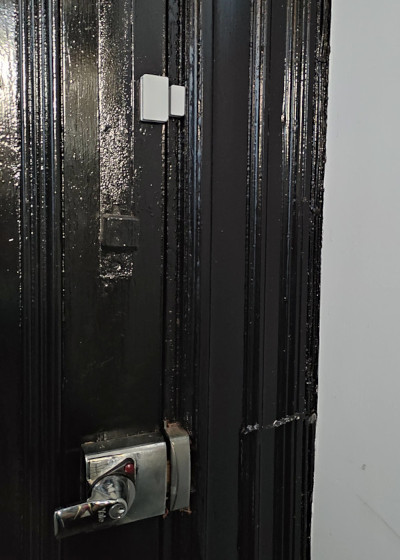 My
 Colson Whitehead's latest novel,


 A week after the
 If I have seen further, it is by standing on the shoulders of Giants Issac Newton, 1675. Although it should be credited to 12th century Bernard of Chartres. You will know why I have shared this, probably at the beginning of Civil Aviation history itself.
 But yes, it needs it own space, maybe after some more time.

