Search Results: "ema"

9 March 2009

Francois Marier: Growing the community around your new Free Software Project

Once your new Free Software project has had some traction and is gaining users, you will probably want to supplement its initial homepage with a few extra services. However, the most important aspects of managing a Free Software community have more to do with relating to human beings.
Social Interactions in Small ProjectsIn the early days of your project, support requests usually only come in through personal emails to the lead developer. In order to build your community, make sure new users feel welcome:But of course, remember that the main job of a developer/maintainer is to make the software better. Keep this in mind when replying to support requests and allocate your (limited) time accordingly.
More Tools for Growing ProjectsAs your project grows and handling user-reported issues start becoming more of a burden, consider two things: documentation and distributed support.

The obvious place to start documentation-wise is to start collecting responses that you send to users who get in touch with you. This is the original meaning of a FAQ: answers to actual questions sent in by actual users. Fill your FAQ with irrelevant questions and users won't bother reading it and will email you instead.

In addition to providing good documentation, you should also think about creating a mailing list or a forum where users can post their questions (Google Groups provides a nice blend of the two technologies). There are two main advantages to this service:As your project grows even bigger, you will probably also want to look into getting a bug tracker and a wiki.

Have a look at this excellent online book for more ideas.

John Goerzen: A Few Days With the Kindle 2

So I am going to do something that nobody on the Internet is doing lately: post a review of the Kindle 2 after having only used it for three days. Shocking, yes, I know. I had never even seen a Kindle of either model before getting the Kindle 2. I had, though, thought about getting an eInk device for some time. The $359 Kindle 2 price tag caused me significant pause, though in the end I went for it due to the 30-day return policy. On the surface, I thought that it would be weird to have a Kindle. After all, how often am I away from the computer? And there s a small local library a few blocks from where I work. But I had a hunch it might turn out for me like my iPod did: something that didn t sound all that useful from reading about it, but turned out to be tremendously so after having actually used it. Turtleback Delivery I ordered my Kindle 2 with standard shipping, which meant that it went by FedEx Smart Post. Here is my SmartPost rant. There are two words in Smart Post that are misleading. I once had an item take literally a week to make it from St. Louis to Kansas. That is, I kid you not, slower than the Pony Express ran in 1860. This time, my Kindle made it from Kentucky to Kansas in a mere five days. Oh, and it spent more than 24 hours just sitting in St. Louis. The Device Overall, the device is physically quite nice. It is larger and thinner than I had imagined, and the screen also is a bit smaller. It is usually easier to hold than a paperback, due to not having to prevent it from closing too far at the binding edge. The buttons are easy to press, though I could occasionally wish for them to be easier, but that s a minor nit. The Screen The most important consideration for me was the screen. The eInk display as both stunningly awesome and disappointing. This is not the kind of display you get on your computer. Or, for that matter, any other device. It isn t backlit. It reacts to light as paper does. It can be viewed from any angle. And it consumes no power to sustain an image; only to change it. Consequently, it puts up a beautiful portrait of a famous author on the screen when it is put to sleep, and consumes no power to maintain it. The screen s response time isn t anywhere near as good as you d expect from a regular LCD. It flashes to black when you turn a page, and there is no scrolling. On the other hand, this is not really a problem. I found the page turning speed to be more than adequate, and probably faster than I d turn the page on a real book. The resolution of the display has the feeling of being incredible. The whole thing provides a far different, and in my eyes superior, experience to reading on an LCD or CRT screen. My nit is the level of contrast. The background is not really a pure white, but more of a light gray. This results in a contrast level that is quite clearly poorer than that of the printed page. At first I thought this would be a serious problem, though I am growing somewhat more used to it as I read more. Reading Experience Overall, I ve got to say that it is a great device. You can easily get lost in a book reading it on the Kindle. I m reading David Copperfield for the first time, and have beat a rather rapid path through the first five chapters on the Kindle already. And that, I think, is the best thing that could be said about an ebook reader. It stays out of the way and lets you immerse yourself in your reading. The Kindle s smartly-integrated Oxford-American Dictionary was useful too. One thing about a novel written 150 years ago is that there are some words I just haven t ever heard. Nosegay, for instance. You can move a cursor to a word to see a brief pop-up definition appear, or press Enter to see the entire entry. This is nice and so easy that I m looking up words I wouldn t have bothered to if I were reading the book any other way. A nosegay, by the way, is a bouquet of showy flowers. Buying Experience The Kindle has a wireless modem tied to the Sprint network on it. The data charges for this, whatever they may be, are absorbed by Amazon in the cost of the device and/or the books you buy for it. This turned out to be a very smart piece of engineering. I discovered on Amazon s Kindle Daily Post that Random House is offering five mostly highly-rated sci-fi books for free on the Kindle for a limited time. So I went over to the page for each, and made my purchase . It was only a click or two, and I saw a note saying it was being delivered. A few minutes later, I picked up the Kindle off the kitchen counter. Sure enough, my purchases were there ready to read. Impressive. This level of ease of use smells an awful lot like Apple. Actually, I think it s surpassed them. You can delete books from the Kindle and re-download them at any time. You can initiate that operation from either the PC or the Kindle. And you can also browse Amazon s Kindle store directly from the device itself. I haven t subscribed to any magazines or newspapers, but I gather that they deliver each new issue automatically the moment it s released by the publisher, in the middle of the night. I pre-ordered the (free to Kindle) Cook s Illustrated How-to-Cook Library. It makes me way happier than it should to see This item will be auto-delivered to your Kindle on March 26 in the order status. Free Books Amazon s Kindle library has a number of completely free Kindle books as well. These are mostly out-of-copyright books, probably sourced from public etext places like Project Gutenberg, and converted to the Mobipocket format that is the Kindle s native format with a minimum of human intervention. As they are free, you can see them in Amazon s library if you sort by price. And, of course, Amazon will transfer them to the Kindle wirelessly, and maintain a copy of them in your amazon.com account. Unfortunately, as with free etexts in general on the Internet, the quality of these varies. I was very annoyed to find that many free etexts look like they were done on a typewriter, rather than professionally printed. They don t use smart quotes; only the straight ones. When reading on a device that normally shows you a faithful print experience, this is jarring. And I spent an inordinate amount of time trying to find a copy of Return of Sherlock Holmes that actually had the graphic figures in Dancing Men. Ah well. Your Own Content Amazon operates a mail server, username@kindle.com. You can email stuff to it, and it will convert it to the Kindle format and wirelessly upload it to your kindle for a fee of $0.10. Alternatively, you can use username@free.kindle.com, which does the same thing at no charge, but emails you back a link to download the converted work to install via USB yourself. I tried it with a number of PDFs. It rejected about a dozen times from only my single mail message a PDF containing graphic images only. However, it does quite well with most text-heavy PDFs notably doing an excellent job with Return of Sherlock Holmes from bookstacks.org the only source I found that was both beautifully typeset and preserved the original figures. Unfortunately, the PDF converter occasionally has troubles identifying what should be a paragraph, particularly in sections of novels dealing with brief dialog. I have also sent it some HTML files to convert, which it also does a great job with. You can also create Mobipocket files yourself and upload them directly. There is a Mobipocket creator, or you can use mobiperl if you are Windows-impaired or prefer something scriptable on Linux. The device presents itself as a USB mass storage device, so you can see it under any OS. There s a documents folder to put your files in. You can back it up with your regular backup tools, too. And it charges over USB. Web Browser I haven t tried it much. It usually works, but seems to be completely down on occasion. It would get by in a pinch, but is not suitable for any serious work. The guys over at XKCD seem to love it; in fact, their blog post was what finally convinced me to try the Kindle in the first place. Final Thoughts I ve ordered a clip-on light and a leather case for the Kindle. The light, I believe, will completely resolve my contrast complaint. The leather case to protect it, of course. I can t really see myself returning the Kindle anymore. It s way too much fun, and it s making it easier to read more again. And really, if Amazon manages to reach out to a whole generation of people and make it easy and fun for them to read again and make a profit doing it, of course they may move up a notch or two from being an evil patent troll company to a positive social force company. Wow, never thought I d say that one.

8 March 2009

Russell Coker: The FAIL Meme

One of the recent poor trends in mailing list discussions is to reply to a message with a comment such as FAIL or EPIC FAIL . The FAIL meme has been around for a while and actually does some in some situations, slate has a good article about it [1]. The first example cited in that article is that when Ben Bernanke and Henry Paulson testified before the Senate banking committee last month about Paulson s proposed bailout bill, a demonstrator in the audience held up an 8.5-by-11 piece of paper with one word scrawled on it in block letters: FAIL. . This is an effective form of political demonstration, short words generally work well on placards (if only because the letters can be larger and therefore read from a greater distance) and anyone can understand the meaning of FAIL in that context. There are some blogs dedicated to publicising supposed failures, failblog.org and ShipmentOfFail.com are two examples. I cite these as supposed failures because some of the pictures that they contain are obviously staged. It s basically an Internet equivalent of the Funniest Home Videos shows that I never watched because they were not particularly funny. So using the word FAIL on it s own can be an effective form of political protest and can be used for mildly amusing web sites. But where it falls down is when it s applied to a discussion that involves people who are from different cultures or have different levels of background knowledge - which covers most mailing list discussions. Something that might be obviously wrong to some people is often not obvious at all to others. For example being forced to reboot a computer for any reason other than a kernel upgrade seems obviously wrong to me (and to most people who use Linux or other Unix systems) but Windows users seem happy to reboot machines after applying patches or upgrades. So writing a message with FAIL as the only word in a discussion with Windows users would not be productive. It could however be reasonable to forward a link to a page on a Microsoft web site to Linux people for their amusement with FAIL as the only comment - anyone who would find the link in question amusing would require no more explanation. Sometimes when in a debate someone will write a message that only says FAIL , this is a very unconvincing argument that will not convince the opposition or any onlookers. Generally it seems that using FAIL in a discussion with other like-minded people when talking about someone outside your group for the purpose of amusement can be effective. But any other use is going to be a FAIL . As a more general rule single-word messages seem to have little value apart from certain limited situations. I have identified the following seven scenarios where a single word message is useful. Can anyone think of any others?

  1. Code review - someone posts code (or design for code) and people who like it will write ACK or something similar.

  2. Arranging a meeting - the question who wants to meet for lunch tomorrow has me as a valid answer.

  3. Voting - yes and no are valid answers for a poll, but a mailing list or forum probably isn t the best place for it.

  4. Citing an example to refute a claim - often a single word won t be a great response but may be adequate to prove a point.

  5. Answering a request for a recommendation - if asked to recommend a laptop I might say Thinkpad or if asked to recommend a server I might say HP . Both those answers are poor (I recommend EeePC for netbooks and Dell for small/cheap servers), so while such an answer would be useful it would be below my usual quality standards for email (I prefer to write at least two paragraphs explaining why I recommend something).

  6. Informing people that something has been done by replying to a request with the word Done .

  7. Agreeing to a contract or proposal with OK or Yes .

Update: I added another two reasonable uses of single word messages,

7 March 2009

Martin Meredith: Cheese Nibbles and Podcasts

So, fanatical readers of my blog (are there any?) may remember a long time back that I got bored and wrote a little script that amused me. While testing something out yesterday, I needed to find a domain that I wasn t using in production so I could test on it. I stumbled across Cheese Nibbles which had a lovely We ll be back with something cool soon message on it. So, I did my tests, and they worked. Everything s good. I d actually forgotten what was on Cheese Nibbles in the first place, so I started rooting round in the code. I found the old site, and I decided to resurrect it. I posted in a couple of IRC channels, to see if other people found the site amusing, and got the following back in response
<Daviey> neat
<Daviey> Mez: rss feed needed
<Mez> Daviey: *chuckles*
<Mez> but then it d be twitter
<Daviey> sure, but a shared account :)
<Daviey> Or.. make it twitter when changed
So, well, thanks to Dave Walker s suggestion, I did a quick google, and within 6 minutes, had it working. You can find the twitter feed at http://twitter.com/cheesenibbles Also, over the last couple of weeks I ve been working with Zeth from my local LUG (and the tech, who shall remain anonymous, like The Stig ) on a podcast, which we are, for now calling The Podcast (imaginative I know). I was interviewed in the first podcast (which Zeth did alone, and I (apparently) provided the comedy element for) and presented with Zeth for the second one. Also, as the second one was recorded during the Ubuntu Global Bug Jam, of which I was running one of the venues, I actually allowed myself to be interviewed for it aswell. The podcast is very rough around the edges at the moment, and well, we haven t got a website, or an RSS feed yet, but you can find the show notes here, and download the podcast episode in either MP3 Format, or OGG Format All comments/thoughts/suggestions welcome!

6 March 2009

Ingo Juergensmann: Gallery and missing exif information - solved!

Yesterday I asked for help because I was missing exif information in my Gallery2 installation. Today I found the reason for this, when I was trying get a random image block displayed in my blog, which fails as well.
There seems a bug in /usr/share/php/adodb/drivers/adodb-postgres7.inc.php:

Warning: pg_query_params() [function.pg-query-params]: Query failed: ERROR: column "g_userid" is of type integer but expression is of type text HINT: You will need to rewrite or cast the expression. in /usr/share/php/adodb/drivers/adodb-postgres7.inc.php on line 113
-1: ERROR: column "g_userid" is of type integer but expression is of type text HINT: You will need to rewrite or cast the expression.


ADOConnection._Execute(
INSERT INTO
g2_ImageBlockCacheMap
SELECT DISTINCT
?, ?, g2_Entity.g_creationTimestamp, g2_Entity.g_id, FLOOR(RANDOM()
..., Array[45]) % line 1007, file: adodb.inc.php


ADOConnection.Execute(
INSERT INTO
g2_ImageBlockCacheMap
SELECT DISTINCT
?, ?, g2_Entity.g_creationTimestamp, g2_Entity.g_id, FLOOR(RANDOM()
..., Array[45]) % line 952, file: GalleryStorageExtras.class


GalleryStorageExtras.execute(
INSERT INTO
[ImageBlockCacheMap]
SELECT DISTINCT
?, ?, [GalleryEntity::creationTimestamp], [GalleryEntity::id],
FLOOR(R..., Array[45]) % line 507,
file: GalleryStorage.class


GalleryStorage.execute(
INSERT INTO
[ImageBlockCacheMap]
SELECT DISTINCT
?, ?, [GalleryEntity::creationTimestamp], [GalleryEntity::id],
FLOOR(R..., Array[45]) % line 742,
file: ImageBlockHelper.class


ImageBlockHelper.cacheViewableTree(17) % line 520, file: ImageBlockHelper.class

Error performing imageblock.LoadImageBlock callback realpath(/usr/share/gallery2/modules/core/classes/../../../) realpath(/var/www/net/gallery.windfluechter.net/) Error (ERROR_STORAGE_FAILURE)

in modules/core/classes/GalleryStorage/GalleryStorageExtras.class at line 959 (GalleryCoreApi::error)
in modules/core/classes/GalleryStorage.class at line 507 (GalleryStorageExtras::execute)
in modules/imageblock/classes/ImageBlockHelper.class at line 742 (GalleryStorage::execute)
in modules/imageblock/classes/ImageBlockHelper.class at line 520 (ImageBlockHelper::cacheViewableTree)
in modules/imageblock/classes/ImageBlockHelper.class at line 283 (ImageBlockHelper::fetchViewableData)
in modules/imageblock/classes/ImageBlockHelper.class at line 93 (ImageBlockHelper::_getBlockData)
in modules/imageblock/Callbacks.inc at line 83 (ImageBlockHelper::loadImageBlocks)
in modules/core/classes/GalleryTemplateAdapter.class at line 1052 (ImageBlockCallbacks::callback)
in g2data/smarty/templates_c/%%626616196/matrix/%%A3A3EA3E218EA%%ImageBlock.tpl.php at line 5 (GalleryTemplateAdapter::callback)
in /usr/share/php/smarty/libs/Smarty.class.php at line 1868
in modules/core/classes/GalleryTemplateAdapter.class at line 983 (Smarty::_smarty_include)
in g2data/smarty/templates_c/%%626616196/matrix/%%B4B49B49848CB%%sidebar.tpl.php at line 7 (GalleryTemplateAdapter::block)
in /usr/share/php/smarty/libs/Smarty.class.php at line 1868
in modules/core/classes/GalleryTemplateAdapter.class at line 909 (Smarty::_smarty_include)
in g2data/smarty/templates_c/%%626616196/matrix/%%ADAD7AD74CEE9%%photo.tpl.php at line 12 (GalleryTemplateAdapter::theme)
in /usr/share/php/smarty/libs/Smarty.class.php at line 1868
in modules/core/classes/GalleryTemplateAdapter.class at line 909 (Smarty::_smarty_include)
in g2data/smarty/templates_c/%%626616196/matrix/%%3A3A83A818B59%%theme.tpl.php at line 55 (GalleryTemplateAdapter::theme)
in /usr/share/php/smarty/libs/Smarty.class.php at line 1262
in modules/core/classes/GallerySmarty.class at line 61 (Smarty::fetch)
in modules/core/classes/GalleryTemplate.class at line 219 (GallerySmarty::fetch)
in main.php at line 521 (GalleryTemplate::fetch)
in main.php at line 104
in main.php at line 88
* in main.php at line 3

file_exists(/var/www/net/gallery.windfluechter.net/g2data/cache/module/_all/0/0/GalleryPluginHelper_fetchPluginStatus.inc) getParameter smarty.compile_check for core plugin file_exists(/var/www/net/gallery.windfluechter.net/g2data/cache/module/core/0/0/0.inc) file_exists(/var/www/net/gallery.windfluechter.net/g2data/smarty/templates_c/%%626616196/matrix/%%C7C79C79EEB7F%%ItemInfo.tpl.php) strftime(%x, 1231148074) file_exists(/var/www/net/gallery.windfluechter.net/g2data/smarty/templates_c/%%626616196/matrix/%%F3F3EF3EB483E%%PhotoSizes.tpl.php) file_exists(/var/www/net/gallery.windfluechter.net/g2data/cache/entity/2/1/21143.inc) file_exists(/var/www/net/gallery.windfluechter.net/g2data/cache/entity/2/1/21080.inc) file_exists(/var/www/net/gallery.windfluechter.net/g2data/cache/entity/1/9/19996.inc) file_exists(/var/www/net/gallery.windfluechter.net/g2data/cache/entity/4/4/4457.inc) file_exists(/var/www/net/gallery.windfluechter.net/g2data/cache/entity/0/0/7.inc) file_exists(/var/www/net/gallery.windfluechter.net/g2data/smarty/templates_c/%%626616196/matrix/%%5A5A35A33504B%%Navigator.tpl.php) file_exists(/var/www/net/gallery.windfluechter.net/g2data/cache/entity/2/1/21148.inc) file_exists(/var/www/net/gallery.windfluechter.net/g2data/cache/entity/2/1/21588.inc) file_exists(/var/www/net/gallery.windfluechter.net/g2data/cache/entity/2/1/21127.inc) file_exists(/var/www/net/gallery.windfluechter.net/g2data/cache/entity/2/1/21138.inc) file_exists(/var/www/net/gallery.windfluechter.net/g2data/cache/entity/2/5/25248.inc) file_exists(/var/www/net/gallery.windfluechter.net/g2data/smarty/templates_c/%%626616196/matrix/%%F6F68F68636C4%%ExifInfo.tpl.php) postgres7 error: [-1: ERROR: current transaction is aborted, commands ignored until end of transaction block] in EXECUTE(" SELECT g2_Group.g_id, g2_Group.g_groupName FROM g2_UserGroupMap, g2_Group WHERE g2_Group.g_id = g2_UserGroupMap.g_groupId AND g2_UserGroupMap.g_userId = ? ORDER BY g2_Group.g_groupName ")


So, when there's the image block activated in theme setting, some queries like the above are failing and neither the image block nor the exif data block is displayed. The temporary solution is therefor to remove the image block from your theme or deactivate/uninstall the plugin at all. The long term solution will be to wait for an updated gallery2 after I've reported this bug to the BTS... ;)

UPDATE: #518572

Daniel Burrows: Help make aptitude faster!

I'm working on aptitude's dependency resolver at the moment. Mostly I'm working on some changes to support better UI, but while I have all the code in my head I'd like to try to fix some of the nagging speed problems it has. I've already managed to clear up some simple but large problems with aptitude safe-upgrade, because I could get them to happen on my computer. The problem is, most of these problems don't happen on my computer. I have a half dozen or so specific ideas that might speed aptitude up, but I don't want to just randomly apply tweaks without some baseline tests that I can use to make sure that I'm actually making things better and not just perturbing the code for no reason. :-) Plus, seeing why aptitude is actually running slowly might help when it comes to finding ways to improve its performance. So, this is where you come in. If you are using lenny and aptitude takes a long time to resolve dependencies on your computer outside of aptitude safe-upgrade, I would like to hear from you. All you need to do is to run this command when aptitude is slow, before you upgrade any packages:

$ aptitude-create-state-bundle aptitude-state.tar.bz2
Then, find a way to get the resulting large file to me. Email will work if your outgoing server accepts it; send to dburrows@algebraicthunk.net. That will tar up /etc/apt, /var/lib/apt, /var/cache/apt, and a few other directories: run aptitude-create-state-bundle --print-inputs to see exactly what it will include. Thanks! [UPDATE]: PS: please also include a brief description of the problem that you're seeing so I know what to test. Something like, e.g., when I run aptitude full-upgrade it takes thirty minutes to complete. [UPDATE]: PPS: of course you have to run aptitude-create-state-bundle before you actually upgrade any packages! i.e., you must type n at aptitude's command-line prompt or quit the program if you're using the curses interface. Otherwise, your state snapshot will just tell me what you upgraded to, which is only half the information I need (I also need the state of all packages prior to the upgrade).

Matthew Garrett

After a bit of back and forth with Peter, we came up with a straightforward way of dealing with the fact that the Wacom driver needs a logical input device per input type[1], but the X server only generates an input device per hal device. The simplest solution turned out to be a hal callout that generates additional hal devices on demand, which also means we can add information to the fdi files to only add the appropriate device types. Ought to land in rawhide in the near future, at which point tablets should be basically working out of the box. Except that xsetwacom gets device name -> type mapping by attempting to parse xorg.conf. Pass the suicide.

Today's other accomplishment was spending long enough looking at Toshiba ACPI dumps to figure out how to enable hotkey reporting without needing to poll. Of course, I then found that the FreeBSD driver has done the same thing since 2004. Never mind. Patch has been posted to lkml and I've shoved it into rawhide, so that'll improve things for most Toshiba users. There's a few machines that have an entirely different BIOS and we don't know how the hotkeys there work at all, so life continues to be miserable for those of you that own them. Sorry.

[1] Stylus, cursor, eraser and so on

5 March 2009

Matt Brubeck: 5 Mar 2009

Async Map and Fold in JavaScript My latest experiment is an implementation of asynchronous/parallel "map" (and other array functions) in JavaScript and Oni. Oni is a "structured concurrency language" embedded in JavaScript. For my source code and commentary, see oni-map at GitHub. You can leave comments at GitHub too. All this time reading Real World Haskell must really have warped my brain if a simple testing framework for a JavaScript program has got me thinking about higher-order functions and concurrency semantics...

Martin F. Krafft: Don't get fooled by the cost-average effect

I have a bit of money invested in stocks and funds, passively managed by my bank. I ve made a bit with risky speculations, and I ve lost about the same amount with the markets dive of the last 18 months. Net benefit: zero cash, a bit of experience. Time to move on I am not an interesting customer, so I was all the more surprised to get a call from an employee of the bank the other day. He identified himself as Crisis Manager or something similarly ridiculous, mentioned at least 20 times that he was a regular employee and wouldn t receive provisions, and he also kept assuring me that he s doing himself what he s suggesting to me: leveraging the cost-average effect. I turned him down, probably a bit too briskily. Let s investigate why. Banks are good at devising ingenious tricks to fool people; it s their business after all. One of those tricks is the so-called cost-average effect. It s awesome, they say, because it is the first product that adapts to the ever-changing market: when prices are up, it buys smaller numbers of shares, and in low times, it stocks up on them by buying larger quantities, automatically. Fancy, no? It isn t, because the entire idea is to get your signature on a contract that obliges you to pay a fixed sum each month, with which shares are then bought. Obviously, when prices are up, numbers you get for your money are low, and vice versa. Observe how well the banks manage to turn that basic rule into a selling point. They are good at that. In fact, that s probably all they re good at. Obviously , inflation is also factored in, so the monthly fixed sum actually increases by a projected 5% each year, which they call inflation protection . While this strategy investing fixed-sum installments rather than lump sums certainly has its benefits, and can level out the risk of throwing a large sum of money at the market, it is commonly considered a suboptimal strategy, especially when employed over longer spans of time. For more information, I refer you to the frequently cited article Nobody gains from dollar cost averaging analytical, numerical and empirical results , published in the 1992/1993 issue of the Financial Services Review journal. So why would the bank approach me with this offer ? Let s go hypothetical and check out Ashley s investment practices: Ashley bought a fund five years ago at 100 per share, and it s now down to 80 . The loss is thus 20%, a -4% factor (20% / 5 years) that affects the overall performance of the portfolio. Ashley doesn t really care much about the percentages. After all, the only thing that counts is the worth of the shares when sold right now. Everything else is history and only influences the size of the tears one weeps in times like this, which is a psychological malfunction, not a function of the financial markets crisis. The bank, however, does not like negative performance values. Positive percentages yield happy (blinded?) customers, who get much more enthusiastic (greedy?) to put more money into the giant machine that makes the banks tick which is still in the process of blowing up into their faces. But negative performance values cause investors to become conservative and leery. They d rather hold on to their hard-earned cash for fear of losing more. That s the flip-side of aforementioned psychological malfunction, and this is the core of the reason why some of the big investors get bigger even in times like this they do not succomb to the feeling . The banks, however, need cash, and loads of it, and while the state is busy printing notes, they take every chance to get more. Private clients are wonderful prey, as they are less informed about the system than investors. So, to get cash from the clients, the banks have to circumvent the psychological malfunction. They cannot boost the market value share, but there are two values that factor into a percentage, and the cost-average effect, sold as the best thing since sliced bread, is nothing but a way to affect the other number: the sale price, the divisor. If the fund stays below the original sale price (100 ), each time Ashley pumps more cash into the machinery each month, this divisor decreases, effectively decreasing the percentage value. In the long run, this yields happier customers, who are willing to put more money in, especially if the performance turns positive. The baseline is now lower, so a return to previous heights would correspond to larger performance values than ever before. Obviously, a positive market causes the baseline to grow, but the cost-average deals continues to pay off for the banks. Since Ashley put that signature on the contract, the bank has a guaranteed cash flow for the contract s duration, while Ashley wonders why the percentage remains dampened. Cost-average means decreasing the percentage, in good as well as in bad times. Just now, the bank doesn t have to work so hard to get even more money from you. It gets worse: usually, those contracts are embedded in some sort of life insurance deals with grand promises in 40 years to come, and over all that time, it ll be quite clear who wins and who loses. Scary, huh? I was going to end with the advice to stay away from the cost-average effect, but I think I can just as well make it more general: if you don t understand a deal, don t sign it. If you abide by that rule, you would stay away from cost-average effect deals all by yourself. Maybe my little writeup has helped, nonetheless. NP: DJ Ti sto: Live at Innercity

Russell Coker: SE Linux Lenny Status Update

I previously described four levels of SE Linux support on the desktop [1]. Last night I updated my APT repository of SE Linux packages for Lenny (as described on my document about installing SE Linux [2]). I included a new policy package that supports logging in to a graphical session via gdm in either unconfined_t or user_t. This covers all the functionality I described as target 2 (some restricted users). I have tested this to a moderate degree. Target 3 was having all users restricted and no unconfined_t domain (the policy module unconfined.pp not being linked into the running policy). I had previously done a large part of the work towards that goal in preparation for running a SE Linux Play Machine (with public root password) [3] on Lenny - but until last night I had not published it. The combination of the policy needed to run with no unconfined_t domain and the policy to allow logging in as user_t via gdm should mean that a desktop system with gdm for graphical login that has no unconfined_t domain will work - but I have not tested this. So target 3 is likely to have been achieved, if testing reveals any problems in this regard then I ll release another policy update. So now the only remaining target is MLS. Also I have been setting up a mail server with a MySQL database for user account data and using Courier-Maildrop for delivery, so I ve written policy for that and also made some other improvements to the policy regarding complex mail servers.

4 March 2009

MJ Ray: ippimail to close - what now for friendly webmail?

I was disappointed to read that ippimail announced the closure of the ippimail project [...] barring a miracle we will take the site down at noon on the 1st May 2009, UK time. I first covered the ippimail social enterprise back in 2006 as a way to do better than googlemail. There was a longer review on Cutting Free. So what now for free-to-use UK-based free-software-using webmails? Where do you think ippimail users should look now? Are there others giving to charity? Is a better world possible by emailing?

Jose Carlos Garcia Sogo: Innovation in netbooks

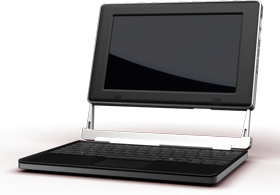
After the release of Asus Eee PC and the discovery of the market that was eager to buy cheap and wearable computers every laptop manufacturer has jumped into the hype and released their own versions of netbooks, with different success.
But somehow it was a cloning phase. Vendors were just cloning what Asus did, with more or less changes, but without innovating. Now, it seems that the path has opened again, from the open source and open hardware front, and it has been released AlwaysInnovating s touchbook. It is a netbook with a detachable keyboard (it is even sold separated) and built upon an ARM processor from Texas Instruments, and a 8GB microSD card. Thus they claim the battery last from 10 to 15h with the keyboard, and 3 to 5h in touchscreen mode.
As is said above, the whole machine is open source based. Software is based upon OpenEmbedded, and hardware schematics of the board are released under GPL on Beagleboard project. They say that you can also install Ubuntu, Android or even Windows CE on it. Update: Just discovered that AlwaysInnovating is a Gr goire Gentil startup. Gr gory is a Civil Engineer from cole des ponts et Chauss es. We know how to build things :-D

Russell Coker: You Have the Right to Not Search My Bag

This afternoon I was in a Safeway/Woolworths store (an Australian supermarket chain) and the lady on the checkout asked to inspect my backpack on the way out. The conversation went as follows:
Checkout Lady: Can I inspect your bag?
Me: Sure. - I put my backpack on the counter
CL: Could you open it for me?
Me: It s OK, you can do it.
CL: I m not allowed to open your bag, can you open it?
Me: I don t mind, you can open it. We iterated over the last two lines a few times, when it became clear that no progress was going to be made I asked Can I go now? and left. It seems rather pointless to demand to search someone s bag if you are not permitted to open it. Not that they have any power to search bags anyway. I discussed this with a police officer about 20 years ago and was told that store staff can do nothing other than refuse to allow you into their store in future if you don t agree to a bag search. Stores claim that it s a condition of entry that your bag be searched, but apparently that was not enforceable. Of course the law could have changed recently, I guess it would only require a terrorist threat related to supermarket products (baking soda can make your bread rise explosively) to get the law changed. The last time my bag was searched was when leaving a JB Hi-Fi store. I had a brand new EeePC (purchased from a different store) in one hand and a bag in the other. The EeePC was identical to ones that they had on display and they didn t even ask about it. It seems hardly worth the effort of searching bags when anyone can carry out expensive gear in their hand without being questioned.

Kartik Mistry: Private Email


* I had private email with God today..

3 March 2009

Miguel Gea: My .dupload.conf file

I've prepared a private autobuilder. As I've setup the incoming using scp, I don't need to gpg sign each package. But dupload complained saying that the package is not gpg signed. Lurking in dupload code, I found It's possible overriding the default preupload for my default host:

package config;

$default_host = "eragon";
$cfg 'eragon' =
fqdn => "eragon",
method => "scp",
incoming => "/data/autobuilder/incoming/unstable",
# files pass on to dinstall on ftp-master which sends emails itself
dinstall_runs => 1,
;

$cfg 'eragon' preupload 'changes' = '/bin/true';
1;

Michal &#268;iha&#345;: Thought about email footers

Have you ever thought what you send in email footer?
The information contained in this e-mail is private & confidential and may also be legally privileged. If you are not the intended recipient, please notify us, preferably by e-mail, and do not read, copy or disclose the contents of this message to anyone.
If I'm not the intended recipient (supposing I know how to guess this), how am I supposed to notify you, when I should not read the contents, so I should not know about fact that I should notify you?

Lucas Nussbaum: Creating a large file without zeroing it: update

Given the large number of comments I got (26!), I feel obliged to post a summary of what was said. First, the problem:
I want to create a large file (let s say 10 GB) to use as swap space. This file can t be a sparse file (a file with holes, see wikipedia if you don t know about sparse files).
Since I m going to mkswap it, I don t care about the data that is actually in that file after creating it. The stupid way (but only solution on ext3) to create it is to fill it with zeroes, with is very inefficient. Theodore Tso provided more information in a comment, which I m copying here:
Yes, it will work on ext4. A convenient which makes this easy to use can be found here at http://sandeen.fedorapeople.org/utilities/fallocate.c. It was written by Eric Sandeen, a former XFS developer who now works for Red Hat, who has been a big help making sure ext4 will be ready for Fedora and Red Hat Enterprise Linux. (Well, I guess I shouldn t call him a former XFS developer since he still contributes patches to XFS now and then, but he s spending rather more time on ext4 these days.) One warning about the program; it calls the fallocate system call directly, and it doesn t quite have the right magic architecture-specific magic for certain architectures which have various restrictions on how arguments need to be passed to system calls. In particular, IIRC, I believe there will be issues on the s390 and powerpc architectures. The real right answer is to get fallocate into glibc; folks with pull into making glibc do the right thing, please talk to me. Glibc does have posix_fallocate(), which implements the POSIX interface. posix_fallocate() is wired to use the fallocate system call, for sufficiently modern versions of glibc. However, posix_fallocate() is probablematic for some applications; the problem is that for filesystems that don t support fallocate(), posix_fallocate() will simulate it by writing all zeros to the file. However, this is not necessarily the right thing to do; there are some applications that want fallocate() for speed reasons, but if the filesystem doesn t support it, they want to receive the ENOSPC error message, so they can try some other fallback which might or might not involve writing all zero s to the file. The other shortcoming with posix_fallocate() is that it doesn t support the FALLOC_FL_KEEP_SIZE flag. What this flag allows you to do is to allocate disk blocks to the file, but not to modify the i_size parameter. This allows you to allocate space for files such as log files and mail spool files so they will be contiguous on disk, but since i_size is not modified, programs that append to file won t get confused, and tail -f will continue to work. For example, if you know that your log files are normally approximately 10 megs a day, you can fallocate 10 megabytes, and then the log file will be contiguous on disk, and the space is guaranteed to be there (since it is already allocated). When you compress the log file at the end of the day, if the log file ended up being slightly smaller than 10 megs, the extra blocks will be discarded when you compress the file, or if you like, you can explicitly trim away the excess using ftruncate().
fallocate works fine: creating a 20 GB file is almost immediate. Also, syncing or umounting the filesystem is also immediate, and reading the file returns only zeros. I m not sure how it is implemented, but it looks nice :-). However, it still doesn t solve my initial problem: mkswap works, but not swapon:
:/tmp# touch tmp
:/tmp# /root/fallocate -l 10g tmp
:/tmp# ls -lh tmp
-rw-r--r-- 1 root root 10G Mar  3 11:01 tmp
:/tmp# du tmp
10485764	tmp
:/tmp# mkswap tmp
Setting up swapspace version 1, size = 10737414 kB
no label, UUID=a316ce8e-cf33-412b-8dc0-e10d9f2ebdbb
:/tmp# strace swapon tmp
[...]
swapon( /tmp/tmp )                      = -1 EINVAL (Invalid argument)
write(2,  swapon: tmp: Invalid argument\n , 30swapon: tmp: Invalid argument
) = 30
exit_group(-1)
(swapon works fine if the file is created normally without using fallocate()). Any other ideas?

2 March 2009

Alastair McKinstry: Titan, by Stephen Baxter

Titan, by Stephen Baxter describes a near-future manned mission to Titan, Saturn's moon, by Space Shuttle, no less. This is the first book i've read by Stephen Baxter, and will probably not be the last. It's well written, the most science-based outer planets mission story i've read in since Arthur C. Clarke, though with a pessimistic edge. The story turns on a waning NASA using its remaining hardware on one big mission, to Titan, where life may have been discovered. Most of the book concentrates naturally enough on getting to Titan, rather than what they found when they get there, but Baxters ammonia-based chemistry is intriguing. The physics of what it would be like to walk on the moon are a little underdone, though. Its an understatement to say that Titan is cold: serious work on insulation would be needed to stop your base melting the "permafrost" and sinking. While we don't know what life might be present, it would be good to imagine the real tasks involved in being there. But it's his idea that NASA and others really don't want space that is most interesting. That the military want space as their baliwick, and would rather frustrate the development of technologies so that no other nations or groups interfere is well worth thinking about. To a degree, I would agree: frustrate, but not he puts it, stop. Sooner or later the technology has other uses on Earth to the point where even amateurs would launch their own satellites. The vast bulk of technology development for future space use will be done not only on Earth but for Earth use: the minaturization that NASA and the military did for the space race in the 1960's now happens for consumer electronics. 3 D fabricators are being built for prototyping, and the prospect of getting a self-contained space mission together (not reliant on Earth) draws closer. I fully expect private groups, rather than national efforts, will be the first to colonise outer space, assembling pre-existing technologies. Tags , ,

Theodore Ts'o: SSD s, Journaling, and noatime/relatime

On occasion, you will see the advice that the ext3 file system is not suitable for Solid State Disks (SSD s) due to the extra writes caused by journaling and so Linux users using SSD s should use ext2 instead. However, is this folk wisdom actually true? This weekend, I decided to measure exactly what the write overhead of journaling actually is in actual practice. For this experiment I used ext4, since I recently added a feature to track the amount of writes to the file system over its lifetime (to better gauge the wear and tear on an SSD). Ext4 also has the advantage that (starting in 2.6.29), it can support operations with and without a journal, allowing me to do a controlled experiment where I could manipulate only that one variable. The test workload I chose was a simple one: For the first test, I ran the test using no special mount options, and the only difference being the presence or absence of the has_journal feature. (That is, the first file system was created using mke2fs -t ext4 /dev/closure/testext4, while the second file system was created using mke2fs -t ext4 -O ^has_journal /dev/closure/testext4.)
Amount of data written (in megabytes) on an ext4 filesystem
Operation with journal w/o journal percent change
git clone 367.7 353.0 4.00%
make 231.1 203.4 12.0%
make clean 14.6 7.7 47.3%
What the results show is that metadata-heavy workloads, such as make clean, do result in almost twice the amount data written to disk. This is to be expected, since all changes to metadata blocks are first written to the journal and the journal transaction committed before the metadata is written to their final location on disk. However, for more common workloads where we are writing data as well as modifying filesystem metadata blocks, the difference is much smaller: 4% for the git clone, and 12% for the actual kernel compile. The noatime mount option Can we do better? Yes, if we mount the file system using the noatime mount option:
Amount of data written (in megabytes) on an ext4 filesystem mounted with noatime
Operation with journal w/o journal percent change
git clone 367.0 353.0 3.81%
make 207.6 199.4 3.95%
make clean 6.45 3.73 42.17%
This reduces the extra cost of the journal in the git clone and make steps to be just under 4%. What this shows is that most of the extra meta-data cost without the noatime mount option was caused by update to the last update time for kernel source files and directories. The relatime mount option There is a newer alternative to the noatime mount option, relatime. The relatime mount option updates the last access time of a file only if the last modified or last inode changed time is newer than the last accessed time. This allows programs to be able to determine whether a file has been read size it was last modified. The usual (actually, only) example that is given of such an application is the mutt mail-reader, which uses the last accessed time to determine if new mail has been delivered to Unix mail spool files. Unfortunately, relatime is not free. As you can see below, it has roughly double the overhead of noatime (but roughly half the overhead of using the standard Posix atime semantics):
Amount of data written (in megabytes) on an ext4 filesystem mounted with relatime
Operation with journal w/o journal percent change
git clone 366.6 353.0 3.71%
make 216.8 203.7 6.04%
make clean 13.34 6.97 45.75%
Personally, I don t think relatime is worth it. There are other ways of working around the issue with mutt for example, you can use Maildir-style mailboxes, or you can use mutt s check_mbox_size option. If the goal is to reduce unnecessary disk writes, I would mount my file systems using noatime, and use other workarounds as necessary. Alternatively, you can use chattr +A to set the noatime flag on all files and directories where you don t want noatime semantics, and then clear the flag for the Unix mbox files where you care about the atime updates. Since the noatime flag is inherited by default, you can get this behaviour by setting running chattr +A /mntpt right after the filesystem is first created and mounted; all files and directories created in that file system will have the noatime file inherited. Comparing ext3 and ext2 filesystems
Amount of data written (in megabytes) on an ext3 and ext2 filesystem
Operation ext3 ext2 percent change
git clone 374.6 357.2 4.64%
make 230.9 204.4 11.48%
make clean 14.56 6.54 55.08%
Finally, just to round things out, I tried the same experiment using the ext3 and ext2 file systems. The difference between these results and the ones involving ext4 are the result of the fact that ext2 does not have the directory index feature (aka htree support), and both ext2 and ext3 do not have extents support, but rather use the less efficient indirect block scheme. The ext2 and ext3 allocators are also someone different from each other, and from ext4. Still, the results are substantially similar with the first set of Posix-compliant atime update numbers (I didn t bother to do noatime and relatime benchmark runs with ext2 and ext3, but I expect the results would be similar.) Conclusion So given all of this, where did the common folk wisdom that ext3 was not suitable for SSD s come from? Some of it may have been from people worrying too much about extreme workloads such as make clean ; but while doubling the write load sounds bad, going from 4MB to 7MB worth of writes isn t that much compared to the write load of actually doing the kernel compile or populating the kernel source tree. No, the problem was that first generation SSD s had a very bad problem with what has been called the write amplification effect , where a 4k write might cause a 128k region of the SSD to be erased and rewritten. In addition in order to provide safety against system crashes, ext3 has more synchronous write operations that is where ext3 waits for the write operation to be complete before moving on, and this caused a very pronounced and noticeable stuttering effect which was fairly annoying to users. However, the next generation of SSD s, such as Intel s X25-M SSD, have worked around the write amplification affect. What else have we learned? First of all, for normal workloads that include data writes, the overhead from journaling is actually relatively small (between 4 and 12%, depending on the workload). Further, than much of this overhead can be reduced by enabling the noatime option, with relatime providing some benefit, but ultimately if the goal is to reduce your file system s write load, especially where an SSD is involved, I would strongly recommend the use of noatime over relatime. Related posts (automatically generated):
  1. Should Filesystems Be Optimized for SSD s? In one of the comments to my last blog entry,...
  2. Aligning filesystems to an SSD s erase block size I recently purchased a new toy, an Intel X25-M SSD,...
  3. Fast ext4 fsck times This wasn t one of the things we were explicitly engineering...

1 March 2009

Dirk Eddelbuettel: Rcpp 0.6.4

A new maintenance version of Rcpp (now at 0.6.4) was just pushed to CRAN and has been uploaded to Debian. Rcpp is a set of utility classes that provide interfaces for transferring the major R data types to C++ and back which makes it easier to extend R with dynamically loadable code written in C or C++. This version changes how use the std namespace: all usage is now properly prefixed. Likewise, we now define R_NO_REMAP to not let R define utility functions as length() or error() which occassionally creates trouble with other include files -- so now use the more explicit forms Rf_length(), Rf_error() etc. Also, starting from this release, C++ class documentation created by Doxygen is included; it can also be seen from my box as both browsable html and a pdf file. Lastly, this version also adds a minor correction to the Windows build (spotted by Uwe and Simon).

Next.

Previous.