Search Results: "cas"

25 March 2010

Russell Coker: Bose vs Bauhn/Aldi Noise Canceling Headphones
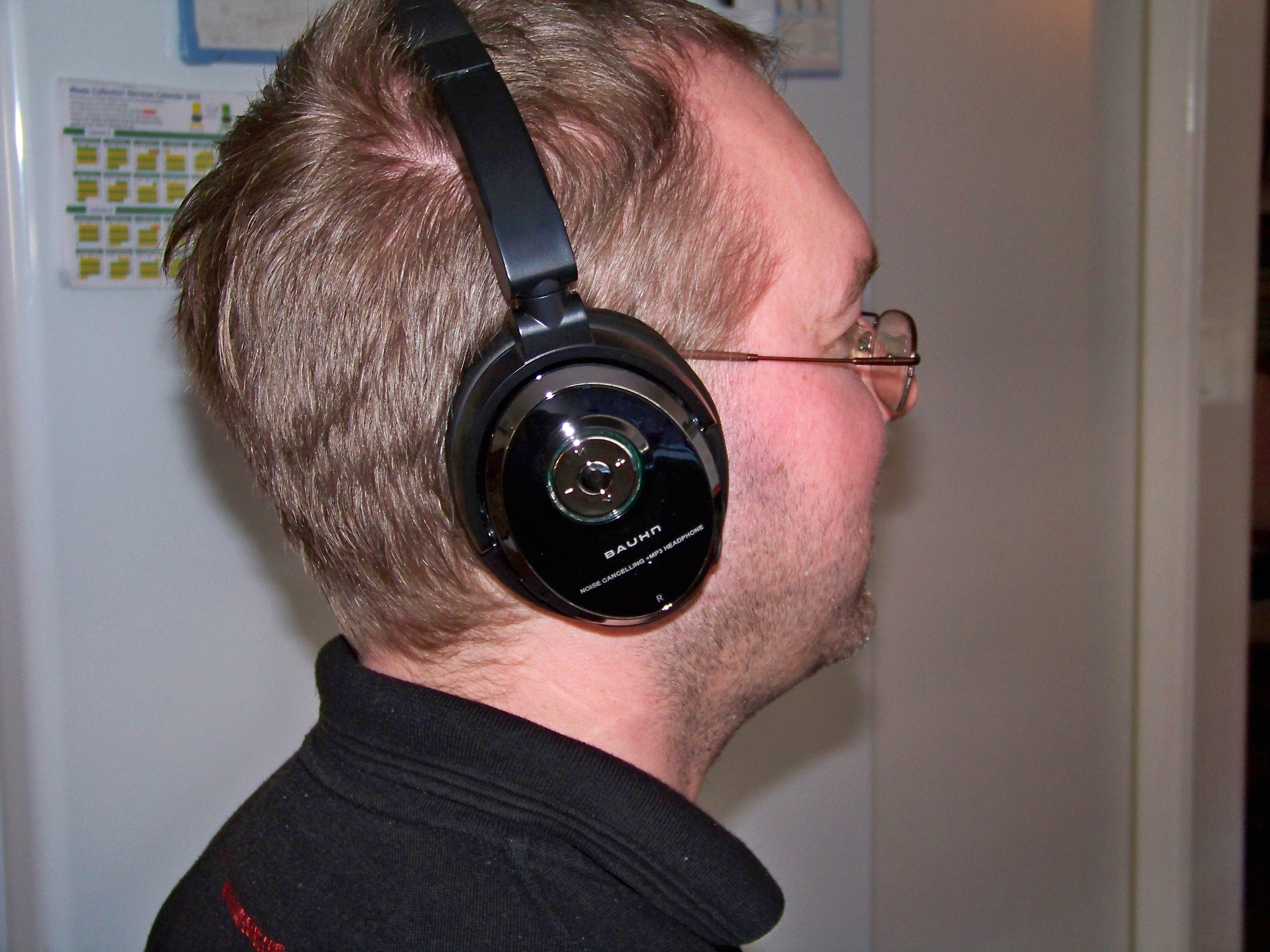
Me wearing Bauhn HeadphonesInside the case of Bauhn Noise Canceling Headphones showing the cable and connectorsOutside of the cases of Bauhn and Bose Headphones Overview The German supermarket chain Aldi has been running in Australia for 8 years now [1]. Their standard practice for a long time has been to offer regular special deals on a few items of consumer electronics every week, my chocolate fridge is one thing I bought from Aldi [2]. Today Aldi have started selling Noise Canceling Headphones [3]. These headphones are badged by Bauhn but that name is apparently applied to random products from cheap manufacturers, it may be an Aldi name that is applied to stuff that they sell. The headphones cost $69AU which is really cheap. But the deal will probably end in less than a week when stock runs out. Noise canceling headphones can be used in server rooms and other noisy environments. Every company that has a server room should buy a few sets. One of the features of noise-canceling is that it works best on low frequencies and on regular sounds it specifically doesn t block human voice well. In some noisy environments it will be easier to hear people talk if you wear such headphones! Noise canceling headphones are also very useful to people who are on the autism spectrum and other people who get more annoyed by noise pollution than average people. I have been wearing my Bose headphones on public transport and when walking around in the city, this not only stops traffic noise but it also helps to avoid people thinking that I want to talk to them. Features The first picture shows me wearing the Bauhn NC headphones, it s from the right to show the controls for the built-in MP3 player. I have not yet tested the MP3 functionality. It appears that as the controls are one power button, buttons for next/previous track, and for controlling the volume. This is fairly poor for MP3 functionality, ideally you would want to have a display to see a list of tracks, maybe have directories to store files, etc. I guess this could be a convenient feature on occasion, but you wouldn t buy the headphones for the MP3 functionality.
The next two pictures show a comparison of the Bauhn headset with the Bose QC-15 headset that I bought last year [4]. The cases of the Bauhn and Bose devices are almost exactly the same size and of a very similar shape, the Bose case is tapered and indented and also has a finer weave on the cloth covering it looks much nicer. Both devices come with an adapter for an airline socket and with a detachable cable. They also both have pouches attached to the inside of the case with velcro. But the Bauhn headphones come with an adapter for the 6.5mm TRS connector which could be convenient if you want to plug them in to a larger amplifier, the basic connector is 3.5mm in both cases. The Bauhn device uses a standard TRS connector at the headphone end while the Bose QC-15 use a special connector that matches the shape of the headset and which has a TRRS plug (to cater for the high/low volume switch), so it seems that a damaged Bauhn cable could be replaced cheaply while a replacement Bose cable would have to be purchased from Bose (presumably at great expense and delay). The Bauhn case also has a velcro attached pocket for storing business cards (or maybe a name tag or something). The supplied cable for the Bauhn is described as being 5 feet long which isn t quite long enough to reach a tower PC that is sitting on the floor. The Bose has a cable that is about a foot longer (maybe 6 feet total), but due to the non-standard connector you can t replace it. I presume that I could easily buy a 4 meter cable for the Bauhn headphones, but I could of course buy an extension cable to use with the Bose. Bose advertise the QC-15 headphones as having 35 hours of battery life from a single AAA battery. Aldi advertise the Bauhn headset as having 5 hours of battery life when NC is turned on and they use two AAA batteries. It s widely regarded that rechargeable batteries don t last as long as the batteries used for estimating the battery life (which presumably are the most expensive long-life batteries available). I ve found a single rechargeable AAA battery to last well over 5 hours in my Bose headphones, so it seems that battery life is considerably worse for the Bauhn device. One feature of the Bauhn device is that it can be used without any batteries for playing external music. The Bose headphones can t be used at all without a battery. So while the Bauhn will use the batteries faster it will at least be usable when the batteries run out. But if you are buying headphones for the purpose of avoiding noise then the Bose headphones are simply better. Comfort The Bose headphones have significantly deeper ear wells than the Bauhn about 23mm vs 18mm. If your ears stick out more than 18mm (as mine apparently do) then this is a good reason for choosing Bose. The Bose headphones are a tighter fit, the spring that pushes the ear-pieces together is stronger. But they have better padding so this doesn t cause me any discomfort. Also the Bose headphones have better passive noise reduction due to having a more snug fit around the ears. I ve worn my Bose headphones on a flight from the US to Australia with hardly a break and they were quite comfortable I would never want to do that with the Bauhn headphones. Noise Reduction I tested the Bose and Bauhn products against three noise scenarios, external music, an air-conditioner, and a car engine. The Bose headphones made good reductions of the noise from the external music (Numb by Linkin Park) and the air-conditioner. The Bauhn headphones did little to stop Linkin Park and was not very effective against the air-conditioner noise. I think that this is largely due to the lack of passive noise reduction, the air-conditioner in question makes little vibration noise and the sound of rushing air is generally immune to active noise cancellation. Both headphones were very effective when in a car with the engine idling. The engine noise of vehicles seems to fall in an ideal frequency range for active cancellation. Music Quality When listening to Youtube music played on my Thinkpad I could not notice any quality difference between the two sets of headphones. I did notice that the Bose headphones seemed to have a greater response in the higher frequency range, but that doesn t necessarily mean that one set is better than the other. Maybe if I was listening to FLAC0 encoded music that I had personally ripped from a CD then I would notice a difference. But for most people the Bauhn music quality should be good enough. Design Quality The Bose product is solidly designed, while the Bauhn product appears cheap in every way. Opening the battery compartment on the Bauhn headphones is difficult and if you do it wrong you could easily break the lid off, I expect that every set of Bauhn headphones that is used by children will be broken in a small amount of time but it should still be fully functional with a broken lid. The matt finish of the Bose headphones should hide minor scratches much better than the shiny Bauhn headphones. The Bauhn headphones also have lower quality plastic parts, it appears that the molds used were designed cheaply and without adequate care to prevent marking the final product. The design flaws that affect usage of the Bauhn product are the shallow ear wells, the poor fit of the cushions around the ears (which is probably mostly due to a weak spring pressing the ear cups to the wearer s head), and the battery compartment lid which is difficult to open and appears prone to breakage. The other flaws are all cosmetic. I wonder whether the Bauhn product was made by one of the big name manufacturers who deliberately reduced the quality to avoid competing with their more expensive products. It seems that the major flaws could have been corrected at design time with almost no increase in manufacturing costs. Recommendations If you can afford the Bose QuietComfort 15 Acoustic Noise Cancelling Headphones then they are really worth the extra expense, I have no regrets at all about spending about $320US (including tax) on my Bose QC-15. The Bauhn product is good for when you want something cheap, for example a set to be used in a server room, or for the use of children. I bought a Bauhn headset for a friend who is a pilot, he spent $1,100 on a noise-canceling headset for his plane but had never got around to buying one for recreational use I expect that he will allow his children to use his new Bauhn headphones, if they get broken it s only a $69 expense. The second cheapest NC headphones I ve seen on offer in Australia is Harvey Norman selling Phillips HN-110 Noise Canceling Headphones for $100AU [5]. Amazon sells Philips HN 110 Folding Noise-Canceling Headphones for $50US but doesn t seem to ship them outside the US (at least not to Australia). JB Hifi also has some NC headphones on sale in Australia [6], but they are more expensive at $219 for AKG and $319 for Sennheiser. Also the models they sell are on-ear which means that they will inherently have very little passive noise reduction and will also annoy anyone who doesn t like having their ears squashed. If I was buying NC headphones for my own use and didn t want to spend $300US then I would either buy the Philips HN 110 Folding Noise-Canceling Headphones from Amazon and get a friend in the US to post them to me or I would buy them from Harvey Norman. But the Bauhn product is good if you want cheap headphones to stop engine noise and give reasonable quality when playing music.

24 March 2010

John Goerzen: Review: Travel as a Political Act by Rick Steves

Rick Steves is known for writing books, and producing public TV shows, about travel to Europe. He encourages people to get out of their comfort zone, advocates staying in homes instead of hotels, and giving yourself permission to struggle to communicate in a land of unfamiliar language. That way, you get to experience not just the landmarks, but the culture and history. That was the approach we favored in our recent trip to Europe, and after being there (and seeing tour groups), I think Rick Steves is right on. On the plane to Europe, I read his Travel as a Political Act. This is not a guidebook, but more a book about the philosophy of travel. As usual with my book reviews, unless indicated otherwise, all quotes here come from the book. He starts out with this statement:
I ve taught people how to travel. I focus mostly on the logistics: finding the right hotel, avoiding long lines But that s not why we travel. We travel to have enlightening experiences, to meet inspirational people, to be stimulated, to learn, and to grow. Travel has taught me the fun in having my cultural furniture rearranged and my ethnocentric self-assuredness walloped.
I read this book mostly on the plane to Hamburg, or the week prior to leaving. I can credit Rick Steves directly for encouraging me to strike up a conversation with a random German on the bus from Hamburg to L beck, which I ll discuss here in a couple of days. Probably the biggest lament from Rick Steves is that the people that really ought to travel the ones that are so sure that their ways are correct and best are least likely to do so.
Make a decision that on any trip you take, you ll make a point to be open to new experiences, seek options that get you out of your comfort zone, and be a cultural chameleon trying on new ways of looking at things and striving to become a temporary local. My best vacations have been both fun and intensely educational Travel challenges truths that we were raised thinking were self-evident and God-given. Leaving home, we learn that other people find different truths to be self-evident. We realize that it just makes sense to give everyone a little wiggle room.
The book is set with an introductory encouragement to travel, followed by seven vignettes of different countries he s visited, and descriptions of how it s impacted him. He gave a lesson of the opening of the German Reichstag (parliament building), which he was present for in 1999. He was surrounded by teary-eyed Germans and a few tourists so preoccupied with trivialities forgotten camera batteries, needing a Coke, the lack of air-conditioning that they were missing out on this once-in-a-lifetime opportunity to celebrate a great moment with the German people. He comments that we can learn from other countries that no one country has a monopoly on good ideas, and it is plenty patriotic to insist what we adopt good ideas (such as drug policy) from other countries and adopt them for our own. Particularly touching to me was the description and photo of a memorial in El Salvador, very much looking like the American Vietnam memorial except that one remembering loved ones lost fighting the United States. How many Americans even know that we were involved in a damaging war in El Salvador? A large part of his book was, for me, preaching to the choir, as this comment illustrated:
In the European view, America is trapped in an inescapable cycle to feed its military-industrial complex: As we bulk up our military, we look for opportunities to make use of it. (When your only tool is a hammer, you treat every problem like a nail.) And then, when we employ our military unwisely, we create more enemies which makes us feel the need to grow our military even more. If an American diplomat complained to his European counterpart, America is doing all the heavly lifting when it comes to military, the European might respond, Well, you seem to be enjoying it. We re building roads and bridges instead.
That s a sentiment I ve agreed with for quite some time already, and as such, some parts of the book moved slowly for me though I imagine his target audience included people that had never seriously considered these arguments before. Then there were surprising facts:
by the end of World War I, an estimated half of all the men in France between the ages of 15 and 30 were casualties. When some Americans, frustrated at France s reluctance to follow us into a war, call the French surrender monkeys, I believe it shows their ignorance of history.
And again, I d agree with him on that point. The vignette on Iran was particularly interesting, as he described his experiences in person, they sounded far different than the picture we often get in the media. I have realized, incidentally, that I am terrible at writing book reviews. So rather than inflict more paragraphs upon you with this one, I ll summarize by saying that this is a touching, informative, and motivational book, which I highly recommend. I ll leave you with this quote:
Mark Twain wrote, Travel is fatal to prejudice, bigotry, and narrow-mindedness. These wise words can be a reallying cry for all travelers once comfortably back home. When courageous leaders in our community combat small-mindedness and ignorance travelers can stand with them in solidarity.
I didn t travel to make some sort of statement or as a political act. But I was enriched in many ways by travel of course the obvious ones of contemplating the history of a 900-year-old beautiful church, but also in seeing the different character of different cities, being with two families for a couple of days, and seeing different approaches to common problems. I am very glad I wasn t shut off from this behind a tinted window in a tour bus.

Adnan Hodzic: Need help setting up my Linux development platform

Maintaining stable life with unstable distro? This post may sound ludicrous to some of you but please hear me out. I ve been on Debian unstable/Sid for awhile now and it was all cool until yesterday. Besides my work on Debian DebConf/some devel, I m university student, also I do web devel which is my primary source of income, besides all those I try to go out on weekends and have some kind of social life. Somehow I manage to do all these things and I d say I manage them pretty successfully too. Now I m hardcore to the bone, but this is just too much, last week started working on immense web devel project didn t sleep more then 2hrs/day whole week; I also didn t shut down my notebook and just kept it on suspend as I usually do. Either way I was about to print/scan something and I connect my printer and what happens? My whole system freezes, now I ll let you figure out the result of doing hard reset and having a lot of gedit docs open at that time. And yes, I did had that bug reported awhile ago, can t find it now, but it was fixed, seems like it s back again. In the end I m left with weekend completing the lost work + late school work + eclipse 3.5.2-2 ought to be uploaded. I do almost all the work (didn t upload eclipse) and literally pass out on Sunday. Wake up sometime on Monday, wasn t able to get up from bed. Plan: Change my base distro, keep Sid as dualboot or virtual machine
Now, for my time of being Sid user this isn t the first time something like this happened, and by this I mean unexpected/unprovoked bugs. I might not be as hardcore as I used to be, or it s just that I don t have time anymore. So my plan is to get Stable or even Ubuntu for my work/study platform, while I d have dual boot or virtual machine of Debian Unstable/Sid. I m sure I can t be the only one who s doing this, so please give me your advice on this one.
1. Main question is dualboot or virtual machine? Reason I d like it to be a virtual machine instead of dual boot is that my notebook HDD is 64GB SSD (Lenovo X300). By todays standards 64GB is quite small, while the price of SSD is quite opposite of small. So I d like to use this only for my main/base OS, nothing else. Since I use external HDD s having it virtual it s more convenient for me to carry around my image/s. Other day I ordered 4GB of RAM so I shouldn t have problems with performance of this virtual machine. Or even with that much RAM, devel on virtual machine is just not possible? 2. In case I go for Ubuntu, and decide to start packaging for Ubuntu as well, what s the best way to have my work/packages synced within both Debian and Ubuntu (sshfs?). 3. How do I take my PGP keys with me? If I just copy .gnupg and .ssh will that be enough? 4. Can I have same keys both on my host machine and virtual machine at the same time? 5. Some other idea of sticking with Sid?
Input to any of these questions/other suggestions would be greatly appreciated.

22 March 2010

Russell Coker: Links March 2010

Blaise Aguera y Arcas gave an exciting demonstration of new augmented reality mapping software from Microsoft that combines video (including live video) with static mapping data and pictures [1]. This is a significant advance over current mapping systems such as Google Earth but it s not released yet either. It will be interesting to see whether Google or Microsoft gets this released first. The New York Review of Books has an insightful atricle by Garry Kasparov about human/computer chess [2]. It s surprising the degree to which a combination of human and computer chess playing can give a good result. Amateur human chess players plus regular PCs can beat grandmasters with computers or high-end computers with human help. It s apparently the quality of human-computer interaction that determines the quality of play. But the article contains a lot more, I recommend reading it. Daniel Kahneman gave an interesting TED talk about the difference between experiential and memory happyness [3]. As the concept of the moment is so short (about 3 seconds) apparently most people try to optimise their actions for the best memories of being happy. But to do so requires some different strategies. For example a two week vacation gives a memory that s not much different from a one week vacation. Therefore it seems that you would be better off staying in a five star hotel for a week than a four star hotel for two weeks, and eat dinner at a Michelin Star restaurant at least once per holiday even if it means eating at McDonalds on other occasions due to lack of funds. Temple Grandin gave an interesting TED talk The World Needs all Kinds of Minds [4] which mostly focussed on teaching children who are on the Autism spectrum. She is concerned that autistic children won t end up where they belong in Silicon Valley . Anupam Mishra gave an interesting TED talk about how the people of India s Golden desert built structures to harvest and store water [5]. Some of their ideas should be copied in Australia, due to mismanagement and stupidity Australians are failing to survive in much more hospitable places. Michael Tieman wrote an insightful and well researched article about the OSI s rejection of the IIPA s attacks on Open Source [6]. This is worth reading by anyone who wants to make a business or social case for free software. Mark Shuttleworth wrote an interesting post about the new visual style for Ubuntu and Canonical [7]. Apparently this includes the creation of a new font set which will be available for free use. Divorced Before Puberty an informative New York Times article by Nicholas Kristof about the links between treatment of women and terrorism [8]. The New York Times has an interesting article on Human Flesh Searches on the Internet in China [9]. It s basically crowds targetting people to find private information and harass them (similar to what some griefers are known for doing on the English-language part of the Internet). But they seem more interested in vigilante justice than lulz. The New York Times has an informative article about the Cult of Scientology (Co$) [10]. Among other interesting news it suggests that the number of cult victims in the US has dropped from 55,000 to 25,000 in the 2001-2008 time period. Senator Xenophon has called for an inquiry into the crimes committed by the cult and a review of it s tax-exempt status [11]. As always Xenu.net is the authoritative source for information on the Cult of Scientology AKA the Church of Scientology. The New York Times has an interesting article about formally studying the skills related to school teaching [12]. It largely focuses on Doug Lemov s Taxonomy of Effective Teaching describes 49 techniques that improve school results and some other related research. The article also mentions that increasing teacher salaries is not going to help much due to the large number of teachers, it s only professions that employ small numbers of people that can potentially have their overall skills improved by increasing salaries. Andy Wingo wrote an interesting article about Julius Caesar [13] based on the book The Assassination of Julius Caesar: A People s History of Ancient Rome by Michael Parenti. It seems that Caesar was more of a populist than a despot. Interesting article in The Register about the Large Hadron Collider (LHC) [14]. Apparently one 3.5TeV proton beam has as much energy as a British aircraft carrier running at 8 knots.

Brice Goglin: Debian/X.org notes - Radeon KMS in unstable, enabled by default

Now that we have DRM from 2.6.33 in latest 2.6.32 kernel in unstable, I just uploaded Radeon KMS and DRI2 to unstable. xserver-xorg-video-radeon 1:6.12.192-2 even enables KMS by default. Please test it. In case of problems, you may for instance disable KMS by changing modeset to 0 in /etc/modprobe.d/radeon-kms.conf. You may also downgrade to testing where xserver-xorg-video-radeon 1:6.12.6-1 does not enable/support KMS. Make sure you run linux-image-2.6.32-4-$arch or later so that you actually have DRM from 2.6.33 and the radeon kernel module gets loaded early by udev. Otherwise, you may experience problems like this. You may need to add radeon to /etc/modules as a temporary fix.
(Permanent link)

Ian Wienand: What exactly does -Bsymblic do? -- update

Some time ago I wrote a description of the -Bsymbolic linker flag which could do with some further explanation. The original article is a good starting place. One interesting point that I didn't go into was the potential for code optimisation -Bsymbolic brings about. I'm not sure if I missed that at the time, or the toolchain changed, both are probably equally likely! Let me recap the example...
ianw@jj:/tmp/bsymbolic$ cat Makefile 
all: test test-bsymbolic
clean:
	rm -f *.so test testsym
liboverride.so : liboverride.c
	       $(CC) -Wall -O2 -shared -fPIC -o liboverride.so $<
libtest.so : libtest.c
	   $(CC) -Wall -O2 -shared -fPIC -o libtest.so $<
libtest-bsymbolic.so : libtest.c
		     $(CC) -Wall -O2 -shared -fPIC -Wl,-Bsymbolic -o $@ $<
test : test.c libtest.so liboverride.so
     $(CC) -Wall -O2 -L. -Wl,-rpath=. -ltest -o $@ $<
test-bsymbolic : test.c libtest-bsymbolic.so liboverride.so
	$(CC) -Wall -O2 -L. -Wl,-rpath=. -ltest-bsymbolic -o $@ $<
$ cat liboverride.c 
#include <stdio.h>
int foo(void)
 
	printf("override foo called\n");
	return 0;
 
$ cat libtest.c 
#include <stdio.h>
int foo(void)  
    printf("libtest foo called\n");
    return 1;
 
int test_foo(void)  
    return foo();
 
$ cat test.c
#include <stdio.h>
int test_foo(void);
int main(void)
 
	printf("%d\n", test_foo());
	return 0;
 
In words; libtest.so provides test_foo(), which calls foo() to do the actual work. libtest-bsymbolic.so is simply built with the flag in question, -Bsymbolic. liboverride.so provides the alternative version of foo() designed to override the original via a LD_PRELOAD of the library. test is built against libtest.so, test-bsymbolic against libtest-bsymbolic.so. Running the examples, we can see that the LD_PRELOAD does not override the symbol in the library built with -Bsymbolic.
$ ./test
libtest foo called
1
$ ./test-bsymbolic 
libtest foo called
1
$ LD_PRELOAD=liboverride.so ./test
override foo called
0
$ LD_PRELOAD=liboverride.so ./test-bsymbolic 
libtest foo called
1
There are a couple of things going on here. Firstly, you can see that the SYMBOLIC flag is set in the dynamic section, leading to the dynamic linker behaviour I explained in the original article:
ianw@jj:/tmp/bsymbolic$ readelf --dynamic ./libtest-bsymbolic.so 
Dynamic section at offset 0x550 contains 22 entries:
  Tag        Type                         Name/Value
 0x00000001 (NEEDED)                     Shared library: [libc.so.6]
 0x00000010 (SYMBOLIC)                   0x0
...
However, there is also an effect on generated code. Have a look at the PLTs:
$ objdump --disassemble-all ./libtest.so
Disassembly of section .plt:
[... blah ...]
0000039c <foo>:
 39c:   ff a3 10 00 00 00       jmp    *0x10(%ebx)
 3a2:   68 08 00 00 00          push   $0x8
 3a7:   e9 d0 ff ff ff          jmp    37c <_init+0x30>
$ objdump --disassemble-all ./libtest-bsymbolic.so
Disassembly of section .plt:
00000374 <__gmon_start__@plt-0x10>:
 374:   ff b3 04 00 00 00       pushl  0x4(%ebx)
 37a:   ff a3 08 00 00 00       jmp    *0x8(%ebx)
 380:   00 00                   add    %al,(%eax)
        ...
00000384 <__gmon_start__@plt>:
 384:   ff a3 0c 00 00 00       jmp    *0xc(%ebx)
 38a:   68 00 00 00 00          push   $0x0
 38f:   e9 e0 ff ff ff          jmp    374 <_init+0x30>
00000394 <puts>:
 394:   ff a3 10 00 00 00       jmp    *0x10(%ebx)
 39a:   68 08 00 00 00          push   $0x8
 39f:   e9 d0 ff ff ff          jmp    374 <_init+0x30>
000003a4 <__cxa_finalize@plt>:
 3a4:   ff a3 14 00 00 00       jmp    *0x14(%ebx)
 3aa:   68 10 00 00 00          push   $0x10
 3af:   e9 c0 ff ff ff          jmp    374 <_init+0x30>
Notice the difference? There is no PLT entry for foo() when -Bsymbolic is used. Effectively, the toolchain has noticed that foo() can never be overridden and optimised out the PLT call for it. This is analogous to using "hidden" attributes for symbols, which I have detailed in another article on symbol visiblity attributes (which also goes into PLT's, if the above meant nothing to you). So -Bsymbolic does have some more side-effects than just setting a flag to tell the dynamic linker about binding rules -- it can actually result in optimised code. However, I'm still struggling to find good use-cases for -Bsymbolic that can't be better done with Version scripts and visibility attributes. I would certainly recommend using these methods if at all possible. Thanks to Ryan Lortie for comments on the original article.

Dirk Eddelbuettel: 2010 March Madness Half Marathon in Cary

The annual March Madness Half Marathon in Cary took place this morning. This is both one of Chicagoland's 'early races' to start the season as well as the classic Boston preparation due to the hilly course. I have now run this consecutively for six years (see 2005. 2006, 2007, 2008, and 2009). As for the race conditions, we had fantastic weather all week with temperatures up to the sixties and then all of a sudden a forecast of rain, snow and even sleet for the weekend. Luckily, and while yesterday was sucky, today was allright or better. A little chilly and damp, but neither rain nor snow --- or even wind. So the conditions were good, with the course challenging as usual. The race itself went fine. I ran more or less steadily, never had to stop but was not particularly fast at 1:39:38 or a pace of 7:36.3. I had aimed for beating 1:40, had missed that target by miles 4 to 6 and was about 10 or 15 seconds behind but managed to get a negative split on the second half of the course to reach that goal. Which is nice, but the time is still the slowest I've ever run that race, and my slowest half-marathon since 2004. Training had been sluggish all winter. Oddly enough, already in last year's post I stated pretty much the same and feared that Boston may become tough --- which it did. But this year may well be a lot worse as I had no spring in my step all winter long. No fire in the belly for training will make for a long race. We'll see how it goes. Four weeks to go.

21 March 2010

C.J. Adams-Collier: IronRuby continuous integration back online

We haven t done much work on keeping the continuous integration (CI) machines online, and there haven t been any new builds since November of 09. I should set Nagios to remind us when things get off track or something. The recent acceptance of the DLR into Debian and our intention to get the next release produced has inspired me (and maybe others) to get things back up. Ivan and I put a couple of Hudson instances up recently that you can reach via hudson-windows.colliertech.org and hudson-linux.colliertech.org. The linux instance is dropping new builds of IronRuby to http://dlrci.colliertech.org/ironruby/. I expect we can tweak the build script a bit and have it also produce IronPython builds. This would hypothetically drop the builds to http://dlrci.colliertech.org/ironpython/. Ivan mentioned that we may get CNAME records which would activate the windows-builds.ironruby.net and linux-builds.ironruby.net hosts as well. Note that these builds are being produced from the linux branch of git://github.com/casualjim/ironruby.git Thanks for your work on this, Ivan!

Gunnar Wolf: Baroque spam, repetition ad nauseam

Sitting at my hotel room in Tijuana, about to hit the bed, quite tired because of a nice, long walk I will write more about tomorrow, I have been listening for at least five minutes to a long, stupid infomerciative spam in the History Channel: A fountain pen, a five-point pen, and three other pen-like implements (plus extra and extra and extra things... They are listing a case with 63 implements now!) Now, what is the hook into getting somebody to call for a classy pen? Elegance, of course! Just for the sake of this exercise, the spam continues to be played. And yes, it's only been two short paragraphs. But believe me, I am very tired, and trying to get some coherent English out of my brain is not as easy as it could. Elegance, I said, right? Good. How do you convey elegance to TV spam/infomercials? Well, what's more classy and refined than a 30 second sample of Haydn? Man, Haydn is *so* classy that the viewer will not even notice the snippets of blabber have incoherent redaction. Anyway... Spam goes on. I cannot stand any more repetitions of this 30 Haydn seconds. They are stronger than me. And that old lady says that anybody is writing in their computer now I will only write with my fountain pen from now on! I will surely follow her wise advise! (STOP IT WITH THE STUPID HORN!)

Russell Coker: Citing Wikipedia

A meme that has been going around is that you can t cite Wikipedia. You can t Cite Wikipedia Academically Now it s well known and generally agreed that you can t cite Wikipedia for a scientific paper or other serious academic work. This makes sense firstly because Wikipedia changes, both in the short term (including vandalism) and in the long term (due to changes in technology, new archaeological discoveries, current events, etc). But you can link to a particular version of a Wikipedia page, you can just click on the history tab at the top of the screen and then click on the date of the version for which you want a direct permanent link. The real reason for not linking to Wikipedia articles in academic publications is that you want to reference the original research not a report on it, which really makes sense. Of course the down-side is that you might reference some data that is in the middle of a 100 page report, in which case you might have to mention the page number as well. Also often the summary of the data you desire simply isn t available anywhere else, someone might for example take some facts from 10 different pages of a government document and summarise them neatly in a single paragraph on Wikipedia. This isn t a huge obstacle but just takes more time to create your own summary with references. When Wikipedia is Suitable The real issue however is how serious the document you are writing is and how much time you are prepared to spend on it. If I m writing a message to a mailing list or a comment on a blog post then I probably won t bother reading all the primary sources of Wikipedia pages, it would just waste too much of my time. Wikipedia is adequate for the vast majority of mailing list discussions. If I m discussing several choices for software with some colleagues we will probably start by reading the Wikipedia pages, if one option doesn t appear to have the necessary features (according to Wikipedia) then we may ask the vendor if those features are really missing and if so whether they will be added in the next version but we may decide that we don t really need the features in question and modify our deployment plans. Many business decisions are made with incomplete data, time is money and there often isn t time to do everything you want to do. Using Wikipedia as a primary source for business decisions is a way of trading off a little accuracy for a huge time saving. This is significantly better than the old fashioned approach of comparing products by reading their brochures companies LIE in their advertising! When writing blog posts the choice of whether to use Wikipedia as a reference depends on the point that you are trying to make and how serious the post is. If the post isn t really serious or contentious or if the Wikipedia reference is for some facts that are not likely to be disputed then Wikipedia will probably do. For some posts a reference to a primary source will be better. A blog post that references data that is behind a pay-wall (such as a significant portion of academic papers and news articles) is practically of less use than a post that cites Wikipedia. In most cases Wikipedia references free primary sources on the Internet (although it does sometimes refer to dead tree products and data that is behind a pay-wall). In the minority of cases where the primary references for a Wikipedia page are not available for free on the Internet there will be people searching for freely available references to replace the non-free ones. So if you refer to a Wikipedia page with non-free references a future reader might find that someone has added free references to it. The Annoying People One thing that often happens is that an Internet discussion contains no references for anything it s all just unsupported assertions. Then if anyone cites Wikipedia someone jumps in with you can t cite Wikipedia . If you want to criticise Wikipedia references then please first start by criticising people who state opinions as fact and people who provide numbers without telling anyone where they came from! The Guinness Book of Records (now known as Guinness World Records ) was devised as a reference to cite in debates in pubs [1]. It seems that most of the people who dismiss references to Wikipedia on the net would prefer that Internet debates have lower requirements for references than a pub debate. When Wikipedia is cited in an online discussion it is usually a matter of one mouse click to check the references for the data in question. If Wikipedia happens to be wrong then anyone who cares can correct it. Saying the Wikipedia page you cited had some transcription errors in copying data from primary sources and some of the other data was not attributed, I ve corrected the numbers and noted that it contains original research would be a very effective rebuttal to an argument that relies on data in Wikipedia. Saying you can t cite Wikipedia means little, particularly if you happen to be strongly advocating an opposing position while not providing any references. If one person cites an academic paper and someone else cites Wikipedia then it seems reasonable to assume that the academic paper is the better reference. But when it s a choice between Wikipedia and no reference then surely Wikipedia should win! Also references to non-free data are not much good for supporting an argument, that s really just unverified claims as far as most people can determine therefore the issue becomes how much the person citing the non-free reference can be trusted to correctly understand and summarise the non-free data. Also it has to be considered that not all primary sources are equal. Opinion pieces should be considered to have a fairly low value and while they are authoritative for representing the opinion of the person who wrote them they often prove little else unless they happen to cite good references which brings them to the same level as Wikipedia. The main benefit for linking to opinion pieces is that it saves time typing and gives a better product for the readers it s sometimes easier to find someone else expressing an opinion well than to express it yourself. So please, don t criticise me for citing Wikipedia unless others in the discussion are citing better references. If most people are not citing any references or only citing opinion pieces then a Wikipedia page may be the best reference that is being provided!

C.J. Adams-Collier: More DLR work

Ivan put up a hudson server on our winders box. Ankit helped me figure out the IronRuby xbuild build problems. I should probably try it on IronPython, too. I sent the ironruby-core list a patch to fix some case sensitivity issues. Some time in the near future, I m going to get together a bug report for the compiler and send it off to Marek. But I m tired and Scarlet s got a friend doing the sleep-over thing tonight. So. Later ;) P.S., can you believe that nobody registered a11y.com before now? Crazy talk. P.P.S., does anyone out there in gnome land have a ruby app they want to test for compatibility with IronRuby?

Russell Coker: Xen and Debian/Squeeze

Ben Hutchings announced that the Debian kernel team are now building Xen flavoured kernels for Debian/Unstable [1]. Thanks to Max Attems and the rest of the kernel team for this and all their other great work! Thanks Ben for announcing it. The same release included OpenVZ, updated DRM, and the kernel mode part of Nouveau but Xen is what interests me most. I ve upgraded the Xen server that I use for my SE Linux Play Machine [2] to test this out. To get this working you first need to remove xen-tools as the Testing version of bash-completion has an undeclared conflict, see Debian bug report #550590. Then you need to upgrade to Unstable, this requires upgrading the kernel first as udev won t upgrade without it. If you have an existing system you need to install xen-hypervisor-3.4-i386 and purge xen-hypervisor-3.2-1-i386 as the older Xen hypervisor won t boot the newer kernel. This also requires installing xen-utils-3.4 and removing xen-utils-3.2-1 as the utilities have to match the kernel. You don t strictly need to remove the old hypervisor and utils packages as it should be possible to have dual-boot configured with old and new versions of Xen and matching Linux kernels. But this would be painful to manage as update-grub doesn t know how to match Xen and Linux kernel versions so you will get Grub entries that are not bootable it s best to just do a clean break and keep a non-Xen version of the older kernel installed in case it doesn t initially boot. A apt-get dist-upgrade operation will result in installing the grub-pc package. The update-grub2 command doesn t generate Xen entries. I ve filed Debian bug report #574666 about this. Because the Linux kernel doesn t want to reduce in size to low values I use xenhopt=dom0_mem=142000 in my GRUB 0.98 configuration so that the kernel doesn t allocate as much RAM to it s internal data structures. In the past I ve encountered a kernel memory management bug related to significantly reducing the size of the Dom0 memory after boot [3]. Before I upgraded I had the dom0_mem size set to 122880 but when running Testing that seems to get me a kernel Out Of Memory condition from udev in the early stages of boot which prevents LVM volumes from being scanned and therefore prevents swap from being enabled so the system doesn t work correctly (if at all). I had this problem with 138000M of RAM so I chose 142000 as a safe number. Now I admit that the system would probably boot with less RAM if I disabled SE Linux, but the SE Linux policy size of the configuration I m using in the Dom0 has dropped from 692K to 619K so it seems likely that the increase in required memory is not caused by SE Linux. The Xen Dom0 support on i386 in Debian/Unstable seems to work quite well. I wouldn t recommend it for any serious use, but for something that s inherently designed for testing (such as a SE Linux Play Machine) then it works well. My Play Machine has been offline for the last few days while I ve been working on it. It didn t take much time to get Xen working, it took a bit of time to get the SE Linux policy for Unstable working well enough to run Xen utilities in enforcing mode, and it took three days because I had to take time off to work on other projects.

20 March 2010

Robert Collins: LibrePlanet 2010 Day 2

John Gilmore keynote What do we do next, having produced a free software system for our computers? Perhaps we should aim at Windows? Wine + an extended ndiswrapper to run other hardware drivers + a better system administration interface/resources/manuals. However that means knowing a lot about windows internals something that open source developers don t seem to want to do. We shouldn t just carry on tweaking its not inspiring; whats our stretch goal? Discussion followed reactos, continue integrating software and people with a goal of achieving really close integration: software as human rights issue! Desktop paradigm needs to be replaced : need to move away from a document based desktop to a device based desktop. Concern about the goal of running binary drivers for hardware: encourages manufacturers to sell hardware w/out specs; we shouldn t encourage the idea that that is ok. Lots of concern about cloning, lots of concern about what will bring more freedom to users, and what it will take to have a compelling vision to inspire 50000 free software hackers. Free software in cars lots of safety issues in .e.g brake controllers, accelerators. Eben Moglen We re at the inflection point of free software because any large scale global projects these days are not feasible without free software. Claims that doing something that scales from tiny to huge environment requires us A claim I would (sadly) dispute. Lots of incoming and remaining challenges. Entirely clear that the patent systems relationship to technology is pathological and dangerous that I agree with! Patent muggings are a problem patent holders are unhappy with patents granted to other people :) . Patent pools are helping slowly as they grow. Companies which don t care about the freedom aspect of GPLv3 are adopting it because of the patent protection aspects. Patent system is at the head of the list of causes-of-bad-things affecting free software. SFLC is building coalitions outside the core community to protect the interests of the free software community. We are starting to be taken for granted at the high end of mgmt in companies that build on free software. We face a problem in the erosion of privacy. We need to build a stack, running on commodity hardware that runs federated services rather than folk needing centralised services. Marina Zhurakhinskaya on GNOME Shell: Integrates old and new ideas in an overall comprehensive design. Marina ran through the various goals of the shell growing with users, being delightful, starting simply so new users are not overwhelmed. The activities screen looks pretty nice ;) The workspace rearrangement UI is really good. The notifications thing is interesting; you can respond to a chat message in-line in the notification. Richard Stallman on Software as a Service he presented verbally the case made in the paper. Some key quotes All your data on a server is equivalent to total spyware I think this is a worst-case analogy; it suggests that you can never trust another party: kindof a sad state of paranoia to assume that all network servers are always out to get you all the time. And I have to ask should we get rid of Savannah then (because all the data is stored there) the argument for why Savannah is not SaaS is not convincing: its just file storage, so what makes it different to e.g. Ubuntu One? If there is a server and only a little bit of it is SaaS, perhaps just say don t worry about it because that little bit is often the hardest bit to replace. Lets write systems for collaborative word process that don t involve a central server abiword w/the sharing plugin ? :) RMS seems to be claiming that someone else sysadmining a server for you is better than someone else sysadmining a time-shared server for you: I don t actually see the difference, unless you re also asserting that you ll always have root over your own machine . The argument seems very fuzzy and unclear to me as to why there is really a greater risk in particular when there is a commercial relationship with the operator (as opposed to, say, an advertising supported relationship).

19 March 2010

Jon Dowland: The Dice Man and Generation X

The movie ' Fight Club' had a profound effect on me when I first saw it in 1999. I wasn't as fond of the originating novel, although there was something about the prose that Palahniuk used which I did enjoy. Since then I've read more of Palahniuk's work. My favourite of his books is actually Non-Fiction (a.k.a. Stranger than Fiction ): a collection of essays and interviews. Reading some of the stories in that collection, it becomes very clear where some of the concepts in his fiction originate. There are also a number of pieces on the craft of writing. He writes some really gushing praise about Amy Hempel:
When you study Minimalism in the novelist Tom Spanbauer's workshop, the first story you read is Amy Hempel's The Harvest. After that, you're ruined every other book you ever read will suck.
I recently read a couple of novels, both of which reminded me a lot of Fight Club. 'Generation X: Tales for an Accelerated Culture' by Douglas Coupland is an interesting tale of three or more societal drop-outs. Fight Club was written five years after Generation X and owes it a lot. 'Generation X' has curt, clipped passages and many dictionary-definition-esque side notes decoding hipster-slang, which add a lot of colour to the non-events of the story. These remind me both of the copous asides in Pratchett novels, or the chapter introductions in Philip K Dick's excellent 'Ubik'.
Historical Overdosing: To live in a period of time when too much seems to happen. Major symptoms include addiction to newspapers, magazines, and TV news broadcasts.
The novel goes absolutely nowhere, but that's actually one of the appealing things about it. When I mentioned this to my partner (who, as far as I know, has not read the book), she said that it sounded like the perfect tonic to a stressful life: imagine lying on a sunbed, doing nothing, reading about people lying on sunbeds, doing nothing. This is the first of Coupland's novels that I have read, but I managed to pick up a copy of 'Generation A' (so far as a I can tell, not a sequel, as such) 70% off as part of the closing-down sale at my local Borders store, so I will probably read that too. I also recently finished The Dice Man , by Luke Reinhart. It's a tongue-in-cheek pseudo-autobiography written under a pen-name about a psychiatrist who opts to delegate all life decisions to the throw of dice. Once again, Fight Club owes a lot to this book. The unhinged situations that occur are used to shine a satirical light on modern society. 'modern society' in the book is the 1970s. The distance between society then and now adds something to the novel's value now. Having said that, the narrator is not a particularly likeable character and it's hard to relate to him. Coincidentally my dad recently read this book and described it as 'misogynistic', which might be an understatement. Mind you, most of the characters, female or otherwise, are fairly 2D: perhaps intentionally the only fleshed out human is the narrator. In my favourite scene of the book, the narrator is in a situation under the influence of more than one drug. A TV set is on in the background. As the scene progresses, the events taking place on the TV are written about with increasing prominence compared to the main events of the scene. This escalates to a point where they are of equal importance and you can no longer easily distinguish the events taking place in the real world from those taking place on the television. This is the only part of the book that I can recall that employed any narrative tricks. The rest is by-the-numbers, and mostly internal monologue. The book is also at least 50% too long: the concept just doesn't stretch as far as it's forced to.

Jon Dowland: the world we live in

Sometimes the world we live in amazes me. Rentokil falsify scientific studies that show an alarming number of bugs and pests on public transport. Ben Goldacre calls them out, and fellow marketing people defend the practice as a sound marketing tool. On the other side of the globe, Viacom sue Youtube for breach of the Digital Millenium Copyright Act, specifically for not doing an adequate job of preventing their copyright material from being shared via the site. At the same time, Viacom hired at least 18 marketing agencies to upload its content to Youtube. They even went as far as to apply post-production techniques to make the videos look illegally sourced.

MJ Ray: Co-ops at the North Somerset Initiative

On Wednesday, I went to a meeting of the Business Initiative for North Somerset for Cooperatives-SW (our regional cooperative cooperative). It was the first time anyone from the cooperative and mutual sector was present.

platform
Conference Bank of England The first speaker was Geoff Harding from the Bank of England, who talked through topics in their agents summary and related news. One interesting graph showed a steep rise in the percentage of household income being saved. Answers to questions suggested that more of that goes to mutuals and building societies, but they find it difficult to be competitive while the banks are keen to increase their balances. There was mention of employment hoarding businesses short-time working, redeploying or shutting down temporarily to keep trained workers under contract, rather than make them redundant and rehire later. People from both the Federation of Small Businesses and the Hoteliers Association made strong comments about the banks claiming to government that they are willing to lend, but still offering deeply unattractive depth-of-recession rates and terms. If the regional agents get details of such cases, they pass them to the central bank. South West Regional Development Agency The second main speaker was Ann O Driscoll, who covers business development for the West of England (what many people call CUBA Councils that Used to Be Avon). She introduced their four strategic priorities:-

  1. Low Carbon Economy apparenly our region has good wind, wave and solar experience. However, Vestas were mentioned and I know that when Vestas closed the UK s only wind turbine blade factories in August 2009, the RDAs were criticised for not acting against the subsidy-chasing, socially irresponsible conduct of Vestas and related companies continue to worry workers. If Vestas is one of the praised companies, I wonder whether we re attracting sustainable work to the region. On a related note, North Somerset Council and NS Enterprise Agency are organising a Climate Change forum on 1st April, but it s at Cadbury House Hotel, which is awkward to get to except by car: no footpath to the door, a mile-and-a-half walk along a busy road from a train station, bad roads for biking, wheelbending speedhumps on the drive, I can t remember if there is bicycle parking and its website doesn t say
  2. Successful Businesses SWRDA funds our rather poor Business Link service. Does someone in the South West have some good news about Business Link? If so, please leave a comment on this article.
  3. Prosperous Places intervention in areas like south Bristol or central Weston.
  4. United Approach co-ordinating with other regional groups.
The main activities introduced were: The questions were fascinating, except for mine. The best one was probably about the forthcoming election and the Conservatives pledge to shut down the RDAs and Business Links. The answer was that much of the work will still need to be done somehow, so it s more a question of who will do it, rather than what the name on the door says. So I don t think axing RDAs is going to achieve more than shuffling people between organisations. When allowed to ask a question, I got too excited and ranted a bit about how the Co-operative Group s co-operative enterprise hub is doing work that Business Link should have been funding, but the RDA doesn t understand social enterprise and treats it as a ghetto service. I ll try to take that up in a more coherent form later. Overview I think Cooperatives-SW were invited to the North Somerset Initiative largely because of pressure from software.coop for co-ops to be represented better in the Local Strategic Partnership, which has treated us badly. NSI holds one of the three business places on the partnership board, with the other two being held by NSEA and Bristol International Airport. I think it s a bit off that a private company and an enterprise agency are both represented by other groups and also have their own board seats while co-ops don t even have a collective seat, so that pressure for a representative organisation for co-operatives and mutuals to have a board place (in line with national government guidance) should continue, useful though the NSI meetings seem to be. The other thing which would really help is some funding for co-operative business development specialists to work in North Somerset at strategic tasks like this, instead of it being left to ordinary workers from other sectors. I don t know where that funding will come from and until then, I ll continue to try my best. We need to make sure that local strategy at least does no harm to the sector.

18 March 2010

Joachim Breitner: Video of my CeBIT talk online

As tolimar already said, videos of talks at the Linux New Media booth at CeBIT are online now, including mine about how to submit patches. It is in German, though.

Tore S. Bekkedal: Film wannabe FAIL

Some quick hints for this aspiring photographer: 1) If you want it to look like you shot it on film, SHOOT IT ON FILM. 2) If you want to fake shooting on film, DON T MARK YOUR FILM WITH 320TXP because that film, Kodak Tri-X Panchromatic 320, is BLACK AND WHITE. 3) The aspect ratio suggests the film would be 6 9cm, in which case the film markings would be on the SIDES. 44) There is no medium-format film long enough to take 44 pictures in any common format, let alone 6 9. 5) If you re going to include the film frame counter, then make sure it s showing the SAME NUMBER on both sides. 44 and 3 are different numbers. Love,
Tore. (Shot by the entrance to the Aker Brygge shopping center)

Alexander Reichle-Schmehl: [CeBIT] Video of my kFreeBSD talk online

For those, who couldn't attend my talk about Debian GNU/kFreeBSD, but where interested in the topic: I just got the news, that the video of my talk is now available in Linux magazines video archive. Other videos from this years CeBIT Open Source Forum are also available. PS: Oh, and the talk was held in German. If you don't understand that, you can at least take a look at Axel Beckert's slided, which are also available in English.

17 March 2010

David Pashley: Letter to my MP regarding the Digital Economy Bill

I have just sent the following email to my MP, David Lepper MP, outlining my concerns about the Digital Economy Bill. I urge you to write to your MP with a similar letter. Open Rights Group's guide to writing to your MP
From: David Pashley <david@davidpashley.com>
To: David Lepper
Cc: 
Bcc: 
Subject: Digital Economy Bill
Reply-To: 
Dear Mr Lepper, 
I'm writing to you so express my concern at the Digital Economy Bill
which is currently working its way through the House of Commons. I
believe that the bill as it stands will have a negative effect on
the digital economy that the UK and in particular Brighton have
worked so hard to foster. 
Section 4-17 deals with disconnecting people reported as infringing
copyright. As it stands, this section will result in the possibility
that my internet connection could be disconnected as a result of the
actions of my flatmate. My freelance web development business is
inherently linked to my access of the Internet. I currently allow my
landlady to share my internet access with her holiday flat above me.
I will have to stop this arrangement for fear of a tourist's actions
jeopardising my business. 
This section will also result in the many pubs and cafes, much
favoured by Brighton's freelancers, from removing their free wifi. I
have often used my local pub's wifi when I needed a change of
scenery. I know a great many freelancers use Cafe Delice in the
North Laine as a place to meet other freelancers and discuss
projects while drinking coffee and working.
Section 18 deals with ISPs being required to prevent access to sites
hosting copyrighted material. The ISPs can insist on a court
injunction forcing them to prevent access. Unfortunately, a great
many ISPs will not want to deal with the costs of any court
proceedings and will just block the site in question. A similar law
in the Unitied States, the Digital Millenium Copyright Act (DMCA)
has been abused time and time again by spurious copyright claims to
silence critics or embarrassments.  A recent case is Microsoft
shutting down the entire Cryptome.org website because they were
embarrassed by a document they had hosted.  There are many more
examples of abuse at http://www.chillingeffects.org/
A concern is that there's no requirement for the accuser to prove
infringement has occured, nor is there a valid defense that a user
has done everything possible to prevent infringement. 
There are several ways to reduce copyright infringement of music and
movies without introducing new legislation. The promotion of legal
services like iTunes and spotify, easier access to legal media, like
Digital Rights Management free music. Many of the record labels and
movie studios are failing to promote competing legal services which
many people would use if they were aware of them. A fairer
alternative to disconnection is a fine through the courts. 
You can find further information on the effects of the Digital
Economy Bill at http://www.openrightsgroup.org/ and
http://news.bbc.co.uk/1/hi/technology/8544935.stm
The bill has currently passed the House of Lords and its first
reading in the Commons. There is a danger that without MPs demanding
to scrutinise this bill, this damaging piece of legislation will be
rushed through Parliament before the general election.
I ask you to demand your right to debate this bill and to amend the
bill to remove sections 4-18. I would also appreciate a response to
this email. If you would like to discuss the issues I've raised
further, I can be contacted on 01273 xxxxxx or 07966 xxx xxx or via
email at this address.
Thank you for your time.
-- 
David Pashley
david@davidpashley.com
Read Comments (0)

Next.

Previous.