Search Results: "sto"

31 October 2012

Mark Brown: UK landline non-security (and Orange clue)

Yesterday when I got in from work I got my second letter in as many months through from BT saying that my account was being closed as my landline was being transferred to another provider. This was the first I d heard of this and it causes a cancellation charge so I called to complain; the first time I did this they said they couldn t tell me anything about who the line had been transferred to. They did tell me that there was no equivalent of PAC or MAC for landlines and that the only thing stopping this happening is the two week delay in implementing. This time BT felt able to tell me that the line had been transferred to Orange so I phoned Orange. Orange told me that the phone number had indeed been transferred to them in the name of someone else. They also said that they had no intention of attempting to carry out any authentication that lines being transferred to them are owned by the person they re being transferred to I explicitly asked them if anyone could just do this for any phone number and they confirmed that this is indeed the case. BT claim they can t block transfers for regulatory reasons; Orange claim this is possible and that I should just do that. I ve asked Orange to put a note on the account (which was the best they claimed they could do) and complained to OFCOM (who won t really talk to me without a formal escalation from the phone providers) but none of this really helps given the gaping security holes in the system. You really should need more information than just the phone number itself to transfer a number. On the slightly bright side I still appear to have phone service; presumably currently paid for by whoever is initiating the transfers.

30 October 2012

Raphaël Hertzog: Auto Mounting Windows Shares in GNOME with Gigolo and gvfs-fuse

The traditional way to mount Windows (or Samba) shares involves hardcoding the credentials in a plain-text file and some /etc/fstab entry to mount it automatically at boot time. If you don t want to store a plain-text copy of your password, you re bound to mount your shares interactively. This is clearly sub-optimal and I thought that there must be a better way to handle this in the context of a GNOME desktop (which already supports connecting to such shares in the file browser). So I looked for a solution and after a bit of googling I found one. Start by installing a few packages:
$ sudo apt-get install gigolo gvfs-fuse
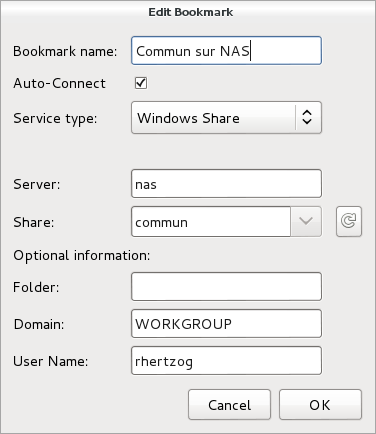
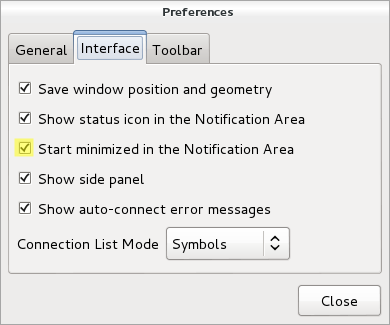
Launch Gigolo, setup your shares as bookmarks and mark them as Auto-Connect . During (first) connection, you will be prompted for your password and you have the possibility to store it in the GNOME keyring (and here it s encrypted, not in plain-text!). You should also configure the Gigolo preferences so that it starts minimized in the system tray (because we re going to run it on session startup):
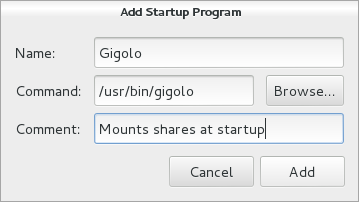
The last step is to ensure that Gigolo is executed at the start of each GNOME session. Unfortunately this GNOME feature is no longer accessible from the control center so you have to execute gnome-session-properties manually (from a terminal or the command line accessible via Alt+F2). Click on Add to add a new startup program: You re done! The main limitation is that those shares are not real mounts, instead they are available within GNOME s virtual file system (GVFS). If you use only 100% GNOME application, then it s not a problem but otherwise it s pretty annoying. You can t cd in those shares from a terminal for example. There s a workaround though, it s called gvfs-fuse and you installed it right at the start of this HOWTO. This service hooks into GVFS and exports all the virtual filesystem(s) in a real fuse-based mount that is automatically setup in ~/.gvfs/. However for this to work, the user must be in the fuse group. So you should run something like this:
$ sudo adduser $USER fuse
By the way, I haven t found a way to use a non-hidden directory so if you want this directory to be more visible, I suggest that you create a symlink pointing to it.
Do you want to read more HOWTO like this one? Click here to subscribe to my free newsletter, you can opt to receive future articles by email.

No comment Liked this article? Click here. My blog is Flattr-enabled.

Wouter Verhelst: The fastest slug in the world (probably)

How fast do slugs travel? Empirical evidence tells me that's about 1 meter per hour1. But not this slug. IMAG0114 As I was driving home from $CUSTOMER, I noticed something on my car. At first I thought it was bird poop, but then bird poop doesn't move. As the animal crawled higher and higher next to my windshield (while I was driving down the highway), I thought it would soon be blown off; but no, it bravely held on. Since it was crawling against my driving direction, that meant it was hurling down the highway at about 119.999 kph. I'm not sure if slugs have emotions; but if they do, the poor animal must've been terribly scared. Since these weird 120kph winds kept blowing on this weird and not very sticky surface that is the rubber and the metal edge to the side of the winshield, the animal kept going until it found that the glass of the windshield itself is actually a very interesting place for it to settle. By that time I had reached a usable exit, so I went off. As I reduced the car's speed once off the highway, the animal had decided that it was fairly nice outside its house now, and was starting to move horizontally along my windshield. Not exactly what I wanted it to do. So I took the above picture with the wrong camera (I remembered a mere few minutes later that I had my DSLR in the back of my car), took it off, and released it into the nearby bushes. Of course, by that time I'd driven several dozens of kilometers away from wherever it was that I picked it up, so the animal will probably never get home again. But hey, I'm sure it'll love the new bushes. 1 Once, over half a lifetime ago, I noticed a slug sitting by the side of the road. Not having much else to do, I sat down and watched it. By the time it had moved some two meters, it had gotten dark and cold, and I went home. At that point, my parents told me they'd started to worry because I was two hours late from school. I could be slightly wrong about the numbers, though. It's been a long time.

Matthew Garrett: A detailed technical description of Shim

Shim is the first stage bootloader we've been implementing for supporting Secure Boot. It's called Shim because it serves as an object to fit the gap between the Microsoft trust root and our own trust root. As originally envisaged it would do nothing other than load and execute appropriately signed binaries, but it's got a little more complicated than that now. It is, however, basically feature complete at this point - I don't expect it to grow significantly further.

(For those of you following along at home, the Shim source code I'm talking about is here)

First, it checks whether the user has disabled local signature verification in check_mok_sb(). This is done by reading the MokSBState UEFI variable and verifying that it has the correct variable attributes, ensuring that it was created in the trusted boot services environment. If so, and if it's set appropriately, signature verification is disabled for the rest of Shim. Shim then pauses for a couple of seconds while displaying a message indicating that it's running in insecure mode.

Next, Shim checks whether the user has set any variables that indicate that a Mok request has been made in check_mok_request(). If so, it launches MokManager. The mechanism by which this is done is described later.

Shim then copies the Mok key database into a runtime variable, which makes it accessible to the kernel (mirror_mok_list()). The kernel can then use the Mok keys when performing module signature verification. Next, as the last step before launching the next stage bootloader, Shim installs a UEFI protocol that permits other applications to call back into Shim. We're now ready to branch off from Shim into the actual bootloader.

To do this, Shim has to do a few things. First, we need to get the bootloader off disk. This involves finding Shim's path, which we can do by opening the loaded image protocol on Shim's image handle, turning that into a string, walking backwards along it until we find a directory separator, stripping the filename and appending the path to the second stage bootloader. This is then turned back into a binary device path, all of this happening in generate_path(). The binary is then read off disk in load_image(), using the simple filesystem protocol. We open the device, open a reference to the file, check how large the file is, allocate a buffer to hold the file and then read it off disk into that buffer. Everything so far has been fairly straightforward, but now things get more complicated.

handle_image() is the real meat of Shim. First it has to examine the header data in read_header(), copying the relevant bits into a context structure that will be used later. Some basic sanity checks on the binary are also performed here. If we're running in secure mode (ie, Secure Boot is enabled and we haven't been toggled into insecure mode) we then need to verify that the binary matches the signature and hasn't been blacklisted.

verify_buffer() has to implement the Microsoft Authenticode specification, which details which sections of the binary have to be hashed and in which order. The actual hashing is done in generate_hash(), which calls into the crypto code to add each binary section to the hashed data. The comments in generate_hash() describe what's going on there clearly enough. The crypto code itself is a copy of the crypto library extracted from the Tiano source tree. It's a relatively thin layer on top of OpenSSL, so the code's been fairly well tested.

Once we have the hash, we need to verify the signature. First, we ensure that the Mok database hasn't been modified from the OS (verify_mok()). Next, we check whether the binary's hash or signature have been blacklisted (check_blacklist()). This is done for each of the SHA1 and SHA256 hashes of the binary (the two hashes implemented in Tiano) and the certificate. If any of these match an entry in the dbx variable or a built-in blacklist, Shim will refuse to run them. Next, we simply do the same for the whitelist. If the binary's hash is either in the db variable or the Mok list, or if it's signed with a certificate that chains back to an entry in either db or the Mok list, we'll run it. Finally, the signature is checked against any built-in keys. Certificate verification is carried out with the AuthenticodeVerify() function, which again comes from Tiano's crypto library and is mostly implemented in OpenSSL.

If the binary passed signature validation we return to handle_image() and now load the binary's sections into their desired addresses. That buffer is handed to relocate_coff() which runs through the binary's relocation entries and fixes them up. There's one last subtlety, which is that because we've been fixing this up by hand, the image handle still refers to the shim binary. We fix the ImageBase and ImageSize values in the loaded image protocol to match the newly relocated binary, which is vital because otherwise grub is unable to find its built in modules. Finally, we jump into the binary's entry point. What the binary does next is up to it - if it's a bootloader, there's a good chance that it'll simply launch an OS and we'll never return. If it does return, we restore ImageBase and ImageSize, uninstall the protocol we installed and exit ourselves. If Shim exits (either because the second stage bootloader wasn't present, didn't verify, or exited) then control will simply pass on to the next boot option in the UEFI priority list. If there's nothing else, the platform will do something platform defined.

And that's how Shim works.

comment count unavailable comments

29 October 2012

Wouter Verhelst: Dear lazyweb,

I am looking for a replacement for IlohaMail, since I just noticed it stopped working reliably:
[Mon Oct 29 18:57:18 2012] [error] [client 195.144.91.202] PHP Warning:  strcasecmp() expects parameter 1 to be string, array given in /usr/share/IlohaMail/include/mime.inc on line 87, referer: [...]
This happens when trying to view an email. When that happens, the headers are parsed correctly, but the body isn't shown, and one has to instead click on the "view source" link to see anything at all. There's actually a patch for this bug gathering dust in the BTS; that, plus the fact that it has not seen any upstream activity since 2005, and that the last maintainer upload into Debian was in 2008, makes me conclude that IlohaMail is probably dead. Therefore, I'm looking for a replacement. Specifically, I'm looking for: Does something like that exist? If so, pointers would be greatly appreciated.

Nathan Handler: Hello Chronicle!

Over the years, I have had many different blogs. I mainly use them to post updates regarding my work in the FOSS community, with most of these relating to Ubuntu/Debian. My most recent blog was a Wordpress instance I ran on a VPS provided by a friend. This worked pretty well, but for various reasons, I no longer have access to that box. Earlier today, I started thinking about launching a new blog. The first problem I had to overcome was deciding where to host it. Many of the groups I am involved with provide members with a ~/public_html directory that can be used to host simple HTML+Javascript+CSS websites. However, most of these sites do not have the ability to use PHP, CGI, or access databases. I realized rather quickly that if I were to find a blogging platform that I could run from a ~/public_html directory on one of those machines, I would never have the problem of not having a host for my blog ever again. There is a near infinite number of free web hosts that can handle simple HTML sites. One key feature of any blog is the ability for readers to subscribe to it. Usually, the blogging platform handles automatically updating the feed when a new post is published. However, my simple HTML blog would not be able to do that. Since I knew I did not want to manually update the feeds, I started looking for a way to generate the feed locally on my personal machine and then push it to the remote site that is hosting my blog. About this time, I started compiling a list of features I would need to make this blogging platform usable. In no particular order, they included: After some searching, I found an application developed by Steve Kemp called Chronicle. Chronicle supports all of the features I described plus many more. It is also very quick and easy to setup. If you are running Debian, Chronicle is available from the repositories. Start by installing Chronicle. Note that these steps should all be done on your personal machine, not the machine that is going to host your blog.
sudo apt-get install chronicle
There are a few other packages that you can install to extend the functionality of Chronicle
sudo apt-get install memcached libcache-memcached-perl libhtml-calendarmonthsimple-perl libtext-vimcolor-perl libtext-markdown-perl
Next, create a few folders to hold our blog. We will store our raw blog posts in ~/blog/input and have the generated HTML versions go in ~/blog/output.
mkdir -p ~/blog/ input,output 
Now, we need to configure some preferences. We will base our preferences on the global configuration file shipped with the package.
cp /etc/chroniclerc ~/.chroniclerc
Open up the new ~/.chroniclerc file in your favorite editor. It is pretty well commented, but I will still explain the changes I made. input is the path to where your blog posts can be found. These are the raw blog posts, not the generated HTML versions of the posts. In our example, this should be set to ~/blog/input. pattern tells Chronicle which files in the input directory are blog posts. We will use a .txt extension to denote these files. Therefore, set pattern to *.txt. output is the directory where Chronicle should store the generated HTML versions of the blog posts. This should be ~/blog/output theme-dir is the directory that holds all of the themes. Chronicle ships with a couple of sample themes that you can use. Set this to /usr/share/chronicle/themes theme is the name of the theme you want to use. We will just use the default them, so set this to default entry-count specifies how many blog posts should be displayed on the HTML index page for the blog. I like to keep this fairly small, so I set mine to 10. rss-count is similar to entry-count, but it specifies the number of blog posts to include in the RSS feed. I also set this to 10 format specifies the format used in the raw blog posts. I write mine in markdown, but multimarkdown, textile, and html are also supported. Since most ~/public_html directories do not support CGI. We will disable comments by setting no-comments to 1 suffix gets appended to the filenames of all of the generated blog posts. Set this to .html url_prefix is the first part of the URL for the blog. If the index.html file for the blog is going to be available at http://example.com/blog/ , set this to *http://example.com/~user/blog/ blog_title is whatever you want your blog to be called. The title is displayed at the top of the site. Set it to something like Your Name's Blog post-build is a very useful setting. It allows us to have Chronicle perform some action after it finishes running. We will use this to copy our blog to the remote host's public_html directory. Set this field to something like scp -r output/* user@example.com:~/public_html/blog. You will probably want to setup SSH so that you do not need to enter a password each time. Finally, date-archive-path will allow you to get the nice year/month directories to sort your posts. Set this to 1. Your final ~/.chroniclerc should look something like this:
input = ~/blog
pattern = *.txt
output = ~/blog/output
theme-dir = /usr/share/chronicle/themes
theme = default
entry-count = 10
rss-count = 10
format = markdown
no-comments = 1
suffix = .html
url_prefix = http://example.com/~user/blog/
blog_title    = Your Name's Blog
post-build = scp -r output/* user2@example.com:~/public_html/blog
date-archive-path = 1
You are now ready to start writing your first blog post. Open up ~/blog/MyFirstBlogPost.txt in your favorite text editor. Modify it to look like this:
Title: My First Blog Post
Tags: MyTag
Date: October 29, 2012
This is my **first** blog post.
Notice the metadata stored at the top? This is required for every post. Chronicle uses it to figure out the post title, tags, and date. It has some logic to try and guess this information if missing, but it is probably safest if you specify it. The empty line between the metadata and the post content is also required. Remember, we configured Chronicle to treat these as Markdown files, so feel free to utilize any Markdown formatting you wish. Finally, run chronicle from a terminal. If all goes well, it should generate your blog and copy the files to the remote host. You can now go to http://example.com/~user/blog to view it. One final suggestion would be to store the entire blog in a git repository. This will allow you to utilize all of the features of a VCS, such as reverting any accidental changes or allowing multiple people to collaborate on a blog post at the same time.


28 October 2012

Sandro Tosi: Start a MySQL instance to run Debian package build-time tests

I'm the maintainer of MySQL Connector/Python Debian package, and it's shipped with several unittests, but they require a MySQL instance to be run against, so up to know I wasn't able to run them at build-time.

But I want to change that, so I wanted to find a way to spawn a MySQL instance just for testing purposes. I've searched a lot, and then found a package solving the same problem: php5.

The package has a setup-mysql.sh script that takes care of starting/stopping the instances, and debian/rules file sets up instance parameters and then it starts the instance before the tests and then stops it after them.

It's a very interesting solution, so I thought of sharing + taking notes to self, just in case I need it in other situations.

Iustin Pop: Open Source collaboration, 2012

I'm interrupting my blog silence (which was due to the fact that I didn't have anything interesting to say) to note two things: first, but less important, spammers are still active as ever - I had ~2K spam comments and another ~2K in pending moderation. And second, and the actual subject of this post, is how easy collaboration has become. In the last year or so (where ~so means since I last looked), GitHub has introduced a very nice collaboration work-flow: This is soo easy (what, 3-4 clicks?) that I expect it will increase trivial fix-ups against Open Source projects hosted on GitHub or other services with similar capabilities. I did in the past week two or three such trivial fixes myself; this is not much note that I'm not talking about code fixes; but still, it is something that I think will definitely improve many, many projects. The same way that Wikis made it easy to improve documentation sites, this could make it easier for end-users to improve upstream's project documentation, when stored in a VCS as opposed to a Wiki. Yay! On the other hand, I still have a few patches sent months ago to an upstream email address, since they don't have a issue tracker (not even speaking about a place to submit merge requests). These will probably languish and disappear, as opposed to visible/public "hey, this is a patch to fix tiny typo in File.hs!". Yes, I like this a lot. Now, if only all projects would have a public VCS and issue tracker :) PS: yes, I'm talking here about GitHub, which is not Open Source software itself. I regard that as a (temporary) inconvenience, which dies not detract from the significant advantage it brings to the table.

27 October 2012

Russ Allbery: Review: Devil Take the Hindmost

Review: Devil Take the Hindmost, by Edward Chancellor
Publisher: Plume
Copyright: 1999
Printing: June 2000
ISBN: 0-452-28180-6
Format: Trade paperback
Pages: 349
Subtitled A History of Financial Speculation, Devil Take the Hindmost is exactly that: a history, with chapters on notable speculative bubbles or surges going back to the 1630s. The first significant bubble described is, of course, the notorious tulip speculation in Holland, but Chancellor is more thorough than any previous history I've read. There are chapters on the early stock market schemes, the South Sea bubble, 1820s emerging markets, the railway mania of 1845, the Gilded Age, the late 1970s and early 1980s, and the Japanese real estate bubble of the 1980s, as well as the mandatory look at the stock market crash of 1929. Each is thorough and detailed; indeed, perhaps slightly too detailed, as the clear narrative picture can occasionally groan under the weight of names and capsule biographies. The first thing one should realize about this book is that, despite the apparent currency of the topic, it was written in 1999. That means it predates both the subprime real estate collapse and the dot.com boom, as well as some more minor but possibly relevant events such as the Enron electricity market manipulation. Japan is the most recent bubble that Chancellor can cover; one can only speculate as to what he would make of the 2008 financial crash. The other focus to be aware of is the omission of sovereign debt. Chancellor is exclusively focused on private markets, usually stock markets, and (apart from the chapter on Japan) Western markets, mostly in the US and the UK. Governments play a role in some of the early speculative bubbles (most notably the South Sea bubble), but Chancellor's topic is private speculative frenzies, not the risks and effects of government borrowing. Interrogation of the role of government is mostly limited to cursory discussions of the impact of regulation, mostly in the negative. More on that in a moment. This is a history as opposed to either a polemic or a prescription. Chancellor does not set out to explain how to curb financial speculation. Insofar as he expresses an opinion on it, he presents speculation as a force of unbridled freedom in natural tension with regulation and financial conservatism and sees a cyclical pattern of speculative frenzy, collapse, retrenchment, and then renewed speculation. Speculation, as presented here, is more akin to a force of nature than, as seen in most other books on the topic, a phenomenon of greed that should be limited or prevented. Indeed, Chancellor seems skeptical of the entire project of preventing or limiting speculation, and presents considerable reason for the reader to become skeptical as well. The history he presents is one of speculative manias adapting to and circumventing every control that governments and markets have attempted to place on them. When certain practices are outlawed (and some modern complex financial practices have surprisingly long histories), people just find loopholes or alternative approaches through which to accomplish the same thing. Or the speculative mania takes an unexpected new form. Nor do the manias seem to be decreasing in severity as more regulation, custom, and restrictions attempt to blunt them. Even without adding the financial collapse of 2008, the impacts of the speculative frenzies documented here seem, if anything, to be growing. This is, therefore, a relatively straightforward history, but it's an entertaining one, filling in details that I'd not previously been aware of. The complexity of financial schemes as early as the 1600s was particularly eye-opening. There's a tendency to believe that complex derivative schemes are an artifact of modern financial markets, but they've been a part of speculation for as long as Chancellor goes back. Computers may have added layers to the mathematics, but they haven't added as much to the legal strategems and levels of indirection as one might think. Chancellor emphasizes that throughout: speculation involves a lot of complexity, not necessarily to deceive but to construct situations in which it's in the interest (at least short term) of all involved parties to continue and escalate the speculation. While Chancellor doesn't provide much encouragement to the reader hoping to find ways to curb speculation, he does show some commonalities that provide a bit of a handle on how speculation starts. The one that lept out at me was leverage. Every speculative bubble documented in Devil Take the Hindmost involves borrowing money to reinvest. The mechanism keeps changing, from straightforward loans during the tulip craze to much more complex constructions in modern finance, primarily in response to regulation that attempted to reduce leverage but only banned one specific technique. But whatever method is used, at the bottom is always some scheme for purchasing an asset using debt, magnifying both positive and negative price swings. Some variation of buying stocks on margin is particularly common; Chancellor documents how it was reinvented despite the limits on straight margin purchases instituted after the Great Depression. There is no recommendation here for any regulatory or legal action, but it's obvious from the repetition of history that limiting leverage would be the place to focus attention. I enjoyed this history, but it can be dry, and at times is a bit overstuffed with names, unimportant details, and microbiographies. It's also unfortunate that Chancellor missed two of the most significant (and two very different) speculative bubbles through the timing of his work. It would have been interesting to see them through the lens of his history. What we have is still worth reading, but also somewhat frustrating in Chancellor's refusal to draw or at least underline general conclusions. Devil Take the Hindmost is long on history but short on analysis, and while I appreciate the historian's focus in a source of data, it left me somewhat unsatisfied. Rating: 6 out of 10

Riku Voipio: My 5 eurocents on the Rasberry Pi opengl driver debacle

The Linux community rather unenthusiastic about the open source shim to Raspberry PI GPU. I think the backslash is a bit unfair, even if the marketing from Raspberry was pompous - It is still a step in the right direction. More raspberry PI hardware enablement code is open source than before. A step in the wrong direction is "locking firmware", where a loadable firmware is made read-only by storing it to a ROM. It has been planned by the GTA04 phone project, and Raspberry foundation also considers making a locked GPU ROM device. This is madness that needs to stop. It may fulfill the letter of FSF guidelines, but it is firmly against the spirit. It does not increase freedom - it takes away vendors ability to provide bugfixes to firmware, and communities possibility of reverse engineering the firmware.

Paul Tagliamonte: point checks for packages

I ve spent some time thinking about how to properly audit packages for common mistakes. As part of this problem is how to store the issues found. All the tools I care about have different output formats, and I hate the idea of writing so many adapters for all the tools into some sort of common format. Has anyone come across this issue before? Anyone working on something similar?

26 October 2012

Bastian Venthur: Give Camp Berlin looking for volunteers

My friend Martijn from Talentspender is co-organizing a Give Camp in Berlin. They are looking for IT professionals and designers who want to spend one weekend of their time to support non-profit organizations to solve a specific problem at the Give Camp. It is for a good cause and there is no further commitment after the Camp. Plus you will be provided with free food and drinks. So if you are interested and happen to be in Berlin between 30. November and 02. December 2012 have a look at their website and register for the GiveCamp. Quoting from their flyer:
A GiveCamp is a weekend-long event where technology professionals donate their time to provide custom solutions for non-profit organizations. Voluntarily, without further commitment and for a good cause: the long-term strengthening of the organizations. How does it work?
  • Teamwork of experts during one weekend, with regular input from the NPOs
  • Clearly defined projects, to be completed at the GiveCamp
  • Young professionals mentored by experienced experts
  • Meals and drinks are provided
Who are we looking for?
  1. Software developers, database administrators, designers and entrepreneurs
  2. From students to senior experts
  3. Team players with enthusiasm for interdisciplinary projects

Matthew Palmer: The e-mail PDA

I ve been a wannabe GTD afficionado for some years. I ve wanted to do it, but managing lists has always been something that has too much friction, overhead, or whatever. Finally, though, I think I might have found a way to manage lists that works. My use-case isn t unique, although I will concede I m perhaps being more dogmatic than most. I want something that: My previous attempt was a tool I called tagnote it was a vim-outliner file full of hierarchically organised outliner entries, with tags inlined. It was a neat idea, but it wasn t smooth to add/browse/delete items, and didn t work with my phone at all (trying to use vim for any length of time on a bottom-of-the-range Android phone would kill me). The current iteration, as the title of this post suggests, is a list manager that entirely uses e-mail. It really is a perfect symbiosis: So what have I got, exactly? It s fairly straightforward: That last point is the one I m really happy I achieved. I ve always been a fan of hide it until you need it , but my previous system didn t let me do that. Now, though, I have a separate list called tickler, and all the items in there have an X-Tickle header, which specifies the date I want to see them. Each night a cronjob runs through the tickler and moves anything for today into the INBOX. An X-Tickle-Repeat header lets me have things that repeat over and over again. So in short, using entirely open-source tools and a couple of hours of my time doing things I enjoy anyway (shell scripts! woo!), I ve now got a list manager that doesn t get in my way more than it absolutely has to. We ll see how long I last this time before I feel the urge to improve my lists again.

Russ Allbery: Review: Fables: Legends in Exile

Review: Fables: Legends in Exile, by Bill Willingham, et al.
Series: Fables #1
Penciller: Lan Medina
Inker: Steve Leialoha
Inker: Craig Hamilton
Colorist: Sherilyn van Valkenburgh
Letterer: Todd Klein
Publisher: Vertigo
Copyright: 2002
ISBN: 1-56389-942-6
Format: Graphic novel
Pages: 127
The characters of human fairy tales are all real. Real, but hidden: they have been driven from their ancestral homelands by some force referred to here only as the Adversary, and have fled to the mundane world to escape his notice. Specifically, New York, where those characters who can pass as human blend into the streets of New York City, and those who can't (referred to only in passing in this story arc apart from one pig) stay at a farm upstate. That's the brilliant premise of Fables, an ongoing comic series from Vertigo that's up to 121 issues plus numerous spinoffs as of this writing. This is the first trade paperback, collecting issues 1 through 5 plus a prose story. Legends in Exile is, in underlying form, a murder mystery. It opens with Jack reporting a murder to Bigby Wolf, who is what passes for law enforcement among the Fables. Rose Red's apartment has been discovered covered in blood, and her body is missing. "No more happily ever after" is written on the wall in blood. Jack, despite being the one to report the crime, is Rose's lover and an obvious suspect. So is Snow White, the effective leader of the Fables (King Cole is a figurehead) and Rose's estranged sister. And, perhaps coincidentally, Prince Charming, Snow White's philandering and stunningly narcissistic ex-husband, has just turned up in town again. The basic plot plays out like a typical murder mystery, complete with a grand reveal in the last chapter and a reconstruction of events. It's diverting but nothing special in itself; it's primarily a hook on which to hang an introduction to the major characters and an exploration of Fables politics and history. And that part is excellent. Like most fractured fairy tales, the characters are more complex and nuanced than they are allowed to be in the canonical stories; unlike most fractured fairy tales, nearly all of that development is allowed to happen after the original stories. The original stories happened, largely as we all remember them, but then the characters kept living and changing. Wolf and his relationship with one of the three pigs is one of the highlights, but I think the odious Price Charming is the best bit of characterization. Willingham takes the idea of a charming seducer and layers in the rest of the womanizing associations that come to mind, while retaining a slick surface charm that is hard not to like at some level. I'm not the best at critiquing art. I read graphic novels for the story, with the art as a nice bonus if it's fairly good. But I can say that Medina's pencils tell the story well, with a few larger panels that were quite impressive. I particularly liked Snow White's office, early in the collection. Detail is reasonably good throughout, there aren't too many panels featuring only talking heads, and Medina does a wonderful job with the pig. (Significant credit probably also goes to Steve Leialoha and Craig Hamilton, the inkers. I'm not a good enough art critic to distinguish between the quality of the pencil work and what was added by subsequent inking.) The largest problem for me with Legends in Exile is my standard problem with graphic novels and the reason I don't buy many of them: the cover price is $10 for what is effectively a short story that builds an interesting world. If one really loves art in stories, graphic novels may be a good value. If, like me, one mostly cares about the story and would be almost as happy with straight prose, the value becomes questionable given the brief length of the material. That said, Legends in Exile does add a quite good prose short story by Willingham, "A Wolf in the Fold," which in several ways is better than the main story of the collection. It tells the story of the original exile and the covenant that settled all past grudges (mostly) from the perspective of the wolf. Willingham does a great job here both striking a more mythic tone than the main story but still tying it back to the sarcastic and practical tone of the rest of the collection. Although the main story itself is not particularly memorable, the background and concept make this one of the better graphic novels I've read. I can see why it's won so many awards, and I'll probably keep reading, despite the high graphic novel price tag. Followed by Fables: Animal Farm. Rating: 7 out of 10

Dirk Eddelbuettel: Accelerating R code: Computing Implied Volatilities Orders of Magnitude Faster

This blog, together with Romain's, is one of the main homes of stories about how Rcpp can help with getting code to run faster in the context of the R system for statistical programming and analysis. By making it easier to get already existing C or C++ code to R, or equally to extend R with new C++ code, Rcpp can help in getting stuff done. And it is often fairly straightforward to do so. In this context, I have a nice new example. And for once, it is work-related. I generally cannot share too much of what we do there as this is, well, proprietary, but I have this nice new example. The other day, I was constructing (large) time series of implied volatilities. Implied volatilities can be thought of as the complement to an option's price: given a price (and all other observables which can be thought of as fixed), we compute an implied volatility price (typically via the standard Black-Scholes model). Given a changed implied volatility, we infer a new price -- see this Wikipedia page for more details. In essence, it opens the door to all sorts of arbitrage and relative value pricing adventures. Now, we observe prices fairly frequently to create somewhat sizeable time series of option prices. And each price corresponds to one matching implied volatility, and for each such price we have to solve a small and straightforward optimization problem: to compute the implied volatility given the price. This is usually done with an iterative root finder. The problem comes from the fact that we have to do this (i) over and over and over for large data sets, and (ii) that there are a number of callbacks from the (generic) solver to the (standard) option pricer. So our first approach was to just call the corresponding function GBSVolatility from the fOption package from the trusted Rmetrics project by Diethelm Wuertz et al. This worked fine, but even with the usual tricks of splitting over multiple cores/machines, it simply took too long for the resolution and data amount we desired. One of the problems is that this function (which uses the proper uniroot optimizer in R) is not inefficient per se, but simply makes to many function call back to the option pricer as can be seen from a quick glance at the code. The helper function .fGBSVolatility gets called time and time again:
R> GBSVolatility
function (price, TypeFlag = c("c", "p"), S, X, Time, r, b, tol = .Machine$double.eps, 
    maxiter = 10000) 
 
    TypeFlag = TypeFlag[1]
    volatility = uniroot(.fGBSVolatility, interval = c(-10, 10), 
        price = price, TypeFlag = TypeFlag, S = S, X = X, Time = Time, 
        r = r, b = b, tol = tol, maxiter = maxiter)$root
    volatility
 
<environment: namespace:fOptions>
R> 
R> .fGBSVolatility
function (x, price, TypeFlag, S, X, Time, r, b, ...) 
 
    GBS = GBSOption(TypeFlag = TypeFlag, S = S, X = X, Time = Time, 
        r = r, b = b, sigma = x)@price
    price - GBS
 
<environment: namespace:fOptions>
So the next idea was to try the corresponding function from my RQuantLib package which brings (parts of) QuantLib to R. That was seen as been lots faster already. Now, QuantLib is pretty big and so is RQuantLib, and we felt it may not make sense to install it on a number of machines just for this simple problem. So one evening this week I noodled around for an hour or two and combined (i) a basic Black/Scholes calculation and (ii) a standard univariate zero finder (both of which can be found or described in numerous places) to minimize the difference between the observed price and the price given an implied volatility. With about one hundred lines in C++, I had something which felt fast enough. So today I hooked this into R via a two-line wrapper in quickly-created package using Rcpp. I had one more advantage here. For our time series problem, the majority of the parameters (strike, time to maturity, rate, ...) are fixed, so we can structure the problem to be vectorised right from the start. I cannot share the code or more the details of my new implementation. However, both GBSVolatility and EuropeanOprionImpliedVolatility are on CRAN (and as I happen to maintain these for Debian, also just one sudo apt-get install r-cran-foptions r-cran-rquantlib away if you're on Debian or Ubuntu). And writing the other solver is really not that involved. Anyway, here is the result, courtesy of a quick run via the rbenchmark package. We create a vector of length 500; the implied volatility computation will be performed at each point (and yes, our time series are much longer indeed). This is replicated 100 times (as is the default for rbenchmark) for each of the three approaches:
xyz@xxxxxxxx:~$ r xxxxR/packages/xxxxOptions/demo/timing.R
    test replications elapsed  relative user.self sys.self user.child sys.child
3 zzz(X)          100   0.038     1.000     0.040    0.000          0         0
2 RQL(X)          100   3.657    96.237     3.596    0.060          0         0
1 fOp(X)          100 448.060 11791.053   446.644    1.436          0         0
xyz@xxxxxxxx:~$ 
The new local solution is denoted by zzz(X). It is already orders of magnitude faster than the RQL(x) function using RQuantLib (which is, I presume, due to my custom solution internalising the loop). And the new approach is a laughable amount faster than the basic approach (shown as fOp) via fOptions. For one hundred replications of solving implied volatilities for all elements of a vector of size 500, the slow solution takes about 7.5 minutes --- while the fast solution takes 38 milliseconds. Which comes to a relative gain of over 11,000. So sitting down with your C++ compiler to craft a quick one-hundred lines, combining two well-known and tested methods, can reap sizeable benefits. And Rcpp makes it trivial to call this from R.

25 October 2012

Olly Betts: Message of the Day

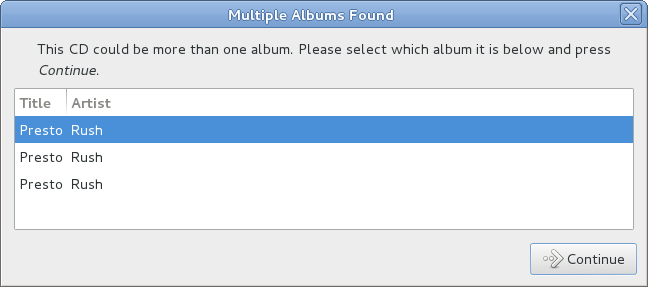
I was staying in room 2112 in the hotel for the GSoC mentor summit at the weekend, which wetted my appetite for some Rush, so I stuck a CD in my laptop today and got this dialog: Presto Rush Presto Rush Presto Rush Looks like there's already a report (#631760) for this issue.

Russ Allbery: Review: Passion Play

Review: Passion Play, by Sean Stewart
Publisher: Ace
Copyright: 1992
Printing: December 1993
ISBN: 0-441-65241-7
Format: Mass market
Pages: 194
Diane is a shaper: an empath, a sort of telepath, who sees emotions and the actions of others in the form of patterns and stories that she is nearly compelled to follow. She uses that skill as an investigator, a semi-official adjunct to the police who can read crime scenes and motives and hunt down criminals with uncanny ability. That makes her almost socially acceptable, but a shaper is still not something it's safe to be, something best kept hidden. Diane's world is one of theocracy, of dominance by aggressive religion, and even shapers working with the police are not exactly okay. This is Sean Stewart's first novel. He's since gone on to write many other books, one of which I've read and quite enjoyed (Nobody's Son) and another (Galveston) that won several awards, although he's probably most famous for his work on the ilovebees ARG. Passion Play won a minor award itself: the Aurora for the best Canadian SF novel of the year. I found it surprising as a first novel, since it's sharp, focused, and very short. Usually first novels are stuffed to the gills with ideas and plot, as if material had built up for years and exploded in the first book. Passion Play doesn't have that problem; if anything, it errs on the side of telling too little. This is, at its heart, a mystery. A famous actor died in the middle of a play. It was possibly suicide, possibly an accident, and possibly murder; the events of the death are quite ambiguous. But the actor is very important in Redemptionist politics, which warrants an investigation, and then Diane's shaper instincts start finding a pattern and a story in the death. The rest of the cast and crew form the obvious set of suspects, and have the normal mystery novel variety of flaws, foibles, strong personalities, and possible motives. I'm not much of a mystery novel reader, and to be honest I had some trouble tracking all of the characters and remembering Diane's suspicions about each one. But the details of the mystery are less important to this book than Diane herself. Shapers are not exactly stable. The patterns they see are all-consuming, the experience of others' strong emotions acts like a sort of drug, and shapers can burn themselves out. They can fall into a spiral of seeking stronger and stronger emotions until they can't feel anything at all. That's the core conflict of the book: Diane is slowly losing herself. She has a tenuous existence at the outskirts of a society that has inculcated her with an inflexible set of religious beliefs and an uncompromising attitude towards law and justice, but it's not a stable existence, she knows it, and she doesn't know what to do about it. She knows that the pattern of this particular death is deep and powerful, but she can't stay away from it. This is an unusual, and sometimes disturbing, focus for a story. It's risky, unconventional, and doesn't quite work. I think some of the failure is because of first novel problems, but most of it is due to character problems. In the first novel problems category, Passion Play is a bit too choppy and a bit too disjointed. I think Stewart was trying hard to keep the story focused, fast-moving, and tight, but the introduction of the world background is not particularly smooth, and Diane's first-person account of her emotional state is a bit too labored. The plot wants to build in a smooth arc towards its climax, but the writing and scene-setting jerks and jumps instead of flowing. But the larger problem for me is that there aren't enough interesting characters in this book; specifically, there aren't enough to show all sides of Diane's character. Stewart tries, by introducing Jim early in the book to serve essentially as Diane's friend (and she's desperately in need of one), but he's too much of a non-entity. He serves some plot purposes, but he doesn't have a strong enough voice and character to hold his ground against Diane and balance her obsessive internal monologue. And, other than Jim, all the other characters in the book (with the possible exception of the murder victim) are playing bit roles. They're not bad characters, but they don't feel fully real to either Diane or to the reader. It's very easy to put them into boxes that they never break out of. This does support the feeling of narrative inevitability about some parts of the book, but I think it would have been stronger with more conflict, more open challenging of Diane's perspective. I would characterize Passion Play as interesting but flawed, and ultimately a minor work. I'm not sorry I read it, but neither would I have missed much if I'd gone through life without reading it. It has a few interesting ideas, and a bravely unconventional narrative resolution, but it felt choppy and off-balance. Unless you love Stewart's writing and want to read everything he wrote, or unless you (like me) has a quirk about reading all award winners, this is probably best skipped over in favor of Stewart's later work. Rating: 6 out of 10

24 October 2012

Steve Kemp: So slaughter is definitely getting overhauled

There have been a few interesting discussions going on in parallel about my slaughter sysadmin tool. I've now decided there will be a 2.0 release, and that will change things for the better. At the moment there are two main parts to the system:

Downloading polices
These are instructions/perl code that are applied to the local host.
Downloading files
Polices are allowed to download files. e.g. /etc/ssh/sshd_config templates, etc.
Both these occur over HTTP fetches (SSL may be used), and there is a different root for the two trees. For example you can see the two public examples I have here: A fetch of the policy "foo.policy" uses the first prefix, and a fetch of the file "bar" uses the latter prefix. (In actual live usage I use a restricted location because I figured I might end up storing sensitive things, though I suspect I don't.) The plan is to update the configuration file to read something like this:
transport = http
#
# Valid options will be
#    rsync   http   git   mercurial   ftp
#
#
# each transport will have a different prefix
#
prefix = http://static.steve.org.uk/private
# for rsync:
#  prefix=rsync.example.com::module/
#
# for ftp:
#  prefix=ftp://ftp.example.com/pub/
#
#  for git:
#  prefix=git://github.com/user/repo.git
#
#  for mercurial
#  prefix=http://repo.example.com/path/to/repo
#
I anticipate that the HTTP transport will continue to work the way it currently does. The other transports will clone/fetch the appropriate resource recursively to a local directory - say /var/cache/slaughter. So the complete archive of files/policies will be available locally. The HTTP transport will continue to work the same way with regard to file fetching, i.e. fetching them remotely on-demand. For all other transports the "remote" file being copied will be pulled from the local cache. So assuming this:
transport = rsync
prefix    = rsync.company.com::module/
Then the following policy will result in the expected action:
if ( UserExists( User => "skx" ) )
 
    # copy
    FetchFile(
            Source => "/global-keys",
              Dest => "/home/skx/.ssh/authorized_keys2",
             Owner => "skx",
             Group => "skx",
              Mode => "600" );
 
The file "/global-keys" will refer to /var/cache/slaughter/global-keys which will have been already downloaded. I see zero downside to this approach; it allows HTTP stuff to continue to work as it did before, and it allows more flexibility. We can benefit from knowing that the remote policies are untampered with, for example, via the checking built into git/mercurial, and the speed gains of rsync. There will also be an optional verification stage. So the code will roughly go like this: I'm not anticipating additional changes, but I'm open to persuasion.

22 October 2012

Petter Reinholdtsen: Amazon steal books from customer and throw out her out without any explanation

A blog post from Martin Bekkelund today tell the story of how Amazon erased the books from a customer's kindle, locked the account and refuse to tell the customer why. If a real book store did this to a customer, it would be called breaking into private property and theft. The story has spread around the net today. A bit more background information is available in Norwegian from digi.no. It is no surprise that digital restriction mechanisms (DRM) are used this way, as it has been warned about such abuse since DRM was introduced many years back. And Amazon proved in 2009 that it was willing to break into customers equipment and remove the books people had bought, when it removed the book 1984 by George Orwell from all the customers who had bought it. From the official comments, it even sounded like Amazon would never do that again. And here we are, three years later. And thought this action is against Norwegian regulations and law, it is according to the terms of use as written by Amazon, and it is hard to hold Amazon accountable to Norwegian laws. It is just yet another example of unacceptable terms of use on the web, and how they are used to remove customer rights. Luckily for electronic books, there are alternatives without unacceptable terms. For example Project Gutenberg (about 40,000 books), Project Runenberg (1,652 books) and The Internet Archive (3,641,797 books) have heaps of books without DRM, which can read by anyone and shared with anyone. Update 2012-10-23: This story broke in the morning on Monday. In the evening after the story had spread all across the Internet, Amazon restored the account of the user, as reported by digi.no and NRK. Apparently public pressure work. The story from Martin have seen several twitter messages per minute the last 24 hours, which is quite a lot, and is still drawing a lot of attention. But even when the account is restored, the fundamental problem still exist. I recommend reading two opinions from Simon Phipps and Glen Moody if you want to learn more about the fundamentals and more details about the original story.

Erich Schubert: Changing Gnome 3 colors

One thing that many people dislike about Gnome 3, in my opinion is that the authors/maintainers impose a lot of decisions on you. They are in fact not really hard coded, but I found documentation to be really inaccessble on how to change them.
For example colors. I found it extremely badly documented on how to customize GTK colors. And at the same time, a lot of the themes do not work reliably across different Gnome versions. For example the unico engine in Debian experimental is currently incompatible with the main GTK version there (and even worse, GTK does not realize this and refuse to load the incompatible engine). A lot of the themes you can get on gnome-look.org for example use unico. So it's pretty easy to get stuck with a non-working GTK 3, this really should not happen that easily. (I do not blame the Debian maintainers to not have worked around this using package conflicts yet - it's in experimental after all. But upstream should know when they are breaking APIs!)
For my work on the ELKI data mining framework I do a lot of work in Eclipse. And here GTK3 really is annoying, in particular the default theme. Next to unusable, actually, as code documentation tooltips show up black-on-black.
Recently, Gnome seems to be mostly driven by a mix of design and visual motivation. Gnome shell is a good example. No classic Linux user I've met likes it, even my dad immediately asked me how to get the classic panels back. It is only the designers that seem to love it. I'm concerned that they are totally off on their audience, they seem to target the mac OSX users instead of the Linux users. This is a pity, and probably much more a reason why Gnome so far does not succeed on the Desktop: it keeps on forgetting the users it already has. They by now seem to move to XFCE and LXDE because neither the KDE nor the Gnome crowd care about classic Linux users in the hunt for copying OSX & Co.
Anyway, enough ranting. Here is a simple workaround -- that hopefully is more stable across GTK/Gnome versions than all those themes out there -- that just slightly adjusts the default theme:
$ gsettings set \
org.gnome.desktop.interface gtk-color-scheme '
os_chrome_fg_color:black;
os_chrome_bg_color:#FED;
os_chrome_selected_fg_color:black;
os_chrome_selected_bg_color:#f5a089;
selected_fg_color:white;
selected_bg_color:#c50039;
theme_selected_fg_color:black;
theme_selected_bg_color:#c50039;
tooltip_fg_color:black;
tooltip_bg_color:#FFC;
'
This will turn your panel from a designer-hip black back to a regular grayish work panel. If you are working a lot with Eclipse, you'll love the last two options. That part makes the tooltips readable again! Isn't that great? Instead of caring about what is the latest hipster colors, we now have readable tooltips for developers again instead of all that fancy-schmanzy designer orgasms!
Alternatively, you can use dconf-editor to set and edit the value. The tricky part was to find out which variables to set. The (undocumented?) os_chrome stuff seems to be responsible for the panel. Feel free to change the colors to whatever you prefer!
GTK is quite customizable. And the gsettings mechanism actually is quite nice for this. It just seems to be really badly documented. The Adwaita theme in particular seems to have quite some hard-coded relationships also for the colors. And I havn't found a way (without doing a complete new theme) to just reduce padding, for example. In particular, as there probably are a hundred of CSS parameters that one would need to override to get it into everywhere (and with the next Gnome, there will be again two dozen to add?)
Above method just seems to be the best way to tweak the looks. At least the colors, since that is all that you can do this way. If you want to customize more, you probably have to do a complete theme. At which point, you probably have to redo this at every new version. And to pick on Miguel de Icaza: the kernel APIs are extremely stable, in particular compared to the mess that Gnome has been across versions. And at every new iteration, they manage to offend a lot of their existing users (and end up looking more and more like Apple - maybe we should copy more from where we are good at, instead of copying OSX and .NET?).

Next.

Previous.