Search Results: "ina"

30 December 2013

Russ Allbery: Init system evaluation thanks

Most people who follow Debian are probably aware that we're currently in the middle of a major debate over the future of Debian's init system. Over the past month, and particularly over the past week, I undertook an evaluation of two of the options in that debate, using one of my packages as a test bed. I also did a lot of reading, filed a few bugs, and asked a bunch of questions. That's an extension of the questions I've been asking and discussions I've been participating in around init systems for the past year plus. I have been keeping my opinions and writeups confined to the relevant Techncial Committee bug report so that they can be read in context with their rebuttals. There are a lot of thoughtful and well-informed opinions here, of which mine are only one, and several of my conclusions have been inaccurate or at least not complete, so the context is important. You can find the full traffic in the Technical Committee bug. Most of the discussion, in a threaded view, is in the Technical Committee archives for December. However, in one of the messages I sent today, I tried to show my appreciation for the people who have assisted with this evaluation over the past week, month, and years, and I think that section deserves broader distribution outside of the ongoing discussion. It is therefore included below. Throughout this evaluation process, my interactions with upstart and systemd upstream developers and Debian packagers have been uniformly excellent. Bug reports filed against both systemd and upstart have received excellent and timely response, and all involved have been quite willing to explain things I've misunderstood, correct my false starts, and discuss technical and practical aspects of their designs. I was particularly impressed by the clear effort that the systemd and upstart maintainers in Debian have put into fully integrating their init systems in such a way that makes them easy to test and use with existing Debian packages. This includes but is not limited to update-rc.d support, invoke-rc.d support, status synchronization with sysvinit, past Policy discussion, and attention to upgrade paths and init-switching use cases. I also want to particularly thank the OpenRC upstream development team for their involvement in this process and their contributions to the discussion. I personally don't think that package is a good match for Debian's needs on Linux, but that's through no fault of the people involved, and I think they would be an excellent upstream if that package looked like a good fit for the needs of any of Debian's non-Linux ports. I also want to thank Petter Reinholdtsen, Roger Leigh, and everyone else who has worked on the sysvinit package over the years, the insserv conversion to dependency-based boot, and the inclusion of LSB support. If it weren't for their hard work, we would be in a far worse position than we are today. It's often hard to see people discussing the inadequacies of something into which you put years of hard work. I want to call attention to their long-term contributions to the distribution, and to the number of Debian systems that have booted through their efforts over the years.

29 December 2013

Hideki Yamane: creating Ubuntu chroot becomes easier - ubuntu-archive-keyring package in Debian

Hi, I've just uploaded ubuntu-keyring source package to Debian (its RFP was posted in 26th Dec 2007 - wow 6 years ago) and it was accepted quickly (thanks to ftpmasters :-)

If you're using Debian as primary environment and need to rebuild package for Ubuntu, you'd create Ubuntu pbuilder/cowbuilder/chroot environment on your box. But you'll get an error as below.
henrich@hp:~ $ sudo cowbuilder --create --distribution saucy --mirror http://archive.ubuntu.com/ubuntu --basepath /var/cache/pbuilder/saucy
-> Invoking pbuilder
forking: pbuilder create --buildplace /var/cache/pbuilder/saucy --mirror http://archive.ubuntu.com/ubuntu --distribution saucy --no-targz --extrapackages cowdancer
I: Running in no-targz mode
I: Distribution is saucy.
I: Current time: Mon Dec 30 01:00:05 JST 2013
I: pbuilder-time-stamp: 1388332805
I: Building the build environment
I: running debootstrap
/usr/sbin/debootstrap
I: Retrieving Release
I: Retrieving Release.gpg
I: Checking Release signature
E: Release signed by unknown key (key id 3B4FE6ACC0B21F32)
E: debootstrap failed
W: Aborting with an error
pbuilder create failed
forking: rm -rf /var/cache/pbuilder/saucy

"E: Release signed by unknown key (key id 3B4FE6ACC0B21F32)", because your system doesn't know about Ubuntu release key. Okay, then "$ sudo apt-get install ubuntu-archive-keyring" and add "--debootstrapopts "--keyring /usr/share/keyrings/ubuntu-archive-keyring.gpg"" option to cowbuilder.
henrich@hp:~ $ sudo cowbuilder --create --distribution saucy --mirror http://archive.ubuntu.com/ubuntu --basepath /var/cache/pbuilder/saucy --debootstrapopts "--keyring=/usr/share/keyrings/ubuntu-archive-keyring.gpg"
-> Invoking pbuilder
forking: pbuilder create --debootstrapopts --keyring=/usr/share/keyrings/ubuntu-archive-keyring.gpg --buildplace /var/cache/pbuilder/saucy --mirror http://archive.ubuntu.com/ubuntu --distribution saucy --no-targz --extrapackages cowdancer
I: Running in no-targz mode
I: Distribution is saucy.
I: Current time: Mon Dec 30 01:06:30 JST 2013
I: pbuilder-time-stamp: 1388333190
I: Building the build environment
I: running debootstrap
/usr/sbin/debootstrap
I: Retrieving Release
I: Retrieving Release.gpg
I: Checking Release signature
I: Valid Release signature (key id 790BC7277767219C42C86F933B4FE6ACC0B21F32)
I: Retrieving Packages
I: Validating Packages
I: Resolving dependencies of required packages...
I: Resolving dependencies of base packages...
I: Checking component main on http://archive.ubuntu.com/ubuntu...
I: Retrieving apt 0.9.9.1~ubuntu3
I: Validating apt 0.9.9.1~ubuntu3
I: Retrieving base-files 6.12ubuntu4
(snip)
Good :)

note: Just add "--keyring" option (--keyring /usr/share/keyrings/ubuntu-archive-keyring.gpg) doesn't work as expected, bug?

difference with ubuntu-keyring package in Ubuntu

  • Binary package name is "ubuntu-archive-keyring", not "ubuntu-keyring". It's better to use "foobar-archive-keyring" for packages, same as debian-archive-keyring.
  • No udebs. Probably we don't need it.


Steve Kemp: A good week?

This week my small collection of sysadmin tools received a lot of attention; I've no idea what triggered it, but it ended up on the front-page of github as a "trending repository". Otherwise I've recently spent some time "playing about" with some security stuff. My first recent report wasn't deemed worthy of a security update, but it was still a fun one. From the package description rush is described as:
GNU Rush is a restricted shell designed for sites providing only limited access to resources for remote users. The main binary executable is configurable as a user login shell, intended for users that only are allowed remote login to the system at hand.
As the description says this is primarily intended for use by remote users, but if it is installed locally you can read "any file" on the local system. How? Well the program is setuid(root) and allows you to specify an arbitrary configuration file as input. The very very first thing I tried to do with this program was feed it an invalid and unreadable-to-me configuration file. Helpfully there is a debugging option you can add --lint to help you setup the software. Using it is as simple as:
shelob ~ $ rush --lint /etc/shadow
rush: Info: /etc/shadow:1: unknown statement: root:$6$zwJQWKVo$ofoV2xwfsff...Mxo/:15884:0:99999:7:::
rush: Info: /etc/shadow:2: unknown statement: daemon:*:15884:0:99999:7:::
rush: Info: /etc/shadow:3: unknown statement: bin:*:15884:0:99999:7:::
rush: Info: /etc/shadow:4: unknown statement: sys:*:15884:0:99999:7:::
..
How nice? The only mitigating factor here is that only the first token on the line is reported - In this case we've exposed /etc/shadow which doesn't contain whitespace for the interesting users, so it's enough to start cracking those password hashes. If you maintain a setuid binary you must be trying things like this. If you maintain a setuid binary you must be confident in the codebase. People will be happy to stress-test, audit, examine, and help you - just ask. Simple security issues like this are frankly embarassing. Anyway that's enough: #733505 / CVE-2013-6889.

Russ Allbery: Review: The Incrementalists

Review: The Incrementalists, by Steven Brust & Skyler White
Publisher: Tor
Copyright: September 2013
ISBN: 0-7653-3422-4
Format: Hardcover
Pages: 304
The Incrementalists are a secret society that has been in continuous existence for forty thousand years. The members are immortal... sort of (more on that in a moment). They are extremely good at determining what signals, triggers, and actions have the most impact on people, and adept at using those triggers to influence people's behavior. And they're making the world better. Not in any huge, noticeable way, just a little bit, here and there. Incrementally. Brust and White completely had me with this concept. There are several SF novels about immortals, but (apart from the vampire subgenre) they mostly stay underground and find ways to survive without trying to change the surrounding human society. I love the idea of small, incremental changes, and I was looking forward to reading a book about how that would work. How do they choose what to do? How do they find the right place to push? What long-term goals would such an organization pursue, and what governance structure would they use? I'm still wondering about most of those things, sadly, since that isn't what this novel is about at all. I should be fair: a few of those questions hover in the background. There are some political arguments (that parallel arguments on Brust's blog), and a tiny bit about governance. But mostly this is a sort of romance, a fight over identity, and an extensive exploration of the mental "garden" that the Incrementalists use and build to hold their memories and share information with each other. The story revolves around two Incrementalists: Phil, who is one of the leaders and has one of the longest continuous identities of any of the group, and Renee, a new recruit by Phil who picks up the memories and capabilities (sort of) of the recently-deceased Incrementalist Celeste. Phil is the long-term insider, although a fairly laid-back one. Renee is the outsider, the one to which the story is happening at the beginning, who is taught how the Incrementalists' system works. The Incrementalists is told in alternating first-person viewpoint sections by Phil and Renee (making me wonder if the characters were each written by one of the authors). Once I got past my disappointment over this book not being quite what I wanted, the identity puzzles that Brust and White play with here caught my attention. The underlying "magic" of the Incrementalists is based on the "memory palace" concept of storing memories via visualizations, but takes it into something akin to personal alternate worlds. Their immortality isn't through physical immortality, but rather the ability to store their memories and personality in their garden, which is their term for the memory palace, and then have it imposed on someone else: a combination of reincarnation, mental takeover, and mental merging. This makes for complex interpersonal relationships and complex interactions between memory, belief, and identity, not to mention some major ethical issues, which come to a head in Phil and Renee's relationship and Celeste's lingering meddling. I think Brust and White are digging into some interesting questions of character here. There's a lot of emphasis in The Incrementalists on the ease with which people can be manipulated, and the Incrementalists themselves are far from immune. Choice and personal definition are both questionable concepts given how much influence other people have, how many vulnerabilities everyone carries with them, and how much one's opinions are governed by one's life history. That makes identity complex, and raises the question of whether one can truly define oneself. But, while all these ideas are raised, I think The Incrementalists dances around them more than engages them directly. It's similar to the background hook: yes, these people are slowly improving the world, and we see a little bit of that (and a little bit of them manipulating people for their own convenience), but the story doesn't fully engage with the idea. There's a romance, a few arguments, some tension, some world-building, but I don't feel like this book ever fully committed to any of them. One of the occasional failure modes of Brust for me is insufficient explanation and insufficient clarity, and I hit that here. My final impression of The Incrementalists is interesting, enjoyable, but vaguely disappointing. It's still a good story with some interesting characters and nice use of the memory palace concept, and I liked Renee throughout (although I think the development of the love story is disturbingly easy and a little weird). But I can't strongly recommend it, and I'm not sure if it's worth seeking out. Rating: 7 out of 10

Gergely Nagy: Introducing the syslog-ng Incubator

When syslog-ng 3.5.1 was released, the existence of the syslog-ng Incubator project was already announced, but I did not go into detail as to why it exists, what is in there, how to build it, or how to use it. The documentation that exists on it is almost non-existent, and what does exist, is usually in the form of a commit message and some example files. But there's nothing on how the things in the Incubator can be used, and what problems they solve.With this post, I will try to ease the situation a little, and provide some insight on how I use some of the things in there, like the Riemann destination.About the IncubatorThe idea for the Incubator existed for a long time, the first incarnation of it was called syslog-ng module collection, and had a different scope: it was a playing field not only for new modules, but updates to existing ones too. The idea was to try out new, possibly experimental features separately from syslog-ng. That didn't work well: it was a nightmare to maintain, and even harder to use. So it never got anywhere, as the developments made there were quickly merged into syslog-ng itself anyway.Then, two years later, I had a need for a new destination, but there was no open development branch to base it against, and forking and maintaining a whole syslog-ng branch for the purpose of a single module sounded like an overkill. So the Incubator was born, from the ashes of the failed module collection.The purpose of the Incubator is to be a place of experimental modules, and an easier way to enter the world syslog-ng development. It's something with far less requirements than syslog-ng (I do not care all that much about portability when it comes to the Incubator, especially not to horrible abominations like HP-UX or AIX), less rules, and more freedom. It's meant to be more developer friendly than syslog-ng proper.It also serves as an example of developing modules completely external to syslog-ng, and parts of it will be used in future posts of mine, to demonstrate the development of new modules.Compiling & InstallationThe first thing we need to do, is to compile whatever we need from the Incubator, unless we happen to have pre-built binaries available (which are going to appear in your usual third-party syslog-ng repositories over the next few weeks). For this, at a minimum, one will need syslog-ng 3.5+ and ivykis installed, along with autotools (autoconf, automake and libtool), pkg-config, bison, and depending on which modules one needs, riemann-c-client and libmongo-client too. Most of these are available packaged in better distributions, but only in recent versions, so one may need to compile those too. They follow a very similar scheme, though.If everything is installed at the standard locations, getting the Incubator to compile is as simple as this:
$ git clone https://github.com/balabit/syslog-ng-incubator.git
$ cd syslog-ng-incubator
$ autoreconf -i
$ ./configure && make && sudo make install
If anything happens to be installed in a non-standard location, one will need to adjust PKG_CONFIG_PATH to help the configure script locate the needed libraries.Once installed (the configure script will figure out where syslog-ng modules are, and modules will be put there), syslog-ng will automatically recognise the new modules. One can make sure that this is the case by running the following command after installation:
$ syslog-ng --module-registry
The PluginsNow that we're over the hard part of compiling and installing the Incubator, lets see what is inside! I will start with the easier things, and move on to the more complicated features as we progress. That is, we'll start with some template functions, have a glance at the trigger source, then explore the rss destination, and finish off with the riemann destination.Template functionsThe Incubator gives us three new template functions, some less useful than the others, and one that's a huge, ugly hack for a problem that I ended up solving in a very different way - without the hack.These functions are the $(or) template function, which takes any number of arguments, and returns the first one that is not empty. The main use case here is that if you have, say, similarly named fields, but some messages have one, the others another, and you want to normalize it, $(or) is one way to do it:
$(or $ HOST  $ HOSTNAME  $ HOST_NAME  "<unknown>")
Another function is $(//), which does the same thing as the built-in $(/) template function: divide its arguments. Except this one works with floating-point numbers only, while the built-in one is for integers exclusively. Using it is simple, too:
$(// $ some_number  3.4)
The last template function provided by the Incubator is $(state), which can be used to maintain global state, that does not depend on log messages. You can set values in here, like counters, from within a template function. It is possible to count the total amount downloaded data when processing a HTTP server log, for example. But it's slow, and there are better ways to do the same thing, syslog-ng really isn't the best tool for this kind of job. If anyone happens to find a use-case for it, please let me know. As for using it, it has two modes: set (with two arguments) and get (with one):
$(state some-variable $ VALUE )
$(state some-variable)
Trigger sourceThe trigger source has many in common with the built-in mark feature: at given intervals, it sends a message. This is mostly a debugging aid, when you want to generate messages without an external tool. It only has two options: trigger-freq() and trigger-message(), which default to 10 and "Trigger source is trigger happy.", respectively. It also accepts a number of common source options such as program-override(), host-override() and tags().To use it, one just needs to set it up like any other source, and bind it to a destination with a log statement:
source s_trigger  
 trigger(
  program-override("trigger")
  tags("trigger-happy")
  trigger-freq(5)
  trigger-message("Beep.")
 );
 ;
Without a program-override() option, messages will be attributed to syslog-ng, which is likely not what you want, even while debugging. Internal messages are usually routed somewhere else.RSS destinationThe RSS destination is an interesting beast. It offers an Atom feed of the last hundred messages routed to the destination. I could very well imagine this being useful in a situation where one already has monitoring set up to listen on various RSS sources - this would be just another. It also works well with most RSS feed readers. The length of the feed is not configurable at this time, and the number of options is limited to port(), title(), entry-title() and entry-description().The first one specifies which port the destination should listen on (it serves one client at a time!); title() can be used to set the title of the feed itself, while entry-title() and entry-description() can be used with templates to fill in the per-message Atom entries.Once we have a suitable path we want to route to the RSS destination (such as critical error messages only), we can set it up like this:
destination d_rss  
 rss(
  port(8192)
  feed-title("Critical errors in the system")
  entry-title("Error from $ PROGRAM  @ $ HOST_FROM  at $ ISODATE ")
  entry-description("$ MESSAGE ")
 );
 ;
Riemann destinationBeing the original motivator for the Incubator, I left this last. This module is the interface between your logs and the Riemann monitoring system. With this, you can take all the legacy applications that are hard to monitor, but provide log files, use syslog-ng's extraordinary log processing power, and send clear and concise events over to Riemann.One can use it to monitor logins, downloads, uploads, exceptions - pretty much anything. Just extract some metric, or state, send it over to Riemann, and that will do the heavy lifting. What exactly can be done, will be worth a separate blog post, so for now, I will give just a very tiny example:
destination d_riemann  
 riemann(
  ttl("120")
  description("syslog-ng internal errors")
  metric(int("$ SEQNUM "))
 );
 ;
Hook it up to a path that collects syslog-ng internal messages, keeps only error messages, and routes it toward this destination:
log  
  source   internal();  ;
  filter   level(err..emerg);  ;
  destination(d_riemann);
 ;
The destination itself has the following options: Closing thoughtsThe Incubator contains one more tool, one which can be used to visualise logs in strange ways. But that's not strictly related to syslog-ng, isn't a module, either, so I will not describe it here right now. The above was quite a lot already, I believe.As a closing thought, I would just like to say that while the Incubator is home for experimental modules, some of them are used in production. Don't be afraid to use them, especially when packages start to arrive to your favourite GNU/Linux distribution!

Russ Allbery: lbcd 3.5.0

This turned out to be a more substantial release than I was originally planning. lbcd is a small daemon that listens to UDP queries and returns system load and usage information and, optionally, service availability. It's designed to work with a software DNS-based load-balancing system that we use at Stanford (lbnamed), but it can also be used in other situations where you want to easily and quickly query the load of systems remotely. Debian is currently debating which new init system to adopt, and lbcd was my test package for adding upstart and systemd support. The goal was to add proper, full support as described by upstream, making use of all relevant features, so that I could get some experience with a complete integration. That is complete in this version: lbcd now supports both systemd's and upstart's readiness synchronization mechanisms (using a -Z flag to raise SIGSTOP for upstart) and supports socket activation with systemd. (upstart's socket activation support is missing numerous features, including IPv6 support and, fatally, SOCK_DGRAM support.) It also installs systemd unit files directly when built on a system with systemd support, which should make life easier for use on Red Hat versions later regardless of what happens with Debian. Of course, while doing that, I kept running across other things that needed to be fixed. For example, systemd's socket activation provides proper support for IPv6, so lbcd should as well. That's now present; that was something I'd been planning on doing for some time. It also supports a -f option to run in the foreground but still log to syslog, something needed by both upstart and systemd to avoid having to use PID files. Since PID files are no longer necessary, lbcd no longer writes one by default (an idiosyncratic choice made by the previous maintainer), and also drops the -s and -r options to stop and restart itself. Adding these to each daemon was an interesting approach, but I think it's better to leave this to the init system. While working on the code, I discovered that lbcd allowed the client to request any of the built-in service probes be run, which meant that a client could cause TCP connects to random local services. While this probably couldn't do any harm other than a DoS attack, it still seemed like a bad idea, and was a "feature" I didn't realize was there. Now, only services specified with the -w or -a options may be queried by a client. I also finally implemented the -l option, which logs each client query, and improved lbcd's recognition of whether someone is on console to allow for modern display manager sessions. The simple client included in the package, lbcdclient, has been completely rewritten using modern Perl. It supports long options, setting the timeout, setting the port, and returns an error on timeout. It no longer supports multiple servers to query on the command line, since the output just gets confusing and I don't think anyone used this feature. It also now supports IPv6 if IO::Socket::INET6 is available. Finally, a typo that prevented compilation on Mac OS X has been fixed. You can get the latest version from the lbcd distribution page.

28 December 2013

Keith Packard: Present-redirect-lifetimes

Object Lifetimes under Present Redirection Present extension redirection passes responsibility for showing application contents from the X server to the compositing manager. This eliminates an extra copy to the composite extension window buffer and also allows the application contents to be shown in the right frame. (Currently, the copy from application buffer to window buffer is synchronized to the application-specified frame, and then a Damage event is delivered to the compositing manager which constructs the screen image using the window buffer and presents that to the screen at least one frame later, which generally adds another frame of delay for the application.) The redirection operation itself is simple just wrap the PresentPixmap request up into an event and send it to the compositing manager. However, the pixmap to be presented is allocated by the application, and hence may disappear at any time. We need to carefully control the lifetime of the pixmap ID and the specific frame contents of the pixmap so that the compositing manager can reliably construct complete frames. We ll separately discuss the lifetime of the specific frame contents from that of the pixmap itself. By the frame contents , I mean the image, as a set of pixel values in the pixmap, to be presented for a specific frame. Present Pixmap contents lifetime After the application is finished constructing a particular frame in a pixmap, it passes the pixmap to the X server with PresentPixmap. With non-redirected Present, the X server is responsible for generating a PresentIdleNotify event once the server is finished using the contents. There are three different cases that the server handles, matching the three different PresentCompleteModes:
  1. Copy. The pixmap contents are not needed after the copy operation has been performed. Hence, the PresentIdleNotify event is generated when the target vblank time has been reached, right after the X server calls CopyArea
  2. Flip. The pixmap is being used for scanout, and so the X server won t be done using it until some other scanout buffer is selected. This can happen as a result of window reconfiguration which makes the displayed window no longer full-screen, but the usual case is when the application presents a subsequent frame for display, and the new frame replaces the old. Thus, the PresentIdleNotify event generally occurs when the target vblank time for the subsequent frame has been reached, right after the subsequent frame s pixmap has been selected for scanout.
  3. Skip. The pixmap contents will never be used, and the X server figures this out when a subsequent frame is delivered with a matching target vblank time. This happens when the subsequent Present operation is queued by the X server.
In the Redirect case, the X server cannot tell when the compositing manager is finished with the pixmap. The same three cases as above apply here, but the results are slightly different:
  1. Composite. The pixmap is being used as a part of the screen image and must be composited with other window pixmaps. In this case, the compositing manager will need to hold onto the pixmap until a subsequent pixmap is provided by the application. Thus, the pixmap will remain needed by the compositing manager until it receives a subsequent PresentRedirectNotify for the same window.
  2. Flip. The compositing manager is free to take the application pixmap and use it directly in a subsequent PresentPixmap operation and let the X server flip to it; this provides a simple way of avoiding an extra copy while not needing to fuss around with unredirecting windows. In this case, the X server will need the pixmap contents until a new scanout pixmap is provided, and the compositing manager will also need the pixmap in case the contents are needed to help construct a subsequent frame.
  3. Skip. In this case, the compositing manager notices that the window s pixmap has been replaced before it was ever used.
In case 2, the X server and the compositing manager will need to agree on when the PresentIdleNotify event should be delivered. In the other two cases, the compositing manager itself will be in charge of that. To let the compositing manager control when the event is delivered, the X server will count the number of PresentPixmap redirection events sent, and the compositing manager will deliver matching PresentIdle requests. PresentIdle
 
    PresentIdle
    pixmap: PIXMAP
 
Errors: Pixmap, Match
Informs the server that the Pixmap passed in a PresentRedirectNotify event is no longer needed by the client. Each PresentRedirectNotify event must be matched by a PresentIdle request for the originating client to receive a PresentIdleNotify event. PresentRedirect pixmap ID lifetimes A compositing manager will want to know the lifetime of the pixmaps delivered in PresentRedirectNotify events to clean up whatever local data it has associated with it. For instance, GL compositing managers will construct textures for each pixmap that need to be destroyed when the pixmap disappears. Some kind of PixmapDestroyNotify event is necessary for this; the alternative is for the compositing manager to constantly query the X server to see if the pixmap IDs it is using are still valid, and even that isn t reliable as the application may re-use pixmap IDs for a new pixmap. It seems like this PixmapDestroyNotify event belongs in the XFixes extension it s a general mechanism that doesn t directly relate to Present. XFixes doesn t currently have any Generic Events associated, but adding that should be fairly straightforward. And then, have the Present extension automatically select for PixmapDestroyNotify events when it delivers the pixmap in a PresentRedirectNotify event so that the client is ensured of receiving the associated PixmapDestroyNotify event. One remaining question I have is whether this is sufficient, or if the compositing manager needs a stable pixmap ID which lives beyond the life of the application pixmap ID. If so, the solution would be to have the X server allocate an internal ID for the pixmap and pass that to the client somehow; presumably in addition to the original pixmap ID. XFixesPixmapSelectInput
XFIXESEVENTID   XID  
    Defines a unique event delivery target for Present
    events. Multiple event IDs can be allocated to provide
    multiple distinct event delivery contexts.
PIXMAPEVENTS   XFixesPixmapDestroyNotify  
 
    XFixesPixmapSelectInput
    eventid: XFIXESEVENTID
    pixmap: PIXMAP
    events: SETofPIXMAPEVENTS
 
Errors: Pixmap, Value
Changes the set of events to be delivered for the target pixmap. A Value error is sent if events contains invalid event selections. XFixesPixmapDestroyNotify
 
    XFixesPixmapDestroyNotify
    type: CARD8         XGE event type (35)
    extension: CARD8        XFixes extension request number
    sequence-number: CARD16
    length: CARD32          0
    evtype: CARD16          XFixes_PixmapDestroyNotify
    eventID: XFIXESEVENTID
    pixmap: pixmap
 
This event is delivered to all clients selecting for it on pixmap when the pixmap ID is destroyed by a client. Note that the pixmap may still be referenced by other objects within the X server, as a window background, GC tile or stipple or Picture drawable (among others), but this event serves to notify the selecting client that the ID is no longer associated with the underlying pixmap.

Richard Hartmann: Release Critical Bug report for Week 52

I had been pondering to do an end-of-year bug stat post. Niels Thykier forced my hand, so here goes :) The UDD bugs interface currently knows about the following release critical bugs: Graphical overview of bug stats thanks to azhag:

Russ Allbery: rra-c-util 5.0

This package started as my collection of shared C utility code and has turned into the collection of all sorts of glue that I use across multiple packages. The primary changes in this release are to the network utility layer. In order to add proper IPv6 support, I adopted the network_bind_* functions to take the socket type, which changed all the APIs (hence the major version bump). While I was at it, I also cleaned up some of the error reporting in the various functions to make them easier to use. There's a new network_wait_any function that does the select part of network_accept_any, making it useful for UDP servers. This release also contains a new, generalized TAP add-on for spawning background processes used by test cases. Their standard output and standard error is now captured and merged into the test output stream using the new C TAP Harness support for files containing diagnostic messages. The remctl TAP add-on has been rewritten to use this framework. Julien LIE also adapted the Autoconf probes for Berkeley DB and zlib used in INN to the framework used for most probes in rra-c-util, and those probes are included in this release. Finally, the vector utility library's free functions now accept (and do nothing with) NULL, which makes it easier to write cleanup functions. You can get the latest release from the rra-c-util distribution page.

27 December 2013

John Goerzen: Richly Blessed

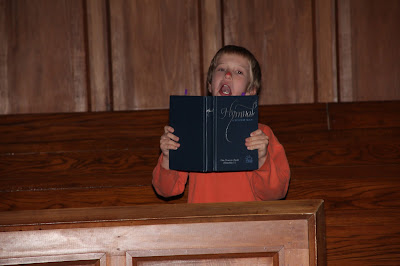
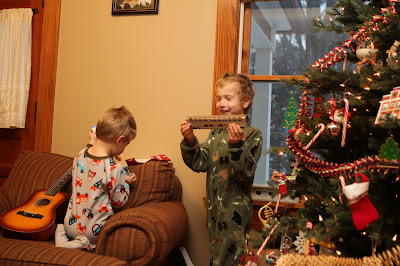
It s wedding week! Wedding week! Wedding week! Wedding week! Oh, also Christmas. Oh dad, it s wedding week! I can t believe it! It s finally here! Wedding week! Jacob, age 7, Sunday Oh dad, this is the best Christmas EVER! Jacob, Wednesday Dad, is the wedding TODAY? Oliver, age 4, every morning this week This has certainly been a Christmas like no other. I have never known something to upstage Christmas for Jacob, but apparently a wedding can! Laura and I got to celebrate our first Christmas together this year together, of course, with the boys. We enjoyed a wonderful day in the middle of a busy week, filled with play, family togetherness, warmth, and happiness. At one point, while I was helping the boys with their new model train components, Laura was enjoying playing Christmas tunes on the piano. Every time she d reach the end, Jacob paused, and said, That was awesome! , beating me to it. That s a few days before Christmas Jacob and Oliver demanding snow ice cream, and of course who am I to refuse? Cousins opening presents After his school Christmas program, Jacob has enjoyed singing. Here he is after the Christmas Eve program, where he excitedly ran up into the choir loft, picked up a hymnal, and pretended to sing. And, of course, opening of presents at home. Sometimes I think about how I didn t know life could get this good. Soon Laura and I will be married, and it will be even better. Truly we have been richly blessed.

26 December 2013

Niels Thykier: Jessie finally has less than 500 RC bugs

I am very pleased to say that RC bug counter for Jessie finally dropped below 500 RC bugs. For comparison, we broke the 700 RC bug curve in the start of November, so that is about 200 RC bugs in about 7-8 weeks (or about 25-28 RC bugs per week). Today, we have about 162 RC bugs on the auto-removal list. Though, I suspect many of the affected packages have reverse dependencies, so their removal from testing may be up 30 days away. Nevertheless, by this time in January, we could be looking at no more than 350 RC bugs left for Jessie.

Ian Campbell: Running ARM Grub on U-boot on Qemu

At the Mini-debconf in Cambridge back in November there was an ARM Sprint (which Hector wrote up as a Bits from ARM porters mail). During this there a brief discussion about using GRUB as a standard bootloader, particularly for ARM server devices. This has the advantage of providing a more "normal" (which in practice means "x86 server-like") as well as flexible solution compared with the existing flash-kernel tool which is often used on ARM. On ARMv7 devices this will more than likely involve chain loading from the U-Boot supplied by the manufacturer. For test and development it would be useful to be able to set up a similar configuration using Qemu. Cross-compilers Although this can be built and run on an ARM system I am using a cross compiler here. I'm using gcc-linaro-arm-linux-gnueabihf-4.8-2013.08_linux from Linaro, which can be downloaded from the linaro-toolchain-binaries page on Launchpad. (It looks like 2013.10 is the latest available right now, I can't see any reason why that wouldn't be fine). Once the cross-compiler has been downloaded unpack it somewhere, I will refer to the resulting gcc-linaro-arm-linux-gnueabihf-4.8-2013.08_linux directory as $CROSSROOT. Make sure $CROSSROOT/bin (which contains arm-linux-gnueabihf-gcc etc) is in your $PATH. Qemu I'm using the version packaged in Jessie, which is 1.7.0+dfsg-2. We need both qemu-system-arm for running the final system and qemu-user to run some of the tools. I'd previously tried an older version of qemu (1.6.x?) and had some troubles, although they may have been of my own making... Das U-boot for Qemu First thing to do is to build a suitable u-boot for use in the qemu emulated environment. Since we need to make some configuration changes we need to build from scratch. Start by cloning the upstream git tree:
$ git clone git://git.denx.de/u-boot.git
$ cd u-boot
I am working on top of e03c76c30342 "powerpc/mpc85xx: Update CONFIG_SYS_FSL_TBCLK_DIV for T1040" dated Wed Dec 11 12:49:13 2013 +0530. We are going to use the Versatile Express Cortex-A9 u-boot but first we need to enable some additional configuration options: You can add all these to include/configs/vexpress_common.h:
#define CONFIG_API
#define CONFIG_SYS_MMC_MAX_DEVICE   1
#define CONFIG_CMD_EXT2
#define CONFIG_CMD_ECHO
Or you can apply the patch which I sent upstream:
$ wget -O - http://patchwork.ozlabs.org/patch/304786/raw   git apply --index
$ git commit -m "Additional options for grub-on-uboot"
Finally we can build u-boot:
$ make CROSS_COMPILE=arm-linux-gnueabihf- vexpress_ca9x4_config
$ make CROSS_COMPILE=arm-linux-gnueabihf-
The result is a u-boot binary which we can load with qemu. GRUB for ARM Next we can build grub. Start by cloning the upstream git tree:
$ git clone git://git.sv.gnu.org/grub.git
$ cd grub
By default grub is built for systems which have RAM at address 0x00000000. However the Versatile Express platform which we are targeting has RAM starting from 0x60000000 so we need to make a couple of modifications. First in grub-core/Makefile.core.def we need to change arm_uboot_ldflags, from:
-Wl,-Ttext=0x08000000
to
-Wl,-Ttext=0x68000000
and second we need make a similar change to include/grub/offsets.h changing GRUB_KERNEL_ARM_UBOOT_LINK_ADDR from 0x08000000 to 0x68000000. Now we are ready to build grub:
$ ./autogen.sh
$ ./configure --host arm-linux-gnueabihf
$ make
Now we need to build the final grub "kernel" image, normally this would be taken care of by grub-install but because we are cross building grub we cannot use this and have to use grub-mkimage directly. However the version we have just built is for the ARM target and not for host we are building things on. I've not yet figured out how to build grub for ARM while building the tools for the host system (I'm sure it is possible somehow...). Luckily we can use qemu to run the ARM binary:
$ cat load.cfg
set prefix=(hd0)
$ qemu-arm -r 3.11 -L $CROSSROOT/arm-linux-gnueabihf/libc \
    ./grub-mkimage -c load.cfg -O arm-uboot -o core.img -d grub-core/ \
    fat ext2 probe terminal scsi ls linux elf msdospart normal help echo
Here we create load.cfg which is the setup script which will be built into the grub kernel, our version just sets the root device so that grub can find the rest of its configuration. Then we use qemu-arm-static to invoke grub-mkimage. The "-r 3.11" option tells qemu to pretend to be a 3.11 kernel (which is required by the libc used by our cross compiler, without this you will get a fatal: kernel too old message) and "-L $CROSSROOT/..." tells it where to find the basic libraries, such as the dynamic linker (luckily grub-mkimage doesn't need much in the way of libraries so we don't need a full cross library environment. The grub-mkimage command passes in the load.cfg and requests an output kernel targeting arm-uboot, core.img is the output file and the modules are in grub-core (because we didn't actually install grub in the target system, normally these would be found in /boot/grub). Lastly we pass in a list of default modules to build into the kernel, including filesystem drivers (fat, ext2), disk drivers (scsi), partition handling (msdos), loaders (linux, elf), the menu system (normal) and various other bits and bobs. So after all the we now have our grub kernel in core.img. Putting it all together Before we can launch qemu we need to create various disk images. Firstly we need some images for the 2 64M flash devices:
$ dd if=/dev/zero of=pflash0.img bs=1M count=64
$ dd if=/dev/zero of=pflash1.img bs=1M count=64
We will initialise these later from the u-boot command line. Secondly we need an image for the root filesystem on an MMC device. I'm using a FAT formatted image here simply for the convenience of using mtools to update the images during development.
$ dd if=/dev/zero of=mmc.img bs=1M count=16
$ /sbin/mkfs.vfat mmc.img
Thirdly we need a kernel, device tree and grub configuration on our root filesystem. For the first two I extracted them from the standard armmp kernel flavour package. I used the backports.org version 3.11-0.bpo.2-armmp version and extracted /boot/vmlinuz-3.11-0.bpo.2-armmp as vmlinuz and /usr/lib/linux-image-3.11-0.bpo.2-armmp/vexpress-v2p-ca9.dtb as dtb. Then I hand coded a simple grub.cfg:
menuentry 'Linux'  
        echo "Loading vmlinuz"
        set root='hd0'
        linux /vmlinuz console=ttyAMA0 ro debug
        devicetree /dtb
 
In a real system the kernel and dtb would be provided by the kernel packages and grub.cfg would be generated by update-grub. Now that we have all the bits we need copy them into the root of mmc.img. Since we are using a FAT formatted image we can use mcopy from the mtools package.
$ mcopy -v -o -n -i mmc.img core.img dtb vmlinuz grub.cfg ::
Finally after all that we can run qemu passing it our u-boot binary and the mmc and flash images and requesting a Cortex-A9 based Versatile Express system with 1GB of RAM:
$ qemu-system-arm -M vexpress-a9 -kernel u-boot -m 1024m -sd mmc.img \
    -nographic -pflash pflash0.img -pflash pflash1.img
Then at the VExpress# prompt we can configure the default bootcmd to load grub and save the environment to the flash images. The backslash escapes (\$ and \;) should be included as written here so that e.g. the variables are only evaluated when bootcmd is evaluated and not immediately when setting bootcmd and the bootm is set as part of bootcmd instead of executed immediately:
VExpress# setenv bootcmd fatload mmc 0:0 \$ loadaddr  core.img \; bootm \$ loadaddr 
VExpress# saveenv
Now whenever we boot the system it will automatically load boot grub from the mmc and launch it. Grub in turn will load the Linux binary and DTB and launch those. I haven't actually configure Linux with a root filesystem here so it will eventually panic after failing to find root. Future work The most pressing issue is the hard coded load address built in to the grub kernel image. This is something which needs to be discussed with the upstream grub maintainers as well as the Debian package maintainers. Now that the ARM packages have hit Debian (in experimental in the 2.02~beta2-1 package) I also plan to start looking at debian-installer integration as well as updating flash-kernel to setup the chain load of grub instead of loading a kernel directly.

Russ Allbery: C TAP Harness 2.4

I always enjoy this time of year: lots of peace and quiet and time to work on whatever I feel like focusing on. That's been watching a lot of speedrunning and League of Legends, but also experimenting with systemd and upstart. I've now ported lbcd to both "properly," meaning that I make full use of their features as far as I currently understand them. I have some more packaging work to do, and need to make a release, but of course I started fixing various other things since I was in the code anyway, and now I don't want to release it without some testing. And that prompted another digression, since I didn't have a good test framework for spawning the server and pounding on it. That finally brings this journal entry to its actual topic: a new release of C TAP Harness. This release adds a new pair of functions, diag_file_add() and diag_file_remove(), which tell the TAP library to take the contents of log files as an additional source of diag() messages. This produces much nicer, and more readable, output from test cases that involve forking a background server that produces output to standard output and standard error. That output can be directed to a file and then included in the test output stream, properly tagged and in sequence with the result messages. You can get the latest release from the C TAP Harness distribution page.

25 December 2013

Petter Reinholdtsen: Debian Edu interview: Dominik George

The Debian Edu / Skolelinux project consist of both newcomers and old timers, and this time I was able to get an interview with a newcomer in the project who showed up on the IRC channel a few weeks ago to let us know about his successful installation of Debian Edu Wheezy in his School. Say hello to Dominik George. Who are you, and how do you spend your days? I am a 23 year-old student from Germany who has spent half of his life with open source. In "real life", I am, as already mentioned, a student in the fields of Computer Science, Electrical Engineering, Information Technologies and Anglistics. Due to my (only partially voluntary) huge engagement in the open source world, these things are a bit vacant right now however. I also have been working as a project teacher at a Gymasnium (public school) for various years now. I took up that work some time around 2005 when still attending that school myself and have continued it until today. I also had been running the (kind of very advanced) network of that school together with a team of very interested and talented students in the age of 11 to 15 years, who took the chance to learn a lot about open source and networking before I left the school to help building another school's informational education concept from scratch. That said, one might see me as a kind of "glue" between school kids and the elderly of teachers as well as between the open source ecosystem and the (even more complex) educational ecosystem. When I am not busy with open source or education, I like Geocaching and cycling. How did you get in contact with the Skolelinux / Debian Edu project? I think that happened some time around 2009 when I first attended FrOSCon and visited the project booth. I think I wasn't too interested back then because I used to have an attitude of disliking software that does too much stuff on its own. Maybe I was too inexperienced to realise the upsides of an "out-of-the-box" solution ;). The first time I actively talked to Skolelinux people was at OpenRheinRuhr 2011 when the BiscuIT project, a home-grewn software used by my school for various really cool things from timetables and class contact lists to lunch ordering, student ID card printing and project elections first got to a stage where it could have been published. I asked the Skolelinux guys running the booth if the project were interested in it and gave a small demonstration, but there wasn't any real feedback and the guys seemed rather uninterested. After I left the school where I developed the software, it got mostly lost, but I am now reimplementing it for my new school. I have reusability and compatibility in mind, and I hop there will be a new basis for contributing it to the Skolelinux project ;)! What do you see as the advantages of Skolelinux / Debian Edu? The most important advantage seems to be that it "just works". After overcoming some minor (but still very annoying) glitches in the installer, I got a fully functional, working school network, without the month-long hassle I experienced when setting all that up from scratch in earlier years. And above that, it rocked - I didn't have any real hardware at hand, because the school was just founded and has no money whatsoever, so I installed a combined server (main server, terminal services and workstation) in a VM on my personal notebook, bridging the LTSP network interface to the ethernet port, and then PXE-booted the Windows notebooks that were lying around from it. I could use 8 clients without any performance issues, by using a tiny little VM on a tiny little notebook. I think that's enough to say that it rocks! Secondly, there are marketing reasons. Life's bad, and so no politician will ever permit a setup described as "Debian, an universal operating system, with some really cool educational tools" while they will be jsut fine with "Skolelinux, a single-purpose solution for your school network", even if both turn out to be the very same thing (yes, this is unfair towards the Skolelinux project, and must not be taken too seriously - you get the idea, anyway). What do you see as the disadvantages of Skolelinux / Debian Edu? I have not been involved with Skolelinux long enough to really answer this question in a fair way. Thus, please allow me to put it in other words: "What do you expect from Skolelinux to keep liking it?" I can list a few points about that: I'm really sorry I cannot say much more about that :(! Which free software do you use daily? First of all, all software I use is free and open. I have abandoned all non-free software (except for firmware on my darned phone) this year. I run Debian GNU/Linux on all PC systems I use. On that, I mostly run text tools. I use mksh as shell, jupp as very advanced text editor (I even got the developer to help me write a script/macro based full-featured student management software with the two), mcabber for XMPP and irssi for IRC. For that overly coloured world called the WWW, I use Iceweasel (Firefox). Oh, and mutt for e-mail. However, while I am personally aware of the fact that text tools are more efficient and powerful than anything else, I also use (or at least operate) some tools that are suitable to bring open source to kids. One of these things is Jappix, which I already introduced to some kids even before they got aware of Facebook, making them see for themselves that they do not need Facebook now ;). Which strategy do you believe is the right one to use to get schools to use free software? Well, that's a two-sided thing. One side is what I believe, and one side is what I have experienced. I believe that the right strategy is showing them the benefits. But that won't work out as long as the acceptance of free alternatives grows globally. What I mean is that if all the kids are almost forced to use Windows, Facebook, Skype, you name it at home, they will not see why they would want to use alternatives at school. I have seen students take seat in front of a fully-functional, modern Debian desktop that could do anything their Windows at home could do, and they jsut refused to use it because "Linux sucks". It is something that makes the council of our city spend around 600000 to buy software - not including hardware, mind you - for operating school networks, and for installing a system that, as has been proved, does not work. For those of you readers who are good at maths, have you already found out how many lives could have been saved with that money if we had instead used it to bring education to parts of the world that need it? I have, and found it to be nothing less dramatic than plain criminal. That said, the only feasible way appears to be the bottom up method. We have to bring free software to kids and parents. I have founded an association named Teckids here in Germany that does just that. We organise several events for kids and adolescents in the area of free and open source software, for example the FrogLabs, which share staff with Teckids and are the youth programme of the Free and Open Source Software Conference (FrOSCon). We do a lot more than most other conferences - this year, we first offered the FrogLabs as a holiday camp for kids aged 10 to 16. It was a huge success, with approx. 30 kids taking part and learning with and about free software through a whole weekend. All of us had a lot of fun, and the results were really exciting. Apart from that, we are preparing a campaign that is supposed to bring the message of free alternatives to stuff kids use every day to them and their parents, e.g. the use of Jabber / Jappix instead of Facebook and Skype. To make that possible, we are planning to get together a team of clever kids who understand very well what their peers need and can bring it across to them. So we will have a peer-driven network of adolescents who teach each other and collect feedback from the community of minors. We then take that feedback and our own experience to work closely with open source projects, such as Skolelinux or Jappix, at improving their software in a way that makes it more and more attractive for the target group. At least I hope that we will have good cooperation with Skolelinux in the future ;)! So in conclusion, what I believe is that, if it weren't for the world being so bad, it should be very clear to the political decision makers that the only way to go nowadays is free software for various reasons, but I have learnt that the only way that seems to work is bottom up.

24 December 2013

Iustin Pop: Got my Christmas present!

Someone made my day today. On Friday, I bought something online, hoping that it gets delivered before Christmas. It wasn't something extraordinary, just some paper (no, I'm not joking). This should have arrived on Monday if shipped by PostPac Priority, but it didn't, so I assumed it was Economy, so arriving "sometime". On Sunday, knowing that it's already quite late, I made another (online) order, at a webshop that normally (i.e. not during holidays) delivers the next day. Not something too extraordinary again, some more paper (A3+ size this time ) and a gadget. After ordering, I saw the Swiss post website with "latest time to ship packages so that they arrive before Christmas". At that moment I realised I was too late, and that I won't get my present(s) in time. Today, I waited at home until about noon knowing that it's unlikely that I'll get my packages, but still hoping; nothing arrived, so I went into the city to do some errands. When I arrived home around 4 o'clock, there was nothing in my mailbox, and no notice that my delivery was attempted and that I need to pick up things at the post office. At this moment, I had to give up, but I was a bit down, just like a little boy who was told no present this time. I was hoping that I get at least one package, so I was double disappointed, to say so (spoiled much? first world problem as well, I know, but this post is not about that). As I got up the stairs, and reaching the door to the apartment, surprise! Not one, but both packages were waiting for me at the door. This happens very, very rarely - normally, I just get the "delivery failed" notice, and I pick the package up next day at the post office. Today, the postman was very nice. Dear postman: I don't know who you are, but you had a nice thought and made an effort so that I (a quite spoiled little boy) would get my presents in time. Thanks, and I hope someone gave you a nice present as well! And happy holidays (of whatever kind you celebrate) to everyone!

Gergely Nagy: Some free software are really free

I read a post titled "Free software is NOT Free", and that triggered a few thoughts, which I would like to share here. While the post has some good thoughts, there are points in it which I disagree with strongly. You see, I've been writing free software almost half my life, most of the things I contributed to various projects, and the vast majority of my own projects, were made because it made me feel good. Because I scratched an itch, and sharing filled me with a sense of accomplishment.I always had bills to pay, and I have a day job to get that kind of thing sorted, yet, I do not believe that the quality of my free software work suffers because of that. Do I have less time? Yes, I do. But slower pace does not mean lesser quality - more often than not, I found that slower pace leads to better considerations, more care given to each change, because fixing it later, fast, is much more costly, so you make sure that your improvements will stand the trial of time.But I digress. I want to share a different view on the topic, based on my own experiences.When I first got into free software, I was young, bright-eyed, full of hopes and illusions of grandieur. I did my part of small contributions here and there, and every bit of "Thanks!", every bit of feedback - be it criticism or rejection - contributed to my development. This part of the free software culture is still important to me, and remains a major factor behind my desire to work on free software. Later on, there came another revelation: people actually use the stuff I write! That's an awesome feeling too, but with it, comes a burden too: supporting users, and trying to cater to every need that arises. To combat this, to not drown, you need to learn to say "No". It is hard, but as maintainer of a project, it's your task to keep it maintainable, and you need to know your limits. Would it be better if you could fulfil every wish? If you could do everything you ever dreamed of? You may think the answer is yes, but you're wrong. The answer is "No".Not everything needs to be done, not every wish needs to come true. As always, there's a balance. Limiting the amount of time that can be spent on a project helps keep that balance. And when balance is found, the project becomes more mature, maintenance stops being a chore you do not want to do, but have to, and instead becomes something you actually enjoy. We are human beings, we dream and wish for a lot, and we have a hard time realising our limits. That makes us feel sad, sometimes even inadequate. Having less time puts us into a different position, where were are forced to reevaluate how we spend the little free time we have. In the long run, I believe that is good for free software.But there's an even better way to approach the problem! You want to work on your projects, right? Yet, you also want to pay your bills. And you are a fan of free (as in freedom) software. When I found myself in a position like that, when I was looking for work, I was looking at companies which are friendly towards free software, and even have a few on their portfolio. Working for such a company allows me to be happy with myself, by not betraying my own beliefs, and on the side, still spend time on my own things.When I spend my day working on free software, I feel energised, and during lunch break, I can look through my plans for my own projects (some of which are related to my work too, which makes it even easier to spend time on them), plan ahead, and go home with a head full of ideas. No exhaustion after a daunting day of hacking proprietary software, with a sinking heart. No feeling guilty of not taking good care of your projects, because you do take care! You just do it on your own terms.So this is my suggestion to independent free software hackers: find a free software friendly company, that allows - or even encourages - you to work on your own things too. That way, you can pay your bills, and work on your hobbies, and best of all: keep them as hobbies, so it does not become a burden. When a hobby becomes your job, that often leaves a sour taste behind, when you can't fulfil every need, or fix every issue.Get a free software day-job, and keep your hobby as such, and everyone benefits. You get to keep your sanity, and users will receive better care, because the developers do what they love, and not what they have to.You give up some of your freedoms, yes, by not being independent. But being independent is not always the right choice. For some people, it may well be, for some, not so much. My experience over the past 15 years or so, is that independence brings a lot more headache than I'm willing to deal with. I'd rather work for a free software friendly company, where, after three years, I get paid to write and contribute to free software, and take care of my personal projects on the side, than try do all of it on my own.None of the software I wrote is worth a full salary, and none of them requires me to work full time on them, either. I could, mind you, I have enough ideas lined up to keep me busy for years. But do I want to? Do I want to burn myself out?No. The day job satisfies my hunger for contributing to a widely used piece of software, and my hobby projects satisfy my exploratory needs. I'm happy this way, and I'm very happy that thanks to the work and dedication of some amazing people, we got this far, that one can have a day job and independent projects too, that are all free software, without having to depend on fairly unreliable sources, such as donations (mind you, donations are a nice extra).There are, of course, different situations, and different people. What works for one, may not work for the other. This is what worked for me, and I felt the need to share it, lest anyone thinks that the world's darker than it really is.

Dirk Eddelbuettel: RcppZiggurat 0.1.0 (and 0.1.1): Faster N(0,1) RNGs

Over the last few weeks I have been working on getting the Ziggurat normal random number generator updated and available in R. The Ziggurat generator provides a pretty unique combination of speed and good statistical properties for (standard) normal random numbers (as opposed to uniform draws as is commonn for most RNGs). Generation of N(0,1) draws may not by itself be the dominant slowdown in a simulation, yet when large number of draws are required it may be helpful to have a generator that is faster than the defaults in R (which have excellent properties, but not the fastest speed). A first release 0.0.1 went to CRAN a couple of weeks ago. This was followed up by a more thorough release 0.1.0 this last weekend which, as it happens, needed a minor follow-up 0.1.1 to clean up some dependencies on the right R version, as well as vignette building procedures. I added a web page about RcppZiggurat to group together some basic information, but the single best starting point may be the detailed pdf vignette included in the package. Courtesy of CRANberries, there are diffstat reports for the most recent release as well as for the preceding release two days earlier. More detailed information is on the RcppZiggurat page. Questions, comments etc should go to the rcpp-devel mailing list off the R-Forge page.

This post by Dirk Eddelbuettel originated on his Thinking inside the box blog. Please report excessive re-aggregation in third-party for-profit settings.

23 December 2013

Russ Allbery: Review: The Death of Bees

Review: The Death of Bees, by Lisa O'Donnell
Publisher: HarperCollins
Copyright: 2012
Printing: 2013
ISBN: 0-06-220984-1
Format: Hardcover
Pages: 309
This is the first definite hit from my Powell's Indiespensable subscription, and a good example of why I subscribe. I never would have read or even heard of this book without it, and I thoroughly enjoyed it. Marnie and Nellie are sisters living in a housing estate in Glasgow's Maryhill district. Neither of their parents ever held regular jobs, although one does quickly learn their father had been earning money distributing drugs. The story opens, rather shockingly, with the death of both parents: their father smothered in his bed, and their mother, a day later, after refusing to notify anyone of their father's death, by hanging herself in the garden shed. In fear of being taken by social services and then separated, particularly given Nellie's unusual way of interacting with the world (she talks, and writes, like a woman in the 1950s trying to sound high-class), the girls bury both bodies in the back garden and tell everyone their parents just went on an unannounced trip without them. It wouldn't be the first time. Marnie is 15 and a year away from being legally an adult, at which point she can take custody of Nellie (who is 12) and keep them together. In the meantime, they just have to keep their parents' deaths secret and figure out how to keep food on the table and social services away. Their next-door neighbor is a formerly-closeted older gay man named Lennie who is known as the neighborhood pervert after he was arrested getting a blow job from an underage male prostitute. Both girls are quite understandably suspicious of him, but he's also the first person to notice that something is wrong and to start trying to help. The book is told in many short chapters, each written by one of Marnie, Nellie, or Lennie in their own voice. You might have guessed from the plot summary that this book needs a few warnings, but I want to emphasize that more. This is a book that opens with decaying corpses, including a few rather-too-vivid images from its transport and from Marnie's later (unnamed) post-traumatic stress. Marnie is quite sexually active, and both girls have had a nasty background full of things that I preferred not to think too much about. Most of the worst bits are only alluded to and are kept off-camera, but there's still quite a lot of background nastiness and desperation here. The Death of Bees is blunt and forthright to the point that it repeatedly made me cringe, and that sort of thing usually doesn't bother me in books. That said, this is not a horror novel, even though it contains horror. You could describe it as darkly comic, although none of the comedy is the sort that makes one laugh, except perhaps in startled surprise. The adjectives that come to mind are fierce, compassionate, empathetic, tough, and courageous. The author is completely on the side of the three protagonists, all of whom are deeply hurt in their own ways but all of whom are trying as hard as they can to support each other. I have rarely read a book that made me care as much about the characters. It's the kind of story that makes one want to passionately defend them, particularly once the one real villain, in the form of a do-gooding outsider, makes his appearance. And the reader and the author aren't alone. One of the things I loved about this book is that it doesn't artificially isolate the characters. Marnie has friends, and while Marnie doesn't always notice for Marnie, this is just her life, and many things of significance to the reader are just more of daily life for her this book is full of unexpected acts of small kindness. The surrounding characters are themselves all dealing with their own troubles and not in a great position to help anyone, and yet somehow they manage. Even Nellie, who has a great deal of difficulty interacting with other people her own age, gets unexpected help from people she thinks can't stand her. I think it's very telling that about the only character here who is entirely unsympathetic is the one who claims to be the most moral and virtuous. Unfortunately, from my perspective, this book has one major flaw: the ending. Thankfully, the ending isn't bad; if it were, it would have completely destroyed my enjoyment of the book. By the time one gets through this story, having something bad happen to these girls would break your heart. The ending does deliver the necessary catharsis, but it is far, far too short. O'Donnell builds up tension mercilessly, pushing the story down a path that's clearly desperately wrong for both of the girls, and doesn't let the story climax happen until about ten pages from the end. We get all of a page or two of denouement, and then the novel is over. I am, admittedly, a "Scouring of the Shire" sort of person. I like long denouements, particularly if I've gone through hell with the characters. I like getting to spend some happy time with them. But even for those who don't enjoy that as much as I do, I think this ending was too short. O'Donnell does an amazing job building sympathy and empathy throughout the story, and I didn't want to have to fill in all of the happily ever after from my own imagination. Maybe it would have been hard to do without getting too sentimental or without dulling some of the sharp edges of the story, but I would have really appreciated another ten pages. As is, it felt like the novel abruptly and unceremoniously dumped me out on the ground. But, that aside, this is an excellent character story. It's one that I would be careful about recommending; parts of it are extremely dark and nasty, and you have to take Marnie on her own terms for the story to work. But it's beautifully written and thoroughly engaging, and I'm very glad to have read it. Rating: 8 out of 10

B lint R czey: Introducing XBMC from Debian

available from unstable, and hopefully soon from testing, too! The longer story: The xbmc package has been uninstallable and unbuildable in Debian unstable for quite some time. Mainly due to differing preferences of the XBMC project and Debian. Original XBMC source includes several embedded libraries, some patched to work with XBMC perfectly and to provide the best user experience the XBMC project prefers building XBMC with those libraries. In Debian, on the other hand, the recommended practice is not embedding libraries, but using the packaged versions instead to reduce the amount of security updates in case a library needs a security related fix, to save space on mirrors and to avoid divergence between the embedded versions of the libraries. One consequence of using externally packaged libraries is the need for making XMBC work with newer versions of the external libraries even when the embedded one would still work perfectly or (in some cases) there are even breakages due to changing APIs or new bugs in the library. XBMC depends on many libraries and the changes to them in Debian used to break one or another XBMC use case from time to time. The XBMC project received many direct bug reports from users of the Debian-shipped XBMC package which were harder than necessary to handle due to the lack of clear differentiation from the .deb packages provided directly by
them and using the embedded libraries. To help both users and developers the xbmc package starts using the XBMC from Debian name on the main screen and in the logs, the version number used inside the application is set to the Debian package s version, and README.Debian directs users of the package to Debian s BTS instead of XBMC s forums. The most notable difference between XBMC and XBMC from Debian is that XBMC uses
its embedded patched FFmpeg, while XBMC from Debian uses libav. If movies play too slow, too fast, without sound or too loud, you should definitely check BTS first. ;-) Happy Holidays and don t stay too much in front of the screen if XBMC from Debian happens to work for hours without any crash! :-)

Russell Coker: Political Advocacy in Clubs

One topic that often gets discussed when it s near election time is whether clubs and societies should be political . Some organisations are limited in what they can do, for example in some jurisdictions religious organisations can theoretically lose their tax exempt status if they advocate for one party. In practice any organisation that has a wide membership will have a variety of political views represented so a policy of directly supporting one candidate or party is likely to lose some members. A common practice among some clubs is to send questionnaires to parties before elections. This might cause a policy change in the parties that do whatever it takes to get votes (as opposed to the parties who devise policy based on principle). But it also provides members a list of how the parties compare on the basis of the criteria that matter to the club. I think that organisations such as Linux Australia [1] and the Linux Users of Victoria [2] should send such questionnaires and publish an analysis of the results. I previously suggested a few questions that could be asked [3], the last one received some negative comments for being too tabloid but the others got some agreement. But obviously there would need to be some discussion about which questions are in scope and how they should be asked. Such a discussion would take a while and would need to be started well before an election was called, I think if we start now we should be able to get it done before the next federal election is called. There is one Australian political party that has a consistent record of having IT policies that are in line with the general aims of Linux Australia and which also has policies that meet the social standards that are generally agreed by most of the membership (EG opposing discrimination). But I know that there are some members of the Linux community who advocate various forms of discrimination and would vote accordingly so advocating for that party would get some negative reactions. But if someone wants to vote for a party that advocates discrimination against minority groups I don t think that there s any harm in providing information to allow them to vote for a pro-discrimination party that has a reasonable IT policy. In any case it doesn t seem likely that we can get most of the membership of an organisation like Linux Australia to agree on what parties are unacceptable, so sending a questionnaire to all parties avoids that debate. I would like to see this sort of thing done by LUGs for all state and territory elections. I will be involved in the process with LUV for the Victorian elections, but I have to just hope that my blog posts inspire people in other states and territories if anyone has already started on this then please let me know. I will also be involved with getting this done for the federal elections with Linux Australia, hopefully this post will help get people interested in that.

Next.

Previous.