Search Results: "sto"

21 November 2012

Ian Campbell: Consolidating Qcontrol Configuration Files

A little while ago Michele Cane filed Debian bug #689912 against qcontrol asking that the package install the correct configuration file for a TS-419P II, a newer device which has an LCD. It turns out that to support devices with LCDs properly we need to probe a GPIO line in order to figure out if an LCD is attached or if a serial console is in use (since the two are mutually exclusive on this hardware, when you attach a serial console you must toggle a jumper too). This actually turns out to be rather trivial since qcontrol's configuration files are actually simple Lua programs and the state of the GPIO lines can be accessed via sysfs and so we can read the state directly from the configuration file itself. While looking into this I happened to notice that the various board-specific configuration files are actually very similar and that the differences can all be detected by a combination of the Hardware field in /proc/cpuinfo and the GPIO lines. So I started looking into whether I could write a single consolidated qcontrol.conf file to replace the various variant specific files. It turns out to be quite possible, the resulting consolidated file has been posted to the bug log (see also my mail). The danger with configuration files which are also fully-fledged programming languages is that there is a temptation to write more and more complex configuration files with the danger that the primary purpose of the file (configuration) can be obscured. I think in this case it is a close call but on balance I think the downsides outweigh the advantages, so I've uploaded qcontrol 0.4.2+svn-r40-2 which simply adds LCD support to the relevant board specific configuration file. In process of doing so I seem to have fallen into a trap which seems to catch out many sbuild users at least once and uploaded a package with "UNRELEASED" still in the changelog. To try and save myself (and others) some blushes in the future I've filed Debian bug #693841 (wishlist) against dput to see if it can catch this case, I've also added to my prerelease checklist. As it happens my own TS-419P II arrived today. I intend to use it for second tier storage (mythtv recordings, music, mirrors) as well as light server duties (MTA, internal DNS etc) which should allow me to turn off the existing PC in the cupboard under the stairs which is getting a bit long in the tooth and starting to become a bit unreliable (I also suspect its costing a fortune to run).

Dirk Eddelbuettel: Rcpp attributes: A simple example 'making pi'

We introduced Rcpp 0.10.0 with a number of very nice new features a few days ago, and the activity on the rcpp-devel mailing list has been pretty responsive which is awesome. But because few things beat a nice example, this post tries to build some more excitement. We will illustrate how Rcpp attributes makes it really easy to add C++ code to R session, and that that code is as easy to grasp as R code. Our motivating example is everybody's favourite introduction to Monte Carlo simulation: estimating . A common method uses the fact the unit circle has a surface area equal to . We draw two uniform random numbers x and y, each between zero and one. We then check for the distance of the corresponding point (x,y) relative to the origin. If less than one (or equal), it is in the circle (or on it); if more than one it is outside. As the first quadrant is a quarter of a square of area one, the area of the whole circle is -- so our first quadrant approximates over four. The following figure, kindly borrowed from Wikipedia with full attribution and credit, illustrates this: Example of simulating pi Now, a vectorized version (drawing N such pairs at once) of this approach is provided by the following R function.
piR <- function(N)  
    x <- runif(N)
    y <- runif(N)
    d <- sqrt(x^2 + y^2)
    return(4 * sum(d < 1.0) / N)
 
And in C++ we can write almost exactly the same function thanks the Rcpp sugar vectorisation available via Rcpp:
#include <Rcpp.h>
using namespace Rcpp;
// [[Rcpp::export]]
double piSugar(const int N)  
    RNGScope scope;		// ensure RNG gets set/reset
    NumericVector x = runif(N);
    NumericVector y = runif(N);
    NumericVector d = sqrt(x*x + y*y);
    return 4.0 * sum(d < 1.0) / N;
 
Sure, there are small differences: C++ is statically typed, R is not. We need one include file for declaration, and we need one instantiation of the RNGScope object to ensure random number draws remain coordinated between the calling R process and the C++ function calling into its (compiled C-code based) random number generators. That way we even get the exact same draws for the same seed. But the basic approach is identical: draw a vector x and vector y, compute the distance to the origin and then obtain the proportion within the unit circle -- which we scale by four. Same idea, same vectorised implementation in C++. But the real key here is the one short line with the [[Rcpp::export]] attribute. This is all it takes (along with sourceCpp() from Rcpp 0.10.0) to get the C++ code into R. The full example (which assumes the C++ file is saved as piSugar.cpp in the same directory) is now:
#!/usr/bin/r
library(Rcpp)
library(rbenchmark)
piR <- function(N)  
    x <- runif(N)
    y <- runif(N)
    d <- sqrt(x^2 + y^2)
    return(4 * sum(d < 1.0) / N)
 
sourceCpp("piSugar.cpp")
N <- 1e6
set.seed(42)
resR <- piR(N)
set.seed(42)
resCpp <- piSugar(N)
## important: check results are identical with RNG seeded
stopifnot(identical(resR, resCpp))
res <- benchmark(piR(N), piSugar(N), order="relative")
print(res[,1:4])
and it does a few things: set up the R function, source the C++ function (and presto: we have a callable C++ function just like that), compute two simulations given the same seed and ensure they are in fact identical -- and proceed to compare the timing in a benchmarking exercise. That last aspect is not even that important -- we end up being almost-but-not-quite twice as fast on my machine for different values of N. The real takeaway here is the ease with which we can get a C++ function into R --- and the new process completely takes care of passing parameters in, results out, and does the compilation, linking and loading. More details about Rcpp attributes are in the new vignette. Now enjoy the .

Update:One somewhat bad typo fixed.

Update:Corrected one background tag.

20 November 2012

Jon Dowland: Waterstones

In May this year, in a desperate bid to bail water out of a sinking ship, HMV group sold off the Waterstones chain of bookstores. I'm fond of reading so naturally I visit Waterstones from time to time. (but not exclusively.) For many years, their promotions were unanimously structured as "3 for 2" offers: find three books in the promotion, in-store, and get the cheapest of the three for free. I hated these promotions. I always found it very challenging to find three books in the promotion that I wanted. If I was visiting to buy a specific book and found it in the promotion, on more than one occasion I left the shop empty handed: I wasn't prepared to pay full price for a book in a promotion and not get the benefit of the promotion. Since being sold, Waterstones seem to have made a lot of changes. Many new hardbacks from popular authors have debuted at a discount for a short period (Rowling, Pratchett). I've found many more discounted books not tied to others in 3-for-2-style offers, sometimes window-display stock at half price, a month or so after release. They started a loyalty-card scheme, with a 10 gift card the prize you reach once you've spent 100. (I wonder if such schemes are examples of a token economy?) Finally, they've tentatively started to explore putting cafes in their branches. The one in Newcastle is best described as 'fledgling', but it's nice to have one more place to escape for a cup of tea at lunchtimes. The cafe, as well as a very well stocked collection of magazines, were the two killer features of the sadly- defunct Borders bookseller chain. For years before we got our own Borders in the North East, I used to enjoy the York branch if I was passing. I actually managed to fill a loyalty card this year, so clearly their change in attitude has worked on me! I'm generally not a fan of gift cards, especially in today's climate, so I quickly spent it. I hold an American Express credit card, which earns me cashbask on purchases which I make with it. I think the rate is about 1%. However, I can opt to receive the cashback in the form of gift vouchers. If I do so, I get them to the value of 110% my cashback balance. One of the retailers in on the scheme are Waterstones. I'm tempted

19 November 2012

Russ Allbery: Review: Inversions

Review: Inversions, by Iain M. Banks
Publisher: Pocket
Copyright: 1998
Printing: May 2001
ISBN: 0-7434-1196-X
Format: Mass market
Pages: 376
Inversions poses a special challenge for book metadata for reviews that try to avoid spoilers. If you've looked at my index of reviews, I may have arguably already spoiled you. I'm going to discuss the book with that spoiler, as most reviews do, because I think it's a better book knowing that information up-front. But if you want to avoid any spoilers, stop reading here, and avoid looking at its placement in my review index. Inversions consists of the interleaved stories of two people: a strange female doctor to the king of Haspide, and the bodyguard of the Protector of Tassassen. The doctor's story is told in the form of letters written by the doctor's apprentice to his "Master," who has clearly told him to spy on the doctor. (The identity of this person is revealed during the story.) The bodyguard's story is told in the third person and presented as a reconstruction of events. The stories never meet, although the two countries have some indirect political exchanges. The doctor becomes entangled in court intrigue and several murders, and the bodyguard protects the Protector (a general in charge of what was effectively a military coup against the former regime) during a war with neighboring barons who had initially supported him. Both stories reach conclusions, but somewhat unsatisfactory ones. The two characters never meet in the book. All of this is set among countries at a medieval level of technology. The doctor faces scorn and derision, not to mention outright opposition, both because she's a woman (she's only permitted to claim the title of doctor due to the king's favor and her claimed citizenship in a far-away land with strange customs) and because she uses more effective and more modern techniques. Other physicians still bleed patients, but the doctor is clearly aware of the germ theory of disease, dismisses contageon via bad odors, and otherwise strikes the reader as someone with advanced medical knowledge trying to practice it in primitive conditions. The spoiler, which is never stated outright but which is relatively apparent from various hints and allusions dropped by the characters, as well as at least one event that would otherwise have to be supernatural, is that Inversions actually takes place in the Culture milieu. How this planet and these stories fit into that milieu remains unexplained throughout the story, but we do get some clues in supposedly made-up stories that the bodyguard tells the son of the Protector, stories that are recognizable to Culture readers as less fictional than they sound in a medieval context. Banks has a tendency to play with unusual narrative structure and to fall on the mainstream side of SF plot construction. Inversions is a very closely-observed pair of entwined stories told in a way that downplays most of the dramatic structure and rising action and that undermines feelings of conclusion or catharsis. Despite having, on later reflection, two clear plots with clear conclusions, it feels more like parallel slices of life and stubbornly refuses to advertise any conclusions or deeper meaning. Whether that works will probably have a lot to do with the reader's tolerance for trying to draw one's own conclusions. I found it frustrating and unsatisfying, but knowing going in that it's a Culture novel helped by adding some deeper structure to give the story a modicum of meaning. Insofar as there's a larger theme, it's the exploration of the conflict between the two Culture citizens that is presented, thinly disguised, in the bodyguard's stories. This connection is not obvious; even determining how to map the two characters into the stories is a touch challenging. But if one is aware of it and looking for it in advance, it provides a bit of broader structure and some basis for judging the actions of the doctor and the bodyguard against a larger plan. I needed that to wring enjoyment from the book; I never cared enough about the characters otherwise to fully engage with either story. With the puzzle, and the constant search for connections to Culture concepts, it's somewhat more interesting, but it's still maddeningly indirect. (And, from various other Internet reactions, I don't think I'm missing something obvious.) It's possible that I went into the book with some incorrect assumptions that undermined my enjoyment. Hopefully this review will help other readers. Knowing that this is a Culture book and enjoying the process of finding references makes it more fun (and most of the references aren't too hard to find). But don't expect lots of closure from the stories, and don't expend to find out "what's really going on." It's not that sort of book. If you enjoy the individual stories for themselves, you'll have the best chance of enjoying the book as a whole, with the Culture references providing a fun additional layer. If the basic stories don't appeal, the Culture material probably isn't enough to make the book engrossing. Rating: 6 out of 10

18 November 2012

Gregor Herrmann: RC bugs 2012/46

it's seems we're starting to run out of RC bugs with the implicit usertag easy-enough-for-gregoa

what I've done in the last days besides working on the bugs listed below is to tag quite a few bugs pending that were uploaded into a DELAYED queue. please try to remember to set this tag on delayed NMUs, nmudiff is quite convenient here.

Jamie McClelland: New Privacy Arguments are Needed

Another decent article on online privacy was published by the NYT this morning. The article documents the collection and centralized aggregation of consumer data online. It ends with a strong message about consumers becoming the "product" - which echoes what Noam Chomsky and Ben Bagdikian have been saying for decades. The problem with this critique is that it doesn't go far enough. Chomsky and Bagdikian didn't say readers are the product of modern journalism and that's bad because nobody wants to be a product. They critiqued the model because it produces terrible journalism and democracy suffers as a result. Similarly, the online trading of audiences and the invasion of our privacy that results has more important implications than "don't be a sucker" which seems to be the gist of the privacy argument these days. Honestly, I don't stay awake at night worrying that Nike knows I'm looking for a pair of sneakers, or even that they know my income. I do stay awake at night worrying that people are tagging my photo on Facebook, which could allow the New York Police Dept to submit a photo of protesters to Facebook and get a list of names and addresses of the people in the photo. Or it could allow the police to track my movements via existing networks of surveillance cameras by matching my image to my name. Would that require a search warrant? How would that impact my trust in my government to know that my movements are being tracked? Or worse, to know they might be tracked but I'll never know if they are or aren't? Many governments (including the US) have sordid histories of infiltrating political organizations and intentionally sowing dissent. Having access to activists' purchasing habits provides a treasure trove of material for this purpose that previously was labor intensive for cops to collect. It also provides leverage during interrogation, a time of heightened emotional vulnerability where the mere mention of a private detail of one's life can have a powerful impact. How can we prevent law enforcement from having access to these details of our lives? And then there's the dragnet. A central database of consumer habits provides a tantalizing collection of information that could be searched for people who fit a profile of a crime. Is solving the crime at hand worth the invasion of privacy that results from people being investigating only based on their consumer habits? How would we measure the impact an investigation like this would have on our confidence in democracy and government? The corporate advertisers promoting this kind of data collection argue that these problems are the price of progress. However, the ideology behind these technology developments is capitalism, not some intrinsic aspect of the Internet or network communications. Historically, the Internet has developed based on a drive toward de-centralization. Email and web sites, the bedrock of Internet activity, are based on these principles: anyone can add their own email server or web server and everyone can seamlessly access it. In contrast, the logic of capitalism as it relates to the Internet, is one of centralization and aggregating data. Facebook and Google want you to use their platforms for all your online activities so they have as complete a picture as possible of what you like and do. As the New York Times article describes, companies like Rubicon want to track all your movements and aggregate that data for profit. We have a choice. We can carefully evaluate our use of corporate services and consider the implications it has not only on our lives but on society as a whole. And, we can choose to use and support services that promote open standards and interoperability that will respect our personal privacy values. Want a practical example? Friendica is software designed to allow you to post status alerts, photos, videos and other information about yourself in a way similar to Facebook. However, it has one big difference: you can host your account on any server running the software anywhere in the world. You can still "friend" people on different servers, but we don't have to all trust the same organization to host it. Furthermore, Friendica allows you to post once and automatically cross-post to your Twitter, Facebook or other similar services. Sound good? You are welcome to try out an account on the May First/People Link install: https://friends.mayfirst.org/.

Russ Allbery: Review: A Hero's Tale

Review: A Hero's Tale, by Catherine M. Wilson
Series: Women Were Warriors #3
Publisher: Shield Maiden
Copyright: 2008
ISBN: 0-9815636-3-5
Format: Kindle
Pages: 301

This is an ebook, so metadata may be inaccurate or missing. See notes on ebooks for more information. A Hero's Tale is the third book in the When Women Were Warriors trilogy, which is best thought of as a single long novel. Reading it independently will miss most of the significance of the plot, since one wouldn't know many of the important characters. A Hero's Tale follows the pattern of the second book: even less quiet contemplation, and even more in the way of events and plot. Tamras completes her training, in a somewhat unexpected way (and in a rather interesting reworking of gender roles), but then both Maara's past and the problems of A Journey of the Heart catch up with them. There is, accordingly, quite a bit more action, or at least war councils and political maneuvering, than the previous books, and somewhat less time for thoughtful wisdom. That also means that A Hero's Tale shifts a bit more towards the traditional fantasy coming-of-age story, where the heroine is able to shift armies and win conflicts with an understated and self-deprecating skill that comes inevitably but indirectly out of all of her previous experiences. I think Wilson is still fairly original in how she presents those tropes, with an interesting focus on empathy and compassion that is all too rare in this sort of story, but this book does feel a lot more like a story that one has read before. If you're particularly allergic to that story shape, you may find this entry somewhat disappointing. One of the things I loved about it, though, was Wilson's avoidance of traditional villains. There is one, so it's not a complete avoidance, but nearly everyone in this story has their own viewpoint and perspective and is on the side of right in their own way. Wilson uses Tamras's empathy and willingness to listen and understand to let the reader see various different perspectives without moving away from the first-person perspective. It's very nicely done. I thought the handling of the emotional arc of the story was more mixed. Tamras is seriously tested in some moments that aimed for heartbreaking, but I thought they fell short of the emotional punch they were supposed to carry since the story shape had already made it obvious that everything would turn out okay in the end. The story is so gentle that Wilson hadn't established any willingness to end something badly, which robs a lot of the punch from emotional turmoil. I also had quite a bit of trouble with the principle of love above all else, particularly for someone in Tamras's position. Maybe that's because I'm still too entrenched in the attitude towards politics that this series argues against, but I had a hard time not seeing her as personally indulgent. Both of those factors blunted the emotional climax for me, leaving it moving but not as heartbreaking as I think Wilson was aiming for. (This is the point where a friend will tell me that I think too much about books while I'm reading them.) That said, Wilson continues to write one of the best mentoring relationships that I've seen in fiction. The dynamic between Tamras and Maara is just beautiful, and remains so through the end of the book. So many traditional issues with rivalry, growth, replacement of the mentor, and relative social position that are ignored or dealt with ham-handedly in other stories are handled adeptly and quietly. Maara is by far my favorite character of this series, largely because of how she handles that relationship. I could identify with her more easily than with Tamras at various points in the story, and I thought the understated ending was quietly beautiful. If you enjoyed the rest of the series, definitely read A Hero's Tale for the conclusion. If you've been hungry for more typical action, you'll get some of it here. I wish a few deep emotions other than love had been in play, but, despite that, When Women Were Warriors is still quietly and delightfully different than most things I've read, and worth the price. Rating: 8 out of 10

17 November 2012

Craig Sanders: done

OK, I m finished my experiment. It s over now and I can break character . First, I have to offer special thanks to tshirtman for being the first to unambiguously exemplify one of my main points. well done! In case it s not blindingly obvious (as it should be), the reason for my post was that I was outraged by the spectacle of one fairly high-profile member of the linux community trying to rally support to shun and exclude another fairly high-profile member because a nightmare had upset her. WTF? Is that really all it s going to take to destroy someone s reputation and perhaps their career? even with the shunning target s own words available and archived to disprove the ridiculous straw-man mis-characterisations of what he actually said? Not one of the arguments against him actually addressed anything he said, they ALL attacked him for things he didn t say, for things that other people claimed he said. I was further outraged by seeing everyone who even suggested that questioning of stats (or, indeed, ANY claim of fact or evidence) may be, in some small way, a valid and reasonable thing to do get instantly put in their place and dismissed as Yet Another Rape Apologist. Are we supposed to be anti-science, anti-scientific method now? or are rape stats a special case like religion where we are just supposed to switch off our analytical brains and accept what we are told on faith, without question? Surely we are capable of better than that? i know we are capable of better than that. Or, at least, i used to know that. Now i m not so sure. In 2011, all it took was Ted Tso ( TT ) making some fairly reasonable statements about the need for any claimed evidence or statistics to be viewed skeptically and that dissenting research should also be considered and he was instantly vilified as a rape apologist . Sorry, but questioning extremely dodgy stats (that even in feminist circles are viewed more as ideological propaganda than as serious research) is NOWHERE NEAR SUFFICIENT to earn the label of rape-apologist. That is not how debate works you can t just refuse to engage with someone s point and simply accuse them of being the enemy for not agreeing 100% with whatever you say at least, not if you have any intellectual honesty or self-respect. (sure, some people are complete jerks and deserve to be told to FOAD in no uncertain terms but a) jerks like that are self-evident and obvious, and b) TT s participation in that thread was at all times civil and reasonable) But that thread is ancient history it was over and done with nearly two years ago.
In October this year, for reasons which are not at all clear, Valerie Aurora ( VA ) decided to revive the issue (which had been resolved back in 2011 with a resounding fuck no, we don t want misogynist shit or porn in our conferences from pretty much the entire linux community including near-universal support for improved anti-harassment policies both for linux.conf.au and for geek conferences in general) and use it to attack TT. And she did so by twisting his words and claiming in a post on The Ada Initiative blog that he said something which he didn t, that rape was impossible if both people were drunk enough . If he chose, he could quite easily win a libel case against her and TAI on that. It s not what he said, it s not even close to what he said, and VA is clearly too smart to honestly believe that it is what he said. In another post on her personal, blog she talks about how what he said was so terrible that it even now gives her nightmares, and that she can t bear the thought of working with him. Again, WTF? VA can say I had nightmares and was upset and furious and THAT is enough to justify a call to shun TT?? He didn t attack her, or threaten her (explicitly or implicitly), he was polite and civil. What he did was disagree with VA by referring to other research that disputed VA s preferred studies. I agree with and support many (perhaps most) of VA s and The Ada Initiative s aims, I certainly believe that linux and open source etc should be very welcoming and supportive of human diversity (including gender and sexuality, identity, religion, politics and so on), believe that it s a good thing that The Ada Initiative exists as part of that diversity welcome to be particularly supportive of women in geekdom. And i wholeheartedly agree that Linux leaders should not make public statements belittling and condoning rape BUT: a) I haven t seen one instance of that happening, ever and b) I find VA s choice of tactics here to be despicable. as i do when anyone else uses similar tactics, because they ARE despicable tactics. They are exactly the same as accusing someone of being a child pornographer for being against net censorship: You dared to disagree with me so I m going to accuse you of being a monster. (and, i must admit, the enthusiasm level of my support for The Ada Initiative is somewhat .diminished by this tactical blunder by the spokesperson and co-founder) There are far more deserving targets of VA s ire than TT. And there are far better ways for the Ada Initiative to achieve their aims.
Why? So why did I decide to comment when I knew that I was inevitably going to be accused of hating women and being a rape apologist? Mostly because I thought it would be gutless of me not to. Hardly anyone else had, and they quickly backed down under the accusations of misogyny and since I consider myself to be psychologically fairly strong, I felt that I am capable of wearing a little shit (or even a lot) for a while. In my egocentric fashion, I thought if I can t do then it s no wonder that no one else dares . And also because anyone who cared to make even the slightest effort to find out what my actual views on sexual harassment, rape, women s rights and numerous inter-related issues are can fairly easily see a very consistent record of the kinds of things I argue for and against, and my scathing responses to actual misogynists when they appear on lists that I participate in. they are not my kind of people. and even then, i hesitated. it s scary and intimidating to be putting yourself forward to be accused of being one of the things you hate. this is, of course, an instance of the chilling effect. So, I found the prospect scary, almost terrifying .and I can t think of a single person who has met me online or in real life who would even remotely describe me as being any kind of delicate or sensitive wall-flower. again, if i can t do it, it s no wonder no one else dares . so i clicked the Publish button. an ego is useful for some things. Also, I took VA s words but don t be silent as inspiration. In the process, i discovered why it is that some people just simply refuse to engage in rational discourse. I ve seen it many times from the other side, but i ve never experienced the seductive pleasure of indulging in it myself before there s a liberating freedom in just ignoring any and every point that someone makes and simply accuse them of being the enemy. You don t have to try to understand what they wrote, hell you don t even have to really read it you just need to quickly scan it for overall tone and if they don t seem like they re 100% supportive, you just accuse them of being the enemy or an apologist for the enemy. it s that fucking simple and easy. well, sort of easy. easy for some, perhaps. i personally found it extremely difficult a struggle to refrain from engaging, to remain in character (i m not much of an actor). especially when i kind of agreed with whoever was arguing against my experimental character or if i thought they made a good point. and even more so when i thought that some comments skirted a bit too close to being the kind of misogynist crap that i didn t want to tolerate having on MY blog. (i resolved that issue by just approving any reply that didn t squick me or that i could squint at and think hmmm borderline, give benefit of doubt ) but even though i don t like it, i can recognise the attraction it holds for some people.
Other thoughts: I m particularly disgusted by the men who intervene way too early without an explicit invitation or request for help or a clear need such as an immediate threat of violence in womens issues. Many or maybe even most may not realise it, but they are just taking over and asserting male strength and control by protecting women rather than giving them the support and space to discover and practice their own strength and their own voices. These uninvited interventions do not help women, they weaken and undermine them, they perpetuate dependence, they steal strength from the movement. It is patronising and enfeebling. But mostly, they just re-assert male dominance and are an attempt to make women s spaces more comfortable, more palatable, for men.(*) (it s also quite often very transparent self-serving and ingratiating behaviour from blokes who want to lay the groundwork for perhaps getting laid one day) IMO this goes far beyond a problem with men over-involving themselves in feminist causes i feel the same way for any relatively less-privileged group with a need to find their own voice and their own power they ll never find it if members of the privileged class (i.e. white males like me) just ride roughshod over the movement and speak FOR them rather then just silently lending their strength in support. For the most part, they (we) should just shut up and listen we already have more than enough opportunities to have our say. (*) yes, i m well aware of the difficulty in writing something like that paragraph as a member of a privileged class, without coming across as either self-hating or patronising or both. if i ve failed here, it s not for want of trying. done is a post from: Errata

Antoine Beaupr : First stable release of the Drupal OpenID Provider

A short announcement to mark the release of the first stable OpenID provider for Drupal. Started by James Walker around 4 years ago, I have since then got commit access and taken care of the module for the last 2 years. And while it was not an easy task, with the help of the community, this module was able to mature to a fully featured, flexible and standard implementation during that time. One has to wonder however, is it too late for OpenID?

A bit of history Drupal was one of the pioneers in OpenID support. Back in 2006 when the protocol was still in its infancy (less than a year old!), Drupal was adding OpenID support to its 4.7 release through a contrib module and two years later, the Drupal 6.0 release was sporting OpenID in core, although not without significant interoperability issues. Still, we could say that rapid adoption by such a popular CMS as Drupal really boosted OpenID's adoption. At about the same time, Yahoo, Sourceforge, Myspace, Microsoft and Google would all join the OpenID bandwagon. On the OpenID "provider" side of things, things were not so great however. Back when I started experimenting with this, it wasn't actually that easy to host your own OpenID provider, to allow your users to login to other OpenID-enabled sites. While there are a lot of different libraries to provide OpenID support in your application there was not (and still isn't) any software that gives you an OpenID provider and is dedicated to that. No official reference implementation either, other than the code from the one of the founding companies of OpenID, JanRain. There was an OpenID provider module in Drupal, but there was no official release done until a two beta releases in 2010.

Koumbit's community involvement It is about that time I started getting involved in the project. Koumbit needed an easy way for our workers to log into multiple sites without too much trouble, so I started looking at OpenID provider implementations. The lack of dedicated software somehow made the Drupal implementation a natural fit, and I started experimenting with the module, filing bugs and reviewing patches, as there were a lot of interoperability and design issues with the provider. After a while, walkah was kind enough to give me full access to the project and I started doing regular releases (every few months), culminating in today's official 1.0 release for both Drupal 6 and Drupal 7, which I am very proud and happy about. While I am here, I want to send many thanks to the people behind the Drupal 7 port: paranojik, mikecar, xamanu and testing from neizod. A lot of issues were also patched, reviewed and tested by numerous contributors that are unfortunately difficult to track down other than reading the commit log. So we at Koumbit have been running our own OpenID provider for a good while now, and it has the key advantage of being connected to our LDAP directory (with the D6 LDAP integration module so it is, in a sense, a central point for authentication at Koumbit. Very often people don't clearly understand what their LDAP password does, and I can easily remind them "it's the OpenID thing", or "try your password in the OpenID site" if they think they have forgotten it. So much goes on in the web browser these days that it makes everything much easier.

The problem with Drupal's OpenID provider However, it is kind of embarrassing that it took so long. More than 6 years after the OpenID protocol was written, we have a stable OpenID provider. Now, this may be because I am overly conservative about stable releases, but I don't think so: the OpenID provider module had, for a long time, serious interoperability issues with OpenID sites. There was also a clear lack of features on the OpenID provider, a gap that various third party modules, now documented on the OpenID provider homepage are now trying to fill. There is also serious security issues with the protocol itself. The complexity and lack of clarity of the OpenID specification have rendered my work quite difficult at time, as the protocol has significant ambiguities and no clear reference implementation. OpenID is unfortunately renowned to be vulnerable to phishing and while Koumbit's use of the HTTPS protocol alleviates some of those issues (especially the redirect session hijack), tools like sslstrip can bypass those protections easily. The privacy aspect is also problematic, as the user is usually not free to choose which information from his or her profile is divulged to the site they are logging into. Of course those issues may be overlooked if the security trade off is not worth it. In the case of Koumbit, we use OpenID on a lot of client sites, but usually nothing critical, and we train our users to pay attention to the HTTPS icon when login in their OpenID account.

Are there alternatives? But unfortuantely, the reality is that there are not really any alternatives to OpenID out there. Mozilla's new BrowserID initiative (now rebranded Persona, boy those guys sure love rebranding..) is interesting, but actually has even more flaws than OpenID itself. Not only is it not resolving the phishing problem, it actually creates new problems, including my personal favorite, trusting server-side Javascript code, which OpenID is not using that much. I should also mention the Shibboleth module which has a surprising number of installs recorded on Drupal.org, but that depends on the much more complicated Shibboleth federation, for which there is no server implementation for Drupal, from what I understand. Oauth, on the other end, is even more widely used, and has server-side components like Oauth Login Provider and Services 3.x. We could also simply give up and use our souls stored at Facebook, Google and Twitter for authentication everywhere. Maybe OpenID opened the door for those corporations to see that there is a real opportunity in leveraging user's profile to track their online activity. It is not something that OpenID was necessarily designed for but it's an idea that certainly permeates Facebook connect and "like" buttons or Twitter and Google online business strategies, where you are the product sold to advertisers. I personally believe we should keep the struggle for distributed and standard identity mechanisms for the web that respect users' privacy. With Drupal's OpenID Provider, it is possible to create a secure, privacy-aware identity provider, although I still have to perform that damn security audit. Experiments with those third party modules should also be encouraged and I welcome any feedback on those modules. While I do not plan to attend OpenID conferences or do significant development on the OpenID provider right now, I will certainly make sure Koumbit keeps its commitment to maintaining stewardship on the OpenID provider module in Drupal. I encourage people to try it out, submit issues and patches to make it even better. Long life to OpenID! PS: if people are interested in funding that security audit, I would be happy to perform this through my regular work at Koumbit.org, just file a request at services@koumbit.org.

Petter Reinholdtsen: Why isn't the value of copyright taxed?

While working on a Norwegian translation of the Free Culture by Lawrence Lessig (76% done), which cover the problems with todays copyright law and how it stifles creativity, one idea occurred to me. The idea is to get the tax office to help make more works enter the public domain and also help make it easier to clear rights for using copyrighted works. I mentioned this idea briefly during Yesterdays presentation by John Perry Barlow, and concluded that it was best to put it in writing for a wider audience. The idea is not really based on the argument that copyrighted works are "intellectual property", as the core requirement is that copyrighted work have value for the copyright holder and the tax office like to collect their share from any value controlled by the citizens in a country. I'm sharing the idea here to let others consider it and perhaps shoot it down with a fresh set of arguments. Most valuables are taxed by the government. At least here in Norway, the amount of money you have, the value of our land property, the value of your house, the value of your car, the value of our stocks and other valuables are all added together. If the tax value of these values exceed your debt, you have to pay the tax office some taxes for these values. And copyrighted work have value. It have value for the rights holder, who can earn money selling access to the work. But it is not included in the tax calculations? Why not? If the government want to tax copyrighted works, it would want to maintain a database of all the copyrighted works and who are the rights holders for a given works, to be able to associate the works value to the right citizen or company for tax purposes. If such database exist, it will become a lot easier to find out who to talk to for clearing permissions to use a copyrighted work, which is a very hard operation with todays copyright law. To ensure that copyright holders keep the database up-to-date, it would have to become a requirement to be able to collect money for granting access to copyrighted works that the work is listed in the database with the correct right holder. If copyright causes copyright holders to have to pay more taxes, they will have a small incentive to "disown" their copyright, and let the work enter the public domain. For works with several right holders one of the right holders could state (and get it registered in the database) that she do not need to be consulted when clearing rights to use the work in question and thus will not get any income from that work. Stating this would have to be impossible to revert and stop the tax office from adding the value of that work to the given citizens tax calculation. I assume the copyright law would stay the same, allowing creators to pick a license of their choosing, and also allowing them to put their work directly in the public domain. The existence of such database will make it even easier to clear rights, and if the right holders listed in the database is taxed, this system would increase the amount of works that enter the public domain. The effect would be that the tax office help to make it easier to get rights to use the works that have not yet entered the public domain and help to get more work into the public domain and . Why have such taxing not happened yet? I am sure the tax office would like to tax copyrighted work values if they could.

Russell Coker: Geeky Jeans

It s likely that most people make things like comfort, style, and price the main criteria when purchasing clothes. But there are other things that can be more important such as the ability to fit a phone in the pocket. My last pair of jeans was from Rivers (one of the more affordable Australian clothing stores which also has online sales) [1]. They were the long leg version and have front pockets that are 28cm deep (measured from the bottom of the pocket to the lowest part of the lip) and 15cm wide (a 15cm ruler will barely fit sideways in the pocket). I ve just got some new jeans from Rivers which are the regular leg length, they have front pockets which are 21cm deep and slightly more than 16cm wide. The old pair could fit a Nexus 7 tablet in the front pocket. The new pair should more easily fit such a tablet in the pocket but it might be less comfortable to walk with the tablet in the pocket. I don t plan to try using my front pocket for a tablet (I d be more likely to use a backpack or my Scott e vest [2]), but a Galaxy Note 2 (which is about the largest device that most people would want in their pocket) would fit nicely. I find the Rivers jeans to be quite comfortable and I like the way they look. They also only cost $25 online or $30 in the store. When I bought my first pair before I even had a 4 phone they were good value and they will be even better value early next year when I get a bigger phone. Even though Rivers jeans may wear out faster than more expensive brands, for $30 it s easy to just buy a few pairs at a time. During an email discussion of geeky clothing the issue of women s clothes having fewer and smaller pockets was raised. Unfortunately I didn t think to measure the pockets in women s jeans when I was at the Rivers to discover whether they have big pockets too. I ll do that next time I m in the area.

16 November 2012

Julien Danjou: Logitech Unifying devices support in UPower

A few months ago, I wrote about my reverse engineering attempt to Logitech Unifying devices. Back then, I concluded my post with big hopes on the future after receiving a document with some part of the specification of the HID++ 2.0 from Logitech. A couple of weeks ago, some of my summer work has been merged to UPower, adding battery support for some Logitech devices. HID++ UPower As I discovered late in my first reverse engineering attempt, Logitech developed a custom HID protocol named HID++. This protocol exists in two versions, 1.0 and 2.0. Some devices talk with version 1 of the protocol (like my M705 mouse) and some others talk with version 2 of the protocol (like my K750 keyboard). Recently, I've been able to be in touch with a Logitech engineer who worked on the Linux support for the Unifying receiver, and he has been really helpful and exposed me some details about this protocol. Logitech made the decision to publish their HID++ specification publicly about a year ago, but still didn't do it. The internal review needed to publish such documents hasn't be done yet. The only published draft is just an extract of the specification, with even some typo in it as I discovered. Some other documents have been recently published, but I didn't have the time to review them. They contains HID++ 1.0 specifications and some details I asked for about the K750 keyboard. UPower support UPower It took me sometime to get a full understanding of the protocol, its different version etc. After reverse engineering my K750 keyboard, I've also reverse engineered the data stream used to get my M705 mouse battery status. I've also received some information about the HID++ 1.0 protocol, so I've been able to discover a bit more on what the packets mean. Most of my discoveries are now used to do proper #define in up-lg-unifying.c so the code makes more sense. My first patch implements a new property for UPower devices, named luminosity, that use with K750 keyboard to report the light level received. The second patch add support for Logitech Unifying devices (over USB only) and should work with at least Logitech M705 and K750 devices. This should be available with the next version of UPower, which should be 0.9.19. gnome-power-statistics for K750 So far, Logitech has been kind enough to help me understanding part of the protocol and even sent me a few devices so I can play and test my work with them. Unfortunately, this will probably requires some work and time, and so far Logitech was not able to help with that. There should be enough information out there to at least add support for battery to HID++ 2.0 devices, and probably a few other things too. I hope I'd get the time do this at some point, but feel free to beat me in this race!

15 November 2012

Martin Pitt: python-dbusmock templates

With python-dbusmock you can provide mocks for arbitrary D-BUS services for your test suites or if you want to reproduce a bug. However, when writing actual tests for gnome-settings-daemon etc. I noticed that it is rather cumbersome to always have to set up the skeleton of common services such as UPower. python-dbusmock 0.2 now introduces the concept of templates which provide those skeletons for common standard services so that your code only needs to set up the particular properties and specific D-BUS objects that you need. These templates can be parameterized for common customizations, and they can provide additional convenience methods on the org.freedesktop.DBus.Mock interface to provide more abstract functionality like add a battery . So if you want to pretend you have one AC and a half-charged battery, you can now simply do
  def setUp(self):
     (self.p_mock, self.obj_upower) = self.spawn_server_template('upower',  )
  def test_ac_bat(self):
     self.obj_upower.AddAC('mock_AC', 'Mock AC')
     self.obj_upower.AddChargingBattery('mock_BAT', 'Mock Battery', 50.0, 1200)
Or, if your code is not in Python, use the CLI/D-BUS interface, like in shell:
  # start a fake system bus
  eval  dbus-launch 
  export DBUS_SYSTEM_BUS_ADDRESS=$DBUS_SESSION_BUS_ADDRESS
  # start mock upower on the fake bus
  python3 -m dbusmock --template upower &
  # add devices
  gdbus call --system -d org.freedesktop.UPower -o /org/freedesktop/UPower \
      -m org.freedesktop.DBus.Mock.AddAC mock_ac 'Mock AC'
  gdbus call --system -d org.freedesktop.UPower -o /org/freedesktop/UPower \
      -m org.freedesktop.DBus.Mock.AddChargingBattery mock_bat 'Mock Bat' 50.0 1200
In both cases upower --dump or gnome-power-statistics will show you the expected devices (of course you need to run that within the environment of the fake $DBUS_SYSTEM_BUS_ADDRESS, or run the mock on the real system bus as root). Iftikhar Ahmad contributed a template for NetworkManager, which allows you to easily set up ethernet and wifi devices and wifi access points. See pydoc3 dbusmock.templates.networkmanager for details and the test cases for how this looks like in practice. I just released python-dbusmock 0.2.1 and uploaded the new version to Debian experimental. I will sync it into Ubuntu Raring in a few hours.

14 November 2012

Petter Reinholdtsen: Debian Edu interview: Angela Fu

Here is another interview with one of the people in the Debian Edu and Skolelinux community. I am running short on people willing to be interviewed, so if you know about someone I should interview, Please send me an email. After asking for many months, I finally managed to lure another one of the people behind the German "IT-Zukunft Schule" project out from maternity leave to conduct an interview. Give a warm welcome to Angela Fu . :) Who are you, and how do you spend your days? I am a 39-year-old woman living in the very north of Germany near Denmark. I live in a patchwork family with "my man" Mike Gabriel, my two daughters, Mikes daughter and Mikes and my rather newborn son. At the moment - because of our little baby - I am spending most of the day by being a caring and organising mom for all the kids. Besides that I am really involved into and occupied with several inner growth processes: New born souls always bring the whole familiar system into movement and that needs time and focus ;-). We are also in the middle of buying a house and moving to it. In 2013 I will work again in my job in a German foundation for nature conservation. I am doing public relation work there. Besides that - and that is the connection to Skolelinux / Debian Edu - I am working in our own school project "IT-Zukunft Schule" in North Germany. I am responsible for the quality assurance, the customer relationship management and the communication processes in the project. Since 2001 I constantly have been training myself in communication and leadership. Besides that I am a forester, a landscaping gardener and a yoga teacher. How did you get in contact with the Skolelinux / Debian Edu project? I fell in love with Mike ;-). Very soon after getting to know him I was completely enrolled into Free Software. At this time Mike did IT-services for one newly founded school in Kiel. Other schools in Kiel needed concepts for their IT environment. Often when Mike came home from working at the newly founded school I found myself listening to his complaints about several points where the communication with the schools head or the teachers did not work. So we were clear that he would not work for one more school if we did not set up a structure for communication between him, the schools head, the teachers, the students and the parents. Together with our friend and hardware supplier Andreas Buchholz we started to get an overview of free software solutions suitable for schools. One day before Christmas 2010 Mike and I had a date with Kurt Gramlich in G tersloh. As Kurt and I are really interested in building networks of people and in being in communication we dived into Skolelinux and brought it to the first grammar schools in Northern Germany. For information about our school project you can read the interview with Mike Gabriel. What do you see as the advantages of Skolelinux / Debian Edu? First I have to say: I cannot answer this question technically. My answer comes rather from a social point of view. The biggest advantage of Skolelinux / Debian Edu I see is the large and strong international community of Debian Developers in the background which is very alive and connected over mailinglists, blogs and meetings. My constant feeling for the Debian Community is: If something does not work they will somehow fix it. All is well ;-). This is of course a user experience. What I also get as a big advantage of Skolelinux / Debian Edu is that everybody who uses it and works with it can also contribute to it - that includes students, teachers, parents... What do you see as the disadvantages of Skolelinux / Debian Edu? I will answer this question relating to the internal structure of Skolelinux / Debian Edu. What I see as a major disadvantage is that there is a gap between the group of developers for Debian Edu and the people who make the marketing, that means the people that bring Skolelinux to the schools. There is a lack of communication between these two groups and I think that does not really work for Skolelinux / Debian Edu. Further I appreciate that Skolelinux / Debian Edu is known as a do-ocracy. Nevertheless I keep asking myself if at some points a democracy or some kind of hierarchical project structure would be good and helpful. I am also missing some kind of contact between the Skolelinux / Debian Edu communities in Europe or on an international level. I think it would be good if there was more sharing between the different countries using Skolelinux / Debian Edu. Which free software do you use daily? On my laptop I am still using an Ubuntu 10.04 with a Gnome Desktop on. As applications I use Openoffice.org, Gedit, Firefox, Pidgin, LaTeX and GnuCash. For mails I am using Horde. And I am really fond of my N900 running with Maemo. Which strategy do you believe is the right one to use to get schools to use free software? I am really convinced that in our school project "IT-Zukunft Schule" we have developed (and keep developing) a great way to get schools to use Free Software. We have written a detailed concept for that so I cannot explain the whole thing here. But in a nutshell the strategy has three crucial pillars:

Rudy Godoy: Function testing using function pointers in C++

I do like the way programmers think in terms of DRY, for instance, among other forms of optimization. A couple of days ago I wanted to test different implementations of the same algorithm in C++. The usual approach would be to implement those algorithms, call them in main() and see the results. A more interesting approach would be to write a validator for each function and print whether the result is correct or not. Since both are boring and break the rule of DRY, I ve decided to go complicated but productive, so I ve implemented a function testing method using function pointers that will allow me to write a single function and use it to test the algorithms using different input and expected results. Let s say I have 3 algorithms that implement Modular Exponentiation.
uint64 modexp1new(const uint64 &a, const uint64 &_p, const uint64 &n)
...


uint64 modexp2(const uint64 &_a, const uint64 &_p, const uint64 &_n)
...


uint64 modexp3(const uint64 &a, const uint64 &p, const uint64 &n)
...

If you are not familiar with the syntax, const means that the parameter is constant, thus it will not be modified inside the function. The & means that the parameter is passed as a reference, read the memory address of the calling variable, so we don t overload RAM with new variables. Now, the testing part. For my very own purposes I just want to test those particular functions and know whether if the result they output conforms what I do expect. Some people call this unit testing.
I do also want to test it in different scenarios, meaning input and output. So, I m creating a function that will get the three parameters required to call the functions, and a fourth parameter that is the value I do expect to be the correct answer. Now, since I don t want to repeat myself writing a call for each case, I m going to create a function pointer that is an array and has the function s address as their value. That way I can call them in a loop, and voila! we are done. Finally, after calling the function I check the result with the expected value and print an OK or FAIL. Tricky part for this could be understanding the function pointer. Two things to consider: the returning value from the referenced functions has to be the same for all. Second: the input definition for each function has to be similar too. This is important because function pointers are just pointers and they need to know the size of the data type in order to navigate the memory. For this sample code the uint64 is a typedef for long long, of course. Full code is below.
void testAlgos(const uint64 &a, const uint64 &e, const uint64 &n, const uint64 &r)
uint64 (*fP[3])(const uint64&, const uint64&, const uint64&) = &modexp1new, &modexp2, &modexp3 ;
uint64 t;
for(int i=0; i<3; i++) t = fP[i](a, e, n); std::cout < < "F(" << i << ") " << t << "\t";
if (t == r)
std::cout << "OK";
else
std::cout << "FAIL";

std::cout << std::endl;

Now that I have this, I can use it in main this way.
int main()
uint64 a = 3740332;
uint64 e = 44383;
uint64 n = 3130164467;
uint64 r = 1976425102; testAlgos(a, e, n, r); a = 404137263;
r = 2520752541; testAlgos(a, e, n, r); a = 21;
e = 3;
n = 1003;
r = 234;
testAlgos(a, e, n, r); return 0;
Resulting in:
F(0) 657519405 FAIL
F(1) 1976425102 OK
F(2) 657519405 FAIL
F(0) -2752082808 FAIL
F(1) 2520752541 OK
F(2) -2752082808 FAIL
F(0) 234 OK
F(1) 234 OK
F(2) 234 OK
I m happy about not having to write tests like this for all use cases:
std::cout < < "f1: " << modexp1new(a, e, n) << std::endl;
std::cout << "f2: " << modexp2(a, e, n) << std::endl;
std::cout << "f3: " << modexp3(a, e, n) << std::endl;
Now, happiness can be more exciting if I do use templates so I can test any function independent of the data type for the returning and input values. You know, more abstraction. Homework if time allows! Have fun!
Related posts:
  1. Compute Clusters Integration for Debian Development and Building Report 4 Hello, this is the fourth report for the project. First,...
  2. Compute Clusters Integration for Debian Development and Testing Report 3 Hello this is the third report regarding my project. As...
  3. Compute clusters for Debian development and building final report Compute clusters for Debian development and building final report...

13 November 2012

Erich Schubert: Migrating from GNOME3 to XFCE

I have been a GNOME fan for years. I actually liked the switch from 1.x to 2.x, and at some point switched to 3.x when it became somewhat usable. At some point, I even started some small Gnome projects, one even was uploaded to the Gnome repositories. But I didn't have much time for my Linux hobby anymore back then.
However, I am now switching to XFCE. And for all I can tell, I am about the last one to make that switch. Everybody I know hates the new Gnome.
My reason is not emotional. It's simple: I have systems that don't work well with OpenGL, and thus don't work well with Gnome shell. Up to now, I can live fine with "Fallback mode" (aka: Gnome classic). It works really good for me, and does exactly what I need. But it has been all over the media: Gnome 3.8 will drop 'fallback' mode.
Now the choice is obvious: instead of switching to shell, I go to XFCE. Which is much closer to the original Gnome experience, and very productivity oriented.
There are tons of rants on GNOME 3 (for one of the most detailed ones, see Gnome rotting in threes, going through various issues). Something must be very wrong about what they are doing to receive this many sh*tstorms all the time. Every project receives some. I've even received a share of the Gnome 2 storms when Galeon (an early Gnome browser) made the move and started dropping some of the hard-to-explain and barely used options that would break with every other Mozilla release. And Mozilla embedding was a major pain these days. Yet, for every feature there would be some user somewhere that loved it, and as Debian maintainer of Galeon, I got to see all the complaints (and at the same time was well aware of the bugs caused by the feature overload).
Yet with Gnome 3, things are IMHO a lot different. In Gnome 2, it was a lot about making things more usable as they are, a bit cleaner and more efficient. With Gnome 3, it seems to be about experimenting with new stuff. Which is why it keeps on breaking APIs all the time. For example themeing GTK 3 is constantly broken; most of the themes available just don't work. Similar Gnome Shell extensions - most of them work with exactly one version of Gnome Shell (doesn't this indicate the author has abandoned Gnome shell?).
But the one thing that was really sticking out was when my I updated the PC of my dad. Apart from some glitches, he could not even shutdown his PC with Gnome-shell. Because you needed to press the Alt button to actually get a shutdown option.
This is indicative of where Gnome is heading: something undefined inbetween of PCs, tablets, media centers and mobile phones. They just decided that users don't need to shutdown anymore, so they could as well drop that option.
But the worst thing about the current state of GNOME is: They happily live with it. They don't care that they are losing users by the dozens. Because to them, these are just "complainers". Of cousre there is some truth in "Complainers gonna complain and haters gonna hate". But what Gnome is receiving is way above average. At some point, they should listen. 200 posts long comment chains from dozens of peopls on LWN are not just your average "complaints". It's an indicator that a key user base is unhappy with the software. In 2010 GNOME 2 had 45% market share in the LinuxQuestions poll, XFCE had 15%. In 2011, GNOME 3 had 19%, and XFCE jumped to 28%. And I wouldn't be surprised if GNOME 3 shell (not counting fallback mode) would clock at less than 10% in 2012 - despite being default.
Don't get me wrong: there is a lot on Gnome that I really like. But as they decided to drop my preferred UI, I am of course looking for alternatives. In particular, as I can get lots of the Gnome 3 benefits with XFCE. There is a lot in the Gnome ecosystem that I value, and that IMHO is driving Linux forward. Network-manager, Poppler, Pulseaudio, Clutter just to name a few. Usually, the stuff that is modular is really good. And in fact I have been a happy user of the "fallback" mode, too. Yet, the overall "desktop" Gnome 3 goals are in my opinion targeting the wrong user group. Gnome might need to target linux developers more again, to keep a healthy development community around. Frequently triggering sh*tstorms by high-profile people such as Linux Torvalds is not going to strengthen the community. There is nothing wrong in the FL/OSS community to encourage people to use XFCE. But these are developers that Gnome might need at some point.
On a backend / technical level (away from the Shell/UI stuff that most of the rants are about), my main concern about the Gnome future is GTK3. GTK2 was a good toolkit for cross-platform development. GTK3 as of now is not, but is largely a Linux/Unix only toolkit - in particular, because there apparently is no up to date Win32 port. With GTK 3.4 it was said that they are now working on Windows - but as of GTK 3.6 they are still nowhere to be found. So if you want to develop cross-platform, as of now, you better stay away from GTK 3. If this doesn't change soon, GTK might sooner or later lose the API battle to more portable libraries.

12 November 2012

Stefano Zacchiroli: Debian newcomer experience survey

In recent times we have worked quite a bit to improve the NM process, i.e. the process newcomers go through to become members of the Debian Project. As it happens, I've just read Nathan's recent post on his NM experience and I think it is a perfect example of the joining experience we are trying to offer to all newcomers. But examples, be them positive or negative, are only anecdotal. To evaluate a process one needs actual data and someone analyzing them, ideally with a scientific approach. This is why I'm happy to host below a guest blog post by Kevin Carillo, who is doing a pretty thorough scientific study about how newcomers join a wide range of Free Software projects, including KDE, OpenSUSE, GNOME, and Debian, of course! TL;DR: if you started contributing to Debian after January 2010, there's a survey for you; participating will help us improving the NM process even further. Kevin's guest blog post follows.
Newcomer experience in Debian and other FOSS communities - Survey My name is Kevin Carillo. I am a PhD student currently living in Wellington (New Zealand) and I am doing some research on Free/Open Source Software communities. If you have started contributing to the Debian project after January 2010 (within approximately the last 3 years), I would like to kindly request your help. I am interested in hearing from people who are either technical or non-technical contributors, and who have had either positive or negative newcomer experiences. The purpose of the research is to work out how newcomers to a FOSS community become valued sustainable contributors. The survey is online and will be available until Tuesday, 27 November, 2012. Inspiration from Debian New Member Debian is a successful community that keeps attracting new contributors and that relies on a very unique way to handle the integration of new contributors: the New Member process. The idea behind the NM process is that it is some sort of filtering procedure allowing to only retain the individuals who have the potential to become valued sustainable contributors in Debian. Within Debian, there is a lot of enthusiasm and pride around the NM process as it seems to be functioning pretty well but the question is: Is this really enough to ensure that Debian remains a healthy and growing community? How does it compare to the way newcomers are integrated in other large projects such as KDE, GNOME, or in other non-Linux related communities such as Mozilla? I have to admit that the Debian NM process has been among the main sources of inspiration that made me embark in this research project. I have kept being quite impressed when talking to people who had gone through the process as all of them came out of it with a real passion for the project and love for its community. When reflecting on the reasons why the NM process succeeds, I have a feeling it is some instance of ritualized socialization. In other words, barriers and initiation rituals that require some effort from newcomers, generate members with higher commitment and sense of identification towards the Debian community. What do newcomers really experience? The main assumption that motivated this project is that attracting new members has become crucial for a large majority of FOSS communities but this is not a sufficient condition to ensure the success and prosperity of a project. A proportion of a community's newcomers must contribute to the well-being and growth of the community. Keeping all that in mind, FOSS projects have thus to do a good job at "socializing" their newcomers and turning them into 'good' contributors. Doing a good job here means that FOSS projects shall ensure that they help generate citizenship-like behaviors from newcomers by designing appropriate newcomer programs and procedures. FOSS communities rely on a wide array of initiatives to facilitate the integration of newcomers but it seems like the other side of the coin is less understood: What do newcomers really experience? And how does this influence their contributions and actions within a project? How is this study going to help Debian? The data will help gain insights about the experience of newcomers within the Debian community. In addition, it will allow to understand how to design effective newcomer initiatives to ensure that Debian will remain a successful and healthy community. The dataset will be released under a share-alike ODbL license so that Debian contributors can extract as much value as possible from the data. Since this survey also involves other large FOSS projects such as Mozilla, KDE, Gnome, Ubuntu, Gentoo, OpenSUSE, and NetBSD, it will also be possible to compare practices across projects in order to identify what works from what does not work when facilitating the integration of newcomers. About the survey This survey is anonymous. The raw dataset of everything one fills in the survey will be released under the ODbL. Since all the questions but one are optional, one is free to control the amount of information they are giving away about themselves. I expect the survey to take around 20 minutes of your time. If you know members of the Debian community who you think would be interested in completing it, please do not hesitate to let them know about this research. I will post news about my progress with this research, and the results on my blog. Don't hesitate to contact me. --- Kevin Carillo

Ingo Juergensmann: Resurrecting m68k

In August I picked up Elgar, a m68k machine, from NMMN in Hamburg, where it was ought to run as a buildd (NMMN donated space and network). Unfortunately it was in some kind of bad state: operating system was out of date, expansion cards were getting loose and NMMN wasn't happy about the CRT monitor in its datacenter as well. Elgar is an Amiga 4000 Desktop built into a custom tower case. It took some weeks and months until I found a little time to care about Elgar, but now it's up and running again:
[ 0.000000] Initializing cgroup subsys cpuset
[ 0.000000] Initializing cgroup subsys cpu
[ 0.000000] Linux version 3.2.0-3-amiga (Debian 3.2.23-1) (debian-kernel@lists.debian.org) (gcc version 4.6.3 (Debian 4.6.3-8+m68k.1) ) #1 Wed Jul 25 13:02:31 UTC 2012
[ 0.000000] Enabling workaround for errata I14
[ 0.000000] console [debug0] enabled
[ 0.000000] Amiga hardware found: [A4000] VIDEO BLITTER AUDIO FLOPPY A4000_IDE KEYBOARD MOUSE SERIAL PARALLEL A3000_CLK CHIP_RAM PAULA LISA ALICE_PAL ZORRO3
That's the stock Debian m68k kernel and it already runs on Arrakis and Vivaldi, two other buildds, as well without any problem. The only problem at the moment is the missing SCSI driver for the CyberStorm Mk1 accelerator card. There were some changes in the kernel that need to be dealt with by someone knowing. The other problem was to upgrade from etch-m68k to unstable. I already blogged about this last year. It's not as easy anymore and you'll need to deal with lots of dependency problems and such nowadays. But anyway:
elgar:~# cat /etc/debian_version
wheezy/sid
elgar:~# dpkg -l libc6
Desired=Unknown/Install/Remove/Purge/Hold
Status=Not/Inst/Conf-files/Unpacked/halF-conf/Half-inst/trig-aWait/Trig-pend
/ Err?=(none)/Reinst-required (Status,Err: uppercase=bad)
/ Name Version Architecture Description
+++-====================-===============-===============-==============================================
ii libc6:m68k 2.13-35 m68k Embedded GNU C Library: Shared libraries
It's amazing that the m68k port is in such good condition after more than 4 years. That's because of the real great work of Torsten Glaser who is doing much of the porter work for the tool chain. But m68k has currently 4833 packages in state Needs-Build:
wanna-build statistics - Mon Nov 12 06:51:13 CET 2012
----------------------------------------------------- Distribution unstable:
---------------------
Installed : 1321
Needs-Build : 4833
Building : 0
Uploaded : 0
Failed : 0
Dep-Wait : 0
Reupload-Wait : 0
Install-Wait : 0
Failed-Removed : 0
Dep-Wait-Removed: 0
Not-For-Us : 0
total : 9906 13.34% (1321) up-to-date, 13.34% (1321) including uploaded
48.79% (4833) need building
0.00% ( 0) currently building
0.00% ( 0) failed/dep-wait
0.00% ( 0) old failed/dep-wait
0.00% ( 0) need porting or cause the buildd serious grief
So, there's a lot of work to do, but it's apparent that m68k won't keep up with 10.000 packages in unstable. When I started running an autobuilder back in year 2000 there were 2400 packages for m68k, on Aug. 15th 2005 we had a total of 5949 packages in the archive. For m68k this means that we will have to start adding lots of packages to Not-For-Us. I think m68k will/should end up with approx. 4000 packages at most. In the end m68k is a fairly good shape now. It only needs to get some packages built... Let's see when the buildds are operational again... ;-)
Kategorie:

11 November 2012

Nathan Handler: Debian Developer

Today, I officially got approved by the Debian Account Managers as a Debian Developer (still waiting on keyring-maint and DSA). Over the years, I have seen many people complain about the New Member Process. The most common complaint was with regards to the (usually) long amount of time the process can take to complete. I am writing this blog post to provide one more perspective on this process. Hopefully, it will prove useful to people considering starting the New Member Process. The most difficult part about the New Member Process for me had to do with getting my GPG key signed by Debian Developers. I have not been able to attend any large conferences, which are great places to get your key signed. I also have not been able to meet up with the few Debian Developers living in/around Chicago. As a result, I was forced to patiently wait to start the NM process. This waiting period lasted a couple of years. It wasn't until this October, at the [Association for Computing Machinery at Urbana-Champaign's Reflections Projections Conference], that this changed. Stefano Zacchiroli was present to give a talk about Debian. Asheesh Laroia was also present to lead an OpenHatch Workshop about contributing to open source projects. Both of these Developers were more than willing to sign my key when I asked. If you look at my key, you will see that these signatures were made on October 7 and October 9, 2012. With the signatures out of the way, the next step in the process was to actually apply. Since I did not already have an account in the system, I had to send an email to the Front Desk and have them enter my information into the system. Details on this step, along with a sample email are available here. Once I was in the system, the next step was to get some Debian Developers to serve as my advocates. Advocates should be Debian Developers you have worked closely with, and usually include your sponsor(s). If these people believe you are ready to become a Debian Developer, they write a message describing the work you have been doing with them and why they feel you are ready. Paul Tagliamonte had helped review and sponsor a number of my uploads. I had been working with him for a number of years, and he really helped encourage and help me to reach this milestone. He served as my first advocate. Gregor Herrmann is responsible for getting me started in contributing to Debian. When I first tried to get involved, I had a hard time finding sponsors for my uploads and bugs to work on. Eventually, I discovered the Debian Perl Group. This team collectively maintains most of the Perl modules that are included in the Debian repositories. Gregor and the other Debian Developers on the team were really good about reviewing and sponsoring uploads in a very timely manner. This allowed me to learn quickly and make a number of contributions to Debian. He served as my second advocate. With my advocations taken care of, the next step in the process was for the Front Desk to assign me an Application Manager and for the Application Manager to accept the appointment. Thijs Kinkhorst was appointed as my Application Manager. He also agreed to take on this task. For those of you who might not know, the Application Manager is in charge of asking the applicant questions, collecting information, and ultimately making a recommendation to the Debian Account Managers about whether or not they should accept the applicant as a Developer. They can go about this in a variety of ways, but most choose to utilize a set of template questions that are adjusted slightly on a per-applicant basis. Remember that period of waiting to get my GPG key signed? I had used that time to go through and prepare answers to most of the template questions. This served two purposes. First, it allowed me to prove to myself that I had the knowledge to become a Debian Developer. Second, it helped to greatly speed up the New Member process once I actually applied. There were some questions that were added/removed/modified, but by answering the template questions befrehoand, I had become quite familiar with documents such as the Debian Policy and the Debian Developer's Rerference. These documents are the basis for almost all questions that are asked. After several rounds of questions, testing my knowledge of Debian's philosophy and procedures as well as my technical knowledge and skills, some of my uploads were reviewed. This is a pretty standard step. Be prepared to explain any changes you made (or chose not to make) in your uploads. If you have any outstanding bugs or issues with your packages, you might also be asked to resolve them. Eventually, once your Application Manager has collected enough information to ensure you are capable of becoming a Debian Developer, they will send their recommendation and a brief biography about you to the debian-newmaint mailing list and forward all information and emails from you to the Debian Account Managers (after the Front Desk checks and confirms that all of the important information is present). The Debian Account Managers have the actual authority to approve new Debian Developers. They will review all information sent to them and reach their own decision. If they approve your application, they will submit requests for your GPG key to be added to the Debian Keyring and for an account to be created for you in the Debian systems. At this point, the New Member process is complete. For me, it took exactly 1 month from the time I officially applied to become a Debian Developer until the time of my application being approved by the Debian Account Managers. Hopefully, it will not be long until my GPG key is added to the keyring and my account is created. I feel the entire process went by very quickly and was pain-free. Hopefully, this blog post will help to encourage more people to apply to become Debian Developers.

9 November 2012

Gunnar Wolf: Road trip to ECSL 2012 in Guatemala

Encuentro Centroamericano de Software Libre! Guatemala! During a national (for us) holiday, so it's easy to go without missing too much work time! How would I miss the opportunity? Several years ago, I started playing with the idea of having a road trip Probably this was first prompted with the UK crew and the Three Intrepid Motorcycle Riders arriving by land to DebConf 9 I don't know. Fact is, I wanted to go to DebConf10 in New York by land, as well as to DebConf12 in Nicaragua. Mostly due to a lack of time, I didn't Although we did start making some longish trips. Of course, my desire to show Regina what Mexico is like also helped! So, up until a week ago, our (according to my standards) long distance driving experience included:
  • M xico Guanajuato Puerto Vallarta Guanajuato M xico, in early November 2011, for Festival de Software Libre and with Regina and our Blender friends Octavio and Claudia. Totalling almost 1900Km, mostly consisting of wide, toll highway.
  • M xico Xilitla San Luis Potos M xico, in April 2012, just for fun and for a nice short vacation, alone with Regina. Totalling almost 1200Km, but through Sierra Gorda de Quer taro, a very tough stretch of about 250Km which we did at about 50Km/h on average. Beautiful route for sure! We didn't originally intend to go through San Luis Potos , and it does not appear to make much sense, as it adds ~350Km to the total, but it was even quicker than going back by the same route and according to those who now, even faster than our planned route, via Tamazunchale and Ixmiquilpan!
  • M xico San Luis Potos Zacatecas Aguascalientes Guanajuato M xico, in May 2012, for Congreso Internacional de Software Libre, again with Octavio and Claudia. Totalling 1250Km, and following very good roads, although most of them were toll-free.
But there is always a certain halo over crossing a border, maybe more so in countries as large as Mexico. We convinced Pooka and Moni, and granted, with some aprehension, as we knew of some important security risks in the more rural areas we wanted to go through we decided to go to Guatemala. And, although we wanted to go with a bit more time, Real Life took its toll: We could not take more time than the intersection of what our respective jobs offered. So, here goes a short(?) recap of our six day long, 3200Km trip. Of course, we have a map detailing this. Mexico Veracruz I came to my office early on Wednesday (31-oct), and left with Regina around 10AM towards Veracruz. We agreed to meet there with Moni and Pooka, who would take the night bus, and continue together. Crossing Mexico City proved to be the longest obstacle We arrived to Veracruz already past 3PM, and spent a nice evening walking down the center and port of the city. Veracruz port can still be seen as part of central Mexico; I knew the road quite well. Veracruz San Andr s Tuxtla Catemaco San Cristobal de las Casas We met with our friends at the iconic Gran Caf de la Parroquia at 6:30AM. Had a nice breakfast with coffee, and by 7:30 we were heading south-west. The reason to have a road trip was to get to know the route, to enjoy the countryside So, given we "only" had to make 650Km this day, we took the non-toll road A narrow path stretching along the coastal plains of Veracruz, until Acayucan. Doing so, we also saved some money, as the equivalent toll road is around MX$300 (~US$25)! Veracruz is a hot state. We ended up all sweaty and tired by 19:00, when we reached San Cristobal. We had agreed not to drive at night, due to security issues, but fortunately there was quite a bit of traffic both ways between Tuxtla Guti rrez (Chiapas State capital, around 1hr from San Cristobal, where darkness got us) and our destination, so we carried on. Now, San Cristobal is a high city, almost as high as Mexico City (2100m), and being more humid, it was quite chilly. We went for a walk, and were convinced that at a later time, we had to stay for several days there. The city is beautiful, the region is breath-taking, there is a lot of great handicrafts as well, and it's overall very cheap. Really lovely place. San Cristobal de las Casas Cd. Cuauht moc La Mesilla Guatemala Once again, this day started early. We woke up ready to leave at 7AM, and not earlier because the hotel's parking didn't open earlier. After a very quick visit to San Cristobal downtown, to take some photos that were not right the night before, we took the road to Comit n, stopping just for some tamales de bola y chipil n for breakfast. Central Chiapas is almost continuously populated, differing from most of my experience in Mexico. It is all humid, and has some very beautiful landscapes. We passed Comit n, which is a much larger city than what we expected, went downhill after La Trinitaria, crossed a plain, and continued until hills started taking over again. We stopped in a very chaotic, dirty place: Just accross the border, where Ciudad Cuauht moc becomes La Mesilla. This border was basically what we expected: There is no half-official place to exchange money, so we had to buy quetzales from somebody who offered them on the street, at MX$2 per Q1 (where the real exchange should be around 1.50 to 1). While on the road, I was half-looking for exchange posts in Comit n and onwards, and found none (and being a festive day, they would probably be closed anyway). But we were expecting this, after all, and exchanged just the basic minimum: MX$600 (US$50, which by magic became Q300, US$40). The tramit consists of:
  • Spraying the car against diseases (which has a cost of Q18)
  • Each of us has to go through migration. Note, in case you cross this border: We didn't expressly cross Mexican migration, so officially there was no record of us going out. Be sure to go through migration to avoid problems at re-entry!
    Migration has no cost.
  • Customs. As we were entering by car, I had to purchase a permit for circulation. I don't remember the exact quote, but it was around Q150, and the permit is valid for 90 days.
  • That's it! Welcome to Guatemala!
La Mesilla is in Guatemala's Huehuetenango Department, and from all of the Departments we crossed until Guatemala city (Huehuetenango, Quetzaltenango, Totonicap n, Solol , Chimaltenango, Sacatep quez and Guatemala), this is the largest one. Huehuetenango is home to the Cuchumatanes mountain ridge. We found beautiful, really steep, really fertile mountains. It is plainly amazing: Mountains over 60 , and quite often full with agricultural use Even at their steepest points! The CA-1 highway is, in general, in very good shape. There are however many (many, many) speed bumps (or topes, in Mexican terminology. Or t mulos in Guatemalan), at least a couple at every village we crossed, not always painted. The road is narrow and quite winding; it follows river streams for most of the way. We feared it would be in much worse shape, from what we have heard, but during the whole way we found only three points where the road was unusable due to landslides and an alternative road was always in place when we needed it. After Totonicap n, the narrow road becomes a wide (four lane) highway. Don't let that fool you! It still goes through the center of every village along the road, so it's really not meant for speeding. Also, even though the pavement is in very good condition, it is really steep quite often. It is not the easiest road to drive, but it's (again) by far not as bad as we expected. We arrived to Guatemala City as dawn was falling, and got promptly lost. Guatemala has a very strange organization scheme: The city is divided in several zones, laid out in a swirl-like fashion. East-west roads are called Calle and North-south roads are called Avenida (except for zona 4, I think, where they are diagonal, and some are Rutas while the others are V as). I won't go into too much detail). Thing is, many people told us it's a foolproof design, and people from different countries understand the system perfectly. We didn't... At least not when we arrived. We got quite lost, and it took us around one hour to arrive to our hotel, at almost 19:00 Almost 12 hours since we left San Cristobal. Went for a quick dinner, and then waited for our friends to arrive after the first day of work of ECSL, which we missed completely. And, of course, we were quite tired, so we didn't stay up much longer. Antigua Guatemala On Saturday, ECSL's activities started after 14:00 so we almost-kidnapped Wences, the local organization lead, and took him to show us around Antigua Guatemala. Antigua was the capital of Guatemala until an earthquake destroyed it in the 1770s; the capital was moved to present-day Guatemala city, but Antigua was never completely abandoned. Today, it is a world heritage site, a beautiful city, where we could/should have stayed for several days. But we were there for the conference, so we were in Antigua just a couple of hours, and headed back to Guatemala. Word of caution: Going from Guatemala to Antigua, we went down via the steepest road I have ever driven. Again, a real four-lane highway... but quite scary! The main focus for this post is to give some roadtrip advice to potential readers... So, this time around, I won't give much detail regarding ECSL. It was quite interesting, we had some very good discussions... but it would take me too much space to talk about it! The road back: Guatemala Tec n Um n; Cd. Hidalgo Arriaga So, about the road back: Yes, we just spent three days getting to Guatemala City. We were there only for ~36 hours. And... We needed to be here by Tuesday morning no matter what. So, Sunday at noon we said goodbye to our good friends in ECSL and started the long way back. To get to know more of Guatemala, we went back by the CA-2 highway, which goes via the coastal plains Not close to the Pacific ocean, which we didn't get to see at all, but not through the mountains. To get to CA-2, we took CA-9 from Guatemala. If I am not mistaken, this is the only toll road in Guatemala (at least, the only we used, and we used some pretty good highways!) It is not expensive; I don't remember right now, but must have been around Q20 (US$3). Went South past Palin and until CA-2, just outside Escuintla city, and headed West. All of Escuintla and Suchitep quez it is again a four lane highway; somewhere in Retalhueu it becomes a two lane highway. We were strongly advised not to take this road at night because, as the population density is significantly lower than in CA-1, it can get lonely at times And there are several reports of robberies. We did feel the place much less populated, but saw nothing suspicious in any way. Something important: There are almost no speedbumps in CA-2! The terrain stayed quite flat and easy as we crossed Quetzaltenango, and only in San Marcos we found some interesting hills and a very strong rain that would intermitetntly accompany us for the rest of the ride. So, we finally arrived to the border city of Tec n Um n at around 16:30 Approximately four hours after leaving the capital. The Tec n Um n Cd. Hidalgo cities and border pass are completely different from the disorderly and dirty Cd. Cuauht moc La Mesilla ones. The city of Tec n Um n could be just a nice town anywhere in the country, it does not feel aggressive as most border cities I have seen in our continent. We stopped to eat at El pollo campero and headed to the border. In the Mexican side, we also saw a very well consolidated, big and ordered migration area. Migration officers were very kind and helpful As we left Cd. Cuauht moc, Regina didn't get a stamp of leaving Mexico, so technically she was ilegally out of the country (as she is not a national... They didn't care about the rest of us). The tramit to fix this was easy, simple, straightforward. We only paid for the fumigation again (MX$60, US$5), and were allowed to leave. Anyway, we crossed the border. There is a ~30Km narrow road between Cd. Hidalgo and Tapachula, but starting in Tapachula we went on Northwards via a very good, four lane and very straight highway. Even though we had agreed not to drive at night... Well, we were quite hurried and still too far from Mexico City, so we decided to push it for three more hours, following the coastline until the city of Arriaga, almost at the border between Chiapas and Oaxaca. Found a little hotel to sleep some hours and collapsed. Word of warning: This road (from Tapachula to Arriaga) is also known for its robberies. We saw only one suspicious thing: Two guys were pushing up their motorcycle, from which they had apparently fallen. We didn't stop, as they looked healthy and not much in need of help, but later on talked about this Even though this was at night, they were not moving as if they had just crashed; nothing was scratched, not the motorcycle and not their clothes. That might have been an attempt to mug us (or whoever stopped by). This highway is very lonely, and the two directions are separated by a wall of vegetation, so nobody would have probably seen us were we to stop for some minutes. Be aware if you use this road! The trip comes to an end: Arriaga Niltepec Istmo C rdoba M xico The next (last, finally!) day, we left at 6:30AM. After driving somewhat over one hour, we arrived to Niltepec, where a group of taxi drivers had the highway closed as a protest against their local government's tolerance of mototaxis. We evaluated going back to Arriaga and continue via the Tuxtla Guti rrez highway, but that would have been too long. We had a nice breakfast of tlayudas (which resulted in Pooka getting an alergic reaction shortly afterwards) and, talking with people here and there, were told about an alternative route by an agricultural road that surrounds the blockade. So, we took this road the best way we could, and after probably 1hr of driving at 20Km/h, finally came back to the main road. We planned on crossing the isthmus using the Acayucan-Juchit n road We were amazed at the La Ventosa ("the windy") area, where we crossed a huge eolic plant for electricity generation, so of course we got our good share of photos. From then onwards, not much more worth mention. Crossed the isthmus via a quite secondary road in not too good shape (although there is a lot of machinery, and the road will much likely improve in the next few months/years), then took the toll freeway along Veracruz until C rdoba. We stopped for a (delilcious and revigorizing!) cup of coffee in Hotel Zeballos, where Agust n de Iturbide signed with Viceroy Juan O'Donoj the treaties that granted Mexico the independence. Traveller, beware: When crossing between Puebla and Veracruz, there is a steep slope of almost 1000m where , you will almost always (except if it's close to noon) find very thick fog; taking the highway from C rdoba, this is in the region known as Cumbres de Maltrata. We had the usual fog, and just as we left it, a thin but constant rain that went on with us up until we got home. Crossed Puebla state with no further eventualities, and arrived to Pooka and Moni's house by 22:00. Less than one hour later, Regina and me arrived home as well. This was four days ago... and I have finally finished writing it all down ;-) Hope you find this useful, or if not, at least entertaining! If you read this post in my blog, you will find many pictures taken along the trip below (Well, if you are reading the right page, not in the general blog index...). If you are reading from a planet or other syndication service... Well, come to the blog! Dreamhost woes Oh, and... Yes, it sometimes happens: My blog is hosted at Dreamhost. This means that usually it works correctly... But sometimes, specially when many people request many nontrivial pages, it just gives an error. If you get an error, reload once or twice... Or until your patience manages ;-)

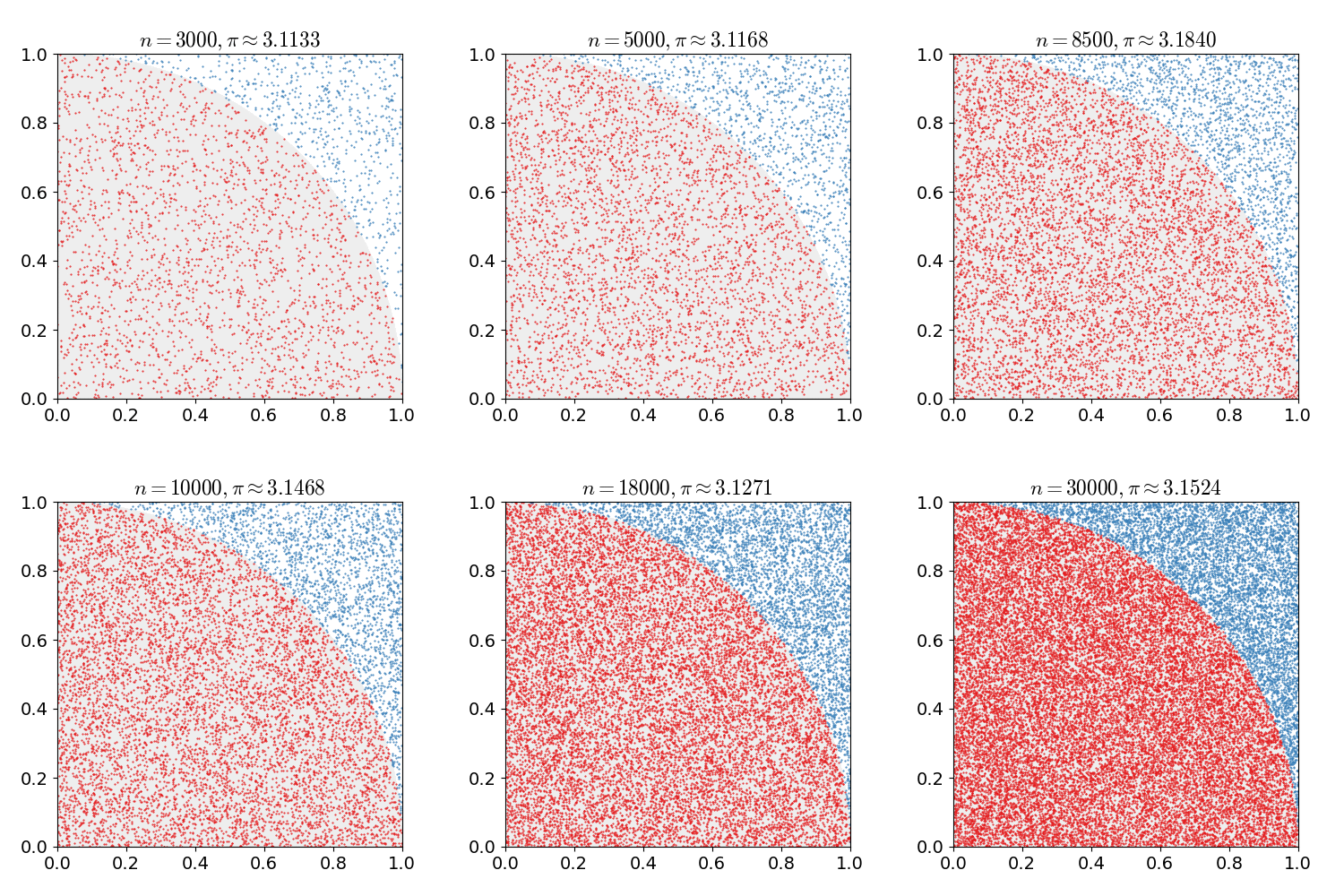
Next.

Previous.