Search Results: "ads"

25 July 2015

Dirk Eddelbuettel: Rcpp 0.12.0: Now with more Big Data!


big-data image A new release 0.12.0 of Rcpp arrived on the CRAN network for GNU R this morning, and I also pushed a Debian package upload. Rcpp has become the most popular way of enhancing GNU R with C++ code. As of today, 423 packages on CRAN depend on Rcpp for making analyses go faster and further. Note that this is 60 more packages since the last release in May! Also, BioConductor adds another 57 packages, and casual searches on GitHub suggests many more. And according to Andrie De Vries, Rcpp has now page rank of one on CRAN as well! And with this release, Rcpp also becomes ready for Big Data, or, as they call it in Texas, Data. Thanks to a lot of work and several pull requests by Qiang Kou, support for R_xlen_t has been added. That means we can now do stunts like
R> library(Rcpp)
R> big <- 2^31-1
R> bigM <- rep(NA, big)
R> bigM2 <- c(bigM, bigM)
R> cppFunction("double getSz(LogicalVector x)   return x.length();  ")
R> getSz(bigM)
[1] 2147483647
R> getSz(bigM2)
[1] 4294967294
R>
where prior versions of Rcpp would just have said
> getSz(bigM2)
Error in getSz(bigM2) :
  long vectors not supported yet: ../../src/include/Rinlinedfuns.h:137
>
which is clearly not Texas-style. Another wellcome change, also thanks to Qiang Kou, adds encoding support for strings. A lot of other things got polished. We are still improving exception handling as we still get the odd curveballs in a corner cases. Matt Dziubinski corrected the var() computation to use the proper two-pass method and added better support for lambda functions in Sugar expression using sapply(), Qiang Kou added more pull requests mostly for string initialization, and Romain added a pull request which made data frame creation a little more robust, and JJ was his usual self in tirelessly looking after all aspects of Rcpp Attributes. As always, you can follow the development via the GitHub repo and particularly the Issue tickets and Pull Requests. And any discussions, questions, ... regarding Rcpp are always welcome at the rcpp-devel mailing list. Last but not least, we are also extremely pleased to annouce that Qiang Kou has joined us in the Rcpp-Core team. We are looking forward to a lot more awesome! See below for a detailed list of changes extracted from the NEWS file.
Changes in Rcpp version 0.12.0 (2015-07-24)
  • Changes in Rcpp API:
    • Rcpp_eval() no longer uses R_ToplevelExec when evaluating R expressions; this should resolve errors where calling handlers (e.g. through suppressMessages()) were not properly respected.
    • All internal length variables have been changed from R_len_t to R_xlen_t to support vectors longer than 2^31-1 elements (via pull request 303 by Qiang Kou).
    • The sugar function sapply now supports lambda functions (addressing issue 213 thanks to Matt Dziubinski)
    • The var sugar function now uses a more robust two-pass method, supports complex numbers, with new unit tests added (via pull request 320 by Matt Dziubinski)
    • String constructors now allow encodings (via pull request 310 by Qiang Kou)
    • String objects are preserving the underlying SEXP objects better, and are more careful about initializations (via pull requests 322 and 329 by Qiang Kou)
    • DataFrame constructors are now a little more careful (via pull request 301 by Romain Francois)
    • For R 3.2.0 or newer, Rf_installChar() is used instead of Rf_install(CHAR()) (via pull request 332).
  • Changes in Rcpp Attributes:
    • Use more robust method of ensuring unique paths for generated shared libraries.
    • The evalCpp function now also supports the plugins argument.
    • Correctly handle signature termination characters (' ' or ';') contained in quotes.
  • Changes in Rcpp Documentation:
    • The Rcpp-FAQ vignette was once again updated with respect to OS X issues and Fortran libraries needed for e.g. RcppArmadillo.
    • The included Rcpp.bib bibtex file (which is also used by other Rcpp* packages) was updated with respect to its CRAN references.
Thanks to CRANberries, you can also look at a diff to the previous release As always, even fuller details are on the Rcpp Changelog page and the Rcpp page which also leads to the downloads page, the browseable doxygen docs and zip files of doxygen output for the standard formats. A local directory has source and documentation too. Questions, comments etc should go to the rcpp-devel mailing list off the R-Forge page.

This post by Dirk Eddelbuettel originated on his Thinking inside the box blog. Please report excessive re-aggregation in third-party for-profit settings.

Norbert Preining: PiwigoPress release 2.30

I just pushed a new release of PiwigoPress (main page, WordPress plugin dir) to the WordPress servers. This release incorporates some new features, mostly contributed by Anton Lavrov (big thanks!) piwigopress-logo The new features are: I also checked that the plugin runs with the soon to be released WordPress 4.3, and fixed a small problem with the setting of albumpicture not being saved. That s all, enjoy, and leave your wishlist items and complains at the issue tracker on the github project piwigopress.
Email this to someonePrint this pageShare on FacebookShare on Google+Tweet about this on TwitterShare on LinkedInFlattr the author

Michal &#268;iha&#345;: Migrating phpMyAdmin from SourceForge.net

Some time ago we've decided to move phpMyAdmin out of SourceForge.net services. This was mostly motivated by issues with sf.net bundling crapware with installers (though we were not affected), but also we've missed some features that we would like to have and were not possible there. The project relied on SourceForge.net with several services. The biggest ones being website and downloads hosting, issue tracking and mailing lists. We've chosen different approach for each of these. As first, we've moved away website and downloads. Thanks to generous offer of CDN77.com, everything went quite smoothly and we now have HTTPS secured website and downloads, see our announcement. Oh and on the way we've started to PGP sign the releases as well, so you can verify the download. Shortly after this SourceForge.net was hit by major problems with infrastructure. Unfortunately we were not yet completely ready with rest of the migration, but this has definitely pushed us to make progress faster. During the outage, we've opened up issue tracker on GitHub, to be able to receive bug reports from our users. On the background I've worked on the issue migration. The good news is that as of now almost all issues are migrated. There are few missing ones, but these will be hopefully handled in upcoming days as well. Last but not least, we had mailing lists on SourceForge.net. We've shortly discussed available options and decided to run own mail server with these. It will allow us greater flexibility while still using well know software in background. Initial attempts with Mailman 3 failed, so we got back to Mailman 2, which is stable and easy to configure. See also our news posts for official announcement. Thanks to SourceForge.net, it has been great home for us, but now we have better places to live.

Filed under: English phpMyAdmin 0 comments

Steve Kemp: We're in Finland now.

So we've recently spent our first week together in Helsinki, Finland. Mostly this has been stress-free, but there are always oddities about living in new places, and moving to Europe didn't minimize them. For the moment I'll gloss over the differences and instead document the computer problem I had. Our previous shared-desktop system had a pair of drives configured using software RAID. I pulled one of the drives to use in a smaller-cased system (smaller so it was easier to ship). Only one drive of a pair being present make mdadm scream, via email, once per day, with reports of failure. The output of cat /proc/mdstat looked like this:
md2 : active raid1 sdb6[0] [LVM-storage-area]
      1903576896 blocks super 1.2 2 near-copies [2/1] [_U]
md1 : active raid10 sdb5[1] [/root]
      48794112 blocks super 1.2 2 near-copies [2/1] [_U]
md0 : active raid1 sdb1[0]  [/boot]
      975296 blocks super 1.2 2 near-copies [2/1] [_U]
See the "_" there? That's the missing drive. I couldn't remove the drive as it wasn't present on-disk, so this failed:
mdadm --fail   /dev/md0 /dev/sda1
mdadm --remove /dev/md0 /dev/sda1
# repeat for md1, md2.
Similarly removing all "detached" drives failed, so the only thing to do was to mess around re-creating the arrays with a single drive:
lvchange -a n shelob-vol
mdadm --stop /dev/md2
mdadm --create /dev/md2 --level=1 --raid-devices=1 /dev/sdb6 --force
..
I did that on the LVM-storage area, and the /boot partition, but "/" is still to be updated. I'll use knoppix/similar to do it next week. That'll give me a "RAID" system which won't alert every day. Thanks to the joys of re-creation the UUIDs of the devices changed, so /etc/mdadm/mdadm.conf needed updating. I realized that too late, when grub failed to show the menu, because it didn't find it's own UUID. Handy recipe for the future:
set prefix=(md/0)/grub/
insmod linux
linux (md/0)/vmlinuz-3.16.0-0.bpo.4-amd64 root=/dev/md1
initrd (md/0)//boot/initrd.img-3.16.0-0.bpo.4-amd64
boot

24 July 2015

Martin Michlmayr: Congratulations to Stefano Zacchiroli

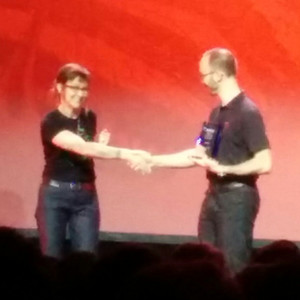
Stefano Zacchiroli receiving the O'Reilly Open Source Award I attended OSCON's closing sessions today and was delighted to see my friend Stefano Zacchiroli (Zack) receive an O'Reilly Open Source Award. Zack acted as Debian Project Leader for three years, is working on important activities at the Open Source Initiative and the Free Software Foundation, and is generally an amazing advocate for free software. Thanks for all your contributions, Zack, and congratulations!

Simon Kainz: DUCK challenge: week 3

One more update on the the DUCK challenge: In the current week, the following packages were fixed and uploaded into unstable: So we had 10 packages fixed and uploaded by 8 different uploaders. A big "Thank You" to you!! Since the start of this challenge, a total of 35 packages, uploaded by 25 different persons were fixed. Here is a quick overview:
Week 1 Week 2 Week 3 Week 4 Week 5 Week 6 Week 7
# Packages 10 15 10 - - - -
Total 10 25 35 - - - -
The list of the fixed and updated packages is availabe here. I will try to update this ~daily. If I missed one of your uploads, please drop me a line. There is still lots of time till the end of DebConf15 and the end of the DUCK Challenge, so please get involved. Pevious articles are here: Week 1, Week 2.

23 July 2015

Daniel Pocock: Unpaid work training Google's spam filters

This week, there has been increased discussion about the pain of spam filtering by large companies, especially Google. It started with Google's announcement that they are offering a service for email senders to know if their messages are wrongly classified as spam. Two particular things caught my attention: the statement that less than 0.05% of genuine email goes to the spam folder by mistake and the statement that this new tool to understand misclassification is only available to "help qualified high-volume senders". From there, discussion has proceeded with Linus Torvalds blogging about his own experience of Google misclassifying patches from Linux contributors as spam and that has been widely reported in places like Slashdot and The Register. Personally, I've observed much the same thing from the other perspective. While Torvalds complains that he isn't receiving email, I've observed that my own emails are not always received when the recipient is a Gmail address. It seems that Google expects their users work a little bit every day going through every message in the spam folder and explicitly clicking the "Not Spam" button: so that Google can improve their proprietary algorithms for classifying mail. If you just read or reply to a message in the folder without clicking the button, or if you don't do this for every message, including mailing list posts and other trivial notifications that are not actually spam, more important messages from the same senders will also continue to be misclassified. If you are not willing to volunteer your time to do this, or if you are simply one of those people who has better things to do, Google's Gmail service is going to have a corrosive effect on your relationships. A few months ago, we visited Australia and I sent emails to many people who I wanted to catch up with, including invitations to a family event. Some people received the emails in their inboxes yet other people didn't see them because the systems at Google (and other companies, notably Hotmail) put them in a spam folder. The rate at which this appeared to happen was definitely higher than the 0.05% quoted in the Google article above. Maybe the Google spam filters noticed that I haven't sent email to some members of the extended family for a long time and this triggered the spam algorithm? Yet it was at that very moment that we were visiting Australia that email needs to work reliably with that type of contact as we don't fly out there every year. A little bit earlier in the year, I was corresponding with a few students who were applying for Google Summer of Code. Some of them also observed the same thing, they sent me an email and didn't receive my response until they were looking in their spam folder a few days later. Last year I know a GSoC mentor who lost track of a student for over a week because of Google silently discarding chat messages, so it appears Google has not just shot themselves in the foot, they managed to shoot their foot twice. What is remarkable is that in both cases, the email problems and the XMPP problems, Google doesn't send any error back to the sender so that they know their message didn't get through. Instead, it is silently discarded or left in a spam folder. This is the most corrosive form of communication problem as more time can pass before anybody realizes that something went wrong. After it happens a few times, people lose a lot of confidence in the technology itself and try other means of communication which may be more expensive, more synchronous and time intensive or less private. When I discussed these issues with friends, some people replied by telling me I should send them things through Facebook or WhatsApp, but each of those services has a higher privacy cost and there are also many other people who don't use either of those services. This tends to fragment communications even more as people who use Facebook end up communicating with other people who use Facebook and excluding all the people who don't have time for Facebook. On top of that, it creates more tedious effort going to three or four different places to check for messages. Despite all of this, the suggestion that Google's only response is to build a service to "help qualified high-volume senders" get their messages through leaves me feeling that things will get worse before they start to get better. There is no mention in the Google announcement about what they will offer to help the average person eliminate these problems, other than to stop using Gmail or spend unpaid time meticulously training the Google spam filter and hoping everybody else does the same thing. Some more observations on the issue Many spam filtering programs used in corporate networks, such as SpamAssassin, add headers to each email to suggest why it was classified as spam. Google's systems don't appear to give any such feedback to their users or message senders though, just a very basic set of recommendations for running a mail server. Many chat protocols work with an explicit opt-in. Before you can exchange messages with somebody, you must add each other to your buddy lists. Once you do this, virtually all messages get through without filtering. Could this concept be adapted to email, maybe giving users a summary of messages from people they don't have in their contact list and asking them to explicitly accept or reject each contact? If a message spends more than a week in the spam folder and Google detects that the user isn't ever looking in the spam folder, should Google send a bounce message back to the sender to indicate that Google refused to deliver it to the inbox? I've personally heard that misclassification occurs with mailing list posts as well as private messages.
Daniel Pocock: Recording live events like a pro (part 1: audio)

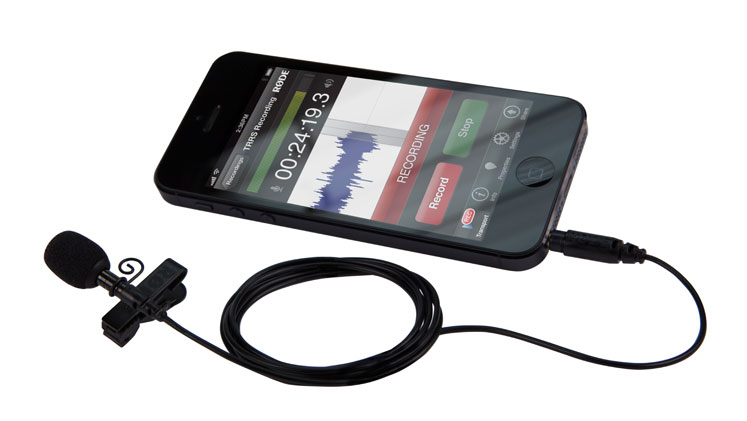
Whether it is a technical talk at a conference, a political rally or a budget-conscious wedding, many people now have most of the technology they need to record it and post-process the recording themselves. For most events, audio is an essential part of the recording. There are exceptions: if you take many short clips from a wedding and mix them together you could leave out the audio and just dub the couple's favourite song over it all. For a video of a conference presentation, though, the the speaker's voice is essential. These days, it is relatively easy to get extremely high quality audio using a lapel microphone attached to a smartphone. Lets have a closer look at the details. Using a lavalier / lapel microphone Full wireless microphone kits with microphone, transmitter and receiver are usually $US500 or more. The lavalier / lapel microphone by itself, however, is relatively cheap, under $US100. The lapel microphone is usually an omnidirectional microphone that will pick up the voices of everybody within a couple of meters of the person wearing it. It is useful for a speaker at an event, some types of interviews where the participants are at a table together and it may be suitable for a wedding, although you may want to remember to remove it from clothing during the photos. There are two key features you need when using such a microphone with a smartphone:
  • TRRS connector (this is the type of socket most phones and many laptops have today)
  • Microphone impedance should be at least 1k (that is one kilo Ohm) or the phone may not recognize when it is connected
Many leading microphone vendors have released lapel mics with these two features aimed specifically at smartphone users. I have personally been testing the Rode smartLav+ Choice of phone There are almost 10,000 varieties of smartphone just running Android, as well as iPhones, Blackberries and others. It is not practical for most people to test them all and compare audio recording quality. It is probably best to test the phone you have and ask some friends if you can make test recordings with their phones too for comparison. You may not hear any difference but if one of the phones has a poor recording quality you will hopefully notice that and exclude it from further consideration. A particularly important issue is being able to disable AGC in the phone. Android has a standard API for disabling AGC but not all phones or Android variations respect this instruction. I have personally had positive experiences recording audio with a Samsung Galaxy Note III. Choice of recording app Most Android distributions have at least one pre-installed sound recording app. Look more closely and you will find not all apps are the same. For example, some of the apps have aggressive compression settings that compromise recording quality. Others don't work when you turn off the screen of your phone and put it in your pocket. I've even tried a few that were crashing intermittently. The app I found most successful so far has been Diktofon, which is available on both F-Droid and Google Play. Diktofon has been designed not just for recording, but it also has some specific features for transcribing audio (currently only supporting Estonian) and organizing and indexing the text. I haven't used those features myself but they don't appear to cause any inconvenience for people who simply want to use it as a stable recording app. As the app is completely free software, you can modify the source code if necessary. I recently contributed patches enabling 48kHz recording and disabling AGC. At the moment, the version with these fixes has just been released and appears in F-Droid but not yet uploaded to Google Play. The fixes are in version 0.9.83 and you need to go into the settings to make sure AGC is disabled and set the 48kHz sample rate. Whatever app you choose, the following settings are recommended:
  • 16 bit or greater sample size
  • 48kHz sample rate
  • Disable AGC
  • WAV file format
Whatever app you choose, test it thoroughly with your phone and microphone. Make sure it works even when you turn off the screen and put it in your pocket while wearing the lapel mic for an hour. Observe the battery usage. Gotchas Now lets say you are recording a wedding and the groom has that smartphone in his pocket and the mic on his collar somewhere. What is the probability that some telemarketer calls just as the couple are exchanging vows? What is the impact on the recording? Maybe some apps will automatically put the phone in silent mode when recording. More likely, you need to remember this yourself. These are things that are well worth testing though. Also keep in mind the need to have sufficient storage space and to check whether the app you use is writing to your SD card or internal memory. The battery is another consideration. In a large event where smartphones are being used instead of wireless microphones, possibly for many talks in parallel, install a monitoring app like Ganglia on the phones to detect and alert if any phone has weak wifi signal, low battery or a lack of memory. Live broadcasts and streaming Some time ago I tested RTP multicasting from Lumicall on Android. This type of app would enable a complete wireless microphone setup with live streaming to the internet at a fraction of the cost of a traditional wireless microphone kit. This type of live broadcast could also be done with WebRTC on the Firefox app. Conclusion If you research the topic thoroughly and spend some time practicing and testing your equipment, you can make great audio recordings with a smartphone and an inexpensive lapel microphone. In subsequent blogs, I'll look at tips for recording video and doing post-production with free software.

22 July 2015

Cyril Brulebois: D-I Stretch Alpha 1

Time for a quick recap of the beginning of the Stretch release cycle as far as the Debian Installer is concerned: (On a related note, I ve started tweeting rather regularly about my actions, wins & fails, using the #DebianInstaller hashtag. I might try and aggregate my tweets as @CyrilBrulebois into more regular blog posts, time permitting.) Executive summary: D-I Stretch Alpha 1 is released, time to stretch a bit! Stretching cat (Credit: rferran on openclipart)

James McCoy: porterbox-logins

Some time ago, pabs documented his setup for easily connecting to one of Debian's porterboxes based on the desired architecture. Similarly, he submitted a wishlist bug against devscripts specifying some requirements for a script to make this functionality generally accessible to the developer community. I have yet to follow up on that request mainly due to ENOTIME for developing new scripts outright. I also have my own script I had been using to get information on available Debian machines. Recently, this came up again on IRC and jwilk decided to actually implement pabs' DNS alias idea. Now, one can use $arch-porterbox.debian.net to connect to a porterbox of the specified architecture. Preference is given to debian.org domains when there are both debian.org and debian.net porterboxes, and it's a simple use first listed machine if there are multiple available porterboxes. This is all well and good, but if you have SSH's StrictHostKeyChecking enabled, SSH will rightly refuse to connect. However, OpenSSH 6.5 added a feature called hostname canonicalization which can help. The below ssh_config snippet allows one to run ssh $arch-porterbox or ssh $arch-porterbox.debian.net and connect to one of the porterboxes, verifying the host key against the canonical host name.
Host *-porterbox
  HostName %h.debian.net
Match host *-porterbox.debian.net
  CanonicalizeHostname yes
  CanonicalizePermittedCNAMEs *-porterbox.debian.net:*.debian.org

21 July 2015

Jonathan Dowland: New camera

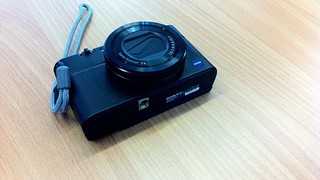
Sony RX100-III
Earlier in the year I treated myself to a new camera. It's been many years since I bought one, which was a perfectly serviceable Panasonic FS-15 compact, to replace my lost-or-stolen Panasonic TZ3, which I loved. The FS-15 didn't have a "wow" factor and with the advent of smartphones and fantastic smartphone cameras, it rarely left a drawer at home. Last year I upgraded my mobile from an iPhone to a Motorola Moto G, which is a great phone in many respects, but has a really poor camera. I was given a very generous gift voucher when I left my last job and so had the perfect excuse to buy a dedicated camera. I'd been very tempted by a Panasonic CSC camera ever since I read this review of the GF1 years ago, and the GM1 was high on my list, but there were a lot of compromises: no EVF... In the end I picked up a Sony RX 100 Mark 3 which had the right balance of compromises for me. I haven't posted a lot of photos to this site in the past but I hope to do so in future. I've got to make some alterations to the software first. Post-script: Craig Mod, who wrote that GF1 review, wrote another interesting essay a few years later: Cameras, Goodbye, where he discusses whether smartphone cameras are displacing even the top end of the Camera market.

Martin Michlmayr: Debian archive rebuild on ARM64 with GCC 5

I recently got access to several ProLiant m400 ARM64 servers at work. Since Debian is currently working on the migration to GCC 5, I thought it would be nice to rebuild the Debian archive on ARM64 to see if GCC 5 is ready. Fortunately, I found no obvious compiler errors. During the process, I noticed several areas where ARM64 support can be improved. First, a lot of packages failed to build due to missing dependencies. Some missing dependencies are libraries or tools that have not been ported to ARM64 yet, but the majority was due to the lack of popular programming languages on ARM64. This requires upstream porting work, which I'm sure is going on already in many cases. Second, over 160 packages failed to build due to out-of-date autoconf and libtool scripts. Most of these bugs have been reported over a year ago by the ARM64 porters (Matthias Klose from Canonical/Ubuntu and Wookey from ARM/Linaro) and the PowerPC porters, but unfortunately they haven't been fixed yet. Finally, I went through all packages that list specific architectures in debian/control and filed wishlist bugs on those that looked relevant to ARM64. This actually prompted some Debian and upstream developers to implement ARM64 support, which is great!

Jonathan McDowell: Recovering a DGN3500 via JTAG

Back in 2010 when I needed an ADSL2 router in the US I bought a Netgear DGN3500. It did what I wanted out of the box and being based on a MIPS AR9 (ARX100) it seemed likely OpenWRT support might happen. Long story short I managed to overwrite u-boot (the bootloader) while flashing a test image I d built. I ended up buying a new router (same model) to get my internet connection back ASAP and never getting around to fully fixing the broken one. Until yesterday. Below is how I fixed it; both for my own future reference and in case it s of use any any other unfortunate soul. The device has clear points for serial and JTAG and it was easy enough (even with my basic soldering skills) to put a proper header on. The tricky bit is that the flash is connected via SPI, so it s not just a matter of attaching JTAG, doing a scan and reflashing from the JTAG tool. I ended up doing RAM initialisation, then copying a RAM copy of u-boot in and then using that to reflash. There may well have been a better way, but this worked for me. For reference the failure mode I saw was an infinitely repeating:

ROM VER: 1.1.3
CFG 05
My JTAG device is a Bus Pirate v3b which is much better than the parallel port JTAG device I built the first time I wanted to do something similar. I put the latest firmware (6.1) on it. All of this was done from my laptop, which runs Debian testing (stretch). I used the OpenOCD 0.9.0-1+b1 package from there. Daniel Schwierzeck has some OpenOCD scripts which include a target definition for the ARX100. I added a board definition for the DGN3500 (I ve also send Daniel a patch to add this to his repo). I tied all of this together with an openocd.cfg that contained:
source [find interface/buspirate.cfg]
buspirate_port /dev/ttyUSB1
buspirate_vreg 0
buspirate_mode normal
buspirate_pullup 0
reset_config trst_only
source [find openocd-scripts/target/arx100.cfg]
source [find openocd-scripts/board/dgn3500.cfg]
gdb_flash_program enable
gdb_memory_map enable
gdb_breakpoint_override hard
I was then able to power on the router and type dgn3500_ramboot into the OpenOCD session. This fetched my RAM copy of u-boot from dgn3500_ram/u-boot.bin, copied it into the router s memory and started it running. From there I had a u-boot environment with access to the flash commands and was able to restore the original Netgear image (and once I was sure that was working ok I subsequently upgraded to the Barrier Breaker OpenWRT image).

20 July 2015

Matthew Garrett: Your Ubuntu-based container image is probably a copyright violation

Update: A Canonical employee responded here, but doesn't appear to actually contradict anything I say below.

I wrote about Canonical's Ubuntu IP policy here, but primarily in terms of its broader impact, but I mentioned a few specific cases. People seem to have picked up on the case of container images (especially Docker ones), so here's an unambiguous statement:

If you generate a container image that is not a 100% unmodified version of Ubuntu (ie, you have not removed or added anything), Canonical insist that you must ask them for permission to distribute it. The only alternative is to rebuild every binary package you wish to ship[1], removing all trademarks in the process. As I mentioned in my original post, the IP policy does not merely require you to remove trademarks that would cause infringement, it requires you to remove all trademarks - a strict reading would require you to remove every instance of the word "ubuntu" from the packages.

If you want to contact Canonical to request permission, you can do so here. Or you could just derive from Debian instead.

[1] Other than ones whose license explicitly grants permission to redistribute binaries and which do not permit any additional restrictions to be imposed upon the license grants - so any GPLed material is fine

comment count unavailable comments

Daniel Pocock: RTC status on Debian, Ubuntu and Fedora

Zoltan (Zoltanh721) recently blogged about WebRTC for the Fedora community and Fedora desktop. https://fedrtc.org has been running for a while now and this has given many people a chance to get a taste of regular SIP and WebRTC-based SIP. As suggested in Zoltan's blog, it has convenient integration with Fedora SSO and as the source code is available, people are welcome to see how it was built and use it for other projects. Issues with Chrome/Chromium on Linux If you tried any of FedRTC.org, rtc.debian.org or meet.jit.si using Chrome/Chromium on Linux, you may have found that the call appears to be connected but there is no media. This is a bug and the Chromium developers are on to it. You can work around this by trying an older version of Chromium (it still works with v37 from Debian wheezy) or Firefox/Iceweasel. WebRTC is not everything WebRTC offers many great possibilities for people to quickly build and deploy RTC services to a large user base, especially when using components like JSCommunicator or the DruCall WebRTC plugin for Drupal. However, it is not a silver bullet. For example, there remain concerns about how to receive incoming calls. How do you know which browser tab is ringing when you have many tabs open at once? This may require greater browser/desktop integration and that has security implications for JavaScript. Whether users on battery-powered devices can really leave JavaScript running for extended periods of time waiting for incoming calls is another issue, especially when you consider that many web sites contain some JavaScript that is less than efficient. Native applications and mobile apps like Lumicall continue to offer the most optimized solution for each platform although WebRTC currently offers the most convenient way for people to place a Call me link on their web site or portal. Deploy it yourself The RTC Quick Start Guide offers step-by-step instructions and a thorough discussion of the architecture for people to start deploying RTC and WebRTC on their own servers using standard packages on many of the most popular Linux distributions, including Debian, Ubuntu, RHEL, CentOS and Fedora.

Ritesh Raj Sarraf: Micro DD meetup

A couple of us DDs met here on the weekend. It is always a fun time, being part of these meetings. We talked briefly about the status of Cross Compilation in Debian, on the tools that simplify the process. Next we touched upon licensing, discussing the benefits of particular licenses (BSD, Apache, GPL) from the point of view of the consumer. The consumer being an individual just wanting to use/improve software, to a consumer who's building a (free / non-free) product on top of it. I think the overall conclusion was that there are 2 major licenses at a high level: Ones those allow you take the code and not give back, and the others which allow you to take code only if you are ready to share the enhancements back and forward. Next we briefly touched upon systemd. Given that I recently spent a good amount of time talking to the systemd maintainer while fixing bugs in my software, it was natural for me to steer that topic. At the end, more people are now enthused to learn the paradigm shift. The other topic where we spent time was on Containers. It is impressive to see how quick, and how many, products have now spun out of cgroups. The topic moved to cgroups, thanks to systemd, one of the prime consumers of cgroups. While demonstrating the functionalities of Linux Containers (LXC), I realized that systemd has a tool in place to serve the same use case. So, once back home, I spent some time figuring out the possibility to replace my lxc setup, with that of systemd-nspawn. Apart from a minor bug, almost everything else seems to work find with systemd-nspawn. So, following is the config detail of my container, as used in lxc. And to replace lxc, I need to fill is almost all of it with systemd-nspawn.
rrs@learner:~$ sudo cat /var/lib/lxc/deb-template/config
# Template used to create this container: /usr/share/lxc/templates/lxc-debian
# Parameters passed to the template:
# For additional config options, please look at lxc.container.conf(5)
# CPU
lxc.cgroup.cpuset.cpus = 0,1
lxc.cgroup.cpu.shares = 1234
# Mem
lxc.cgroup.memory.limit_in_bytes = 2000M
lxc.cgroup.memory.soft_limit_in_bytes = 1500M
# Network
lxc.network.type = veth
lxc.network.hwaddr = 00:16:3e:0c:c5:d4
lxc.network.flags = up
lxc.network.link = lxcbr0
# Root file system
lxc.rootfs = /var/lib/lxc/deb-template/rootfs
# Common configuration
lxc.include = /usr/share/lxc/config/debian.common.conf
# Container specific configuration
lxc.mount = /var/lib/lxc/deb-template/fstab
lxc.utsname = deb-template
lxc.arch = amd64
# For apt
lxc.mount.entry = /var/cache/apt/archives var/cache/apt/archives none defaults,bind 0 0
lxc.mount.entry = /var/tmp/lxc var/tmp/lxc none defaults,bind 0 0
2015-07-20 / 16:28:58         
The equivalent of the above, in systemd-nspawn is:
sudo systemd-nspawn -n -b --machine deb-template --network-bridge=lxcbr0 --bind /var/cache/apt/archives/
The only missing bit is CPU and Memory, which I'm yet to try, is documented as doable with the systemctl --property= interface
      --property=
           Set a unit property on the scope unit to register for the machine. This only
           applies if the machine is run in its own scope unit, i.e. if --keep-unit is not
           used. Takes unit property assignments in the same format as systemctl
           set-property. This is useful to set memory limits and similar for machines.
With all this in place, using containers under systemd is a breeze.
rrs@learner:~/Community/Packaging/multipath-tools (experimental)$ sudo machinectl list
MACHINE      CLASS     SERVICE
deb-template container nspawn
1 machines listed.
2015-07-20 / 16:44:07         
rrs@learner:~/Community/Packaging/multipath-tools (experimental)$ sudo machinectl status deb-template
deb-template
           Since: Mon 2015-07-20 16:13:58 IST; 30min ago
          Leader: 9064 (systemd)
         Service: nspawn; class container
            Root: /var/lib/lxc/deb-template/rootfs
           Iface: lxcbr0
         Address: 172.16.10.12
                  fe80::706d:e4ff:fec5:bfc8%3
              OS: Debian GNU/Linux stretch/sid
            Unit: machine-deb\x2dtemplate.scope
                   9064 /lib/systemd/systemd --system --deserialize 14
                   system.slice
                     systemd-journald.service
                       9092 /lib/systemd/systemd-journald
                     ssh.service
                       9160 /usr/sbin/sshd -D
                     console-getty.service
                       9166 /bin/login --     
                       9171 -bash
                       9226 dhclient host0
Jul 20 16:13:58 learner systemd[1]: Started Container deb-template.
Jul 20 16:13:58 learner systemd[1]: Starting Container deb-template.
2015-07-20 / 16:44:15         

Categories:

Keywords:

Like:

19 July 2015

Laura Arjona: Family games: Robots

I play Robots with my kid. I ve tested the game with other kids and it seems that for ages 5 to 7 they like it. I ve talked about the game to several adults and it seems they like too, so I thought maybe writing about it here may be useful for somebody to enjoy some summer days. Players One player is the Robot. The other one is the programmer. If there are more players, it can be several robots and several programmers. If players are older, you can make the game more complicated making robots cooperate or programmers cooperate. If not, you make pairs 1-1 or 1 programmer 2 robots if the number is odd. The game The programmer must turn on the robot, pressing the ON/OFF button (robot chooses where s the button: nose, ear, belly, whatever).
Then, the robot say hello , and the programmer asks for the list of commands available (like Hello, robot, give me the list of commands ). The robot says the list of commands available, for example Run, stop, jump, sing a song, somersault, say something in a different language . Then, the programmer thinks a program, and loads it to the robot (speaks the list of orders, loudly, to the robot). Then the programmer presses the START button (Robot choses where it is) and then the robot has to perform the program without errors. If the robot performs correctly, wins one point. If it fails, looses one point. The programmer can design another program (maybe longer, maybe with some conditional expression) and tries the limits of the memory of robot. If the robot is tired, needs to charge batteries, or whatever, the roles programmer/robot are interchanged, and the one with more points in a certain amount of time or rounds, wins. Variants, tips If the programmer does not like the list, of commands, she can ask for updates, and maybe some new commands will be installed (and/or other uninstalled, who knows). Please be creative with the list of commands, or the game will be very boring. Depending on the operating system which runs the robot, it will give more or less options to the programmer, and the behaviour will be more evil or good. Robots shouldn t behave too much evil, though, otherwise the programmer will erase their disk and install Debian on them to make them obedient ;) You can play with a third person being the Robot manufacturer, who controls the robot, even sometimes overriding the programmer instructions (if the robot has an OS which is not free software). Robot will win one point obeying the manufacturer, but if there are more robots, will loose one round of playing because the programmer got angry and turned it off or reinstalled the software. The manufacturer and the programmer cooperate if the robot runs free software, though. Together they can expand robot memory (for example, lend a piece of paper where to store the program), or create new commands, fix bugs, or whatever. Comments? You can comment about this post in Pump.io thread about this post.
Filed under: My experiences and opinion Tagged: Debian, Education, English, Free culture, Free Software, Games, kids

Gregor Herrmann: RC bugs 2015/17-29

after the release is before the release. or: long time no RC bug report. after the jessie release I spent most of my Debian time on work in the Debian Perl Group. we tried to get down the list of new upstream releases (from over 500 to currently 379; unfortunately the CPAN never sleeps), we were & still are busy preparing for the Perl 5.22 transition (e.g. we uploaded something between 300 & 400 packages to deal with Module::Build & CGI.pm being removed from perl core; only team-maintained packages so far), & we had a pleasant & productive sprint in Barcelona in May. & I also tried to fix some of the RC bugs in our packages which popped up over the previous months. yesterday & today I finally found some time to help with the GCC 5 transition, mostly by making QA or Non-Maintainer Uploads with patches that already were in the BTS. a big thanks especially to the team at HP which provided a couple dozens patches! & here's the list of RC bugs I've worked on in the last 3 months:

17 July 2015

Dirk Eddelbuettel: RcppRedis 0.1.5

Another small update to RcppRedis arrived on CRAN this morning. The fix I made a few days ago addressing a unit test setup (for the rredis package loaded only for a comparison) didn't quite work out.
Changes in version 0.1.5 (2015-07-17)
  • Another minor fix to unit test setup for rredis.
Courtesy of CRANberries, there is also a diffstat report for the most recent release. More information is on the RcppRedis page.

This post by Dirk Eddelbuettel originated on his Thinking inside the box blog. Please report excessive re-aggregation in third-party for-profit settings.

Dirk Eddelbuettel: RcppTOML 0.0.4

We introduced RcppTOML in April with the initial CRAN release 0.0.3. It permits R to read the (absolutely awesome) TOML format which is simply fabulous for configuration files. A new version appeared on CRAN yesterday. We had observed a somewhat rare segfault in our production use which came down me dereferencing a list iterator which checking length first. Ooops. As usual, a few other changes were made as, mostly to stay on the good side of R CMD check --as-cran for the development version of R. Courtesy of CRANberries, there is also a diffstat report for this release More information is on the RcppRedis page.

This post by Dirk Eddelbuettel originated on his Thinking inside the box blog. Please report excessive re-aggregation in third-party for-profit settings.

Next.

Previous.