Search Results: "ina"

26 January 2014

Dirk Eddelbuettel: RcppZiggurat 0.1.2

A new maintenance release of RcppZiggurat is now on CRAN. And just like yesterday's RcppClassic upload, this is motivated chiefly by some minor caretaking for an upcoming Rcpp release -- hopefully soon, and with more details to follow. This release also contains some small extensions and work-in-progress. By using R's uniform generator, we can fall back to R's seeding of the RNG -- but going through the R data structures has a performance hit. Similarly, and somewhat surprisingly, the default generators in both Boost and the C++11 library are not all that speedy. The NEWS file entry shown below lists all changes.
Changes in version 0.1.2 (2013-12-28)
  • Add a new generator deploying R's unif_rand which faciliates use of Ziggurat as the user-supplied generator for N(0,1)
  • Update a 'local' demo comparing normal distribution RNGs from Boost, C++11 and Armadillo none of which are particularly speedy
  • Add declaration to import a symbol from Rcpp to NAMESPACE to ensure proper instantiation with the upcoming Rcpp version
Courtesy of CRANberries, there are diffstat reports for the most recent release relative to the preceding version. More detailed information is on the RcppZiggurat page. Questions, comments etc should go to the rcpp-devel mailing list off the R-Forge page.

This post by Dirk Eddelbuettel originated on his Thinking inside the box blog. Please report excessive re-aggregation in third-party for-profit settings.

Justus Winter: On portability of init systems

There is one thing in the current init system debate that irritates me. It is about the portability of init systems. The new init systems are evaluated by how portable they are. This is one of the arguments that is most often brought against systemd, which is understandable given the polarizing attitude of one of systemd's authors. In this context, the currently used sysvinit is considered portable. But in my book, it is not portable at all. But why can we use sysvinit to boot Debian/ kFreeBSD,Hurd ? Debian/kFreeBSD uses linprocfs for /proc to provide a familiar Linux-like environment for the userspace tools available in Debian (say, pgrep). linprocfs was originally written by the FreeBSD folks to support running Linux binaries using the Linux Binary Compatibility layer. Debian/Hurd uses procfs to provide /poc. This procfs translator is written mainly to provide a Linux-compatible /proc filesystem for the same reason linprocfs is used by Debian/kFreeBSD. So sysvinit works on those system not because it is portable, but because the environment has been made Linux-like enough for sysvinit. We (most likely anyone not using Linux) often do this, because it is the easiest way to run popular software developed (mainly) for Linux. This is often the path of the least resistance, as opposed to getting the upstream project to support the native way of doing things on platform X. During gsoc last year I had to patch our procfs to finally be able to safely shut down Debian/Hurd systems using sysvinit. The problem was, that sysvinit at certain runlevel transitions (like shutting down, or I guess, switching to single user mode), sysvinit assumes that it is okay to stop and kill (almost) all processes on the system (that's what killall5 does). This might be okay on monolithic systems, but on (multiserver) microkernel systems like the Hurd, where your root filesystem and your network driver and stack are running as userspace processes, it is clearly not. I wonder how Linux systems using a FUSE-based root filesystem get away with this. This highlights that not only sysvinit depends on a Linux-specific kernel interface (/proc), but it also hard-codes assumptions about the system architecture. Amusingly, systemd get's this right (ok, I'm not sure if it does, but it could get this right...). systemd organizes processes in cgroups, one for each service it starts and one for each login session or something like that. It can (could?) kill only those processes in it was responsible for, leaving all essential translators (system servers) alone. In fact, even my tiny cgroupfs prototype can keep track of translators that are started by the root filesystem translator.

Matthias Klumpp: Next stop: FOSDEM 14

After years of missing this conference, I will finally make it to Brussels this time! I will even have some talks, one about Listaller (in the lightning-talks section) and one about AppStream and Listaller in the Distributions track. The lightning-talk will explain why distributing (some) applications independent from the distribution makes sense, and how Listaller does this. I will also very briefly talk about the concepts behind Listaller and which tools it offers for application developers to create & package cross-distro apps. The AppStream & Listaller talk will be much more detailed. It will cover the rationale for AppStream, what AppData is good for and how AppData files relate to AppStream. I will also reflect the AppData adoption in GNOME/Fedora and why GNOME-Software is the right way to go forward in developing software-centers. It will of course also include our future plans for AppStream. On the Listaller side, I will talk about how Listaller is connected to AppStream and PackageKit and why distributions should ship a way to install cross-distro packaged apps at all. I will explain module-definitions and why they are useful. An overview of the internals of Listaller and it s system integration is also included, as well as how it can be compared to competing installation solutions. If you are at FOSDEM and have questions about AppStream/PackageKit/Listaller/Tanglu/Debian/etc., please ask them! ;-) See you there! FOSDEM

Dirk Eddelbuettel: RcppClassic 0.9.5

A maintenance release of RcppClassic, now at version 0.9.5, went out to CRAN today. Nothing changed in user-facing code. The build was triggered by a change in an upcoming Rcpp release (more about that another time), and a few minor updates were needed for extended checks done by R. Courtesy of CRANberries, there is the set of changes relative to the previous release 0.9.4. Questions, comments etc should go to the rcpp-devel mailing list off the R-Forge page.

This post by Dirk Eddelbuettel originated on his Thinking inside the box blog. Please report excessive re-aggregation in third-party for-profit settings.

25 January 2014

Ben Hutchings: Looking back on my time at Solarflare, part 1

Friday was my last day at Solarflare Communications, which I joined in 2006 (originally as Level 5 Networks). When I started, Level 5 Networks (L5N) had a 2-port gigabit Ethernet controller called EF1 and a user-level network stack called EtherFabric which ran on Linux. It had nearly completed the Falcon project to develop a 10-gigabit controller (also supporing a 2-port gigabit mode) and was porting EtherFabric to Windows. Later that year, however, L5N merged with Solarflare Communications (SF), which was developing a 10GBASE-T PHY (for 10-gigabit Ethernet over twisted-pair cables). The investors and management saw the opportunity to create an integrated 10GBASE-T LAN-on-motherboard chip that would be attractive to OEMs and so had the potential for mass sales. EtherFabric was put on the back-burner, but regular net drivers for Linux, Windows and other operating systems became more important. In a change from my previous jobs, my initial role at L5N was to maintain and extend the in-house test automation software, Runbench, written in Python. I worked with Dickon Reed who had written most of Runbench up to then. One of my first major tasks was to extend it to cover DUTs running Windows. Aside from changing Runbench itself, I wrote a simple SSH server to be installed on DUTs, using the Twisted.Python framework. (Cygwin's port of OpenSSH wasn't suitable for running a lot of native Windows commands.) I rewrote the test-installation script for the Windows driver itself, converting it to Python (with a C extension to get around the WOW64 nonsense). As Windows does not allow loading a driver just once (like insmod in Linux), except by using the kernel debugger, I added a time check in the driver so the test-installation script can make it fail early when reloaded after a reboot, so that a crasher bug in the probe path would usually be recoverable. In 2007 I persuaded management in Cambridge to loan several older servers to DebConf. I took them there and back by car, and they were used to convert video for live streams and recordings. (This was repeated in 2009.) I was also asked to work on other small development tasks, including some cleanup on the Linux net driver (sfc). In mid-2007, when SF decided it was time to get sfc upstream (in-tree), I joined Steve Hodgson and Robert Stonehouse in working on that. Out-of-tree (separately distributed) drivers for Linux normally need a large number of preprocessor conditions for compatibility with Linux's kernel module API across a range of supported versions. They may also implement some features with a driver-specific interface that should be replaced with a standard interface (possibly including the work to define that standard). They may not comply with the kernel coding style or unwritten conventions for kernel code. All of these problems were present and had to be dealt with. As part of this work, I extended unifdef so that it could be used to remove all of the backward-compatibility and not-for-upstream code without introducing extra blank lines. I could then export the out-of-tree driver from CVS(!) into a kernel source tree automatically and turn it into a patch or patch series that would stand a chance of being acceptable upstream. Our first few attempts got little response, but eventually we newbies got the message that the driver was simply too big for a single submission and that putting patches on a web site because they're too big for the list was not a solution. In the next week, I removed about half of the code (on a git branch), resulting in a relatively lean driver that could be sent to the netdev list. And finally the 9th (I think) submission was accepted. Following this, I continued to work on sfc but was also brought into the Siena project. Siena (SFL9021) was the LAN-on-motherboard chip that had been planned following the merger. It combined a dual-port controller based on Falcon with a 10GBASE-T PHY and a management controller (MC) to support Lights-Out Management (LOM). (Since 10GBASE-T has not taken off, it is now mostly sold as the SFC9020 variant in which the PHY is disabled.) I worked on some of the test framework and test cases for validating the controller design in software simulation and FPGA. In the course of this I learned to read and (somewhat) understand the chip design written in Verilog, but only made a single trivial fix to it. In August 2009, the first Siena ASICs came back from the fab. There were a few ASIC-specific bugs but all of them were quickly worked around in firmware, so it would soon be ready for production. But there was much work still to be done on the driver and firmware. The firmware had until then been running in a smaller block of RAM with no peripherals to manage, while sfc had earlier been modified just enough to configure a sim or FPGA for running a userland test application. sfc now had many special cases scattered around it, and would tell the MC firmware to peek and poke registers that were no longer directly accessible from the host. The software and firmware developers had agreed that, in order to support LOM, the MC would be responsible for managing the ports and all peripherals and drivers would send higher-level requests to the MC. As a bonus, this removed the need for the driver to know the details of each new board, so that it would not be necessary to backport sfc into distribution kernels very often. Over the next few months, the firmware team did an excellent job of defining and implementing those operations, including writing the driver-side functions to invoke them. Meanwhile, Steve and I concentrated on refactoring sfc so most of the Falcon/Siena differences could be abstracted through a few structures with function pointers. The refactoring and new code for Siena were completed and submitted upstream in several large patch series in October and November. In fact, there were so many patches that Solarflare appeared in LWN's table of who wrote Linux 2.6.33 (as did I, thanks also to another patch series adding firmware metadata to many drivers). Sadly we had missed Linux 2.6.32 which was a longterm stable branch and used in many distributions, but I was able to get this version backported into all the major distributions over the next year. (To be continued.)

Russell Coker: Links January 2014

Fast Coexist has an interesting article about the art that Simon Beck creates by walking in snow [1]. If you are an artist you can create art in any way, even by walking in patterns in the snow. Russ Altman gave an interesting TED talk about using DNA testing before prescribing drugs [2]. I was surprised by the amount of variation in effects of codeine based on genetics, presumably many other drugs have a similar range. Helen Epstein wrote an interesting article about Dr. Sara Josephine Baker who revolutionised child care and saved the lives of a huge number of children [3]. Her tenacity is inspiring. Also it s interesting to note that the US Republican party was awful even before the Southern Strategy . The part about some doctors opposing child care because it s the will of God for children to die and keep them in employment is chilling. Jonathan Weiler wrote an insightful article about the problems with American journalism in defending the government [4]. He criticises the media for paying more attention to policing decorum than to content. Tobias Buckell wrote an interesting post about the so-called socialised health-care in the US [5]. He suggests that Ronald Reagan socialised health-care by preventing hospitals from dumping dying people on the street. I guess if doing nothing for people until they have a medical emergency counts as socialised health-care then the US has it. Kelvin Thomson MP made some insightful comments about climate change, the recent heat-wave in Australia, and renewable energy [6]. Iwan Baan gave an interesting TED talk about ways that people have built cheap homes in unexpected places [7], lots of good pictures. Racialicious has an interesting article by Arturo R. Garc a about research into the effects of concussion and the way the NFL in the US tried to prevent Dr. Bennet Omalu publicising the results of his research [8]. Stani (Jan Schmidt) wrote an interesting post about how they won a competition to design a commemerative Dutch 5 Euro coin [9]. The coin design is really good (a candidate for the geekiest coin ever), I want one! Seriously if anyone knows how to get one at a reasonable price (IE close to face value for circulated or not unreasonably expensive for uncirculated) then please let me know. When writing about Edward Snowden, Nathan says Imagine how great a country would be if if it were governed entirely by people who Dick Cheney would call Traitor [10]. That s so right, that might make the US a country I d be prepared to live in. Andrew Solomon gave an interesting TED talk Love No Matter What about raising different children [11]. Aditi Shankardass gave an interesting TED talk about using an ECG to analyse people diagnosed wit severe Autism and other developmental disorders [12]. Apparently some severe cases of Autism have a root cause that can be treated with anti-seizure medication. George Monbiot wrote an insightful article about the way that Bono and Bob Geldoff promote G8 government intervention in Africa and steal air-time that might be given to allow Africans to represent themselves in public debates [13]. Daniel Pocock wrote an informative article about racism in Australian politics and how it is bad for job-seekers and the economy (in addition to being horribly wrong) [14]. Aeon Magazine has an interesting article by Anne Buchanan about the difference between scientists and farmers [15]. She has some interesting points about the way that the lack of general knowledge impacts research, but misses the point that in most fields of study there is a huge problem of people not knowing about recent developments in their own field. I don t think it s a pipe dream to be well educated in humanities and science, but I guess that depends on the definition of well educated . Brian Cox gave an interesting TED talk titled Why We Need the Explorers about the benefits of scientific research [16]. Yupu Zhang, Abhishek Rajimwale, Andrea C. Arpaci-Dusseau, and Remzi H. Arpaci-Dusseau from the University of Wisconsin-Madison wrote an interesting paper about ZFS corruption in the face of disk and memory errors [17]. One thing to note is that turning off atime can reduce the probability of a memory error leading to corrupt data being written to disk, run zfs set atime=off tank to fix this. The comedian Solomon Georgio celebrated Martin Luther King day by tweeting I love you to racists [18]. It s an interesting approach and appears to have worked well.

24 January 2014

Julien Danjou: OpenStack Ceilometer Icehouse-2 milestone released

Yesterday, the second milestone of the Icehouse development branch of Ceilometer has been released and is now available for testing and download. This means the first half of the OpenStack Icehouse development has passed! New features For the Icehouse-1 milestone, we barely had enough time to implement 2 blueprints. We almost did a better job this time, but finally only 2 blueprints were implemented again. This is really far from what we planned initially. The infrastructure slowdown issues and the lower number of reviews is probably the root cause here. Anyway, Ceilometer now offers a REST API to accesses the stored event. The initial work to replace the /v2/meters endpoint with something more RESTy has started with the implementation of /v2/samples. Bug fixes Thirty-one bugs were fixed, though most of them might not interest you so I won't elaborate too much on that. Go read the list if you are curious. Toward Icehouse 3 We now have 29 blueprints targeting the Ceilometer's third Icehouse milestone, with some of them are already started and ready to merge. However, it's likely that we won't make all of them. As usual, the priority should indicate how confident we are that we want and need a feature. Still, it's likely the roadmap will be adjusted in the upcoming weeks. I'll try to make sure we'll get there without too much trouble for the 6th March 2013. Stay tuned!

23 January 2014

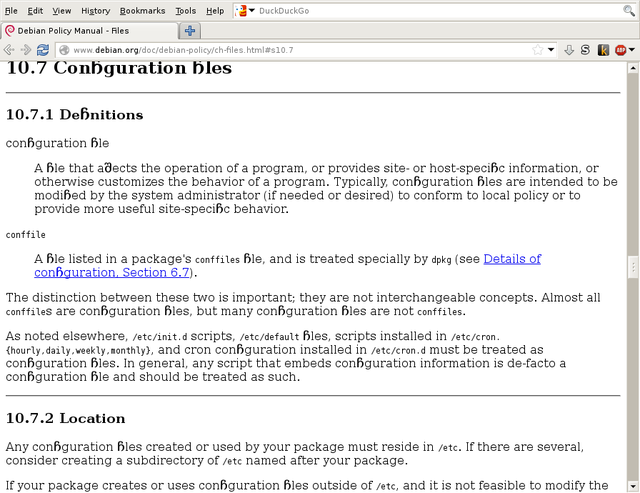
Gunnar Wolf: Ligatured iceweasel

Ligatured iceweasel
I am not (yet?) reporting this as a bug as this happened with a several days old session open, and just while I was upgrading my Sid system, after a long time without doing so (probably since before the vacations started... In December 2013). But I cannot avoid sharing this interesting screenshot. Of course, this does not happen in other browsers. And AFAICT it only happens while reading the Debian Policy (either online or locally, even recoding it to UTF-8). Funniest thing, the Debian policy specifies no Javascript, no stylesheets at all... (Hey, and FWIW... Why is the online copy of the Debian policy still in iso-8859-1 It's not 1995 anymore...) [update] Of course, it's the default font, not only the Debian policy. Just as an example, the following text:
  1. <html><body><p>Ufffiii flat different!</p></body></html>
Yields the following output: [update 2] And, of course, after finishing the update process... I got a new version of Iceweasel. Restarted it, and everything is back to normal :-

22 January 2014

Erich Schubert: The init wars

The init wars have recently caught a lot of media attention (e.g. heise, prolinux, phoronix). However, one detail that is often overlooked: Debian is debating over the default, while all of them are already supported to a large extend, actually. Most likely, at least two of them will be made mandatory to support IMHO.
The discussion seems to be quite heated, with lots of people trying to evangelize for their preferred system. This actually only highlights that we need to support more than one, as Debian has always been about choice. This may mean some extra work for the debian-installer developers, because choosing the init system at install time (instead of switching later) will be much easier. More often than not, when switching from one init system to another you will have to perform a hard reset.
If you want to learn about the options, please go to the formal discussion page, which does a good job at presenting the positions in a neutral way.
Here is my subjective view of the init systems:
  • SysV init is the current default, and thus deserves to be mentioned first. It is slow, because it is based on a huge series of shell scripts. It can often be fragile, but at the same time it is very transparent. For a UNIX system administrator, SysV init is probably the preferred choice. You only reboot your servers every year anyway.
  • upstart seems to be a typical Canonical project. It solves a great deal of problems, but apparently isn't good enough at it for everybody, and they fail at including anyone in their efforts. Other examples of these fails include Unity and Mir, where they also announced the project as-is, instead of trying to get other supporters on board early (AFAICT). The key problem to widespread upstart acceptance seems to be the Canonical Contributor License Agreement that many would-be contributors are unwilling to accept. The only alternative would be to fork upstart completely, to make it independent of Canonical. (Note that upstart nevertheless is GPL, which is why it can be used by Debian just fine. The CLA only makes getting patches and enhancements included in the official version hard.)
  • systemd is the rising star in the init world. It probably has the best set of features, and it has started to incorporate/replace a number of existing projects such as ConsoleKit. I.e. it not only manages services, but also user sessions. It can be loosely tied to the GNOME project which has started to rely on it more and more (much to the unhappyness of Canonical, who used to be a key player for GNOME; note that officially, GNOME chose to not depend on systemd, yet I see this as the only reliable combination to get a complete GNOME system running, and since "systemd can eventually replace gnome-session" I foresee this tie to become closer). As the main drawback, systemd as is will (apparently) only work with the Linux kernel, whereas Debian has to also support kFreeBSD, NetBSD, Hurd and the OpenSolaris kernels (some aren't officially supported by Debian, but by separate projects).
So my take: I believe the only reasonable default is systemd. It has the most active development community and widest set of features. But as it cannot support all architectures, we need mandatory support for an alternative init system, probably SysV. Getting both working reliably will be a pain, in particular since more and more projects (e.g. GNOME) tie themselves closely to systemd, and would then become Linux-only or require major patches.
I have tried only systemd on a number of machines, and unfortunately I cannot report it as "prime time ready" yet. You do have the occasional upgrade problems and incompatibilities, as it is quite invasive. From screensavers activating during movies to double suspends, to being unable to shutdown my system when logged in (systemd would treat the login manager as separate session, and not being the sole user it would not allow me to shut down), I have seen quite a lot of annoyances happen. This is an obvious consequence of the active development on systemd. This means that we should make the decision early, because we will need a lot of time to resolve all these bugs for the release.
There are more disruptions coming on the way. Nobody seems to have talked about kDBUS yet, the integration of an IPC mechanism like DBUS into the Linux kernel. It IMHO has a good chance of making it into the Linux kernel rather soon, and I wouldn't be surprised if it became mandatory for systemd soon after. Which then implies that only a recent kernel (say, mid-2014) version might be fully supported by systemd soon.
I would also like to see less GNOME influence in systemd. I have pretty much given up on the GNOME community, which is moving into a UI direction that I hate: they seem to only care about tablet and mobile phones for dumb users, and slowly turn GNOME into an android UI; selling black background as major UI improvements. I feel that the key GNOME development community does not care about developers and desktop users like me anymore (but dream of being the next Android), and therefore I have abandoned GNOME and switched to XFCE.
I don't give upstart much of a chance. Of course there are some Debian developers already involved in its development (employed by Canonical), so this will cause some frustration. But so far, upstart is largely an Ubuntu-only solution. And just like Mir, I don't see much future in it; instead I foresee Ubuntu going systemd within a few years, because it will want to get all the latest GNOME features. Ubuntu relies on GNOME, and apparently GNOME already has chosen systemd over upstart (even though this is "officially" denied).
Sticking with SysV is obviously the easiest choice, but it does not make a lot of sense to me technically. It's okay for servers, but more and more desktop applications will start to rely on systemd. For legacy reasons, I would however like to retain good SysV support for at least 5-10 more years.

But what is the real problem? After all, this is a long overdue decision.
  • There is too much advocacy and evangelism, from either side. The CTTE isn't really left alone to do a technical decision, but instead the main factors have become of political nature, unfortunately. You have all kinds of companies (such as Spotify) weigh in on the debate, too.
  • The tone has become quite aggressive and emotional, unfortunately. I can already foresee some comments on this blog post "you are a liar, because GNOME is now spelled Gnome!!1!".
  • Media attention. This upcoming decision has been picked up by various Linux media already, increasing the pressure on everybody.
  • Last but not least, the impact will be major. Debian is one of the largest distributions, last but not least used by Ubuntu and Steam, amongst others. Debian preferring one over the other will be a slap in somebodys face, unfortunately.
So how to solve it? Let the CTTE do their discussions, and stop flooding them with mails trying to influence them. There has been so much influencing going on, it may even backfire. I'm confident they will find a reasonable decision, or they'll decide to poll all the DDs. If you want to influence the outcome provide patches to anything that doesn't yet fully support your init system of choice! I'm sure there are hundreds of packages which do neither have upstart nor systemd support yet (as is, I currently have 27 init.d scripts launched by systemd, for example). IMHO, nothing is more convincing than have things just work, and of course, contributing code. We are in open source development, and the one thing that gets you sympathy in the community is to contribute code to someone elses project. For example, contribute full integrated power-management support into XFCE, if you include power management functionality.
As is, I have apparently 7 packages installed with upstart support, and 25 with systemd support. So either, everybody is crazy about systemd, or they have the better record of getting their scripts accepted upstream. (Note that this straw poll is biased - with systemd, the benefits of not using "legacy" init.d script may just be larger).

Dirk Eddelbuettel: RcppArmadillo 0.4.000.2

A bug fix release of Armadillo came out and was turned into a new RcppArmadillo release which is now on CRAN and will go shortly to Debian. The complete list of changes is below.
Changes in RcppArmadillo version 0.4.000.2 (2014-01-21)
  • Upgraded to Armadillo release Version 4.000.2
    • fix for randi() generating out-of-interval values
    • workaround for a bug in the Intel compiler
Courtesy of CRANberries, there is also a diffstat report for the most recent release As always, more detailed information is on the RcppArmadillo page. Questions, comments etc should go to the rcpp-devel mailing list off the R-Forge page.

This post by Dirk Eddelbuettel originated on his Thinking inside the box blog. Please report excessive re-aggregation in third-party for-profit settings.

Gunnar Wolf: Finally: A student once again

Formally, today is my first day as a student on a formal, scholarized institution Basically for the first time in almost twenty years! Yes, those that know me know that I aspire to live the life of academia. I have worked at public universities for almost all of my adult life (between 1997 and 1999 I worked at a local ISP and at a private school), and have had a minor academic position ( T cnico Acad mico ) for almost ten years. And not having a proper degree limited me from pursuing anything further. Then, in early 2010 I presented the written exam. By late 2010, the corresponding oral exam. That allowed me to get my formal diploma in December 2010. By the end of 2011, I requested to be a teacher in the Engineering Faculty of UNAM, and started teaching Operating Systems a year ago, in January 2012. So, a good advance in the last few years... But I know that if I just sit here, I won't be able to advance my position towards really entering the Sacred Halls of Academia. And there are some rituals I have to comply with. One of those rituals is... Devoting some long time to studying under the formal structures. Ok, so I'm finally a postgraduate student I have enrolled in Especialidad en Seguridad Inform tica y Tecnolog as de la Informaci n, a short (one year) postgraduate program in ESIME Culhuac n, of Instituto Polit cnico Nacional (a small campus of Mexico's second-largest university). Some friends have asked me, why am I starting with a Specialization and not a Masters degree. Some simple reasons: Just as when I went to Tijuana in 2010 to do my written exam, once I got and started with the paperwork, I didn't want to let it go If I postpone it, I will probably lose the push to do it by May-July, when the Masters admission process starts. Also, this specialization can be linked with the masters degree on the same topic given at the same campus. This program is one year long, and the masters two But having them both takes 2.5 years. So, not such a bad deal after all. And finally, because, after such a long time without being scholarized, I fear not having an easy time getting to grips with the discipline. I can commit to overworking myself for a year If it's too much for me, I'll just stay with that degree and give up. I expect to like it and continue... But it's also a safe bet :-) Now, there has to be a downside to picking up this path: Of course, my free time will be harshly reduced. I have reduced my Debian involvement in the last year, as I devoted a huge chunk of my time to teaching and book-writing... This year... We shall see what happens. I can for now only confirm what I have said publicly but inside our team only: I have requested to my peers and to our DPL to step down as a DebConf chair. I love organizing DebConf, but I don't want to be formally committed to a position I just cannot fulfill as I did when I started with it. As for package maintenance, by far most of my packges are team maintained, and those that are not are relatively easy to keep track of. And of course, I'll keep an eye on my keyring-maint duties as well Will even try to link that work with what I do at school! Anyway, lets see what comes now!

20 January 2014

Wouter Verhelst: On the init system debate

The decision on which init system to use has plagued Debian for a fairly long time now. We've had people talking about it as early as debconf11 in Banja Luka, and we still haven't got a decision. Instead, the decision has been going round in circles, in a typical bikeshed fashion. Originally, my opinion on the subject was "sysv-rc is good enough for everyone, and it's portable, which other alternatives aren't". By now, however, I've become convinced that the first part of that statement isn't true, and that as a result a switch of a default init system is indeed appropriate; that we should indeed switch to "something else", at least for our Linux ports. Once I came to that conclusion, my opinion on what, exactly, we should use turned out to be nonexistent. That is, I don't care. Anything will be fine. What is bothering me, though, is that things keep dragging on and on and on and on and on and on and on, ad infinitum. We should just pick one and be done with it, dammit. The fact that sysv-rc is replaced by "something else" does not mean people must stop using sysv init scripts. Even if the maintainer of some random package "foo" refuses to accept patches to support sysv-rc for his package, there's nothing stopping anyone from providing a package "sysv-support" containing init scripts (and nothing else) for sysv-rc. The same goes for a hypothetical upstart-support or systemd-support package, of course: if you want to continue living in the stone age and keep using sysv-rc forever, then there is nothing stopping you. Even if we decide to use something else for our Linux ports. Ideally the non-Linux ports would move to something more modern too; but there really really really isn't any reason why it would be a problem if they didn't. Can we stop painting the bikeshed now? If we don't, soon we'll have to call it "hunk of paint with some bikes inside" rather than "bikeshed". Thanks.

Thorsten Glaser: FOSDEM preparations done.

I ve produced several pin-on buttons to take with me to FOSDEM for giving away (as long as there are any left): Several pin-on buttons I made First row (nice projects), from left to right: MidnightBSD; Glenda, the Plan 9 bunny; Teckids e.V. Second row (The MirOS Project): mksh; the Shilouette D mon; the Triforce (Live+Install CDs for i386 and sparc, with MirGrml); the m (alternative logo, vector) Third row (things originating from tarent): Freedroidz (now a Teckids project); OSIAM (Identity and Access Management); tarent (tarent AG, tarent GmbH), who sponsored production of these buttons Hm jupp needs a button able logo!
FOSDEM meetup

Enrico Zini: terminal-emulators

Quest for a terminal emulator The requirements I need a terminal emulator. This is a checklist of the features that I need: My experience is that getting all of this to work is not being as easy as it seems, so I'm creating this page to track progress. gnome-terminal I've been happily using this for years, and it did everything I needed, until some months ago it started to open new tabs in the terminal's working directory instead of the last tab's working directory. This is a big point of frustration for me. It also started opening https urls with Firefox, although the preferred browser was Chromium. There seemed to be no way to control it: I looked for firefox or iceweasel in all gconf and dconf settings and found nothing. The browser issue was fixed by accident when I used Xfce4's settings application to change the browser from Chromium to Firefox and then back to Chromium. update, thanks to Mathieu Parent, Josh Triplett, Peter De Wachter, Julien Cristau, and Charles Plessy: It is also possible to restore the "new tab opened inside the same directory of the last tab I was in" behaviour, by enabling "run command as a login shell" so that /etc/profile.d/vte.sh is run (thanks Mathieu Parent for the link). That in turn spawned extra cleanup work in my .bashrc/.bash_profile/.profile setup, which has been randomly evolving since even before my first Debian "buzz" system. I found that it was setting PROMPT_COMMAND to something else to set the terminal title, conflicting with what vte.sh wants to do. With regards to loading /etc/profile.d/vte.sh by default, Peter De Watcher sent pointers to relevant bugs: here, here, and here. An alternative strategy is to work using the prompt rather than PROMPT_COMMAND; an example is in Josh Triplett's .bashrc from git://joshtriplett.org/git/home. Josh Triplett also said:
To fix the browser launched for URLs, you either need to use a desktop environment following GNOME's mechanism for setting the default browser, or edit ~/.local/share/applications/mimeapps.list and make sure x-scheme-handler/http, x-scheme-handler/https, and x-scheme-handler/ftp are set to your preferred browser's desktop file basename under [Added Associations].
All my issues with gnome-terminal are now gone and I'm only too happy to go back to it. rxvt-unicode-256color urxvt took some work. This is where I got with configuration:
URxvt.font: xft:Monospace-10:antialias=true
URxvt.foreground: #aaaaaa
URxvt.background: black
URxvt.scrollBar_right: true
URxvt.cursorBlink: true
URxvt.perl-ext-common: default,matcher,tabbedex
URxvt.url-launcher: /usr/bin/x-www-browser
URxvt.matcher.button: 1
URxvt.perl-lib: /home/enrico/.urxvt/perl
URxvt.color0: black
URxvt.color1: #aa0000
URxvt.color2: #00aa00umask
URxvt.color3: #aa5500
URxvt.color4: #0000aa
URxvt.color5: #aa00aa
URxvt.color6: #00aaaa
URxvt.color7: #aaaaaa
URxvt.color8: #555555
URxvt.color9: #ff5555
URxvt.color10: #55ff55
URxvt.color11: #ffff55
URxvt.color12: #5555ff
URxvt.color13: #ff55ff
URxvt.color14: #55ffff
URxvt.color15: #ffffff
I got all of the tab behaviour that I need by "customizing" the tab script (yuck github :( ). Missing sakura Configuration is in .config/sakura/sakura.conf and these bits help:
colorset1_fore=rgb(170,170,170)
colorset1_back=rgb(0,0,0)
colorset1_opacity=99
colorset2_fore=rgb(0,0,0)
colorset2_back=rgb(254,254,254)
colorset2_opacity=99
font=Monospace 10
show_always_first_tab=No
scrollbar=false
fullscreen_key=F11
palette=linux
Missing lxterminal Configuration is in .config/lxterminal/lxterminal.conf and this is relevant to me:
[general]
fontname=DejaVu Sans Mono 10
fgcolor=#aaaaaaaaaaaa
disallowbold=false
cursorblinks=true
tabpos=top
hidescrollbar=false
hidemenubar=true
hideclosebutton=true
disablef10=true
disablealt=true
Also, to open a url directly you control+click it. Missing terminator Configuration is in .config/terminator/config and this is relevant to me:
[global_config]
  use_custom_url_handler = True
  custom_url_handler = x-www-browser
  inactive_color_offset = 1.0
[keybindings]
  close_term = None
  close_window = None
  copy = None
  cycle_next = None
  cycle_prev = None
  go_down = None
  go_next = None
  go_prev = None
  go_up = None
  group_all = None
  group_tab = None
  hide_window = None
  move_tab_left = None
  move_tab_right = None
  new_tab = None
  new_terminator = None
  new_window = None
  next_tab = None
  paste = None
  prev_tab = None
  reset_clear = None
  reset = None
  resize_down = None
  resize_left = None
  resize_right = None
  resize_up = None
  rotate_ccw = None
  rotate_cw = None
  scaled_zoom = None
  search = None
  split_horiz = None
  split_vert = None
  switch_to_tab_1 = <Alt>F1
  switch_to_tab_2 = <Alt>F2
  switch_to_tab_3 = <Alt>F3
  switch_to_tab_4 = <Alt>F4
  switch_to_tab_5 = <Alt>F5
  switch_to_tab_6 = <Alt>F6
  switch_to_tab_7 = <Alt>F7
  switch_to_tab_8 = <Alt>F8
  switch_to_tab_9 = <Alt>F9
  switch_to_tab_10 = <Alt>F10
  toggle_scrollbar = None
  toggle_zoom = None
  ungroup_all = None
  ungroup_tab = None
[profiles]
  <span class="createlink">default</span>
    palette = "#000000:#aa0000:#00aa00:#aa5500:#0000aa:#aa00aa:#00aaaa:#aaaaaa:#555555:#ff5555:#55ff55:#ffff55:#5555ff:#ff55ff:#55ffff:#ffffff"
    copy_on_selection = True
    icon_bell = False
    background_image = None
    show_titlebar = False
Missing update: Richard Hartmann pointed out that terminator's upstream maintainer now changed after the old one didn't have time any more, and it should have a release with a ton of improvements anytime soon. xfce4-terminal Configuration is in .config/xfce4/terminal, and this is relevant to me: terminalrc:
[Configuration]
FontName=Monospace 10
MiscAlwaysShowTabs=FALSE
MiscBell=FALSE
MiscBordersDefault=TRUE
MiscCursorBlinks=FALSE
MiscCursorShape=TERMINAL_CURSOR_SHAPE_BLOCK
MiscDefaultGeometry=80x24
MiscInheritGeometry=FALSE
MiscMenubarDefault=FALSE
MiscMouseAutohide=FALSE
MiscToolbarDefault=FALSE
MiscConfirmClose=TRUE
MiscCycleTabs=TRUE
MiscTabCloseButtons=TRUE
MiscTabCloseMiddleClick=TRUE
MiscTabPosition=GTK_POS_TOP
MiscHighlightUrls=TRUE
ShortcutsNoMenukey=TRUE
ShortcutsNoMnemonics=TRUE
ColorForeground=#aaaaaaaaaaaa
accels.scm:
(gtk_accel_path "<Actions>/terminal-window/goto-tab-1" "<Alt>F1")
(gtk_accel_path "<Actions>/terminal-window/goto-tab-2" "<Alt>F2")
(gtk_accel_path "<Actions>/terminal-window/goto-tab-3" "<Alt>F3")
(gtk_accel_path "<Actions>/terminal-window/goto-tab-4" "<Alt>F4")
(gtk_accel_path "<Actions>/terminal-window/goto-tab-5" "<Alt>F5")
(gtk_accel_path "<Actions>/terminal-window/goto-tab-6" "<Alt>F6")
(gtk_accel_path "<Actions>/terminal-window/goto-tab-7" "<Alt>F7")
(gtk_accel_path "<Actions>/terminal-window/goto-tab-8" "<Alt>F8")
(gtk_accel_path "<Actions>/terminal-window/goto-tab-9" "<Alt>F9")
(gtk_accel_path "<Actions>/terminal-window/goto-tab-10" "<Alt>F10")
(gtk_accel_path "<Actions>/terminal-window/goto-tab-11" "<Alt>F11")
(gtk_accel_path "<Actions>/terminal-window/goto-tab-12" "<Alt>F12")
update: Yves-Alexis Perez points out that to disable the F1 for help in the terminal, you need to remove the accelerator. I tried this and this and didn't have success, but I confess I did not dig too much into it. Although xfce4-terminal -e does not work as I expect, xfce4-terminal registers a wrapper for x-terminal-emulator that does the right thing with respect to -e (also thanks Yves-Alexis Perez). Missing roxterm Configuration is in .config/roxterm.sourceforge.net/ split in several files corresponding to profiles. This is a reasonable starting point for me: Profiles/Default:
[roxterm profile]
colour_scheme=Default
disable_menu_access=1
disable_menu_shortcuts=1
disable_tab_menu_shortcuts=0
tab_close_btn=0
hide_menubar=1
always_show_tabs=0
Colours/Default:
[roxterm colour scheme]
0=#000000000000
1=#aaaa00000000
2=#0000aaaa0000
3=#aaaa55550000
4=#00000000aaaa
5=#aaaa0000aaaa
6=#0000aaaaaaaa
7=#aaaaaaaaaaaa
8=#555555555555
9=#ffff55555555
10=#5555ffff5555
11=#ffffffff5555
12=#55555555ffff
13=#ffff5555ffff
14=#5555ffffffff
15=#ffffffffffff
palette_size=16
foreground=#aaaaaaaaaaaa
background=#000000000000
cursor=#cccccccccccc
bold=
dim=
Shortcuts/Default:
[roxterm shortcuts scheme]
File/New Window=
File/New Tab=
File/Close Window=
File/Close Tab=
Tabs/Previous Tab=
Tabs/Next Tab=
Edit/Copy=
Edit/Paste=
View/Zoom In=<Control>plus
View/Zoom Out=<Control>minus
View/Normal Size=<Control>0
View/Full Screen=F11
View/Scroll Up One Line=
View/Scroll Down One Line=
Help/Help=
Edit/Copy & Paste=
Search/Find...=
Search/Find Next=
Search/Find Previous=
File/New Window With Profile/Default=
File/New Tab With Profile/Default=
Tabs/Select_Tab_0=<Alt>F1
Tabs/Select_Tab_1=<Alt>F2
Tabs/Select_Tab_2=<Alt>F3
Tabs/Select_Tab_3=<Alt>F4
Tabs/Select_Tab_4=<Alt>F5
Tabs/Select_Tab_5=<Alt>F6
Tabs/Select_Tab_6=<Alt>F7
Tabs/Select_Tab_7=<Alt>F8
Tabs/Select_Tab_8=<Alt>F9
Tabs/Select_Tab_9=<Alt>F9
Tabs/Select_Tab_10=<Alt>F10
Tabs/Select_Tab_11=<Alt>F11
Tabs/Select_Tab_12=<Alt>F12
Global:
[roxterm options]
edit_shortcuts=0
prefer_dark_theme=1
colour_scheme=Default
warn_close=1
Missing Nothing of my initial requirements seems to be missing, really, so I'm sticking to it for a while to see what happens. The first itch to scratch is that when the menubar is hidden, the popup menu becomes the entire menubar contents, which does not fit the general use case to have a contextual menu with the most common shortcuts. I'll just declare it useless and get myself used to some new hotkey for starting a new terminal. update: after fixing my issues with gnome-terminal I've switched back to gnome-terminal: its interface feels less clunky as I'm already used to it. Other references Guillem Jover made a similar analysis in 2009, it can be found here. Thomas Koch mentioned that termit should be able to do all I need, and is scriptable in Lua. I like the sound of that, and it's definitely one I should look next time I find myself shopping for terminal emulators.

Dirk Eddelbuettel: RProtoBuf 0.4.0: A whole lot of goodies and Windoze support

A new major release 0.4.0 of RProtoBuf, is now on CRAN. RProtoBuf provides GNU R bindings for the Google Protocol Buffers ("Protobuf") data encoding library used and released by Google, and deployed as a language and operating-system agnostic protocol by numerous projects. With this release, we are welcoming Jeroen Ooms to the team. Jeroen had already worked on some RProtoBuf extensions in the context of his OpenCPU project; we have now integrated those Protocol Buffers functions. And Jeroen pushed all the right buttons to finally get RProtoBuf built on everybody's least-favourite operating system by provding a static library for use by win-builder and CRAN. Murray once again did a lot of work on internals. His use of the LLVM tool llvm-format was particular helpful to make our coding style a little more consistent. The complete NEWS file entry for this release follows:
Changes in RProtoBuf version 0.4.0 (2014-01-14)
  • Changes to support CRAN builds for MS Windows.
  • Added functions serialize_pb, unserialize_pb, and can_serialize_pb plus documentation from Jeroen Ooms RProtoBufUtils package.
  • New dir inst/python with some Python examples.
  • Added Jeroen Ooms as author.
  • Vignettes have been converted to the R 3.0.0 or later use of external vignette builders, no longer need a Makefile
  • Added missing methods to dollar completion list for Message, Descriptor, EnumValueDescriptor, and FileDescriptor classes.
  • Add missing export for .DollarNames EnumValueDescriptor to allow completion on that class.
  • Add more than 15 additional pages to the main Intro vignette documenting better all of the S4 classes implemented by RProtoBuf, updating the type mapping tables to take into account 64-bit support, and documenting advanced features such as Extensions.
  • Added better error checking in EnumDescriptors to catch the case when wrong types are provided.
  • Updated the FileDescriptor name() method to accept a boolean for full paths just like the generic name() method.
  • Correct a bug that incorrectly dispatched as.character() when as.list() was called on Descriptor objects.
  • Update FileDescriptor $ dispatch to work properly for the names of fields defined in the FileDescriptor, instead of just returning NULL even for types returned by $ completion.
  • Added a reservation for extension fields in the example tutorial.Person schema.
  • Support setting int32 fields with character representations and raise an R-level stop() error if the provided string can not be parsed as a 32-bit integer, rather than crashing the R instance.
  • Update the project TODO file.
  • Add better documentation and tests for all of the above.
  • Corrected the handling of uint32 and fixed32 types in protocol buffers to ensure that they work with numbers as large as 2^32 - 1, which is larger than an integer can hold in R since R does not have an unsigned integer class. These values are stored as doubles internally now to avoid losing precision.
  • Added unit tests to verify behavior of RProtoBuf with extreme values for uint32 types.
  • Removed old exception handling code and instead rely on the more modern Rcpp::stop method maintained in Rcpp.
  • Add better error messages when setting a repeated field of messages to inform the user which element index was of the wrong type and what the expected type was.
  • Add an optional 'partial' argument to readASCII allowing uninitialized message fragments to be read in.
  • (internal) Added const qualifiers in more places throughout the C++ code for type safety.
  • (internal) Standardize coding conventions of the C++ files and run them through clang-format for consistency. A STYLE file has been submitted to R-Forge with details about the coding standards and how they are enforced with Emacs and clang-format.
  • Applied changes suggested by Kevin Ushey to the S4 class handling to support both the currently released Rcpp as well as the currently pending next version.
CRANberries also provides a diff to the previous release 0.3.2. More information is at the RProtoBuf page which has a draft package vignette, a 'quick' overview vignette and a unit test summary vignette. Questions, comments etc should go to the rprotobuf mailing list off the RProtoBuf page at R-Forge.

This post by Dirk Eddelbuettel originated on his Thinking inside the box blog. Please report excessive re-aggregation in third-party for-profit settings.

19 January 2014

Daniel Pocock: Debian solving Drupal's third-party library challenge

The tremendously successful Drupal community observes stringent requirements about many things, in particular, licensing and the prohibition of bundling third-party JavaScript. While these policies may seem onerous at first glance, it turns out there is another project with a written guarantee to provide third-party code in a form that meets the expectations of Drupal and does so in a way that completely automates all that tedious effort into one-click oblivion. I'm talking about the Debian GNU/Linux operating system. Drupal's libraries module The libraries module for Drupal appeared as an initial attempt to help track third-party JavaScript. The module has been available in Debian for almost a year and has recently been provided in the wheezy-backports distribution for people running the stable version of Debian. The library provides a standard way for other modules to reference third-party JavaScript but it still leaves the web master with some manual work to go out and download all the necessary JavaScript and copy it into the right place. This is where Debian comes to the rescue. Using the module in practice I've recently uploaded JSCommunicator to Debian and wanted to provide a convenient way for people to get it in Drupal. Therefore, in addition to providing the JSCommunicator packages, I created an extra package, drupal7-mod-jscommunicator. JSCommunicator itself depends on other JavaScript, specifically, the JsSIP library. I repeated the same process for JsSIP. This gives us the following collection of four related packages:
Third-party library Library itself Drupal module, packaged
JSCommunicator libjs-jscommunicator drupal7-mod-jscommunicator
JsSIP libjs-jssip drupal7-mod-jssip
If you explore the package details in Debian's package catalog you will notice that each package depends on the other packages it requires. Debian's package management utility, apt-get, can transitively resolve all the relationships between this set of packages. In fact, on a newly built server, you can simply run the command:
apt-get install drupal7-mod-jscommunicator
and the apt-get utility will install Apache, MySQL, Drupal itself, the libraries module, all the related JavaScript libraries and the final Drupal module of JSCommunicator itself. It really is that easy. Here is an example of the output displayed by the command on a freshly built server:
# apt-get -d install drupal7-mod-jscommunicator
Reading package lists... Done
Building dependency tree       
Reading state information... Done
The following extra packages will be installed:
  apache2 apache2-bin apache2-data curl dbconfig-common drupal7
  drupal7-mod-jssip drupal7-mod-libraries fontconfig-config fonts-dejavu-core
  javascript-common libaio1 libapache2-mod-php5 libapr1 libaprutil1
  libaprutil1-dbd-sqlite3 libaprutil1-ldap libarchive-extract-perl libc6
  libcurl3 libdbd-mysql-perl libdbi-perl libedit2 libfontconfig1 libgcrypt11
  libgd3 libhtml-template-perl libjbig0 libjpeg8 libjs-jssip libjson-c2
  liblocale-gettext-perl liblog-message-simple-perl liblua5.1-0
  libmodule-pluggable-perl libmysqlclient18 libonig2 libperl4-corelibs-perl
  libpng12-0 libpod-latex-perl libqdbm14 librtmp0 libssh2-1 libterm-ui-perl
  libtext-charwidth-perl libtext-iconv-perl libtext-soundex-perl libtiff5
  libuuid-perl libvpx1 libxml2 libxpm4 locales mysql-client mysql-client-5.5
  mysql-common mysql-server mysql-server-5.5 mysql-server-core-5.5 perl
  perl-base perl-modules php5 php5-cli php5-common php5-gd php5-json
  php5-mysql php5-readline ssl-cert wwwconfig-common
Suggested packages:
  apache2-doc apache2-suexec-pristine apache2-suexec-custom apache2-utils
  php-pear glibc-doc libclone-perl libmldbm-perl libnet-daemon-perl
  libplrpc-perl libsql-statement-perl rng-tools libgd-tools
  libipc-sharedcache-perl libterm-readkey-perl tinyca perl-doc
  libterm-readline-gnu-perl libterm-readline-perl-perl make libb-lint-perl
  libcpanplus-dist-build-perl libcpanplus-perl libfile-checktree-perl
  liblog-message-perl libobject-accessor-perl php5-user-cache
  openssl-blacklist postgresql-client
The following NEW packages will be installed:
  apache2 apache2-bin apache2-data curl dbconfig-common drupal7
  drupal7-mod-jscommunicator drupal7-mod-jssip drupal7-mod-libraries
  fontconfig-config fonts-dejavu-core javascript-common libaio1
  libapache2-mod-php5 libapr1 libaprutil1 libaprutil1-dbd-sqlite3
  libaprutil1-ldap libarchive-extract-perl libcurl3 libdbd-mysql-perl
  libdbi-perl libfontconfig1 libgd3 libhtml-template-perl libjbig0 libjpeg8
  libjs-jssip libjson-c2 liblog-message-simple-perl liblua5.1-0
  libmodule-pluggable-perl libmysqlclient18 libonig2 libperl4-corelibs-perl
  libpng12-0 libpod-latex-perl libqdbm14 librtmp0 libssh2-1 libterm-ui-perl
  libtext-soundex-perl libtiff5 libvpx1 libxpm4 mysql-client mysql-client-5.5
  mysql-common mysql-server mysql-server-5.5 mysql-server-core-5.5 php5
  php5-cli php5-common php5-gd php5-json php5-mysql php5-readline ssl-cert
  wwwconfig-common
The following packages will be upgraded:
  libc6 libedit2 libgcrypt11 liblocale-gettext-perl libtext-charwidth-perl
  libtext-iconv-perl libuuid-perl libxml2 locales perl perl-base perl-modules
12 upgraded, 60 newly installed, 0 to remove and 222 not upgraded.
Need to get 37.2 MB of archives.
After this operation, 152 MB of additional disk space will be used.
Do you want to continue [Y/n]? 
Libraries API in Drupal 8 Contrary to an earlier version of this blog, the libraries module is not joining the core in Drupal 8 however its use has been strongly encouraged for any new modules submitted through the Drupal community approval process. This means there will be further opportunity for Drupal users to consolidate on their use of Debian to completely automate the management of all third-party libraries and modules throughout their Drupal system(s).

Matthias Klumpp: Tanglu Beta2 now available!

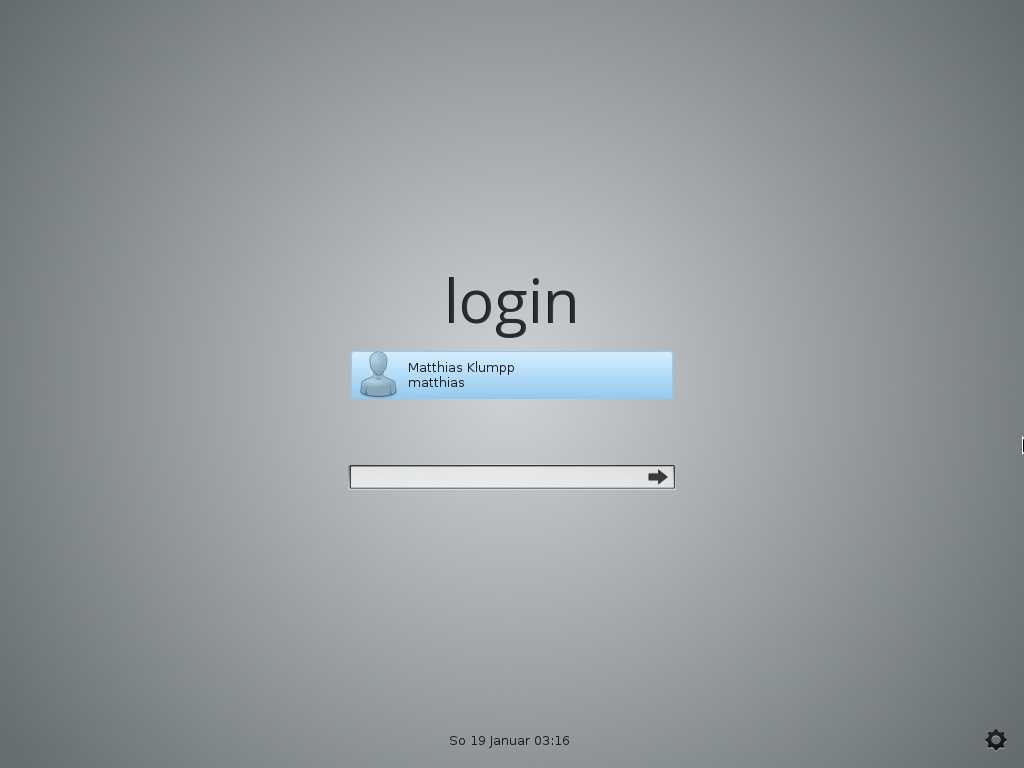
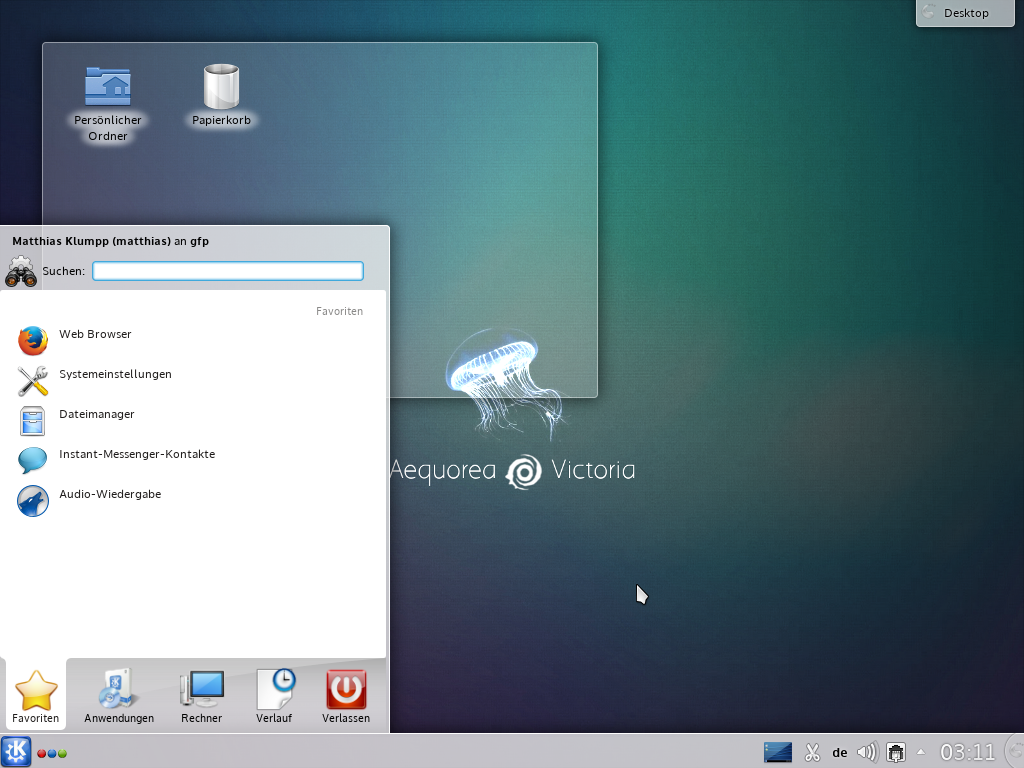
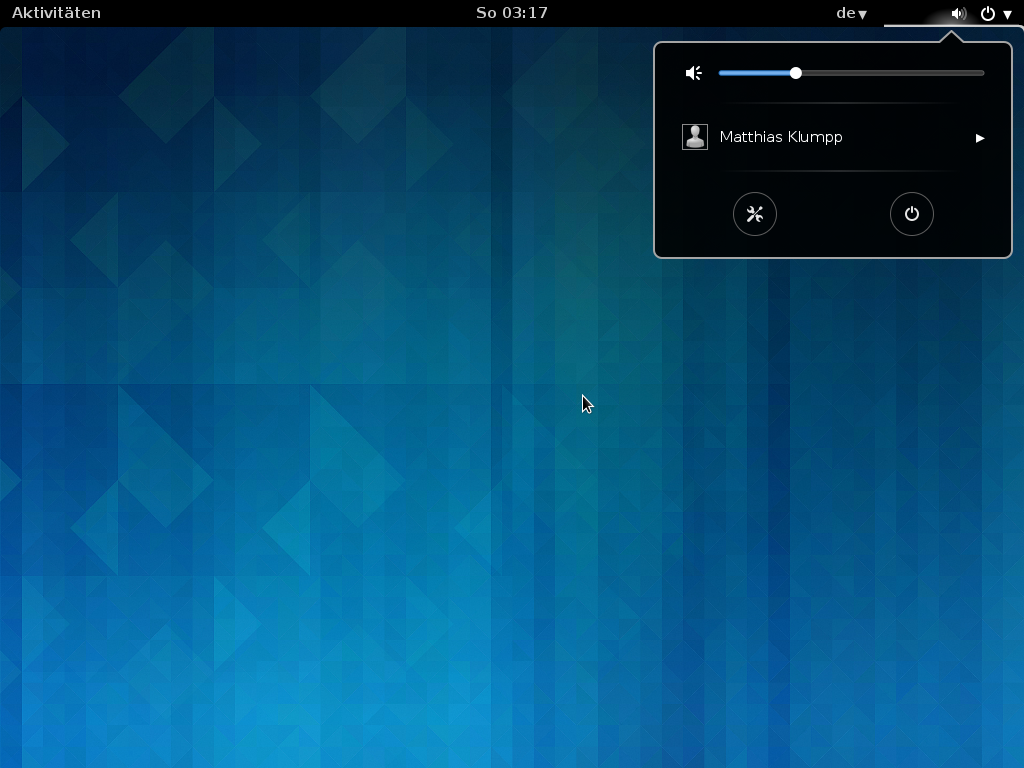
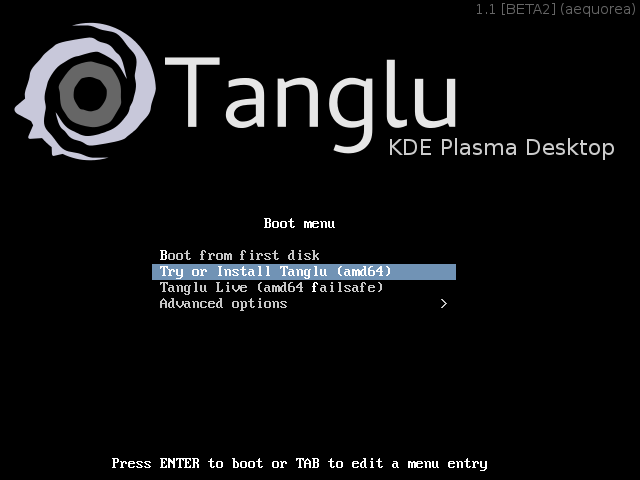
While writing this post, I recognize that we might need a news-blog for tanglu logo pureTanglu :-) Since yesterday, we have an (installable!) Beta2 release of Tanglu! Compared to the previous snapshot, it comes with a huge amount of improvements and bugfixes: Known issues: You can download the release from one of these mirrors: Mirror1 Mirror2 Mirror3 Additionally, there is now a release schedule for Tanglu Aequorea, and we will do a vote on the name for the next release soon (proposed names). As a note to Debian: systemd is working pretty well for Tanglu so far ;-) I am pretty happy with this Beta2 release, because Tanglu is shaping out to be the distribution we imagined in the beginning. Have fun! And as bonus, here are some images from Beta2: tanglu-beta2-kde0 tanglu-beta2-kde1 tanglu-beta2-kde2 tanglu-beta2-gnome2tanglu-beta2-gnome1
18 January 2014

Miriam Ruiz: L ve is a changing project


I have just uploaded a newer version of L ve to Debian, 0.9.0. As usual, this version breaks compatibility with the API of previous versions. Literally: L VE 0.9.0 breaks compatibility with nearly every 0.8.0 game . It s a hard to fix situation from a package maintainer s point of view, at least until they agree on a stable API, hopefully in a 1.0 version sometime. L ve has been in Debian official repositories since 2008. As major changes, we can see that it s using SDL2 and LuaJIT now. Depending on where the bottlenecks were in some of the demos and games, the performance might have improved a lot. The improvements have been a lot, and the structure of the API is more consistent and clean. Congratulations to everyone that has made it possible. On the bitter part, well, most of the previous games and demos will most likely not work any more without some changes in the code. As we don t have any reverse dependencies in the archive (yet), this won t cause any severe problems. But, of course, Debian is not an isolated island, and people might need to execute some old code without being able to migrate it. I have prepared some packages for older versions of L ve that might make the situation more bearable for some, until code is migrated to the new API. These versions can be co-installed with the latest version in the archive (0.9.0). I m not sure if it will be needed, but if it was, I might consider putting previous 0.8 version in the official repositories. I would prefer not to do it, though, as that would make me the de facto maintainer of the upstream code, as L ve community is moving forwards with newer versions.

Jonathan McDowell: Fixing my parents' ADSL

I was back at my parents' over Christmas, like usual. Before I got back my Dad had mentioned they'd been having ADSL stability issues. Previously I'd noticed some issues with keeping a connection up for more than a couple of days, but it had got so bad he was noticing problems during the day. The eventual resolution isn't going to surprise anyone who's dealt with these things before, but I went through a number of steps to try and improve things. Firstly, I arranged for a new router to be delivered before I got back. My old Netgear DG834G was still in use and while it didn't seem to have been the problem I'd been meaning to get something with 802.11n instead of the 802.11g it supports for a while. I ended up with a TP-Link TD-W8980, which has dual band wifi, ADSL2+, GigE switch and looked to have some basic OpenWRT support in case I want to play with that in the future. Switching over was relatively simple and as part of that procedure I also switched the ADSL microfilter in use (I've seen these fail before with no apparent cause). Once the new router was up I looked at trying to get some line statistics from it. Unfortunately although it supports SNMP I found it didn't provide the ADSL MIB, meaning I ended up doing some web scraping to get the upstream/downstream sync rates/SNR/attenuation details. Examination of these over the first day indicated an excessive amount of noise on the line. The ISP offer the ability in their web interface to change the target SNR for the line. I increased this from 6db to 9db in the hope of some extra stability. This resulted in a 2Mb/s drop in the sync speed for the line, but as this brought it down to 18Mb/s I wasn't too worried about that. Watching the stats for a further few days indicated that there were still regular periods of excessive noise, so I removed the faceplate from the NTE5 master BT socket, removing all extensions from the line. This resulted in regaining the 2Mb/s that had been lost from increasing the SNR target, and after watching the line for a few days confirmed that it had significantly decreased the noise levels. It turned out that the old external ringer that was already present on the line when my parents' moved in was still connected, although it had stopped working some time previously. Also there was an unused and much spliced extension in place. Removed both of these and replacing the NTE5 faceplate led to a line that was still stable. At the time of writing the connection has been up since before the new year, significantly longer than it had managed for some time. As I said at the start I doubt this comes as a surprise to anyone who's dealt with this sort of line issue before. It wasn't particularly surprising to me (other than the level of the noise present), but I went through each of the steps to try and be sure that I had isolated the root cause and could be sure things were actually better. It turned out that doing the screen scraping and graphing the results was a good way to verify this. Observe: adsl-noise.png The blue/red lines indicate the SNR for the upstream and downstream links - the initial lower area is when this was set to a 6db target, then later is a 9db target. Green are the forward error correction errors divided by 100 (to make everything fit better on the same graph). These are correctable, but still indicate issues. Yellow are CRC errors, indicating something that actually caused a problem. They can be clearly seen to correlate with the FEC errors, which makes sense. Notice the huge difference removing the extensions makes to both of these numbers. Also notice just how clear graphing the data makes things - it was easy to show my parents' the graph and indicate how things had been improved and should thus be better.

Colin Watson: Testing wanted: GRUB 2.02~beta2 Debian/Ubuntu packages

This is mostly a repost of my ubuntu-devel mail for a wider audience, but see below for some additions. I'd like to upgrade to GRUB 2.02 for Ubuntu 14.04; it's currently in beta. This represents a year and a half of upstream development, and contains many new features, which you can see in the NEWS file. Obviously I want to be very careful with substantial upgrades to the default boot loader. So, I've put this in trusty-proposed, and filed a blocking bug to ensure that it doesn't reach trusty proper until it's had a reasonable amount of manual testing. If you are already using trusty and have some time to try this out, it would be very helpful to me. I suggest that you only attempt this if you're comfortable driving apt-get directly and recovering from errors at that level, and if you're willing to spend time working with me on narrowing down any problems that arise. Please ensure that you have rescue media to hand before starting testing. The simplest way to upgrade is to enable trusty-proposed, upgrade ONLY packages whose names start with "grub" (e.g. use apt-get dist-upgrade to show the full list, say no to the upgrade, and then pass all the relevant package names to apt-get install), and then (very important!) disable trusty-proposed again. Provided that there were no errors in this process, you should be safe to reboot. If there were errors, you should be able to downgrade back to 2.00-22 (or 1.27+2.00-22 in the case of grub-efi-amd64-signed). Please report your experiences (positive and negative) with this upgrade in the tracking bug. I'm particularly interested in systems that are complex in any way: UEFI Secure Boot, non-trivial disk setups, manual configuration, that kind of thing. If any of the problems you see are also ones you saw with earlier versions of GRUB, please identify those clearly, as I want to prioritise handling regressions over anything else. I've assigned myself to that bug to ensure that messages to it are filtered directly into my inbox. I'll add a couple of things that weren't in my ubuntu-devel mail. Firstly, this is all in Debian experimental as well (I do all the work in Debian and sync it across, so the grub2 source package in Ubuntu is a verbatim copy of the one in Debian these days). There are some configuration differences applied at build time, but a large fraction of test cases will apply equally well to both. I don't have a definite schedule for pushing this into jessie yet - I only just finished getting 2.00 in place there, and the release schedule gives me a bit more time - but I certainly want to ship jessie with 2.02 or newer, and any test feedback would be welcome. It's probably best to just e-mail feedback to me directly for now, or to the pkg-grub-devel list. Secondly, a couple of news sites have picked this up and run it as "Canonical intends to ship Ubuntu 14.04 LTS with a beta version of GRUB". This isn't in fact my intent at all. I'm doing this now because I think GRUB 2.02 will be ready in non-beta form in time for Ubuntu 14.04, and indeed that putting it in our development release will help to stabilise it; I'm an upstream GRUB developer too and I find the exposure of widely-used packages very helpful in that context. It will certainly be much easier to upgrade to a beta now and a final release later than it would be to try to jump from 2.00 to 2.02 in a month or two's time. Even if there's some unforeseen delay and 2.02 isn't released in time, though, I think nearly three months of stabilisation is still plenty to yield a boot loader that I'm comfortable with shipping in an LTS. I've been backporting a lot of changes to 2.00 and even 1.99, and, as ever for an actively-developed codebase, it gets harder and harder over time (in particular, I've spent longer than I'd like hunting down and backporting fixes for non-512-byte sector disks). While I can still manage it, I don't want to be supporting 2.00 for five more years after upstream has moved on; I don't think that would be in anyone's best interests. And I definitely want some of the new features which aren't sensibly backportable, such as several of the new platforms (ARM, ARM64, Xen) and various networking improvements; I can imagine a number of our users being interested in things like optional signature verification of files GRUB reads from disk, improved Mac support, and the TrueCrypt ISO loader, just to name a few. This should be a much stronger base for five-year support.

Next.

Previous.