Search Results: "tin"

22 December 2016

Shirish Agarwal: My letter to Government of Maharashtra on Real Estate Rules and Regulation Draft rules

While I try to minimize Politics and Economics as much as I can on this blog, it sometimes surfaces. It is possible that some people may benefit or at least be aware. A bit of background is necessary before I jump into the intricacies of the Maharashtra Real Estate Rules and Regulation Draft Rules 2016 (RERA) . Since ever, but more prominently since 2007/8 potential homeowners from across the country have been suffering at the hands of the builder/promoter for number of years. While it would be wrong to paint all the Real Estate Developers and Builders as cheats (we as in all tenants and homeowners hope there are good ones out there) many Real Estate Builders and promoters have cheated homeowners of their hard-earned money. This has also lessened the secondary (resale) market and tenants like me have to fight over morsels as supply is tight. There were two broad ways in which the cheating is/was done a. Take deposits and run away i.e. fly by night operators Here the only option for a homeowner is to file an FIR (First Information Report) and hope the culprits are caught. 99% of the time the builder/promoter goes somewhere abroad and the potential home buyers/home-owners are left holding the can. This is usually done by small real estate promoters and builders. b. The big boys would take all or most money of the project, may register or not register the flat in your name, either build a quarter or half-finished building and then make excuses. There are some who do not even build. The money given is used by the builder/developer either for his own needs or using that money in some high-profile project which is expensive and may have huge returns. They know that home-owners can t do anything, at the most go to the court which will take more than a decade or two during which time the developer would have interest-free income and do whatever he wants to do. One of the bigger stories which came up this year was when the Indian Cricket Captain, M.S. Dhoni (cricket is a religion in India, and the cricketers gods for millions of Indians) had to end his brand engagement and ambassadorship from Amrapali Housing Group. Apparently, his wife Sakshi was on the Board of directors at Amrapali Housing and had to resign The Government knew of such issues and had been working since last few years. Under the present Government, a Model Agreement and a Model Real Estate Rules and Regulation Bill was passed on 31st March and came into force on 1st May 2016. India, similar to the U.S. and U.K. follows a federal structure. While I have shared this before, most of the laws in India fall in either of three lists, Central List, Concurrent Lists and State Lists. Housing for instance, is a state subject so any laws concerning housing has to be made by the state legislature. Having a statutory requirement to put the bill in 6 months from 1st of May, the Government of Maharashtra chose to put the draft rules in public domain on 12th December 2016, about 10 days ago and there were efforts to let it remain low-key so people do not object as we are still in the throes of demonetisation. By law they should have given 30 days for people to raise objections and give suggestions. The State Government too could have easily asked an extension and as both the State and the Centre are of the same Political Party they would have easily got it. With that, below is the e-mail I sent to suggesstionsonrera@maharashtra.gov.in Sub Some suggestions for RERA biggest suggestion, need to give more time study the implications for house-owners. Respected Sir/Madame, I will be publishing the below mail as a public letter on my blog as well. I am writing as a citizen, a voter, a potential home owner, currently a tenant . If houses supply is not in time, it is us, the tenants who have the most to lose as we have to fight over whatever is in the market. I do also hope to be a home buyer at some point in time so these rules would affect me also somewhere in the hazy future. I came to know through the media that Maharashtra Govt. recently introduced draft rules for RERA Real Estate (Regulation and Development) Act, 2016 . I hope to impress upon you that these proposed Rules and Regulations need to be thoroughly revised and new draft rules shared with the public at large with proper announcement in all newspapers and proper time ( more than a month ) to study and give replies on the said matter. My suggestions and complaints are as under a. The first complaint and suggestion is that the date between the draft regulations and suggestions being invited by members of public is and was too little 12 December 2016 23 December 2016 (only 11 days) for almost 90 pages of Government rules and regulations which needs multiple rounds of re-reading to understand the implications of the draft rules . Add to that unlike the Central Building Legislation, Model Agreement which was prepared by Centre and also given wide publicity, the Maharashtra Govt. didn t do any such publicity to bring it to the
notice of the people. b. I ask where was the hurry to publish these draft rules now when everybody is suffering through the result of cash-crunch on top of other things. If the said draft rules were put up in January 2017, I am sure more people would have responded to the draft rules. Ir raises suspicion in the mind of everybody the timing of sharing the draft rules and the limited time given to people to respond. E.g. When TRAI (Telephone Regulatory Authority of India) asked for suggestion it gives more than a month, and something like housing which is an existential question for everybody, i.e. the poor, the middle and the rich, you have given pretty less time. While I could change my telephone service providers at a moment s notice without huge loss, the same cannot be said either for a house owner (in case of builder) or a tenant as well. This is just not done. c. The documents are at https://housing.maharashtra.gov.in/sitemap/housing/Rera_rules.htm under different sub-headings while the correct structure of the documents can be found at nared s site
http://naredco.in/notifications.asp . At the very least, the documents should have been in proper order. Coming to some of the salient points raised both in the media and elsewhere 1. On page 6 of Part IV-A Ext1.pdf you have written Explanation.-The registration of a real estate project shall not be required,- (i) for the purpose of any renovations or repair or redevelopment which does not involve marketing, advertisement, selling or new allotment of any apartment , plot or building as the case may be under
the real estate project; RERA draft rules What it means is that the house owner and by the same stroke the tenant would have absolutely no voice to oppose any changes made to the structure at any point of time after the building is built. This means the builder is free to build 12-14-16 even 20 stories building when the original plans were for 6-8-10. This rule gives the builder to do free for all till the building doesn t get converted into a society, a process which does and can take years to happen. 2. A builder has to take innumerable permissions from different authorities at each and every stage till possession of a said property isn t handed over to a home buyer and by its extension to the tenant. Now any one of these authorities could sit on the papers and there is no accountability of by when papers would be passed under a competent authority s desk. There was a wide belief that there would be some
rules and regulations framed in this regard but the draft rules are silent on the subject matter. 3. In Draft rule 5. page 8 of Part IV-A Ext1.pdf you write Withdrawal of amounts deposited in separate account.-(1) With regard to the withdrawal of amounts deposited under sub-clause (D) of clause (l) of sub-section (2) of section 4, the following provisions shall apply:- (i) For new projects which will be registered after commencement. Deposit in the escrow account is from now onwards. So what happens to the projects which are ongoing at the moment, either at the registration stage or at building stage, thousands of potential house owners would be left to fend for themselves. There needs to be some recourse for them as well. 3b. Another suggestion is that the house-owners are duly informed when promoters/builders are taking money from the bank and should have the authority to see that proper documents and procedure was followed. It is possible that unscrupulous elements may either bypass it or give some different documents which are not in knowledge of the house-owner, thus defeating the purpose of the escrow account itself. 4. On page 44 of Pt.IV-A Ext.161 in the Model Agreement to be entered
between the Promoter and the Alottee you have mentioned (i)The Allottee hereby agrees to purchase from the Promoter and the Promoter hereby agrees to sell to the Allottee one Apartment No. .. of the type .. of carpet area admeasuring .. sq. metres on floor in the building __________along with (hereinafter referred to as the Apartment ) as shown in the Floor plan thereof hereto annexed and marked Annexures C
for the consideration of Rs. . including Rs. . being the proportionate price of the common areas and facilities appurtenant to the premises, the nature, extent and description of the common/limited common areas and facilities which are more particularly described in the Second Schedule annexed herewith. (the price of the Apartment including the proportionate price of the limited common areas and facilities and parking spaces should be shown separately). (ii) The Allottee hereby agrees to purchase from the Promoter and the Promoter hereby agrees to sell to the Allottee garage bearing Nos ____ situated at _______ Basement and/or stilt and /or ____podium being
constructed in the layout for the consideration of Rs. ____________/- (iii) The Allottee hereby agrees to purchase from the Promoter and the Promoter hereby agrees to sell to the Allottee Car parking spaces bearing Nos ____ situated at _______ Basement and/or stilt and /or ____podium and/or open parking space, being constructed in the layout for the
consideration of Rs. ____________/-. The total aggregate consideration amount for the apartment including garages/car parking spaces is
thus Rs.______/- Draft rules. What has been done here is the parking space has been divorced from sale of the flat . It is against natural justice, logic, common sense as well-known precedents in jurisprudence (i.e. law) In September 2010, the bench of Justices R M Lodha and A K Patnaik had ruled in a judgement stating developers cannot sell parking spaces as independent real-estate units. The court ruled that parking areas are common areas and facilities . This was on behalf of a precedent in Mumbai High Court as well. http://www.reinventingparking.org/2010/09/important-parking-ruling-by-indias.html This has been reiterated again and again in courts as well as consumer
forums http://timesofindia.indiatimes.com/city/mumbai/Cant-charge-flat-buyer-extra-for-parking-slot/articleshow/22475233.cms and has been the norm in several Apartment Acts over multiple states http://apartmentadda.com/blog/2015/02/19/rules-pertaining-to-parking-spaces-in-apartment-complexes/ 5. In case of dispute, the case will high court which is inundated by huge number of pending cases. As recently as August 2016 there was a news item in Indian Express which talks about the spike in pending cases. Putting a case in the high court will weigh heavily on the homeowner, financially and
mentally http://indianexpress.com/article/cities/mumbai/more-cases-and-increased-staff-strength-putting-pressure-on-bombay-high-court-building-2964796/ It may be better to use the services of National Consumer Disputes Redressal Commission'(NCDRC) where there is possibility of quicker justice and quick resolution. There is possibility of group actions taking place which will reduce duplicity of work on behalf of the petitioners. 6. There is neither any clarity, incentive or punitive action against the promoter/builder if s/he delay conveyance to the society in order to get any future developmental and FSI rights. To delay handing over conveyance, the builders delay completion of the last building in a said project. there should be both a compensatory and punitive actions taken against the builder if he is unable to prove any genuine cause for the same. 7. There needs to be the provision with regard to need for developers to make public disclosures pertaining to building approvals. This while I had shared above needs to be explicitly mentioned so house-owners know the promoter/builder are on the right path. 8. There needs to be a provision that prohibits refusal to sell property to any person on the basis of his/her religion, marital status or dietary preferences. 9. There is lot of ambiguity if criminal proceedings can be initiated against a promoter/developer if s/he fails to deliver the flat on time. The developer should be criminally liable if he doesn t give the flat with all the amenities, fixtures and anything which was on agreement signed by both parties and for which the payment has been given in
full at time of possession of a flat. 10. Penalties for the promoter/builder is capped at 10% in case of any wrong-doing. Apart from proving the charge, the onus of which would lie on the house-owner, capping it at 10% is similar to A teacher telling a naughty student, do whatever you want to do, I am only going to hit you 5 times. Such a drafting encourages the Promoter/builder to play mischief. The builder knows his exposure is pretty limited. Liability is limited so he will try to get with whatever he can. Having a high penalty clause will deter him. 11. There was talk and shown in the Center s model agreement the precedent of providing names, addresses and contact details of other allot-tees or home-owners of a building that would have multiple dwelling units . This is nowhere either in the agreement or mentioned anywhere else in the four documents. 12. An addition to the above would be that the details provided should be correct and updated as per the records maintained by the Promoter/builder. 13. Today, there is no way for a potential house-owner to know if the builder had broken any norms or has any cases in court pending against him. There should be a way for the potential house-owner to find out. 14. A builder can terminate a flat purchase agreement by giving just a week s notice on email to the buyer who defaults on an instalment. But the developer can refund the money without interest to the
purchaser at leisure, within six months.Under MOFA (the earlier rules), the developer could cancel the agreement after giving a 15 days notice, and the builder could resell the flat only after refunding money to the original buyer. Under the new draft rules, a builder can immediately sell the flat after terminating the agreement. 15. The new draft rules say a buyer must pay 30% of the total cost while signing the agreement and 45% when the plinth of the building is constructed. The earlier state law stipulated 20% payment when the
agreement is signed with the developer. 16. The Central model agreement and rules proposed a fee of INR Rs 1,000 for filing complaints before housing authority; the state draft has proposed to hike this fee to Rs INR Rs. 10,000/- 17. Reading the Central Model Agreement, key disclosures under Section 4 (2)and Rule 3 (2) of the Central Model Rules have been excluded to be put up on the website of the Authority. These included carpet area of flat, encumbrance certificate (this would have disclosed encumbrances in respect of the land where the real estate project is proposed to be undertaken), copy of the legal title report and sanctioned plan of the building. Due to this house-owner would always be in dark and assume that everything is alright. There have been multiple instances of this over years Some examples http://www.deccanchronicle.com/140920/nation-current-affairs/article/builder-encroaches-%E2%80%98raja-kaluve%E2%80%99 http://indianexpress.com/article/cities/ahmedabad/surat-builder-grabs-tribal-land-using-fake-documents/ http://www.thehindu.com/news/cities/bangalore/bmtf-books-exmayor-wife-for-grabbing-ca-site/article7397062.ece http://timesofindia.indiatimes.com/city/thane/24-acre-ambernath-plot-usurped-with-fake-docus/articleshow/55654139.cms 18. The Central rule requires a builder to submit an annual report including profit and loss account, balance sheet, cash flow statement, directors report and auditors report for the preceding three financial years, among other things. However, the Maharashtra draft rules are silent on such a requirement. While the above is what I could perceive in the limited amount I came to know. This should be enough to convince that more needs to be done from the house-owner s side. Update Just saw Quint s Op-Ed goes in more detail.
Filed under: Miscellenous Tagged: #Draft Rules for Real Estate Rules and Regulation (2016), #hurry, #Name, #Response, Amrapali Group, Contact details of other hom-owners in a scheme., M.S. Dhoni

Urvika Gola: Outreachy- Week 1,2 Progress

Since the past few weeks I have been researching and working on creating a white label version of Lumicall with my mentors Daniel, Juliana and Bruno. Lumicall is a free and convenient app for making encrypted phone calls from Android. It uses the SIP protocol to interoperate with other apps and corporate telephone systems. Think of any app that you use to call others using an SIP ID. What does it mean to make a white label version of Lumicall?
White labelling is the idea of taking the whole or piece of Lumicall s code by business users and tweaking it according to their requirements and functionality they want. The white label version would have client s name, logo, icons, themes etc which reflect their brand. Although, the underlying working of both the applications would be same. Think of it like getting a cake from the local bakery, putting it into a home baking dish and passing it off as something you made in front of your friends and earning all the praise. Except cake is more appealing than apps.
What whitelabelling does is it takes away the pain of collecting cake ingredients, mixing them in right proportion, baking at the right temperature and uses the experience of one cake base to create more and more fancier, prettier, grander cakes. This lets the cool bakers (or the business users of lumicall) to focus on other aspects of the party like decoration, games and drinks (or monetization, publicity and new features)
Now you would wonder who these cool bakers or business users of lumicall would be? While researching this work that despite the commonalities, there would need to be a unique identifier for any application in the app store. I found that there is difference between the package name and the applicationID. When I create a new project in Android Studio, the applicationId exactly matches the Java-style package name I chose during setup. However, the application ID and package name are independent of each other beyond this point. The thing to keep in mind is that app stores identify as a changed application ID as a different app altogether.

So if I were to make N separate copies of the application code for N clients, it would be a maintenance nightmare, If the build system is Gradle, using product flavors is a trick that will make this maintenance easier. Instead of N separate copies, I would simply have N product flavors. Each flavor corresponds to a customized version of my application. Pro, free, whitelabel, Debug (for development purposes), Release (for production purposes) are the basic flavors I have identified.

Each flavor would use the same source code and files of the application but resources, icons, manifests etc that are specific to each flavor can be defined again in main/src/flavor_name directory under res folders etc. according to the requirement.
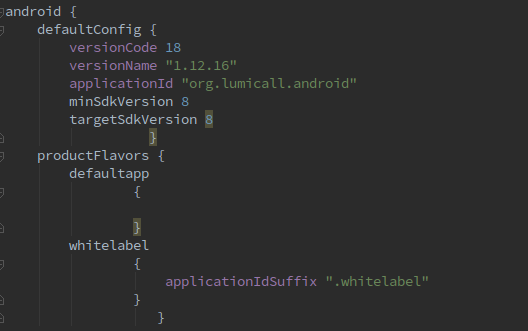
Here is a snippet from my build.gradle file::

snippetcrop Note: You have to define at least two flavors to be able to build multiple variants.
Because once you have flavors, you can only build flavored application. You can t just build default configuration anymore. Define an empty flavor, with no applicationIdSuffix at all, and it will use all of the default config section.

This week I d be moving forward with the implementation of whitelabelling using productFlavors in Lumicall.
I would love to hear from someone who has done this before!
Comment here or email me and I promise you an excellent home-made-store-brought cake!

Wishing you all HAPPY HOLIDAYS! !
-U

Shirish Agarwal: The wine and dine at debconf16

For the wine connoisseur

FOR the Wine Connoisseur

All photos courtesy KK . If any deviations, would put up labels sharing whose copyright it is. Before I get into all of that, I was curious about Canada and taking the opportunity of debconf happening there in a few months, asked few people what they thought of digital payments, fees and expenses in their country and if plastic cash is indeed used therein. The first to answer was Tyler McDonald (no idea if he is anyway related to the fast-food chain McDonalds which is a worldwide operation.) This is what he had to say/share
You can use credit / debit cards almost everywhere. Restaurant waiters also usually have wireless credit / debit terminals that they will bring to your table for you to settle your bill. How much your bank charges depends on your Canadian bank and the banking plan you are on. For instance, on my plan through the Bank Of Montreal, I get (I think) 20 free transactions a month and then after that I m charged $0.50CDN/piece. However, if I go to a Bank Of Montreal ATM and withdraw cash, there is no service fee for that. There is no service fee for using *credit* cards, only *debit* cards tend to have the fee. I live in a really rural area so I can t always get to a Bank Of Montreal machine for cash. So what I usually end up doing, is either pay by credit and then pay of the balance right away so I don t have to pay interest, or when I do use my bank card to pay for something, I ask if I can get cash back as well. Yes, Canada converted to plastic notes a few years ago. We ve also eliminated the penny. For cashless transactions, you pay the exact amount billed. If you re paying somebody in cash, it is rounded up or down to the nearest 5 cents. And for $1 or $2, instead of notes, we ve moved over to coins. I personally like the plastic notes. They re smoother and feel more durable than the paper notes. I ve had one go through a laundry load by accident and it came out the other side fine.
Another gentleman responded with slightly more information which probably would interest travellers from around the world, not just Indians
Quebec has its own interbank system called Interac (https://interac.ca/en/about/our-company.html). Quebec is a very proud and independent region and for many historical reasons they want to stand on their own, which is why they support their local systems. Some vendors will support only Interac for debit card transactions (at least this was the case when I stayed there the beginning of this decade, it might have changed a bit). *Most* vendors (including supermarkets like Provigo, Metro, etc) will accept major credit and debit cards, although MasterCard isn t accepted as widely there as Visa is. So, if you have one of both, load up your Visa card instead of your MasterCard or get a prepaid Visa card from your bank. They support chip cards everywhere so don t worry about that. If you have a 5 digit pin on any of your cards and a vendor asks you for a 4 digit pin, it will work 90%+ of the times if you just enter the first 4 digits, but it s usually a good idea to go change your pin to a 4 digit just to be safe.
From the Indian perspective all of the above fits pretty neat as we also have Pin and Chip cards (domestically though most ATMs still use the magnetic strip and is suspected that the POS terminals aren t any better.) That would be a whole different story so probably left for another day. I do like the bit about pocketing the change tip. As far as number of free transactions go, it was pretty limited in India for few years before the demonetization happening now. Few years before, I do remember doing as many transactions on the ATM as I please but then ATM s have seen a downward spiral in terms of technology upgradation, maintenance etc. There is no penalty to the bank if the ATM is out-of-order. If there was significant penalty then we probably would have seen banks taking more care of ATM s. It is a slightly more complex topic hence would take a stab at it some other day. Do hope though that the terms for ATM usage for bank customers become lenient similar to Canada otherwise it would be difficult for Indians to jump on the digital band-wagon as you cannot function without cheap, user-friendly technology. Cash machines: Uneven spread, slowing growth - Copyright Indian Express The image has been taken from this fascinating article which appeared in Indian Express couple of days back. Coming back to the cheese and wine in the evening. I think we started coming back from Eagle Encounters around 16:30/17:00 hrs Cape Town time. Somehow the ride back was much more faster and we played some Bollywood party music while coming back (all cool). Suddenly remembered that I had to buy some cheese as I hadn t bought any from India. There is quite a bit of a post where I m trying to know/understand if spices can be smuggled (which much later I learnt I didn t need to but that s a different story altogether), I also had off-list conversations with people about cheese as well but wasn t able to get any good recommendations. Then saw that KK bought Mysore Pak (apparently she took a chance not declaring it) which while not being exactly cheese fit right into things. In her own words a South Indian ghee sweet fondly nicknamed the blocks of cholesterol and reason #3 for bypass surgery . KK So with Leonard s help we stopped at a place where it looked like a chain of stores. Each store was selling something. Seeing that, I was immediately transported to Connaught Place, Delhi Connaught Place, Delhi The image comes from http://planetden.com/food/roundabout-world-connaught-place-delhi which attempts to explain Connaught Place. While the article is okish, it lacks soul and not written like a Delhite would write or anybody who has spent a chunk having spent holidays at CP. Another day, another story, sorry. What I found interesting about the stores while they were next to each other, I also eyed an alcohol shop as well as an Adult/Sex shop. I asked Leonard as to how far we were from UCT and he replied hardly 5 minutes by car and was shocked to see both alcohol and a sex shop. While an alcohol shop some distance away from a college is understandable, there are few and far around Colleges all over India, but adult shops are a rarity. Unfortunately, none of us have any photos of the place as till that time everybody s phone was dead or just going to be dead and nobody had thought to bring a portable power pack to juice our mobile devices. A part of me was curious to see what the sex shop would have and look from inside, but as was with younger people didn t think it was appropriate. All of us except Jaminy and someone else (besides Leonard) decided to stay back, while the rest of us went inside to explore the stores. It took me sometime to make my way to the cheese corner and had no idea which was good and which wasn t. So with no idea of brands therein, the only way to figure out was the pricing. So bought two, one a larger 500 gm cheap piece and a smaller slightly more expensive one just to make sure that the Debian cheese team would be happy. We did have a mini-adventure as for sometime Jaminy was missing, apparently she went goofing off or went to freshen up or something and we were unable to connect with her as all our phones were dead or dying. Eventually we came back to UCT, barely freshened up when it was decided by our group to go and give our share of goodies to the cheese and wine party. When I went up to the room to share the cheese, came to know they needed a volunteer for cutting veggies etc. Having spent years seeing Yan Can Cook and having practised quite a bit tried to do some fancy decoration and some julian cutting but as we got dull knives and not much time, just did some plain old cutting
The salads

The Salads, partly done by me.

I have to share I had a fascinating discussion about cooking in Pressure Cookers. I was under the assumption that everybody knows how to use Pressure Cookers as they are one of the simplest ways to cook food without letting go of all the nutrients. At least, I believe this to be predominant in the Asian subcontinent and even the chinese have similar vessels for cooking. I use what is called the first generation Pressure Cooker. I have been using a 1.5 l Prestige Pressure Cooker over half a decade, almost used daily without issues. http://www.amazon.in/Prestige-Nakshatra-Aluminium-Pressure-Cooker/dp/B00CB7U1OU
Prestige 1.5 L Pressure Cooker

1.5 Litre Pressure Cooker with gasket and everything.

There are also induction pressure cookers nowadays in the Indian market and this model https://www.amazon.in/Prestige-Deluxe-Induction-Aluminum-Pressure/dp/B01KZVPNGE/ref=sr_1_2
Induction base cooking for basmati rice

Best cooker for doing Basmati Biryanis and things like that.

Basmati is long-grain, aromatic rice which most families used in very special occasions such as festivals, marriages, anything good and pure is associated with the rice. I had also shared my lack of knowledge of industrial Microwave Ovens. While I do get most small Microwave Ovens like these , cooking in industrial ovens I simply have no clue. Anyways, after that conversation I went back, freshened up a bit and sometime later found myself in the middle of this
Collection of Wine Bottles

Random selection of wine bottles from all over the world.

Also at times found myself in middle of this
Chocolates all around me.

CHOCOLATES

I tried quite a few chocolates but the best one I liked (don t remember the name) was a white caramel chocolate which literally melted into my mouth. Got the whole died and went to heaven experience . Who said gluttony is bad Or this
French Bread, Wine and chaos

French Bread, Wine and chaos

As can be seen the French really enjoy their bread. I do remember a story vaguely (don t remember if it was a children s fairy tale or something) about how the French won a war through their french bread. Or this
Juices for those who love their health

Juices for those who love their health

We also had juices for the teetotaller or who can t handle drinks. Unsurprisingly perhaps, by the end of the session, almost all the different wines were finito while there was still some juices left to go around. From the Indian perspective, it wasn t at all exciting, there were no brawls, everybody was too civilized and everybody staggered off when they met their quota. As I was in holiday spirit, stayed up late, staggered to my room, blissed out and woke up without any headache. Pro tip Drink lots and lots and lots of water especially if you are drinking. It flushes out most of the toxins and also helps in not having after-morning headaches. If I m going drinking, I usually drown myself in at least a litre or two of water, even if I had to the bathroom couple of times before going to bed. All in all, a perfect evening. I was able to connect/talk with some of the gods whom I had wanted to for a long time and they actually listened. Don t remember if I mumbled something or made some sense in small-talk or whatever I did. But as shared, a perfect evening
Filed under: Miscellenous Tagged: #ATM usage, #Canada, #Cheese and Wine party, #Cheese shopping, #Connaught Place Delhi, #Debconf16, #Debit card, #French bread, #Julian cutting, #Mysore Pak, #white caramel chocolate

John Goerzen: Singing with Kids

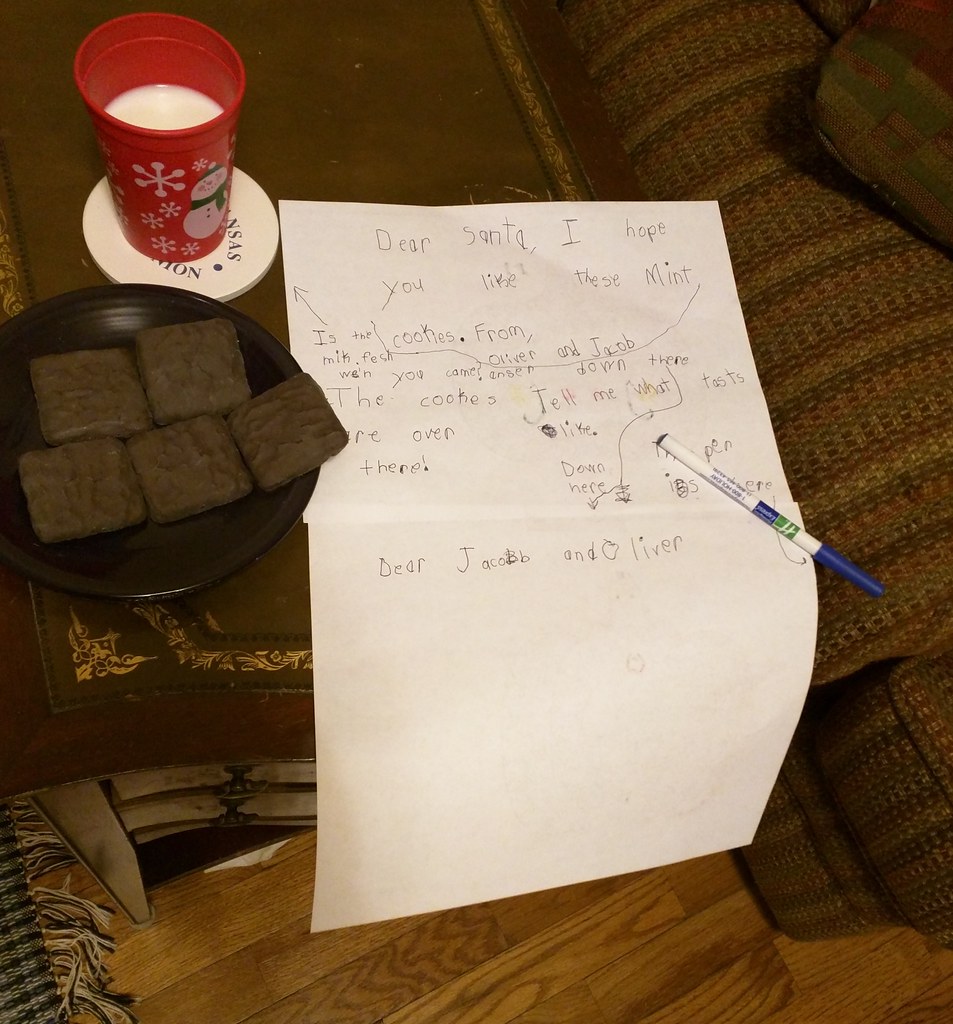
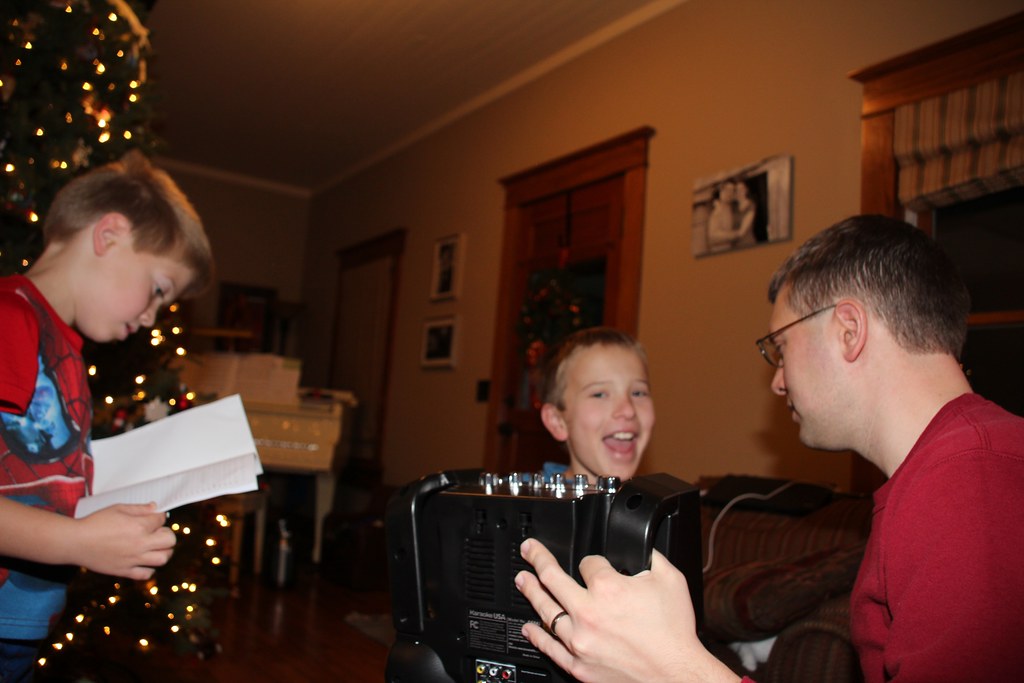
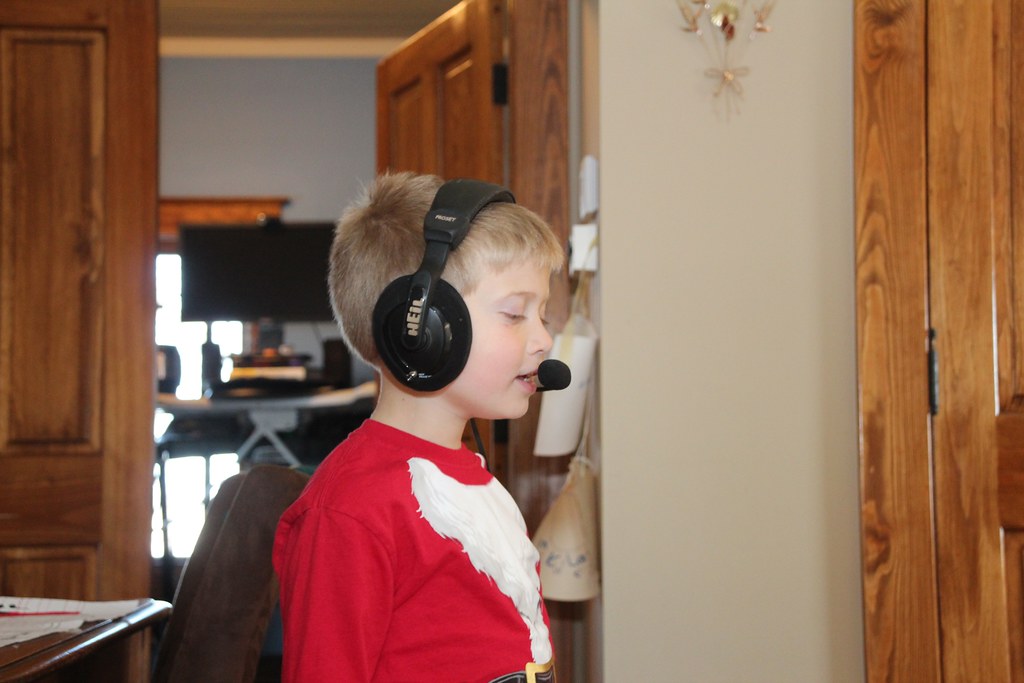
For four years now, we ve had a tradition: I go up to the attic one night, make a lot of noise, and pretend to be Santa. The boys don t think Santa is real, but they get a huge kick out of this anyway. The other day, this wound up with me singing a duet with my 7-year-old Oliver, and seeing a hugely delighted 10-year-old Jacob. All last week, the boys had been lobbying for me to be Santa . They aren t going to be able to be here on Christmas day this year, so I thought why not let them have some fun. I chose one present to give them early too. So, Saturday night, I said they could get ready for Santa. They found some cookies somewhere, got out some milk. And Oliver wrote this wonderful note to Santa : IMG_20161217_204244_cropped That is a note I m going to keep for a long time. He helpfully drew arrows pointing to the milk, cookies, and even the pen. He even started Santa s reply at the bottom! So, Saturday night, I snuck up to the attic, pretended to be Santa, and ate some cookies, drank some milk, and wrote Oliver a note. And I left a present. Jacob has been really getting into music lately, and Laura suggested I find something for the boys. I went looking for something that could record also, and came up with what has got to be a kid s dream: a karaoke machine. The particular one I found came with two microphones, a CD player, audio recording onto SD card (though it s a little dodgy), and a screen for showing words on any music that s karaoke-enhanced. Cue gasps of awe and excitement from the boys when we came down in our PJs and sweats at 6:45 Sunday morning to check it out. IMG_8895 Jacob excitedly began exploring all the knobs and options on it (they were particularly fond of the echo feature), while Oliver wanted to sing. So we found one of his favorite Christmas songs, and here he is singing it with me. IMG_8908 When you have a system with a line in, line out, and several microphone jacks, you can get creative. With a few bits of adapters from my attic, the headset I use for amateur radio worked with it perfectly. Add on a little mic extension cord, and pretty soon Oliver was pretending to be an announcer for a football game! IMG_8919 Then, Oliver decided he would act out a football game while Jacob and I were the announcers. Something tells me there will be much fun had with this over the next while! Just wait until I show them how to hook up a handheld radio to it in order to make a remotely-activated loudspeaker

21 December 2016

Holger Levsen: 20161221-debian-edu-sprint-in-oslo

What we did at the Debian Edu / Skolelinux gathering in November 2016 in Oslo From November 25 to 27 some people met in the hackerspace bitraf in downtown Oslo. On Saturday and Sunday we met in the morning and hacked and translated all day until we went for dinners in the evening. Despite the short time I think we managed to get a lot done and had good fun, so I'm hoping we'll have another gathering in 2017! Debian Edu / Skolelinux is currently in better shape regarding the upcoming Debian release than we ever have been, which is pretty awesome. Today, on December 21st, all our changes are in Stretch, except for debian-edu-artwork.git, which awaits a desktop-base upload to unstable the only thing missing is being able to install Debian Edu using our profiles from official media releasing Debian Edu Stretch on the same day as Debian Stretch would be a huge success though! These are the notes taken in a pad (thanks riseup!) during the meeting: Phil Hands worked on Knut Yrvin worked on Ingrid Yrvin worked on Ole-Erik Yrvin worked on Wolfgang Schweer worked on Petter Reinholdtsen worked on Dominik George worked on Holger Levsen worked on Mike Gabriel was sick and couldnt come to Oslo and worked at home instead: Thanks to the Debian sprints programm and our sponsors for supporting the travel of Wolfgang, Dominik, Phil and myself! Mike opted out from reimbursement as he couldn't travel due to sickness.

Norbert Preining: Cornelia Travnicek Junge Hunde

A novel on late adolescence and self-finding, set on a mixture of stages ranging from Vienna, its Hinterland, to China. The recent book of the Viennese young writer Cornelia Travnicek (official page, WikiPedia) tells a complicated story about finding and loosing your parents.
The main actors, Johanna, always helpful and supportive of those around here, and Ernst, a Chinese adoptive son in Austria, are good friends since early childhood. He sets out to find his parents in China, while she has to deal with profound change in her own world while worrying about his travel and distance. Although in principle a nice and interesting story, I felt that the book is at times weighting too much on sentiments, second hand sentiments, and trying to extend the story. By itself this wouldn t be a problem if the language would be of a great story teller, but in this case it just extends and gave me hard time continue reading. The surprising ending isn t that surprising, a single line 2/3 through the book just let it slip so that it is clear who is the father. All in all not a bad book, but I wouldn t recommend it from the depth of my heart. Still, as Viennese I felt a bit nostalgic with parts of dialect appearing in the book.

Hideki Yamane: considering package delta


From Android Developers Blog: Saving Data: Reducing the size of App Updates by 65%

We should consider providing delta package, especially update packages from security.debian.org, IMO.

Update:
Yes, B lint R czey and others via email pointed out there's debdelta.debian.net for this purpose. But for general usage, it should be intergrated to the infrastructure, without any extra manual setup. Probably apt (as Julian Andres Klode said in his talk in DebConf16and also infrastructure (dak?) would need to be modified to implement it.

Applying delta to daily unstable/testing update may be hard, but security update packages from security.debian.org and stable point release is worse for the effort at least, IMO.

Some rpm distro (Fedora and openSUSE) have already provided delta package, so we can do it, too. Right? :-)

20 December 2016

Reproducible builds folks: Reproducible Builds: week 86 in Stretch cycle

What happened in the Reproducible Builds effort between Sunday December 11 and Saturday December 17 2016: Reproducible builds world summit The 2nd Reproducible Builds World Summit was held in Berlin, Germany on December 13th-15th. The event was a great success with enthusiastic participation from an extremely diverse number of projects. Many thanks to our sponsors for making this event possible! Reproducible Summit 2 in Berlin 2016 Whilst there is an in-depth report forthcoming, the Guix project have already released their own report. Media coverage Reproducible work in other projects Documentation update A large number of revisions were made to the website during the summit, including re-structuring existing content and creating a concrete plan to move the wiki content to the website: Elsewhere in Debian Packages reviewed and fixed, and bugs filed Chris Lamb: Daniel Shahaf: Reiner Herrmann: Reviews of unreproducible packages 9 package reviews have been added, 19 have been updated and 17 have been removed in this week, adding to our knowledge about identified issues. 3 issue types have been added: One issue type was updated: Weekly QA work During our reproducibility testing, some FTBFS bugs have been detected and reported by: diffoscope development reprotest development trydiffoscope development Misc. This week's edition was written by Chris Lamb and reviewed by a bunch of Reproducible Builds folks on IRC and via email.

Petter Reinholdtsen: Isenkram updated with a lot more hardware-package mappings

The Isenkram system I wrote two years ago to make it easier in Debian to find and install packages to get your hardware dongles to work, is still going strong. It is a system to look up the hardware present on or connected to the current system, and map the hardware to Debian packages. It can either be done using the tools in isenkram-cli or using the user space daemon in the isenkram package. The latter will notify you, when inserting new hardware, about what packages to install to get the dongle working. It will even provide a button to click on to ask packagekit to install the packages. Here is an command line example from my Thinkpad laptop:
% isenkram-lookup  
bluez
cheese
ethtool
fprintd
fprintd-demo
gkrellm-thinkbat
hdapsd
libpam-fprintd
pidgin-blinklight
thinkfan
tlp
tp-smapi-dkms
tp-smapi-source
tpb
%
It can also list the firware package providing firmware requested by the load kernel modules, which in my case is an empty list because I have all the firmware my machine need:
% /usr/sbin/isenkram-autoinstall-firmware -l
info: did not find any firmware files requested by loaded kernel modules.  exiting
%
The last few days I had a look at several of the around 250 packages in Debian with udev rules. These seem like good candidates to install when a given hardware dongle is inserted, and I found several that should be proposed by isenkram. I have not had time to check all of them, but am happy to report that now there are 97 packages packages mapped to hardware by Isenkram. 11 of these packages provide hardware mapping using AppStream, while the rest are listed in the modaliases file provided in isenkram. These are the packages with hardware mappings at the moment. The marked packages are also announcing their hardware support using AppStream, for everyone to use: air-quality-sensor, alsa-firmware-loaders, argyll, array-info, avarice, avrdude, b43-fwcutter, bit-babbler, bluez, bluez-firmware, brltty, broadcom-sta-dkms, calibre, cgminer, cheese, colord, colorhug-client, dahdi-firmware-nonfree, dahdi-linux, dfu-util, dolphin-emu, ekeyd, ethtool, firmware-ipw2x00, fprintd, fprintd-demo, galileo, gkrellm-thinkbat, gphoto2, gpsbabel, gpsbabel-gui, gpsman, gpstrans, gqrx-sdr, gr-fcdproplus, gr-osmosdr, gtkpod, hackrf, hdapsd, hdmi2usb-udev, hpijs-ppds, hplip, ipw3945-source, ipw3945d, kde-config-tablet, kinect-audio-setup, libnxt, libpam-fprintd, lomoco, madwimax, minidisc-utils, mkgmap, msi-keyboard, mtkbabel, nbc, nqc, nut-hal-drivers, ola, open-vm-toolbox, open-vm-tools, openambit, pcgminer, pcmciautils, pcscd, pidgin-blinklight, printer-driver-splix, pymissile, python-nxt, qlandkartegt, qlandkartegt-garmin, rosegarden, rt2x00-source, sispmctl, soapysdr-module-hackrf, solaar, squeak-plugins-scratch, sunxi-tools, t2n, thinkfan, thinkfinger-tools, tlp, tp-smapi-dkms, tp-smapi-source, tpb, tucnak, uhd-host, usbmuxd, viking, virtualbox-ose-guest-x11, w1retap, xawtv, xserver-xorg-input-vmmouse, xserver-xorg-input-wacom, xserver-xorg-video-qxl, xserver-xorg-video-vmware, yubikey-personalization and zd1211-firmware If you know of other packages, please let me know with a wishlist bug report against the isenkram-cli package, and ask the package maintainer to add AppStream metadata according to the guidelines to provide the information for everyone. In time, I hope to get rid of the isenkram specific hardware mapping and depend exclusively on AppStream. Note, the AppStream metadata for broadcom-sta-dkms is matching too much hardware, and suggest that the package with with any ethernet card. See bug #838735 for the details. I hope the maintainer find time to address it soon. In the mean time I provide an override in isenkram.

Mario Lang: Upgrading GlusterFS from Wheezy to Stretch

We are about to upgrade one of our GlusterFS-based storage systems at work. Fortunately, I was worrying about the upgrade procedure for the Debian packages not being tested by the maintainers. It turns out I was right. Simply upgrading the packages without manual intervention will apparently render your GlusterFS server unusable.
Basic setup I have only tested the most basic distributed GlusterFS setup. No replication whatsoever. We have two GlusterFS servers, storage1 and storage2. A peering between both has been established, and a very basic volume has been configured:
storage1:~# gluster
gluster> peer status
Number of Peers: 1
Hostname: storage2
Uuid: 2d22cc13-2252-4cf1-bfe9-3d27fa2fbc29
State: Peer in Cluster (Connected)
gluster> volume create data storage1:/srv/data storage2:/srv/data
...
gluster> volume start data
...
gluster> volume info
Volume Name: data
Type: Distribute
Volume ID: e2bd5767-4b33-4e57-9320-91ca76f52d56
Status: Started
Number of Bricks: 2
Transport-type: tcp
Bricks:
Brick1: storage1:/srv/data
Brick2: storage2:/srv/data
For the test setup, I populated the volume with a number of files.
Upgrading from Wheezy to Jessie To be save, stop the volume before you begin with the package upgrade:
gluster> volume stop data
And now perform your dist-upgrade. After the upgrade, you will have to perform two manual clean ups. Both actions have to be performed on all storage servers.
/etc/glusterd is now /var/lib/glusterd The package maintainers have apparently neglected to take care of this one. You manually need to copy the old configuration files over.
storage1:~# cd /var/lib/glusterd && cp -r /etc/glusterd/* .
Put volume-id in extended attribute GlusterFS 3.5 requires the volume-id in an extended directory attribute. This is also not automatically handled during package upgrade.
storage1:~# vol=data
storage1:~# volid=$(grep volume-id /var/lib/glusterd/vols/$vol/info   cut -d= -f2   sed 's/-//g')
storage1:~# setfattr -n trusted.glusterfs.volume-id -v 0x$volid /srv/data
With these two steps performed on all GlusterFS servers, you should now be able to start and mount your volume again in Debian Jessie. Do not forget to explicitly stop the volume again before continueing with the next upgrade step.
Upgrading from Jessie to Stretch After you have dist-upgraded to Stretch, there is yet another manual step you have to take to convert the volume metadata to the new layout in GlusterFS 3.8. Make sure you have stopped your volumes and the GlusterFS server.
storage1:~# service glusterfs-server stop
Now run the following command:
storage1:~# glusterd --xlator-option *.upgrade=on -N
Now you should be ready to start your volume again:
storage1:~# service glusterfs-server start
storage1:~# gluster
gluster> volume start data
And mount it:
client:~# mount -t glusterfs storage1:/data /mnt
You should now be running GlusterFS 3.8 and your files should still all be there.

Thorsten Glaser: How to use the subtree git merge strategy

This article might be perceived as a blatant ripoff of this Linux kernel document, but, on the contrary, it s intended as add-on, showing how to do a subtree merge (the multi-project merge strategy that s actually doable in a heterogenous group of developers, as opposed to subprojects, which many just can t wrap their heads around) with contemporary git ( stupid content tracker ). Furthermore, the commands are reformatted to be easier to copy/paste.

To summarise: you re on the top level of a checkout of the project into which the other project (Bproject) is to be merged. We wish to merge the top level of Bproject s master branch as (newly created) subdirectory dir-B under the current project s top level.

	$ git remote add --no-tags -f Bproject /path/to/B/.git
	$ git merge -s ours --allow-unrelated-histories --no-commit Bproject/master
	$ git read-tree -u --prefix=dir-B/ Bproject/master
	$ git commit -m 'Merge B project as our subdirectory dir-B'
	Later updates are easy:
	$ git pull -s subtree Bproject master
 

(mind the trailing slash after dir-B/ on the read-tree command!) Besides reformatting, the use of --allow-unrelated-histories recently became necessary. --no-tags is also usually what you want, because tags are not namespaced like branches.

Another command you might find relevant is how to clean up orphaned remote branches:

	$ for x in $(git remote); do git remote prune "$x"; done
 

This command locally deletes all remote branches (those named origin/foo ) that have been deleted on the remote side. Update: Natureshadow wishes you to know that there is such a command as git subtree which can do similar things to the subtree merge strategy explained above, and several more related things. It does, however, need the pr fix on every subsequent pull.

Elizabeth Ferdman: 2 Week Progress Update for PGP Clean Room

I m interning for the PGP Clean Room Project, which aims to code best practices for using GnuPG into the workflow in order to make it easier for users to create and manage their keys. The live disc already contains code for partitioning and mounting the sd cards, and setting up a sample gpg.conf. For my first task, I decided to start building a basic TUI to gather the user s info and preferences for the primary and secondary encryption keys, as well as for additional subkeys and uids, and then create the keys based on the user s input. See the code on github. For the TUI, I decided on whiptail, a command line program that creates user-friendly dialogs. You can see what the whiptail script looks like so far here and run it to see what the TUI looks like. I also explored different ways to run the gpg2 commands non-interactively. One option is Unattended Key Generation using the batch option, however that doesn t allow for multiple subkeys or setting a different expiration date for the subkey than for the primary key. gpg2 --gen-key --batch gen-key-script or gpg2 --expert --full-gen-key --batch gen-key-script The command-fd and command-file options also allow you to bypass the interactive prompt: echo "uid 1\nprimary\nsave\n" gpg2 --command-fd 0 --status-fd 2 --edit-key 'Joe Tester' Newer versions of gpg2 simplify the creation of primary/subkeys and editing of keys with one liners such as: gpg2 --quick-gen-key 'User Name <user@example.com>' rsa4096 sign 3y gpg2 --quick-addkey <fingerprint> rsa2048 encrypt 1y gpg2 --quick-adduid <fingerprint> <primary-uid> <new-uid> Aside from making life easier for command line users, gpg 2.1.x also supports ECC keys and creates a revocation certificates by default.

19 December 2016

Mike Gabriel: [Arctica Project] Release of nx-libs (version 3.5.99.3)

Introduction NX is a software suite which implements very efficient compression of the X11 protocol. This increases performance when using X applications over a network, especially a slow one. NX (v3) has been originally developed by NoMachine and has been Free Software ever since. Since NoMachine obsoleted NX (v3) some time back in 2013/2014, the maintenance has been continued by a versatile group of developers. The work on NX (v3) is being continued under the project name "nx-libs". Release Announcement On Monday, Dec 19th, version 3.5.99.3 of nx-libs has been released [1]. This release brings another major backport of libNX_X11 (to the status of X.org's libX11 1.6.4, i.e. latest HEAD) and also a major backport of the xtrans library (status of latest HEAD at X.org, as well). This big chunk of work has again been performed by Ulrich Sibiller. Thanks for your work on this. This release is also the first version of nx-libs (v3) that has dropped nxcompext as shared library. We discovered that shipping nxcompext as shared library is a big design flaw as it has to be built against header files private to the Xserver (namely, dix.h). Conclusively, code from nxcompext was moved into the nxagent DDX [2]. Furthermore, we worked again and again on cleaning up the code base. We dropped various files from the Xserver code shipped in nx-libs and various compilier warnings have been amended. In the upstream ChangeLog you will find some more items around code clean-ups and .deb packaging, see the diff [3] on the ChangeLog file for details. A very special and massive thanks to all major contributors, namely Ulrich Sibiller, Mihai Moldovan and Vadim Troshchinskiy. Well done!!! Also a special thanks to Vadim Troshchinskiy for fixing some regressions in nxcomp introduced by the Unix socketeering support. Change Log A list of recent changes (since 3.5.99.2) can be obtained from here. Known Issues from 3.5.99.2 (solved in 3.5.99.3) This version of nx-libs now works fine again with LDFLAGS / CFLAGS having the -pie / -fPIE hardening flags set. Binary Builds You can obtain binary builds of nx-libs for Debian (jessie, stretch, unstable) and Ubuntu (trusty, xenial) via these apt-URLs: Our package server's archive key is: 0x98DE3101 (fingerprint: 7A49 CD37 EBAE 2501 B9B4 F7EA A868 0F55 98DE 3101). Use this command to make APT trust our package server:
 wget -qO - http://packages.arctica-project.org/archive.key   sudo apt-key add -
The nx-libs software project brings to you the binary packages nxproxy (client-side component) and nxagent (nx-X11 server, server-side component). Ubuntu developers, please note: we have added nightly builds for Ubuntu latest to our build server. This has been Ubuntu 16.10 so far, but we will soon drop 16.10 support in nightly builds and add 17.04 support. References

Norbert Preining: I. J. Parker The Dragon Scroll

Very enthralling and entertaining criminal story set in the 11th century Japan, the starting point of a series of novels around Sugawara Akitada ( ), a fictional official/scholar in the Heian period who solves several difficult cases using his great balance of knowledge and common sense.
Akitada is sent to the far north (nowadays around Chiba) to check what has happened to the last three tax convoys that never appeared in the capital. He pokes around and unravels a involved plot to overthrow law and order. A few love stories, dead ends, and lots over wandering around brings the story to a wild finish. The first book in the Akitada series reads very smoothly and quickly, never boring. It gives nice fews onto the society as imagined by the (scholarly) author, and somehow manages to transfer the feeling of living in this area to the reader. For those with interest in criminal stories and Japan, it is a very recommendable book.

Chris Lamb: 10 years of Debian

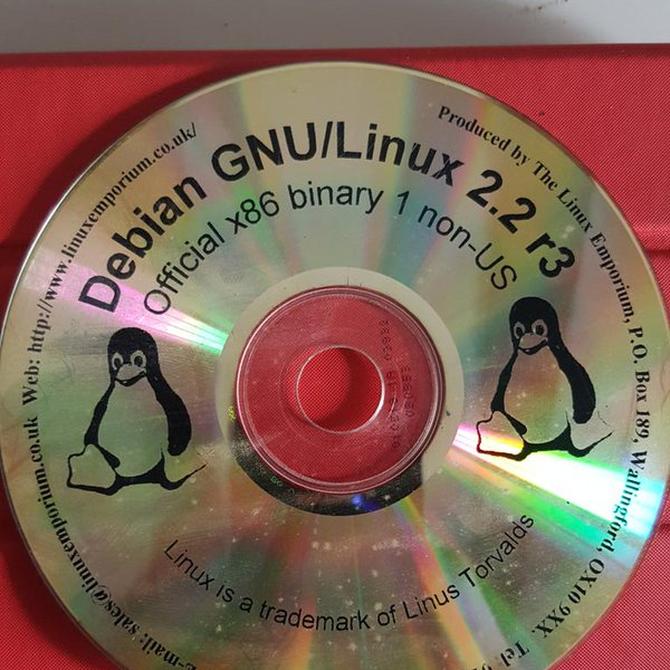
Today marks the 10-year anniversary of my first contribution to Debian GNU/Linux. I will not recount the full history here but my first experience with Debian was a happy accident. I had sent off for a 5-CD set of Red Hat from The Linux Emporium only to discover I lacked the required 12MB of RAM. Annoyed, I reached for the Debian "potato" CD that was included gratis in my order due to it being outdated at the time Fast-forwarding a few years, whilst my first contribution was trivial, it was Thomas Bushnell's infectious enthusiasm that led me to contribute more, eventually becoming a Google Summer of Code student under Daniel Baumann, and finally becoming an official Debian Developer in September 2008 with Thomas Viehmann as my Application Manager. (Some things may never change, however I still struggle with the bug tracker's control@ interface.)
The response I got to my patch always reminds me of the irrational power of providing attibution. I've always liked to tell myself I'm above such vanities but perhaps the truly mature approach would be to accept that ego is part of the human condition and as a community take steps to avoid handicapping ourselves by underestimating the value of "trivialities" such as having one's name listed. I've since been fascinated by the number of maintainers who do not attribute patches in changelogs, especially from newcomers or when the changes are non-trivial a handful in particular have stung me fairly deeply. I would certainly concede that it adds nothing technical and can even be distracting, but it seems a reasonable concession that dramatically increases the chance of future efforts or, frankly, is simply a kindly gesture of thanks and good will. Given our level of technical expertise, I fear we regularly suffer from not having sufficient empathy for newcomers or first-time users who lack the context or orientation that we possess. Anyway, here's to another ten

18 December 2016

Iustin Pop: Printer fun

Had some printer fun this week. It was fun in the sense that failure modes are interesting, not that there was much joy in the process. My current document printer is an HP that I bought back in early 2008; soon 9 years old, that is. When I got the printer I was quite happy: it supports Postscript, it supports memory extension (which allowed me to go from the built-in 64MB to a whopping 320MB), it is networked and has automatic duplex. Not good for much more than document printing, but that it did well. I didn't print a lot on it (averaged it was well below the recommended monthly limit), which might explain the total trouble-free operation, but I did change the toner cartridges a couple of times. The current cartridges were running low for a while, but I didn't need to change them yet. As I printed a user manual at the beginning of the week (~300+ pages in total), I ran out of the black half-way through. Bought a new cartridge, installed it, and the first strange thing was that it still showed Black empty - please replace . I powered the printer off and turned it on again (the miracle cure for all IT-related things), and things seemed OK, so I restarted printing. However, this time, the printer was going through 20-30 pages, and then was getting stuck in "Printing document" with green led blinking. Waited for 20 minutes, nothing. So cancel the job (from the printer), restart printing, all fine. The next day I wanted to print a single page, and didn't manage to. Checked that the PDF is normal, checked an older PDF which I printed successfully before, nothing worked. Changed drivers, unseated & re-seated the extra memory, changed operating systems, nothing. Not even the built-in printer diagnostic pages were printing. The internet was all over with "HP formatter issues"; apparently some HP printers had "green" (i.e. low-quality) soldering, and were failing after a while. But people were complaining about 1-2-4 years, not 9 that my printer worked, and it was very suspicious that all troubles started after my cartridge replacement. Or, more likely, due to the recent sudden increase in printing. Given that formatter board fixes (bake in the oven for N minutes at a specific temperature to reflow the soldering) are temporary and that you can't find replacement parts for this printer, I started looking for a new printer. To my surprise (and dismay at the waste that capitalism produces), a new printer from a higher class was cheaper than replacing all 4 cartridges in my printer. So I had a 90% full black cartridge that I couldn't reuse, but I'd get a new printer for not much more. Interestingly, in 9 years, the development was: I was however happy that one can still get OS-independent (Postscript), networked printers that are small enough for home use and don't (necessarily) come with WiFi. However, one thing still bothered me: did I have such problems because the printer died of overwork at old age, or was it related to the cartridge change? So I start searching again, and I find a post on a forum (oh Google, why did you remove "forum search" and replaced it with "language level"?) that details a hidden procedure to format the internal storage of the printer, exactly for my printer model, exactly for my symptoms. Huh, I will lose page count, but this is worth a try So I do press the required keys, I see the printer booting and saying "erasing ", then asking for language, which makes me happy because it seems the forum post was correct in one regard. I confirm English, the printer reboots once more, and then when it comes up it warns me: "Yellow cartridge is a non-HP original, please confirm". I get confused, and re-seat all cartridges, to no avail. Yellow is non-HP. Sigh, maybe that cartridge had something that confused the printer? When I visit its web page however, all cartridges except the newly installed black one are marked as Non-HP; this only means that I can't see their remaining toner level, but otherwise the printer is restored back to life. I take the opportunity to also perform a firmware upgrade (only five years newer firmware, but still quite old), but this doesn't solve the Non-HP message. The printer works now, and I'm left wondering: was this all a DRM-related failure, something like new cartridge chip which had some new code that confused the printer so bad it needed reformatting, at which point the old cartridge code is no longer supported (for whatever reason)? Was it just a fluke, unrelated to DRM? Was the problem that I powered off the printer soon after replacing the cartridge, while it was still doing something (e.g. preparing to do a calibration after the change)? And another, more practical question: I have 3 cartridges to replace still; they were at 10% before this entire saga, and I'm not able to see their level anymore, but they'll get down to empty soon. The black cartridge in the printer is already at 77%, which is surprising as I didn't print that much. So should I replace the cartridges on what is a possibly fully functional, but also possibly a dying printer? Or buy a new one for slightly more, throwing out possibly good hardware? Even though I understand the business reason behind it, I hate the whole concept of "the printer is free, you pay for the ink". Though in my case "free" didn't mean bad, as a lifetime of 9 years is good enough for a printer.

Daniel Stender: How to cheat setuptools-scm (Debian diary)

[2016-12-19: some additions] This is another little issue from Python packaging for Debian which I came across lately packaging the compressed NumPy based data container Bcolz. Upstream uses setuptools-scm to determine the software s version during build time from the source code management environment the code is in. This method is convenient for the upstream development because with that the version number doesn t need to be hard-coded, and often people just forget to update that (and other version carrying files like doc/conf.py) when a new version of a project is released. python-setuptools just needs to be added to the setup.py to do its job, and in Bcolz the code goes like this:
setup(
    name="bcolz",
    use_scm_version= 
        'version_scheme': 'guess-next-dev',
        'local_scheme': 'dirty-tag',
        'write_to': 'bcolz/version.py'
The file the version number is written to is bcolz/version.py. This file isn t in the upstream code revision nor in the tarball which was released by the upstream developers, it s always generated during build time. In Debian there is an error if you try to build a package from a source tree which contains files which aren t to be found in the corresponding tarball, like cruft from a previous build, or if any files have changed therefore every new package should be test build also twice in a row in a non-chroot environment. Generally there a two ways to solve this, either you add cruft to debian/clean, or you add the file resp. a matching file pattern to extend-diff-ignore in debian/source/options. Which method is the better one could be discussed, I m generally using the clean option if something isn t in the upstream tarball, and the source/options solution if something is already in the upstream tarball, but gets changed during a build. This is related to your preferred Git procedures, if you remove a file which is in the upstream tarball these removals have to be checked in separately, and that means everytime a new upstream tarball is released that is not very convenient. Another option which is available is to strip certain files from the upstream tarball by putting them on the Files-Excluded in deb/copyright. By the way, the same complex applies to egg-info/: that folder is shipped or is not shipped in the upstream tarball, and files in that folder get changed during build. When the source code is put into a Git environment for Debian packaging, there could be problems with the version number setuptools-scm comes up with. This setuptools extension gets the recent version from the latest Git tag when there is a version number to be found, and that s all right. In Git environments for Debian packaging (like e.g. of the Debian Science group, the Python groups and the others) that is available, like the commonly used upstream tags have that1. The problem is, sometimes the upstream version which Debian has2 doesn t match the original upstream version number which is wanted for version in bcolz/version.py. For example, the suffix +ds is used if the upstream tarball has been stripped from prebuild files or embedded convenience shipments (like it s the case with the Bcolz package where c-blosc/ has been stripped because that s build for another package), of the suffix +dfsg shows that non-DFSG free software has been removed (which can t be distributed through the main archive section). For example, the version string for Bcolz which is found after the build currently (1.1.0+ds1-1) is 1.1.0+ds1:
# coding: utf-8
# file generated by setuptools_scm
# don't change, don't track in version control
version = '1.1.0+ds1'
But that s not wanted because this version never has been released, but appears everywhere:
$ pip list   grep bcolz
bcolz (1.1.0+ds1)
$ python3 -c 'import bcolz; bcolz.print_versions()'
-=-=-=-=-=-=-=-=-=-=-=-=-=-=-=-=-=-=-=-=-=-=-=-=-=-
bcolz version:     1.1.0+ds1
There are several different ways how to fix this. The one with the crowbar (like said in German) is to patch use_scm_version out from setup.py, but if you don t provide any version in exchange the version number which is used by Setuptools then is 0.0.0. The upstream version could be hard-coded into the patch, but then again it has not to be forgotten to update it manually by the maintainer, which is not very convenient. Plus, setup.py could change and the patch then might need to be unfuzzed, thus more work. Bad. A patch could be spared by manipulating and exporting the SETUPTOOLS_SCM_PRETEND_VERSION environment variable for setuptools-scm in debian/rules, which is sometimes used when I see the returns for that string on Debian Code Search. But how to prevent to hard code the version number, here? The dpkg-dev package (pulled by build-essential) ships a Makefile snippet /usr/share/dpkg/pkg-info.mk which could be included into debian/rules. It defines several variables which are useful for packaging, like DEB_SOURCE contains the source package name, they are extracted from debian/changelog. But, DEB_VERSION_UPSTREAM which is available through that puts out the upstream version without epoch and Debian revision, but it s not getting any finer grained out of the box. For a custom fix, a regular expression which removes the +... extensions (if present) from the bare upstream version string would be s/\+[^+]*//:
$ echo "1.1.0+ds1"   sed -e 's/\+[^+]*//'
1.1.0
$ echo "1.1.0"   sed -e 's/\+[^+]*//'
1.1.0
$ echo "1.1.0+dfsg12"   sed -e 's/\+[^+]*//'
1.1.0
With that, a custom variable VERSION_UPSTREAM could be set on the top of DEB_VERSION_UPSTREAM (from pkg-info.mk) in debian/rules:
include /usr/share/dpkg/pkg-info.mk
VERSION_UPSTREAM = $(shell echo '$(DEB_VERSION_UPSTREAM)'   sed -e 's/\+[^+]*//')
export SETUPTOOLS_SCM_PRETEND_VERSION = $(VERSION_UPSTREAM)
Bam, that works (see the commit here):
# coding: utf-8
# file generated by setuptools_scm
# don't change, don't track in version control
version = '1.1.0'
An addition, I ve seen that dh-python also takes care of SETUPTOOLS_SCM_PRETEND_VERSION since 2.20160609. The environment variable is set by the Debhelper build system if python 3, -setuptools-scm is among the build-dependencies in debian/control. The Perl code for that is in dh/pybuild.pm. I think the version number string above comes from dh-python s pretended version, and not from any of the Git tags (which are currently debian/1.1.0+ds1-1 and upstream/1.1.0+ds1).

  1. For Git in Debian packaging, e.g. see the DEP-14 proposal (Recommended layout for Git packaging repositories): http://dep.debian.net/deps/dep14/ [return]
  2. Following the scheme for package versions [epoch:]upstream_version[-debian-revision] [return]

Dirk Eddelbuettel: RcppArmadillo 0.7.600.1.0

armadillo image Earlier this week, Conrad released Armadillo 7.600.1. The corresponding RcppArmadillo release 0.7.600.1.0 is now on CRAN and in Debian. This follows several of rounds testing at our end with a full reverse-dependency of a pre-release version followed by another full reverse-depency check. Which was of course followed by CRAN testing for two more days. Armadillo is a powerful and expressive C++ template library for linear algebra aiming towards a good balance between speed and ease of use with a syntax deliberately close to a Matlab. RcppArmadillo integrates this library with the R environment and language--and is widely used by (currently) 298 other packages on CRAN -- an increase of 24 just since the last CRAN release of 0.7.500.0.0 in October! Changes in this release relative to the previous CRAN release 0.7.500.0.0 are as follows:

Changes in RcppArmadillo version 0.7.600.1.0 (2016-12-16)
  • Upgraded to Armadillo release 7.600.1 (Coup d'Etat Deluxe)
    • more accurate eigs_sym() and eigs_gen()
    • expanded floor(), ceil(), round(), trunc(), sign() to handle sparse matrices
    • added arg(), atan2(), hypot()

Changes in RcppArmadillo version 0.7.500.1.0 (2016-11-11)
  • Upgraded to Armadillo release 7.500.1
  • Small improvement to return value treatment
  • The sample.h extension was updated to the newer Armadillo interface. (Closes #111)

Courtesy of CRANberries, there is a diffstat report. More detailed information is on the RcppArmadillo page. Questions, comments etc should go to the rcpp-devel mailing list off the R-Forge page.

This post by Dirk Eddelbuettel originated on his Thinking inside the box blog. Please report excessive re-aggregation in third-party for-profit settings.

Mike Gabriel: Free Your Phone, Free Yourself, Get Sponsored for your Work

TL;DR; This is a call to every FLOSS developer interested in working towards Free Software driven mobile phones, esp. targetting the Fairphone 2. If your only show stopper is lack of development hardware or lack of financial support, please go on reading below. As I see it, the Fairphone 2 will be (or already is) the FLOSS community platform on the mobile devices market. Regularly, I get new notice about people working on this or that OS port to the FP2 hardware platform. The combination of a hardware-wise sustainably maintained mobile phone platform and a Free (or sort-of-Free) operating system being ported to it, makes the Fairphone 2 a really attractive device. Personally, I run Sailfish OS on my Fairphone 2. Some weeks ago, I got contacted by one of my sponsors letting me know that he got involved in setting up an initiative that works on porting the Ubuntu Table/Phone OS to FP2. That very project is in need of more developers. Possibly, it needs exactly YOU!!! So, if you are a developer that meets one or more of the below requirements and are interested in working in a highly motivated team, please get in touch with the UT4FP [1] project (skill requirements taken from the UT4FP website): My sponsor offers to send out FP2 devices to (seriously) interested developers and if needed, he can also back up developers financially. If you are interested, please get in touch with me (and I'll channel you through...) via IRC (on the OFTC or Freenode network). light+love
Mike (aka sunweaver on IRC) [1] https://www.ut4fp.org/

Johannes Schauer: Looking for self-hosted filesharing software

The owncloud package was removed from Debian unstable and testing. I am thus now looking for an alternative. Unfortunately, finding such replacement seems to be harder than I initially thought, even though I only use a very small subset of what owncloud provides. What I require is some software which allows me to:
  1. upload a directory of files of any type to my server (no "distributed" filesharing where I have to stay online with my laptop)
  2. share the content of that directory via HTTP (no requirement to install any additional software other than a web browser)
  3. let the share-links be private (no possibility to infer the location of other shares)
  4. allow users to browse that directory (image thumbnails or a photo gallery would be nice)
  5. allow me to allow anonymous users to upload their own content into that directory (also only requiring their web browser)
  6. already in Debian or easy to package and maintain due to low complexity (I don't have enough time to become the next "owncloud maintainer")
I thought this was a pretty simple task to solve but I am unable to find any software that fits above criteria. The below table shows the result of my research of what's currently available. The columns mark whether the respective software fulfills one of the six criteria from above.
Software 123456
owncloud
sparkleshare
dvcs-autosync
git annex assistant
syncthing
pydio
seafile
sandstorm.io
ipfs
bozon
droppy
Pydio, seafile and sandstorm.io look promising but they seem to be beasts similar in complexity to owncloud as they bring features like version tracking, office integration, wikis, synchronization across multiple devices or online editing of files which are features that I do not need. I would already be very happy if there was a script which would make it easy to create a hard-to-guess symlink to a directory with data tracked by git annex under my www-root and then generate some static HTML to provide a thumbnails view or a photo gallery. Unfortunately, even that solution would not be sufficient as it would still disallow public upload by anybody whom I would give the link to... If you know some software that meets my criteria or would like to submit corrections to above table, please shoot an email to josch@debian.org. Thanks!

Next.

Previous.