Search Results: "spa"

30 July 2010

Jaldhar Vyas: PreventaCamp Day 1

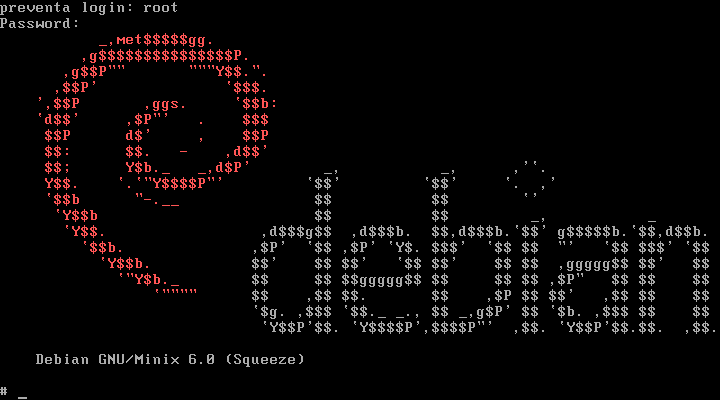
Debian Minix MOTD banner Actually I was at the venue on Tuesday for a little while but my name wasn't in the system either because I has given my name in Unicode or, more likely, I had forgotten to check the "reconfirm" box on the registration form. For some reason Columbia U's DHCP server makes Minix lock up on boot. Also I left my laptops AC adapter at home. Some kind souls lent me their European adapters but they didn't work. (I have a set of international converters. Also unfortunately at home.) So after about three hours, my battery ran out and I had to leave. So we will pretend that never happened and instead call today day 1. (Wednesday I had some unexpected family stuff to attend to so that doesn't count either.) Today I first concentrated on tracking down why the boot process was hanging. The culprit seems to be nonamed a daemon Minix runs to do DNS resolution/caching etc. I'm consulting with the Minix devs to see what can be done about this. I added the cool MOTD banner you see above (made by Osmo). And I ported some more GNU software to match the versions in Squeeze. Tomorrow, the biggies gcc and perl, and seeing if I can get a dpkg binary that doesn't segfault.

29 July 2010

Olivier Berger: Weaving a Semantic Web Across OSS Repositories: Unleashing a New Potential for Academia and Practice published

A new paper of ours was just published. If you re curious about all that Semantic Web and Linked Data hype and how it would impact forges and other software development tools, and the link with Open Source development platforms, then, read this :
Weaving a Semantic Web Across OSS Repositories: Unleashing a New Potential for Academia and Practice
(DOI: 10.4018/jossp.2010040103)
Authors: Olivier Berger (Institut Telecom, France); Valentin Vlasceanu (Institut Telecom, France); Christian Bac (Institut Telecom, France); Quang Vu Dang (Institut Telecom, France); St phane Lauriere (Mandriva, France)
in International Journal of Open Source Software & Processes (IJOSSP) Volume: 2, Issue: 2 (2010), Pages: 29-40 pp.
Here s the abstract:
Several public repositories and archives of facts about libre software projects, maintained either by open source communities or by research communities, have been flourishing over the Web in recent years. These have enabled new analysis and support for new quality assurance tasks.
This paper presents some complementary existing tools, projects and models proposed both by OSS actors or research initiatives that are likely to lead to useful future developments in terms of study of the FLOSS phenomenon, and also to the very practitioners in the FLOSS development projects.
A goal of the research conducted within the HELIOS project is to address bugs traceability issues. In this regard, the authors investigate the potential of using Semantic Web technologies in navigating between many different bugtracker systems scattered all over the open source ecosystem.
By using Semantic Web techniques, it is possible to interconnect the databases containing data about open-source software projects development, which enables OSS partakers to identify resources, annotate them, and further interlink those using dedicated properties and collectively designing a distributed semantic graph.
Keywords : RDF, forge, archive, bug, semantic, semantic Web, ontology, database, repository of repositories,
interoperability, bugtracker, OSLC-CM, Debian. The journal is published as closed content on paid access, but you may ask us, should you need to read a draft version. This is an extended version of an earlier position paper presented at WOPDASD 2009. This work was conducted in the frame of the System@tic Paris-Region cluster (http://www.systematic-paris-region.org/), with funding of the Paris Region council.

Tim Retout: Reverse build-depends

I've started to build up to actually doing some development-related activities. Maybe. But first, we've got QR Codes dotted around the hacklab and on our namebadges if we're taking part in the keysigning - I persuaded zbarcam (from the zbar-tools package) to reveal their mysterious secrets. I'm looking into packaging some Java libraries that use maven. Fun. I think I'll be attending some of the talks in the Java track, although I feel like I'm three years late to the party. While trying to find a good example, I wanted to list all packages which reverse-build-depended on maven-debian-helper. This must be a common task? With some stuff stolen from lamby, I hacked together a shell alias:
rbuilddep()  
    grep-dctrl -sPackage -i -r -F Build-Depends,Build-Depends-Indep "\b$1\b" \
            /var/lib/apt/lists/*_Sources \
          awk '  print $2  ' \
          sort \
          uniq
 
But this surely can't be the last word on this. For one thing, it might also be useful to recursively find these reverse dependencies. I hope I've missed some obvious way of doing this. I reckon my attention span has got really poor over the last couple of years. More running tomorrow morning. But first, ice cream, I think.

28 July 2010

Aigars Mahinovs: Debconf 10 arrival and first days

I had planned long for this Debconf and with the experience from the previous times I did all I could to reach one goal minimise stress. I think I got it right this time. First of all I got my company (Accenture) pay for the whole thing, so I did not have to worry about sponsorship queue (but instead I must gather and deliver them back some knowledge gained from the conference should be easy). I also managed to get a direct flight there is a weekly flight Tashkent-Riga-New York on Sundays and I got a ticket for that both ways. This took many hours off the travel time and reduced the stress a ton. Then I also did all the prudent travelling things: mostly reading the New York page on Wikitravel. This told me (among other things) what metro line to take to get the best view of the city. And for luggage I took a backpack (for the laptop and walking around) and a roller (for the clothes). I learned a lot from the Up in the air movie, it really teaches one how to take stress out of travel. This went very well in the beginning I took a bus to the airport early, checked in, breezed trough security and then waited and waited. The boarding only started half an hour after we were scheduled to depart. But I can not complain, because the flight attendant called my name (among a few others) just before boarding and changed my ticket I was bumped up to business class :) . It has been many years since I ve flown a regular (non-budget) airline and now first time ever in the business class! We got regular class meals, but at least we got to sit in the big chairs with lots of leg room. It was great! I bought a paper book (from Charles Stross) to read during the flight, because that is the only thing you can do during take-off and landing and I had some stuff to listen to in my iPhone. I tried sleeping and I think I managed to kill a couple hours that way too. It sure helped combat jet lag later on. When I arrived, I had my immigration and customs forms filled out. Latvia is on the USA Visa Waiver program, so I just had to fill out a form online prior to the trip to get a permission to enter USA. I only had one printout of the Waiver confirmation page and my airline took that before giving me a boarding pass, so I had no paper copy to give to the guy at the USA border, but he did not even ask for it he only took the two forms I filled out, scanned my passport, took my fingerprints (all fingers) and a photo. Then he gave me back the customs for (stamped) and I could go get my luggage. After that it was just a matter of walking trough customs and giving the customs official the pre-filled and stamped customs form. I was not stopped further. The AirTrain was a bit confusing you just get on the AirTrain and go where you need to go, you actually pay at the place where AirTrain connects to metro, so when you are coming from the airport you are actually paying ($5) when you are exiting the AirTrain system. There are plenty of AirTrain people that will give you an AirTrain ticked for $5 cash right there or you can use a machine to get it (where you can also pay with a card). The machines also take AmEx, but you must know the PIN code, if your don t know the PIN of you AmEx card (like I don t know the PIN of my corporate AmEx) you can only buy MetroCards at news stands, but there you will not find the unlimited ride tickets only 5 or 10 ride tickets are available. Next I screwed up a bit and thus got a bit lost in the New York metro system. The Wikitravel recommends to take the AirTrain to Jamaica station and from there take J or Z line into the city for the best views. I went to Jamaica and got into the first metro train that came on to the platform. Unfortunately, that was the E line train and it does not cross with J or Z lines after that, so I was stuck. To complicate the situation E line is under repair, so after a few stops the trains diverted to the F line and I had to scramble to figure out where to get out to get to the 1 line where Columbia University is. I ended up spending more than an hour in the metro, but I got there in the end. So I emerge from the 116th street metro station directly in front of the campus entrance gate and it starts raining. A thunderstorm swept across New York as soon as I stepped outside the metro station, so I took shelter a the side of the building. It kept raining. After a few minutes decided that I don t want to wait any more, so I put all my electronics into my backpack and went towards the dorm where my room was. The rain was warm, people around me were playing and running around in the wet grass, it was fun. The guard showed me where to go to check in. It was really simple sign here, here is you magnetic stripe key, have fun. And the room was just as spartan bed, desk, chair, closet, bathroom and a large fan under the window. The first night I did not know that I could actually turn that fan down, so I slept to the sound of full fan blasting, much like on the airplane. The dorm looks ancient it looks like it was build in the 60s and never changed since then. I mean, I ve lived in worse places, but people would at least change wall sockets or faucets or ceiling paint every other decade or so. The newest things here were the magnetic locks on the doors and a TV and a mini fridge in the hallway. After dropping my things I went off to the Mudd building across the campus to check in with people in the hacklab. It was just starting to take shape, but many great and familiar people were already there. It was like walking into a family home same warm welcome smiles and that great feel of belonging to the group. After I quick chat I went off downtown. The plan was that I left my old Canon 400D camera back at home and that I would buy a new Canon 550D here in New York on arrival. Unfortunately I underestimated the travel time on subway and by the time I got back downtown most shops where already closed. I got to checking out a Best Buy and was told there that they don t have 550D in stock. Next morning I went for a full scale search B&H Photo Video store, J&R Express, another BestBuy none of them had the Canon 550D (aka T2i) in stock in a body-only configuration. BestBuy had a few sets with the kit lens, but I did not want paying 100$ extra for something I already have. The last option was Adorama and I got lucky I nabbed the last 550D they had and it was body-only. Now I was back, with a camera in my hands and the Debconf10 could really begin!

27 July 2010

Petter Reinholdtsen: Circular package dependencies harms apt recovery

I discovered this while doing automated testing of upgrades from Debian Lenny to Squeeze. A few packages in Debian still got circular dependencies, and it is often claimed that apt and aptitude should be able to handle this just fine, but some times these dependency loops causes apt to fail. An example is from todays upgrade of KDE using aptitude. In it, a bug in kdebase-workspace-data causes perl-modules to fail to upgrade. The cause is simple. If a package fail to unpack, then only part of packages with the circular dependency might end up being unpacked when unpacking aborts, and the ones already unpacked will fail to configure in the recovery phase because its dependencies are unavailable. In this log, the problem manifest itself with this error:
dpkg: dependency problems prevent configuration of perl-modules:
 perl-modules depends on perl (>= 5.10.1-1); however:
  Version of perl on system is 5.10.0-19lenny2.
dpkg: error processing perl-modules (--configure):
 dependency problems - leaving unconfigured
The perl/perl-modules circular dependency is already reported as a bug, and will hopefully be solved as soon as possible, but it is not the only one, and each one of these loops in the dependency tree can cause similar failures. Of course, they only occur when there are bugs in other packages causing the unpacking to fail, but it is rather nasty when the failure of one package causes the problem to become worse because of dependency loops. Thanks to the tireless effort by Bill Allombert, the number of circular dependencies left in Debian is dropping, and perhaps it will reach zero one day. :) Todays testing also exposed a bug in update-notifier and different behaviour between apt-get and aptitude, the latter possibly caused by some circular dependency. Reported both to BTS to try to get someone to look at it.

Daniel Baumann: The World's most powerful Wireless Network Card

About two weeks ago I got a Wifly-City G2000, the world's most powerful 802.11bg wireless network card. It features 2000mW which is 10 times more than the legally allowed limit of 200mW in Switzerland (or 2 times more than the allowed 1000mW in the USA, 5 times more than the allowed 400mW in Brazil, or 20 times more than the allowed 100mW in the EU). Contents The adapter is sold as a set named Wifly-City AVATAR-4PA with some accessories.
click on the images for full resolution The box prominelty lists Linux compatibility and contains the following part: The adapter has a Realtek 8187L chipset. This is particulary nice since there is no firmware needed for this chipset (therefore no questinable binary-only firmware blob). Also, it works out of the box with any Linux as of kernel version 2.6.30 and newer. I tested it on lenny with kernel backports, vanilla squeeze and vanilla sid. In all of these setups, it works out of the box without any configuration whatsoever - just plug it in and it works. I know that this is how it is supposed to be but still, I am always surprised again when things just work. For those who care, this is the output of dmesg when plugging in the card...
[...]
usb 1-1: new high speed USB device using ehci_hcd and address 6
usb 1-1: New USB device found, idVendor=0bda, idProduct=8187
usb 1-1: New USB device strings: Mfr=1, Product=2, SerialNumber=3
usb 1-1: Product: RTL8187_Wireless_LAN_Adapter
usb 1-1: Manufacturer: Manufacturer_Realtek_RTL8187_
usb 1-1: SerialNumber: xxxxxxxxxxxx
usb 1-1: configuration #1 chosen from 1 choice
phy1: Selected rate control algorithm 'minstrel'
phy1: hwaddr xx:xx:xx:xx:xx:xx, RTL8187vB (default) V1 + rtl8225z2, rfkill mask 2
rtl8187: Customer ID is 0xFF
Registered led device: rtl8187-phy1::tx
Registered led device: rtl8187-phy1::rx
rtl8187: wireless switch is on
usbcore: registered new interface driver rtl8187
ADDRCONF(NETDEV_UP): wlan1: link is not ready
wlan1: direct probe to AP xx:xx:xx:xx:xx:xx (try 1)
wlan1: direct probe responded
wlan1: authenticate with AP xx:xx:xx:xx:xx:xx (try 1)
wlan1: authenticated
wlan1: associate with AP xx:xx:xx:xx:xx:xx (try 1)
wlan1: RX AssocResp from xx:xx:xx:xx:xx:xx (capab=0x411 status=0 aid=5)
wlan1: associated
ADDRCONF(NETDEV_CHANGE): wlan1: link becomes ready
wlan1: no IPv6 routers present
[...]
...and this is the output of lsusb:
Bus 001 Device 006: ID 0bda:8187 Realtek Semiconductor Corp. RTL8187 Wireless Adapter
Special Offer I have played with the card for some time now and am really pleased with it. It works nicely with all the standard tools (aircrack-ng, kismet, etc.). The only bummer is that the card is quite expensive. Fortunately, we could arrange a good deal for Free Software people where the store selling it does not make any money on it: instead of 89 USD you can get it for 68 USD (including everything). If you are interested in getting one and you are comming to DebConf 10 in New York between 2010-07-25 and 2010-08-08, you can write an email to Ralph Amissah or speak to Ralph personally during the event. 1 I have no idea why they are shipping with a Y cable because the adapter does not need one. However, it does not disturb and in case I ever need an Y cable, I now have one :)

Steve Kemp: Sometimes you just wonder would other people like this?

Sometimes I write things that are for myself, and later decide to release on the off-chance other people might be interested. I've hated procmail for a long time, but it is extremely flexible, and for the longest time I figured since I'd got things working the way I wanted there was little point changing. When it comes to procmail there are few alternatives: Unfortunately both Exim and Email::Filter suffer from a lack of "pipe" support. To be more specific Exim filters and Email::Filter allow you to pipe an incoming message to an external program - but they regard that as the end of the delivery process. So, for example, you cannot receive a message (on STDIN), pipe it through crm114, then process that updated message. (i.e. The output of crm114). Maildrop does allow pipes, but suffers from other problems which makes me "not like it". My own approach is to have a simple mail-sieve command which is configured thusly:
set maildir=/home/steve/Maildir
set logfile=/home/.trash.d/mail-sieve.log
#
#  Null-senders
#
Return-Path: /<>/        save .Automated.bounces/
#
#  Spam filter
#
filter /usr/bin/crm -u /home/steve/.crm /usr/share/crm114/mailreaver.crm
#
#  Spam?
#
X-CRM114-Status: /SPAM/   save .CRM.Spam/
X-CRM114-Status: /Unsure/ save .CRM.Unsure/
#
#  People / Lists
#
From: /foo@example.com/  save .people.foo/
From: /bar@example.com/  save .people.bar/
..
..
#
#  Domains
#
To: /steve.org.uk$/               save .steve.org.uk/
To: /debian-administration.org$/  save .debian-administration.org.personal/
#
#  All done.
#
save .inbox.unfiled/
On the one hand this is simple, readable, and complete enough for myself. On the other hand if I were going to make it releasable I think I'd probably want to add both conditionals and the ability to match upon multiple header values. Getting there would probably involve something like this on the ~/.mail-filter side :
if ( ( From: /foo@example.com )  
     ( From: /bar@example.com ) )
 
   save .people.example.com/
   exit
 
# ps. remind me how much I hate parsers and lexers?
That starts to look very much like Exim's filter language, at which point I think "why should I bother". Pragmatically the simplest solution would be to add a "Filter" primitive to Email::Filter - and pretend I understood the nasty "Exit" settings. ObQuote: Andre, we don't use profanity or double negatives here at True Directions. - "But I'm a Cheerleader".

26 July 2010

Matt Zimmerman: Embracing the Web

The web offers a compelling platform for developing modern applications. How can free software benefit more from web technology, and at the same time promote more software freedom on the web? What would the world be like if FLOSS web applications were as plentiful and successful as traditional FLOSS applications are today? Web architecture The web, as a collection of interlinked hypertext documents available on the Internet, has been well established for over a decade. However, the web as an application architecture is only just hitting its stride. With modern tools and frameworks, it s relatively straightforward to build rich applications with browser-oriented frontends and HTTP-accessible backends. This architecture has its limitations, of course: browser compatibility nightmares, limited offline capabilities, network latency, performance challenges, server-side scalability, complicated multimedia story, and so on. Most of these are slowly but surely being addressed or ameliorated as web technology improves. However, for a large class of applications, these limitations are easily outweighed by the advantages: cross-platform support, instantaneous upgrades, global availability, etc. The web enables developers to reach the largest audience of users with the most compelling functionality, and simplifies users lives by giving them immediate access to their digital lives from anywhere. Some web advocates would go so far as to say that if an application can be built for the web, it should be built for the web because it will be more successful. It s no surprise that new web applications are being developed at a staggering rate, and I expect this trend to continue. So what? This trend represents a significant threat, and a corresponding opportunity, to free software. Relatively few web applications are free software, and relatively few free software applications are built for the web. Therefore, the momentum which is leading developers and users to the web is also leading them (further) away from free software. Traditionally, pragmatists have adopted free software applications because they offered immediate gratification: it s much faster and easier to install a free software application than to buy a proprietary one. The SaaS model of web applications offers the same (and better) immediacy, so free software has lost some of its appeal among pragmatists, who instead turn to proprietary web applications. Why install and run a heavyweight client application when you can just click a link? Many web applications perhaps even a majority are built using free software, but are not themselves free. A new generation of developers share an appreciation for free software tools and frameworks, but see little value in sharing their own software. To these developers, free software is something you use, not something you make. Free software cannot afford to ignore the web. Instead, we should embrace the web more completely, more powerfully, and more effectively than proprietary systems do. What would that look like? In my view, a FLOSS client platform which fully embraced the web would: Imagine a world where free web applications are as plentiful and malleable as free native applications are today. Developers would be able to branch, test and submit patches to them. What about Chrome OS? Chrome OS is a step in the right direction, but doesn t yet realize this vision. It s a traditional operating system which is stripped down and focused on running one application (a web browser) very, very well. In some ways, it elevates web applications to first-class status, though its paradigm is still fundamentally that of a web browser. It is not designed for development, but for consuming the web. Developers who want to create and deploy web applications must use a more traditional operating system to do so. It does not put the end user in control. On the contrary, the user is almost entirely dependent on SaaS applications for all of their needs. Although it is constructed using free software, it does not seem to deliver the principles or benefits of software freedom to the web itself. How? Just as free software was bootstrapped on proprietary UNIX, the present-day web is fertile ground for the development of free web applications. The web is based on open standards. There are already excellent web development tools, web application frameworks and server software which are FLOSS. Leading-edge web browsers like Firefox and Chrome/Chromium, where much web innovation is happening today, are already open source. This is a huge head start toward a free web. I think what s missing is a client platform which catalyzes the development and use of FLOSS web applications.

25 July 2010

Russell Coker: Links July 2010

David Byrne gave an interesting TED talk about how changes to architecture drove changes to musical styles [1]. I think he does stretch the point a little. To a certain extent people develop the most complex instruments and the largest music halls that can be supported by the level of technology in their society people with a hunter-gatherer civilisation play drums because they can build them and can carry them. The NY Times has an interesting article about paternity leave in Sweden [2]. The Swedish government pays for a total of 13 months leave that can be split between parents for every child. Of those 13 months 2 months can only be taken by the father and that is likely to increase to a minimum of 4 months of paternity leave after the next election. Dan Meyer gave an interesting TEDX talk about how the current math curriculum in the US (as well as Australia and lots of other countries that do the same thing) is totally wrong [3]. His main point is that maths problems should be based on real-world use cases where not all needed data is immediately available and there is also useless data that must be discarded. He believes that the most important thing is developing mathematical problem solving skills basically the things that I did for fun when I was in primary school are skills that need to be taught to high-school students The Atlantic magazine has an amusing article by Daniel Byman and Christine Fair about the incompetent Islamic terrorists [4]. In Afghanistan half the suicide bombers kill only themselves and the US government has a lot of evidence of Taliban soldiers practicing bestiality and collecting porn. Islamic extremist groups are staffed by people who are bad soldiers and bad Muslims. Jon Masters wrote an interesting post titled What Would Jesus Buy about ethical purchasing decisions [5]. Jon references The Church of Stop Shopping which isn t a real religious organisation but a street theatre activist group. ZeroHedga has an insightful article comparing corporations and the US government to street gangs [6]. The conclusion is that when gangs take over a neighbourhood everyone has to join a gang for their own protection. Hillel Cooperman gave an interesting TED talk about being obsessed with Lego [7]. He compares Lego fans to Furries and makes a good case for this comparison. Marian Bantjes gave an interesting TED talk about her graphic art / graphic design work [8]. I ve never seen anything quite like this. Business Insider has an interesting article about oil cleanup, it seems that most people who worked on the Exxon Valdez disaster are now dead [9], s opposed to most people who worked in almost every other occupation at that time who are either still working or enjoying their retirement. The current gulf disaster is bigger, will require more workers for the cleanup, and can be expected to have a higher death toll. Some people claim that measures to reduce oil efficiency will impact the economy, how will millions of people who are chronically ill for the rest of their lives impact the economy? The NY Times has an interesting article on circle lenses [10], contact lenses designed to make the eyes look larger. It s illegal to sell contact lenses in the US without a prescription, but the latest trend is for women to buy them online in a variety of colors. The FDA should probably approve them, it would be better to have the quality controls you expect from a medical supply company instead of having people rely on Malaysian mail-order companies for the safety of their eyes. Don Marti has written an interesting article about the economic decline in the US, he suggests making pension funds invest in local jobs [11]. Companies are supposed to act on behalf of their stock-holders, but US companies often have the majority of their stock owned by the pension funds of workers but they act on behalf of a small number of rich people who own a minority of the stock. Don s article was inspired by Andy Grove s article in Bloomberg about the stagnation in technological development that has been caused by off-shoring the manufacturing [12]. Neil Brown has completed a test release of a new Linux software RAID feature for arrays with multiple redundancy that have bad sectors [13]. When a disk gets a bad sector the current behavior is to kick it out of the array, if you have two such errors on a 3 disk RAID-1 or a RAID-6 array then you lose all redundancy and are at risk of catastrophic failure even though in most cases both disks will still mostly work. With this patch some regions of the disk may be excluded but it can provide redundancy for other stripes. Thanks Neil for your great work here, and all your previous work over the last 10+ years! The RSPCA has a new campaign titled Close the Puppy Factories [14]. Dogs are kept in very poor conditions and forced to churn out puppies for their entire lives to supply pet stores. The RSPCA recommends that people buy puppies from registered dog breeders (not registered dog breeding companies ) and ask to see the dog s parents. They also recommend not buying from classified adverts or pet stores. Animal shelters have to euthenise huge numbers of unwanted animals, you can buy a pet dog or cat from an animal shelter for a small fee that covers the expenses related to housing and spaying it and save that animal from being euthenised! Maureen Dowd criticises the Catholic Church properly in an article for the New York Times [15]. The Catholic Church officially regards ordaining a woman and raping a child to be equally bad offenses. Frank Rich wrote an interesting column for the New York Times about Mel Gibson [16]. He describes the destruction of Mel Gibson s reputation as a symptom of changes in the culture in the US and also links it to the fall of Ted Haggard (who supported Gibson s most notorious movie The Passion of the Christ).

Joey Hess: git source packages: take 2

My patches to convert the 3.0 (git) source format to use git bundles have landed in dpkg's git repository and will be in dpkg 1.15.8. I think this second attempt at 3.0 (git) has worked out much better than the first. (Though the first was a pretty good success overall, since it also led all the other 3.0 formats eventually. ;) Perhaps the intervening years of git experience helped. The code is much simpler, with none of the ad-hoc hacks from the first version. The resulting git bundles can be manually cloned using git-bundle(1) where dpkg-source is not available. There are two handy new features that can be controlled by debian/source/options. git-ref can be used to limit the branches/tags/etc that are included in the source package. And git-depth can cause a shallow clone of specified depth to be created and bundled.
dpkg-source: info: using options from debhelper/debian/source/options: --git-ref=gitsrc --git-ref=master --git-depth=10
dpkg-source: info: using source format  3.0 (git)'
dpkg-source: info: creating shallow clone with depth 10
dpkg-source: info: bundling: gitsrc master
A demo source package is here.
joey@gnu:~/tmp/t>dget http://kitenet.net/~joey/tmp/debhelper_7.9.4.dsc
...
dpkg-source: info: extracting debhelper in debhelper-7.9.4
dpkg-source: info: cloning debhelper_7.9.4.git
dpkg-source: info: setting up shallow clone
joey@gnu:~/tmp/t>ls -l
total 392
drwxr-xr-x 10 joey joey   4096 Jul 25 13:58 debhelper-7.9.4/
-rw-r--r--  1 joey joey   1779 Jul 25 13:58 debhelper_7.9.4.dsc
-rw-r--r--  1 joey joey 388859 Jul 25 13:58 debhelper_7.9.4.git
-rw-r--r--  1 joey joey    738 Jul 25 13:58 debhelper_7.9.4.gitshallow
joey@gnu:~/tmp/t>cd debhelper-7.9.4 
joey@gnu:~/tmp/t/debhelper-7.9.4>git branch -a
* gitsrc
  remotes/origin/HEAD -> origin/gitsrc
  remotes/origin/gitsrc
  remotes/origin/master
Notice that the branch I was in when I built the package is preserved, and the 19 revisions included in the shallow clone (10 per branch) take up very little space of course. This particular git source package turned out 30k larger than the tar.gz. I am considering adding two other features: I hope the next step will be for git source packages to be accepted in the Debian archive.

Tim Retout: New York

Well, I made it to New York, along with my brother. Yesterday we walked down most of Manhatten Island - we've been staying in the youth hostel on 103rd street, and made our way on foot as far as Battery Park. Along the way, we visited McDonalds (twice) and Starbucks (was that two or three times?), both featuring free wifi and air conditioning. We went up the Rockefeller Tower as well, and got a few photos out of that. It's really quite warm here. It's shorts and sandals weather (just like last year in Spain), and I'm tired of walking in sandals. Interesting differences from the UK: the New York Times crossword is quite different from what we call crosswords. I think Monday's one is meant to be easiest, so perhaps starting with Saturday's was not a good plan. There are water fountains dotted around the city, which is awesome. This morning I went running around Central Park. Except it's tougher than it looks - I'm not sure whether it was the humidity, or the inclines, or not eating anything before setting out... I ended up walking most of the second half, and it took half an hour more than I thought it would. I ran counter(anti-)clockwise - I think it would be better to go clockwise, because there's a hill in the corner with a steep side that I'd prefer to run down rather than up.

Thorsten Glaser: FrOSCon 2010 ( Birthday FrOSCon ) approaching

FrOSCon 5 - 21./22. August 2010 is approaching rapidly. I m a bit envious at some of the tracks (I mean, really, geocaching (ok, I did the surrounging caches over the last years but still), learning python by means of game programming, etc. really sounds interesting and I know people who could benefit from a non-kids version of that as well) but this year s FrOSCon is nothing for me to curse about either: I managed to get both a booth for The MirOS Project (MirBSD, mksh and other subprojects) as well as one for Waldemar s FreeWRT (although wbx@ if he comes won t join there since he forked his own fork since its conception). Booth staff are, currently: tg@ and bsiegert@ (Developer), gecko2@ (Staff) for MirOS, tg@ and XTaran abe@ (Developer), kimnotyze (Hacker) for FreeWRT. (XTaran will probably be helping Debian/Grml too.) This year, it ll be my job (after 2 years of aptituz) to keep the Altbier-Fraktion watered, I m thinking one crate of Schl sser Alt and one crate of Hannen Alt? Have a look at the Program and don t tell me you won t come! It will rock! (Except there won t be Formorer s Chilli, but that s no reason, there s enough other stuff in manageable distance.) Besides interesting booths and talks, FrOSCon is still looking for helpers who will not only get free entrance but also catering during operation.

Stefano Zacchiroli: RCBC - release critical bugs contest

Recipe for RCBC - Release Critical Bug squashing Contest:
squash RC bugs for 2 weeks , from July 25th to August 7th
help the release of Debian Squeeze
earn fame and glory (for sure)
win a GuruPlug and other geeky gadgets (maybe)
read on for more info ...
It has been a while since my last post in the RCBW tradition. Luckily, the tradition is in very good health of its own, thanks to many others that have picked up the habit of SPAM-ing planet with good news for Debian, encouraging others to do the same. With all that RC-obsessed people around and with the Squeeze release forthcoming, can DebConf10 be devoid of geeky RC-squashing activities? Of course not! Thanks to the orga team we expect the conference to contain a 2-week long RC bug squashing pride with tutorials, BoFs, a permanent bug squashing party, ... and a contest! I won't indulge much on the contest as the wiki page contains all rules and gory details. Obviously, all usual rules and best practices of bug squashing parties will apply; coordination will happen on #debian-bugs. Get involved, it starts today, and it's open to everyone (DebConf10 attendees as well as Debian enthusiasts abroad, regular RC squashers as well as casual bystanders, etc). All this wouldn't have been possible without the help of many people that love Debian, so many thanks to: PS a corresponding announcement is in the debconf-announce pipeline already

24 July 2010

Biella Coleman: Silent Cry for Help: Debconf Volunteers


silent-cry-for-help, originally uploaded by the biella.
Hi Debcamper s and Debconfer s. I am currently coordinating volunteers and can use your help! Here is a list of our current and most pressing volunteer needs. If you are interested in volunteering and know what you would like to do, drop me a line with details. If you are interested in volunteering and are up for anything, drop me a line. If you want to volunteer but can only spare a couple of hours, drop me a line! You can reach me at biella(at)nyu.edu We are most in need of finding help for the front desk and for assisting with the talks (starting/ending on time and fielding questions). This year if you are a coordinator for a track you will be in charge of doing this, so we only need volunteers for non-track talks. Volunteers get a free, volunteer tee-shirt and a huge huge thanks from the orga team who simply cannot do this without you!

Chris Lamb: Four men in a mine

kumbunterland posed this question in the park yesterday:
There are four men in a coal mine. This exit is narrow so that no more than 2 men can exit at the same time. In addition, there is only one torch and they can't leave the mine without it. Each man walks at a different speed. The first man takes one minute to exit the mine the bridge distance, the second takes two minutes, the third takes five, and the fourth takes eight minutes. If two men walk together they must walk at the slower speed. For example, if person #1 and person #3 go together, they will leave the mine in 5 minutes. Then, person #1 could return back to return the torch to the others (taking another one minute) so they can use it to exit again. The coal mine will collapse in exactly 15 minutes; you must find a way to allow all the men to leave the mine within this time.
Unfortunately, swi-prolog is broken on the N900, so I wasn't able to solve it right then:
solution(Men, Bound, Out) :-
    torchInside(Men, [], [], Log),
    totalDuration(Log, 0, Duration), Duration =< Bound,
    swritef(Out, '%w  (%w minutes)', [Log, Duration]).
% We use torch Inside,Outside  predicates like a state machine.
torchInside(A, B, Log, X) :-
    % Move two people from inside -> outside the mine
    combination(2, A, S), subtract(A, S, A1), append(S, B, B1),
    torchOutside(A1, B1, [S Log], X).
torchOutside([], _, Log, Log).
torchOutside(A, B, Log, X) :-
    % Move someone from outside -> inside the mine
    combination(1, B, S), subtract(B, S, B1), append(S, A, A1),
    torchInside(A1, B1, [S Log], X).
% Utilities:
totalDuration([], X, X).
totalDuration([H T], Acc, X) :-
    max_list(H, Max), NewAcc is Acc + Max,
    totalDuration(T, NewAcc, X).
combination(0, _, []).
combination(N, [H T], [H Comb]) :-
    N > 0, N1 is N - 1, combination(N1, T, Comb).
combination(N, [_ T], Comb) :-
    N > 0, combination(N, T, Comb).
?- solution([1, 2, 5, 8], 15, X).
X = "[[2, 1], [2], [5, 8], [1], [1, 2]]  (15 minutes)" ;
X = "[[1, 2], [1], [5, 8], [2], [1, 2]]  (15 minutes)" ;
false.
I'm fun at parties.

23 July 2010

Luca Falavigna: Lightspark news

Lightspark, the modern and efficient open source Flash player, just landed in experimental! Few days have passed since 0.4.2 release, and thanks to the great packaging efforts made by Didier Raboud, package is ready to be widely tested. Don t expect a fully functional Flash player, though. Some features aren t implemented yet, and it s still buggy, but it looks very promising. Stay tuned for updates!

Matthew Garrett: Meego kernel watch

sgx535 drivers in today's Meego kernel tree: 3 (GMA600, CE4100, N900)

sgx535 drivers submitted upstream: 1 (Tungsten GMA500 driver, submitted March 2009, rejected due to significant chunks of functionality there purely to support closed userspace)

To be fair, the rest of the Moorestown support code seems to be shaping up fairly nicely. But the lack of a coherent story about what graphics support is going to look like isn't hugely reassuring.

Update:

The Meego kernel tree isn't really a fair comparison here - I should be talking about the Intel MID tree. That's only got the GMA600 and CE4100 drivers at the moment, and I'm told that there's consolidation work going on there.

22 July 2010

Steve Kemp: My Linksys router now runs Linux and almost provides PXE.

I've been interesting in running Linux upon my router for a long time, but I never had a really compelling reason to do so. The potential for brickage was always too high to make me want to experiment for the sake of it. However last night I installed Gargoyle upon my Linksys WRT53GL. Although I have no single compelling reason to do so there were a few things on my mind which made me risk it:
Syslog
I thought it would be nice to log things to my desktop machine.
QoS
I often run rsync to mirror my photographs, videos, and files, to off-site locations. These are then replicated via chironfs. Being able to use QoS to prioritise SSH traffic, which is the transport I use for rsync, means I don't suffer from laggy connections.
Graphing & Statistics
Having statistics and traffic information is interesting.
Since I've only just installed it I've not had too much opportunity to experiment with it - and my initial forays were not so productive. For example "opkg install tcpdump" failed as the root filesystem wasn't big enough. However which was to update the router to function as PXE server. I installed the tftpd server:
opkg install tftpd-hpa
Then I added this to /etc/dnsmasq.conf:
dhcp-boot=pxelinux.0,router.my.flat,192.168.1.1
Only after I'd done this did I realise two things: Tomorrow, (after visiting the dentist. Uggh) I will experiment with this further. Right now it looks like I have two options: Either way I have to store the files upon another host, due to the constrained space on the router's filsystem. So the question becomes "Which service should I run externally: TFPTD or NFS?". Running TFTPD, upon my desktop, seems smaller, less of a security risk, and neater. Running TFTPD also avoids issues if I reboot both the router and my desktop at the same time as a stalling NFS mount could prevent a timely router-boot. ObQuote: Looking for a secret door. Places like this always have a secret door.

- St Trinian's 2: The Legend of Fritton's Gold

Erich Schubert: Dropbox revisited

Like one or two years ago, I got myself a free Dropbox account. I use it occasionally to exchange files with some friends. It does an excellent job at that. Basically, it works like any network folder. Except it is not within a local network, but over the internet.Dropbox serves me as an occasional replacement for both email and USB pen drive. Instead of sending a modified file by email or bringing around a dozen of photos on a USB stick, I just put them into the shared folder. This also very useful for files such as flyers, templates. They may easily grow to big to be sensibly sent by email.For all my use, a regular free Dropbox account is more than enough. As in, I have less than 1 GB in use, and I could easily free some of that space. You start at 2 GB, and can currently get up to 10 GB free (+250 MB for each referrer; if you use the link above you'll already start at 2.25 GB). But for my use, this is already a lot.Note that there are a couple of alternatives around. For Linux (only) there is Ubuntu One, and there is Zumo Drive and Box.net just to name a few. I havn't tried them, given that Dropbox works for me well enough.

Next.

Previous.