Search Results: "will"

6 January 2014

Aurelien Jarno: Debian QEMU images updated

Following the release of Debian Wheezy, I have (finally) updated my set of Debian QEMU images for both Squeeze (6.0.8) and Wheezy (7.3). The following images are now available: Each of these directories contains a GPG signed README.txt file with the md5sums all files, detailed instructions how to run these images and especially the minimum QEMU version to use. The requirements to run the default desktop environment have increased a lot between Squeeze and Wheezy. An accelerated graphics card is now needed to be able to use Gnome (unless you use the fallback mode), which is not something provided by QEMU (actually there is now a QXL para-virtualized video card, but the driver is only in unstable). In addition GDM now needs more than 128MiB to start, while this is the default amount of memory provided for virtual machines. I have therefore decided to switch the default desktop environment on the Wheezy images to Xfce and the display manager to LightDM. Both Gnome and GDM are still installed on the images, and the original default can easily be restored using the following commands: Beside this the new images only contain minor changes. The filesystems have been tweaked to not run fsck after a certain amount of days, and locales-all and openssh-server are now installed in all images. For MIPS and MIPSEL, 64-bit kernels are now also installed and provided, so that it is possible to choose between a 32-bit or a 64-bit kernel (see the README.txt for more details). There is no Debian Wheezy SPARC image available, as QEMU does not fully support SPARC64 yet (it is actually possible to run it, but then the VM crashes often), and Debian Wheezy now only supports 64-bit kernels. I will also invest time to build an S390X image, but so far I haven t been successful on that. The following images are still available at the same location, though they haven t been updated:

Vincent Sanders: NetSurf Developer Workshop Redux

The NetSurf Developers bringing you alternative LOLcat viewing software since 2002Once again the NetSurf developers congregated in Cambridge at the Collabora offices where we were made welcome in a nice environment for the event.

Five developers managed to attend from around the UK Rob Kendrick, Vincent Sanders, Daniel Silverstone, John-Mark Bell and Michael Drake. We also had Chris Young and Fran ois Revol providing some bug fixes remotely.

This was the first time we had all met since the previous event towards the end of 2012 and we took full advantage of this to discuss a pretty extensive agenda in addition to the practical programming tasks.

From Friday lunchtime through to Sunday evening we managed 30 hours of work consisting of over 70 commits to over 100 files.

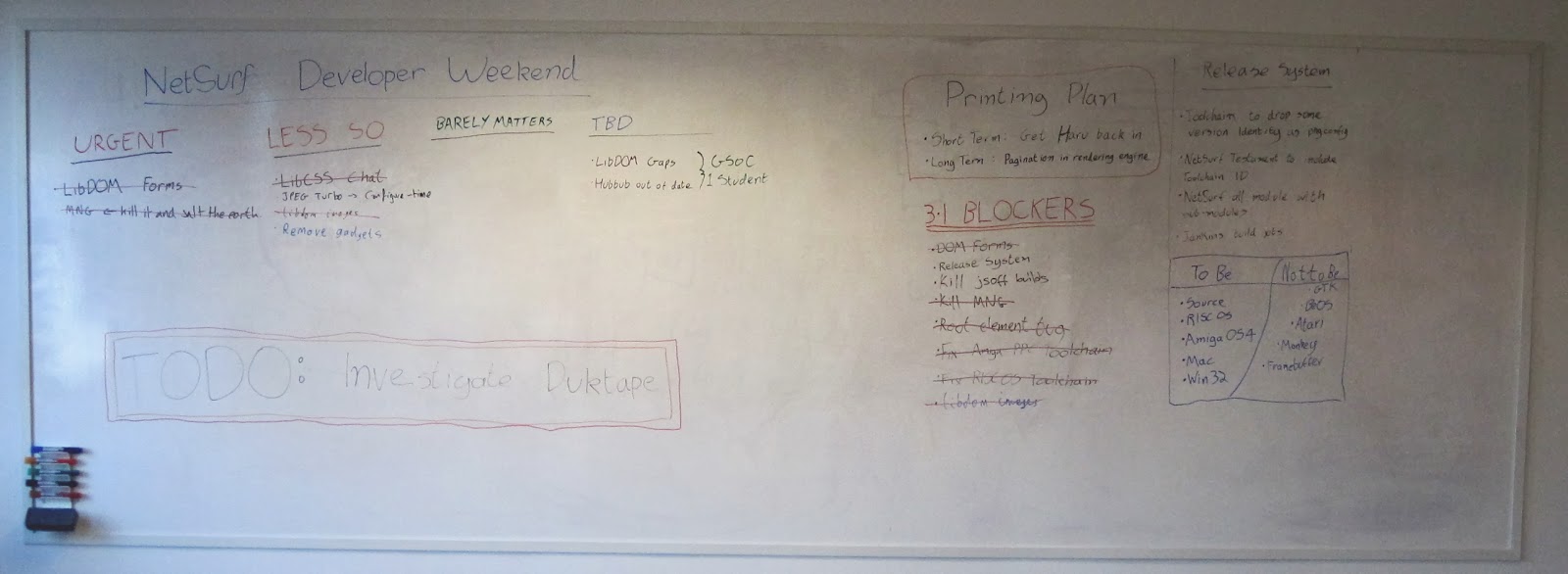
The whiteboard of our notes

Our main focus was working towards a 3.1 release which is scheduled for early April. Along with the source the release will have binary builds for RISC OS, AmigaOS, Windows and Mac OS X (x86 and ppc). Although the NetSurf project will not be directly releasing binaries for the GTK and Framebuffer frontends we will be ensuring the Debian packages are updated which is our prefered method of distribution for those targets.

We analysed the 3.0 release and formulated an improved process for the future. The 3.1 release will be generated automatically by the CI system ensuring constant results and removing the problems we encountered previously.

A set of release blocking issues was derived which we used as a task list during the workshop.The majority of these were completed including:
DOM based forms
Web forms are a feature Netsurf has supported for a long time and their implementation has not kept up with the rest of the browser. This is a long standing problem area which has resulted in numerous strange bugs with form submission. With this change the form system has been reworked to correctly operate directly from the DOM resulting in the squashing of a large number of bugs and a much improved user experience.

DOM based image loading
Up to now image fetching was performed only during the rendering of a page. With this change when the image link is placed into the DOM during the page parse it is scheduled to be fetched, this should give an improved user experience as images should be available earlier in a pages render.

Removal of MNG support
NetSurf has supported MNG since the 1.0 release, indeed the MNG library used to provide the PNG support too though we have long ago transitioned to libPNG. Alas the web has moved on and MNG has been largely forgotten, the libMNG library that performs the image decoding is old and generally unsupported specifically lacking security updates.

The build issues with libMNG (lack of pkg-config, reliance on libcms1 etc.) were causing maintenance issues in code nobody was actually using (there were crash bugs discovered during its removal!). Because of these issues it was decided to join the vast majority of browsers and remove support for this format.
The developers also addressed several issues with toolchain construction and a number of annoying usability bugs.

Plans for how to improve printing support we made. Initially we intend to fix the existing haru based pdf generation using this to print via pdf and in future have correct css styled page paginated printing render output.

The perennial issue of javascript was discussed however, while efforts to improve the existing support are ongoing, our usage of the spidermonkey library continues to raise various challenges including platform support and API changes between versions.

Due to these issues it has been suggested that we might add support for using the duktape JS engine instead, initial results are promising but given the size of the task of implementing an additional javascript engine binding further investigation is necessary before making a commitment.

Amongst the other discussions the group has also agreed that we will once again apply to be a GSoC organisation for a single student with some very focused projects:
  • Improving our HTML5 parser (hubbub)
  • Improving the DOM library implementing missing functionality.
While neither of these projects are as fashionable as some of our previous proposals they are well defined enough that as a group we believe we could offer enough support to the student to make their experience a pleasurable one and get the resulting code reviewed and merged promptly.

This event was very successful with a great deal achieved, the project is much more likely to be in a good shape to release 3.1 by April now and the meeting has given the developers a much welcomed boost.

I would like to extend the groups thanks to Robert McQueen for letting us use the Collabora offices, Dor e Carrier for organising all the administrative things and to Vivek Dasmohapatra for coming out on his Sunday afternoon to let us back in after locking ourselves out.


Julien Danjou: Databases integration testing strategies with Python

The Ceilometer project supports various database backend that can be used as storage. Among them are MongoDB, SQLite MySQL, PostgreSQL, HBase, DB2 All Ceilometer's code is unit tested, but when dealing with external storage services, one cannot be sure that the code is really working. You could be inserting data with an incorrect SQL statement, or in the wrong table. Only having the real database storage running and being used can tell you that.
Over the months, we developed integration testing on top of our unit testing to validate that our storage drivers are able to deal with real world databases. That is not really different from generic integration testing. Integration testing is about plugging all the pieces of your software all together and running. In what I call "database integration testing", the pieces will be both your software and the database system that you are going to rely on. The only difference here is that one of the module is not coming from the application itself but is an external project. The type of database that you use (RDBMS, NoSQL ) does not matter. Taking a step back, what I will describe here could also apply to a lot of other different software modules, even something that would not be a database sytem at all. Writing tests for integration Presumably, your Python application has unit tests. In order to test against a database back-end, you need to write a few specific classes of tests that will use the database subsystem for real. For example:
import unittest
import os
import sqlalchemy

class TestDB(unittest.TestCase):
def setUp(self):
url = os.getenv("DB_TEST_URL")
if not url:
self.skipTest("No database URL set")
self.engine = sqlalchemy.create_engine(url)

This code will try to fetch the database URL to use from an environment variable, and then will rely on SQLAlchemy to create a database connection.
import unittest
import os
import sqlalchemy

import myapp

class TestDB(unittest.TestCase):
def setUp(self):
url = os.getenv("DB_TEST_URL")
if not url:
self.skipTest("No database URL set")
self.engine = sqlalchemy.create_engine(url)

def test_foobar(self):
self.assertTrue(myapp.store_integer(self.engine, 42))

You can then add as many tests as you want using the connection stored in self.engine. If no test database URL is, the tests will be skipped; however that decision is up to you. You may want to have these tests always run and fail if they can't be run. In the setUp() method, you may also need to do more work, like create a database and delete a database.
import unittest
import os
import sqlalchemy

class TestDB(unittest.TestCase):
def setUp(self):
url = os.getenv("DB_TEST_URL")
if not url:
self.skipTest("No database URL set")
self.engine = sqlalchemy.create_engine(url)
self.connection = self.engine.connect()
self.connection.execute("CREATE DATABASE testdb")

def tearDown(self):
self.connection.execute("DROP DATABASE testdb")

This will make sure that the database you need is clean and ready to be used to testing. Launching modules, a.k.a. databases
The main problem we encountered when building integration testing with databases, is to find a way to start them. Most users are used to start them system-wide with some sort of init script, but when running sandboxed tests, that is not really a good option. Browsing the documentation of each storage allowed us to find a way to start them in foreground and control them "interactively" via a shell script. The following is a script that you can use to run Python tests using nose and is heavily inspired by the one we wrote for Ceilometer.
#!/bin/bash
set -e

clean_exit()
local error_code="$?"
kill -9 $(jobs -p) >/dev/null 2>&1 true
rm -rf "PGSQL_DATA"
return $error_code


check_for_cmd ()
if ! which "$1" >/dev/null 2>&1
then
echo "Could not find $1 command" 1>&2
exit 1
fi


wait_for_line ()
while read line
do
echo "$line" grep -q "$1" && break
done < "$2"
# Read the fifo for ever otherwise process would block
cat "$2" >/dev/null &


check_for_cmd mongod

trap "clean_exit" EXIT

# Start PostgreSQL process for tests
PGSQL_DATA= mktemp -d /tmp/PGSQL-XXXXX
PGSQL_PATH= pg_config --bindir
PGSQL_PATH /initdb $ PGSQL_DATA
mkfifo $ PGSQL_DATA /out
$ PGSQL_PATH /postgres -F -k $ PGSQL_DATA -D $ PGSQL_DATA &> $ PGSQL_DATA /out &
# Wait for PostgreSQL to start listening to connections
wait_for_line "database system is ready to accept connections" $ PGSQL_DATA /out
export DB_TEST_URL="postgresql:///?host=$ PGSQL_DATA &dbname=template1"

# Run the tests
nosetests

If you use tox to automatize your test run, you can use this scripts (I call it run-test.sh) in your tox.ini file.
[testenv]
commands = toxinidir /run-tests.sh posargs

Most databases are able to be run in some sort of standalone mode where you can connect to them using a either a Unix domain socket, or a fixed port. Here are the snippet used in Ceilometer to run with MongoDB and MySQL:
# Start MongoDB process for tests
MONGO_DATA=$(mktemp -d /tmp/MONGODB-XXXXX)
MONGO_PORT=29000
mkfifo $ MONGO_DATA /out
mongod --maxConns 32 --nojournal --noprealloc --smallfiles --quiet --noauth --port $ MONGO_PORT --dbpath "$ MONGO_DATA " --bind_ip localhost &>$ MONGO_DATA /out &
# Wait for Mongo to start listening to connections
wait_for_line "waiting for connections on port $ MONGO_PORT " $ MONGO_DATA /out
export DB_TEST_URL="mongodb://localhost:$ MONGO_PORT /testdb"

# Start MySQL process for tests
MYSQL_DATA=$(mktemp -d /tmp/MYSQL-XXXXX)
mkfifo $ MYSQL_DATA /out
mysqld --datadir=$ MYSQL_DATA --pid-file=$ MYSQL_DATA /mysql.pid --socket=$ MYSQL_DATA /mysql.socket --skip-networking --skip-grant-tables &> $ MYSQL_DATA /out &
# Wait for MySQL to start listening to connections
wait_for_line "mysqld: ready for connections." $ MYSQL_DATA /out
export DB_TEST_URL="mysql://root@localhost/testdb?unix_socket=$ MYSQL_DATA /mysql.socket&charset=utf8"

The mechanism is always the same. We create a fifo with mkfifo, and then run the database daemon with the output redirected to that fifo. We then read from it until we find a line stating the the database is ready to be used. At that point, we can continue and start running the tests. You have to read continuously from the fifo, otherwise the process writing to it will block. We redirect the output to /dev/null, but you could also redirect it to a different log file, or not at all. One step further: using parallelism and scenarios The described approach is quite simple, as it only support one database type. When using an abstraction layer, such as SQLAlchemy, it would be a good idea to run all these tests against different RDBMS, such as MySQL and PostgreSQL for example. The snippet above allows to run both RDBMS in parallel, but the classic approach of unit tests does not allow that. Using one scenario for each database backend would be a great idea. To that end, you can use the testscenarios library.
import unittest
import os
import sqlalchemy
import testscenarios

load_tests = testscenarios.load_tests_apply_scenarios

class TestDB(unittest.TestCase):
scenarios = [
('mysql', dict(database_connection=os.getenv("MYSQL_TEST_URL")),
('postgresql', dict(database_connection=os.getenv("PGSQL_TEST_URL")),
]

def setUp(self):
if not self.database_connection:
self.skipTest("No database URL set")
self.engine = sqlalchemy.create_engine(self.database_connection)
self.connection = self.engine.connect()
self.connection.execute("CREATE DATABASE testdb")

def tearDown(self):
self.connection.execute("DROP DATABASE testdb")

$ python -m subunit.run test_scenario   subunit2pyunit
test_scenario.TestDB.test_foobar(mysql)
test_scenario.TestDB.test_foobar(mysql) ... ok
test_scenario.TestDB.test_foobar(postgresql)
test_scenario.TestDB.test_foobar(postgresql) ... ok

---------------------------------------------------------
Ran 2 tests in 0.061s

OK

To speed up tests run, you could also run the test in parallel. It can be intesting as you'll be able to spread the workload among a lot of different CPUs. However, note that it can require a different database for each test or a locking mechanism to be in place. It's likely that your tests won't be able to work altogether at the same time on only one database. (Both usage of scenarios and parallelism in testing will be covered in The Hacker's Guide to Python, in case you wonder.)
The Hacker's Guide to Python
A book I'm writing that will be launched soon, talking about designing Python applications, state of the art, and various Python tips. If you want to be the first to hear about the launch, subscribe now.

Russell Coker: Length of Conference Questions

After LCA last year I wrote about speaking stacks and conference questions [1]. In that post I did some rough calculations on the amount of conference time taken by questions and determined that anyone who asks one question per day at a conference such as LCA (with about 600 delegates) is going to be asking more than 1/600 of all questions. That doesn t necessarily mean that someone shouldn t ask more than one question in a day, but they should carefully consider whether their questions are adding value to other delegates. Another issue that I ve noticed is the length of questions which seems to be a separate problem and it seems that we should consider keynote speeches separately as they involve all delegates. The regular conference lectures involve 4 to 6 streams running in parallel which means that in aggregate more questions can be asked. LCA has one keynote for each day including the mini-conf days, so that s 5 keynote speeches in total. If each keynote has 20 minutes of question time (and most keynote speeches probably have less) then there s 100 minutes of question time for the entire conference. For a genuine question (IE not a statement) that is non-trivial (anything that has a yes/no answer probably isn t interesting to the whole audience) the answer is probably going to be about three times as long as the question. Given some overheads for applause etc that means that the amount of time spent asking questions would be something less than 20 minutes at keynote speeches over the entire conference. If every delegate asked one keynote-speech question in the entire conference then that 20 minutes of questions would allow each delegate to spend 2 seconds asking a question. If 10% of delegates each asked one question and no-one asked a second question then each question could take an average of 20 seconds. Given the acoustic issues of asking a question from the back of the hall it seems unlikely to get a speaking rate of much more than a word a second, so 20 seconds of speaking would be in the range of 25 words (one tweet) to 50 words (if you speak at the typical speed of audio books according to Wikipedia). I think that audio-book speed isn t going to work well so a question asked at a keynote speech should probably be of a length that would fit on twitter. So if a question wouldn t fit on twitter then maybe a blog post or a discussion after the lecture would be a more suitable option. Before Asking a Question I think that before asking a question at a keynote speech people should consider whether that question would fit on twitter. They should also consider whether it is strictly a question and whether it will be of interest to other delegates. If your question is significantly longer than something that would fit on twitter then the next thing to consider is whether you are more important than other delegates. Because when someone asks more or longer questions than other people it will be interpreted as an implicit I am more important than you statement by many other delegates. Some Disclaimers Firstly I m not making any suggestions here for people who run conferences. I m making suggestions for delegates who are considering how they should act. The next disclaimer is that the educational benefit of the conference has the priority. If you have a question that really helps other delegates learn something which takes a little longer to ask then that s OK. Finally I apply the same criteria to my own decisions. There were several questions I considered asking at the keynote this morning, but I decided that none of them met the criteria of being short enough and generally interesting enough. There is one issue I will discuss with the speaker privately and I ll probably write at least one blog post related to the lecture.

5 January 2014

Jonathan Carter: Happy 2014!

So, it s 2014 and I still haven t migrated away from WordPress to using something fancy written in Python. But who cares? Life is great and I ve made good progress in lots of other areas :) I m getting fitter by the day, last year I joined a running club and I now play squash too, which is working so much better than just going to the gym. Also finally making progress with learning how to play guitar, another ancient goal of mine that had slow progress for a while. It helps that I now live on my own and can make noise whenever I want to. I m also going for lessons every Wednesday and have some plans to convert my spare room in to a music room. I ve also gotten into beer brewing. I attended Beerschool via Beerlab, my first batch of American Pale Ale is just about ready for bottling and I ll probably do that next weekend. What else? Well, this year I definitely want to be more focused in my free software contributions than in 2013. I want to get my Debian contributions flowing well again with the aim of becoming a Debian Maintainer. Also planning to go to Debconf in Portland, Oregon in August. Then there s LTSP which is working towards LTSP 6, which will see a huge shift in proper support for local processing and less on thin client support. Not sure how far my involvement will stretch there but I m certainly very interested and will do my best to make the LTSP hackfest later in the year. The next 2-3 months will need the most focus on Edubuntu. The 14.04 LTS release will be a big release and the single-sign-on directory infrastructure that will be released along with it will mark a big milestone for the project. Well, to anyone still reading my blog, have a great 2014!

Jon Dowland: 2013 In Fiction

I read a lot this year - I'll write more about that and reflections on goodreads in another post - but most of the things I read weren't published in 2013. (I should also write a bit about my thoughts on e-readers). However, it seems I have enough to write about 2013's novels to make a round-up post worthwhile, so here we go.

The Cuckoos Calling UK cover
This year, crime author Robert Galbraith published his first novel The Cuckoo's Calling. I'd never have heard of it if Galbraith was not outed as an alias for Joanne "JK" Rowling. Clues that Rowling was working on a detective story exist as early as a Guardian preview article in 2012 for her last novel, The Casual Vacancy. Further hints, for me, that this was no first-time author were the taglines from Ian Rankin and Val McDermid on the cover, writers of a calibre I'd be surprised a new author could attract. However I don't know whether they were on the pre-unveiling cover or not. Rowling was upset be outed, having enjoyed the freedom to write without the baggage of expectation that she is subject to. I hope she's pleased: prior to her unmasking the novel was warmly received by the (admittedly relatively small) number of people who read it. And a very good novel it is too. It starts with a genre clich of a grizzled, meloncholy detective, Mr. Cormoran Strike, in an upstairs office with a neon light flickering through the window, but fleshes the story out both forwards - a client, a mysterious death - and backwards - how did Mr. Strike end up in that upstairs office - living out of it, no less? As is traditional for the genre there's a very clever twist. What I really enjoyed about Cormoran Strike was Galbraith/Rowling moving quickly from Chandler-esque everyman to a well fleshed-out, complex protagonist, intertwining the development of the character with the unfolding of the wider plot. I'm looking forward to the sequel, expected in 2014.
The Shining Girls UK cover
A second surprise favourite this year was Lauren Beukes' time-tripping crime story The Shining Girls. A monsterous murder of women somehow finds a room in Chicago that lets him travel through time (or perhaps the room finds him). He uses this facility to stalk and murder a set of Shining Girls: women who, for one reason or another, literally 'shine' in his perception of them. One such woman survives his first attack and decides to try and find out who attacked her, and why. The crimes are described in a brutal fashion which - from a distance - resemble the sometimes glorified violence for which crime fiction is sometimes criticised, but the focus of the story is very much on the victims: they are fully fleshed out characters and each death is felt by the reader as a genuine tragedy. I discovered Beukes when her earlier novel Zoo City was included in a Humble eBook bundle. On reading The Shining Girls I felt that the novel deserved to be more widely known than I would expect it to be trapped in the ghetto of genre fiction, so I was pleased to discover that the very mainstream Richard and Judy Book Club discovered it. In established author news, Terry Pratchett, having adopted speech recognition for writing (to combat his debilitating Alzheimer's) has seemingly managed to accelerate his rate of production and squeezed out at least two this year: The Long War with Stephen Baxter is the sequel to 2012's The Long Earth which I very much enjoyed, but it really felt like "difficult second novel" to me. Hopefully there'll be a third. Raising Steam, the 40th Discworld novel, was an enjoyable romp around the concept of steam trains, featuring the relatively new Moist von Lipwig who has managed to become one of my favourite Discworld characters. I can't think of much more to say about the novel, really. It's a Discworld novel, probably not the best introduction to the series for a new reader, but will give a reader familiar with the franchise everything they expect, and possibly no more. Iain Banks sadly died this year, shortly after the publication of his last novel, The Quarry. It's sat on my hardback shelf for the time being. I couldn't bring myself to read it in 2013. I did read his last SF offering from the year prior, The Hydrogen Sonata. Sadly, yet coincidentally, both of these books examine the nature of living and dying, The Quarry in particular from the point of view of a terminal cancer sufferer. I have a small backlog of unread Banks fiction which I want to take my time over with. Finally, whilst not really a book, I thoroughly enjoyed the BBC's 2013 adaptation of Neil Gaiman's Neverwhere. Natalie Dormer wrote a piece on the making of the drama which should serve as a good introduction. At the time of writing, most of the programmes have disappeared from iPlayer, but I would be surprised if this wasn't released commercially at some point.

Thomas Goirand: OpenRC now in Experimental

I thought it would have been smooth, though it wasn t. OpenRC shipped /sbin/rc, which conflicted with the rc shell (an implementation of the AT&T Plan 9 shell), and /sbin/runscript was conflicting with minicom. With the help of upstream authors, /sbin/rc was renamed /sbin/openrc, and /sbin/runscript was renamed /sbin/openrc-run. However, the main goal is reached: after last summer Google Summer of Code project, and a bit of rework for the ruff edges, OpenRC made it to Debian. So, if you wish to try OpenRC, which is a direct replacement for sysv-rc, just add the Debian Experimental repository to your sources.list, and do apt-get install openrc . The only issue will be the first reboot, though that should be fine if one manually shuts down every running daemon, and then type what the postinst suggests as command echoed on the screen. Suggestions on how to improve this is welcome. I warmly also welcome more general feedback. I d like to publicly thank Patrick Lauer, Benda ( ), WIlliam Hubbs, Alexander Vershilov (who are all OpenRC upstreams), Bill Wang who was the GSoC studdent working on OpenRC, Roger Leigh who is the current sysv-init/sysv-rc maintainer, for their help and support when porting OpenRC to Debian. Without them, it wouldn t have been possible.

Russ Allbery: More on displaying files with head

That was fun! Since my previous entry on using head to display the contents of several files in a form that's easy to cut and paste, multiple people have sent elaborations or related tricks. It seemed like it would be a good idea to post a roundup, since I learned a bunch. Multiple people (I think Josh Triplett was the first) pointed out that one can avoid having to pick a sufficiently large value of -n by instead using:
    head -n -0 *.install
With GNU head at least, a negative number says to print out all lines of the file except that many at the end, so -0 displays the whole file, regardless of size. Unfortunately, while this works anywhere that I am likely to run it, it's not specified by POSIX, while the original is. Another variation, pointed out by Buck Huppmann, is:
    tail -n +0 *.install
The +0 syntax is required by POSIX, unlike the -0 syntax for head... but unfortunately POSIX doesn't require that tail supports multiple files and the headers, although it does for head. Buck also pointed out that including the -v flag will always force the header even if there's only one file, which is useful. (Although be warned that -v isn't a POSIX-recognized flag.) Markus Raab also pointed out the xsel utility, which I'd heard of but hadn't ever used. If the goal is to cut and paste the output, using:
    head -v -n -0 *.install   xsel -i
avoids the cut part by dumping the result directly into the X selection. Buck pointed out xclip, which does the same thing. Both can be used with the -o flag inside an editor to paste as well if you don't want to reach for a mouse. In vi :r !xclip -o, and in Emacs, C-u M-! xclip -o. Finally, Guillem Jover metioned that:
    grep . *.install
does sort of the same thing with a different output format that may be more useful depending on what you're doing. (I find it less human-readable but more machine-parsable.)

4 January 2014

Simon Josefsson: Necrotizing Fasciitis

Dear World, On the morning of December 24th I felt an unusual pain in my left hand between the thumb and forefinger. The pain increased and in the afternoon I got a high fever, at some point above 40 degrees Celsius or 104 degree Fahrenheit. I went to the emergency department and was hospitalized during the night between the 24th and 25th of December. On the afternoon of December 26th I underwent surgery to find out what was happening, and was then diagnosed with Necrotizing Fasciitis (the wikipedia article on NF gives a fair summary), caused by the common streptococcus bacteria (again see wikipedia article on Streptococcus). A popular name for the disease is flesh-eating bacteria. Necrotizing Fasciitis is a rare and aggresive infection, often deadly if left untreated, that can move through the body at speeds of a couple of centimeters per hour. I have gone through 6 surgeries, leaving wounds all over my left hand and arm. I have felt afraid of what the disease will do to me, anxiety over what will happen in the future, confusion and uncertainty about how a disease like this can exist and that I get the right treatment since so little appears to be known about it. The feeling of loneliness and that nobody is helping, or even can help, has also been present. I have experienced pain. Even though pain is something I m less afraid of (I have a back problem) compared to other feelings, I needed help from several pain killers. I ve received normal Paracetamol, stronger NSAID s (e.g., Ketorolac/Toradol), several Opiate pain-killers including Alfentanil/Rapifen, Tramadol/Tradolan, OxyContin/OxyNorm, and Morphine. After the first and second surgery, nothing helped and I was still screaming with pain and kicking the bed. After the first surgery, I received a local anesthetic (a plexus block). After the second surgery, the doctors did not want to masquerade my pain, because sign of pain indicate further growth of the infection, and I was given the pain-dissociative drug Ketamine/Ketalar and the stress-releasing Clonidine/Catapresan. Once the third surgery removed all of the infection, pain went down, and I experienced many positive feelings. I am very grateful to be alive. I felt a strong sense of inner power when I started to fight back against the decease. I find joy in even the simplest of things, like being able to drink water or seeing trees outside the window. I cried out of happiness when I saw our children s room full of toys. I have learned many things about the human body, and I am curious by nature so I look forward to learn more. I hope to be able to draw strength from this incident, to help me prioritize better in my life. My loving wife sa has gone through a nightmare as a consequence of my diagnosis. At day she had to cope with daily life taking care of our wonderful 1-year old daughter Ingrid and 3-year old boy Alfred. All three of them had various degrees of strep throat with fever, caused by the same bacteria and anyone with young kids know how intense that alone can be. She gave me strength over the phone. She kept friends and relatives up to date about what happened, with the phone ringing all the time. She worked to get information out from the hospital about my status, sometimes being rudely treated and just being hanged up on. After a call with the doctor after the third surgery, when the infection had spread from the hand to within 5cm of my torso, she started to plan for a life without me. My last operation were on Thursday January 2nd and I left hospital the same day. I m writing this on the Saturday of January 4rd, although some details and external links have been added after that. I have regained access to my arm and hand and doing rehab to regain muscle control, while my body is healing. I m doing relaxation exercises to control pain and relax muscles, and took the last strong drug yesterday. Currently I take antibiotics (more precisely Clindamycin/Dalacin) and the common Paracetamol-based pain-killer Alvedon together with on-demand use of an also common NSAID containing Ibuprofen (Ipren). My wife and I were even out at a restaurant tonight. Fortunately I was healthy when this started, and with bi-weekly training sessions for the last 2 years I was physically at my strongest peak in my 38 year old life (weighting 78kg or 170lb, height 182cm or 6 feet). I started working out to improve back issues, increase strength, and prepare for getting older. Exercise has never been my thing although I think it is fun to run medium distances (up to 10km). I want thank everyone who helped me and our family through this, both professionally and personally, but I don t know where to start. You know who you are. You are the reason I m alive. Naturally, I want to focus on getting well and spend time with my family now. I don t yet know to what extent I will recover, but the prognosis is good. Don t expect anything from me in the communities and organization that I m active in (e.g., GNU, Debian, IETF, Yubico). I will come back as energy, time and priorities permits. flattr this!

2 January 2014

Keith Packard: Present-pixmap-lifetimes-part-deux

Pixmap ID Lifetimes under Present Redirection (Part Deux) I recently wrote about pixmap content and ID lifetimes. I think the pixmap content lifetime stuff was useful, but the pixmap ID stuff was not quite right. I ve just copied the section from the previous post and will update it. PresentRedirect pixmap ID lifetimes (reprise) A compositing manager will want to know the lifetime of the pixmaps delivered in PresentRedirectNotify events to clean up whatever local data it has associated with it. For instance, GL compositing managers will construct textures for each pixmap that need to be destroyed when the pixmap disappears. Present encourages pixmap destruction The PresentPixmap request says:

PresentRegion holds a reference to pixmap until the presentation occurs, so pixmap may be immediately freed after the request executes, even if that is before the presentation occurs.
Breaking this when doing Present redirection seems like a bad idea; it s a very common pattern for existing 2D applications. New pixmap IDs for everyone Because pixmap IDs for present contents are owned by the source application (and may be re-used immediately when freed), Present can t use that ID in the PresentRedirectNotify event. Instead, it must allocate a new ID and send that instead. The server has it s own XID space to use, and so it can allocate one of those and bind it to the same underlying pixmap; the pixmap will not actually be destroyed until both the application XID and the server XID are freed. The compositing manager will receive this new XID, and is responsible for freeing it when it doesn t need it any longer. Of course, if the compositing manager exits, all of the XIDs passed to it will automatically be freed. I considered allocating client-specific XIDs for this purpose; the X server already has a mechanism for allocating internal IDs for various things that are to be destroyed at client shut-down time. Those XIDs have bit 30 set, and are technically invalid XIDs as X specifies that the top three bits of every XID will be zero. However, the cost of using a server ID instead (which is a valid XID) is small, and it s always nice to not intentionally break the X protocol (even as we continue to take advantage of accidental breakages). (Reserving the top three bits of XIDs and insisting that they always be zero was a nod to the common practice of weakly typed languages like Lisp. In these languages, 32-bit object references were typed by using few tag bits (2-3) within the value. Most of these were just pointers to data, but small integers, that fit in the remaining bits (29-30), could be constructed without allocating any memory. By making XIDs only 29 bits, these languages could be assured that all XIDs would be small integers.) Pixmap Destroy Notify The Compositing manager needs to know when the application is done with the pixmap so that it can clean up when it is also done; destroying the extra pixmap ID it was given and freeing any other local resources. When the application sends a FreePixmap request, that XID will become invalid, but of course the pixmap itself won t be freed until the compositing manager sends a FreePixmap request with the extra XID it was given. Because the pixmap ID known by the compositing manager is going to be different from the original application XID, we need an event delivered to the compositing manager with the new XID, which makes this event rather Present specific. We don t need to select for this event; the compositing manager must handle it correctly, so we ll just send it whenever the composting manager has received that custom XID. PresentPixmapDestroyNotify
 
    PresentPixmapDestroyNotify
    type: CARD8         XGE event type (35)
    extension: CARD8        Present extension opcode
    sequence-number: CARD16
    length: CARD32          0
    evtype: CARD16          Present_PixmapDestroyNotify
    eventID: XFIXESEVENTID
    event-window: WINDOW
    pixmap: pixmap
 
This event is delivered to the clients selecting for SubredirectNotify for pixmaps which were delivered in a PresentRedirectNotify event and for which the originating application Pixmap has been destroyed. Note that the pixmap may still be referenced by other objects within the X server, by a pending PresentPixmap request, as a window background, GC tile or stipple or Picture drawable (among others), but this event serves to notify the selecting client that the application is no longer able to access the underlying pixmap with it s original Pixmap ID.

1 January 2014

Russ Allbery: 2013 Book Reading in Review

What a strange year. 2013 was marked by a whole sequence of entirely unexpected events, including multiple major work upheavals. For large chunks of the year, I had very little time or emotional energy for personal reading goals, and particularly for writing reviews. I declared personal amnesty on most of my intentions halfway through the year, and all the totals will reflect that. On the plus side (although not for reading and reviews), it was a great year for video games. Next year, there will be no specific goals. Between continuing work fallout, a very busy project schedule, my intent to keep playing a lot of video games, and various other personal goals I want to take on, I'm going to take the pressure off of reading. Things will be read and reviews will be written (and I'm going to make more of an effort to write reviews shortly after reading books), but I'm not going to worry about how many. The below statistics are confined to the books I reviewed in 2013. I read six more books that I've not yet reviewed, due to the chaos at the end of the year. Those will be counted in 2014. There were no 10 out of 10 books this year, partly due to the much lower reading totals and partly due to my tendency this year to turn to safe comfort reading, which is reliably good but unlikely to be exceptional. There were, however, several near-misses that were worth calling out. My favorite book of the year was Neal Stephenson's Anathem, which narrowly missed a 10 for me due to some fundamental problems with the plot premise. But this is still an excellent book: the best novel about the practice of science and philosophy that I've ever read. Also deserving mention are K.E. Lane's And Playing the Role of Herself, lovely and intelligent lesbian romance that's likely to appeal even to people who would not normally try that genre, and Guy Gavriel Kay's River of Stars. The latter isn't quite at the level of Kay's earlier Under Heaven, but it's still an excellent work of alternate historical fiction in a memorable setting. A special honorable mention goes to Lisa O'Donnell's The Death of Bees. It requires a lot of warnings for very dark subject matter and a rather abrupt ending, but it's been a long time since I've cared that much about the characters of a book. My favorite non-fiction book of the year was Gary J. Hudson's They Had to Go Out, a meticulously researched account of a tragic Coast Guard mission. The writing is choppy, the editing could have been better, and it's clear that the author is not a professional writer, but it's the sort of detailed non-fiction account that can only be written by someone who's been there and lived through similar experiences. Also worth mentioning is Mark Jason Dominus's Higher Order Perl, which was the best technical book I read all year and which I found quite inspiring for my own programming. The full analysis includes some additional personal reading statistics, probably only of interest to me.

Debian Sysadmin Team: Martin Zobel-Helas: raff.debian.org about to be shut down

We are re-purposing raff.debian.org as a new security mirror to be shipped to South America. The raff.debian.org most of you have used as buildd.debian.org in the past will cease to exist in the near future. raff.debian.org will cease acting as a dns server for the debian.org zone in a few days, therfore we will add two new hosts, senfl.d.o and ravel.d.o. All other services formerly hosted on raff.d.o should have been already moved by now, we just want to encourage those of you who had a login on raff, to backup your home directory if you care of the data stored there, as we will not move that. Current plan is to shut down current raff by end of the year (so in about 7 days).

Debian Sysadmin Team: Martin Zobel-Helas: RFH: ferm integration into dsa-puppet.git

The Debian Project currently runs about 100 machines all over the world with different services. Those are mainly managed by the Debian System Administration team. For central configuration management we use Puppet. The Puppet config we use is publicly available here. Our next goal is to have a more or less central configuration of our iptables rules on all those machines. Some of the machines have home-brewed firewall scripts, some use ferm. Your mission, if you choose to accept it, is to provide us with a new dsa-puppet git branch with a module "ferm" that we can roll out to all our hosts. It might want to use information from the other puppet modules like "apache2_security_mirror" or "buildd" to decide which incoming traffic should be allowed. DSA will of course provide you with all necessary further information.

Debian Sysadmin Team: Peter Palfrader: Securing the Debian zones

We are in the process of deploying DNSSEC, the DNS Security Extensions, on the Debian zones. This means properly configured resolvers will be able to verify the authenticity of information they receive from the domain name system. The plan is to introduce DNSSEC in several steps so that we can react to issues that arise without breaking everything at once. We will start with serving signed debian.net and debian.com zones. Assuming nobody complains loudly enough the various reverse zones and finally the debian.org zone will follow. Once all our zones are signed we will publish our trust anchors in ISC's DLV Registry, again in stages. The various child zones that are handled differently from our normal DNS infrastructure (mirror.debian.net, alioth, bugs, ftp, packages, security, volatile, www) will follow at a later date. We are using bind 9.6 for NSEC3 support and our fork of RIPE's DNSSEC Key Management Tools for managing our keys because we believe that it integrates nicely with our existing DNS helper scripts, at least until something better becomes available. We will use NSEC3RSASHA1 with key sizes of 1536 bits for the KSK and 1152 bits for the ZSK. Signature validity period will most likely be four weeks, with a one week signature publication period (cf. RFC4641: DNSSEC Operational Practices). Zone keys rollovers will happen regularly and will not be announced in any specific way. Key signing key rollovers will probably be announced on the debian-infrastructure-announce list until such time that our zones are reachable from a signed root. KSK rollovers for our own child zones (www.d.o et al.), once signed, will not be announced because we can just put proper DS records in the respective parent zone. Until we announce the first set of trust anchors on the mailinglist the keysets present in DNS should be considered experimental. They can be changed at any time, without observing standard rollover practices. Please direct questions or comments to either the debian-admin or, if you want a more public forum, the debian-project list at lists.debian.org. See also: -- Peter Palfrader

Debian Sysadmin Team: Martin Zobel-Helas: Dropping security.geo.debian.org zone

While setting up GeoDNS for parts of the debian.org zone, we set up a new subzone security.geo.debian.org. This was mainly due to the fact we didn't want to mess up the existing zone while experimenting with GeoDNS. Now that our GeoDNS setup has been working for more than half a year without any problems, we will drop this zone. We will do that in two phases.

Phase 1 Beginning on July 1st, we will redirect all requests to security.geo.debian.org to a static webpage indicating that this subzone is deprecated and should not be used any more. If you still have security.geo.debian.org in your apt sources.list, updates will fail.

Phase 2 On August 1st, we will stop serving the subzone security.geo.debian.org from our DNS servers.

Conclusion In case you use a security.geo.debian.org entry in your /etc/apt/sources.list, now is the best time to change that entry to security.debian.org. Both zones currently serve the same content.

Christian Perrier: [life] [running] 2013 summary

Yet another yearly summary of my running activities. As I already explained, now running took precedence over free software activities as you'll notice below... So, what happened on that front in 2013 for running bubulle? I finally managed to run 4603 km during the year, which is 1700km more than 2012. Definitively an explosion as I actually ran over 12.5km every day. I added to this 206km with my moutain bike, all of them achieved during December while I was (and still am) suffering from an injury (fatigue fracture). These 4603km were covered in 458 hours, so a bit over 19 days running and very very slightly over 10km/h. It seems that my favourite race type choice is obvious, here: I'm, by very far, privileging, trail races, either in the country or forests in my neighbourhood....or in moutains. As a result, also, the combined positive climb is faily high, too. Though harder to estimate than distance and time, I end up with about 72,900 meters positive climb (to be compared to last year's 33,000 meters...:-)). Clearly, my summer in moutains made the difference, here.... The longest time period without running, this year, has been 3 days. That's really insane...:-). Particularly when one notices that I happened to run *every day* during 40 consecutive days at one moment, between August and September. Who says that running is indeed a full part of my life? To be honest, I actually didn't run since December 11th (while writing this on January 1st) because of my tibia injury...but I did bike, so that's still some kind of sports, right? Indeed, there have been 282 days in this year where I ran (or biked) at least once. Last year was 205 so....drug addiction is still increasing. Most active month: November with 471km. Less active month: February with 334km (which is indeed more than 2012 most active month..:-)) This year was also a year of records: I ran 14 official races during the year : How about next^W this year? Well, my season's peaks are currently being secured: No marathon as of now...:-). Or, indeed one (Paris in April), but more for fun : I hope to complete it in....less than 5 hours...but still in Spongebob Squarepants suit. You may want to watch TV on April 6th..:-) As I wrote last year : all this of course is assuming that no injury comes up. I currently need to recover from the current one, though it doesn't seem as bad as it seemed a few weeks ago. We'll see on January 1st 2015...:-)

Vincent Bernat: Testing infrastructure with serverspec

Checking if your servers are configured correctly can be done with IT automation tools like Puppet, Chef, Ansible or Salt. They allow an administrator to specify a target configuration and ensure it is applied. They can also run in a dry-run mode and report servers not matching the expected configuration. On the other hand, serverspec is a tool to bring the well known RSpec, a testing tool for the Ruby programming language frequently used for test-driven development, to the infrastructure world. It can be used to remotely test server state through an SSH connection. Why one would use such an additional tool? Many things are easier to express with a test than with a configuration change, like for example checking that a service is correctly installed by checking it is listening to some port.

Getting started Good knowledge of Ruby may help but is not a prerequisite to the use of serverspec. Writing tests feels like writing what we expect in plain English. If you think you need to know more about Ruby, here are two short resources to get started: serverspec s homepage contains a short and concise tutorial on how to get started. Please, read it. As a first illustration, here is a test checking a service is correctly listening on port 80:
describe port(80) do
  it   should be_listening  
end
The following test will spot servers still running with Debian Squeeze instead of Debian Wheezy:
describe command("lsb_release -d") do
  it   should return_stdout /wheezy/  
end
Conditional tests are also possible. For example, we want to check the miimon parameter of bond0, but only when the interface is present:
has_bond0 = file('/sys/class/net/bond0').directory?
# miimon should be set to something other than 0, otherwise, no checks
# are performed.
describe file("/sys/class/net/bond0/bonding/miimon"), :if => has_bond0 do
  it   should be_file  
  its(:content)   should_not eq "0\n"  
end
serverspec comes with a complete documentation of available resource types (like port and command) that can be used after the keyword describe. When a test is too complex to be expressed with simple expectations, it can be specified with arbitrary commands. In the below example, we check if memcached is configured to use almost all the available system memory:
# We want memcached to use almost all memory. With a 2GB margin.
describe "memcached" do
  it "should use almost all memory" do
    total = command("vmstat -s   head -1").stdout #  
    total = /\d+/.match(total)[0].to_i
    total /= 1024
    args = process("memcached").args #  
    memcached = /-m (\d+)/.match(args)[1].to_i
    (total - memcached).should be > 0
    (total - memcached).should be < 2000
  end
end
A bit more arcane, but still understandable: we combine arbitrary shell commands (in ) and use of other serverspec resource types (in ).

Advanced use Out of the box, serverspec provides a strong fundation to build a compliance tool to be run on all systems. It comes with some useful advanced tips, like sharing tests among similar hosts or executing several tests in parallel. I have setup a GitHub repository to be used as a template to get the following features:
  • assign roles to servers and tests to roles;
  • parallel execution;
  • report generation & viewer.

Host classification By default, serverspec-init generates a template where each host has its own directory with its unique set of tests. serverspec only handles test execution on remote hosts: the test execution flow (which tests are executed on which servers) is delegated to some Rakefile1. Instead of extracting the list of hosts to test from a directory hiearchy, we can extract it from a file (or from an LDAP server or from any source) and attach a set of roles to each of them:
hosts = File.foreach("hosts")
  .map    line  line.strip  
  .map do  host 
   
    :name => host.strip,
    :roles => roles(host.strip),
   
end
The roles() function should return a list of roles for a given hostname. It could be something as simple as this:
def roles(host)
  roles = [ "all" ]
  case host
  when /^web-/
    roles << "web"
  when /^memc-/
    roles << "memcache"
  when /^lb-/
    roles << "lb"
  when /^proxy-/
    roles << "proxy"
  end
  roles
end
In the snippet below, we create a task for each server as well as a server:all task that will execute the tests for all hosts (in ). Pay attention, in , at how we attach the roles to each server.
namespace :server do
  desc "Run serverspec to all hosts"
  task :all => hosts.map    h  h[:name]   #  
  hosts.each do  host 
    desc "Run serverspec to host # host[:name] "
    ServerspecTask.new(host[:name].to_sym) do  t 
      t.target = host[:name]
      #  : Build the list of tests to execute from server roles
      t.pattern = './spec/ ' + host[:roles].join(",") + ' /*_spec.rb'
    end
  end
end
You can check the list of tasks created:
$ rake -T
rake check:server:all      # Run serverspec to all hosts
rake check:server:web-10   # Run serverspec to host web-10
rake check:server:web-11   # Run serverspec to host web-11
rake check:server:web-12   # Run serverspec to host web-12
Then, you need to modify spec/spec_helper.rb to tell serverspec to fetch the host to test from the environment variable TARGET_HOST instead of extracting it from the spec file name.

Parallel execution By default, each task is executed when the previous one has finished. With many hosts, this can take some time. rake provides the -j flag to specify the number of tasks to be executed in parallel and the -m flag to apply parallelism to all tasks:
$ rake -j 10 -m check:server:all

Reports rspec is invoked for each host. Therefore, the output is something like this:
$ rake spec
env TARGET_HOST=web-10 /usr/bin/ruby -S rspec spec/web/apache2_spec.rb spec/all/debian_spec.rb
......
Finished in 0.99715 seconds
6 examples, 0 failures
env TARGET_HOST=web-11 /usr/bin/ruby -S rspec spec/web/apache2_spec.rb spec/all/debian_spec.rb
......
Finished in 1.45411 seconds
6 examples, 0 failures
This does not scale well if you have dozens or hundreds of hosts to test. Moreover, the output is mangled with parallel execution. Fortunately, rspec comes with the ability to save results in JSON format. Those per-host results can then be consolidated into a single JSON file. All this can be done in the Rakefile:
  1. For each task, set rspec_opts to --format json --out ./reports/current/# target .json. This is done automatically by the subclass ServerspecTask which also handles passing the hostname in an environment variable and a more concise and colored output.
  2. Add a task to collect the generated JSON files into a single report. The test source code is also embedded in the report to make it self-sufficient. Moreover, this task is executed automatically by adding it as a dependency of the last serverspec-related task.
Have a look at the complete Rakefile for more details on how this is done. A very simple web-based viewer can handle those reports2. It shows the test results as a matrix with failed tests in red: Report viewer example Clicking on any test will display the necessary information to troubleshoot errors, including the test short description, the complete test code, the expectation message and the backtrace: Report viewer showing detailed error I hope this additional layer will help making serverspec another feather in the IT cap, between an automation tool and a supervision tool.

  1. A Rakefile is a Makefile where tasks and their dependencies are described in plain Ruby. rake will execute them in the appropriate order.
  2. The viewer is available in the GitHub repository in the viewer/ directory.

Andrew Pollock: [life] It's a new year, it's a new me

Well, it's 2014. The annus horribilus of 2013 is behind me. I'm entering 2014 in a much better place (on multiple levels) than I did for 2013. I'm positively excited to see what 2014 brings me. I was very fortunate to have someone I looked up to reach out to help me when my marriage fell apart. One of the things he said to me was "A year from now, you won't recognise yourself". He was right. I am such a different person today than I was a year ago. I'm happier, fitter, more self-confident. I'm focusing on different things in my life. One thing that has been a casualty, has been my geeky pursuits. There were a few times last year where I questioned if I was still a geek. I am. I've just deprioritised it. Instead, I've been putting my own self-care and my daughter above all else, meaning that my running has probably been the one thing I'd call a "hobby" at the moment. I've got some stuff in the pipeline that I'm not quite ready to write about yet, but I'm expecting a rearrangement of my time that will hopefully allow for some more geeky endeavours in 2014. I'm also hoping I can regain some momentum on blogging. Here's what I'd say my goals are, going into 2014: plus some other stuff I'm not ready to talk about yet.

31 December 2013

Paul Tagliamonte: Hy 0.9.12 released

Good morning all my hungover friends. New Hy release - sounds like the perfect thing to do while you re waiting for your headaches to go away. Here s a short-list of the changes (from NEWS) - enjoy!
Changes from Hy 0.9.11
   tl;dr:
    0.9.12 comes with some massive changes,
    We finally took the time to implement gensym, as well as a few
    other bits that help macro writing. Check the changelog for
    what exactly was added. 
    
    The biggest feature, Reader Macros, landed later
    in the cycle, but were big enough to warrent a release on it's
    own. A huge thanks goes to Foxboron for implementing them
    and a massive hug goes out to olasd for providing ongoing
    reviews during the development.
    
    Welcome to the new Hy contributors, Henrique Carvalho Alves,
    Kevin Zita and Kenan B l kba . Thanks for your work so far,
    folks!
    
    Hope y'all enjoy the finest that 2013 has to offer,
      - Hy Society
    * Special thanks goes to Willyfrog, Foxboron and theanalyst for writing
      0.9.12's NEWS. Thanks, y'all! (PT)
    [ Language Changes ]
    * Translate foo? -> is_foo, for better Python interop. (PT)
    * Reader Macros!
    * Operators + and * now can work without arguments
    * Define kwapply as a macro
    * Added apply as a function
    * Instant symbol generation with gensym
    * Allow macros to return None
    * Add a method for casting into byte string or unicode depending on python version
    * flatten function added to language
    * Add a method for casting into byte string or unicode depending on python version
    * Added type coercing to the right integer for the platform
    [ Misc. Fixes ]
    * Added information about core team members
    * Documentation fixed and extended
    * Add astor to install_requires to fix hy --spy failing on hy 0.9.11.
    * Convert stdout and stderr to UTF-8 properly in the run_cmd helper.
    * Update requirements.txt and setup.py to use rply upstream.
    * tryhy link added in documentation and README
    * Command line options documented
    * Adding support for coverage tests at coveralls.io
    * Added info about tox, so people can use it prior to a PR
    * Added the start of hacking rules
    * Halting Problem removed from example as it was nonfree
    * Fixed PyPI is now behind a CDN. The --use-mirrors option is deprecated.
    * Badges for pypi version and downloads.
    [ Syntax Fixes ]
    * get allows multiple arguments
    [ Bug Fixes ]
    *  OSX: Fixes for readline Repl problem which caused HyREPL not allowing 'b'
    * Fix REPL completions on OSX
    *  Make HyObject.replace more resilient to prevent compiler breakage.
    [ Contrib changes ]
    * Anaphoric macros added to contrib
    * Modified eg/twisted to follow the newer hy syntax
    * Added (experimental) profile module

Chris Lamb: 2013: Selected highlights

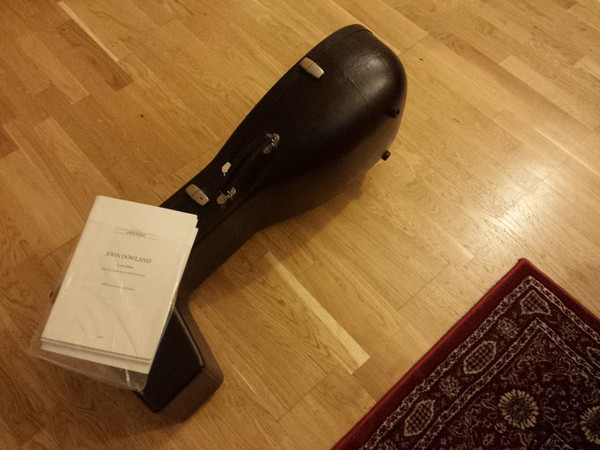
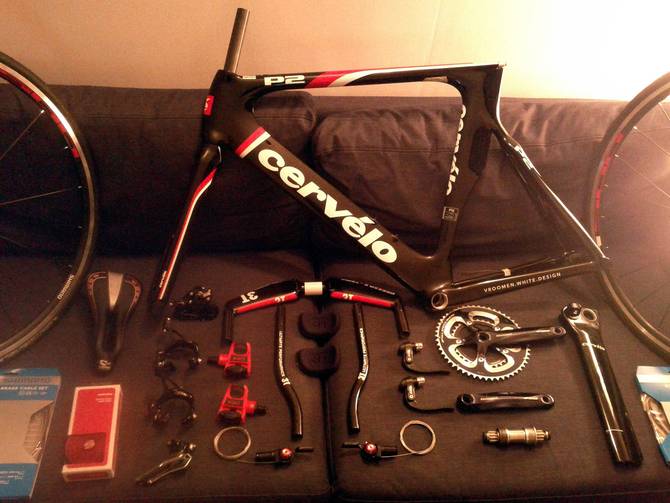
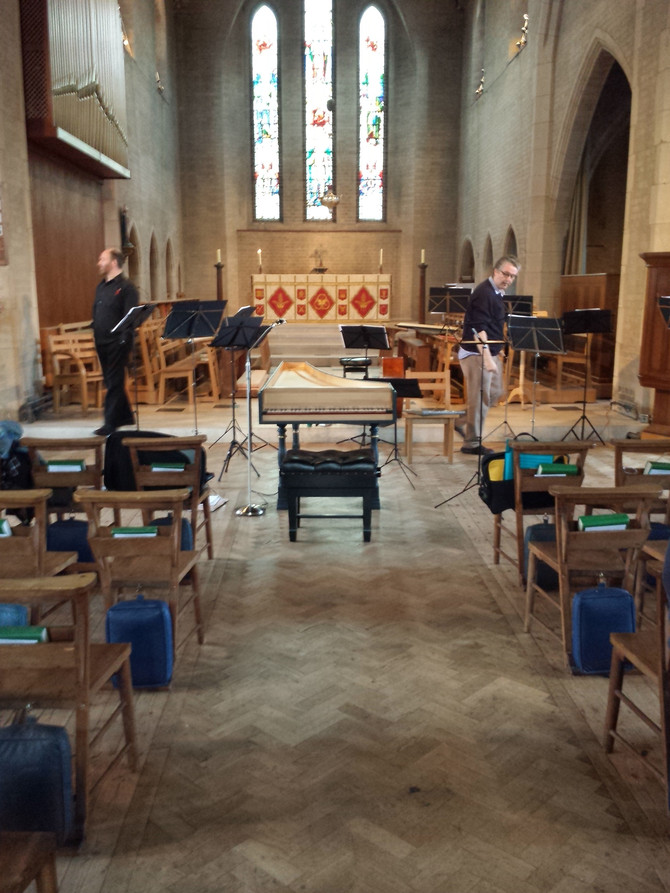
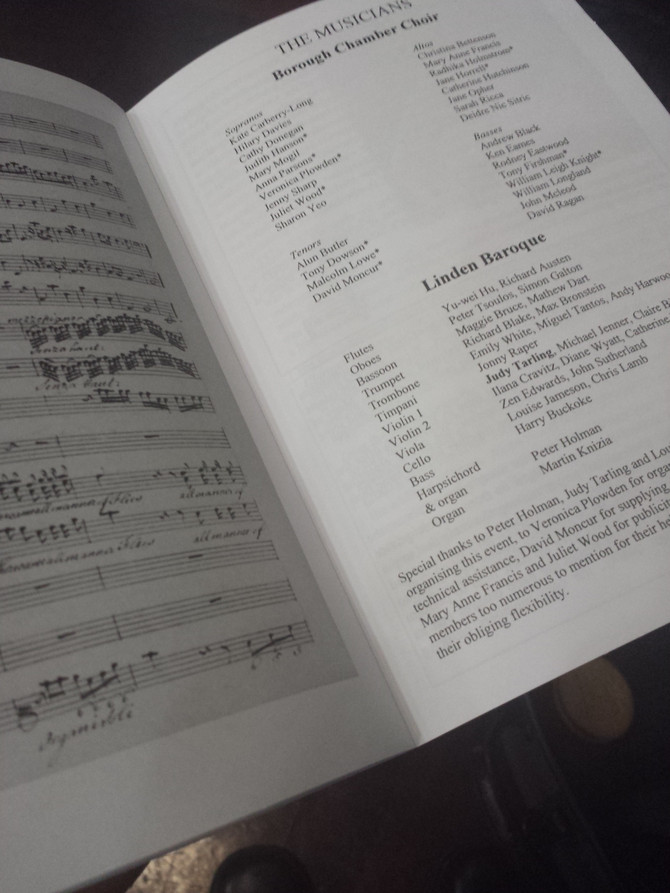
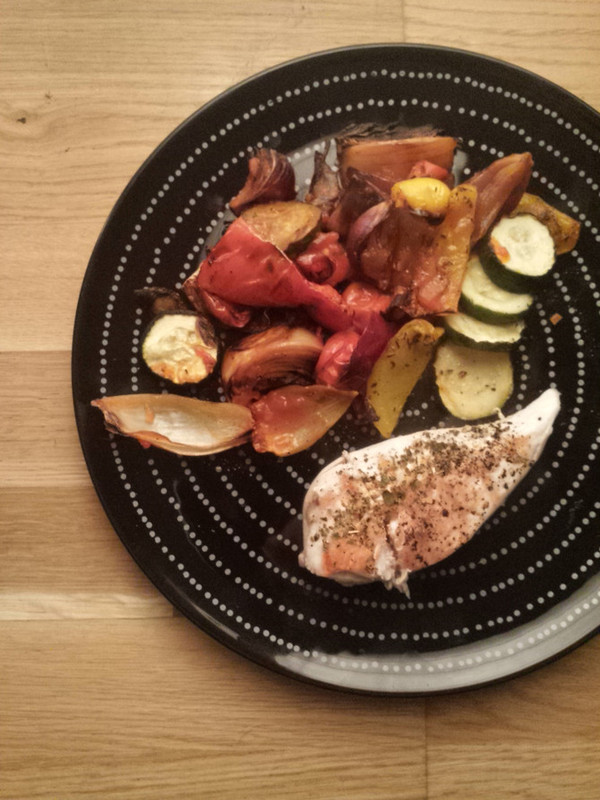
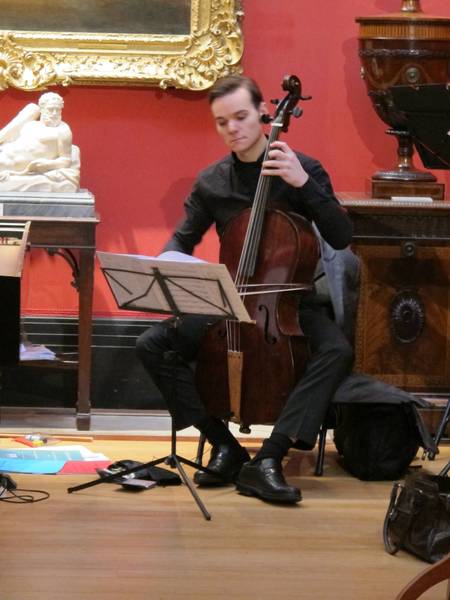
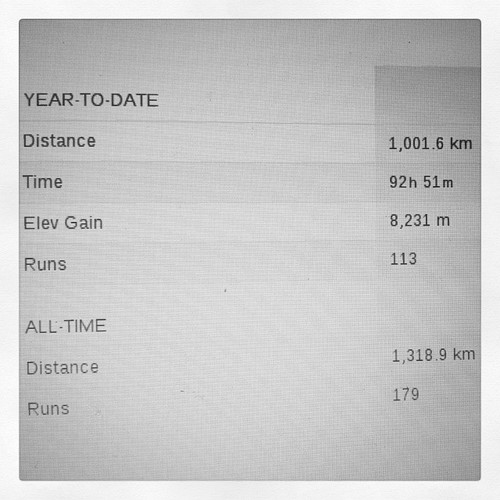
January https://chris-lamb.co.uk/wp-content/2013/highlights/01.jpg Entered monthly 10km races in Regent's Park, reducing my time from 55:07 in January 4th to 43:28 on December 1st. February https://chris-lamb.co.uk/wp-content/2013/highlights/02.jpg Entered the Hell of Ashdown cyclosportive in sub-zero conditions for over 100 miles & 7,500 ft of elevation (actual photo). March https://chris-lamb.co.uk/wp-content/2013/highlights/03.jpg Had my lute returned after it was damaged. April https://chris-lamb.co.uk/wp-content/2013/highlights/04.jpg Had a time-trial bike built and raced my first triathlon, duathlon and aquathlon. May https://chris-lamb.co.uk/wp-content/2013/highlights/05.jpg More biking, including a long ride with my brother. Also performed on the viola da gamba in Bach's St John Passion with Belsize Baroque. June https://chris-lamb.co.uk/wp-content/2013/highlights/06.jpg Two big concerts: Monn's Cello concerto in G minor with the Zadok Baroque Orchestra followed by the Blackfriars Quartet performing Shostakovich's String Quartet No. 8. July https://chris-lamb.co.uk/wp-content/2013/highlights/07.jpg Amongst more triathlon preperation, I performed in a Linden Baroque concert of Handel's Israel in Egypt. August https://chris-lamb.co.uk/wp-content/2013/highlights/08.jpg Raced my biggest event of the year a "Half-Ironman" triathlon hitting my time goal. September https://chris-lamb.co.uk/wp-content/2013/highlights/09.jpg Whilst procrastinating about writing some letters, I created a small service to send letters without a printer. October https://chris-lamb.co.uk/wp-content/2013/highlights/10.jpg Started cooking a little more adventurously. November https://chris-lamb.co.uk/wp-content/2013/highlights/11.jpg Performed Geminiani's arrangement of Corelli's La Folia in the Fitzwilliam Museum with Le Petit Orchestre. December https://chris-lamb.co.uk/wp-content/2013/highlights/12.jpg Ramped up my running volume so I could go over 1000km for the year. (Strava profile)


Next.

Previous.