Search Results: "pini"

20 April 2012

Sven Mueller: Ex-TSA lead on air traffic security woes

I came across this article today and really found it noteworthy: http://online.wsj.com/article/SB10001424052702303815404577335783535660546.html Original title: Why Airport Security Is Broken And How To Fix It Kip Hawley, TSA head from July 2005 to January 2009, writes about how the current TSA procedures came into being, how he failed at some of his goals (to make the checks less annoying) during his involvement and what could be done to fix procedures. I especially liked these points:
By the time of my arrival, the agency was focused almost entirely on finding prohibited items. Constant positive reinforcement on finding items like lighters had turned our checkpoint operations into an Easter-egg hunt. When we ran a test, putting dummy bomb components near lighters in bags at checkpoints, officers caught the lighters, not the bomb parts.
(also quoted on LWN.net) And this one:
The public wants the airport experience to be predictable, hassle-free and airtight and for it to keep us 100% safe. But 100% safety is unattainable.
I think the most important thing he mentioned is the fifth and last of his action items to improve both experience by passengers and security:
5. Randomize security: Predictability is deadly. Banned-item lists, rigid protocols if terrorists know what to expect at the airport, they have a greater chance of evading our system.
He got it nailed there, in my opinion: If security measures are predictable, the loopholes in it are also predictable, so you basically give attackers a handbook of what to avoid when planning the attack. This, by the way isn t limited to physical security and air travel, but also applies to IT security (though it is much easier to hide your IT security measures and make them somewhat unpredictable that way, then it is to do so with physical security and passenger screening on airports.

19 April 2012

Raphaël Hertzog: People behind Debian: Samuel Thibault, working on accessibility and the Hurd

Samuel Thibault is a French guy like me, but it took years until we met. He tends to keep a low profile, even though he s doing lots of good work that deserves to be mentioned. He focuses on improving Debian s accessibility and contributes to the Hurd. Who said he s a dreamer? :-) Checkout his interview to have some news of Wheezy s status on those topics. Raphael: Who are you? Samuel: I am 30 years old, and live in Bordeaux, France. During the workday, I teach Computer Science (Architecture, Networking, Operating Systems, and Parallel Programming, roughly) at the University of Bordeaux, and conduct researches in heterogeneous parallel computing. During the evening, I play the drums and the trombone in various orchestra (harmonic/symphonic/banda/brass). During the night, I hack on whatever fun things I can find, mainly accessibility and the Hurd at the moment, but also miscellaneous bits such as the Linux console support. I am also involved in the development of Aquilenet, an associative ISP around Bordeaux, and getting involved in the development of the network infrastructure in Bordeaux. I am not practicing Judo any more, but I roller-skate to work, and I like hiking in the mountains. I also read quite a few mangas. Saturday mornings do not exist in my schedule (Sunday mornings do, it s Brass Band rehearsal :) ). Raphael: How did you start contributing to Debian? Samuel: Bit by bit. I have been hacking around GNU/Linux since around 1998. I installed my first Debian system around 2000, as a replacement for my old Mandrake installation (which after all my tinkering was actually no longer looking like a Mandrake system any more!). That was Potato at the time, which somebody offered me through a set of CDs (downloading packages over the Internet was unthinkable at the time with the old modems). I have been happily reading and hacking around documentation, source code, etc. provided on them. Contribution things really started to take off when I went to the ENS Lyon high school in 2001: broadband Internet access in one s own student room! Since sending a mail was then really free, I started submitting bugs against various packages I was using. Right after that I started submitting patches along them, and then patches to other bugs. I did that for a long time actually. I had very little knowledge of all packaging details at the time, I was just a happy hacker submitting reports and patches against the upstream source code. At ENS Lyon, I met a blind colleague with very similar hacking tastes (of course we got friends) and he proposed me, for our student project, to work on a brlnet project (now called brlapi), a client/server protocol that lets applications render text on braille devices themselves. Along the way, I got to learn in details how a blind person can use a Unix system and the principles that should be followed when developing Accessibility. That is how I got involved in it. We presented our project at JDLL, and the Hurd booth happened to be next to our table, so I discussed with the Hurd people there about how the Hurd console could be used through braille. That is how I got into the Hurd too. From then on, I progressively contributed more and more to the upstream parts of both accessibility software and the Hurd. And then to the packaging part of them. Through patches in bug reports first, as usual, as well as through discussions on the mailing lists. But quickly enough people gave me commit access so I could just throw the code in. I was also given control over the Hurd buildds to keep them running. It was all good at that stage: I could contribute in all the parts I was caring about. People however started telling me that I should just apply for being a Debian Developer; both from accessibility and Hurd sides. I had also seen a bunch of my friends going through the process. I was however a bit scared (or probably it was just an excuse) by having to manage a gpg key, it seemed like a quite dangerous tool to me (even if I already had commit access to glibc at the time anyway ). I eventually applied for DM in 2008 so as to at least be able to upload some packages to help the little manpower of the Accessibility and Hurd teams. Henceforth I had already a gpg key, thus no excuse any more. And having it in the DM keyring was not enough for e.g. signing the hurd-i386 buildd packages. So I ended up going through NM in 2009, which went very fast, since I had already been contributing to Debian and learning all the needed stuff for almost 10 years! I now have around 50 packages in my QA page, and being a DD is actually useful for my work, to easily push our software to the masses :) So to sum it up, the Debian project is very easy to contribute to and open to new people. It was used during discussions at the GNU Hackers Meeting 2011 as an example of a very open community with public mailing lists and discussions. The mere fact that anybody can take the initiative of manipulating the BTS (if not scared by the commands) without having to ask anybody is an excellent thing to welcome contributions; it is notable tha the GNU project migrated to the Debbugs BTS. More generally, I don t really see the DD status as a must, especially now that we have the DM status (which is still a very good way to drag people into becoming DDs). For instance, I gave a talk at FOSDEM 2008 about the state of accessibility in Debian. People did not care whom I was, they cared that there was important stuff going on and somebody talking about it. More generally, decisions that are made through a vote are actually very rare. Most of the time, things just happen on the mailing lists or IRC channels where anybody can join the discussion. So I would recommend beginners to first use the software, then start reporting bugs, then start digging in the software to try fix the bugs by oneself, eventually propose patches, get them reviewed. At some point the submitted patches will be correct already most of the time. That s when the maintainers will start getting bored of just applying the patches, and simply provide with commit access, and voil , one has become a main contributor. Raphael: You re one of the main contributors to the Debian GNU/Hurd port. What motivates you in this project? Samuel: As I mentioned above, I first got real contact with the Hurd from the accessibility point of view. That initially brought me into the Hurd console, which uses a flexible design and nice interfaces to interact with it. The Hurd driver for console accessibility is actually very straightforward, way simpler than the Windows or Linux drivers. That is what caught me initially. I have continued working on it for several reasons. First, the design is really interesting for users. There are many things that are natural in the Hurd while Linux is still struggling to achieve them, such as UID isolation, recently mentioned in LWN. What I really like in the Hurd is that it excels at providing users with the same features as the administrator s. For instance, I find it annoying that I still can not mount an ISO image that I build on e.g. ries.debian.org. Linux now has FUSE which is supposed to permit that, but I have never seen it enabled on an ssh-accessible machine, only on desktop machines, and usually just because the administrator happens to be the user of the machine (who could as well just have used sudo ) For me, it is actually Freedom #0 of Free Software: let the user run programs for any purpose, that is, combining things together all the possible ways, and not being prevented from doing some things just because the design does not permit to achieve them securely. I had the chance to give a Hurd talk to explain that at GHM 2011, whose main topic was extensibility , I called it GNU/Hurd AKA Extensibility from the Ground, because the design of the Hurd is basically meant for extensibility, and does not care whether it is done by root or a mere user. All the tools that root uses to build a GNU/Hurd system can be used by the user to build its own GNU/Hurd environment. That is guaranteed by the design itself: the libc asks for things not to the kernel, but to servers (called translators), which can be provided by root, or by the user. It is interesting to see that it is actually also tried with varying success in GNU/Linux, through gvfs or Plash. An example of things I love being able to do is: $ zgrep foo ~/ftp://cdn.debian.net/debian/dists/sid/main/Contents-*.gz On my Hurd box, the ~/ftp: directory is indeed actually served by an ftpfs translator, run under my user uid, which is thus completely harmless to the system. Secondly and not the least, the Hurd provides me with interesting yet not too hard challenges. LWN confirmed several times that the Linux kernel has become very difficult to significantly contribute to, so it is no real hacking fun any more. I have notably implemented TLS support in the Hurd and the Xen and 64bit support in the GNU Mach kernel used by the Hurd. All three were very interesting to do, but were already done for Linux (at least for all the architectures which I actually know a bit and own). It happens that both TLS and Xen hacking experience became actually useful later on: I implemented TLS in the threading library of our research team, and the Xen port was a quite interesting line on my CV for getting a postdoc position at XenSource :) Lastly, I would say that I am used to lost causes :) My work on accessibility is sometimes a real struggle, so the Hurd is almost a kind of relief. It is famous for his vapourware reputation anyway, and so it is fun to just try to contribute to it nevertheless. An interesting thing is that the opinion of people on the Hurd is often quite extreme, and only rarely neutral. Some will say it is pure vapourware, while others will say that it is the hope of humanity (yes we do see those coming to #hurd, and they are not always just trolls!). When I published a 0.401 version on 2011 April 1st, the comments of people were very diverse, and some even went as far as saying that it was horrible of us to make a joke about the promised software :) Raphael: The FTPmasters want to demote the Hurd port to the debian-ports.org archive if it doesn t manage a stable release with wheezy. We re now at 2 months of the freeze. How far are you from being releasable ? Samuel: Of course, I can not speak for the Debian Release team. The current progress is however encouraging. During Debconf11, Michael Banck and I discussed with a few Debian Release team members about the kind of goals that should be achieved, and we are near completion of that part. The Debian GNU/Hurd port can almost completely be installed from the official mirrors, using the standard Debian Installer. Some patches need some polishing, but others are just waiting for being uploaded Debian GNU/Hurd can start a graphical desktop and run office tools such as gnumeric, as well as the iceweasel graphical web browser, KDE applications thanks to Pino Toscano s care, and GNOME application thanks to Emilio Pozuelo Monfort s care. Of course, general textmode hacking with gcc/make/gdb/etc. just works smoothly. Thanks to recent work on ghc and ada by Svante Signell, the archive coverage has passed 76%. There was a concern about network board driver support: until recently, the GNU Mach kernel was indeed still using a glue layer to embed the Linux 2.2 or even 2.0 drivers (!). Finding a network board supported by such drivers had of course become a real challenge. Thanks to the GSoC work of Zheng Da, the DDE layer can now be used to embed Linux 2.6.32 drivers in userland translators, which was recently ACCEPTed into the archive, and thus brings way larger support for network boards. It also pushes yet more toward the Hurd design: network drivers as userland process rather than kernel modules. That said, the freeze itself is not the final deadline. Actually, freeze periods are rests for porters, because maintainers stop bringing newer upstream versions which of course break on peculiar architectures. That will probably be helpful to continue improving the archive coverage. Raphael: The kfreebsd port brought into light all the packages which were not portable between different kernels. Did that help the Hurd port or are the problems too different to expect any mutual benefit? Samuel: The two ports have clearly helped each other in many aspects. The hurd-i386 port is the only non-Linux one that has been kept working (at least basically) for the past decade. That helped to make sure that all tools (dpkg, apt, toolchain, etc.) were able to cope with non-Linux ports, and keep that odd-but-why-not goal around, and evidently-enough achievable. In return, the kFreeBSD port managed to show that it was actually releasable, at least as a technological preview, thus making an example. In the daily work, we have sometimes worked hand in hand. The recent porting efforts of the Debian Installer happened roughly at the same time. When fixing some piece of code for one, the switch-case would be left for the other. When some code could be reused by the other, a mail would be sent to advise doing so, etc. In the packaging effort, it also made a lot of difference that a non-Linux port is exposed as released architecture: people attempted by themselves to fix code that is Linuxish for no real reason. The presence of the kFreeBSD is however also sometimes a difficulty for the Hurd: in the discussions, it sometimes tends to become a target to be reached, even if the systems are not really comparable. I do not need to detail the long history of the FreeBSD kernel and the amount of people hacking on it, some of them full-time, while the Hurd has only a small handful of free-time hackers. The FreeBSD kernel stability has already seen long-term polishing, and a fair amount of the Debian software was actually already ported to the FreeBSD kernel, thanks to the big existing pure-FreeBSD hackerbase. These do not hold for the GNU/Hurd port, so the expectations should go along. Raphael: You re also very much involved in the Debian Accessibility team. What are the responsibilities of this team and what are you doing there? Samuel: As you would expect it, the Debian Accessibility team works on packaging accessibility-related packages, and helping users with them; I thus do both. But the goal is way beyond just that. Actual accessibility requires integration. Ideally enough, a blind user should be able to just come to a Debian desktop system, plug his braille device, or press a shortcut to enable speech synthesis, and just use the damn computer, without having to ask the administrator to install some oddly-named package and whatnot. Just like any sighted user would do. He should be able to diagnose why his system does not boot, and at worse be able to reinstall his computer all by himself (typically at 2am ). And that is hard to achieve, because it means discussing about integration by default of accessibility features. For instance, the Debian CD images now beep during at the boot menu. That is a precious feature that has been discussed between debian-boot and debian-accessibility for a few weeks before agreeing on how to do it without too much disturbance. Similarly, my proposition of installing the desktop accessibility engines has been discussed for some time before being commited. What was however surprisingly great is that when somebody brought the topic back for discussion, non-debian-accessibility people answered themselves. This is reassuring, because it means things can be done durably in Debian. On the installation side, our current status is that the stable Debian installer has a high contrast color theme, and several years ago, I have pushed toward making standard CD images automatically detect braille devices, which permits standalone installation. I have added to the Wheezy installer some software speech synthesis (which again brought discussion about size increase vs versatility etc.) for blind people who do not have a braille device. I find it interesting to work on such topic in Debian rather than another distribution, because Debian is an upstream for a lot of distributions. Hopefully they just inherit our accessibility work. It at least worked for the text installer of Ubuntu. Of course, the Accessibility team is looking for help, to maintain our current packages, but also introduce new packages from the TODO list or create some backports. One does not need to be an expert in accessibility: tools can usually be tested, at least basically, by anybody, without particular hardware (I do not own any, I contributed virtual ones to qemu). For new developments and ideas, it is strongly recommended to come and discuss on debian-accessibility, because it is easy to get on a wrong track that does not bring actual accessibility. We still have several goals to achieve: the closest one is to just fix the transition to gnome3, which has been quite bad for accessibility so far :/ On the longer run, we should ideally reach the scenario I have detailed above: desktop accessibility available and ready to be enabled easily by default. Raphael: What s the biggest problem of Debian? Samuel: Debian is famous for its heated debian-devel discussions. And some people eventually say this no fun any more . That is exemplified in a less extreme way in the debian-boot/accessibility discussions that I have mentioned above. Sometimes, one needs to have a real stubborn thick head to continue the discussion until finding a compromise that will be accepted for commit. That is a problem because people do not necessarily have so much patience, and will thus prefer to contribute to a project with easier acceptance. But it is also a quality: as I explained above, once it is there, it is apparently for good. The Ubuntu support of accessibility in its installer has been very diverse, in part due to quite changing codebase. The Debian Installer codebase is more in a convergence process. Its base will have almost not changed between squeeze and wheezy. That allowed the Debian Accessibility team to continue improving its accessibility support, and not have to re-do it. A wiki page explains how to test its accessibility features, and some non-debian-accessibility people do go through it. A problem I am much more frightened by is the manpower in some core teams. The Debian Installer, grub, glibc, Xorg, gcc, mozilla derivatives, When reading the changelogs of these, we essentially keep seeing the same very few names over and over. And when one core developer leaves, it is very often still the same names which appear again to do the work. It is hard to believe that there are a thousand DDs working on Debian. I fear that Debian does not manage to get people to work on core things. I often hear people saying that they do not even dare thinking about putting their hands inside Xorg, for instance. Xorg is complex, but it seems to me that it tends to be overrated, and a lot of people could actually help there, as well as all the teams mentioned above. And if nobody does it, who will? Raphael: Do you have wishes for Debian Wheezy? Samuel: That is an easy one :) Of course I wish that we manage to release the hurd-i386 port. I also wish that accessibility of gnome3 gets fixed enough to become usable again. The current state is worrying: so much has changed that the transition will be difficult for users already, the current bugs will clearly not help. I also hope to find the time to fix the qt-at-spi bridge, which should (at last!) bring complete KDE accessibility. Raphael: Is there someone in Debian that you admire for their contributions? Samuel: Given the concerns I expressed above, I admire all the people who do spend time on core packages, even when that is really not fun everyday. Just to alphabetically name a few people I have seen so often here and there in the areas I have touched in the last few years: Aur lien Jarno, Bastian Blank, Christian Perrier, Colin Watson, Cyril Brulebois, Frans Pop, J rg Jaspert, Joey Hess, Josselin Mouette, Julien Cristau, Matthias Klose, Mike Hommey, Otavio Salvador, Petr Salinger, Robert Millan, Steve Langasek. Man, so many things that each of them works on! Of course this list is biased towards the parts that I touched, but people working in others core areas also deserve the same admiration.
Thank you to Samuel for the time spent answering my questions. I hope you enjoyed reading his answers as I did. Note that older interviews are indexed on wiki.debian.org/PeopleBehindDebian.

Subscribe to my newsletter to get my monthly summary of the Debian/Ubuntu news and to not miss further interviews. You can also follow along on Identi.ca, Google+, Twitter and Facebook.

3 comments Liked this article? Click here. My blog is Flattr-enabled.

15 April 2012

Petter Reinholdtsen: Debian Edu interview: Andreas Mundt

Behind Debian Edu and Skolelinux there are a lot of people doing the hard work of setting together all the pieces. This time I present to you Andreas Mundt, who have been part of the technical development team several years. He was also a key contributor in getting GOsa and Kerberos set up in the recently released Debian Edu Squeeze version. Who are you, and how do you spend your days? My name is Andreas Mundt, I grew up in south Germany. After studying Physics I spent several years at university doing research in Quantum Optics. After that I worked some years in an optics company. Finally I decided to turn over a new leaf in my life and started teaching 10 to 19 years old kids at school. I teach math, physics, information technology and science/technology. How did you get in contact with the Skolelinux/Debian Edu project? Already before I switched to teaching, I followed the Debian Edu project because of my interest in education and Debian. Within the qualification/training period for the teaching, I started contributing. What do you see as the advantages of Skolelinux/Debian Edu? The advantages of Debian Edu are the well known name, the out-of-the-box philosophy and of course the great free software of the Debian Project! What do you see as the disadvantages of Skolelinux/Debian Edu? As every coin has two sides, the out-of-the-box philosophy has its downside, too. In my opinion, it is hard to modify and tweak the setup, if you need or want that. Further more, it is not easily possible to upgrade the system to a new release. It takes much too long after a Debian release to prepare the -Edu release, perhaps because the number of developers working on the core of the code is rather small and often busy elsewhere. The Debian LAN project might fill the use case of a more flexible system. Which free software do you use daily? I am only using non-free software if I am forced to and run Debian on all my machines. For documents I prefer LaTeX and PGF/TikZ, then mutt and iceweasel for email respectively web browsing. At school I have Arduino and Fritzing in use for a micro controller project. Which strategy do you believe is the right one to use to get schools to use free software? One of the major problems is the vendor lock-in from top to bottom: Especially in combination with ignorant government employees and politicians, this works out great for the "market-leader". The school administration here in Baden-Wuerttemberg is occupied by that vendor. Documents have to be prepared in non-free, proprietary formats. Even free browsers do not work for the school administration. Publishers of school books provide software only for proprietary platforms. To change this, political work is very important. Parts of the political spectrum have become aware of the problem in the last years. However it takes quite some time and courageous politicians to 'free' the system. There is currently some discussion about "Open Data" and "Free/Open Standards". I am not sure if all the involved parties have a clue about the potential of these ideas, and probably only a fraction takes them seriously. However it might slowly make free software and the philosophy behind it more known and popular.

14 April 2012

Wouter Verhelst: LOAD: tutorial on Debian Packaging

Two weeks ago, I was at LOAD, where I did a tutorial on Debian Packaging. Unfortunately, I wasn't doing very well physically, and as a result my preparation wasn't what I had hoped for. It ended up being not so much a tutorial as a walking the audience through packaging a piece of software in casu NBD with debhelper in dh mode. Not very difficult, but since there's nothing for people to fall back on afterwards, it may help if they have a writedown of what I said during the session; and I promised to put it on my blog. So, here goes. However, note that the canonical written tutorial on Debian Packaging is here. With apologies to readers of Planet Debian, most of whom for which all this is probably old hat. Unlike RPM packaging, in Debian, the data that tells the debian packaging system how to package a piece of software is functionally split among a number of files. All these files go in a toplevel directory in the source package, (unsurprisingly) called 'debian'. There are four files that are required for every Debian package: the control, changelog, copyright, and rules files. Without these files, dpkg-dev will fail to produce a package any package. The first, the control file, contains metadata on packages: the name of the package, its description, the dependencies, etc. Basically, almost all the information you see when you run 'apt-cache show <package>' (with one exception) is in the control file. If you have a source package that builds multiple binary packages, then you should have multiple 'Package' stanzas in the control file. In my opinion, creating a control file is easiest done by copying a control file from another (similar?) package, and modifying it to suit the software you're dealing with. The one exception, the one bit of metadata that is not found in the control file is the version number: this data is contained in the changelog file. This file looks like a free-form file for the most part, but it really is a machine-parsable format; as such, it's best to edit it with specialized tools, such as the debian-changelog-mode in the emacs editor, or the debchange script, also available as dch, from the devscripts package. In the changelog, you should document any changes you make to the package, making sure the version number (top line), distribution (unstable, experimental, stable, ...; top line), urgency (top line; used mainly when testing needs to be updated urgently for things like security updates), author (bottom line) and date and time (also bottom line) are correct. The copyright file, unsurprisingly, should contain the copyrights statements of the original software, and the license (or a reference to a copy of the same license text under /usr/share/common-licenses). This file is still free-format in most packages today, although a machine-readable format for this file has recently been defined. Of the four required files, this is probably the most boring one, but hey, we can't like everything we do. The last file, the rules file, is where all the action happens. This file is defined as a Makefile, of which the targets are called for various parts of the build system. The rules file has a number of required targets (such as build, clean, and others), but if you're using debhelper in dh mode, you don't need to worry about those; instead, you can use the following simple rules file:
#!/usr/bin/make -f
%:
	dh $@
With the first line, the shebang, we make clear that this is a makefile, and that it should be called by make. The next is a generic target (the % is a wildcard for make), with just one command: 'call dh with the name of the target being called'. Since dh implements all required rules targets, that immediately gets you a working package. Go ahead, try! Run 'dpkg-buildpackage -rfakeroot', and see what happens. Did that work? Maybe, maybe not. First, you'll have seen loads of warnings about something involving a "compatibility level". This is from debhelper; this compatibility level, or 'API level' if you wish, allows debhelper to move forward and make incompatible changes without breaking all the existing packages out there; whenever the compat level is bumped, some new functionality will only be made available if you also raise the compat level in your source package (and then you'll know you may have some changes to do in your package). Since the original debhelper, over a decade ago, did not have a compat level, the absense of a compat level signals compat level 1, which is far outdated now, and about to be unsupported. Hence the warning. The fix is simple: create a file debian/compat containing a single number: the compatibility level you're working with. It's best to use the most recent level which debhelper supports when you create your package, which as of this writing is level 9. Ignoring the compatibility level, if you're building a software package which uses a well-established build system, and you only build one binary package out of that, chances are pretty high that everything worked as expected. If not, you'll have more work. Building multiple packages requires that you tell debhelper somehow which file goes in which package. You can do this with a file debian/package.install, where package is the name of the binary package you're building. The install file is read by dh_install, one of many tools in the debhelper suite. You see, in the old days (before debhelper 7), debhelper was just a suite of tools, which required that you wrote a debian/rules file containing all the individual tools to be called in the correct order. This mode is still supported; in fact, even if you do use dh, you do, since all that tool really does is call the right tools in the right order; the real work is done by the invidual tools. They all have their own man page; to understand how dh_install chooses which file to put in which package, go read man dh_install. Go ahead, do it now; I'll wait. Back? Good. You've now learned that dh_install can install files either from the source directory (useful for packages containing only scripts or so), or from a directory debian/tmp. If you use an autotools-based software package, this is what dh will do for you. When you called dpkg-builpackage above, you may also have noticed that the output contained many lines starting with dh_, one of which said dh_install. As you may have guessed, dh echoes every debhelper command just before it will execute them. This allows you to look at the output, and see what's happening. For more detail, set the environment variable DH_VERBOSE to a non-zero value. I'm sure you'll have seen one or two debhelper tools that could make your package better. Go ahead, go and read their man pages to see what they do, and how they do it. Most of these will require you to create a file debian/package.toolname to specify details. In some cases, you may need to specify command-line arguments to the tool to get it to do what you want. In yet other cases, the tool won't support what you need it to do, and you'll have to do something manual. What to do now? The dh command line doesn't support adding extra commands easily. Does this mean you'd have to revert to old-style long, non-dh debian/rules files? Luckily, no. You can create an override target. If dh detects that you have such a target for a particular tool, it will call that target instead of the tool. This target's rules can then call the tool in question (or not), and add any command line arguments, or extra commands, as needed. An override target is a normal Makefile target with a name of the form override_dh_something, where dh_something is the name of the tool you wish to override. At this point, I'd reached almost the end of my two allotted hours, and a member of the audience asked how to make dpkg deal with configuration files. The answer is, you don't need to do anything! Not if you use debhelper, anyway; all you need to do is install the file in /etc. Since debian policy specifies that all files in /etc need to be configuration files and that no conffiles may be placed anywhere but in /etc, debhelper will automatically mark any file installed in /etc as a conffile, which will cause dpkg to ask the user what to do with changes to such files. Note that in Debian parlance, a conffile is not the same thing as a configuration file: a conffile is a configuration file that is part of the binary package (i.e., if you call 'dpkg --contents' on the .deb file, you'll see it in the output), whereas a configuration file is a file (any file, including files generated during or after installation of the .deb file on a system). Occasionally, this is also why some differences to configuration files are managed through debconf, while others aren't: the ones managed through debconf are non-conffile configuration files managed through ucf, whereas the others are conffiles. So in the simplest of cases, if you want to install a configuration file and you want to make sure it's protected against accidental overwrites by package upgrades, all you need to do is make sure it's installed to /etc; debhelper will do the rest. And that concludes this introduction. Please note it's only an introduction, not a full-blown tutorial; while this will allow you to get started, you may have to learn a bit more if you wish to eventually upload a package to Debian.

12 April 2012

Tanguy Ortolo: Why www. ?

Three big  W s in shades of green Many websites have addresses that use a www.- prefix. Some people are encouraging this practice, other are advising against it. I, for one, think this prefix makes sense and is really useful, so here is an explanation of my opinion. In a nutshell: the Wold Wide Web is one Internet service among many other such as domain name, mail, mailboxes or instant messenging; using a dedicated prefix allows to distribute all these services to specific servers in a convenient way.On Internet, you can expose several services, the most common being domain names (DNS), websites (HTTP), incoming mail (SMTP), outgoing mail submission (submission), mailbox fetching (POP) or consultating (IMAP) and instant messenging (XMPP). Constraints Modern Internet services can have constraints such as load balancing, failover and most importantly the possibility to use specific servers for each service instead of having all of them on the same server. Dedicated records Some service were designed or revised to take these contraints into account; this include the domain name, incoming mail and instant messenging, by using dedicated DNS records:
example.com.                    NS              roquefort.example.com.
example.com.                    MX  10          morbier.example.com.
_xmpp-server._tcp.example.com.  SRV 10 100 5269 morbier.example.com.
In that example, the name service of example.com. is provided by the server Roquefort while the incoming mail and instant messenging service are provided by Morbier Dedicated prefixes On the contrary, some services were not designed to take these constraint into account, and may be too fossilized to be revised for that; this includes the Web and mailbox service. A convenient way to work around the antiquated design of these services is to use a well known prefix:
www.example.com.                CNAME           ossau-iraty.example.com.
smtp.example.com.               CNAME           morbier.example.com.
pop.example.com.                CNAME           morbier.example.com.
imap.example.com.               CNAME           morbier.example.com.
In that example, the Web service of example.com. is provided by the server Ossay-Iraty while the email submission and mailbox services are provided by Morbier. Readability and flexibility Using dedicated records and prefixes increases the consistency and readability of a DNS zone, since it allows to refer to the servers by their canonical host name, and to define their IP addresses once and for all:
; Services
example.com.                    NS              roquefort.example.com.
example.com.                    MX  10          morbier.example.com.
pop.example.com.                CNAME           morbier.example.com.
imap.example.com.               CNAME           morbier.example.com.
www.example.com.                CNAME           ossau-iraty.example.com.
; Hosts
roquefort.example.com.          A               192.2.0.12
                                AAAA            2001:db8::12
morbier.example.com             A               192.2.0.42
                                AAAA            2001:db8::42
ossau-iraty.example.com.        A               192.2.0.51
                                AAAA            2001:db8::51
You can think of that practice as connecting dots between services and hosts:
name service    Roquefort
incoming mail   Morbier
mailboxes         Ossau-Iraty
website        
With such a DNS zone, it is very easy to identify which server is hosting each service. Using host names rather than IP addresses multiple times reduces the information duplication, which in turn facilitates future chances and reduces the risk of error (it is easier to swith the website from Ossay-Iraty to Morbier than from 192.2.0.51/2001:db8::51 to 192.2.0.42/2001:db8::42).

11 April 2012

Erich Schubert: Are likes still worth anything?

When Facebook became "the next big thing", you had the "like" buttons pop up on various web sites. An of course "going viral" was the big thing everybody talked about, in particular SEO experts (or those that would like to be that).
But things have changed. In particular Facebook has. In the beginning, any "like" would be announced in the newsfeed to all your friends. This was what allowed likes to go viral, when your friends re-liked the link. This is what made it attractive to have like buttons on your web pages. (Note that I'm not referring to "likes" of a single Facebook post; they are something quite different!)
Once that everybody "knew" how important this was, everbody tried to make the most out of it. In particular scammers, viruses and SEO people. Every other day, some clickjacking application would flood Facebook with likes. Every backwater website was trying to get more audience by getting "liked". But at some point Facebook just stopped showing "likes". This is not bad. It is the obvious reaction when people get too annoyed by the constant "like spam". Facebook had to put an end to this.

But now that a "like" is pretty much worthless (in my opinion). Still, many people following "SEO Tutorials" are all crazy about likes. Instead, we should reconsider whether we really want to slow down our site loading by having like buttons on every page. A like button is not as lightweight as you might think it is. It's a complex JavaScript that tries to detect clickjacking attacks, and in fact invades your users' privacy, up to the point where for example in Germany it may even be illegal to use the Facebook like button on a web site.
In a few months, the SEO people will realize that the "like"s are a fad now, and will likely all try to jump the Google+ bandwagon. Google+ is probably not half as much a "dud" as many think it is (because their friends are still on Facebook and because you cannot scribble birthday wishes on a wall in Google+). The point is that Google can actually use the "+1" likes to improve everyday search results. Google for something a friend liked, and it will show up higher in the search results, and Google will show the friend who recommended it. Facebook cannot do this, because it is not a search engine (well, you can use it for searching people, although Ark probably is better at this, and one does nowhere search as many people as one does regular web searches). Unless they go into a strong partnership with Microsoft Bing or Yahoo, the "like"s can never be as important as Google "+1" likes. So don't underestimate the Google+ strategy on the long run.
There are more points where Facebook by now is much less useful as it used to be. For example event invitations. When Facebook was in full growth, you could essentially invite all your friends to your events. You could also use lists to organize your friends, and invite only the appropriate subset, if you cared enough. The problem again was: nobody cared enough. Everybody would just invite all their friends, and you would end up getting "invitation spam" several times a day. So again Facebook had to change and limit the invitation capabilities. You can no longer invite all, or even just all on one particular list. There are some tools and tricks that can work around this to some extend, but once everybody uses that, Facebook will just have to cut it down even further.
Similarly, you might remember "superpoke" and all the "gift" applications. Facebook (and the app makers) probably made a fortune on them with premium pokes and gifts. But then this too reached a level that started to annoy the users, so they had to cut down the ability of applications to post to walls. And boom, this segment essentially imploded. I havn't seen numbers on Facebook gaming, and I figure that by doing some special setup for the games Facebook managed to keep them somewhat happy. But many will remember the time when the newsfeed would be full of Farmville and Mafia Wars crap ... it just does no longer work this way.

So when working with Facebook and such, you really need to be on the move. Right now it seems that groups and applications are more useful to get that viral dream going. A couple of apps such as Yahoo currently require you to install their app (which then may post to your wall on your behalf and get your personal information!) to follow a link shared this way, and then can actively encourage you to reshare. And messages sent to a "Facebook group" are more likely to reach people that aren't direct friends of yours. When friends actually "join" an event, this is currently showing up in the news feed. But all of this can change with 0 days notice.
It will be interesting to see if Facebook can on the long run keep up with Googles ability to integrate the +1 likes into search results. It probably takes just a few success stories in the SEO community to become the "next big thing" in SEO to get +1 instead of Facebook likes. Then Google just has to wait for them to virally spread +1 adoption. Google can wait - its Google Plus growth rates aren't bad, and they have a working business model already that doesn't rely on the extra growth - they are big already and make good profits.
Facebook however is walking on a surprisingly thin line. They need a tight control on the amount of data shared (which is probably why they try to do this with "magic"). People don't want to have the impression that Facebook is hiding something from them (although it is in fact suppressing a huge part of your friends activity!), but they also don't want to get all this data spammed onto them. And in particular, it needs to give the web publishers and app developers the right amount of that extra access to the users, while in turn keeping the major spam away from the users.

Independent of the technology and actual products, it will be really interesting to see if we manage to find some way to keep the balance in "social" one-to-many communication right. It's not a fault of Facebook that many people "spam" all their friends with all their "data". Googles Circles probably isn't the final answer either. The reason why email still works rather well was probably because it makes one-to-one communication easier than one-to-many, because it isn't realtime, and because people expect you to put enough effort into composing your mails and choosing the right receipients for the message. Current "social" communication is pretty much posting everything to everyone you know adressed as "to whoever it may concern". Much of it is in fact pretty non-personal or even non-social. We have definitely reached the point where more data is shared than is being read. Twitter is probably the most extreme example of a "write-only" medium. The average number a tweet is read by a human except the original poster must be way below 1, and definitely much less than the average number of "followers".
So in the end, the answer may actually be a good automatic address book, with automatic groups and rich clients, to enable everybody to easily use email more efficiently. On the other hand, separting "serious" communication from "entertainment" communication may be well worth having a separate communications channel, and email definitely is dated and is having spam problems.

7 April 2012

Wouter Verhelst: New toy

A while back, I was thinking. Playing the flute or whistling on a bottle is the exact same technique; but, in my opinion, the sound that comes from a bottle has some interesting overtones, making for a nice sound. Since the material of which an instrument is made is in large part responsible for the overtones that it produces (apart from the technique used by the musician), I wondered if nobody had ever come up with the idea of making a flute in glass. Turns out that, of course, this has already happened. In fact, the modern concert flute wouldn't have been possible without one Claude Laurent, a Parisian instrument maker who received a patent for "a new [method of] making flutes from crystal"; part of his patent described a method of attaching the valves to the instrument. It was this method which was used by Theobald Boehm when he invented the fingering system that defines the modern concert flute. The price of an intact Laurent flute today is, of course, beyond my budget; and it doesn't look like there are any glass flutes being made that use the Boehm system. But that doesn't mean there aren't any glass flutes being made anymore; indeed, a short look around the Internet quickly turned up Hall Crystal Flutes, a family-owned business from Rochester in the US state of Washington. As the price was not too insane (49 USD for the instrument, plus almost the same amount for shipping it to Belgium), I ordered one of their piccolos in C. Last wednesday, a woman from the post office rang my doorbell, with a pakage containing the new instrument. Unfortunately, however, it had a customs tax of slightly more than what was in my wallet at the time, which meant I could only fetch it from the post office the next day. At least I could pay in plastic there. After having had it for a few days, I can make a few observations: I've been playing a few diddlies on it for the past few days, and it's been fun so far. We'll see where this leads us.

1 April 2012

Rapha&#235;l Hertzog: My Debian Activities in March 2012

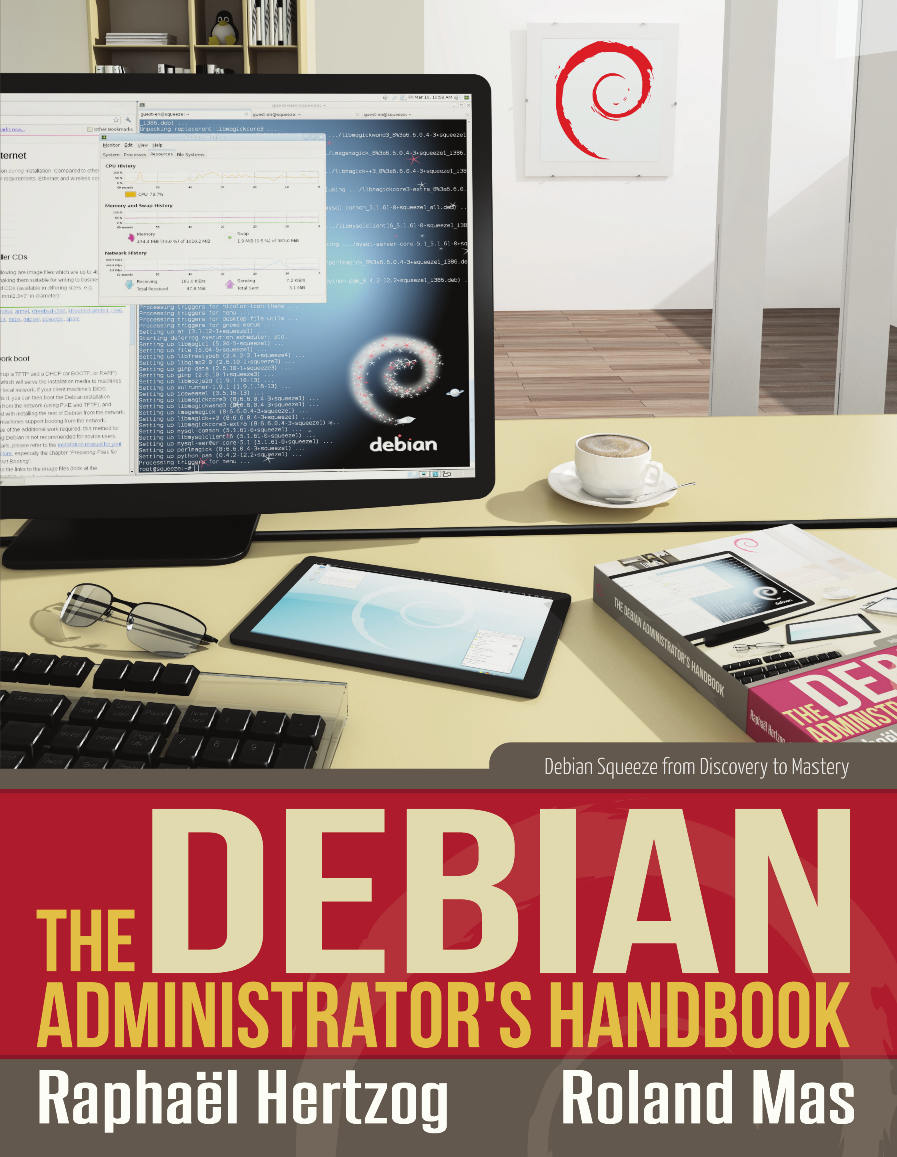
This is my monthly summary of my Debian related activities. If you re among the people who made a donation to support my work (227.83 , thanks everybody!), then you can learn how I spent your money. Otherwise it s just an interesting status update on my various projects. Dpkg Thanks to Guillem, dpkg with multiarch support is now available in Debian sid. The road has been bumpy, and it has again been delayed multiple times even after Guillem announced it on debian-devel-announce. Finally, the upload happened on March 19th. I did not appreciate his announce because it was not coordinated at all, and had I been involved from the start, we could have drafted it in a way that sounded less scary for people. In the end, I provided a script so that people can verify whether they were affected by one of the potential problems that Guillem pointed out. While real, most of them are rather unlikely for typical multiarch usage. Bernhard R. Link submitted a patch to add a new status command to dpkg-buildflags. This command would print all the information required to understand which flags are activated and why. It would typically be called during the build process by debian/rules to keep a trace of the build flags configuration. The goal is to help debugging and also to make it possible to extract that information automatically from build logs. I reviewed his patch and we made several iterations, it s mostly ready to be merged but there s one detail where Bernhard and I disagree and I solicited Guillem s opinion to try to take a decision. Unfortunately neither Guillem nor anyone else chimed in. On request of Alexander Wirt, I uploaded a new backport of dpkg where I dropped the DEB_HOST_MULTIARCH variable from dpkg-architecture to ensure multi-arch is never accidentally enabled in other backports. One last thing that I did not mention publicly at all yet, is that I contacted Lennart Poettering to suggest an improvement to the /etc/os-release file that he s trying to standardize across distributions. It occurred to me that this file could also replace our /etc/dpkg/origins/default file (and not only /etc/debian_version) provided that it could store ancestry information. After some discussions, he documented new official fields for that file (ID_LIKE, HOME_URL, SUPPORT_URL, BUG_REPORT_URL). Next step for me is to improve dpkg-vendor to support this file (as a fallback or as default, I don t know yet). Packaging I packaged quilt 0.60 (we re now down to 9 Debian-specific patches, from a whopping 26 in version 0.48!) and zim 0.55. In prevision of the next upstream version of Publican, I asked the Perl team to package a few Perl modules that Publican now requires. Less than two weeks after, all of them were in Debian Unstable. Congrats and many thanks to the Perl team (and Salvatore Bonaccorso in particular, which I happen to know because we were on the same plane during last Debconf!). On a side note, being the maintainer of nautilus-dropbox became progressively less fun over the last months, in particular because the upstream authors tried to override some of the (IMO correct) packaging decisions that I made and got in touch with Ubuntu community managers to try to have their way. Last but not least, I keep getting duplicates of a bug that is not in my package but in the official package and that Dropbox did not respond to my query. Book update The translation is finished and we re now reviewing the whole book. It takes a bit more time than expected because we re trying to harmonize the style and because it s difficult to coordinate the work of several volunteer reviewers. The book cover is now almost finalized (click on it to view it in higher definitions): We also made some progress on the interior design for the paperback. Unfortunately, I have nothing to show you yet. But it will be very nice and made with just a LaTeX stylesheet tailored for use with dblatex. The liberation fundraising slowed down with only 41 new supporters this month but it made a nice bump anyway thanks to a generous donation of 1000 EUR by Offensive security, the company behind Backtrack Linux. They will soon communicate on this, hopefully it will boost the operation. It would be really nice if we managed to raise the remaining 3000 EUR in the few weeks left until the official release of the book! The work on my book dominated the month and explains my relative inactivity on other fronts. I worked much more than usual, and my wife keeps telling me that I look tired and that I should go in bed earlier but I see the end of the tunnel: if everything goes well, the book should be released in a few weeks and I will be able to switch back to a saner lifestyle. Thanks See you next month for a new summary of my activities.
One comment Liked this article? Click here. My blog is Flattr-enabled.

23 March 2012

Rapha&#235;l Hertzog: People behind Debian: J rg Jaspert, FTPmaster, Debian Account Manager, and more

Photo by Wouter Verhelst

J rg is a very active contributor within Debian, and has been for a long time. This explains why he holds so many roles (FTPmaster and Debian Account Manager being the 2 most important ones) Better known as Ganneff (his IRC nick), he s not exactly the typical hacker. He has no beard and used to drink milk instead of beers. :-) Check out his interview to learn more about some of the numerous ways one can get involved in Debian, managing its infrastructure and without having to be a packager. Raphael: Who are you? J rg: My name is J rg Jaspert and I m 35 years old working for a small company doing system administration and consulting work for our customers. I m married for a little while now and sometime soon a little Ganneff will be crawling out of my wife. (Whoever didn t think of the movie Alien now is just boring). Raphael: How did you start contributing to Debian? J rg: I started using Debian somewhere around 2000, 2001. Before that I had the misfortune to try SuSE and RedHat, both with a user experience that let me fully understand why people think Linux is unusable. (Due to my work I m in the unfortunate situation to have to use RedHat on two machines. Funny how they are still utter crap and worse than bad toys). And all of this lets get a Linux running here came up because I was trying to find a replacement for my beloved OS/2 installation, which I had for some years. So after I got Debian installed, good old Potato, I got myself active on our mailing lists, starting with the German user one. A bit later I replied to a question if someone can help as staff for a Debian booth somewhere. It was the most boring event I ever visited (very nice orga, unfortunately no visitors), but I got a few important things there: The software I packaged, found me a sponsor and voila, maintainer I was. Some more packages got added and at some point my sponsor turned out to be my advocate. The NM process run around 2 months, and mid April 2002 I got THE MAIL. Raphael: Some Debian developers believe that you have too many responsibilities within Debian (DAM, FTPMaster, Debconf, Partners, Planet Debian, Mirrors, ). Do you agree that it can be problematic, and if yes, are you trying to scale down? J rg: It s DebConf, tssk. And yes, I do have some extra groups and roles. And you even only list some, leaving out all I do outside Debian. But simply counting number of roles is a plain stupid way to go. Way more interesting is how much work is behind a role and how many other people are involved. And looking at those you listed I don t see any I am a SPOF. Let s look at those you listed: DAM: Here I did start out assisting James to get the huge backload down which had accumulated over time. Nowadays I am merely the one with the longest term as DAM. Christoph Berg joined in April 2008 and Enrico Zini followed during October 2010, both very active. Especially Enrico, lately with the redesign of the NM webpages. FTPMaster: The basic outline of the FTPMaster history is similar to the DAM one. I joined as an assistant, after the oh-so-famous Vancouver meeting in 2004. Together with Jeroen, we both then got the backload down which had accumulated there. He did most of the removals while I had a fun time cleaning up NEW. And we both prepared patches for the codebase. And in 2007, as the last action as DPL, Sam made me FTPMaster. Since then I haven t been alone either. In fact we have much more rotation in the team than ever before, which is a good thing. Today we are 3 FTPMasters, 4 FTP Assistants and 1 Trainee. Though we always like new blood and would welcome more volunteers. DebConf: I am very far outside the central DebConf team. I am not even a delegate here. Currently I am merely an admin, though there are 4 others with the same rights on the DebConf machines. I ve not taken any extra jobs this year, nor will I. Probably for next year again, but not 2012. Planet: I am one of three again, but then Planet is mostly running itself. Debian developers can just edit the config, cron is doing the work, not much needed here. Occasional cleanups, every now and then a mail to answer, done. In short: No real workload attached. Mirrors: My main part here is the ftpsync scriptset. Which is a small part of the actual work. The majority of it, like checking mirrors, getting them to fix errors, etc. is done by Simon Paillard (and since some time, Raphael Geissert is active there too, you might have heard about his http.debian.net). Having said that, there is stuff I could have handled better or probably faster. There always is. Right now I have 2 outstanding things I want to do a (last) cleanup on and then give away. Raphael: You got married last year. I know by experience that entertaining a relationship and/or a family takes time. How do you manage to combine this with your Debian involvement? J rg: Oh well, I first met my wife at the International Conference on OpenSource 2009 in Taiwan. So OpenSource, Debian and me being some tiny wheel in the system wasn t entirely news to her. And in the time since then she learned that there is much more behind when you are in a community like Debian, instead of just doing it for work. Even better that she met Debian people multiple times already, and knows with who I am quarreling Also, she is currently attending a language school having lots of homework in the evening. Gives me time for Debian stuff. :) How that turns out with the baby I have no idea yet. I do want to train it to like pressing the M key, so little-Ganneff can deal with NEW all on its own (M being Manual reject), but it might take a day or twenty before it gets so far. :) Raphael: Thanks to the continuous work of many new volunteers, the NEW queue is no longer a bottleneck. What are the next challenges for the FTPmaster team? J rg: Bad link, try this one. :) Also, no longer sounds like its recent. It s not, it s just that people usually recognize the negative only and not the positive parts. Well, there are a few challenges actually. The first one, even if it sounds simple, is an ongoing one: We need Debian Developers willing to do the work that is hidden behind those simple graphs. Yes, we are currently having a great FTP Team doing a splendid work in keeping that queue reasonably small this is a/THE sisyphean task per excellence. There will always be something waiting for NEW, even if you just cleaned the queue, you turn around and there is something else back in already. Spreading this workload to more people helps not burning one out. So if one or more of the readers is interested, we always like new volunteers. You simply need to be an uploading DD and have a bit of free time. For the rest we do have training procedures in place. Another one is getting the multi-archive stuff done. The goal is to end up with ONE host for all our archives. One dak installation. But separate overrides, trees, mirrors, policies and people (think RMs, backports team, security team). While this is halfway easy to think of in terms of merging backports into main it gets an interesting side note when you think of merging security into main . The security archive does have information that is limited to few people before public release of a security announce, and so we must make sure our database isn t leaking information. Or our filesystem layer handling. Or logs. Etc. Especially as the database is synced in (near) realtime to a DD accessible machine. And the filesystem data too, just a little less often. There is also a discussion about a good way to setup a PPA for Debian service. We do have a very far developed proposal here how it should work, and I really should do the finishing touches and get it to the public. Might even get a GSoC project on it. So far for some short to middle term goals. If you want to go really long term, I do think that we should get to the point where we get rid of the classical view of a source package being one (or more) tarballs plus the Debian changes. Where a new version requires the full upload of one or more of those parts of the source package. I don t know exactly where it should end up. Sure, stuff like one central DVCS, maintainers push there, the archive generates the source tarballs and prepares the mirrors do sound good for a quick glance. But there are lots of trouble and pitfalls and probably some dragons hidden here. Raphael: The Debian repositories are managed by DAK (Debian Archive Kit) which is not packaged. Thus Debian users pick tools like reprepro to manage their package repositories. Is that how things should be? J rg: Oh, Mark Hymers wants to do a package again. More power to him if he does, though yes, DAK is not exactly a quick-and-easy thing to install. But nowadays it is a trillion times easier than the past thanks to Mark s work people can now follow the instructions, scripts and whatever they find inside the setup directory. Still, it really depends on the archive size you are managing. A complex tool like dak does not make sense for someone who wants to publish one or a dozen of his own packages somewhere. Thats just like doing a finger amputation with a chainsaw it certainly works and is fun for the one with the chainsaw but you probably end up a little overdoing it. I myself am using dpkg-scan[packages sources] from a shell script but also mini-dinstall in places (never got friend with reprepro when I looked at it). Works, and for the few dozen packages those places manage it is more than enough. Also, using dak forces you into some ways of behaviour that are just what Debian wants but might not be what a user wants. Like inability to overwrite an existing file. One of the reasons why mentors.debian.net won t work with dak. Or the use of a postgres database. Or that of gpg. Sure, if you end up having more than just a dozen packages, if you have many suites and also movement between them, then dak is sure a thing to look at. And how should things be : however the user and admins of that certain install of reprepro, mini-dinstall, dak, whatever want it. This is not one-tool-for-all land :) Raphael: What is the role of Debian Account Managers (DAM)? Do you believe that DAMs have a responsibility to shape Debian by defining limits in terms of who can join and what can be done within Debian? J rg: Quote from https://lists.debian.org/debian-devel-announce/2010/10/msg00010.html:
The Debian Account Managers (DAM) are responsible for maintaining the list of members of the Debian Project, also known as Debian Developers. DAMs are authoritative in deciding who is a member of the Debian Project and can take subsequent actions such as approving and expelling Project members.
Now, aside from this quote, my OWN PERSONAL OPINION, without wearing anything even vaguely resembling a DAM hat: DAM is the one post that is entitled to decide who is a member or not. Usually that is in the way of joining (or not), which is simple enough. But every now and then this also means acting on a request to do something about whatever behaviour of a Debian Project member. I hate that (and i think one can easily replace I with WE there). But it s our job. We usually aren t quick about it. And we don t act on our own initiative when we do, we always have (numerous) other DDs complain/appeal/talk/whatever to us first. The expulsion procedure , luckily not invoked that often, does guarantee a slow process and lots of input from others. Are we the best for it? Probably not, we are just some people out of a thousand who happen to have a very similar hobby Debian. We aren t trained in dealing with the situations that can come up. But we are THE role inside Debian that is empowered to make such decisions, so naturally it ends up with us. Raphael: You did a lot of things for Debian over the years. What did bring you the most joy? Are there things that you re still bitter about? J rg: The most joy? Hrm, without being involved in Debian and SPI I would never have met my wife.
Or my current job. Or a GR against me. Not many running around with that badge, though I m still missing my own personal Serious problems with Mr. Jaspert thread. Bad you all.
Or visited so many places. Think of all the DebConfs, QA meetings, BSPs and whatever events.
Or met so many people.
Or learned so many things I would never even have come near without being DD. Raphael: Is there someone in Debian that you admire for their contributions? J rg: Yes.
Thank you to J rg for the time spent answering my questions. I hope you enjoyed reading his answers as I did. Note that older interviews are indexed on wiki.debian.org/PeopleBehindDebian.

Subscribe to my newsletter to get my monthly summary of the Debian/Ubuntu news and to not miss further interviews. You can also follow along on Identi.ca, Google+, Twitter and Facebook.

One comment Liked this article? Click here. My blog is Flattr-enabled.

15 March 2012

Erich Schubert: ELKI applying for GSoC 2012

I've submitted an organization application to the Google Summer of Code 2012 for ELKI - an open source data mining framework I'm working on.
ELKI
I hope I can get spots for 1-2 students to help implementing additional state of the art methods, to allow for even more broad comparisons. Acceptance notification will be tomorrow. I have no idea how high out chances are of getting accepted. We're open source, as part of the university we have a proven record of educating students (in fact, around two dozen have by now contributed to ELKI, although not all of this has been "released" yet). We're rather small compared to e.g. Gnome, Debian or Apache and just a few years old. But I believe we are trying to fill an important gap in the research and open source interaction: way too many algorithms get published in science, but are never made available as source code to test and compare. This is where we try to step in: make many largely overlooked methods available. Of course we also have k-means (who hasn't?), but there is much more than just k-means! And there are plenty of methods often cited in scientific literature, yet nobody seems to have a working implementation of them ...

While most people equal data mining to prediction and classification (both of which are actually more machine learning topics), ELKI is strong on cluster analysis and outlier detection as well as index structures. Plus, it is much more flexible than other frameworks. For example, we allow almost arbitrary combinations of algorithms and distance functions. So with our tool, you can easily test your own distance function by plugging it into various algorithms. Otherwise we could just have used Weka.
The other reason why we did not extend Weka (or used R) is that we actually wanted to not just implement some algorithms, but actually be able to study the effects of index structures on the algorithms. And in my opinion, this is actually the key difference between true data mining and ML, AI or "statistics". In ML and statistics, the key objective is the result quality. Which is often rather easy to measure, too. For "full" data mining, one also needs to consider all the issues of actually managing the data, indexing it to accelerate computations. Plus, the prime objective is to discover something new, that you did not know before.
Of course these things cannot be completely separated. You can of course discover patterns and rules in the data that will allow you to make good predictions. But data mining is not just prediction and classification!

The next release of ELKI, 0.5, will be released in early april. ELKI 0.4 is already available in Debian testing and Ubuntu. The next release has a focus on comparing clustering results, including an experimental visualization for clustering differences, which will be presented at the ICDE 2012 conference.
On the big to-do list is a lot of stuff. In particular, ELKI is currently mostly useful for research, as it is too difficult to use for the average business guy wanting to do data mining. You can think of it more as a prototyping system: try out what works for you, then implement that within your larger project in an integrated and optimized way. The other big thing that I'm unhappy with is the visualization speed. SVG is great for print export, but Batik can be really slow, and the XML-DOM-API isn't exactly "accessible" to students wanting to add new visualizations. Right now, it is all useful and okay for my kind of experiments, but it could be so much more if we could solve the speed (and memory) issues of the pure SVG based approach. I'd love to see something much faster here, but with a SVG export for editing and printing.

6 March 2012

Benjamin Mako Hill: Half the Battle Against DRM

As the free software and free culture movements have sat quietly by, DRM is now well on its way to becoming the norm in the electronic book publishing industry. The free culture movement has failed to communicate the reality of DRM and, as a result, millions of people are buying books that they won't be able to read when they switch to a different model of ebook reader in the future. They are buying books that will become inaccessible when the DRM system that supports them is shut down -- as we've already seen with music from companies including Wal*Mart, Yahoo, and Microsoft. They are buying books that require that readers use proprietary tools that lock them out from doing basic things that have always been the right of a book owner. Some anti-DRM advocates are, indirectly, part of this problem as they buy these books and turn to shady methods of stripping the DRM. Buying DRMed books is voting with your wallet for a system that criminalizes those that insist on living in freedom and will screw us all in the long run when DRM is the only choice we are offered and removing the DRM is difficult, unsafe, and illegal. Buying non-DRMed e-books is a more freedom-friendly alternative for those that, like me, are excited about not lugging kilograms of paper around our cities and the world. We can do this at "non-mainstream" publishers like Smashwords who explicitly reject DRM. Of course, the big ebook sellers like Amazon, and Barnes and Nobel, and Google all offer non-DRMed books. But none of the major ebook retailers explicitly reveal the DRM status of locked down books before purchase. On Amazon, there are some cryptic signs and signals that, if you understand them, suggest the absence of DRM. Google and Barnes and Nobel currently offer no way to know if a book is DRMed without buying it first and questions in their support forums go unanswered. It's hard to support non-DRM alternatives when we can't recognize them. It's hard to tell people to not buy DRM ebooks if we can't even tell them apart. Getting this message through to book buyers -- and perhaps even to ebook retailers -- seems like a critical first step.

5 March 2012

Benjamin Mako Hill: Unhappy Birthday Hall of Shame

/copyrighteous/images/no_happy_bday.png I roll my eyes a little when I think that Unhappy Birthday is the document I have written that has been read by the most people. The page -- basically a website encouraging people to rat on their friends for copyright violation for singing Happy Birthday in public -- has received millions of page views and has generated tons of its own media (including a rather memorable interview of CBC's WireTap). At the bottom of the page I am listed, by name and email, as the "copyrighteous spokesman" for the initiative. And since the page has been online, I have received hate mail about it. Constantly. Since the email only goes to me, I thought it might be fun to share some of these publicly. All these messages are quoted verbatim but I have not included the senders' names. Be warned: the language is often salty. This email is years old now but it is probably still my favorite:
Atrocity and strife run rampant in this world. Babies are abandoned in dumpsters. Teachers molest students. Impoverished Indonesians make sneakers for pennies while the spoiled jackhole in the 30-second commercial makes millions for sinking a three-pointer and smirking at the camera. Forms of religion are interpreted as to compel people to strap explosives to their chest and board buses full of innocents. Boss Tweeds embezzle and get severance pay while John Q. Workingman gets put out on the street when the corporation goes belly up. Out of all these indignities and countless others I haven't the time to mention, why do you make it your personal crusade to assist in the flagrant persecution of family restaurants for partaking in the time-honored tradition of singing "Happy Birthday"? God forbid these foul brigands bend copyright law in order to bring a smile to somebody's face. Food for thought...without the accompanying song.
Many others strike a defiant, if less poetic, tone:
Good luck! There are millions of us who refuse to accept the ridiculous "copyright" on Happy Birthday. If Time Warner were an ethical company rather than a greedy megacorp they would do something truly special and release it into the public domain. There are some things in this world more important than money.
Quite a few people notice that my last name is Hill and suspect that I must be related to the Hill sisters who originally penned the song. I'm not, to my knowledge, although since Time Warner bought the rights, it's not clear it would matter:
I am writing to just let you know how disappointed I am that a large corporation and others (like the HILL family) are making $2 million plus for a song that was created over 100 years ago with noone knowing who created the lyrics! None of us at our place of employment could believe this and we certainly won't encourage people to send money to ASCAP. It is a shame that ASCAP license fees aren't used to pay more to up-and-coming artists who I'm sure need this money alot more than Time Warner. We all plan to sing Happy Birthday MORE now in public places and if anyone asks if it is copyrighted we will say "of course not". Maybe this way the song will not die out completely as more and more other "birthday" songs are being sung. It would also be nice if your website cited whose opinion is writing the piece and your obvious conflict of interest.
Or another:
Is it a coincidence that your last name is the same as the last name of the authors of the song "Happy Birthday?" You seem to have a personal monetary motive for your work with the "grassroots project" you call Unhappy Birthday, and if you do not, your concern is misplaced all the same. Whom do you imagine your campaign serves? And do you realize whom it harms? I do not question the illegality of performing the copyrighted song publicly. And you are correct that most of the public is not even aware that the song is under copyright. I think the harm done to Time Warner and its associates by such public performances is far outweighed by the joy created when the much-loved happy tune is shared. I urge you to ask yourself why you think the immortal Hill sisters wrote the song in the first place. It was not to put more money Time Warner's pocket. It was, I would argue, for the sake of the song itself and the happiness it brings when performed (publicly or otherwise). Please consider siding with the children and the artists; let the lawsuits alone.
Some people suspect the site may be satire, but include insults and and attacks just in case it isn't:
I'm trying to figure out if your Unhappy Birthday site is meant to be in jest. If so Rofl, and congrats on a hilarious site. If you're actually serious, then fuck you Nazi cunts and your corporate butt buddies. Thank you for your time.
Or these two alternatives (each were separate emails):
If this is a joke then it's rather funny. However if this website is serious then you're a fucking idiot. Get a life!!!! if it is a form of protest, then THANK YOU! if it is not, then screw you all!
One memorable piece of mail was from someone who knew of me from my activities in the free software and free culture communities and had a hard time reconciling my work there with the high protectionist website:
I was quiet surprised to see your name and email address at the bottom of the home page of the site Unhappy Birthday. The site claims that you are their spokesman. Is this correct? I do not understand... You have all this Open Source/ Free Software background and then this site that defends one of the most controversial copyright issues??? Do you really mean this? Do you want to help Time Warner?
I've also received probably half a dozen mails that offer some sort of support! For example, this person liked the website -- and even wanted to buy one of our t-shirts -- but objected to our logo:
I was going to buy one of your products from your Unhappy Birthday Shop at CafePress but there's a problem. I hate emblems that uses human skulls in them. Being a member of ASCAP I really do support your cause but I can't buy a product that I would never wear.
And many people are simply confused asking something like this one:
So I saw the unhappy birthday site and I'm just a little confused. Is this a joke or a serious thing?
I usually reply and explain that I have tried to ensure that the site describes the legal situation around Happy Birthday honestly and correctly. That said, the vast majority of messages I receive are unequivocal. Like this email that I received last week addressed to "you anti-free speech fascists":
         __
        /  \


 __  __      __
/  \/  \    /  \
                \
                  
                 /
                 \
                  /
\                /
                 
                 
Half an hour later, the author followed up with a English version of the same message, set to the tune of happy birthday. You might think that getting insulted and flipped off by confused people on the Internet might get me down. It doesn't! I made Unhappy Birthday because I thought that the fact that something as important to our culture as Happy Birthday could be owned was outrageous. Every piece of hate mail means that somebody else -- almost always somebody who isn't a "copyfighter" or a free culture geek -- is now upset about the current state of copyright too. Sure, Unhappy Birthday makes me a tiny bit sad about people's ability to recognize satire. But it makes me really happy about people's ability to get very annoyed at what they think is the outrageous control of our culture through copyright. When more people are as mad as the the people I've quoted above, we will be able to change copyright into something less outrageous to all of us.

29 February 2012

Sylvestre Ledru: Rebuild of the Debian archive with clang

Recently, I have been working on a side project for Debian. The goal was to rebuild of the Debian archive (the distribution) with clang, a new C/C++ compiler. clang is now ready to build software for production (either for C, C++ or Objective-C). This compiler is providing many more warnings and interesting errors than the gcc suite while not carrying the same legacy as gcc.
This rebuild has several goals. The first one is to prove (or not) that clang is a viable alternative. Second, building a software with different compilers improves the overall quality of code by providing different checks and alerts. The result are detailed and explained here:
http://clang.debian.net/ Conclusions
When I had the idea to rebuild Debian with a new compiler, I was expecting many issues and bugs caused by clang but I have been surprised to notice that most of the issues are either difference in C standard supported, difference of interpretation or corner cases.
My personal opinion is that clang is now stable and good enough to rebuild most of the packages in the Debian archive, even if many of them will need minor tweaks to compile properly.
In the next few years, coupled with better static analysis tools, clang might replace gcc/g++ as the C/C++ compiler used by default in Linux and BSD distributions.
The clang developers are progressing very fast: 14.5% of the packages were failing with version 2.9 against 8.8% with version 3.0.
Several major steps in the clang adoptions have been made like chromium/chrome being built by default with clang, Xcode providing clang by default, FreeBSD working on the gcc -> clang switch, etc.
However, on the Debian point of view, one of the important step would be to make sure that clang manages all the Debian architecture/kernel (11 official, 6 unofficial)

23 February 2012

Paul Tagliamonte: Intent to become a Debian Developer

Howdy! I d like to officially state (for the record) that it is my intent to apply to become a Debian Developer within the next $TIMEFRAME. Currently soliciting advice and opinions before nm.d.o comes back online :) It s a big step, but it s a natural one. Gametime?

10 February 2012

Rapha&#235;l Hertzog: People behind Debian: Ana Beatriz Guerrero L pez, member of the Debian KDE team

If you met Ana, you ll easily remember her. She has a great and pronounced Spanish accent :-) I m glad that the existence of the Debian Women project helped her to join Debian because she has been doing a great job. From KDE packaging to publicity/marketing work, her interests shifted over the years but this allowed her to stay very involved. As she explains it very well, Debian is big enough so that you can stop doing something which is no longer fun for you, and still find something new to do in another part of Debian! Read on to learn more about Ana, the KDE team, Debian s participation to the Google Summer of Code, and more. Raphael: Who are you? Ana: I m Ana Guerrero L pez and I m in my early 30s. I was born and raised in the wonderful city of Sevilla, Spain and I live in Lyon, France. I share my life with another Debian Developer and my paid work is doing Debian support and integration, so you won t be surprised to read that Debian is a big part of my life. Raphael: How did you start contributing to Debian? Ana: Although I knew about the existence of Linux since 1997 or so, I didn t really start using Linux until the summer 2001 when I finally got a computer on my own and an Internet link at home. In the beginning, I was using Mandrake in a dual boot with Windows and later around 2003, I happily moved to only using Debian and ditching the Windows partition. Once settled as a Debian user, I knew anybody could help improve the distribution but I hesitated to join mostly due to two reasons, my perception of Debian was the one of a very elitist and aggressive club and who wants to join this kind of cult^wproject? And even if I wanted to join, I did not know how to get started. By the summer of 2004, the Debian Women project started, it made me seeing Debian as a more welcoming project, and I started maintaining my first packages. The following summer 2005, I attended akademy 2005 (the annual KDE conference) where I had the pleasure to meet there some of the people from the KDE team and this really made a difference for me. Christopher Martin and Adeodato Sim , with the help of other people, have started the maintenance of KDE as a team a few months before and by that time most of the KDE modules where under the maintenance umbrella of the team. This was a very good move since it allowed easily to share the KDE maintenance in a more coordinated way and also eased having non-DDs, like me at that time, to join in and help.
The Debian Women project started, it made me seeing Debian as a more welcoming project.
Raphael: You re part of the Debian KDE team. What s your role in the team and what are your plans for Wheezy? Ana: Nowadays, I am not as active in the KDE team as I used to be in the past. The KDE 3 to KDE 4 transition was quite tiring and changes on the KDE side like the successive marketing renames, the shorter 6 months schedule (it used to be at least 9) or the uncoordinated KDE releases mostly burnt me out. Currently, I am mostly working in helping others to get started within the team, some small fixes here and there, and helping with the uploads: an upload of the full KDE suite to the archive requires some building power and upload bandwidth not everybody have. For Wheezy, with the tentative freeze date in June, the plan is to try to ship the latest possible point release of the KDE 4.8 series. The first release of the series, 4.8.0 was released a couple of weeks ago and while writing these lines, the packaging work for 4.8 hasn t started yet. The next move for the team is getting 4.7.4 in unstable, currently sitting in experimental.
For Wheezy, [ ] the plan is to try to ship the latest possible point release of the KDE 4.8 series.
Besides the KDE packages, there is some software which users perceive as KDE, such as amarok, digikam, etc., which are not part of KDE but fall under its umbrella. These other programs have their own maintainers and their updates depend greatly in the availability of them. For the KDE office suite, we have right now KOffice in the archive. KOffice got a fork some time ago named Calligra and we should replace KOffice by Calligra in the archive before the release of Wheezy. Sadly there isn t yet a final release of Calligra to use. My personal goal for Wheezy was to finish the removal of all the remaining packages depending on KDE 3 and Qt 3 that Squeeze still contained. The removal of the KDE 3 libraries and all the packages using them was quickly achieved after the release of Squeeze. The removal of Qt 3 soon showed that it was task harder than expected since some popular packages (sometimes not in the Debian archive, e.g. third-party scientific software) depend on it, and also Qt 3 is a requirement for LSB compatibility. Right now, Qt 3 has been orphaned for 9 months and nobody has shown any interest in adopting it. Raphael: KDE, much like GNOME, has been forked by people who were unhappy by the direction that the project has taken since version 4 (cf Trinity). What s your personal opinion on KDE 4.x and what s the position of the Debian KDE team concerning this fork? Ana: I use KDE 4 on my laptop and I think it is a solid desktop environment and platform. However I am finding it less and less attractive for me. On one side, my usage of the computer has been slightly changing and on the other side, I do not like how the new developments in KDE are evolving, things like plasmoids or activities are not attractive for me. I have switched my other 2 systems to awesome although I continue to use mainly a bunch of KDE applications: dolphin, konsole, kate, juk, kmix, etc. So you might say my desktop environment is an awesome KDE. Regarding the Trinity project, a lot of users complained very loudly when KDE 3 got replaced by KDE 4 in testing/unstable, so I find quite laudable the decision of some users to act instead and try to continue with a forked development of KDE 3. However the Trinity team seems to be about 3 persons (funny for a project named Trinity :) ) while KDE 3 is big. In perspective, it does not look that big because KDE 4 is even larger, but it is still too much for such small team. In addition those developers need to maintain Qt3 that has been end-of-lifed years ago by Nokia/Trolltech . So my guess is that sooner or later the project will fade away. Nobody from the KDE team is interested in Trinity and in case someone wants to package it for Debian, they would have to make a new team. For the reasons mentioned above: Qt3 maintenance and reduced upstream group, this would be a bad idea. My advice if you do not like KDE 4 and you miss KDE 3, would be taking a look at razor-qt based on Qt4 and quite similar to KDE 3. I read they have plans to port it to Qt4, but frankly that could take some years same it took to the KDE project for KDE 4.0.0 ;-) Raphael: You used to maintain news.debian.net, a WordPress blog dedicated to Debian, but you stopped a while ago. A few months later you started to maintain a Debian page on Google+. Why did you stop the blog and what s your goal with the Google+ page? Ana: I blogged about the reasons I started news.debian.net. In short, I thought Debian needed a better system to publish news, something like a blog. I first tried to suggest the idea to the press/publicity team but they weren t interested, so I started the project alone. IMHO the blog worked quite well and I was feeling like it should be made official. I talked about this with some people but at the time I wasn t pushing it because I had other priorities and I knew pushing it to become official would need some extra time and energy. Stefano decided to start the discussion about making news.debian.net official (that s moving it to a debian.org domain) in its own initiative. After the public discussion and some private exchange of emails with DSA, the situation became frustrating and I decided to close news.debian.net after the release of Squeeze. Later, during DebConf, an officer from the press team announced they were launching a blog and I asked Stefano if he could try to have a discussion about this to see if it could still somehow fit my ideas, and maybe contributing myself, but nobody from the press team answered Stefano s email and the blog hasn t started yet either. Irony that communication didn t work when wanting to improve communication. About the Google+ page, everyday I follow what is going in Debian and quite often I find things I want to share. I do not want to clutter my own profiles with Debian stuff or have people following me because of that, so I decided to create the Debian page when Google+ made them available. I like the fact that people can follow that without having an account in Google+ although they can not comment anonymously. I am not happy about the fact that Google+ is a closed platform but hopefully the data will become easier to export in the near future. Right now, there are some services that provides RSS feeds of Google+ pages if you want to follow the page and you are not in Google+ (or I could setup one if several people ask me). Raphael: Last year you helped to manage Debian s participation to the Google Summer of Code. How did it went? Is there something that you can improve for this year? Ana: I think last year we managed to have people in Debian more aware about what the students were doing. That also helped students to get more feedback and therefore get to know more people in the project and get more integrated. Students were sending periodic public reports available to everybody interested in the status of the projects and some of them also held their own sessions in DebConf. We still failed to start looking for mentors early enough and to give them information about how the GSoC worked and how they could have a successful project. Having good projects in Debian is harder than in other projects because the GSoC mostly promotes having students started in Open Source *coding* for a project, while Debian is more a project about integrating software and we overall do not have so many parts that has to be coded. My personal goal for this year is to try getting the projects earlier to attract good students from the very beginning, even if that means we have less projects than in other years. Raphael: What motivates you to continue to contribute year after year? Ana: Three things. I like improving the OS I use, I like the friends I have made while working in Debian through the years and because I have fun. Also Debian is quite a big project, so if you become tired or burn out working in some area, you always can easily find interesting things to do somewhere else. Raphael: Is there someone in Debian that you admire for their contributions? Ana: Adeodato Sim , he is now in a long leave from the project, but it is one of those persons who made a difference in the project in his job in the release team some years ago. Aur lien Jarno because of his tireless work in (e)glibc and porting of several architectures. I also have special admiration for all those people who have been very active in the project for more than 7-8 years because I know it is not always easy to combine it with real life.
Thank you to Ana for the time spent answering my questions. I hope you enjoyed reading her answers as I did. Note that older interviews are indexed on wiki.debian.org/PeopleBehindDebian.

Subscribe to my newsletter to get my monthly summary of the Debian/Ubuntu news and to not miss further interviews. You can also follow along on Identi.ca, Google+, Twitter and Facebook .

7 comments Liked this article? Click here. My blog is Flattr-enabled.

9 February 2012

Vincent Bernat: Recipes for extending Net-SNMP

SNMP stands for Simple Network Management Protocol. It allows a manager to query information from an agent. A popular use of SNMP is to retrieve network interface counters to plot a bandwidth graph. While the S in SNMP stands for simple, SNMP can be quite difficult to deal with. However, it is still the de facto standard for retrieving metrics in an heterogeneous environment. Net-SNMP is a suite of SNMP applications including an agent. Out of the box, this agent exports a lot of information but if something is missing, there are several ways to extend it. Which ones? tl;dr: in my opinion, extending Net-SNMP should be done with either of those methods:

SNMP in a nutshell The variables accessible with SNMP through the agent are organized in a tree. Each variable is typed and associated to an object identifier (or OID). For example, .1.3.6.1.2.1.31.1.1.1.1.2 is the OID of the name of the second network card. Usually, SNMP is operated over UDP, port 161. For the purpose of this article, we consider a manager can issue three kinds of requests:
GET
retrieve a variable.
GETNEXT
retrieve the next variable, in lexical order of their OID. This operation enables an SNMP manager to walk through all available variables, for example to discover the list of interfaces of an agent. This operation is what makes an SNMP agent difficult to implement but this is also a critical feature.
SET
request the modification of a variable.
Since such an OID may be difficult to handle by humans, available variables are described by a MIB module which is a file that should be parsed to get a mapping between OID and variable names and types. For example, the above OID can also be referred as IF-MIB::ifName.2. Those MIB modules are described using a subset of ASN.1 defined in RFC 2578. A MIB module allows to group several variables into a conceptual table. For example, IF-MIB::ifDescr, IF-MIB::ifType, IF-MIB::ifSpeed are columns of IF-MIB::ifTable. Each row is associated to an index. In the case of IF-MIB::ifTable, it is the interface index. Net-SNMP includes snmptable allowing one to display such a table in a natural manner1:
$ snmptable localhost IF-MIB::ifTable
SNMP table: IF-MIB::ifTable
 ifIndex ifDescr           ifType ifMtu   ifSpeed
       1      lo softwareLoopback 16436  10000000
       2    eth0   ethernetCsmacd  1500 100000000
       3    eth1   ethernetCsmacd  1500  10000000
       4     br0   ethernetCsmacd  1500         0
Variables inside a table are called columnar objects while those outside are scalar objects. SNMP, as a protocol, does not care of this distinction since it does not know the concept of MIB modules. Other useful tools from Net-SNMP includes snmpget to get a specific variable, snmpwalk to discover available variables (with GETNEXT operation) from an OID and snmptranslate to translate between object names and OID.
$ snmpget localhost IF-MIB::ifDescr.2
IF-MIB::ifDescr.2 = STRING: eth0
$ snmpwalk localhost IF-MIB::ifDescr
IF-MIB::ifDescr.1 = STRING: lo
IF-MIB::ifDescr.2 = STRING: eth0
IF-MIB::ifDescr.3 = STRING: eth1
IF-MIB::ifDescr.4 = STRING: br0
$ snmpwalk -On public localhost .1.3.6.1.2.1.2.2.1.2
.1.3.6.1.2.1.2.2.1.2.1 = STRING: lo
.1.3.6.1.2.1.2.2.1.2.2 = STRING: eth0
.1.3.6.1.2.1.2.2.1.2.3 = STRING: eth1
.1.3.6.1.2.1.2.2.1.2.4 = STRING: br0
$ snmptranslate -On IF-MIB::ifDescr.3
.1.3.6.1.2.1.2.2.1.2.3

Extending Net-SNMP ethtool -S allows us to access various statistics from a network card, like the number of octets received and transmitted or the number of collisions. While some of those statistics are defined in IF-MIB, in RMON-MIB and in EtherLike-MIB, some of them are not available and very specific. Therefore, we would like to export those statistics, unmodified, through SNMP. To the best of my knowledge, no MIB module exists for such an usage. The first task is to write one. It can be called ETHTOOL-MIB. It only contains one table indexed by the interface index and the name of the statistic. Here is the expected output:
$ snmpwalk localhost ETHTOOL-MIB::ethtoolStat.2
ethtoolStat.2.'align_errors' = Counter64: 0
ethtoolStat.2.'broadcast' = Counter64: 25
ethtoolStat.2.'multicast' = Counter64: 345
ethtoolStat.2.'rx_errors' = Counter64: 0
ethtoolStat.2.'rx_missed' = Counter64: 0
ethtoolStat.2.'rx_packets' = Counter64: 262011
ethtoolStat.2.'tx_aborted' = Counter64: 0
ethtoolStat.2.'tx_errors' = Counter64: 0
ethtoolStat.2.'tx_multi_collisions' = Counter64: 0
ethtoolStat.2.'tx_packets' = Counter64: 296170
ethtoolStat.2.'tx_single_collisions' = Counter64: 0
ethtoolStat.2.'tx_underrun' = Counter64: 0
ethtoolStat.2.'unicast' = Counter64: 261641
I have coded various implementations of this MIB module and made them available in a GitHub repository.

With arbitrary commands The extend directive allows the agent to execute an arbitrary command and to provide its output and status through NET-SNMP-EXTEND-MIB module. If we want to export the statistics for eth0, we could add something like this in snmpd.conf, using a custom script to format the output of ethtool -S in a way that is more suitable for our use:
# Export eth0 statistics
extend eth0-names  /full/path/to/ethtool-stats eth0 names
extend eth0-values /full/path/to/ethtool-stats eth0 values
The result can be retrieved through NET-SNMP-EXTEND-MIB:: nsExtendOutput2Table:
$ snmpwalk localhost NET-SNMP-EXTEND-MIB::nsExtendOutput2Table
nsExtendOutLine."eth0-names".1 = STRING: tx_packets
nsExtendOutLine."eth0-names".2 = STRING: rx_packets
nsExtendOutLine."eth0-names".3 = STRING: tx_errors
nsExtendOutLine."eth0-names".4 = STRING: rx_errors
nsExtendOutLine."eth0-names".5 = STRING: rx_missed
nsExtendOutLine."eth0-names".6 = STRING: align_errors
nsExtendOutLine."eth0-names".7 = STRING: tx_single_collisions
nsExtendOutLine."eth0-names".8 = STRING: tx_multi_collisions
nsExtendOutLine."eth0-values".1 = STRING: 246309
nsExtendOutLine."eth0-values".2 = STRING: 223941
nsExtendOutLine."eth0-values".3 = STRING: 0
nsExtendOutLine."eth0-values".4 = STRING: 0
nsExtendOutLine."eth0-values".5 = STRING: 0
nsExtendOutLine."eth0-values".6 = STRING: 0
nsExtendOutLine."eth0-values".7 = STRING: 0
nsExtendOutLine."eth0-values".8 = STRING: 0
It is also possible to configure such a command using SET requests. For example, if we want to add statistics for eth2, we could issue the following command:
$ snmpset -m +NET-SNMP-EXTEND-MIB localhost \
>    'nsExtendStatus."eth2-names"'  = createAndGo \
>    'nsExtendCommand."eth2-names"' = /full/path/to/ethtool-stats \
>    'nsExtendArgs."eth2-names"'    = 'eth2 names' \
>    'nsExtendStatus."eth2-values"'  = createAndGo \
>    'nsExtendCommand."eth2-values"' = /full/path/to/ethtool-stats \
>    'nsExtendArgs."eth2-values"'    = 'eth2 values'
nsExtendStatus."eth2-names" = INTEGER: createAndGo(4)
nsExtendCommand."eth2-names" = STRING: /full/path/to/ethtool-stats
nsExtendArgs."eth2-names" = STRING: eth2 names
nsExtendStatus."eth2-values" = INTEGER: createAndGo(4)
nsExtendCommand."eth2-values" = STRING: /full/path/to/ethtool-stats
nsExtendArgs."eth2-values" = STRING: eth2 values
$ snmpgetnext -m +NET-SNMP-EXTEND-MIB localhost \
>    'nsExtendOutLine."eth2-names"'
nsExtendOutLine."eth2-names".1 = STRING: tx_packets
This can be very convenient but also a huge security risk. You should disable this functionality or enable it only for some SNMPv3 user. Using extend does not allow to implement an arbitrary MIB module. If the cache is not disabled, extend is a good solution for various simple needs, like providing the content of a one-line file or the output of some Nagios plugin. However, exporting anything tabular, like interface statistics, is not a good fit.

With pass-through scripts Net-SNMP allows one to extend the agent by delegating some sub-tree to a script defined by the pass_persist directive. Such a script will receive requests on its standard input with a very simple line-oriented protocol described in the manual page of snmpd.conf. Here is an example of interaction:
   PING
   PONG
   get
   .1.3.6.1.4.1.39178.100.1.1.1.2.2.109.117.108.116.105.99.97.115.116
   .1.3.6.1.4.1.39178.100.1.1.1.2.2.109.117.108.116.105.99.97.115.116
   counter64
   223941
   getnext
   .1.3.6.1.4.1.39178.100.1.1.1.2.2
   .1.3.6.1.4.1.39178.100.1.1.1.2.2.97.108.105.103.110.95.101.114
   counter64
   0
The protocol is simple enough to implement it from scratch in any scripting language. However, in Perl, you may prefer to use SNMP:: ExtensionSNMP:: PassPersist extension from S bastien Aperghis-Tramoni. You can find the complete example on Github.
use SNMP::Extension::PassPersist;
my $extsnmp = SNMP::Extension::PassPersist->new(
    backend_collect => \&update_tree
    );
$extsnmp->run;
sub update_tree  
    my @interfaces = </sys/class/net/*>;
    foreach my $interface (@interfaces)  
        $interface =~ s/^.*\///;
        open(ETHTOOL, "ethtool -S $interface 2>/dev/null  ") or next;
        while (<ETHTOOL>)  
            /^\s+(\w+): (\d+)$/ or next;
            my $name  = $1;
            my $value = int($2);
            my $oid   = oid_compute($interface, $name);
            $extsnmp->add_oid_entry($oid, "counter", $value);
         
        close(ETHTOOL);
     
 
With Python, snmp-passpersist module, from Nicolas Agius, provides a similar interface. Look at the complete example on GitHub. pass_persist allows you to implement an arbitrary MIB module with honest performances. Here are some important things to know about this directive:
  • Unless you have a recent version of Net-SNMP, 64bit types are converted to 32bit equivalents. The counters may overflow quickly.
  • While handling a request, you are not allowed to pause (for example, to fetch a remote information): the agent would become unresponsive. If you need slow-to-get data or data from the agent, grab them in a separate thread and ensure you have them beforehand.

With AgentX protocol AgentX is a protocol defined in RFC 2741 allowing a master agent to be extended by independent sub-agents. For snmpd to become a master agent, you just need to add master agentx in snmpd.conf. Here are some of the benefits of an AgentX sub-agent over pass_persist:
  1. No configuration is needed for the master agent to accept an additional sub-agent. A sub-agent registers to the master agent the MIB modules (or part of them) it wants to take care of.
  2. A sub-agent is decoupled from the master agent. It can run with a different identity or be integrated into another daemon to export its internal metrics, send traps or allow remote configuration through SNMP.
  3. AgentX protocol can be carried over TCP. Sub-agents can therefore run on a foreign host or in a jailed environment.
  4. 64bit types are fully supported. Traps are also supported.

Perl and Python Net-SNMP provides a Perl module, NetSNMP::agent, to write a sub-agent using AgentX protocol. This module is not as convenient as the module for pass_persist described above since it does not provide a convenient layer to put required information into some datastore. Basically, it mimics the available C API. Here are a few examples of its use: There is no similar binding for Python but there is an agentx extension using ctypes. It provides a more high-level view. I did not write an example for this one but you can look at the example provided by the author.

C with new API To write a sub-agent in C, you have to choose between two API:
  1. the API inherited from UCD-SNMP also known as the traditional API;
  2. the new API developed for Net-SNMP 5.x.
With both API, an handler is registered to take care of one or several sub-trees. With the traditional API, the handler is invoked with very little information. It is then up to you to locate the appropriate variable by mapping the index part of the OID to the objects you want to export. It is quite simple for scalar objects but columnar objects with complex indexes are a pain with such an API. The new API provides various helpers. Some of them allow you to copy objects into an array or a list and let Net-SNMP library do the hard work of serving them. Another helper will provide methods to serve objects without putting them in a special structure but by providing an iterator. Some of those helpers can also help you to cache some variables. On top of this new API, Net-SNMP comes with mib2c, a tool that will help you convert a MIB module into C code: after a few questions, you will get a skeleton C code you will have to complete with the logic to retrieve real objects. A generated file also provides directions on what to do (with some magic command to have a step-by-step cookbook). I was able to implement ETHTOOL-MIB by just running it through mib2c, choosing the table container helper with cache and adding some code in ethtoolStatTable_data_access.c. You can look at the result on Github. Here is a stripped-down version2 of what has been modified:
/* Socket for ioctl */
skfd = socket(AF_INET, SOCK_DGRAM, 0);
/* Iterate through all interfaces */
getifaddrs(&ifap);
for (ifa = ifap; ifa != NULL; ifa = ifa->ifa_next)  
    /* Grab statistics name and values */
    strcpy(ifr.ifr_name, ifa->ifa_name);
    drvinfo.cmd         = ETHTOOL_GDRVINFO;
    ifr.ifr_data        = (caddr_t) &drvinfo;
    ioctl(skfd, SIOCETHTOOL, &ifr);
    n_stats             = drvinfo.n_stats;
    strings->cmd        = ETHTOOL_GSTRINGS;
    strings->string_set = ETH_SS_STATS;
    strings->len        = n_stats;
    ifr.ifr_data        = (caddr_t) strings;
    ioctl(skfd, SIOCETHTOOL, &ifr);
    stats->cmd          = ETHTOOL_GSTATS;
    stats->n_stats      = n_stats;
    ifr.ifr_data        = (caddr_t) stats;
    ioctl(skfd, SIOCETHTOOL, &ifr);
    ifIndex = if_nametoindex(ifa->ifa_name);
    /* Iterate through statistics */
    for (i = 0; i < n_stats; i++)  
        /* Declare the appropriate index */
        strncpy(ethtoolStatName,
                (char *)&strings->data[i * ETH_GSTRING_LEN],
                ETH_GSTRING_LEN);
        ethtoolStatName[sizeof(ethtoolStatName) - 1] = '\0';
        ethtoolStatName_len = strlen(ethtoolStatName);
        /* Append this new variable to the container. */
        rowreq_ctx = ethtoolStatTable_allocate_rowreq_ctx();
        ethtoolStatTable_indexes_set(rowreq_ctx,
                    ifIndex,
                    ethtoolStatName, ethtoolStatName_len);
        rowreq_ctx->data.ethtoolStat.high = stats->data[i] >> 32;
        rowreq_ctx->data.ethtoolStat.low = (uint32_t)stats->data[i];
        CONTAINER_INSERT(container, rowreq_ctx);
     
 
See? It is pretty easy. I have only enumerated all the objects I wanted to expose. I didn t even have to convert statistics names to an OID, mib2c built a ethtoolStatTable_indexes_set() for this purpose. OpenHPI project provides an extensive documentation to write a sub-agent this way. Now, on the downside, to implement a single table, I have 14 generated files whose code style is usually unfit to integrate into an existing project : some people, me included, do not like automatically generated code, all the more when it is so verbose. The solution would be to use the new API without mib2c; unfortunately, while the documentation exists, all provided examples rely exclusively on mib2c tool. Unless you are able to grasp the new API without it, I would restrict its use to two cases:
  • Writing a new module for inclusion into Net-SNMP. Since most modules are now written with the help of mib2c, there is no coding style problem.
  • Writing a standalone sub-agent for some MIB. As a standalone project, you won t run into coding style problems either.
For other uses, let s have a look at the traditional API.

C with traditional API The traditional API is way simpler and even if it is quite old, it is easier to find associated examples. Here is how to initialize the agent, again, in a stripped-down version (the complete version is on GitHub):
static oid ethtool_oid[] =  1, 3, 6, 1, 4, 1, 39178, 100, 1 ;
static struct variable3 ethtool_vars[] =  
   1, ASN_COUNTER64, RONLY, ethtool_stat, 3,  1, 1, 2 
 ;
int main()
 
  netsnmp_enable_subagent();
  snmp_disable_log();
  snmp_enable_stderrlog();
  init_agent("ethtoolAgent");
  REGISTER_MIB("ethtoolStatTable", ethtool_vars,
               variable3, ethtool_oid);
  init_snmp("ethtoolAgent");
  while (1)
    agent_check_and_process(1);
 
The REGISTER_MIB() macro is used to register the provided root OID (ethtool_oid) to the master agent. It also registers handlers associated to various sub-OID through the ethtool_vars[] array. Each member of this array features the following fields:
  • magic is an integer allowing one to discriminate OID handled by the same handler. For a table, this allows to handle several columns with the same handler since they share a common index.
  • type is the type of the variable that will be returned.
  • acl tells if the object is read-only (RONLY) or read-write (RWRITE).
  • findVar is the handler associated to the object. Its task will be to find the appropriate object and return its value.
  • The two last fields are the relative OID this entry is responsible for along with its length.
The prototype of ethtool_stat() handler function is the following:
static u_char*
ethtool_stat(struct variable *vp, oid *name, size_t *length,
             int exact, size_t *var_len, WriteMethod **write_method);
This function should return the value of the requested variable or NULL if no appropriate object was found. The value can be statically stored since it will be copied. Here is the description of the arguments:
  • struct variable *vp is the structure the handle was associated with, except that vp->name is now a full OID, not a relative one. You can access vp->magic to determine which column or which scalar to handle if this handler is common to several objects.
  • oid *name and size_t *length describe the OID requested. If you want to return another OID (for a GETNEXT request for example), you can modify them. name points to an OID array large enough to fit any OID you want to return.
  • int exact tells if the requested OID should be exactly matched (case of GET or SET) or not (GETNEXT).
  • size_t *var_len is used to tell the size of the returned object.
  • WriteMethod **write_method is only used if the variable is modifiable. When a SET request is received, the API will call the handler with exact set to 1 and expects to get a pointer to the function that will handle the write operation3.
To implement this function, you are on your own. When relying on externally fetched data, you need to handle a cache yourself. I have used a red-black tree for this purpose (with code stolen from OpenBSD). This also enables an easy implementation of the GETNEXT operation. Here are three projects using this API to provide SNMP support:
  • Keepalived is a VRRP daemon and a monitoring daemon for LVS clusters. I have added a complete SNMP support. The most interesting files are core/snmp.c, check/check_snmp.c and vrrp/vrrp_snmp.c. It features a tight integration into Keepalived event loop that should be reusable by other projects. It includes read-only support of all data structures (configuration, state and statistics), ability to send traps on events and a write support for some values.
  • lldpd is an implementation of 802.1AB (LLDP) which is a protocol allowing an equipment to advertise itself to its neighbors on Ethernet level. 802.1AB comes with a huge MIB module and many extensions. lldpd provides a fairly complete read-only implementation of this MIB module. Some tables have complex indexes. Have a look at agent.c. There is currently no write support and no traps but lldpd features privilege separation and some code allows it to still use an Unix socket to speak with the master agent.
  • Asterisk, an open source PBX, includes an AgentX sub-agent allowing one to grab some metrics. Look at res/snmp/agent.c.

Other solutions The manual page for snmpd.conf explores other ways to extend Net-SNMP agent under the section Extending agent functionality :
  • exec and sh are deprecated. Use extend instead.
  • pass is a bit simpler than pass_persist. The command is run once for each request. Such a command can easily be turned into a pass_persist script. Moreover, Net-SNMP will not answer any request while a pass command is running.
  • proxy redirects requests to another SNMP agent. Unless you have some code that can only act as a complete SNMP agent, it is better to use AgentX instead. For programs using Net-SNMP API, turning an agent into an AgentX sub-agent is just one line of code. Since a sub-agent involves less code than a complete agent, it is more efficient and more reliable.
  • smux has been superseeded by AgentX.
  • perl and dlmod allow one to load and execute external code inside the running agent. Unless you have important performance requirements, it is better to use a sub-agent instead: if some bug happens, only the sub-agent will be affected, not the master agent. A sub-agent sticks more closely to the Unix philosophy: write programs that do one thing and do it well . However, Net-SNMP FAQ says:
Implementing the module in C within the main agent (directly or via dlmod) is probably the most efficient and reliable, closely followed by embedded perl (or python) extensions. These have the advantage of minimal overheads between the code implementing the MIB module, and the agent framework, and no inter-process communication issues.

  1. Additional arguments for snmp* are usually required to specify a version and a community (for SNMPv1 and SNMPv2c) or a user (for SNMPv3). In all examples, I do not specify anything. I assume that ~/.snmp/snmp.conf contains the appropriate bits. Moreover, some outputs are truncated.
  2. No allocations, no variable declarations and no error checkings. Do not do this at home!
  3. If you want to look at an example of how to handle a SET request, look at the
    SNMP support for Keepalived. A SET operation is more complex because SNMP ensures that the
    SET operation is atomic across all provided variables. It uses a three-staged commit. The traditional API is very inefficient for this kind of operation because the object has to be located again for each step.

27 January 2012

Rapha&#235;l Hertzog: People Behind Debian: Josselin Mouette, founder of the Debian GNOME team

Josselin Mouette is one the leaders of the pkg-gnome team, he takes sound technical decisions and doesn t fear writing code to work-around upstream issues. He deserves kudos for the work he has put into packaging GNOME over the years. He can also be very sarcastic (sometimes he even enjoys participating to flamewars on debian lists), and there are quite a few topics where we have long agreed to disagree. But this kind of diversity is also what makes Debian a so interesting place Read on to learn more about the pkg-gnome team, its plans for Wheezy, Josselin s opinion on the GNOME 3 switch, and much more. Raphael: Who are you? Josselin: I am a 31 years old Linux systems engineer. I started in life with physics, which I studied at the ENS Lyon. I started a thesis on experimental and numerical models for optoelectronics, but when it became clear that research was not for me, I abandoned it and accepted a job at the CEA, which holds the largest computing center in Europe. Working on these machines has been the most awesome job ever (except for it being near Paris). After that I worked a bit on system monitoring technologies. I am married, currently living in Lyon, and working for EDF (the French historical electricity company) on scientific workstations using Debian. EDF is using Debian on more than a thousand workstations and holds the fastest Debian supercomputer in the world (200 Tflops), which makes it another obvious place for Debian developers. Raphael: How did you start contributing to Debian? Josselin: I discovered Debian in 1999 while studying at the ENS, which is one of the biggest nests of Debian developers while being a small place, it is producing almost one Debian developer per year on average. After wondering for a while what it could be useful for, hacking on a slink snapshot made me think that it was for, well, everything except for gaming. Later, in 2002, when I was working on optoelectronics computing codes, I started to package them for Debian in order to make them easier to install, for us as well as other labs over the world. I started the NM process, and it was going smoothly but also going to take time. However, at that moment, the frozen-bubble game went out and made quite some buzz. Since I knew a guy who knew the game s developer, he asked me to package it. The package found 3 sponsors in a very short time and was fast-tracked into the archive at a speed that was unseen before. After which the NM process was completed very quickly. At that time, I was a heavy WindowMaker user, but I didn t like the direction the project was taking (actually, I wonder if there was one). GNOME was starting to become attractive, but its packaging in Debian was very ineffective, with many inconsistent packages maintained by people who didn t ever talk to each other some of them didn t speak English, and some of them didn t talk at all. Together with awesome people, among which Jordi Mallach, Gustavo Noronha Silva, JHM Dassen, Ross Burton and S bastien Bacher, we started the GNOME team in 2003, introducing consistent packaging practices, and initiating synchronized uploads. Releasing a completely integrated GNOME 2.8 in sarge was a considerable achievement; proving (together with the Perl team) that a team was the best way to maintain large package sets changed the way people work on Debian.
Proving [ ] that a team was the best way to maintain large package sets changed the way people work on Debian.
Raphael: You re one of the most active contributors of the team which is packaging GNOME for Debian. What would you suggest to a new contributor who would like to help the team? Josselin: There are several ways to contact the team, but the recommended one has always been IRC. We hang on #debian-gnome on the OFTC network, so just come around and ask for us. The real question is what you want to do in the team. Of course, most new volunteers want to help packaging the latest and greatest version of GNOME into unstable as soon as possible, but unless they already have Debian background, this is not the easiest task. Since there are already people working on this, the big packages are usually waiting on dependencies. I used to direct newcomers towards bug triage, but it is a tedious task and I m now convinced that our huge bug backlog will never be dealt with. The most useful thing to do for newcomers now is probably to find a GNOME or GNOME-related package that needs improvement or is lagging behind, and simply try to work on it. You can also come and fix the bugs you find annoying. Find a patch on the GNOME bugzilla, or cook it yourself, propose it, and if it s worthy enough you ll soon get commit access.
Our huge bug backlog will never be dealt with.
At this point I feel worth mentioning that if no one answers in 10 minutes, it doesn t mean that no one will answer in 2 hours, so please stay on the channel after asking. Raphael: There s been some controversy about GNOME 3 and the direction that the project is taking. What s your personal stance on GNOME 3? And what s the position of the pkg-gnome team? Josselin: The controversy is not new to GNOME 3, but the large-scale changes made with it have put it more prominently. The criticism usually boils down to a few categories:
  1. General lack of configurability
  2. Strange design decisions
  3. Red Hat centric development
  4. Hardware requirements
  5. Change resistance
The lack of configuration options has been an ongoing criticism since GNOME 2.0 has decided to rip off most of them. Of course, when the control center was redesigned again for 3.0, there was a surge of horrified exclamations from people who missed their favorite buttons. On this topic, I fully concur with GNOME developers. The configuration option that is useful for you is not necessarily useful for someone else. Of course, sometimes developers go a bit too far, but the general direction is right. At work, we found that only a minority of users actually configure anything on their desktops: they just want something that works to launch their applications. Apple and Google have sold millions of devices by making them the simplest possible and without any configuration. Design decisions are, on the contrary, individual decisions, and each of them, while having reasons behind it, can be questioned. I remember seeing a lot of complaints when the OK and Cancel buttons were reversed in dialog boxes, something that nobody questions anymore. GNOME Shell is full of such changes; some are easy to get accustomed with, some others just make eyebrows raise. The most obvious example is the user menu in GNOME 3.2, which contains an entry to configure your Google account, but no entry to shutdown the computer. Both decisions were taken independently, each of them with (good or bad) reasons, but the result is simply ridiculous. The default configuration in Debian will contain an extension to make it a bit better, but on the whole we don t intend to diverge from the upstream design, on which a lot of good work has been done.
On the whole we don t intend to diverge from the upstream design, on which a lot of good work has been done.
Point 3 is more complex. Red Hat being the company spending the most on GNOME, it is obvious that their employees work on making things work for their distribution. An example is the recurring discussions about relying on system services that are currently only implemented by systemd. Since there is a lot of (mostly unjustified) resistance against systemd in Debian, and since it won t work on kFreeBSD anyway, someone needs to develop an alternative implementation of these services for upstart and sysvinit. Everything is in place for someone else to do the job but it has to be done, and this can be frustrating. Especially since it can also be hard to integrate changes needed for other distributions . Hardware requirements are mostly a consequence of the previous criticism: there s hardware that most distributions just don t want to bother supporting. We ve seen it in squeeze with the introduction of a hard dependency on PulseAudio. The Debian GNOME team (together with the Gentoo maintainers) made this dependency optional, carrying heavy patches, in order to cover the cases where it does not work. Now that it has gained more maturity, making this effort obsolete, the new tendency is to require 3D acceleration. For various reasons, it is not available to everyone . On this matter, the position of the Debian GNOME team has always been to support as much different configurations as possible with reasonable effort. Thanks to efforts from the incredible Vincent Untz, upstream supports a so-called fallback mode , which is the GNOME panel from 2.x with a lot of its bugs fixed. We intend to support this mode for as long as reasonably possible in Debian, possibly even after upstream ends up dropping it. However, other applications are going to require 3D because GStreamer is moving to clutter too, affecting video playback performance on non-accelerated systems . For epiphany this is not a problem; only embedded video will be affected. But for totem, this is a major issue; because of that we will probably keep totem 3.0 in wheezy. Finally, there is a natural human tendency to dislike change (I have it too), and it applies a lot to desktop users habits. Needless to say a change of such a scale as introducing GNOME Shell can trigger reactions. However, I don t think it is reasonable, because of this resistance, to keep gnome-panel 2.x in Debian. This would be a lot of work on obsolete technology, and would prevent the upcoming removal of a lot of deprecated libraries. This time is much better spent improving gnome-panel 3.x in Debian and keeping the fallback mode great. One of the change that was made in Debian was to make it easier to find, being available as GNOME Classic directly from the login manager, instead of having to find it in an obscure configuration panel. In all cases, I would recommend to actually try GNOME Shell for a few hours before ditching it. I had never been accustomed to a new environment as quickly ever before.
In all cases, I would recommend to actually try GNOME Shell for a few hours before ditching it.
Having seen several of my GDM patches reverted without a warning, I know we are not finished with carrying patches in Debian packages.
Scientific workstations are a non-trivial example, since there is a measurable effect of using 3D in the window manager on heavy 3D applications.
On the other hand, on accelerated systems, this feature should end up improving performance a lot. Raphael: What are your plans for Debian Wheezy? Josselin: The first goal of the GNOME team is, of course, to provide again a great desktop environment to work on. For wheezy it will probably be based on GNOME 3.4. There also needs to be some work on package management interfaces. Upstream bases everything on PackageKit, but it is not as featureful as the aptdaemon Ubuntu technology. If I have time, I would also like to improve HTTP proxy support, since currently it is based on a stack of terrible hacks. Raphael: If you could spend all your time on Debian, what would you work on? Josselin: Obviously I would like to make GNOME in Debian even better. That would imply working on underneath dependencies (what we now like to call plumbing) to make sure everything is working great. This would also imply working more as GNOME upstream to make it more suitable for our needs. I would also work on large-scale improvements on the distribution, like conditional recommends which I d love to see implemented , or automatic build-dependency generation. I would also work on the installer to make it better for desktops machines. The idea is to automatically install language packs, or glues between two packages when both packages are installed. Raphael: What s the biggest problem of Debian? Josselin: The obvious answer is the same as the one most people you interviewed before gave: not enough members in core teams. A lot of developers join Debian to work on a small number of pet packages, and don t necessarily want to be involved with existing teams. It is probably still not obvious enough that the primary way to start contributing to Debian is to join an existing team. But if there is one thing that is preventing Debian from gaining more momentum now, it is a completely different one: the too short support timeframe. 3 years is really not enough for corporate users. One year to migrate from one version to another is too short, and it is not possible to skip a release. It is definitely possible to change that with reasonable effort: the long-term support after 3 years doesn t have to cover the same perimeter as the short-term one. For example, we could upgrade the kernel to the version in the current stable release, and stop fixing all non-remote security holes. The important thing is to cover the most basic needs: companies are ready to take the risk of having less support if it allows skipping a version, but not the risk of having no support at all. And even more important is to say that you do something. Red Hat says they support a release for 10 years, but of course after 5 years the supported perimeter is extremely small.
3 years [of support] is really not enough for corporate users.
Long-term support will not magically fix all problems in Debian, but it will bring more corporate users into the picture. And with corporate users come paid Debian developers, who can work on critical pieces of the system. Debian was built on the synergy between individuals and companies, and in recent years perhaps as a reaction against what happened with Ubuntu we ve kind of forgot the latter. A lot of individuals have joined the project, and they are actively working, for example, on shortening the release cycle, which goes against the interest of professionals. We should embrace again such users and developers, and that means adapting to the current needs of larger entities. Raphael: You re the maintainer of python-support, a packaging helper that was competing with python-central. Both helpers are now deprecated in favor of dh_python2. Does this mean that the situation of Python in Debian is now sane? Or are there remaining problems? Josselin: dh_python2 (and the Python3 version, dh_python3) has a sane enough design. It fixes a lot of issues in python-central and also python-support, at the expense of somehow reduced functionality for developers. However, just like the previous tools, it merely works around design mistakes in the Python interpreter. For example it is not possible to split binary modules, pure-Python modules and byte-compiled modules in different directory trees, like Perl does although PEP 3147 introduces a way to do so. There is still no sane and standardized way to deal with module versions. There is no difference made between the module (which is a part of language semantics) and the file containing it (an information which depends on the implementation). Developers heavily rely on introspection features and make assumptions based on the implementation, that make it impossible to work around problems with module files. Such problems are not restricted to Python. Those who fought against Ruby gems could tell even worse stories. While introducing GObject introspection packages in Debian (they can be used in JavaScript and Python to provide modules based on GObject libraries), I was pleased to see a clear distinction between file and module, but I was again struck by the fact you are not forced to declare API versions in your Python/JS code. In all cases, there is no reliable way to detect runtime dependencies in a given Python or JavaScript file, which leaves the maintainer to declare them by hand, and of course, often be wrong about them. Add to that the fact that most errors cannot be detected before runtime. For all these reasons, and while still being fond of Python for scripts and prototyping, I ve become really skeptical of using purely interpreted languages to write real applications. Some GNOME developers are moving away from Python and JavaScript, mostly towards Vala; I can only approve of that move and hope the same happens to other projects. Raphael: Is there someone in Debian that you admire for their contributions? Of course there is the never-sleeping, never-stopping, Michael Biebl who can upload a whole GNOME release in a single week-end. But there are a lot of awesome people who make Debian something that simply works. I could talk about Cyril Brulebois from the X strike force, Julien Cristau from the release team, Sjoerd Simons for his sound advice and work on plumbing, Luca Falavigna who is so fast at processing NEW, to quote only a few of those I work with frequently. And of course, Jordi and Sam for their humor.
Thank you to Josselin for the time spent answering my questions. I hope you enjoyed reading his answers as I did. Note that you can find older interviews on http://wiki.debian.org/PeopleBehindDebian.

Subscribe to my newsletter to get my monthly summary of the Debian/Ubuntu news and to not miss further interviews. You can also follow along on Identi.ca, Google+, Twitter and Facebook .

8 comments Liked this article? Click here. My blog is Flattr-enabled.

25 January 2012

Pietro Abate: new thinkpad x220

This summer my beloved thinkpad x301 died in a cloud of smoke. It was exactly 3 years and 20 days old while my warranty was valid only for 3 years. Now, don't tell me this is a coincidence. Anyway. After about 5 months, I finally managed to convince my employer to get me a new thinkpad, the x220. My specs includes a 128G SSD , 4G of RAM, 2.4Gz processor, camera and fingerprint reader. It's a pity that the x300 series is not in production anymore. They were light, with a solid battery and a large screen. The X1 just don't cut it. Even though it can be consider the successor of the x300, its battery life is just not enough for my needs. On the other hand, the x220 is a very nice machine : the screen is a bit smaller then the X300, but it is light, with a very powerful processor, good battery and it feels very solid. In my opinion lenovo should have packed the new hw of the x220 in the chassis of the x300, maybe with small compromise on the battery life (I got the big battery and I can squeeze almost 7 hs with a single charge) but clearly this was not a good business choice... Installing debian on this laptop is not immediate because none of the official debian installers are shipped with a recent kernel (as in 3.x series). Since with the official debian installer I cannot have neither the driver for the Ethernet card or the driver for the wirelles card, I opted to use a custom installer built by kmuto (http://kmuto.jp/debian/d-i/ ) . Using this installer the ethernet card is recognized immediately and it's easy to proceed with the installation as usual. Another option would have been to add the binary blog for the wireless chip, but apparently the deb installer supports only WEP auth, while all my access point are WPA. I didn't spend too much time on the wireless setup, so it might well be that is indeed possible to install using a WPA access point. Last time I installed a laptop, I used the automatic partition option to have lvm on top of a lucks encrypted partition, only to discover later that the default dimensions of the partitions were a bit too small for me. For example, by default the boot partition is only 256Mb. This is plenty if you want to have only one kernel image installed at each given time, but if you want more then one kernel, memtest and for example a grml rescue iso, it's easy to run out of space. So I proceed to manually partition the disc creating a boot partition of 512M, and using the rest as a luks encrypted device with lvm on top and 3 logical volumes : sys (15G), swap (4G) and home (the rest). For my daily use having 15G on my laptop for /usr, /var, etc should more the enough... Next step was to install the system. Since in recent times I got extremely pissed off with gnome 3, I've decided to dump it completely and go back to awesome. But since awesome all by itself is a bit sad, I paired it up with xfce. Everything works, except the automount, and I'm still trying to figure out how to make it work. Apparently is a consolkit problem... I'll write another post about the xfce4 + awsome setup soon... Today I've also started playing with the finger print reader. It seems working, but I haven't managed yet to use it in conjunction with pam for authentication ... more to come. And... On last closing remark : during the last 5 months I've used a dell latitude e6410 ... Gosh. I feel I'm on anther planet. The keyboard of a thinkpad give you pleasure, not pain, from 2 to 4G of RAM is a big jump and from a conventional HD to a SSD ... well... it seems I'm flyinggggg :) I've the impression my productivity just went up 50% !!! If you work with your laptop everyday get a good laptop. It is well worth the investment ...

22 January 2012

Jon Dowland: The Crying Tree

Somebody bought The Crying Tree by Naseem Rakha for Sarah as a present and she asked me to read it so we could talk about it, so I did. It's a novel about a family tragedy, Southern-state U.S.A. and the death penalty. A little boy is shot dead, a man is arrested for the crime and faces the death penalty. The book chronicles what happens to the family and to the killer during the 19 years or so that passes before the execution takes place. The book could be accused of having an anti-capital punishment agenda, but I have no problem with that. At least until about half-way through the book, the plot and happenings follow the synopsis with little in the way of surprise, but then there's a twist. I felt that the twist diminished the message of the book. Without trying to spoil what happens, I felt that you didn't need the core details of the story to be varied or expanded upon or U-turned to push that agenda. In my opinion, it's perfectly possible for someone to construct a story about a killer who faces death, who was unambiguously guilty of the crime they are charged with, and still leave the reader feeling remorse for the killer, and questioning the justice meted out. In fact I thought Rakha was doing a fine job of just that. However, a twist (or twists) occur, and the facts are called into question, and so you ask even further questions about the practise of killing criminals, in my view redundantly. It's a good book and worth a read, regardless of what your position is on the issue. It does a great job of describing the unbearable pain of losing a child, but also of the power of forgiveness for the victims.

18 January 2012

Kai Wasserb ch: Announcement: new yaWP packages available (0.4.2)

Just a short announcement: yaWP 0.4.2 is available from Debian Sid and should enter Testing (Wheezy) in ten days. One of the main changes (compatibility with KDE SC 4.7+) isn't affecting Debian yet, but the fixes to e.g. the Wunderground ION are nice to have (no matter which wheather frontend you use). Thanks to Ulf, the current main upstream developer, for keeping yaWP the (in my partial opinion) best weather Plasmoid out there! Now a little request to the various users around the world: It'd be nice if some of you would upload a screenshot of your yaWP instance to screenshots.debian.net in order to get a little variety on the package page for plasma-widget-yawp. Other themes or usage in the bar would be most welcome.

Next.

Previous.